
Tag: Retail Strategy

  • The Green Giant’s Reset: A Deep Dive into Starbucks’ (SBUX) 2026 Turnaround Strategy

    The Green Giant’s Reset: A Deep Dive into Starbucks’ (SBUX) 2026 Turnaround Strategy

    Today’s Date: March 6, 2026

    Introduction

    As we enter the spring of 2026, Starbucks Corporation (NASDAQ:SBUX) stands at one of the most critical crossroads in its 55-year history. After a tumultuous period characterized by leadership churn, cooling demand in its two largest markets, and a bruising identity crisis, the "Green Giant" of Seattle is midway through an ambitious multi-year "Back to Starbucks" turnaround. Under the stewardship of CEO Brian Niccol, who took the helm in late 2024, the company has spent the last 18 months dismantling the hyper-automated, "transactional" model of his predecessors and attempting to recapture the elusive "Third Place" magic that originally defined the brand.

    With the stock showing signs of stabilization after a volatile 2025, investors are closely watching whether the company's shift toward operational simplicity and barista empowerment can offset the structural headwinds in China and a persistent labor movement at home. This feature explores the deep-rooted mechanics of the Starbucks business model and the high-stakes retail strategy being deployed to win back the morning daypart.

    Historical Background

    Starbucks was founded in 1971 in Seattle’s Pike Place Market, originally as a roaster and retailer of whole bean and ground coffee. The company’s trajectory changed forever when Howard Schultz joined in 1982. Inspired by the espresso bars of Milan, Schultz envisioned Starbucks not just as a coffee seller, but as a community hub—the "Third Place" between home and work.

    Over the decades, Starbucks underwent several major transformations. It went public in 1992, embarked on aggressive global expansion in the 2000s, and navigated a near-collapse during the 2008 financial crisis—a period that saw Schultz return as CEO to streamline operations. The 2010s were defined by digital dominance, with the launch of the industry-leading mobile app and rewards program. However, post-pandemic challenges led to a leadership revolving door, with Laxman Narasimhan’s short tenure (2023–2024) ending as the company struggled with slowing throughput and a perceived loss of brand soul, eventually leading to the appointment of turnaround specialist Brian Niccol.

    Business Model

    Starbucks operates a complex, vertically integrated business model centered on three primary pillars:

    1. Company-Operated Stores: These account for the majority of revenue (approx. 80%). Starbucks owns and operates the bulk of its locations in the U.S. and China, giving it total control over the customer experience and labor practices.
    2. Licensed Stores: In many international markets and high-traffic domestic areas (airports, grocery stores), Starbucks licenses its brand. This high-margin segment allows for rapid expansion without the heavy capital expenditure of real estate and staffing.
    3. Channel Development: This includes the sale of packaged coffee, tea, and ready-to-drink beverages through grocery stores and foodservice channels. The Global Coffee Alliance with Nestlé (OTC:NSRGY) remains a cornerstone of this segment, leveraging Nestlé’s massive distribution network.

    The company’s "moat" is built on its Starbucks Rewards program, which boasts over 35 million active members in the U.S. alone. This ecosystem provides a predictable recurring revenue stream and a wealth of first-party data for personalized marketing.

    Stock Performance Overview

    Starbucks’ stock performance has been a tale of two eras.

    • 10-Year View: SBUX has significantly underperformed the S&P 500 over the last decade. While the broader market surged on tech-driven gains, Starbucks faced a "law of large numbers" challenge and multiple valuation re-ratings.
    • 5-Year View: The stock has been largely range-bound between $70 and $115. High inflation and labor costs in 2022–2023 suppressed margins, while the 2024 slump saw the stock crater to multi-year lows before Niccol's appointment sparked a "relief rally."
    • 1-Year View (2025–2026): Over the past 12 months, the stock has climbed approximately 12%, reflecting cautious optimism. Investors have rewarded the company for its cost-cutting measures and improved domestic comparable sales, though it remains well below its 2021 all-time highs.

    Financial Performance

    For the fiscal year ending late 2025, Starbucks reported consolidated net revenues of approximately $37.1 billion, a modest 2.5% increase from 2024. The primary story, however, was in the margins.

    • Operating Margins: After dipping in 2024 due to aggressive promotional spending and high turnover, operating margins have begun to recover toward the 15.5% mark. This is attributed to the $2 billion efficiency program and a reduction in "waste" from an over-complicated menu.
    • Earnings Per Share (EPS): Following a sharp decline in 2024, 2025 EPS stabilized at roughly $3.45. For 2026, analysts are forecasting an 8-10% rebound as the "Siren Craft" system takes hold.
    • Debt and Liquidity: Starbucks carries a significant debt load (approx. $15 billion), but its strong cash flow from operations continues to support its commitment to share buybacks and a dividend yield currently hovering around 2.4%.

    Leadership and Management

    The "Niccol Era" is defined by a return to basics. Unlike previous leadership that focused on "omnichannel" growth and digital-first stores, Brian Niccol has prioritized the "Morning Daypart" and barista retention.

    Niccol’s reputation as a "fixer"—earned during his successful tenure at Chipotle Mexican Grill (NYSE:CMG)—has given him significant leash from the board and investors. His management style involves "radical transparency" regarding store-level failures. Notably, he has decentralized decision-making, giving regional managers more autonomy to adjust staffing levels based on local foot traffic rather than rigid corporate algorithms.

    Products, Services, and Innovations

    The most significant innovation of 2025-2026 isn't a new drink, but the Siren Craft System. Moving away from the capital-intensive hardware rollout of 2022, the "Craft" version focuses on process improvements:

    • Dynamic Sequencing: New software that prevents the "mosh pit" effect at the pickup counter by better timing mobile versus in-store orders.
    • Menu Simplification: Starbucks has culled underperforming SKUs and limited-time offerings (LTOs) to reduce complexity for baristas.
    • The Return of the Condiment Bar: In a symbolic move to regain the "coffeehouse feel," Niccol brought back the self-service milk and sugar stations in late 2025, a feature largely removed during the pandemic.

    Competitive Landscape

    The competitive environment has bifurcated.

    • Value and Convenience: In the U.S., Starbucks faces pressure from Dutch Bros (NYSE:BROS), which excels in drive-thru speed, and 7-Eleven, which has aggressively upgraded its coffee program.
    • The Premium Tier: Boutique roasters like Blue Bottle (majority-owned by Nestlé) and local artisanal cafes continue to chip away at the "Third Place" prestige.
    • China: This remains the toughest battlefield. Luckin Coffee (OTCMKTS:LKNCY) has overtaken Starbucks in store count and price-point dominance. Starbucks is currently pivoting to a "premium-plus" strategy in China to avoid a race-to-the-bottom on pricing.

    Industry and Market Trends

    The "Coffee-as-a-Service" trend is cooling in favor of "Experiential Retail." While mobile ordering remains high (over 30% of transactions), there is a measurable consumer fatigue with "invisible" service. Starbucks is betting that by adding 25,000 new cafe seats and emphasizing ceramic-mug service, it can capture the growing segment of remote workers and social coffee drinkers who are moving away from purely transactional drive-thrus.

    Additionally, the rise of "Functional Caffeine"—drinks infused with protein or energy-boosting supplements—is a trend Starbucks is slowly adopting through its "Refreshers" line, which remains a massive growth engine among Gen Z consumers.

    Risks and Challenges

    • Labor Relations: Starbucks Workers United (SBWU) remains a potent force. With over 600 stores unionized by early 2026, the company faces ongoing pressure to finalize a national contract that could significantly increase long-term labor costs.
    • China Volatility: The threat of a "strategic sale" of the China business looms. If Starbucks cannot regain market share against local rivals, it may be forced to license the brand in China entirely, losing direct control of its second-largest market.
    • Commodity Costs: Coffee bean prices (Arabica) remain sensitive to climate-driven supply shocks in Brazil and Vietnam, potentially squeezing margins if Starbucks cannot pass costs to consumers.

    Opportunities and Catalysts

    • Throughput Gains: If the sub-four-minute peak service time goal is met by the end of 2026, it could unlock hundreds of millions in "lost" revenue from customers who currently abandon long lines.
    • China Stake Sale: Rumors of a 20-30% stake sale of Starbucks China to a local partner (like Meituan or a private equity firm) could provide a massive cash infusion for U.S. store renovations.
    • Expansion in India: Through its partnership with Tata Consumer Products, Starbucks is seeing explosive growth in India, a market that could serve as the "next China" for the brand's international segment.

    Investor Sentiment and Analyst Coverage

    Wall Street is currently "Cautiously Bullish." Out of 32 major analysts covering SBUX, 14 have a 'Buy' rating, 16 a 'Hold,' and 2 a 'Sell.' The consensus view is that while the turnaround is technically sound, the path to 10%+ EPS growth is narrow. Hedge fund activity in late 2025 showed increased positioning from value-oriented funds, suggesting many believe the "worst is over" for the stock's valuation multiples.

    Regulatory, Policy, and Geopolitical Factors

    The geopolitical tension between the U.S. and China continues to be the primary macro risk. Any escalation in trade barriers or consumer boycotts of American brands in China directly impacts Starbucks' bottom line.
    Domestically, the company is under intense scrutiny from the National Labor Relations Board (NLRB) regarding its tactics against union organizers. Furthermore, new environmental regulations in the EU and California regarding single-use plastics are forcing the company to accelerate its transition to a "100% reusable cup" model, which carries significant logistical costs.

    Conclusion

    As of March 2026, Starbucks is a company in the middle of an identity restoration. The "Back to Starbucks" strategy is a bold bet that the future of coffee isn't just speed and automation, but the human connection and community environment that built the brand in the first place. For investors, SBUX currently offers a defensive play with a decent dividend and a credible turnaround story. However, the execution risks in the U.S. morning rush and the hyper-competitive landscape in China mean that the stock remains a "show-me" story. The next four quarters will be the ultimate test of whether Brian Niccol can successfully blend the efficiency of a fast-food giant with the soul of a neighborhood cafe.


    This content is intended for informational purposes only and is not financial advice.
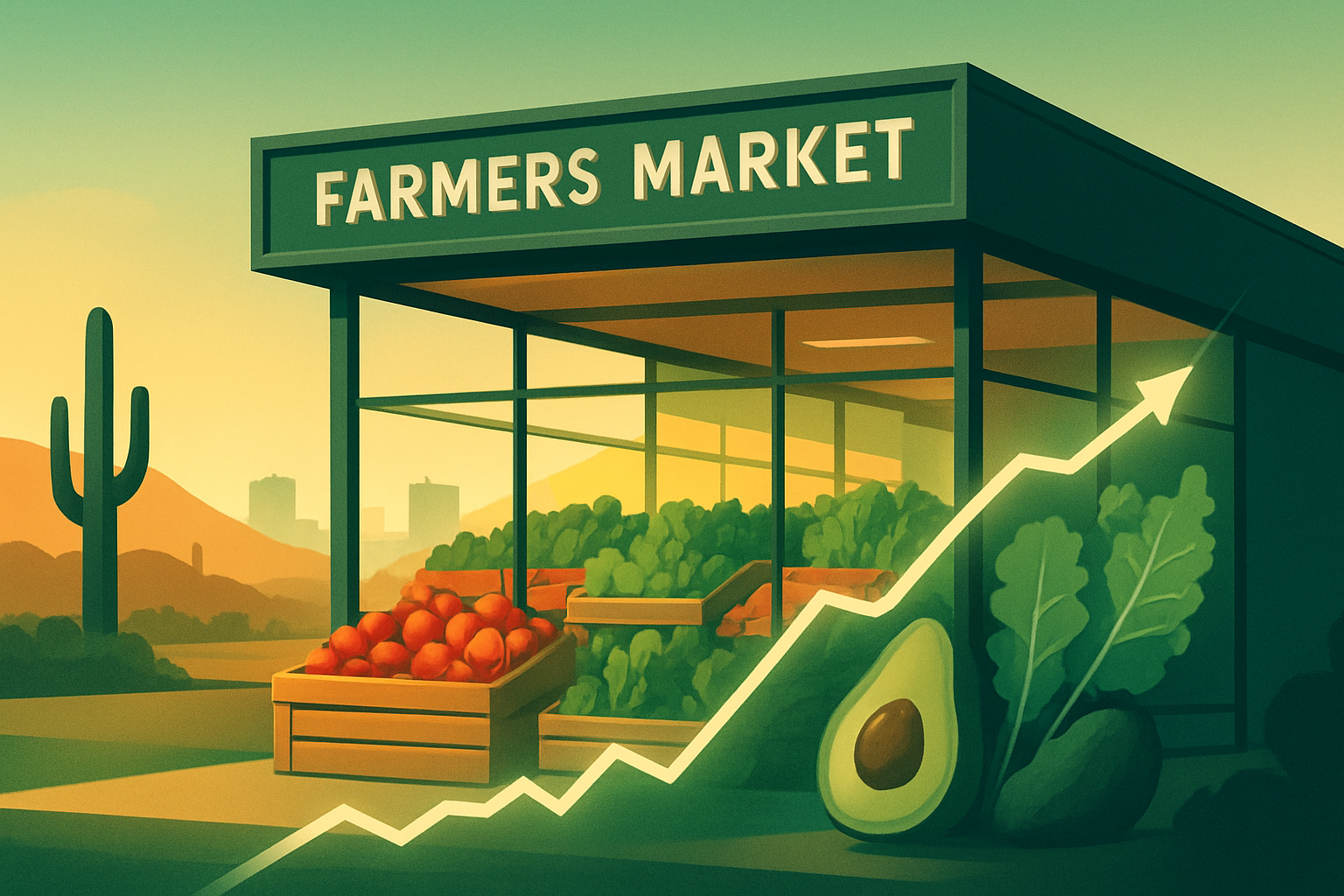
  • Sprouts Farmers Market (SFM): Deciphering the 2026 Valuation Reset and the “Health Enthusiast” Moat

    Sprouts Farmers Market (SFM): Deciphering the 2026 Valuation Reset and the “Health Enthusiast” Moat

    As of February 19, 2026, the retail landscape is witnessing a fascinating tug-of-war between high-growth expectations and fundamental value. At the center of this narrative is Sprouts Farmers Market (NASDAQ: SFM). Once the darling of the pandemic-era health boom and a 2024 breakout star, the Phoenix-based specialty grocer finds itself at a critical crossroads. After a meteoric rise that saw its stock price nearly triple between 2023 and mid-2025, a sharp valuation correction has left investors questioning whether the "health enthusiast" niche has hit a ceiling or if the current dip represents a generational buying opportunity.

    Historical Background

    The roots of Sprouts Farmers Market stretch back to 1943, when Henry Boney opened a small fruit stand in San Diego. This family legacy of fresh produce and open-air marketing eventually evolved into several grocery chains, including Boney’s and Henry’s. The modern iteration of Sprouts was officially founded in 2002 in Chandler, Arizona, by the Boney family, with a mission to make healthy eating affordable and accessible.

    The company went public in 2013, initially operating with a larger, more traditional supermarket footprint. However, the most significant transformation began in 2019 when Jack Sinclair took the helm as CEO. Sinclair orchestrated a radical strategic pivot, abandoning the "big box" expansion model in favor of smaller, more efficient, and more profitable store formats. This "2020 Pivot" redefined Sprouts not just as a grocer, but as a specialized destination for health-conscious consumers.

    Business Model

    Sprouts operates on a unique "treasure hunt" retail model tailored specifically for two demographics: the "Health Enthusiast" and the "Innovation Seeker." Unlike conventional giants like Kroger or Walmart, Sprouts deliberately ignores roughly 85% of the general population to hyper-focus on the 15% of consumers who prioritize organic, non-GMO, and attribute-driven foods (Keto, Paleo, Vegan, etc.).

    Revenue is primarily driven by three pillars:

    1. Fresh Produce: The physical heart of every store, produce accounts for approximately 20% of total sales, with over 55% of that volume being organic.
    2. Private Label (Sprouts Brand): Now representing roughly 25% of total sales, these high-margin products offer unique formulations that cannot be found elsewhere.
    3. The "Innovation Center": A rotating section of 30–40 new and emerging brands each month, serving as an incubator for the natural foods industry.

    The company’s store format is a key competitive advantage. Most new stores are 23,000 to 25,000 square feet—roughly half the size of a standard supermarket—which allows for lower occupancy costs, higher sales per square foot, and a faster "path to purchase" for customers.

    Stock Performance Overview

    The last decade has been a volatile journey for SFM shareholders. As of February 2026, the stock presents a stark contrast across different time horizons:

    • 1-Year Performance: The stock has plummeted approximately 60% from its June 2025 all-time high of nearly $180. This correction was triggered by a normalization of comparable store sales and a "cautious" 2026 outlook.
    • 5-Year Performance: Despite the recent crash, the stock remains up over 210% over five years, fueled by the massive margin expansion achieved during the 2023–2024 period.
    • 10-Year Performance: Long-term holders have seen a return of approximately 175%, reflecting a company that struggled for direction in the mid-2010s before finding its stride under current management.

    The current trading range of $67–$75 reflects a "reset" year as the market digests the explosive gains of the previous twenty-four months.

    Financial Performance

    Financially, Sprouts maintains what analysts call a "Fortress Balance Sheet." In fiscal year 2025, revenue reached approximately $8.8 billion, a 14% year-over-year increase. However, the market's focus in early 2026 has shifted to the deceleration of comparable store sales, which have "normalized" to a 0%–2% range after several quarters of double-digit growth.

    Key metrics include:

    • Gross Margins: Hovering near 38–39%, significantly higher than the 25–30% typically seen in conventional grocery.
    • Debt: Long-term debt remains exceptionally low at approximately $53 million, giving the company immense flexibility.
    • Shareholder Returns: In late 2025, the board authorized a new $1 billion share buyback program, signaling management's belief that the stock is currently undervalued.
    • Valuation: With a P/E ratio of approximately 13.1x, SFM is trading at its lowest valuation multiple in several years.

    Leadership and Management

    CEO Jack Sinclair remains the primary architect of the modern Sprouts. His leadership is defined by a refusal to "chase the price-sensitive customer," a move that originally baffled Wall Street but ultimately led to record profitability.

    The management team is currently focused on two strategic fronts:

    1. Supply Chain Verticalization: Transitioning to self-distribution for meat and seafood by the end of 2026.
    2. Northeast Expansion: Executing a high-stakes entry into the New York and New Jersey markets, led by a newly formed regional leadership team.

    Products, Services, and Innovations

    Innovation is the lifeblood of Sprouts’ "treasure hunt" appeal. In 2026, the company has doubled down on its "Chief Foraging Officer" initiative, which tasks a dedicated team with scouting small-batch and local brands before they reach national distribution.

    Recent innovations include:

    • Wellness Bowls: A new line of ready-to-heat, nutrient-dense meals that capitalize on the "healthy-on-the-go" trend.
    • Sprouts Rewards 2.0: A revamped loyalty program launched in late 2025 that uses AI to provide personalized "attribute-based" discounts (e.g., automatically offering discounts on gluten-free items to shoppers who frequently buy them).
    • Enhanced Bulk Department: A return to the company's roots with expanded zero-waste and bulk-bin options to appeal to eco-conscious Gen Z and Millennial shoppers.

    Competitive Landscape

    Sprouts occupies a unique "middle ground" in the $800 billion U.S. grocery market:

    • Vs. Whole Foods (Amazon): Sprouts often undercuts Whole Foods on produce pricing while maintaining a similar "natural" aura. However, Whole Foods has superior e-commerce integration through Amazon Prime.
    • Vs. Conventional (Kroger/Albertsons/Walmart): Sprouts avoids direct competition by not carrying most national brands (Coke, Tide, etc.). This insulates them from the brutal "price wars" of the general grocery sector.
    • Vs. Discounters (Aldi/Trader Joe's): While Trader Joe's competes on the "treasure hunt" feel, Sprouts offers a far more extensive fresh produce and bulk department.

    Industry and Market Trends

    The grocery sector in 2026 is defined by three macro drivers:

    1. Health as a Utility: Post-2020, consumers increasingly view "food as medicine," a trend that plays directly into Sprouts’ hands.
    2. E-commerce Maturity: Online grocery sales for Sprouts have stabilized at 15–21% of total revenue. Partnerships with DoorDash and Uber Eats have become essential for capturing the "immediate needs" market.
    3. Margin Compression: Rising labor costs and the cost of last-mile delivery are industry-wide headwinds that Sprouts is attempting to offset through store automation and smaller footprints.

    Risks and Challenges

    The primary risk for SFM in 2026 is execution risk in the Northeast. Moving into high-cost real estate markets like Long Island and New Jersey requires higher capital expenditure and different logistics than their traditional Sunbelt strongholds.

    Other challenges include:

    • Litigation: In early 2026, the company was hit with several class-action lawsuits following the 2025 stock drop, alleging that management provided overly optimistic guidance.
    • Consumer Softness: If inflation remains sticky, even "health enthusiasts" may begin to trade down to conventional grocers or private labels at cheaper retailers.
    • Labor Relations: As the company expands into the Northeast, it faces a more union-friendly environment, which could pressure its historically non-union labor model.

    Opportunities and Catalysts

    The most immediate catalyst for SFM is the completion of its self-distribution network for fresh proteins in late 2026. This is expected to add 20–30 basis points to margins by eliminating middleman fees and improving shelf-life.

    Longer-term, the company has a stated goal of reaching 1,400 stores nationwide. With fewer than 500 stores today, the runway for geographic expansion is significant. Furthermore, any sign of a recovery in "comp store sales" could trigger a massive short-squeeze, given the high short interest that accumulated during the late 2025 sell-off.

    Investor Sentiment and Analyst Coverage

    Wall Street sentiment is currently "Divided."

    • The Bulls: See a high-quality, high-margin retailer trading at a "broken growth" valuation. They point to the low debt and massive buybacks as a floor for the stock price.
    • The Bears: Argue that the 2023–2024 boom was a "one-off" cycle and that Sprouts is now a mature business facing low-single-digit growth and increasing competition from Amazon/Whole Foods.
    • Analyst Ratings: The consensus remains a "Moderate Buy," with an average price target of $92—implying a 25% upside from current levels, but far below the 2025 highs.

    Regulatory, Policy, and Geopolitical Factors

    Sprouts is heavily influenced by USDA Organic standards and FDA labeling regulations. Any tightening of "Natural" or "Organic" definitions could force costly repackaging or sourcing changes.

    Additionally, as a heavy importer of specialty items and out-of-season produce, the company is sensitive to trade policy and logistical bottlenecks. In early 2026, supply chain stability has been a focus as the industry navigates evolving carbon-border adjustment taxes and sustainable packaging mandates in several states.

    Conclusion

    Sprouts Farmers Market (SFM) is currently a tale of two companies. On one hand, it is a highly profitable, strategically focused niche retailer with a "fortress" balance sheet and a clear expansion roadmap. On the other, it is a stock currently "in the penalty box" after failing to sustain the astronomical growth rates of 2024.

    For the value-conscious investor, the 2026 "valuation reset" offers a compelling entry point into a company that has successfully carved out a durable moated niche. However, the path forward will require patience as the market waits for proof that the Northeast expansion can replicate the success of the Southwest. Investors should closely watch the Q3 2026 earnings for signs that comparable store sales are stabilizing and that the self-distribution initiative is delivering the promised margin relief.


    This content is intended for informational purposes only and is not financial advice.