
Tag: Retail Tech

  • The Great Transformation: Can Best Buy’s Service-Led Model Conquer the AI Era?

    The Great Transformation: Can Best Buy’s Service-Led Model Conquer the AI Era?

    As of March 9, 2026, Best Buy Co., Inc. (NYSE: BBY) finds itself at a critical crossroads. Once the undisputed king of big-box electronics retail, the company is now navigating an era defined by "simultaneous change"—a strategic pivot led by CEO Corie Barry to transform from a hardware-dependent retailer into a high-margin services and digital platform company. While the post-pandemic "tech hangover" initially dampened growth, the emergence of the AI PC upgrade cycle and the scaling of the "Best Buy Ads" and "Marketplace" businesses have redefined the company’s value proposition. This feature examines whether Best Buy’s evolution into a service-led ecosystem can withstand the relentless pressure of e-commerce giants and a bifurcated consumer economy.

    Historical Background

    Founded in 1966 by Richard Schulze as "Sound of Music," a specialty audio store, the company rebranded to Best Buy in 1983, pioneering the "superstore" concept with a wide selection and low prices. For decades, it thrived by being the physical destination for every major tech launch, from the VCR to the smartphone.

    However, by the early 2010s, "showrooming"—where customers viewed products in-store only to buy them cheaper on Amazon—threatened the company’s existence. The "Renew Blue" transformation under former CEO Hubert Joly (2012–2019) saved the company by matching prices, improving logistics, and fostering deep partnerships with brands like Apple and Samsung. Since 2019, Corie Barry has accelerated this transformation, steering the company through the volatile COVID-19 demand surge and the subsequent correction, shifting the focus toward "Best Buy Health" and recurring membership revenue.

    Business Model

    Best Buy’s business model is currently in a state of hybrid evolution. Traditionally, revenue was driven by the sale of consumer electronics (PCs, mobile phones, gaming) and appliances. Today, the model is increasingly segmented into:

    • Hardware Retail: The core engine, now bolstered by a third-party "Marketplace" (launched in 2024) which hosts over 1,100 sellers to provide an "endless aisle" experience.
    • Services (Geek Squad): A high-margin segment offering installation, repair, and 24/7 technical support.
    • Memberships: The "My Best Buy" tiered program, featuring "Total" ($179.99/year) and "Plus" ($49.99/year), designed to lock in customer loyalty through exclusive pricing and protection plans.
    • Best Buy Ads: A retail media network that utilizes first-party customer data to sell targeted advertising, generating over $900 million in annual collections as of early 2026.

    Stock Performance Overview

    The performance of BBY stock reflects a market that is still "weighting" the company’s new service-heavy identity.

    • 1-Year Performance: Down approximately 18%. The stock has faced volatility as the AI PC cycle’s early gains were tempered by rising component costs (DRAM/SSD) and a promotional holiday season.
    • 5-Year Performance: Down roughly 30%. This timeframe includes the peak valuation seen during the 2021 stimulus-driven tech boom, making recent comparisons challenging.
    • 10-Year Performance: Up approximately 165%. Long-term investors who entered during the "Renew Blue" era have seen significant wealth creation, largely supported by aggressive dividend growth and share buybacks.

    Financial Performance

    In the fiscal year 2026 results released recently, Best Buy reported annual revenue of $41.69 billion. While this was nearly flat year-over-year, the internal metrics tell a more nuanced story. Enterprise comparable sales declined slightly by 0.8% for the full year, yet the company achieved an adjusted operating income rate of 5.0% in Q4 FY26, surpassing analyst expectations.

    The company maintains a strong balance sheet with a disciplined approach to capital allocation. For FY2027, management has guided for revenue between $41.2 billion and $42.1 billion. The focus remains on protecting margins through SG&A reductions and growing the higher-margin "Best Buy Ads" revenue to offset hardware volume fluctuations.

    Leadership and Management

    CEO Corie Barry continues to receive high marks for her "simultaneous change" strategy, which involves modernizing the store fleet while investing heavily in digital infrastructure. Under her leadership, the company has leaned into "Agentic AI"—deploying advanced AI assistants to help customers navigate complex purchases on the Best Buy app.

    The management team’s recent decision to exit the "Care-at-Home" acute health business (selling off Current Health) was seen by analysts as a pragmatic move to refocus capital on core profitability. The board remains committed to a shareholder-friendly policy, maintaining a consistent dividend even during periods of revenue contraction.

    Products, Services, and Innovations

    Innovation at Best Buy is no longer just about the products on the shelves, but how they are sold and serviced.

    • AI PCs: Best Buy is the primary physical destination for the "Copilot+ PC" and Intel Core Ultra laptop rollout, leveraging its blue-shirt experts to explain AI utility to hesitant consumers.
    • Store Formats: The company is aggressively testing 5,000-square-foot, digital-first "small format" stores in mid-sized markets where large-format stores are not viable.
    • Omnichannel Fulfillment: Over 40% of online orders are now picked up in-store or curbside, highlighting the strategic value of its 900+ physical locations.

    Competitive Landscape

    Best Buy operates in a "two-front war." On one side is Amazon.com, Inc. (NASDAQ: AMZN), which officially overtook Best Buy in total consumer electronics market share in 2025 (holding ~30% to Best Buy's ~28%). On the other is Walmart Inc. (NYSE: WMT), which competes fiercely on price for mid-to-low-tier electronics.

    Best Buy’s competitive edge lies in complexity. While Amazon excels at commodity replenishment, Best Buy thrives in "considered purchases"—categories like home theater, high-end gaming, and premium AI appliances where customers require hands-on demos and professional installation.

    Industry and Market Trends

    The consumer electronics industry is currently defined by a "bifurcation." High-income consumers are continuing to spend on premium AI-enabled hardware, while lower-income cohorts have pulled back on "big-ticket" durables due to cumulative inflation.

    A significant trend to watch in 2026 is the rising cost of memory components. Gartner predicts that surging DRAM and SSD prices could increase PC costs by up to 17% this year. This "price creep" may delay the full impact of the AI PC upgrade cycle as consumers wait for prices to stabilize.

    Risks and Challenges

    • Consumer Sentiment: Persistent inflation in non-discretionary categories (housing, insurance) continues to eat into the budget for electronics.
    • Hardware Cycles: If the AI PC "super-cycle" fails to deliver a meaningful "killer app," the expected wave of upgrades could turn into a ripple.
    • Operational Margins: As Best Buy shifts toward a marketplace model, it faces the challenge of maintaining brand quality and customer service standards with third-party sellers.

    Opportunities and Catalysts

    • Advertising Growth: The "Best Buy Ads" segment is high-margin and highly scalable. As more brands shift budgets toward retail media, this could become a primary profit driver.
    • Gaming Refresh: Rumors of mid-cycle console refreshes and the expansion of handheld gaming PCs (like the Steam Deck and ROG Ally) provide near-term catalysts.
    • Agentic AI: Successful integration of AI shopping assistants could lower the "cost to serve" by reducing the need for human interaction for basic troubleshooting and sales queries.

    Investor Sentiment and Analyst Coverage

    Wall Street currently maintains a "Hold" or "Neutral" consensus on BBY. Analysts appreciate the company’s margin discipline and the 4%+ dividend yield, but they remain cautious about the long-term growth of the top line. Institutional investors have noted the company’s pivot to a marketplace and ads model, with some hedge funds taking "value" positions based on the stock’s low P/E ratio relative to historical norms.

    Regulatory, Policy, and Geopolitical Factors

    Regulatory scrutiny is a growing factor for Best Buy in 2026. The FTC’s focus on "algorithmic pricing" and "junk fees" has forced the company to be highly transparent with its membership pricing and promotional strategies. Furthermore, the global supply chain remains sensitive to geopolitical tensions in East Asia, where the majority of semiconductor manufacturing is concentrated. Any disruption in Taiwan or South Korea would immediately impact Best Buy’s inventory levels for high-end PCs and smartphones.

    Conclusion

    As of March 2026, Best Buy is a company in the middle of a sophisticated metamorphosis. It has successfully defended its territory against total digital disruption by leaning into its physical footprint and technical expertise. However, its future depends on whether it can successfully transition from a merchant of "things" to a curator of "experiences and services." For investors, BBY offers a compelling dividend and a stabilized floor, but significant capital appreciation will likely require a clearer signal that the AI PC cycle and the new "Ads" business can drive consistent, long-term top-line growth.


    This content is intended for informational purposes only and is not financial advice.
  • Walmart’s $1 Trillion Milestone: Analyzing the 2026 Tariff Windfall and the New Era of Agentic Commerce

    Walmart’s $1 Trillion Milestone: Analyzing the 2026 Tariff Windfall and the New Era of Agentic Commerce

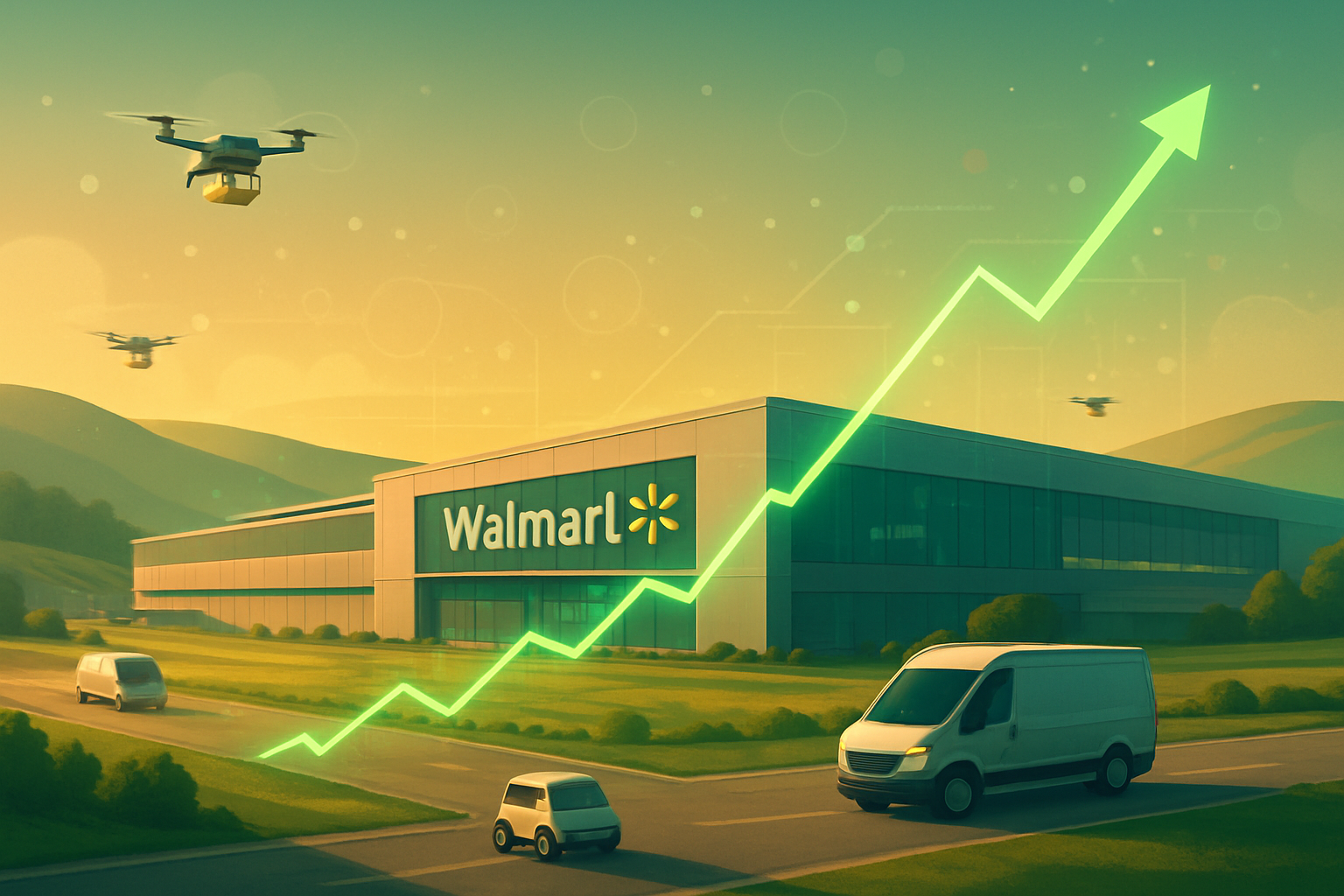
    On February 23, 2026, Walmart Inc. (NYSE: WMT) solidified its position as a dominant titan of the modern economy, with its market capitalization officially crossing the historic $1 trillion threshold. This milestone comes during a transformative week for the retail giant, fueled by a landmark U.S. Supreme Court ruling regarding tariff refunds that has sent shockwaves through the consumer discretionary sector. As Walmart pivots from a traditional big-box retailer into a high-margin technology and data ecosystem, the convergence of favorable legal outcomes and aggressive automation has made it the central focus of global equity markets. Today’s surge in investor interest is not merely a reaction to retail sales but a validation of a decade-long metamorphosis.

    Historical Background

    Founded by Sam Walton in 1962 in Rogers, Arkansas, Walmart’s early narrative was defined by the "Everyday Low Price" (EDLP) philosophy and a revolutionary approach to supply chain logistics. For decades, the company’s growth was driven by aggressive physical expansion into rural and suburban America. However, the 21st century demanded a radical shift. The 2016 acquisition of Jet.com for $3.3 billion marked the beginning of the "McMillon Era," during which Walmart aggressively moved into e-commerce to challenge digital incumbents. Key milestones, such as the 2018 majority stake in India’s Flipkart and the 2024 acquisition of smart-TV maker VIZIO, transitioned the company from a store-based model to an omni-channel platform integrating retail, media, and logistics services.

    Business Model

    Walmart’s business model in 2026 is a sophisticated multi-revenue stream "flywheel." While the core remains high-volume retail across Walmart U.S., Walmart International, and Sam’s Club, the profit engines have shifted.

    • Retail & Grocery: Still the foundational volume driver, with Walmart controlling roughly 25% of the U.S. grocery market.
    • Walmart Connect: A high-margin retail media business that leverages first-party shopper data to sell targeted advertising.
    • Walmart Luminate: A data-as-a-service (DaaS) product where suppliers pay for granular consumer insights.
    • Walmart+: A membership-based recurring revenue stream providing delivery, fuel discounts, and streaming via Paramount+.
    • Fulfillment Services: Leveraging its physical footprint to provide "Last-Mile-as-a-Service" for third-party marketplace sellers.

    Stock Performance Overview

    The last decade has seen WMT evolve from a defensive value play into a high-performing compounder.

    • 10-Year Horizon: WMT has significantly outperformed the S&P 500, particularly during the inflationary period of 2022-2024 where its value proposition attracted "trade-down" shoppers from higher-income brackets.
    • The 2024 Catalyst: The 3-for-1 stock split in February 2024 served as a major liquidity event, broadening retail ownership and preceding a 72% rally that year.
    • Recent Performance: Over the past year leading into February 2026, the stock has climbed 45%, buoyed by record-breaking FY2026 earnings and the recent inclusion in the NASDAQ 100, which forced massive institutional buying.

    Financial Performance

    In its most recent fiscal year (ending January 31, 2026), Walmart reported a staggering $713.2 billion in total revenue, surpassing the $700 billion mark for the first time.

    • Margins: Operating margins expanded to 4.8%, up from historic lows of 4.1% in 2023, driven by the growth of advertising and data services.
    • E-commerce: Digital sales now account for 23% of total revenue, with a clear path toward profitability as fulfillment automation scales.
    • Cash Flow: Free cash flow remains robust at $18.5 billion, allowing for consistent dividend increases (now in its 53rd consecutive year) and aggressive share buybacks.
    • The Refund Windfall: Analyst projections suggest the recent tariff ruling could inject an additional $3.5 billion to $5 billion in one-time cash refunds over the next 18 months.

    Leadership and Management

    A new chapter began on February 1, 2026, with John Furner taking over as President and CEO following Doug McMillon’s retirement. Furner, who previously led Walmart U.S., is a seasoned veteran known for his "associate-first" culture and digital fluency. Under his leadership, the management team has doubled down on "Agentic Commerce"—the use of autonomous AI agents to manage household inventories. The board remains highly regarded for its disciplined capital allocation and its success in navigating the complex transition from physical to digital dominance.

    Products, Services, and Innovations

    Innovation at Walmart is currently focused on the "Automated Store" and "Generative AI."

    • Supply Chain: By early 2026, 60% of U.S. stores are serviced by automated distribution centers, reducing out-of-stocks and labor costs.
    • Sparky (AI Assistant): Walmart’s generative AI shopping assistant now handles complex queries like "Plan a gluten-free birthday party for 10 kids under $100," adding items directly to the cart.
    • Drone Delivery: Following regulatory easing in 2025, Walmart now offers 30-minute drone delivery to over 15 million households in 10 states.
    • Health & Wellness: The expansion of Walmart Health clinics into primary care and clinical trials has turned pharmacy visits into a comprehensive healthcare service.

    Competitive Landscape

    While Amazon (NASDAQ: AMZN) recently eclipsed Walmart in total annual revenue, the competitive landscape has bifurcated.

    • vs. Amazon: Walmart maintains a superior "physical moat" with 90% of the U.S. population living within 10 miles of a store, allowing for more efficient grocery fulfillment than Amazon’s Whole Foods or Fresh units.
    • vs. Discount Rivals: In the face of pressure from Temu and Shein in the apparel and "general merchandise" segments, Walmart has pivoted toward quality and reliability, successfully siphoning market share from domestic dollar stores.
    • vs. Costco: Sam’s Club has aggressively closed the gap with Costco (NASDAQ: COST) by implementing digital-only checkout experiences, appealing to a younger, tech-savvy demographic.

    Industry and Market Trends

    The retail sector in 2026 is defined by "The Great Bifurcation." High-income consumers are increasingly seeking convenience and time-savings, while middle-and-lower-income tiers remain hyper-focused on value due to the lingering effects of the 2022-2024 inflation cycle. Walmart is uniquely positioned to capture both, using its premium Walmart+ service for the former and its EDLP pricing for the latter. Furthermore, the industry is seeing a massive shift toward "Retail Media," where the physical store becomes an advertising canvas, a trend Walmart is currently leading.

    Risks and Challenges

    Despite the $1 trillion valuation, several headwinds remain:

    • Labor Costs: As the largest private employer in the U.S., Walmart remains sensitive to wage inflation and potential unionization efforts in key hubs.
    • International Volatility: Geopolitical tensions in Southeast Asia and the Middle East continue to disrupt global sourcing, requiring costly supply chain diversifications.
    • Execution Risk: The heavy reliance on AI and automation carries the risk of technical failures or consumer backlash regarding data privacy and "algorithmic pricing."

    Opportunities and Catalysts

    • The Tariff Refund: The Supreme Court’s February 20, 2026 ruling against the IEEPA "Emergency" tariffs is the most immediate catalyst. This could result in a massive cash infusion, potentially earmarked for a special dividend or further M&A.
    • OnePay Expansion: Walmart’s proprietary financial services app, OnePay, is positioned to become a major player in the "Buy Now, Pay Later" (BNPL) and digital banking space, competing directly with fintech incumbents.
    • B2B Services: Selling its proprietary logistics and data software to other small-to-mid-sized retailers represents an untapped multibillion-dollar high-margin opportunity.

    Investor Sentiment and Analyst Coverage

    Sentiment on the Street is overwhelmingly bullish. Following the tariff ruling, major investment banks have revised their price targets upward, with several calling WMT a "Top Pick for 2026." Institutional ownership remains high, with significant increases from ESG-focused funds who have praised Walmart’s 2025 carbon neutrality milestones. Retail sentiment is also strong, as the VIZIO integration has made Walmart a household "tech" brand rather than just a grocer.

    Regulatory, Policy, and Geopolitical Factors

    The regulatory environment is the primary driver of today's market activity.

    • The IEEPA Ruling: On February 20, 2026, the Supreme Court ruled 6-3 that broad global tariffs imposed under the International Emergency Economic Powers Act were unconstitutional. Walmart, as a top importer, is lead claimant for refunds on billions in duties paid during the 2025 "Trade Emergency" period.
    • Section 301 Status: While the court upheld the older China-specific Section 301 tariffs in late 2025, the IEEPA ruling provides a more significant direct cash benefit for 2026 balance sheets.
    • Antitrust: Walmart’s growing dominance in digital advertising is drawing scrutiny from the FTC, though analysts believe the presence of Amazon and Google provides a sufficient competitive defense.

    Conclusion

    Walmart’s journey to a $1 trillion market cap on February 23, 2026, is a testament to the power of digital transformation in a legacy industry. By successfully pivoting from a vendor of goods to a provider of services—advertising, data, health, and automated logistics—the company has decoupled its growth from the thin margins of traditional retail. While the immediate boost from the Supreme Court’s tariff refund ruling provides a lucrative catalyst, the long-term thesis for WMT rests on its ability to integrate its physical footprint with its digital "Flywheel." Investors should monitor the integration of the OnePay financial ecosystem and the ongoing scaling of automated fulfillment as the next markers of performance. Walmart is no longer just a store; it is a vital piece of 21st-century infrastructure.


    This content is intended for informational purposes only and is not financial advice.

  • The Wayfair Pivot: Navigating the “New Normal” of Home Furnishings (NYSE: W)

    The Wayfair Pivot: Navigating the “New Normal” of Home Furnishings (NYSE: W)

    Date: February 19, 2026

    Introduction

    Wayfair Inc. (NYSE: W) stands today as a symbol of the post-pandemic corporate transformation. Once the poster child for "growth at all costs" e-commerce, the Boston-based furniture giant has spent the last 24 months aggressively retooling its business model to prioritize profitability over sheer volume. As of today, February 19, 2026, the company finds itself in the spotlight following its Q4 2025 earnings release. While the numbers show a company that has successfully achieved positive free cash flow and a massive turnaround in adjusted EBITDA, a sharp 11% dip in the stock price today highlights the market's lingering skepticism regarding the long-term durability of the home goods sector.

    Historical Background

    Founded in 2002 by Niraj Shah and Steve Conine as CSN Stores, the company began as a collection of over 200 niche websites selling everything from birdhouses to barstools. In 2011, the founders made the high-stakes decision to consolidate these disparate brands into a single destination: Wayfair.

    The company went public on the New York Stock Exchange in 2014, and for the next several years, it became a market darling by capturing a massive share of the shift from offline to online furniture shopping. The COVID-19 pandemic served as a massive accelerant, driving revenues to record highs as consumers stuck at home overhauled their living spaces. However, the subsequent "hangover" in 2022 and 2023—marked by high inflation and a stagnant housing market—forced the company to confront its lack of GAAP profitability, leading to multiple rounds of layoffs and a total strategic reset known internally as "Wayfair 2.0."

    Business Model

    Wayfair operates a primarily asset-light, drop-ship model, acting as a massive digital marketplace that connects over 21 million active customers with 20,000+ suppliers. The company does not manufacture its own goods; instead, it manages a sophisticated proprietary logistics network called CastleGate, which allows it to handle the "middle mile" and "last mile" of bulky furniture delivery—a segment where Amazon (NASDAQ: AMZN) has historically struggled.

    The business is segmented into five distinct brands:

    1. Wayfair: The mass-market flagship.
    2. Joss & Main: "Transitional" and trend-forward styles.
    3. AllModern: Minimalist and mid-century modern.
    4. Birch Lane: Classic and traditional designs.
    5. Perigold: The luxury and high-end showroom.

    Additionally, Wayfair has rapidly expanded its Retail Media business, selling advertising space on its platform to its 20,000+ suppliers, a high-margin revenue stream that has become a cornerstone of its current profitability.

    Stock Performance Overview

    The stock performance of Wayfair (NYSE: W) over the last decade has been a rollercoaster for investors:

    • 10-Year View: Since its IPO, the stock has seen multiple cycles. It rose steadily through the 2010s before the exponential 2020-2021 rally.
    • 5-Year View: Investors who bought at the March 2021 peak of $345 saw a devastating decline as the stock crashed below $25 in late 2022.
    • 1-Year View: 2025 was a recovery year, with shares surging over 100% at one point as the company proved it could generate cash.
    • Current Move: After peaking near $120 in January 2026, the stock has retracted following today’s earnings report, currently trading in the $81–$85 range as investors digest cautious guidance for the first half of 2026.

    Financial Performance

    In the fiscal year 2025, Wayfair reported total net revenue of $12.5 billion, a 5.1% year-over-year increase. The most critical development, however, was in the profit margins. Non-GAAP Adjusted EBITDA reached $743 million, nearly doubling from the previous year.

    Perhaps most importantly, the company generated $329 million in non-GAAP Free Cash Flow in 2025. This marks a definitive break from the years of heavy cash burn. However, the balance sheet remains a point of contention for bears: Wayfair still carries a negative shareholders' equity of approximately $2.8 billion and a substantial debt load, though it has successfully managed to push out maturities and reduce interest expenses through recent refinancing efforts.

    Leadership and Management

    Co-founder and CEO Niraj Shah remains the driving force behind the company’s "maniacal cost discipline" strategy. Alongside co-founder Steve Conine (who focuses on the technology and product side), Shah has successfully transitioned the culture from one of "growth-at-all-costs" to a focus on efficiency.

    Under their leadership, Wayfair exited the German market in January 2025 to focus on the more profitable regions of the U.S., U.K., and Canada. While management has faced criticism for the severity of layoffs in 2023-2024, the current lean operational structure is largely credited for the 2025 financial turnaround.

    Products, Services, and Innovations

    Innovation at Wayfair is currently focused on the "Omnichannel" experience. In May 2024, the company opened its first large-format flagship store in Wilmette, Illinois. The success of this 150,000-square-foot store—drawing over 720,000 visitors in its first year—has provided a blueprint for 2026 and beyond.

    On the digital front, Wayfair is a leader in applying Agentic AI. The company’s 2025 partnership with Google has integrated "agentic checkout" features, where AI shopping assistants help customers visualize furniture in their actual rooms and manage complex logistics through natural language. Furthermore, the newly revamped Wayfair Rewards program has boosted repeat purchase rates, with 80% of current orders coming from repeat customers.

    Competitive Landscape

    Wayfair operates in a $500 billion+ total addressable market that is highly fragmented.

    • The Giants: Amazon and Walmart (NYSE: WMT) remain the biggest threats in terms of price and delivery speed for smaller home goods.
    • The Specialists: IKEA remains the dominant omnichannel rival, though Wayfair’s new physical flagships are aimed directly at IKEA’s market share.
    • The Distressed: Beyond Inc. (NYSE: BYON), formerly Overstock, is attempting a comeback after acquiring the Bed Bath & Beyond brand, but currently operates at a fraction of Wayfair's scale.
    • The Advantage: Wayfair’s competitive edge lies in its "specialized logistics" for large parcels (couches, vanities), which the generalist retailers often avoid due to the high damage rates and logistical complexity.

    Industry and Market Trends

    The home furnishings market is heavily tied to the housing cycle. After two years of stagnation, 2026 is seeing a modest recovery as the Federal Reserve has begun an easing cycle, with interest rates settling toward the 3.25% range.

    There is also a clear "bifurcation" in consumer spending. High-income households are still spending on luxury upgrades (benefiting Wayfair’s Perigold brand), while middle-income consumers remain value-conscious, seeking promotions. The shift toward "Hybrid Retail"—where customers research online but want to touch and feel items in a store—is the defining trend of the current year.

    Risks and Challenges

    Despite the turnaround, several risks persist:

    1. Macro Sensitivity: Furniture is a highly discretionary purchase. If the economy cools or inflation remains "sticky," Wayfair’s growth could stall.
    2. Balance Sheet: With negative equity and substantial debt, the company has a thin margin for error if it returns to a cash-burning state.
    3. Founder Selling: Continued periodic stock sales by the founders for liquidity have occasionally weighed on investor sentiment.
    4. Supply Chain: Potential new tariffs on imported furniture remain a wildcard for margins.

    Opportunities and Catalysts

    • Physical Expansion: With the Wilmette store proving that physical locations drive a "halo effect" (boosting online sales in a 100-mile radius), upcoming flagship openings in Atlanta and Denver represent significant growth levers.
    • Wayfair Professional: The B2B segment, serving interior designers and contractors, remains an under-penetrated and high-margin opportunity.
    • Margin Expansion: As the Retail Media business scales, it should continue to provide high-margin "accidental" revenue that flows straight to the bottom line.

    Investor Sentiment and Analyst Coverage

    Wall Street maintains a "Moderate Buy" consensus on Wayfair as of early 2026. Bulls point to the free cash flow generation and the success of the physical retail pilot as proof of the "Wayfair 2.0" thesis. Bears, however, are vocal about the today’s cautious guidance and the company’s struggle to reach GAAP net income. Current price targets average around $107, representing significant upside from today’s $81 price point, assuming the company can weather the mid-year macro headwinds.

    Regulatory, Policy, and Geopolitical Factors

    Wayfair’s exit from the German market in 2025 significantly reduced its exposure to European regulatory complexities, but it remains focused on U.S. consumer safety standards and trade policy. With a significant portion of its supplier base sourcing from Asia, any escalation in trade tensions or new import tariffs could force Wayfair to pivot its sourcing—a task its large supplier base makes possible but not painless.

    Conclusion

    Wayfair Inc. (NYSE: W) enters 2026 as a leaner, more disciplined, and more focused organization than at any point in its history. The transition from an online-only "growth engine" to an omnichannel "profitable player" is well underway. While the market’s reaction to today’s earnings highlights that the path to recovery is rarely a straight line, the company’s focus on high-margin media, loyalty programs, and physical flagships provides a clear roadmap. For investors, the key will be watching whether the housing market recovery provides the necessary tailwind to turn Adjusted EBITDA into consistent GAAP Net Income.


    This content is intended for informational purposes only and is not financial advice.

  • The Trillion-Dollar Retail Titan: A Deep Dive into Walmart’s Omnichannel Supremacy

    The Trillion-Dollar Retail Titan: A Deep Dive into Walmart’s Omnichannel Supremacy

    As of February 17, 2026, Walmart Inc. (NYSE: WMT) has officially entered a new era of corporate history. Long regarded as the quintessential "brick-and-mortar" giant, the Bentonville-based retailer recently crossed the historic $1 trillion market capitalization milestone on February 3, 2026. This achievement is not merely a reflection of its scale but a validation of a decade-long digital transformation. In a market where high-growth technology stocks often command the spotlight, Walmart has emerged as a "tech-hybrid" juggernaut, blending the defensive stability of consumer staples with the high-margin scalability of digital advertising and membership services. With a crucial Q4 earnings report looming this week, all eyes are on how the world’s largest retailer continues to redefine the boundaries of global commerce.

    Historical Background

    The Walmart story began in 1962 when Sam Walton opened the first "Wal-Mart" in Rogers, Arkansas, with a simple but disruptive philosophy: "Everyday Low Prices." Walton’s focus on rural markets, sophisticated logistics, and passing savings to the customer allowed the company to grow rapidly, going public in 1970. Over the following decades, Walmart expanded into suburban and urban areas, launched the Sam's Club warehouse model in 1983, and pioneered the "Supercenter" format in 1988.

    The 21st century brought new challenges, primarily from the rise of e-commerce. Under the leadership of Doug McMillon (CEO from 2014 to early 2026), the company underwent a radical shift, acquiring Jet.com in 2016 and investing tens of billions of dollars into its digital ecosystem. By 2026, Walmart has successfully transitioned from a store-first retailer to an omnichannel platform where physical locations serve as high-tech fulfillment hubs, marking its most significant transformation since its founding.

    Business Model

    Walmart operates a massive, diversified business model centered on three primary segments: Walmart U.S., Walmart International, and Sam’s Club. While retail sales of groceries, apparel, and electronics remain the bedrock of the company, the business model has evolved into a "flywheel" of high-margin services:

    • Retail & E-commerce: Selling a vast array of goods through 10,500+ stores and a global digital marketplace.
    • Walmart Connect: A rapidly growing retail media network (advertising) that leverages Walmart's massive first-party shopper data.
    • Walmart+: A membership subscription service offering delivery, fuel discounts, and streaming perks, providing recurring, high-margin revenue.
    • Financial & Health Services: Expanding into pharmacy, primary care clinics, and fintech solutions for both customers and associates.
    • Logistics-as-a-Service: Utilizing its "GoLocal" platform to provide last-mile delivery services for other businesses.

    Stock Performance Overview

    Over the past decade, Walmart has transitioned from a steady dividend payer to a growth-oriented market leader.

    • 1-Year Performance: In the last 12 months, WMT has gained approximately 35%, significantly outperforming the broader market as investors sought refuge in its recession-resistant earnings.
    • 5-Year Performance: Since 2021, the stock has more than doubled, fueled by the acceleration of e-commerce and the strategic 3-for-1 stock split executed in 2024, which enhanced liquidity for retail investors.
    • 10-Year Performance: On a total return basis, Walmart has outperformed the S&P 500 over the last decade, proving that legacy retailers can successfully pivot to digital-first models.

    The recent surge to the $1 trillion mark has been driven by a significant "re-rating" of the stock, as analysts move away from valuing it as a traditional grocer and toward a tech-service multiple.

    Financial Performance

    Walmart’s financial health in early 2026 is characterized by robust top-line growth and expanding margins. For the fiscal year ending January 2025, the company reported revenue of $681 billion. Current projections for the full fiscal year 2026 suggest a climb toward $715 billion.

    • Earnings per Share (EPS): Walmart has consistently beaten analyst estimates over the last four quarters, driven by lower logistics costs and a shift toward high-margin advertising revenue.
    • Margins: Operating margins, which historically hovered around 4-5%, have seen a notable uptick as the share of advertising and membership income grows.
    • Debt & Cash Flow: The company maintains an AA credit rating with strong free cash flow, allowing it to fund massive capital expenditures in automation while continuing its 50-year streak of dividend increases.

    Leadership and Management

    On February 1, 2026, John Furner officially took the helm as President and CEO of Walmart Inc., succeeding Doug McMillon. Furner, a Walmart veteran who previously led the U.S. division, is credited with the successful rollout of the company’s automation strategy.

    • John David Rainey (CFO): A former PayPal executive, Rainey continues to be the architect of Walmart’s shift toward a tech-driven financial model.
    • David Guggina (CEO, Walmart U.S.): Formerly the Chief eCommerce Officer, Guggina’s promotion signals the company’s "digital-first" priority.
      The leadership transition has been viewed as a seamless "passing of the torch," with McMillon remaining as an advisor through 2027 to ensure strategic continuity.

    Products, Services, and Innovations

    Innovation is the primary driver behind Walmart’s current valuation.

    • Supply Chain Automation: By early 2026, 65% of Walmart’s stores are serviced by automated facilities. This "Supply Chain of the Future" has reduced unit costs by over 20%.
    • AI-Powered Commerce: Walmart’s proprietary GenAI search allows customers to shop by "intent" (e.g., "plan a 5-year-old’s birthday party") rather than just keywords.
    • Drone Delivery: In partnership with Wing and Zipline, drone delivery is now available to over 75% of the population in major U.S. metropolitan areas.
    • Connected TV: The integration of VIZIO’s SmartCast system has turned Walmart into a major player in the streaming ad space, rivaling Amazon (NASDAQ: AMZN) and Roku (NASDAQ: ROKU).

    Competitive Landscape

    Walmart sits in a unique competitive position. In the grocery sector, it remains the undisputed leader, holding a market share nearly double that of its nearest rival, Kroger (NYSE: KR).

    • Vs. Amazon: Walmart has narrowed the gap in e-commerce by leveraging its physical stores as delivery hubs, often offering faster "last-mile" delivery than Amazon in rural and suburban areas.
    • Vs. Costco (NASDAQ: COST) & Target (NYSE: TGT): Walmart has successfully defended its market share against Target by maintaining price leadership during inflationary periods, and against Costco by enhancing its Sam’s Club value proposition.
      The company's scale and $1 trillion valuation now place it in direct competition with the "Magnificent Seven" for investor capital.

    Industry and Market Trends

    The retail industry in 2026 is defined by "Value and Convenience." Despite cooling inflation, consumer "trade-down" behavior persists, benefiting Walmart’s grocery and private-label (Great Value) business.

    • Defensive Rotation: Early 2026 has seen a massive rotation of capital out of pure-play tech and into "Defensive Growth" stocks. WMT has been the primary beneficiary of this trend.
    • Retail Media: The industry is seeing a shift where retailers are becoming media companies. Walmart’s advertising arm is now a key growth engine for the entire Consumer Staples sector (NYSE Arca: XLP).

    Risks and Challenges

    Despite its momentum, Walmart faces significant headwinds:

    • Labor Costs: As a massive employer, rising minimum wages and labor unionization efforts remain a persistent threat to margins.
    • International Volatility: Economic slowdowns in key markets like China and regulatory hurdles in India (Flipkart) could dampen global growth.
    • E-commerce Profitability: While e-commerce revenue is soaring, the cost of "last-mile" delivery and heavy investments in automation continue to weigh on the segment’s bottom line.
    • Cybersecurity: As a data-driven giant, the risk of large-scale data breaches is a top-tier concern for the board.

    Opportunities and Catalysts

    The upcoming Q4 earnings report (expected this week) is the most immediate catalyst. Investors are looking for:

    • Holiday Performance: Early data suggests a record-breaking holiday season for Walmart+, potentially leading to an earnings beat.
    • Advertising Growth: Any update on the scale of Walmart Connect post-VIZIO integration could spark a further rally.
    • International IPOs: Rumors of a potential IPO for Flipkart in 2026 could unlock significant value for shareholders.
    • Share Buybacks: With its massive cash reserves, the company is expected to announce an expanded share repurchase program in mid-2026.

    Investor Sentiment and Analyst Coverage

    Wall Street remains overwhelmingly bullish on Walmart. As of February 2026, over 85% of analysts covering the stock maintain a "Buy" or "Strong Buy" rating.

    • Institutional Holdings: Hedge funds and large asset managers like Vanguard and BlackRock have increased their positions, viewing WMT as a "must-own" stock for both stability and growth.
    • Retail Sentiment: On social media platforms and retail trading forums, Walmart is increasingly discussed alongside "Big Tech" rather than traditional retailers, reflecting a fundamental shift in how the public perceives the brand.

    Regulatory, Policy, and Geopolitical Factors

    Walmart operates in a complex regulatory environment.

    • Antitrust Scrutiny: As Walmart’s advertising and data segments grow, it faces increased scrutiny from the FTC regarding data privacy and competition.
    • Trade Policy: Given its global supply chain, any shifts in tariffs or trade relations with China directly impact its cost of goods sold.
    • Sustainability Mandates: New federal reporting requirements for Scope 3 emissions have forced Walmart to accelerate its transition to a zero-emissions delivery fleet, a move that is costly in the short term but may yield long-term tax incentives.

    Conclusion

    Walmart’s ascent to a $1 trillion market cap is a testament to the power of reinvention. By successfully marrying the world’s most efficient physical supply chain with a high-margin digital ecosystem, the company has insulated itself from the volatility that has plagued other retail sectors.

    For investors, Walmart represents a rare "all-weather" stock. It offers the defensive safety of a grocery giant during economic downturns and the high-growth potential of a tech platform during market upswings. As we look toward the Q4 earnings report, the key question is no longer whether Walmart can survive the digital age, but how much further it can pull ahead of its peers. In the current macro environment, Walmart isn't just a retail stock; it is a global infrastructure play for the 21st century.


    This content is intended for informational purposes only and is not financial advice.

  • The Swoosh Rebounds: Analyzing Nike’s 2026 Turnaround and Dow Leadership

    The Swoosh Rebounds: Analyzing Nike’s 2026 Turnaround and Dow Leadership

    Date: February 16, 2026

    Introduction

    In a trading session marked by renewed confidence in the retail sector, Nike Inc. (NYSE: NKE) emerged as the top gainer on the Dow Jones Industrial Average today, surging 3.2% to lead the blue-chip index. The rally follows a series of positive data points suggesting that the long-awaited turnaround in North America—the company’s largest and most profitable market—is finally taking root. After a turbulent 24-month period defined by leadership changes, inventory gluts, and stiff competition from upstart running brands, the "Swoosh" is showing signs of its characteristic resilience. Today’s price action reflects investor optimism that CEO Elliott Hill’s "Win Now" strategy is successfully repairing wholesale relationships and reigniting the product innovation engine that originally built the brand’s global dominance.

    Historical Background

    Nike’s journey began in 1964 as Blue Ribbon Sports, founded by Phil Knight and Bill Bowerman. Originally a distributor for Japanese shoemaker Onitsuka Tiger, the company transitioned to manufacturing its own footwear in 1971, debuting the iconic "Swoosh" logo. Throughout the 1980s and 90s, Nike transformed from a specialized track-and-field brand into a global cultural phenomenon, powered by the 1984 signing of Michael Jordan and the 1988 "Just Do It" campaign.

    Over the decades, Nike has navigated multiple transformations: from a footwear company to an apparel powerhouse, and more recently, from a wholesale-reliant brand to a digital-first direct-to-consumer (DTC) pioneer. However, the aggressive shift toward DTC in the early 2020s—dubbed "Consumer Direct Acceleration"—unintentionally alienated key retail partners and opened the door for competitors. The current era, led by veteran Elliott Hill, represents a "return to roots" focused on sport performance and strategic wholesale partnerships.

    Business Model

    Nike operates a diversified business model centered on the design, development, and worldwide marketing of athletic footwear, apparel, equipment, and accessories. Its revenue is primarily categorized by:

    • Footwear: The largest segment, accounting for roughly 65% of total revenue.
    • Apparel: Approximately 27% of revenue, spanning lifestyle and performance gear.
    • Equipment and Services: Including Nike+ digital services and licensed brand activities.

    The company distributes through three main channels: Nike Direct (digital and company-owned stores), Wholesale Partners (such as Dick’s Sporting Goods and Foot Locker), and Global Brand Divisions. Nike also owns the Jordan Brand—a multi-billion dollar entity in its own right—and Converse (NYSE: NKE's subsidiary), providing a hedge across different price points and style demographics.

    Stock Performance Overview

    As of mid-February 2026, Nike’s stock performance tells a story of a "trough and recovery."

    • 1-Year Performance: NKE is up approximately 12% over the last 12 months, outperforming many of its athletic apparel peers but trailing the broader S&P 500 as it works through its restructuring.
    • 5-Year Performance: The stock remains down from its 2021 highs, reflecting the valuation compression that occurred during the 2023-2024 slowdown.
    • 10-Year Performance: Long-term shareholders have seen a total return of over 140% (including dividends), underscoring the company’s ability to generate wealth despite cyclical downturns.
      Today's 3.2% jump is seen by analysts as a potential "breakout" from the $70-$85 range that has capped the stock for much of the past year.

    Financial Performance

    In its most recent quarterly report (Q2 Fiscal 2026), Nike reported revenue of $12.4 billion, a modest 1% increase year-over-year but significantly better than the declines seen in late 2024.

    • Margins: Gross margins currently sit at 40.6%. While this is a contraction from the mid-40s seen years ago, it reflects a deliberate strategy to clear aged inventory and absorb approximately $1.5 billion in annualized tariff headwinds.
    • Inventory: A bright spot in the financials is inventory health, which decreased by 2% year-over-year. This "clean" inventory allows for more full-price selling in the coming quarters.
    • Cash Flow: Nike remains a cash-flow machine, generating nearly $6 billion in free cash flow annually, which supports its dividend and consistent share buyback programs.

    Leadership and Management

    The pivotal factor in the current turnaround is CEO Elliott Hill, who took the helm in October 2024. A Nike veteran of 32 years, Hill’s return was hailed as a cultural homecoming. Unlike his predecessor, John Donahoe, who focused heavily on data-driven digital growth, Hill has prioritized:

    • Restoring Retail Relationships: Re-engaging with Foot Locker and JD Sports to ensure Nike products are where consumers shop.
    • Empowering Designers: Reducing bureaucratic layers to speed up the "sketch-to-shelf" timeline.
    • Regional Autonomy: Shifting more decision-making power back to regional leads in North America and EMEA.

    Products, Services, and Innovations

    Innovation is the "oxygen" of Nike, and the 2026 pipeline is the strongest in years. Key recent and upcoming launches include:

    • The Pegasus Premium: A high-end evolution of Nike’s most popular running shoe, featuring visible Air Zoom technology.
    • Structure Plus: A direct response to the "maximalist cushion" trend popularized by Hoka, utilizing ReactX and ZoomX foams.
    • Nike Mind 001: A new category of "active recovery" footwear designed for wellness and mindfulness, marking a shift beyond traditional competitive sports.
    • A.I. Design: Nike is increasingly using generative AI to personalize high-performance kits for elite athletes, a technology that is beginning to trickle down to consumer "Nike By You" offerings.

    Competitive Landscape

    Nike faces a two-front war in 2026:

    1. Performance Running: Hoka (owned by Deckers Outdoor Corp, NYSE: DECK) and On Holding (NYSE: ONON) have captured significant share among "everyday runners" who prioritize comfort and joint protection.
    2. Lifestyle and Terrace Trends: Adidas (OTC: ADDYY) has seen a resurgence with its "Samba" and "Gazelle" lines, capturing the slim-profile aesthetic that has temporarily overshadowed Nike’s bulkier basketball retros like the Air Jordan 1.

    Nike’s competitive edge remains its massive marketing budget (exceeding $4 billion annually) and its unmatched roster of athletes, which still gives it the "cool factor" required to defend its 35%+ global market share in athletic footwear.

    Industry and Market Trends

    The athletic apparel industry is currently shaped by several macro trends:

    • Wholesale Resurgence: After years of brands trying to "go it alone" via DTC, the industry is realizing that multi-brand retailers are essential for discovery.
    • The Wellness Pivot: Consumers are moving away from "fast fashion" sneakers toward footwear that offers orthopedic benefits or supports general wellness.
    • Supply Chain Localization: In response to geopolitical tensions, Nike is diversifying production away from a heavy reliance on a few Southeast Asian hubs to more distributed manufacturing.

    Risks and Challenges

    Despite today’s optimism, several risks persist:

    • Tariff Exposure: With North American tariffs remaining a significant drag, Nike’s margins are under pressure. A $1.5 billion headwind is a difficult hurdle to clear through price increases alone.
    • China Volatility: The Greater China market, once Nike’s primary growth engine, continues to face soft consumer spending and rising nationalism favoring domestic brands like Anta and Li-Ning.
    • Brand Fatigue: Over-exposure of "Classics" (Dunks, AF1s) has led to some consumer fatigue, forcing Nike to discount older styles to make room for new innovations.

    Opportunities and Catalysts

    • 2026 FIFA World Cup: As the world’s most-watched sporting event approaches, Nike’s dominance in soccer (football) provides a massive global marketing platform.
    • Category Rebound: If Nike can reclaim just 2-3% of the "maximalist" running market from Hoka, it could add billions to the top line.
    • Margin Expansion: As the "cleanup" of old inventory concludes in mid-2026, analysts expect a sharp rebound in gross margins toward the 44-45% range.

    Investor Sentiment and Analyst Coverage

    Wall Street sentiment has shifted from "Underperform" to "Hold/Buy" over the last quarter.

    • Bull Case: Analysts argue that Nike is at the bottom of its earnings cycle and that Elliott Hill is the "right person at the right time" to fix the brand's soul.
    • Bear Case: Critics worry that the 3.2% rise is a "dead cat bounce" and that structural shifts in consumer taste toward smaller, niche brands are permanent.
    • Institutional Moves: Recent filings show several major hedge funds increasing their positions in NKE, betting on a multi-year recovery story similar to the Adidas turnaround of the mid-2010s.

    Regulatory, Policy, and Geopolitical Factors

    Nike’s global footprint makes it sensitive to:

    • Trade Policy: Shifts in U.S. trade relations significantly impact Nike’s cost of goods sold.
    • Labor Standards: The company remains under the microscope of ESG-focused regulators regarding factory conditions in its global supply chain.
    • Digital Regulation: As Nike expands its "Swoosh" membership and NFT/digital apparel initiatives, it faces evolving data privacy laws (GDPR, CCPA).

    Conclusion

    Nike’s 3.2% rise today is more than just a daily fluctuation; it is a signal that the market is beginning to buy into the North American turnaround narrative. Under Elliott Hill, the company is successfully pivoting away from a sterile, digital-only strategy and returning to what it does best: making world-class athletic products and telling stories that resonate with athletes.

    While challenges remain—specifically margin pressure from tariffs and a fierce competitive field—Nike’s scale, innovation pipeline, and repaired retail partnerships suggest that the "Swoosh" is ready to run again. For investors, the next 12 months will be a test of whether the company can translate this "turnaround optimism" into consistent, high-margin earnings growth.


    This content is intended for informational purposes only and is not financial advice.