Tag: Robotics

  • Tesla’s Pivot to Physical AI: A 2026 Deep Dive into the Future of TSLA

    Tesla’s Pivot to Physical AI: A 2026 Deep Dive into the Future of TSLA

    Date: April 14, 2026

    Introduction

    As of April 14, 2026, Tesla, Inc. (NASDAQ: TSLA) finds itself at a defining crossroads that will determine its identity for the next decade. No longer viewed strictly through the lens of an automotive manufacturer, the Austin-based company is in the midst of a radical pivot toward "Physical AI"—a strategic shift that prioritizes autonomous transport and humanoid robotics over high-volume consumer vehicle sales. With the recent commencement of Cybercab mass production and the transition of its Fremont factory into a dedicated robotics hub, Tesla is attempting to bridge the gap between a cooling electric vehicle (EV) market and the multi-trillion-dollar promise of the "Age of Autonomy." This article explores the company’s current standing, its volatile financial trajectory, and the high-stakes innovations that define its 2026 outlook.

    Historical Background

    Tesla’s journey from a niche Silicon Valley startup to a global industrial titan is one of the most storied in corporate history. Founded in 2003 by Martin Eberhard and Marc Tarpenning—and later spearheaded by Elon Musk—the company’s mission was to prove that electric cars could be superior to gasoline-powered vehicles.

    The 2008 Roadster set the stage, but it was the 2012 Model S that revolutionized the industry, proving EVs could be luxury symbols of high performance. Following the "production hell" of the Model 3 in 2017-2018, which nearly bankrupted the firm, Tesla achieved unprecedented scale, reaching profitability and S&P 500 inclusion in 2020. By 2023, the Model Y became the best-selling vehicle globally, of any fuel type. However, as the 2020s progressed, Tesla shifted its focus from the "Master Plan Part 3" goal of 20 million vehicles per year to a more concentrated bet on artificial intelligence, leading to the pivotal 2026 production launch of the Cybercab.

    Business Model

    Tesla’s business model is a vertically integrated ecosystem that spans three primary pillars:

    1. Automotive & Autonomy: While vehicle sales (Model 3, Model Y, Cybertruck) still generate the bulk of revenue, the model has shifted toward high-margin software. This includes Full Self-Driving (FSD) subscriptions and the nascent Tesla Network, an autonomous ride-hailing platform.
    2. Energy Generation and Storage: This segment has become Tesla’s fastest-growing engine. Through the Megapack (for utilities) and Powerwall (for homes), Tesla provides the infrastructure for a renewable grid. In Q1 2026, this segment achieved record deployments of 8.8 GWh.
    3. Services and Robotics: This includes the global Supercharger network—now widely adopted as the industry standard (NACS)—and the emerging Optimus program. Tesla aims to sell labor in the form of humanoid robots, moving the company into the $40 trillion global labor market.

    Stock Performance Overview

    Tesla remains one of the most polarizing and volatile stocks on the NASDAQ.

    • 1-Year Performance: Over the past 12 months, TSLA has traded in a wide range between $350 and $430. After hitting an all-time high of $498.83 in late 2025 following a successful "unsupervised" Robotaxi pilot, the stock retreated in early 2026 due to a Q1 delivery miss.
    • 5-Year Performance: Investors who held through the 2021-2022 volatility have seen significant gains, driven by the scaling of Giga Texas and Giga Berlin and the energy segment's maturation.
    • 10-Year Performance: Tesla remains one of the best-performing stocks of the decade, with a total return exceeding 1,500%, drastically outperforming the S&P 500 and the broader automotive sector.

    Financial Performance

    In the fiscal year 2025, Tesla reported total revenue of $94.8 billion. However, Q1 2026 results released in April showed signs of a "delivery plateau." Tesla delivered 358,023 vehicles, a 6.3% year-over-year increase but a sequential decline that fell short of analyst expectations.

    • Margins: Automotive gross margins have stabilized at approximately 20.1% as of Q4 2025, despite aggressive price cuts to maintain market share against Chinese competitors.
    • Balance Sheet: Tesla maintains a fortress balance sheet with over $30 billion in cash and cash equivalents and minimal debt, allowing it to self-fund the massive R&D required for the Optimus and Cybercab programs.
    • Valuation: With a P/E ratio still significantly higher than traditional automakers, the market is pricing Tesla as a software/AI company rather than a hardware manufacturer.

    Leadership and Management

    Elon Musk continues to serve as CEO, though his attention is split between Tesla, SpaceX, xAI, and X. This "key-man risk" remains a primary concern for institutional investors. However, the operational leadership has solidified under CFO Vaibhav Taneja and Tom Zhu, who oversees global production.
    The board of directors remains under scrutiny regarding Musk’s 2024 pay package and governance, but the strategic pivot to AI has largely aligned the leadership team toward a singular goal: achieving Level 5 autonomy and scaling Optimus Gen 3.

    Products, Services, and Innovations

    Tesla’s current portfolio is undergoing its most significant transition since 2017:

    • Cybercab (Robotaxi): Mass production began at Giga Texas in April 2026. This steering-wheel-less vehicle is the centerpiece of Tesla’s future, designed for an internal ride-sharing network.
    • Model 2 (Project Redwood): A $25,000 compact SUV is currently in pilot production, utilizing the "Unboxed" manufacturing process to reduce costs by 50%.
    • FSD v14.3: Released in early April 2026, this version utilizes a ground-up Machine Learning Intermediate Representation (MLIR) rewrite, significantly reducing latency and improving complex urban navigation.
    • Optimus Gen 3: Now in mass production at the repurposed Fremont facility, thousands of these bots are currently being "hired" internally for Tesla’s battery lines, with external commercial sales slated for late 2026.

    Competitive Landscape

    Tesla faces a two-front war in the competitive landscape:

    • The China Challenge: BYD (OTCPK: BYDDY) remains Tesla's most formidable volume rival, consistently challenging for the title of the world's top EV seller. Xiaomi and Huawei have also entered the premium EV space with high-tech software integrations.
    • Legacy Transformation: In the U.S. and Europe, legacy giants like Ford (NYSE: F) and Volkswagen (OTC: VWAGY) have pulled back on pure EV targets in favor of hybrids, leaving Tesla to dominate the shrinking but still critical pure-EV segment.
    • AI Competitors: In the robotics and autonomy space, Tesla competes with Waymo (Alphabet) and specialized robotics firms like Boston Dynamics, though Tesla’s advantage lies in its massive real-world data set and manufacturing scale.

    Industry and Market Trends

    The "Age of Autonomy" is the defining trend of 2026. Global EV adoption has slowed in some Western markets due to high interest rates and the expiration of subsidies, but the demand for energy storage and autonomous systems is accelerating. Furthermore, the convergence of Large Language Models (LLMs) with physical robotics—embodied by Tesla’s integration of xAI’s "Grok"—is creating a new category of "embodied AI" that is attracting massive venture and institutional capital.

    Risks and Challenges

    • Margin Compression: Continuous price wars in the EV space threaten the high margins that once justified Tesla’s premium valuation.
    • Regulatory Scrutiny: FSD remains under intense investigation by the NHTSA in the U.S., and any high-profile autonomous accidents could stall the Cybercab rollout.
    • Execution Risk: Moving from prototype to mass production of a humanoid robot (Optimus) is an unprecedented industrial challenge.
    • Geopolitical Tensions: Tesla’s heavy reliance on its Shanghai Gigafactory makes it vulnerable to shifting U.S.-China trade policies and potential tariffs.

    Opportunities and Catalysts

    • Robotaxi Fleet: A successful launch of the Tesla Network could transform the company into a high-margin service provider similar to Uber or Airbnb, but with much higher take rates.
    • FSD Licensing: Several legacy automakers are reportedly in talks to license Tesla’s FSD software, which would provide a pure-profit revenue stream.
    • Energy Storage Dominance: As the world transitions to renewables, the Megapack business could eventually rival the automotive segment in total revenue.
    • EU Expansion: The recent approval of FSD for public use in the Netherlands marks the beginning of a massive new market for Tesla’s software in Europe.

    Investor Sentiment and Analyst Coverage

    Wall Street remains deeply divided on Tesla.

    • The Bulls: Analysts at firms like ARK Invest maintain a price target exceeding $2,000 (pre-split adjusted), viewing Tesla as the dominant player in a multi-trillion dollar autonomous transport market.
    • The Bears: Skeptics point to the 50,000-unit production-delivery gap in Q1 2026 as proof that Tesla is a "busted growth story" in the automotive sector, currently overvalued for its unproven AI promises.
    • Retail Influence: Tesla remains a favorite among retail investors, who hold a significant portion of the float and often provide a "floor" for the stock price during downturns.

    Regulatory, Policy, and Geopolitical Factors

    Tesla’s operations are heavily influenced by global policy. In the U.S., the expiration of federal EV tax credits in late 2025 has created a headwind for domestic sales. Conversely, the Inflation Reduction Act (IRA) continues to provide massive subsidies for Tesla’s battery manufacturing in Nevada and Texas. In Europe, new environmental mandates and the rollout of FSD-friendly regulations are providing tailwinds, while in China, Tesla must navigate strict data-security laws to keep its FSD systems operational.

    Conclusion

    Tesla in April 2026 is a company in the middle of its most ambitious transformation yet. By sunsetting legacy models like the S and X to make room for Optimus and Cybercab, Elon Musk is doubling down on a future where Tesla provides the "brains" and "bodies" of the autonomous economy.

    For investors, the path forward is binary: those who view Tesla as a car company see a stock that is dangerously overvalued amidst slowing demand and rising competition. However, those who view it as an AI and robotics platform see a company that is just beginning its most profitable chapter. The key metrics to watch over the coming months will be the progress of the "Unboxed" manufacturing process for the $25,000 model and the real-world performance of the first Cybercab fleets.


    This content is intended for informational purposes only and is not financial advice.
  • The Invisible Engine of Home Improvement: A Deep Dive into Hillman Solutions Corp (HLMN)

    The Invisible Engine of Home Improvement: A Deep Dive into Hillman Solutions Corp (HLMN)

    April 13, 2026

    Introduction

    In the world of high-growth tech and volatile crypto, it is often the "boring" businesses that provide the most reliable foundations for a portfolio. Hillman Solutions Corp (NASDAQ: HLMN) is the quintessential example of this phenomenon. Headquartered in Cincinnati, Hillman is the invisible engine behind the North American hardware industry. Whether it is a homeowner replacing a door hinge, a DIYer duplicating a car key, or a contractor purchasing work gloves, Hillman is almost certainly the provider.

    As of April 2026, Hillman finds itself at a critical juncture. Having successfully navigated the post-SPAC transition and a significant leadership handoff, the company is now executing its "2030 Blueprint," aiming for $2.5 billion in sales. In an environment where interest rates remain a point of contention and the housing market is slowly thawing, Hillman’s unique service-led model and high-margin robotics division have made it a focal point for value-oriented institutional investors.

    Historical Background

    Founded in 1964 by Max W. Hillman Sr., the company began as a modest fastener distributor in Ohio. Its early success was not just based on the products it sold—nuts, bolts, and screws—but on how it sold them. Hillman pioneered the concept of high-touch service in the hardware aisle, organizing thousands of small Stock Keeping Units (SKUs) that would otherwise be a nightmare for retail store managers to maintain.

    Over the decades, Hillman underwent several transformations, often backed by private equity firms like Code Hennessy & Simmons and later CCMP Capital. These eras saw the company expand from basic hardware into complex niches. A pivotal moment occurred in the 2010s with the acquisition of TagWorks and MinuteKey, which moved the company into the high-margin world of automated kiosks.

    In 2021, Hillman entered the public markets via a merger with Landcadia Holdings III, a Special Purpose Acquisition Company (SPAC). While many SPAC-era companies faltered, Hillman used the capital to deleverage and double down on its "Direct-to-Store Delivery" (DSD) competitive advantage.

    Business Model

    Hillman’s business model is structured around three primary pillars:

    1. Hardware & Protective Solutions (HPS): This is the core of the business, representing roughly 70% of revenue. It encompasses traditional fasteners, builder’s hardware, and personal protective equipment (PPE).
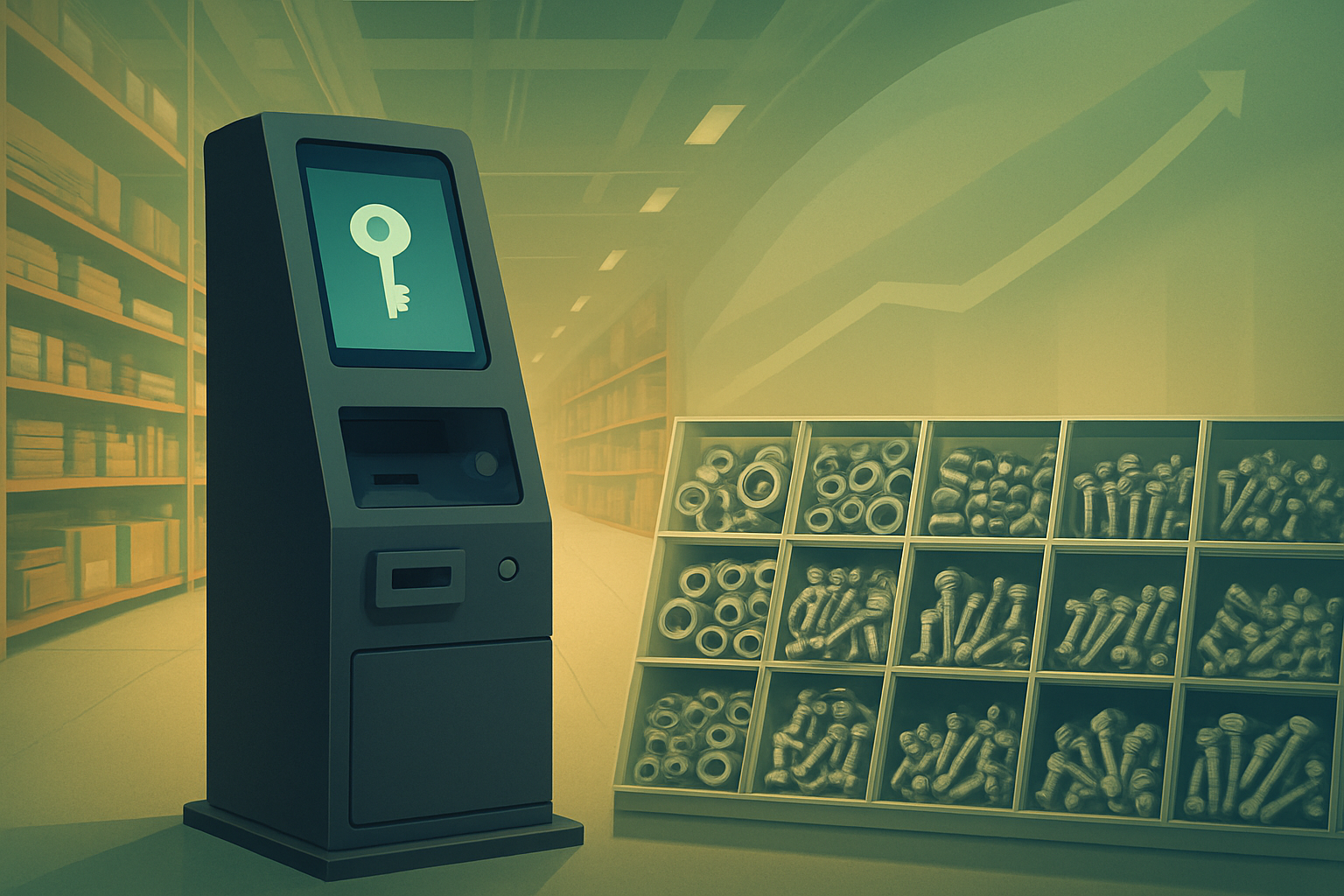
    2. Robotics & Digital Solutions (RDS): This is Hillman’s "growth engine." Through its MinuteKey and TagWorks brands, the company operates thousands of self-service kiosks that duplicate keys and engrave pet tags. This segment carries significantly higher margins than traditional hardware.
    3. Canada: A mirroring of the US segments, tailored to the Canadian retail landscape.

    The true "secret sauce" of Hillman is its Direct-to-Store Delivery (DSD) model. Hillman employs a field force of over 1,100 associates who physically visit approximately 40,000 retail locations. They don't just drop off boxes; they stock the shelves, optimize the "planograms," and ensure that the "complex" hardware aisle—often the most difficult part of a store to manage—is profitable and organized. This creates a massive barrier to entry for competitors who lack the scale to provide similar labor-saving services to big-box retailers.

    Stock Performance Overview

    Since its public debut in 2021 at the traditional $10 SPAC price, HLMN has experienced the typical volatility of a mid-cap industrial stock.

    • 1-Year Performance: Over the past twelve months (mid-2025 to April 2026), the stock has shown resilience, rising approximately 18% as the company successfully integrated the Campbell Chain acquisition and demonstrated margin expansion.
    • 5-Year Performance: Looking back to its 2021 listing, the stock has essentially completed a "round trip." After dipping into the $7 range during the 2022-2023 interest rate hiking cycle, it has climbed back toward the $11-$13 range as of today, rewarding patient "buy-and-hold" investors.
    • 10-Year Context: While the company has only been public for five years, its pre-IPO history showed consistent mid-single-digit organic growth, a trend that has accelerated in the public era through strategic M&A.

    Financial Performance

    Hillman’s fiscal year 2025 results, finalized earlier this year, marked a record for the company.

    • Revenue: Reached $1.55 billion in 2025, a 5.4% increase over 2024.
    • EBITDA: Adjusted EBITDA hit $275.3 million, with margins expanding to 17.7% due to operational efficiencies and the high-margin contribution of the Robotics segment.
    • Debt Profile: One of the most significant wins for management has been deleveraging. The net-debt-to-Adjusted-EBITDA ratio fell to 2.4x by early 2026, down from over 4.0x shortly after the SPAC merger.
    • Valuation: As of April 13, 2026, HLMN trades at a forward P/E of approximately 15x, which many analysts view as attractive given its defensive characteristics and high-margin robotics growth.

    Leadership and Management

    In January 2025, Hillman underwent a seamless leadership transition. Long-time CEO Douglas Cahill, credited with steering the company through its public listing and the COVID-19 pandemic, moved into the role of Executive Chairman. Jon Michael Adinolfi, formerly the Chief Operating Officer, stepped into the President and CEO role.

    Adinolfi’s strategy has been defined by the "Blueprint for Value Creation," which focuses on organic growth in the "Pro" channel (selling to professional contractors) and disciplined M&A. The management team is generally regarded by Wall Street as conservative in their guidance but aggressive in their operational execution.

    Products, Services, and Innovations

    The jewel in Hillman’s innovation crown is the MinuteKey 3.5 kiosk. Moving beyond simple brass house keys, the latest generation of kiosks can duplicate modern automotive keys with transponder chips and RFID fobs for apartment buildings. This has transformed a $5 transaction into a $50-$100 transaction, significantly increasing the "revenue per square foot" for retail partners like Home Depot (NYSE: HD) and Lowe’s (NYSE: LOW).

    Furthermore, the 2026 integration of Campbell Chain & Fittings has allowed Hillman to offer industrial-grade lifting and rigging products, expanding its footprint in the lucrative Maintenance, Repair, and Operations (MRO) market.

    Competitive Landscape

    Hillman operates in a fragmented market but holds a dominant position in the "Big Box" retail channel.

    • Fasteners: Primary rivals include ITW (Illinois Tool Works) and PrimeSource. However, Hillman’s DSD service model makes it difficult for these competitors to displace them at the retail level.
    • Keys: In the robotics space, Hillman competes with KeyMe. While KeyMe has an aggressive AI-driven marketing strategy, Hillman’s deep-rooted relationships with Walmart (NYSE: WMT) and its massive installed base of physical kiosks give it a structural advantage.

    Industry and Market Trends

    The "Repair and Remodel" (R&R) market is the primary driver for Hillman. Unlike companies that rely on new home starts, Hillman thrives when people stay in their homes and perform maintenance.

    • Housing Turnover: In 2025 and early 2026, low housing turnover (due to high mortgage rates) actually benefitted Hillman’s PPE and "break-fix" hardware sales as homeowners chose to repair rather than move.
    • The "Pro" Shift: There is a growing trend of retailers focusing on the "Pro" customer. Hillman has responded by expanding its product depth in heavy-duty fasteners and industrial chains.

    Risks and Challenges

    Despite its strengths, Hillman faces several hurdles:

    • Customer Concentration: A significant portion of revenue comes from the "Big Three" (Home Depot, Lowe's, Walmart). Any change in these retailers’ sourcing strategies would be material.
    • Commodity Volatility: The cost of steel, zinc, and resin directly impacts Hillman’s margins. While they have successfully passed through price increases in the past, there is a limit to consumer price elasticity.
    • Interest Rate Sensitivity: While "break-fix" is resilient, larger renovation projects (which drive bulk fastener sales) are sensitive to consumer credit conditions.

    Opportunities and Catalysts

    • M&A Pipeline: Hillman continues to look for "bolt-on" acquisitions in the HVAC, plumbing, and electrical fastener spaces.
    • Robotics Expansion: There is significant "white space" for MinuteKey and TagWorks kiosks in grocery stores and international markets.
    • E-commerce Integration: Hillman’s "Endless Aisle" program allows customers to order specialized items at a kiosk for home delivery, merging physical retail with digital convenience.

    Investor Sentiment and Analyst Coverage

    Sentiment among institutional investors is overwhelmingly positive, with institutional ownership sitting at a staggering 98%. Firms like Vanguard and BlackRock remain top holders. Wall Street analysts maintain a "Moderate Buy" consensus, with price targets generally ranging from $12 to $15. The prevailing narrative is that Hillman is a "deleveraging story" that is transitioning into a "compounding story."

    Regulatory, Policy, and Geopolitical Factors

    Hillman has been proactive in its "China Plus One" strategy. Over the last three years, the company has reduced its sourcing exposure to China from 50% to roughly 20%, shifting production to Taiwan, India, and Vietnam. This move has mitigated the impact of tariffs and reduced supply chain risks associated with geopolitical tensions in the Pacific.

    Conclusion

    Hillman Solutions Corp represents a rare blend of old-school industrial reliability and new-school technological innovation. Its DSD model is a formidable moat that competitors struggle to bridge, and its robotics division offers a high-margin tailwind that most hardware companies lack.

    For the investor looking toward the second half of 2026, Hillman is no longer just a "SPAC that survived." It is a disciplined, cash-generative leader in a fragmented industry. While macro headwinds in the housing market remain a factor to watch, Hillman’s shift toward the professional channel and its continued debt reduction suggest it is well-positioned for the long haul.


    This content is intended for informational purposes only and is not financial advice.,tags:[

  • The Brains and the Limbs: A Deep-Dive into Teradyne’s (TER) AI-Driven Ascent

    The Brains and the Limbs: A Deep-Dive into Teradyne’s (TER) AI-Driven Ascent


    Introduction

    As of April 9, 2026, the global semiconductor landscape has been fundamentally reshaped by the relentless demand for Artificial Intelligence (AI) infrastructure. At the heart of this technological arms race stands Teradyne, Inc. (Nasdaq: TER), a company that has evolved from a traditional provider of Automated Test Equipment (ATE) into a linchpin of what CEO Greg Smith calls "Physical AI."

    Teradyne is currently in sharp focus as investors grapple with the increasing complexity of 2nm and 3nm chip architectures and the explosive growth of High Bandwidth Memory (HBM). Once seen as a cyclical player tied to the ebbs and flows of the smartphone market, Teradyne has successfully pivoted to become a dominant force in the high-stakes world of AI accelerators and custom ASICs, making it one of the most watched stocks in the technology sector today.

    Historical Background

    Founded in 1960 by Alex d’Arbeloff and Nick DeWolf, Teradyne began its journey in a loft above a Joe & Nemo’s hot dog stand in Boston. Its first product, the D133, was a diode tester that set the stage for decades of innovation in electronic testing. Over the next sixty years, Teradyne grew through both organic innovation and strategic acquisitions, such as the purchase of GenRad and Eagle Test Systems, which solidified its position in the semiconductor test market.

    The most significant modern transformation occurred in 2015 with the acquisition of Universal Robots, followed by Mobile Industrial Robots (MiR) in 2018. These moves signaled Teradyne's intent to diversify away from the purely cyclical semiconductor business and into the nascent field of collaborative robotics (cobots). By 2026, this vision has matured into a two-pronged strategy: testing the world’s most advanced digital brains while providing the robotic limbs that execute AI-driven tasks in the physical world.

    Business Model

    Teradyne’s business model is centered on ensuring the reliability and performance of complex electronic systems. As of the company's 2025 reorganization, the business is structured into three primary segments:

    1. Semiconductor Test (79% of Revenue): This is the company’s engine room. It provides the hardware and software used to test System-on-a-Chip (SoC) and memory devices. This segment serves major chipmakers and Vertically Integrated Producers (VIPs) like Amazon and Meta who are now designing their own silicon.
    2. Product Test (11% of Revenue): Formed in early 2025 by consolidating the former System Test and Wireless Test divisions, this segment focuses on defense, aerospace, and high-volume consumer electronics at the board and system level.
    3. Robotics (10% of Revenue): Comprising the Universal Robots and MiR brands, this segment focuses on collaborative robots and autonomous mobile robots (AMRs) for industrial automation.

    The revenue model is primarily hardware-sales-driven, but it increasingly includes high-margin software subscriptions and service contracts, particularly in the robotics division.

    Stock Performance Overview

    The last year has been nothing short of historic for Teradyne shareholders. As of April 9, 2026, TER is trading near an all-time high of $358.29.

    • 1-Year Performance: The stock has surged approximately 373% from its April 2025 lows. This rally was ignited by the market's realization that AI test intensity—the time and hardware required to test an AI chip—was significantly higher than initially forecasted.
    • 5-Year Performance: Despite a period of stagnation between 2022 and 2024 due to the post-pandemic smartphone slump, the stock has delivered a total return of ~138%.
    • 10-Year Performance: Long-term investors have seen gains of over 1,400%, reflecting Teradyne's transition from a $4 billion mid-cap to a $54 billion large-cap powerhouse.

    Financial Performance

    Teradyne’s fiscal year 2025 was a record-breaking period that validated its AI-centric strategy. The company reported total revenue of $3.19 billion, a 13% increase over 2024.

    Key metrics for the most recent fiscal year include:

    • Non-GAAP EPS: $3.96, up from $3.22 in the previous year.
    • Margins: Gross margins remained resilient at approximately 57%, despite the costs associated with shifting manufacturing away from China.
    • Cash Flow: The company generated robust free cash flow, supporting $702 million in share buybacks and dividends in 2025.
    • Valuation: With a P/E ratio currently hovering around 90x (based on 2025 earnings), the market is pricing in significant future growth from the "Physical AI" and custom silicon trends.

    Leadership and Management

    Under the leadership of CEO Greg Smith, who took the helm in February 2023, Teradyne has tightened its focus on operational efficiency and strategic positioning. Smith’s background in the Semiconductor Test division has been instrumental in navigating the complex technical shift toward AI.

    In November 2025, the company appointed Michelle Turner as CFO. Turner has been tasked with overseeing a massive capital allocation program and the financial management of Teradyne's expanding U.S. manufacturing footprint. The leadership team is generally well-regarded for its transparency and disciplined approach to R&D spending, which consistently stays around 14-15% of revenue to maintain a competitive edge.

    Products, Services, and Innovations

    Teradyne’s competitive moat is built on its UltraFLEXplus platform, which has become the industry standard for testing high-performance compute chips.

    • AI and HBM Testing: The company has captured over 50% of the market for testing High Bandwidth Memory (HBM) wafer stacks. HBM testing is roughly 10x more intensive than traditional DRAM testing, providing a massive tailwind for Teradyne’s memory test business.
    • Robotics Integration: In the robotics segment, Teradyne is integrating Generative AI to simplify robot programming. This allows non-experts to deploy Universal Robots' cobots using natural language commands, a move aimed at expanding the addressable market beyond traditional manufacturing.
    • Silicon Photonics: Teradyne is also leading in the testing of Silicon Photonics, a technology essential for high-speed data transfer within the AI data centers of 2026.

    Competitive Landscape

    Teradyne operates in a "rational duopoly" with Japan’s Advantest Corp. (TSE: 6857). While Advantest currently holds a larger share (estimated 58-60%) of the overall ATE market—particularly in merchant GPUs—Teradyne has carved out a dominant position among "VIP" customers (Big Tech firms designing their own chips).

    Other competitors include Cohu, Inc. (Nasdaq: COHU), which focuses on automotive and industrial testing, and Keysight Technologies (NYSE: KEYS) in the wireless space. However, in the high-end SoC market, Teradyne and Advantest are essentially the only two games in town, providing them with significant pricing power.

    Industry and Market Trends

    The "Test Intensity" trend is the most critical macro driver for Teradyne in 2026. As chips move toward 2nm processes, the number of transistors increases exponentially, as does the likelihood of defects. This requires longer, more complex testing cycles, meaning chipmakers must buy more testers for the same volume of chips.

    Additionally, the rise of Advanced Packaging (where multiple chiplets are combined in one package) has made testing a multi-stage process, further increasing demand for Teradyne’s equipment. In the robotics sector, the trend toward "reshoring" manufacturing to the U.S. and Europe has kept demand for automated solutions high despite global economic fluctuations.

    Risks and Challenges

    Despite its recent success, Teradyne faces significant hurdles:

    • Geopolitical Risk: China remains a vital market but a major risk factor. U.S. export controls on testers exceeding certain speeds (667 MHz) have forced Teradyne to navigate a complex licensing environment.
    • Cyclicality: While AI provides a cushion, the smartphone and PC markets still influence a portion of Teradyne's revenue. Any prolonged downturn in consumer electronics can drag on earnings.
    • Robotics Adoption: The robotics segment has been slower to scale than some analysts predicted. While growth returned in late 2025, the division must prove it can consistently contribute to the bottom line.

    Opportunities and Catalysts

    • The Detroit Hub: Teradyne is set to open a major U.S. Operations Hub in Wixom, Michigan, in late 2026. This facility will localize production of Universal Robots and MiR AMRs, potentially qualifying for federal incentives and reducing supply chain lead times.
    • Custom ASIC Expansion: As more software companies (Tesla, Google, Meta) design their own AI silicon, Teradyne’s early lead in the VIP segment provides a clear pathway for market share gains against Advantest.
    • H1 2026 Qualifications: Several major "merchant" GPU qualifications are expected in the first half of 2026, which could see Teradyne break Advantest’s stranglehold on the independent chipmaker market.

    Investor Sentiment and Analyst Coverage

    Wall Street sentiment toward Teradyne is currently "Strong Buy" to "Hold," with very few "Sell" ratings. Large institutional investors, including Vanguard and BlackRock, have increased their positions over the last year, viewing Teradyne as a "picks and shovels" play for the AI era. Retail sentiment is also high, driven by the stock's parabolic move in 2025 and its association with the broader robotics and AI narrative.

    Regulatory, Policy, and Geopolitical Factors

    Teradyne is a significant beneficiary of the U.S. CHIPS and Science Act, which incentivizes domestic semiconductor manufacturing. As new fabs from Intel and TSMC come online in the U.S., Teradyne is the logical partner for the testing phases of these projects.

    However, the company has had to spend hundreds of millions to relocate its manufacturing out of China to avoid potential "Entity List" complications. This shift was largely completed by 2025, but the ongoing "Tech Cold War" between the U.S. and China continues to dictate the company's long-term geographic strategy.

    Conclusion

    Teradyne has successfully navigated the transition from a specialized testing firm to a cornerstone of the AI economy. Its dominance in the high-growth segments of HBM and custom silicon, combined with a rebounding robotics division, positions it uniquely for the late 2020s.

    For investors, Teradyne offers a rare combination of duopoly-protected market share and exposure to high-growth frontier technologies. While the valuation is currently at a premium and geopolitical risks remain a permanent fixture, the company’s role in ensuring the functionality of the "brains" and "limbs" of the AI revolution makes it an essential case study for any technology-focused portfolio. Watch for the Detroit hub opening and H1 2026 GPU qualifications as the next major indicators of Teradyne’s momentum.


    This content is intended for informational purposes only and is not financial advice.
  • Tesla’s Pivot to Physical AI: A 2026 Deep Dive (TSLA)

    Tesla’s Pivot to Physical AI: A 2026 Deep Dive (TSLA)

    As of April 7, 2026, Tesla, Inc. (NASDAQ: TSLA) finds itself at the most significant crossroads in its twenty-three-year history. Once the undisputed king of the electric vehicle (EV) revolution, the Austin-based titan is currently undergoing a painful but purposeful metamorphosis. The company is transitioning from a high-growth automotive manufacturer into what CEO Elon Musk describes as a "Physical AI" powerhouse.

    With a market capitalization hovering near $1.32 trillion, Tesla remains the world’s most valuable automaker by a staggering margin, despite losing its title as the top global seller of battery electric vehicles (BEVs) to China’s BYD in 2025. Today, the investment thesis for TSLA is no longer about how many cars it can deliver in a quarter, but rather the speed at which it can solve unsupervised autonomy and commercialize humanoid robotics. This article explores the intricate balance between Tesla's legacy hardware business and its burgeoning AI future.

    Historical Background

    Founded in 2003 by Martin Eberhard and Marc Tarpenning, with Elon Musk joining as lead investor shortly after, Tesla’s mission was to prove that electric cars could be better, quicker, and more desirable than gasoline-powered counterparts. The 2008 Roadster set the stage, but the 2012 launch of the Model S redefined the industry.

    The company's history is marked by "bet-the-company" moments. The 2017–2019 "production hell" of the Model 3 nearly led to bankruptcy before the car became the best-selling EV globally. The subsequent years (2020–2021) saw a parabolic rise in valuation as Tesla scaled Giga Shanghai and Berlin, becoming the first automaker to achieve high-margin mass production of EVs. However, 2024 and 2025 were characterized by a "valuation reset" as higher interest rates and a cooling global EV market forced Tesla to slash prices, impacting its once-peerless margins and forcing the strategic pivot toward AI and the "Cybercab" platform we see today.

    Business Model

    Tesla operates through two primary segments: Automotive and Energy Generation & Storage.

    • Automotive (85% of Revenue): This includes the sale of the Model 3, Y, S, X, and the Cybertruck. Revenue is also derived from regulatory credits and "Services & Other," which encompasses Supercharging, insurance, and performance software.
    • Energy Generation & Storage (13% of Revenue): This segment is Tesla’s fastest-growing arm. It involves the sale of Powerwalls for homes and Megapacks for utility-scale projects. In 2025, the energy segment reached record deployment levels, providing a crucial buffer against fluctuating car sales.
    • AI and Robotics (Emerging): While not yet a standalone reporting segment, this includes Full Self-Driving (FSD) subscriptions and the nascent commercialization of the Optimus humanoid robot.

    Tesla’s customer base has shifted from early-adopting tech enthusiasts to mass-market consumers, though it is increasingly targeting industrial clients for its energy and robotics products.

    Stock Performance Overview

    Tesla’s stock performance has been a roller coaster for long-term holders.

    • 10-Year View: An astronomical return of approximately 10,850% has made TSLA a legendary "wealth creator."
    • 5-Year View: The stock is up ~57% from April 2021, a period marked by massive volatility, including a 2022 crash and a 2023 recovery.
    • 1-Year View: TSLA is up ~51% over the last 12 months, recovering from a deep 2025 trough as the market began to price in the "AI story."
    • Year-to-Date (2026): The stock is down ~21.5% as of April 7, 2026, following a Q1 delivery miss of 358,000 units against higher Wall Street expectations.

    Financial Performance

    The fiscal year 2025 was a year of consolidation. Tesla reported an annual revenue of $94.8 billion, representing a 3% decline—the first in its history—due to lower average selling prices and a saturated EV market.

    However, efficiency gains have started to bear fruit. Q4 2025 gross margins rebounded to 20.1%, up from the mid-17% range seen earlier that year. Free Cash Flow (FCF) for 2025 stood at $6.2 billion, demonstrating the company’s ability to remain self-funding even during a capital-intensive product shift. Currently, Tesla holds one of the strongest balance sheets in the industry, with roughly $29 billion in cash and equivalents, providing the "war chest" needed for the Optimus and Cybercab ramps.

    Leadership and Management

    Elon Musk remains the central, and often polarizing, figure of Tesla. In December 2025, a landmark Delaware Supreme Court ruling reinstated Musk's 2018 $56 billion pay package, ending a multi-year legal saga. Following this, shareholders approved a new incentive plan geared toward a $10 trillion market cap, cementing Musk’s long-term commitment to the company.

    The leadership team has seen significant stabilization after the departures of 2024. The addition of Jack Hartung (former CFO of Chipotle) to the board in 2025 brought much-needed governance rigor. Nevertheless, the company's strategy remains heavily top-down, with Musk’s vision for "unsupervised autonomy" driving almost every capital allocation decision.

    Products, Services, and Innovations

    Tesla’s product pipeline is currently focused on three pillars:

    1. The Cybercab: Scheduled for mass production starting this month (April 2026), the Cybercab is a dedicated robotaxi with no steering wheel or pedals. It utilizes Tesla’s "Unboxed" manufacturing process, designed to reduce costs by 50%.
    2. Optimus (Humanoid Robot): Now in "Gen 3" pilot production, Optimus is currently performing basic logistics tasks in Tesla factories. External deliveries for industrial partners are slated for late 2026.
    3. FSD v14.3 and AI5: Tesla’s latest FSD version has moved toward an "end-to-end neural net" architecture. The new AI5 computer, which began shipping in late 2025, offers 10x the compute power of the previous Hardware 4, enabling more complex decision-making in urban environments.

    Competitive Landscape

    The landscape has changed dramatically since 2023. Tesla is no longer just fighting legacy automakers like Ford (F) and Volkswagen (VOW3.DE); it is in a fierce battle with Chinese tech-heavy OEMs.

    • BYD (1211.HK): Surpassed Tesla in BEV volume in 2025, leveraging a vertically integrated supply chain and low-cost batteries.
    • Xiaomi (1810.HK): The smartphone giant’s entry into the EV space has successfully challenged Tesla’s Model 3 in the premium sedan segment.
    • Legacy OEMs: Companies like General Motors (GM) have largely pulled back on aggressive EV targets, inadvertently giving Tesla more breathing room in the US market, even as demand slows.

    Industry and Market Trends

    The "EV gold rush" has cooled, replaced by a "hybrid hedge" from many consumers. However, Tesla’s dominance in the charging infrastructure (NACS standard) has turned its Supercharger network into a steady, high-margin utility. Furthermore, the global shift toward AI infrastructure has made Tesla’s Dojo supercomputer and distributed inference (using the car fleet) a unique asset that traditional car companies cannot replicate.

    Risks and Challenges

    • Execution Risk: The "Unboxed" manufacturing process is unproven at scale. Any delays in the Cybercab ramp could lead to another "production hell" scenario.
    • Regulatory Scrutiny: Despite technical progress, "unsupervised" FSD requires a patchwork of state and federal approvals. A single high-profile accident could trigger massive regulatory rollbacks.
    • Concentration Risk: Tesla is deeply tied to Musk’s personal brand and bandwidth. His involvement in X (formerly Twitter), SpaceX, and xAI continues to raise concerns about "key-man risk."
    • China Exposure: With Giga Shanghai producing over half of Tesla's global volume, any escalation in US-China trade tensions remains a systemic threat.

    Opportunities and Catalysts

    • FSD Licensing: Musk has hinted at ongoing discussions with two major legacy OEMs to license FSD. A deal here would provide high-margin software revenue with zero hardware cost.
    • Energy Storage: The new "Megablock" (a 20 MWh storage unit) is seeing massive demand from utilities looking to stabilize aging power grids.
    • Robotaxi Launch: The planned pilot of a Tesla-branded ride-hailing app in Austin and Las Vegas later this year could be the "iPhone moment" for Tesla’s services division.

    Investor Sentiment and Analyst Coverage

    Wall Street is deeply divided.

    • Bulls (e.g., Dan Ives, Wedbush): Maintain targets near $600, arguing that Tesla is an AI company unfairly valued as an auto company. They see the Robotaxi and Optimus as $10 trillion opportunities.
    • Bears (e.g., Ryan Brinkman, JPMorgan): Set targets as low as $145, focusing on deteriorating vehicle demand, the expiration of the US $7,500 tax credit in late 2025, and record levels of unsold inventory.
    • Retail Sentiment: Remains fiercely loyal, often viewing TSLA as a "technology index" rather than a car stock.

    Regulatory, Policy, and Geopolitical Factors

    The regulatory environment is a double-edged sword. While the expiration of US federal tax credits in September 2025 hindered domestic sales, Tesla has benefited from favorable EU tariff rulings. Because of Giga Shanghai’s efficiency, the EU imposed a relatively low 7.8% tariff on Tesla exports compared to the 35%+ imposed on other Chinese manufacturers. Geopolitically, Tesla remains the only Western automaker with a 100%-owned factory in China, a position that requires a delicate diplomatic balancing act.

    Conclusion

    Tesla in April 2026 is no longer a growth story based on car volumes; it is a high-stakes wager on the future of autonomous intelligence. Investors must weigh the near-term headwinds of a stagnating automotive market and missing Q1 deliveries against the transformative potential of the Cybercab and Optimus.

    For the risk-averse, Tesla’s current valuation remains difficult to justify based on car sales alone. For the visionary investor, the company represents the most advanced and well-funded effort to merge AI with the physical world. The coming 12 months, specifically the success of the Cybercab production and the Austin robotaxi pilot, will likely determine whether Tesla returns to its $2 trillion glory or faces a "lost decade" as a niche hardware player.


    This content is intended for informational purposes only and is not financial advice.
  • Tesla (TSLA) 2026 Deep-Dive: From EV Pioneer to Physical AI Titan

    Tesla (TSLA) 2026 Deep-Dive: From EV Pioneer to Physical AI Titan

    As of April 3, 2026, Tesla, Inc. (NASDAQ: TSLA) finds itself at the most critical juncture in its 23-year history. Once the undisputed king of the electric vehicle (EV) revolution, the Austin-based titan has spent the last 24 months navigating a grueling "valuation reset." The narrative around Tesla has shifted from a story of exponential automotive growth to a high-stakes gamble on physical artificial intelligence, autonomous transport, and humanoid robotics.

    In the wake of a 2025 fiscal year that saw the company’s first-ever annual revenue contraction, investors are divided. Bulls point to the imminent launch of the "Cybercab" and the scaling of the "Optimus" robot as the dawn of a multi-trillion-dollar AI era. Bears, however, highlight the loss of global delivery leadership to BYD Company (OTC: BYDDF) and the persistent margin erosion caused by a hyper-competitive global landscape. This feature explores whether Tesla is a maturing automaker facing an identity crisis or a technology powerhouse on the verge of a second, even larger, renaissance.

    Historical Background

    Founded in 2003 by Martin Eberhard and Marc Tarpenning—and famously steered into the stratosphere by Elon Musk—Tesla's journey is a blueprint for industry disruption. The 2008 launch of the Roadster proved EVs could be desirable; the 2012 Model S proved they could be superior to internal combustion engines (ICE).

    The company’s most pivotal era occurred between 2017 and 2021. During this "production hell" period for the Model 3, Tesla teetered on the edge of bankruptcy before achieving unprecedented scale. By 2021, Tesla was the first automaker to cross a $1 trillion market capitalization, fueled by the global success of the Model 3 and Model Y. However, 2024 and 2025 marked a "mid-life transition." As the existing lineup aged, Tesla was forced to slash prices to maintain volume, leading to the strategic pivot we see today: the transition from a car company to a "Physical AI" enterprise.

    Business Model

    Tesla’s business model is a vertically integrated ecosystem that spans three primary pillars:

    1. Automotive: The core revenue driver, consisting of the Model 3, Y, S, X, and the Cybertruck. Tesla utilizes a direct-to-consumer sales model, bypassing traditional dealerships. Revenue is generated through vehicle sales, regulatory credits, and after-sales services.
    2. Energy Generation and Storage: This segment designs, manufactures, and installs solar energy systems and battery storage products (Powerwall and Megapack). In 2025, this became the company's highest-margin segment, providing a crucial hedge against automotive volatility.
    3. Services and AI Software: This includes Full Self-Driving (FSD) subscriptions, Supercharging revenue, and insurance. Since February 2026, Tesla has moved FSD to a subscription-only model ($99/month), aiming to build a high-margin recurring revenue stream.

    Stock Performance Overview

    Tesla’s stock performance has been a study in volatility.

    • 10-Year Horizon: Investors who held through the last decade have seen astronomical returns, outperforming the S&P 500 by over 1,200% despite recent drawdowns.
    • 5-Year Horizon: The performance is more nuanced, reflecting the massive run-up of 2020-2021 followed by the "lost years" of 2024-2025.
    • 1-Year Horizon: Over the past 12 months, the stock has traded in a wide, volatile range. It hit a multi-year low in late 2025 following weak Q3 earnings but has seen a 22% recovery in early 2026 as excitement builds for the "Cybercab" unveiling and the progress of the next-generation "Project Redwood" platform.

    Financial Performance

    The FY 2025 financial results reflected the pain of a transition year.

    • Revenue: $94.8 billion, a 3% decline year-over-year, marking the first such drop in Tesla's public history.
    • Profitability: Net income fell 46% to $3.79 billion. Automotive gross margins (excluding credits) stabilized at roughly 17%, a far cry from the 30% peaks of 2022.
    • Cash Position: Tesla maintains a "fortress balance sheet" with over $30 billion in cash and equivalents. This liquidity is being aggressively deployed into AI training (Dojo) and the scale-up of Optimus production lines.
    • Valuation: Despite the earnings dip, Tesla continues to trade at a significant premium compared to traditional OEMs, with a forward P/E ratio exceeding 60x, reflecting the market’s pricing of its future AI potential rather than current car sales.

    Leadership and Management

    Elon Musk remains the central figure and primary risk factor for Tesla. His leadership style, characterized by "hardcore" engineering focus and aggressive timelines, has been instrumental in Tesla's success. However, his divided attention—spanning X (formerly Twitter), SpaceX, xAI, and Neuralink—continues to draw criticism from institutional investors.

    The leadership team has seen significant evolution. Following the departure of several long-time executives in 2024, a new guard of AI-focused engineers has risen within the ranks. The board of directors remains under scrutiny regarding independent oversight, particularly concerning Musk’s 2024 compensation package disputes, though it remains staunchly supportive of his long-term "Robotics First" strategy.

    Products, Services, and Innovations

    Tesla’s product pipeline is currently focused on three disruptive frontiers:

    • The Cybercab: Scheduled for production start in April 2026 at Giga Texas, this dedicated robotaxi has no steering wheel or pedals, designed specifically for a Tesla-owned autonomous ride-hailing network.
    • Optimus Gen 3: Tesla has converted portions of its Fremont facility to produce the third generation of its humanoid robot. Musk has stated that Optimus will eventually be "more valuable than the car business combined."
    • The "Unboxed" Process: A revolutionary manufacturing technique for the upcoming $25,000 "Model 2" (Project Redwood). By building car modules in parallel and assembling them only at the final stage, Tesla aims to reduce production costs and factory footprint by 50%.

    Competitive Landscape

    Tesla no longer operates in a vacuum.

    • The China Threat: BYD has officially overtaken Tesla as the world's leading BEV producer by volume. Competitors like Xiaomi Corporation (HKG: 1810) have also entered the fray with high-performance EVs at aggressive price points.
    • European Resurgence: Volkswagen Group (XETRA: VOW3) has reclaimed the top EV spot in several European markets, leveraging its vast dealer networks and localized supply chains.
    • The "Unboxed" Edge: Tesla’s primary competitive advantage remains its software-defined architecture and manufacturing efficiency. While rivals struggle with software bugs and legacy costs, Tesla’s "blank sheet" approach to the next-gen platform remains a significant moat.

    Industry and Market Trends

    The EV industry is shifting from early adopters to the mass market. This "chasm" has proven difficult to cross, with consumer concerns about charging infrastructure and high interest rates slowing demand in 2024-2025.
    However, the Energy Storage segment is bucking this trend. Global demand for grid-scale batteries (like Tesla’s Megapack) is surging as nations transition to renewable energy. Tesla’s Energy deployments reached a record 46.7 GWh in 2025, growing 49% year-over-year, suggesting that the "energy transition" may be a more stable growth driver than passenger vehicles in the near term.

    Risks and Challenges

    • Execution Risk: The "Unboxed" manufacturing process and Optimus production are unproven at scale. Any delays in the 2026 rollout could lead to further valuation compression.
    • Regulatory Scrutiny: Tesla's FSD software remains under intense investigation by NHTSA in the U.S., while European regulators (UNECE) continue to limit the software’s capabilities.
    • Key Person Risk: The company’s valuation is inextricably linked to Elon Musk. Any change in his status or focus would likely result in a significant "Musk discount" being applied to the stock.

    Opportunities and Catalysts

    • FSD Licensing: Tesla is in active discussions with several major OEMs to license its FSD software. A signed deal would transform Tesla into a high-margin software provider overnight.
    • The Megablock Launch: The late-2025 launch of "Megablock"—a 20 MWh pre-integrated storage system—allows for faster deployment of GWh-scale projects, positioning Tesla to dominate the utility-scale battery market.
    • Robotaxi Revenue: If Tesla achieves Level 4/5 autonomy in 2026, the transition to a high-margin service revenue model (taking a cut of every autonomous mile) would fundamentally re-rate the stock.

    Investor Sentiment and Analyst Coverage

    Wall Street is currently a house divided.

    • The Bulls (e.g., Wedbush): Maintain that Tesla is an AI company disguised as an automaker. They focus on the FSD take-rate (1.1 million subscribers) and the potential for Optimus to disrupt the global labor market.
    • The Bears (e.g., JPMorgan): Argue that Tesla is a "cyclical car company" with a tech valuation. They point to the 2025 delivery decline and the rising capital expenditure ($10B+) as signs of a deteriorating risk-reward profile.
    • Retail Sentiment: Tesla remains the "ultimate retail stock," with a fiercely loyal shareholder base that often ignores traditional financial metrics in favor of the long-term vision.

    Regulatory, Policy, and Geopolitical Factors

    Geopolitics are a major headwind for TSLA.

    • China Data Laws: Tesla’s FSD rollout in China has been delayed by stringent data-security requirements. Tesla is currently building local data centers to satisfy Beijing's "data stay-at-home" mandate.
    • Tariffs: Increasing trade tensions between the West and China have complicated Tesla's supply chain, particularly regarding battery materials and the export of Giga Shanghai-made vehicles to Europe.
    • U.S. Policy: The outcome of recent regulatory shifts has placed more emphasis on domestic manufacturing, a trend Tesla is well-positioned for given its massive investment in Giga Texas and Nevada.

    Conclusion

    As of April 2026, Tesla is a company in the midst of a metamorphosis. The "easy growth" of the Model 3 and Model Y era has ended, replaced by the complex, capital-intensive pursuit of autonomous intelligence.

    For investors, the thesis is now binary: if you believe Tesla can solve generalized autonomy and mass-produce humanoid robots, the current valuation may be a generational entry point. However, if you view Tesla through the lens of a traditional automaker, the 2025 earnings slump and rising competition suggest a challenging road ahead. The next 12 months—specifically the success of the Cybercab and the "Unboxed" manufacturing ramp—will determine whether Tesla remains the vanguard of the future or a pioneer that paved the way for others to lead.


    This content is intended for informational purposes only and is not financial advice.
  • The Gatekeeper of Silicon and Steel: A Deep Dive into Teradyne (TER) in 2026

    The Gatekeeper of Silicon and Steel: A Deep Dive into Teradyne (TER) in 2026

    Date: March 31, 2026

    Introduction

    As the global economy navigates the mid-2020s, the "Physical AI" revolution has found its primary gatekeeper in Teradyne Inc. (NASDAQ: TER). Long recognized as a stalwart of the semiconductor industry, Teradyne has recently undergone a high-stakes metamorphosis. It is no longer just a company that tests the chips inside your smartphone; it is the entity ensuring the reliability of the massive AI clusters powering the modern world and the robotic arms automating the factory floor. With its stock reaching record highs in early 2026, Teradyne stands at the intersection of silicon and steel, serving as a critical infrastructure play for the generative AI and industrial automation eras.

    Historical Background

    Founded in 1960 by MIT classmates Alex d’Arbeloff and Nick DeWolf, Teradyne’s origins are rooted in the basement of a Joe and Nemo’s hot dog stand in Boston. The company’s first product, the D133, was a diode tester that revolutionized the reliability of early electronics. Over the decades, Teradyne transitioned from vacuum tubes to transistors and then to the integrated circuits that define the digital age.

    A pivotal moment arrived in 2015 when the company acquired the Danish firm Universal Robots. This $285 million deal marked Teradyne’s entry into the collaborative robotics (cobot) market, signaling a long-term shift away from pure semiconductor cyclicality. Through the late 2010s and early 2020s, Teradyne solidified its position in the Automated Test Equipment (ATE) market, eventually becoming one of the two dominant players in a global duopoly that underpins the entire semiconductor supply chain.

    Business Model

    Teradyne operates through a high-margin, technology-intensive model focused on three core segments:

    1. Semiconductor Test (79% of Revenue): This is the company’s "crown jewel." It provides the hardware and software used to test System-on-a-Chip (SoC) and Memory devices. Teradyne’s platforms, such as the UltraFLEXplus, verify that chips for iPhones, AI servers, and automotive systems function correctly before they are shipped.
    2. Product Test (11% of Revenue): A newly consolidated segment that handles board-level testing, wireless connectivity testing (via LitePoint), and specialized solutions for the defense and aerospace industries.
    3. Robotics (10% of Revenue): Comprised of Universal Robots (UR) and Mobile Industrial Robots (MiR). This segment focuses on human-scale automation, where robots work alongside people without the need for safety cages.

    The company earns revenue through high-value equipment sales and a growing stream of recurring services, including software licensing and maintenance contracts.

    Stock Performance Overview

    Teradyne’s stock has been a high-beta darling of the 2020s. Over the last 10 years, the stock has delivered a staggering total return of over 1,300%, significantly outperforming the S&P 500 and the Nasdaq Composite.

    The 5-year performance (~165% return) tells a story of extreme volatility. Following a slump in 2022 and 2023 due to a cooling smartphone market, the stock exploded in 2024 and 2025 as the AI infrastructure build-out accelerated. In the last 12 months, shares have surged roughly 245%, hitting an all-time high of $344.92 in February 2026. This recent rally reflects investor confidence in Teradyne’s ability to capture the testing requirements for High Bandwidth Memory (HBM) and next-generation AI accelerators.

    Financial Performance

    For the fiscal year ending December 2025, Teradyne reported total revenue of $3.19 billion, a 13% increase over the previous year. While the top-line growth is impressive, the real story lies in the margins. The Semiconductor Test segment consistently delivers gross margins above 55%, reflecting its high-entry barriers and specialized nature.

    The company’s balance sheet remains fortress-like, with substantial cash reserves and manageable debt. A key highlight for 2026 is the anticipated recovery of the Robotics segment. After a flat 2025, management has guided for a return to growth in 2026, bolstered by a "plan of record" deal with a major global logistics provider and the opening of a new 67,000-square-foot manufacturing facility in Michigan.

    Leadership and Management

    Since taking the helm in February 2023, CEO Greg Smith has shifted the company’s focus toward "Physical AI." Smith, who previously led the industrial automation business, has been instrumental in integrating AI models into the robotics division.

    Supporting Smith is the recently appointed CFO, Michelle Turner, whose background in defense and aerospace at L3Harris brings a new level of operational discipline. The board is lauded for its governance, particularly its focus on R&D—Teradyne typically reinvests nearly 15% of its revenue back into innovation, ensuring its hardware stays ahead of the rapidly evolving chip designs from the likes of NVIDIA (NASDAQ: NVDA) and Apple (NASDAQ: AAPL).

    Products, Services, and Innovations

    Teradyne’s competitive edge lies in its UltraFLEX and Magnum platforms. The Magnum EPIC has become the industry standard for testing HBM, which is critical for AI training. In 2026, the company is rolling out "Cognitive Cobots"—Universal Robots integrated with NVIDIA’s AI Accelerator Toolkits. These robots can now handle "unstructured" tasks, such as sorting damaged items in a warehouse, which were previously too complex for traditional automation.

    Furthermore, Teradyne’s LitePoint division is leading the way in testing 6G wireless components, ensuring the company remains relevant as the world moves toward the next generation of connectivity.

    Competitive Landscape

    In the ATE market, Teradyne exists in a duopoly with Japan’s Advantest Corp. (OTC: ADTTF). While Advantest has recently taken a larger share of the memory test market (holding nearly 70% in some GPU-related niches), Teradyne remains the leader in SoC testing for mobile and RF.

    In the Robotics arena, Teradyne faces a more fragmented field. Legacy giants like FANUC and ABB are aggressively entering the cobot space. Additionally, Chinese competitors like Aubo and Jaka are offering low-cost alternatives, creating a "race to the bottom" on price in certain Asian markets. Teradyne counters this by focusing on software complexity and AI integration, which the cheaper competitors struggle to replicate.

    Industry and Market Trends

    Three trends are currently driving Teradyne’s valuation:

    1. HBM Proliferation: AI accelerators require massive amounts of memory. Testing these stacks is 10x more intensive than traditional DRAM, driving higher unit sales for Teradyne.
    2. Labor Scarcity: Sustained labor shortages in manufacturing and logistics are making the ROI on $50,000 cobots increasingly attractive for small and medium enterprises.
    3. Silicon Proliferation: As hyperscalers like Amazon and Meta design their own custom AI silicon, the demand for Teradyne’s specialized testing platforms is decoupling from the traditional consumer electronics cycle.

    Risks and Challenges

    The most significant risk to Teradyne is geopolitical. Approximately 14% of the company's revenue still comes from China. While Teradyne successfully moved $1 billion of manufacturing out of China to Malaysia and the U.S., any further tightening of export controls on "pattern-generation rates" for testers could cripple its ability to sell to the Chinese market.

    Additionally, the Robotics segment remains sensitive to the broader macro economy. High interest rates in 2024 and 2025 slowed capital expenditure for many industrial customers, and while 2026 looks promising, any economic "hard landing" would likely delay the robotics turnaround.

    Opportunities and Catalysts

    The immediate catalyst for Teradyne is the HBM final test share gain. As AI chip manufacturers move toward HBM4 and beyond, the complexity of testing increases exponentially. Teradyne is currently in a "win-back" phase, capturing market share from Advantest in high-end compute testing.

    Another massive opportunity lies in the U.S. manufacturing facility in Wixom, Michigan, scheduled to open in late 2026. This facility will allow Teradyne to capitalize on "near-shoring" trends, providing a local supply of robots for the revitalized American automotive and electronics industries.

    Investor Sentiment and Analyst Coverage

    Wall Street is currently "Moderately Bullish" on TER. While the stock's high valuation (trading at a premium P/E compared to historical averages) gives some value investors pause, growth-oriented funds view it as a high-quality "pick and shovel" play. Institutional ownership remains high at over 90%, with Vanguard and BlackRock holding significant positions. Analyst sentiment has shifted positively in early 2026 as the Robotics segment finally shows signs of a durable recovery.

    Regulatory, Policy, and Geopolitical Factors

    Teradyne is a primary observer of the "Chip Wars." The company must comply with increasingly granular U.S. Department of Commerce regulations regarding the sale of equipment that can be used to develop advanced AI. Furthermore, the company faces scrutiny over potential "dual-use" applications of its robotics technology, which could be subject to future ITAR-like (International Traffic in Arms Regulations) controls.

    Conclusion

    Teradyne Inc. is a company in the middle of a masterful pivot. By leveraging its cash cow semiconductor testing business to fund the future of AI-driven robotics, it has positioned itself as an indispensable part of the 21st-century industrial stack. While risks regarding China and valuation persist, the 2026 outlook is brightened by the explosive demand for AI compute and the long-overdue recovery in automation. For investors, Teradyne offers a rare combination: a mature, highly profitable leader in an essential industry, with the high-growth "call option" of being the world's premier cobot manufacturer.


    This content is intended for informational purposes only and is not financial advice.
  • The Tesla Pivot: From EV Pioneer to Physical AI Titan (2026 Research Report)

    The Tesla Pivot: From EV Pioneer to Physical AI Titan (2026 Research Report)

    As of March 20, 2026, Tesla, Inc. (NASDAQ: TSLA) stands at a critical crossroads in its evolution. No longer viewed strictly through the lens of a traditional automaker, Tesla has transitioned into what CEO Elon Musk describes as a "Physical AI and Robotics" powerhouse. While the broader electric vehicle (EV) market has matured into a hyper-competitive, lower-margin landscape, Tesla is attempting to break away from the pack by betting its future on autonomous software, humanoid robotics, and utility-scale energy storage. Today, the company remains one of the most polarizing and heavily traded stocks in the world, serving as a bellwether for the future of artificial intelligence and sustainable energy.

    Historical Background

    Founded in 2003 by Martin Eberhard and Marc Tarpenning, with Elon Musk leading the Series A investment in 2004, Tesla’s journey began with the high-end Roadster in 2008. The company’s "Master Plan" was clear: build a low-volume, expensive car to fund a medium-volume, mid-price car (Model S and Model X), which would eventually fund a high-volume, affordable car (Model 3 and Model Y).

    The 2010 IPO marked a turning point, but the "production hell" of 2017-2019 during the Model 3 ramp nearly bankrupted the firm. Tesla emerged from that crisis to become the most valuable automaker in history, reaching a $1 trillion market cap in 2021. However, the period between 2024 and early 2025 saw a painful recalibration as global EV demand cooled, forcing the company to pivot from pure volume growth to its current focus on autonomy (FSD) and robotics (Optimus).

    Business Model

    Tesla’s revenue model has diversified significantly over the last decade. It currently operates across three primary segments:

    1. Automotive: Sale and leasing of the Model S, 3, X, Y, Cybertruck, and the newly rolling-off-the-line Cybercab.
    2. Energy Generation and Storage: Sale of Megapack (utility-scale) and Powerwall (residential) systems. This segment has become the "growth engine" of 2025-2026, delivering high-margin recurring revenue.
    3. Services and Other: This includes the Supercharger network—now the global standard—along with insurance, maintenance, and high-margin software subscriptions like Full Self-Driving (FSD).

    By March 2026, Tesla has moved away from selling FSD as a one-time $12,000 fee, transitioning to a $99/month subscription model to maximize recurring software revenue and data collection from its 8.4-billion-mile fleet.

    Stock Performance Overview

    Tesla’s stock performance has been a roller coaster for long-term investors:

    • 10-Year View: Since March 2016, the stock has seen astronomical gains, split-adjusted, as it moved from a niche manufacturer to a global leader.
    • 5-Year View: The 2021-2026 period was characterized by extreme volatility. After peaking in late 2021, the stock suffered during the 2024 "EV winter" but recovered sharply in late 2025 on the back of Optimus Gen 2 demonstrations and the Cybercab unveiling.
    • 1-Year View: Over the last 12 months, TSLA has climbed from the mid-$200s to its current range of $380-$400. While it remains below its 2025 high of $498, it has outperformed many legacy auto peers who have struggled with the transition to software-defined vehicles.

    Financial Performance

    In the fiscal year ending December 2025, Tesla reported total revenue of approximately $94.8 billion. While this was a slight 3% decline year-over-year—the first such decline in company history—the internal composition of that revenue shifted.

    • Margins: Automotive gross margins (excluding credits) hovered around 17%, pressured by price cuts in China and the U.S.
    • Energy Storage: The star of the balance sheet, the Energy segment generated $12.8 billion in 2025 with gross margins approaching 30%.
    • Cash Flow: Despite a massive $20 billion capital expenditure guidance for 2026—aimed at AI training clusters and Optimus production—Tesla maintains a robust cash position, though net income fell to $3.8 billion in 2025 due to R&D intensity.

    Leadership and Management

    Elon Musk remains the dominant force and visionary behind Tesla, though his attention is split between SpaceX, X (formerly Twitter), and xAI. This "key person risk" remains a central theme for institutional investors. The board, chaired by Robyn Denholm, has faced scrutiny over executive compensation and governance, particularly following the 2024-2025 legal battles over Musk's pay package.

    Operationally, the leadership team has matured, with executives like Vaibhav Taneja (CFO) and Tom Zhu (Senior VP, Automotive) playing critical roles in maintaining the company’s manufacturing efficiencies as Musk focuses on the high-level AI roadmap.

    Products, Services, and Innovations

    Tesla’s 2026 product lineup reflects its "AI-first" philosophy:

    • Cybercab: The dedicated Robotaxi unveiled in late 2024. The first production units began rolling off the line at Giga Texas in February 2026.
    • Cybertruck: Now in its second full year of mass production, the $59,900 variant released in early 2026 is currently sold out through the end of the year.
    • Optimus (Gen 2/3): Humanoid robots are currently being used internally at Tesla factories to sort battery cells. A dedicated Gen 3 production line in Fremont is slated for 2027 commercialization.
    • FSD (Supervised) v14: The latest iteration of Tesla’s neural-net-based driving software, which now handles complex urban navigation with significantly fewer interventions than the 2024 versions.

    Competitive Landscape

    Tesla faces a two-front war. In the automotive sector, Chinese giant BYD continues to rival Tesla in global volume, leveraging a more vertically integrated battery supply chain. In the premium segment, Xiaomi and Huawei-backed ventures have gained significant traction in Asia.

    Conversely, in the AI and Robotics space, Tesla’s competition includes Waymo (Alphabet) in the autonomous driving sector and Boston Dynamics in the humanoid robotics field. Tesla’s competitive edge lies in its "real-world AI" advantage—the ability to train models on billions of miles of actual driving data from its consumer fleet, something no other rival can currently match.

    Industry and Market Trends

    The "EV hype cycle" of 2020-2022 has been replaced by a "pragmatic transition." Hybrid vehicles saw a resurgence in 2024-2025, slowing the adoption of pure BEVs (Battery Electric Vehicles). Furthermore, the cost of capital remains high compared to the previous decade, forcing companies to prove profitability rather than just growth. Tesla has adapted by focusing on "Unboxed" manufacturing—a modular assembly process designed to reduce factory footprint and costs by 40% for its next-generation vehicles.

    Risks and Challenges

    • Regulatory Scrutiny: Tesla faces a critical March 2026 deadline for FSD data submission to the NHTSA. Any adverse ruling could delay the deployment of unsupervised Robotaxis.
    • Capex Intensity: The $20 billion investment in 2026 is a massive bet. If the transition to AI revenue doesn't materialize as fast as expected, margins could face further compression.
    • Geopolitical Tension: With a significant portion of production and demand based in China, Tesla is vulnerable to shifting trade policies and tariffs between Washington and Beijing.

    Opportunities and Catalysts

    • The "Model 2": Anticipation for a sub-$30,000 compact vehicle (Project Redwood) remains the biggest near-term catalyst for the stock, with production expected to start in late 2026.
    • FSD Licensing: Musk has hinted at ongoing discussions with a "major OEM" to license Tesla’s FSD software. A signed deal would transform Tesla into a high-margin software provider for the entire industry.
    • Energy Scaling: The Shanghai Megafactory is now at full capacity, positioning Tesla to dominate the global utility-scale storage market as grids shift to renewables.

    Investor Sentiment and Analyst Coverage

    Investor sentiment is split into two camps. Wall Street "Bulls," such as Wedbush, maintain price targets as high as $600, viewing Tesla as the world’s most advanced AI company. "Bears" point to the 2025 revenue decline and high valuation (currently trading at a forward P/E significantly higher than legacy auto) as evidence of a "bubble" in AI expectations, with some price targets as low as $125. Retail sentiment remains high, buoyed by Musk’s social media presence and the "halo effect" of the Cybertruck.

    Regulatory, Policy, and Geopolitical Factors

    Tesla’s growth is inextricably linked to government policy. In the U.S., the Inflation Reduction Act (IRA) continues to provide tailwinds for battery manufacturing and storage. However, the 2026 geopolitical climate is fraught, with new EU tariffs on Chinese-made EVs affecting Tesla’s Giga Shanghai exports. Investors are also closely watching AI safety legislation, which could impose new reporting requirements on the development of Optimus and FSD.

    Conclusion

    Tesla in 2026 is no longer a simple story of selling cars; it is a complex bet on the convergence of energy, autonomous transport, and artificial intelligence. The company’s ability to sustain its premium valuation depends on whether it can successfully transition from a high-volume hardware manufacturer to a high-margin AI platform. While 2025 was a year of financial consolidation and "growing pains," the looming launch of the next-gen vehicle platform and the expansion of the Robotaxi fleet suggest that Tesla’s most ambitious chapter is only just beginning. Investors should watch the March NHTSA rulings and the Q3 "Model 2" production updates as the key indicators of the stock's direction for the remainder of the decade.


    This content is intended for informational purposes only and is not financial advice.
  • Tesla (TSLA) Research Feature: The Pivot to Physical AI (March 2026)

    Tesla (TSLA) Research Feature: The Pivot to Physical AI (March 2026)

    As of March 19, 2026, Tesla, Inc. (NASDAQ: TSLA) stands at the most significant strategic crossroads in its two-decade history. Long defined as the vanguard of the electric vehicle (EV) revolution, the company is currently in the midst of an aggressive metamorphosis into a "Physical AI" and robotics enterprise. While 2025 was a challenging "transition year" for the balance sheet, Tesla remains the focal point of the global technology and automotive sectors. With a market capitalization hovering around $1.2 trillion, the company continues to polarize investors, caught between the cooling demand for traditional passenger EVs and the massive, yet-to-be-realized potential of autonomous ride-hailing and humanoid labor.

    Historical Background

    Founded in 2003 by Martin Eberhard and Marc Tarpenning, and later steered to global prominence by Elon Musk, Tesla’s journey has been defined by "bet-the-company" moments. From the niche Roadster (2008) to the luxury Model S (2012) and the mass-market Model 3 (2017), Tesla single-handedly forced the global automotive industry toward electrification.

    The period between 2020 and 2023 saw Tesla reach unprecedented heights, joining the S&P 500 and briefly touching a $1.2 trillion valuation for the first time. However, the 2024-2025 era introduced new complexities: a saturation of the premium EV market and a fierce "price war" initiated by Tesla to defend market share against emerging Chinese giants. By early 2026, the company’s narrative has shifted away from simply "selling cars" toward "solving autonomy."

    Business Model

    Tesla’s revenue model has diversified significantly over the last 24 months. It now operates across four primary pillars:

    1. Automotive: Sales and leasing of the Model 3, Y, S, X, and the Cybertruck. This remains the largest revenue driver but has seen margin compression as Tesla prioritizes volume over premium pricing.
    2. Energy Generation and Storage: This segment has become the company's fastest-growing vertical. Through the sale of Megapack (utility-scale) and Powerwall (residential) systems, Tesla has positioned itself as a key player in the global grid stabilization market.
    3. Services and Software: Includes Full Self-Driving (FSD) subscriptions, premium connectivity, and Supercharging. In 2025, software-as-a-service (SaaS) margins began to provide a critical cushion against lower hardware profits.
    4. Robotics and AI: While not yet a major revenue contributor, this segment includes the development of the Optimus humanoid robot and the Dojo supercomputer, which Tesla aims to monetize through internal labor savings and future external sales.

    Stock Performance Overview

    The performance of TSLA stock over the past decade has been a study in extreme volatility and massive growth.

    • 10-Year Horizon: Investors who held through the "production hell" of 2017 have seen gains exceeding 1,500%, far outperforming the broader S&P 500.
    • 5-Year Horizon: The stock remains up significantly, though it has experienced several drawdowns of 40% or more.
    • 1-Year Horizon (March 2025–March 2026): After hitting a 2025 peak of $489.88 in December, the stock has corrected by approximately 18%, currently trading in the $392–$415 range. This recent dip reflects investor concern over the first annual revenue decline in Tesla's history and the expiration of key US federal tax credits.

    Financial Performance

    The fiscal year 2025 results, released earlier this year, highlighted the financial toll of Tesla's transition. Total revenue for FY 2025 was $94.8 billion, a 3% decline from the previous year. GAAP net income fell 46.5% to $3.79 billion.

    The "story of two margins" defined the year: Automotive gross margins (excluding credits) compressed to a range of 12%–18% due to aggressive price cuts and high R&D spending on AI. Conversely, the Energy Storage segment achieved record gross margins of nearly 30%. Tesla maintains a fortress balance sheet with over $28 billion in cash, although management has indicated high capital expenditures (CapEx) through 2026 to fund the "Terafab" infrastructure for Optimus and Robotaxi production.

    Leadership and Management

    Elon Musk remains the central figure as CEO, though his attention is divided among SpaceX, xAI, and X (formerly Twitter). In late 2025, shareholders re-approved a massive performance-based compensation package, signaling continued institutional support despite concerns over his "key man" risk.

    The internal leadership has stabilized around Vaibhav Taneja (CFO) and Ashok Elluswamy, who has taken a more public-facing role as the head of Autopilot and Robotics. To address governance concerns, the board added Jack Hartung (formerly of Chipotle) as an independent director in 2025 to bolster the audit and risk committees.

    Products, Services, and Innovations

    Tesla’s product pipeline is currently focused on two critical "Step-Change" innovations:

    • Project Redwood (The $25,000 EV): Slated for production in late 2026, this compact crossover is expected to use the "Unboxed" manufacturing process to drastically reduce costs.
    • Cybercab (Robotaxi): A dedicated autonomous vehicle without a steering wheel or pedals. Pilot production began at Giga Texas in early 2026, with mass production targeted for next month (April 2026).
    • Optimus Gen 3: The latest iteration of Tesla’s humanoid robot now features 50 actuators per hand. Several hundred units are currently deployed in the Fremont and Texas factories, performing logistics tasks and handling 4680 battery cells.

    Competitive Landscape

    In early 2026, the competitive threat from China has reached a fever pitch. BYD (OTC: BYDDF) officially surpassed Tesla in total pure-battery EV sales during 2025, leveraging its vertical integration to offer lower-priced models.

    In the Western market, legacy automakers like Ford (NYSE: F) and General Motors (NYSE: GM) have pulled back on aggressive EV targets, inadvertently giving Tesla more breathing room in the premium segment but increasing the pressure on Tesla to innovate in autonomy. In the self-driving space, Tesla faces stiff competition from Alphabet's (NASDAQ: GOOGL) Waymo, which currently leads in Level 4 commercial miles driven.

    Industry and Market Trends

    The "EV Hype" of the early 2020s has been replaced by "EV Realism." High interest rates and the expiration of the $7,500 US federal tax credit in September 2025 have cooled consumer demand in North America.

    However, two macro trends are working in Tesla's favor:

    1. Grid Modernization: The global shift toward renewables has created an insatiable demand for utility-scale storage (Megapacks).
    2. The AI Proliferation: The market is increasingly valuing Tesla not as an automaker, but as an AI company, rewarding its massive data advantage in training neural networks for real-world applications.

    Risks and Challenges

    Tesla faces a unique blend of operational and systemic risks:

    • Regulatory Scrutiny: The NHTSA and DOJ continue to investigate "Full Self-Driving" (Supervised) following several high-profile accidents.
    • Execution Risk: The "Unboxed" manufacturing process is unproven at scale. Any delays in the $25,000 vehicle or the Cybercab could lead to further stock price erosion.
    • Geopolitical Friction: Tesla’s heavy reliance on Giga Shanghai makes it vulnerable to escalating trade tensions between the US and China, including potential retaliatory tariffs.

    Opportunities and Catalysts

    The most significant catalysts for 2026 include:

    • FSD Licensing: Any confirmed deal with a legacy OEM to license Tesla’s autonomous stack would be a massive revenue and valuation driver.
    • Robotaxi Network Launch: The official launch of a Tesla-owned ride-hailing app in 2026 would signal a shift from hardware sales to recurring, high-margin software revenue.
    • Energy Scaling: The new Shanghai and Houston Megafactories are expected to bring total storage capacity to over 100 GWh by 2027.

    Investor Sentiment and Analyst Coverage

    Wall Street remains deeply divided. "Bulls" like Dan Ives of Wedbush maintain a price target of $600, viewing the current automotive slowdown as a temporary distraction from the "AI revolution." "Bears," such as Gordon Johnson, maintain targets as low as $25, arguing that Tesla is a slowing car company trading at a tech valuation it cannot justify. Institutional ownership remains high, but retail sentiment—traditionally Tesla's "secret weapon"—has become more cautious as the stock's growth has stalled compared to other "Magnificent Seven" peers.

    Regulatory, Policy, and Geopolitical Factors

    The regulatory landscape is currently a headwind in the United States due to the expiration of EV incentives. However, in Europe, Tesla enjoys a competitive advantage as its Shanghai-made vehicles face a 7.8% tariff—significantly lower than the 35% tariff levied against some of its Chinese competitors. In China, Tesla achieved a breakthrough in early 2026 by securing approval for full local FSD training, allowing it to compete more effectively with local tech-heavy rivals like Xiaomi and Huawei.

    Conclusion

    Tesla enters the second quarter of 2026 as a company in profound transition. The financial "growing pains" of 2025 are evident in compressed margins and dipping revenues, yet the technological foundations for its next era—autonomy, energy storage, and robotics—are more robust than ever. For investors, the thesis hinges on one question: Can Tesla successfully bridge the gap between being a high-volume car manufacturer and a dominant AI platform? While the risks of regulatory hurdles and intense competition are real, Tesla’s massive data moat and manufacturing agility ensure it remains the most watched company in the global market.


    This content is intended for informational purposes only and is not financial advice.
  • Tesla at the Crossroads: From Automotive Titan to AI Hegemon (Research Report)

    Tesla at the Crossroads: From Automotive Titan to AI Hegemon (Research Report)

    Date: March 17, 2026

    Introduction

    Tesla, Inc. (NASDAQ: TSLA) currently finds itself in the middle of one of the most significant strategic pivots in corporate history. Once viewed primarily as a disruptive electric vehicle (EV) manufacturer, the company has spent the last 24 months aggressively rebranding itself as a physical AI and robotics powerhouse. As of March 2026, Tesla is no longer just battling Ford or Toyota; it is competing with the likes of NVIDIA and Waymo. With its stock trading in the $395–$415 range and a market capitalization reclaiming the $1.2 trillion mark, Tesla remains the most polarizing and scrutinized company on Wall Street. This report explores how the "Musk-led" juggernaut is navigating a flattening EV market by leaning into autonomous transport, humanoid robotics, and a surging energy storage business.

    Historical Background

    Founded in 2003 by Martin Eberhard and Marc Tarpenning, Tesla was originally a niche player aiming to prove that electric cars could be desirable. Elon Musk joined as the lead investor in 2004 and took over as CEO in 2008, steering the company through the global financial crisis and the launch of its first vehicle, the Roadster. The 2012 launch of the Model S redefined the luxury sedan market, but it was the "production hell" of the Model 3 in 2017-2018 that nearly broke the company before catapulting it into the mainstream.

    By 2020, Tesla had achieved sustained profitability, leading to its historic inclusion in the S&P 500. The following years saw the opening of Gigafactories in Berlin and Austin, the launch of the Model Y—which became the world’s best-selling car in 2023—and the controversial introduction of the Cybertruck. Today, the company’s history is defined by a relentless cycle of "bet-the-company" risks that have consistently disrupted the status quo of the global industrial complex.

    Business Model

    Tesla’s business model has diversified significantly since its early days. It operates through four primary revenue streams:

    1. Automotive: Sales and leasing of the S, 3, X, Y, and Cybertruck models. This includes a shrinking but still relevant pool of regulatory credits sold to other automakers.
    2. Tesla Energy: The fastest-growing segment, focused on the sale of Megapack (utility-scale) and Powerwall (residential) storage systems, as well as solar deployments.
    3. Services and Other: This includes the Supercharging network—now an industry standard in North America—Tesla Insurance, and vehicle repairs.
    4. AI and Software: Revenue from Full Self-Driving (FSD) subscriptions and the nascent Robotaxi network, which began commercial operations in 2025.

    Unlike traditional OEMs, Tesla utilizes a direct-to-consumer sales model, bypassing dealerships to maintain higher margins and direct control over the customer experience.

    Stock Performance Overview

    Tesla’s stock performance has been a roller coaster for investors over the last decade:

    • 10-Year Performance: Looking back to 2016, the stock has seen meteoric gains. From a split-adjusted price of roughly $15 in early 2016, TSLA has grown by over 2,500%, despite multiple drawdowns of 50% or more.
    • 5-Year Performance: Since the 2021 peaks near $400, the stock experienced a "lost period" between 2022 and 2024 as interest rates rose and EV competition intensified. However, the late 2024 recovery, fueled by AI optimism, has brought the stock back to its all-time high territory in early 2026.
    • 1-Year Performance: Over the past 12 months, TSLA is up approximately 70%. This recovery follows the successful scale-up of the Cybertruck and the first meaningful revenue from the Austin Robotaxi pilot.

    Financial Performance

    In the fiscal year 2025, Tesla reported total revenue of $94.8 billion. While automotive revenue growth slowed to single digits due to global market saturation and price-cutting strategies, the Tesla Energy segment surged, contributing 13% of total revenue ($12.8 billion) with enviable 30% gross margins.

    Net income for 2025 stood at $3.79 billion, a significant decline from 2024 peaks, reflecting the massive capital expenditures required for AI infrastructure. Tesla’s balance sheet remains robust with over $28 billion in cash, though the company has signaled a move into a "cash-burning mode" for 2026. Management has projected Capex to exceed $20 billion this year to fund the "Terafab" chip facility and the "Project Redwood" low-cost vehicle ramp.

    Leadership and Management

    Elon Musk remains the dominant force at Tesla, though his attention is split between X (formerly Twitter), SpaceX, xAI, and Neuralink. Following a period of executive turnover in 2024, the leadership team has stabilized around Vaibhav Taneja (CFO) and Ashok Elluswamy, who was promoted to lead both Autopilot and the Optimus robotics program.

    The board of directors remains under pressure from institutional investors to improve succession planning. The 2024 re-approval of Musk's massive pay package settled immediate legal concerns but has left a lingering debate regarding corporate governance and the independence of the board.

    Products, Services, and Innovations

    Tesla’s product pipeline is currently focused on three pillars:

    • The Cybertruck: Now in full volume production at Giga Texas, the 2026 "Standard" variant priced at $59,900 has significantly expanded the truck's addressable market.
    • FSD and Robotaxi: FSD v14 is the current standard, featuring "unsupervised" capabilities in select urban zones. The dedicated "Cybercab"—a two-seater without a steering wheel—is scheduled for production in April 2026.
    • Optimus: The Gen 3 humanoid robot was unveiled in Q1 2026. With 27 degrees of freedom in its hands, over 1,000 units are currently "employed" in Tesla's own factories, with external commercialization slated for later this year at a $20,000 price point.

    Competitive Landscape

    Tesla faces a two-front war. In the automotive sector, BYD (SHE: 002594) continues to dominate the mass-market EV space in Asia and Europe, while legacy players like Ford and GM have pivoted toward hybrids to sustain profits. In the AI and Autonomy space, Tesla’s "vision-only" approach is being challenged by Waymo (Alphabet), which has a more mature, LiDAR-based commercial fleet.

    However, Tesla’s "Unboxed" manufacturing process and its vertically integrated supply chain—from lithium refining to AI chip design—provide a cost floor that few competitors can match.

    Industry and Market Trends

    The global EV industry has entered a "plateau phase" in 2025-2026, with consumer adoption slowing in the U.S. and Europe due to infrastructure gaps and high insurance costs. This has shifted the industry focus toward energy storage and "Physical AI." Grid-scale storage is seeing a massive uptick as nations transition to renewables, a trend Tesla is capitalizing on with its Megapack 3 and the upcoming Houston Megafactory.

    Risks and Challenges

    • Key Man Risk: The company’s valuation is intrinsically tied to Elon Musk. Any distraction or health issue regarding the CEO remains the primary risk for shareholders.
    • Regulatory Scrutiny: NHTSA continues to investigate FSD performance, and a single high-profile accident involving a Robotaxi could lead to immediate fleet grounding.
    • Margin Compression: As Tesla pursues the $25,000 "Project Redwood" car, maintaining double-digit margins will be an uphill battle in a high-interest-rate environment.
    • Geopolitical Tension: Tesla’s heavy reliance on Giga Shanghai makes it vulnerable to escalating trade wars between the U.S. and China.

    Opportunities and Catalysts

    • The $25k Car (Project Redwood): Slated for late 2026 production, this vehicle could unlock a massive new demographic of buyers.
    • Licensing FSD: If a major legacy automaker licenses Tesla's FSD software—a move Musk has teased for years—it would transform Tesla into a high-margin SaaS business overnight.
    • Terafab: The $20 billion chip fabrication project could insulate Tesla from global semiconductor shortages and drastically reduce the cost of training its AI models.

    Investor Sentiment and Analyst Coverage

    Wall Street remains divided. Bulls like Cathie Wood of ARK Invest maintain price targets exceeding $2,000 by 2030, viewing Tesla as a robotics company. Bears point to declining automotive net income and the high valuation (PE ratio) relative to traditional industrial firms. Retail sentiment remains overwhelmingly positive, with Tesla maintaining one of the most dedicated "HODL" investor bases in the market.

    Regulatory, Policy, and Geopolitical Factors

    Tesla is a major beneficiary of the U.S. Inflation Reduction Act (IRA), though potential changes in the political climate following the 2024/2025 election cycles pose a risk to EV subsidies. In Europe, new tariffs on Chinese-made EVs have inadvertently helped Tesla's Giga Berlin plant by making imports more expensive. Furthermore, Tesla’s move to build its own AI chips (AI5/AI6) is a strategic play to navigate U.S. export controls on high-end computing hardware.

    Conclusion

    As of March 17, 2026, Tesla is a company in the midst of a metamorphosis. The transition from an EV manufacturer to an AI and robotics entity is well underway, but it is not without significant growing pains. Investors should watch three key metrics over the next 12 months: the production ramp of the $59,900 Cybertruck, the official commercial launch of external Optimus sales, and the expansion of the Robotaxi network beyond Texas. While the financial performance currently reflects the "pain" of high R&D and Capex, the potential "gain" of a functional, scalable autonomous ecosystem remains the most compelling—and risky—bet in the technology world today.


    This content is intended for informational purposes only and is not financial advice.
  • The Trillion-Dollar AI Pivot: A Deep Dive into Tesla’s High-Stakes Transformation

    The Trillion-Dollar AI Pivot: A Deep Dive into Tesla’s High-Stakes Transformation

    Date: March 10, 2026

    Introduction

    As of early 2026, Tesla Inc. (NASDAQ: TSLA) stands at a defining crossroads that will determine the trajectory of the automotive and tech industries for the next decade. No longer viewed strictly as a car company by its most ardent supporters—nor dismissed as a mere "meme stock" by its harshest critics—Tesla has transitioned into a conglomerate of energy, robotics, and artificial intelligence.

    The company is currently in the middle of what CEO Elon Musk has described as a "bridge period." With global electric vehicle (EV) adoption reaching a plateau of maturity and competition from Chinese rivals like BYD (OTC: BYDDY) intensifying, Tesla is betting its $800+ billion market capitalization on a future where silicon and software matter more than steel and rubber. With the highly anticipated "Cybercab" production launch slated for next month, the stakes have never been higher for the Austin-based titan.

    Historical Background

    Founded in 2003 by Martin Eberhard and Marc Tarpenning, and quickly joined and led by Elon Musk, Tesla’s journey began with the "Master Plan" of 2006: build an expensive sports car, use that money to build an affordable car, and use that money to build an even more affordable car, while providing zero-emission electric power.

    Over the last two decades, Tesla transformed from a niche startup on the brink of bankruptcy in 2008 and 2018 into the world’s most valuable automaker. Key milestones—the launch of the Model S in 2012, the mass-market success of the Model 3 in 2017, and the opening of Gigafactories in Shanghai, Berlin, and Texas—disrupted the century-old internal combustion engine (ICE) hegemony. However, the 2024-2025 period marked a "great reset" for the company, as it faced its first annual delivery decline and shifted its R&D focus toward the "unboxed" manufacturing process and humanoid robotics.

    Business Model

    Tesla’s revenue model has evolved into three distinct but synergistic pillars:

    1. Automotive (The Foundation): Despite a slowdown in growth, vehicle sales (Model 3, Y, S, X, and Cybertruck) remain the primary revenue driver. Tesla utilizes a direct-to-consumer sales model, bypassing traditional dealerships to maintain higher margins.
    2. Energy Generation and Storage (The Growth Engine): This segment, consisting of Megapack (utility-scale) and Powerwall (residential), has become the company's highest-margin business. In 2025, deployments reached record highs as global grids transitioned to renewables.
    3. Services and AI (The Value Unlock): This includes Full Self-Driving (FSD) subscriptions, Supercharger network access for non-Tesla EVs, and the nascent licensing of its Optimus robotics software.

    Stock Performance Overview

    Tesla’s stock has remained one of the most volatile large-cap assets in history.

    • 10-Year View: Investors who held since 2016 have seen returns exceeding 1,500%, far outperforming the S&P 500.
    • 5-Year View: The stock experienced a massive surge during the 2020-2021 liquidity boom, followed by a significant correction in 2022 and 2024 as margins compressed.
    • 1-Year View: Over the past twelve months (March 2025–March 2026), the stock has rebounded roughly 40%, driven by excitement over the 2026 Robotaxi launch and the success of Tesla Energy, despite underwhelming vehicle delivery numbers.

    Financial Performance

    In the fiscal year 2025, Tesla’s financials reflected the "price war" reality. While total revenue hovered near $110 billion, automotive gross margins settled at 17.5%, a far cry from the 30% peaks of 2021.

    However, the "star" of the 2025 earnings calls was Tesla Energy, which saw margins expand to 31.4% due to the scaling of the Shanghai and Houston Megafactories. The company maintains a fortress balance sheet with over $30 billion in cash and equivalents, providing it the "war chest" needed to fund the massive compute power required for FSD training and the scaling of the Optimus robot line.

    Leadership and Management

    Tesla remains synonymous with Elon Musk. While his "Technoking" title reflects his visionary approach, his leadership has faced increased scrutiny. Critics point to his focus on X (formerly Twitter) and political involvement as potential distractions.

    The management team, however, has seen stabilization under CFO Vaibhav Taneja and Automotive SVP Tom Zhu. The board of directors remains under pressure from institutional investors to implement better succession planning and address governance concerns, particularly surrounding Musk’s $56 billion compensation package, which has been a recurring legal battleground through late 2025.

    Products, Services, and Innovations

    • The Cybercab: Unveiled in late 2024, this dedicated Robotaxi features no steering wheel or pedals. It utilizes the "unboxed" manufacturing method, designed to halve production costs. Mass production is expected to begin in April 2026.
    • Optimus (Gen 3): Tesla’s humanoid robot has moved from laboratory prototype to "pilot production" in 2025. Musk claims that 2026 will be the year of external commercialization, with 50,000 units targeted for factory assistance.
    • FSD v13: Tesla’s end-to-end neural network driving software has reached "Level 4" capabilities in limited geo-fenced areas like Austin and Phoenix, though it still requires human oversight in most of the United States.

    Competitive Landscape

    Tesla no longer enjoys a "moat" in the hardware space. In China, BYD has consistently rivaled or surpassed Tesla in total BEV sales by offering a wider range of affordable models. In Europe, legacy giants like Volkswagen (OTC: VWAGY) and BMW (OTC: BMWYY) have narrowed the tech gap. In the U.S., newcomers like Rivian (NASDAQ: RIVN) and Lucid (NASDAQ: LCID) compete for the premium luxury segment, while Waymo (Alphabet) remains the primary rival in the autonomous ride-hailing space.

    Industry and Market Trends

    The "EV Hype" of the early 2020s has given way to "EV Pragmatism." Consumers are increasingly demanding longer ranges, faster charging, and lower price points, leading to a surge in Hybrid demand—a segment Tesla famously avoids. Furthermore, the global shift toward AI-driven automation has moved the goalposts for automakers; the market is increasingly valuing Tesla not as a hardware manufacturer, but as an AI software house.

    Risks and Challenges

    • Regulatory Scrutiny: As of March 2026, Tesla is under intense investigation by the NHTSA and DOJ regarding "unsupervised" FSD safety and marketing claims.
    • Execution Risk: The "unboxed" manufacturing process is unproven at scale. Any delays in the April 2026 Cybercab launch could trigger a massive sell-off.
    • China Exposure: With roughly 30% of sales coming from China, Tesla is vulnerable to geopolitical tensions and local protectionist policies favoring domestic brands.

    Opportunities and Catalysts

    • The "Model 2" (Redwood): The launch of the sub-$25,000 platform in early 2025 has stabilized market share and opened up emerging markets in India and Southeast Asia.
    • Energy Arbitrage: As global electricity grids become more volatile, Tesla’s software (Autobidder) allows Megapack owners to trade energy autonomously, creating a recurring "SaaS-like" revenue stream.
    • Optimus Commercialization: If Tesla can successfully deploy humanoid robots into third-party warehouses by late 2026, it would unlock a multi-trillion-dollar market for labor automation.

    Investor Sentiment and Analyst Coverage

    Wall Street remains a house divided.

    • The Bulls (e.g., Wedbush): Argue that the sum-of-the-parts valuation (Auto + AI + Energy) justifies a $1.5 trillion valuation by 2027.
    • The Bears (e.g., Wells Fargo): Focus on the "hollowed out" automotive margins and the legal risks of FSD, maintaining that the stock is priced for a "perfect" future that may never arrive.

    Regulatory, Policy, and Geopolitical Factors

    Tesla’s growth is inextricably linked to government policy. The 2025 sunsetting of certain U.S. federal EV tax credits in favor of localized battery production requirements has forced Tesla to bring more of its supply chain to North America. Meanwhile, the EU’s anti-subsidy probe into Chinese EVs has created a complex landscape for Tesla’s Giga Berlin exports.

    Conclusion

    Tesla in 2026 is no longer the "car company" it was five years ago. It is a high-risk, high-reward bet on the convergence of robotics and machine learning. While the automotive business provides the cash flow, the true value of the company now rests on its ability to prove that its "vision-only" AI can drive a car more safely than a human and that its robots can perform labor more efficiently than a person. For investors, the next 12 months will be the ultimate test of Musk’s "Master Plan Part 3."


    This content is intended for informational purposes only and is not financial advice.