Tag: SaaS

  • Monday.com (MNDY) Deep Dive: Navigating the 2026 Guidance Reset and the Rise of AI-Driven Work OS

    Monday.com (MNDY) Deep Dive: Navigating the 2026 Guidance Reset and the Rise of AI-Driven Work OS

    Today, February 9, 2026, marks a pivotal moment for Monday.com (NASDAQ: MNDY) as the company released its fiscal 2026 revenue guidance. Once the darling of the "Work OS" and software-as-a-service (SaaS) sector, the company is navigating a complex transition from high-velocity growth to mature, multi-product enterprise scaling. While Monday.com remains a powerhouse in organizational efficiency, its latest guidance has sparked intense debate on Wall Street regarding the longevity of its 20%+ growth trajectory in an increasingly AI-saturated market.

    Historical Background

    Founded in 2012 by Roy Mann and Eran Zinman in Tel Aviv, Israel, Monday.com—originally known as "daPulse"—was born from a desire to create a more visual and intuitive way for teams to collaborate. Unlike traditional project management tools that felt like rigid databases, Monday.com’s "Work OS" was built on a flexible, low-code architecture that allowed non-technical users to build their own custom workflow applications.

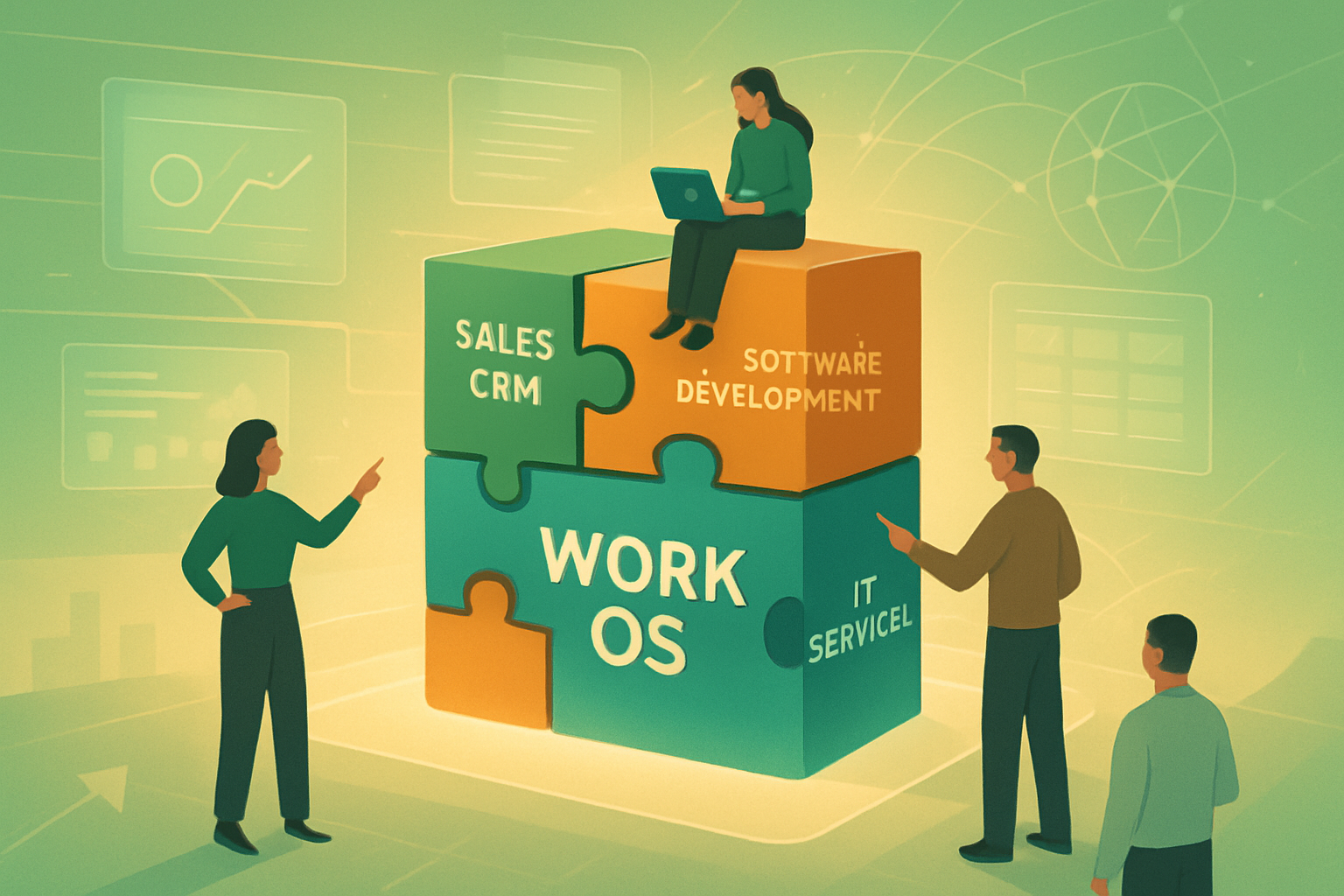
    The company rebranded to Monday.com in 2017 and saw meteoric growth during the global shift to remote work in 2020. Its successful IPO in June 2021 positioned it as a leader in the next generation of enterprise software. Over the last five years, the company has successfully evolved from a single-product project management tool into a comprehensive platform featuring dedicated suites for Sales CRM, Software Development, and IT Service Management.

    Business Model

    Monday.com operates on a cloud-based, subscription-only SaaS model. Its revenue is derived primarily from tiered pricing based on the number of users ("seats") and the level of functionality required. The company’s core value proposition is its "Work OS" philosophy, which allows customers to consolidate multiple point solutions—such as CRM, task management, and resource planning—into one unified ecosystem.

    The business is segmented into three primary product pillars:

    • Monday CRM: Targeting sales and marketing teams.
    • Monday Dev: A specialized toolkit for engineering and product teams.
    • Monday Service: A newer entry into the IT Service Management (ITSM) and employee helpdesk space.

    The company’s customer base is highly diversified, ranging from small-to-medium businesses (SMBs) to Fortune 500 enterprises. As of late 2025, the company reported that customers generating over $100,000 in Annual Recurring Revenue (ARR) now represent roughly 40% of its total revenue, highlighting a successful move "upmarket."

    Stock Performance Overview

    Over the past year, Monday.com’s stock has been a study in volatility. Throughout 2025, the stock reached heights near $340 as the company demonstrated strong margin expansion and cross-selling success. However, the 1-year performance has turned negative as of today, February 9, 2026, following a sharp ~14% single-day decline.

    Since its 2021 IPO, Monday.com has significantly outperformed many of its high-growth SaaS peers in terms of fundamental resilience, though its price remains far below its post-IPO speculative peaks. For long-term investors, the stock has provided a CAGR (Compound Annual Growth Rate) that reflects its underlying revenue growth, but the current "valuation reset" suggests the market is now pricing the company as a maturing enterprise rather than an explosive disruptor.

    Financial Performance

    The fiscal 2025 results, concluded in December, showed a company in peak operational health. Revenue for 2025 hit approximately $1.25 billion (a 29% year-over-year increase). More impressively, Monday.com maintained high-tier gross margins of 89% and achieved its first full year of GAAP operating profitability.

    However, the fiscal 2026 guidance issued today has clouded the short-term outlook.

    • Revenue Guidance: $1.452 billion – $1.462 billion, representing 18–19% growth. This fell short of the 21% growth ($1.48 billion) analysts had expected.
    • Margins: Non-GAAP operating margins are projected to settle between 11% and 12%, reflecting a planned increase in R&D spending for AI integration.
    • Valuation: Following today's sell-off, the stock trades at roughly 3.5x forward Price-to-Sales (P/S) and ~10x Enterprise Value to Free Cash Flow (EV/FCF), levels that many bulls consider historically cheap.

    Leadership and Management

    Co-founders Roy Mann and Eran Zinman remain at the helm as co-CEOs, a partnership that has become a hallmark of the company’s stability. Their strategy has shifted from aggressive customer acquisition to "platformization," encouraging existing users to adopt multiple Monday products.

    The leadership team, including CFO Eliran Glazer, has earned a reputation for "under-promising and over-delivering" in previous years. However, today's conservative 2026 guidance suggests management is bracing for a more difficult macroeconomic environment or a longer sales cycle for its newer enterprise products.

    Products, Services, and Innovations

    The most significant innovation entering 2026 is the "Monday Sidekick," an AI-driven assistant that can now automate multi-step workflows across different departments without human intervention.

    Further product developments include:

    • Monday Vibe: A low-code tool released in late 2025 that allows users to build functional applications using natural language prompts.
    • Monday Service: This tool is gaining traction as an alternative to ServiceNow (NYSE: NOW) for mid-market firms looking for a more modern, user-friendly interface for IT tickets.
    • AI Blocks: Predictive data models integrated into the Monday boards that help teams forecast project completion dates and budget overruns before they occur.

    Competitive Landscape

    Monday.com competes in one of the most crowded sectors of the software industry.

    • Vs. Asana (NYSE: ASAN): Monday is generally viewed as having a broader "OS" capability, whereas Asana is often favored for its "Task-centric" simplicity.
    • Vs. Smartsheet (NYSE: SMAR): Monday is aggressively moving into Smartsheet's territory of complex project portfolio management but with a more modern user experience.
    • Vs. Atlassian (NASDAQ: TEAM): With Monday Dev, the company is directly challenging Jira. While Jira remains the industry standard for deep engineering tasks, Monday Dev is winning over hybrid teams that require collaboration between developers and business units.

    Industry and Market Trends

    The project management and collaboration sector is currently undergoing "The Great Consolidation." Enterprise clients are no longer looking for dozens of "best-of-breed" tools; they want a single platform that can handle CRM, projects, and IT requests. This trend favors Monday.com’s multi-product strategy.

    Furthermore, the rise of "AI Employees"—autonomous agents that can perform routine administrative tasks—is the next frontier. Monday.com’s architecture is uniquely suited for this, as its "Lego-like" building blocks can easily be manipulated by AI agents to reorganize data and trigger actions.

    Risks and Challenges

    • Macroeconomic Sensitivity: As a productivity tool, Monday.com can be vulnerable to corporate budget cuts, particularly in the SMB segment where churn remains a concern.
    • Guidance Disappointment: Today’s fiscal 2026 guidance suggests that the "easy growth" has been captured. Capturing the next billion dollars in revenue will require displacing entrenched incumbents like Salesforce (NYSE: CRM) in the CRM space.
    • AI Disruption: While AI is an opportunity, it also lowers the barrier to entry for new competitors who might build "AI-first" productivity tools that bypass the need for traditional board structures.

    Opportunities and Catalysts

    • Monday Service Upsell: If Monday Service can capture even 5% of the ITSM market, it would represent a massive secondary revenue stream.
    • Monetization of AI: The company has begun testing a "Premium AI" tier. Successful adoption of this tier could drive significant Average Revenue Per User (ARPU) growth in late 2026.
    • M&A Potential: With a strong cash position and a depressed valuation after today's sell-off, Monday.com could become an attractive acquisition target for a legacy giant like Microsoft (NASDAQ: MSFT) or Oracle (NYSE: ORCL) looking to modernize their collaboration suite.

    Investor Sentiment and Analyst Coverage

    Current sentiment is cautious but divided. Following today's guidance, several firms, including DA Davidson and Cantor Fitzgerald, lowered their price targets, citing a "reset of growth expectations."

    However, institutional sentiment remains relatively high among value-oriented tech investors. Many view the current sell-off as a "clearing of the decks," where the stock's valuation finally aligns with its cash-flow generation rather than just its growth percentage. Retail chatter on platforms like X and Reddit remains focused on whether the "Monday Vibe" and AI integrations can reignite growth in the second half of 2026.

    Regulatory, Policy, and Geopolitical Factors

    Headquartered in Tel Aviv, Monday.com faces unique geopolitical risks. Ongoing regional instability in the Middle East has occasionally raised concerns regarding operational continuity. However, the company has mitigated this by decentralizing its workforce across major hubs in New York, London, and Sydney.

    On the regulatory front, Monday.com must navigate increasingly complex data privacy laws (GDPR in Europe, CCPA in California) as it expands its CRM and Service offerings, which handle sensitive customer and employee data.

    Conclusion

    As of February 9, 2026, Monday.com finds itself at a crossroads. The company is fundamentally stronger than it was three years ago—it is profitable, cash-flow positive, and has a diversified product suite. Yet, the market’s harsh reaction to its "conservative" 2026 guidance highlights the reality that in the SaaS world, "good" performance is often not enough if it fails to meet "exceptional" expectations.

    For investors, the key watch-item for the remainder of 2026 will be the adoption rate of the Monday Service and CRM products. If Monday.com can prove that it is not just a project tool, but a true alternative to the massive incumbents of the enterprise software world, today’s price drop may eventually be seen as a significant long-term entry point.


    This content is intended for informational purposes only and is not financial advice.

  • The Agentic Frontier: A Deep Dive into Salesforce’s (CRM) 2026 Strategic Evolution

    The Agentic Frontier: A Deep Dive into Salesforce’s (CRM) 2026 Strategic Evolution

    As of January 27, 2026, Salesforce (NYSE: CRM) finds itself at a pivotal crossroads. Once the disruptor that pioneered the Software-as-a-Service (SaaS) movement at the turn of the millennium, the company is now navigating the most significant shift in its history: the transition from assistive artificial intelligence to autonomous agentic systems. Under the unwavering, if sometimes polarizing, leadership of Marc Benioff, Salesforce is betting its future on "Agentforce"—a vision of a "digital labor force" that can execute complex business processes without human hand-holding. With a tactical pivot toward high-security government contracts and deep-tier AI partnerships with Silicon Valley’s hardware and cloud titans, Salesforce is attempting to redefine the very nature of enterprise productivity.

    Historical Background

    The story of Salesforce is synonymous with the rise of the cloud. Founded in 1999 in a San Francisco apartment by former Oracle executive Marc Benioff and Parker Harris, the company’s "No Software" campaign was a radical departure from the expensive, on-premise installations of the time. Throughout the 2000s and 2010s, Salesforce aggressively expanded beyond its core Customer Relationship Management (CRM) roots through a series of massive acquisitions, including MuleSoft (2018) for data integration, Tableau (2019) for analytics, and Slack (2020) for team collaboration.

    These acquisitions were not without friction, leading to several years of internal restructuring and cultural clashes. However, by 2023, following pressure from activist investors like Elliott Management, Benioff pivoted from a "growth at all costs" mentality to a focus on operational efficiency and profitability. This transformation set the stage for the current "Agentic" era, where the disparate parts of the Salesforce ecosystem—Slack, Data Cloud, and CRM—are being unified by a singular AI-driven reasoning engine.

    Business Model

    Salesforce operates primarily through a subscription-based model, offering a suite of cloud-based applications designed to manage sales, service, marketing, and commerce. Its revenue is categorized into several key clouds: Sales Cloud, Service Cloud, Platform and Other (including Slack), and Data and Analytics (MuleSoft and Tableau).

    In 2026, the business model is evolving toward consumption-based pricing for its AI agents. Instead of charging purely per-user "seats," Salesforce is increasingly looking to monetize the work performed by Agentforce agents. This "Agentic Economy" model is designed to offset the potential seat-count cannibalization that occurs when AI automates tasks previously performed by humans. The company's customer base remains one of the most prestigious in the world, spanning Fortune 500 giants to growing mid-market enterprises.

    Stock Performance Overview

    Over the last decade, Salesforce has been a cornerstone of the tech-heavy portfolios, but recent years have seen increased volatility:

    • 10-Year Performance: As of January 2026, the stock has returned approximately +232%, significantly outperforming legacy ERP peers.
    • 5-Year Performance: The stock has seen a more modest gain of approximately +2.6%. This reflects a period of "digestion" following the pandemic-era tech surge and the subsequent 2022 market correction.
    • 1-Year Performance: The past twelve months have been challenging, with the stock down approximately 31.7% from its late-2024 highs. Investors have grappled with the "AI trough of disillusionment," questioning the speed at which Salesforce can turn its AI innovations into bottom-line revenue.

    Financial Performance

    In its Q3 FY2026 results (period ending October 31, 2025), Salesforce reported revenue of $10.26 billion, a 9% year-over-year increase. While the hyper-growth days of 20%+ are in the rearview mirror, the company’s focus on profitability has yielded impressive results, with non-GAAP operating margins reaching a record 35.5%.

    The most closely watched metric in early 2026 is the Current Remaining Performance Obligation (cRPO), which sits at $29.4 billion (up 11% YoY). Crucially, the "Data 360" and Agentforce products have reached an Annual Recurring Revenue (ARR) of $1.4 billion, signaling that the AI pivot is gaining tangible traction. The company maintains a fortress balance sheet, though the $8 billion acquisition of Informatica in late 2025 has temporarily increased its leverage.

    Leadership and Management

    Marc Benioff remains the singular force at the helm as Chair and CEO. After a period of "co-CEO" experimentation, Benioff has returned to a more centralized command structure. However, the emergence of COO Brian Millham as the clear "successor-in-waiting" has provided Wall Street with a sense of stability. Millham now oversees nearly 70% of the workforce, focusing on the "nuts and bolts" of the operation while Benioff focuses on vision and strategy.

    A notable trend in 2025 and early 2026 has been the return of "The Boomerangs"—high-level executives who left and have since returned, including CMO Ariel Kelman and CRO Miguel Milano. This re-recruitment of veteran talent is seen as a move to restore the company’s core sales culture and "Ohana" spirit in a more disciplined era.

    Products, Services, and Innovations

    The flagship innovation of 2026 is Agentforce, an autonomous AI layer that sits atop the entire Salesforce stack. Unlike basic chatbots, Agentforce agents are designed to "reason"—using Data Cloud to understand customer context and taking actions across third-party systems.

    • Agentforce 360 for AWS: A December 2025 launch that allows enterprises to run Salesforce agents directly on Amazon Web Services (NASDAQ: AMZN) infrastructure using Amazon Bedrock models.
    • NVIDIA Collaboration: Salesforce is utilizing NVIDIA (NASDAQ: NVDA) NIM microservices to optimize the low-latency reasoning required for real-time customer service agents.
    • Slack AI: Evolution of Slack from a messaging tool to an "agent command center" where users manage their digital labor force.

    Competitive Landscape

    The CRM market is more contested than ever. Salesforce’s primary rival remains Microsoft (NASDAQ: MSFT), which has aggressively bundled Dynamics 365 with its ubiquitous Office 365 and Azure ecosystem. Microsoft’s "Copilot" strategy is the direct antithesis to Salesforce’s "Agentforce" vision, creating a battle over whether AI should be an assistant (Microsoft) or an autonomous worker (Salesforce).

    In the mid-market and SMB space, HubSpot (NYSE: HUBS) continues to take share due to its lower complexity and integrated marketing-sales-service platform. Meanwhile, legacy giants Oracle (NYSE: ORCL) and SAP (NYSE: SAP) have seen a resurgence as they modernize their cloud ERP (Enterprise Resource Planning) cores, competing with Salesforce for the role of the primary "system of record" for large enterprises.

    Industry and Market Trends

    The broader software sector is currently defined by the shift from "System of Record" to "System of Action." The market is moving away from static databases toward dynamic systems that can predict customer needs and automate workflows. Additionally, there is a growing trend toward "sovereign cloud" and data localization, as governments and highly regulated industries demand that their AI training data remains within specific geographic or security boundaries.

    Risks and Challenges

    • Monetization Lag: There is a risk that the costs of developing and running high-compute AI agents will outpace the revenue they generate in the near term.
    • Agentic Liability: A new regulatory and legal frontier. If an autonomous agent accidentally offers a 90% discount or signs an unauthorized contract, who is liable?
    • Execution Risk: Integrating the Informatica acquisition while simultaneously pivoting to an agent-first model is a massive operational lift that could lead to distraction.

    Opportunities and Catalysts

    The most significant near-term catalyst is Salesforce’s tactical expansion into the public sector. In January 2026, the company secured a landmark $5.6 billion, 10-year contract with the U.S. Army to modernize digital infrastructure via "Missionforce." This push into government and defense creates a massive, high-margin revenue stream and positions Salesforce as a "trusted" national security partner, directly challenging incumbents like Palantir (NYSE: PLTR) and Microsoft Federal.

    Investor Sentiment and Analyst Coverage

    Wall Street is currently "cautiously optimistic" but divided. Institutional investors, who own over 80% of CRM, appreciate the expanded margins and the Informatica integration. Bullish analysts, such as those at Wedbush, have price targets north of $400, citing the potential for Agentforce to trigger a "multi-year upgrade cycle." Conversely, bears worry about the slowing growth of the core Sales Cloud and whether AI can truly replace the revenue lost from declining seat-count growth.

    Regulatory, Policy, and Geopolitical Factors

    Salesforce is navigating a complex global regulatory environment. The EU AI Act, which is becoming fully applicable in mid-2026, requires strict transparency regarding the training data used for autonomous agents. Furthermore, the U.S. Federal Trade Commission (FTC) remains vigilant regarding "vertical adjacency" in the wake of the Informatica deal. On the geopolitical front, Salesforce's deep ties to U.S. government defense contracts may complicate its expansion in certain non-aligned international markets, but it significantly strengthens its domestic "moat."

    Conclusion

    Salesforce in 2026 is no longer just a CRM company; it is an infrastructure provider for the autonomous enterprise. The shift toward Agentforce and the aggressive pursuit of massive government contracts represent a high-stakes gamble on the future of work. For investors, the key will be watching the "Rule of 40"—the company's ability to maintain a combined growth and margin rate above 40%. While the 2025 stock performance reflected a period of skepticism, the fundamental transformation of the business model toward autonomous "digital labor" suggests that Salesforce is positioning itself to remain the dominant operating system for business in the AI era.


    This content is intended for informational purposes only and is not financial advice.

  • The Great Transformation: How Nasdaq Inc. (NDAQ) Became a Fintech Powerhouse

    The Great Transformation: How Nasdaq Inc. (NDAQ) Became a Fintech Powerhouse

    As of January 23, 2026, the financial world no longer views Nasdaq Inc. (NasdaqGS: NDAQ) as just a collection of tickers and flashing screens in Times Square. Over the past decade, and accelerating through the mid-2020s, the firm has undergone a profound metamorphosis. What was once a cyclical exchange operator tethered to the volatility of trading volumes is now a global financial technology (FinTech) and Software-as-a-Service (SaaS) powerhouse.

    Under the strategic direction of Chair and CEO Adena Friedman, Nasdaq has systematically pivoted its business model to focus on high-margin, recurring revenue streams. This evolution has redefined the company’s valuation and its role in the global financial infrastructure. Today, Nasdaq sits at the intersection of capital markets, data analytics, and regulatory technology, making it a "must-watch" for investors seeking growth and defensive resilience in an increasingly digital financial ecosystem.

    Historical Background

    Founded in 1971 as the world's first electronic stock market, Nasdaq was born out of a desire to modernize securities trading. Initially, it served as a quotation system, but it quickly evolved into a full-fledged stock exchange, becoming the spiritual home for the technology revolution of the 1990s and 2000s, hosting giants like Apple and Microsoft.

    However, the 2010s marked a critical pivot. Recognizing the commoditization of trade execution, Nasdaq began a series of bold acquisitions to diversify its revenue. Key milestones included the 2008 merger with OMX to expand its technology footprint and the 2021 acquisition of Verafin, an anti-financial crime specialist. The most transformative move came in late 2023 with the $10.5 billion acquisition of Adenza, which added sophisticated risk management and regulatory reporting capabilities to its arsenal. By 2026, the "New Nasdaq" is less about the act of trading and more about the technology that makes the entire financial system function.

    Business Model

    Nasdaq’s business model is now structured around three high-performing segments, designed to maximize Annualized Recurring Revenue (ARR):

    1. Financial Technology: This is the company’s crown jewel and growth engine. It houses the Verafin (anti-financial crime) and Adenza (AxiomSL and Calypso) platforms. It provides banks and broker-dealers with mission-critical software for risk management, regulatory compliance, and anti-money laundering.
    2. Capital Access Platforms: This segment includes the Listings business, Data & Insights, and the massive Index business (which manages the intellectual property behind the Nasdaq-100). This segment benefits from the growth of passive investing and the continuous influx of new companies into the public markets.
    3. Market Platforms: While this includes traditional cash equities and derivatives trading, it has shifted toward "Market Modernization." Nasdaq now sells its matching engine technology to other exchanges globally and has transitioned its infrastructure to the AWS cloud, turning market operations into a scalable tech service.

    Stock Performance Overview

    Nasdaq's stock has rewarded long-term shareholders handsomely as it transitioned from a transactional to a software-centric valuation:

    • 1-Year Performance (2025-2026): NDAQ shares rose approximately 31%, significantly outperforming the S&P 500. This was driven by the successful integration of Adenza and a rebound in the IPO market.
    • 5-Year Performance: The stock has seen a total return of ~124%, reflecting the "multiple expansion" that occurred as the market began valuing NDAQ as a tech firm rather than a financial exchange.
    • 10-Year Performance: Long-term investors have enjoyed a staggering ~504% return, placing Nasdaq among the elite performers in the financial sector over the last decade.

    As of late January 2026, the stock is trading near all-time highs of approximately $101, reflecting confidence in its revised 2026 earnings outlook.

    Financial Performance

    Nasdaq’s 2025 fiscal year results, finalized earlier this month, highlight the strength of its recurring revenue model.

    • Revenue & ARR: Total net revenue for 2025 reached record levels, with Annualized Recurring Revenue (ARR) surpassing the $3 billion milestone. Solutions-based revenue now accounts for nearly 80% of the firm's total net revenue.
    • Earnings: Non-GAAP diluted earnings per share (EPS) for 2025 settled at $3.00, a healthy 19% increase year-over-year. Projections for 2026 suggest EPS could reach $4.00 as cost synergies from recent acquisitions are fully realized.
    • Debt Management: Following the Adenza deal, NDAQ took on significant leverage. However, management’s aggressive deleveraging plan reached its 3.3x gross leverage target in late 2025—16 months ahead of schedule—reopening the door for share buybacks and potential future tuck-in acquisitions.

    Leadership and Management

    Adena Friedman, who became CEO in 2017, is widely credited with the firm’s transformation. Her vision of Nasdaq as a "trusted fabric" of the global financial system has shifted the culture toward innovation and SaaS-style execution. The management team is lauded for its operational rigor, particularly in integrating complex acquisitions. The leadership's transparency regarding deleveraging and ARR growth has built significant "credibility equity" with institutional investors. Governance remains a strong suit, with a diverse and tech-savvy board of directors that reflects the company’s dual identity as a financial utility and a technology innovator.

    Products, Services, and Innovations

    Nasdaq's current product suite is defined by deep integration and "Agentic AI":

    • The AI Workforce: In 2025, Nasdaq launched AI-powered digital analysts within its Verafin platform. These "agents" automate the investigation of financial crimes, significantly reducing the burden on human compliance officers.
    • Adenza/Verafin Cross-Sell: The primary innovation in 2026 is the unified data layer between Adenza’s risk tools and Verafin’s compliance tools, allowing banks to see a "holistic view" of risk and crime across their entire enterprise.
    • Index Innovation: Nasdaq continues to launch thematic indices (focused on AI, Green Energy, and Cybersecurity) that power billions in ETF assets globally.

    Competitive Landscape

    Nasdaq operates in a highly competitive, yet increasingly bifurcated, market:

    • Intercontinental Exchange (NYSE: ICE): Nasdaq’s primary rival in the U.S. ICE has similarly pivoted toward data and mortgage technology, making the two firms "the titans of financial data."
    • London Stock Exchange Group (LSEG): Following its Refinitiv acquisition, LSEG is a massive competitor in the data and analytics space.
    • Cboe Global Markets (BATS: CBOE): While a leader in derivatives and options, Cboe remains more tied to transaction volumes compared to Nasdaq’s SaaS-heavy model.
    • Strengths: Nasdaq’s edge lies in its "sticky" software—once a bank integrates Adenza into its regulatory reporting, the switching costs are immense.

    Industry and Market Trends

    Several macro drivers are currently working in Nasdaq’s favor:

    • SaaS Migration: Financial institutions are under pressure to modernize their legacy tech stacks, leading to a massive migration toward cloud-based providers like Nasdaq.
    • Regulatory Complexity: Global regulations (Basel III endgame, ESG reporting) are becoming more onerous, driving demand for Nasdaq’s automated compliance software.
    • AI Integration: The shift from "Generative AI" (chatbots) to "Agentic AI" (software that performs tasks) is the defining trend of 2026, and Nasdaq is at the forefront of this application in finance.

    Risks and Challenges

    Despite its successes, Nasdaq is not without risks:

    • Integration Complexity: While the Adenza integration is on track, any slowdown in cross-selling or synergy realization could pressure the stock’s premium valuation.
    • Market Volatility: While the business is more resilient than before, a prolonged downturn in the IPO market can still dampen revenue in the Capital Access Platforms segment.
    • Geopolitical and Cyber Risks: As a provider of critical financial infrastructure, Nasdaq is a prime target for cyberattacks. Any breach could have catastrophic reputational and regulatory consequences.

    Opportunities and Catalysts

    • IPOs Rebound: 2025 saw a significant recovery in the IPO market. A continued surge in new listings in 2026 would provide a high-margin boost to the Listings and Index segments.
    • Tokenization: Nasdaq has filed for regulatory approval to trade tokenized securities, positioning it to dominate the emerging market for digital asset infrastructure.
    • European Expansion: Utilizing Adenza’s strong European footprint, Nasdaq has a massive opportunity to sell Verafin (traditionally North American-centric) to European banks.

    Investor Sentiment and Analyst Coverage

    Wall Street sentiment toward NDAQ remains largely bullish, with a "Moderate Buy" consensus. Analysts frequently cite the company’s "defensive growth" characteristics. While some value investors find the 35x P/E ratio steep, growth-oriented analysts argue that the quality of its $3B+ ARR justifies a SaaS-style premium. Retail sentiment is also positive, often fueled by the popularity of the Nasdaq-100 (QQQ) index, which keeps the brand top-of-mind for individual investors.

    Regulatory, Policy, and Geopolitical Factors

    Nasdaq is heavily influenced by the SEC and global financial regulators. In 2026, the focus is on the SEC’s rules regarding AI transparency in trading and data privacy. Furthermore, as Nasdaq operates exchanges in the Nordics and provides tech to emerging markets, it must navigate the shifting geopolitical landscape, particularly regarding data sovereignty laws in Europe and Asia.

    Conclusion

    Nasdaq Inc. has successfully navigated one of the most impressive corporate transformations of the 21st century. By January 2026, it has solidified its position as a dominant fintech provider, with a business model that is more predictable, more profitable, and more technologically advanced than at any point in its history.

    For investors, the key will be monitoring the continued growth of the Financial Technology segment and the company’s ability to maintain its technological lead in AI. While the valuation is no longer "cheap," the quality of Nasdaq's recurring earnings and its indispensable role in the global financial fabric make it a cornerstone asset for the modern digital age.


    This content is intended for informational purposes only and is not financial advice.