
Tag: Semiconductors

  • Analog Devices (ADI): Deep-Dive on the 2026 Cyclical Recovery and the Intelligent Edge

    Analog Devices (ADI): Deep-Dive on the 2026 Cyclical Recovery and the Intelligent Edge

    By [Financial News Desk]
    Date: January 16, 2026


    Introduction

    As the semiconductor industry emerges from the "inventory digestion" phase that defined much of 2024 and early 2025, Analog Devices, Inc. (NASDAQ: ADI) has reclaimed its position as a bellwether for the high-performance analog market. Known for its mastery of translating real-world phenomena—temperature, pressure, and sound—into digital signals, ADI is currently in focus as a cornerstone of the "Intelligent Edge." With the global chip market trending toward a $1 trillion valuation by the end of 2026, ADI’s strategic pivot from component sales to integrated system solutions has made it a favorite among investors seeking stability and high margins in a traditionally volatile sector.

    Historical Background

    Founded in 1965 by MIT graduates Ray Stata and Matthew Lorber, Analog Devices began in a small Cambridge basement focusing on operational amplifiers. Over six decades, the company evolved from a niche manufacturer of precision instruments to a global semiconductor powerhouse. Two transformative milestones redefined its trajectory: the $14.8 billion acquisition of Linear Technology in 2017 and the $21 billion acquisition of Maxim Integrated in 2021. These moves didn't just add scale; they solidified ADI’s dominance in power management and automotive connectivity, moving the company beyond the industrial floor and into the digital cockpits of the world’s most advanced electric vehicles (EVs).

    Business Model

    ADI operates on a high-margin, "sticky" business model. Unlike digital chipmakers (e.g., NVIDIA or Intel) that focus on rapid-cycle consumer electronics, ADI’s chips often have lifecycles of 10 to 20 years.

    • Revenue Segments: The company's revenue is heavily weighted toward Industrial (approx. 50%) and Automotive (approx. 30%), followed by Communications and Consumer markets.
    • The "Hybrid" Strategy: Unlike its rival Texas Instruments (NASDAQ: TXN), which relies on heavy internal manufacturing, ADI uses a hybrid model, combining its own internal precision fabs with external foundries like TSMC. This provides the flexibility to scale without the massive capital expenditure of a purely vertical model.
    • Solution-Centric: Under its current leadership, ADI has shifted toward "selling outcomes"—offering hardware-software bundles (like the CodeFusion platform) that allow engineers to program analog sensors as easily as they would a digital processor.

    Stock Performance Overview

    As of January 16, 2026, ADI is trading near its all-time high of $302.10, reflecting a significant rally from the 2024 lows.

    • 1-Year Performance: The stock has surged approximately 35% over the past 12 months, outperforming the broader S&P 500 as investors rotated back into "cyclical recovery" plays.
    • 5-Year Performance: Driven by the successful integration of Maxim Integrated and the explosion of EV content, ADI has nearly doubled its market cap over the last five years.
    • 10-Year Performance: Long-term shareholders have seen exceptional returns, with the stock delivering a total return exceeding 450% when factoring in its consistent dividend growth.

    Financial Performance

    The fiscal year 2025 was a record-breaking period for ADI, marked by a sharp rebound in the second half of the year.

    • Revenue: Reached $11.0 billion in FY2025, a 17% increase over the previous year.
    • Q2 2025 Focus: Management famously called the Q2 2025 earnings report the "inflection point," where orders finally outpaced shipments after the post-pandemic glut.
    • Margins: Adjusted operating margins reached a staggering 43.5% in late 2025.
    • Cash Flow: ADI generated $4.3 billion in free cash flow, maintaining its policy of returning 100% of that cash to shareholders through a quarterly dividend of $0.99 and aggressive share buybacks.

    Leadership and Management

    CEO Vincent Roche, who has led the company since 2013, is credited with transforming ADI from a component vendor into a system-level partner. His "Intelligent Edge" strategy emphasizes the need for data processing at the sensor level to reduce latency and power consumption. Roche’s leadership is characterized by disciplined capital allocation and a focus on "high-performance" over "high-volume," ensuring that ADI maintains its premium pricing power even during downturns.

    Products, Services, and Innovations

    ADI’s R&D pipeline is currently focused on three core pillars:

    1. Wireless Battery Management Systems (wBMS): A market-leading solution that eliminates 90% of the wiring in an EV battery pack, reducing weight and improving range.
    2. GMSL & A2B Connectivity: Technologies that power the high-definition displays and noise-canceling audio systems in modern automotive cockpits.
    3. Analog AI: ADI is pioneering ultra-low-power AI inference chips that can detect anomalies in industrial machinery or monitor heart rates in medical wearables without needing to send data to the cloud.

    Competitive Landscape

    The analog world is a "clash of titans" between ADI and Texas Instruments (TXN).

    • TXN: Commands a higher total market share (approx. 20%) and leverages massive 300mm internal manufacturing to compete on price and volume.
    • ADI: While second in market share (approx. 15%), it leads in "high-complexity" niches. ADI’s chips are often found in the most demanding environments—from MRI machines to aerospace defense systems—where precision is more critical than the unit price.
    • Other Rivals: Microchip Technology (NASDAQ: MCHP) and STMicroelectronics (NYSE: STM) compete in the microcontroller and power spaces, but ADI’s high-performance signal chain remains its "moat."

    Industry and Market Trends

    The "electrification of everything" remains the primary macro driver. As vehicles transition to EVs and factories adopt Industry 4.0 automation, the "analog content" per system is increasing exponentially. A standard internal combustion engine car might have $200 of analog chips; a modern EV with Level 2+ autonomy can have over $1,000. ADI is perfectly positioned to capture this content expansion as the cyclical recovery gains momentum into late 2026.

    Risks and Challenges

    • Geopolitical Friction: ADI maintains significant exposure to China, both as a manufacturing hub and a customer base. Any tightening of export controls on analog technology could disrupt revenue.
    • Inventory Cycles: While the current trend is upward, the semiconductor industry remains inherently cyclical. A macro slowdown in 2027 could lead to another round of inventory build-ups.
    • Competitive Pricing: As Texas Instruments brings more 300mm fab capacity online, ADI may face pricing pressure in the mid-range industrial market.

    Opportunities and Catalysts

    • AI at the Edge: As generative AI moves from data centers to edge devices (phones, cars, factory sensors), the demand for ADI’s low-power signal processing will skyrocket.
    • Medical Technology: The shift toward remote patient monitoring and portable ultrasound creates a massive long-term tailwind for ADI’s precision healthcare chips.
    • M&A Potential: With a strong balance sheet and high cash flow, ADI is well-positioned for further "bolt-on" acquisitions in the software or specialty sensor space.

    Investor Sentiment and Analyst Coverage

    Wall Street remains overwhelmingly bullish on ADI. In early January 2026, analysts at KeyCorp raised their price target to $375, citing the company's superior margin profile. Institutional ownership remains high at over 85%, with major funds like Vanguard and BlackRock holding significant positions. The consensus view is that ADI is a "core" holding for anyone looking to play the long-term digitalization of the physical world.

    Regulatory, Policy, and Geopolitical Factors

    ADI has been a beneficiary of the U.S. CHIPS and Science Act, receiving incentives to expand its domestic manufacturing and R&D capabilities. However, the company must navigate a complex regulatory landscape regarding environmental standards for chip manufacturing and the ongoing "de-risking" of supply chains away from high-tension geopolitical zones.

    Conclusion

    Analog Devices enters 2026 in a position of strength. By successfully navigating the 2024-2025 downturn and emerging with record-high margins and a revitalized product portfolio, the company has proven the resilience of its business model. For investors, ADI offers a rare combination of high-tech growth and "Old Economy" reliability. While the stock's valuation is high, its dominant role in the Intelligent Edge and its commitment to returning 100% of free cash flow make it a compelling cornerstone for a diversified portfolio. As the world becomes more automated, electric, and connected, the "analog" signals that ADI masters will only become more valuable.


    This content is intended for informational purposes only and is not financial advice.
  • The Renaissance of Compute: A 2026 Deep Dive into AMD’s AI Transformation

    The Renaissance of Compute: A 2026 Deep Dive into AMD’s AI Transformation

    Advanced Micro Devices, Inc. (Nasdaq: AMD) enters 2026 as a pivotal player in the "Great Decoupling" of the global supply chain and the rapid expansion of AI-driven compute. No longer just a component manufacturer, AMD has reinvented itself as a provider of heterogeneous computing solutions, integrating CPUs, GPUs, FPGAs, and networking into unified "rack-scale" systems.

    The company is currently in focus due to its aggressive AI accelerator roadmap—most recently the unveiling of the MI400 series—and its successful navigation of 2025’s volatile macroeconomic environment. With a market capitalization that has seen explosive growth alongside its data center revenue, AMD has become the primary beneficiary of the industry’s push for an "open ecosystem" alternative to Nvidia’s (Nasdaq: NVDA) proprietary standards.

    Historical Background

    Founded on May 1, 1969, by Jerry Sanders III and seven former Fairchild Semiconductor employees, AMD began as a logic and memory chip provider. Its early history was defined by a symbiotic but litigious relationship with Intel (Nasdaq: INTC). In 1982, a landmark agreement allowed AMD to be a second-source manufacturer for Intel’s x86 processors for the original IBM PC—a deal that fueled AMD’s growth but sparked a decade of legal battles over intellectual property.

    The company saw a golden age in the early 2000s with the launch of the Athlon (the first 1GHz processor) and the Opteron, which pioneered 64-bit computing. However, a series of strategic missteps—including the debt-heavy $5.4 billion acquisition of ATI in 2006 and the underperforming "Bulldozer" architecture in 2011—nearly drove the company to bankruptcy. The turning point came in 2014 when Dr. Lisa Su took the helm as CEO, pivoting the company toward high-performance computing and the "Zen" revolution.

    Business Model

    As of 2026, AMD operates through four primary reporting segments, having successfully integrated several multi-billion dollar acquisitions:

    1. Data Center: The primary growth engine, encompassing EPYC server CPUs and Instinct AI accelerators.
    2. Client: Ryzen processors for desktops and the emerging "AI PC" laptop market.
    3. Gaming: Radeon GPUs and semi-custom silicon for major consoles.
    4. Embedded: High-margin industrial and automotive chips, largely derived from the $50 billion Xilinx acquisition.

    AMD’s business model has shifted toward "System-Led" sales. Following the 2025 acquisition of ZT Systems, AMD now sells entire rack-scale AI infrastructures, moving up the value chain from selling chips to providing finished data center solutions.

    Stock Performance Overview

    AMD’s stock has been a volatility champion, rewarding long-term conviction while reacting sharply to cyclical shifts.

    • 1-Year Performance: After a breakout 2025, the stock reached an all-time high of $264.33 in October 2025. As of January 14, 2026, it is trading in a consolidation range between $215 and $225, up approximately 45% year-over-year.
    • 5-Year Performance: The stock has outperformed the broader S&P 500 significantly, rising over 130% since early 2021 as the AI boom materialized.
    • 10-Year Performance: One of the greatest "rags-to-riches" stories in the market, AMD was trading under $3.00 in early 2016. Investors who held since then have seen gains exceeding 7,000%.

    Financial Performance

    AMD’s fiscal year 2025 was a landmark period, characterized by the scaling of its AI business and record-breaking data center results.

    • Revenue: Estimated at $34.5 billion for FY 2025, a ~34% increase over 2024.
    • Data Center Growth: AMD’s Data Center revenue surpassed Intel’s for the first time in Q3 2025, signaling a permanent shift in market leadership.
    • Margins: Non-GAAP gross margins expanded to 54%, bolstered by high-margin sales of the Instinct MI300 and MI350 series.
    • Valuation: Trading at a forward P/E of roughly 28x, the market prices AMD for continued double-digit growth, though it remains "cheaper" than some direct AI peers on a PEG ratio basis.

    Leadership and Management

    Dr. Lisa Su remains the undisputed architect of AMD’s modern success. Her strategy of "relentless execution" has become a hallmark of the company’s governance. In 2025, she was supported by Victor Peng (President, former Xilinx CEO), who leads the Adaptive and Embedded group, and Forrest Norrod, who has been instrumental in the Data Center segment's surge. The leadership team is highly regarded for its "under-promise and over-deliver" style, a sharp contrast to the aggressive marketing often found in the sector.

    Products, Services, and Innovations

    AMD’s product portfolio in early 2026 is its most competitive in history:

    • Instinct MI400 Series: Unveiled at CES 2026, the MI455X is the world’s first 2nm AI GPU, boasting 432GB of HBM4 memory.
    • Helios Platform: AMD’s first fully integrated AI rack, featuring 72 MI455X accelerators. It competes directly with Nvidia’s Blackwell and Rubin platforms.
    • EPYC "Turin" CPUs: Built on the Zen 5 architecture, these chips command nearly 40% of the x86 server market.
    • Ryzen AI 400 Series: Targeting the "Copilot+" PC market, these chips integrate NPUs capable of 60 TOPS.

    Competitive Landscape

    AMD’s position in 2026 is defined by its role as the "Standard-Bearer for Open AI."

    • Vs. Nvidia: While Nvidia remains the market leader, AMD is leading the Ultra Accelerator Link (UALink) consortium to create an open industry standard, appealing to hyperscalers looking to avoid vendor lock-in.
    • Vs. Intel: In the server market, AMD has largely won the battle of performance-per-watt, capturing high-margin enterprise accounts while Intel manages its foundry transition.
    • Vs. Custom Silicon: Hyperscalers like Amazon (Nasdaq: AMZN) and Google (Nasdaq: GOOGL) are building their own chips. AMD counters this by offering "semi-custom" services to integrate AMD IP into proprietary designs.

    Industry and Market Trends

    The "Sovereign AI" movement is the dominant trend of early 2026. Nations like Saudi Arabia, the UAE, and Japan are spending billions to build domestic AI clusters. AMD’s open-source ROCm 7.0 software stack has become a favorite for these projects, as it provides the flexibility national governments require for data sovereignty. Furthermore, the industry transition to advanced packaging and chiplet-based designs continues to favor AMD's established modular roadmap.

    Risks and Challenges

    Despite its momentum, AMD faces significant headwinds:

    • Concentration Risk: A significant portion of AI revenue comes from a handful of "Super-Hyperscalers" like Microsoft (Nasdaq: MSFT) and Meta (Nasdaq: META).
    • Geopolitical Friction: US export controls on AI chips to China resulted in a $1.8 billion revenue hit in 2025. Continued tensions could further restrict AMD’s addressable market.
    • Software Gap: While ROCm has improved significantly, Nvidia’s CUDA still has a massive advantage in developer mindshare and legacy library support.

    Opportunities and Catalysts

    • M&A Synergy: The full integration of ZT Systems allows AMD to capture "rack-level" margins, expanding beyond component sales.
    • The 2nm Transition: AMD is ahead of the curve in 2nm design cycles, positioning it to take market share if competitors face manufacturing delays.
    • AI PC Cycle: A massive "refresh cycle" for laptops and desktops is expected through late 2026 as local AI processing becomes a standard software requirement.

    Investor Sentiment and Analyst Coverage

    Wall Street remains broadly bullish on AMD as the "logical alternative" to Nvidia. In early January 2026, KeyBanc upgraded AMD to "Overweight" with a $270 price target. Wells Fargo has issued a target of $345, betting on a massive second-half 2026 for the MI400 series. Institutional ownership remains high, with heavyweights like Vanguard and BlackRock increasing their positions in late 2025.

    Regulatory, Policy, and Geopolitical Factors

    The CHIPS and Science Act continues to provide tailwinds, particularly through the National Advanced Packaging Manufacturing Program (NAPMP). AMD is a lead partner in these initiatives, helping secure a domestic ecosystem for its designs. However, the "Silicon Curtain" remains a threat, with strict licensing for China-compliant chips and retaliatory probes from international regulators creating a "murky" outlook for Asian operations.

    Conclusion

    As of January 14, 2026, AMD has successfully shed its reputation as a perpetual runner-up. By doubling down on chiplet architecture and an "open ecosystem" philosophy, the company has established itself as an indispensable architect of the AI age. For investors, the key metric to watch over the next 12 months will be the adoption rate of the MI400 series and the company’s ability to sustain its 50%+ gross margins. In the world of high-performance compute, AMD has proven there is more than enough room for a second titan.


    This content is intended for informational purposes only and is not financial advice. Today’s date: 1/14/2026.
  • The Silicon Renaissance: A Deep-Dive into Intel’s (INTC) 2026 Turnaround

    The Silicon Renaissance: A Deep-Dive into Intel’s (INTC) 2026 Turnaround

    Date: January 14, 2026

    Introduction

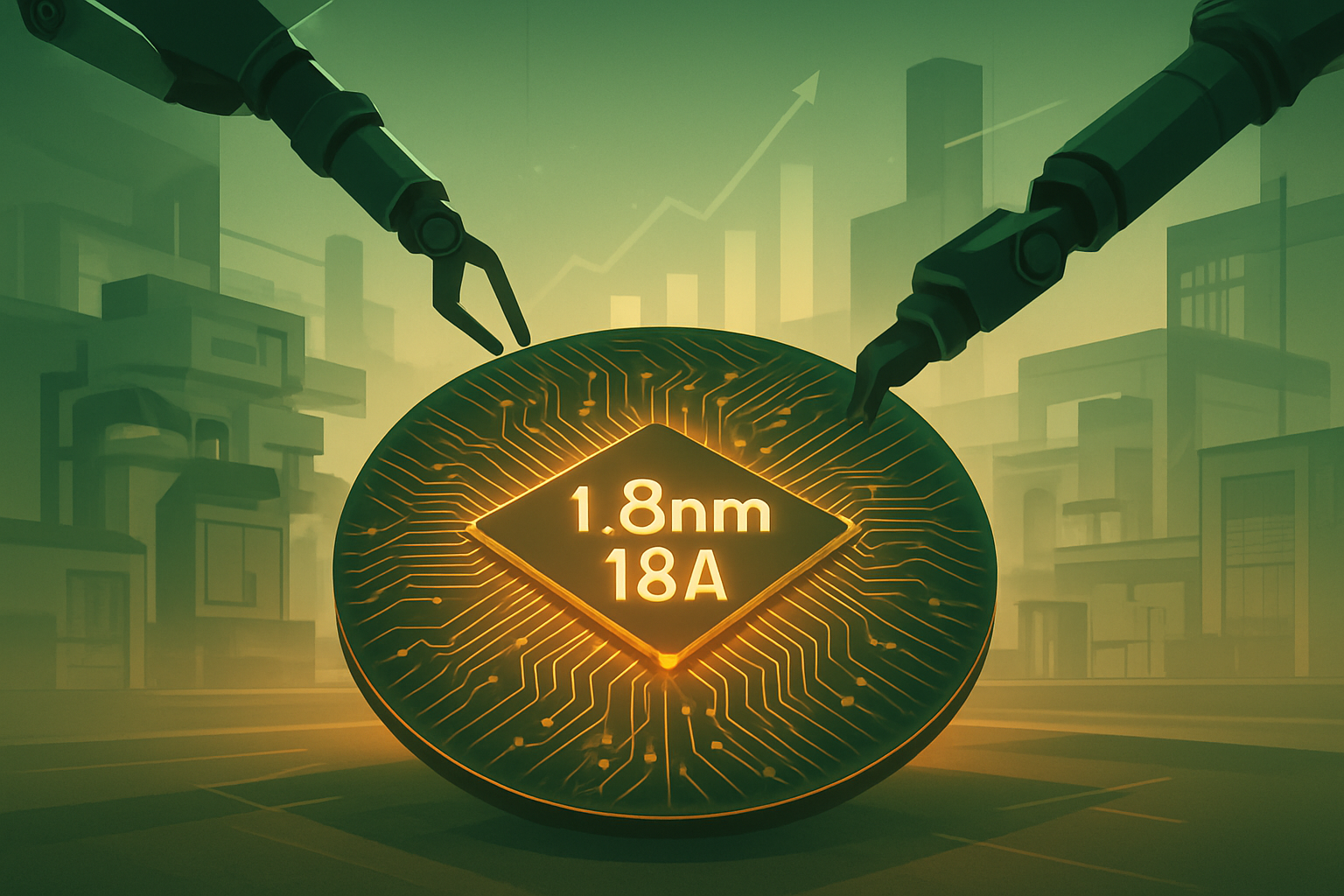
    Intel Corporation (NASDAQ: INTC) enters 2026 as one of the most remarkable turnaround stories in modern corporate history. After a harrowing 2024 that saw the silicon giant’s market value plummet to decade-lows and its very survival questioned by skeptics, the company has emerged as a leaner, more focused "National Champion." Today, Intel is no longer just a processor company; it is the linchpin of the United States’ strategy to reshore semiconductor manufacturing. With its revolutionary 18A process node now in high-volume production and a new leadership team emphasizing operational rigor, Intel is at the center of the global AI infrastructure race and the burgeoning "AI PC" market.

    Historical Background

    Founded in 1968 by Robert Noyce and Gordon Moore, Intel was the pioneer of the microprocessor—the "brain" of the modern computer. Under the legendary leadership of Andy Grove in the 1980s and 90s, Intel pivoted from memory chips to CPUs, establishing the "Intel Inside" era and the "x86" dominance that powered the PC revolution. However, the 2010s were marked by stagnation. Delayed transitions to 10nm and 7nm processes allowed competitors like Taiwan Semiconductor Manufacturing Company (NYSE: TSM) and Advanced Micro Devices (NASDAQ: AMD) to seize the technological lead. In 2021, Pat Gelsinger returned as CEO to launch the "IDM 2.0" strategy—a multi-year, multi-billion-dollar bet to reclaim manufacturing parity. His retirement in early 2025 paved the way for the current "Foundry First" era under Lip-Bu Tan.

    Business Model

    Intel’s business model has undergone a fundamental split into two primary engines:

    1. Intel Product: This includes the Client Computing Group (CCG), which dominates the consumer laptop and desktop market, and the Data Center and AI (DCAI) group, which sells Xeon processors and Gaudi AI accelerators.
    2. Intel Foundry (IFS): Operating as a separate P&L, the Foundry business aims to manufacture chips for external customers, including rivals. This segment provides design services, wafer fabrication, and advanced packaging (EMIB, Foveros).
    3. NEX (Network and Edge): Focuses on edge computing and telecommunications infrastructure, a growing segment as AI processing moves closer to the end-user.

    Stock Performance Overview

    The last 12 months have been a renaissance for shareholders. Following a dismal 2024 where the stock bottomed out in the low $20s, INTC rallied 84% in 2025.

    • 1-Year Performance: As of mid-January 2026, Intel is trading in the $44.00 – $48.00 range, a levels not seen since the pre-inflationary peaks of 2021.
    • 5-Year Performance: On a five-year horizon, the stock is finally nearing a "breakeven" for long-term holders, though it still trails the broader S&P 500 and the PHLX Semiconductor Index (SOX).
    • Recent Momentum: A 10.8% surge in early January 2026 followed reports of successful 18A yields and a strategic $5 billion investment from NVIDIA (NASDAQ: NVDA) to secure future packaging capacity.

    Financial Performance

    Intel’s Q3 and Q4 2025 earnings signaled a definitive return to profitability.

    • Revenue: Q3 2025 revenue hit $13.7 billion, a 3% year-over-year increase, driven by the explosive adoption of AI PCs.
    • Profitability: The company reported a net income of $4.1 billion in Q3, a sharp recovery from the massive $16.6 billion write-down and loss recorded in late 2024.
    • Margins: Gross margins have expanded to 38.2%, up from the mid-20s during the height of the transition. This improvement is attributed to the $10 billion cost-cutting initiative implemented throughout 2025 and higher fab utilization.
    • Cash Flow: The company expects to reach full-year cash-flow positivity in 2026, supported by federal grants and capital offsets from the "Smart Capital" strategy.

    Leadership and Management

    In March 2025, industry veteran and former Cadence Design Systems CEO Lip-Bu Tan took the helm as CEO. Tan’s leadership has been defined by a "Foundry First" philosophy. While Pat Gelsinger focused on the visionary roadmap (5 nodes in 4 years), Tan has focused on execution and yield.
    His administration has:

    • Stabilized the leadership team after significant exits in 2024.
    • Secured high-profile foundry customers like Microsoft and Amazon Web Services (AWS).
    • Managed the delicate conversion of CHIPS Act grants into a government equity stake, effectively "de-risking" Intel's balance sheet from a debt spiral.

    Products, Services, and Innovations

    Innovation at Intel is currently defined by the 18A process node. This technology introduces two industry firsts: PowerVia (backside power delivery) and RibbonFET (gate-all-around transistors).

    • Panther Lake: Launched at CES 2026, this is the first consumer CPU built entirely on 18A. It offers a 30% performance-per-watt improvement over previous generations, positioning Intel to fight back against Apple (NASDAQ: AAPL) Silicon and ARM-based rivals.
    • Gaudi 3 & 4: While NVIDIA dominates the "training" market, Intel’s Gaudi accelerators have found a niche in AI inference, where they offer superior price-performance for enterprise applications.
    • High-NA EUV: Intel is currently the only firm with multiple ASML (NASDAQ: ASML) High-NA EUV lithography machines in operation, a key advantage for the upcoming 14A node.

    Competitive Landscape

    The competitive environment remains fierce but has shifted in Intel's favor in specific areas:

    • TSMC: Still the leader in total volume, TSMC’s 2nm node is expected to ramp in late 2026. Intel’s 18A, arriving earlier with backside power, gives it a temporary technological "window" of efficiency superiority.
    • AMD: AMD continues to pressure Intel in the server market with its EPYC processors. However, Intel’s Clearwater Forest Xeons (built on 18A) are beginning to reclaim market share in power-sensitive hyperscale data centers.
    • NVIDIA: No longer just a rival, NVIDIA is now a critical "frenemy." Their $5 billion investment in Intel stock highlights Intel's unique position as the only US-based provider of the advanced packaging required for H100/B200 successors.

    Industry and Market Trends

    Three macro trends are favoring Intel’s current trajectory:

    1. AI PC Adoption: The industry is shifting from cloud-only AI to "Local AI." Intel estimates that by the end of 2026, 60% of new laptop shipments will be AI-capable, a segment Intel currently leads.
    2. Sovereign AI: Governments in Europe and Asia are seeking non-Taiwan-based manufacturing to ensure supply chain resilience. Intel Foundry is the primary beneficiary of this "Sovereign AI" movement.
    3. Foundry Secular Growth: The decoupling of chip design and chip manufacturing continues to accelerate, with more "Hyper-scalers" (Google, Meta) designing their own silicon and needing a foundry to build it.

    Risks and Challenges

    Despite the recovery, Intel is not yet in the clear:

    • Execution Risk: The ramp of 18A must remain flawless. Any yield regressions could cause customers like Microsoft or AWS to revert to TSMC.
    • Debt and Liquidity: Even with government aid, Intel’s capital expenditures are massive ($20B+ annually). Maintaining a healthy balance sheet while building fabs in Ohio and Germany is a high-wire act.
    • ARM Intrusion: Qualcomm (NASDAQ: QCOM) and Apple are making aggressive gains in the Windows-on-ARM laptop space, threatening Intel's CCG margins.

    Opportunities and Catalysts

    • Intel Foundry Spinoff: Rumors persist that Lip-Bu Tan may eventually spin off the Foundry business into a separate public entity by 2027. This could unlock massive shareholder value by removing the "manufacturing drag" from the product side's valuation.
    • 18A Customer Wins: Announcements of a major mobile player (e.g., Apple or Samsung) using 18A for a specific chip line would be a massive catalyst for the stock.
    • Sustained AI PC Cycle: A faster-than-expected replacement cycle for enterprise laptops could drive CCG revenues to record highs.

    Investor Sentiment and Analyst Coverage

    Wall Street has largely shifted its consensus from "Sell" or "Underperform" to "Hold" or "Buy."

    • KeyBanc recently raised its price target to $60, citing Intel's unique "National Champion" status.
    • Institutional Holdings: Major asset managers like BlackRock and Vanguard have maintained their 8%+ stakes, while several "turnaround-focused" hedge funds increased their positions in Q4 2025.
    • Retail Sentiment: On social platforms, the narrative has shifted from mocking Intel’s "legacy" status to highlighting its role as a strategic defense asset for the US.

    Regulatory, Policy, and Geopolitical Factors

    Intel is now inextricably tied to US geopolitical interests.

    • US Government Equity: In August 2025, the U.S. Department of Commerce converted $8.9 billion of CHIPS Act grants into a 9.9% direct equity stake in Intel. This makes the US government the company's single largest shareholder, effectively guaranteeing that the company is "too big to fail."
    • The Secure Enclave: Intel has been designated the primary manufacturer for the Pentagon’s "Secure Enclave" program, providing a steady stream of high-margin, sensitive government contracts.

    Conclusion

    Intel is no longer the lumbering giant of the 2010s. By embracing its role as a foundry for the world and securing the backing of the United States government, it has stabilized its foundation. The successful high-volume manufacturing of 18A marks the first time in a decade that Intel has a legitimate claim to the "world's best transistor." For investors, Intel represents a high-stakes play on the future of US manufacturing and AI hardware. While risks of execution and heavy capital requirements remain, the "Silicon Renaissance" of 2026 suggests that Intel’s best days may not be behind it after all.


    This content is intended for informational purposes only and is not financial advice.
  • The AI Memory Supercycle: A Deep-Dive Research Report on Micron Technology (MU)

    The AI Memory Supercycle: A Deep-Dive Research Report on Micron Technology (MU)

    As of January 14, 2026, Micron Technology, Inc. (NASDAQ: MU) has shed its long-standing reputation as a volatile, cyclical "commodity" chipmaker to emerge as a cornerstone of the global Artificial Intelligence (AI) infrastructure. Once vulnerable to the extreme boom-and-bust cycles of the memory market, Micron is now positioned as a high-margin technology leader, essential to the massive data centers powering large language models and generative AI. With its stock trading near record highs of $340 per share, the company finds itself at the center of an "AI Memory Supercycle," where the bottleneck for global computing progress is no longer just processing power, but the memory bandwidth required to feed it.

    Historical Background

    The story of Micron begins in 1978 in an unlikely location: the basement of a dental office in Boise, Idaho. Founded by Ward Parkinson, Joe Parkinson, Dennis Wilson, and Doug Pitman, the company started as a semiconductor design consulting firm. By 1981, it had transitioned into manufacturing, opening its first fabrication plant (Fab 1).

    The company’s survival through the "memory wars" of the 1980s and 1990s—which saw dozens of American and Japanese competitors go bankrupt—was defined by a relentless focus on cost-efficiency and lean operations. A pivotal moment arrived in 2013 when Micron acquired the bankrupt Japanese manufacturer Elpida Memory for $2 billion. This acquisition was a masterstroke, doubling Micron’s capacity, securing a place in the Apple supply chain, and effectively consolidating the DRAM market into a global oligopoly shared by only three major players: Samsung, SK Hynix, and Micron.

    Business Model

    Micron operates a vertically integrated business model, designing and manufacturing its own memory and storage products. Its revenue is primarily derived from two core technologies:

    • DRAM (Dynamic Random Access Memory): Accounting for roughly 77% of total revenue as of late 2025, DRAM is the "working memory" of computers.
    • NAND Flash: Representing approximately 23% of revenue, NAND provides non-volatile storage for everything from enterprise SSDs to smartphones.

    Strategically, Micron has shifted its focus away from low-margin consumer electronics toward high-value enterprise and data center segments. In a bold move in late 2025, the company announced it would phase out its famous "Crucial" consumer brand for retail PC components to reallocate every possible wafer toward AI-grade High Bandwidth Memory (HBM).

    Stock Performance Overview

    Micron’s stock performance over the last decade illustrates its transformation from a cyclical proxy to a structural growth leader:

    • 1-Year Performance: The stock has surged approximately 247% since early 2025, fueled by massive earnings beats and the realization that HBM capacity is effectively sold out through 2026.
    • 5-Year Performance: Investors have seen a 350% return, weathering the post-pandemic supply chain glut to reach new heights in the AI era.
    • 10-Year Performance: A staggering 2,490% gain highlights the long-term value created as the memory industry consolidated and pricing power shifted back to the manufacturers.

    Financial Performance

    Micron’s fiscal year 2025 was the strongest in its history. The company reported annual revenue of $37.38 billion, a 50% increase year-over-year. More importantly, its profitability has skyrocketed; gross margins, which languished in the teens during the 2023 downturn, surged to over 50% by the fourth quarter of 2025.

    The company maintains a robust balance sheet, bolstered by record free cash flow from its data center segment, which now accounts for 56% of total sales. Despite the massive capital expenditures (CapEx) required for new fabs, Micron’s liquidity remains high, supported by government grants and disciplined inventory management.

    Leadership and Management

    Under the leadership of CEO Sanjay Mehrotra, who took the helm in 2017 after co-founding SanDisk, Micron has prioritized "ROI-driven capacity." Mehrotra’s strategy focuses on being first to market with the most advanced technology nodes rather than simply chasing market share. This "technology-first" approach allowed Micron to beat competitors to the 1-beta DRAM and 232-layer NAND milestones, granting it a temporary but lucrative pricing premium. The management team is widely respected for its supply discipline, which has helped stabilize global memory prices.

    Products, Services, and Innovations

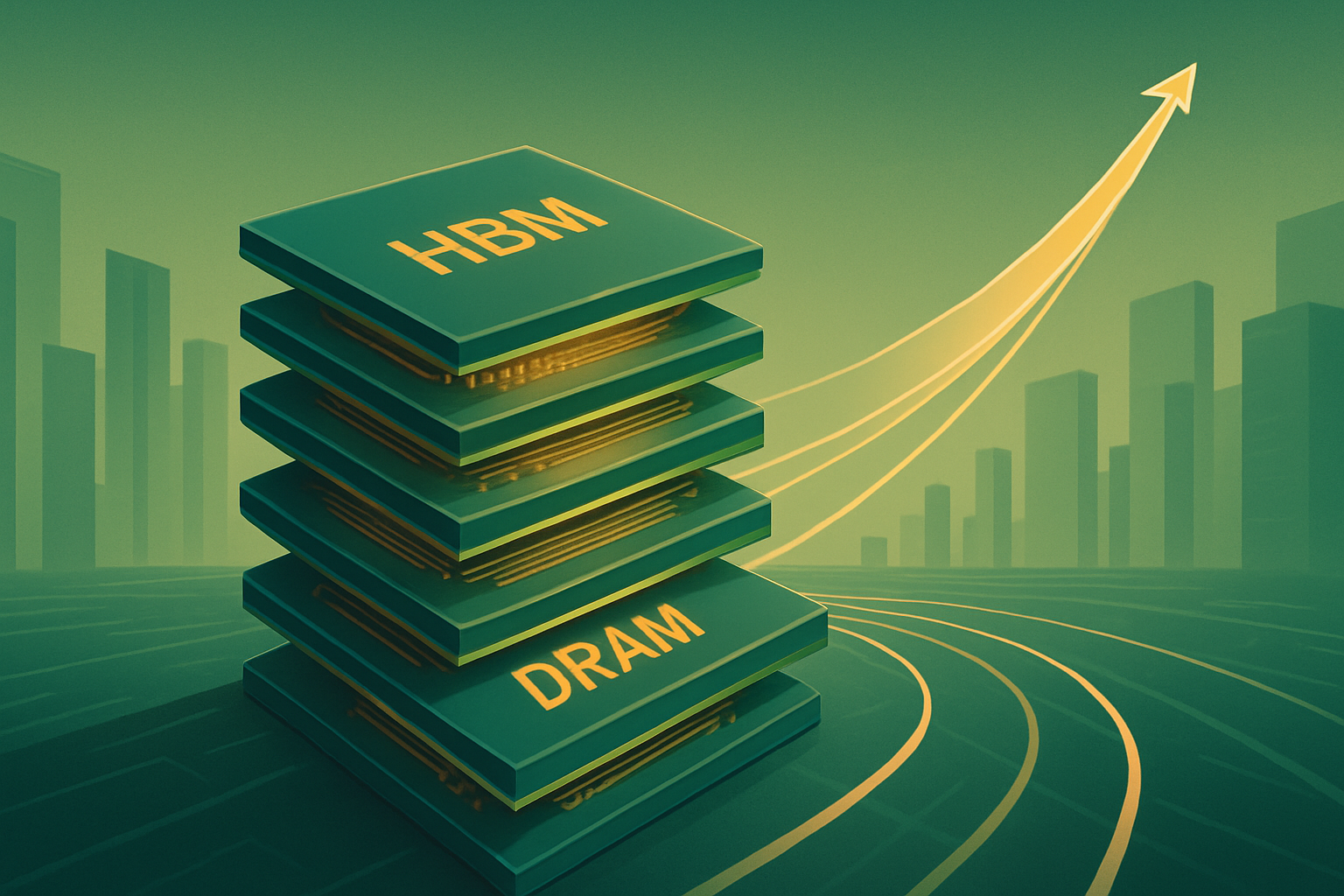
    Micron’s crown jewel is its HBM3E (High Bandwidth Memory), and its upcoming HBM4 transition. These chips are stacked vertically to provide the massive data throughput required by Nvidia’s (NASDAQ: NVDA) Blackwell and Rubin GPUs.
    Beyond HBM, Micron’s innovations include:

    • LPDDR5X: Low-power DRAM designed for "AI PCs" and smartphones that process AI tasks locally.
    • 232-Layer NAND: Industry-leading storage density for enterprise SSDs.
    • 1-gamma (1γ) Node: The next frontier in DRAM manufacturing, utilizing Extreme Ultraviolet (EUV) lithography to squeeze even more performance out of silicon.

    Competitive Landscape

    Micron competes in a tight oligopoly. In the DRAM market, it holds approximately 25.7% of global share, trailing South Korean giants Samsung and SK Hynix. However, in the high-stakes HBM market, Micron has carved out a 20-21% niche. While SK Hynix remains the volume leader in HBM, Micron has gained favor with customers due to the superior power efficiency of its HBM3E modules, which consume 30% less power than competing versions—a critical factor for power-hungry data centers.

    Industry and Market Trends

    The "AI Supercycle" is the dominant trend. Unlike previous cycles driven by PC or smartphone demand, the AI cycle is characterized by "memory intensity." An AI server requires up to 8 times the DRAM and 3 times the NAND of a traditional server. Furthermore, the complexity of manufacturing HBM means that for every bit of HBM produced, nearly three bits of traditional DRAM capacity are sacrificed. This "capacity cannibalization" is keeping global supply tight and prices high, a trend analysts expect to persist through 2027.

    Risks and Challenges

    Despite the bullish outlook, Micron faces significant risks:

    • Execution Risk: The company is currently building multi-billion dollar "megafabs" in Idaho and New York simultaneously. Any delays in construction or equipment delivery could hinder its ability to meet demand.
    • Geopolitical Friction: While Micron has largely mitigated the 2023 Chinese ban on its products, it still faces challenges in the Chinese market, where domestic competitors like CXMT are being subsidized by the state.
    • Cyclicality: While the current cycle feels "different," the semiconductor industry remains inherently cyclical. A sudden pullback in AI spending by hyperscalers (Meta, Google, Microsoft) would leave Micron with expensive, idle capacity.

    Opportunities and Catalysts

    The primary catalyst for 2026 is the ramp-up of HBM4. Micron is working closely with TSMC (NYSE: TSM) and Nvidia to integrate its next-generation memory into future AI architectures. Additionally, the emergence of "Edge AI"—AI-capable smartphones and laptops—represents a massive secondary growth engine as consumers are forced to upgrade their devices to run next-gen software.

    Investor Sentiment and Analyst Coverage

    Wall Street sentiment is overwhelmingly positive. As of January 2026, the consensus rating is a "Strong Buy," with price targets ranging from $450 to $550. Analysts at major firms like Keybanc and Cantor Fitzgerald point to Micron's "sold-out" status for the 2026 calendar year as a de-risking factor. Institutional ownership remains high, with major hedge funds increasing their positions in late 2025 as the company’s margin profile began to resemble a software-as-a-service (SaaS) company rather than a hardware manufacturer.

    Regulatory, Policy, and Geopolitical Factors

    Micron is a flagship of the U.S. CHIPS and Science Act. The company has secured $6.1 billion in direct grants and $7.5 billion in low-interest loans to bring leading-edge memory manufacturing back to American soil. This federal support is not just financial; it is a strategic partnership that ensures Micron’s expansion is deemed a matter of national security. This provides a regulatory "moat" that non-U.S. competitors cannot easily breach in the American market.

    Conclusion

    Micron Technology has entered 2026 as a radically different company than it was even five years ago. By pivoting away from commodity markets and positioning itself as the "efficiency leader" in the AI memory space, it has unlocked a level of profitability that was once thought impossible in the memory sector.

    For investors, the key will be monitoring the company’s ability to execute its massive U.S. fab expansions and maintain its technological lead over Samsung. While the risks of cyclicality and geopolitical tension remain, Micron’s "sold-out" status and its integral role in the AI revolution make it one of the most compelling stories in the semiconductor industry today.


    This content is intended for informational purposes only and is not financial advice.

  • NVIDIA (NVDA) 2026 Deep-Dive: Analyst Sentiment and the Road to Rubin

    NVIDIA (NVDA) 2026 Deep-Dive: Analyst Sentiment and the Road to Rubin

    Date: January 14, 2026
    Sector: Technology / Semiconductors
    Company: NVIDIA Corporation (NASDAQ: NVDA)

    Introduction

    As we enter 2026, NVIDIA Corporation (NASDAQ: NVDA) stands not merely as a semiconductor manufacturer, but as the foundational architect of the "Intelligence Age." What began as a niche provider of graphics cards for PC gamers has morphed into a $4 trillion (estimated market cap) behemoth that dictates the pace of global technological evolution. Today, NVIDIA is the single most watched ticker on Wall Street, acting as a barometer for the health of the entire Artificial Intelligence (AI) ecosystem.

    With the company’s crucial Q4 Fiscal Year 2026 earnings report scheduled for late February, investor attention is laser-focused on one question: Can NVIDIA continue to exceed the gravity-defying expectations it has set for itself? As the world shifts from the "build-out" phase of AI training to the "deployment" phase of AI inference, NVIDIA’s ability to maintain its 70%+ gross margins while ramping up its next-generation Blackwell and Rubin architectures will determine the trajectory of the broader market in 2026.

    Historical Background

    Founded in 1993 by Jensen Huang, Chris Malachowsky, and Curtis Priem in a Silicon Valley Denny’s, NVIDIA’s early focus was solving the "3D graphics problem" for the gaming market. The release of the GeForce 256 in 1999—marketed as the world's first GPU—set the company on a path toward specialized parallel processing.

    The true pivot occurred in 2006 with the launch of CUDA (Compute Unified Device Architecture). By allowing researchers to use GPUs for general-purpose computing, Huang effectively "placed a bet on a market that didn't exist yet." This foresight paid off a decade later when the deep learning revolution began, as GPUs proved to be exponentially more efficient than traditional CPUs for training neural networks. Over the last three years (2023–2025), NVIDIA has undergone its most radical transformation yet, evolving from a component supplier into a provider of "AI Factories"—integrated systems of chips, networking, and software.

    Business Model

    NVIDIA’s revenue model has undergone a seismic shift in concentration. As of early 2026, the business is structured across four primary segments, with one clearly dominating the ledger:

    1. Data Center: Representing approximately 88% of total revenue, this segment includes the sale of GPU clusters (Hopper, Blackwell, and now Rubin), networking equipment (InfiniBand and Spectrum-X Ethernet), and the "NVIDIA AI Enterprise" software suite.
    2. Gaming: Once the flagship, gaming is now a high-margin legacy business providing stable cash flow through GeForce RTX GPUs for PCs and handheld consoles.
    3. Professional Visualization: Catering to architects and designers through the RTX workstation line and the Omniverse platform for digital twins.
    4. Automotive and Robotics: A high-growth frontier focusing on the "NVIDIA DRIVE" platform for autonomous vehicles and the "Isaac" platform for humanoid robotics (Physical AI).

    NVIDIA's genius lies in its "full-stack" approach. By locking developers into the CUDA software ecosystem, the company creates a moat that makes switching to rival hardware both technically difficult and prohibitively expensive.

    Stock Performance Overview

    NVIDIA’s stock performance has been nothing short of historic. Following the 10-for-1 stock split in mid-2024, the shares have continued their upward march, driven by consistent earnings beats and raises.

    • 1-Year Performance: Over the past 12 months, NVDA has surged approximately 45%, outperforming the S&P 500 significantly as the Blackwell chip ramp-up proved more lucrative than initially modeled.
    • 5-Year Performance: Investors who held through the 2022 crypto-driven downturn have seen gains exceeding 1,000%, as the "AI gold rush" replaced gaming as the primary growth driver.
    • 10-Year Performance: For long-term holders, the return is nearly 30,000%, a testament to the compounding power of a company that successfully anticipated the most significant architectural shift in computing history.

    Financial Performance

    Heading into the February earnings call, NVIDIA’s balance sheet remains one of the strongest in the corporate world.

    • Revenue Growth: Analysts are projecting FY2026 total revenue to surpass $215 billion, a staggering jump from the $60.9 billion reported just two years ago.
    • Margins: Gross margins have stabilized in the 74-76% range. While the high cost of HBM4 (High Bandwidth Memory) for the upcoming Rubin chips poses a slight headwind, NVIDIA's pricing power remains unmatched.
    • Cash Flow: The company generated over $60 billion in free cash flow (FCF) in 2025, much of which is being returned to shareholders through aggressive buybacks and used for R&D to maintain its two-year lead over competitors.
    • Valuation: Despite the price appreciation, NVDA trades at a forward P/E ratio of roughly 32x. While "expensive" by traditional standards, many analysts argue this is reasonable given the projected 40% year-over-year earnings growth.

    Leadership and Management

    CEO Jensen Huang remains the face and primary driver of NVIDIA. His signature leather jacket has become a symbol of the company's "relentless execution." Huang’s strategy of "one-year release cycles" (accelerated from the traditional two-year cycle) has kept competitors in a perpetual state of catching up.

    The management team, including CFO Colette Kress, has been lauded for its operational discipline—specifically in navigating the complex supply chain constraints involving TSMC and SK Hynix. The board of directors is highly regarded for its governance, though some critics point to "key-man risk" given how central Huang’s vision is to the company’s identity.

    Products, Services, and Innovations

    The focus for 2026 is the Rubin Architecture. Officially announced at the start of this year, Rubin (the successor to Blackwell) introduces the Vera CPU and utilizes HBM4 memory.

    • Blackwell (Current Powerhouse): The GB200 systems are currently shipping in volume, offering 30x the performance of the H100 for LLM inference workloads.
    • Networking (Spectrum-X): NVIDIA is rapidly taking market share in the Ethernet space, proving that its networking gear is just as essential as its GPUs for scaling AI clusters.
    • Software (NVIDIA AI Enterprise): This is the "hidden" revenue stream. As companies move models into production, they pay per-GPU licenses for NVIDIA’s optimized software stacks, creating a recurring, high-margin revenue tail.

    Competitive Landscape

    NVIDIA currently holds an estimated 90% share of the data center AI chip market. However, the "encirclement" strategy by rivals is intensifying:

    • Traditional Rivals: AMD (NASDAQ: AMD) has seen success with its MI325X and MI350 series, particularly with customers looking for a "second source" to avoid NVIDIA's premium pricing.
    • Cloud Service Providers (CSPs): Amazon (AWS), Google (GCP), and Microsoft (Azure) are developing their own internal silicon (Trainium, TPU, and Maia). While these are used for internal workloads, NVIDIA remains the preferred choice for the CSPs' external cloud customers.
    • AI Startups: Companies like Groq and Cerebras are targeting niche "low-latency" inference markets, though they lack NVIDIA’s massive software ecosystem.

    Industry and Market Trends

    The narrative in 2026 is shifting from Training to Inference. In 2023 and 2024, the world focused on building models (GPT-4, Llama 3). Now, the focus is on running those models for billions of users. Inference requires different power and latency profiles, and NVIDIA’s Blackwell architecture was specifically designed to dominate this transition.

    Furthermore, "Physical AI" is the new frontier. NVIDIA is positioning itself as the brain of the robotics industry, with its Thor chips powering humanoid robots and autonomous factories.

    Risks and Challenges

    No company is without risk, and NVIDIA faces several:

    • Concentration Risk: A handful of "Hyper-scalers" (Microsoft, Meta, etc.) account for nearly 50% of NVIDIA’s revenue. If these companies enter a "CapEx digestion" phase—pausing their spending to prove ROI—NVIDIA’s revenue could take a hit.
    • Supply Chain: Dependence on TSMC (Taiwan Semiconductor Manufacturing Co.) for 3nm and 2nm production remains a single point of failure.
    • Cyclicality: Historically, the semiconductor industry is highly cyclical. While AI feels different, a macro-economic recession could still dampen the pace of AI infrastructure investment.

    Opportunities and Catalysts

    The most significant near-term catalyst is the February Earnings Report, where NVIDIA will likely provide FY2027 guidance.

    • Sovereign AI: Nations like Saudi Arabia, Japan, and India are now building their own domestic AI clouds to ensure data "sovereignty." This opens a multi-billion dollar market outside of the traditional US tech giants.
    • Edge AI: The integration of AI chips into smartphones, PCs, and industrial equipment (The "Edge") represents a massive secondary market for NVIDIA's lower-power architectures.

    Investor Sentiment and Analyst Coverage

    Wall Street remains overwhelmingly "Buy" rated on NVDA. As of mid-January 2026, consensus price targets hover around $260, with "bull-case" scenarios reaching as high as $310.

    • Institutional Sentiment: Large hedge funds have largely maintained their core positions, though some have "trimmed around the edges" to manage portfolio concentration.
    • Retail Chatter: NVDA continues to be the most discussed stock on social media platforms, with retail sentiment remaining highly optimistic ahead of the Blackwell volume shipment data expected in the February report.

    Regulatory, Policy, and Geopolitical Factors

    NVIDIA is navigating a geopolitical minefield:

    1. China Export Controls: The US Department of Commerce continues to tighten restrictions on high-end AI chips. NVIDIA has successfully launched compliant "H20" variants, but domestic Chinese competitors (like Huawei) are gaining ground in that region.
    2. Antitrust Scrutiny: Both the US Department of Justice (DOJ) and the European Commission are investigating NVIDIA’s business practices, specifically focusing on whether the company "bundles" its networking hardware with its GPUs to stifle competition.
    3. China SAMR Probe: In late 2025, China's market regulator launched an investigation into NVIDIA’s past acquisitions, creating uncertainty regarding its remaining business in the world's second-largest economy.

    Conclusion

    NVIDIA enters its February earnings period at a crossroads of unprecedented success and heightened scrutiny. The company has moved beyond being a "chip maker" to become the indispensable utility of the digital age. For investors, the focus should not be on whether NVIDIA is "expensive," but on whether its pace of innovation—moving from Blackwell to Rubin—can stay ahead of the inevitable normalization of the AI build-out.

    While regulatory headwinds and "CapEx digestion" by big tech are valid concerns, the emergence of Sovereign AI and Physical AI suggests that NVIDIA’s runway remains long. Expect the February earnings call to be a defining moment for the stock, as Jensen Huang attempts to convince the world that the AI revolution is still in its early innings.


    This content is intended for informational purposes only and is not financial advice.

  • The AMD Transformation: From x86 Underdog to AI Systems Architect

    The AMD Transformation: From x86 Underdog to AI Systems Architect

    As of January 14, 2026, the semiconductor industry has reached a "Great Decoupling," shifting from a CPU-centric world to one dominated by massive AI infrastructure. At the heart of this transformation is Advanced Micro Devices, Inc. (Nasdaq: AMD), a company that has spent the last decade executing one of the most significant turnarounds in corporate history. Once a struggling underdog, AMD has emerged as a titan, now challenging Intel Corporation (Nasdaq: INTC) for server CPU dominance and standing as the primary alternative to Nvidia Corporation (Nasdaq: NVDA) in the multi-trillion-dollar AI accelerator market.

    Introduction

    Advanced Micro Devices, Inc. is currently at the center of the global technology narrative. Under the decade-long leadership of Dr. Lisa Su, the company has transitioned from a near-bankrupt designer of PC chips to a full-stack AI systems architect. In early 2026, AMD is in sharp focus due to its aggressive annual AI hardware cadence and its recent shift toward selling entire "rack-scale" systems. With a market capitalization now exceeding $360 billion, AMD is no longer just a "second source"—it is a strategic partner for the world's largest hyperscalers, including Microsoft, Meta, and Amazon.

    Historical Background

    Founded on May 1, 1969, by Jerry Sanders III and a group of former Fairchild Semiconductor colleagues, AMD’s origins were rooted in being a high-quality "second-source" manufacturer. For decades, the company was defined by its rivalry with Intel. A landmark 1982 agreement allowed AMD to produce x86 processors for IBM PCs, sparking a decade-long legal battle over licensing that AMD eventually won in 1995, securing its right to develop its own x86-compatible chips.

    The company’s modern era was forged through two high-stakes gambles: the 2006 acquisition of graphics giant ATI Technologies for $5.4 billion and the 2009 spin-off of its manufacturing arm to create GlobalFoundries. While these moves initially nearly bankrupted the company, they laid the foundation for the "Fusion" strategy—integrating CPUs and GPUs—and the "fabless" model that allows AMD to focus solely on design while leveraging Taiwan Semiconductor Manufacturing Co. (NYSE: TSM) for production. The true turning point came in 2014 when Dr. Lisa Su took the helm, launching the "Zen" architecture in 2017, which finally allowed AMD to close the performance gap with Intel.

    Business Model

    AMD operates as a fabless semiconductor company, focusing on the design and integration of high-performance computing components. Its revenue model is diversified across four primary segments:

    1. Data Center: The primary growth engine, consisting of EPYC server processors and Instinct AI accelerators.
    2. Client: Ryzen processors for desktops and "AI PCs" (notebooks with integrated NPUs).
    3. Gaming: Radeon graphics cards and semi-custom chips for consoles like the Sony PlayStation 5 and Microsoft Xbox Series X.
    4. Embedded: High-margin FPGAs and adaptive computing solutions, largely stemming from the 2022 acquisition of Xilinx.

    With the 2025 acquisition of ZT Systems, AMD has expanded its model to include "rack-scale" systems, allowing it to design and sell entire AI data center clusters rather than just individual silicon components.

    Stock Performance Overview

    AMD has been one of the most prolific performers in the S&P 500 over the last decade. As of mid-January 2026, the stock is trading near $221.05.

    • 10-Year Performance: An astronomical return of approximately 9,720%, rising from under $2 in 2016 to over $220 today.
    • 5-Year Performance: A gain of approximately 140%, significantly outperforming the broader semiconductor index (SOX).
    • 1-Year Performance: Up nearly 88% year-over-year, fueled by the validation of the MI300 and MI350 series as viable alternatives to Nvidia’s H100 and Blackwell GPUs.

    The stock reached an all-time high of $264.33 in late October 2025 before consolidating due to broader macro concerns and new export regulations.

    Financial Performance

    Based on early 2026 analysis, AMD’s fiscal year 2025 was a record-setter. The company is estimated to have generated approximately $34.0 billion in total revenue, a 31% increase over 2024.

    • Margins: Non-GAAP gross margins expanded to 54.5%, driven by the high-margin Data Center segment.
    • Earnings: Estimated Non-GAAP EPS for 2025 stands at $4.01, up from $3.31 in 2024.
    • Segment Highlights: The Data Center segment reached record levels in 2025, exceeding $15 billion in revenue. However, the Gaming and Embedded segments faced headwinds in late 2024, only beginning to stabilize in the second half of 2025.
    • Balance Sheet: AMD maintains a fortress balance sheet with over $6 billion in cash and cash equivalents, providing ample liquidity for its aggressive R&D roadmap.

    Leadership and Management

    Dr. Lisa Su remains the defining figure of AMD’s leadership. Celebrating 11 years as CEO, she is widely credited with the company’s "disciplined execution" culture. Following the retirement of President Victor Peng in 2024, the leadership has been streamlined into three pillars: Data Center, Client, and Gaming/Embedded.

    • Key Figures: CFO Jean Hu has been instrumental in managing capital allocation during the high-growth AI cycle. In December 2025, Emily Ellis (formerly of Palo Alto Networks) was appointed as Chief Accounting Officer, signaling a focus on scaling financial operations for a $400B+ market cap company.
    • Strategy: The leadership's current "AI-First" strategy prioritizes the ROCm software ecosystem to lower the barrier for developers moving away from Nvidia’s proprietary CUDA software.

    Products, Services, and Innovations

    AMD’s innovation pipeline is currently on an annual cadence to keep pace with the rapidly evolving AI market.

    • AI Accelerators: The Instinct MI350 series, launched in 2025 on TSMC’s 3nm node, offered a 35x increase in inference performance over the previous generation. Looking ahead to 2026, the MI400 series is expected to be the first to utilize TSMC’s 2nm process.
    • CPUs: The Zen 6 ("Morpheus") architecture, set for 2026, represents a ground-up redesign aimed at maximizing efficiency for AI-heavy workloads.
    • Helios Platform: Unveiled at CES 2026, the Helios rack-scale system integrates 72 MI455X accelerators, marking AMD's transition into a systems-level provider.
    • Software: The 2024 acquisition of Silo AI and 2025 acquisition of MK1 have bolstered AMD’s software stack, specifically optimizing Large Language Model (LLM) inference.

    Competitive Landscape

    AMD faces a unique "two-front war" against Nvidia and Intel.

    • AMD vs. Intel: In the server CPU market, AMD’s EPYC processors have reached a record 40% market share. By early 2026, many analysts believe AMD is on the verge of parity with Intel in total server revenue, as Intel struggles with its transition to the 18A manufacturing node.
    • AMD vs. Nvidia: Nvidia remains the dominant leader with ~90% of the AI GPU market. However, AMD has carved out a "second source" niche, aiming for 15% market share by the end of 2026. AMD’s competitive edge lies in its superior performance-per-watt and more open software ecosystem compared to Nvidia's "walled garden."

    Industry and Market Trends

    The semiconductor sector is currently influenced by the "AI PC" cycle, where processors include dedicated Neural Processing Units (NPUs) to run AI locally. AMD’s Ryzen AI 300 series has positioned it well for this shift. Additionally, the industry is moving toward "Advanced Packaging" (using 3D chip stacking), a technology where AMD’s partnership with TSMC gives it a temporary lead over Intel’s internal foundry efforts.

    Risks and Challenges

    Despite its success, AMD faces significant headwinds:

    • Regulatory Export Controls: Tightened U.S. restrictions on high-end AI chips to China resulted in an estimated $1.5 billion revenue headwind in 2025.
    • Nvidia’s Dominance: Nvidia’s aggressive one-year product cycle (Blackwell to Rubin) makes it difficult for AMD to close the performance gap in high-end training.
    • Valuation Risks: Trading at a high forward P/E ratio, any miss in Data Center growth could lead to significant stock price volatility.

    Opportunities and Catalysts

    • OpenAI Partnership: A rumored large-scale deployment of AMD GPUs by OpenAI in 2H 2026 could serve as a massive validation for the MI400 series.
    • Cloud Hyperscaler Diversification: As Microsoft and Meta look to reduce their dependence on Nvidia, AMD is the most logical beneficiary of their multi-billion-dollar capex budgets.
    • Edge AI: The integration of Xilinx technology allows AMD to capture the growing market for AI in automotive and industrial robotics.

    Investor Sentiment and Analyst Coverage

    Sentiment among institutional investors is largely bullish, with 72% institutional ownership. Analysts have a median price target of $283.00 for 2026.

    • Wall Street View: Analysts at firms like Goldman Sachs and Morgan Stanley view AMD as a "must-own" AI infrastructure play, citing its ability to hit roadmap milestones consistently.
    • Retail Sentiment: Retail investors often view AMD as the "value" alternative to Nvidia, betting on Lisa Su’s ability to continue gaining market share in the server space.

    Regulatory, Policy, and Geopolitical Factors

    Geopolitics is the "X-factor" for AMD. The Remote Access Security Act, passed in early 2026, has closed loops that allowed Chinese firms to access AMD chips via the cloud. However, AMD has also benefited from the U.S. CHIPS Act, specifically through subsidies for advanced packaging facilities in Arizona and California, which help secure its domestic supply chain. The ongoing tension between the U.S. and China remains the primary risk to AMD’s long-term revenue growth in Asia.

    Conclusion

    As we move into 2026, AMD has successfully transitioned from an underdog into a dominant force in high-performance computing. By diversifying from chips to full-scale AI systems and consistently taking share from Intel, the company has built a resilient growth engine. While Nvidia remains the AI kingpin, AMD has proven it is more than a mere alternative—it is an essential architect of the AI era. Investors should watch the upcoming MI400 launch and the integration of ZT Systems as key indicators of whether AMD can maintain its blistering growth trajectory.


    This content is intended for informational purposes only and is not financial advice.
  • The Silicon Renaissance: A Deep Dive into Intel’s 2026 Turnaround (INTC)

    The Silicon Renaissance: A Deep Dive into Intel’s 2026 Turnaround (INTC)

    As of January 14, 2026, Intel Corporation (Nasdaq: INTC) finds itself at a pivotal "inflection point" that many industry veterans are calling the "Silicon Renaissance." After a brutal 2024 that saw the company’s valuation crater and the retirement of its visionary but beleaguered CEO, Pat Gelsinger, Intel has emerged in early 2026 as a leaner, more disciplined, and strategically vital entity.

    The narrative surrounding Intel has shifted from a question of survival to a test of execution. With its high-stakes "18A" process node now in high-volume manufacturing and a new leadership team focused on operational rigor, Intel is no longer just a chipmaker; it has become the "National Champion" of Western semiconductor manufacturing. This article explores the company’s recent financial recovery, the impact of significant government intervention, and the long-term outlook for a stock that has staged one of the most remarkable rebounds in recent market history.

    Historical Background

    Intel’s story is the story of Silicon Valley itself. Founded in 1968 by Robert Noyce and Gordon Moore—the man behind "Moore’s Law"—Intel pioneered the microprocessor, beginning with the 4004 in 1971. For decades, the company maintained a vice-like grip on the computing world through its x86 architecture and the "Intel Inside" branding campaign.

    Under the leadership of Andy Grove in the 1980s and 90s, Intel mastered the "Tick-Tock" manufacturing model, alternating between new chip architectures and smaller transistor sizes. However, this dominance bred complacency. The 2010s were marked by significant missteps: missing the mobile revolution (losing out to ARM-based designs) and facing debilitating delays in transitioning to 10nm and 7nm manufacturing. These delays allowed Advanced Micro Devices (Nasdaq: AMD) to seize market share and Taiwan Semiconductor Manufacturing Co. (Nasdaq: TSM) to claim the crown of process leadership.

    Business Model

    Intel operates a unique "IDM 2.0" (Integrated Device Manufacturer) model, which was significantly restructured in 2025 to create a firewall between its internal product groups and its manufacturing business.

    1. Intel Products: This remains the primary revenue driver, split into the Client Computing Group (CCG), which focuses on PC and laptop processors, and the Data Center and AI (DCAI) group.
    2. Intel Foundry: Rebranded as a separate reporting entity, this segment operates as a merchant foundry, manufacturing chips for Intel and external customers. By early 2026, this segment has begun to focus on high-margin, leading-edge nodes (18A) rather than high-volume, low-margin legacy chips.
    3. Altera and Mobileye: Intel has moved toward partial divestitures or IPOs of these subsidiary units (Altera for FPGAs and Mobileye for autonomous driving) to simplify its balance sheet and focus on core logic and manufacturing.

    Stock Performance Overview

    Intel’s stock performance has been a tale of two extremes. Over the 10-year horizon, INTC has significantly underperformed the S&P 500 and the PHLX Semiconductor Index (SOX), reflecting years of lost market share and manufacturing delays.

    However, the 1-year performance tells a different story. In 2025, INTC was one of the top performers in the tech sector, surging over 80% from its late-2024 lows. This rally was driven by the "de-risking" of its balance sheet and the successful "power-on" of its 18A node. As of mid-January 2026, shares are trading in the $44–$48 range, a recovery that has restored over $100 billion in market capitalization since the 2024 trough.

    Financial Performance

    Intel's late 2025 earnings signaled a dramatic turnaround in fundamental health.

    • Revenue Growth: In Q3 2025, Intel reported revenue of $13.7 billion, a 3% year-over-year increase, marking a return to growth after a period of contraction.
    • Margins: Perhaps the most critical metric, non-GAAP gross margins recovered to 40.0% in late 2025, up from the sub-20% levels seen during the height of its manufacturing transition.
    • Valuation: Despite the stock rally, Intel trades at a forward P/E ratio that is significantly lower than NVIDIA (Nasdaq: NVDA) or AMD, as the market still applies a "turnaround discount" until foundry yields reach maturity.
    • Debt and Cash Flow: The company has aggressively cut costs, including a 15% workforce reduction in 2024-2025, which has stabilized free cash flow.

    Leadership and Management

    Following the retirement of Pat Gelsinger in December 2024, the board appointed Lip-Bu Tan as CEO in early 2025. Tan, the former CEO of Cadence Design Systems, is widely respected for his operational discipline and deep understanding of the semiconductor ecosystem.

    While Gelsinger was the "architect" of the comeback plan, Tan is viewed as the "builder." His strategy has been to prioritize financial returns and foundry customer acquisition. The current leadership team has successfully shifted the culture from one of "engineering at any cost" to "manufacturing for profit," a change that has been warmly received by institutional investors.

    Products, Services, and Innovations

    The cornerstone of Intel’s 2026 product lineup is the 18A process node. This node introduced two breakthrough technologies:

    • RibbonFET: A Gate-All-Around (GAA) transistor architecture that increases performance and reduces power leakage.
    • PowerVia: The industry's first implementation of backside power delivery, which improves chip efficiency by separating power and signal wires.

    In the consumer market, Panther Lake CPUs (launched at CES 2026) are leading the "AI PC" revolution with an integrated Neural Processing Unit (NPU) capable of 120+ TOPS (Trillion Operations Per Second). In the data center, Clearwater Forest is Intel’s first high-volume 18A server chip, designed to compete with AMD’s EPYC line in cloud efficiency.

    Competitive Landscape

    Intel faces a "three-front war":

    • In Manufacturing: It competes with TSMC and Samsung. While TSMC still leads in volume and yield, Intel’s 18A has allowed it to claim a "feature lead" in power delivery for the first time in a decade.
    • In CPUs: AMD remains a fierce rival. While Intel has narrowed the gap in laptops, AMD’s "Venice" EPYC chips still hold a significant edge in data center market share.
    • In AI: NVIDIA dominates the training market. Intel has strategically pivoted, choosing to partner with NVIDIA to manufacture certain components while positioning its own Gaudi 3 accelerators as a cost-effective alternative for AI inference.

    Industry and Market Trends

    The semiconductor industry in 2026 is defined by "Sovereign AI" and "AI PCs." Countries are increasingly funding domestic manufacturing to reduce reliance on Taiwan, a trend that directly benefits Intel’s US-based fabs. Simultaneously, the shift toward edge AI—running AI models locally on PCs rather than in the cloud—is driving a major hardware refresh cycle, providing a tailwind for Intel’s Client Computing Group.

    Risks and Challenges

    Despite the recent success, Intel is not without significant risks:

    • Yield Risk: While 18A is in production, achieving the high yields (70%+) necessary for massive profitability remains a challenge.
    • Capital Intensity: Building state-of-the-art fabs requires tens of billions of dollars. If revenue growth stalls, the debt load could become unsustainable.
    • Execution Missteps: Any delay in the upcoming 14A node (planned for 2027) could erase the hard-won confidence of foundry customers.

    Opportunities and Catalysts

    • Foundry "Whale" Customer: Rumors persist that a major hyperscaler (Amazon or Google) or a consumer giant (Apple) may announce a long-term manufacturing deal for 18A/14A in 2026.
    • AI PC Supercycle: If AI-enabled software becomes a "must-have" for enterprises, the upgrade cycle for Intel-powered laptops could exceed expectations.
    • CHIPS 2.0: Potential new legislation in 2026 or 2027 could provide further operational subsidies for US-based manufacturing.

    Investor Sentiment and Analyst Coverage

    Sentiment toward Intel has transitioned from "Bearish" to "Cautiously Optimistic." As of January 2026, the consensus rating is a Hold/Buy, with many analysts upgrading the stock as gross margins stabilized. Institutional ownership has increased, with several large hedge funds taking "turnaround" positions in late 2025. However, retail sentiment remains volatile, often reacting sharply to any news regarding foundry yields or geopolitical tensions.

    Regulatory, Policy, and Geopolitical Factors

    Intel is now inextricably linked to US national security. In August 2025, the U.S. Department of Commerce converted billions in grants into a 9.9% direct equity stake in Intel. This effectively makes the U.S. government a "silent partner," ensuring that Intel will not be allowed to fail. However, this also subjects the company to intense regulatory scrutiny regarding its operations in China and its executive compensation.

    Conclusion

    Intel Corporation enters 2026 as a radically different company than it was two years ago. The "Silicon Renaissance" is real, but it is still in its early stages. By successfully launching 18A and stabilizing its leadership, Intel has moved out of the "emergency room" and into a period of "rehabilitation."

    For investors, Intel represents a unique play on the reshoring of American manufacturing and the AI PC cycle. While it lacks the explosive growth potential of NVIDIA, its "de-risked" valuation and strategic importance to the U.S. government provide a compelling narrative. The key factor to watch in 2026 will be the announcement of external foundry customers—the ultimate validation of Intel’s transition to a world-class manufacturing powerhouse.


    This content is intended for informational purposes only and is not financial advice.

  • MediaTek’s Flagship Pivot: Decoding the 2026 Outlook for the Silicon Giant

    MediaTek’s Flagship Pivot: Decoding the 2026 Outlook for the Silicon Giant

    As of January 7, 2026, the global semiconductor landscape is defined by the race for "Agentic AI"—the ability for devices to not only process data but to act as autonomous agents. At the heart of this transition stands MediaTek Inc. (TPE: 2454), a company that has successfully shed its reputation as a "budget" alternative to become a titan of the premium chip market. This research feature explores MediaTek’s current standing, its multi-billion dollar pivot into flagship silicon, and its burgeoning alliance with NVIDIA that is reshaping the automotive and data center sectors.

    Historical Background

    Founded in 1997 as a spin-off from United Microelectronics Corporation (UMC), MediaTek’s journey began in Hsinchu Science Park, Taiwan. Under the leadership of Ming-Kai (MK) Tsai, the company initially focused on chipsets for optical drives and DVD players. MediaTek’s "disruptor" DNA emerged early when it revolutionized the mobile phone market in the mid-2000s by providing "turnkey solutions"—software and hardware packages that allowed small manufacturers to produce functional mobile phones at a fraction of the cost.

    The last decade has seen MediaTek undergo a radical transformation. Moving from 2G/3G feature phones to 5G smartphones, the company launched its "Dimensity" brand in 2019, marking its entry into high-performance computing. By 2021, MediaTek became the world’s largest smartphone SoC (System-on-Chip) vendor by volume, a title it has fought to retain while simultaneously moving up the value chain into the premium and flagship segments once dominated exclusively by Qualcomm and Apple.

    Business Model

    MediaTek operates a fabless semiconductor model, designing advanced integrated circuits while outsourcing fabrication to world-class foundries like TSMC. Its revenue is diversified across three primary pillars:

    1. Mobile Communications: This remains the core driver, encompassing the Dimensity series for smartphones. In 2025, the company successfully expanded its flagship revenue to over $3 billion, proving it can compete in the $600+ "premium-plus" device category.
    2. Smart Edge: This segment includes IoT, Wi-Fi 7 connectivity chips (the Filogic line), power management ICs, and silicon for smart TVs and tablets. MediaTek is currently a global leader in Wi-Fi and digital TV silicon.
    3. Mixed-Signal/ASIC & Automotive: This is the high-growth frontier. Through its Dimensity Auto platform and custom AI silicon (ASIC) services, MediaTek is leveraging its IP to enter the automotive cockpit and data center infrastructure markets, often in partnership with other tech giants.

    Stock Performance Overview

    MediaTek’s stock (TPE: 2454) has reflected its transition from a volume-player to a value-player. As of early January 2026, the stock trades around 1,485 TWD.

    • 1-Year Performance: A modest gain of ~8.8%. While the mobile market recovered in 2025, the stock faced periodic volatility due to the high capital intensity of shifting to 2nm nodes.
    • 5-Year Performance: An impressive ~85.2% return. This period captures the success of the Dimensity 9000 series and the company’s re-rating as a high-end chip designer.
    • 10-Year Performance: A stellar ~513.6% return, significantly outperforming the broader Taiwan Weighted Index and many global peers. This long-term growth highlights MediaTek’s ability to catch successive technology waves—from 4G to 5G and now to Edge AI.

    Financial Performance

    Financial results for late 2025 indicate a company in strong health. In Q3 2025, MediaTek reported revenue of 142.10 billion TWD (~$4.4 billion USD), a 7.8% year-over-year increase.

    Key metrics as of early 2026:

    • Gross Margin: Stable at 48.1%, reflecting higher pricing power from flagship chips.
    • Net Income: 25.22 billion TWD for the most recent quarter.
    • Cash Flow: Robust cash generation allows for a consistent dividend policy, a key attraction for institutional investors in the Taiwan market.
    • Valuation: Trading at a forward P/E that remains competitive compared to Qualcomm, suggesting that the market has yet to fully price in the long-term potential of its automotive and ASIC divisions.

    Leadership and Management

    The "Twin Towers" of MediaTek’s leadership are Chairman MK Tsai and Vice Chairman/CEO Rick Tsai.

    Rick Tsai, a former CEO of TSMC, joined MediaTek in 2017 and is widely credited with the "flagship pivot." His deep understanding of the foundry business allowed MediaTek to secure early access to TSMC’s most advanced nodes (4nm, 3nm, and now 2nm). His strategy focuses on "execution excellence"—ensuring that MediaTek chips are not just cheaper, but often more power-efficient than competitors. The management team is highly regarded for its technical depth and disciplined capital allocation.

    Products, Services, and Innovations

    Innovation at MediaTek is currently centered on the Dimensity 9500, built on TSMC’s 3nm (N3P) process. This chip features an "All Big Core" architecture that prioritizes raw performance for generative AI tasks.

    Key 2026 innovations include:

    • Dimensity Agentic AI Engine (DAE): A software-hardware stack that allows smartphones to run sophisticated AI agents that can manage emails, schedule meetings, and edit photos autonomously on-device.
    • Wi-Fi 7 (Filogic 880/380): MediaTek has captured nearly 15% of the Wi-Fi 7 market, providing the backbone for the next generation of home and enterprise networking.
    • 2nm Tape-Out: MediaTek recently confirmed the successful tape-out of its first 2nm chip, the Dimensity 9600, positioning it to launch 2nm silicon in late 2026.

    Competitive Landscape

    MediaTek operates in one of the most competitive industries on Earth.

    • Qualcomm (NASDAQ: QCOM): The primary rival. While Qualcomm holds a lead in the US market and ultra-premium segments, MediaTek has overtaken it in volume globally and is closing the gap in benchmarks with the Dimensity 9000 series.
    • Apple (NASDAQ: AAPL): A competitor in the sense that its in-house A-series chips set the performance bar. MediaTek’s goal is to offer Android OEMs silicon that matches or beats Apple’s performance-per-watt.
    • NVIDIA (NASDAQ: NVDA): Once a potential threat, NVIDIA is now a key partner. MediaTek is integrating NVIDIA GPUs into its automotive chips, creating a "best-of-both-worlds" solution for car manufacturers.

    Industry and Market Trends

    The semiconductor industry in 2026 is driven by two "Super Cycles":

    1. Edge AI: Moving AI processing from the cloud to the device. This reduces latency and improves privacy, playing directly into MediaTek’s strengths in mobile and IoT.
    2. Automotive Electronification: As cars become "computers on wheels," the demand for cockpit SoCs (for infotainment) and ADAS (Advanced Driver Assistance Systems) is skyrocketing. MediaTek’s partnership with NVIDIA targets this high-margin transition.

    Risks and Challenges

    Despite its momentum, MediaTek faces several headwinds:

    • Foundry Costs: The jump to 2nm wafers is significantly more expensive than previous generations, which could compress margins if the cost cannot be fully passed to OEMs.
    • China Concentration: A large portion of MediaTek’s mobile revenue comes from Chinese brands like Xiaomi, Vivo, and Oppo. Any significant downturn in the Chinese consumer economy or increased domestic chip self-sufficiency (e.g., from Huawei/HiSilicon) poses a risk.
    • Geopolitical Sensitivity: Being headquartered in Taiwan, MediaTek is at the center of US-China trade tensions, though it has navigated these complexities skillfully so far.

    Opportunities and Catalysts

    • NVIDIA Collaboration: Beyond automotive, the prospect of MediaTek and NVIDIA co-developing an ARM-based PC chip to challenge Apple’s M-series remains a major potential catalyst for 2026.
    • ASIC Expansion: Large hyper-scalers (Google, Amazon, Meta) are increasingly designing their own chips. MediaTek’s ASIC business helps these companies bring their designs to life, providing a stable, high-margin revenue stream.
    • Global Expansion: Growth in India and Southeast Asia, where 5G penetration is still increasing, provides a long-term volume floor for the company.

    Investor Sentiment and Analyst Coverage

    Analyst sentiment remains predominantly bullish, with a consensus "Buy" rating. However, the tone has shifted toward "selective optimism" as of early 2026. While analysts at firms like Goldman Sachs praise the flagship progress, others at JPMorgan have expressed caution regarding the R&D spend required for the 2nm transition. The average price target sits around 1,585 TWD, implying roughly 7% upside from current levels, with dividends providing additional total return support.

    Regulatory, Policy, and Geopolitical Factors

    MediaTek must constantly balance its operations within the framework of global trade laws. While it benefits from Taiwan’s "Silicon Shield," it is also subject to US export controls on advanced AI technology. Furthermore, global initiatives like the US and EU CHIPS Acts are shifting the manufacturing landscape; while MediaTek is fabless, the geographic diversification of its partners (like TSMC building in Arizona) affects its supply chain resilience.

    Conclusion

    MediaTek has evolved from a provider of low-cost components into a vanguard of the AI era. Its ability to successfully challenge the status quo in the flagship smartphone market, while simultaneously building a future in automotive and custom AI silicon, makes it a critical player to watch in 2026. Investors should weigh the company’s impressive execution and strong dividend yield against the rising costs of advanced manufacturing and the ever-present geopolitical risks of the Taiwan Strait. For those betting on the "AI at the Edge" revolution, MediaTek remains an indispensable piece of the puzzle.


    This content is intended for informational purposes only and is not financial advice.