
Tag: Silicon Carbide

  • The Power Architect: A Deep Dive into onsemi’s (ON) Strategic Transformation and SiC Leadership

    The Power Architect: A Deep Dive into onsemi’s (ON) Strategic Transformation and SiC Leadership

    As of April 13, 2026, the semiconductor landscape has transitioned from a period of "scarcity at any cost" to a sophisticated battle for efficiency and vertical integration. At the heart of this transition stands ON Semiconductor Corporation (NASDAQ: ON), now widely known as onsemi. Once regarded as a reliable but uninspiring supplier of commodity components, onsemi has spent the last five years executing one of the most aggressive strategic pivots in the technology sector. By shedding low-margin legacy businesses and betting the house on Silicon Carbide (SiC) and intelligent sensing, the company has positioned itself as the "powerhouse" behind the global electrification movement. Today, we examine how onsemi navigated the recent 2024-2025 automotive market volatility and why it remains a critical bellwether for the industrial and EV ecosystems.

    Historical Background

    The story of onsemi is a classic tale of corporate reinvention. Spun off from Motorola’s Semiconductor Components Group in 1999, the company spent its first two decades as a high-volume manufacturer of discrete, logic, and analog devices. While it achieved massive scale, it was often victim to the boom-and-bust cycles of the commodity chip market.

    The turning point arrived in 2016 with the $2.4 billion acquisition of Fairchild Semiconductor, which gave onsemi a seat at the table in high-voltage power management. However, the true transformation began in December 2020 with the appointment of CEO Hassane El-Khoury. Under his "Fab-Right" strategy, the company rebranded as onsemi and moved away from being a "jack-of-all-trades" to a focused leader in Intelligent Power and Sensing. The 2021 acquisition of GT Advanced Technologies (GTAT) was the final piece of the puzzle, providing the internal capability to grow its own SiC crystals—a move that proved visionary as global demand for power-efficient chips exploded.

    Business Model

    onsemi’s business model is now structured around three high-value pillars, moving away from high-volume, low-margin "commodity" chips:

    1. Power Solutions Group (PSG): The company’s largest revenue driver. It produces Silicon Carbide (SiC) modules, IGBTs, and MOSFETs. These components are the "muscles" of electronic systems, managing power flow in EV traction inverters, charging stations, and renewable energy grids.
    2. Analog and Mixed-Signal Group (AMG): This segment acts as the "brain" of power systems, providing gate drivers, DC-DC converters, and controller ICs that dictate how power is moved and managed.
    3. Intelligent Sensing Group (ISG): A market leader in automotive image sensors. With a dominant market share in Advanced Driver Assistance Systems (ADAS), onsemi’s sensors are the "eyes" of modern vehicles and industrial robots.

    A key differentiator is onsemi’s vertical integration. By owning the SiC process from boule growth to final module packaging, the company captures more margin and provides supply chain security—a massive selling point for Tier-1 automotive OEMs.

    Stock Performance Overview

    The last five years have been a rollercoaster for ON shareholders. Between 2021 and 2023, the stock was a high-flyer, surging from the $30 range to nearly $100 as the "EV mania" took hold. However, the 1-year and 2-year charts reflect a period of cooling.

    Throughout late 2024 and 2025, the stock experienced a significant correction, bottoming in the $60-$70 range as the broader automotive industry grappled with high interest rates and a temporary plateau in EV adoption rates. Over a 10-year horizon, however, onsemi remains a top performer in the PHLX Semiconductor Index (SOX), significantly outperforming legacy peers thanks to its margin expansion and the successful execution of the El-Khoury turnaround.

    Financial Performance

    Despite the "inventory digestion" phase that characterized much of 2025, onsemi’s financial profile remains robust.

    • Margins: A decade ago, onsemi struggled to maintain 30% gross margins. Today, thanks to the exit of $2 billion in low-margin commodity business, non-GAAP gross margins consistently range between 38% and 45%.
    • Revenue: After peaking near $8.3 billion in 2023, revenue saw a cyclical dip to approximately $6.0 – $6.5 billion in late 2025.
    • Cash Flow: A standout metric for onsemi is its Free Cash Flow (FCF) generation. In 2025, even amidst a revenue downturn, the company generated over $1.4 billion in FCF, allowing it to continue aggressive share buybacks and R&D investment.
    • Valuation: Trading at a forward P/E that is often a discount to peers like NXP Semiconductors (NASDAQ: NXPI) or Texas Instruments (NASDAQ: TXN), onsemi is frequently cited by analysts as a "growth at a reasonable price" (GARP) play.

    Leadership and Management

    Hassane El-Khoury, the President and CEO, has earned a reputation as a disciplined, no-nonsense leader. His strategy of "Fab-Right" involved divesting smaller, inefficient 150mm wafer fabs and consolidating production into high-efficiency 300mm silicon and 200mm SiC facilities.

    The management team’s focus on Long-Term Supply Agreements (LTSAs) has been a masterclass in risk management. By securing multi-year commitments from partners like Tesla, BMW, and Hyundai, they have created a revenue floor that didn't exist during previous semiconductor cycles. Governance reputation is high, with the board seen as highly supportive of the shift toward sustainable energy and industrial automation.

    Products, Services, and Innovations

    Innovation at onsemi is currently synonymous with EliteSiC.

    • EliteSiC Ecosystem: In 2025, onsemi successfully transitioned to 200mm (8-inch) SiC wafer production. This is a technological milestone that increases die yield per wafer by roughly 80%, drastically reducing the unit cost of SiC power modules.
    • Hyperlux Image Sensors: These sensors offer industry-leading dynamic range, allowing ADAS systems to see clearly in both blinding sun and pitch darkness.
    • AI Data Centers: A new frontier for onsemi involves power delivery for AI accelerators. As data centers move toward liquid cooling and higher power densities, onsemi’s vertical power delivery modules are becoming essential.

    Competitive Landscape

    onsemi operates in a "clash of titans" environment:

    • STMicroelectronics (NYSE: STM): The current leader in SiC market share, largely due to its early and deep partnership with Tesla.
    • Infineon Technologies (OTC: IFNNY): The global heavyweight in power semiconductors. While Infineon has a broader portfolio, onsemi has been faster to vertically integrate its SiC supply chain.
    • Wolfspeed (NYSE: WOLF): A pure-play SiC materials leader. While Wolfspeed has the edge in substrate capacity, onsemi has proven far more capable of translating material science into profitable, high-volume device manufacturing.
    • Chinese Rivals: Companies like Sanan Optoelectronics are emerging as threats in the lower-end industrial and consumer SiC markets, putting pressure on pricing for non-automotive applications.

    Industry and Market Trends

    The "Electrification of Everything" remains the primary macro driver. Despite the 2024-2025 "EV slump" in some Western markets, the long-term shift toward 800V EV architectures—which require the high-efficiency SiC that onsemi specializes in—is irreversible.

    Furthermore, the Industrial 4.0 trend is driving demand for onsemi’s intelligent sensing products. Factories are increasingly automated, requiring sophisticated vision systems and power-efficient motor controls to meet global ESG and energy efficiency mandates.

    Risks and Challenges

    • Cyclicality: Despite the "new onsemi" focus, the company is still heavily exposed to the automotive sector (over 50% of revenue). Any prolonged global recession that hits car sales will hit onsemi.
    • Geopolitical Concentration: While onsemi has a global footprint, its massive investment in Bucheon, South Korea, places a significant portion of its SiC manufacturing in a geopolitically sensitive region.
    • Technology Risk: The transition to 200mm SiC is technically difficult. Any yield issues during this scale-up could erode the cost advantage onsemi is counting on.

    Opportunities and Catalysts

    • The 200mm Scale-Up: As the Bucheon and Roznov facilities reach full utilization in late 2026, the cost-per-chip drop could lead to a massive margin expansion.
    • AI Power Delivery: The shift toward "Powering AI" represents a multi-billion dollar expansion of the Total Addressable Market (TAM) beyond their traditional automotive core.
    • M&A Potential: With a strong balance sheet, onsemi is well-positioned to acquire smaller software or analog chip design firms to further enhance their "Intelligent Sensing" capabilities.

    Investor Sentiment and Analyst Coverage

    As of April 2026, analyst sentiment is "Cautiously Bullish." Wall Street spent much of 2025 lowering expectations to account for the EV slowdown. Now that those expectations are reset, many analysts see a "clearing event" ahead.

    • Institutional Holdings: onsemi remains a favorite among institutional investors who value its high free cash flow and disciplined capital allocation.
    • Retail Sentiment: Often tracks the "EV sentiment" closely; currently, retail interest is revolving around onsemi’s potential role in the AI data center power chain.

    Regulatory, Policy, and Geopolitical Factors

    onsemi is a major beneficiary of the U.S. CHIPS and Science Act and the European Chips Act.

    • Roznov Investment: The $2 billion investment in the Czech Republic is a cornerstone of the EU’s strategy to secure its own power semiconductor supply chain, likely involving significant local incentives.
    • China Decoupling: As Western OEMs look to "de-risk" their supply chains from China, onsemi’s manufacturing bases in the US, Europe, and Korea become strategic competitive advantages.

    Conclusion

    ON Semiconductor (onsemi) has successfully shed its "commodity" past to become a high-tech powerhouse of the energy transition. While the cyclicality of the automotive market provided a reality check for investors in 2024 and 2025, the company’s structural improvements—namely its vertical SiC integration and "Fab-Right" efficiency—have created a far more resilient entity.

    For investors, onsemi represents a high-conviction play on the fundamental shift in how the world generates and consumes power. The key to the next 24 months will be the successful execution of the 200mm SiC ramp-up and the diversification into AI data center power. In a world that is becoming more electrified and more autonomous, onsemi is no longer just a chipmaker; it is an essential architect of the modern infrastructure.


    This content is intended for informational purposes only and is not financial advice.

  • Axcelis Technologies (ACLS) Deep Dive 2026: Navigating the AI and SiC Frontiers

    Axcelis Technologies (ACLS) Deep Dive 2026: Navigating the AI and SiC Frontiers

    As of March 25, 2026, the semiconductor capital equipment landscape is undergoing a profound transformation, and at the center of this shift is Axcelis Technologies, Inc. (Nasdaq: ACLS). Long regarded as the specialist "pure-play" in ion implantation, Axcelis is currently navigating one of the most significant moments in its nearly 50-year history. With the semiconductor industry emerging from a post-pandemic "digestion period" and the artificial intelligence (AI) boom driving unprecedented demand for High Bandwidth Memory (HBM), Axcelis finds itself at a strategic crossroads. The company is currently finalizing a massive $4.4 billion all-stock merger with Veeco Instruments (Nasdaq: VECO), a move that promises to evolve the firm from a niche hardware provider into a diversified powerhouse in the "Front-End-of-the-Line" (FEOL) equipment market.

    Historical Background

    Axcelis’ roots trace back to 1978, when it was founded as Nova Associates. The company’s early claim to fame was the development of the first high-current production ion implanter, a machine critical for introducing impurities into silicon wafers to create semiconductor junctions. In 1981, it was acquired by Eaton Corporation, becoming part of their semiconductor equipment group. For two decades, it operated under the Eaton umbrella until it was spun off as an independent public entity in 2000.

    The post-IPO years were marked by the typical volatility of the semiconductor cycle. However, the true transformation of Axcelis began in the mid-2010s with the launch of the Purion platform. This modular architecture allowed Axcelis to regain market share from larger conglomerates by offering specialized tools for high-current, high-energy, and medium-current applications. By 2023, under the leadership of Mary Puma and later Dr. Russell Low, Axcelis solidified its dominance in the power electronics niche, particularly for Silicon Carbide (SiC) devices used in electric vehicles (EVs).

    Business Model

    Axcelis operates a classic "razor-and-blade" business model tailored for the high-tech manufacturing sector. The company generates revenue through two primary segments:

    1. Systems Sales: This involves the sale of the Purion family of ion implanters. These are multi-million dollar machines sold to the world’s leading chip foundries and Integrated Device Manufacturers (IDMs).
    2. Customer Service and Infrastructure (CS&I): Once a system is installed, it requires constant maintenance, specialized spare parts, and periodic upgrades. By early 2026, the CS&I segment has grown to represent nearly 30% of total revenue. This recurring revenue stream provides a vital margin cushion when global chipmakers pull back on new factory (fab) expansion.

    The customer base is highly concentrated, including giants like Taiwan Semiconductor Manufacturing Company (NYSE: TSM), Samsung, and major power-chip players in Europe and China.

    Stock Performance Overview

    Over the last decade, ACLS has been a standout performer in the semiconductor equipment sector, though not without significant turbulence.

    • 10-Year Horizon: Investors who held ACLS through the mid-2010s have seen exponential gains as the company transitioned from a $20 stock to peak heights near $200 in mid-2023.
    • 5-Year Horizon: The 5-year performance reflects the "SiC Gold Rush" of 2021-2023, followed by a cooling period in 2024 and 2025 as EV demand normalized and China export fears rattled investors.
    • 1-Year Horizon: Over the past 12 months (leading into March 2026), the stock has traded in a consolidation range between $80 and $115. The announcement of the Veeco merger in late 2025 created a temporary floor for the stock, though the market remains cautious pending regulatory approvals.

    Financial Performance

    Axcelis enters the first quarter of 2026 following a resilient fiscal year 2025. The company reported FY 2025 revenue of $839.05 million. While this was a retreat from the record-breaking $1.13 billion seen in 2023, it outperformed many analysts' pessimistic "trough" estimates.

    Key metrics for the current period include:

    • Gross Margins: Maintaining a healthy 45-47%, supported by the high-margin CS&I segment.
    • Net Income: Approximately $120.24 million for FY 2025.
    • Balance Sheet: Axcelis has maintained a fortress-like balance sheet with zero long-term debt, a strategic necessity as it prepares to integrate Veeco.
    • Valuation: Currently trading at a forward P/E of approximately 16x, the stock is viewed by value-oriented tech investors as a "discounted" entry into the AI-memory recovery story.

    Leadership and Management

    Dr. Russell Low took the helm as CEO in May 2023, succeeding long-time leader Mary Puma. Dr. Low, a technologist with a PhD in Physical Chemistry, has shifted the company’s focus toward R&D and aggressive market share expansion in the memory sector.

    The current management team is currently in a state of transition due to the impending merger. Interim CFO David Ryzhik is overseeing the financial integration with Veeco. The leadership team is well-regarded for their "under-promise and over-deliver" communication style, which has earned them significant credibility with institutional investors.

    Products, Services, and Innovations

    The Purion platform remains the "crown jewel" of the Axcelis portfolio. In February 2026, the company launched the Purion H6, its most advanced high-current system to date.

    • Innovation: The H6 features the Eterna ELS7 source technology, which provides a more stable ion beam and extends the life of internal components, directly lowering the "Total Cost of Ownership" (TCO) for fab operators.
    • Focus Areas: The Purion Power Series+ is the only platform in the industry that allows seamless transitions between 150mm and 200mm (8-inch) wafers, which is essential as the Silicon Carbide industry scales up for cheaper EV production.

    Competitive Landscape

    Axcelis’ primary rival is Applied Materials (Nasdaq: AMAT). While Applied Materials is a much larger company with a vast product suite, Axcelis has successfully defended its "specialist" status.

    • Market Share: Axcelis currently holds between 20-35% of the total ion implantation market, trailing AMAT but leading in specific niches.
    • The SiC Edge: In the Silicon Carbide (SiC) niche, Axcelis is the dominant force, with an estimated 70-80% market share. Its tools are specifically optimized for the high-energy "channeling" required for SiC, a capability where AMAT’s more generalized tools sometimes struggle.

    Industry and Market Trends

    Three macro trends are currently defining the Axcelis investment thesis in 2026:

    1. HBM and AI: The move to HBM4 (High Bandwidth Memory) requires more complex implant steps. As AI data centers demand more HBM, Axcelis is seeing a resurgence in orders from the memory sector.
    2. The 200mm Transition: The shift from 6-inch to 8-inch SiC wafers is in full swing. This requires entirely new toolsets, providing a multi-year tailwind for Axcelis.
    3. Regionalization of Fabs: Efforts by the US (CHIPS Act) and Europe to build domestic semiconductor supply chains are leading to "greenfield" fab projects, all of which require ion implantation systems.

    Risks and Challenges

    The most significant risk for Axcelis is its China Exposure. Historically, Asia (and China specifically) has represented over 80% of system revenue.

    • Geopolitical Friction: Increasing US export controls on advanced semiconductor technology could limit Axcelis' ability to sell its most advanced tools to Chinese customers.
    • Domestic Competition: Emerging Chinese equipment manufacturers, backed by state subsidies, are attempting to clone ion implantation technology, creating a long-term threat to Axcelis' market share in that region.
    • Merger Integration: The $4.4 billion Veeco merger is a complex undertaking. Any delays in achieving "synergies" or cultural clashes between the two organizations could weigh on the stock price.

    Opportunities and Catalysts

    • The Veeco Merger Closing: The final hurdle for the merger is approval from China's State Administration for Market Regulation (SAMR). If approved in mid-2026, the combined company will have a total addressable market (TAM) of over $5 billion.
    • Memory Recovery: If the DRAM and NAND markets recover as expected in late 2026, Axcelis could see a significant upward revision in its earnings guidance.
    • Power Electronics Expansion: Beyond EVs, the push for "green energy" (solar inverters and wind turbines) relies on the same power chips that Axcelis tools create.

    Investor Sentiment and Analyst Coverage

    Wall Street remains cautiously optimistic. As of March 2026, the consensus rating is a "Moderate Buy."

    • Price Targets: Median targets range from $91.00 to $101.50.
    • Institutional Activity: Major holders like Vanguard and BlackRock have maintained their positions, though some "fast money" hedge funds exited in 2025 due to the slow-down in EV sales.
    • Retail Sentiment: On social platforms, ACLS is often discussed as a "merger arbitrage" play or a "hidden AI" stock due to its role in HBM production.

    Regulatory, Policy, and Geopolitical Factors

    The semiconductor industry is now a matter of national security. Axcelis is a beneficiary of the US CHIPS and Science Act, which incentivizes the building of domestic fabs. However, this is balanced by the Department of Commerce’s restrictive "entity lists" that limit sales to certain foreign companies.

    Furthermore, the outcome of the Veeco merger is inherently political. As the US and China continue to negotiate trade terms, the SAMR approval for the merger may be used as a bargaining chip, introducing a layer of uncertainty that management cannot fully control.

    Conclusion

    As of March 25, 2026, Axcelis Technologies represents a classic "high-quality at a fair price" investment in the semiconductor space. The company has successfully navigated a difficult 2024-2025 period and is now positioning itself for a larger role in the global ecosystem through the Veeco merger.

    For investors, the key will be watching the recovery of the memory market and the successful integration of the two companies. While the China risk remains a permanent shadow over the stock, Axcelis’ dominant position in Silicon Carbide and its essential role in the production of AI-focused memory make it a critical player in the technology landscape of the late 2020s.


    This content is intended for informational purposes only and is not financial advice.
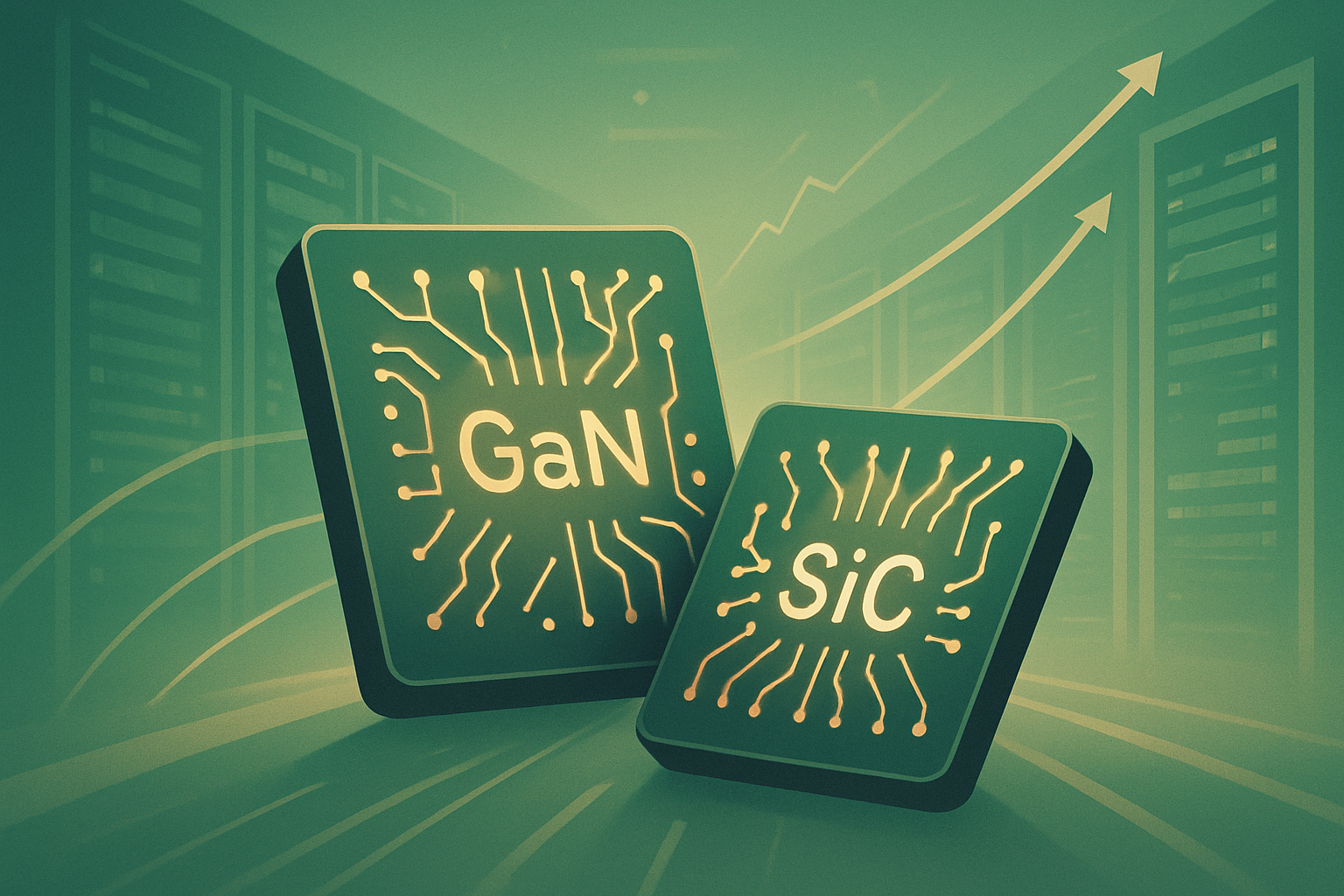
  • Navitas Semiconductor: The AI Power Play Reaching an Inflection Point

    Navitas Semiconductor: The AI Power Play Reaching an Inflection Point

    In the rapidly evolving landscape of high-performance computing, the "bottleneck" has shifted from the speed of the processor to the efficiency of the power delivery. Navitas Semiconductor (NASDAQ: NVTS) has found itself at the center of this paradigm shift. Following the recent launch of its 5th-generation GeneSiC chips specifically engineered for AI data centers, the company’s stock has surged 25%, signaling a potential "inflection point" for a firm that spent much of 2025 restructuring its core business. As AI infrastructure matures, Navitas is positioning itself as the critical link between the high-voltage grid and the power-hungry silicon of the future.

    Historical Background

    Founded in 2014 by industry veterans Gene Sheridan and Dan Kinzer, Navitas was built on a singular vision: "Electrify Our World." The company initially gained prominence as the pioneer of Gallium Nitride (GaN) power integrated circuits (ICs), which revolutionized the mobile fast-charging market by making chargers smaller, lighter, and more efficient.

    A transformative milestone occurred in 2022 when Navitas acquired GeneSiC Semiconductor, a move that added Silicon Carbide (SiC) technology to its portfolio. This acquisition transitioned Navitas from a niche consumer electronics supplier to a comprehensive power semiconductor house. However, 2025 proved to be a year of painful transformation, as the company intentionally exited the low-margin Chinese mobile market to focus on high-power industrial and AI applications—a strategic pivot now referred to in analyst circles as "Navitas 2.0."

    Business Model

    Navitas operates as a "fabless" semiconductor company, focusing its resources on design, R&D, and intellectual property while outsourcing the capital-intensive manufacturing process to leading foundries. This model allows for high agility and lower capital expenditure.

    The company's revenue streams are currently undergoing a massive shift. While once dominated by mobile chargers, the revenue mix is now tilting toward:

    • Data Centers: Powering the massive AI "factories" that require 800V architectures.
    • Electric Vehicles (EVs): On-board chargers and traction inverters.
    • Renewable Energy: Solar inverters and energy storage systems.
    • Industrial Electrification: High-efficiency motor drives and automation.

    By targeting these high-margin segments, Navitas aims to trade high-volume, low-profit consumer sales for high-value industrial contracts with longer design cycles and stickier customer relationships.

    Stock Performance Overview

    The performance of NVTS has been a rollercoaster for long-term investors. Over the 5-year horizon, the stock has faced volatility typical of the "SPAC-era" semiconductor entrants, largely tracking the highs of the 2021 tech boom and the lows of the 2023 interest rate hikes.

    However, the 1-year performance tells a story of recovery. After hitting a multi-year low in mid-2025 during its strategic restructuring, the stock has rebounded sharply. The recent 25% jump is attributed directly to the market’s realization that Navitas has secured a role in the NVIDIA (NASDAQ: NVDA) 800V AI ecosystem. Investors who weathered the 2025 "revenue bottom" are now seeing the fruits of the company’s pivot toward high-performance power silicon.

    Financial Performance

    Navitas enters 2026 with a strengthening balance sheet but lingering questions about its path to GAAP profitability.

    • Revenue Growth: After a planned revenue contraction in 2025 (down to ~$46M as they exited mobile markets), 2026 projections suggest a rebound to the $65M – $90M range.
    • Margins: Gross margins, which dipped to the mid-30s during the transition, are targeting a return to 40-45% as the 5th-gen GeneSiC products ramp up.
    • Cash Position: Following a successful funding round in late 2025, the company maintains a cash cushion of approximately $237M, providing a comfortable runway to reach its target of EBITDA positivity by mid-2026.

    Leadership and Management

    A major leadership transition in late 2025 saw Chris Allexandre take the helm as CEO. A veteran of Renesas and Texas Instruments, Allexandre’s appointment was a clear signal to the market that Navitas was moving away from its "startup" phase and into a disciplined industrial growth phase.

    Complementing Allexandre is the newly appointed CFO Tonya Stevens, whose focus has been on tightening operational expenses and improving the conversion of design wins into recognized revenue. Co-founder Dan Kinzer continues to lead the technological roadmap as CTO, ensuring that the company’s R&D edge remains sharp.

    Products, Services, and Innovations

    The crown jewel of the current portfolio is the 5th-Generation GeneSiC Trench-Assisted Planar (TAP) MOSFET. Launched in early 2026, these chips are designed for 1200V applications.

    • The Innovation: The TAP architecture offers a 35% improvement in efficiency over previous generations, significantly reducing heat dissipation—a critical factor for AI server racks.
    • GaNFast ICs: Navitas remains a leader in GaN technology, integrating power, drive, and protection into a single chip. These are now being deployed in "800V AI Factories" to switch power from high-voltage DC down to the levels required by GPUs with 98.5% efficiency.

    Competitive Landscape

    Navitas competes in a "Goliath" market against some of the world’s largest semiconductor firms:

    • Infineon (OTC: IFNNY) & STMicroelectronics (NYSE: STM): These giants possess massive manufacturing scale and dominant automotive relationships.
    • Wolfspeed (NYSE: WOLF): Once the primary rival in SiC, Wolfspeed’s 2025 Chapter 11 bankruptcy and subsequent restructuring left a vacuum in the market that Navitas has aggressively filled.
    • Innoscience: A major Chinese competitor in the GaN space, though geopolitical tensions and IP litigation have limited its expansion into the U.S. and European industrial markets.

    Navitas’ advantage lies in its "pure-play" focus on next-gen materials (GaN/SiC) without the "legacy silicon baggage" that slows down larger competitors.

    Industry and Market Trends

    We are currently in the midst of an AI-led "Giga Cycle." Global semiconductor sales are projected to approach $1 trillion by 2028, driven by the massive power requirements of generative AI. Traditional silicon chips are hitting physical limits in terms of heat and efficiency; wide-bandgap materials like GaN and SiC are no longer "optional" luxuries but essential components for the green transition and the AI boom. Furthermore, the shift from 400V to 800V architectures in both data centers and EVs is a massive tailwind for Navitas’ 1200V-rated chips.

    Risks and Challenges

    Despite the recent optimism, Navitas faces several head-winds:

    • Execution Risk: The pivot from consumer to industrial markets requires a different sales force and longer support cycles. Any delay in the ramp-up of the AI data center contracts could lead to a revenue miss.
    • Concentration Risk: A significant portion of the 2026 growth narrative relies on the success of a few major AI infrastructure partnerships.
    • Cyclicality: While AI is currently "recession-resistant," the broader semiconductor industry remains sensitive to global macro conditions and interest rate environments.

    Opportunities and Catalysts

    • NVIDIA Partnership: Continued integration into the NVIDIA 800V reference designs is the primary catalyst for 2026.
    • Positive EBITDA: Reaching the break-even point in mid-2026 would likely trigger a re-rating of the stock from a "growth speculative" to a "growth fundamental" asset.
    • M&A Potential: As a pure-play leader with high-end IP, Navitas remains a prime acquisition target for larger semiconductor firms looking to leapfrog their GaN/SiC capabilities.

    Investor Sentiment and Analyst Coverage

    Wall Street sentiment has shifted from "Skeptical" to "Cautiously Optimistic." Following the 25% surge, several analysts have upgraded NVTS to a "Buy," with price targets ranging from $12 to $15. Institutional ownership has stabilized, with hedge funds increasingly viewing NVTS as a high-beta play on the "AI Power" theme. Retail sentiment remains high, often fueled by the company’s direct association with the AI hardware cycle.

    Regulatory, Policy, and Geopolitical Factors

    Navitas benefits from the U.S. CHIPS Act, which incentivizes domestic semiconductor innovation and supply chain security. However, the company must navigate complex trade restrictions regarding the export of high-performance power electronics to China. As a U.S.-headquartered company with a global supply chain, Navitas is well-positioned to benefit from "friend-shoring" initiatives as Western companies look to de-risk their power electronics supply chains from Chinese providers.

    Conclusion

    Navitas Semiconductor represents a high-conviction bet on the "efficiency layer" of the AI revolution. After a grueling 2025 focused on restructuring and strategic narrowing, the company’s 5th-gen GeneSiC launch has provided the technical and financial validation the market was seeking. While execution risks remain—particularly regarding the timing of industrial ramps—the alignment of Navitas’ technology with the 800V AI data center mandate makes it a compelling name to watch. For investors, the key metric for the remainder of 2026 will be the speed at which "design wins" translate into "shipped revenue."


    This content is intended for informational purposes only and is not financial advice.

  • Powering the Recovery: A Deep Dive into onsemi (ON) and the Future of Silicon Carbide

    Powering the Recovery: A Deep Dive into onsemi (ON) and the Future of Silicon Carbide

    As of March 6, 2026, the global semiconductor industry is emerging from a protracted "inventory digestion" phase that defined much of 2024 and 2025. At the heart of this recovery is onsemi (Nasdaq: ON), a company that has undergone a radical transformation from a broad-based commodity chipmaker into a specialized powerhouse in "intelligent power and sensing."

    The focus on onsemi today is driven by its strategic pivot toward Silicon Carbide (SiC) and its resilience in a volatile automotive and industrial landscape. Under the leadership of CEO Hassane El-Khoury, the company has executed an aggressive "Fab-Right" strategy, shedding underperforming assets to focus on high-margin, high-growth technologies. This deep dive explores how onsemi is positioning itself to lead the next generation of electric vehicles (EVs), AI-driven data centers, and industrial automation.

    Historical Background

    The story of onsemi begins on August 4, 1999, when it was spun off from Motorola’s Semiconductor Components Group. Initially headquartered in Phoenix, Arizona, the company (then known as ON Semiconductor) inherited a massive portfolio of discrete, logic, and analog devices. The early years were marked by survival, as the company navigated the 2001 tech bust and worked to modernize its manufacturing footprint.

    Over the next two decades, onsemi utilized strategic M&A to climb the value chain. Key milestones include the 2008 acquisition of AMI Semiconductor, the 2011 purchase of SANYO Semiconductor, and the transformative $2.4 billion acquisition of Fairchild Semiconductor in 2016, which catapulted the company into the upper echelons of power management leaders.

    In 2021, the company rebranded as onsemi to reflect a new strategic focus. That same year, it acquired GT Advanced Technologies (GTAT), a move that proved visionary by providing the company with internal control over its Silicon Carbide (SiC) substrate supply chain, a critical component for the burgeoning EV market.

    Business Model

    onsemi operates through three primary segments, each targeting high-value, high-growth "megatrends" in the electronics industry:

    1. Power Solutions Group (PSG): The company’s largest revenue driver, accounting for roughly 47% of sales. It focuses on power management components, including SiC modules, MOSFETs, and IGBTs, which are essential for EV drivetrains and energy infrastructure.
    2. Advanced Solutions Group (ASG): This segment provides mixed-signal, analog, and logic solutions for automotive, industrial, and medical markets. This includes the Treo Platform, a 65nm BCD process used in precision sensing and power control.
    3. Intelligent Sensing Group (ISG): A leader in image sensors, ISG serves the automotive (ADAS and cabin monitoring) and industrial sectors. onsemi holds a dominant market share in automotive image sensors, which are critical for autonomous driving.

    The company’s customer base is heavily weighted toward Automotive (approx. 52%) and Industrial (approx. 28%), with the remainder coming from the AI data center and consumer markets.

    Stock Performance Overview

    Over the last decade, onsemi has been a volatile but rewarding investment.

    • 10-Year View: From 2016 to early 2026, the stock has grown from roughly $10 to over $60. Much of this growth occurred during the "SiC gold rush" of 2021–2023, where shares hit an all-time high of approximately $108.09 in August 2023.
    • 5-Year View: The stock saw a massive acceleration under the current management team, outperforming many peers in the PHLX Semiconductor Index (SOX) between 2021 and 2023.
    • Recent Performance: The 2024–2025 period was difficult. As EV demand softened and industrial inventories swelled, the stock entered a consolidation phase, trading between $50 and $75. As of March 2026, the stock is showing signs of a fresh breakout, supported by a newly launched $6 billion share repurchase program.

    Financial Performance

    In early 2026, onsemi is emerging from a cyclical trough.

    • Revenue: After peaking at $8.25 billion in 2023 and dipping to approximately $6.0 billion in 2025, revenue is projected to rebound to $9.0 billion by the end of the 2026/2027 cycle.
    • Margins: Management’s "Fab-Right" strategy has been successful in protecting profitability. Non-GAAP gross margins remain robust at 45%+, with a long-term target of 53% as 200mm SiC production scales.
    • Cash Flow & Debt: The company reported a free cash flow of $1.4 billion in 2025 (24% of revenue). This strong liquidity position allowed for the massive $6 billion buyback program announced in late 2025, aimed at reducing share count and boosting EPS.
    • Valuation: Trading at a Forward P/E of approximately 23x, onsemi is viewed as reasonably valued compared to its 5-year historical average, particularly given the expected EPS rebound in late 2026.

    Leadership and Management

    The leadership team is widely credited with onsemi’s structural improvement:

    • Hassane El-Khoury (President & CEO): Since joining in late 2020, El-Khoury has been the architect of the "intelligent power and sensing" pivot. His disciplined approach to capital allocation and "asset-right" manufacturing has revitalized the company's reputation on Wall Street.
    • Thad Trent (EVP & CFO): Also joining in 2021, Trent has overseen the divestiture of low-margin fabs and the implementation of a rigorous financial model focused on free cash flow and margin expansion.
    • Simon Keeton (Group President, PSG): A veteran of the company, Keeton leads the high-growth Power Solutions Group and is currently managing the transition to 200mm SiC wafers, a critical technical hurdle for the company.

    Products, Services, and Innovations

    The crown jewel of onsemi’s current portfolio is the EliteSiC™ brand. Silicon Carbide is superior to traditional silicon for high-voltage applications because it is more efficient, handles higher temperatures, and allows for smaller, lighter power systems.

    • EliteSiC M3e MOSFETs: Launched in late 2024, the M3e generation reduced conduction losses by 30%, making it the industry standard for 800V EV traction inverters.
    • 200mm (8-inch) SiC Transition: In 2026, onsemi successfully ramped its 200mm SiC production in Bucheon, South Korea. Moving from 150mm to 200mm wafers increases the number of chips per wafer by ~80%, providing a massive cost advantage.
    • AI Power Stages: Recognizing the massive power requirements of AI GPUs (like those from Nvidia), onsemi has developed high-density smart power stages that are now being integrated into hyperscale data centers.

    Competitive Landscape

    onsemi operates in a highly competitive market, dominated by European and US giants:

    • STMicroelectronics (STM): The current market leader in SiC, largely due to its long-standing relationship with Tesla. STMicro is also ramping 200mm production in Italy.
    • Infineon Technologies (IFNNY): The overall global leader in power semiconductors. Infineon has a broader portfolio and is aiming for 30% SiC market share by 2030.
    • Wolfspeed (WOLF): A pure-play SiC competitor that focuses on material supply. While a leader in 200mm substrate production, Wolfspeed has struggled with manufacturing yields, giving integrated players like onsemi an opening.

    onsemi’s competitive edge lies in its vertical integration (controlling the SiC process from boule to module) and its dominant position in automotive image sensors.

    Industry and Market Trends

    The semiconductor sector in 2026 is defined by several key macro drivers:

    • 800V EV Architectures: The industry is moving from 400V to 800V systems to enable faster charging and longer range. This shift heavily favors SiC technology over traditional silicon.
    • Industrial Automation 2.0: After a lull, industrial demand is returning as factories invest in energy-efficient robotics and motion control.
    • The AI Pivot: Beyond logic chips, AI data centers require massive power delivery infrastructure. onsemi is positioning its SiC and smart power solutions to capture this high-margin niche.

    Risks and Challenges

    Despite the recovery, onsemi faces several significant headwinds:

    • China Exposure: onsemi derives approximately 30% of its revenue from China. While it has design wins in 60% of Chinese EV models, geopolitical tensions and potential trade tariffs remain a primary risk.
    • Inventory Digestion: While the "worst is over," certain industrial sub-sectors still have high inventory levels that could dampen revenue growth in the first half of 2026.
    • Manufacturing Execution: The transition to 200mm SiC wafers is technically challenging. Any delays in yield improvements could hurt gross margins.

    Opportunities and Catalysts

    • $2 Billion Czech Expansion: In late 2025, the EU approved a €450 million grant to support onsemi’s $2 billion vertically integrated SiC plant in Roznov, Czech Republic. This facility will be a major growth driver for the European automotive market by 2027.
    • AI Data Center Growth: If AI power revenue continues to scale, it could provide a "third leg" of growth alongside Automotive and Industrial.
    • Capital Returns: The $6 billion buyback is a massive catalyst for EPS growth, especially if the stock remains at these valuation levels.

    Investor Sentiment and Analyst Coverage

    Wall Street sentiment as of March 2026 is "Moderate Buy." Analysts have largely confirmed that the cyclical bottom was reached in late 2025.

    • Bullish Views: Analysts highlight onsemi’s superior free cash flow and the successful 200mm ramp. Many have set price targets in the $95–$110 range.
    • Bearish Views: Skeptics point to the slowing growth rate of the global EV market and the potential for increased competition from Chinese SiC suppliers. Lower-end price targets sit around $64.

    Regulatory, Policy, and Geopolitical Factors

    • CHIPS Act: onsemi is a major beneficiary of the US CHIPS Act’s 25% investment tax credit for its East Fishkill, NY fab.
    • European Chips Act: The Czech expansion is a flagship project under the European Chips Act, securing onsemi’s position as a critical infrastructure provider for the EU’s green transition.
    • Global Trade: Potential shifts in US trade policy toward China remain a "wildcard" that could affect onsemi's supply chain and customer base in the Asia-Pacific region.

    Conclusion

    As of March 2026, onsemi (Nasdaq: ON) stands as a leaner, more focused version of its former self. Through the "Fab-Right" strategy and the acquisition of GTAT, the company has successfully transitioned into a premier provider of intelligent power and sensing technologies.

    While the 2024–2025 downturn tested the company’s resilience, the start of 2026 suggests a new era of growth driven by 200mm Silicon Carbide production and the emerging AI power market. For investors, onsemi offers a balanced play on the recovery of the semiconductor sector, backed by strong free cash flow and a massive capital return program. However, watchers must remain mindful of the geopolitical risks associated with its China exposure and the technical hurdles of the 200mm transition.


    Disclaimer: This content is intended for informational purposes only and is not financial advice.

  • The Future of Intelligent Power: A Deep Dive into ON Semiconductor (onsemi)

    The Future of Intelligent Power: A Deep Dive into ON Semiconductor (onsemi)

    As of February 9, 2026, ON Semiconductor (Nasdaq: ON), now officially rebranded as onsemi, stands as a primary architect of the global energy transition. Once known as a broad-market supplier of commodity components, the Scottsdale, Arizona-based company has undergone one of the most aggressive structural transformations in the semiconductor industry. Today, onsemi is a specialized leader in intelligent power and intelligent sensing, focusing specifically on the high-growth "megatrends" of vehicle electrification, industrial automation, and the massive power requirements of AI-driven data centers.

    The company is currently in sharp focus as it navigates the transition from 150mm to 200mm Silicon Carbide (SiC) production—a technical leap that separates the market leaders from the laggards in the power semiconductor space. With AI GPUs demanding unprecedented levels of power density and electric vehicles (EVs) moving toward 800V architectures, onsemi's "EliteSiC" ecosystem has become a critical bottleneck for innovation, making it a central figure in the portfolios of institutional and retail investors alike.

    Historical Background

    The story of onsemi is one of strategic evolution. The company was born in 1999 as a spinoff of Motorola’s Semiconductor Components Group, focused primarily on discrete, logic, and standard analog devices. For its first decade, it operated as a high-volume, low-margin manufacturer.

    The transformation into a power powerhouse began with a series of calculated acquisitions:

    • SANYO Semiconductor (2011): This acquisition expanded its footprint in the Japanese market and automotive sector.
    • Fairchild Semiconductor (2016): A $2.4 billion deal that instantly vaulted onsemi into the top tier of global power semiconductor suppliers.
    • GT Advanced Technologies (2021): Perhaps the most pivotal move under current leadership, this acquisition secured the internal supply of Silicon Carbide (SiC) boules, allowing onsemi to control its supply chain from "substrate to system."

    Under the leadership of CEO Hassane El-Khoury, who took the helm in December 2020, the company shed its "commodity" identity. El-Khoury initiated a "Fab-Lite" to "Fab-Right" strategy, divesting underperforming manufacturing plants and doubling down on high-margin, differentiated technologies that are difficult for competitors to replicate.

    Business Model

    onsemi operates through three core business segments, each aligned with long-term secular growth drivers:

    1. Power Solutions Group (PSG): The largest revenue contributor, PSG provides high-performance power semiconductors (SiC, IGBTs, and MOSFETs). These are the "muscles" of an EV’s drivetrain and the high-efficiency components in solar inverters and AI server power supplies.
    2. Analog and Mixed-Signal Group (AMG): Reorganized in early 2024, this group focuses on the "brains" of power management. It develops gate drivers, DC-DC converters, and integrated circuits that manage the flow of electricity within complex systems like AI GPU racks.
    3. Intelligent Sensing Group (ISG): A world leader in automotive and industrial image sensors. onsemi currently holds over 60% of the market share for ADAS (Advanced Driver Assistance Systems) sensors. Its sensors are designed to provide the high-dynamic-range (HDR) data necessary for AI-driven autonomous driving platforms.

    The company’s model is increasingly vertically integrated, meaning they grow their own crystals, slice their own wafers, and package their own modules, ensuring higher quality control and better margins than competitors who rely on external substrate suppliers.

    Stock Performance Overview

    Over the past decade, onsemi has transformed from a cyclical laggard into a high-growth tech darling.

    • 10-Year Horizon: Investors who bought in 2016 have seen gains exceeding 900%, as the company successfully pivoted away from consumer electronics toward automotive and industrial markets.
    • 5-Year Horizon: The period from 2021 to 2026 has been characterized by high volatility but strong overall growth. The stock reached record highs in 2023, followed by a significant correction in 2024 as the EV market experienced a temporary "inventory digestion" phase.
    • 1-Year Horizon (2025-2026): Over the last 12 months, the stock has staged a robust recovery. As of February 2026, ON shares are trading in the $105–$120 range, up approximately 35% from the 2024 lows. This rally has been fueled by the company’s expansion into AI data center power and the successful ramp-up of its 200mm SiC production facility in Bucheon, South Korea.

    Financial Performance

    onsemi’s financials reflect a company prioritizing "structural profitability" over raw volume.

    • Revenue: After a slight contraction in 2024 (down to ~$7.8 billion), revenue has stabilized and is projected to grow toward $9 billion in the 2026 fiscal year.
    • Margins: A key metric for onsemi is its gross margin. Despite the capital-intensive nature of semiconductor manufacturing, the company has maintained non-GAAP gross margins above 45%. Its long-term target of 53% remains a focal point for analysts, expected to be reached by 2027 as 200mm SiC utilization hits its stride.
    • Capital Allocation: In late 2025, the board authorized a $6 billion share buyback program, signaling management's belief that the stock remains undervalued relative to its dominance in the SiC market.
    • Debt: The company maintains a healthy balance sheet with a net debt-to-EBITDA ratio well below 1.5x, providing flexibility for future M&A.

    Leadership and Management

    Hassane El-Khoury (President and CEO): Often described as a "turnaround specialist," El-Khoury has been the primary architect of onsemi’s modern identity. His "Fab-Right" strategy focused on divesting four older fabs and focusing internal production on 300mm silicon and 200mm SiC wafers.

    The leadership team is regarded as highly disciplined, with a reputation for meeting or exceeding margin guidance even in down cycles. Governance at onsemi is rated highly, with a board that has successfully balanced aggressive R&D spending (roughly 10% of revenue) with shareholder returns.

    Products, Services, and Innovations

    onsemi’s competitive edge lies in its EliteSiC brand. Silicon Carbide is superior to traditional silicon for high-voltage applications because it is more efficient, can operate at higher temperatures, and allows for smaller, lighter components.

    • 200mm SiC Wafers: In 2025, onsemi became one of the few companies to successfully mass-produce SiC on 200mm (8-inch) wafers. This transition increases the number of chips per wafer by roughly 80% compared to the older 150mm standard, drastically lowering the cost per chip.
    • Hyperlux Image Sensors: These sensors are optimized for AI. They feature "super-exposure" technology that allows cameras to see clearly in extreme lighting conditions, a necessity for Level 3 and Level 4 autonomous driving systems.
    • AI Data Center "Power Tree": As AI clusters require kilowatts of power, onsemi has innovated in vertical power delivery and Gallium Nitride (GaN) technologies to minimize energy loss from the grid to the GPU.

    Competitive Landscape

    The power semiconductor market is a "clash of titans":

    • STMicroelectronics (NYSE: STM): onsemi’s primary rival in the SiC space, with a strong foothold in European automotive (notably Tesla).
    • Infineon Technologies (OTC: IFNNY): The global leader in power semiconductors by total revenue, though onsemi is often viewed as more agile in the SiC transition.
    • Wolfspeed (NYSE: WOLF): A pure-play SiC materials leader. While Wolfspeed has a head start in material science, onsemi has outpaced them in high-volume device manufacturing and reliability.
    • Chinese Competitors: Firms like Sanan Optoelectronics are flooding the market with low-end SiC, but onsemi's focus on high-performance 800V EV modules provides a technical "moat" against commoditization.

    Industry and Market Trends

    The semiconductor industry is currently defined by three major trends that favor onsemi:

    1. The Shift to 800V EV Systems: To enable "fast charging" (10% to 80% in under 18 minutes), EVs are moving from 400V to 800V battery systems. This requires the high-voltage resilience that only SiC can provide.
    2. AI Power Infrastructure: AI data centers are expected to consume 10% of global electricity by 2030. onsemi’s ability to improve power efficiency by even 1-2% across a data center results in millions of dollars in energy savings for hyperscalers like Amazon and Microsoft.
    3. Regionalization of Supply Chains: There is a massive push to onshore chip production in the US and Europe, a trend onsemi is capitalizing on via government incentives.

    Risks and Challenges

    No investment is without risk, and onsemi faces several headwinds:

    • China's SiC Surge: Domestic Chinese capacity for SiC is growing rapidly. While onsemi leads in quality, a price war in the low-to-mid-tier industrial segment could squeeze margins.
    • EV Adoption Friction: If the transition to electric vehicles slows further due to high interest rates or charging infrastructure gaps, onsemi’s largest growth engine could stall.
    • Manufacturing Complexity: Moving to 200mm SiC is technically difficult. Any yield issues (the percentage of functional chips per wafer) at their new fabs could lead to earnings misses.

    Opportunities and Catalysts

    • Expansion into AI Cooling/Power: Beyond just chips, onsemi is exploring integrated liquid-cooling power modules for AI servers, a high-margin niche.
    • Energy Infrastructure: The global upgrade of the "smart grid" to handle renewable energy (solar/wind) requires massive amounts of the power semiconductors that onsemi specializes in.
    • Strategic M&A: With a strong cash position, onsemi is rumored to be looking at specialized AI software or Gallium Nitride (GaN) startups to further round out its "Intelligent Power" portfolio.

    Investor Sentiment and Analyst Coverage

    Wall Street remains generally bullish on onsemi, with a "Moderate Buy" consensus. Analysts from Goldman Sachs and Morgan Stanley have highlighted the company’s "structural margin expansion" as a reason for its premium valuation compared to traditional analog chipmakers like Texas Instruments (Nasdaq: TXN).

    Institutional ownership is high at approximately 95%, indicating that "smart money" views onsemi as a core long-term holding for exposure to the electrification of the global economy. Retail sentiment, while more volatile, often tracks the news cycle of major EV makers like Tesla and Rivian.

    Regulatory, Policy, and Geopolitical Factors

    onsemi is a strategic beneficiary of current geopolitical shifts:

    • US CHIPS Act: onsemi has secured significant federal funding to expand its manufacturing sites in East Fishkill, New York, and Mountain Top, Pennsylvania, reducing its reliance on Asian foundries.
    • EU Chips Act: The company’s $2 billion investment in the Czech Republic is bolstered by European subsidies aimed at securing a domestic supply of power electronics for the EU’s automotive industry.
    • Export Controls: Tightening US restrictions on the export of high-efficiency SiC technology to China act as a protective barrier for onsemi’s intellectual property and market share.

    Conclusion

    As of February 9, 2026, ON Semiconductor has successfully shed its past as a commodity chipmaker to become an indispensable pillar of the high-voltage future. By vertically integrating its Silicon Carbide supply chain and pivoting toward the power-hungry needs of AI data centers, management has insulated the company from many of the cyclical pressures that plague the broader semiconductor industry.

    While the "China factor" and the pace of EV adoption remain valid concerns, onsemi’s transition to 200mm manufacturing and its dominance in automotive sensing provide a robust moat. For investors, onsemi represents a high-conviction play on the fundamental thesis that the world of tomorrow will require more efficient power management than the world of today. The key to its future success will lie in its ability to maintain its technological lead in SiC while executing its "Fab-Right" efficiency gains.


    This content is intended for informational purposes only and is not financial advice.