
Tag: SNDK

  • The Silicon Renaissance: How SanDisk (SNDK) Reclaimed the Throne in the AI Era

    The Silicon Renaissance: How SanDisk (SNDK) Reclaimed the Throne in the AI Era

    In the rapidly evolving landscape of semiconductor technology, few stories are as compelling as the resurrection and subsequent dominance of SanDisk Corporation (NASDAQ: SNDK). Once a legacy consumer brand synonymous with SD cards and thumb drives, the SanDisk of April 2026 has reinvented itself as the high-octane engine of the "AI Storage Supercycle." Following its historic spinoff from Western Digital (NASDAQ: WDC) in early 2025, SanDisk has emerged as a pure-play flash memory powerhouse, commanding a pivotal role in the infrastructure required to feed global artificial intelligence models. As of today, April 14, 2026, the company stands on the precipice of its official inclusion into the Nasdaq-100 Index, reflecting a valuation and market influence that would have been unthinkable just three years ago.

    Historical Background

    The journey of SanDisk is a trilogy of innovation, consolidation, and ultimate independence. Founded in 1988 by Eli Harari, Sanjay Mehrotra, and Jack Yuan, the company pioneered the commercialization of flash memory. Over the decades, it became a household name in consumer electronics, but as the market for mobile and computing storage shifted, SanDisk was acquired by Western Digital in 2016 for $19 billion.

    For nearly nine years, SanDisk operated as the Flash Business Unit within Western Digital. However, the synergistic promise of combining Hard Disk Drive (HDD) and Flash technologies under one roof eventually gave way to the realities of different market cycles and investor preferences. In late 2023, under pressure from activist investors and a shifting macroeconomic tide, Western Digital announced its intent to split. On February 21, 2025, the separation was finalized, and SanDisk was re-listed on the Nasdaq. This "New SanDisk" is far leaner than its predecessor, focused almost exclusively on high-performance NAND and Solid State Drive (SSD) solutions.

    Business Model

    SanDisk operates a specialized, capital-efficient business model focused on three primary revenue streams: Data Center/Enterprise SSDs, Client SSDs (PCs and Gaming), and Consumer Flash.

    The cornerstone of its model is a unique, decade-long joint venture (JV) with Japan’s Kioxia (formerly Toshiba Memory). This partnership allows SanDisk to share the multi-billion dollar costs of semiconductor fabrication plants (fabs) while maintaining a steady supply of cutting-edge NAND wafers. By focusing on the "back-end" design of controllers and firmware, SanDisk differentiates its products from commodity flash, commanding higher margins in the enterprise sector. Currently, the company's revenue mix has shifted heavily toward the Data Center segment, which now accounts for over 55% of its total quarterly sales, up from 30% prior to the spinoff.

    Stock Performance Overview

    The performance of SNDK since its 2025 relisting has been nothing short of spectacular.

    • 1-Year Performance: In the past 12 months, SNDK shares have surged by over 400%, fueled by the transition from a NAND oversupply in 2024 to a severe shortage in 2026.
    • Performance Since Spinoff: From its opening price of approximately $40 in February 2025, the stock has catapulted to a current trading range of $915 to $950.
    • Historical Context: While long-term charts often incorporate the legacy Western Digital performance, the "pure-play" SNDK has seen a re-rating of its P/E multiple from the low teens to the mid-30s, as investors now value it similarly to high-growth AI hardware peers like NVIDIA (NASDAQ: NVDA) and Arista Networks (NYSE: ANET).

    Financial Performance

    SanDisk’s latest quarterly earnings (Q1 2026) showcased the full force of the NAND recovery. The company reported revenue of $2.31 billion, a 21% sequential increase that defied seasonal norms.

    • Margins: Non-GAAP gross margins reached a record 65.2%, driven by aggressive pricing power and the rollout of the high-margin BiCS8 architecture.
    • Cash Flow: The company generated $1.2 billion in free cash flow in the last quarter alone, achieving a net cash positive position significantly ahead of management’s 2027 target.
    • Valuation: Despite the price surge, SNDK’s forward P/E remains competitive at 28x, as analysts continue to upwardly revise 2026 and 2027 earnings estimates.

    Leadership and Management

    SanDisk is led by CEO David Goeckeler, the architect of the Western Digital split. Goeckeler, a Cisco veteran, has been praised for his strategic focus on the "Data Center First" roadmap. Under his leadership, SanDisk has aggressively cut legacy consumer overhead to reinvest in enterprise R&D.
    The executive team, including CFO Luis Visoso, is regarded as one of the most disciplined in the memory space, particularly in capital allocation. The board of directors was recently strengthened by the addition of Alexander R. Bradley, bringing deep expertise in navigating the complexities of high-stakes manufacturing and international supply chains.

    Products, Services, and Innovations

    The technological "moat" around SanDisk currently rests on its BiCS8 (218-layer) 3D NAND platform. Using CMOS-Bonded-to-Array (CBA) technology, SanDisk has achieved higher bit density and faster input/output speeds than its traditional stacking methods.

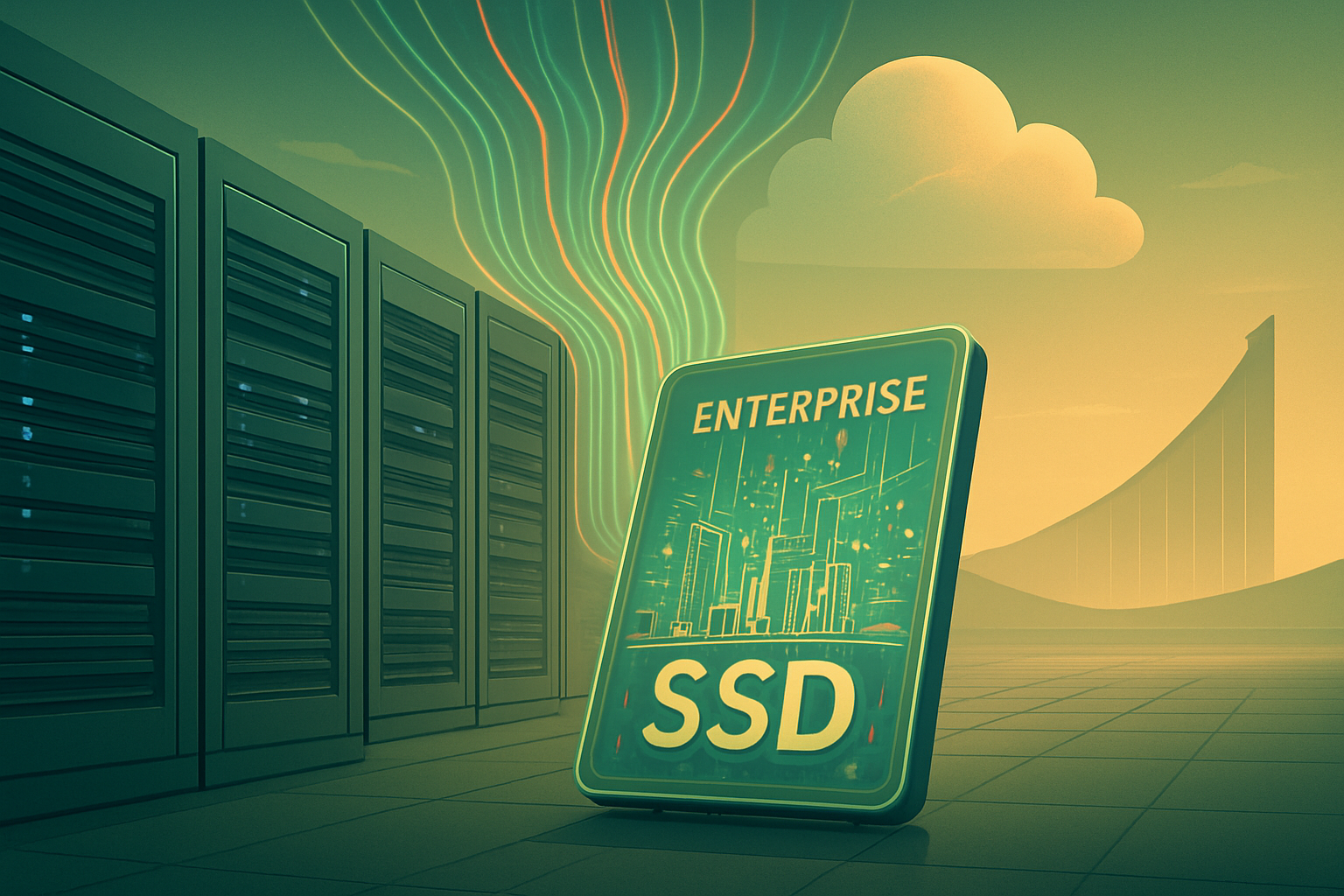
    • The 256TB eSSD: In early 2026, SanDisk launched the industry’s first 256TB NVMe Enterprise SSD. This product is specifically designed for "AI Data Lakes," allowing hyperscale providers like Microsoft (NASDAQ: MSFT) and Amazon (NASDAQ: AMZN) to store massive training sets in half the physical footprint of previous generations.
    • Power Efficiency: A key innovation in SanDisk’s current portfolio is a 20% reduction in power consumption per terabyte, a critical selling point for data centers struggling with the massive energy demands of GPU clusters.

    Competitive Landscape

    The memory market remains an oligopoly, but the power dynamics are shifting. SanDisk currently holds approximately 13% of the global NAND market, trailing Samsung (OTC: SSNLF) and SK Hynix. However, in the high-value Enterprise SSD niche, SanDisk’s market share has surged to over 12% and is growing faster than its rivals.

    • Samsung: Remains the volume leader but has struggled with yield issues on its latest high-layer counts.
    • Micron (NASDAQ: MU): A formidable competitor in the U.S., though Micron’s heavy exposure to the DRAM market makes its stock profile different from the NAND-focused SanDisk.
    • SK Hynix/Solidigm: SanDisk’s primary rival in high-capacity SSDs; the competition here is fierce, particularly for lucrative contracts with Tier-1 cloud providers.

    Industry and Market Trends

    The storage industry is currently defined by the transition from "General Purpose Storage" to "AI-Optimized Storage." AI models require vast amounts of data to be fed into GPUs at high speeds, making traditional HDDs too slow for the training phase. This has created a massive replacement cycle where NAND flash is cannibalizing the HDD market in the data center. Furthermore, a global shortage of high-capacity NAND has led to a "silent squeeze," with prices rising 10% in the last quarter alone, a trend expected to persist through the end of 2026.

    Risks and Challenges

    Investing in SanDisk is not without significant risks:

    1. Cyclicality: The memory industry is notoriously boom-and-bust. While 2026 is a boom year, any over-investment in fab capacity by the "Big Four" could lead to a price crash in 2027 or 2028.
    2. JV Dependency: SanDisk’s reliance on the Kioxia JV is a double-edged sword. Internal disputes or a financial crisis at Kioxia could jeopardize SanDisk’s manufacturing pipeline.
    3. SK Hynix Opposition: Efforts to further consolidate with Kioxia have been blocked by SK Hynix, limiting SanDisk’s ability to achieve full structural synergies.

    Opportunities and Catalysts

    The primary near-term catalyst is the Nasdaq-100 inclusion on April 20, 2026. This event will force passive index funds to buy millions of shares of SNDK, likely providing a floor for the current stock price.
    Beyond the index move, the "Edge AI" trend—where AI processing happens on smartphones and laptops rather than in the cloud—presents a massive secondary growth lever for SanDisk’s client SSD and mobile divisions starting in late 2026.

    Investor Sentiment and Analyst Coverage

    Wall Street is overwhelmingly bullish on SNDK. Out of 32 analysts covering the stock, 28 have "Buy" or "Strong Buy" ratings. Institutional ownership has climbed to 84%, with major positions held by Vanguard, BlackRock, and several prominent semiconductor-focused hedge funds. Retail sentiment is also high, often trending on social platforms due to SanDisk’s status as a "pure play" on the AI infrastructure trade.

    Regulatory, Policy, and Geopolitical Factors

    As a U.S.-based company with manufacturing primarily in Japan, SanDisk occupies a delicate geopolitical position. It has benefited from U.S. government incentives designed to reduce reliance on Chinese-manufactured memory. However, export controls on high-end storage technology to China remain a headwind, as SanDisk must navigate complex licensing requirements to sell its highest-capacity enterprise drives into the Chinese market. The stability of the U.S.-Japan security alliance remains paramount for the continued success of the Yokkaichi and Kitakami manufacturing plants.

    Conclusion

    SanDisk Corporation has completed one of the most successful corporate "second acts" in recent history. By detaching from the slower-growth HDD business and leaning aggressively into the AI-driven flash shortage, the company has transformed into a high-margin, high-growth darling of the semiconductor sector. While the inherent cyclicality of the memory market remains a permanent shadow, SanDisk’s current technological leadership with BiCS8 and its imminent entry into the Nasdaq-100 suggest that its momentum is far from exhausted. For investors, the key will be monitoring the global NAND supply-demand balance and the continued execution of the enterprise-first strategy under David Goeckeler.


    This content is intended for informational purposes only and is not financial advice.
  • The Great Rebirth: A Deep-Dive into SanDisk’s (SNDK) AI-Driven Surge in 2026

    The Great Rebirth: A Deep-Dive into SanDisk’s (SNDK) AI-Driven Surge in 2026

    As of April 2, 2026, the technology sector is witnessing one of the most remarkable corporate resurrections in the history of the semiconductor industry. SanDisk Corporation (NASDAQ: SNDK) has not only returned to the public markets as an independent entity but has rapidly ascended to become the "pure-play" standard-bearer for the artificial intelligence (AI) storage revolution. Since its high-profile spin-off from Western Digital (NASDAQ: WDC) in early 2025, SanDisk has shed its reputation as a mere manufacturer of thumb drives and SD cards, transforming into an enterprise powerhouse. Today, SNDK sits at the intersection of a global NAND flash shortage and an insatiable demand for high-speed data centers, making it a focal point for institutional investors and industry analysts alike.

    Historical Background

    The SanDisk narrative is a three-act play. Founded in 1988 by Eli Harari, Sanjay Mehrotra, and Jack Yuan, the company pioneered the commercialization of flash memory. For decades, it was the dominant force in consumer storage, from the earliest digital camera cards to the internal storage of the first smartphones.

    The second act began in 2016, when Western Digital acquired SanDisk for $19 billion in a bid to diversify away from its traditional hard disk drive (HDD) business. However, the marriage was often fraught with challenges as the cyclicality of the flash market clashed with the steady, high-margin nature of the HDD business. Following years of pressure from activist investors and a fundamental shift in the AI landscape, Western Digital announced a strategic separation in late 2023.

    The third act—the "Rebirth"—culminated on February 24, 2025, when SanDisk officially re-emerged as an independent public company on the Nasdaq. This separation allowed the company to focus exclusively on NAND flash innovation, unencumbered by the legacy HDD operations of its former parent.

    Business Model

    SanDisk operates a specialized business model focused on the design, development, and manufacturing of non-volatile flash memory solutions. Its revenue streams are segmented into three primary pillars:

    1. Enterprise Storage (55% of Revenue): This is the company’s most significant growth engine. SanDisk provides massive-scale Solid State Drives (SSDs) to hyperscale cloud providers and AI data centers.
    2. Client SSDs (30% of Revenue): This segment serves the "AI PC" and high-end gaming laptop markets, providing the speed and capacity required for local AI processing.
    3. Consumer Flash (15% of Revenue): While no longer the primary focus, SanDisk remains a household name in portable storage, including its Extreme series and high-capacity mobile memory cards.

    Crucially, SanDisk maintains a long-standing manufacturing joint venture with Kioxia. This partnership allows both companies to share the massive R&D and capital expenditures required to develop new NAND generations, giving SanDisk a cost structure and scale that rival industry giants like Samsung (KRX: 005930).

    Stock Performance Overview

    Since its re-listing in February 2025 at an initial price of approximately $40.00, SNDK has been a "multibagger" in the truest sense. Over the past 14 months, the stock has surged over 1,350%, trading at $692.73 as of early April 2026.

    • 1-Year Performance: The stock is up over 500% in the last 12 months, fueled by consecutive earnings beats and a widening NAND supply deficit.
    • Post-Spin Performance: From its debut in early 2025 to its recent all-time high of $777.60, the stock's trajectory has been almost vertical, interrupted only by minor macroeconomic fluctuations.
    • Compared to Peers: SNDK has significantly outperformed the broader PHLX Semiconductor Index (SOX) and its former parent, Western Digital, as investors prefer its pure exposure to flash storage.

    Financial Performance

    SanDisk's financial turnaround has been described by many as "historic." In the fiscal second quarter of 2026 (ended January 2, 2026), the company reported revenue of $3.03 billion, a 61% increase year-over-year.

    More impressively, the company's margins have undergone a radical transformation. Once plagued by the low-20% margins of the consumer market, SanDisk’s gross margins reached 30.1% in 2025 and are projected to hit a staggering 65% to 67% in Q3 2026. This shift is driven by the mix of high-margin enterprise SSDs and the adoption of proprietary High-Bandwidth Flash (HBF) technology. The company maintains a healthy cash position, recently boosted by the strong demand for its 256TB enterprise drives, while debt levels remain manageable following the clean-break spin-off.

    Leadership and Management

    The "New SanDisk" is led by CEO David Goeckeler, who transitioned from his role as CEO of Western Digital to helm the flash entity. Goeckeler’s decision was viewed as a strong vote of confidence in the future of NAND technology. Under his leadership, the management team has aggressively pivoted toward enterprise AI infrastructure.

    The board of directors is composed of industry veterans with backgrounds in cloud architecture and semiconductor manufacturing. Governance is currently viewed favorably, especially given the transparency provided by the pure-play structure, which was a core demand of the original activist investors who pushed for the WDC split.

    Products, Services, and Innovations

    SanDisk's competitive edge currently lies in its "Warm Data" storage solutions. While companies like Nvidia (NASDAQ: NVDA) dominate the processing side of AI, SanDisk dominates the storage side of AI inference.

    • 256TB Enterprise SSD: Launched in early 2026, this drive is the world's highest-capacity enterprise SSD, designed to replace massive racks of hard drives in data centers.
    • High-Bandwidth Flash (HBF): A proprietary innovation that bridges the performance gap between standard NAND and expensive High-Bandwidth Memory (HBM). HBF allows for faster data retrieval during AI model inference.
    • BiCS8 3D NAND: SanDisk and Kioxia’s latest architecture, which packs more storage layers than ever before, reducing the cost-per-bit and increasing power efficiency.

    Competitive Landscape

    The NAND market is a "clash of titans," but SanDisk has successfully carved out a high-value niche.

    • Samsung (KRX: 005930): The volume leader, but often slower to pivot its massive production lines to specialized enterprise needs compared to the nimble SanDisk.
    • SK Hynix (KRX: 000660): A formidable rival that acquired Intel’s NAND business (Solidigm). SanDisk and SK Hynix are currently neck-and-neck in the race for high-capacity enterprise market share.
    • Micron (NASDAQ: MU): A strong competitor in both DRAM and NAND. While Micron has a lead in HBM (High-Bandwidth Memory), SanDisk has regained the lead in ultra-high-capacity SSD densities.

    Industry and Market Trends

    In 2026, the primary driver for the storage industry is the "AI Inference Cycle." While 2023 and 2024 were defined by AI training (building models), 2025 and 2026 are about inference (running models). Inference requires massive amounts of "warm data" to be stored on fast SSDs so that AI applications can respond in real-time.

    Furthermore, the "AI PC" cycle is in full swing. Windows 11 and its successors now require higher minimum storage thresholds to accommodate local Large Language Models (LLMs), leading to a significant increase in average SSD capacity per laptop.

    Risks and Challenges

    Despite the meteoric rise, SanDisk is not without risks:

    1. Cyclicality: The semiconductor industry is notoriously "boom and bust." If the industry overinvests in new fabrication plants (fabs), a supply glut could crash prices by 2027.
    2. Algorithmic Innovation: In late March 2026, Google (NASDAQ: GOOGL) unveiled "TurboQuant," a new memory-saving algorithm that can reduce the storage requirements for AI models. This caused a temporary 12% sell-off in SNDK, as investors feared it might dampen demand for high-capacity drives.
    3. Compliance: New "Annual Approval Systems" for exporting high-end NAND to specific international markets have increased the regulatory burden and compliance costs.

    Opportunities and Catalysts

    Looking forward, several catalysts could drive SNDK further:

    • Inference Cloud Expansion: As more enterprises build private AI clouds, the demand for SanDisk’s 128TB and 256TB drives is expected to accelerate.
    • M&A Potential: There are persistent rumors that a major hyperscaler or a broader semiconductor player could seek to acquire SanDisk to secure its supply chain, especially given its strategic joint venture with Kioxia.
    • The 500-Layer Milestone: Industry watchers expect SanDisk and Kioxia to announce the first 500-layer NAND architecture by late 2026, which would represent a massive leap in storage density and cost efficiency.

    Investor Sentiment and Analyst Coverage

    The consensus among Wall Street analysts is currently a "Strong Buy." Out of 22 analysts covering the stock, 15 have Buy ratings, with price targets ranging from $700 to as high as $1,000.

    Institutional sentiment is overwhelmingly bullish, with many hedge funds rotating out of software and into "Physical AI Infrastructure." Retail sentiment on platforms like Reddit and X (formerly Twitter) remains highly active, often referring to SanDisk as the "Nvidia of Storage."

    Regulatory, Policy, and Geopolitical Factors

    SanDisk operates in a highly sensitive geopolitical environment. The U.S. government’s "Chips Act II" (2025) has provided significant tax credits for SanDisk’s domestic R&D facilities. However, the company must navigate a complex web of export controls regarding its BiCS8 technology and ultra-high-capacity enterprise drives. The ongoing relationship with Japanese partner Kioxia also places SanDisk at the center of U.S.-Japan technology cooperation policies.

    Conclusion

    SanDisk (NASDAQ: SNDK) has staged a remarkable comeback, evolving from a subsidiary of a legacy storage company into the premier pure-play flash manufacturer of the AI era. With a stock price that has exploded by over 1,300% in just over a year, the company is no longer an underdog. While risks such as market cyclicality and new memory-saving algorithms like Google's TurboQuant provide reason for caution, the fundamental demand for data storage in the age of AI inference remains a powerful tailwind. Investors should watch the upcoming Q3 2026 earnings report closely; if SanDisk can maintain its guided 65% margins, it may very well reach the coveted $1,000 price target before the year is out.


    This content is intended for informational purposes only and is not financial advice.

  • Deep Dive: SanDisk (SNDK) and the 2026 NAND Flash Shortage

    Deep Dive: SanDisk (SNDK) and the 2026 NAND Flash Shortage

    Date: March 31, 2026

    Introduction

    The global semiconductor landscape has been redefined in 2026 by a single, overwhelming narrative: the "silent squeeze" of NAND flash memory. At the center of this storm sits SanDisk (NASDAQ: SNDK). Once a household name in SD cards and consumer thumb drives, SanDisk has completed a metamorphosis into an enterprise powerhouse. Since its highly publicized spin-off from Western Digital (NASDAQ: WDC) in early 2025, the company has capitalized on a structural supply-demand imbalance that has sent NAND prices skyrocketing. Today, as AI data lakes expand at an exponential rate, SanDisk’s specialized flash solutions have become as critical to the AI economy as the GPUs that process the data.

    Historical Background

    Founded in 1988 by Eli Harari, Sanjay Mehrotra, and Jack Yuan, SanDisk spent decades as the pioneer of flash memory technology. Its journey from a Silicon Valley startup to a global leader was marked by the invention of the System-Flash and the first solid-state drive (SSD) for commercial use. However, its most significant pivot occurred in 2016 when it was acquired by Western Digital for $19 billion.

    The merger, intended to create a storage titan, eventually faced headwinds as the cyclical nature of flash memory clashed with the steadier hard disk drive (HDD) business. After years of pressure from activist investors, Western Digital announced a split in late 2023. On February 21, 2025, SanDisk finally re-emerged as an independent public entity. This "Second Act" has allowed SanDisk to focus exclusively on the high-velocity flash market, unburdened by legacy HDD operations.

    Business Model

    SanDisk operates a specialized business model focused entirely on non-volatile memory (NAND). Its revenue is categorized into three primary segments:

    1. Enterprise and Data Center: This is the company’s current growth engine, providing high-capacity, high-performance SSDs to hyperscalers and AI firms.
    2. Client and Mobile: Providing storage for smartphones, laptops, and professional cameras. This segment benefits from the trend of "Edge AI," where devices require larger on-board storage to run local models.
    3. Consumer and Retail: The legacy SanDisk brand remains a dominant force in the retail market, including SanDisk Extreme and WD_BLACK-branded portable drives.

    By controlling the technology from wafer fabrication (through its joint venture with Kioxia) to final product assembly, SanDisk maintains high vertical integration, allowing it to capture margins that fabless competitors cannot.

    Stock Performance Overview

    Since its return to the NASDAQ in February 2025, SNDK has been one of the market’s most explosive performers.

    • 1-Year Performance: SanDisk shares have surged over 210% in the last 12 months, driven by consecutive earnings beats and expanding multiples.
    • Year-to-Date (2026): In just the first three months of 2026, the stock has gained 150%, trading in the $550–$650 range.
    • Relative Strength: SNDK has significantly outperformed peers like Micron (NASDAQ: MU) and Samsung (KRX: 005930), as investors view it as a "pure play" on the NAND recovery without the overhead of DRAM or logic manufacturing.

    Financial Performance

    SanDisk’s financial results for Q2 2026 (ended January 2, 2026) were nothing short of historic. The company reported revenue of $3.03 billion, a 61% increase year-over-year. Non-GAAP earnings per share (EPS) hit $6.20, obliterating analyst estimates of $4.85.

    The secret to these margins lies in Average Selling Prices (ASPs). NAND contract prices surged by nearly 38% in the first quarter of 2026. Because SanDisk had optimized its manufacturing capacity during the 2024 downturn, it entered 2026 with a leaner cost structure, allowing the majority of the price increases to drop straight to the bottom line. Management has guided for Q3 2026 revenue of $4.6 billion, suggesting the peak of the cycle is still ahead.

    Leadership and Management

    The architect of SanDisk’s independent success is CEO David Goeckeler. Having led the combined Western Digital through the pre-split transition, Goeckeler chose to head the SanDisk flash entity, a move widely praised by Wall Street. Under his leadership, the company has prioritized "Flash for AI," shifting R&D focus toward high-bandwidth, high-capacity enterprise solutions. The management team is rounded out by seasoned executives like Milo Azarmsa (SVP of Finance) and a board that recently added expertise in operational scaling with the appointment of Alexander R. Bradley.

    Products, Services, and Innovations

    SanDisk’s competitive edge in 2026 is built on its BiCS (Bit Cost Scaling) roadmap.

    • BiCS8: Currently the volume workhorse, this 218-layer technology offers industry-leading density and power efficiency.
    • BiCS9 and BiCS10: To address the shortage, SanDisk accelerated the production of BiCS9 and announced BiCS10 (332-layer) production for late 2026, nearly a year ahead of schedule.
    • The 256TB Enterprise SSD: In early 2026, SanDisk launched the world’s first 256TB enterprise SSD. Designed for AI "data lakes," these drives allow data centers to consolidate dozens of racks into a single unit, drastically reducing energy consumption and cooling costs.

    Competitive Landscape

    The NAND market remains an oligopoly, but the dynamics have shifted.

    1. Samsung (KRX: 005930): Remains the market leader in revenue share (~30%), but has struggled to pivot its capacity away from DRAM fast enough to meet the NAND shortage.
    2. SK Hynix (KRX: 000660): A formidable rival that has focused heavily on HBM (High Bandwidth Memory), leaving an opening for SanDisk in standard enterprise SSDs.
    3. Micron (NASDAQ: MU): Competitive on a technical level but currently managing a broader portfolio that includes a massive DRAM business.
    4. SanDisk (NASDAQ: SNDK): Currently holds approximately 13% of the global NAND market. While it ranks 5th in total volume, it is increasingly seen as the most agile player in the high-margin enterprise segment.

    Industry and Market Trends

    The "Silent Squeeze" of 2026 was born in 2024. During the semiconductor downturn of late 2023, most flash makers slashed capital expenditures and slowed factory expansions. When the AI explosion of 2025 created a massive need for training data storage, the supply was simply not there. Furthermore, the shift of manufacturing equipment toward HBM for NVIDIA (NASDAQ: NVDA) and AMD (NASDAQ: AMD) chips has starved NAND lines of necessary tooling. This structural deficit is expected to keep NAND prices elevated through at least early 2027.

    Risks and Challenges

    Despite the current euphoria, SanDisk faces significant risks:

    • Cyclicality: Historically, NAND is one of the most volatile sectors in tech. Today’s shortage is tomorrow’s glut if too much capacity is added too quickly.
    • Geopolitical Exposure: SanDisk’s joint venture with Kioxia relies on facilities in Japan, and much of its assembly takes place in Asia. Any escalation in regional tensions could disrupt its global supply chain.
    • Technology Execution: Skipping generations (like the rush to BiCS10) carries the risk of manufacturing defects or lower yields, which could erode margins.

    Opportunities and Catalysts

    • High-Bandwidth Flash (HBF): SanDisk is pioneering a new architecture called HBF, which bridges the speed gap between traditional NAND and expensive HBM. If HBF becomes the standard for AI inference, it could double SanDisk's addressable market.
    • The Edge AI Cycle: As 2026 smartphone models from Apple (NASDAQ: AAPL) and Samsung integrate local LLMs (Large Language Models), the baseline storage for a "standard" phone is shifting from 256GB to 1TB, creating a massive tailwind for mobile NAND shipments.

    Investor Sentiment and Analyst Coverage

    Investor sentiment toward SNDK is overwhelmingly bullish. Major investment banks, including Goldman Sachs and Morgan Stanley, have issued price targets north of $750, citing "unprecedented visibility" into the 2026 and 2027 order books. Hedge funds have also piled into the stock, viewing it as a safer "second-derivative" play on AI than high-multiple GPU manufacturers. Retail chatter on platforms like X and Reddit remains high, with SanDisk often dubbed the "Storage King of the AI Era."

    Regulatory, Policy, and Geopolitical Factors

    SanDisk is a major beneficiary of the U.S. CHIPS and Science Act, receiving incentives for R&D on American soil. However, it also must navigate the complex web of export controls. Restrictions on selling high-end AI storage to China have limited its total addressable market, though the voracious demand from U.S. and European hyperscalers has more than offset these losses. Additionally, the ongoing merger talks between its partner Kioxia and other industry players continue to loom over the company’s long-term structure.

    Conclusion

    SanDisk’s performance in 2026 is a testament to the power of strategic focus. By spinning off from Western Digital and leaning into the most demanding segments of the flash market, the company has transformed from a commodity vendor into a vital AI infrastructure provider. While the NAND market remains inherently cyclical, the structural shift toward AI-driven storage has provided SanDisk with a runway for growth that was unimaginable just three years ago. For investors, the key will be watching whether SanDisk can successfully navigate the transition to BiCS10 and maintain its pricing power as competitors eventually bring more capacity online. For now, however, the "Flash Renaissance" is in full swing, and SanDisk is leading the charge.


    This content is intended for informational purposes only and is not financial advice.

  • The Rebirth of a Titan: A Deep Dive into the New SanDisk (SNDK)

    The Rebirth of a Titan: A Deep Dive into the New SanDisk (SNDK)

    By Financial Correspondent | March 23, 2026

    Introduction

    Exactly one year ago, the technology sector witnessed the rebirth of a storage titan. After nearly a decade as a subsidiary of Western Digital, SanDisk (NASDAQ: SNDK) completed its highly anticipated spin-off, returning to the public markets as a pure-play flash memory powerhouse. Today, SanDisk is no longer just the brand behind the SD card in your old camera; it has emerged as a cornerstone of the global Artificial Intelligence (AI) infrastructure. Amidst a structural shortage of NAND flash and an unprecedented "AI Memory Supercycle," SanDisk has seen its valuation skyrocket, outperforming nearly every other large-cap semiconductor stock over the past twelve months. This deep dive explores how a legacy hardware brand successfully pivoted to become a high-margin enterprise leader and why it remains the most watched name in the storage sector today.

    Historical Background

    The SanDisk narrative is one of pioneering innovation followed by a period of corporate consolidation. Founded in 1988 as SunDisk by Eli Harari, Sanjay Mehrotra, and Jack Yuan, the company was the first to commercialize the concept of "System Flash"—a technology that would eventually replace mechanical hard drives in portable electronics.

    The company went public in 1995 and spent the next two decades dominating the consumer storage market, inventing or standardizing the SD card, the microSD, and the USB flash drive. However, by the mid-2010s, the commodity nature of consumer flash led to volatile earnings. In 2016, Western Digital acquired SanDisk for $19 billion to bolster its presence in the burgeoning Solid State Drive (SSD) market. For nine years, SanDisk operated as the "Flash Business" of Western Digital.

    The path back to independence began in late 2023, when activist investors argued that the "conglomerate discount" was masking the true value of the flash assets. On February 24, 2025, the spin-off was finalized, and SanDisk (SNDK) resumed trading as an independent entity, reclaiming its legacy as the only Western-based, pure-play NAND manufacturer of scale.

    Business Model

    SanDisk operates a capital-intensive but high-moat business model centered on the design, development, and manufacturing of NAND flash memory. Its revenue is derived from three primary segments:

    1. Enterprise SSDs (45% of Revenue): This is the company’s highest-margin and fastest-growing segment. These drives are sold to cloud hyperscalers (like AWS and Microsoft Azure) and enterprise data centers to support AI training and high-speed data processing.
    2. Client SSDs (35% of Revenue): SanDisk supplies storage for high-end laptops, gaming consoles, and workstations.
    3. Consumer and Embedded (20% of Revenue): This includes the legacy retail brand (SD cards, USB drives) and embedded storage for automotive and mobile devices.

    A critical component of SanDisk’s model is its 20-year-old Joint Venture (JV) with Kioxia (formerly Toshiba Memory). This partnership allows both companies to share the massive R&D and capital expenditure costs of fabrication plants in Japan, providing SanDisk with approximately 30% of global NAND production capacity.

    Stock Performance Overview

    Since its re-debut in February 2025, SNDK has been a "market darling."

    • 1-Year Performance: Since the spin-off, shares have surged from an initial trading price of approximately $38 to over $710 as of March 2026—a staggering gain fueled by multiple expansion and earnings beats.
    • Relative Strength: SNDK has significantly outperformed the PHLX Semiconductor Index (SOX) and its parent company, Western Digital (NASDAQ: WDC), which now focuses solely on the slower-growing Hard Disk Drive (HDD) market.
    • Volatility: Despite the gains, the stock remains highly volatile, reflecting the cyclical nature of the memory market, with beta levels often exceeding 1.8.

    Financial Performance

    SanDisk’s recent financial results underscore a dramatic fundamental turnaround. In its Q2 Fiscal 2026 report (released January 2026), the company reported:

    • Revenue: $3.03 billion, a 61% year-over-year increase.
    • Gross Margins: A record 51.1%, up from the low 30s during its final years as a Western Digital subsidiary.
    • Net Income: $840 million for the quarter, reflecting the shift toward high-ASP (Average Selling Price) enterprise products.
    • Balance Sheet: The company ended the quarter with $2.4 billion in cash. While it carries roughly $4 billion in debt inherited from the spin-off, its leverage ratio (Debt/EBITDA) has fallen to a healthy 1.2x due to rapid profit growth.

    Leadership and Management

    SanDisk is led by David Goeckeler, who transitioned from CEO of the combined Western Digital to lead the standalone Flash entity. Goeckeler’s decision to follow the Flash business was seen as a major vote of confidence by the street. He is joined by CFO Luis Visoso, an industry veteran with experience at Amazon and Palo Alto Networks.

    The management team’s strategy is focused on "Value over Volume." Rather than chasing market share in low-margin consumer goods, Goeckeler has prioritized the "AI-ready" data center market. Under his leadership, the company has also successfully navigated a complex operational separation from WD without significant service interruptions for tier-one customers.

    Products, Services, and Innovations

    The jewel in SanDisk’s crown is its BiCS8 (8th-generation 3D NAND) technology. By stacking memory cells in more than 200 layers, BiCS8 offers higher density and lower power consumption than previous generations.

    • Enterprise AI SSDs: SanDisk recently launched the "Ultra-AI 128TB Drive," designed specifically for Large Language Model (LLM) training clusters.
    • Compute Express Link (CXL): SanDisk is investing heavily in CXL-enabled memory, which allows for more efficient data sharing between the CPU and storage—a critical bottleneck in modern AI servers.
    • Patents: The company holds over 5,000 patents globally, maintaining a formidable defensive moat against smaller competitors.

    Competitive Landscape

    The NAND market is an oligopoly, and SanDisk faces fierce competition:

    • Samsung Electronics: The global leader with roughly 33% market share. Samsung’s massive balance sheet allows it to survive price wars that cripple smaller players.
    • SK Hynix: A formidable South Korean rival that has gained an edge in High-Bandwidth Memory (HBM), though SanDisk remains more specialized in traditional NAND/SSDs.
    • Micron Technology (NASDAQ: MU): SanDisk’s primary US-based rival. Micron and SanDisk often compete for the same domestic cloud contracts.

    SanDisk’s competitive edge lies in its JV with Kioxia, which provides a unique cost-sharing structure that rivals struggle to replicate.

    Industry and Market Trends

    The "AI Supercycle" has fundamentally changed the memory industry. In 2026, the demand for storage in data centers is outstripping supply.

    • Structural Undersupply: After years of underinvestment in new "fabs" (fabrication plants) during the 2023 downturn, the industry is now facing a shortage. This has led to "triple-digit" price increases for enterprise-grade flash memory over the last 18 months.
    • Sustainability: Data centers are under pressure to reduce energy consumption. SanDisk’s move to power-efficient BiCS8 technology aligns with the "Green Data Center" trend.

    Risks and Challenges

    Despite the current euphoria, SanDisk faces significant risks:

    • Cyclicality: The memory market is notoriously "boom or bust." Any slowdown in AI spending could lead to an inventory glut and a rapid collapse in margins.
    • Geopolitical Friction: With its primary manufacturing base in Japan, SanDisk is exposed to regional stability risks. Furthermore, its ability to sell high-end AI chips to the Chinese market is heavily restricted by US export controls.
    • Kioxia Dependency: Any tension in the relationship with Kioxia, or a potential bankruptcy of the Japanese partner, would be catastrophic for SanDisk’s supply chain.

    Opportunities and Catalysts

    • Kioxia Merger: Rumors persist that SanDisk and Kioxia may eventually merge their manufacturing operations into a single corporate entity to better compete with Samsung. Such a deal would likely be greeted with massive institutional support.
    • Edge AI: As AI moves from the data center to local devices (AI-PCs and AI-Smartphones), the demand for high-capacity, low-power SanDisk embedded memory is expected to surge in 2026 and 2027.
    • S&P 500 Inclusion: Having already been added to the S&P 500 in late 2025, further inclusion in large-cap growth indices remains a catalyst for passive fund inflows.

    Investor Sentiment and Analyst Coverage

    Wall Street sentiment is overwhelmingly "Bullish." Out of 28 analysts covering SNDK, 22 have a "Buy" or "Strong Buy" rating.

    • Institutional Ownership: Major players like Vanguard, BlackRock, and Elliott Management hold significant stakes.
    • Retail Chatter: On platforms like Reddit's r/stocks and X (formerly Twitter), SNDK is frequently discussed as the "best way to play the AI picks-and-shovels trade" without the extreme valuation of companies like NVIDIA.

    Regulatory, Policy, and Geopolitical Factors

    SanDisk is a prime beneficiary of the US CHIPS and Science Act, receiving federal grants to bring more of its R&D and advanced testing back to US soil.

    • Antitrust: Any move toward a Kioxia merger will face intense scrutiny from regulators in China, Europe, and the US.
    • Japan-US Relations: The company sits at the heart of the tech alliance between the US and Japan, making it a "strategic asset" for both governments in the race for semiconductor sovereignty.

    Conclusion

    The return of SanDisk to the public markets has been nothing short of a masterclass in corporate restructuring. By decoupling from Western Digital’s legacy HDD business, SanDisk has shed its "conglomerate" anchor and emerged as a high-growth, high-margin leader in the AI era.

    While the memory market’s inherent cyclicality remains a permanent shadow over the stock, the current supply-demand imbalance and the technological lead provided by BiCS8 suggest that SanDisk is well-positioned for the remainder of 2026. For investors, the key will be watching for any signs of "over-earning" or a peak in the AI CapEx cycle. For now, however, SanDisk is back—and it is more relevant than ever.


    This content is intended for informational purposes only and is not financial advice.

  • The Return of a Storage Legend: A Deep-Dive into the SanDisk (SNDK) Pure-Play Spinoff

    The Return of a Storage Legend: A Deep-Dive into the SanDisk (SNDK) Pure-Play Spinoff

    As of March 16, 2026, the technology sector is witnessing a remarkable resurgence of a legacy brand that has redefined itself for the artificial intelligence era. SanDisk Corporation (NASDAQ: SNDK) has returned to the public markets as a pure-play NAND flash powerhouse, completing its high-profile spinoff from Western Digital (NASDAQ: WDC) just over a year ago.

    The separation, finalized on February 24, 2025, was designed to unlock the suppressed value of the world’s most iconic flash memory business. For nearly a decade, SanDisk’s high-growth potential was tethered to Western Digital’s steady but slower-moving Hard Disk Drive (HDD) business. Today, as a standalone entity, SNDK is capturing the "AI Supercycle," with its high-performance enterprise SSDs becoming the backbone of generative AI training clusters. With its stock having outperformed the broader semiconductor index since its debut, SanDisk stands as a case study in how corporate structural changes can catalyze massive shareholder value.

    Historical Background

    The story of SanDisk is one of the most storied in Silicon Valley. Founded in 1988 as SunDisk by Eli Harari, Sanjay Mehrotra, and Jack Yuan, the company was a pioneer in non-volatile memory. In 1991, it shipped the first-ever flash-based Solid State Drive (SSD)—a 20MB unit that cost $1,000.

    Throughout the late 1990s and 2000s, SanDisk became a household name, standardizing the SD card and becoming the dominant force in consumer storage. However, as the industry matured, the capital-intensive nature of NAND fabrication led to a landmark $19 billion acquisition by Western Digital in May 2016. The goal was to create a storage titan that could serve every segment of the market.

    By 2023, activist investors, led by Elliott Management, argued that the "conglomerate discount" was weighing down the company’s valuation. The board eventually agreed that the synergies between HDD and Flash were diminishing. In late 2024, the plan to re-launch SanDisk as an independent company was set in motion, culminating in the 2025 spinoff that returned the SNDK ticker to the Nasdaq.

    Business Model

    SanDisk operates as a pure-play designer and manufacturer of NAND flash memory. Its business model is built on three primary pillars:

    1. Consumer Products: This remains the company’s most visible segment, encompassing SD cards, USB drives, and portable SSDs sold through global retail channels.
    2. Edge Markets: SanDisk provides embedded flash solutions for smartphones, PCs, and automotive systems. This segment is currently benefiting from the integration of "on-device AI" in next-generation mobile handsets.
    3. Enterprise and Data Center: This is the company’s fastest-growing segment. SanDisk develops high-capacity enterprise SSDs (eSSDs) designed for the rigorous read/write demands of AI data centers.

    A critical component of SanDisk’s business model is its long-standing Joint Venture (JV) with Kioxia (formerly Toshiba Memory). The two companies co-invest in Research and Development (R&D) and operate massive fabrication facilities in Japan, allowing SanDisk to share the massive capital expenditures required to stay at the cutting edge of NAND technology.

    Stock Performance Overview

    Since its "second debut" in February 2025, SNDK has been a market darling.

    • 1-Year Performance: In the 12 months following its spinoff, SNDK shares surged over 550%, driven by a global NAND shortage and better-than-expected execution as an independent company.
    • Recent Momentum: As of mid-March 2026, the stock is trading near $650 per share, reflecting its inclusion in the S&P 500 and the successful absorption of the "overhang" created when former parent Western Digital sold its remaining 7.5 million shares in early 2026.
    • Comparative Context: While Western Digital (WDC) has remained a stable performer focused on high-capacity cloud HDDs, SanDisk’s high-beta nature has allowed it to capture the explosive upside of the semiconductor bull market.

    Financial Performance

    SanDisk’s recent earnings reports have silenced skeptics who feared the volatility of a pure-play memory firm.

    • Revenue Growth: In the most recent fiscal quarter, SanDisk reported a 42% year-over-year revenue increase, fueled by a record-breaking average selling price (ASP) for NAND.
    • Margins: Operating margins have expanded to 34%, up from the low teens during the final years of the WDC merger. This margin expansion is attributed to the shift toward high-value enterprise SSDs.
    • Debt and Cash Flow: Post-spinoff, SanDisk carries a manageable debt load, largely supported by its Japanese government-subsidized fabrication partner. Free cash flow has reached record levels, with management signaling the potential for a share buyback program in late 2026.
    • Valuation: Despite the price surge, SNDK trades at a forward P/E ratio of 18x, which many analysts consider reasonable given the expected multi-year duration of the current AI-driven storage demand.

    Leadership and Management

    The "new" SanDisk is led by a team of veterans who possess deep institutional knowledge of the flash market.

    • CEO David V. Goeckeler: Formerly the CEO of Western Digital, Goeckeler made the strategic choice to lead SanDisk post-split. His leadership is characterized by a focus on "operational discipline" and a pivot toward enterprise-grade products.
    • CFO Luis Visoso: Known for his roles at Amazon and Palo Alto Networks, Visoso has been credited with streamlining SanDisk’s cost structure and managing the complex financial separation from WDC.
    • Board of Directors: The board was recently strengthened by the addition of capital-intensive industry experts, ensuring that SanDisk navigates the high-stakes world of semiconductor manufacturing with a long-term strategic lens.

    Products, Services, and Innovations

    SanDisk’s competitive edge lies in its BiCS (Bit Cost Scaling) 3D NAND technology. In 2025, the company successfully ramped up production of BiCS8, its 218-layer 3D NAND, which offers significantly higher density and performance than previous generations.

    Key innovations include:

    • AI-Optimized eSSDs: Drives that feature specialized controllers to minimize latency in LLM (Large Language Model) training.
    • Automotive Grade Flash: With the rise of autonomous driving, SanDisk has secured several design wins with major European and American EV manufacturers.
    • Proprietary Controllers: Unlike some rivals who buy third-party controllers, SanDisk’s internal development allows for tighter integration between the hardware and software, leading to superior power efficiency.

    Competitive Landscape

    SanDisk operates in a highly consolidated market, competing against a "Big Four" of global rivals:

    1. Samsung Electronics: The overall market leader with the deepest pockets and most advanced fabrication capabilities.
    2. SK Hynix: A formidable Korean rival that currently leads in HBM (High Bandwidth Memory), though SanDisk is gaining ground in the standard NAND space.
    3. Micron Technology (NASDAQ: MU): SanDisk’s primary US-based rival, known for aggressive technological roadmaps.
    4. Kioxia: SanDisk’s own JV partner is also a competitor in certain end-markets, creating a unique "co-opetition" dynamic.

    SanDisk’s market share sits at approximately 12%, making it the fifth-largest player, but its focus on high-margin niches (Consumer and Enterprise) often results in higher profitability per bit than its larger competitors.

    Industry and Market Trends

    The memory industry is notoriously cyclical, often oscillating between "feast and famine" based on supply-demand imbalances. However, 2026 marks a structural shift in this cycle:

    • The Storage Wall: As AI models grow in complexity, the "bottleneck" has shifted from compute (GPUs) to storage (SSDs), as data must be fed to processors at lightning speeds.
    • Consolidation Rumors: Speculation persists about a formal merger between SanDisk and Kioxia. While regulatory hurdles remain, a merger would create the world’s largest NAND player, surpassing Samsung.
    • Supply Discipline: Since the 2023 downturn, all major NAND players have shown unprecedented supply discipline, preventing the glut of inventory that historically crashed prices.

    Risks and Challenges

    Investing in SanDisk is not without significant risks:

    • Cyclicality: Despite the current AI boom, the memory market remains cyclical. A sudden drop in consumer electronics demand could lead to inventory write-downs.
    • Geopolitical Exposure: While SanDisk’s manufacturing is concentrated in Japan, it relies on a global supply chain that is vulnerable to US-China trade tensions.
    • JV Dependency: SanDisk is tethered to Kioxia. Any financial instability or strategic shift at Kioxia directly impacts SanDisk’s ability to manufacture products.
    • Capital Intensity: Staying competitive requires billions of dollars in annual capex, which can pressure cash flow during market corrections.

    Opportunities and Catalysts

    Several near-term events could further boost SNDK’s valuation:

    • The Kioxia Merger: A potential breakthrough in merger talks with Kioxia, particularly if SK Hynix (an indirect stakeholder) drops its opposition, would be a transformative catalyst.
    • Windows 12/AI PC Refresh: A massive enterprise PC refresh cycle, driven by the rollout of AI-centric operating systems, is expected to spike demand for high-capacity client SSDs.
    • Dividend Initiation: Analysts speculate that if current cash flow trends continue, SanDisk could initiate its first-ever dividend as a standalone company by Q4 2026.

    Investor Sentiment and Analyst Coverage

    Wall Street sentiment is overwhelmingly bullish, though "cycle-watching" remains the primary sport among analysts.

    • Ratings: Approximately 75% of analysts covering SNDK maintain a "Buy" or "Strong Buy" rating.
    • Institutional Moves: Following the 2025 spinoff, several large-cap growth funds significantly increased their positions, viewing SanDisk as a cheaper alternative to "pure" AI plays like NVIDIA.
    • Retail Chatter: SanDisk remains a popular name among retail investors, many of whom have used the brand’s products for decades, creating a strong "brand loyalty" effect in the stock's retail ownership base.

    Regulatory, Policy, and Geopolitical Factors

    The semiconductor industry is now a matter of national security. SanDisk benefits from:

    • Japanese Subsidies: The Japanese government has provided billions in yen to the SanDisk-Kioxia JV to ensure that leading-edge memory manufacturing remains on Japanese soil.
    • CHIPS Act: While SanDisk is a US-headquartered company, its manufacturing is offshore. However, it still benefits from R&D tax credits and potential support for future domestic design centers under US policy frameworks.
    • Anti-Trust: Any move to consolidate with Kioxia will face intense scrutiny from regulators in China, Europe, and South Korea, making large-scale M&A a slow and uncertain process.

    Conclusion

    SanDisk’s journey from a 1980s startup to a $19 billion acquisition target, and finally back to a thriving independent corporation, is a testament to the enduring importance of data storage. By shedding the weight of the HDD business, SanDisk has transformed into a agile, high-margin play on the most important technological shift of the decade.

    While the inherent volatility of the NAND market means that SNDK is not for the faint of heart, its current position as a "sold out" supplier to the AI industry suggests that the 2025-2026 surge may be just the beginning of its new chapter. Investors should watch for the next leg of the BiCS roadmap and any movement on the Kioxia merger front as indicators of the company's long-term trajectory.


    This content is intended for informational purposes only and is not financial advice.
    Today's Date: 3/16/2026
    Ticker: SNDK (Nasdaq)