Tag: Solar Stocks

  • Powering the Future: A Deep-Dive Analysis of Enphase Energy (ENPH) in 2026

    Powering the Future: A Deep-Dive Analysis of Enphase Energy (ENPH) in 2026

    As of February 5, 2026, Enphase Energy, Inc. (NASDAQ: ENPH) stands at a pivotal crossroads in the global energy transition. Once the undisputed "darling" of the solar sector during the early 2020s, the Fremont, California-based company is currently navigating the aftermath of a massive industry-wide inventory correction and a significant shift in the California regulatory landscape.

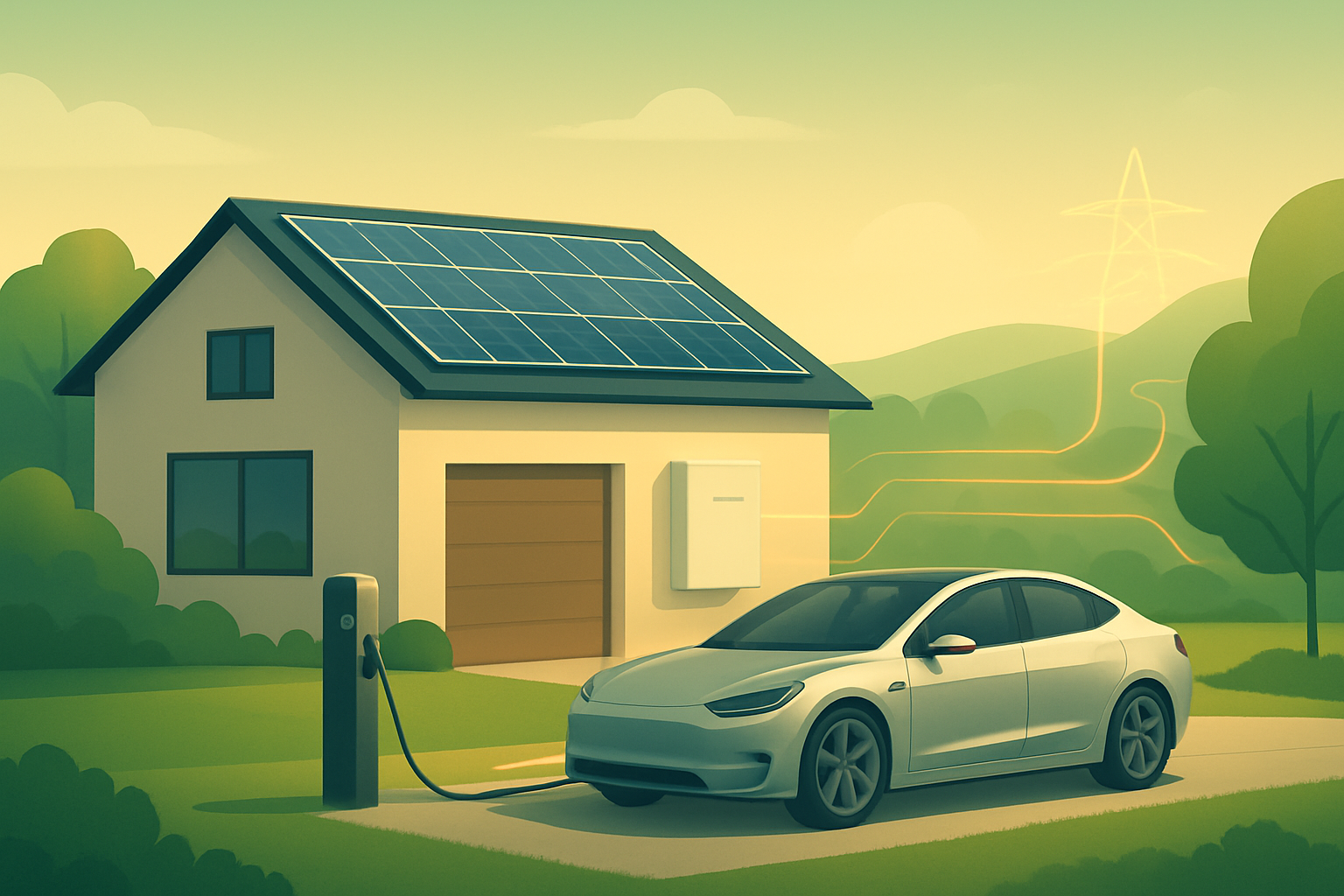
    Enphase is renowned for revolutionizing the solar industry with its microinverter technology, which converts direct current (DC) from solar panels into alternating current (AC) at the individual module level. Today, the company is no longer just a component manufacturer; it has evolved into a comprehensive energy management firm. With a focus on integrating solar, battery storage, and electric vehicle (EV) charging into a single, AI-optimized ecosystem, Enphase remains a critical bellwether for the health of the residential and small commercial renewable energy markets.

    Historical Background

    Founded in 2006 by Raghu Belur and Martin Fornage, Enphase Energy was born out of a desire to solve the "single point of failure" inherent in traditional string inverters. If a central string inverter failed, the entire solar array went dark; Enphase’s microinverter allowed each panel to operate independently, increasing reliability and energy harvest.

    The company’s journey has not been without existential threats. By 2016, Enphase was nearing bankruptcy due to intense price competition and high operational costs. The appointment of Badri Kothandaraman as CEO in 2017 marked a historic turning point. Under his "30/20/10" operating philosophy—targeting 30% gross margins, 20% operating expenses, and 10% operating income—the company achieved a remarkable turnaround. Between 2019 and 2022, Enphase became one of the top-performing stocks in the S&P 500, fueled by the global push for decarbonization and a robust housing market.

    Business Model

    Enphase operates a hardware-enabled software model. Its primary revenue streams include:

    1. Microinverters: The core of the business, currently transitioning to the IQ9 generation. These are sold to distributors and large installers.
    2. Energy Storage: The IQ Battery line (including the high-performance 5P model) provides home backup and helps homeowners manage "Time of Use" (TOU) utility rates.
    3. EV Charging: Following the acquisition of ClipperCreek, Enphase integrated EV charging into its home energy system, creating a "pull-through" effect for its other products.
    4. Software and Services: The Enlighten cloud platform provides monitoring and energy management for both installers and homeowners, creating a sticky ecosystem.

    The company focuses heavily on the "prosumer" segment—homeowners who produce and consume their own power—and is increasingly targeting the small commercial market (3-phase systems).

    Stock Performance Overview

    The performance of ENPH has been a study in high-beta volatility:

    • 1-Year Performance: Over the past year (Feb 2025 – Feb 2026), the stock has seen a moderate recovery of approximately 15%, following a brutal 2023–2024 period where it lost more than 60% of its value from all-time highs.
    • 5-Year Performance: On a 5-year horizon, the stock remains net positive, though far below its $330+ peaks seen in late 2022. The 5-year CAGR reflects the explosive growth of 2021 offset by the "interest rate reset" of 2023.
    • 10-Year Performance: Long-term shareholders who entered during the 2016 lows have seen legendary returns, exceeding 2,000% as the company moved from penny-stock status to a multi-billion-dollar market leader.

    Financial Performance

    In its most recent fiscal reporting for 2025, Enphase demonstrated resilience despite a challenging macro environment.

    • Revenue: 2025 total revenue landed at approximately $1.47 billion, a modest recovery from the $1.33 billion reported in 2024.
    • Margins: Management has successfully defended margins using the Inflation Reduction Act (IRA) 45X production tax credits. Non-GAAP gross margins have remained impressively stable in the 46%–50% range.
    • Balance Sheet: Enphase maintains a strong cash position (approx. $1.5 billion), providing a buffer against cyclical downturns.
    • Recent Earnings (Q4 2025): The company reported a "demand pull-forward" in Q4 2025 as customers rushed to install systems before the expiration of the U.S. residential solar tax credit on December 31, 2025.

    Leadership and Management

    CEO Badri Kothandaraman remains one of the most respected executives in the clean-tech space. Known for his disciplined "lean" management style and technical transparency during earnings calls, he has built a culture of execution.

    In February 2026, leadership took the proactive step of reducing the global workforce by 6% to align expenses with the "demand hangover" expected in early 2026. This move was viewed by analysts as a sign of management's commitment to maintaining profitability even during revenue contractions.

    Products, Services, and Innovations

    Innovation is the primary moat for Enphase.

    • Gallium Nitride (GaN) Transition: The company is currently moving its entire portfolio to GaN technology, which allows for smaller, more efficient, and lighter power electronics.
    • IQ9 Microinverters: Shipped in late 2025 and early 2026, the IQ9 series supports higher-power 600W+ panels, maintaining Enphase’s lead in power density.
    • Bi-directional Charging: One of the most anticipated products for 2026 is the IQ Bi-directional EV Charger, which allows an electric vehicle to power a home (V2H) or sell power back to the grid (V2G).
    • AI Integration: Enphase has begun deploying AI-driven forecasting to help homeowners decide when to charge their batteries or EVs based on weather patterns and utility pricing.

    Competitive Landscape

    Enphase operates in a duopoly in the U.S. residential market alongside SolarEdge Technologies (NASDAQ: SEDG). While SolarEdge uses a "power optimizer" approach, Enphase’s microinverter architecture is often preferred for its reliability and ease of installation.

    However, new threats have emerged:

    • Tesla (NASDAQ: TSLA): Tesla’s Powerwall and in-house string inverters compete on price and brand recognition.
    • Chinese Entrants: Companies like Huawei and Hoymiles are aggressively expanding in Europe and Latin America, offering lower-cost alternatives to Enphase’s premium pricing.
    • Standardization: As solar panels become more powerful, some manufacturers are integrating microinverters directly into the panels (AC Modules), a segment Enphase continues to dominate through partnerships.

    Industry and Market Trends

    The "Solar 2.0" era is defined by the transition from simple generation to complex management.

    • NEM 3.0 Impact: California’s shift to Net Billing has drastically reduced the value of exporting solar power to the grid. This has transformed the market from "solar-only" to "solar-plus-storage." Enphase has capitalized on this, with battery attachment rates in California exceeding 50% in late 2025.
    • Interest Rates: High borrowing costs for residential solar loans were the primary headwind in 2024. As rates began a slow descent in late 2025, the "payback period" for solar systems became more attractive again.

    Risks and Challenges

    • Regulatory Cliff: The expiration of the 30% federal tax credit at the end of 2025 creates a significant "demand vacuum" for the first half of 2026.
    • Inventory Management: Enphase struggled with an inventory glut in 2023. While largely resolved, any further miscalculation of global demand could lead to more write-downs.
    • European Softness: Unlike the U.S., the European market has remained sluggish through 2025 due to falling natural gas prices, which makes the ROI on solar less compelling for homeowners.

    Opportunities and Catalysts

    • V2H/V2G: If Enphase can successfully scale its bi-directional EV charger in 2026, it transforms every EV into a home battery, significantly expanding the company's addressable market.
    • Small Commercial Expansion: The launch of the IQ9N-3P for the 480V commercial market opens doors to offices, warehouses, and small factories, a segment where Enphase currently has low penetration.
    • M&A Potential: With $1.5 billion in cash, Enphase is well-positioned to acquire smaller software or grid-services firms to bolster its virtual power plant (VPP) capabilities.

    Investor Sentiment and Analyst Coverage

    Sentiment is currently "cautiously optimistic." Wall Street analysts have largely moved away from the "Sell" ratings seen in early 2024.

    • Goldman Sachs and RBC Capital recently issued upgrades with price targets in the $45–$55 range, citing a bottoming out of the residential cycle.
    • Institutional Ownership: Major firms like Vanguard and BlackRock remain top holders, suggesting long-term confidence in the company’s role in the energy transition.
    • Retail Sentiment: Enphase remains a popular "growth" stock among retail investors, though the chatter has shifted from "moonshot" expectations to a focus on steady cash flow and GaN innovation.

    Regulatory, Policy, and Geopolitical Factors

    The Inflation Reduction Act (IRA) remains the most significant tailwind for Enphase. By manufacturing microinverters in the U.S. (via contract partners), Enphase collects significant tax credits that bolster its bottom line.

    Geopolitically, the company faces risks related to its supply chain. While it has diversified manufacturing to India and Mexico, it still relies on global semiconductor supply chains that could be disrupted by trade tensions or new tariffs.

    Conclusion

    Enphase Energy enters 2026 as a leaner, more diversified company than it was during the "solar gold rush" of 2022. While the 2026 "demand hangover" from the tax credit expiration poses a near-term challenge to revenue growth, the company’s structural advantages—high margins, a massive cash pile, and a first-mover advantage in GaN technology—remain intact.

    For investors, the key will be monitoring the adoption of the IQ9 platform and the success of the bi-directional EV charger. If Enphase can prove that it can own the "home energy hub," it will likely reclaim its status as a premier growth engine in the renewable energy sector.


    This content is intended for informational purposes only and is not financial advice.
  • First Solar (FSLR): The Titan of Thin-Film and the Future of American Energy

    First Solar (FSLR): The Titan of Thin-Film and the Future of American Energy

    As of January 22, 2026, First Solar, Inc. (NASDAQ: FSLR) stands as the undisputed titan of the American renewable energy sector. While the broader solar industry has often been characterized by extreme cyclicality and intense price competition from overseas, First Solar has carved out a unique, high-margin fortress. Today, the company is in the spotlight not just as a solar panel manufacturer, but as a critical infrastructure play for the artificial intelligence (AI) revolution. With data centers consuming unprecedented amounts of electricity, First Solar’s "Made in America" thin-film modules have become the gold standard for tech giants seeking carbon-free power. This deep dive explores how a company once considered a niche alternative to silicon has become a cornerstone of both U.S. industrial policy and the global energy transition.

    Historical Background

    Founded in 1999 in Tempe, Arizona, First Solar’s journey is one of technological defiance. While 95% of the global solar market consolidated around crystalline silicon (c-Si) technology, First Solar bet its future on Cadmium Telluride (CdTe) thin-film semiconductors.

    In its early years, the company was primarily known for large-scale utility projects, often acting as both the manufacturer and the developer (EPC). However, the mid-2010s brought a period of painful restructuring. Facing a deluge of low-cost Chinese silicon imports, First Solar made the radical decision to exit the project development business and pivot to a pure-play manufacturing model. This transformation, accelerated under current leadership, focused on scaling its proprietary technology and aggressively reshoring its supply chain to the United States—a move that looked risky a decade ago but proved visionary following the passage of the Inflation Reduction Act (IRA) in 2022.

    Business Model

    First Solar’s business model is built on three pillars: technological differentiation, vertical integration, and a focus on the utility-scale market.

    • Non-Silicon Advantage: By using CdTe, First Solar avoids the volatile polysilicon supply chain. Its manufacturing process transforms a sheet of glass into a finished solar module in roughly four hours, significantly faster than the multi-stage silicon manufacturing process.
    • Vertical Integration: Unlike many competitors who assemble components from various global suppliers, First Solar controls the entire production process within a single facility. This reduces logistics costs and ensures traceability—a key requirement for complying with U.S. labor and trade laws.
    • Customer Base: The company sells almost exclusively to utility-scale developers and "hyperscalers" (Amazon, Google, Microsoft). These customers value First Solar for its long-term reliability and the "domestic content" bonuses they receive on federal tax credits by using U.S.-made hardware.

    Stock Performance Overview

    Over the past decade, FSLR has evolved from a volatile "green tech" speculative play into a disciplined industrial powerhouse.

    • 10-Year Horizon: Investors who held FSLR through the mid-2010s experienced significant turbulence, but those who entered during the 2020-2022 pivot have seen multi-bagger returns.
    • 5-Year Horizon: The stock has outperformed the Invesco Solar ETF (TAN) by a wide margin, driven by the realization that First Solar is insulated from the pricing wars affecting silicon-based peers.
    • 1-Year Horizon: As of January 2026, the stock is trading in the $240–$280 range, up approximately 45% year-over-year. The rally in late 2025 was fueled by the "AI energy crunch" narrative, as investors re-rated the stock from a "utility supplier" to an "AI infrastructure beneficiary."

    Financial Performance

    The 2025 fiscal year was the most profitable in First Solar’s history. In its most recent quarterly reports leading into 2026, the company showcased:

    • Revenue Growth: Q3 2025 net sales hit $1.6 billion, nearly double the previous year, with full-year 2026 revenue projected to surpass $6.3 billion.
    • Margins: Gross margins have expanded to a staggering 45%+. This is largely due to the Section 45X Advanced Manufacturing Production Credits, which provide roughly $0.17 per watt in direct subsidies for U.S.-made modules.
    • Backlog: The company boasts a contracted backlog of 54.5 GW, extending through 2030. Essentially, First Solar has already "sold" its entire production capacity for the next four years.
    • Cash Position: With a robust balance sheet and minimal debt, the company has begun monetizing its tax credits, selling over $1.5 billion in credits to third parties to fund its multi-billion dollar expansion in Alabama and Louisiana.

    Leadership and Management

    CEO Mark Widmar, who took the helm in 2016, is widely regarded as the architect of First Solar’s modern success. Widmar’s strategy has been defined by "selective growth"—refusing to compete in the low-margin residential market and instead doubling down on the U.S. utility sector.

    Under Widmar’s leadership, the management team has maintained a reputation for conservative guidance and operational excellence. Recently, the board has authorized a more aggressive stance on Intellectual Property (IP), filing patent infringement suits against Chinese competitors. This signals a shift from a defensive posture to an offensive one, protecting the company’s "thin-film moat" in the global market.

    Products, Services, and Innovations

    The cornerstone of the company’s 2026 portfolio is the Series 7 module.

    • Series 7 Features: Optimized for the U.S. market, the Series 7 offers 20% efficiency—a record for thin-film technology. It features a unique galvanized steel back-rail that slashes installation time and reduces the amount of steel required for racking, lowering the total "Balance of System" (BOS) cost for developers.
    • R&D Pipeline: First Solar continues to invest heavily in tandem cells—combining CdTe with perovskites—to push efficiency beyond 25% in the coming years. Its dedicated R&D center in Lake Township, Ohio, is the largest of its kind in the Western Hemisphere.

    Competitive Landscape

    The global solar market is currently split into two camps: First Solar and "the rest."

    • The Rest: Massive Chinese firms like JinkoSolar, LONGi, and Trina Solar dominate the global silicon market. They benefit from massive scale but suffer from overcapacity, razor-thin margins, and intensifying trade barriers in the U.S. and Europe.
    • The First Solar Advantage: In the U.S. market, First Solar is essentially in a league of its own. High anti-dumping duties (some exceeding 500%) on Southeast Asian imports have priced out many silicon competitors. Furthermore, First Solar’s modules perform better in high-heat environments (like the U.S. Southwest), giving them a technical edge in real-world energy yield.

    Industry and Market Trends

    The dominant trend of early 2026 is the "AI Power Crunch."
    The rapid expansion of AI data centers has created a massive, inelastic demand for 24/7 carbon-free energy. Hyperscalers are no longer just looking for the cheapest solar panels; they are looking for "de-risked" supply chains. First Solar’s ability to provide high-volume, domestic, ESG-compliant modules makes them the preferred partner for firms like Amazon and Microsoft. This has led to a shift in the market where solar is increasingly viewed as a "must-have" industrial input rather than a discretionary green investment.

    Risks and Challenges

    Despite its dominance, First Solar is not without risks:

    • Policy Risk: The primary concern in 2026 is the potential for shifts in U.S. energy policy. While the IRA’s Section 45X credits are popular for creating "Red State" jobs, any repeal or significant modification would immediately impact First Solar’s bottom line.
    • Raw Material Supply: While First Solar avoids polysilicon, it is dependent on Tellurium, a rare byproduct of copper mining. Any disruption in global copper production could affect Tellurium pricing.
    • Technology Leapfrogging: While CdTe is currently superior in many utility applications, a breakthrough in low-cost, high-efficiency silicon (like next-gen TOPCon) could eventually close the gap.

    Opportunities and Catalysts

    • Direct-Supply Agreements: Reports in early 2026 suggest First Solar is negotiating direct, multi-year supply deals with major chipmakers and data center operators, moving away from traditional middle-man developers.
    • International Expansion: The new facility in India (Tamil Nadu) provides a beachhead in one of the world’s fastest-growing energy markets, offering a hedge against U.S. policy changes.
    • Tax Credit Monetization: The ability to sell tax credits for cash provides First Solar with a "self-funding" mechanism for its future factories, reducing the need for dilutive equity raises.

    Investor Sentiment and Analyst Coverage

    Wall Street is currently "Overweight" on FSLR, with many analysts reclassifying it as a "Growth" stock rather than "Value." Institutional ownership remains high, with major funds like BlackRock and Vanguard viewing it as a core ESG and infrastructure holding. Retail sentiment is also bullish, driven by the stock’s inclusion in "AI Infrastructure" thematic ETFs. Analyst price targets as of January 2026 average around $285, with some bulls calling for $320 if the company secures more direct-to-hyperscale contracts.

    Regulatory, Policy, and Geopolitical Factors

    The geopolitical environment is First Solar’s strongest tailwind. The U.S.-China trade war has only intensified, with bipartisan support for "decoupling" critical energy infrastructure from Chinese influence. The "Domestic Content" bonus under the IRA provides an additional 10% tax credit to project owners who use American-made components, a requirement that is nearly impossible to meet without First Solar modules. This regulatory "moat" is perhaps the most significant barrier to entry for any competitor attempting to challenge First Solar’s U.S. dominance.

    Conclusion

    As we look at the energy landscape on January 22, 2026, First Solar (NASDAQ: FSLR) has successfully transitioned from a solar pioneer to an American industrial icon. By betting on a unique technology and a domestic supply chain, the company has insulated itself from the commodity traps that have ensnared its global rivals. With a multi-year backlog and a pivotal role in powering the AI-driven future, First Solar is no longer just a "green energy" stock—it is a strategic asset. Investors should remain mindful of political risks regarding the IRA, but the company’s operational momentum and technological moat suggest that its "Golden Era" is only just beginning.


    This content is intended for informational purposes only and is not financial advice. Today's Date: January 22, 2026.