Tag: Stellantis

  • Industrial Intelligence: Stellantis’ High-Stakes AI Pivot with Palantir

    Industrial Intelligence: Stellantis’ High-Stakes AI Pivot with Palantir

    Date: March 30, 2026

    Introduction

    As the automotive industry navigates a "Darwinian" transition from internal combustion engines to software-defined mobility, Stellantis N.V. (NYSE: STLA) finds itself at a critical crossroads. Once hailed as the ultimate efficiency machine following the 2021 merger of PSA and FCA, the company spent 2025 weathering a perfect storm of bloated inventories, executive turnover, and a cooling global EV market. However, a central pillar of its recovery strategy is now coming into sharp focus: a deepened, multi-year strategic alliance with Palantir Technologies Inc. (NYSE: PLTR).

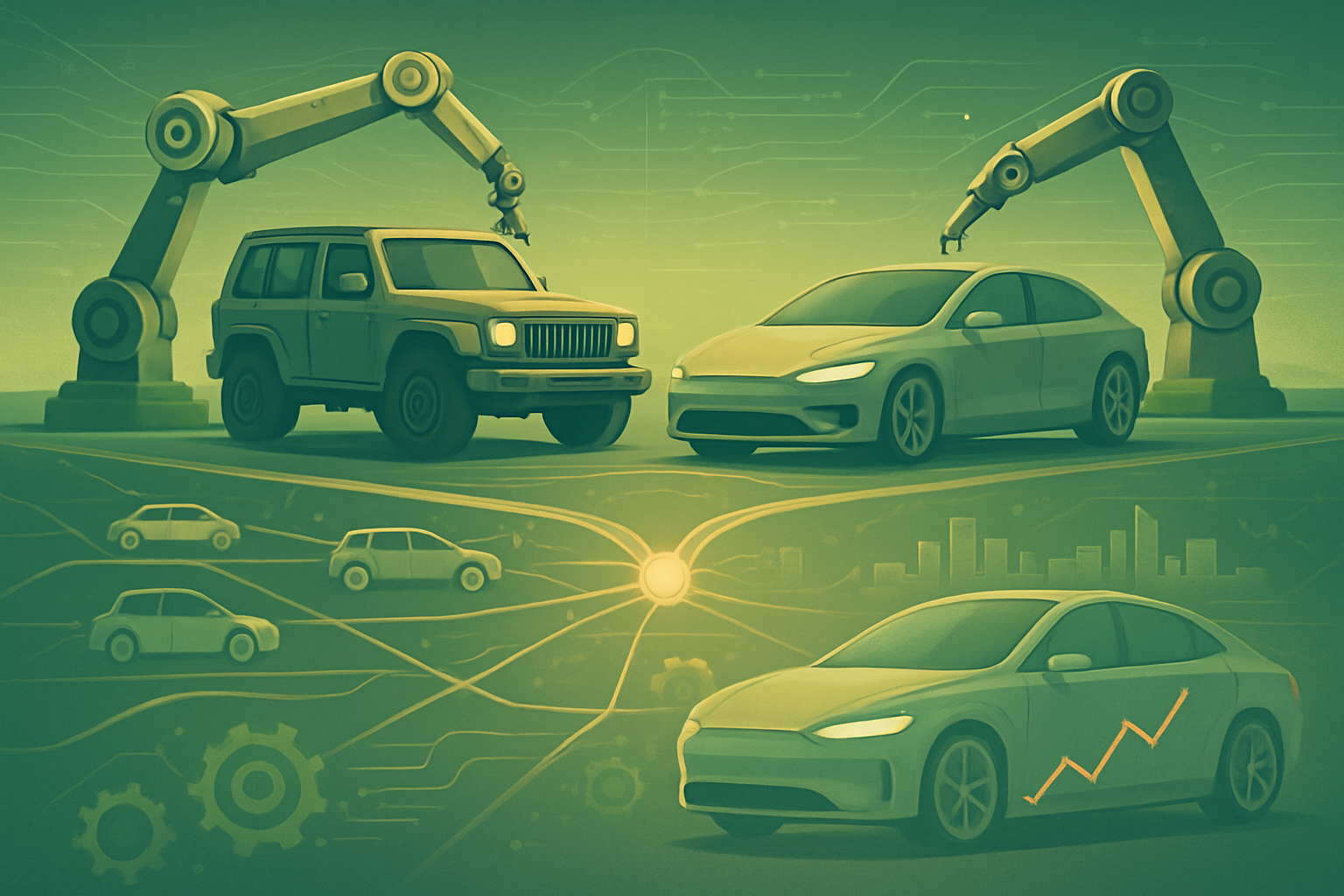
    On this day, March 30, 2026, the two companies announced a five-year expansion of their partnership, centered on the deployment of Palantir’s Artificial Intelligence Platform (AIP). This integration is no longer just an IT upgrade; it is an industrial survival strategy designed to transform Stellantis into a data-first enterprise capable of managing 14 iconic brands through the most volatile supply chain environment in a century.

    Historical Background

    The story of Stellantis began on January 16, 2021, with the 50-50 cross-border merger of the French PSA Group and the Italian-American Fiat Chrysler Automobiles. The merger was born out of necessity, aimed at achieving €5 billion in annual synergies to fund the crushing costs of electrification. Under the early leadership of Carlos Tavares, the architect of the deal, Stellantis quickly became the world’s fourth-largest automaker by volume, housing a portfolio that spans from the rugged Jeep and Ram trucks to the elegant Maserati and mass-market staples like Peugeot and Fiat.

    While the first three years of the merger saw record profits and high margins, the honeymoon ended in 2024. Aggressive cost-cutting and a focus on high-margin vehicles led to a buildup of unsold inventory in the United States and a loss of market share in Europe. By late 2024, the internal friction led to the sudden resignation of Carlos Tavares, marking the end of an era and the beginning of a massive strategic "reset" that continues today.

    Business Model

    Stellantis operates a massive, multi-brand ecosystem designed to cover every segment of the global automotive market. Its revenue is primarily derived from vehicle sales, spare parts, and increasingly, software-as-a-service (SaaS) features within its "connected" fleet.

    The business is organized into several key regions:

    • North America: The profit engine, dominated by Jeep and Ram.
    • Enlarged Europe: The volume core, led by Peugeot, Citroën, Fiat, and Opel/Vauxhall.
    • Middle East & Africa, South America, and China: Growth regions where the company maintains a localized manufacturing footprint.

    The core of the current business model is "Platform Sharing." Stellantis utilizes four global BEV-native platforms (STLA Small, Medium, Large, and Frame) that can support various propulsion systems—hybrid, electric, and internal combustion—allowing the company to pivot production based on regional demand.

    Stock Performance Overview

    The performance of STLA stock since its 2021 debut has been a "tale of two halves."

    • 2021–2023: Shares performed robustly, reaching all-time highs near $25 in early 2024 as the market rewarded Tavares’ efficiency gains and the company’s massive dividend yields.
    • 2024–2025: A precipitous decline followed. Shares plummeted over 40% in 2024 as profit warnings surfaced. The slide continued into early 2026 following the announcement of a massive €22.3 billion net loss for the 2025 fiscal year.
    • Current Standing: As of March 30, 2026, STLA is trading around $6.71, hovering near its 52-week low. For investors, the stock has transitioned from a growth-and-income play to a deep-value turnaround story, trading at a P/E ratio that suggests extreme market skepticism regarding its long-term recovery.

    Financial Performance

    The fiscal year 2025 was a year of reckoning for Stellantis. On February 26, 2026, the company reported:

    • Net Revenue: €153.5 billion, a 2% decline YoY.
    • Net Loss: A staggering €22.3 billion, largely due to a one-time €25.4 billion strategic charge. This charge was taken to "reset" the North American product lineup and write down legacy EV investments that no longer aligned with the new "Freedom of Choice" strategy.
    • Cash Flow: While operational cash flow remained positive at €10.2 billion, the heavy restructuring costs have put a temporary freeze on the aggressive share buyback programs of years past.
    • Balance Sheet: Despite the net loss, Stellantis maintains a strong liquidity position of over €45 billion, providing the runway needed for its 2026–2027 product offensive.

    Leadership and Management

    Following the departure of Carlos Tavares in December 2024, Stellantis entered a period of leadership transition. The company is currently steered by an interim executive committee led by Chairman John Elkann, a scion of the Agnelli family.

    The day-to-day strategic shift is being spearheaded by Antonio Filosa, who serves as the Chief Operating Officer for North America and CEO of Jeep. Filosa’s management style is seen as more collaborative and market-responsive than Tavares’ "top-down" efficiency model. The board is currently in the final stages of a global search for a permanent CEO, with an announcement expected before the May 2026 Investor Day.

    Products, Services, and Innovations

    The cornerstone of Stellantis' innovation is the integration of Palantir Technologies Inc. (NYSE: PLTR) Foundry and AIP platforms. This partnership has evolved into a comprehensive "Digital Twin" of the entire Stellantis enterprise.

    Key AI-driven innovations include:

    1. Supply Chain Resiliency: Using Palantir AIP to simulate thousands of "what-if" scenarios, allowing the company to reroute parts and adjust production schedules in real-time to avoid the assembly line stoppages that plagued 2024.
    2. Predictive Quality: By analyzing billions of data points from connected vehicles, Stellantis now identifies potential part failures months before they lead to recalls, significantly reducing warranty costs.
    3. The "Freedom of Choice" Fleet: Launching in 2026 is a new wave of vehicles across the STLA Large and Frame platforms. These include the new electric Ram 1500 REV and a series of "Multi-Energy" Jeep models that allow consumers to choose between hybrid and pure electric powertrains on the same vehicle architecture.

    Competitive Landscape

    Stellantis faces a two-front war. In North America, it competes with General Motors (NYSE: GM) and Ford Motor Company (NYSE: F) for dominance in the high-margin truck and SUV segments. In Europe and China, it faces intense pressure from Volkswagen AG (OTC: VWAGY) and the rising tide of Chinese automakers like BYD Company Limited (OTC: BYDDY) and Xiaomi (HKG: 1810).

    Unlike Tesla, Inc. (NASDAQ: TSLA), which has a vertical integration advantage in software, Stellantis is using the Palantir partnership to "out-data" its legacy peers. While GM and Ford have struggled with software bugs in their EV lineups, Stellantis is banking on its modular platform strategy to remain more flexible and cost-effective than its competitors.

    Industry and Market Trends

    The automotive industry in 2026 is defined by several macro shifts:

    • The Hybrid Resurgence: As pure EV adoption growth slowed in 2025, consumers have flocked to Plug-in Hybrids (PHEVs). Stellantis, once criticized for its slow EV rollout, now finds its hybrid-heavy portfolio perfectly positioned for this shift.
    • Software-Defined Vehicles (SDV): Cars are increasingly judged by their digital interfaces rather than their engines. Stellantis’ "SmartCockpit" project, powered by AI, aims to generate €20 billion in annual software-driven revenue by 2030.
    • Inventory Normalization: After the post-pandemic "supply shock," the industry has returned to a buyer's market, forcing OEMs to use AI tools for precision marketing and demand forecasting.

    Risks and Challenges

    The path to recovery is fraught with risks:

    • Labor Relations: Stellantis remains in a delicate dance with the United Auto Workers (UAW) in the US and unions in Italy/France. Continued plant "optimizations" could trigger further strikes.
    • Execution Risk: Transitioning 14 brands onto four new platforms while integrating a new AI infrastructure is a massive logistical undertaking.
    • Geopolitical Friction: Trade wars between the EU/US and China over EV subsidies could disrupt the global supply chain, particularly for battery materials.

    Opportunities and Catalysts

    • May 2026 Investor Day: This is the most anticipated event of the year. Management is expected to unveil a revised "Dare Forward 2030" plan, likely highlighting the efficiency gains from the Palantir AIP integration.
    • New CEO Announcement: A high-profile hire could provide the market with the confidence needed to re-rate the stock.
    • Margin Recovery: If the inventory "reset" of 2025 succeeds, Stellantis could see a sharp rebound in North American margins by H2 2026.

    Investor Sentiment and Analyst Coverage

    Current analyst sentiment is cautious but intrigued. The consensus rating on STLA is "Hold," with many analysts waiting for evidence that the 2025 losses were indeed a "one-time" event. Institutional investors have noted the "deep value" nature of the stock, while retail chatter on social platforms remains divided between those fearful of further declines and those eyeing the high potential for a recovery toward $10–$12.

    Palantir's involvement is a major "bull case" for tech-focused analysts, who see Stellantis as the primary case study for how a legacy industrial giant can successfully use AI to close the gap with tech-native competitors like Tesla.

    Regulatory, Policy, and Geopolitical Factors

    Stellantis must navigate a complex regulatory web. In the EU, tightening CO2 emission standards continue to push the company toward electrification. In the US, the outcome of the 2024 and 2025 policy shifts regarding the Inflation Reduction Act (IRA) has made domestic battery production critical.

    The company is heavily invested in "ACC" (Automotive Cells Company), its battery joint venture with Mercedes-Benz and TotalEnergies, which aims to secure a localized supply chain and insulate the company from Asian geopolitical risks.

    Conclusion

    Stellantis is a company in the midst of a radical metamorphosis. The massive losses of 2025 were a painful but perhaps necessary correction to a "merger-first" strategy that prioritized short-term cost-cutting over long-term market health. By doubling down on its partnership with Palantir and shifting toward a "Freedom of Choice" product strategy, Stellantis is betting that data-driven agility will be the ultimate competitive advantage.

    For investors, the current valuation offers a high-risk, high-reward entry point. If the AI-powered efficiency gains and the 2026 product wave take hold, Stellantis could emerge as the most resilient legacy automaker of the decade. However, the margin for error has never been thinner. The next 12 months will determine whether Stellantis is a titan in decline or a phoenix ready for its next ascent.


    This content is intended for informational purposes only and is not financial advice.

  • The Operating System of the AI Era: A Deep Dive into Palantir’s Expansion with Stellantis and Bain

    The Operating System of the AI Era: A Deep Dive into Palantir’s Expansion with Stellantis and Bain

    As of March 30, 2026, the global economy finds itself in the "implementation phase" of the Artificial Intelligence revolution. While 2023 and 2024 were defined by the speculative frenzy surrounding Large Language Models (LLMs), 2026 is defined by operational utility—the ability of enterprises to actually move the needle on their bottom lines using AI. At the center of this transition is Palantir Technologies (NYSE: PLTR).

    Once a shadowy defense contractor known for its work with the CIA, Palantir has undergone a radical transformation into a commercial powerhouse. This week, the company dominated headlines with the announcement of a massive five-year renewal and expansion of its partnership with Stellantis (NYSE: STLA) and a strategic deepening of its "force multiplier" alliance with Bain & Company. These moves signal a new era for Palantir: one where its Artificial Intelligence Platform (AIP) is no longer just an experimental tool but the fundamental operating system for the world’s most complex industrial and consulting ecosystems.

    Historical Background

    Founded in 2003 by Peter Thiel, Alex Karp, and others, Palantir was born from the "PayPal Mafia" with a specific mission: to provide the U.S. intelligence community with the data-integration tools necessary to prevent another 9/11. For the first decade of its existence, the company operated in near-total secrecy, building "Gotham" for government counter-terrorism.

    The pivot to the commercial sector began in earnest with the launch of "Foundry," a platform designed to solve the "data silo" problem for large enterprises. Palantir went public via a direct listing in September 2020, a move that invited intense scrutiny of its unconventional governance and reliance on government contracts. However, the 2023 launch of AIP—which integrated generative AI with Palantir’s proprietary "Ontology"—marked the company’s definitive transformation from a specialized software provider to a mainstream enterprise titan.

    Business Model

    Palantir’s business model has evolved from a high-touch, engineer-heavy consultancy model to a scalable software-as-a-service (SaaS) architecture. It operates through four primary platforms:

    • Gotham: Primarily for government/defense, enabling users to identify patterns hidden deep within datasets.
    • Foundry: The commercial operating system that creates a "digital twin" of an organization.
    • Apollo: The continuous delivery system that manages and deploys software across environments.
    • AIP (Artificial Intelligence Platform): The newest and fastest-growing segment, allowing LLMs to interact with private data in a secure, governed manner.

    The company generates revenue through multi-year subscriptions. Crucially, the "Bootcamp" sales model introduced in 2023 has significantly lowered customer acquisition costs, allowing clients to achieve "time-to-value" in days rather than months.

    Stock Performance Overview

    Palantir’s journey on the public markets has been a volatile odyssey. After debuting at around $10 in 2020, the stock became a "meme stock" darling in 2021, only to collapse during the 2022 tech rout as investors fled non-profitable growth companies.

    However, the 2024–2025 period saw a dramatic recovery. Following its inclusion in the S&P 500 and consecutive quarters of GAAP profitability, PLTR has outperformed the broader Nasdaq significantly. Over the past five years, the stock has delivered a compounded annual growth rate (CAGR) exceeding 35%, driven by the explosion in commercial revenue. As of today, March 30, 2026, the stock is trading near record highs, buoyed by the "AIP tailwind" and the massive contract expansions with Stellantis and Bain.

    Financial Performance

    Palantir’s recent financial results reflect a company hitting its stride. For the full year 2025, Palantir reported total revenue of $4.48 billion, a 56% increase year-over-year. The standout metric was U.S. Commercial Revenue, which surged 109% to $1.465 billion.

    Key financial highlights for Q4 2025 include:

    • Net Income (GAAP): $609 million, marking its seventh consecutive quarter of GAAP profitability.
    • Rule of 40 Score: An astounding 127% (combining revenue growth and profit margin).
    • Cash Reserves: A "war chest" of $7.2 billion with zero debt, providing immense flexibility for potential M&A or further R&D.
    • Guidance: For FY 2026, the company has guided for revenue of approximately $7.2 billion, suggesting that the growth acceleration is far from over.

    Leadership and Management

    CEO Alex Karp remains one of the most distinctive figures in Silicon Valley. A PhD in social theory, Karp has eschewed traditional tech "bro" culture in favor of a philosophy-driven approach to software. His strategy centers on "defending the West" and providing "sovereign" software solutions that don't compromise ethics for profit.

    The leadership team has been strengthened recently with a focus on scaling the sales force, moving away from the "software sells itself" mantra of the early 2010s. The board, still influenced by co-founder Peter Thiel, remains focused on long-term technological dominance rather than short-term quarterly smoothing.

    Products, Services, and Innovations

    The current "star" of the portfolio is AIP. Unlike standalone chatbots, AIP allows companies to build "agents" that can actually execute business processes.

    The expansion with Stellantis highlights a new innovation: "Commodity Cognition." By using AIP, Stellantis has moved beyond simple supply chain tracking to an automated decision-making engine. If a parts shortage is detected in a Mediterranean port, the Palantir-powered system doesn't just alert a human; it analyzes logistics costs, production schedules, and market demand to autonomously re-route the supply chain. This move from "insight" to "action" is the hallmark of Palantir’s 2026 innovation pipeline.

    Competitive Landscape

    Palantir operates in a unique space between pure-play data warehouses like Snowflake (NYSE: SNOW) and cloud giants like Microsoft (NASDAQ: MSFT) or Amazon (NASDAQ: AMZN).

    While Snowflake focuses on data storage and SQL-based analytics, Palantir focuses on the "Ontology"—the semantic layer that explains how data relates to the real world. Microsoft’s Azure AI tools are more modular, requiring significant internal development. Palantir’s edge remains its "out-of-the-box" capability for complex, messy, and highly regulated industries. However, the rise of "agentic" AI from startups like Anthropic and OpenAI’s enterprise wing remains a competitive threat that Palantir must monitor.

    Industry and Market Trends

    The "Agentic AI" trend is the dominant macro driver in 2026. Enterprises are no longer satisfied with AI that can write emails; they want AI that can manage a factory floor. This plays directly into Palantir’s strengths.

    Furthermore, the "reshoring" of manufacturing to the U.S. and Europe has created a desperate need for operational efficiency. In a high-interest-rate environment, the "marginal gains" provided by software-driven efficiency are often the difference between a profitable quarter and a loss.

    Risks and Challenges

    Despite the optimism, Palantir faces significant risks:

    • Valuation: With a P/E ratio hovering around 230x, the stock is "priced for perfection." Any slight deceleration in growth could trigger a massive sell-off.
    • Concentration: While the commercial sector is growing, a large portion of revenue still comes from a handful of massive "whale" contracts like Stellantis.
    • Ethical Scrutiny: Palantir’s involvement in military and border enforcement remains a flashpoint for critics, potentially limiting its talent pool or causing ESG-focused institutional investors to divest.

    Opportunities and Catalysts

    The Bain & Company partnership is perhaps the largest untapped catalyst. By training over 1,500 Bain consultants to deploy Palantir software, the company has essentially outsourced its sales and implementation to one of the world’s most prestigious consulting firms. This "force multiplier" effect allows Palantir to reach the C-suite of the Fortune 500 without the overhead of a massive internal sales department.

    The upcoming Q2 2026 earnings report is expected to show the first full quarter of impact from the Stellantis renewal, which analysts believe could lead to a significant guidance raise.

    Investor Sentiment and Analyst Coverage

    Wall Street sentiment has shifted from skeptical to "cautiously bullish." UBS recently raised its price target to $200, citing Palantir’s "asymmetrical advantage" in the enterprise AI market.

    Retail sentiment remains high, with the "Palantirian" community on platforms like X and Reddit providing a strong floor for the stock. However, institutional ownership has also increased, signaling that the "smart money" is finally buying into Karp’s long-term vision of Palantir as the "essential infrastructure of the modern world."

    Regulatory, Policy, and Geopolitical Factors

    Geopolitics continues to be a tailwind for Palantir. As global tensions rise, the demand for "sovereign AI"—AI that is built and hosted within the borders of a nation or an alliance—has skyrocketed. Palantir’s steadfast commitment to Western interests has made it the partner of choice for the U.S. Department of Defense and its allies.

    Furthermore, the EU AI Act and similar regulations in the U.S. play into Palantir’s hands. The company’s platforms were built from the ground up with data privacy and auditability in mind, making compliance easier for its clients compared to those using "black box" AI models.

    Conclusion

    The expanded partnerships with Stellantis and Bain & Company, announced this week, are more than just contract renewals; they are a validation of Palantir’s entire strategic pivot. By integrating AIP into the very fabric of global manufacturing and management consulting, Palantir is cementing its position as the indispensable backbone of the AI era.

    For investors, Palantir remains a high-risk, high-reward proposition. The valuation is undeniably steep, but the growth in U.S. commercial revenue and the efficiency of the "Bootcamp" model suggest a company that is finally scaling its legendary technology. As we move further into 2026, the question is no longer whether Palantir’s software works—it’s how much of the global economy it will eventually run.


    This content is intended for informational purposes only and is not financial advice.