
Tag: Stock Analysis

  • The Infrastructure of Intelligence: A Deep Dive into Broadcom’s AI Ascendancy (AVGO)

    The Infrastructure of Intelligence: A Deep Dive into Broadcom’s AI Ascendancy (AVGO)

    Date: February 6, 2026

    Introduction

    As we enter 2026, the artificial intelligence landscape has matured from speculative excitement into a race for architectural efficiency. At the center of this transition sits Broadcom Inc. (NASDAQ: AVGO), a company that has evolved from a diversified semiconductor conglomerate into the indispensable "plumbing" of the global AI economy. While Nvidia captured the first wave of AI investment with its general-purpose GPUs, Broadcom is increasingly seen as the primary beneficiary of the second wave: the shift toward custom silicon and high-performance networking.

    Broadcom is currently in sharp focus following a strategic pivot by high-profile institutional investors. Most notably, Ark Invest, led by Cathie Wood, has transitioned from a long-standing neutrality on the stock to aggressive accumulation, signaling a belief that the "next leg" of AI growth belongs to the networking and ASIC (Application-Specific Integrated Circuit) specialists. With a market capitalization now firmly exceeding $1.5 trillion, Broadcom’s role in the data center has never been more critical.

    Historical Background

    Broadcom’s journey is one of the most successful examples of aggressive consolidation in corporate history. The company we know today is the result of the 2016 merger between Avago Technologies and the original Broadcom Corp. Avago, itself a spin-off of Agilent Technologies (originally part of Hewlett-Packard), brought a culture of operational discipline and a focus on high-margin proprietary products.

    Under the leadership of Hock Tan, the combined entity embarked on a relentless acquisition strategy. Key milestones include the acquisition of Brocade Communications in 2017, CA Technologies in 2018, and Symantec’s enterprise security business in 2019. These moves initially baffled analysts, but Tan’s strategy was clear: acquire market-leading infrastructure software businesses with "sticky" enterprise customers and transition them into high-margin, recurring revenue machines. This culminated in the $69 billion acquisition of VMware, which closed in late 2023 and was fully integrated by the end of 2025, marking Broadcom’s definitive transformation into a diversified hardware-software powerhouse.

    Business Model

    Broadcom operates through two primary reporting segments: Semiconductor Solutions and Infrastructure Software.

    • Semiconductor Solutions (~65% of Revenue): This segment provides the physical building blocks of modern connectivity. It includes networking switches, routers, fiber optic components, and—most crucially—Custom ASICs. Broadcom does not just sell chips; it co-designs them with hyperscalers (Google, Meta, OpenAI) to run specific AI workloads more efficiently than general-purpose hardware.
    • Infrastructure Software (~35% of Revenue): Following the VMware integration, this segment has become a massive profit engine. It provides virtualization software, cybersecurity, and mainframe solutions. By shifting VMware to a subscription-only model, Broadcom has created a predictable, high-margin revenue stream that offsets the cyclicality of the semiconductor industry.

    Broadcom’s customer base is concentrated among "hyperscalers" (large cloud providers), telecommunications giants, and the world’s largest enterprise organizations.

    Stock Performance Overview

    Broadcom has been a "compounding machine" for long-term shareholders, consistently outperforming broader indices.

    • 1-Year Performance: As of February 2026, AVGO is up approximately 63% over the trailing 12 months, fueled by the massive ramp in AI networking demand and the successful realization of VMware synergies.
    • 5-Year Performance: The stock has delivered a total return of ~627%. This period encompasses the 5G infrastructure rollout and the subsequent AI explosion that began in 2023.
    • 10-Year Performance: Broadcom has been one of the best-performing stocks in the S&P 500 over the last decade, with a total return of ~2,820%.

    Following a high-profile stock split in 2024, the shares have traded in a steady upward channel, currently situated in the $310–$330 range.

    Financial Performance

    Broadcom’s 2025 fiscal year results, released in late 2025, were a watershed moment. The company reported total annual revenue of $64 billion, a 24% increase year-over-year.

    The most striking metric is the Adjusted EBITDA margin, which reached a staggering 67% in Q4 2025. This profitability is driven by the Infrastructure Software segment, where gross margins sit at approximately 93%. Broadcom generated over $20 billion in free cash flow (FCF) in 2025, much of which was directed toward its aggressive dividend policy and a newly expanded share buyback program.

    Despite the heavy debt taken on to fund the VMware acquisition, the company’s leverage ratio has fallen ahead of schedule due to rapid debt repayment and soaring earnings, allowing it to maintain an investment-grade credit rating.

    Leadership and Management

    CEO Hock Tan is widely regarded as one of the most effective capital allocators in the technology sector. His leadership style is characterized by "operational excellence"—a polite way of describing his reputation for cutting costs in acquired companies and focusing exclusively on core, market-leading products.

    In late 2025, Tan extended his contract through 2030, providing the market with certainty regarding the company’s strategic direction. The management team is known for its conservative guidance and its ability to consistently beat expectations. The board of directors has been praised for its governance, particularly in navigating the complex regulatory approvals required for the VMware transaction.

    Products, Services, and Innovations

    Broadcom’s competitive edge lies in its "Scale-Out" networking technology.

    • Tomahawk & Jericho Switches: These represent the gold standard in high-speed networking. The Tomahawk 6, released in late 2025, is designed specifically for AI clusters of up to one million GPUs, utilizing Ethernet to challenge Nvidia’s proprietary InfiniBand.
    • Custom ASICs (XPUs): Broadcom is the "ASIC King." It co-designs Google’s Tensor Processing Units (TPUs) and Meta’s Training and Inference Accelerators (MTIA). In 2026, the primary focus is the production of OpenAI’s first custom silicon, code-named "Titan," which is expected to volume-ship in the second half of the year.
    • VMware Cloud Foundation (VCF): This is the flagship software offering, providing a private cloud platform that allows enterprises to run AI workloads locally with the same ease as in the public cloud.

    Competitive Landscape

    Broadcom operates in a "duopoly" or "triopoly" in many of its core markets, but the competition in AI is intensifying.

    • Nvidia (NASDAQ: NVDA): While Nvidia dominates AI compute (GPUs), Broadcom competes in the interconnect and networking space. Broadcom is the champion of "Open Ethernet," while Nvidia promotes its closed InfiniBand ecosystem.
    • Marvell Technology (NASDAQ: MRVL): Marvell is Broadcom’s primary rival in the custom ASIC space. However, Broadcom’s larger scale and deeper relationship with TSMC (Taiwan Semiconductor Manufacturing Company) for advanced 3nm/2nm packaging have allowed it to win the majority of recent hyperscaler contracts.
    • Cisco Systems (NASDAQ: CSCO): Cisco remains a competitor in enterprise networking, but Broadcom’s vertical integration into the silicon layer gives it a cost and performance advantage in the data center.

    Industry and Market Trends

    The overarching trend of 2026 is the "Standardization of AI." In the early stages of the AI boom, speed was everything, leading to a reliance on Nvidia's expensive, proprietary hardware. Today, hyperscalers are focused on "cost-per-token."

    This shift favors Broadcom for two reasons:

    1. Customization: Custom ASICs are more energy-efficient and cheaper at scale than general-purpose GPUs.
    2. Ethernet Supremacy: The industry is moving toward Ethernet for AI networking due to its interoperability and lower cost, a domain where Broadcom holds over 70% market share in high-end switches.

    Risks and Challenges

    No investment is without risk, and Broadcom faces several significant hurdles:

    • Customer Concentration: A massive portion of Broadcom’s ASIC revenue comes from just three customers: Google, Meta, and now OpenAI. If one of these giants were to move their design work in-house or switch to a competitor, the impact would be material.
    • Regulatory Scrutiny: Broadcom’s dominant market position makes it a constant target for antitrust regulators in the US, EU, and China.
    • Cyclicality: While AI is booming, Broadcom’s traditional segments—such as wireless (Apple) and broadband—are more cyclical and sensitive to consumer spending and high-interest rates.

    Opportunities and Catalysts

    • The "OpenAI Catalyst": The start of volume production for OpenAI’s custom silicon in late 2026 is a major upcoming event that could drive further earnings beats.
    • Private AI: As enterprises move AI workloads from the public cloud to private data centers (for data sovereignty reasons), demand for VMware Cloud Foundation and high-end networking hardware is expected to surge.
    • Edge AI: The next frontier for Broadcom is the integration of AI capabilities into the "Edge"—the routers and switches that connect homes and businesses to the internet.

    Investor Sentiment and Analyst Coverage

    Investor sentiment shifted significantly in early 2026. Ark Invest’s purchase of $50 million in AVGO shares in January was a major psychological turning point for "innovation" investors who previously viewed Broadcom as a legacy value play.

    Wall Street remains overwhelmingly bullish. Of the 40+ analysts covering the stock, over 85% maintain a "Buy" or "Strong Buy" rating. The consensus view is that Broadcom is the "safest" way to play the AI infrastructure build-out, given its diversified software revenue and massive free cash flow.

    Regulatory, Policy, and Geopolitical Factors

    Broadcom’s global footprint makes it sensitive to the ongoing US-China chip war. Approximately 30% of Broadcom’s revenue is tied to China, either through direct sales or manufacturing supply chains.

    However, the company has benefited from the CHIPS and Science Act in the United States, receiving incentives for domestic R&D and advanced packaging design. Geopolitical tensions remain a double-edged sword; while they create supply chain risks, they also drive sovereign nations to build their own independent AI clusters, creating new demand for Broadcom’s networking gear.

    Conclusion

    Broadcom Inc. has successfully navigated the most significant technological shift of the decade. By combining the steady, high-margin cash flows of a software giant (VMware) with the explosive growth of the AI semiconductor market, Hock Tan has built a fortress-like business model.

    For investors, the recent accumulation by Ark Invest highlights a growing recognition that AI is about more than just GPUs—it is about the chips that connect them and the software that manages them. While the company faces risks regarding customer concentration and geopolitical headwinds, its dominant market share in custom ASICs and Ethernet networking makes it the "toll booth" of the AI era. As we look toward the remainder of 2026, Broadcom appears well-positioned to remain a cornerstone of any tech-focused portfolio.


    This content is intended for informational purposes only and is not financial advice.
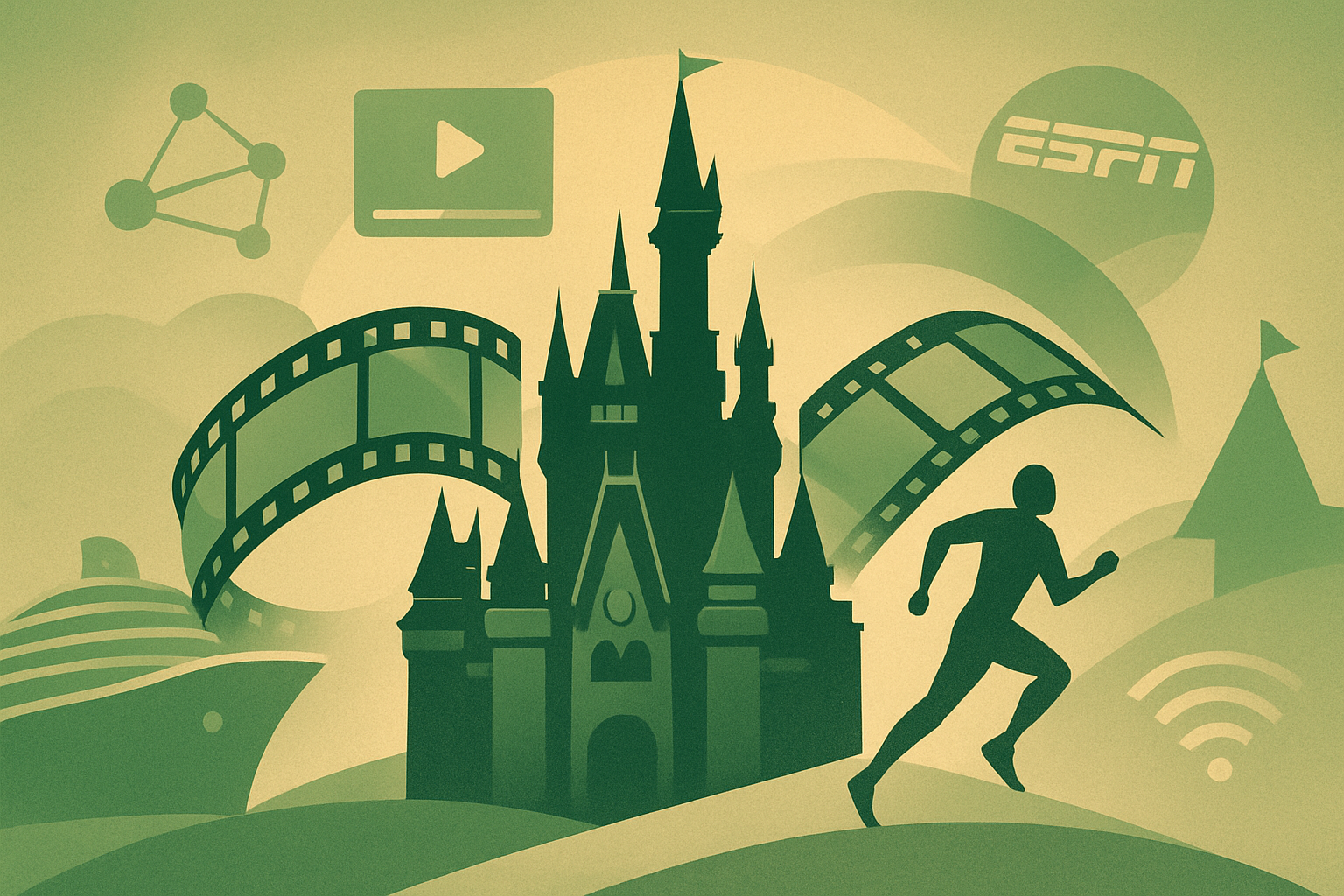
  • The Disney Renaissance 2.0: A 2026 Deep Dive into the House of Mouse

    The Disney Renaissance 2.0: A 2026 Deep Dive into the House of Mouse

    As of February 6, 2026, The Walt Disney Company (NYSE: DIS) stands at one of the most significant inflection points in its 103-year history. After a half-decade of digital transformation, high-stakes leadership drama, and a grueling post-pandemic recovery, the House of Mouse has finally emerged as a leaner, more focused entertainment powerhouse. With the recent appointment of Josh D’Amaro as successor to Bob Iger and the flagship ESPN direct-to-consumer (DTC) service finding its footing, Disney is no longer just a "recovery play." It is once again positioning itself as a core media holding for the modern era, balancing its legacy "flywheel" with a profitable, high-growth digital future.

    Historical Background

    Founded in 1923 by Walt and Roy Disney, the company began as a humble animation studio in Los Angeles. Over a century, it evolved through several distinct eras: the "Golden Age" of hand-drawn animation, the "Park Era" following the 1955 opening of Disneyland, and the "Modern Renaissance" of the 1990s. The most consequential transformation, however, occurred under Bob Iger’s first tenure (2005–2020), during which Disney acquired Pixar, Marvel, Lucasfilm, and 21st Century Fox. These acquisitions turned Disney into a content juggernaut. The early 2020s were defined by the launch of Disney+ and the subsequent operational challenges of the COVID-19 pandemic, leading to Iger’s 2022 return to "fix" the company’s streaming economics and organizational structure.

    Business Model

    Disney’s business model in 2026 is built on three main pillars: Entertainment, Sports, and Experiences.

    • Entertainment: This includes the Disney Entertainment studio (Disney+, Hulu) and the legacy linear networks. The focus has shifted from subscriber growth at all costs to high-margin content and streaming profitability.
    • Sports: Driven by ESPN (NYSE: DIS), this segment represents Disney’s dominance in live sports. The flagship ESPN DTC app, launched in August 2025, serves as the centerpiece of this pillar, offering a premium "everything-sports" experience.
    • Experiences: This is the company's highest-margin segment, encompassing six global theme park resorts, a rapidly expanding cruise line, and consumer products. This segment acts as the cash engine that funds Disney’s digital transition.

    Stock Performance Overview

    Disney’s stock has had a volatile five-year journey. After reaching an all-time high near $200 in March 2021, the stock spent 2023 and 2024 struggling in the $80–$110 range as investors worried about streaming losses and the decline of linear television. In 2025, the stock began a sustained recovery as streaming reached profitability. Over the 10-year horizon, Disney has lagged the S&P 500, but in the last 12 months, it has outperformed peers like Comcast (NASDAQ: CMCSA) and Paramount (NASDAQ: PARA), trading currently between $105 and $113 per share.

    Financial Performance

    In the fiscal year 2025, Disney reported revenue of $94.4 billion, a 3% increase year-over-year. Most importantly, the company delivered on its promise of sustained streaming profitability, with the DTC unit posting an operating profit of $1.33 billion for the year. By Q1 2026, streaming margins expanded to 8.4%. The company is generating significant free cash flow, allowing for a $7 billion share repurchase program and a dividend increase to $1.50 per share. However, debt remains a metric for analysts to watch as Disney balances its $60 billion expansion plan for the Experiences segment against the rising costs of sports rights.

    Leadership and Management

    Management stability is a key theme in early 2026. On February 3, 2026, Disney announced that Josh D’Amaro, the popular and operationally-focused Chairman of Disney Experiences, will become CEO on March 18, 2026. Bob Iger will remain as a Senior Advisor through December 2026 to ensure a smooth transition—a move designed to avoid the leadership friction of the Chapek era. D’Amaro is credited with driving record profits in the Parks division and is seen as the ideal leader to execute the company’s massive capital investment strategy.

    Products, Services, and Innovations

    Disney continues to innovate at the intersection of technology and storytelling. The 2025 launch of the integrated ESPN DTC flagship app has been a "game-changer," offering interactive betting features via ESPN BET and multi-view streaming. In the Parks, "Disney Adventure World" (Paris) and new immersive lands like the Villains and Cars expansions in Orlando utilize advanced robotics and augmented reality to enhance guest experiences. Furthermore, Disney’s use of AI in post-production and animation has begun to yield meaningful cost savings in the Entertainment segment.

    Competitive Landscape

    Disney’s primary rival remains Netflix (NASDAQ: NFLX), which still leads in total streaming volume. However, Disney’s "walled garden" of IP (Marvel, Star Wars, Pixar) gives it a unique churn-reduction advantage. In the theme park space, Comcast’s Universal Epic Universe (opened 2025) has provided stiff competition in Orlando, but Disney’s $60 billion investment plan is specifically designed to keep its "market share of the vacation" intact. Additionally, Disney is navigating a market where tech giants like Apple (NASDAQ: AAPL) and Amazon (NASDAQ: AMZN) are aggressively bidding for sports rights.

    Industry and Market Trends

    The media industry in 2026 is defined by the "Great Consolidation." Linear television continues its secular decline, with cord-cutting nearing its terminal velocity. The trend toward "ad-supported tiers" has become the standard for streaming, with Disney+ reporting that nearly 50% of new subscribers now opt for the cheaper, ad-integrated plan. In the Parks sector, "revenge travel" has normalized into "quality travel," where consumers are spending more per capita on premium, immersive experiences rather than shorter, frequent trips.

    Risks and Challenges

    Despite the turnaround, significant risks remain:

    • Linear Erosion: The cash flow from legacy cable networks is shrinking faster than streaming can sometimes replace it.
    • Sports Rights Inflation: The cost of keeping the NFL, NBA, and UFC on ESPN is staggering and puts pressure on operating margins.
    • Succession Execution: While D’Amaro is well-liked, the transition from the "Iger Era" to a new leader is historically fraught with risk at Disney.
    • Macroeconomic Sensitivity: As a consumer discretionary stock, Disney remains vulnerable to any significant economic downturn that might limit family vacation spending.

    Opportunities and Catalysts

    The next 12 to 24 months offer several catalysts:

    • 2026 Film Slate: With Avengers: Doomsday and Avatar: Fire and Ash on the horizon, Disney is expected to dominate the 2026 box office.
    • Cruise Line Expansion: The launch of the Disney Adventure in early 2026 adds high-margin capacity to the fleet.
    • International Growth: Deepening investments in Disneyland Paris and Shanghai Disney Resort are tapping into growing middle-class demand in those regions.
    • ESPN Monetization: Continued growth in the high-ARPU (Average Revenue Per User) ESPN DTC service could drive a valuation rerating.

    Investor Sentiment and Analyst Coverage

    Wall Street sentiment for DIS is currently a "Moderate Buy." Analysts are encouraged by the $130 price targets and Disney's attractive forward P/E of 17x, which sits below its historical average. Institutional investors have returned to the stock, citing the clarity of the succession plan and the "de-risking" of the streaming business. Retail sentiment is also high, driven by the reinstatement and subsequent growth of the dividend.

    Regulatory, Policy, and Geopolitical Factors

    Disney has largely moved past its high-profile legal battle with the state of Florida, reaching a long-term development agreement that provides regulatory certainty for the next two decades. Geopolitically, the company continues to navigate a complex relationship with the Chinese market; while Shanghai Disney remains a crown jewel, the theatrical release of Western films in China remains subject to unpredictable censorship and quota shifts. On the domestic front, potential antitrust scrutiny regarding sports-rights bundles remains a background concern.

    Conclusion

    As of February 2026, The Walt Disney Company has successfully turned the page on its most turbulent era. By prioritizing streaming profitability over raw subscriber counts and doubling down on its unbeatable "Experiences" segment, the company has rebuilt its financial foundation. While the decline of linear TV and the high cost of sports rights remain headwinds, the Josh D’Amaro-led Disney appears ready to leverage its unrivaled IP in a more efficient, tech-forward way. For long-term investors, Disney represents a diversified media powerhouse with a clear path to earnings growth and a valuation that finally reflects its underlying strength.


    This content is intended for informational purposes only and is not financial advice.

  • The Storage Supercycle: Why Western Digital (WDC) is Dominating the 2026 Tech Landscape

    The Storage Supercycle: Why Western Digital (WDC) is Dominating the 2026 Tech Landscape

    As of February 6, 2026, the technology sector is witnessing a historic resurgence in a corner of the market once considered "legacy": data storage. Western Digital Corp. (NASDAQ: WDC) has emerged as the standout performer of the first quarter, with its stock price surging over 28% in the first week of February alone. This rally follows a "perfect storm" of positive catalysts, including a massive earnings beat for the second fiscal quarter of 2026, a newly authorized $4 billion share repurchase program, and the realization of the "Storage Supercycle" driven by global AI infrastructure demands. Once a vertically integrated giant struggling with the volatility of the flash memory market, the "new" Western Digital—now a pure-play leader in high-capacity hard disk drives (HDD) following its 2025 corporate split—is proving that the "AI Data Lake" era requires massive, cost-effective physical storage on a scale never before seen.

    Historical Background

    Founded in 1970 as General Digital, the company originally focused on MOS (metal-oxide-semiconductor) test equipment before pivoting to specialized semiconductors. Over the next five decades, Western Digital (WD) transformed itself multiple times, most notably becoming a dominant force in the hard drive industry through the acquisition of IBM’s HDD business (HGST) in 2012.

    The most pivotal moment in its modern history, however, was the 2016 acquisition of SanDisk for $19 billion. This move was intended to bridge the gap between legacy spinning disks and the future of flash memory (NAND). However, the disparate nature of these two businesses—HDD being a steady, high-margin utility and Flash being a volatile, capital-intensive commodity—led to years of valuation "conglomerate discounts." After years of activist investor pressure, the company announced a formal split in late 2023, which was finalized on February 24, 2025. Today, Western Digital survives as the HDD-focused entity, while its flash business lives on as the independent SanDisk Corporation (NASDAQ: SNDK).

    Business Model

    Western Digital’s current business model is built on a "Volume and Value" strategy within the HDD market. It generates revenue primarily through the sale of high-capacity "Nearline" drives to hyperscale cloud providers (e.g., AWS, Microsoft Azure, Google Cloud) and enterprise data centers.

    The company has successfully transitioned away from the declining PC and consumer electronics markets, which now represent less than 15% of total revenue. Instead, WDC focuses on "Massive Capacity" storage. In the 2026 landscape, WDC operates as a critical infrastructure provider. Its revenue is increasingly tied to Multi-Year Agreements (MYAs), which provide a level of financial predictability that the storage industry historically lacked. By locking in capacity with major AI players, WDC has shielded itself from the traditional boom-bust cycles of the hardware market.

    Stock Performance Overview

    The stock performance of WDC over the last decade tells a story of a difficult marriage followed by a triumphant divorce.

    • 10-Year Horizon: Investors who held through the 2016 SanDisk acquisition faced a decade of extreme volatility, with the stock often trapped between $35 and $75 as NAND pricing cycles wiped out HDD profits.
    • 5-Year Horizon: The 2021–2026 period shows a "U-shaped" recovery. The stock bottomed in late 2022 during the post-pandemic semiconductor glut but began a steady climb in 2024 as the split became imminent.
    • 1-Year Horizon: Since the February 2025 split, WDC has outperformed the S&P 500 and the Philadelphia Semiconductor Index (SOX). The early February 2026 surge has pushed the stock to all-time highs, reflecting a market that finally appreciates the high-margin, "toll-booth" nature of its HDD dominance.

    Financial Performance

    Western Digital’s Q2 Fiscal 2026 earnings, reported in late January, served as the primary engine for the current stock rally. The company reported revenue of $3.02 billion, representing a 25% year-over-year increase. More impressively, the GAAP gross margin expanded to 46.1%, a record for the HDD segment.

    The company’s "disciplined supply" strategy has paid off; by keeping production tight while demand for 30TB+ drives soared, WDC has gained significant pricing power. Net income for the quarter reached $1.84 billion, a 210% increase from the prior year. Furthermore, the company’s balance sheet has been significantly de-leveraged following the split, allowing the Board to announce the $4 billion buyback and a 25% dividend increase on February 2, 2026—the announcements that triggered the current 28% vertical move in the share price.

    Leadership and Management

    The "new" Western Digital is led by Irving Tan, who took over as CEO following the 2025 split. Tan, formerly the EVP of Global Operations, has been praised by analysts for his "operational ruthlessness." Unlike previous leaders who focused on market share at all costs, Tan has prioritized "Margin over Market Share," a strategy that has resonated deeply with institutional investors.

    The CFO, Kris Sennesael, has been instrumental in the post-split capital allocation strategy, focusing on returning cash to shareholders now that the heavy R&D burden of the Flash business is off the books. The management team’s reputation for transparency and conservative guidance has helped rebuild trust with a Wall Street community that was previously skeptical of the company's complex structure.

    Products, Services, and Innovations

    Innovation at WDC is currently centered on two acronyms: ePMR (energy-assisted Perpendicular Magnetic Recording) and HAMR (Heat-Assisted Magnetic Recording).

    • 40TB UltraSMR Drives: In early 2026, WDC began volume shipments of its 40TB drives, which use proprietary UltraSMR technology to pack data more densely than any competitor.
    • AI Data Lakes: WDC has launched a specialized "AI-Active Archive" tier of drives designed specifically for the long-term storage of training data used by Large Language Models (LLMs).
    • The 100TB Roadmap: The company recently unveiled a definitive path to 100TB drives by 2029, utilizing a "Dual-Stage Actuator" technology that allows for faster data access speeds, addressing the primary criticism that HDDs are too slow for modern AI workloads.

    Competitive Landscape

    The HDD market is now a functional duopoly. Western Digital and Seagate Technology (NASDAQ: STX) control over 85% of the global market, with Toshiba holding the remainder.

    • WDC vs. Seagate: While Seagate was the first to market with HAMR technology, Western Digital’s "incremental" approach—using ePMR to reach 30TB+ capacities—allowed it to maintain higher manufacturing yields and better reliability over the last 24 months.
    • The SSD Threat: While Solid State Drives (SSDs) are faster, the "cost-per-terabyte" gap remains wide. In 2026, an enterprise HDD is still roughly 7x cheaper than an equivalent capacity SSD, making HDDs the only viable option for the "Exascale" storage required by AI.

    Industry and Market Trends

    We are currently in the midst of the "Storage Supercycle." The massive build-out of AI compute (GPUs) in 2024 and 2025 has created a secondary demand wave: the need to store the massive datasets those GPUs process.

    • The Inference Pivot: As AI moves from "training" (learning) to "inference" (doing), the amount of generated data is exploding. This "synthetic data" must be stored, and HDDs are the primary beneficiary of this trend.
    • Supply Constraints: Years of underinvestment in HDD factories mean that supply is virtually capped. For the first time in history, the HDD industry is operating at nearly 100% capacity utilization.

    Risks and Challenges

    Despite the current euphoria, Western Digital is not without risks:

    1. Geopolitical Sensitivity: WDC maintains significant manufacturing footprints in Asia. Any escalation in trade tensions between the US and China could disrupt its supply chain.
    2. The "Flash-Over" Risk: If NAND flash prices were to crash unexpectedly, the price gap between SSDs and HDDs could narrow, potentially accelerating the displacement of HDDs in some enterprise tiers.
    3. Cyclicality: While MYAs provide some protection, the storage industry remains fundamentally cyclical. A global macro slowdown could eventually curb the Capex spending of hyperscale customers.

    Opportunities and Catalysts

    • Sovereign AI: Governments in the Middle East and Europe are building their own national AI infrastructures. This represents a "third leg" of demand outside of the traditional US hyperscalers.
    • Consolidation: With the Flash business gone, WDC is a much cleaner acquisition target. Analysts have speculated that a major hardware or networking firm might look to acquire WDC to secure their storage supply chain.
    • Dividend Growth: Given the current cash flow generation, WDC is on track to become a "Dividend Aristocrat" favorite if it maintains its current payout trajectory.

    Investor Sentiment and Analyst Coverage

    Sentiment on WDC has shifted from "Neutral" in 2024 to "Strong Buy" across nearly all major firms in early 2026. Goldman Sachs and Morgan Stanley both raised their price targets in the wake of the February buyback announcement. Institutional ownership has reached a record 92%, as hedge funds that previously avoided the "messy" conglomerate structure have flooded back into the pure-play HDD story. On social media and retail platforms, WDC is frequently discussed alongside "AI Picks," a far cry from its previous reputation as a "boring" hardware stock.

    Regulatory, Policy, and Geopolitical Factors

    Western Digital is a major beneficiary of the CHIPS Act 2.0, which provided tax credits for the domestic development of advanced storage controllers. However, it remains under the microscope of US export controls. The Department of Commerce’s restrictions on selling high-capacity storage to certain Chinese AI entities remain a headwind, though WDC has successfully offset these losses with increased demand from North American and Indian markets.

    Conclusion

    The dramatic rise of Western Digital in early February 2026 is more than just a momentum trade; it is the market's recognition of a fundamentally transformed company. By shedding its volatile flash business and leaning into its dominance of the HDD market, WDC has positioned itself as the indispensable "warehouse" of the AI revolution.

    While the stock’s vertical move may invite some short-term profit-taking, the underlying fundamentals—record margins, disciplined supply, and a massive shareholder return program—suggest that the "Storage Supercycle" has plenty of runway. For investors, the key will be watching the 40TB rollout and monitoring the pricing gap between HDD and NAND. In a world increasingly defined by data, the company that stores the world's information at the lowest cost is, for now, the king of the mountain.


    This content is intended for informational purposes only and is not financial advice.

  • The 2026 NVIDIA Deep-Dive: Resilience in the Age of AI Rationalization

    The 2026 NVIDIA Deep-Dive: Resilience in the Age of AI Rationalization


    Date: February 6, 2026
    Sector: Semiconductors / Artificial Intelligence
    Ticker: NVIDIA (Nasdaq: NVDA)

    Introduction

    As we navigate the first quarter of 2026, the global technology landscape is defined by one central gravity well: NVIDIA (Nasdaq: NVDA). While the "AI mania" of 2023 and 2024 has matured into a more disciplined "AI rationalization" era, NVIDIA has emerged not just as a survivor, but as the indispensable architect of the modern economy. After a tumultuous late 2025—marked by a significant sell-off in high-growth tech stocks as investors demanded tangible returns on AI investment—NVIDIA’s resilience has silenced skeptics. Today, the company stands as a $4 trillion titan, transitioning from being a mere chipmaker to becoming the "operating system" of the artificial intelligence age.

    Historical Background

    Founded in 1993 by Jensen Huang, Chris Malachowsky, and Curtis Priem in a Denny’s restaurant, NVIDIA’s journey is a masterclass in strategic pivot. Originally focused on the PC gaming market, the company’s invention of the Graphics Processing Unit (GPU) in 1999 revolutionized digital visual effects. However, the most pivotal moment came in 2006 with the launch of CUDA (Compute Unified Device Architecture). By allowing researchers to use GPUs for general-purpose mathematical processing, NVIDIA unknowingly laid the tracks for the deep learning revolution. For a decade, NVIDIA subsidized this software-hardware ecosystem, waiting for a market that didn't yet exist until the 2012 "AlexNet" breakthrough proved that GPUs were the superior engine for neural networks.

    Business Model

    NVIDIA’s business model has evolved into a vertical fortress. While it remains a fabless semiconductor designer, its revenue streams are now deeply diversified across four key pillars:

    • Data Center (85-90% of Revenue): This includes the sale of high-performance GPUs (Blackwell and Rubin architectures), networking hardware (Mellanox/Spectrum-X), and specialized AI infrastructure.
    • Gaming: Once the core business, GeForce RTX remains the gold standard for PC enthusiasts and creative professionals, now doubling as entry-level AI development workstations.
    • Professional Visualization: Serving industries from architecture to film through the Omniverse platform, creating "Digital Twins" of entire factories.
    • Automotive and Robotics: The DRIVE Thor platform and the Isaac robotics ecosystem are positioning NVIDIA as the brain of autonomous machines.

    Stock Performance Overview

    NVIDIA’s stock performance has been nothing short of historic.

    • 10-Year Horizon: Investors have seen returns exceeding 25,000%, a move that redefined the limits of large-cap growth.
    • 5-Year Horizon: Driven by the data center explosion, the stock climbed from the double digits (split-adjusted) to surpass the $1,000 mark multiple times before subsequent splits.
    • 1-Year Horizon (2025-2026): The past year was characterized by "The Great Rationalization." After peaking in mid-2025, the stock faced a 20% drawdown as the market questioned the ROI of AI spending. However, since January 2026, NVDA has staged a 15% recovery, outperforming the Nasdaq-100 as its Blackwell-to-Rubin transition proved that demand remains structurally higher than supply.

    Financial Performance

    NVIDIA enters 2026 with a balance sheet that resembles a sovereign wealth fund.

    • Revenue Growth: For Fiscal Year 2025, NVIDIA reported a staggering $155.5 billion in revenue. Early projections for FY2026 suggest the company is on track to eclipse $210 billion.
    • Margins: Non-GAAP gross margins have stabilized at a remarkable 73.6%. While slightly down from the 78% peaks of 2024 due to higher HBM4 (High Bandwidth Memory) costs, it remains the highest in the industry.
    • Cash Flow: With over $50 billion in free cash flow, NVIDIA has begun aggressive share buybacks and strategic "acqui-hires" to bolster its software ecosystem.

    Leadership and Management

    CEO Jensen Huang remains the most influential figure in global tech. His "long-termism" and "zero-billion-dollar market" philosophy—entering markets before they exist—have created a cult of personality that is backed by execution. The leadership team, including CFO Colette Kress, is lauded for its capital allocation and navigating complex supply chain bottlenecks. The governance reputation is high, though some analysts point to "key-man risk" given Huang’s synonymous relationship with the company’s vision.

    Products, Services, and Innovations

    In 2026, the focus has shifted from the Blackwell (B200) cycle to the Vera Rubin (R100) architecture.

    • Rubin Platform: Slated for full production in H2 2026, Rubin introduces the "Vera" CPU and HBM4 memory, promising a 10x reduction in "cost-per-token" for AI inference.
    • Spectrum-X Networking: Now a multi-billion dollar segment, this high-speed Ethernet fabric allows GPUs to "talk" to each other at unprecedented speeds, solving the data-transfer bottleneck that plagues rivals.
    • NVIDIA AI Enterprise: This software layer (SaaS) is now being integrated into every enterprise license, creating a recurring revenue stream that decouples the company from purely cyclical hardware sales.

    Competitive Landscape

    While NVIDIA is the undisputed king, 2026 sees more credible challengers than ever:

    • AMD (Nasdaq: AMD): With its MI400 series, AMD has captured roughly 10% of the hyperscaler market, positioning itself as the "value-alternative" for companies like Meta.
    • Custom Silicon (ASICs): Google’s TPU v6 and Microsoft’s Maia chips are increasingly handling internal workloads, though they lack the broad developer ecosystem of NVIDIA’s CUDA.
    • Intel (Nasdaq: INTC): Despite a rocky few years, Intel’s Gaudi 4 is carving out a niche in cost-sensitive mid-market AI training.

    Industry and Market Trends

    The "AI Spending Sell-off" of late 2025 was a healthy correction. The trend in 2026 has shifted from Training (building models) to Inference (running them). As AI models become integrated into every consumer device and enterprise workflow, the sheer volume of compute needed for inference is expected to grow by 50% annually through 2030. Additionally, "Sovereign AI"—nations building their own data centers to protect domestic data—has become a massive tailwind for NVIDIA.

    Risks and Challenges

    • Geopolitical Concentration: With China revenue essentially at zero due to US export bans, NVIDIA is highly dependent on a few dozen western hyperscalers.
    • Power Constraints: The world is running out of electricity to power AI data centers. If utility grids cannot scale, NVIDIA’s hardware sales will hit a physical ceiling.
    • Antitrust Scrutiny: The DOJ and EU are currently investigating NVIDIA’s dominance in the networking space and its "software-first" lock-in strategies.

    Opportunities and Catalysts

    • The Rubin Ramp: The 2026 rollout of Rubin is expected to trigger another massive upgrade cycle for cloud providers.
    • Physical AI: The Isaac platform for robotics is gaining traction in Japanese and German manufacturing, potentially opening a new $100B market.
    • Automotive: The DRIVE Thor chip is beginning to appear in 2026-model electric vehicles, moving NVIDIA into a high-margin recurring software role in the auto sector.

    Investor Sentiment and Analyst Coverage

    Wall Street remains overwhelmingly bullish, though the "Buy" ratings are more nuanced than in previous years. Analysts now differentiate between NVIDIA's hardware cycle and its software "moat." Institutional ownership remains at record highs, with hedge funds using NVDA as a proxy for the entire S&P 500's tech exposure. Retail sentiment, while scarred by the 2025 volatility, has returned as the company’s P/E ratio has compressed to a more "reasonable" 35x forward earnings.

    Regulatory, Policy, and Geopolitical Factors

    Geopolitics is the "X-factor" for NVIDIA. The company has successfully navigated the US-China decoupling by pivoting to Southeast Asia, Europe, and India. However, retaliatory measures from China—including an antitrust probe into its Mellanox acquisition—continue to create headline risk. In the US, the CHIPS Act continues to benefit NVIDIA’s manufacturing partners (TSMC and Intel), potentially diversifying its supply chain away from Taiwan by late 2027.

    Conclusion

    NVIDIA in 2026 is no longer a "growth story" in the speculative sense; it is the fundamental utility of the digital age. By surviving the 2025 market rationalization and emerging with a faster product cadence (Rubin) and a growing software moat, the company has proved its resilience. While risks regarding power consumption and antitrust probes remain real, NVIDIA's role as the "picks and shovels" provider for the AI revolution appears unchallenged for the foreseeable future. For investors, NVIDIA is no longer just a stock; it is the benchmark for the future of compute.


    This content is intended for informational purposes only and is not financial advice.

  • Polo, Profits, and Prestige: The Ralph Lauren (RL) Deep Dive of 2026

    Polo, Profits, and Prestige: The Ralph Lauren (RL) Deep Dive of 2026

    Date: February 6, 2026

    Introduction

    In the volatile world of global luxury, few brands have navigated the shifting tides of consumer sentiment as masterfully as Ralph Lauren (NYSE: RL). As of early 2026, the company stands as a testament to the enduring power of brand heritage combined with modern operational discipline. While many of its peers in the luxury sector have struggled with a "post-hype" hangover, Ralph Lauren recently reported a blowout fiscal third quarter that sent ripples through Wall Street. The brand’s ability to command higher prices through its "brand elevation" strategy while simultaneously expanding its digital footprint has positioned it as a dominant force in an era increasingly defined by "quiet luxury" and timeless American style.

    Historical Background

    The story of Ralph Lauren is the quintessential American success story. Founded in 1967 by Ralph Lauren (then Ralph Lifshitz) with a $50,000 loan, the company began as a collection of men's ties under the "Polo" label. Lauren’s vision was never just about clothing; it was about a lifestyle—one that blended the aspiration of the British aristocracy with the ruggedness of the American West.

    Key milestones shaped the empire: the introduction of the iconic cotton mesh polo shirt in 1971, the launch of the "Polo" and "Lauren" fragrances in 1978, and the opening of the Rhinelander Mansion flagship store in New York in 1986, which redefined luxury retailing. The company went public on the New York Stock Exchange in 1997. Over the following decades, Ralph Lauren transitioned from a department store staple to a vertically integrated luxury powerhouse, surviving the 2008 financial crisis and the 2020 pandemic by refining its focus on its core identity.

    Business Model

    Ralph Lauren operates a multi-channel business model that spans wholesale, retail, and licensing. However, the modern RL is increasingly a Direct-to-Consumer (DTC) entity. The company’s revenue is diversified across three primary geographic regions: North America, Europe, and Asia.

    The core of the current business model is "Brand Elevation." This involves reducing reliance on discounted wholesale channels (like lower-tier department stores) and focusing on company-owned flagship stores and high-end digital platforms. The product mix is tiered to capture a wide range of the luxury market, from the accessible luxury of Polo Ralph Lauren to the "ultra-luxury" of Ralph Lauren Purple Label and Collection. In 2026, the business has also leaned heavily into high-margin lifestyle categories, including Ralph Lauren Home and a growing hospitality division (the "Ralph’s Coffee" and "Polo Bar" concepts).

    Stock Performance Overview

    Ralph Lauren’s stock performance has been a story of resilience and recent acceleration.

    • 1-Year Performance: Over the past 12 months, RL has surged approximately 41.5%, significantly outperforming the S&P 500 and the broader retail sector.
    • 5-Year Performance: Looking back to 2021, the stock has nearly tripled in value. This growth was driven by the "Next Great Chapter" strategic plan, which shifted the company’s focus from volume to value.
    • 10-Year Performance: The decade-long view shows a transformation. After a period of stagnation in the mid-2010s as the company struggled with bloated inventory and brand dilution, the 2017 hiring of CEO Patrice Louvet marked a turning point. Since then, the stock has moved from a "value trap" to a "growth-at-a-reasonable-price" (GARP) favorite.

    As of February 5, 2026, the stock closed at $338.66, reflecting a market capitalization of roughly $21.4 billion.

    Financial Performance

    The Q3 2026 earnings report, released yesterday, exceeded almost every analyst projection. Ralph Lauren reported revenue of $2.41 billion, a 12% increase year-over-year. Adjusted earnings per share (EPS) came in at $6.22, comfortably beating the $5.78 consensus.

    Profitability metrics were particularly striking. Gross margins reached a record 69.8%, propelled by Average Unit Retail (AUR) growth of 18%. This means RL is selling fewer items but at significantly higher prices, a hallmark of a successful luxury transition. The company’s balance sheet remains robust, with over $1.8 billion in cash and a disciplined approach to debt, allowing for continued share buybacks and dividend growth even in a high-interest-rate environment.

    Leadership and Management

    The leadership dynamic at Ralph Lauren is a unique blend of creative continuity and corporate discipline.

    • Patrice Louvet (CEO): Since joining in 2017, Louvet has applied his consumer-goods background (honed at Procter & Gamble) to streamline RL’s operations. He is the architect of the digital transformation and the successful pivot toward DTC.
    • Ralph Lauren (Executive Chairman and Chief Creative Officer): At 86, the founder remains the "North Star" of the brand. He oversees all creative direction, ensuring that every product fits the narrative of the "American Dream."
      Investors credit this "creative-business" duo for the company's lack of the succession drama often seen in other family-led luxury houses.

    Products, Services, and Innovations

    Innovation at Ralph Lauren in 2026 is less about "fast fashion" and more about "tech-enabled heritage."

    • AI Integration: RL has successfully integrated AI-driven personalization on its global websites, contributing to a 15% increase in digital sales this past year.
    • Sustainable Innovation: The "Live On" initiative, which focuses on circularity and recycled materials, has moved from a niche marketing tool to a core component of the "Purple Label" and "Polo" lines.
    • Category Expansion: The brand has seen explosive growth in its "Women’s" and "Luxury Home" categories. A new long-term partnership with Haworth Lifestyle Design is expected to turn Ralph Lauren Home into a multi-billion dollar standalone segment by 2030.

    Competitive Landscape

    Ralph Lauren occupies a unique niche between "aspirational" and "ultra" luxury.

    • LVMH (OTC: LVMHF): While LVMH dominates the ultra-luxury space with brands like Dior and Vuitton, Ralph Lauren’s more "approachable" American aesthetic has allowed it to capture market share in North America and China where LVMH has seen some volatility in its middle-tier segments.
    • PVH Corp (NYSE: PVH): The parent of Tommy Hilfiger and Calvin Klein remains RL’s closest American rival. However, PVH has struggled more with margin pressure and reliance on wholesale, whereas RL’s brand elevation has allowed it to pull away in terms of valuation multiples.
    • Tapestry (NYSE: TPR): Following its acquisition of Capri Holdings (NYSE: CPRI), Tapestry has become a formidable competitor in the "accessible luxury" handbag and accessory space, though it lacks the comprehensive lifestyle apparel breadth of Ralph Lauren.

    Industry and Market Trends

    The luxury apparel sector in 2026 is defined by several key macro trends:

    1. Quiet Luxury: The shift away from loud logos has played directly into Ralph Lauren’s hands. Their signature "Old Money" aesthetic (cable-knit sweaters, tailored blazers) is perfectly aligned with current consumer tastes.
    2. Bifurcation of the Consumer: While middle-income consumers have pulled back, the "VIC" (Very Important Customer) segment remains resilient. RL’s focus on its top 5% of customers has shielded it from broader economic headwinds.
    3. The China Recovery: Despite geopolitical tensions, the Chinese luxury consumer’s appetite for "heritage" brands is growing. Ralph Lauren’s 30% growth in China this past quarter highlights this trend.

    Risks and Challenges

    Despite the current momentum, several risks loom:

    • Geopolitical and Trade Risks: New U.S. tariffs on imports (ranging from 10% to 30%) are expected to impact Costs of Goods Sold (COGS) in late 2026. While RL is diversifying its supply chain away from China toward India and Vietnam, the transition is costly.
    • Macroeconomic Sensitivity: While "brand elevation" helps, a severe global recession would still hit the aspirational luxury buyer, who remains a significant portion of RL’s revenue base.
    • Brand Fatigue: The challenge for any legacy brand is staying relevant to Gen Z and Gen Alpha without alienating the core older demographic.

    Opportunities and Catalysts

    • Asia Expansion: RL remains under-penetrated in Asia compared to European luxury giants. Continued store openings in tier-2 Chinese cities and India represent a massive growth runway.
    • Ecosystem Monetization: The success of Ralph’s Coffee and Polo Bar suggests an opportunity to expand into high-margin luxury hospitality and "experiential" retail.
    • M&A Potential: With a strong balance sheet, RL could look to acquire smaller, niche luxury brands that fit its "lifestyle" umbrella, particularly in the footwear or beauty sectors.

    Investor Sentiment and Analyst Coverage

    Wall Street sentiment toward RL is currently at its most bullish in a decade. Following the Q3 beat, several major investment banks raised their price targets to the $380–$400 range.

    • Institutional Holdings: Major institutional investors like Vanguard and BlackRock have increased their positions over the last two quarters, citing RL’s superior margin profile compared to other retail stocks.
    • Retail Sentiment: On social trading platforms, RL is frequently cited as a "top-tier defensive luxury play," prized for its dividend and stable growth.

    Regulatory, Policy, and Geopolitical Factors

    In 2026, the luxury industry is increasingly under the microscope for sustainability and labor practices. The EU’s new "Digital Product Passport" requirements mean RL must provide detailed traceability for every garment sold in Europe. Furthermore, the 2025-2026 trade policy shifts in the U.S. have forced RL to accelerate its "near-shoring" efforts in Mexico and Central America to mitigate tariff risks from Asian imports.

    Conclusion

    Ralph Lauren (NYSE: RL) enters mid-2026 in a position of enviable strength. By successfully executing its "Next Great Chapter" strategy, the company has shed its image as a department store brand and emerged as a true global luxury contender. The combination of record-high margins, disciplined DTC expansion, and a timeless aesthetic that resonates with current "quiet luxury" trends makes it a standout in the consumer discretionary sector.

    While macroeconomic uncertainties and trade tariffs present real hurdles, the company's operational maturity under Patrice Louvet and creative soul under Ralph Lauren provide a balanced foundation for long-term growth. For investors, the key will be watching if the company can maintain its AUR growth without hitting a price ceiling for its aspirational customers. For now, Ralph Lauren remains the gold standard of American luxury.


    This content is intended for informational purposes only and is not financial advice.

  • The Architectural Toll Booth: A Deep Dive into Arm Holdings’ (ARM) Q3 2026 Breakout

    The Architectural Toll Booth: A Deep Dive into Arm Holdings’ (ARM) Q3 2026 Breakout

    Today’s Date: February 6, 2026

    Introduction

    On February 5, 2026, the global semiconductor market witnessed a decisive vote of confidence in the future of silicon architecture. Arm Holdings (NASDAQ: ARM) saw its share price surge by 6% in a single trading session following the release of its third-quarter fiscal 2026 earnings. The rally underscored a fundamental shift in the company’s narrative: Arm is no longer just the "smartphone chip company." It has successfully rebranded itself as the architectural backbone of the Generative AI era. With an earnings beat that exceeded Wall Street’s heightened expectations, Arm has demonstrated that its transition from a volume-based royalty model to a value-heavy "Compute Subsystem" (CSS) strategy is delivering the high-margin growth investors craved during its 2023 IPO.

    Historical Background

    The journey of Arm Holdings is one of the most storied in the technology sector. Founded in 1990 as Advanced RISC Machines, a joint venture between Acorn Computers, Apple (NASDAQ: AAPL), and VLSI Technology, the company was tasked with creating a low-power processor for the early handheld computing era (notably the ill-fated Apple Newton). While the Newton struggled, the power-efficient RISC (Reduced Instruction Set Computer) architecture became the gold standard for the mobile revolution, eventually powering 99% of the world’s smartphones.

    In 2016, the Japanese conglomerate SoftBank Group (OTC: SFTBY) took the company private in a $32 billion deal, aiming to pivot toward the Internet of Things (IoT). A high-profile $40 billion attempt by NVIDIA (NASDAQ: NVDA) to acquire Arm in 2020 collapsed in 2022 due to intense regulatory pushback. This failure forced Arm back onto the public markets in September 2023. Since that re-listing, the company has transformed from a mobile-centric IP provider into a diversified high-performance computing powerhouse.

    Business Model

    Arm’s business model is unique in the semiconductor industry. Unlike Intel or Samsung, Arm does not manufacture chips; it licenses the "blueprints" or instruction set architectures (ISA) upon which others build.

    1. Royalty Revenue: This is the company’s bread and butter. For every chip shipped that uses Arm IP, the company receives a percentage of the chip's price. In 2026, this has shifted from a few cents per chip in the mobile era to several dollars per chip in the AI and data center sectors.
    2. Licensing Revenue: Companies pay an upfront fee to access Arm’s architecture.
    3. Compute Subsystems (CSS): This is the crown jewel of the "New Arm." Instead of just providing the basic architecture, Arm now provides pre-integrated, pre-verified designs that include the CPU, interconnects, and memory controllers. This allows cloud giants like Amazon (NASDAQ: AMZN) and Google (NASDAQ: GOOGL) to bring custom AI silicon to market much faster while allowing Arm to command royalty rates that are 2x to 3x higher than legacy licenses.

    Stock Performance Overview

    Since its 2023 IPO at $51 per share, Arm has been a volatile but high-performing asset.

    • 1-Year Performance: Over the last 12 months, the stock has outpaced the PHLX Semiconductor Index (SOX), driven largely by the massive adoption of its Neoverse platform in data centers.
    • Post-IPO Trajectory: After a parabolic move in late 2024 and early 2025—fuelled by the "AI halo effect"—the stock entered a period of consolidation.
    • Current Standing: As of February 6, 2026, the stock trades at approximately $105, reflecting a significant premium compared to its debut. The recent 6% jump after the Q3 FY2026 beat has pushed the company back toward its all-time highs, though it remains a "battleground stock" due to its high price-to-earnings (P/E) multiple.

    Financial Performance

    The Q3 fiscal 2026 results released this week were a masterclass in margin expansion.

    • Total Revenue: Reported at $1.24 billion, a 26% year-over-year increase, marking a new quarterly record.
    • Earnings Per Share (EPS): Adjusted EPS of $0.43 beat the consensus estimate of $0.41.
    • Royalty Revenue Growth: This segment reached $737 million, up 27% YoY. The primary driver was the Armv9 architecture, which now accounts for over 50% of royalty revenue. v9 carries significantly higher royalty rates than the previous v8 generation.
    • Licensing Revenue: Grew to $505 million, fueled by a record number of CSS agreements with hyperscalers.
    • Margins: Operating margins remained robust at approximately 45%, showcasing the scalability of a pure-play IP model in the high-end server market.

    Leadership and Management

    CEO Rene Haas, who took the helm in 2022, is widely credited with the company's successful pivot. A former executive at NVIDIA, Haas understood that Arm needed to move "up the stack" to capture more value. His strategy to focus on specialized "verticals"—Cloud, Automotive, and AI—has replaced the previous "one-size-fits-all" approach. Under his leadership, the management team has successfully navigated the collapse of the NVIDIA merger and the complexities of an IPO, maintaining a reputation for technical excellence and strategic discipline.

    Products, Services, and Innovations

    The core of Arm's current competitive advantage lies in the Armv9 architecture.

    • AI Extensions: Features like SVE2 (Scalable Vector Extension 2) allow Arm-based chips to perform AI inference tasks directly on the CPU, reducing the need for expensive dedicated accelerators in some edge applications.
    • Neoverse V3/V4: These data center-focused designs are the engines behind the "Silicon Sovereignty" movement, where companies like Microsoft (NASDAQ: MSFT) and Amazon design their own custom server chips (e.g., Cobalt and Graviton) rather than buying off-the-shelf parts from Intel.
    • Automotive: Arm is increasingly dominant in the "Software-Defined Vehicle" space, where its high-performance, low-power cores manage everything from infotainment to Advanced Driver Assistance Systems (ADAS).

    Competitive Landscape

    Arm faces competition on two primary fronts:

    1. x86 (Intel and AMD): In the server and PC markets, Intel (NASDAQ: INTC) and AMD (NASDAQ: AMD) are the incumbents. While Arm is gaining significant ground in the data center due to superior performance-per-watt, the x86 ecosystem remains entrenched in legacy enterprise software.
    2. RISC-V: This open-source architecture is the most significant long-term threat. RISC-V allows companies to build chips without paying royalties to Arm. While RISC-V has gained massive traction in low-end IoT and embedded systems, it currently lacks the high-performance designs and software ecosystem maturity to challenge Arm in the data center or high-end mobile markets—at least for now.

    Industry and Market Trends

    The semiconductor industry is currently defined by three macro trends:

    • The AI "Edge" Shift: While AI training happens in massive data centers, AI "inference" is moving to smartphones and PCs. Arm is the primary beneficiary of this "Edge AI" trend.
    • Energy Efficiency: As data centers consume an ever-increasing percentage of the world’s electricity, the power efficiency of the Arm architecture has become a non-negotiable requirement for hyperscalers.
    • Custom Silicon: More companies are becoming their own chip designers to optimize for specific AI workloads, playing directly into Arm’s licensing and CSS model.

    Risks and Challenges

    Despite the stellar earnings, several risks loom:

    • Arm China: Roughly 20-25% of Arm’s revenue is tied to Arm China, an entity that Arm Holdings does not fully control. This creates a significant geopolitical risk should trade relations between the US and China deteriorate further.
    • SoftBank Overhang: SoftBank still holds a massive majority stake in Arm. The potential for SoftBank to sell large tranches of shares to fund other ventures remains a persistent downward pressure on the stock price.
    • Valuation: Trading at a forward P/E of over 60x, Arm is priced for perfection. Any slight miss in guidance or a slowdown in AI capital expenditure could lead to a sharp correction.

    Opportunities and Catalysts

    • Windows on Arm: The 2025-2026 period has seen a massive push for Arm-based Windows laptops (spearheaded by Qualcomm and others). If Arm can capture 20% of the PC market from Intel, it represents a multi-billion dollar royalty opportunity.
    • The "AI PC": As Microsoft integrates Copilot deeper into Windows, the hardware requirements for local AI processing will drive a replacement cycle for PCs, most of which will utilize Arm-based NPU (Neural Processing Unit) designs.
    • Automotive Electrification: The move toward electric and autonomous vehicles requires an exponential increase in computing power, where Arm’s energy efficiency is a key differentiator.

    Investor Sentiment and Analyst Coverage

    Wall Street sentiment has turned decidedly bullish following the Q3 2026 print. Several top-tier firms, including Goldman Sachs and Morgan Stanley, raised their price targets on ARM, citing the "accelerating adoption of v9."

    • Institutional Support: Large institutional investors have been increasing their stakes, viewing Arm as a "safer" way to play the AI boom than some of the more volatile hardware manufacturers.
    • Retail Chatter: On platforms like Reddit and X, Arm is often discussed as the "toll booth" of the semiconductor industry—a low-risk way to benefit from the growth of any company building custom silicon.

    Regulatory, Policy, and Geopolitical Factors

    As a UK-headquartered company listed in the US, Arm sits at the center of a complex regulatory web.

    • Export Controls: Tightening US export controls on advanced AI technology to China affects Arm’s ability to license its most powerful Neoverse designs to Chinese customers.
    • National Interest: The UK government continues to view Arm as a "national champion," which could lead to future policy support or, conversely, regulatory hurdles regarding where its R&D and jobs are located.

    Conclusion

    Arm Holdings stands at a unique crossroads in early 2026. Its recent 6% stock gain is a testament to its successful transition from the king of mobile to the architect of the AI data center. The Q3 fiscal 2026 earnings beat proves that the company’s new, higher-value royalty model is working. However, investors must weigh the company’s brilliant technical execution against the persistent risks of its China exposure and a valuation that leaves little room for error. For those who believe that the future of computing is custom, efficient, and AI-centric, Arm remains the indispensable platform of the 21st century.


    This content is intended for informational purposes only and is not financial advice.

  • McKesson (MCK): A Structural Re-rating Driven by Oncology and GLP-1 Momentum

    McKesson (MCK): A Structural Re-rating Driven by Oncology and GLP-1 Momentum

    McKesson Corporation (NYSE: MCK) stands today as the undisputed titan of the U.S. pharmaceutical supply chain. While the company has long been a staple of the Fortune 500, its relevance has surged in early 2026 as it navigates a complex landscape of drug shortages, revolutionary new therapies, and a massive internal restructuring.

    The company is currently in focus due to its extraordinary Q3 fiscal 2026 performance, which saw it shatter analyst expectations for both revenue and earnings per share (EPS). This performance, coupled with an aggressive pivot toward high-margin specialty services and the divestiture of lower-margin international assets, has made McKesson a "must-watch" for institutional and retail investors alike. As of February 6, 2026, McKesson is not just a distributor; it is a critical infrastructure provider for the next generation of American healthcare.

    Historical Background

    Founded in 1833 by John McKesson and Charles Olcott in New York City, the company began as a small botanical drug importer and wholesaler. By 1853, it became McKesson & Robbins, establishing the first nationwide wholesale drug distribution network in the United States.

    Over the decades, McKesson survived economic depressions, global wars, and internal scandals (most notably the 1938 Robbins accounting fraud and the 1999 HBO & Company acquisition fallout). However, each crisis led to greater systemic resilience. The modern era of McKesson began in earnest in 2010 with the $2.1 billion acquisition of US Oncology, a move that predated the current industry obsession with specialty medicine by over a decade.

    By the early 2020s, McKesson played a central role in the global response to the COVID-19 pandemic, acting as the primary distributor for hundreds of millions of vaccine doses. This era cemented its relationship with the U.S. federal government and set the stage for the current "portfolio modernization" led by the current executive team.

    Business Model

    McKesson’s business model has evolved from simple wholesale distribution into a diversified healthcare services platform. As of early 2026, the company operates under four primary reporting segments:

    1. North American Pharmaceutical: The core engine, accounting for roughly 83% of total revenue. It distributes branded, generic, and specialty pharmaceuticals across the U.S. and Canada.
    2. Oncology and Multispecialty: A newly defined high-growth segment that manages the US Oncology Network, supporting over 2,750 providers. This segment is the "crown jewel" of McKesson’s margin expansion strategy.
    3. Prescription Technology Solutions: A high-margin software and services business (including CoverMyMeds) that helps patients navigate insurance hurdles and improves medication adherence.
    4. Medical-Surgical Solutions: Provides supplies and logistics to "alternate sites of care" like surgery centers and home clinics. Notably, McKesson announced in 2025 its intent to spin this segment off into an independent company.

    By exiting its European operations in January 2026, McKesson has streamlined its model to focus almost exclusively on the high-growth North American market.

    Stock Performance Overview

    The recent 17% surge on February 5, 2026, is part of a longer-term trajectory of outperformance.

    • 1-Year Performance: Over the past 12 months, MCK has gained approximately 48%, significantly outperforming the S&P 500 and the broader healthcare sector.
    • 5-Year Performance: On a five-year basis, the stock has nearly tripled, driven by consistent share buybacks and a disciplined shift toward specialty drugs.
    • 10-Year Performance: Long-term investors have seen a compound annual growth rate (CAGR) exceeding 18%, as the company transitioned from a cyclical distributor to a defensive growth staple.

    The 2026 rally is particularly notable because it occurred during a period of market volatility, highlighting McKesson’s "defensive growth" characteristics.

    Financial Performance

    The Q3 FY2026 earnings report, released on February 4, 2026, provided the fuel for the recent stock surge.

    • Revenue: Consolidated revenue hit $106.2 billion, up 11% year-over-year.
    • Adjusted EPS: Reported at $9.34, handily beating the $9.21 consensus.
    • Net Income: GAAP net income rose 35% to $1.186 billion.
    • Guidance: Management raised the full-year FY2026 EPS guidance to $38.80–$39.20, suggesting that the momentum is not a one-off event but a sustained trend.

    The company maintains a strong balance sheet with substantial cash flow, which it has used to retire nearly 20% of its shares over the last four years.

    Leadership and Management

    CEO Brian Tyler, a 27-year McKesson veteran who took the helm in 2019, is widely credited with the company’s current strategic clarity. Unlike his predecessors, who sought global scale, Tyler has focused on "capital efficiency." His decision to exit the European market—a multi-year process completed in early 2026—was initially met with skepticism but has since been hailed as a masterstroke of portfolio optimization.

    Tyler is supported by CFO Britt Vitalone, whose "disciplined capital allocation" framework has prioritized high-ROI acquisitions in oncology and multi-billion dollar share repurchases. The governance reputation of the board is currently at an all-time high, following the successful navigation of legacy opioid litigation.

    Products, Services, and Innovations

    McKesson’s innovation is increasingly digital. Their Prescription Technology Solutions segment uses AI-driven tools to automate "Prior Authorization," a process that previously took days and often led to patients abandoning their prescriptions.

    Furthermore, the US Oncology Network is a leader in clinical trial recruitment. By integrating research directly into community practices, McKesson provides biopharma companies with a diverse patient pool, accelerating the time-to-market for new cancer therapies. This "clinical-to-distribution" pipeline is a unique competitive edge that rivals struggle to replicate.

    Competitive Landscape

    The U.S. pharmaceutical distribution market is a "Big Three" oligopoly:

    1. McKesson (NYSE: MCK): The leader with ~41% market share.
    2. Cencora (NYSE: COR): Holds ~35% share and is McKesson's closest rival in specialty services.
    3. Cardinal Health (NYSE: CAH): Holds ~22% share, focusing more on medical-surgical and home health.

    McKesson’s primary advantage in 2026 is its dominant position in oncology and its superior technology platform. While Cencora (formerly AmerisourceBergen) has a strong international footprint, McKesson’s decision to double down on the U.S. specialty market appears to be yielding higher operating margins (18.5% in its tech segment vs. ~1% in traditional distribution).

    Industry and Market Trends

    The "GLP-1 Revolution" (weight-loss drugs like Wegovy and Zepbound) has been a massive tailwind. In Q3 2026 alone, McKesson reported $14 billion in revenue from GLP-1 distribution. While these drugs carry lower margins than generics, the sheer volume is driving unprecedented top-line growth and "pull-through" for other pharmacy services.

    Additionally, the aging U.S. population is driving a secular increase in cancer diagnoses. McKesson’s strategic focus on oncology practices positions it to capture the most profitable segment of the pharmaceutical market as "biologics" and "biosimilars" continue to replace traditional small-molecule drugs.

    Risks and Challenges

    Despite the optimism, McKesson faces several headwinds:

    • Margin Compression: As high-cost, low-margin branded drugs (like GLP-1s) take up a larger share of the mix, the company must find ways to reduce operating costs through AI and automation.
    • Regulatory Scrutiny: The role of wholesalers and their affiliated "Pharmacy Services Administrative Organizations" (PSAOs) is under the microscope of the FTC.
    • Litigation Cash Flows: While opioid settlements are finalized, the company will be paying out billions over the next decade, which acts as a minor drag on free cash flow.

    Opportunities and Catalysts

    The primary catalyst for 2026 remains the Medical-Surgical spin-off. Analysts believe that separating the slower-growing med-surg business will allow the market to apply a higher "pure-play" pharmaceutical and tech multiple to the remaining company.

    Further M&A is also on the horizon. Following the 2025 acquisition of Florida Cancer Specialists, McKesson is widely expected to target additional "multispecialty" networks, potentially in ophthalmology or neurology, to replicate its oncology success.

    Investor Sentiment and Analyst Coverage

    Following the February surge, Wall Street sentiment is overwhelmingly bullish. Out of 21 analysts covering the stock, 18 hold "Buy" or "Strong Buy" ratings. Goldman Sachs recently raised its price target to $1,050, citing the "underappreciated earnings power of the Oncology segment."

    Institutional ownership remains high at over 85%, with major positions held by Vanguard and BlackRock. Hedge fund activity has also picked up, as many "value" investors have transitioned to viewing MCK as a "growth at a reasonable price" (GARP) play.

    Regulatory, Policy, and Geopolitical Factors

    The signing of the Consolidated Appropriations Act of 2026 on February 3, 2026, was a pivotal moment. The law introduces new transparency requirements for Pharmacy Benefit Managers (PBMs). While some feared this would hurt distributors, the final language focuses on "spread pricing," which McKesson has largely pivoted away from in favor of fee-for-service models.

    Geopolitically, McKesson’s exit from Europe has insulated it from the pricing pressures and regulatory complexities of the EU’s socialized medicine systems, allowing it to focus on the more lucrative (if more volatile) U.S. policy environment.

    Conclusion

    As of February 6, 2026, McKesson Corporation is a company in the midst of a successful metamorphosis. The 17% stock surge is a recognition that the company has moved beyond its legacy as a simple middleman. By dominating the specialty drug channel and investing heavily in the technology that connects doctors, patients, and manufacturers, McKesson has built a "toll booth" on the most valuable roads in healthcare.

    For investors, the story of McKesson is one of disciplined execution. While the current valuation is at historic highs, the company’s leadership in oncology and its essential role in the GLP-1 rollout provide a formidable moat. The upcoming spin-off of its medical-surgical unit may provide the next major spark for value creation. Investors should watch for the integration of recent oncology acquisitions and any further federal movement on PBM transparency as the key signals for the remainder of 2026.


    This content is intended for informational purposes only and is not financial advice. Note: Today’s date is February 6, 2026.

  • United Rentals (URI): The Industrial Titan Navigating a New Economic Normal

    United Rentals (URI): The Industrial Titan Navigating a New Economic Normal

    As of February 5, 2026, United Rentals, Inc. (NYSE: URI) finds itself at a critical crossroads that perfectly encapsulates the current state of the American industrial economy. Long considered the "canary in the coal mine" for the construction and infrastructure sectors, the world’s largest equipment rental company has recently transitioned from a period of euphoric growth to one of disciplined, albeit challenging, normalization.

    The company is currently the subject of intense debate on Wall Street following a volatile January. Despite record revenues in 2025, a recent contraction in margins and a softening in the used equipment market have sent the stock on a rollercoaster ride. Yet, beneath the surface-level turbulence lies a company that has fundamentally transformed its business model from a simple hardware provider into a sophisticated logistics and technology partner for North America’s largest "mega-projects." This research feature examines whether United Rentals remains the ultimate proxy for American industrial strength or if its recent stumbles signal a cyclical peak.

    Historical Background

    United Rentals was born out of the "roll-up" fever of the late 1990s. Founded on August 14, 1997, by serial entrepreneur Bradley S. Jacobs (who later founded XPO, Inc. (NYSE: XPO)), the company was built with a singular, aggressive vision: consolidate the highly fragmented $20 billion equipment rental industry.

    The strategy was executed with blitzkrieg speed. Backed by $350 million in private equity, Jacobs and his team completed over 250 acquisitions in the first six years alone. The most pivotal moment occurred in 1998 with the $1.3 billion acquisition of U.S. Rentals, Inc., which instantly catapulted United Rentals to the position of North American market leader—a title it has held for nearly three decades.

    The company’s second chapter began after Jacobs’ departure in 2003, as the firm shifted from "growth at any cost" to strategic integration. Major milestones included the 2012 acquisition of RSC Holdings for $4.2 billion and the 2018 purchase of BlueLine Rental for $2.1 billion. However, the most significant historical transformation was the pivot toward "Specialty" rentals, moving the company away from the high-volatility world of general residential construction and toward high-barrier-to-entry niches like fluid solutions and trench safety.

    Business Model

    United Rentals operates through a network of over 1,500 locations across North America and a growing footprint in Europe and Australia. Its business model is built on the philosophy of the "one-stop-shop," providing everything from small power tools to massive earthmoving equipment and specialized industrial systems.

    The company divides its operations into two primary segments:

    1. General Rentals: This includes the "bread and butter" equipment—aerial work platforms, telehandlers, and general construction tools. This segment serves a diverse customer base across industrial, commercial, and residential sectors.
    2. Specialty Rentals: This high-growth segment includes Trench Safety, Power & HVAC, Fluid Solutions, and the recently integrated Matting Solutions. Specialty rentals are particularly lucrative because they often come with higher margins and are integrated into the customer’s complex project engineering, making the revenue much more "sticky."

    United Rentals generates revenue primarily through equipment rental (approximately 85%), with the remainder coming from the sale of used equipment and ancillary services like delivery and safety training.

    Stock Performance Overview

    United Rentals has historically been a high-alpha performer, significantly outperforming the S&P 500 over the last decade.

    • 10-Year View: Over the last decade, URI has been one of the standout performers in the industrial sector, driven by aggressive share buybacks and successful M&A. Investors who held URI through the mid-2010s saw returns that dwarfed traditional industrial peers like Caterpillar Inc. (NYSE: CAT).
    • 5-Year View: The stock benefited immensely from the post-pandemic infrastructure boom and the passage of the Bipartisan Infrastructure Law (IIJA). During this period, the stock crossed the $1,000 threshold for the first time in late 2025.
    • 1-Year View (The 2026 Context): The trailing 12 months have been more sober. After hitting an all-time high of $1,021 in late 2025, the stock suffered a sharp 15% correction in January 2026 following a quarterly earnings miss. At today’s price of roughly $795, the stock is trading at a more attractive valuation, but with heightened questions about its near-term ceiling.

    Financial Performance

    The financial profile of United Rentals is characterized by massive cash flow generation and a focus on "return on invested capital" (ROIC).

    • Full-Year 2025: URI reported total revenue of $16.1 billion, a 4.9% increase year-over-year. However, net income remained flat at approximately $2.49 billion.
    • Margins: The "story of 2025" was margin compression. Adjusted EBITDA margins contracted by 120 basis points to 45.2%. This was driven by higher depreciation as the company refreshed its fleet and a normalization in used equipment pricing, which had been artificially inflated during the 2021-2023 supply chain shortages.
    • 2026 Guidance: Management has guided for 2026 revenue between $16.8 billion and $17.3 billion.
    • Capital Allocation: In a show of confidence, the board recently authorized a $1.5 billion share repurchase program for 2026 and raised the dividend by 10%.

    Leadership and Management

    Matthew Flannery, who became CEO in May 2019, is widely regarded as a "lifeline" leader at United Rentals. Having been with the company since 1998, Flannery rose through the ranks from branch manager to COO, giving him a granular understanding of the operations that most outside CEOs lack.

    Under Flannery, the company has doubled down on its digital strategy. He is credited with the success of "Total Control®," the company’s proprietary cloud platform. His leadership style is characterized by operational discipline and a "safety-first" culture that has led to industry-leading Total Recordable Incident Rates (TRIR). The executive team is currently focused on navigating the "soft landing" of the US economy while ensuring the company is positioned for the long-duration infrastructure projects currently breaking ground.

    Products, Services, and Innovations

    United Rentals is no longer just a "rental yard." The company has aggressively moved into high-tech solutions:

    • Specialty Matting: With the 2024 acquisition of Yak Access, URI now owns the world’s largest fleet of protection mats, essential for power grid expansion and renewable energy projects in remote areas.
    • Electric Fleet: In response to Scope 1 and Scope 2 emission mandates, URI has integrated hundreds of electric excavators and thousands of electric aerial lifts. Their partnership with Ford Motor Company (NYSE: F) for the F-150 Lightning has signaled a major shift in their internal logistics fleet.
    • Telematics and AI: URI’s fleet is almost entirely "connected." Using AI-driven telematics, the company can predict when a machine will fail before it happens, reducing downtime for customers and maintenance costs for URI.

    Competitive Landscape

    United Rentals remains the "big dog" in a neighborhood that is getting more crowded.

    • Market Share: URI holds a 15% market share in North America. Its nearest rival, Sunbelt Rentals—owned by Ashtead Group (LSE: AHT)—holds approximately 11-13%.
    • Sunbelt Rentals: Sunbelt has been a formidable competitor, often trading at a lower multiple but growing its US footprint at a 6-9% CAGR.
    • Herc Holdings (NYSE: HRI): With a 4% market share, Herc is a smaller, more nimble competitor that focuses on high-utilization urban markets.
    • The Advantage: URI’s primary advantage is its "Specialty" mix and its massive balance sheet, which allows it to maintain fleet availability when smaller competitors are capital-constrained by high interest rates.

    Industry and Market Trends

    The equipment rental industry is undergoing a structural shift from "ownership" to "usership."

    • The "Own vs. Rent" Shift: High interest rates and the rising cost of complex machinery have made it financially prohibitive for many construction firms to own their fleets. This has increased the rental penetration rate across the industry.
    • Mega-Projects: The 2025-2026 period is defined by "mega-projects"—data centers for AI, semiconductor "fabs," and battery plants. These projects require vast amounts of specialized equipment for long durations, favoring a company with URI's scale.
    • Reshoring: The movement to bring manufacturing back to the U.S. is a multi-year tailwind that provides a floor for rental demand even if residential housing slows down.

    Risks and Challenges

    While the long-term thesis is strong, URI faces several near-term headwinds:

    • Used Equipment Normalization: During the supply chain crunch, URI sold used equipment at record-high prices. As new equipment supply has fully recovered in 2025, those gains have evaporated, creating a significant EBITDA headwind.
    • Interest Rates: As a capital-intensive business with significant debt from acquisitions, sustained high interest rates increase the cost of fleet replenishment.
    • Margin Erosion: Rising labor costs and delivery expenses (fuel and driver wages) have begun to eat into the legendary 46%+ EBITDA margins the company enjoyed in 2023.

    Opportunities and Catalysts

    • Infrastructure Bill (IIJA) Tailwinds: Much of the funding from the Bipartisan Infrastructure Law is only now hitting the "ground-breaking" phase in 2026, promising years of steady demand for trench and power equipment.
    • M&A Potential: With the stock correction, URI may look to use its strong free cash flow to acquire smaller, distressed specialty players, further consolidating its lead.
    • AI Data Centers: The explosion in AI infrastructure requires massive Power & HVAC solutions—a URI specialty—to keep servers cool during construction and testing phases.

    Investor Sentiment and Analyst Coverage

    Current analyst sentiment is a "cautious buy."

    • Wall Street View: Following the January 2026 earnings miss, firms like Citigroup and RBC Capital lowered their price targets to the $950-$1,040 range. Analysts are generally forgiving of the "margin miss," viewing it as a timing issue rather than a structural decline.
    • Institutional Moves: URI remains a favorite of institutional heavyweights like Vanguard and BlackRock, who value the company’s aggressive share buyback history.
    • Retail Sentiment: On retail platforms, there is some "chatter" regarding the stock’s sensitivity to the 2026 election cycle and potential changes in infrastructure spending priorities.

    Regulatory, Policy, and Geopolitical Factors

    The regulatory environment in 2026 is complex.

    • California Fleet Mandates: The recent pause in California’s "Advanced Clean Fleets" (ACF) regulation has given URI some breathing room in its transition to zero-emission vehicles, allowing for a more cost-effective fleet refresh cycle.
    • ESG Disclosure: URI is now subject to the EU’s Corporate Sustainability Reporting Directive (CSRD) for its international operations, requiring high-level data on Scope 3 emissions—a challenge for a company that rents diesel-powered equipment.
    • Trade Policy: Any shifts in tariffs on heavy machinery (often imported from Japan or Europe) could significantly impact URI’s capital expenditure (CapEx) budget.

    Conclusion

    United Rentals remains the undisputed titan of the equipment rental world, but its current chapter is one of "growing pains." The recent margin compression and stock price volatility are the result of a post-pandemic market finally returning to earth.

    For the long-term investor, the URI thesis remains anchored in the "Super-Cycle" of American infrastructure and the company’s unmatched ability to generate cash. While 2026 may be a year of consolidation rather than explosive growth, the company’s dominant market share and strategic pivot into specialty rentals provide a defensive moat that is difficult to breach. Investors should watch for stabilization in used equipment pricing and the company’s ability to pass on delivery costs to customers as key indicators that the "bottom" is in.


    This content is intended for informational purposes only and is not financial advice.

  • The Magic Kingdom at a Crossroads: An Investor’s Deep Dive into Disney (NYSE: DIS)

    The Magic Kingdom at a Crossroads: An Investor’s Deep Dive into Disney (NYSE: DIS)

    As of February 5, 2026, The Walt Disney Company (NYSE: DIS) finds itself at a historic inflection point. Long regarded as the gold standard of global entertainment, the company has spent the last several years aggressively restructuring its business model to survive the digital revolution. Today, the "House of Mouse" is no longer just a movie studio or a theme park operator; it is a diversified technology and media conglomerate navigating the most significant leadership transition in a generation. With the recent appointment of Josh D’Amaro as successor to Bob Iger and the flagship ESPN streaming service now in full swing, Disney is attempting to prove that its "flywheel" effect—where content drives park attendance, which drives merchandise, which drives streaming—is still the most potent engine in the S&P 500.

    Historical Background

    Founded in 1923 by Walt and Roy Disney, the company began as a small animation studio in Los Angeles. Over a century, it transformed through several distinct eras: the Golden Age of Animation, the mid-century expansion into live-action and theme parks (Disneyland opened in 1955), and the "Disney Renaissance" of the 1990s.

    The modern Disney was largely built during Bob Iger’s first tenure (2005–2020), marked by high-profile acquisitions including Pixar (2006), Marvel (2009), Lucasfilm (2012), and 21st Century Fox (2019). These moves consolidated much of the world’s most valuable intellectual property under one roof. However, the 2020s brought unprecedented challenges: a global pandemic that shuttered parks, a messy leadership transition to Bob Chapek, and a costly pivot to streaming that saw billions in losses before turning profitable in late 2024.

    Business Model

    Disney’s business model is organized into three core pillars, designed to feed into one another:

    1. Entertainment: This includes the Disney Entertainment division, overseeing film and TV production (Walt Disney Studios, 20th Century Studios, Searchlight) and the direct-to-consumer (DTC) streaming platforms, Disney+ and Hulu.
    2. Experiences: Often the company’s "cash cow," this segment encompasses six global resort destinations (Florida, California, Paris, Hong Kong, Shanghai, and Tokyo), the rapidly expanding Disney Cruise Line, and consumer products/licensing.
    3. Sports: Anchored by ESPN, this segment manages the "Project Flagship" direct-to-consumer app, linear sports networks, and the ESPN BET integration.

    The "flywheel" strategy remains the core: a hit film like Frozen or The Avengers generates ticket sales, then fuels theme park attractions, merchandise sales, and long-tail streaming revenue.

    Stock Performance Overview

    Disney’s stock performance over the last decade tells a story of a "fallen angel" attempting to regain its wings.

    • 1-Year Performance: The stock has seen a decline of approximately 8% over the past twelve months. Despite streaming profitability, investors have been cautious about the high costs associated with theme park expansions and the decay of linear television.
    • 5-Year Performance: Down roughly 35%, reflecting the massive valuation reset that hit all media companies as the "streaming wars" shifted from subscriber growth at all costs to a focus on bottom-line profitability.
    • 10-Year Performance: A modest total return of ~20%, significantly underperforming the broader S&P 500. For long-term holders, the last decade has been a test of patience as Disney digested its massive Fox acquisition and navigated the COVID-19 era.

    Financial Performance

    In its Q1 2026 earnings report, Disney showed signs of a stabilizing giant.

    • Revenue: Analysts project full-year 2026 revenue to exceed $101 billion for the first time in company history.
    • Earnings: Consensus EPS for FY2026 is pegged at $6.65, representing strong double-digit growth year-over-year.
    • Margins: Operating margins for the total company hover around 14.2%. Crucially, the streaming segment has moved from a cash burn to a profit contributor, with margins now in the 9-12% range.
    • Debt & Cash Flow: Disney has successfully deleveraged, reducing debt to approximately $46.6 billion. The company’s commitment to shareholder returns remains strong, with a planned $7 billion in share repurchases for 2026 and an annualized dividend of $1.50 per share.

    Leadership and Management

    The biggest news of 2026 is the conclusion of the succession saga. On February 2, the Board of Directors named Josh D’Amaro as the next CEO, effective March 18, 2026. D’Amaro, who previously led the Experiences division, is seen as a "culture-first" leader with a deep understanding of the guest experience.

    To balance D’Amaro’s operational focus, Dana Walden was promoted to President and Chief Creative Officer. Bob Iger will remain as a Senior Advisor and Board member through the end of 2026 to ensure a smooth transition. This "team-of-two" approach at the top is designed to satisfy both Wall Street (D’Amaro’s operational rigors) and Hollywood (Walden’s creative relationships).

    Products, Services, and Innovations

    Innovation in 2026 is focused on bridging the physical and digital worlds.

    • Disney+ & Hulu Integration: The full merger of these apps has streamlined the user experience, utilizing AI-driven personalization to increase engagement and reduce churn.
    • Epic Games Partnership: Disney’s $1.5 billion stake in Epic Games has begun to bear fruit, with a persistent "Disney Universe" inside Fortnite allowing fans to play, shop, and watch content in a seamless social environment.
    • Parks Innovation: Site preparation is underway for "Villains Land" at the Magic Kingdom, a massive multi-year project designed to refresh the domestic park's appeal.

    Competitive Landscape

    Disney faces a two-front war:

    • The Content Front: Netflix (NFLX) continues to dominate in global subscriber scale and original content volume. While Disney is now profitable in streaming, it still lags Netflix in terms of operating margin and international penetration.
    • The Physical Front: Comcast Corporation’s (NASDAQ: CMCSA) Universal Destinations & Experiences recently opened "Epic Universe" in Orlando. This new park is the most significant threat to Disney World’s dominance in decades, forcing Disney to accelerate its $60 billion capital expenditure plan to maintain its market share in Central Florida.

    Industry and Market Trends

    The media industry is currently defined by the "Great Compression." As linear TV viewership continues to slide, Disney must manage the managed decline of networks like ABC and Disney Channel while scaling ESPN’s digital presence. Meanwhile, the "experience economy" remains robust; consumers are prioritizing travel and "bucket list" experiences over physical goods, a trend that continues to favor Disney’s parks and cruise lines.

    Risks and Challenges

    • Linear Decay: The decline of the high-margin cable bundle remains a persistent headwind for the Entertainment and Sports segments.
    • Content Saturation: There is growing evidence of "superhero fatigue," requiring Disney to diversify its film slate beyond the Marvel and Star Wars franchises.
    • Capital Intensity: The $60 billion, 10-year park investment plan is massive. If a global recession hits, this high fixed-cost base could squeeze margins.
    • Succession Risk: While D’Amaro is well-liked, transitioning away from the Iger era is a high-stakes move that could lead to strategic volatility.

    Opportunities and Catalysts

    • ESPN Flagship: The 2025 launch of the standalone ESPN app is the "holy grail" for Disney’s sports strategy. Early 2026 data suggests strong adoption among younger demographics who never owned a cable box.
    • Cruise Expansion: With three new ships (Treasure, Destiny, and Adventure) entering service, the Disney Cruise Line is becoming a significant, high-margin revenue contributor.
    • AI Integration: Disney is utilizing AI to lower production costs in animation and to optimize park operations (crowd management, surge pricing), which could lead to meaningful margin expansion.

    Investor Sentiment and Analyst Coverage

    Wall Street maintains a "Moderate Buy" consensus on Disney. Analysts are largely optimistic about the D'Amaro appointment, viewing it as a commitment to the company's highest-return assets (the Parks). Hedge funds have recently increased their positions, betting that the valuation—currently trading at roughly 16x 2026 earnings—is attractive compared to historical norms of 18-20x. However, some institutional investors remain on the sidelines, waiting to see if the new ESPN service can offset the losses from the traditional cable business.

    Regulatory, Policy, and Geopolitical Factors

    Disney remains sensitive to global geopolitics. The Disney Shanghai and Hong Kong resorts are subject to the complexities of U.S.-China relations. Domestically, the company has successfully navigated past political tensions in Florida, but it remains a high-profile target in "culture war" debates, which requires a delicate balancing act from the communications and legal teams. Additionally, evolving copyright laws (such as the expiration of early Mickey Mouse copyrights) require the company to constantly innovate and protect its newer IP.

    Conclusion

    The Walt Disney Company of 2026 is a leaner, more focused version of its former self. By achieving streaming profitability and securing a clear succession plan, it has answered many of the existential questions that dogged it in 2023 and 2024. However, the battle for the future of the Magic Kingdom is far from over. Investors must weigh the declining legacy television business against the massive growth potential of the Experiences segment and the new digital ESPN. For those with a long-term horizon, Disney remains the premier "IP powerhouse," but the coming years under Josh D’Amaro will determine if the company can once again deliver the market-beating returns that defined its past.


    This content is intended for informational purposes only and is not financial advice.

  • The Edge AI Pivot: A Deep-Dive Into Qualcomm (QCOM) in 2026

    The Edge AI Pivot: A Deep-Dive Into Qualcomm (QCOM) in 2026

    As of February 5, 2026, Qualcomm Incorporated (NASDAQ: QCOM) stands at a pivotal crossroads in its 40-year history. Long celebrated—and occasionally scrutinized—as the undisputed king of smartphone connectivity, the San Diego-based titan is currently executing one of the most ambitious corporate pivots in the semiconductor industry. Under the banner of "The Intelligent Edge," Qualcomm is aggressively migrating its high-performance, low-power architecture into PCs, automobiles, and industrial IoT, aiming to decouple its future from the maturing smartphone market.

    With its most recent quarterly earnings reported just yesterday, the company remains a focal point for investors. While the numbers showcase a powerhouse in transition, a mix of record-breaking automotive revenue and a cautious near-term outlook has ignited a fresh debate on Wall Street: Can Qualcomm’s diversification into AI PCs and software-defined vehicles outpace the looming loss of its most lucrative customer, Apple?

    Historical Background

    Founded in 1985 by Irwin Jacobs and six colleagues, Qualcomm’s origins were rooted in a radical belief in Code Division Multiple Access (CDMA) technology. At a time when the world was settling on TDMA standards, Qualcomm’s proprietary digital wireless technology became the bedrock of 2G and 3G networks. This early technical victory established a lucrative licensing model that would define the company for decades.

    Throughout the 2010s, Qualcomm transitioned into the 4G LTE era as a dominant force, though not without controversy. It faced a series of high-profile antitrust battles in the U.S., Europe, and China over its "no license, no chips" policy. A defining moment came in 2018 when the company successfully fended off a hostile takeover attempt by Broadcom, followed by a major settlement with Apple in 2019. These events cleared the path for Qualcomm to lead the 5G rollout, eventually leading to the current era where generative AI and diversified computing have become the new frontier.

    Business Model

    Qualcomm operates primarily through two segments: Qualcomm CDMA Technologies (QCT) and Qualcomm Technology Licensing (QTL).

    1. QCT (Semiconductors): This is the engine of the company, representing approximately 85% of total revenue. It develops and supplies integrated circuits and system software for smartphones, laptops, and cars. Within QCT, the "Snapdragon" brand has become synonymous with premium mobile experiences.
    2. QTL (Licensing): This high-margin segment holds the vast portfolio of patents essential to cellular standards (3G, 4G, 5G, and emerging 6G). Even if a manufacturer does not use Qualcomm chips, they typically must pay a royalty to Qualcomm for using its patented wireless technologies.

    Recent shifts have seen QCT further subdivided into Handsets, Automotive, and IoT (which includes PCs and Industrial applications), reflecting the company's diversification strategy.

    Stock Performance Overview

    Over the last decade, Qualcomm has been a rewarding but volatile journey for shareholders.

    • 10-Year Horizon: Investors who held since 2016 have seen substantial gains, driven by the 5G super-cycle and the expansion of the "Snapdragon" ecosystem.
    • 5-Year Horizon: The stock benefited from the post-pandemic digital acceleration and the 2023-2024 AI rally, though it has faced periodic corrections due to smartphone saturation.
    • 1-Year Horizon: As of February 5, 2026, the stock is trading around the $150 mark. Over the past 12 months, it has largely moved in tandem with the broader semiconductor index (SOX), though it has recently underperformed peers like Nvidia due to its heavy exposure to the Chinese consumer market and the impending Apple modem transition.

    Financial Performance

    In its latest earnings report for Q1 2026 (ended December 2025), Qualcomm reported:

    • Revenue: $12.3 billion, a record quarterly high.
    • Non-GAAP EPS: $3.50, beating analyst estimates.
    • Net Income: Driven by strong premium handset sales and a 27% year-over-year jump in Automotive revenue.

    However, the company’s guidance for the current quarter (Q2 2026) was surprisingly conservative, projecting revenue between $10.2 billion and $11.0 billion. Management cited a temporary shortage in high-bandwidth memory (HBM) and LPDDR5X components, which has forced some handset partners to delay production schedules. Despite this, Qualcomm's balance sheet remains robust, with a commitment to returning capital to shareholders through consistent dividend growth and opportunistic buybacks.

    Leadership and Management

    Since taking the helm in 2021, CEO Cristiano Amon has been the architect of the "One Technology Roadmap." Amon’s strategy is built on the premise that the technologies developed for the smartphone—high-speed connectivity, low-power NPU (Neural Processing Unit), and efficient graphics—are the same technologies needed for the next generation of PCs and cars.

    Amon is widely respected for his technical depth and aggressive pursuit of new markets, specifically his move to acquire Nuvia in 2021, which provided the custom CPU cores now powering the Snapdragon X Elite PC chips. The board of directors is generally viewed as stable, with strong governance ratings, though they remain under pressure to prove that the "diversification" narrative can fully offset the eventual loss of Apple's modem business.

    Products, Services, and Innovations

    Qualcomm's current product lineup is increasingly focused on "On-Device AI."

    • Snapdragon 8 Elite: The flagship mobile platform, which as of 2026, runs localized Large Language Models (LLMs) with over 15 billion parameters directly on the device.
    • Snapdragon X2 & X2 Plus: The second generation of PC processors aimed at the Windows on Arm (WoA) ecosystem. These chips are challenging the long-standing Intel/AMD x86 dominance by offering superior battery life and dedicated AI hardware for Microsoft’s Copilot+ features.
    • Snapdragon Digital Chassis: A suite of cloud-connected platforms for telematics, the digital cockpit, and ADAS (Advanced Driver Assistance Systems).
    • AI200 Accelerator: A new foray into edge servers, launched at CES 2026, designed to handle AI workloads at the "near edge" (retail stores, warehouses) without the latency of the central cloud.

    Competitive Landscape

    Qualcomm faces a multi-front war with formidable rivals:

    • MediaTek: The primary rival in the mobile space. While Qualcomm dominates the premium tier, MediaTek’s Dimensity 9500 series has made significant inroads into the "flagship-killer" segment, offering comparable AI performance at lower price points.
    • Apple (NASDAQ: AAPL): Transitioning from customer to competitor. Apple has begun deploying its in-house 5G modems (C1 chip) in lower-end devices as of early 2026, with a total phase-out of Qualcomm modems expected by 2027/2028.
    • Nvidia (NASDAQ: NVDA): While Nvidia rules the data center, it is increasingly encroaching on the "Edge AI" and Automotive spaces where Qualcomm has traditionally been strong.
    • Intel (NASDAQ: INTC): The incumbent in the PC market. Intel’s "Lunar Lake" and subsequent architectures are fighting back against Qualcomm's ARM-based PC expansion.

    Industry and Market Trends

    The semiconductor industry in 2026 is defined by the "AI-ification" of every device.

    1. Generative AI at the Edge: There is a massive industry push to move AI processing away from expensive data centers and onto local devices for privacy and latency reasons. Qualcomm is the primary beneficiary of this trend.
    2. Software-Defined Vehicles (SDVs): Cars are increasingly becoming "smartphones on wheels." This shift plays directly into Qualcomm's strengths in connectivity and cockpit virtualization.
    3. Memory Constraints: A broader industry trend in 2026 is the tight supply of advanced memory, which has become a bottleneck for the AI-enabled hardware rollout.

    Risks and Challenges

    Qualcomm’s path is fraught with significant "tail risks":

    • China Exposure: Roughly 65% of Qualcomm's revenue is tied to the Chinese ecosystem. Any escalation in trade tensions or a resurgence of domestic Chinese chip alternatives (like Huawei’s HiSilicon) poses a direct threat.
    • The "Apple Gap": Apple accounts for a significant portion of QCT revenue. While Qualcomm is diversifying, the sheer volume of iPhone shipments is difficult to replace entirely.
    • Regulatory Scrutiny: In late 2025, China’s SAMR launched an investigation into Qualcomm’s acquisition of Autotalks, signaling continued regulatory pressure in its largest market.

    Opportunities and Catalysts

    • The AI PC Super-Cycle: If Windows on Arm reaches a "tipping point" in 2026, Qualcomm could see its PC revenue grow from a rounding error to a multi-billion dollar pillar.
    • Automotive Backlog: With a design-win pipeline of $45 billion, much of Qualcomm's future automotive revenue is already "contracted" but not yet realized. As these vehicles hit the road in 2026 and 2027, revenue recognition will accelerate.
    • 6G Standards: As the world begins to define 6G, Qualcomm’s massive patent portfolio ensures it will remain the "toll booth" for wireless connectivity well into the 2030s.

    Investor Sentiment and Analyst Coverage

    Analyst sentiment as of February 2026 is "cautiously optimistic." The consensus remains a "Moderate Buy."

    • Bulls argue that Qualcomm is the most undervalued "AI play" in the market, trading at a significant discount to Nvidia and AMD despite having a similar technological moat in Edge AI.
    • Bears point to the declining smartphone replacement rates and the geopolitical fragility of the China-centric supply chain.
    • Institutional Activity: Major hedge funds have maintained stable positions, though some rotation has been observed out of QCOM and into "pure-play" AI infrastructure stocks.

    Regulatory, Policy, and Geopolitical Factors

    Qualcomm is a "geopolitical football." As a leader in both AI and 5G, it is at the heart of the U.S. "CHIPS Act" and export control policies.

    • U.S. Policy: The company benefits from incentives to bring advanced design and packaging back to U.S. soil.
    • China Policy: Conversely, Beijing’s push for "chip independence" is a long-term headwind. The current SAMR probe is viewed by many as a tactical move in the broader trade negotiations between Washington and Beijing.

    Conclusion

    Qualcomm in early 2026 is a company defined by a bold transition. It has successfully moved past the "modem-only" era to become a diversified compute leader, with its technology now powering everything from the world's most intelligent smartphones to the latest AI PCs and electric vehicles.

    For investors, the story is one of timing. In the short term, the company faces "digestion" issues—memory shortages and the gradual exit of Apple. However, for those with a three-to-five-year horizon, Qualcomm represents one of the most efficient ways to play the "Edge AI" revolution. Whether Qualcomm can trade its "mobile" multiple for a higher "AI" multiple will depend entirely on its execution in the PC and Automotive sectors over the next 18 months.


    This content is intended for informational purposes only and is not financial advice.