
Tag: Stock Analysis

  • Target (TGT) at a Crossroads: Deep-Dive into the ‘Tar-zhay’ Reset and 2026 Outlook

    Target (TGT) at a Crossroads: Deep-Dive into the ‘Tar-zhay’ Reset and 2026 Outlook

    As of January 16, 2026, Target Corporation (NYSE: TGT) finds itself at a pivotal crossroads. Long celebrated as the "cheap chic" darling of American retail, Target is currently navigating a period of significant turbulence. After a multi-year run of dominance fueled by pandemic-era spending, the retailer has spent the last 18 months grappling with a "discretionary recession," persistent inventory challenges, and a leadership transition that has left investors searching for a clear path back to growth. With a recent string of earnings misses and a visible decline in comparable store sales, the market is questioning whether Target's core business model is resilient enough to withstand a consumer environment that increasingly favors the deep-discount defensive posture of its rivals.

    Historical Background

    Target’s origins trace back to 1902 when George Dayton founded Dayton Dry Goods in Minneapolis. However, the Target brand we recognize today was born in 1962 as a discount offshoot of the Dayton-Hudson Corporation. Unlike its competitors, Target carved out a unique niche by blending low prices with high-end design, a strategy that eventually earned it the affectionate nickname "Tar-zhay."

    The company faced a near-existential crisis in the early 2010s following a massive data breach and a failed expansion into Canada. This led to the 2014 hiring of Brian Cornell, who orchestrated a massive $7 billion turnaround strategy in 2017. Cornell’s vision focused on remodeling stores, launching successful private labels like Cat & Jack and Good & Gather, and pioneering the "store-as-a-hub" fulfillment model. This strategy paid off handsomely during the COVID-19 pandemic, as Target’s digital sales and same-day services like "Drive Up" saw unprecedented adoption.

    Business Model

    Target operates as a general merchandise retailer, but its revenue mix is its defining feature—and its current Achilles' heel. Unlike Walmart, which derives more than half of its sales from groceries, Target leans heavily into discretionary categories: apparel, home décor, beauty, and electronics.

    Revenue Streams:

    • Discretionary Goods: High-margin items that rely on consumer confidence.
    • Frequency Categories: Groceries and essentials, which Target has been aggressively expanding to drive foot traffic.
    • Services: "Target Circle 360" (a paid membership launched in 2024) and "Drive Up" pickup services.
    • Retail Media: Roundel, Target’s advertising arm, has become a high-margin profit engine, helping to offset rising logistics costs.

    The company’s customer base is traditionally younger, more urban, and slightly more affluent than that of its peers, making Target a bellwether for the American middle class's spending power.

    Stock Performance Overview

    The last five years have been a roller coaster for Target shareholders. As of January 16, 2026, the stock’s performance metrics are a sobering reflection of its recent struggles:

    • 1-Year Performance: Down approximately 17.37%, significantly underperforming the S&P 500 as investors fled toward "safer" retail bets like Walmart and Costco.
    • 5-Year Performance: Down roughly 42.91% from its late-2021 highs of nearly $268. The stock has effectively erased all of its pandemic-era gains.
    • 10-Year Performance: Up 44.68%. While the long-term view shows growth, it lags behind the broader market, largely due to the severe correction experienced in 2024 and 2025.

    Target currently trades at a forward P/E ratio of roughly 10.3x, a 10-year low that has attracted "deep value" investors but deterred those seeking growth.

    Financial Performance

    Target’s fiscal year 2025 was defined by margin pressure and sluggish sales. In Q3 2025, the company reported total revenue of $25.3 billion, a 1.5% decrease year-over-year. Comparable sales—a key metric for retail health—declined 2.7%, marking several consecutive quarters of negative or flat growth.

    The earnings miss was primarily driven by a "basket size" contraction. While customers were still visiting Target for essentials, they were bypassing the high-margin aisles of home and apparel. Adjusted EPS for Q3 came in at $1.78, down from the previous year. Furthermore, management lowered its full-year EPS guidance to the $7.00–$8.00 range, a far cry from the optimistic $9.00+ projections seen at the start of the 2024 cycle.

    Leadership and Management

    The biggest news heading into 2026 is the end of the "Cornell Era." After 11 years at the helm, Brian Cornell is set to step down as CEO on February 1, 2026. He will remain as Executive Chair, but the reins are being handed to Michael Fiddelke, the current Chief Operating Officer and long-time CFO.

    Fiddelke’s appointment is viewed as a "safe" internal promotion. Having been a key architect of the 2017 turnaround, he is well-regarded by the board. However, Wall Street is divided: some believe an internal candidate is best to maintain culture, while others argue that Target needs a "disruptive" outsider to regain its merchandising edge and fix the operational clutter that has plagued stores recently.

    Products, Services, and Innovations

    Innovation at Target has recently shifted from "what we sell" to "how we sell it."

    • Target Circle 360: The company’s answer to Amazon Prime and Walmart+, this membership program has surpassed 13 million members. It offers free same-day delivery on orders over $35 and is central to Target's data-gathering strategy.
    • AI Integration: In late 2025, Target announced a partnership with OpenAI, allowing users to browse and shop via ChatGPT-driven conversational interfaces.
    • Store Fulfillment 2.0: Moving away from using every store as a mini-warehouse, Target is piloting "centralized fulfillment hubs" to reduce the chaos in store aisles and lower the cost of last-mile delivery.

    Competitive Landscape

    Target is caught in a "pincer movement" between two giants:

    1. Walmart (WMT): The undisputed king of grocery. Walmart’s massive scale allows it to offer lower prices on essentials, drawing away Target’s value-conscious shoppers during inflationary periods.
    2. Amazon (AMZN): Dominates in convenience and variety. Amazon’s expansion into same-day delivery has eroded the competitive advantage Target once held with its "Drive Up" service.

    While Target still maintains a stronger brand affinity than its rivals, its "middle ground" position is increasingly difficult to defend as consumers bifurcate into ultra-value (Dollar General) or luxury segments.

    Industry and Market Trends

    The retail sector in 2026 is defined by a "Discretionary Fatigue." Following the post-pandemic shopping spree, consumers have reached a saturation point with home goods and apparel. Coupled with high interest rates and the resumption of student loan payments, the "treat yourself" shopping trip—long a staple of the Target experience—has become a casualty of the new macro reality.

    Additionally, "Retail Media" has become a vital trend. Companies are no longer just sellers of goods; they are advertising platforms. Target’s Roundel is crucial here, providing a high-margin buffer against the thin margins of grocery sales.

    Risks and Challenges

    Target faces several significant headwinds:

    • The "Ulta Exit": The non-renewal of the Ulta Beauty partnership (set to end by August 2026) removes a major foot-traffic driver. Target’s plan to replace it with 45 internal beauty brands is unproven.
    • Inventory Shrink: While theft and organized retail crime have plateaued, they still cost the company hundreds of millions annually. Security measures like locking cases have also been shown to frustrate shoppers, leading to "walk-offs."
    • Tariff Exposure: As an importer of a significant portion of its discretionary goods, any shift in U.S. trade policy or increased tariffs could severely impact Target’s gross margins.

    Opportunities and Catalysts

    Despite the gloom, several catalysts could spark a rebound:

    • Wholesale Expansion: The late-2025 move to wholesale the Cat & Jack brand to Hudson’s Bay in Canada suggests Target is looking for asset-light ways to expand its brand presence internationally.
    • Lower Interest Rates: Should the Federal Reserve continue to cut rates in 2026, a resurgence in the housing market would act as a direct stimulus for Target’s home décor and furniture segments.
    • The "Fiddelke Pivot": If the new CEO can successfully clean up operations and restore the "magic" of Target’s merchandising, the stock’s current low valuation offers significant upside.

    Investor Sentiment and Analyst Coverage

    The consensus rating for $TGT is currently a "Hold."

    • The Bulls: See a "deep value" play. At 10x earnings, they argue the bad news is already priced in, and any small beat in comparable sales could lead to a massive short squeeze.
    • The Bears: Point to the loss of market share to Walmart and the lack of a clear "growth engine" now that the pandemic boost has fully faded. Firms like Wolfe Research remain cautious, citing the risks of the leadership transition.

    Regulatory, Policy, and Geopolitical Factors

    Target is highly sensitive to labor regulations. With a massive hourly workforce, any federal or state-level increases in minimum wage directly hit the bottom line. Furthermore, the company is under scrutiny regarding its supply chain transparency and sustainability goals, particularly as the "SEC Climate Disclosure" rules begin to take full effect in 2026. Geopolitically, Target’s reliance on Southeast Asian manufacturing remains a point of vulnerability in the event of further trade decoupling.

    Conclusion

    Target Corporation enters 2026 as a fallen retail giant attempting to find its footing. The "Cornell Era" was one of transformation and triumph, but the "Fiddelke Era" begins under a cloud of consumer caution and operational strain. For investors, Target represents a classic "value vs. trap" dilemma. The company’s brand remains strong, its digital infrastructure is top-tier, and its valuation is historically low. However, until it can prove it can grow comparable sales in a high-inflation, low-discretionary environment, it remains a "show-me" story. The 2026 holiday season will likely be the first true test of whether Fiddelke’s "operational reset" can restore the luster to the bullseye.


    This content is intended for informational purposes only and is not financial advice.

  • NVIDIA (NVDA) 2026 Deep Dive: From the $5 Trillion Peak to the Rubin Era

    NVIDIA (NVDA) 2026 Deep Dive: From the $5 Trillion Peak to the Rubin Era

    The following research feature provides a comprehensive look at NVIDIA Corporation as of January 16, 2026.

    Introduction

    As we enter 2026, few companies in history have commanded the global stage like NVIDIA Corporation (NASDAQ: NVDA). Once a niche provider of graphics cards for PC gamers, NVIDIA has transformed into the primary architect of the "Intelligence Age." In October 2025, the company achieved a historic milestone, becoming the first corporation to reach a $5 trillion market capitalization, briefly displacing tech titans Apple and Microsoft as the most valuable company in the world.

    Today, NVIDIA sits at a critical juncture. The "AI Gold Rush" of 2023 and 2024 has matured into a phase of "Sustainable AI Infrastructure." With its Blackwell architecture now in full-scale deployment and the newly announced Vera Rubin platform on the horizon, NVIDIA is no longer just selling chips; it is selling the complete "AI Factory." This article explores the company’s recent fiscal triumphs, the impact of its strategic stock split, and the complex geopolitical landscape it navigates as it enters its fourth decade.

    Historical Background

    NVIDIA was founded in 1993 by Jensen Huang, Chris Malachowsky, and Curtis Priem over a meal at a Denny’s restaurant in San Jose, California. The trio’s initial vision was to bring 3D graphics to the gaming and multimedia markets. This journey was nearly short-lived; the company’s first product, the NV1, was a commercial failure that almost led to bankruptcy.

    The turning point came in 1999 with the release of the GeForce 256, marketed as the world's first GPU (Graphics Processing Unit). This innovation shifted computing tasks from the CPU to the GPU, revolutionizing the gaming industry. However, the most pivotal moment in NVIDIA’s history occurred in 2006 with the launch of CUDA (Compute Unified Device Architecture). CUDA allowed developers to use GPUs for general-purpose parallel processing, opening the door for scientific research, data analysis, and, eventually, deep learning.

    For over a decade, NVIDIA’s investment in CUDA was viewed with skepticism by Wall Street, as it required immense R&D spending without immediate revenue. That patience was rewarded in the early 2010s when the "Big Bang" of AI occurred, as researchers discovered that NVIDIA’s parallel processing power was uniquely suited for training neural networks. By 2022, with the launch of ChatGPT and the subsequent explosion in generative AI, NVIDIA’s decades of preparation met an unprecedented global demand.

    Business Model

    NVIDIA operates a high-margin, hardware-software integrated business model that focuses on accelerated computing. The company’s revenue is categorized into four primary segments:

    1. Data Center: The undisputed crown jewel, accounting for over 85% of total revenue. This segment includes sales of AI accelerators (H100, H200, B200), networking hardware (Mellanox InfiniBand), and enterprise software (NVIDIA AI Enterprise).
    2. Gaming: The company’s original core business, providing GeForce RTX GPUs for PCs and laptops. While overshadowed by AI, it remains a multi-billion dollar segment driven by the "prosumer" market and the growth of e-sports.
    3. Professional Visualization: Serving the design and manufacturing sectors through RTX workstation GPUs and the Omniverse platform, which enables industrial digitalization and "digital twins."
    4. Automotive and Robotics: A high-growth segment focused on the DRIVE platform for autonomous vehicles and the recently emphasized "Physical AI" through Project GR00T and Jetson Thor.

    NVIDIA’s competitive advantage lies in its "full-stack" approach. It doesn't just sell silicon; it provides the interconnects (NVLink), the networking (Spectrum-X), and the software libraries (cuDNN, TensorRT) that make the hardware useful. This ecosystem creates a massive "moat," making it difficult for customers to switch to competing hardware without rewriting their entire software stack.

    Stock Performance Overview

    NVIDIA’s stock performance over the last decade has been nothing short of legendary. To put its growth into perspective:

    • 10-Year Performance: An investment in NVDA ten years ago has yielded returns exceeding 25,000%, dwarfing the broader Nasdaq-100 and S&P 500.
    • 5-Year Performance: The stock is up approximately 1,100%, driven by the acceleration of cloud computing and the 2023 generative AI breakout.
    • 1-Year Performance (as of Jan 2026): Over the past 12 months, the stock has gained roughly 38.85%. While slower than the triple-digit gains of 2023, this reflects a "normalization" phase as investors look for sustained earnings growth rather than speculative expansion.

    In June 2024, NVIDIA executed a 10-for-1 stock split. At the time, shares were trading above $1,200. The split brought the share price down to the $120 range, significantly increasing liquidity and accessibility for retail investors and employees. Since that split, the stock has reached an all-time intraday high of $212.21 (October 2025), solidifying its position as a retail favorite and a staple in institutional portfolios.

    Financial Performance

    NVIDIA’s financial results for Fiscal Year 2025 (ended January 2025) and the preliminary projections for FY2026 illustrate a company experiencing vertical growth.

    • Revenue: For FY2025, NVIDIA reported a staggering $130.5 billion in revenue, a 114% increase year-over-year. As of January 16, 2026, analysts project full-year FY2026 revenue to cross the $200 billion threshold.
    • Margins: Gross margins have stabilized at a remarkable 73-75%. This level of profitability is almost unheard of in hardware manufacturing and highlights NVIDIA’s pricing power.
    • Earnings Per Share (EPS): Following the 10-for-1 split, EPS has continued to beat consensus estimates quarterly. In Q3 FY2026, NVIDIA reported a record net income of $31.9 billion.
    • Cash Flow: The company maintains a "fortress balance sheet" with over $50 billion in cash and cash equivalents, allowing for aggressive R&D and opportunistic share buybacks.

    Leadership and Management

    CEO and co-founder Jensen Huang remains the face and driving force of NVIDIA. Huang is widely regarded as one of the most effective tech CEOs of the 21st century, known for his signature leather jacket and his ability to anticipate market shifts a decade in advance.

    Under Huang’s leadership, NVIDIA maintains a unique organizational structure that lacks traditional middle management, favoring a "flat" hierarchy that encourages rapid communication and innovation. The executive team, including CFO Colette Kress, has been lauded for its disciplined capital allocation and its success in managing complex supply chain dynamics during the "chip wars" of the 2020s.

    Products, Services, and Innovations

    The transition from 2025 to 2026 has been marked by the shift from the Hopper (H100/H200) era to the Blackwell era.

    • Blackwell (B200/GB200): After resolving early yield issues in late 2024, Blackwell has become the standard for large-scale AI. The GB200 NVL72 system, which connects 72 GPUs into a single massive unit, has been adopted by every major cloud provider.
    • Vera Rubin Architecture: Announced at CES 2026, the Rubin platform is scheduled for late 2026 deployment. It will utilize HBM4 (High Bandwidth Memory 4) and 3nm process technology, focusing on power efficiency—a critical concern as data centers face electricity shortages.
    • Software and Services: NVIDIA’s software revenue is becoming a larger part of the story. NVIDIA AI Enterprise provides the "operating system" for AI, generating recurring revenue through per-GPU licensing fees.

    Competitive Landscape

    While NVIDIA remains dominant, the competitive field is more crowded in 2026 than ever before.

    • Advanced Micro Devices (NASDAQ: AMD): AMD’s MI325X and the newly released MI355X have gained significant traction. With higher memory capacities in certain configurations, AMD has captured roughly 10-12% of the data center GPU market, positioning itself as the primary alternative for cost-conscious buyers.
    • Hyperscale Custom Silicon: Amazon (AWS), Google, and Meta have significantly ramped up production of their own internal AI chips (Trainium, TPU, MTIA). While these companies remain NVIDIA's largest customers, they use their internal silicon for specific, high-volume workloads to reduce their "NVIDIA tax."
    • Intel (NASDAQ: INTC): Intel continues to struggle for relevance in the high-end AI training market but has found some success in the "Edge AI" and AI PC segments with its Gaudi accelerators and Lunar Lake processors.

    Industry and Market Trends

    Three major trends are currently shaping NVIDIA's market:

    1. Sovereign AI: Nations are increasingly viewing AI computing power as a national security asset. Countries like Japan, Saudi Arabia, and the UK are building domestic "AI Factories" using NVIDIA hardware, a segment that contributed over $20 billion to NVIDIA's FY2026 revenue.
    2. Inference vs. Training: The market is shifting from "training" models (building them) to "inference" (using them to answer queries). This requires a different kind of compute profile, which Blackwell was specifically designed to dominate.
    3. Physical AI and Robotics: The focus is moving from chatbots to robots that interact with the physical world. NVIDIA’s Project GR00T foundation model for humanoid robots is being integrated into hardware by dozens of robotics startups.

    Risks and Challenges

    Despite its success, NVIDIA faces formidable challenges:

    • Customer Concentration: A small handful of "Hyperscalers" (Microsoft, Meta, Google, Amazon) account for nearly half of NVIDIA’s data center revenue. If these companies pause their spending or shift more heavily to internal silicon, NVIDIA’s growth could stall.
    • Supply Chain Vulnerability: NVIDIA is heavily reliant on TSMC for fabrication and SK Hynix/Samsung for HBM memory. Any disruption in the Taiwan Strait or manufacturing bottlenecks could severely impact delivery timelines.
    • Energy Constraints: The massive power consumption of Blackwell-based data centers is causing grid strain globally. Regulatory or physical limits on data center expansion could throttle the total addressable market (TAM).

    Opportunities and Catalysts

    • The Rubin Cycle: The upcoming launch of the Vera Rubin architecture in late 2026 provides a clear catalyst for another upgrade cycle.
    • Automotive Integration: As Level 3 and Level 4 autonomous driving features become standard in luxury EVs, NVIDIA’s DRIVE Thor chip is poised to become a central component of the modern car.
    • Enterprise AI: Beyond the tech giants, the "next wave" of AI adoption is coming from traditional Fortune 500 companies (Healthcare, Finance, Retail) that are just beginning to integrate AI into their core operations.

    Investor Sentiment and Analyst Coverage

    Sentiment among Wall Street analysts remains overwhelmingly bullish, though more cautious regarding valuation than in 2024.

    • Price Targets: Current analyst price targets for NVDA range from $185 on the conservative end to $250 on the aggressive end, with a consensus around $230.
    • Institutional Ownership: Large institutions (Vanguard, BlackRock) remain the largest holders, while hedge funds have begun to rotate some profits into "AI-adjacent" sectors like utilities and power infrastructure.
    • Retail Chatter: NVDA remains a top-searched ticker on retail platforms, though the conversation has shifted from "How high can it go?" to "Is the growth sustainable?"

    Regulatory, Policy, and Geopolitical Factors

    The geopolitical landscape remains the most volatile variable for NVIDIA.

    • The "Chip Tax" Policy: In late 2025, the U.S. government shifted its stance on China exports. Under a new "Monetized Competition" framework, NVIDIA is permitted to sell older-generation chips (like the H200) to approved Chinese firms, but must pay a 25% revenue-sharing fee to the U.S. Treasury on those sales.
    • Export Restrictions: Cutting-edge architectures like Blackwell and Rubin remain strictly prohibited for export to China and several other regions, limiting NVIDIA’s access to the world’s second-largest economy.
    • Antitrust Scrutiny: Regulators in the EU and the U.S. continue to investigate NVIDIA’s dominance, particularly focusing on whether the company uses its software ecosystem and hardware supply to disadvantage competitors.

    Conclusion

    NVIDIA has successfully navigated the transition from a hardware component manufacturer to the essential infrastructure provider of the 21st century. Its $5 trillion valuation reflects its role as the "toll booth" for the artificial intelligence economy.

    As of January 16, 2026, the investment case for NVIDIA rests on its ability to execute the Blackwell rollout flawlessly and its successful pivot into "Physical AI" and robotics. While competition from AMD and custom internal silicon is intensifying, NVIDIA’s software moat and relentless innovation cycle (now on a one-year cadence) keep it several steps ahead. For investors, the key will be watching for signs of spending fatigue among its largest customers and monitoring the evolving regulatory "Chip Tax" landscape. NVIDIA is no longer a speculative play; it is the cornerstone of the global technological ecosystem.


    This content is intended for informational purposes only and is not financial advice.

  • Goldman Sachs: The 2026 Deep-Dive – A Renaissance for the Wall Street Titan

    Goldman Sachs: The 2026 Deep-Dive – A Renaissance for the Wall Street Titan

    Date: January 14, 2026

    As the global financial markets settle into the first weeks of 2026, all eyes are turned toward 200 West Street. Tomorrow, The Goldman Sachs Group, Inc. (NYSE: GS) will release its fourth-quarter and full-year 2025 results. For a firm that spent much of the early 2020s navigating a painful strategic identity crisis, the stakes—and the expectations—could not be higher.

    Introduction

    Goldman Sachs enters 2026 in a position of renewed dominance. After a rocky multi-year attempt to become a "bank for everyone" through its Marcus consumer division, the firm has spent the last 18 months ruthlessly pivoting back to its "Goldman-ness"—a focus on elite investment banking, high-octane trading, and sophisticated asset management.

    Currently trading near all-time highs of approximately $955 per share, GS has become the poster child for the 2025 "M&A Renaissance." As investors anticipate the Q4 report, the focus is no longer on the losses of the past, but on the efficiency of the "One Goldman" strategy and the firm's aggressive integration of Artificial Intelligence into the bedrock of its trading desks.

    Historical Background

    Founded in 1869 by German immigrant Marcus Goldman, the firm began as a one-man commercial paper operation in a New York City basement. By 1882, Goldman was joined by his son-in-law Samuel Sachs, forming the partnership that would define Wall Street for over a century.

    The firm’s history is a series of reinventions. In 1906, it pioneered the use of Price-to-Earnings (P/E) ratios to value service-based companies like Sears, Roebuck & Co. In the mid-20th century, under the legendary Sidney Weinberg, it transitioned from a trading house to a premier corporate advisor, famously handling the Ford Motor Company IPO in 1956.

    The modern era of Goldman Sachs began in 1999 when it ended 130 years of private partnership to go public. However, the most definitive shift occurred in September 2008. During the height of the Global Financial Crisis, Goldman transitioned over a single weekend into a Bank Holding Company (BHC) to access Federal Reserve liquidity, forever changing its regulatory profile and capital requirements.

    Business Model

    As of early 2026, Goldman Sachs has simplified its reporting into two primary, high-margin pillars:

    1. Global Banking & Markets: This segment remains the firm’s "crown jewel," housing its world-class M&A advisory, equity and debt underwriting, and its formidable FICC (Fixed Income, Currencies, and Commodities) and Equities trading desks.
    2. Asset & Wealth Management (AWM): This is the growth engine. Goldman has shifted toward a fee-based model, managing over $3.5 trillion in Assets Under Supervision (AUS). This segment includes a massive private credit business and alternative investments aimed at institutional and ultra-high-net-worth clients.

    Notably, the firm has largely exited its "Platform Solutions" and retail experiments. The high-profile Apple Card partnership is in the final stages of being offloaded to JPMorgan Chase (NYSE: JPM), and the General Motors card business was sold to Barclays (LSE: BARC) in late 2025.

    Stock Performance Overview

    Goldman Sachs was the standout performer of the financial sector in 2025.

    • 1-Year Performance: The stock surged ~70% over the last 12 months, driven by the reopening of the IPO window and a massive rebound in deal-making fees.
    • 5-Year Performance: Investors who held GS through the volatility of the early 2020s have seen their shares more than double, outperforming the broader S&P 500 Financials index by a wide margin.
    • 10-Year Performance: The decade has seen GS evolve from a $160 stock into a $950+ titan, reflecting a significant re-rating of its valuation as it proved its ability to generate high Return on Equity (ROE) even under stricter post-2008 regulations.

    Financial Performance

    The firm’s 2025 fiscal year has been described by analysts as a "financial masterclass."

    • Revenue Growth: For the first nine months of 2025, net revenues hit $44.83 billion, a significant jump from the previous year.
    • Margins and ROE: Goldman reported a Return on Equity (ROE) of 14.6% in Q3 2025, firmly within its target range of 14-16%.
    • Q4 Expectations: Analysts are forecasting Earnings Per Share (EPS) of $11.61 to $12.00 on revenue of $14.26 billion. Investors will be looking for a $0.46 per share boost related to the release of loan loss reserves as the firm finalizes its consumer banking exit.

    Leadership and Management

    CEO David Solomon, who faced internal "Solomon-fatigue" and media scrutiny in 2023-2024, enters 2026 with a consolidated mandate. His "back-to-basics" strategy has been vindicated by the firm's recent financial success.

    Alongside President and COO John Waldron and CFO Denis Coleman, Solomon has focused the firm on "operational excellence" and technological modernization. The board of directors has expressed strong support for the current leadership team, citing the successful divestiture of non-core assets and the record stock price as evidence of a successful turnaround.

    Products, Services, and Innovations

    In 2026, Goldman Sachs is less of a "bank" and more of a "fintech titan with a balance sheet."

    • AI Integration: The firm spent over $6 billion on technology in 2025. Proprietary Large Language Models (LLMs) are now used to automate the first drafts of pitchbooks and legal documents, and to enhance the speed of its algorithmic trading desks.
    • Private Credit: Goldman has positioned itself as a primary competitor to "shadow banks" like Apollo Global Management (NYSE: APO), leveraging its deep corporate relationships to provide direct lending solutions.
    • Tokenization: The firm has been a leader in the tokenization of real-world assets (RWAs), using blockchain to settle bond trades in seconds rather than days.

    Competitive Landscape

    The rivalry with Morgan Stanley (NYSE: MS) remains the defining narrative of Wall Street. While Morgan Stanley has focused on the "stability" of mass-market wealth management, Goldman has doubled down on "complexity" and "alpha."

    • Strengths: Unmatched brand prestige in M&A; dominant position in global equity trading.
    • Weaknesses: Higher sensitivity to capital market cycles than more diversified peers like Bank of America (NYSE: BAC).

    Industry and Market Trends

    Early 2026 is defined by several macro-drivers:

    • The M&A Renaissance: After years of "dry powder" accumulation, private equity firms are finally deploying capital, leading to a surge in advisory fees.
    • Monetary Policy: With the Federal Reserve stabilizing interest rates in late 2025, the "certainty" required for large-scale corporate mergers has returned.
    • De-globalization: Increasing trade complexity has actually benefitted Goldman’s macro-trading desks, as clients seek hedging solutions for volatile currency and commodity markets.

    Risks and Challenges

    Despite the optimism, Goldman faces significant hurdles:

    • Talent Wars: The rise of elite boutique firms and private equity giants continues to pressure Goldman’s ability to retain top-tier rainmakers.
    • Capital Volatility: As a firm that relies heavily on trading and investment banking, a sudden geopolitical shock or "black swan" event could rapidly erode its quarterly earnings.
    • Transition Risk: The multi-year process of handing over the Apple Card portfolio to JPMorgan carries operational and reputational risks if the migration is not seamless.

    Opportunities and Catalysts

    • The IPO Backlog: Hundreds of "unicorns" that delayed going public in 2023-2024 are expected to hit the market in 2026. As the #1 equity underwriter, Goldman is the primary beneficiary.
    • Wealth Expansion: Goldman is aggressively targeting the "Ultra-High-Net-Worth" (UHNW) segment in Asia and the Middle East, where wealth is growing faster than in traditional Western markets.

    Investor Sentiment and Analyst Coverage

    Wall Street remains bullish. The consensus rating on GS is a "Strong Buy," with several analysts raising price targets to the $1,100 range following the late-2025 Basel III revisions. Institutional ownership remains high (~72%), with significant recent additions from major pension funds looking for "growth at a reasonable price" within the financial sector.

    Regulatory, Policy, and Geopolitical Factors

    The regulatory environment has turned surprisingly favorable for Goldman.

    • Basel III Rollback: In late 2025, regulators significantly softened the proposed "Basel III Endgame" capital requirements. This "regulatory relief" has freed up billions in capital that Goldman can now use for share repurchases.
    • Geopolitics: While tensions in the South China Sea and Eastern Europe remain high, Goldman has navigated these waters by acting as a critical intermediary for global capital flows, though it remains under pressure to reduce its direct exposure to certain "sensitive" jurisdictions.

    Conclusion

    As we stand on the eve of the Q4 2025 earnings release, Goldman Sachs appears to have successfully navigated its mid-life crisis. By shedding its consumer banking ambitions and leaning back into its core strengths, the firm has rediscovered the "Vampire Squid" energy that made it the most feared and respected name on Wall Street—albeit in a more regulated and tech-forward form.

    For investors, the key metric to watch tomorrow will not just be the headline EPS, but the growth in management fees within the AWM division and the strength of the investment banking backlog. If Goldman can prove that its 2025 "Renaissance" is sustainable, the journey to $1,000 per share may be just the beginning.


    This content is intended for informational purposes only and is not financial advice.

  • Alphabet at the AI Frontier: A 2026 Deep Dive into the Search Giant’s Resiliency

    Alphabet at the AI Frontier: A 2026 Deep Dive into the Search Giant’s Resiliency

    As of January 14, 2026, Alphabet Inc. (NASDAQ: GOOGL) stands at a historic crossroads. After a year of record-breaking growth that saw the company’s market capitalization surge past the $4 trillion mark, Alphabet has transitioned from a legacy search provider into a "Platform First" AI powerhouse. The narrative surrounding the company has shifted from defensive—fending off challengers like OpenAI and Microsoft—to offensive, as its Gemini 3 ecosystem begins to permeate every facet of digital life.

    With the stock trading near all-time highs and the company successfully navigating the first phase of significant antitrust remedies, investors are closely watching how Alphabet balances its massive capital expenditures on AI infrastructure with the need to protect its core advertising margins. This deep dive explores the financial, regulatory, and technological forces shaping Alphabet’s 2026 outlook.

    Historical Background

    Founded in a garage in 1998 by Larry Page and Sergey Brin, Google began with a mission "to organize the world’s information and make it universally accessible and useful." Its Initial Public Offering (IPO) in 2004 (NASDAQ: GOOG) was a watershed moment for the tech industry, signaling the end of the post-dot-com bust and the beginning of the search era.

    The company underwent a radical transformation in 2015, restructuring as Alphabet Inc. to provide more transparency into its core Google business versus its high-risk, high-reward "Other Bets." Under the leadership of Sundar Pichai, who became Google CEO in 2015 and Alphabet CEO in 2019, the company prioritized an "AI-first" strategy. This vision, while initially criticized for being slow to commercialize, reached its fruition in late 2024 and 2025 as the company integrated generative AI across its entire product suite, from Search to Workspace.

    Business Model

    Alphabet’s business model remains one of the most efficient "cash machines" in corporate history, though its revenue mix is diversifying.

    1. Google Services: This segment remains the primary driver, encompassing Search, YouTube, the Play Store, and Hardware (Pixel). Search advertising continues to be the bedrock, though it has evolved into a multimodal "Search Generative Experience" (SGE).
    2. Google Cloud: Once a loss-leader, Google Cloud has become a significant profit contributor in 2026. It provides infrastructure, data analytics, and AI tools (Vertex AI) to enterprises, leveraging Google's proprietary Tensor Processing Units (TPUs).
    3. Other Bets: This includes Waymo (autonomous driving), Verily (life sciences), and Wing (drones). As of 2026, Waymo has emerged as a leader in this group, contributing meaningful revenue as it scales across major U.S. cities.
    4. AI Subscriptions: A newer revenue stream includes Gemini Advanced subscriptions and integrated AI features within Google Workspace for enterprise clients.

    Stock Performance Overview

    As of today, January 14, 2026, Alphabet’s stock (GOOGL) is trading at approximately $338.00 (split-adjusted). The performance metrics reflect a company that has successfully convinced the market of its AI dominance:

    • 1-Year Performance: The stock has climbed +71.8% since early 2025, significantly outperforming the S&P 500. This rally was fueled by several consecutive "beat-and-raise" earnings quarters and the successful rollout of the Gemini 3 model.
    • 5-Year Performance: Investors who held GOOGL from early 2021 have seen a return of approximately +287.5%, as the company’s market cap grew from $1.2 trillion to over $4 trillion.
    • 10-Year Performance: Over a decade, Alphabet has remained a cornerstone of the "Magnificent Seven," providing consistent double-digit annual growth and proving resilient through the 2022 tech correction.

    Financial Performance

    Alphabet’s financial health in 2026 is characterized by robust top-line growth and disciplined margin management.

    • Revenue Growth: In Q3 2025, Alphabet crossed the landmark $100 billion quarterly revenue threshold, posting $102.3 billion (+16% YoY).
    • Profitability: Net income for the most recent reported quarter was $35 billion, with an Earnings Per Share (EPS) of $2.87. Full-year 2025 EPS is projected to reach $10.58.
    • Margins: Google Cloud’s operating margins expanded to 23.7% in late 2025, a stark contrast to its break-even status just two years prior.
    • Capital Allocation: Alphabet continues its aggressive share buyback program, with over $70 billion authorized for 2025-2026. The company also maintains a cash hoard of approximately $110 billion, providing a massive buffer for M&A or further AI investments.

    Leadership and Management

    Alphabet’s leadership has been refined for the "AI Decade."

    • Sundar Pichai (CEO): Often praised for his steady, diplomatic approach, Pichai has successfully navigated the "code red" era of 2023-2024 to position Google as the dominant AI platform in 2026.
    • Anat Ashkenazi (CFO): Since taking the reins as CFO, Ashkenazi has focused on "re-engineering the cost base," ensuring that the massive CapEx required for AI (estimated at $45B+ annually) does not erode the company’s 30%+ operating margins.
    • Ruth Porat (President & CIO): Transitioning from her long-time CFO role, Porat now oversees the "Other Bets" and global investments, specifically focusing on the commercial viability of Waymo and the company’s expansion into emerging markets.

    Products, Services, and Innovations

    Alphabet’s product roadmap is now entirely centered on Gemini, its flagship multimodal AI.

    • Gemini 3: Released in late 2025, Gemini 3 offers "long-context" understanding and human-level reasoning. It has effectively replaced Google Assistant on all Android devices and is a key feature in the "Apple Intelligence" partnership for iPhones.
    • Search Generative Experience (SGE): Search has shifted from a list of links to a synthesis of answers, with "AI Overviews" now monetized through new, highly targeted conversational ad formats.
    • Waymo: In 2026, Waymo is the undisputed leader in autonomous ride-hailing, facilitating over 450,000 weekly rides across cities like San Francisco, Phoenix, LA, Austin, and Atlanta.
    • Hardware: The Pixel 10 series, featuring the custom-designed "Tensor G5" chip (the first fully Google-designed silicon, moving away from Samsung's architecture), has gained significant market share in the premium smartphone segment.

    Competitive Landscape

    Alphabet faces a multi-front war in 2026:

    • Cloud & AI Infrastructure: Microsoft (MSFT) and Amazon (AMZN) remain the primary rivals. While Azure and AWS have larger market shares, Google Cloud has carved a niche as the "best for AI," attracting startups and enterprises that require high-performance TPU clusters.
    • Generative AI: OpenAI (backed by Microsoft) and Meta (META) with its Llama series are formidable competitors. Meta’s open-source approach has challenged Google’s proprietary models, but Google’s integration with the Android ecosystem provides a distribution advantage.
    • Social Video: TikTok continues to compete for Gen Z’s attention, but YouTube Shorts has successfully stabilized YouTube’s ad revenue, now generating over $10 billion quarterly.

    Industry and Market Trends

    The broader technology sector in 2026 is defined by the "Agentic AI" trend. Users no longer just "search" for information; they use AI agents to perform tasks—booking travel, managing calendars, and making purchases. Alphabet is leading this shift with its Universal Commerce Protocol (UCP), which allows users to complete transactions entirely within the Gemini interface. Additionally, the shift toward "Edge AI"—running AI models locally on phones rather than in the cloud—is benefiting Google’s control over the Android operating system and its custom silicon.

    Risks and Challenges

    Despite its strengths, Alphabet faces significant headwinds:

    1. Antitrust Remedies: The 2025 ruling in U.S. v. Google ended Alphabet's ability to pay billions to be the default search engine on iPhones and Android devices. This "default loss" forces Google to compete for users on merit alone, potentially leading to a slight dip in search market share.
    2. Ad Tech Divestiture: The DOJ’s push to force the sale of Google’s AdX and DoubleClick platform remains a looming threat. A forced divestiture could disrupt the "full-stack" advantage Google holds in the digital advertising ecosystem.
    3. AI Cannibalization: There is a persistent risk that AI-generated answers will reduce "click-throughs" to publisher sites, potentially harming the long-term health of the web ecosystem that feeds Google’s search engine.

    Opportunities and Catalysts

    • Waymo’s "Uber Moment": Analysts expect Waymo to reach 1 million weekly rides by late 2026. A potential IPO of Waymo or a more formal "spin-in" could unlock significant shareholder value.
    • Cloud Margin Expansion: As Google Cloud continues to scale, its margins could eventually rival the 30-40% range seen by AWS, providing a massive boost to Alphabet’s overall bottom line.
    • AI Monetization in Workspace: The transition of billions of Google Docs and Gmail users to paid AI features represents a high-margin recurring revenue stream that is still in its early innings.

    Investor Sentiment and Analyst Coverage

    Sentiment on Wall Street remains overwhelmingly bullish as of January 2026. Out of 55 analysts covering the stock, 48 maintain a "Strong Buy" or "Buy" rating. Institutional ownership remains high, with heavyweights like BlackRock and Vanguard increasing their positions in late 2025.

    Retail sentiment has also improved as Google successfully avoided the "Kodak moment" many feared when ChatGPT first launched. The narrative has shifted from "Google is behind" to "Google has the best distribution for AI."

    Regulatory, Policy, and Geopolitical Factors

    Alphabet is operating under the scrutiny of the EU Digital Markets Act (DMA) and similar legislation in the UK and Japan. These laws mandate "interoperability" and prevent "self-preferencing," which has forced Google to change how it displays its own services (like Google Flights or Maps) in search results.

    Geopolitically, Alphabet’s reliance on TSMC for its TPU and Tensor chips remains a risk factor. Any instability in the Taiwan Strait could disrupt Alphabet’s AI hardware roadmap. Conversely, Google is benefiting from U.S. government "AI safety" grants and partnerships, positioning itself as a "national champion" in the AI race against China.

    Conclusion

    Alphabet Inc. (NASDAQ: GOOGL) enters 2026 as a leaner, faster, and more focused entity than it was at the start of the AI revolution. By successfully pivoting its core search product and scaling Google Cloud and Waymo into profitable giants, the company has justified its $4 trillion valuation.

    However, the "post-default" world—where Google is no longer the automatic choice on every smartphone—will test the company’s product quality and brand loyalty. For investors, the key metrics to watch in 2026 will be the retention of search market share, the expansion of Cloud margins, and the regulatory outcome of the Ad Tech trial. While the "easy gains" from the AI hype may be over, Alphabet’s fundamental strength suggests it remains an essential component of a growth-oriented portfolio.


    This content is intended for informational purposes only and is not financial advice.

  • Microsoft (MSFT) Deep-Dive: Navigating the 2026 AI Valuation Reset

    Microsoft (MSFT) Deep-Dive: Navigating the 2026 AI Valuation Reset

    Date: January 14, 2026

    Introduction

    As the global financial markets navigate a turbulent start to 2026, characterized by a sharp valuation reset in the technology sector, few companies find themselves under more intense scrutiny than Microsoft Corp. (NASDAQ: MSFT). Once the undisputed vanguard of the 2023–2025 generative AI bull run, Microsoft is currently weathering a broader market downturn that has tested the conviction of even the most seasoned institutional investors.

    The central tension for Microsoft today lies in its transition from the "AI experimentation" phase to "industrial-scale deployment." While the company remains a behemoth of cash flow and cloud dominance, the early weeks of 2026 have been defined by a "show-me" story: the market is no longer satisfied with AI potential; it demands AI profitability to justify the massive capital expenditure cycles now underway. This research deep-dive explores how the Redmond giant is positioning itself as the "utility of the AI age" amidst a cooling macro environment.

    Historical Background

    Founded in 1975 by Bill Gates and Paul Allen, Microsoft’s history is a three-act play of dominance, stagnation, and rebirth. Its first act was defined by the Windows operating system and the PC revolution, which established the company as the foundational layer of modern computing. However, by the late 2000s, the company faced a "lost decade" under Steve Ballmer, characterized by missed opportunities in mobile and search.

    The second act began in 2014 when Satya Nadella took the helm. Nadella pivoted the company’s focus toward a "Mobile-First, Cloud-First" strategy, transforming Microsoft from a software vendor into a cloud infrastructure titan with Azure. The acquisition of LinkedIn, GitHub, and later Activision Blizzard signaled a strategic expansion into professional networking, developer tools, and gaming.

    We are now in the third act: the "AI-First" era. Starting with its multi-billion dollar investment in OpenAI in 2019 and accelerating with the 2023 launch of Bing Chat (now Copilot), Microsoft has effectively integrated artificial intelligence across its entire stack. As of early 2026, Microsoft is no longer just a cloud provider but the primary interface through which the global workforce interacts with machine intelligence.

    Business Model

    Microsoft’s business model is a diversified powerhouse of recurring revenue, categorized into three primary segments:

    1. Intelligent Cloud: This is the company’s high-growth engine, comprising Azure, SQL Server, and Enterprise Services. Azure has become the preferred environment for training and deploying large language models (LLMs).
    2. Productivity and Business Processes: This segment includes the Microsoft 365 (formerly Office) suite, LinkedIn, and Dynamics 365. The primary growth driver here is the $30/month "Copilot" add-on, which has significantly increased Average Revenue Per User (ARPU).
    3. More Personal Computing: This includes Windows, Xbox, and Surface. Following the $69 billion acquisition of Activision Blizzard, gaming has moved from a hardware-centric model to a subscription-based service (Game Pass), making it a much more resilient revenue stream during economic downturns.

    Microsoft’s customer base spans from individual consumers to the largest sovereign governments, creating a "sticky" ecosystem that is difficult for competitors to displace.

    Stock Performance Overview

    Microsoft’s stock has been a bellwether for the tech sector’s health. Over the 10-year horizon, MSFT has delivered staggering returns of over 800%, vastly outperforming the S&P 500.

    In the 5-year window, the stock was buoyed by the post-pandemic cloud boom and the AI hype cycle. However, the 1-year performance tells a more nuanced story. After hitting a record high of $555.45 in July 2025, the stock has retraced to its current level of $470.67 (as of January 14, 2026). This ~15% decline reflects a broader tech-led downturn as investors rotate out of high-multiple growth stocks in response to plateauing interest rates and concerns over the "AI payback period." Despite this, Microsoft remains one of the few companies in the "Magnificent Seven" to maintain a market capitalization above $3.5 trillion.

    Financial Performance

    Microsoft’s financials remain the envy of the corporate world, though they are currently being tested by record-high investment costs.

    • Revenue and Net Income: For FY 2025 (ended June 30), Microsoft reported $281.7 billion in revenue and over $101 billion in net income.
    • Latest Earnings (Q1 FY2026): Revenue reached $77.7 billion, an 18% YoY increase. Earnings per share (EPS) of $4.13 comfortably beat analyst estimates.
    • Capital Expenditure (CapEx): The most debated figure is Microsoft’s estimated $121 billion annual CapEx for 2026. This spending is dedicated to building out the massive data center infrastructure and GPU clusters required to power the world’s AI workloads.
    • Valuation: Currently trading at a trailing P/E of approximately 33.5x, the valuation is high compared to its 10-year average but has moderated from the 40x+ levels seen during the height of the 2025 AI mania.

    Leadership and Management

    Under CEO Satya Nadella, Microsoft has maintained a reputation for flawless execution. Nadella’s strategy for 2026 has shifted toward "Agentic AI"—the idea that AI will not just answer questions but autonomously perform tasks (e.g., booking travel, managing supply chains).

    The leadership team was recently bolstered by the promotion of Judson Althoff to oversee all commercial operations, allowing Nadella to spend more time on R&D and the "AI-First" product roadmap. The board remains highly regarded for its corporate governance, though it faces increasing pressure to provide transparency regarding the long-term ROI of its OpenAI partnership.

    Products, Services, and Innovations

    Innovation at Microsoft is currently focused on the "AI Stack":

    • Copilot Ecosystem: Integrated into Word, Excel, PowerPoint, and Outlook, Copilot is now used by over 90% of Fortune 500 companies.
    • Azure AI Services: Microsoft provides the infrastructure for others to build AI, including "Models-as-a-Service" (MaaS), which offers access to models from OpenAI, Anthropic, and Meta.
    • Custom Silicon: To reduce its reliance on NVIDIA (NASDAQ: NVDA), Microsoft has accelerated the rollout of its Maia AI Accelerator and Cobalt CPU, designed specifically for cloud and AI workloads.
    • Gaming: The integration of Activision titles like Call of Duty into Game Pass has redefined the gaming segment as a recurring revenue "powerhouse" rather than a cyclical hardware business.

    Competitive Landscape

    Microsoft operates in a highly competitive "Clash of Titans" environment:

    • Cloud Infrastructure: Azure (30% market share) is currently growing faster than Amazon’s (NASDAQ: AMZN) AWS (31% share), threatening to take the #1 spot for the first time. Google Cloud (NASDAQ: GOOGL) remains a distant but technologically formidable third.
    • AI Models: While Microsoft’s partnership with OpenAI is its strongest asset, competitors like Google (Gemini) and Anthropic (Claude) are closing the gap in model reasoning and speed.
    • Business Software: Salesforce (NYSE: CRM) remains a key rival in CRM and productivity, though Microsoft’s bundling of AI and Teams creates a powerful moat.

    Industry and Market Trends

    Several macro trends are shaping Microsoft’s 2026 outlook:

    1. The Shift to Edge AI: As data centers face power constraints, there is a push to move AI processing to local devices (AI PCs), a trend Microsoft is leading with its new Surface and Windows 11 updates.
    2. Power and Sustainability: The massive energy consumption of AI data centers has forced Microsoft to invest heavily in small modular nuclear reactors (SMRs) and renewable energy to meet its 2030 carbon-negative goal.
    3. The "Agentic" Shift: The industry is moving from chatbots to autonomous agents, a transition that Microsoft is uniquely positioned to dominate given its control of the "Operating System" layer of work.

    Risks and Challenges

    Despite its dominance, Microsoft faces significant headwinds:

    • Margin Compression: The $121 billion CapEx spend is weighing on free cash flow margins. If AI revenue growth slows, the stock could face further "valuation compression."
    • Technical Execution: Any significant downtime in Azure or a perceived "dumbing down" of LLM performance could drive enterprise customers toward rivals.
    • Talent Wars: The competition for AI engineers is at an all-time high, with high-profile departures to startups always a risk.
    • Power Grid Constraints: The physical inability to source enough electricity for new data centers could cap the company's growth in 2026 and 2027.

    Opportunities and Catalysts

    • AI Revenue Run-rate: Microsoft’s AI revenue run-rate has already exceeded $13 billion. Any acceleration in this figure during the next earnings call could trigger a stock recovery.
    • The "Sovereign Cloud": Governments are increasingly demanding localized AI infrastructure. Microsoft’s ability to build "Sovereign AI Clouds" represents a multi-billion dollar untapped market.
    • M&A Potential: With a cash pile of nearly $80 billion, Microsoft is well-positioned to acquire smaller AI "infrastructure" or "application" players during this market downturn.

    Investor Sentiment and Analyst Coverage

    Wall Street remains overwhelmingly bullish. Of the 57 major analysts covering the stock, 55 maintain a "Strong Buy" rating. The median price target sits at $630.00, suggesting significant upside from current levels.

    Institutional sentiment is driven by the "Quality" factor: in a downturn, investors flee to companies with strong balance sheets and essential products. Microsoft is the "ultimate quality play." However, retail sentiment on social media has cooled slightly as the "AI novelty" wears off and users demand more practical utility from Copilot.

    Regulatory, Policy, and Geopolitical Factors

    Regulatory scrutiny remains the "dark cloud" over Redmond:

    • Antitrust: The FTC and European Commission are investigating Microsoft’s bundling of Teams and AI services with its dominant Office suite.
    • The EU AI Act: Set to fully enter force in August 2026, this legislation will impose strict transparency and safety requirements on Microsoft’s models, potentially increasing compliance costs.
    • OpenAI Structure: The restructuring of OpenAI into a Public Benefit Corporation (PBC) in late 2025 has raised questions about Microsoft’s long-term influence over the lab’s direction, though Microsoft’s 27% stake remains a cornerstone of its valuation.

    Conclusion

    Microsoft enters mid-January 2026 as a company in the middle of a high-stakes transformation. It has successfully captured the first wave of the AI revolution, but the current tech-led market downturn is a reminder that even "titans" are not immune to valuation gravity.

    For the long-term investor, Microsoft’s core thesis remains intact: it owns the most important real estate in the digital economy—the cloud, the productivity tools, and the AI models that link them. While the "CapEx burden" and regulatory noise may cause short-term volatility, the company's ability to generate $100 billion in annual profit suggests that it is not just participating in the AI age—it is building the infrastructure for it. Investors should watch the next quarterly earnings report closely for signs that the $121 billion CapEx is translating into faster-than-expected Azure growth.


    This content is intended for informational purposes only and is not financial advice.

  • Coinbase Global (COIN): The Emergence of an S&P 500 Pillar in 2026

    Coinbase Global (COIN): The Emergence of an S&P 500 Pillar in 2026

    Date: January 14, 2026

    Introduction

    As of early 2026, Coinbase Global (Nasdaq: COIN) has transitioned from a high-beta proxy for Bitcoin volatility to a foundational pillar of the S&P 500. Once viewed by Wall Street as a speculative "crypto casino," the company has spent the last two years systematically dismantling that narrative. Following its landmark inclusion in the S&P 500 in May 2025, Coinbase now stands as the primary gateway for institutional capital and the leading developer of decentralized infrastructure via its Base network. In this deep-dive, we examine how Coinbase matured into a diversified financial services powerhouse that bridges the gap between traditional finance (TradFi) and the emerging "on-chain" economy.

    Historical Background

    Founded in 2012 by Brian Armstrong and Fred Ehrsam, Coinbase began as a simple service to buy and sell Bitcoin via bank transfers. It survived multiple "crypto winters," using each downturn to acquire talent and build institutional-grade custody. The company’s Direct Listing on the Nasdaq in April 2021 was a watershed moment for the industry, though it was followed by a brutal 2022 bear market and an aggressive regulatory offensive by the U.S. SEC in 2023. However, the period between 2024 and 2025 served as the "Great Validation." The approval of spot Bitcoin and Ethereum ETFs—for which Coinbase serves as the primary custodian—repositioned the company from a competitor to the financial establishment to its most essential partner.

    Business Model

    The Coinbase business model has undergone a radical "de-risking" since 2023. While transaction fees from retail and institutional trading remain a significant revenue driver, the company has successfully pivoted toward Subscription and Services (S&S).

    1. Transaction Revenue: Fees generated from the Coinbase app and Coinbase Prime.
    2. Stablecoin Revenue: Interest income earned on USDC reserves (in partnership with Circle).
    3. Blockchain Rewards: Revenue from "staking" assets like Ethereum and Solana.
    4. Custodial Fees: Storage fees for institutional assets, including the majority of U.S. spot crypto ETFs.
    5. Base Network: Monetization of the Layer 2 (L2) network through sequencer fees and developer ecosystem growth.

    As of early 2026, S&S revenue accounts for nearly 45% of total top-line growth, providing a predictable "floor" that protects the company during periods of low trading volume.

    Stock Performance Overview

    The performance of COIN over the last five years is a study in resilience. After falling below $40 in late 2022, the stock staged a historic recovery.

    • 1-Year Performance: COIN has outperformed the S&P 500 by over 40% in the last 12 months, driven by the resolution of its SEC litigation and the "index effect" following its S&P 500 inclusion.
    • 5-Year Performance: Despite the 2022 volatility, the 5-year CAGR stands in the high double digits, reflecting the successful transition to a profitable, diversified entity.
    • Notable Moves: The most significant move occurred in May 2025, when the stock surged 18% in a single week following the announcement that it would replace Discover Financial Services in the S&P 500, forcing billions in passive fund purchases.

    Financial Performance

    In the 2025 fiscal year, Coinbase reported total revenue of approximately $7.5 billion, a stark increase from its 2023 levels.

    • Profitability: The company has maintained eight consecutive quarters of positive GAAP net income.
    • Margins: Adjusted EBITDA margins have stabilized around 35-40%, aided by aggressive cost-cutting in 2023 and the high-margin nature of its L2 and custody businesses.
    • Cash Flow: With over $7 billion in cash and equivalents, Coinbase holds a "fortress balance sheet" that allows for strategic M&A, such as the late-2025 acquisition of key European derivatives platforms to bolster its international presence.

    Leadership and Management

    CEO Brian Armstrong remains the primary visionary, shifting his focus from "crypto trading" to "economic freedom" via on-chain applications. CFO Alesia Haas has earned significant credibility on Wall Street for her disciplined capital allocation and the successful pivot toward recurring revenue streams. The board was further strengthened in 2025 with the addition of veteran policy experts and former TradFi executives, reflecting Coinbase’s status as a regulated financial pillar.

    Products, Services, and Innovations

    Innovation in 2026 is centered around Base, Coinbase’s Ethereum Layer 2 network. Base has become the "on-ramp" for the next billion users, hosting social finance apps (like Farcaster) and global payment solutions.

    • The "Base App": Coinbase has begun integrating its retail exchange and its L2 ecosystem into a single, unified interface, effectively creating a "Financial Super-App."
    • Smart Wallets: The introduction of "Smart Wallets" in 2025 removed the need for seed phrases, significantly lowering the barrier to entry for non-crypto-native users.
    • Coinbase Prime: This remains the gold standard for institutional trading, financing, and custody, serving as the back-end for nearly every major Wall Street firm entering the digital asset space.

    Competitive Landscape

    Coinbase faces competition on two fronts:

    1. Crypto-Natives: Rivals like Kraken and Binance continue to compete for retail market share, though Coinbase’s regulatory compliance in the U.S. gives it a "moat" that others struggle to replicate.
    2. TradFi Entrants: Fidelity (FID) and Robinhood (Nasdaq: HOOD) have expanded their crypto offerings. However, Coinbase’s role as the custodian for the very ETFs these firms sell often turns competitors into clients.
      In the L2 space, Base competes with Arbitrum and Optimism, currently holding a dominant position in daily active addresses and revenue as of early 2026.

    Industry and Market Trends

    The "Tokenization of Everything" is the dominant trend of 2026. Real-world assets (RWAs) like Treasury bills, private equity, and real estate are increasingly being issued directly on-chain. Coinbase, through its partnership with BlackRock (NYSE: BLK) and its own asset tokenization platform, is at the center of this transition. Furthermore, the shift from "speculative trading" to "utility" (payments, decentralized identity, and social) has made the crypto industry less sensitive to the four-year Bitcoin halving cycle.

    Risks and Challenges

    Despite its "Pillar" status, Coinbase is not without risks:

    • Fee Compression: As crypto trading becomes more commoditized, retail trading fees—a high-margin source of revenue—are under constant downward pressure from competitors like Robinhood.
    • L2 Cannibalization: While Base is a growth engine, it encourages users to move assets off the centralized exchange, potentially reducing certain types of transaction revenue.
    • Interest Rate Sensitivity: A significant portion of S&S revenue is derived from interest on USDC reserves. If the Federal Reserve aggressively cuts rates, this revenue stream could shrink.

    Opportunities and Catalysts

    • The "Base App" Launch: The full rollout of an integrated global payment system could disrupt traditional cross-border remittance markets.
    • Derivatives Expansion: Coinbase is aggressively expanding its international derivatives exchange, tapping into a market that is historically 5-10x larger than spot trading.
    • M&A Potential: With its massive cash pile, Coinbase is well-positioned to acquire smaller fintech companies to integrate traditional banking services with on-chain rails.

    Investor Sentiment and Analyst Coverage

    Institutional sentiment has shifted from "skeptical" to "obligatory." Following S&P 500 inclusion, COIN is now a "must-own" for many diversified funds. Wall Street analysts largely maintain "Buy" or "Outperform" ratings, with the consensus price target reflecting a company that is valued as a high-growth tech platform rather than a cyclical financial broker. Retail sentiment remains bullish, fueled by the ease of use of the new Smart Wallet and Base ecosystem.

    Regulatory, Policy, and Geopolitical Factors

    The regulatory environment transformed in early 2025 when the SEC dismissed its long-standing civil enforcement action against Coinbase. This followed a strategic shift in Washington toward a "pro-innovation" framework for digital assets. The passage of the Financial Innovation and Technology for the 21st Century Act (FIT21) provided the clear "rules of the road" that Coinbase had long lobbied for. Internationally, the full implementation of the Markets in Crypto-Assets (MiCA) regulation in the EU has allowed Coinbase to scale rapidly across Europe with a single license.

    Conclusion

    As of January 2026, Coinbase Global has cemented its role as the indispensable infrastructure of the digital asset economy. By successfully navigating a gauntlet of regulatory challenges and diversifying its revenue into stablecoins, staking, and Layer 2 infrastructure, it has achieved the stability required of an S&P 500 pillar. For investors, Coinbase no longer represents a bet on the price of Bitcoin alone, but a bet on the long-term migration of the global financial system to on-chain rails. While fee compression and macro-economic shifts remain risks, the company’s "fortress" position in both institutional custody and retail utility makes it the primary beneficiary of the ongoing digitization of finance.


    This content is intended for informational purposes only and is not financial advice.

  • The Silicon Renaissance: A Deep-Dive into Intel’s (INTC) 2026 Turnaround

    The Silicon Renaissance: A Deep-Dive into Intel’s (INTC) 2026 Turnaround

    Date: January 14, 2026

    Introduction

    Intel Corporation (NASDAQ: INTC) enters 2026 as one of the most remarkable turnaround stories in modern corporate history. After a harrowing 2024 that saw the silicon giant’s market value plummet to decade-lows and its very survival questioned by skeptics, the company has emerged as a leaner, more focused "National Champion." Today, Intel is no longer just a processor company; it is the linchpin of the United States’ strategy to reshore semiconductor manufacturing. With its revolutionary 18A process node now in high-volume production and a new leadership team emphasizing operational rigor, Intel is at the center of the global AI infrastructure race and the burgeoning "AI PC" market.

    Historical Background

    Founded in 1968 by Robert Noyce and Gordon Moore, Intel was the pioneer of the microprocessor—the "brain" of the modern computer. Under the legendary leadership of Andy Grove in the 1980s and 90s, Intel pivoted from memory chips to CPUs, establishing the "Intel Inside" era and the "x86" dominance that powered the PC revolution. However, the 2010s were marked by stagnation. Delayed transitions to 10nm and 7nm processes allowed competitors like Taiwan Semiconductor Manufacturing Company (NYSE: TSM) and Advanced Micro Devices (NASDAQ: AMD) to seize the technological lead. In 2021, Pat Gelsinger returned as CEO to launch the "IDM 2.0" strategy—a multi-year, multi-billion-dollar bet to reclaim manufacturing parity. His retirement in early 2025 paved the way for the current "Foundry First" era under Lip-Bu Tan.

    Business Model

    Intel’s business model has undergone a fundamental split into two primary engines:

    1. Intel Product: This includes the Client Computing Group (CCG), which dominates the consumer laptop and desktop market, and the Data Center and AI (DCAI) group, which sells Xeon processors and Gaudi AI accelerators.
    2. Intel Foundry (IFS): Operating as a separate P&L, the Foundry business aims to manufacture chips for external customers, including rivals. This segment provides design services, wafer fabrication, and advanced packaging (EMIB, Foveros).
    3. NEX (Network and Edge): Focuses on edge computing and telecommunications infrastructure, a growing segment as AI processing moves closer to the end-user.

    Stock Performance Overview

    The last 12 months have been a renaissance for shareholders. Following a dismal 2024 where the stock bottomed out in the low $20s, INTC rallied 84% in 2025.

    • 1-Year Performance: As of mid-January 2026, Intel is trading in the $44.00 – $48.00 range, a levels not seen since the pre-inflationary peaks of 2021.
    • 5-Year Performance: On a five-year horizon, the stock is finally nearing a "breakeven" for long-term holders, though it still trails the broader S&P 500 and the PHLX Semiconductor Index (SOX).
    • Recent Momentum: A 10.8% surge in early January 2026 followed reports of successful 18A yields and a strategic $5 billion investment from NVIDIA (NASDAQ: NVDA) to secure future packaging capacity.

    Financial Performance

    Intel’s Q3 and Q4 2025 earnings signaled a definitive return to profitability.

    • Revenue: Q3 2025 revenue hit $13.7 billion, a 3% year-over-year increase, driven by the explosive adoption of AI PCs.
    • Profitability: The company reported a net income of $4.1 billion in Q3, a sharp recovery from the massive $16.6 billion write-down and loss recorded in late 2024.
    • Margins: Gross margins have expanded to 38.2%, up from the mid-20s during the height of the transition. This improvement is attributed to the $10 billion cost-cutting initiative implemented throughout 2025 and higher fab utilization.
    • Cash Flow: The company expects to reach full-year cash-flow positivity in 2026, supported by federal grants and capital offsets from the "Smart Capital" strategy.

    Leadership and Management

    In March 2025, industry veteran and former Cadence Design Systems CEO Lip-Bu Tan took the helm as CEO. Tan’s leadership has been defined by a "Foundry First" philosophy. While Pat Gelsinger focused on the visionary roadmap (5 nodes in 4 years), Tan has focused on execution and yield.
    His administration has:

    • Stabilized the leadership team after significant exits in 2024.
    • Secured high-profile foundry customers like Microsoft and Amazon Web Services (AWS).
    • Managed the delicate conversion of CHIPS Act grants into a government equity stake, effectively "de-risking" Intel's balance sheet from a debt spiral.

    Products, Services, and Innovations

    Innovation at Intel is currently defined by the 18A process node. This technology introduces two industry firsts: PowerVia (backside power delivery) and RibbonFET (gate-all-around transistors).

    • Panther Lake: Launched at CES 2026, this is the first consumer CPU built entirely on 18A. It offers a 30% performance-per-watt improvement over previous generations, positioning Intel to fight back against Apple (NASDAQ: AAPL) Silicon and ARM-based rivals.
    • Gaudi 3 & 4: While NVIDIA dominates the "training" market, Intel’s Gaudi accelerators have found a niche in AI inference, where they offer superior price-performance for enterprise applications.
    • High-NA EUV: Intel is currently the only firm with multiple ASML (NASDAQ: ASML) High-NA EUV lithography machines in operation, a key advantage for the upcoming 14A node.

    Competitive Landscape

    The competitive environment remains fierce but has shifted in Intel's favor in specific areas:

    • TSMC: Still the leader in total volume, TSMC’s 2nm node is expected to ramp in late 2026. Intel’s 18A, arriving earlier with backside power, gives it a temporary technological "window" of efficiency superiority.
    • AMD: AMD continues to pressure Intel in the server market with its EPYC processors. However, Intel’s Clearwater Forest Xeons (built on 18A) are beginning to reclaim market share in power-sensitive hyperscale data centers.
    • NVIDIA: No longer just a rival, NVIDIA is now a critical "frenemy." Their $5 billion investment in Intel stock highlights Intel's unique position as the only US-based provider of the advanced packaging required for H100/B200 successors.

    Industry and Market Trends

    Three macro trends are favoring Intel’s current trajectory:

    1. AI PC Adoption: The industry is shifting from cloud-only AI to "Local AI." Intel estimates that by the end of 2026, 60% of new laptop shipments will be AI-capable, a segment Intel currently leads.
    2. Sovereign AI: Governments in Europe and Asia are seeking non-Taiwan-based manufacturing to ensure supply chain resilience. Intel Foundry is the primary beneficiary of this "Sovereign AI" movement.
    3. Foundry Secular Growth: The decoupling of chip design and chip manufacturing continues to accelerate, with more "Hyper-scalers" (Google, Meta) designing their own silicon and needing a foundry to build it.

    Risks and Challenges

    Despite the recovery, Intel is not yet in the clear:

    • Execution Risk: The ramp of 18A must remain flawless. Any yield regressions could cause customers like Microsoft or AWS to revert to TSMC.
    • Debt and Liquidity: Even with government aid, Intel’s capital expenditures are massive ($20B+ annually). Maintaining a healthy balance sheet while building fabs in Ohio and Germany is a high-wire act.
    • ARM Intrusion: Qualcomm (NASDAQ: QCOM) and Apple are making aggressive gains in the Windows-on-ARM laptop space, threatening Intel's CCG margins.

    Opportunities and Catalysts

    • Intel Foundry Spinoff: Rumors persist that Lip-Bu Tan may eventually spin off the Foundry business into a separate public entity by 2027. This could unlock massive shareholder value by removing the "manufacturing drag" from the product side's valuation.
    • 18A Customer Wins: Announcements of a major mobile player (e.g., Apple or Samsung) using 18A for a specific chip line would be a massive catalyst for the stock.
    • Sustained AI PC Cycle: A faster-than-expected replacement cycle for enterprise laptops could drive CCG revenues to record highs.

    Investor Sentiment and Analyst Coverage

    Wall Street has largely shifted its consensus from "Sell" or "Underperform" to "Hold" or "Buy."

    • KeyBanc recently raised its price target to $60, citing Intel's unique "National Champion" status.
    • Institutional Holdings: Major asset managers like BlackRock and Vanguard have maintained their 8%+ stakes, while several "turnaround-focused" hedge funds increased their positions in Q4 2025.
    • Retail Sentiment: On social platforms, the narrative has shifted from mocking Intel’s "legacy" status to highlighting its role as a strategic defense asset for the US.

    Regulatory, Policy, and Geopolitical Factors

    Intel is now inextricably tied to US geopolitical interests.

    • US Government Equity: In August 2025, the U.S. Department of Commerce converted $8.9 billion of CHIPS Act grants into a 9.9% direct equity stake in Intel. This makes the US government the company's single largest shareholder, effectively guaranteeing that the company is "too big to fail."
    • The Secure Enclave: Intel has been designated the primary manufacturer for the Pentagon’s "Secure Enclave" program, providing a steady stream of high-margin, sensitive government contracts.

    Conclusion

    Intel is no longer the lumbering giant of the 2010s. By embracing its role as a foundry for the world and securing the backing of the United States government, it has stabilized its foundation. The successful high-volume manufacturing of 18A marks the first time in a decade that Intel has a legitimate claim to the "world's best transistor." For investors, Intel represents a high-stakes play on the future of US manufacturing and AI hardware. While risks of execution and heavy capital requirements remain, the "Silicon Renaissance" of 2026 suggests that Intel’s best days may not be behind it after all.


    This content is intended for informational purposes only and is not financial advice.
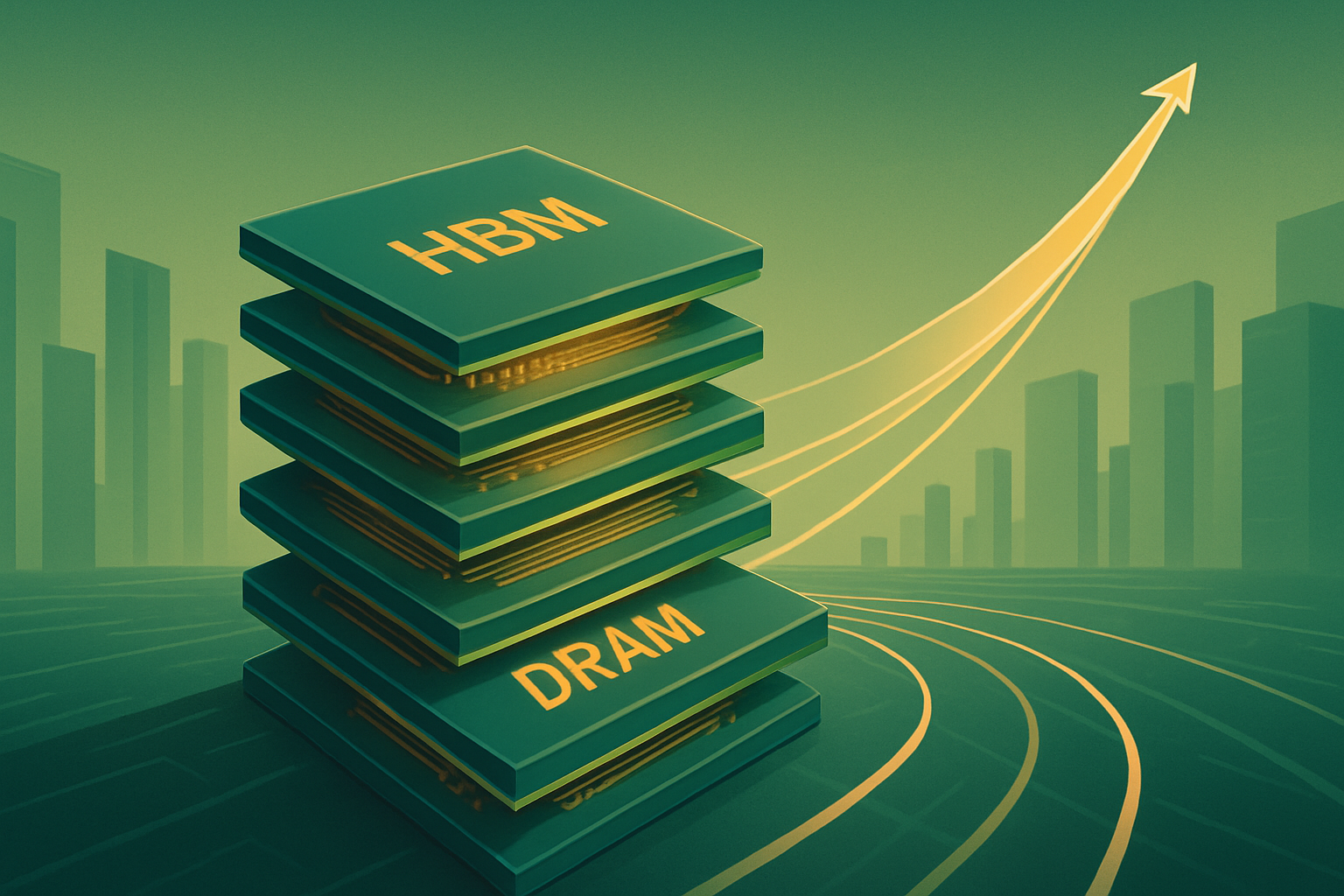
  • The AI Memory Supercycle: A Deep-Dive Research Report on Micron Technology (MU)

    The AI Memory Supercycle: A Deep-Dive Research Report on Micron Technology (MU)

    As of January 14, 2026, Micron Technology, Inc. (NASDAQ: MU) has shed its long-standing reputation as a volatile, cyclical "commodity" chipmaker to emerge as a cornerstone of the global Artificial Intelligence (AI) infrastructure. Once vulnerable to the extreme boom-and-bust cycles of the memory market, Micron is now positioned as a high-margin technology leader, essential to the massive data centers powering large language models and generative AI. With its stock trading near record highs of $340 per share, the company finds itself at the center of an "AI Memory Supercycle," where the bottleneck for global computing progress is no longer just processing power, but the memory bandwidth required to feed it.

    Historical Background

    The story of Micron begins in 1978 in an unlikely location: the basement of a dental office in Boise, Idaho. Founded by Ward Parkinson, Joe Parkinson, Dennis Wilson, and Doug Pitman, the company started as a semiconductor design consulting firm. By 1981, it had transitioned into manufacturing, opening its first fabrication plant (Fab 1).

    The company’s survival through the "memory wars" of the 1980s and 1990s—which saw dozens of American and Japanese competitors go bankrupt—was defined by a relentless focus on cost-efficiency and lean operations. A pivotal moment arrived in 2013 when Micron acquired the bankrupt Japanese manufacturer Elpida Memory for $2 billion. This acquisition was a masterstroke, doubling Micron’s capacity, securing a place in the Apple supply chain, and effectively consolidating the DRAM market into a global oligopoly shared by only three major players: Samsung, SK Hynix, and Micron.

    Business Model

    Micron operates a vertically integrated business model, designing and manufacturing its own memory and storage products. Its revenue is primarily derived from two core technologies:

    • DRAM (Dynamic Random Access Memory): Accounting for roughly 77% of total revenue as of late 2025, DRAM is the "working memory" of computers.
    • NAND Flash: Representing approximately 23% of revenue, NAND provides non-volatile storage for everything from enterprise SSDs to smartphones.

    Strategically, Micron has shifted its focus away from low-margin consumer electronics toward high-value enterprise and data center segments. In a bold move in late 2025, the company announced it would phase out its famous "Crucial" consumer brand for retail PC components to reallocate every possible wafer toward AI-grade High Bandwidth Memory (HBM).

    Stock Performance Overview

    Micron’s stock performance over the last decade illustrates its transformation from a cyclical proxy to a structural growth leader:

    • 1-Year Performance: The stock has surged approximately 247% since early 2025, fueled by massive earnings beats and the realization that HBM capacity is effectively sold out through 2026.
    • 5-Year Performance: Investors have seen a 350% return, weathering the post-pandemic supply chain glut to reach new heights in the AI era.
    • 10-Year Performance: A staggering 2,490% gain highlights the long-term value created as the memory industry consolidated and pricing power shifted back to the manufacturers.

    Financial Performance

    Micron’s fiscal year 2025 was the strongest in its history. The company reported annual revenue of $37.38 billion, a 50% increase year-over-year. More importantly, its profitability has skyrocketed; gross margins, which languished in the teens during the 2023 downturn, surged to over 50% by the fourth quarter of 2025.

    The company maintains a robust balance sheet, bolstered by record free cash flow from its data center segment, which now accounts for 56% of total sales. Despite the massive capital expenditures (CapEx) required for new fabs, Micron’s liquidity remains high, supported by government grants and disciplined inventory management.

    Leadership and Management

    Under the leadership of CEO Sanjay Mehrotra, who took the helm in 2017 after co-founding SanDisk, Micron has prioritized "ROI-driven capacity." Mehrotra’s strategy focuses on being first to market with the most advanced technology nodes rather than simply chasing market share. This "technology-first" approach allowed Micron to beat competitors to the 1-beta DRAM and 232-layer NAND milestones, granting it a temporary but lucrative pricing premium. The management team is widely respected for its supply discipline, which has helped stabilize global memory prices.

    Products, Services, and Innovations

    Micron’s crown jewel is its HBM3E (High Bandwidth Memory), and its upcoming HBM4 transition. These chips are stacked vertically to provide the massive data throughput required by Nvidia’s (NASDAQ: NVDA) Blackwell and Rubin GPUs.
    Beyond HBM, Micron’s innovations include:

    • LPDDR5X: Low-power DRAM designed for "AI PCs" and smartphones that process AI tasks locally.
    • 232-Layer NAND: Industry-leading storage density for enterprise SSDs.
    • 1-gamma (1γ) Node: The next frontier in DRAM manufacturing, utilizing Extreme Ultraviolet (EUV) lithography to squeeze even more performance out of silicon.

    Competitive Landscape

    Micron competes in a tight oligopoly. In the DRAM market, it holds approximately 25.7% of global share, trailing South Korean giants Samsung and SK Hynix. However, in the high-stakes HBM market, Micron has carved out a 20-21% niche. While SK Hynix remains the volume leader in HBM, Micron has gained favor with customers due to the superior power efficiency of its HBM3E modules, which consume 30% less power than competing versions—a critical factor for power-hungry data centers.

    Industry and Market Trends

    The "AI Supercycle" is the dominant trend. Unlike previous cycles driven by PC or smartphone demand, the AI cycle is characterized by "memory intensity." An AI server requires up to 8 times the DRAM and 3 times the NAND of a traditional server. Furthermore, the complexity of manufacturing HBM means that for every bit of HBM produced, nearly three bits of traditional DRAM capacity are sacrificed. This "capacity cannibalization" is keeping global supply tight and prices high, a trend analysts expect to persist through 2027.

    Risks and Challenges

    Despite the bullish outlook, Micron faces significant risks:

    • Execution Risk: The company is currently building multi-billion dollar "megafabs" in Idaho and New York simultaneously. Any delays in construction or equipment delivery could hinder its ability to meet demand.
    • Geopolitical Friction: While Micron has largely mitigated the 2023 Chinese ban on its products, it still faces challenges in the Chinese market, where domestic competitors like CXMT are being subsidized by the state.
    • Cyclicality: While the current cycle feels "different," the semiconductor industry remains inherently cyclical. A sudden pullback in AI spending by hyperscalers (Meta, Google, Microsoft) would leave Micron with expensive, idle capacity.

    Opportunities and Catalysts

    The primary catalyst for 2026 is the ramp-up of HBM4. Micron is working closely with TSMC (NYSE: TSM) and Nvidia to integrate its next-generation memory into future AI architectures. Additionally, the emergence of "Edge AI"—AI-capable smartphones and laptops—represents a massive secondary growth engine as consumers are forced to upgrade their devices to run next-gen software.

    Investor Sentiment and Analyst Coverage

    Wall Street sentiment is overwhelmingly positive. As of January 2026, the consensus rating is a "Strong Buy," with price targets ranging from $450 to $550. Analysts at major firms like Keybanc and Cantor Fitzgerald point to Micron's "sold-out" status for the 2026 calendar year as a de-risking factor. Institutional ownership remains high, with major hedge funds increasing their positions in late 2025 as the company’s margin profile began to resemble a software-as-a-service (SaaS) company rather than a hardware manufacturer.

    Regulatory, Policy, and Geopolitical Factors

    Micron is a flagship of the U.S. CHIPS and Science Act. The company has secured $6.1 billion in direct grants and $7.5 billion in low-interest loans to bring leading-edge memory manufacturing back to American soil. This federal support is not just financial; it is a strategic partnership that ensures Micron’s expansion is deemed a matter of national security. This provides a regulatory "moat" that non-U.S. competitors cannot easily breach in the American market.

    Conclusion

    Micron Technology has entered 2026 as a radically different company than it was even five years ago. By pivoting away from commodity markets and positioning itself as the "efficiency leader" in the AI memory space, it has unlocked a level of profitability that was once thought impossible in the memory sector.

    For investors, the key will be monitoring the company’s ability to execute its massive U.S. fab expansions and maintain its technological lead over Samsung. While the risks of cyclicality and geopolitical tension remain, Micron’s "sold-out" status and its integral role in the AI revolution make it one of the most compelling stories in the semiconductor industry today.


    This content is intended for informational purposes only and is not financial advice.

  • NVIDIA (NVDA) 2026 Deep-Dive: Analyst Sentiment and the Road to Rubin

    NVIDIA (NVDA) 2026 Deep-Dive: Analyst Sentiment and the Road to Rubin

    Date: January 14, 2026
    Sector: Technology / Semiconductors
    Company: NVIDIA Corporation (NASDAQ: NVDA)

    Introduction

    As we enter 2026, NVIDIA Corporation (NASDAQ: NVDA) stands not merely as a semiconductor manufacturer, but as the foundational architect of the "Intelligence Age." What began as a niche provider of graphics cards for PC gamers has morphed into a $4 trillion (estimated market cap) behemoth that dictates the pace of global technological evolution. Today, NVIDIA is the single most watched ticker on Wall Street, acting as a barometer for the health of the entire Artificial Intelligence (AI) ecosystem.

    With the company’s crucial Q4 Fiscal Year 2026 earnings report scheduled for late February, investor attention is laser-focused on one question: Can NVIDIA continue to exceed the gravity-defying expectations it has set for itself? As the world shifts from the "build-out" phase of AI training to the "deployment" phase of AI inference, NVIDIA’s ability to maintain its 70%+ gross margins while ramping up its next-generation Blackwell and Rubin architectures will determine the trajectory of the broader market in 2026.

    Historical Background

    Founded in 1993 by Jensen Huang, Chris Malachowsky, and Curtis Priem in a Silicon Valley Denny’s, NVIDIA’s early focus was solving the "3D graphics problem" for the gaming market. The release of the GeForce 256 in 1999—marketed as the world's first GPU—set the company on a path toward specialized parallel processing.

    The true pivot occurred in 2006 with the launch of CUDA (Compute Unified Device Architecture). By allowing researchers to use GPUs for general-purpose computing, Huang effectively "placed a bet on a market that didn't exist yet." This foresight paid off a decade later when the deep learning revolution began, as GPUs proved to be exponentially more efficient than traditional CPUs for training neural networks. Over the last three years (2023–2025), NVIDIA has undergone its most radical transformation yet, evolving from a component supplier into a provider of "AI Factories"—integrated systems of chips, networking, and software.

    Business Model

    NVIDIA’s revenue model has undergone a seismic shift in concentration. As of early 2026, the business is structured across four primary segments, with one clearly dominating the ledger:

    1. Data Center: Representing approximately 88% of total revenue, this segment includes the sale of GPU clusters (Hopper, Blackwell, and now Rubin), networking equipment (InfiniBand and Spectrum-X Ethernet), and the "NVIDIA AI Enterprise" software suite.
    2. Gaming: Once the flagship, gaming is now a high-margin legacy business providing stable cash flow through GeForce RTX GPUs for PCs and handheld consoles.
    3. Professional Visualization: Catering to architects and designers through the RTX workstation line and the Omniverse platform for digital twins.
    4. Automotive and Robotics: A high-growth frontier focusing on the "NVIDIA DRIVE" platform for autonomous vehicles and the "Isaac" platform for humanoid robotics (Physical AI).

    NVIDIA's genius lies in its "full-stack" approach. By locking developers into the CUDA software ecosystem, the company creates a moat that makes switching to rival hardware both technically difficult and prohibitively expensive.

    Stock Performance Overview

    NVIDIA’s stock performance has been nothing short of historic. Following the 10-for-1 stock split in mid-2024, the shares have continued their upward march, driven by consistent earnings beats and raises.

    • 1-Year Performance: Over the past 12 months, NVDA has surged approximately 45%, outperforming the S&P 500 significantly as the Blackwell chip ramp-up proved more lucrative than initially modeled.
    • 5-Year Performance: Investors who held through the 2022 crypto-driven downturn have seen gains exceeding 1,000%, as the "AI gold rush" replaced gaming as the primary growth driver.
    • 10-Year Performance: For long-term holders, the return is nearly 30,000%, a testament to the compounding power of a company that successfully anticipated the most significant architectural shift in computing history.

    Financial Performance

    Heading into the February earnings call, NVIDIA’s balance sheet remains one of the strongest in the corporate world.

    • Revenue Growth: Analysts are projecting FY2026 total revenue to surpass $215 billion, a staggering jump from the $60.9 billion reported just two years ago.
    • Margins: Gross margins have stabilized in the 74-76% range. While the high cost of HBM4 (High Bandwidth Memory) for the upcoming Rubin chips poses a slight headwind, NVIDIA's pricing power remains unmatched.
    • Cash Flow: The company generated over $60 billion in free cash flow (FCF) in 2025, much of which is being returned to shareholders through aggressive buybacks and used for R&D to maintain its two-year lead over competitors.
    • Valuation: Despite the price appreciation, NVDA trades at a forward P/E ratio of roughly 32x. While "expensive" by traditional standards, many analysts argue this is reasonable given the projected 40% year-over-year earnings growth.

    Leadership and Management

    CEO Jensen Huang remains the face and primary driver of NVIDIA. His signature leather jacket has become a symbol of the company's "relentless execution." Huang’s strategy of "one-year release cycles" (accelerated from the traditional two-year cycle) has kept competitors in a perpetual state of catching up.

    The management team, including CFO Colette Kress, has been lauded for its operational discipline—specifically in navigating the complex supply chain constraints involving TSMC and SK Hynix. The board of directors is highly regarded for its governance, though some critics point to "key-man risk" given how central Huang’s vision is to the company’s identity.

    Products, Services, and Innovations

    The focus for 2026 is the Rubin Architecture. Officially announced at the start of this year, Rubin (the successor to Blackwell) introduces the Vera CPU and utilizes HBM4 memory.

    • Blackwell (Current Powerhouse): The GB200 systems are currently shipping in volume, offering 30x the performance of the H100 for LLM inference workloads.
    • Networking (Spectrum-X): NVIDIA is rapidly taking market share in the Ethernet space, proving that its networking gear is just as essential as its GPUs for scaling AI clusters.
    • Software (NVIDIA AI Enterprise): This is the "hidden" revenue stream. As companies move models into production, they pay per-GPU licenses for NVIDIA’s optimized software stacks, creating a recurring, high-margin revenue tail.

    Competitive Landscape

    NVIDIA currently holds an estimated 90% share of the data center AI chip market. However, the "encirclement" strategy by rivals is intensifying:

    • Traditional Rivals: AMD (NASDAQ: AMD) has seen success with its MI325X and MI350 series, particularly with customers looking for a "second source" to avoid NVIDIA's premium pricing.
    • Cloud Service Providers (CSPs): Amazon (AWS), Google (GCP), and Microsoft (Azure) are developing their own internal silicon (Trainium, TPU, and Maia). While these are used for internal workloads, NVIDIA remains the preferred choice for the CSPs' external cloud customers.
    • AI Startups: Companies like Groq and Cerebras are targeting niche "low-latency" inference markets, though they lack NVIDIA’s massive software ecosystem.

    Industry and Market Trends

    The narrative in 2026 is shifting from Training to Inference. In 2023 and 2024, the world focused on building models (GPT-4, Llama 3). Now, the focus is on running those models for billions of users. Inference requires different power and latency profiles, and NVIDIA’s Blackwell architecture was specifically designed to dominate this transition.

    Furthermore, "Physical AI" is the new frontier. NVIDIA is positioning itself as the brain of the robotics industry, with its Thor chips powering humanoid robots and autonomous factories.

    Risks and Challenges

    No company is without risk, and NVIDIA faces several:

    • Concentration Risk: A handful of "Hyper-scalers" (Microsoft, Meta, etc.) account for nearly 50% of NVIDIA’s revenue. If these companies enter a "CapEx digestion" phase—pausing their spending to prove ROI—NVIDIA’s revenue could take a hit.
    • Supply Chain: Dependence on TSMC (Taiwan Semiconductor Manufacturing Co.) for 3nm and 2nm production remains a single point of failure.
    • Cyclicality: Historically, the semiconductor industry is highly cyclical. While AI feels different, a macro-economic recession could still dampen the pace of AI infrastructure investment.

    Opportunities and Catalysts

    The most significant near-term catalyst is the February Earnings Report, where NVIDIA will likely provide FY2027 guidance.

    • Sovereign AI: Nations like Saudi Arabia, Japan, and India are now building their own domestic AI clouds to ensure data "sovereignty." This opens a multi-billion dollar market outside of the traditional US tech giants.
    • Edge AI: The integration of AI chips into smartphones, PCs, and industrial equipment (The "Edge") represents a massive secondary market for NVIDIA's lower-power architectures.

    Investor Sentiment and Analyst Coverage

    Wall Street remains overwhelmingly "Buy" rated on NVDA. As of mid-January 2026, consensus price targets hover around $260, with "bull-case" scenarios reaching as high as $310.

    • Institutional Sentiment: Large hedge funds have largely maintained their core positions, though some have "trimmed around the edges" to manage portfolio concentration.
    • Retail Chatter: NVDA continues to be the most discussed stock on social media platforms, with retail sentiment remaining highly optimistic ahead of the Blackwell volume shipment data expected in the February report.

    Regulatory, Policy, and Geopolitical Factors

    NVIDIA is navigating a geopolitical minefield:

    1. China Export Controls: The US Department of Commerce continues to tighten restrictions on high-end AI chips. NVIDIA has successfully launched compliant "H20" variants, but domestic Chinese competitors (like Huawei) are gaining ground in that region.
    2. Antitrust Scrutiny: Both the US Department of Justice (DOJ) and the European Commission are investigating NVIDIA’s business practices, specifically focusing on whether the company "bundles" its networking hardware with its GPUs to stifle competition.
    3. China SAMR Probe: In late 2025, China's market regulator launched an investigation into NVIDIA’s past acquisitions, creating uncertainty regarding its remaining business in the world's second-largest economy.

    Conclusion

    NVIDIA enters its February earnings period at a crossroads of unprecedented success and heightened scrutiny. The company has moved beyond being a "chip maker" to become the indispensable utility of the digital age. For investors, the focus should not be on whether NVIDIA is "expensive," but on whether its pace of innovation—moving from Blackwell to Rubin—can stay ahead of the inevitable normalization of the AI build-out.

    While regulatory headwinds and "CapEx digestion" by big tech are valid concerns, the emergence of Sovereign AI and Physical AI suggests that NVIDIA’s runway remains long. Expect the February earnings call to be a defining moment for the stock, as Jensen Huang attempts to convince the world that the AI revolution is still in its early innings.


    This content is intended for informational purposes only and is not financial advice.

  • Solventum (SOLV): The 3M Spin-Off That Found Its Rhythm – A 2026 Deep-Dive Analysis

    Solventum (SOLV): The 3M Spin-Off That Found Its Rhythm – A 2026 Deep-Dive Analysis

    Date: January 14, 2026

    Introduction

    Since its high-profile separation from industrial conglomerate 3M Company (NYSE: MMM) in April 2024, Solventum Corporation (NYSE: SOLV) has undergone a profound transformation. Once a steady but overshadowed healthcare division, Solventum has emerged as a focused, multi-billion-dollar medtech powerhouse. As of early 2026, the company is in the spotlight for its aggressive debt reduction, successful divestitures, and a stock price that has finally begun to reflect its market-leading positions in wound care and health informatics. With a current market capitalization that commands respect in the S&P 500, Solventum represents a classic "spin-off" story: a legacy business finding new life through operational independence and disciplined leadership.

    Historical Background

    Solventum’s journey began decades ago as the Healthcare Business Group of 3M. While the division was consistently profitable, it often took a backseat to 3M's larger industrial and consumer priorities. In July 2022, 3M announced its intent to spin off the unit to provide it with "tailored capital allocation."

    On April 1, 2024, Solventum officially debuted on the New York Stock Exchange. The early days were marked by the daunting task of establishing a standalone corporate infrastructure while managing $8.3 billion in long-term debt—a "parting gift" from its former parent. However, the appointment of Bryan Hanson, a veteran of Medtronic plc (NYSE: MDT) and Zimmer Biomet Holdings (NYSE: ZBH), as CEO signaled a shift toward a more aggressive, growth-oriented culture.

    Business Model

    Solventum operates through four primary segments, though a major restructuring in 2025 significantly altered its footprint:

    1. MedSurgical: The company's crown jewel, contributing over 55% of revenue. It leads the global market in advanced wound care, driven by the V.A.C. (Vacuum Assisted Closure) therapy system.
    2. Dental Solutions: A leader in restorative materials (Filtek) and orthodontics (Clarity). It serves a global network of dental professionals.
    3. Health Information Systems (HIS): This segment provides AI-powered software for clinical documentation and autonomous coding. It has become a critical partner for hospitals using the Epic Systems ecosystem.
    4. Purification & Filtration: Formerly a core pillar, a significant portion of this business was sold to Thermo Fisher Scientific Inc. (NYSE: TMO) in early 2025 for $4.1 billion, allowing Solventum to focus strictly on healthcare applications.

    The company generates revenue through a mix of high-margin consumables, specialized medical hardware, and recurring software subscriptions.

    Stock Performance Overview

    Solventum’s stock performance has been a tale of two phases. Upon its debut in April 2024, SOLV opened in the $67–$70 range. For much of its first year, the stock languished, dipping into the high $50s as the "spin-off effect" led to institutional selling and concerns over 3M’s lingering litigation risks.

    However, 2025 proved to be a breakout year. Following the $4.1 billion divestiture and evidence of organic revenue growth acceleration, investor confidence surged. Over the last 12 months, SOLV has outperformed the broader S&P 500 Healthcare Index. As of mid-January 2026, the stock is trading near its all-time high of approximately $86.14, representing a gain of roughly 25% since its initial listing.

    Financial Performance

    Financial discipline has been the hallmark of Solventum’s second year as an independent firm.

    • Revenue: In the most recent fiscal year (2025), Solventum reported approximately $8.4 billion in sales, representing organic growth of 2.8%.
    • Earnings: Adjusted Earnings Per Share (EPS) for 2025 landed at $6.02, beating early-year analyst expectations.
    • Debt Reduction: The company has been exceptionally aggressive in deleveraging. Utilizing the proceeds from the Purification & Filtration sale, Solventum reduced its total debt from $8.3 billion to approximately $4.2 billion by the end of 2025, bringing its debt-to-EBITDA ratio down to 1.9x—well ahead of its 2026 target.
    • Margins: Operating margins have remained resilient at roughly 24%, despite the costs associated with rebranding and building out an independent sales force.

    Leadership and Management

    CEO Bryan Hanson has brought a "turnaround" playbook to Solventum. Known for his ability to streamline complex medtech portfolios, Hanson has focused on three pillars: stability, transformation, and growth. His leadership team, largely recruited from high-performing rivals like Medtronic and GE HealthCare Technologies Inc. (NASDAQ: GEHC), has focused on the "Transform for the Future" initiative, which aims to unlock $500 million in annual cost savings by 2029.

    The board of directors includes a mix of 3M veterans and new healthcare experts, ensuring continuity while pushing for a break from 3M's traditional industrial bureaucracy.

    Products, Services, and Innovations

    Solventum’s competitive edge lies in its deep R&D pipeline. In 2025, the company launched the next generation of its V.A.C. therapy with integrated telehealth monitoring, allowing clinicians to track wound healing remotely. In the Dental segment, the Filtek brand continues to dominate the restorative market through material science innovations that reduce procedure time.

    Perhaps the most exciting area is HIS, where Solventum's "360 Encompass" platform now features fully autonomous medical coding. By utilizing large language models (LLMs) to interpret clinical notes, the system reduces hospital billing errors and administrative overhead, a critical value proposition in a labor-strapped healthcare environment.

    Competitive Landscape

    Solventum faces stiff competition across all segments:

    • MedSurgical: Competes with Medtronic and Smith & Nephew, particularly in wound care. Solventum holds the #1 position in advanced wound care but faces pricing pressure in general surgical supplies.
    • Dental: Rivals include Dentsply Sirona Inc. (NASDAQ: XRAY) and Envista Holdings Corporation (NYSE: NVST). Solventum’s strength is its premium brand positioning.
    • HIS: Competes with Oracle Health and smaller AI startups. Solventum’s deep integration with existing hospital workflows provides a significant "moat."

    While smaller than giants like Medtronic, Solventum’s 18% net margins often exceed those of its larger peers, making it a more efficient cash-flow generator.

    Industry and Market Trends

    Several macro factors are favoring Solventum in 2026. The aging global population is driving higher surgical volumes and chronic wound occurrences. Furthermore, the "digitization of healthcare" has made its HIS segment indispensable. Hospitals are increasingly shifting from manual processes to AI-driven automation to combat rising labor costs. Lastly, the stabilization of global supply chains has allowed Solventum to maintain better inventory levels for its dental and surgical consumables compared to the volatile 2021-2023 period.

    Risks and Challenges

    Despite recent successes, several risks remain:

    1. 3M Litigation Tailwinds: While 3M retained most liabilities regarding PFAS (forever chemicals) and Combat Arms earplugs, Solventum is still transitioning away from 3M-branded manufacturing sites. Any new litigation specifically targeting the healthcare sites could impact the balance sheet.
    2. Branding Costs: Solventum has a limited window (until 2027) to remove the 3M logo from thousands of products. The logistics and marketing costs of this rebranding are estimated to be in the hundreds of millions.
    3. Tariffs and Trade: With a global manufacturing footprint, Solventum is sensitive to shifting trade policies and tariffs, which analysts estimate could be a $60 million to $80 million headwind in 2026.

    Opportunities and Catalysts

    • M&A Potential: With its debt-to-EBITDA now below 2.0x, Solventum has "reloaded" its balance sheet. Analysts expect the company to pursue "tuck-in" acquisitions in the AI and digital health space throughout 2026.
    • Share Buybacks: The $1 billion share repurchase program announced in late 2025 is expected to provide a floor for the stock price and boost EPS in the coming quarters.
    • AI Monetization: Continued adoption of autonomous coding could lead to margin expansion within the HIS segment, as software revenue carries significantly higher margins than physical medical devices.

    Investor Sentiment and Analyst Coverage

    Wall Street sentiment has turned decidedly bullish. As of January 2026, the consensus rating is a "Buy." Firms like Stifel and Piper Sandler have recently raised their price targets to the $100–$105 range, citing the successful deleveraging process. Institutional ownership has stabilized as the "index churn" from the 3M spin-off has concluded. Hedge funds have also taken note, with several notable value-oriented funds increasing their stakes in Q4 2025, attracted by Solventum's low P/E ratio relative to its growth prospects.

    Regulatory, Policy, and Geopolitical Factors

    Solventum operates in a highly regulated environment, with the FDA and EMA (European Medicines Agency) constantly updating safety standards. In 2025, new regulations regarding the use of AI in clinical decision-making required Solventum to undergo additional certifications for its HIS software. Geopolitically, the company is diversifying its manufacturing away from single-source locations to mitigate the risk of localized political instability, particularly in Asia.

    Conclusion

    Solventum Corporation has successfully navigated the "Valley of Death" that often follows a major corporate spin-off. By aggressively tackling its debt and divesting non-core assets, the company has transformed from a burdened subsidiary into a nimble, high-margin medtech leader. While the shadow of its former parent and the costs of rebranding remain, the fundamental strength of its MedSurgical and AI-driven software businesses provides a robust foundation for growth. For investors, Solventum represents a rare combination of a "value" valuation with "growth" catalysts, making it one of the most compelling healthcare stories to watch in 2026.


    This content is intended for informational purposes only and is not financial advice.