
Tag: Stock Research

  • Texas Pacific Land Corporation (TPL): The Permian’s Premier Toll Booth Pivot

    Texas Pacific Land Corporation (TPL): The Permian’s Premier Toll Booth Pivot

    Texas Pacific Land Corporation (NYSE: TPL) stands as a singular entity in the American financial landscape—a 19th-century land trust that has evolved into a 21st-century infrastructure powerhouse. As of April 14, 2026, TPL is no longer viewed merely as a passive beneficiary of West Texas oil; it has successfully rebranded itself as a high-tech "toll booth" for the Permian Basin, facilitating everything from hydraulic fracturing to artificial intelligence data centers. With its sprawling 880,000-acre footprint and a debt-free balance sheet, the company has become a focal point for investors seeking a "pure play" on the enduring strategic importance of the Permian, the world’s most prolific oil and gas province.

    Historical Background

    The story of TPL begins in 1888, emerging from the wreckage of the Texas and Pacific Railway’s bankruptcy. To satisfy bondholders, the railway’s massive land grant—roughly 3.5 million acres—was placed into a liquidating trust. For over 130 years, the Texas Pacific Land Trust operated under an antiquated structure with just three lifetime trustees. Its mandate was simple: sell off surface land and use the proceeds to buy back and cancel its own shares.

    This "cannibalistic" share-reduction model, combined with the discovery of the Permian Basin’s shale potential in the early 2010s, transformed a sleepy legacy trust into a financial juggernaut. In January 2021, after years of pressure from activist shareholders, TPL officially converted into a Delaware C-Corporation. This transformation modernized its governance and paved the way for the institutional-grade infrastructure player it is today.

    Business Model

    TPL operates a diversified, high-margin business model focused on its extensive acreage in the Midland and Delaware Basins. Its revenue streams are bifurcated into two primary segments:

    • Land & Resource Management: This is the core royalty engine. TPL owns approximately 207,000 net royalty acres. It does not drill wells or operate rigs; instead, it collects a percentage of revenue from operators like ExxonMobil (NYSE: XOM) and Chevron (NYSE: CVX) who drill on its land. This segment also includes "SLEM" (Surface Leases, Easements, and Materials), where TPL charges for pipeline rights-of-way, power lines, and caliche used in road construction.
    • Water Service & Operations (TPWR): Through its subsidiary, Texas Pacific Water Resources, the company provides full-cycle water management. This includes sourcing brackish water for fracking, gathering "produced water" (the byproduct of oil extraction), and managing recycling and disposal. This segment has become a critical utility for Permian operators facing stricter environmental and logistics hurdles.

    Stock Performance Overview

    TPL has historically been one of the greatest wealth compounders in the energy sector.

    • 1-Year Performance: Over the past twelve months, TPL shares have surged approximately 45%, significantly outperforming the broader S&P 500 Energy Index. Much of this gain was driven by the 2025 announcement of the company’s "AI & Energy" pivot and the late-2025 3-for-1 stock split.
    • 5-Year Performance: On a five-year horizon, the stock is up roughly 240%, reflecting the successful corporate conversion in 2021 and the post-pandemic surge in domestic production.
    • 10-Year Performance: Long-term holders have witnessed a staggering 3,100% return. This performance stems from the unique combination of rising oil volumes and a shrinking share count, which drastically increased the value of each remaining share.

    Financial Performance

    The company’s 2025 fiscal year, reported earlier this year, showcased the immense profitability of its royalty-and-water model.

    • Revenue & Income: Total revenue for 2025 reached $798.2 million, a 13.1% increase year-over-year. Net income margins remained exceptionally high, hovering around 60%, a figure virtually unheard of in most industries.
    • Cash Flow: Free cash flow (FCF) for 2025 was $498.3 million. TPL uses this cash to fund dividends and aggressive share repurchases, maintaining its reputation as a "capital return machine."
    • Valuation Metrics: As of April 2026, TPL trades at a forward P/E of approximately 58.7x. While expensive compared to traditional energy stocks, bulls argue the premium is justified by its zero-debt balance sheet and its new role as a tech-infrastructure hybrid.

    Leadership and Management

    The executive team is led by CEO Tyler (Ty) Glover, who has steered the company since its final years as a trust. Glover is credited with shifting TPL from a passive royalty collector to an active infrastructure developer.

    Governance, once a point of contention, has stabilized following a protracted proxy battle with major shareholder Horizon Kinetics. The board now includes Horizon’s Murray Stahl (until his passing in late 2025) and other investor-aligned members. The current leadership strategy focuses on "the energy-data nexus," leveraging TPL’s surface land for large-scale industrial projects that go beyond fossil fuels.

    Products, Services, and Innovations

    TPL’s current innovation focuses on the "circular water economy" and "digital infrastructure":

    • Orla Desalination Facility: In early 2026, TPL’s freeze desalination plant in Orla, Texas, reached full scale. This facility treats produced water into fresh water for industrial use, solving a major environmental and regulatory pain point for the Permian.
    • AI Data Centers: TPL has begun leasing surface land for "behind-the-meter" data centers. These facilities use on-site natural gas to generate electricity, providing AI firms with the massive power they need without taxing the fragile ERCOT grid.
    • Digital Permian: The company utilizes proprietary GIS mapping and data analytics to optimize where pipelines and wells are placed, maximizing the "toll" it can collect per acre.

    Competitive Landscape

    TPL’s primary competitors are other royalty and land management firms, though few match its scale or surface-ownership breadth.

    • Viper Energy (NASDAQ: VNOM): The royalty arm of Diamondback Energy. While Viper has higher production growth, it lacks TPL’s vast surface land rights and water business.
    • Black Stone Minerals (NYSE: BSM): A leader in mineral rights across the US, but more heavily weighted toward natural gas and the Haynesville Shale.
    • LandBridge (NYSE: LB): A newer rival that mimics TPL’s model of owning surface land and water infrastructure. LandBridge trades at a similarly high multiple but lacks TPL’s century-old, low-cost basis.

    Industry and Market Trends

    The Permian Basin is currently undergoing "Super-Major Consolidation." With ExxonMobil’s acquisition of Pioneer Natural Resources and Chevron’s consolidation efforts, TPL’s land is now being developed by the world’s most well-capitalized companies. These majors use longer horizontal wells (over 12,000 feet), which allows TPL to capture more royalty revenue from fewer wellheads. Additionally, the "Energy-Data Nexus" trend is accelerating; as AI demand skyrockets, West Texas is being viewed as a "power and land bank" for the tech industry.

    Risks and Challenges

    • Regulatory Scrutiny: The Texas Railroad Commission (RRC) has tightened rules on "Saltwater Disposal" (SWD) due to concerns over seismic activity (earthquakes). Stricter limits in Culberson and Reeves counties could cap TPL’s water-injection revenues.
    • Commodity Exposure: While TPL has no debt, its royalty income is directly tied to the price of West Texas Intermediate (WTI). A significant global recession or an oil price collapse would hit its top line immediately.
    • Governance Uncertainty: The passing of major shareholder and board member Murray Stahl in late 2025 has left a strategic vacuum. There is uncertainty regarding how Horizon Kinetics will manage its 18% stake moving forward.

    Opportunities and Catalysts

    • AI Data Center Scaling: Success in its pilot data center projects could lead to multi-billion dollar long-term lease agreements with "Big Tech" firms.
    • Desalination Commercialization: If TPL can successfully sell treated water back to agricultural or industrial users at scale, it opens a revenue stream that is independent of oil and gas drilling.
    • Institutional Re-entry: The February 2026 court ruling striking down Texas’ "anti-ESG" law (SB 13) allows previously restricted institutional giants like BlackRock to increase their positions in Texas energy names like TPL.

    Investor Sentiment and Analyst Coverage

    Wall Street sentiment is currently "Cautiously Bullish." Analysts from KeyBanc and other mid-tier firms maintain "Overweight" ratings, with some price targets exceeding $1,000 per share (post-split basis). However, value-oriented analysts remain wary of the stock’s high P/E ratio, arguing that much of the AI growth is already "priced to perfection." Among retail investors, TPL remains a cult favorite, often referred to as "the ultimate inflation hedge" due to its hard asset base and lack of operational overhead.

    Regulatory, Policy, and Geopolitical Factors

    The geopolitical landscape of 2026 favors domestic production. With ongoing instability in traditional oil-producing regions, the Permian Basin is the cornerstone of U.S. energy security. Domestically, the RRC’s updated waste management rules (effective January 2026) have increased compliance costs, but they have also "moated" TPL’s business; only well-capitalized firms like TPL can afford the sophisticated recycling infrastructure required to meet new environmental standards.

    Conclusion

    Texas Pacific Land Corporation enters the mid-2020s as a hybrid powerhouse. It has successfully parlayed its 19th-century land grant into a multifaceted infrastructure business that services the two most critical drivers of the modern economy: energy and data. While the stock’s premium valuation requires flawless execution, particularly in its fledgling AI and water-desalination ventures, the company’s debt-free "toll booth" model remains one of the most efficient ways to play the Permian Basin. Investors should watch for further developments in the "Behind-the-Meter" power space and any changes in the Horizon Kinetics ownership stake as the primary signals for the stock’s next major move.


    This content is intended for informational purposes only and is not financial advice.

  • The Connectivity Backbone: A Deep Dive into Credo Technology Group (CRDO)

    The Connectivity Backbone: A Deep Dive into Credo Technology Group (CRDO)

    As of today, April 14, 2026, the global technology landscape is defined by one singular force: the build-out of massive-scale generative AI infrastructure. While the headlines are often dominated by the GPU manufacturers, a critical bottleneck has emerged in the "plumbing" of these data centers—the connectivity that allows tens of thousands of processors to work as a single, coherent machine. At the center of this revolution is Credo Technology Group Holding Ltd (NASDAQ: CRDO).

    Credo has transitioned from a specialized IP provider into a vital hardware pillar for the world’s largest hyperscalers. By solving the dual challenges of power consumption and signal integrity at speeds of 800G and 1.6T, Credo has positioned itself as the "connectivity backbone" of the AI era. However, with explosive growth comes intense scrutiny, making the company one of the most debated names on Wall Street in the current fiscal year.

    Historical Background

    Founded in 2008, Credo was born out of a vision to rethink how high-speed data is transmitted across silicon. The company was established by a trio of semiconductor veterans—Bill Brennan, Lawrence Cheng, and Job Lam—many of whom honed their expertise at Marvell and Sun Microsystems. For its first decade, Credo operated largely behind the scenes, perfecting its Serializer/Deserializer (SerDes) technology and licensing it to other chipmakers and hyperscalers.

    The company’s "Big Bang" moment came with its pivot into high-performance hardware, specifically Active Electrical Cables (AECs). This shift allowed Credo to capture a larger share of the value chain. Credo went public on the NASDAQ in January 2022, just as the industry began to anticipate the massive data requirements of the AI transition. Since its IPO, the company has transformed from a $300 million niche player into a multi-billion-dollar infrastructure leader, navigating both the supply chain shocks of 2023 and the AI-fueled mania of 2024 and 2025.

    Business Model

    Credo operates a highly efficient "fabless" semiconductor model, focusing on design and intellectual property while outsourcing manufacturing. Its revenue is bifurcated into two high-margin streams:

    1. Product Sales: This includes Active Electrical Cables (AEC) and Integrated Circuits (ICs) such as Digital Signal Processors (DSPs) and Retimers. AECs are Credo's flagship, providing a "plug-and-play" solution for rack-to-rack connectivity that is more cost-effective and energy-efficient than optical alternatives.
    2. IP Licensing: Credo licenses its proprietary SerDes technology to other companies. This "SerDes DNA" allows customers to integrate high-speed connectivity into their own custom ASICs (Application-Specific Integrated Circuits).

    This dual model provides Credo with "sticky" relationships. By licensing IP to a hyperscaler for their custom chips, Credo often becomes the natural choice for the hardware (AECs) used to connect those same chips.

    Stock Performance Overview

    The journey for CRDO shareholders over the past few years has been a masterclass in market volatility.

    • 1-Year Horizon: Over the past 12 months, the stock has been a high-beta favorite. After surging over 200% in 2025 to reach an all-time high of $213.80 in December, the stock entered a "healthy" but sharp correction in early 2026. As of mid-April 2026, it trades in the $110–$125 range, reflecting a rotation out of high-multiple AI names.
    • Longer Term: Since its 2022 IPO at $10, long-term investors have seen massive outperformance, driven by the company’s ability to exceed revenue guidance consistently.
    • Notable Moves: The stock famously dropped nearly 50% in a single day in early 2023 due to a customer-specific procurement delay, but it has since recovered that ground many times over as its customer base diversified and the AI cycle accelerated.

    Financial Performance

    Credo’s recent financial results have been nothing short of explosive. In its Q3 fiscal year 2026 report (January 2026), the company posted revenue of $407 million, representing a staggering 201% year-over-year increase.

    • Margins: Despite the shift toward lower-margin hardware products, Credo has maintained industry-leading gross margins of 67–68%. This is largely attributed to its ability to manufacture high-speed chips on mature, cost-effective process nodes (like 12nm) while competitors are forced into more expensive 5nm or 3nm nodes.
    • Cash Position: The company maintains a fortress balance sheet with minimal debt and significant cash reserves, allowing it to fund R&D for the upcoming 1.6T and 3.2T data cycles.
    • Guidance: Management has signaled that fiscal year 2026 revenue could triple compared to 2025, fueled by the massive deployments of Nvidia’s newest GPU architectures.

    Leadership and Management

    CEO Bill Brennan has been the primary architect of Credo’s commercial success. With over 25 years in the semiconductor industry, Brennan is widely respected for his strategic foresight in moving the company into the AEC market just as passive copper cables reached their physical limits.

    The founding team remains deeply involved. CTO Lawrence Cheng is regarded as a visionary in SerDes architecture, while COO Job Lam manages the complex supply chain logistics inherent in a fabless model. The board was recently bolstered by veterans from the broader tech ecosystem, reflecting Credo's transition from a startup to a mature public entity. Brennan’s 2025 election to the Board of the Global Semiconductor Alliance (GSA) further cemented his status as a key industry statesman.

    Products, Services, and Innovations

    Credo’s competitive edge lies in its "HiWire" AECs and its "Cardinal" DSPs.

    • Cardinal 1.6T DSP: Launched in early 2026, this 3nm chip is designed for the next generation of AI networks, offering half the power consumption of traditional solutions.
    • ZeroFlap Technology: One of Credo’s most critical recent innovations. In massive GPU clusters, even a millisecond of "link flapping" (signal instability) can crash a training run that costs millions of dollars. ZeroFlap eliminates these interruptions, providing a massive reliability advantage for hyperscalers like Microsoft and Meta.
    • Power Efficiency: Credo’s chips consistently use 30–50% less power than competitors. In a world where AI data centers are straining the power grid, this is not just a feature—it is a requirement.

    Competitive Landscape

    Credo operates in an arena of giants. Its primary rivals include:

    • Marvell Technology (NASDAQ: MRVL): Marvell is Credo's most direct threat. In late 2025, Marvell launched its "Golden Cable" initiative, an ecosystem approach designed to compete directly with Credo’s AEC dominance.
    • Broadcom (NASDAQ: AVGO): While Broadcom dominates the high-end optical transceiver and switch market, it is increasingly looking to squeeze Credo’s margins in the DSP space.
    • Astera Labs (NASDAQ: ALAB): A newer rival that competes in the connectivity space, though primarily focused on PCIe retimers rather than the rack-to-rack AECs where Credo leads.

    Credo’s advantage remains its "pure-play" focus on high-speed connectivity and its proprietary SerDes, which allows it to be more agile than the larger diversified chipmakers.

    Industry and Market Trends

    The "Copper vs. Optics" debate is the central trend defining the sector. Historically, copper was for short distances and optics for long ones. As speeds increased to 800G, many predicted copper would die. However, Credo’s AECs have extended the life of copper by adding "intelligence" to the cable.

    In early 2026, the trend of "Rack-Scale Computing" has favored Credo. As GPUs are packed closer together to reduce latency, the need for short-reach, high-performance AECs has skyrocketed. Furthermore, the global push for "Green AI" has made Credo’s low-power architecture a preferred choice for ESG-conscious hyperscalers.

    Risks and Challenges

    Despite its success, Credo is not without significant risks:

    • Customer Concentration: As of 2026, a tiny handful of hyperscalers (Amazon, Microsoft, and Google) account for the vast majority of Credo’s revenue. If one of these giants switches to an in-house solution or a competitor, the impact would be severe.
    • The 1.6T Transition: While Credo is a leader today, the jump to 1.6T and 3.2T speeds may eventually reach the physical limits of copper, potentially forcing a move to "Co-Packaged Optics" (CPO) where Credo has less of an established moat.
    • Valuation: Even after the recent correction, CRDO trades at a significant premium to traditional semiconductor companies, leaving it vulnerable to any earnings miss.

    Opportunities and Catalysts

    • The 1.6T Super-Cycle: The rollout of the next generation of AI accelerators in late 2026 is expected to be a massive catalyst for Credo's Cardinal DSPs.
    • Tier 2 Expansion: While "Big Tech" currently dominates its order book, there is a massive untapped market in Tier 2 cloud providers and sovereign AI clouds (government-backed data centers), which are just beginning their infrastructure builds.
    • M&A Potential: Given its strategic importance and unique IP, Credo is frequently cited as a potential acquisition target for a larger player like Marvell or even Nvidia.

    Investor Sentiment and Analyst Coverage

    Wall Street remains broadly bullish on CRDO. As of April 2026, the consensus rating is a "Strong Buy." Analysts from Mizuho and Needham have recently reiterated that the early 2026 selloff was a "valuation reset" rather than a commentary on the company's fundamentals.

    Institutional ownership remains high, with major positions held by Fidelity and Vanguard. However, retail sentiment is more divided, often reacting sharply to the high volatility that characterizes the stock’s day-to-day trading.

    Regulatory, Policy, and Geopolitical Factors

    As a fabless company relying on TSMC, Credo is deeply exposed to the geopolitical stability of Taiwan. Reports in April 2026 regarding increased cyber-pressure on the Taiwanese semiconductor ecosystem have kept investors on edge.

    Additionally, US-China export controls remain a moving target. While Credo has successfully pivoted most of its supply chain away from restricted zones, any further tightening of definitions around "AI-enabling technology" could complicate its licensing business in the Asia-Pacific region.

    Conclusion

    Credo Technology Group stands at a fascinating crossroads in mid-2026. It has proven its skeptics wrong by becoming an indispensable partner to the world’s largest AI builders. Its technology solves the most pressing problems of the AI era: power, reliability, and speed.

    However, the "connectivity war" is entering a new phase. With Marvell and Broadcom looming and the physical limits of copper being tested, Credo must continue to out-innovate its much larger peers. For investors, CRDO offers a high-reward, high-volatility play on the underlying plumbing of the artificial intelligence revolution. As we look toward the 1.6T cycle, the company's ability to maintain its margin profile and diversify its customer base will determine if it remains a market leader or becomes an attractive acquisition target.

  • The Power Behind the Processing: A Deep Dive into Bloom Energy (BE) in 2026

    The Power Behind the Processing: A Deep Dive into Bloom Energy (BE) in 2026

    As of April 14, 2026, the global energy landscape is defined by a singular, overwhelming challenge: the insatiable power demand of Artificial Intelligence. In this high-stakes environment, Bloom Energy Corporation (NYSE: BE) has emerged as a critical infrastructure titan. Once viewed as a speculative clean-tech play, Bloom has successfully repositioned itself as the primary solution for the "grid gap"—the multi-year delay in traditional utility connections that threatens to stall the AI revolution.

    By providing on-site, modular power that can be deployed in months rather than years, Bloom Energy has transformed from a fuel cell manufacturer into a strategic partner for the world’s largest hyperscalers and industrial giants. With a market capitalization now exceeding $50 billion and a backlog pushing toward $20 billion, the company stands at the intersection of energy security, technological innovation, and the global transition to a low-carbon economy.

    Historical Background

    Bloom Energy’s story began far from the data centers of Northern Virginia. Founded in 2001 by Dr. KR Sridhar, the company’s core technology—Solid Oxide Fuel Cell (SOFC)—was originally developed for NASA’s Mars exploration program. The goal was to create a device that could produce oxygen on Mars and fuel for the return trip; Sridhar eventually realized the process could be reversed to generate clean, reliable electricity on Earth.

    After years in "stealth mode," Bloom launched publicly in 2010 with a star-studded list of early adopters including Google and Walmart. The company went public on the New York Stock Exchange in July 2018. The early years of its public life were marked by volatility as the company struggled with high manufacturing costs and a reliance on natural gas. However, the mid-2020s marked a radical transformation. By 2024, the "AI-Energy Nexus" became the company's primary tailwind, shifting the focus from simple backup power to essential, primary baseload generation for high-density computing.

    Business Model

    Bloom Energy’s business model is built on three distinct pillars that cater to the modern demand for "Energy-as-a-Service" (EaaS):

    1. Product Sales: The core of the business remains the Bloom Energy Server. These modular "Bloom Boxes" generate electricity through an electrochemical process without combustion. They are increasingly sold in massive multi-hundred-megawatt configurations to data centers and industrial hubs.
    2. Service and Maintenance: Given the 20-to-25-year lifespan of the fuel cells, Bloom generates recurring high-margin revenue through long-term service agreements (LTSAs). This segment provides a predictable cash flow buffer against the lumpy nature of hardware sales.
    3. Hydrogen and Electrolyzers: A more recent addition is the Solid Oxide Electrolyzer (SOEC). This technology allows Bloom to pivot into the hydrogen economy, selling equipment that produces "green" hydrogen for industrial processes and heavy shipping.

    The company has also perfected its financing model through partnerships like the early 2026 $5 billion deal with Brookfield, allowing customers to pay for power over time rather than incurring massive upfront capital expenditures.

    Stock Performance Overview

    Bloom Energy’s stock performance has been a roller coaster for long-term holders, though the recent trend has been decisively upward.

    • 1-Year Performance (2025–2026): Over the last 12 months, BE has outperformed the S&P 500 significantly, rising nearly 85%. This surge was driven by a string of "gigawatt-scale" announcements with Oracle and American Electric Power.
    • 5-Year Performance (2021–2026): The five-year view shows a compound annual growth rate (CAGR) of approximately 22%. The stock spent much of 2022-2023 in a lull before the AI-driven re-rating of 2024 and 2025.
    • 10-Year Performance: Since 2018 (IPO), the stock has moved from the $15–$25 range to its current trading price between $166 and $203.

    While the volatility remains high compared to traditional utilities, Bloom is no longer traded as a "penny-stock" alternative energy name, but rather as a growth-tech infrastructure staple.

    Financial Performance

    The fiscal year 2025 was a watershed moment for Bloom Energy. For the first time in its history, the company achieved meaningful GAAP operating income.

    • Revenue: FY 2025 revenue hit a record $2.02 billion, a 37.3% year-over-year increase.
    • Margins: Gross margins have expanded to the 28-30% range as manufacturing efficiencies at the Fremont and Delaware facilities have taken hold.
    • Backlog: The company enters Q2 2026 with a $20 billion backlog, providing unprecedented visibility into future revenue.
    • Liquidity: Bolstered by the Brookfield financing partnership and a successful convertible note issuance in 2025, Bloom maintains a robust cash position to fund its transition from 1 GW to 2 GW of annual manufacturing capacity by the end of 2026.
    • Earnings: Estimates for Q1 2026 suggest an EPS of $0.09 to $0.13, reinforcing the trend of consistent profitability.

    Leadership and Management

    Founder and CEO Dr. KR Sridhar remains the visionary heart of the company. In the early 2020s, Sridhar was criticized by some analysts for "over-promising," but his focus on the data center market has largely vindicated his long-term strategy.

    The leadership team was significantly strengthened in 2024 and 2025 with the addition of executives from the semiconductor and utility sectors, reflecting Bloom's shift toward high-density power for chips. The board’s governance reputation has improved as the company moved away from the complex "special purpose vehicle" accounting that clouded its early years, opting for more transparent reporting standards that have earned the trust of institutional "long-only" funds.

    Products, Services, and Innovations

    The technological moat around Bloom Energy is built on its high-temperature Solid Oxide chemistry.

    • SOFC Energy Servers: The current 2026 generation of servers is "800V DC-ready," allowing them to plug directly into AI server racks. This eliminates the 10-15% energy loss typical of AC-to-DC conversion in traditional data centers.
    • The Electrolyzer (SOEC): Bloom’s electrolyzer is currently the most efficient on the market, operating at 80% electrical-to-hydrogen efficiency when paired with industrial waste heat.
    • Carbon Capture Integration: In 2025, Bloom launched a pilot project that integrates carbon capture directly into the fuel cell exhaust, potentially making its natural gas-powered units "carbon neutral" even before a full transition to hydrogen.

    Competitive Landscape

    Bloom faces competition on two fronts: traditional power providers and other clean-tech firms.

    • The Grid: Bloom’s biggest "competitor" is the local utility. In regions like Northern Virginia or West Texas, where the grid is overtaxed, Bloom wins by default because it can provide power years faster than the utility.
    • Hydrogen Rivals: Plug Power (NASDAQ: PLUG) and Ballard Power Systems (NASDAQ: BLDP) are major competitors in the hydrogen space. However, Bloom’s SOFC technology is generally considered superior for stationary baseload power, while Plug dominates the mobility (forklift/trucking) sector.
    • Traditional Back-up: Companies like Generac (NYSE: GNRC) compete in the backup space, but Bloom is increasingly viewed as a primary power source rather than just an emergency fail-safe.

    Industry and Market Trends

    The "AI-Energy Nexus" is the dominant trend of 2026. As AI models move from training to inference, the demand for "always-on" power has surpassed the capacity of many national grids. This has led to a shift toward "Microgrids" and "Distributed Generation"—precisely where Bloom specializes.

    Furthermore, the "reshoring" of industry to the United States (the "New Industrialization") has created clusters of factories that require massive power in rural areas where the grid is weak. Bloom’s modularity allows these factories to scale power capacity as they build out their production lines.

    Risks and Challenges

    Despite the current euphoria, Bloom is not without significant risks:

    1. Fuel Price Volatility: Most Bloom servers still run on natural gas. While they can run on hydrogen or biogas, a spike in natural gas prices can narrow the "spark spread," making Bloom's power more expensive than grid power.
    2. Execution and Scaling: Attempting to double manufacturing capacity in a single year (2026 target) is a massive operational risk. Any quality control issues could be catastrophic for its reputation among hyperscalers.
    3. Equity Dilution: To fund its massive growth, Bloom has historically relied on issuing stock and convertible debt, which continues to be a point of contention for some retail investors.

    Opportunities and Catalysts

    • The Oracle Expansion: The April 2026 master agreement with Oracle for up to 2.8 GW of capacity is a transformative catalyst that could provide a revenue floor for years.
    • Marine Shipping: Bloom is currently trialing SOFC units on large cargo ships to replace diesel generators, a multi-billion dollar addressable market that is barely tapped.
    • Hydrogen Hubs: As the U.S. "Hydrogen Hubs" become operational in 2026-2027, Bloom's electrolyzer business is expected to see a secondary surge in orders.

    Investor Sentiment and Analyst Coverage

    Wall Street sentiment has undergone a dramatic "re-rating" in the last 18 months. Once treated as a high-risk "ESG" stock, Bloom is now covered by data center and industrial analysts.

    • Ratings: The consensus is a "Moderate Buy." Out of 32 analysts, 13 have a "Strong Buy" rating.
    • Institutional Moves: There has been a notable increase in ownership from "Quality" and "Growth" funds (e.g., BlackRock, Vanguard, and specialized infrastructure funds), moving away from the more flighty retail-dominated base of 2021.
    • Price Targets: Median targets sit around $156, though "bull case" scenarios from firms like China Renaissance have pushed as high as $207 following the latest Oracle news.

    Regulatory, Policy, and Geopolitical Factors

    The regulatory environment in 2026 is dominated by the "One Big Beautiful Bill" (OBBB), the massive 2025 legislative overhaul that refined the incentives of the 2022 Inflation Reduction Act. Bloom has successfully navigated these changes by reshoring its entire supply chain, ensuring it meets the strict 2026 Foreign Entity of Concern (FEOC) rules to qualify for maximum tax credits.

    However, the looming July 4, 2026, deadline for "commencing construction" on several federal hydrogen projects remains a key date for investors to watch, as any delays could jeopardize certain tax credit eligibilities.

    Conclusion

    Bloom Energy (NYSE: BE) has reached a critical inflection point. In 2026, the company is no longer a "future" story; it is a "now" story. By solving the immediate power crisis facing the AI industry, Bloom has secured a place as a foundational player in the modern economy.

    For investors, the case for Bloom is a bet on the continued decoupling of power generation from the traditional centralized grid. While risks regarding fuel costs and execution remain, the company’s massive backlog, newfound profitability, and "poster child" status in the AI-Energy Nexus make it one of the most compelling, albeit high-beta, stories in the industrial tech sector today.


    This content is intended for informational purposes only and is not financial advice. Note: Current date is April 14, 2026.

  • The RAS Revolution: A Deep Dive into Revolution Medicines’ Path to Dominance (2026 Report)

    The RAS Revolution: A Deep Dive into Revolution Medicines’ Path to Dominance (2026 Report)

    As of today, April 14, 2026, the biotechnology landscape is being reshaped by a singular clinical milestone that many once deemed impossible. Just twenty-four hours ago, Revolution Medicines, Inc. (Nasdaq: RVMD) released topline Phase 3 results from its RASolute 302 trial, effectively setting a new standard of care in the treatment of pancreatic cancer. For decades, the RAS pathway was considered the "undruggable" holy grail of oncology. Today, Revolution Medicines has not only proved it is druggable but has demonstrated that its "tri-complex" platform can nearly double the survival of patients in second-line metastatic pancreatic ductal adenocarcinoma (PDAC).

    This breakthrough has catapulted RVMD into the spotlight of Wall Street, with its market capitalization surging to approximately $26.1 billion. The company’s focus on the active (ON) state of the RAS protein has allowed it to succeed where industry titans have previously faltered. As investors pivot toward precision medicine companies with late-stage, de-risked assets, Revolution Medicines stands out as the premier pure-play RAS company, transitioning from a high-stakes R&D story to a commercial-stage powerhouse.

    Historical Background

    Revolution Medicines was founded in October 2014 with a clear but ambitious mandate: to discover and develop small-molecule medicines for patients with cancer and other life-threatening diseases by drawing inspiration from natural products. Backed initially by a $45 million Series A from Third Rock Ventures, the company was built on the work of Dr. Martin Burke, whose research on synthesizing complex natural products formed the early bedrock of their platform.

    The company’s most significant transformation occurred in 2018 with the strategic acquisition of Warp Drive Bio. This deal brought with it a proprietary "tri-complex" technology that fundamentally changed how the company approached oncogenic targets. While competitors like Amgen and Mirati (now BMS) were focused on first-generation inhibitors that bound to the inactive "OFF" state of RAS proteins, Revolution’s newly acquired toolkit allowed them to target the active "ON" state. The company went public in February 2020 at $20 per share, raising $238 million, and has since methodically narrowed its focus to the "RAS-addicted" cancer market.

    Business Model

    Revolution Medicines operates as a clinical-stage precision oncology company. Its business model is centered on a vertical research, development, and eventual commercialization strategy targeting the RAS pathway, which is responsible for roughly 30% of all human cancers. Unlike diversified pharmaceutical giants, RVMD’s value is concentrated in its "tri-complex" platform. This platform uses molecular glues to create a ternary complex between the target RAS(ON) protein, an inhibitor, and an intracellular protein (cyclophilin A), resulting in highly selective and potent inhibition.

    The company’s revenue model currently relies on strategic partnerships and royalty financing to fuel its massive R&D requirements. A landmark $2 billion agreement signed with Royalty Pharma in mid-2025 has provided the necessary non-dilutive capital to bridge the gap toward commercialization. Once its lead candidates, specifically RMC-6236, receive FDA approval, the company intends to build its own specialty sales force to target high-prescribing oncologists in the U.S. and European markets, retaining significant downstream value.

    Stock Performance Overview

    Over the last five years, RVMD has outperformed the broader XBI Biotech Index significantly. After its 2020 IPO, the stock traded in a volatile range between $20 and $40 for several years as investors awaited clinical validation of the tri-complex platform. The 1-year performance has been particularly explosive; since April 2025, the stock has risen over 150%, fueled by the systematic de-risking of its clinical pipeline.

    On a 5-year horizon, the stock has matured from a speculative mid-cap to a top-tier large-cap biotech. While the 10-year horizon is not yet complete as a public entity, early venture investors have seen astronomical returns. The most recent move following the April 13, 2026, PDAC data saw the stock gap up nearly 25% in a single session, reflecting the shift from "clinical probability" to "commercial reality" in the minds of institutional investors.

    Financial Performance

    Revolution Medicines’ financial profile is typical of a late-stage biotech, characterized by high cash burn and a robust balance sheet. As of the end of Q4 2025, the company reported approximately $2.0 billion in cash, cash equivalents, and marketable securities. This massive war chest is largely the result of a 2025 financing strategy that successfully combined equity raises with the Royalty Pharma synthetic royalty deal.

    While the company posted a GAAP net loss of $1.1 billion for the full year 2025, this was entirely in line with analyst expectations. The loss was driven by $987.3 million in R&D expenses as RVMD simultaneously funded five different Phase 3 registration programs. Valuation metrics currently place the company at a price-to-book ratio higher than the industry average, but its enterprise value is increasingly being weighed against the multi-billion dollar peak sales potential of its lead candidate, daraxonrasib.

    Leadership and Management

    The stability of Revolution Medicines is often cited as a key reason for its clinical success. Dr. Mark Goldsmith, the founding President and CEO, has led the company since its inception. A veteran of Third Rock Ventures with deep roots in both academia and industry, Goldsmith is widely respected for his strategic discipline and long-term vision.

    Under his leadership, the management team was bolstered by Dr. Steve Kelsey as President of R&D. Kelsey is a renowned figure in oncology drug development, having played pivotal roles at Medivation and Geron. The board includes heavyweights from the biotech sector, ensuring a governance structure focused on rigorous clinical execution and aggressive protection of intellectual property. This leadership team has been instrumental in navigating the complex regulatory pathways and scaling operations at a pace that has left many competitors trailing behind.

    Products, Services, and Innovations

    The crown jewel of the RVMD pipeline is RMC-6236 (daraxonrasib). This is a first-in-class, oral, RAS(ON) multi-selective inhibitor. It is designed to target both KRAS and NRAS mutations across several variants (G12D, G12V, G12R). The data released on April 13, 2026, from the RASolute 302 trial showed a median Overall Survival (OS) of 13.2 months in second-line PDAC, nearly doubling the 6.7 months seen with standard chemotherapy.

    Beyond daraxonrasib, the company is advancing:

    • RMC-9805 (zoldonrasib): A selective KRAS G12D(ON) inhibitor currently in Phase 3 for first-line pancreatic cancer. G12D is the most common mutation in this disease.
    • RMC-6291 (elironrasib): A KRAS G12C(ON) selective inhibitor, which is being positioned as a superior alternative to first-generation "OFF" state inhibitors.
    • RAS(ON) Combination Strategy: The company is innovating by combining its selective inhibitors with daraxonrasib to achieve "deep and durable" inhibition, potentially preventing the emergence of resistance mutations.

    Competitive Landscape

    The competitive field for RAS inhibitors has narrowed considerably as the science has matured. Early pioneers like Amgen (Nasdaq: AMGN) with Lumakras and Bristol Myers Squibb (NYSE: BMY) with Krazati have seen their first-generation G12C inhibitors plateau in market share. These drugs only target the "OFF" state of the protein, which limited their efficacy and left a void that RVMD’s "ON" state inhibitors are now filling.

    The primary rival is currently Eli Lilly (NYSE: LLY), which has been aggressively advancing olomorasib. While Lilly has substantial resources, RVMD maintains a lead of approximately 12–18 months in the critical pancreatic cancer indication. Smaller biotech rivals like BridgeBio and Immuneering are also in the space but currently lack the breadth and clinical maturity of the RVMD pipeline.

    Industry and Market Trends

    The oncology market is moving toward "personalized" or "precision" medicine at an accelerating pace. The shift is driven by the realization that treating cancers based on genetic mutations (like KRAS) is far more effective than the "carpet-bombing" approach of traditional chemotherapy.

    Furthermore, there is a distinct macro trend toward "Project Frontrunner," an FDA initiative encouraged to bring targeted therapies into earlier lines of treatment. Revolution Medicines has leaned into this trend by initiating Phase 3 trials in first-line and adjuvant (post-surgery) settings for pancreatic cancer even before its second-line approval is finalized. This strategy aims to capture the largest possible patient populations as quickly as possible.

    Risks and Challenges

    Despite the stellar clinical data, RVMD faces significant risks. The primary operational risk is the transition from an R&D organization to a commercial one. Launching a first-in-class drug requires a sophisticated supply chain and a massive investment in marketing and sales infrastructure, where even small execution errors can lead to underwhelming initial uptake.

    Regulatory risk also remains. While the PDAC data is strong, the FDA review process is rigorous, and any safety concerns that emerge in larger, longer-term studies could delay or limit the drug’s label. Furthermore, the company’s high valuation reflects near-perfection; any setback in its lung cancer (NSCLC) or colorectal (CRC) programs could lead to significant stock price volatility.

    Opportunities and Catalysts

    The immediate catalyst is the expected New Drug Application (NDA) filing for daraxonrasib in Q2 2026. Given the company’s participation in the FDA’s Commissioner’s National Priority Voucher (CNPV) pilot program, there is a possibility of an ultra-accelerated review, potentially leading to a commercial launch by the end of this year.

    In the medium term, the opportunity for M&A is immense. Big pharma companies like Merck (NYSE: MRK) or AbbVie (NYSE: ABBV), which have aging portfolios and a need for high-impact oncology assets, are frequently linked to RVMD in acquisition rumors. Analysts suggest an acquisition price could exceed $30 billion if the company successfully proves its case in lung cancer trials later this year.

    Investor Sentiment and Analyst Coverage

    Current investor sentiment is overwhelmingly bullish. Following the "transformative" PDAC results, major Wall Street firms including Guggenheim, Jefferies, and Piper Sandler have issued "Strong Buy" ratings, with price targets ranging from $140 to $170.

    Institutional ownership remains high, with heavyweights like Vanguard and BlackRock holding significant positions. There has also been a notable increase in hedge fund activity over the last quarter, as managers seek "alpha" in a biotech sector that has been largely flat outside of precision oncology. Retail sentiment is equally enthusiastic, though tempered by the high share price.

    Regulatory, Policy, and Geopolitical Factors

    Revolution Medicines is operating in a highly favorable regulatory environment. The FDA’s commitment to accelerating drugs for high-unmet-need diseases like pancreatic cancer has directly benefited the company. Policy-wise, the Inflation Reduction Act (IRA) remains a point of concern for the broader biotech sector due to potential price negotiations, but RVMD’s focus on small molecules (which have a 9-year window before negotiation) is balanced by its high-innovation status, which often earns a premium in the market.

    Geopolitically, the company is relatively insulated as most of its clinical trials and supply chains are based in the U.S. and Europe. However, global expansion will require navigating differing reimbursement landscapes in the EU and Asia, where health technology assessments (HTAs) can be more stringent than in the United States.

    Conclusion

    Revolution Medicines, Inc. (Nasdaq: RVMD) has reached a defining moment in its history. By successfully "drugging the undruggable" RAS protein, the company has transitioned from a speculative biotech play to a cornerstone of modern oncology. The Phase 3 success in pancreatic cancer announced yesterday represents a watershed moment for patients and a major victory for the company’s "ON" state inhibition strategy.

    For investors, the story is now one of commercial execution and pipeline expansion. While the valuation is high and the transition to a commercial entity carries inherent risks, the strength of the clinical data and the massive unmet need in RAS-driven cancers provide a compelling tailwind. RVMD is no longer just a company to watch; it is the company that defines the current frontier of cancer therapy.


    This content is intended for informational purposes only and is not financial advice.

  • Fastenal Company (FAST): The Digital Transformation of an Industrial Giant

    Fastenal Company (FAST): The Digital Transformation of an Industrial Giant

    As of April 14, 2026, the industrial distribution sector remains a critical barometer for the global economy. At the center of this sector is Fastenal Company (Nasdaq: FAST), a company that has successfully evolved from a local fastener shop into a multi-billion-dollar technology-driven supply chain partner. In an era where "just-in-case" inventory has replaced "just-in-time" philosophies, Fastenal’s role as an "embedded" service provider makes it more relevant than ever. This article examines Fastenal’s current market position, its ongoing leadership transition, and its strategic pivot toward a "Digital First" future.

    Historical Background

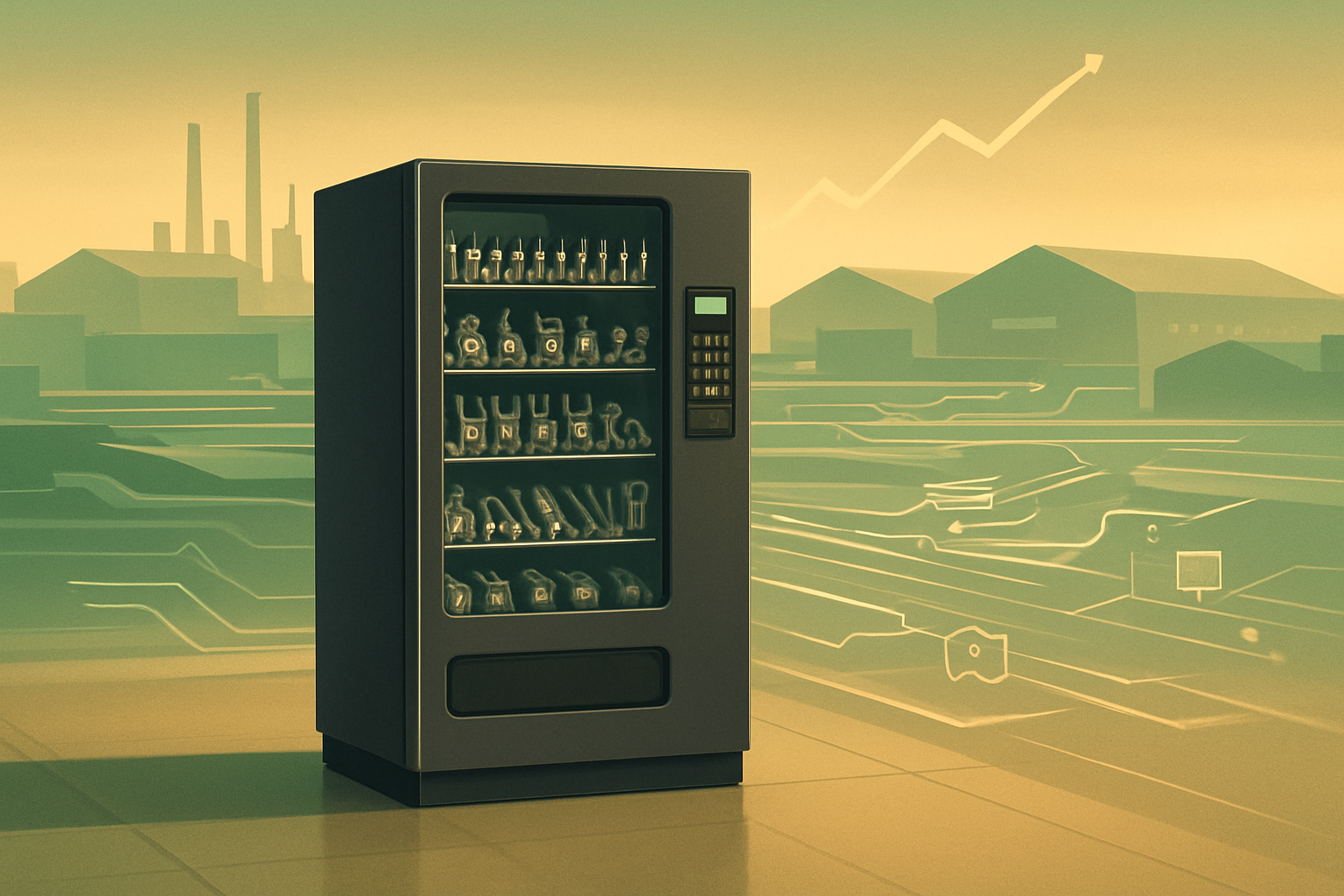
    Founded in 1967 by Bob Kierlin and four friends in Winona, Minnesota, Fastenal began with a modest $30,000 in capital and a single retail location. Kierlin’s original vision was a unique one: dispensing nuts and bolts via vending machines—a concept that was decades ahead of its time and initially failed due to the mechanical limitations of the 1960s.

    Instead, Fastenal grew through a traditional "branch" model, expanding aggressively across the United States. It went public in 1987, and by the 1990s, it had diversified its product line beyond fasteners into tools, safety supplies, and janitorial products. The company’s defining transformation, however, occurred in the late 2000s and early 2010s, when technology finally caught up to Kierlin’s original vending machine vision. This led to the launch of Fastenal Managed Inventory (FMI), a move that fundamentally altered the company's relationship with its customers.

    Business Model

    Fastenal’s business model is centered on the distribution of industrial and construction supplies, but its competitive advantage lies in how it delivers those products. The company generates revenue through three primary channels:

    1. FMI (Fastenal Managed Inventory): Utilizing industrial vending machines and "smart bins" at customer sites, Fastenal automates the replenishment process. By Q1 2026, FMI devices accounted for 44.9% of total revenue.
    2. Onsite Locations: These are dedicated mini-warehouses located directly inside a customer's facility, staffed by Fastenal employees. These locations represent approximately 40% of revenue and create high customer "stickiness."
    3. Traditional Branches and E-Commerce: While Fastenal is consolidating its physical branch footprint into larger regional hubs, its digital e-commerce presence (including EDI and web ordering) now accounts for over 61% of total net sales.

    The customer base is highly diverse, spanning manufacturing, non-residential construction, and government sectors, which helps insulate the company from sector-specific downturns.

    Stock Performance Overview

    Fastenal has long been a favorite of long-term "compounder" investors. As of mid-April 2026, the stock’s performance reflects a history of consistent growth:

    • 1-Year Performance: FAST shares are up approximately 29.9% over the past year. This growth was spurred by a 2-for-1 stock split in May 2025 and a strong manufacturing rebound in late 2025.
    • 5-Year Performance: Investors have seen a total return of roughly 118% (including dividends). The stock moved from a split-adjusted $25 in 2021 to nearly $50 today.
    • 10-Year Performance: Delivering a CAGR of approximately 37%, Fastenal has significantly outperformed the broader S&P 500 Industrials index, driven by its industry-leading operating margins and disciplined capital allocation.

    Financial Performance

    Fastenal’s Q1 2026 results, released on April 13, 2026, illustrate a company maintaining efficiency in a volatile macro environment.

    • Revenue: Q1 revenue hit $2.20 billion, a 12.4% year-over-year increase.
    • Earnings: EPS came in at $0.30, matching analyst expectations.
    • Margins: Operating margins remain healthy at 20.3%. However, gross margins have faced slight compression, currently at 44.6%, down from 45.1% a year ago. This is largely due to the "price/cost" lag—where the cost of goods rises due to inflation faster than Fastenal can adjust contract pricing for its largest customers.
    • Valuation: Trading at a P/E multiple of roughly 42x, Fastenal continues to command a premium valuation compared to its peers, reflecting its superior profitability profile.

    Leadership and Management

    The most significant development for Fastenal in 2026 is its leadership transition. Dan Florness, who has served as CEO since 2016 and presided over the company’s massive digital expansion, has announced his retirement effective July 16, 2026.

    Florness will be succeeded by Jeffery Watts, the current President and Chief Sales Officer. Watts is a 30-year veteran of the company, a move that signals "continuity of culture." The management team is highly regarded for its decentralized decision-making process, which empowers local managers to tailor service to their specific markets.

    Products, Services, and Innovations

    Fastenal’s product catalog includes hundreds of thousands of SKUs, but its real "product" is supply chain efficiency.

    • FMI Technology: The latest generation of FMI devices features AI-driven predictive analytics that alert customers to potential shortages before they occur.
    • Digital Footprint: Fastenal has transitioned away from being a "catalog company" to a "data company." By integrating its inventory systems directly with customer ERPs (Enterprise Resource Planning), it reduces procurement costs for clients.
    • Market Density Strategy: The company is currently investing in massive automated distribution centers, such as its new 900,000 sq. ft. Georgia hub, to increase fulfillment speed while lowering per-unit shipping costs.

    Competitive Landscape

    Fastenal operates in a highly fragmented market but competes primarily with two other public giants:

    1. W.W. Grainger, Inc. (NYSE: GWW): The revenue leader in the space. Grainger focuses on an "Endless Assortment" model via its Zoro and MonotaRO platforms. While Grainger has higher total sales, Fastenal typically boasts higher operating margins (20.3% vs. GWW's ~15.8%).
    2. MSC Industrial Direct Co. (NYSE: MSM): A specialist in metalworking. MSC has struggled more than Fastenal in the 2025-2026 period, facing headwinds in the manufacturing sector that have kept its margins in the high single digits.

    Fastenal’s "Onsite" model acts as a powerful moat, making it difficult for competitors to displace them once they are physically embedded in a customer’s factory.

    Industry and Market Trends

    The industrial distribution sector is undergoing three major shifts in 2026:

    • Digitalization: The shift from branch-based sales to e-commerce and automated vending is no longer optional. Fastenal’s 60%+ digital mix places it at the forefront of this trend.
    • Reshoring: The "Manufacturing Renaissance" in North America, driven by government incentives and a desire to de-risk supply chains from Asia, has created sustained demand for industrial supplies.
    • Sustainability: Large enterprise customers are increasingly requiring their suppliers to provide carbon-neutral shipping and "green" product alternatives.

    Risks and Challenges

    Despite its strengths, Fastenal faces several headwinds:

    • Margin Compression: The shift toward "Large Account" customers—while providing volume—carries lower gross margins. Managing this mix without eroding profitability is a constant challenge.
    • Inflationary Pressure: Ongoing tariffs and raw material costs create a "price-to-cost" gap that can squeeze margins in the short term.
    • Cyclicality: Fastenal is heavily exposed to the manufacturing and non-residential construction sectors. A broader macro slowdown or a housing market collapse could sharply impact fastener volumes.

    Opportunities and Catalysts

    • Market Density: By closing smaller branches and consolidating into larger hubs, Fastenal is significantly improving its logistics efficiency, which could lead to operating margin expansion in late 2026 and 2027.
    • International Expansion: While primarily a North American player, Fastenal has significant "white space" to grow its Onsite model in European and Asian manufacturing hubs.
    • M&A Potential: With a strong cash flow and a debt-to-equity ratio well below industry averages, Fastenal is well-positioned to acquire smaller, specialized distributors to add new product lines.

    Investor Sentiment and Analyst Coverage

    Wall Street remains cautious but respectful of Fastenal’s execution. The consensus rating currently sits at Hold, primarily due to valuation concerns. With a P/E near 42x, analysts at firms like Baird and Barclays suggest the stock is "priced for perfection." However, institutional ownership remains high, with major funds like Vanguard and BlackRock maintaining significant positions, drawn by Fastenal’s reliable dividend growth and high Return on Invested Capital (ROIC).

    Regulatory, Policy, and Geopolitical Factors

    Fastenal is sensitive to trade policy. As a significant importer of steel products, any changes in tariffs on Chinese or European steel directly impact its cost structure. Additionally, the company has ramped up its compliance with new Scope 3 carbon reporting requirements, as detailed in its 2025 ESG Report. The company’s "Silver Medal" rating from EcoVadis has made it a preferred supplier for ESG-conscious corporations.

    Conclusion

    Fastenal Company (Nasdaq: FAST) remains a premier industrial bellwether. Its transition from a traditional hardware distributor to a high-tech, "embedded" supply chain partner has allowed it to maintain industry-leading margins and a robust competitive moat. While the upcoming CEO transition in July 2026 and current margin pressures from inflation warrant a watchful eye, the company’s "Digital First" strategy and Onsite expansion provide a clear path for continued growth. For investors, Fastenal offers a blend of stability and technological innovation, provided they are willing to pay the premium price the market currently demands.


    This content is intended for informational purposes only and is not financial advice.
  • Consolidation and Continuity: A Deep Dive into Albertsons Companies, Inc. (NYSE: ACI) in 2026

    Consolidation and Continuity: A Deep Dive into Albertsons Companies, Inc. (NYSE: ACI) in 2026

    As of April 14, 2026, Albertsons Companies, Inc. (NYSE: ACI) finds itself at a defining crossroads in its nearly century-long history. After more than two years of regulatory scrutiny and legal battles, the company has emerged as a resilient, standalone force in the American grocery landscape following the collapse of its proposed merger with Kroger (NYSE: KR) in late 2024. While the failed deal initially left investors questioning the grocer's trajectory, the Albertsons of 2026 is no longer a company waiting to be acquired. Instead, it is a streamlined retail powerhouse leveraging high-margin private labels, a burgeoning retail media network, and a robust digital loyalty program to defend its territory against retail titans like Walmart (NYSE: WMT) and Amazon (NASDAQ: AMZN).

    Historical Background

    The story of Albertsons is a quintessential American saga of expansion and consolidation. Founded in 1939 by Joe Albertson in Boise, Idaho, the company began with a single store and a simple philosophy: "Give the customer the merchandise they want, at a price they can afford, with a smile." Over the decades, Albertsons grew through aggressive acquisitions, becoming a dominant player in the Western United States.

    The modern iteration of the company was forged through a complex series of transactions involving the private equity firm Cerberus Capital Management. In 2006, Cerberus led a consortium that acquired the "underperforming" assets of the then-divided Albertsons. After nearly a decade of restructuring and the transformative acquisition of Safeway in 2015, the company returned to the public markets via an IPO in June 2020. This set the stage for the 2022 merger announcement with Kroger, a deal that was ultimately blocked by federal regulators in December 2024, forcing Albertsons to chart its own course in the post-merger era.

    Business Model

    Albertsons operates a multi-brand, omni-channel retail strategy. As of 2026, the company maintains a footprint of over 2,200 stores across 34 states and the District of Columbia under 20 well-known banners, including Safeway, Vons, Jewel-Osco, Shaw's, and Acme.

    The revenue model is anchored by three primary pillars:

    1. Core Grocery & Fresh: High-frequency consumable sales that drive consistent foot traffic.
    2. Pharmacy & Health: A critical growth driver, particularly with the surge in GLP-1 weight-loss medications and professional healthcare services.
    3. Fuel and Convenience: Ancillary services that enhance the loyalty ecosystem.

    Central to its margin expansion strategy is its "Own Brands" portfolio—private labels like Lucerne, Signature Select, and O Organics—which offer higher margins than national brands while providing value to price-sensitive consumers.

    Stock Performance Overview

    Over the past decade, ACI’s stock performance has been a roller coaster, largely dictated by corporate events rather than purely organic growth.

    • 1-Year Performance: In the past 12 months (April 2025–April 2026), the stock has stabilized in the $17–$19 range, showing a modest recovery as the market priced in the company’s ability to survive as a standalone entity.
    • 5-Year Performance: Investors who held through the 2022 merger announcement saw significant volatility. The stock peaked near $35 during the height of merger speculation but fell sharply after the FTC’s block and the subsequent litigation with Kroger.
    • 10-Year Context: Compared to the broader S&P 500, ACI has underperformed, hampered by high debt levels early in its public life and the uncertainty of its long-term ownership structure. However, in 2026, its low Price-to-Earnings (P/E) ratio relative to peers has begun to attract value-oriented institutional buyers.

    Financial Performance

    For the fiscal year ended February 28, 2026, Albertsons reported revenue of $83.2 billion, a steady increase from the $79.2 billion seen in FY 2024. This growth was largely supported by a 14% increase in digital sales and a robust performance in the pharmacy segment.

    Key metrics from the latest filings include:

    • Adjusted EBITDA: $3.90 billion, slightly compressed due to rising labor costs and investments in automated fulfillment centers.
    • Net Income: $217 million (impacted by a $774 million pre-tax opioid settlement framework). Excluding one-time charges, the underlying profitability remains resilient.
    • Debt Profile: The company has managed its leverage effectively, with a Net Debt to Adjusted EBITDA ratio of 2.24x.
    • Valuation: ACI currently trades at a forward P/E of approximately 11x, a significant discount compared to Kroger (14x) and Walmart (25x).

    Leadership and Management

    The most significant shift in 2025 was the retirement of long-time CEO Vivek Sankaran. His successor, Susan Morris, took the helm on May 1, 2025. A 40-year veteran of the company who started as a store clerk, Morris is widely respected for her operational expertise and deep understanding of the "front-line" grocery business.

    Supporting Morris is Sharon McCollam, President and CFO, who joined in 2021 from Best Buy. McCollam is credited with the "productivity play"—an initiative to cut $1.5 billion in costs by 2025—which has been vital in funding the company's digital transformation. The leadership team’s focus has transitioned from merger integration to "Organic Growth 2.0," prioritizing customer retention and data-driven merchandising.

    Products, Services, and Innovations

    Innovation at Albertsons is currently focused on two areas: Retail Media and Fresh Content.

    • Albertsons Media Collective: This retail media network has become a high-margin profit center, allowing consumer packaged goods (CPG) companies to advertise directly to Albertsons’ 51 million loyalty members using anonymized first-party data.
    • Own Brands Evolution: In 2025, the company launched "Chef’s Counter," a premium ready-to-eat meal line, and expanded its "Overjoyed" snack brand. Private label penetration has reached 26.5%, with a long-term goal of 30%.
    • Digital Integration: The "Albertsons for U" loyalty program has seen record adoption, utilizing AI to offer personalized "deals of the week," which has significantly increased the average basket size for digital-first customers.

    Competitive Landscape

    Albertsons faces a "pincer movement" from different retail segments:

    • The Scale Dominators: Walmart (NYSE: WMT) continues to use its massive scale to keep prices low, holding roughly 21% of the U.S. grocery market.
    • The Efficiency Experts: Aldi is expanding rapidly in Albertsons' core territories, appealing to shoppers through extreme value and limited-assortment simplicity.
    • The Club Giants: Costco (NASDAQ: COST) remains a formidable threat, particularly in the suburban markets where Albertsons' Safeway and Vons banners are most prevalent.
    • The Merger Rival: Kroger (NYSE: KR), now a direct competitor again rather than a partner, is aggressively defending its 9% market share, leading to intensified regional price wars.

    Industry and Market Trends

    The grocery sector in 2026 is defined by "Value-Based Loyalty." While food-at-home inflation has moderated to roughly 3.1%, consumers remain highly price-conscious. This has led to a trend of "de-branding," where shoppers opt for private labels over national names.

    Additionally, the "Pharmacy as a Front Door" trend has accelerated. Grocers with robust pharmacy operations, like Albertsons, are seeing higher overall store traffic as consumers visit to pick up GLP-1 prescriptions or receive clinical services, often purchasing groceries in the same trip.

    Risks and Challenges

    • Labor Relations: Albertsons is a heavily unionized employer. Following a major strike in Colorado in late 2025, the company faces ongoing pressure to increase wages and benefits, which could erode operating margins.
    • Regulatory Scrutiny: Despite the failed merger, the FTC remains focused on "shrinkflation" and grocery pricing practices. New state-level nutrition labeling laws are also adding to compliance costs.
    • Digital Fulfillment Costs: While digital sales are growing, the cost of "last-mile" delivery remains high. Albertsons must continue to optimize its micro-fulfillment centers to ensure digital growth is profitable.
    • Debt Servicing: While leverage is manageable, any sustained high-interest-rate environment makes refinancing existing debt more expensive.

    Opportunities and Catalysts

    • Retail Media Expansion: If Albertsons can continue to scale its Media Collective, the high-margin revenue could provide a significant cushion for its lower-margin grocery business.
    • M&A Potential: Now that the large-scale Kroger merger is off the table, Albertsons may look to acquire smaller, regional specialty grocers to bolster its presence in high-growth markets like the Sunbelt.
    • Real Estate Value: Albertsons owns a significant portion of its real estate. Analysts frequently point to the "hidden value" of its property portfolio, which could be monetized through sale-leaseback transactions if the company needs a quick infusion of capital.

    Investor Sentiment and Analyst Coverage

    Wall Street sentiment as of early 2026 is cautiously bullish. Many analysts view ACI as a "deep value" play. The consensus rating is currently a "Buy," with a median 12-month price target of $23.00.

    Institutional investors, including several prominent hedge funds, have recently increased their positions, betting that the company’s focus on productivity and digital loyalty will eventually lead to a valuation re-rating. However, some remains skeptical, citing the competitive advantage of Walmart’s larger ecosystem and Amazon’s logistics prowess.

    Regulatory, Policy, and Geopolitical Factors

    The grocery industry is increasingly caught in the crosshairs of domestic policy. In 2026, trade policies and tariffs on imported produce and coffee have introduced volatility into supply chain costs. Furthermore, the "Farm to Table" regulatory movement has gained steam, with new federal guidelines aimed at reducing food waste and improving supply chain transparency. Albertsons has responded by investing in blockchain-based tracking for its "O Organics" line to stay ahead of these compliance requirements.

    Conclusion

    Albertsons Companies, Inc. enters the mid-point of 2026 as a survivor. The failure of the Kroger merger, once seen as a potential disaster, has instead forced the company to refine its standalone strategy with surgical precision. Under the leadership of Susan Morris, Albertsons is doubling down on its strengths: regional density, high-quality private labels, and a sophisticated digital media business.

    For investors, ACI represents a classic value proposition. It is a cash-flow-positive business trading at a discount to its peers, with a clear path toward margin improvement through technological investment. While risks regarding labor costs and intense competition remain, the Albertsons of 2026 is a leaner, more focused entity than it was four years ago. The key for investors will be watching whether the company can maintain its "Customers for Life" momentum without the safety net of a larger partner.


    This content is intended for informational purposes only and is not financial advice.

  • The Hybrid Survivor: A Comprehensive Research Feature on CarMax, Inc. (KMX)

    The Hybrid Survivor: A Comprehensive Research Feature on CarMax, Inc. (KMX)

    As of April 14, 2026, the used automotive market is witnessing a profound transformation. At the center of this evolution stands CarMax, Inc. (NYSE: KMX), a company that redefined the car-buying experience three decades ago and is now attempting to do so again. After a tumultuous period characterized by pandemic-era inventory shortages, a subsequent "affordability crisis" fueled by high interest rates, and the rapid rise of digital-only competitors, CarMax is positioning itself as the ultimate hybrid survivor. This feature explores the company’s strategic pivot, its technological arsenal, and its current standing in a high-stakes retail landscape.

    Historical Background

    The story of CarMax began not in a garage, but in the boardroom of the consumer electronics giant Circuit City. In 1993, the retailer launched "Project X," an experimental venture aimed at bringing "big-box" transparency and scale to the fragmented, often-disreputable used car trade. The concept was revolutionary: no-haggle pricing, a massive selection of "certified" vehicles, and a customer-centric sales process.

    By the time CarMax was spun off as an independent public company in October 2002, it had already begun to disrupt the industry. Over the following two decades, it expanded from its Richmond, Virginia roots into a nationwide network of over 240 superstores. The company survived the 2008 financial crisis by leaning on its conservative lending arm, CarMax Auto Finance (CAF), and later capitalized on the 2020-2021 boom when used car prices hit historic highs.

    Business Model

    CarMax operates a vertically integrated, three-pronged business model that allows it to capture profit at multiple stages of the vehicle lifecycle:

    1. Retail Sales: This is the core engine, focusing on high-quality vehicles aged 0–10 years. CarMax differentiates itself through a 125+ point inspection process and a 30-day money-back guarantee.
    2. Wholesale Auctions: CarMax is one of the largest wholesale auction operators in the U.S. Vehicles that do not meet its retail standards—often older, high-mileage trade-ins—are sold to other dealers through its proprietary auction platform. This ensures a 100% "buy-in" rate for customer trade-ins, providing a competitive advantage in sourcing.
    3. CarMax Auto Finance (CAF): The company’s captive finance arm provides loans to roughly 40-45% of its retail customers. CAF is a high-margin segment that generates significant interest income and service fees, though it exposes the company to credit risk during economic downturns.

    Stock Performance Overview

    Over the last decade, KMX has been a barometer for the health of the American middle class.

    • 10-Year View: Since 2016, the stock has been a story of extreme cycles. It climbed from the mid-$50s to an all-time high of $154.85 in late 2021 as used vehicle demand exploded.
    • 5-Year View: The last five years have been more challenging. After the 2021 peak, the stock lost nearly 65% of its value by late 2022 as interest rates rose, eventually settling into a volatile recovery range.
    • 1-Year View: As of April 2026, KMX has stabilized in the $45–$55 range. The market is currently rewarding the company’s recent cost-cutting measures and its successful defense of market share against digital-native rivals like Carvana Co. (NYSE: CVNA).

    Financial Performance

    In its most recent fiscal reporting, CarMax showed signs of a "volume recovery" after two years of stagnation. Net revenue for the trailing twelve months stands near $27 billion. While unit sales were pressured in 2024 and 2025 by high borrowing costs, the company’s disciplined pricing has kept retail gross profit per unit (GPU) consistently above $2,200.

    Crucially, the "CAF Provision for Loan Losses" has begun to normalize as the 2026 economy stabilizes. The company’s debt-to-equity ratio remains manageable compared to more leveraged competitors, and a recent mandate to slash $300 million in annual SG&A (Selling, General, and Administrative) expenses has improved operating margins to 4.2%, up from a 2024 low of 3.1%.

    Leadership and Management

    2026 marks a new era for CarMax leadership. Following the long tenure of Bill Nash, the company recently appointed Keith Barr as CEO. Barr, formerly of the hospitality and tech sectors, was brought in with a specific mandate: accelerate the digital-first "omnichannel" experience and modernize the logistics network.

    The board of directors also underwent a significant refresh in early 2026, adding automotive and logistics veterans to satisfy activist investors, most notably Starboard Value, which took a stake in the company citing a need for better operational efficiency and "dynamic pricing" strategies.

    Products, Services, and Innovations

    Innovation at CarMax is currently focused on removing "friction" from the car-buying journey:

    • Skye 2.0: An AI-powered virtual assistant that handles up to 70% of the initial customer appraisal and financing paperwork through natural language processing.
    • Rhodes Co-pilot: An internal LLM tool used by sales associates to instantly navigate complex state-by-state title regulations and vehicle history reports.
    • EV Battery Scoring: Through a strategic partnership with Recurrent, CarMax now provides "Battery Health Scores" for all used electric vehicles, addressing the primary concern of used EV buyers: range degradation.
    • Omnichannel Integration: Customers can now start a purchase online, choose home delivery, or opt for a "seamless handoff" to a store associate for a test drive, a hybrid model that Carvana and traditional dealers have struggled to replicate perfectly at scale.

    Competitive Landscape

    The used car market remains a battleground between three distinct models:

    • The Digital Disruptor: Carvana (NYSE: CVNA) offers lower overhead but has struggled with debt and title processing issues. CarMax’s physical footprint gives it a "trust" advantage and a more reliable sourcing channel for trade-ins.
    • The Franchise Powerhouse: AutoNation, Inc. (NYSE: AN) benefits from high-margin service/parts and new-car manufacturer incentives. CarMax’s exclusive focus on used cars allows for greater inventory depth but lacks the "cushion" of a service-heavy business model.
    • The Independents: Local "mom-and-pop" dealers are losing share rapidly as they cannot compete with the data-driven pricing and nationwide logistics of a giant like CarMax.

    Industry and Market Trends

    The "Used Car Recession" of 2023-2025 appears to have bottomed out. Key trends for 2026 include:

    • The EV Surge: Used EVs are now a mainstream category. CarMax reports that the Tesla Model 3 and Ford Mustang Mach-E are among its fastest-turning units.
    • Affordability Normalization: As the Federal Reserve signals potential rate cuts later in 2026, the cost of financing—which hit 11% for some used car loans in 2024—is finally beginning to retreat.
    • Inventory Sourcing: With new car production fully recovered, the supply of 3-year-old "off-lease" vehicles is increasing, providing CarMax with the high-quality inventory it needs to drive retail volume.

    Risks and Challenges

    Despite the recovery, several risks remain:

    • Credit Quality: A significant portion of CarMax’s value is tied to its loan book. If the 2026 labor market softens, an uptick in defaults at CAF could erase retail profits.
    • Depreciation Spikes: Used car prices are still high relative to historical norms. A sudden "crash" in vehicle values would leave CarMax holding expensive inventory that it must sell at a loss.
    • Activist Pressure: While Starboard Value has pushed for improvements, their presence can sometimes lead to short-termism, such as excessive share buybacks at the expense of long-term R&D.

    Opportunities and Catalysts

    Investors are closely watching several potential catalysts:

    • Logistics Modernization: The recent investment in Carpool Logistics is expected to reduce CarMax’s vehicle transport costs by 15% by 2027.
    • Market Share Consolidation: As smaller dealers struggle with compliance costs, CarMax is well-positioned to acquire smaller regional players or simply capture their customers.
    • Proprietary Data Monetization: Through its acquisition of Edmunds, CarMax sits on a goldmine of consumer sentiment data that it has yet to fully monetize through high-margin advertising or data services.

    Investor Sentiment and Analyst Coverage

    Wall Street is currently "Cautiously Bullish" on KMX. Analysts from major firms like Goldman Sachs and JPMorgan recently upgraded the stock to "Buy" from "Hold," citing the aggressive cost-cutting under CEO Keith Barr. Institutional ownership remains high, with giants like BlackRock and The Vanguard Group holding significant stakes, though the retail sentiment remains split between those wary of the automotive cycle and those betting on CarMax’s technological moat.

    Regulatory, Policy, and Geopolitical Factors

    The primary regulatory headwind is the FTC’s "CARS Rule," which targets "junk fees" and "bait-and-switch" pricing. Paradoxically, this is a net positive for CarMax. Because its "no-haggle" model is already transparent, it faces far lower compliance costs than traditional "dealership-as-a-service" models, potentially acting as a regulatory barrier to entry for smaller competitors.

    Conclusion

    CarMax (NYSE: KMX) is no longer just a used car dealer; it is a data and logistics company that happens to sell cars. In April 2026, it stands as a battle-hardened survivor of one of the most volatile periods in automotive history. While the stock remains sensitive to interest rates and consumer credit health, its "omnichannel" platform and revamped leadership suggest a company ready to regain its crown as the undisputed king of the used car market. For investors, the play is a bet on the continued professionalization of the automotive trade and the power of a superior balance sheet in a high-interest-rate world.


    This content is intended for informational purposes only and is not financial advice.

  • The New J&J: A 2026 Deep Dive into the Global Healthcare Titan

    The New J&J: A 2026 Deep Dive into the Global Healthcare Titan

    As of April 14, 2026, Johnson & Johnson (NYSE: JNJ) stands as a radically different entity than it was only three years ago. Following the successful spin-off of its consumer health division, Kenvue, in 2023, the New Brunswick-based giant has shed its "band-aid and baby powder" image to emerge as a high-octane, pure-play healthcare powerhouse. Today, the company is a titan of two halves: Innovative Medicine and MedTech.

    J&J is currently in focus as it navigates the aftermath of its most significant patent cliff—the loss of exclusivity for the blockbuster drug Stelara—while simultaneously attempting to settle a multi-decade legal battle over its legacy talc products. With a market capitalization surging toward new heights and a portfolio increasingly dominated by robotics, cell therapies, and cardiovascular breakthroughs, J&J represents a critical case study in corporate evolution and institutional resilience.

    Historical Background

    Founded in 1886 by brothers Robert Wood Johnson, James Wood Johnson, and Edward Mead Johnson, the company began with a simple but revolutionary premise: antiseptic surgical dressings. Inspired by Joseph Lister’s theories on germ theory, the Johnson brothers pioneered the first commercial sterile surgical products, effectively laying the foundation for modern surgery.

    Over the next century, J&J became the ultimate healthcare conglomerate. Key milestones included the introduction of the first aid kit in 1888, the launch of Johnson’s Baby Powder in 1894, and the mass production of Band-Aid brand adhesive bandages in 1921. Perhaps its most defining historical moment occurred in 1982 during the Tylenol crisis. After several people died from cyanide-laced capsules, J&J’s swift, transparent recall and introduction of tamper-resistant packaging became the gold standard for corporate crisis management and ethics.

    The 21st century has been defined by a pivot toward high-margin science. The acquisition of Janssen Pharmaceutica in 1961 had already set the stage for J&J to become a global leader in pharmaceuticals, but the 2023 separation of Kenvue marked the end of the conglomerate era, focusing the company’s capital entirely on medical innovation.

    Business Model

    The "New J&J" operates through two primary segments, having divested its consumer health business to unlock higher growth and better margins:

    1. Innovative Medicine (formerly Janssen): This segment focuses on six therapeutic areas: Oncology, Immunology, Neuroscience, Cardiovascular & Metabolism, Pulmonary Hypertension, and Infectious Diseases. It accounts for approximately 65% of total revenue, characterized by high R&D intensity and significant intellectual property protection.
    2. MedTech: This division provides a broad range of products used in the surgical, orthopaedic, and interventional fields. Following the acquisitions of Abiomed and Shockwave Medical, J&J has become a global leader in cardiovascular care. MedTech contributes roughly 35% of revenue and offers more stable, recurring cash flows compared to the hit-driven nature of drug development.

    The company’s customer base spans hospitals, retail pharmacies, and government health programs globally, with a strategic focus on "precision medicine" and robotic-assisted surgery.

    Stock Performance Overview

    Over the past decade, J&J has transitioned from a steady, low-beta dividend play to a growth-oriented healthcare leader.

    • 1-Year Performance: As of April 2026, J&J has returned approximately 58.8% over the past 12 months, significantly outperforming the S&P 500. This surge was driven by the successful navigation of the Stelara patent cliff and the integration of the Shockwave Medical acquisition.
    • 5-Year Performance: The stock has delivered a cumulative annualized return of roughly 11.5%, reflecting the volatility of the COVID-19 era followed by the value-unlocking Kenvue spin-off.
    • 10-Year Performance: With a 10-year annualized return of 11.4%, J&J remains a cornerstone for long-term investors, further bolstered by its status as a "Dividend King," having increased its dividend for over 60 consecutive years.

    As of today, April 14, 2026, the stock trades in the $238–$242 range, testing all-time highs as the market rewards its improved margin profile.

    Financial Performance

    Johnson & Johnson’s Fiscal Year 2025 was a record-breaking period. The company reported total revenue of $94.2 billion, a 6.0% year-over-year increase. Despite the anticipated revenue erosion from Stelara biosimilars, J&J managed to exceed expectations through aggressive growth in its oncology portfolio.

    • Adjusted EPS: $10.79 for FY 2025.
    • Margins: Operating margins have expanded significantly post-spin-off, now sitting north of 30% as the lower-margin consumer business is no longer on the books.
    • Balance Sheet: J&J maintains one of the strongest balance sheets in the world, being one of only two U.S. companies (alongside Microsoft) to hold a AAA credit rating from S&P Global.
    • 2026 Guidance: Management has projected 2026 revenue to exceed the $100 billion milestone for the first time in the company's history.

    Leadership and Management

    Joaquin Duato assumed the role of CEO in 2022 and has been the primary architect of the "New J&J." His tenure has been characterized by aggressive M&A and a shift toward digital integration in MedTech. Under his leadership, the company has successfully integrated over $30 billion in acquisitions while maintaining a disciplined capital allocation strategy.

    The leadership team, including CFO Joseph Wolk, has emphasized a "two-pronged" growth strategy: maximizing the lifecycle of existing blockbusters while investing heavily in cell and gene therapies. Governance remains a point of strength, though the board continues to face pressure from shareholders to finalize the legacy talc litigation that has lingered for over a decade.

    Products, Services, and Innovations

    Innovation is the lifeblood of J&J’s current valuation.

    • In Medicine: Darzalex (multiple myeloma) and Carvykti (cell therapy) are the new anchors of the oncology portfolio. Tremfya has emerged as a powerhouse in immunology, growing 40% in 2025 to reach $5.15 billion in sales.
    • In MedTech: The Ottava robotic surgical system is currently J&J's answer to Intuitive Surgical (ISRG). Furthermore, the integration of Shockwave Medical’s Intravascular Lithotripsy (IVL) technology has transformed J&J into a dominant force in treating calcified coronary artery disease.
    • R&D Pipeline: J&J currently has over 90 programs in various stages of clinical development, with a specific focus on bladder cancer and neurodegenerative diseases.

    Competitive Landscape

    J&J competes on two very different fronts:

    • Pharmaceutical Rivals: In the Innovative Medicine space, J&J faces stiff competition from Merck & Co. (MRK) in oncology, Pfizer (PFE) in immunology, and Roche (RHHBY) in diagnostics and biotech. J&J’s edge lies in its massive scale and its ability to bundle pharmaceutical solutions with medical devices.
    • MedTech Rivals: In the device space, its primary competitors are Medtronic (MDT), Stryker (SYK), and Boston Scientific (BSX). J&J’s recent acquisitions of Abiomed and Shockwave have given it a technological lead in the high-growth cardiovascular intervention market.

    Industry and Market Trends

    The healthcare sector in 2026 is being shaped by three macro trends:

    1. AI-Driven Drug Discovery: J&J is using generative AI to shave years off the clinical trial process, particularly in identifying small-molecule candidates for rare diseases.
    2. Aging Global Population: The demographic shift toward older populations in the U.S., Europe, and China continues to drive volume for J&J’s hip/knee replacements and cardiovascular pumps.
    3. The Shift to Outpatient Care: MedTech is increasingly moving toward minimally invasive procedures that can be performed in ambulatory surgery centers (ASCs), a trend J&J has capitalized on through its digital surgery platforms.

    Risks and Challenges

    Despite its financial strength, J&J is not without significant headwinds:

    • Talc Litigation: As of April 2026, nearly 68,000 claims remain pending. While J&J has proposed a $9 billion settlement, recent billion-dollar verdicts in Maryland have kept the "talc overhang" alive, preventing the stock from reaching a full valuation premium.
    • Drug Pricing Legislation: The Inflation Reduction Act (IRA) in the U.S. began impacting pricing for Stelara and Xarelto in January 2026. This "Maximum Fair Price" mandate limits the long-tail profitability of successful drugs.
    • Patent Erosion: While the 2025 Stelara cliff was managed, the company must constantly replace expiring patents with new blockbusters, a high-stakes "treadmill" that requires billions in R&D.

    Opportunities and Catalysts

    • MedTech Spin-off (Orthopaedics): Rumors persist that J&J may spin off its slower-growth Orthopaedics business by late 2026 to become an even purer play on high-growth cardiovascular and oncology technologies.
    • Immunology Pipeline: Data readouts for new indications for Tremfya and Ponesimod could provide near-term catalysts for the stock.
    • M&A Potential: With billions in cash and a AAA rating, J&J is widely expected to target a major biotech acquisition in the neurology space before the end of the year.

    Investor Sentiment and Analyst Coverage

    Wall Street remains broadly optimistic. The current analyst consensus is a "Moderate Buy." Bullish analysts, such as those at Morgan Stanley and Citigroup, have set price targets as high as $285, citing the company's successful "climb" over the Stelara cliff.

    Institutional ownership remains high, with Vanguard and BlackRock holding significant stakes. Retail sentiment is largely driven by J&J’s dividend reliability, though younger investors are increasingly drawn to the company’s new identity as a high-tech medical innovator.

    Regulatory, Policy, and Geopolitical Factors

    The geopolitical landscape of 2026 has introduced new complexities. Under a shifting U.S. political administration, J&J recently agreed to domestic price concessions on several key drugs in exchange for tariff exemptions on medical device components imported from Asia.

    Furthermore, the company is navigating a tightening regulatory environment in the European Union regarding medical device data privacy. Domestically, the FDA’s increased focus on accelerated approval pathways for cell therapies has been a tailwind for J&J’s oncology pipeline.

    Conclusion

    Johnson & Johnson enters the mid-2020s as a leaner, more focused, and arguably more dangerous competitor in the global healthcare market. By divesting its consumer roots and doubling down on the intersection of medicine and technology, it has successfully navigated a period of intense structural change.

    For investors, J&J remains the quintessential "defensive growth" stock. While the shadow of talc litigation remains a persistent risk, the company’s record-breaking revenue guidance and market-leading positions in oncology and cardiovascular care suggest that the "New J&J" is well-positioned for the next decade of medical advancement. Investors should watch the progress of the talc settlement and the integration of the MedTech pipeline as key indicators of the company's trajectory through 2027.


    This content is intended for informational purposes only and is not financial advice.

  • The Global Financial Operating System: A Research Deep Dive into BlackRock (NYSE: BLK)

    The Global Financial Operating System: A Research Deep Dive into BlackRock (NYSE: BLK)

    Today’s Date: April 14, 2026

    Introduction

    In the global theater of high finance, few names command as much gravity as BlackRock, Inc. (NYSE: BLK). As of early 2026, the firm has transcended its status as a mere investment house to become an essential pillar of global economic infrastructure. Managing a staggering $14.04 trillion in assets, BlackRock is the largest asset manager in the world, serving as a fiduciary for millions of retirees, sovereign wealth funds, and institutional investors.

    The company is currently in sharp focus due to its aggressive pivot into private markets and infrastructure—a strategic "second act" that seeks to pair its dominance in passive index funds with the high-margin world of private equity and credit. As interest rates find a new equilibrium and global governments grapple with massive infrastructure deficits, BlackRock has positioned itself as the primary conduit between private capital and the physical world.

    Historical Background

    BlackRock’s journey began in 1988 when eight founders, including Larry Fink, Rob Kapito, and Susan Wagner, sought to build an asset management firm focused on risk management. Initially operating under the umbrella of The Blackstone Group, the firm eventually spun off in 1994 due to strategic disagreements between Fink and Blackstone co-founder Stephen Schwarzman—a split that remains one of the most legendary "what-ifs" in Wall Street history.

    The firm’s early growth was defined by its proprietary risk-analytics platform, Aladdin (Asset, Liability, Debt, and Derivative Investment Network). However, the truly transformative moment came in 2009, amidst the wreckage of the global financial crisis, when BlackRock acquired Barclays Global Investors (BGI). This deal included iShares, the exchange-traded fund (ETF) business that would go on to spark a multi-decade revolution in low-cost, passive investing. From that point forward, BlackRock’s trajectory was vertical, evolving from a bond-focused shop into a diversified global titan.

    Business Model

    BlackRock operates a "whole portfolio" business model designed to capture revenue across the entire spectrum of investing. Its revenue streams are primarily divided into:

    • Investment Advisory and Administration Fees: The lion’s share of revenue comes from managing assets for clients. This includes the massive iShares ETF suite, retail mutual funds, and institutional mandates.
    • Technology Services: Driven by the Aladdin platform, this segment provides portfolio management, risk analytics, and operational support to other financial institutions. By 2026, Aladdin has become the industry standard, essentially acting as the "operating system" for over $25 trillion in global assets.
    • Private Markets & Performance Fees: Following recent multi-billion dollar acquisitions, BlackRock has significantly increased its exposure to "alternatives." This includes private equity, private credit, and infrastructure, where the firm earns higher management fees and performance-based "carried interest."

    Stock Performance Overview

    The performance of BLK stock over the last decade reflects its transition from a cyclical financial stock to a secular growth story.

    • 1-Year Performance: Over the past twelve months, the stock has outperformed the broader S&P 500, buoyed by the successful integration of Global Infrastructure Partners (GIP).
    • 5-Year Performance: Between 2021 and 2026, the stock weathered the high-interest-rate environment of 2023-2024 better than many peers, thanks to its diversified revenue mix and the resilience of its technology segment.
    • 10-Year Performance: Long-term shareholders have seen substantial capital appreciation, often outstripping traditional banking stocks. The stock’s history of consistent dividend growth and aggressive share repurchases has solidified its status as a "blue-chip" financial holding.

    Financial Performance

    In its fiscal year ending December 2025, BlackRock demonstrated the "power of scale."

    • Assets Under Management (AUM): Reached a record $14.04 trillion.
    • Revenue: Reported at $24.2 billion for 2025, a 19% year-over-year increase.
    • Operating Margin: The firm maintained an industry-leading adjusted operating margin of 44.1%.
    • Earnings Per Share (EPS): Adjusted EPS for 2025 was $48.09.
      A critical metric for 2026 is the "fee yield premium." While passive ETFs have seen fee compression, BlackRock’s new inflows in late 2025 were increasingly directed toward private market strategies, which carry fees significantly higher than traditional index products.

    Leadership and Management

    Larry Fink, Chairman and CEO, remains the face of the firm. Known for his influential annual letters to CEOs, Fink has navigated the firm through numerous political and economic storms. Alongside him, President Rob Kapito continues to oversee the firm’s operational core.

    By 2026, succession planning has become a primary topic for the Board of Directors. The firm has cultivated a deep bench of talent, emphasizing a "one BlackRock" culture that prioritizes cross-departmental collaboration. Governance-wise, the firm has refined its "stewardship" approach, moving away from prescriptive ESG (Environmental, Social, and Governance) mandates toward a philosophy of "investor choice," allowing clients to vote their own proxies.

    Products, Services, and Innovations

    Innovation at BlackRock is currently focused on three pillars:

    1. Infrastructure: The $12.5 billion acquisition of GIP has allowed BlackRock to launch massive funds focused on data centers, energy storage, and transport.
    2. Private Credit: Through the July 2025 acquisition of HPS Investment Partners, BlackRock has become a dominant force in non-bank lending, providing bespoke financing to corporations.
    3. The Digitalization of Alts: The acquisition of Preqin in 2025 has allowed BlackRock to integrate private market data directly into Aladdin. This "common language" for private assets is seen as a major competitive edge, making private equity as transparent and accessible as public stocks.

    Competitive Landscape

    BlackRock competes on multiple fronts:

    • Passive Rivals: Vanguard and State Street remain the primary challengers in the ETF and index space. While Vanguard competes on price, BlackRock competes on breadth and liquidity.
    • Private Market Rivals: Firms like Blackstone (BX), Apollo Global Management (APO), and KKR have historically dominated alternatives. BlackRock’s "scale" advantage is its ability to offer these private products to its existing $14 trillion client base.
    • Tech Rivals: While Aladdin has no direct peer, specialized fintech firms and cloud providers are increasingly looking to chip away at specific niches of the wealth management value chain.

    Industry and Market Trends

    The asset management industry is currently being reshaped by three macro trends:

    • The "Golden Age of Infrastructure": Aging grids in the West and modernization in the East require trillions in capital that governments cannot afford alone, opening the door for BlackRock.
    • AI Infrastructure: The explosion of generative AI has created a desperate need for data centers and power generation—projects that require the exact type of long-term, private capital BlackRock manages.
    • Passive-to-Active Pivot: After a decade of index dominance, investors are returning to active strategies—specifically in private credit—to find yield in a post-low-rate world.

    Risks and Challenges

    Despite its dominance, BlackRock faces significant hurdles:

    • Integration Risk: Merging giants like GIP and HPS into the BlackRock culture is a complex undertaking. Any friction could lead to talent departures.
    • Political Polarization: The firm has been caught in the crosshairs of "anti-woke" legislation in several U.S. states, leading to some divestments from state pension funds.
    • Regulatory Scrutiny: As "the largest of the Big Three," BlackRock is a constant target for antitrust regulators concerned about common ownership and the firm’s influence over corporate boards.

    Opportunities and Catalysts

    • Retirement Solutions: The launch of "LifePath Paycheck," which integrates lifetime income into 401(k) plans, is a potential multi-trillion dollar opportunity as Baby Boomers seek guaranteed income.
    • Tokenization: BlackRock is at the forefront of financial "on-chain" innovation, with projects like the BUIDL fund signaling a future where fund interests are traded on blockchain rails for instant settlement.
    • M&A Potential: With a fortress balance sheet, BlackRock is likely to continue acquiring specialized data and alternative investment firms to fill any gaps in its platform.

    Investor Sentiment and Analyst Coverage

    Wall Street remains broadly optimistic. As of April 2026, the consensus rating is a "Strong Buy." Analysts point to the firm's transition into a "high-growth tech and alts hybrid" as a reason for its premium valuation.

    • Price Targets: The average analyst price target sits near $1,247, with some bulls projecting the stock to reach $1,460 within the next 18 months.
    • Institutional Sentiment: Large pension funds and sovereign wealth funds continue to view BlackRock as the "safe" choice for large-scale capital deployment.

    Regulatory, Policy, and Geopolitical Factors

    BlackRock has pivoted its narrative from "ESG" to "Energy Pragmatism." This shift aligns the firm with government priorities on energy security and national resilience. In a world defined by geopolitical fragmentation, BlackRock is positioning itself as a partner to sovereign states, helping fund national transitions in energy, defense-adjacent tech, and digital infrastructure. However, the firm must balance its significant interests in China with an increasingly hawkish U.S. regulatory environment.

    Conclusion

    As we navigate the second quarter of 2026, BlackRock, Inc. stands as a unique entity in financial history. It is no longer just an asset manager; it is a global data provider, an infrastructure developer, and a primary provider of private credit.

    For investors, the bull case rests on the firm's ability to monetize its $14 trillion platform by shifting clients into higher-margin private assets while continuing to dominate the technology layer of the industry through Aladdin. While political and regulatory risks remain the primary headwinds, BlackRock’s scale and strategic foresight have created a competitive moat that appears wider than ever. Investors should closely monitor the integration of its recent private market acquisitions, as these will likely determine the stock's trajectory for the remainder of the decade.


    This content is intended for informational purposes only and is not financial advice.

  • Citigroup Inc. (NYSE: C): The Anatomy of a 2026 Turnaround

    Citigroup Inc. (NYSE: C): The Anatomy of a 2026 Turnaround

    Today’s Date: April 14, 2026

    Introduction

    For nearly two decades, Citigroup Inc. (NYSE: C) was the "problem child" of the American banking sector—a sprawling, inefficient conglomerate that seemed perpetually stuck in a cycle of restructuring. However, as of early 2026, the narrative surrounding the nation’s fourth-largest bank has shifted dramatically. Under the leadership of CEO Jane Fraser, the firm has emerged from its "Project Bora Bora" restructuring as a leaner, more focused global entity. With its most recent quarterly results released today, Citi has finally begun to close the valuation gap with its peers, signaling that the bank’s long-promised "turnaround" is no longer just a management talking point, but a reflected reality in its financial statements.

    Historical Background

    Citigroup’s modern identity was forged in the 1998 merger of Citicorp and Travelers Group, a $140 billion deal that essentially broke the Glass-Steagall Act and birthed the era of the "financial supermarket." However, this ambition proved to be its Achilles' heel during the 2008 financial crisis. Unlike its rivals, Citi required multiple government bailouts and a massive $45 billion lifeline to survive.

    The decade following the crisis was marked by a "lost period" of leadership transition and fragmented strategy. While JPMorgan Chase & Co. (NYSE: JPM) and Bank of America Corp. (NYSE: BAC) consolidated their dominance, Citigroup remained burdened by a complex matrix of regional management and a retail footprint that lacked scale in many international markets. It wasn't until Jane Fraser took the helm in 2021—as the first woman to lead a major Wall Street bank—that the company aggressively pursued the "simplification" that had eluded its predecessors.

    Business Model

    As of 2026, Citigroup has shed its identity as a global retail generalist to become a premier institutional and wealth management specialist. Its business model is now organized around five interconnected core pillars:

    1. Services (Treasury and Trade Solutions & Securities Services): The "crown jewel" of the bank, providing the plumbing for global trade and cash management for 90% of Fortune 500 companies.
    2. Markets: A global powerhouse in fixed income, currencies, and equities trading.
    3. Banking: Focused on investment banking and corporate lending, leveraging Citi's global network.
    4. Wealth: Integrating the Private Bank and Global Wealth management into a single unit targeting ultra-high-net-worth individuals.
    5. U.S. Personal Banking: A simplified domestic retail business dominated by its market-leading credit card franchise.

    By exiting 14 international consumer markets, including the highly publicized wind-down and sale of Banamex in Mexico, Citi has narrowed its focus to where it has a competitive "right to win."

    Stock Performance Overview

    Citigroup’s stock has staged a remarkable recovery over the last three years.

    • 1-Year Performance: The stock is up 28%, significantly outperforming the KBW Bank Index as the market priced in the completion of its headcount reductions and the return of capital via buybacks.
    • 5-Year Performance: Since the lows of the early 2020s, the stock has risen roughly 65%. While it still lags the explosive growth of some fintech rivals, it has stabilized as a "value" play that is finally delivering on earnings.
    • 10-Year Performance: Looking back to 2016, the stock has provided a total return (including dividends) of approximately 95%. While this still underperforms JPMorgan, the "catch-up" trade has been one of the most profitable themes for bank investors in 2024 and 2025.

    Financial Performance

    In the Q1 2026 earnings report released this morning, Citigroup reported a Net Income of $4.2 billion on revenue of $21.5 billion. Most crucially, the bank’s Return on Tangible Common Equity (RoTCE) hit 13.1%, surpassing its much-debated 2026 target of 11-12%.

    The bank’s efficiency ratio—a key metric of cost management—has improved to 58%, down from the mid-60s during the height of its restructuring in 2023. This improvement is largely attributed to the successful elimination of 20,000 roles and 13 layers of management. Currently, Citi trades at a Price-to-Tangible Book Value (P/TBV) of 0.95x, a significant re-rating from the 0.5x levels seen just three years ago.

    Leadership and Management

    CEO Jane Fraser has earned widespread acclaim for her "ruthless simplification" of the bank. Supported by CFO Mark Mason, the leadership team has moved away from the "empire building" of the past to a culture of accountability. Fraser’s strategy, internally dubbed "Project Bora Bora," focused on breaking down the silos that had plagued the bank for decades.

    The current board of directors has also been refreshed, with a heavier emphasis on technology and risk management expertise, a direct response to the regulatory consent orders that have shadowed the bank since 2020.

    Products, Services, and Innovations

    Citi’s competitive edge lies in its Treasury and Trade Solutions (TTS) platform. In 2025, the bank launched "Citi Token Services," utilizing blockchain technology to provide 24/7 programmable cross-border payments for institutional clients. This innovation has allowed Citi to defend its moat in global liquidity management against both traditional rivals and emerging fintech players.

    In the Wealth segment, the "Citi Global Wealth" platform has successfully integrated private banking with self-directed investing, aiming to capture the "intergenerational wealth transfer" occurring among its corporate executive clients.

    Competitive Landscape

    Citigroup occupies a unique niche. While it lacks the massive U.S. retail branch network of Bank of America or JPMorgan, its global footprint in 160 countries is unmatched.

    • Vs. JPMorgan: JPM remains the "gold standard," but Citi's Services revenue growth has recently outpaced JPM’s corporate bank.
    • Vs. HSBC Holdings (NYSE: HSBC): In the global institutional space, Citi has successfully pivoted away from retail, whereas HSBC remains more heavily exposed to Asian consumer markets and geopolitical tensions in China.
    • Vs. Fintech: Citi has chosen to partner rather than fight, integrating its banking-as-a-service (BaaS) APIs into major corporate ERP systems.

    Industry and Market Trends

    The banking sector in 2026 is navigating a "higher-for-longer" interest rate environment, with the Federal Reserve maintaining rates between 3.25% and 3.75%. This has stabilized Net Interest Margins (NIM) but has also increased the cost of deposits.

    The industry is also witnessing a "flight to quality" in the wake of the mid-2020s regional bank volatility. Large, Systemically Important Financial Institutions (G-SIBs) like Citi have benefited from a consolidated deposit base as corporate clients prioritize stability over yield.

    Risks and Challenges

    Despite the successful turnaround, several risks remain:

    1. Credit Risk: With U.S. consumer debt at record highs in 2026, Citi's massive credit card portfolio is sensitive to any potential spike in unemployment.
    2. Regulatory Tail-risk: While many of the 2020 consent orders have been closed, the bank remains under a "Transformation" mandate that requires billions in annual spending on data governance.
    3. Execution Risk: The final 51% IPO of Banamex in Mexico, slated for late 2026, remains a complex hurdle that could impact capital returns if market conditions sour.

    Opportunities and Catalysts

    • Capital Return: With the restructuring largely complete and CET1 capital ratios strong (13.6%), Citi is expected to accelerate share buybacks in the second half of 2026.
    • The "Re-rating" Potential: If Citi can prove that its 13% RoTCE is sustainable, it could eventually trade at a premium to book value, similar to its peers.
    • AI Integration: The bank has begun deploying generative AI across its 30,000-strong developer force, aiming for a 20% increase in coding productivity by 2027.

    Investor Sentiment and Analyst Coverage

    Wall Street sentiment on Citigroup has turned overwhelmingly positive. Well-known bank analyst Mike Mayo of Wells Fargo recently reiterated his "Top Pick" status for Citi, suggesting that the "Simplification Alpha" is still being undervalued by the broader market.

    Institutional ownership has increased, with several large value-oriented hedge funds increasing their stakes in 2025, betting on the bank’s transformation from a "deep value" trap to a "quality compounder."

    Regulatory, Policy, and Geopolitical Factors

    As a global bank, Citi is at the front lines of geopolitical shifts. The trend toward "friend-shoring" has actually benefited the bank’s Services business, as corporate clients reorganize their supply chains across Southeast Asia, India, and Mexico—all regions where Citi has a strong institutional presence.

    On the regulatory front, the implementation of the "Basel III Endgame" capital requirements in 2025 was less punitive than originally feared, allowing Citi to maintain a healthy dividend payout ratio while still investing in its transformation.

    Conclusion

    As of April 2026, Citigroup is no longer the bank that investors love to hate. Jane Fraser has successfully navigated the most complex organizational overhaul in modern banking history, delivering a firm that is smaller, safer, and significantly more profitable. While the final steps of the Banamex exit and the management of credit cycles in a high-rate environment remain, the fundamental thesis for Citigroup has shifted. For the first time in a generation, Citi is being judged not on its past failures, but on its future potential.


    This content is intended for informational purposes only and is not financial advice.