
Tag: Stock Research

  • The “Digital Labor” Era: A Deep-Dive into Salesforce’s Agentic Pivot

    The “Digital Labor” Era: A Deep-Dive into Salesforce’s Agentic Pivot

    Salesforce, the global leader in Customer Relationship Management (CRM) software, finds itself in a defining moment. For nearly 25 years, the San Francisco-based giant has dominated enterprise sales, service, and marketing clouds. However, as 2026 begins, the focus has shifted from managing data to deploying "digital labor." With the recent launch of Agentforce, a platform designed to deploy autonomous AI agents, Salesforce is betting its future on the idea that software should not just assist humans, but work alongside them as independent operators.

    The stock’s recent performance—trading around $241.00 after a sharp 7% drop on January 13, 2026—highlights the market's nervous anticipation. While financial fundamentals remain robust, with record-breaking operating margins, the company faces a dual challenge: defending its moat against "AI-first" startups like Anthropic and navigating a tightening global regulatory net for artificial intelligence.

    Historical Background

    Founded in 1999 by Marc Benioff and Parker Harris in a San Francisco apartment, Salesforce was the pioneer of the cloud computing era. By delivering software through a web browser on a subscription basis, it broke the traditional model of expensive, on-premise installations.

    The company’s history is marked by aggressive expansion. From its 2004 IPO to the late 2010s, Salesforce spent billions to build a "Customer 360" ecosystem. Key milestones include the $6.5 billion acquisition of MuleSoft (2018) for data integration, the $15.7 billion purchase of Tableau (2019) for analytics, and the blockbuster $27.7 billion acquisition of Slack (2021).

    In 2023, following pressure from activist investors, the company pivoted from a "growth-at-all-costs" mentality to a focus on operational efficiency. This maturation set the stage for its 2024-2025 transition into the "Agentic AI" era, where the goal is to weave generative and autonomous capabilities into every facet of the enterprise.

    Business Model

    Salesforce operates primarily through a subscription-based model, organized into several "Clouds":

    • Sales Cloud: The core CRM platform for managing pipelines and leads.
    • Service Cloud: Tools for customer support and field service.
    • Marketing & Commerce Clouds: Solutions for digital marketing and e-commerce.
    • Data Cloud: The high-growth "engine" that unifies disparate data sources to feed AI models.

    In 2025, Salesforce introduced a significant shift in its monetization strategy: Consumption-based pricing (Flex Credits). Instead of charging solely "per seat," Salesforce now increasingly charges for the "work" performed by its AI agents—measuring success by tasks completed or "conversations" held. This model aims to align Salesforce's revenue directly with the value and efficiency its AI provides to customers.

    Stock Performance Overview

    The last decade has been a rollercoaster for CRM shareholders.

    • 10-Year Horizon: From 2016 to 2026, the stock has grown significantly, rising from ~$70 to its current range in the mid-$240s, though it remains below its late-2024 all-time high of $367.
    • 5-Year Horizon: The stock suffered a brutal 2022 (down 48%) but staged a massive recovery in 2023. 2025 was a year of consolidation and correction, as the market grew skeptical of the immediate ROI on enterprise AI investments.
    • Recent Moves: The stock entered 2026 on a backfoot. A 7.1% plunge in mid-January was triggered by the release of "Cowork" by Anthropic, which investors feared could disintermediate traditional CRM workflows. However, technical support has historically held firm near the $225 level.

    Financial Performance

    Salesforce’s latest quarterly results (Q3 FY2026, reported December 2025) demonstrate a company that has mastered the art of profitability:

    • Revenue: $10.26 billion, up 9.1% year-over-year.
    • Operating Margins: A record-high 35.5% (Non-GAAP), up from sub-20% levels just three years ago.
    • Earnings Per Share (EPS): $3.25, significantly beating analyst expectations.
    • Full-Year Guidance: Management raised its FY2026 revenue target to approximately $41.5 billion.

    The company’s balance sheet is fortified by massive free cash flow, which has been utilized for an aggressive share buyback program, returning billions to shareholders to offset the dilution from historical acquisitions.

    Leadership and Management

    Marc Benioff remains the singular force at the helm as Chair and CEO. Known for his "V2MOM" (Vision, Values, Methods, Obstacles, Measures) management framework, Benioff has successfully steered the company through several technological paradigm shifts.

    The current leadership team has prioritized "Agentic Setup" and "Zero Copy" data architectures. While the company saw high-profile departures of co-CEOs and executives in years past (such as Bret Taylor), the current bench is seen as more unified around the "efficiency-first" mandate. Governance has also improved, with a more diverse and disciplined board following the 2023 activist entries.

    Products, Services, and Innovations

    The crown jewel of Salesforce’s current R&D is Agentforce. Unlike the chatbots of 2023, these "agents" are autonomous.

    • Slack Integration: As of January 2026, Slack has been transformed into a conversational interface for "digital labor." Users can now ask Agentforce to "draft a sales proposal based on the last three meetings and sync it with the legal team's template," and the agent executes the task across multiple clouds.
    • Data Cloud: This remains the foundation. By using "Zero Copy" technology, Salesforce allows enterprises to run AI on their data where it lives (e.g., in Snowflake or BigQuery) without the security risk of moving it.
    • Spring ’26 Release: The most recent update introduced "Agentic Analytics," allowing AI to not only report on data but proactively suggest and execute business strategy changes.

    Competitive Landscape

    Salesforce faces competition on three fronts:

    1. Traditional Titans: Microsoft (MSFT) remains the fiercest rival, with its "Copilot" deeply integrated into the Office 365 ecosystem. Oracle (ORCL) and SAP compete heavily in the back-office and ERP-integrated CRM space.
    2. AI Pure-Plays: Companies like Anthropic and OpenAI are increasingly moving into the "agent" space, potentially bypassing the need for a complex CRM interface altogether.
    3. Specialized SaaS: Niche players in marketing and service automation continue to chip away at specific verticals.

    Salesforce’s "moat" is its massive installed base and the "gravity" of the customer data it already hosts. Switching costs remain high, and the integration of Data Cloud makes it difficult for customers to leave for unproven AI startups.

    Industry and Market Trends

    The enterprise software sector in 2026 is dominated by the "Digital Labor Revolution." Enterprises are no longer satisfied with AI that summarizes text; they want AI that replaces headcount in low-complexity roles like tier-1 customer support or basic lead qualification. This shift toward "autonomous workflows" is the primary driver of IT spending in 2026.

    Risks and Challenges

    • Monetization Execution: Moving from a "per-seat" to a "consumption" model is risky. If AI agents make humans so efficient that companies need fewer seats, Salesforce must ensure its consumption fees more than offset the lost subscription revenue.
    • Market Disruption: "Agentic disintermediation" is a real threat. If an AI agent can find and manage customer data through a simple API, the need for a complex Salesforce UI may diminish.
    • Execution Risk: Integrating large acquisitions like Informatica (completed late 2025) while simultaneously rebuilding the core platform for AI is a massive technical undertaking.

    Opportunities and Catalysts

    • The Billion Agent Goal: Benioff’s stated goal is to have one billion AI agents running on Salesforce by the end of 2026. If achieved, the revenue from consumption "credits" could lead to a massive re-acceleration of growth.
    • Data Cloud Upsell: Only a fraction of Salesforce’s 150,000+ customers have fully implemented Data Cloud. This represents a multi-billion dollar "internal" growth opportunity.
    • M&A Synergy: The full integration of Informatica’s data management tools in 2026 could make Salesforce the "de facto" data backbone for the entire enterprise AI industry.

    Investor Sentiment and Analyst Coverage

    Wall Street remains "Moderately Bullish" on CRM.

    • Goldman Sachs and Barclays have maintained "Buy" ratings in early 2026, with price targets ranging from $330 to $338, suggesting roughly 30-40% upside.
    • Institutional Sentiment: Large hedge funds have largely stayed the course, encouraged by the high operating margins, though some have trimmed positions to rotate into "AI infrastructure" stocks (chips and power).
    • Retail Sentiment: Retail traders remain cautious, often reacting to headline-driven volatility regarding competition from the likes of Anthropic or OpenAI.

    Regulatory, Policy, and Geopolitical Factors

    Regulatory hurdles have become a permanent fixture of the Salesforce investment thesis:

    • EU AI Act: With the "High-Risk" tier of the EU AI Act taking effect in 2026, Salesforce must undergo rigorous auditing for its AI tools used in sensitive areas like hiring or credit scoring.
    • US State Laws: California’s new Automated Decision-Making Technology (ADMT) rules, effective January 1, 2026, require Salesforce to provide "opt-out" rights for AI profiling, adding architectural complexity.
    • Antitrust: Global regulators are closely watching the Informatica integration, concerned about "vertical foreclosure" where Salesforce might prioritize its own data tools over competitors.

    Conclusion

    Salesforce enters 2026 as a "blue-chip tech phoenix." It has successfully transitioned from a bloated growth story to a lean, highly profitable AI powerhouse. However, the path forward is not without peril. The company is in a race against time to prove that its "Agentforce" ecosystem provides more value than the generic AI agents being developed by big tech rivals and startups alike.

    For investors, the key metrics to watch in the coming quarters will be Data Cloud ARR growth and the adoption rate of Flex Credits. If Salesforce can successfully monetize the "digital labor" it is creating, the stock could see a significant re-rating toward its 2024 highs. If not, it risks becoming a legacy utility in an increasingly automated world.


    This content is intended for informational purposes only and is not financial advice. Today’s date is 1/14/2026.

  • The AI Industrial Giant: A Deep-Dive Research Feature on Super Micro Computer (SMCI)

    The AI Industrial Giant: A Deep-Dive Research Feature on Super Micro Computer (SMCI)

    The date is January 14, 2026. After a tumultuous two-year period defined by stratospheric growth, governance crises, and a fundamental shift in the economics of data centers, Super Micro Computer, Inc. (NASDAQ: SMCI) stands at a critical crossroads. Once the darling of the AI boom, then the target of intense regulatory scrutiny, the San Jose-based server specialist has transitioned into a new phase of its corporate life: the era of the "AI Industrial Giant."

    Introduction

    Super Micro Computer (NASDAQ: SMCI) remains one of the most polarizing and essential names in the global technology infrastructure. As of early 2026, the company serves as the primary physical architect for the generative AI revolution, providing the high-density server racks required to house NVIDIA (NASDAQ: NVDA) Blackwell and Vera Rubin GPUs.

    The story of SMCI over the last 18 months has been one of survival and scale. After narrowly avoiding a Nasdaq delisting in early 2025 and navigating a bruising audit transition, the company has stabilized its operations. However, the investment thesis has shifted significantly. No longer viewed as a high-margin "software-like" growth play, SMCI is now recognized as a high-volume, low-margin hardware utility—a "picks and shovels" provider that has sacrificed short-term profitability to capture a dominant share of the burgeoning liquid-cooling market.

    Historical Background

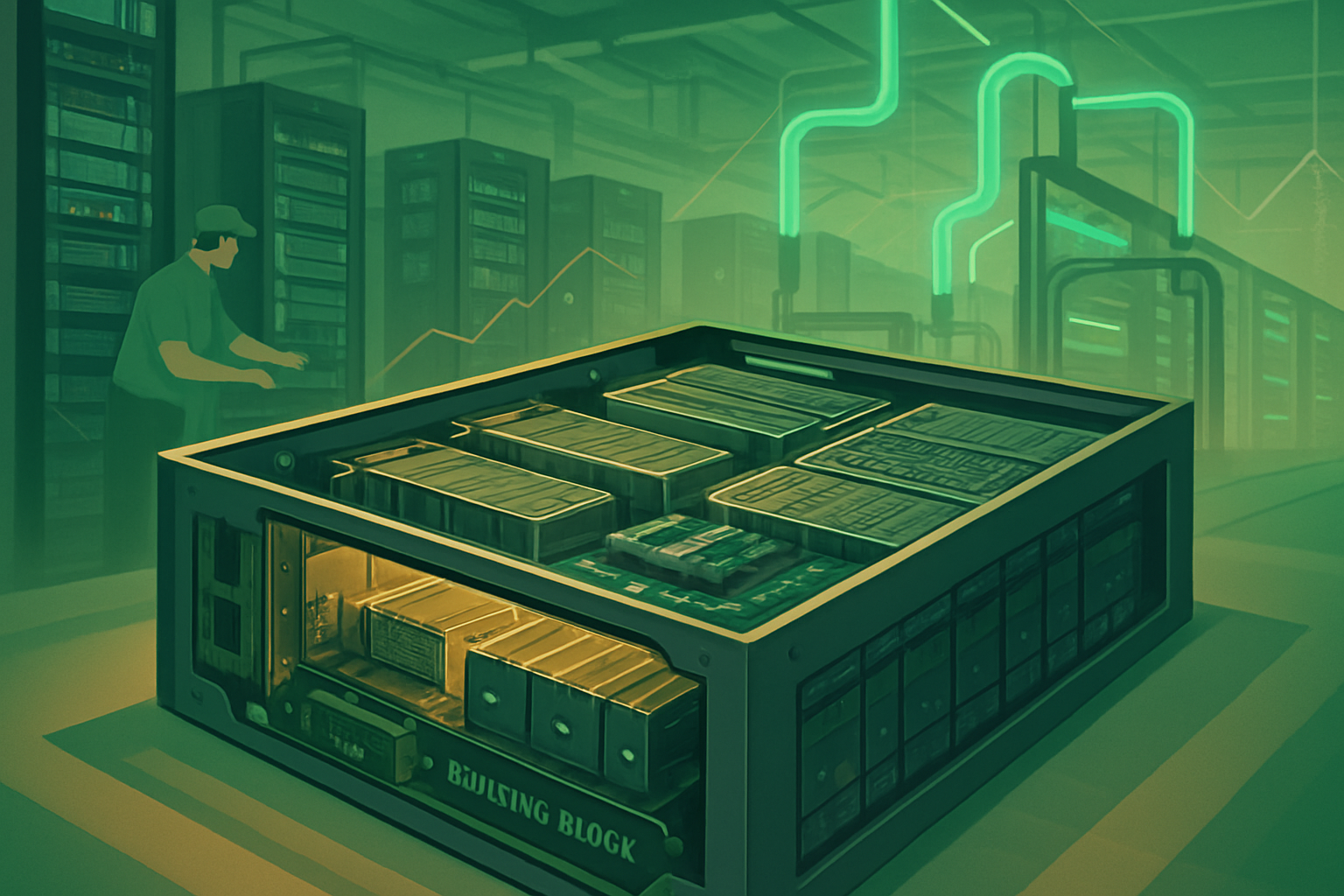
    Founded in 1993 by Charles Liang and his wife, Sara Liu, Super Micro began as a humble motherboard and chassis manufacturer in Silicon Valley. From its inception, the company differentiated itself through a "Building Block Solutions" philosophy—a modular approach to server design that allowed for rapid customization.

    While competitors like Dell Technologies (NYSE: DELL) and Hewlett Packard Enterprise (NYSE: HPE) focused on enterprise services and standardized hardware, Liang stayed focused on engineering-led "green computing." This focus on thermal efficiency proved prophetic. When the AI explosion began in late 2022, SMCI was the only vendor capable of integrating thousands of power-hungry GPUs into cohesive, energy-efficient racks at the speed required by hyperscalers like Meta and xAI.

    Business Model

    SMCI’s business model revolves around the design, manufacture, and sale of high-performance server and storage solutions based on open architecture. Its revenue is primarily derived from three segments:

    1. AI and High-Performance Computing (HPC): This segment now accounts for over 70% of total revenue, comprising full-rack solutions integrated with NVIDIA, AMD, and Intel AI accelerators.
    2. Enterprise and Cloud: Traditional data center servers and storage arrays.
    3. Edge and IoT: Emerging ruggedized servers for localized processing.

    The company utilizes a "Twin-Server" and multi-node architecture that allows for higher density than traditional rack designs. Most importantly, SMCI has vertically integrated its manufacturing, with massive facilities in San Jose, Taiwan, and Malaysia, allowing it to move from chip arrival to finished rack delivery in as little as a few weeks.

    Stock Performance Overview

    The stock performance of SMCI is a study in extreme volatility.

    • 10-Year View: Long-term shareholders remain the big winners. Even after the 2024 correction, the stock is up over 1,500% from its 2016 levels.
    • The 2024-2025 Roller Coaster: Following a 10-for-1 stock split in late 2024, the shares hit a nadir in the $15-$18 range (post-split) amid fears of accounting fraud and the resignation of its auditor, Ernst & Young.
    • Early 2026 Status: As of mid-January 2026, the stock has stabilized in the $32.00 to $36.00 range. The market has priced in the "governance discount," but the stock has found a floor thanks to record-breaking revenue and a massive $13 billion order backlog.

    Financial Performance

    In its most recent fiscal reporting for 2025, SMCI showcased a "growth at all costs" financial profile.

    • Revenue: Reached an all-time high of approximately $22.4 billion, a staggering leap from the $14.9 billion reported in FY2024.
    • Margins: This is the primary point of contention for analysts. Gross margins, which once sat near 18%, have compressed to 9.1% in the latest quarter. SMCI has intentionally lowered prices to ward off competition from Dell and HPE.
    • Debt and Liquidity: To fund the purchase of expensive GPUs, SMCI secured a $2.0 billion revolving credit facility in late 2025. While debt has increased, the company's cash flow from operations has finally turned positive as inventory turnover improved.

    Leadership and Management

    Founder and CEO Charles Liang remains the driving force behind the company. Despite calls for his resignation during the 2024 audit crisis, Liang’s deep engineering knowledge and relationship with NVIDIA’s Jensen Huang made him arguably "too essential to fire."

    To appease regulators and investors, the board underwent a significant overhaul in 2025. The appointment of Scott Angel, a former Deloitte veteran, as an independent director and the hiring of a new CFO (expected to be finalized by Q1 2026) have helped restore some institutional confidence. However, the leadership remains heavily centralized under Liang, which continues to be a point of concern for governance-focused investors.

    Products, Services, and Innovations

    SMCI’s "crown jewel" in 2026 is its Direct Liquid Cooling (DLC) technology. As GPU power consumption has climbed toward 1,000W-1,200W per chip with the Blackwell and Rubin architectures, traditional air cooling has reached its physical limits.

    SMCI has moved from being a server company to a "thermal management" company. Its DLC-2 racks can reduce data center power consumption for cooling by up to 40%. By January 2026, SMCI is producing roughly 5,000 racks per month, with nearly 45% of those being liquid-cooled—the highest ratio in the industry.

    Competitive Landscape

    The competition has intensified as the "AI Server Land Grab" matures.

    • Dell Technologies (NYSE: DELL): Dell has leveraged its superior enterprise sales force to claw back market share, particularly with Fortune 500 companies that require high-touch support.
    • Hewlett Packard Enterprise (NYSE: HPE): HPE has focused on the "Sovereign AI" market, winning large government contracts in Europe and the Middle East.
    • ODM Direct: Hyperscalers like Microsoft and Google are increasingly designing their own servers and using Asian ODMs (Original Design Manufacturers) like Quanta and Foxconn to build them, bypassing SMCI for their internal silicon needs.

    Industry and Market Trends

    The "Power Wall" is the defining trend of 2026. Data centers are no longer constrained by chip availability, but by the availability of electricity. SMCI's focus on energy efficiency aligns perfectly with this constraint. Additionally, the market is shifting from Training (building models) to Inference (running models). This favors SMCI’s modular architecture, which can be quickly reconfigured for lower-latency inference tasks.

    Risks and Challenges

    Despite its recovery, SMCI faces three significant risks:

    1. Regulatory Overhang: The Department of Justice (DOJ) probe initiated in late 2024 remains open. While the company’s special committee found no fraud, a potential fine or mandated structural change remains a "black swan" risk.
    2. NVIDIA Dependency: SMCI’s fortunes are inextricably linked to NVIDIA’s product cycle. Any delay in the Vera Rubin launch or a shift in NVIDIA's "preferred partner" status would be catastrophic.
    3. Commoditization: As Dell and HPE scale their AI offerings, SMCI may find it impossible to raise margins, permanently capping its valuation multiple.

    Opportunities and Catalysts

    • Vera Rubin Launch: The upcoming transition to the Rubin platform in late 2026 provides another "first-to-market" window for SMCI.
    • Sovereign AI Expansion: SMCI’s new Malaysia facility is strategically positioned to capture demand from Southeast Asian nations building domestic AI clusters.
    • Edge AI: The launch of ruggedized, liquid-cooled edge servers for hospitals and autonomous factories represents a new, higher-margin revenue stream.

    Investor Sentiment and Analyst Coverage

    Sentiment remains "cautiously optimistic" but disciplined. Wall Street analysts have largely moved SMCI from "Growth" to "Value/Cyclical" categories. Hedge fund ownership, which saw a mass exodus in late 2024, has partially returned as the 10-K filings were normalized. Retail sentiment remains high, driven by SMCI’s continued status as a high-beta play on the AI sector.

    Regulatory, Policy, and Geopolitical Factors

    Geopolitics are a double-edged sword for SMCI. U.S. export controls on high-end GPUs to China have limited a historically strong market for the company. Conversely, the "CHIPS Act" and various domestic manufacturing incentives in the U.S. and Taiwan have provided subsidies that help offset the costs of SMCI’s localized production model.

    Conclusion

    As of January 14, 2026, Super Micro Computer has successfully weathered the storm of 2024, proving that its engineering prowess and manufacturing speed are too valuable for the AI ecosystem to lose. It has transitioned from a speculative rocket ship into a foundational utility of the digital age.

    For investors, the 2026 version of SMCI requires a different mindset: the days of 1,000% annual gains are likely over, replaced by a story of volume, execution, and thermal efficiency leadership. The key metric to watch over the coming year will not be revenue growth—which remains robust—but the stabilization of gross margins. If SMCI can prove it can maintain its 10-12% market share without further eroding its profitability, it will likely see a re-rating of its current valuation.


    This content is intended for informational purposes only and is not financial advice.

  • The Renaissance of Compute: A 2026 Deep Dive into AMD’s AI Transformation

    The Renaissance of Compute: A 2026 Deep Dive into AMD’s AI Transformation

    Advanced Micro Devices, Inc. (Nasdaq: AMD) enters 2026 as a pivotal player in the "Great Decoupling" of the global supply chain and the rapid expansion of AI-driven compute. No longer just a component manufacturer, AMD has reinvented itself as a provider of heterogeneous computing solutions, integrating CPUs, GPUs, FPGAs, and networking into unified "rack-scale" systems.

    The company is currently in focus due to its aggressive AI accelerator roadmap—most recently the unveiling of the MI400 series—and its successful navigation of 2025’s volatile macroeconomic environment. With a market capitalization that has seen explosive growth alongside its data center revenue, AMD has become the primary beneficiary of the industry’s push for an "open ecosystem" alternative to Nvidia’s (Nasdaq: NVDA) proprietary standards.

    Historical Background

    Founded on May 1, 1969, by Jerry Sanders III and seven former Fairchild Semiconductor employees, AMD began as a logic and memory chip provider. Its early history was defined by a symbiotic but litigious relationship with Intel (Nasdaq: INTC). In 1982, a landmark agreement allowed AMD to be a second-source manufacturer for Intel’s x86 processors for the original IBM PC—a deal that fueled AMD’s growth but sparked a decade of legal battles over intellectual property.

    The company saw a golden age in the early 2000s with the launch of the Athlon (the first 1GHz processor) and the Opteron, which pioneered 64-bit computing. However, a series of strategic missteps—including the debt-heavy $5.4 billion acquisition of ATI in 2006 and the underperforming "Bulldozer" architecture in 2011—nearly drove the company to bankruptcy. The turning point came in 2014 when Dr. Lisa Su took the helm as CEO, pivoting the company toward high-performance computing and the "Zen" revolution.

    Business Model

    As of 2026, AMD operates through four primary reporting segments, having successfully integrated several multi-billion dollar acquisitions:

    1. Data Center: The primary growth engine, encompassing EPYC server CPUs and Instinct AI accelerators.
    2. Client: Ryzen processors for desktops and the emerging "AI PC" laptop market.
    3. Gaming: Radeon GPUs and semi-custom silicon for major consoles.
    4. Embedded: High-margin industrial and automotive chips, largely derived from the $50 billion Xilinx acquisition.

    AMD’s business model has shifted toward "System-Led" sales. Following the 2025 acquisition of ZT Systems, AMD now sells entire rack-scale AI infrastructures, moving up the value chain from selling chips to providing finished data center solutions.

    Stock Performance Overview

    AMD’s stock has been a volatility champion, rewarding long-term conviction while reacting sharply to cyclical shifts.

    • 1-Year Performance: After a breakout 2025, the stock reached an all-time high of $264.33 in October 2025. As of January 14, 2026, it is trading in a consolidation range between $215 and $225, up approximately 45% year-over-year.
    • 5-Year Performance: The stock has outperformed the broader S&P 500 significantly, rising over 130% since early 2021 as the AI boom materialized.
    • 10-Year Performance: One of the greatest "rags-to-riches" stories in the market, AMD was trading under $3.00 in early 2016. Investors who held since then have seen gains exceeding 7,000%.

    Financial Performance

    AMD’s fiscal year 2025 was a landmark period, characterized by the scaling of its AI business and record-breaking data center results.

    • Revenue: Estimated at $34.5 billion for FY 2025, a ~34% increase over 2024.
    • Data Center Growth: AMD’s Data Center revenue surpassed Intel’s for the first time in Q3 2025, signaling a permanent shift in market leadership.
    • Margins: Non-GAAP gross margins expanded to 54%, bolstered by high-margin sales of the Instinct MI300 and MI350 series.
    • Valuation: Trading at a forward P/E of roughly 28x, the market prices AMD for continued double-digit growth, though it remains "cheaper" than some direct AI peers on a PEG ratio basis.

    Leadership and Management

    Dr. Lisa Su remains the undisputed architect of AMD’s modern success. Her strategy of "relentless execution" has become a hallmark of the company’s governance. In 2025, she was supported by Victor Peng (President, former Xilinx CEO), who leads the Adaptive and Embedded group, and Forrest Norrod, who has been instrumental in the Data Center segment's surge. The leadership team is highly regarded for its "under-promise and over-deliver" style, a sharp contrast to the aggressive marketing often found in the sector.

    Products, Services, and Innovations

    AMD’s product portfolio in early 2026 is its most competitive in history:

    • Instinct MI400 Series: Unveiled at CES 2026, the MI455X is the world’s first 2nm AI GPU, boasting 432GB of HBM4 memory.
    • Helios Platform: AMD’s first fully integrated AI rack, featuring 72 MI455X accelerators. It competes directly with Nvidia’s Blackwell and Rubin platforms.
    • EPYC "Turin" CPUs: Built on the Zen 5 architecture, these chips command nearly 40% of the x86 server market.
    • Ryzen AI 400 Series: Targeting the "Copilot+" PC market, these chips integrate NPUs capable of 60 TOPS.

    Competitive Landscape

    AMD’s position in 2026 is defined by its role as the "Standard-Bearer for Open AI."

    • Vs. Nvidia: While Nvidia remains the market leader, AMD is leading the Ultra Accelerator Link (UALink) consortium to create an open industry standard, appealing to hyperscalers looking to avoid vendor lock-in.
    • Vs. Intel: In the server market, AMD has largely won the battle of performance-per-watt, capturing high-margin enterprise accounts while Intel manages its foundry transition.
    • Vs. Custom Silicon: Hyperscalers like Amazon (Nasdaq: AMZN) and Google (Nasdaq: GOOGL) are building their own chips. AMD counters this by offering "semi-custom" services to integrate AMD IP into proprietary designs.

    Industry and Market Trends

    The "Sovereign AI" movement is the dominant trend of early 2026. Nations like Saudi Arabia, the UAE, and Japan are spending billions to build domestic AI clusters. AMD’s open-source ROCm 7.0 software stack has become a favorite for these projects, as it provides the flexibility national governments require for data sovereignty. Furthermore, the industry transition to advanced packaging and chiplet-based designs continues to favor AMD's established modular roadmap.

    Risks and Challenges

    Despite its momentum, AMD faces significant headwinds:

    • Concentration Risk: A significant portion of AI revenue comes from a handful of "Super-Hyperscalers" like Microsoft (Nasdaq: MSFT) and Meta (Nasdaq: META).
    • Geopolitical Friction: US export controls on AI chips to China resulted in a $1.8 billion revenue hit in 2025. Continued tensions could further restrict AMD’s addressable market.
    • Software Gap: While ROCm has improved significantly, Nvidia’s CUDA still has a massive advantage in developer mindshare and legacy library support.

    Opportunities and Catalysts

    • M&A Synergy: The full integration of ZT Systems allows AMD to capture "rack-level" margins, expanding beyond component sales.
    • The 2nm Transition: AMD is ahead of the curve in 2nm design cycles, positioning it to take market share if competitors face manufacturing delays.
    • AI PC Cycle: A massive "refresh cycle" for laptops and desktops is expected through late 2026 as local AI processing becomes a standard software requirement.

    Investor Sentiment and Analyst Coverage

    Wall Street remains broadly bullish on AMD as the "logical alternative" to Nvidia. In early January 2026, KeyBanc upgraded AMD to "Overweight" with a $270 price target. Wells Fargo has issued a target of $345, betting on a massive second-half 2026 for the MI400 series. Institutional ownership remains high, with heavyweights like Vanguard and BlackRock increasing their positions in late 2025.

    Regulatory, Policy, and Geopolitical Factors

    The CHIPS and Science Act continues to provide tailwinds, particularly through the National Advanced Packaging Manufacturing Program (NAPMP). AMD is a lead partner in these initiatives, helping secure a domestic ecosystem for its designs. However, the "Silicon Curtain" remains a threat, with strict licensing for China-compliant chips and retaliatory probes from international regulators creating a "murky" outlook for Asian operations.

    Conclusion

    As of January 14, 2026, AMD has successfully shed its reputation as a perpetual runner-up. By doubling down on chiplet architecture and an "open ecosystem" philosophy, the company has established itself as an indispensable architect of the AI age. For investors, the key metric to watch over the next 12 months will be the adoption rate of the MI400 series and the company’s ability to sustain its 50%+ gross margins. In the world of high-performance compute, AMD has proven there is more than enough room for a second titan.


    This content is intended for informational purposes only and is not financial advice. Today’s date: 1/14/2026.

  • Meta Platforms (META): The 2026 Deep-Dive – From Social Media to Superintelligence

    Meta Platforms (META): The 2026 Deep-Dive – From Social Media to Superintelligence

    As of January 14, 2026, Meta Platforms (NASDAQ: META) stands at a critical crossroads that few could have predicted just three years ago. Having successfully navigated the "Year of Efficiency" in 2023 and the subsequent "Year of AI" in 2024, the company has now entered what analysts call the "Year of Superintelligence." Today, Meta is no longer just a social media conglomerate; it is a full-stack artificial intelligence and infrastructure titan.

    While the broader technology sector has faced significant volatility due to fluctuating interest rates and shifting global trade policies, Meta has emerged as a surprisingly resilient defensive-growth play. The company’s ability to "industrialize" its advertising engine through AI has provided a robust cash-flow cushion, even as it commits to an unprecedented $100 billion capital expenditure program for 2026. Investors are currently weighing Meta’s lean operational structure against its massive bets on "agentic" AI and the next generation of wearable computing.

    Historical Background

    Founded in a Harvard dormitory in 2004 as "TheFacebook," the company’s trajectory has been defined by radical pivots and aggressive acquisitions. After going public in 2012, Facebook (as it was then known) secured its dominance through the acquisitions of Instagram (2012) and WhatsApp (2014), effectively cornering the mobile social networking market.

    The most profound transformation occurred in October 2021, when Mark Zuckerberg rebranded the company as Meta Platforms, signaling a shift toward the "metaverse." This transition was initially met with skepticism and a disastrous 2022, which saw the stock price plummet as Reality Labs' losses mounted and Apple’s (NASDAQ: AAPL) privacy changes gutted ad targeting. However, the subsequent 2023 "Year of Efficiency"—characterized by 21,000 layoffs and a return to engineering excellence—restored investor confidence and provided the financial discipline necessary for its current AI-first evolution.

    Business Model

    Meta’s business model remains centered on the attention economy, but its monetization levers have become far more sophisticated. The company operates in two primary segments:

    1. Family of Apps (FoA): This includes Facebook, Instagram, Messenger, and WhatsApp. Revenue is almost entirely derived from advertising. In early 2026, the "Advantage+" AI suite has become the primary driver, automating the entire ad-creation process for millions of small businesses.
    2. Reality Labs (RL): This segment focuses on augmented and virtual reality (AR/VR). While still operating at a multi-billion dollar loss, it has pivoted from purely "metaverse" software to AI-powered hardware, most notably the Ray-Ban Meta smart glasses.

    Meta has also begun diversifying its revenue through Business Messaging on WhatsApp, where it charges enterprises for customer service tools and "agentic" AI bots that handle transactions without human intervention.

    Stock Performance Overview

    Over the past decade, META has been a rollercoaster for shareholders:

    • 10-Year Performance: Despite the 2022 crash, Meta has delivered significant alpha, outperforming the S&P 500 as it scaled from a $200 billion company to a multi-trillion dollar entity.
    • 5-Year Performance: This period includes the post-pandemic surge, the 75% drawdown in 2022, and the "V-shaped" recovery of 2023-2024.
    • 1-Year Performance: In 2025, Meta’s stock rose approximately 14%. While respectable, it slightly underperformed peers like Nvidia (NASDAQ: NVDA) as investors grew wary of Meta’s ballooning capital expenditures.

    As of early 2026, Meta trades at approximately 20.5x forward earnings, a notable discount compared to the "Magnificent Seven" average of 28x, reflecting lingering concerns over its long-term R&D spending.

    Financial Performance

    Meta’s recent financial results reflect a company with high-octane growth and disciplined margins. In Q3 2025, Meta reported revenue of $51.24 billion, a 26% increase year-over-year.

    • Margins: Operating margins remain healthy at 40%, a testament to the cost-cutting measures that stayed in place post-2023.
    • Capital Expenditure: The 2026 CapEx budget is projected to exceed $100 billion, focused on building out "Meta Compute"—a network of data centers and the "Prometheus" supercluster designed to train Llama 5.
    • Cash Position: Meta maintains a "fortress balance sheet" with over $60 billion in cash and equivalents, allowing it to fund its AI roadmap without tapping expensive debt markets despite the 3.25% interest rate environment.

    Leadership and Management

    Mark Zuckerberg remains the undisputed architect of Meta’s strategy, holding a majority of voting power through dual-class shares. However, the leadership team saw a significant addition in mid-2025 with the appointment of Alexandr Wang as Chief AI Officer (CAIO).

    Wang, the founder of Scale AI, was brought in to lead the newly formed Meta Superintelligence Labs (MSL). This restructuring indicates a shift in management philosophy: Zuckerberg is moving away from being a "product CEO" and toward becoming an "infrastructure and AI CEO." The board of directors has also been refreshed with more voices from the semiconductor and energy sectors, reflecting the company’s new challenges in power procurement for AI.

    Products, Services, and Innovations

    The crown jewel of Meta’s current innovation pipeline is Llama 4, released in late 2025. Unlike its predecessors, Llama 4 is "agentic," meaning it can execute multi-step tasks—like planning a vacation, booking flights, and managing a budget—rather than just generating text.

    In hardware, the Ray-Ban Meta glasses have become a surprise hit, providing the company with a massive data advantage in "ego-centric" video (seeing the world through the user's eyes). Meta's secret weapon, the Orion AR glasses, is expected to see a limited commercial release later in 2026, potentially marking the beginning of the end for the smartphone era.

    Competitive Landscape

    The competitive landscape in early 2026 is defined by the "domestication" of TikTok. Following a complex divestment deal in late 2025, TikTok USDS is now a U.S.-controlled entity. While this has stabilized the platform, it has also slowed its algorithmic innovation, allowing Instagram Reels to gain market share.

    Meta’s primary rivals are now Alphabet (NASDAQ: GOOGL) in the AI-ad space and Amazon (NASDAQ: AMZN) in retail media. Additionally, decentralized platforms like Bluesky have gained traction among power users, forcing Meta to open "Threads" to the Fediverse to prevent a mass exodus of creators seeking platform interoperability.

    Industry and Market Trends

    The global advertising market is forecast to surpass $1 trillion in 2026. Meta is perfectly positioned to capture this growth as "Social Ad Spend" is expected to grow by 11.4%, significantly faster than the broader economy.

    A critical macro trend for 2026 is the "Energy-Compute Nexus." As AI models require exponential increases in power, Meta’s success is now as much about its ability to secure nuclear and renewable energy contracts as it is about software engineering.

    Risks and Challenges

    • CapEx-to-Revenue Risk: If the massive investment in AI does not yield a clear new revenue stream (beyond ad optimization) by late 2026, investors may lose patience, leading to a valuation contraction.
    • Regulatory "Splinternet": The EU’s Digital Markets Act (DMA) continues to squeeze Meta’s margins in Europe, forcing a "less personalized" ad model that reduces the effectiveness of its targeting.
    • AI Safety and Ethics: As Meta pursues "Superintelligence," the risk of catastrophic model failure or regulatory crackdown on "agentic" behavior remains high.

    Opportunities and Catalysts

    • WhatsApp Monetization: WhatsApp is currently the most under-monetized major social platform in the world. The rollout of AI agents for business could turn WhatsApp into a "super-app" similar to WeChat in China.
    • The "Catch-Up" Trade: Because Meta trades at a lower P/E ratio than its peers, any sign that Reality Labs is narrowing its losses could trigger a massive re-rating of the stock.
    • Prometheus Launch: The activation of the Prometheus supercluster in mid-2026 will likely set a new benchmark for AI performance, potentially putting Meta ahead of OpenAI in the open-source model race.

    Investor Sentiment and Analyst Coverage

    Wall Street remains "cautiously bullish" on Meta. Institutional investors, including Vanguard and BlackRock, have increased their holdings in 2025, viewing Meta as a "toll booth" for AI-powered commerce. However, retail sentiment on platforms like X and Reddit is more divided, with many users expressing "AI fatigue" regarding the integration of chatbots into every Instagram feature. Analyst consensus remains a "Strong Buy," with a median price target suggesting 15-20% upside for the year.

    Regulatory, Policy, and Geopolitical Factors

    In a landmark victory for Meta in November 2025, a U.S. District Court ruled against the FTC, stating that the government failed to prove Meta is a monopoly. This has largely removed the threat of a forced breakup of Instagram and WhatsApp for the foreseeable future.

    However, geopolitics remains a wildcard. Meta’s reliance on TSMC (NYSE: TSM) for its custom "MTIA" AI chips makes it vulnerable to any escalation in cross-strait tensions. Furthermore, new U.S. AI safety standards enacted in early 2026 require Meta to share more of its proprietary research with the government, potentially slowing its release cycles.

    Conclusion

    As we look through the lens of early 2026, Meta Platforms is a company that has traded its "move fast and break things" ethos for a strategy of "scale fast and build moats." Its response to macroeconomic volatility has been to double down on the one thing it does better than anyone: turning massive amounts of data into highly efficient advertising revenue.

    For investors, the central question is whether the $100 billion "AI bet" will culminate in a new computing paradigm or simply remain a very expensive way to sell more sneakers. In the short term, Meta’s valuation and cash-flow resilience make it a compelling holding, but its long-term destiny is now inextricably linked to the success of its Superintelligence Labs.


    This content is intended for informational purposes only and is not financial advice. Today's Date: January 14, 2026.

  • Tesla (TSLA) Research Feature: The 2026 Pivot to AI and Robotics

    Tesla (TSLA) Research Feature: The 2026 Pivot to AI and Robotics

    As of January 14, 2026, Tesla, Inc. (NASDAQ: TSLA) finds itself at a historic crossroads. For over a decade, the narrative surrounding the Austin-based giant was defined by its mission to accelerate the world’s transition to sustainable energy through mass-market electric vehicles (EVs). Today, that mission has evolved into something far more complex and high-stakes: a pivot toward becoming an artificial intelligence and robotics powerhouse.

    Following a volatile 2025—a year marked by the first significant multi-year decline in vehicle deliveries and the loss of its title as the world’s top EV seller to China’s BYD—Tesla is aggressively rebranding. The focus has shifted from high-volume manufacturing to the "AI Chapter," led by the impending launch of the Cybercab robotaxi and the deployment of the Optimus humanoid robot. With the stock trading in the $430–$447 range and carrying a valuation that defies traditional automotive metrics, Tesla remains the most debated company on Wall Street.

    Historical Background

    Founded in 2003 by Martin Eberhard and Marc Tarpenning, with Elon Musk joining as the lead investor shortly after, Tesla’s journey began with the Roadster in 2008. The company’s "Master Plan" was famously simple: build a low-volume, expensive car; use that money to build a mid-volume car at a lower price; and use that money to build an affordable high-volume car.

    The successful launches of the Model S (2012), Model X (2015), and the transformational Model 3 (2017) and Model Y (2020) turned Tesla from a niche startup into a global titan. Along the way, Tesla navigated "production hell," built a global network of Gigafactories from Shanghai to Berlin, and disrupted the century-old internal combustion engine industry. By the early 2020s, Tesla had achieved sustained profitability, was added to the S&P 500, and peaked at a market capitalization of over $1 trillion.

    Business Model

    Tesla’s business model is vertically integrated and increasingly diversified across four primary segments:

    1. Automotive: Designing and manufacturing EVs (Model 3, Y, S, X, Cybertruck). Revenue is driven by unit sales and leasing.
    2. Software & Services: This includes Full Self-Driving (FSD) subscriptions, insurance, and the Supercharger network. Notably, as of January 2026, Tesla has moved FSD to a $99/month subscription-only model to build recurring revenue.
    3. Energy Generation & Storage: Selling Megapacks for utilities and Powerwalls for homes. This segment saw a 50% year-over-year growth in 2025, deploying 47 GWh of storage.
    4. AI & Robotics: A nascent but high-potential segment involving the sale of humanoid robots (Optimus) and autonomous taxi services (Cybercab).

    Stock Performance Overview

    Tesla’s stock performance continues to be a roller coaster that rewards long-term believers and punishes short-term bears.

    • 1-Year Performance: In 2025, TSLA delivered a shareholder return of roughly 11%–13%, outperforming several legacy rivals but trailing the broader AI-driven tech sector.
    • 5-Year Performance: Over the last five years, the stock has seen massive gains, fueled by the scaling of the Model Y and the entry into the S&P 500, though it has faced several "drawdowns" of 40% or more during periods of high interest rates.
    • 10-Year Performance: TSLA remains one of the best-performing assets of the decade, with an appreciation exceeding 1,500%, reflecting its transition from a speculative venture to a dominant global industrial force.

    As of today, January 14, 2026, the stock is showing resilience despite a 4% dip earlier this month, as investors price in the April production start of the Cybercab.

    Financial Performance

    The 2025 fiscal year was financially "sobering" for Tesla's automotive wing. The company delivered 1.64 million vehicles, an 8.5% decline from 1.79 million in 2024.

    • Margins: Automotive gross margins have stayed under pressure, hovering around 16–17% due to aggressive price cuts to fight off Chinese competition.
    • Earnings: Consensus estimates for the upcoming Q4 2025 earnings report (Jan 28, 2026) suggest an EPS of $0.32–$0.45, a notable drop from the $0.73 seen in late 2024.
    • Valuation: Tesla trades at a trailing P/E of approximately 297x. This premium is nearly unique among trillion-dollar companies, justified by bulls as a valuation of Tesla’s Dojo supercomputer and its 7-billion-mile FSD database rather than its car sales.

    Leadership and Management

    The leadership team in early 2026 is streamlined for the AI transition.

    • Elon Musk (CEO): Musk remains the central figure, though his time is increasingly split between Tesla, X (formerly Twitter), and government advisory roles.
    • Tom Zhu (SVP, Automotive): Recently granted a massive 5-year contract extension in January 2026, Zhu is the operational engine behind the company’s global production.
    • Vaibhav Taneja (CFO): Taneja oversees a balance sheet that remains cash-rich, allowing Tesla to invest billions in AI hardware despite slowing car sales.
    • Board Dynamics: The addition of John "Jack" Hartung (former CFO of Chipotle) in mid-2025 has brought much-needed retail and operational governance to the Audit Committee.

    Products, Services, and Innovations

    Tesla’s current R&D is focused on three pillars:

    1. The Cybercab: A purpose-built robotaxi without a steering wheel or pedals, set for mass production in April 2026.
    2. Optimus Gen 3: Tesla's humanoid robot has moved past the prototype stage. Several thousand units are already working in Tesla’s own factories, with a production goal of 50,000 units by year-end 2026.
    3. FSD v14: The latest software iteration is being touted as "quasi-Level 4," with Tesla seeking regulatory approval to launch it in Europe and China by March 2026.

    Competitive Landscape

    The competitive landscape has shifted dramatically.

    • BYD (SZ: 002594): The Chinese giant officially surpassed Tesla in total EV sales in 2025, leveraging a lower cost structure and rapid battery innovation.
    • Waymo (Alphabet): In the autonomy race, Waymo remains the primary rival, having logged millions of driverless miles. Tesla’s advantage remains its "vision-only" scale, while Waymo relies on expensive Lidar-mapped cities.
    • Legacy OEMs: Companies like Ford (NYSE: F) and GM (NYSE: GM) have scaled back their EV ambitions, inadvertently giving Tesla more breathing room in the U.S. luxury EV market.

    Industry and Market Trends

    The "Autonomy Boom" of 2026 is the defining trend. Governments are moving from skepticism to a race for adoption. The transition to "software-defined vehicles" means that hardware margins are shrinking, while software margins (FSD subscriptions) are becoming the primary goal for the entire industry. Additionally, the stabilizing of lithium prices in 2025 has helped keep battery costs down, though supply chain localization remains a hurdle.

    Risks and Challenges

    Tesla faces several existential risks:

    • Execution Risk: If the Cybercab production ramp (scheduled for April) hits delays, the high P/E ratio could see a massive "de-rating."
    • The "Elon Risk": Musk’s controversial public persona and multiple ventures continue to create "headline risk" for the stock.
    • Chinese Geopolitics: With a large portion of production and demand based in China, any escalation in trade tensions could devastate Tesla’s margins.

    Opportunities and Catalysts

    • Next-Gen Platform: The unveiling of a $25,000 consumer vehicle (Model 2) in Q2 2026 could reignite volume growth.
    • FSD Licensing: If Tesla successfully licenses FSD to other automakers, it could become the "Android of Autonomy."
    • Tesla Energy: The Megapack business is currently growing faster than the automotive business and provides a high-margin floor for the company’s earnings.

    Investor Sentiment and Analyst Coverage

    Wall Street is polarized.

    • Bulls: Firms like Wedbush maintain a $600 price target, viewing Tesla as the "ultimate AI play." They argue the current car sales decline is a temporary "trough" before the robotaxi explosion.
    • Bears: Critics like GLJ Research maintain "Sell" ratings, arguing that Tesla is a "broken growth story" whose AI claims are overhyped and years away from meaningful revenue.
    • Retail Sentiment: Tesla remains the most popular stock among retail investors, though some "Musk fatigue" has been noted in recent sentiment surveys.

    Regulatory, Policy, and Geopolitical Factors

    The regulatory environment is turning favorable.

    • U.S. Federal Policy: The proposed "SELF DRIVE Act of 2026" seeks to allow up to 90,000 autonomous vehicles per manufacturer to operate without traditional controls, a massive win for the Cybercab.
    • China’s 15th Five-Year Plan: Prioritizing "Smart Mobility," this plan has opened the door for Tesla to receive FSD approval in China by late Q1 2026, provided they meet strict data-security standards.

    Conclusion

    Tesla enters 2026 as a company in the midst of a metamorphosis. The data from 2025 confirms that the era of hyper-growth in car sales has ended, but the "AI Chapter" has only just begun. For investors, the question is no longer "How many cars can Tesla sell?" but rather "Can Tesla solve autonomy and scale humanoid labor?"

    The coming six months will be the most critical in the company’s history. With the Cybercab launch in April and the Model 2 reveal in June, 2026 will determine whether Tesla justifies its massive valuation premium or finally succumbs to the gravitational pull of being "just a car company."


    This content is intended for informational purposes only and is not financial advice.

  • Palantir (PLTR) 2026 Deep-Dive: The Rise of the Agentic AI Powerhouse

    Palantir (PLTR) 2026 Deep-Dive: The Rise of the Agentic AI Powerhouse

    Date: January 14, 2026

    Introduction

    As we enter the first weeks of 2026, Palantir Technologies (NYSE: PLTR) stands as perhaps the most polarizing yet indispensable force in the enterprise software ecosystem. Once dismissed as a secretive, "black box" defense contractor with a niche business model, Palantir has undergone a profound metamorphosis over the last 24 months. By positioning itself at the epicenter of the "Agentic AI" revolution, the company has successfully transitioned from a consulting-heavy data firm into a high-margin software powerhouse. Today, Palantir is no longer just a tool for intelligence agencies; it is the foundational operating system for the modern, AI-integrated corporation and the backbone of the Western defense apparatus.

    Historical Background

    Palantir’s story began in 2003, co-founded by Peter Thiel, Alex Karp, Stephen Cohen, Joe Lonsdale, and Nathan Gettings. Emerging from the "PayPal Mafia" ecosystem, the company was built on the premise that the same technology used to detect credit card fraud could be applied to counter-terrorism. With early backing from the CIA’s venture arm, In-Q-Tel, Palantir spent its first decade almost exclusively in the shadows of the U.S. intelligence community.

    The company's early milestones were shrouded in mystery, most notably the persistent (though unconfirmed) rumors that its software played a role in the location of Osama bin Laden. The 2010s saw the launch of Foundry, an attempt to bring government-grade data integration to the commercial sector. However, it wasn’t until its direct listing in September 2020 that Palantir became a household name for investors. Since then, the company has survived the "meme stock" era of 2021, a brutal 2022 correction, and the 2024 AI surge, eventually securing its place in the S&P 500 in late 2024.

    Business Model

    Palantir operates on a proprietary software model designed to integrate disparate data sources into a unified, actionable environment. Unlike traditional SaaS companies that offer "point solutions," Palantir provides a holistic "operating system" for the enterprise.

    The business is structured around four primary product lines:

    1. Gotham: Primarily for government and defense, enabling users to identify patterns deep within datasets.
    2. Foundry: The commercial equivalent, used for everything from supply chain optimization to clinical trial management.
    3. Apollo: The continuous delivery system that allows Palantir software to run across any environment, from the cloud to the "edge" (e.g., inside a satellite or a tank).
    4. AIP (Artificial Intelligence Platform): The current flagship, which integrates Large Language Models (LLMs) into private networks, allowing users to build autonomous "agents" for operational decision-making.

    Revenue is generated through multi-year subscriptions. A key innovation in their model has been the "AIP Bootcamp," a five-day sales accelerator that has drastically reduced customer acquisition costs and replaced traditional multi-month sales cycles.

    Stock Performance Overview

    The last five years have been a roller coaster for PLTR shareholders.

    • 1-Year Performance (2025): The stock was a standout performer, surging over 130% in 2025, reaching an all-time high of $207.52 in November.
    • 5-Year Performance (2021–2026): After peaking at $45 in early 2021 and subsequently bottoming near $6 in 2022, the stock has staged a historic recovery. Investors who held through the 2022 trough have seen returns exceeding 2,500%.
    • 10-Year Horizon: Since its 2020 listing, PLTR has outperformed the broader S&P 500 and the Nasdaq-100, though with significantly higher volatility.

    As of today, January 14, 2026, the stock is consolidating in the $185-$195 range, reflecting a period of price discovery after its massive 2025 run.

    Financial Performance

    Palantir’s financial profile has shifted from "growth-at-all-costs" to a masterclass in efficient scaling.

    • Revenue Growth: In 2025, the company reported annual revenue of approximately $4.4 billion, a 53% increase year-over-year. The U.S. Commercial segment remains the primary engine, frequently posting triple-digit growth in recent quarters.
    • Profitability: Palantir has maintained GAAP profitability for over three years. In Q2 2025, the company crossed the $1 billion quarterly revenue milestone for the first time.
    • Margins: Operating margins hit a record 51% in late 2025, driven by the low overhead of AIP deployments.
    • Cash Flow: The company remains debt-free with a cash pile exceeding $4.5 billion, providing a massive "war chest" for future R&D or strategic acquisitions.

    Leadership and Management

    CEO Alex Karp remains the enigmatic face of the company. A philosopher by training, Karp’s unconventional style—frequently delivering shareholder updates from the woods or a ski slope—has earned him a cult-like following among retail investors and respect (albeit grudging) from institutional analysts.

    Under the leadership of CTO Shyam Sankar, the company has maintained its "forward-deployed engineer" culture, where developers work directly on-site with clients. This strategy has proven vital in maintaining high retention rates among complex government and Fortune 100 clients. Despite some concerns regarding insider selling in 2025, the leadership team remains largely stable and deeply aligned with the company’s long-term mission of "securing the West."

    Products, Services, and Innovations

    The most significant innovation of the past 18 months has been the transition to Agentic AI. While 2023 and 2024 were about "chatbots," 2025 was the year of "agents"—software entities that don't just answer questions but take actions.

    Palantir’s AIP now allows a logistics company to deploy an agent that can autonomously re-route shipments during a storm, or a hospital to use an agent that manages nurse scheduling in real-time. In the defense sector, the Maven Smart System has evolved into a fully integrated AI targeting and situational awareness tool that is now standard across several NATO member states.

    Competitive Landscape

    Palantir operates in a unique space, often finding itself in "co-opetition" with tech giants:

    • Microsoft (NASDAQ: MSFT): While Microsoft’s Azure is a partner for government cloud hosting, Palantir competes at the application layer. Palantir's specialized, opinionated software often wins in complex, high-stakes environments where Microsoft's horizontal tools like Copilot may be too generic.
    • Snowflake (NYSE: SNOW): Once a fierce rival, Snowflake and Palantir entered a partnership in late 2025. AIP now runs natively on Snowflake’s Data Cloud, allowing Palantir to "land and expand" within Snowflake’s vast customer base.
    • C3.ai (NYSE: AI): Once considered a direct competitor, C3.ai has fallen behind in 2025, struggling with longer deployment times compared to Palantir’s "bootcamp" model.

    Industry and Market Trends

    The "AI Supercycle" is the dominant macro trend of 2026. Companies have moved past the experimentation phase and are now demanding measurable ROI from their AI investments. Palantir’s ability to show value in five days (via bootcamps) has made it the primary beneficiary of this trend. Additionally, the increase in global geopolitical instability has led to a "defense tech renaissance," with Western governments significantly increasing budgets for software-defined warfare.

    Risks and Challenges

    Despite its current momentum, Palantir faces significant risks:

    • Valuation: Trading at a forward P/E ratio of over 200x, the stock is priced for perfection. Any miss in revenue growth or a deceleration in AIP adoption could trigger a sharp correction.
    • Customer Concentration: While commercial growth is high, the company still relies heavily on massive, multi-year government contracts. A shift in political administration or a change in defense spending priorities remains a tailwind or a risk.
    • Stock-Based Compensation (SBC): While GAAP profitability has been achieved, critics still point to Palantir’s history of high SBC as a dilutive force for long-term shareholders.

    Opportunities and Catalysts

    1. Healthcare Expansion: Palantir’s work with the UK’s NHS and major U.S. hospital chains like HCA Healthcare is serving as a blueprint for a global rollout of AI-driven clinical operations.
    2. The Mid-Market: Traditionally a tool for the world's largest organizations, Palantir began releasing "AIP Lite" in late 2025, targeting mid-cap companies.
    3. S&P 500 Passive Inflows: As a core member of the index, Palantir continues to benefit from systematic buying by ETFs and institutional rebalancing.

    Investor Sentiment and Analyst Coverage

    Sentiment is currently divided. As of January 2026, the consensus rating is a "Hold," with many analysts citing valuation as the primary hurdle. However, several top-tier firms, including Citigroup and Bank of America, have recently issued "Buy" ratings with price targets as high as $255, arguing that Palantir is the only "pure-play" AI software stock with proven, scalable earnings. Retail sentiment remains overwhelmingly "bullish," with the "Palantirians" community on social media continuing to drive high trading volumes.

    Regulatory, Policy, and Geopolitical Factors

    Palantir’s fortunes are inextricably linked to geopolitics. The company’s vocal support for Western interests has made it a preferred partner for the U.S. Department of Defense and its allies. However, this same stance has essentially locked it out of the Chinese market and created hurdles in some European jurisdictions with stricter data sovereignty laws. Regulatory scrutiny over AI ethics and data privacy remains a constant shadow, though Palantir’s long history of working with classified data gives it a compliance "moat" that newer AI startups lack.

    Conclusion

    Palantir Technologies enters 2026 as a titan of the AI era. It has successfully silenced critics of its profitability and demonstrated a repeatable, scalable sales model through its AIP bootcamps. While the current valuation demands aggressive growth, the company’s role in both national security and global enterprise efficiency makes it a unique asset in the technology sector. For investors, the question is no longer whether Palantir’s technology works, but whether its growth can outpace the high expectations already baked into its stock price. As the "Agentic AI" supercycle continues, Palantir is the company to watch.


    Disclaimer: This content is intended for informational purposes only and is not financial advice. The author has no position in PLTR at the time of writing.

  • Delta Air Lines (DAL) Deep Dive: Navigating the Centennial Era and the Premium Pivot

    Delta Air Lines (DAL) Deep Dive: Navigating the Centennial Era and the Premium Pivot

    As of January 14, 2026, Delta Air Lines (NYSE: DAL) stands at a historic crossroads. Having just concluded its centennial year in 2025, the Atlanta-based carrier has evolved from a regional crop-dusting operation into a global premium lifestyle brand. Today, Delta is not just an airline; it is a financial powerhouse bolstered by a multi-billion dollar credit card partnership and a dominant share of the high-end travel market. While the broader airline sector has grappled with volatile fuel prices and labor disputes, Delta’s recent financial results underscore its position as the industry’s "North Star." However, as 2026 begins, the company faces a complex macro environment characterized by shifting regulatory landscapes and a bifurcating consumer market.

    Historical Background

    Founded in 1925 as Huff Daland Dusters, Delta began its journey in Macon, Georgia, as the world’s first aerial crop-dusting operation. It officially became Delta Air Service in 1928, moving its headquarters to Atlanta in 1941. Over the decades, Delta grew through strategic acquisitions, most notably the 2008 merger with Northwest Airlines, which provided the scale necessary to compete on a global stage. This merger is widely cited by analysts as the most successful in aviation history, avoiding the integration pitfalls that plagued rivals. Post-merger, Delta pioneered the "fortress hub" strategy and significantly invested in its own refinery, Monroe Energy, to hedge against fuel volatility—a move that remains a unique pillar of its operational strategy today.

    Business Model

    Delta’s business model has undergone a radical transformation over the last decade, shifting away from a reliance on commodity seat sales toward a diversified revenue stream.

    • Segmented Cabins: Delta has mastered the "bifurcation" of the aircraft, offering five distinct products ranging from Basic Economy to Delta One Suites. This allows the airline to capture both price-sensitive travelers and high-yield corporate and luxury clients.
    • Loyalty & Financial Services: The crown jewel of Delta’s model is its partnership with American Express (NYSE: AXP). This partnership generated a staggering $8.2 billion in remuneration for Delta in 2025. Unlike ticket sales, this revenue is high-margin and less susceptible to the cyclicality of the travel market.
    • Delta TechOps: As one of the world's largest Maintenance, Repair, and Overhaul (MRO) providers, Delta TechOps generates billions in third-party revenue by servicing engines and airframes for other global carriers.

    Stock Performance Overview

    Over the last five years, DAL has significantly outperformed the NYSE Arca Airline Index.

    • 1-Year Performance: In 2025, the stock rose approximately 28%, hitting an all-time high of $73.16 in early January 2026.
    • 5-Year Performance: Since the post-pandemic recovery began in earnest in 2021, the stock has more than doubled, driven by aggressive debt reduction and the return of dividends.
    • 10-Year Performance: Long-term shareholders have seen substantial value creation as Delta transitioned to an "investment grade" balance sheet, though the stock faced a multi-year plateau during the mid-2010s before its recent breakout.

    Financial Performance

    In its full-year 2025 earnings report released yesterday, Delta reported record adjusted operating revenue of $63.4 billion. Key metrics include:

    • Earnings Per Share (EPS): 2025 EPS landed at $7.12, towards the high end of previous guidance.
    • Free Cash Flow: Delta generated $4.6 billion in free cash flow in 2025, which it used to retire $3 billion in high-interest debt.
    • 2026 Guidance: Management has targeted 20% earnings growth for 2026, with an EPS range of $6.50 to $7.50, despite a $200 million pre-tax hit in Q4 2025 caused by a 43-day U.S. government shutdown.
    • Valuation: Trading at roughly 9.2x forward 2026 earnings, Delta remains undervalued compared to the broader S&P 500, though it commands a premium over peers like American Airlines (NASDAQ: AAL).

    Leadership and Management

    CEO Ed Bastian, who has led the company since 2016, is widely regarded as the top executive in the industry. His "people-first" philosophy was highlighted in early 2025 when Delta paid out $1.3 billion in employee profit-sharing. However, the company is currently navigating a period of executive transition. Long-time President Glen Hauenstein announced his retirement effective early 2026, with Joe Esposito stepping into the Chief Commercial Officer role. Investors are watching closely to see if this new team can maintain the operational discipline that has become Delta’s hallmark.

    Products, Services, and Innovations

    Delta continues to lead the industry in "premiumization."

    • Fleet Modernization: In January 2026, Delta announced a landmark order for 30 Boeing (NYSE: BA) 787-10 Dreamliners, signaling a shift in its widebody strategy to include more fuel-efficient, high-capacity aircraft for its international network.
    • Connectivity: The rollout of free high-speed Wi-Fi, powered by T-Mobile (NASDAQ: TMUS), is now complete across nearly the entire global fleet, serving as a significant customer acquisition tool.
    • Sustainability: Through its "Sustainable Skies Lab," Delta is testing blended wing-body aircraft with JetZero, aiming to significantly reduce its carbon footprint by 2030.

    Competitive Landscape

    The U.S. airline industry has become a "two-speed" market.

    • United Airlines (NASDAQ: UAL): United is Delta's most formidable rival, matching its international scale and premium ambitions through the "United Next" initiative.
    • American Airlines (NASDAQ: AAL): American has struggled with higher debt loads and lower margins, though it recently launched a "Premium Push" to reclaim market share in the transcontinental and transatlantic sectors.
    • Low-Cost Carriers (LCCs): The late-2025 bankruptcy of Spirit Airlines has fundamentally altered the domestic landscape, removing excess budget capacity and allowing Delta to maintain higher yields in its "Main Cabin" segment.

    Industry and Market Trends

    The "revenge travel" era of 2022-2023 has evolved into a stable "lifestyle travel" trend. High-income consumers are increasingly prioritizing experiences over goods, a trend that directly benefits Delta’s premium-heavy configuration. Additionally, the industry is seeing a "flight to quality" as corporate travelers consolidate their spend with carriers that offer the highest reliability and best lounge experiences (e.g., the new Delta One Lounges in JFK and LAX).

    Risks and Challenges

    Despite its strengths, Delta is not immune to headwinds:

    • Labor Costs: New pilot and flight attendant contracts signed in 2024 and 2025 have significantly increased the fixed cost base.
    • Regulatory Scrutiny: The current administration has proposed caps on credit card interest rates and "junk fees." Any regulation that threatens the economics of the Delta-Amex co-brand card could have a disproportionate impact on Delta’s bottom line.
    • Fuel Volatility: While the Monroe refinery provides a hedge, prolonged spikes in Brent crude remain a primary risk to operating margins.

    Opportunities and Catalysts

    • International Expansion: With the new A350-1000 and Boeing 787-10 deliveries starting in 2026, Delta is poised to capture a larger share of the lucrative Asia-Pacific and European markets.
    • Loyalty Monetization: Management believes the American Express partnership can reach $10 billion in annual remuneration by the end of the decade.
    • M&A Potential: While domestic consolidation is unlikely due to antitrust concerns, Delta’s equity stakes in partner airlines like LATAM and Air France-KLM offer pathways for deeper international integration.

    Investor Sentiment and Analyst Coverage

    Wall Street remains overwhelmingly bullish on DAL. Out of 22 analysts covering the stock, 18 maintain a "Strong Buy" or "Buy" rating. The consensus view is that Delta is no longer a "cyclical airline" but a "durable cash flow machine." Hedge fund interest has increased in early 2026, with several large institutional investors rotating out of retail and into "premium travel" names. However, retail chatter remains cautious regarding the impact of the late-2025 government shutdown on Q1 2026 travel patterns.

    Regulatory, Policy, and Geopolitical Factors

    Geopolitics continues to reshape Delta’s network. The ongoing closure of Russian airspace and volatility in the Middle East have forced Delta to re-route several long-haul paths, increasing fuel burn. Domestically, Delta is a major lobbyist for Sustainable Aviation Fuel (SAF) tax credits, which are essential for the airline to meet its 2030 decarbonization goals. The outcome of the 2026 mid-term elections will likely dictate the future of these green subsidies.

    Conclusion

    Delta Air Lines enters 2026 as a titan of the industry, boasting record revenues and a loyalty ecosystem that is the envy of its peers. By successfully pivoting to the premium consumer and de-risking its balance sheet, Delta has created a moat that is difficult for rivals to breach. While labor costs and regulatory threats remain persistent challenges, the company’s strategic fleet investments and unmatched operational reliability provide a strong foundation for future growth. For investors, the "Centennial Delta" represents a unique blend of value and growth, provided they can look past the inherent volatility of the aviation sector.


    This content is intended for informational purposes only and is not financial advice.

  • The Trusted Disruptor: L3Harris Technologies and the Billion-Dollar Pentagon Pivot

    The Trusted Disruptor: L3Harris Technologies and the Billion-Dollar Pentagon Pivot

    The following research feature analyzes L3Harris Technologies as of January 14, 2026.


    The Trusted Disruptor: L3Harris Technologies and the Billion-Dollar Pentagon Pivot

    Introduction

    In the high-stakes world of global defense, the transition from a specialized component provider to a tier-one "Prime" contractor is a journey few companies successfully navigate. L3Harris Technologies (NYSE: LHX) has not only navigated this path but has arguably redefined it. As of early 2026, LHX has captured the financial world’s attention following a historic $1 billion equity investment from the U.S. Department of Defense (DoD)—a move that signals a paradigm shift in how the Pentagon supports its critical supply chain. With its stock trading at all-time highs and a strategic spinoff of its missile propulsion business on the horizon, L3Harris stands at the epicenter of a "re-industrialization" movement within the American defense sector.

    Historical Background

    The L3Harris of today is the product of one of the most significant mergers in defense history. Formed in June 2019 through the "merger of equals" between L3 Technologies and Harris Corporation, the company was designed to bridge the gap between traditional hardware and the software-defined battlefield.

    While Harris Corporation brought a century-long legacy in tactical communications and space electronics, L3 was a powerhouse in intelligence, surveillance, and reconnaissance (ISR) systems. In 2023, the company executed its most transformative move since the merger: the $4.7 billion acquisition of Aerojet Rocketdyne. This acquisition provided L3Harris with a near-duopoly (alongside Northrop Grumman) in the domestic production of solid rocket motors (SRMs), positioning the company as an indispensable player in the replenishment of global missile and munition stockpiles.

    Business Model

    L3Harris operates as a diversified global aerospace and defense technology innovator. Its revenue is derived from four primary segments:

    1. Integrated Mission Systems: Focuses on multi-domain intelligence, surveillance, and reconnaissance (ISR) systems, as well as integrated maritime solutions.
    2. Space & Airborne Systems: Provides space payloads, sensors, and electronic warfare systems. It is a dominant player in the Space Development Agency’s (SDA) Low Earth Orbit (LEO) constellations.
    3. Communication Systems: The market leader in tactical radios and battlefield networking for U.S. and allied forces.
    4. Missile Solutions (formerly Aerojet Rocketdyne): This segment provides the propulsion systems for nearly every major U.S. missile program, from the PAC-3 to the Tomahawk.

    The customer base is heavily weighted toward the U.S. Department of Defense (approximately 75% of revenue), with the remainder split between international allies and commercial aviation.

    Stock Performance Overview

    As of mid-January 2026, LHX has demonstrated exceptional momentum, significantly outperforming the broader aerospace and defense sector.

    • 1-Year Performance: The stock has surged approximately 61%, driven by the Aerojet integration and the recent $1 billion Pentagon commitment.
    • 5-Year Performance: Since 2021, the stock has nearly doubled, returning approximately 83%. This reflects a successful recovery from the post-merger integration challenges and the pandemic-era supply chain disruptions.
    • 10-Year Performance: Including the pre-merger returns of its legacy components, the company has delivered a 286.21% total return, outstripping the S&P 500's performance over the same period.

    Financial Performance

    L3Harris entered 2026 on a footing of financial strength. For the fiscal year ending 2025, the company reported revenue of approximately $21.5 billion, with late-year quarterly results showing a 6.9% year-over-year growth.

    A key driver of this performance has been the "LHX NeXT" operational excellence program, which has already delivered $800 million in cost savings, with a target of $1.2 billion by the end of 2026. Free cash flow (FCF) remains a primary focus for management; the company raised its 2025 FCF guidance to $2.65 billion. This cash generation has allowed L3Harris to aggressively pay down debt incurred during the Aerojet acquisition while maintaining a robust dividend policy.

    Leadership and Management

    Chairman and CEO Christopher Kubasik has been the architect of the "Trusted Disruptor" strategy. Kubasik’s leadership is characterized by a "Prime-plus" mentality—positioning L3Harris as a company that can compete with the likes of Lockheed Martin (NYSE: LMT) for prime contracts while remaining a nimble, tech-first supplier to those same rivals.

    Governance under Kubasik has been noted for its transparency regarding the Aerojet integration. The recent appointment of several high-ranking former military officials to the board has further strengthened the company’s ties to the Pentagon’s long-term strategic planning.

    Products, Services, and Innovations

    Innovation at L3Harris is currently dominated by two pillars: Space-based tracking and Hypersonics.

    The company’s "Tracking Layer" satellites for the SDA are critical for detecting hypersonic missile threats. In the propulsion realm, L3Harris is pioneering 3D-printing techniques for rocket motor components, which has significantly reduced lead times. Its tactical radio business remains the gold standard, with the new "Falcon IV" series providing jam-resistant communications that have become a blueprint for modern multi-domain operations.

    Competitive Landscape

    L3Harris occupies a unique competitive niche. While it is smaller than the "Big Three"—Lockheed Martin, RTX Corporation (NYSE: RTX), and Northrop Grumman (NYSE: NOC)—it is often more agile.

    • Vs. Northrop Grumman: LHX is now the primary challenger to Northrop's dominance in solid rocket motors. The $1 billion Pentagon investment is widely viewed as a government-backed effort to ensure L3Harris remains a viable second source of supply.
    • Vs. RTX: While RTX is a leader in missile integration, LHX has been praised by the DoD for its "disruptive speed" in manufacturing, contrasting with RTX’s recent supply chain bottlenecks.

    Industry and Market Trends

    The defense sector in 2026 is defined by "The Great Replenishment." Years of conflict in Europe and tensions in the Pacific have depleted global munitions stockpiles. This has created a massive, decade-long tailwind for propulsion and missile manufacturers. Furthermore, the shift toward JADC2 (Joint All-Domain Command and Control) has made L3Harris’ networking and communication tools more essential than ever as the military seeks to link every sensor to every shooter.

    Risks and Challenges

    Despite the bullish outlook, risks remain:

    • Debt Levels: While falling, the debt from the Aerojet acquisition remains a factor that could limit further large-scale M&A in the near term.
    • Concentration Risk: With 75% of revenue tied to the DoD, LHX is vulnerable to shifts in U.S. political leadership or sudden changes in defense budget priorities.
    • Execution Risk: The planned IPO of the Missile Solutions unit in late 2026 is a complex maneuver. Any delays or lower-than-expected valuations could dampen investor enthusiasm.

    Opportunities and Catalysts

    The primary near-term catalyst is the IPO of the Missile Solutions business. By spinning off this unit while retaining a majority stake, L3Harris aims to "unlock" the high valuation of a pure-play propulsion provider while using the proceeds to further deleverage its core balance sheet.

    Additionally, the $1 billion Pentagon investment—structured as convertible preferred equity—acts as a powerful vote of confidence. This capital is earmarked to triple SRM production capacity by 2030, ensuring a steady stream of government-funded capital expenditures.

    Investor Sentiment and Analyst Coverage

    Wall Street has turned aggressively bullish on LHX. Following the January 13, 2026, Pentagon announcement, several major institutions updated their ratings:

    • Bank of America: Raised price target to $400 (Buy).
    • Bernstein SocGen: Raised price target to $398 (Outperform).
    • Morgan Stanley: Maintained an Overweight rating with a target of $367.
      The consensus among analysts has shifted from "Moderate Buy" to "Strong Buy," with many noting that the "sum-of-the-parts" valuation suggests the market is still undervaluing the core communications and space businesses.

    Regulatory, Policy, and Geopolitical Factors

    The current geopolitical climate acts as a structural floor for defense spending. The Pentagon’s "Go Direct-to-Supplier" initiative, which birthed the $1 billion LHX investment, reflects a policy shift toward domestic manufacturing resilience. L3Harris is a primary beneficiary of "onshoring" efforts, as its manufacturing footprint is almost entirely based in the United States, mitigating risks associated with global trade volatility.

    Conclusion

    L3Harris Technologies has successfully transitioned from a merger of two defense stalwarts into a unified, high-growth technology powerhouse. The $1 billion "anchor investment" from the Pentagon is more than just capital; it is a strategic endorsement that cements LHX’s role in the national security infrastructure for the next decade.

    For investors, the story of 2026 will be the execution of the Missile Solutions spinoff and the continued scaling of production. While risks regarding government budget cycles always persist, L3Harris’ position as the "Trusted Disruptor" makes it a compelling case for those seeking exposure to the modernization of the global defense landscape.


    This content is intended for informational purposes only and is not financial advice.

  • Citigroup (NYSE: C) Q4 2025 Earnings Research Deep-Dive

    Citigroup (NYSE: C) Q4 2025 Earnings Research Deep-Dive

    Date: January 14, 2026
    By: Financial Research Analyst

    Introduction

    For over a decade, Citigroup Inc. (NYSE: C) was the "unfixable" giant of Wall Street—a sprawling, complex institution that seemed perpetually stuck in a cycle of restructuring and regulatory remediation. However, as the bank reported its fourth-quarter and full-year 2025 earnings today, January 14, 2026, the narrative has fundamentally shifted. Under the leadership of CEO Jane Fraser, the bank has emerged from its radical "Project Bora Bora" reorganization with a leaner structure, improved profitability, and a stock price that was the standout performer among the "Big Four" in 2025. Today’s results offer a critical look at whether the "New Citi" can finally sustain a valuation that rivals its peers.

    Historical Background

    Citigroup’s history is a saga of aggressive expansion and subsequent contraction. Formed by the $140 billion merger of Citicorp and Travelers Group in 1998—a deal that effectively forced the repeal of the Glass-Steagall Act—the firm was designed to be a "financial supermarket." However, this complexity became its Achilles' heel during the 2008 financial crisis, necessitating a $45 billion government bailout.

    The subsequent decade was marked by "Citi Holdings," a "bad bank" unit designed to shed non-core assets. While the bank stabilized under previous CEOs, it remained plagued by aging infrastructure and a lack of focus. It wasn't until Jane Fraser took the helm in 2021 that a "Strategy Refresh" truly took hold, focusing on exiting 14 international consumer markets and simplifying the bank’s core into five interconnected businesses.

    Business Model

    Today, Citigroup operates as a simplified global powerhouse focused on five core segments:

    1. Services: The "crown jewel," comprising Treasury and Trade Solutions (TTS) and Securities Services. It facilitates over $4 trillion in daily flows for multinational corporations.
    2. Markets: Fixed income and equity trading, where Citi maintains a top-three global position in FICC (Fixed Income, Currencies, and Commodities).
    3. Banking: Investment banking and corporate lending, providing the bridge between capital markets and global corporations.
    4. U.S. Personal Banking: Including a massive credit card franchise (Branded Cards and Retail Services) and a growing digital-first retail bank.
    5. Wealth: Focused on high-net-worth and ultra-high-net-worth clients, integrated with the investment bank to provide a full suite of services.

    Stock Performance Overview

    Citigroup’s stock performance has undergone a dramatic transformation:

    • 1-Year Performance: In 2025, Citi was the top performer among major U.S. banks, rising approximately 68%. This rally was driven by the successful execution of its job-cut program and a significant re-rating of its Price-to-Tangible Book Value (P/TBV).
    • 5-Year Performance: After years of trading at a steep discount (often below 0.5x P/TBV), the stock has finally returned to a level above 1.25x P/TBV, reflecting restored investor confidence in management's 11% RoTCE target.
    • 10-Year Performance: Despite the recent rally, the 10-year view remains a reminder of the long "lost decade," as the stock only recently surpassed its pre-2021 peaks, still trailing the S&P 500's total return over the same period.

    Financial Performance

    The Q4 2025 results reported this morning show a bank that is hitting its stride:

    • Earnings Per Share (EPS): Adjusted EPS came in at $1.81, beating the $1.71 consensus.
    • Revenue: Total revenue was $19.9 billion, a slight miss against expectations of $20.5 billion, largely due to the final accounting impacts of the Russia exit and lower non-interest income from legacy portfolios.
    • Return on Tangible Common Equity (RoTCE): The bank reached 9.7% (adjusted) for the full year 2025, a massive leap from the 6.4% seen in early 2024.
    • Efficiency Ratio: Improved to 61.4%, down from near 70% two years ago, as the bank eliminated 20,000 roles and 5 management layers.
    • Capital Returns: Citi maintained a CET1 ratio of 13.5%, supporting $12 billion in total capital returns (dividends and buybacks) through 2025.

    Leadership and Management

    CEO Jane Fraser has earned the respect of the street for her "no-nonsense" execution. Alongside CFO Mark Mason, the duo has prioritized transparency, providing granular "checkpoints" for the "Bora Bora" reorganization. The management team was further streamlined in late 2025, with heads of the five businesses reporting directly to Fraser, removing the "Regional" heads that previously added layers of bureaucracy. This direct-line governance is intended to accelerate decision-making and accountability.

    Products, Services, and Innovations

    Citi is leaning heavily into digital transformation to bridge its legacy gaps:

    • Citi Token Services: Using blockchain technology to provide 24/7 programmable cross-border payments for institutional clients.
    • AI Integration: The bank has deployed generative AI to assist in its regulatory "remediation" efforts—specifically in automating the massive data governance requirements mandated by the Federal Reserve and OCC.
    • Wealth at Work: A successful initiative to capture the wealth management needs of professionals at the law firms and corporations the bank already serves through its institutional side.

    Competitive Landscape

    Citi remains the most global of the U.S. banks, but it faces fierce domestic competition:

    • JPMorgan Chase (NYSE: JPM): The "Gold Standard" with an RoTCE often exceeding 17%. Citi cannot yet match JPM's scale in U.S. consumer deposits.
    • Bank of America (NYSE: BAC): A leader in technology and domestic retail; Citi competes primarily on the institutional services side.
    • Wells Fargo (NYSE: WFC): After the Fed lifted its asset cap in mid-2025, Wells Fargo has become a more aggressive competitor in middle-market corporate lending, a space Citi is also eyeing for growth.

    Industry and Market Trends

    The banking sector in early 2026 is navigating a transition from a "higher-for-longer" interest rate environment to a moderate easing cycle. For Citi, this means Net Interest Income (NII) may face pressure, but a pick-up in Investment Banking (IB) fees—as M&A and IPO activity accelerate—is expected to offset the decline. Additionally, the "deglobalization" trend has actually benefited Citi’s Services division, as multinational corporations require more complex cash management and supply chain financing across a fragmented global landscape.

    Risks and Challenges

    • Regulatory Consent Orders: The 2020 consent orders from the Fed and OCC regarding data governance and risk management remain active. While minor relief was granted in late 2025, the multi-year "transformation" spend continues to weigh on the bottom line.
    • Banamex IPO Risk: The IPO of Citi’s Mexican retail unit (Banamex) has been delayed to late 2026. Any further delays or a low valuation in the IPO would hinder the bank’s capital return plans.
    • Macro Sensitivity: As a global bank, Citi is highly sensitive to geopolitical flare-ups and emerging market volatility, which can lead to unpredictable credit losses.

    Opportunities and Catalysts

    • The 11% RoTCE Target: Management has reaffirmed its goal of 11% RoTCE by the end of 2026. Reaching this milestone would likely trigger a further re-rating of the stock toward 1.5x P/TBV.
    • Operating Leverage: With the bulk of restructuring costs (severance, consulting fees) now behind them, any incremental revenue growth in 2026 should flow directly to the bottom line.
    • Services Growth: As the global leader in treasury services, Citi is uniquely positioned to benefit from the digitalization of global trade.

    Investor Sentiment and Analyst Coverage

    Sentiment on Citigroup has turned decidedly bullish. Institutional ownership increased throughout 2025 as value investors like Warren Buffett’s Berkshire Hathaway (NYSE: BRK.B) (which previously held a stake) and other large hedge funds signaled approval of the "Bora Bora" progress. Analysts currently hold a "Moderate Buy" consensus, with several price targets suggesting another 15-20% upside if the 2026 targets are met.

    Regulatory, Policy, and Geopolitical Factors

    The "Basel III Endgame" capital requirements remain a headwind for the entire industry, though Citi’s high CET1 ratio provides a buffer. Geopolitically, the bank’s pivot toward "low-risk" markets and the exit of its Russian and Chinese consumer businesses have reduced its exposure to sudden sanctions or local economic collapses. However, the U.S. regulatory "thaw" expected in 2026 will be the most critical factor for Citi's ability to ramp up share buybacks.

    Conclusion

    Citigroup is no longer the laggard of the banking world. The Q4 2025 results confirm that Jane Fraser’s "Bora Bora" strategy has successfully dismantled the "financial supermarket" model in favor of a focused, institutional-led powerhouse. While regulatory hurdles remain and the Banamex IPO is still a looming variable, the bank’s trajectory toward its 11% RoTCE target appears credible. For investors, the "New Citi" offers a rare combination of a value play with a clear growth catalyst: the elimination of complexity.


    This content is intended for informational purposes only and is not financial advice.

  • The Fortress Ascendant: A Deep-Dive Into JPMorgan Chase’s Q4 2025 Performance and 2026 Outlook

    The Fortress Ascendant: A Deep-Dive Into JPMorgan Chase’s Q4 2025 Performance and 2026 Outlook

    Date: January 14, 2026

    Introduction

    As the sun rises over the Manhattan skyline on this crisp winter morning, the financial world is fixed on 270 Park Avenue. JPMorgan Chase & Co. (NYSE: JPM), the undisputed titan of global finance, has just released its fourth-quarter and full-year 2025 earnings. In an era defined by rapid technological shifts and a shifting macroeconomic landscape, JPMorgan remains the "North Star" for the banking sector. Today's report is more than just a tally of profits; it is a testament to the "Fortress Balance Sheet" philosophy that has allowed the firm to thrive while others faltered. With a market capitalization that dwarfs its nearest rivals and a footprint that spans every corner of the global economy, JPMorgan enters 2026 not just as a bank, but as a diversified technology and data powerhouse.

    Historical Background

    The story of JPMorgan Chase is the story of American capitalism itself. Its roots trace back to 1799 and the founding of The Manhattan Company by Aaron Burr, originally a water utility that pivoted into banking. The modern institution, however, is a mosaic of over 1,200 predecessor institutions. Key transformations include the 2000 merger of Chase Manhattan and J.P. Morgan & Co., and the pivotal 2004 acquisition of Bank One, which brought Jamie Dimon to the helm.

    Perhaps the bank’s most defining moments occurred during times of crisis. In 2008, at the behest of the U.S. government, JPMorgan acquired Bear Stearns and Washington Mutual, stabilizing the financial system. More recently, in 2023, the bank’s acquisition of First Republic Bank during the regional banking turmoil further solidified its role as the "lender of last resort." Each crisis has seen JPMorgan emerge larger, more diversified, and more deeply integrated into the fabric of global liquidity.

    Business Model

    JPMorgan operates a highly diversified, "all-weather" business model divided into four primary segments:

    1. Consumer & Community Banking (CCB): The engine of the firm, serving over 80 million consumers and 6 million small businesses. It generates revenue through net interest income (NII) on loans and deposits, as well as interchange fees and mortgage servicing.
    2. Corporate & Investment Bank (CIB): A global leader in debt and equity capital markets, M&A advisory, and payments. It moves approximately $10 trillion daily, providing a massive data advantage in global trade.
    3. Commercial Banking (CB): Provides lending, treasury, and investment banking services to mid-sized corporations and real estate investors.
    4. Asset & Wealth Management (AWM): Manages nearly $5 trillion in assets, offering high-margin, "sticky" revenue streams from ultra-high-net-worth individuals and institutional clients.

    This diversification allows the bank to remain profitable regardless of the interest rate environment; when lending slows, investment banking or wealth management often picks up the slack.

    Stock Performance Overview

    JPMorgan has long been the "alpha" of the banking sector. As of January 14, 2026:

    • 1-Year Performance: Up approximately 22%, outperforming the S&P 500's 12% gain, driven by a resurgence in M&A activity and the resolution of regulatory capital concerns.
    • 5-Year Performance: The stock has nearly doubled, significantly outstripping peers like Citigroup and Wells Fargo.
    • 10-Year Performance: Including dividends, JPM has delivered a total return exceeding 350%, proving that a "too big to fail" institution can still offer "growth-like" returns for long-term shareholders.
      Notable moves in 2025 were triggered by the bank's aggressive share buyback programs and its successful integration of AI across its trading desks.

    Financial Performance

    In the Q4 2025 earnings reported today, JPMorgan delivered a masterclass in financial engineering and operational efficiency.

    • Net Income: $13.0 billion for the quarter, reflecting a slight normalization from the record highs of 2024 but still beating analyst estimates.
    • Adjusted EPS: $5.23, surpassing the consensus of $4.86.
    • Managed Revenue: $46.77 billion, fueled by a 49% year-over-year surge in Investment Banking fees as the IPO market finally fully reopened.
    • Net Interest Income (NII): $25.1 billion. While NII has begun to plateau as the Federal Reserve transitions to a "neutral" rate environment, loan growth in the commercial sector has helped offset narrowing margins.
    • ROTCE: A staggering 18% Return on Tangible Common Equity, maintaining its position as the most efficient user of capital among the "Big Four."

    Leadership and Management

    The firm’s management remains its greatest intangible asset. CEO Jamie Dimon, now in his third decade of leadership, continues to be the most influential voice in global finance. However, 2026 marks a critical juncture for succession planning. The "Two Jennifers"—Jennifer Piepszak (Co-CEO of CIB) and Marianne Lake (CEO of CCB)—are widely viewed as the frontrunners to take the mantle.

    The board’s strategy has been one of continuity and "radical transparency." Whether it is Dimon’s famed annual letters or the bank's "Investor Day" deep dives, the management team has built a reputation for disciplined risk management and a refusal to chase short-term "fad" growth at the expense of the balance sheet.

    Products, Services, and Innovations

    Innovation at JPMorgan is backed by an $18 billion annual technology budget—a figure larger than the total revenue of many regional banks.

    • Agentic AI: In 2025, JPM fully deployed its "LLM Suite," which now handles autonomous trade settlements and drafts complex legal memos, significantly reducing operational friction.
    • Chase UK: The digital-only international expansion reached a milestone of 5 million customers in late 2025, proving the bank can scale globally without expensive physical branches.
    • Payments & Blockchain: Through its Onyx platform, the bank is now processing billions in daily cross-border payments using JPM Coin, capturing market share from traditional correspondent banking rivals.

    Competitive Landscape

    JPMorgan competes on two fronts: traditional "bulge bracket" banks and emerging fintech/private credit firms.

    • Vs. Rivals: Goldman Sachs and Morgan Stanley remain fierce competitors in CIB and AWM, but they lack JPMorgan’s massive deposit base. Bank of America is its closest retail rival, but JPM has consistently achieved higher margins and faster tech adoption.
    • Vs. Private Credit: As non-bank lenders (like Apollo or Blackstone) have grown, JPM responded in 2025 by launching its own $50 billion dedicated private credit sleeve, leveraging its existing corporate relationships to keep deals "in-house."

    Industry and Market Trends

    The banking industry in early 2026 is navigating a "Soft Landing" economy. Inflation has stabilized, and the Fed is in a "measured easing" cycle.

    • Digitization: The "branch-light, digital-heavy" model is now the industry standard.
    • Consolidation: Regional bank fragility in 2023-2024 led to a "flight to quality," with deposits migrating toward G-SIBs (Global Systemically Important Banks) like JPMorgan.
    • Private Assets: Wealth management is increasingly shifting toward private equity and credit, an area where JPM’s integrated platform provides a distinct advantage.

    Risks and Challenges

    Despite its dominance, JPMorgan is not without risks:

    1. Succession Risk: The eventual departure of Jamie Dimon could lead to a "valuation discount" as investors worry about the loss of his strategic vision.
    2. Credit Quality: Provision for credit losses rose to $4.66 billion this quarter, partly due to the bank's forward purchase of the Apple credit card portfolio and lingering concerns in the urban office sector of Commercial Real Estate (CRE).
    3. Macro Sensitivity: A "hard landing" or a geopolitical shock could still trigger a spike in defaults that even a fortress balance sheet would feel.

    Opportunities and Catalysts

    The horizon for 2026 looks promising:

    • Share Buybacks: With the "Basel III Endgame" regulatory rules finalized in late 2025 as being less punitive than feared, JPM is expected to initiate a $25 billion to $30 billion share buyback program this year.
    • International Retail: Following the success of Chase UK, the bank is rumored to be eying Germany and France for digital expansion.
    • AI Efficiency: Management has signaled that AI-driven cost savings could add 100-200 basis points to its efficiency ratio by 2027.

    Investor Sentiment and Analyst Coverage

    Wall Street remains overwhelmingly bullish. Of the 28 analysts covering the stock, 22 maintain a "Buy" or "Strong Buy" rating. Hedge funds have increased their positioning in JPM over the last six months, viewing it as a "safe haven with growth upside." Retail sentiment is also high, as the bank’s dividend growth (approximately 8-10% annually) makes it a staple for income-focused portfolios.

    Regulatory, Policy, and Geopolitical Factors

    Regulatory headwinds have shifted to tailwinds. The 2025 revision of capital requirements allows JPM to deploy more of its "trapped capital." However, geopolitical tensions remain a "wildcard." With operations in over 100 countries, JPM is sensitive to trade wars, sanctions, and shifts in the "petrodollar" system. The bank's massive investment in cybersecurity is a direct response to the increasing threat of state-sponsored digital attacks on the financial perimeter.

    Conclusion

    JPMorgan Chase & Co. remains the gold standard of global banking. Its Q4 2025 results confirm that the bank has successfully navigated the transition from the high-inflation era to a more stable, technology-driven growth phase. While succession looms and credit provisions are ticking up, the sheer scale of the bank’s "Fortress" allows it to play offense when others are playing defense. For investors, the focus for the remainder of 2026 will be on the execution of the Apple Card integration, the deployment of the massive buyback program, and the continued rollout of Agentic AI. In the world of finance, it is still Jamie Dimon’s world; the rest of us are just banking in it.


    This content is intended for informational purposes only and is not financial advice.