
Tag: StockMarket

  • The Great Transformation: Analyzing the “New” Southwest Airlines (LUV) in 2026

    The Great Transformation: Analyzing the “New” Southwest Airlines (LUV) in 2026

    Southwest Airlines Co. (NYSE: LUV) stands today at a historic crossroads. Long celebrated as the maverick of the aviation industry—defined by its quirky open-seating policy, "Bags Fly Free" mantra, and a point-to-point domestic network—the Dallas-based carrier has officially shed its populist skin. Following a turbulent 2024 and 2025 marked by activist investor pressure and a radical strategic pivot, Southwest is now in the midst of its most significant transformation since its first flight in 1971. In early 2026, the "New Southwest" is emerging: a carrier with assigned seats, premium cabins, and a revamped fee structure designed to reclaim its status as a high-margin leader in a consolidating industry.

    Historical Background

    Founded by Herb Kelleher and Rollin King, Southwest began operations with three planes serving the "Texas Triangle" of Dallas, Houston, and San Antonio. For decades, it defied the conventional hub-and-spoke model of legacy carriers, opting instead for a highly efficient point-to-point system utilizing a single aircraft type: the Boeing 737. This operational simplicity, combined with a legendary corporate culture and a commitment to low fares, allowed Southwest to remain profitable for 47 consecutive years until the COVID-19 pandemic broke the streak in 2020. However, the post-pandemic landscape proved challenging, as the airline’s traditional low-cost advantages were eroded by rising labor costs and the operational "meltdown" of December 2022, which exposed critical technical debt.

    Business Model

    As of 2026, Southwest’s business model has shifted toward a "hybrid" strategy. While it remains a primarily domestic, point-to-point operator, it has moved away from its strictly "no-frills" roots.

    • Revenue Sources: Passenger revenue remains the core, but ancillary revenue has spiked following the May 2025 introduction of first-bag fees ($35–$45) for its lowest fare classes.
    • Service Tiers: The airline now offers a four-tier fare structure: Basic, Choice, Choice Preferred, and Choice Extra.
    • Global Distribution: Breaking another long-standing tradition, Southwest has expanded its presence on Global Distribution Systems (GDS) like Expedia and Priceline, targeting the higher-margin corporate travel segment that had previously been elusive due to its "open seating" lottery.

    Stock Performance Overview

    LUV's stock performance over the last decade tells a story of a former growth darling turned value-reconstruction project.

    • 10-Year Horizon: The stock is still roughly 25% below its all-time highs reached in late 2017. A decade of steady gains was undone by the pandemic and subsequent operational struggles.
    • 5-Year Horizon: From 2021 to 2026, LUV has been highly volatile. After plunging into the $20s in late 2023 amidst activist pressure, the stock has rallied significantly in the last 18 months.
    • 1-Year Horizon: The past year has been a period of recovery. Since April 2025, LUV shares have risen approximately 35% as investors reacted positively to the "hard launch" of assigned seating in January 2026 and the resulting revenue per available seat mile (RASM) growth.

    Financial Performance

    Southwest entered 2026 with financial momentum.

    • 2025 Results: The airline reported record operating revenues of $28.1 billion, with a net income of $441 million ($0.79 EPS).
    • 2026 Outlook: Management has issued aggressive guidance, targeting an adjusted EPS of $4.00 for the full year 2026.
    • Margins and Debt: While labor costs remain high—following historic pilot and flight attendant contracts in 2024—the new ancillary revenue from bag fees and premium seating is expected to expand operating margins back toward the low double-digits. The company maintains one of the strongest balance sheets in the industry, with a massive cash pile and an investment-grade credit rating.

    Leadership and Management

    The leadership team at Southwest has been through a crucible. CEO Bob Jordan remains at the helm, having survived a fierce removal campaign by Elliott Investment Management in late 2024.

    • The Board: Following a "truce" with Elliott, the board was significantly refreshed, including the addition of directors with deep operational and competitive experience from other carriers. Former Chairman Gary Kelly retired in late 2024, facilitating a transition to a more modern, data-driven governance style.
    • Strategy: The current strategy is a delicate balancing act: maintaining the "Southwest Heart" while adopting the revenue-maximizing tactics of rivals like Delta and United.

    Products, Services, and Innovations

    The most visible change for passengers in 2026 is the cabin reconfiguration.

    • Assigned Seating: Completed in January 2026, the fleet now features assigned seats across the board.
    • Extra Legroom: Approximately one-third of the cabin on reconfigured Boeing 737-800 and MAX 8 aircraft now offers "Extra Legroom" (34-inch pitch), creating a premium economy-style product.
    • Tech Upgrades: Southwest has invested heavily in its digital interface to handle the complexities of the new fare tiers and to improve operational resiliency during weather events.

    Competitive Landscape

    Southwest currently holds approximately 18% of the U.S. domestic market share.

    • Vs. Legacy (Delta, United, American): Southwest is now competing head-to-head for the "Economy Plus" traveler. By offering a more premium experience, it aims to reduce the "yield gap" between itself and the big three.
    • Vs. Ultra-Low-Cost Carriers (Spirit, Frontier): While Southwest now charges for bags on "Basic" fares, it maintains a higher level of service and reliability than the ULCCs, which have struggled with profitability in the 2025 market.

    Industry and Market Trends

    The U.S. aviation sector in 2026 is characterized by "premiumization." Travelers are increasingly willing to pay for more space and flexibility, a trend that forced Southwest’s hand. Additionally, industry-wide capacity constraints—driven by aircraft delivery delays and air traffic control shortages—have kept ticket prices elevated, providing a tailwind for revenue management.

    Risks and Challenges

    Despite the successful pivot, significant risks remain:

    • Boeing Dependency: Southwest is an all-Boeing operator. The ongoing delays in certifying the 737 MAX 7 (now expected in August 2026) have forced the airline to keep older, less fuel-efficient 737-700s in the air longer than planned.
    • Brand Dilution: There is a risk that long-time loyalists may defect now that "Bags Fly Free" and open seating—the hallmarks of the Southwest brand—are gone.
    • Labor Costs: The significant raises granted to unions in 2024 have baked in a high cost structure that requires high load factors and premium yields to remain profitable.

    Opportunities and Catalysts

    • Ancillary Revenue: 2026 will be the first full year of mature bag-fee and premium-seating revenue. Analysts expect this to be a "step-change" for the company's bottom line.
    • Network Optimization: Southwest is aggressively cutting underperforming "thin" routes and doubling down on "thick" business corridors.
    • Interline Partnerships: A new partnership with Turkish Airlines and potential future GDS expansions provide opportunities for international connectivity that was previously impossible.

    Investor Sentiment and Analyst Coverage

    Wall Street is cautiously optimistic. The consensus rating as of April 2026 is a "Moderate Buy."

    • Bull Case: Analysts at JPMorgan have a $60 price target, citing a "meaningful probability" that the seating pivot will exceed revenue expectations.
    • Bear Case: Critics, such as those at Citigroup (with targets in the $20s), worry that the transformation is "too little, too late" and that the airline has lost its cost advantage without fully achieving a legacy-level premium brand.

    Regulatory, Policy, and Geopolitical Factors

    • FAA Oversight: In April 2026, the FAA proposed a $304,272 fine against Southwest for alleged drug and alcohol testing protocol failures. While the fine is financially negligible, it keeps the airline under a regulatory microscope.
    • DOT Resiliency: Following the 2022 meltdown, the Department of Transportation continues to monitor Southwest’s technology investments and passenger compensation policies.
    • Fuel Prices: Geopolitical tensions in the Middle East and Eastern Europe remain a constant threat to jet fuel prices, which can quickly erase the gains from new revenue initiatives.

    Conclusion

    Southwest Airlines in 2026 is unrecognizable compared to the company of 2020. By embracing assigned seating and ancillary fees, management has finally bowed to the realities of modern aviation economics. For investors, the "New Southwest" represents a classic turnaround play: a high-quality brand with a strong balance sheet that is finally modernizing its revenue engine. While the Boeing delivery delays and high labor costs remain headwinds, the early success of the 2026 product launch suggests that the "Heart" of the airline is still beating—now with a much more disciplined eye on the bottom line.


    This content is intended for informational purposes only and is not financial advice.
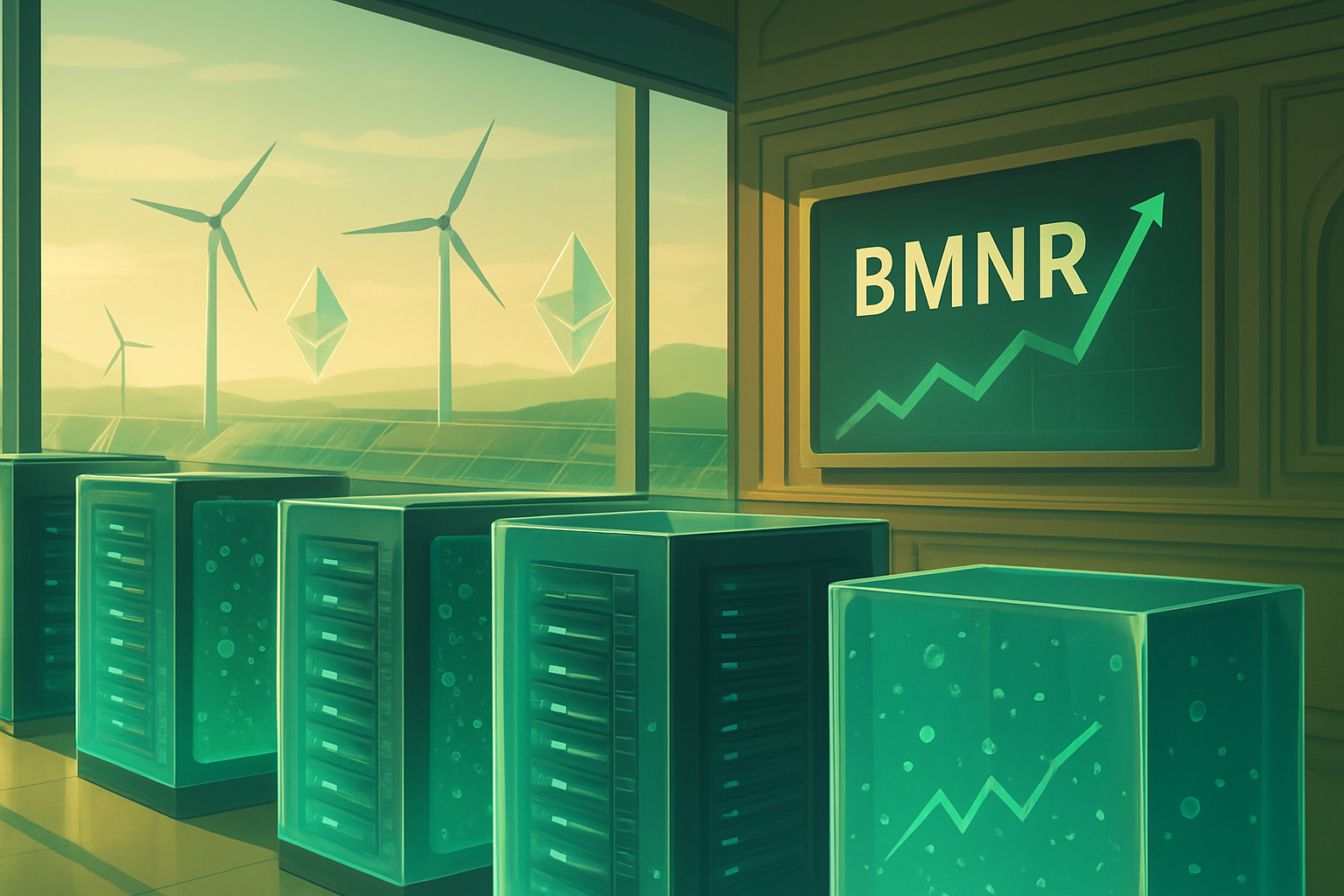
  • The Ethereum Treasury: Inside Bitmine Immersion Technologies’ $4 Billion Strategic Pivot

    The Ethereum Treasury: Inside Bitmine Immersion Technologies’ $4 Billion Strategic Pivot

    On the morning of April 9, 2026, the floor of the New York Stock Exchange witnessed a symbolic transition for the digital asset industry. Bitmine Immersion Technologies (NYSE: BMNR), a company that began the decade as a micro-cap Bitcoin miner in the dusty plains of West Texas, officially graduated to the “Big Board.” The uplisting from the NYSE American to the main NYSE exchange was not merely a change in ticker location; it was accompanied by a staggering announcement: a board-authorized $4 billion share buyback program.

    This move cements Bitmine’s status as the "Ethereum equivalent" of MicroStrategy (NASDAQ: MSTR), shifting the narrative from a hardware-focused mining operation to a massive institutional treasury and staking powerhouse. With a portfolio anchored by nearly 4.8 million ETH and a proprietary immersion cooling technology that provides an unfair advantage in operational efficiency, BMNR has emerged as a central pillar of the 2026 crypto-equity landscape.

    Historical Background

    The origins of Bitmine Immersion Technologies (NYSE: BMNR) are rooted in a 1995 corporate shell (Sandy Springs Holdings), but its modern incarnation began in July 2021. Under the early leadership of Jonathan Bates and Erik Nelson, the company pivoted to address the most glaring weakness of the crypto mining industry: heat and energy waste.

    Between 2021 and 2024, Bitmine established itself as a pioneer in immersion cooling. Its flagship site in Pecos, Texas, and operations in Trinidad served as the testing grounds for submerging high-powered ASIC miners in dielectric fluid. By 2023, the Pecos facility was fully electrified, proving that immersion could extend hardware life and boost hashrate. However, the company remained a niche player on the OTC markets until mid-2025, when a radical change in leadership and strategy—led by Chairman Thomas "Tom" Lee—transformed the company into a digital asset treasury.

    Business Model

    Bitmine operates a sophisticated dual-track business model designed to capture value from both the physical and digital layers of the Ethereum and Bitcoin ecosystems.

    1. Digital Asset Treasury: The core of the company’s current value proposition is its "Alchemy of 5%" strategy. Bitmine aggressively acquires Ethereum (ETH) with the goal of holding 5% of the total circulating supply. This treasury is managed as a high-yield asset base, utilizing institutional staking to generate recurring revenue.
    2. Infrastructure & Immersion Cooling: Bitmine continues to operate a massive mining and validator footprint. By using dielectric liquid cooling, the company achieves a 30% higher efficiency rating than traditional air-cooled competitors. This hardware arm serves as a "yield engine," generating the cash flow used to service debt and fund further ETH acquisitions.
    3. MAVAN (Made-in-America Validator Network): Launched in early 2026, MAVAN is a proprietary staking-as-a-service platform that allows Bitmine to act as a primary validator for the Ethereum network, capturing both staking rewards and MEV (Maximal Extractable Value).

    Stock Performance Overview

    The trajectory of BMNR stock has been one of the most dramatic in the mid-2020s.

    • 1-Year Performance: Over the last twelve months, BMNR has outperformed the broader S&P 500 and even the price of ETH itself, driven by its 2025 pivot and the anticipation of the NYSE uplisting.
    • 5-Year Performance: Investors who held BMNR during its OTC days (when it traded as a penny stock under $1.00) have seen life-changing returns as the stock crossed into the triple digits in late 2025.
    • Recent Volatility: The stock experienced a significant "short squeeze" in mid-2025 following the announcement of Tom Lee’s chairmanship, and it has since stabilized into a high-volume institutional favorite, now ranking among the top 100 most liquid stocks in the U.S.

    Financial Performance

    Bitmine’s fiscal year 2025 results, released in late 2025, marked a turning point. The company reported a net income of $328.16 million, a radical swing from its earlier years of development-stage losses.

    • Assets: As of April 2026, Bitmine holds $11.4 billion in total assets, including 4.8 million ETH (valued at approximately $10.5 billion based on current market prices) and $864 million in cash and cash equivalents.
    • Margins: Due to the efficiency of its immersion cooling and the low overhead of its staking operations, the company boasts gross margins exceeding 75% in its treasury segment.
    • Valuation: BMNR often trades at a "treasury premium" to its Net Asset Value (NAV), similar to the premium seen in companies that successfully bridge the gap between equity markets and crypto-commodities.

    Leadership and Management

    The current leadership team is a "Who's Who" of Wall Street and Silicon Valley expertise:

    • Thomas "Tom" Lee (Chairman): The founder of Fundstrat Global Advisors, Lee is the visionary behind the ETH-treasury model. His reputation for accurate macro forecasting has provided the company with immense credibility among institutional investors.
    • Chi Tsang (CEO): Appointed in November 2025, Tsang brought 25 years of experience from firms like HSBC and various tech-focused venture capital groups. His focus is on "institutionalizing" the company's operations.
    • Young Kim (CFO/COO): An MIT-trained engineer with a Harvard MBA, Kim manages the complex logistics of the immersion facilities and the financial engineering required for the $4 billion buyback program.

    Products, Services, and Innovations

    Bitmine’s competitive edge lies in its "Thermal Management Intellectual Property." While many firms mine crypto, Bitmine’s proprietary immersion containers allow for "safe overclocking"—running machines at speeds higher than manufacturer specs without the risk of thermal meltdown.
    Additionally, the MAVAN Validator Network represents a shift toward "Green Staking." By powering its validator nodes with a mix of stranded gas in Texas and hydroelectric power in international locations, Bitmine has positioned its ETH holdings as the most ESG-compliant "yield" in the crypto market.

    Competitive Landscape

    Bitmine faces competition from three distinct groups:

    1. Bitcoin Giants: MARA Holdings (NASDAQ: MARA) and Riot Platforms (NASDAQ: RIOT) remain the leaders in pure-play Bitcoin hashrate, but they lack Bitmine’s aggressive Ethereum treasury focus.
    2. HPC/AI Pivoters: Companies like Core Scientific (NASDAQ: CORZ) and Hut 8 (NASDAQ: HUT) have moved toward hosting AI data centers. Bitmine has chosen to stay "crypto-native," betting that the yield from ETH staking will eventually outpace the margins of AI hosting.
    3. Institutional Treasuries: MicroStrategy (NASDAQ: MSTR) remains the primary rival for institutional "crypto-proxy" dollars. While MSTR is the "Bitcoin King," Bitmine is positioning itself as the "Ethereum Queen."

    Industry and Market Trends

    The "DATCO" (Digital Asset Treasury Company) trend is the defining market movement of 2026. Following the adoption of fair-value accounting by FASB in 2024, public companies can now report their crypto holdings at current market prices rather than being forced to only report "impairment" losses. This has encouraged companies like Bitmine to use their balance sheets as strategic weapons. Furthermore, the 2026 market is characterized by "Staking-as-a-Yield," where investors view ETH staking rewards as a digital version of the risk-free rate.

    Risks and Challenges

    Despite its success, Bitmine is not without risks:

    • Asset Concentration: With over 90% of its asset base in Ethereum, a catastrophic failure in the ETH protocol or a massive price crash would be devastating.
    • Regulatory Reversals: While the 2026 environment is favorable, any shift in the SEC's view on staking (possibly through a change in administration) could impact the MAVAN revenue stream.
    • Operational Maintenance: Immersion cooling is complex. A leak or contamination of the dielectric fluid at a major site could lead to significant downtime and hardware damage.

    Opportunities and Catalysts

    The $4 billion buyback is the most immediate catalyst. By retiring shares, Bitmine effectively increases the "ETH per share" for remaining investors.
    Future opportunities include:

    • Layer 2 Integration: Speculation exists that Bitmine may launch its own Ethereum Layer 2 network to capture transaction fees.
    • M&A: With its massive cash and equity valuation, Bitmine is well-positioned to acquire smaller air-cooled miners and "upgrade" them to immersion cooling.

    Investor Sentiment and Analyst Coverage

    Investor sentiment is overwhelmingly bullish, bordering on euphoric. The company is a favorite of ARK Investment Management and Pantera Capital. Major investment banks including Morgan Stanley and BlackRock (NYSE: BLK) have added BMNR to various "Innovation" and "Digital Infrastructure" ETFs. Retail sentiment, tracked via platforms like X and Reddit, remains high as the "Alchemy of 5%" becomes a viral movement among Ethereum enthusiasts.

    Regulatory, Policy, and Geopolitical Factors

    The 2026 regulatory landscape is the "Golden Era" for U.S. crypto companies. The GENIUS Act (2025) allowed U.S. banks to custody ETH, while the CLARITY Act defined ETH as a digital commodity. These laws provided the legal runway for Bitmine's NYSE uplisting. Geopolitically, Bitmine’s focus on "Made in America" validators aligns with U.S. policy to bring digital asset infrastructure back from overseas, particularly from regions with unstable energy grids or hostile regimes.

    Conclusion

    Bitmine Immersion Technologies (NYSE: BMNR) has successfully navigated the transition from a speculative penny stock to a foundational institutional asset. By combining high-end physical infrastructure (immersion cooling) with a bold financial strategy (the Ethereum treasury), the company has created a blueprint for the modern digital corporation.

    Investors should watch the execution of the $4 billion buyback and the progress toward the 5% ETH supply goal. While the concentration in a single digital asset carries inherent risks, the company’s operational efficiency and the current regulatory tailwinds suggest that Bitmine’s journey on the New York Stock Exchange is only just beginning. As of April 9, 2026, Bitmine is no longer just a mining company—it is a cornerstone of the decentralized financial future.


    This content is intended for informational purposes only and is not financial advice.

  • Lululemon at a Crossroads: Navigating a Leadership Vacuum and the Quest for Newness

    Lululemon at a Crossroads: Navigating a Leadership Vacuum and the Quest for Newness

    Lululemon Athletica Inc. (NASDAQ: LULU) remains a dominant force in the global "athleisure" market, recently surpassing $10 billion in annual revenue. However, as of late 2024 and heading into 2026, the company is navigating a transition period marked by intensifying competition, a cooling North American market, and a significant leadership change. This article explores the company's trajectory, fundamental health, and the hurdles it must clear to maintain its premium status in an increasingly crowded retail landscape.

    Historical Background

    Founded in 1998 by Chip Wilson in Vancouver, British Columbia, Lululemon began as a single yoga studio and design space. Wilson’s vision was rooted in the technical needs of yoga practitioners, specifically focusing on high-performance fabrics that offered both compression and breathability. The brand’s ascent was fueled by its "Science of Feel" philosophy and its grassroots marketing model, which empowered local yoga instructors as brand ambassadors rather than relying on traditional celebrity endorsements.

    After going public in 2007, the company navigated several high-profile controversies, including the 2013 "sheer leggings" recall and the eventual exit of Wilson following polarizing public comments. Under subsequent leadership, particularly Calvin McDonald (who took the helm in 2018), Lululemon transformed from a niche yoga outfitter into a global lifestyle juggernaut. McDonald spearheaded the expansion into menswear, footwear, and international markets, taking the company to unprecedented financial heights before the current strategic "reset."

    Business Model

    Lululemon operates a vertically integrated, direct-to-consumer (DTC) model. Unlike traditional wholesalers like Nike (NYSE: NKE), Lululemon maintains total control over its brand, pricing, and guest experience by selling almost exclusively through its own physical stores and e-commerce platform.

    • Product Pillars: Revenue is primarily derived from technical apparel for yoga, running, and training. Recently, the company has expanded into "lifestyle" categories like golf, tennis, and hike.
    • Omni-Channel Integration: E-commerce is a massive driver, accounting for roughly 45-50% of total revenue. This model offers higher margins than physical retail and provides deep data on consumer habits.
    • Community-Led Marketing: The brand relies on a grass-roots ambassador program, employing local fitness influencers and athletes to host in-store classes and events, fostering a sense of "belonging" that justifies premium pricing ($98–$128 for leggings).

    Stock Performance Overview

    The last two years have been a sobering period for LULU shareholders. After hitting all-time highs in late 2023, the stock suffered a punishing decline throughout 2024 and 2025.

    • 1-Year Performance: Down roughly 32%, largely due to stagnant growth in the Americas and leadership uncertainty.
    • 5-Year Performance: The stock is currently trading nearly 45% below its 2021 highs, effectively erasing a significant portion of its pandemic-era gains.
    • 10-Year Performance: Despite recent volatility, long-term investors are still up over 350%, underscoring the brand's fundamental strength before the current market saturation.

    Financial Performance

    In its most recent fiscal year 2025 reporting, Lululemon showed a notable divide between international strength and domestic stagnation.

    • Revenue Growth: Total revenue reached $11.1 billion, a 5% increase. However, comparable sales in the Americas dipped by 3.0%, the first sustained contraction in years.
    • Margins: Gross margins remain industry-leading at 59%, though operating margins have faced slight pressure from increased promotional activity and higher customer acquisition costs.
    • Balance Sheet: The company ended the period with a strong $2.1 billion in cash and zero long-term debt, allowing for aggressive stock buyback programs.
    • Valuation: LULU is currently trading at its lowest price-to-earnings (P/E) multiple in a decade, reflecting the market's skepticism regarding its mid-term growth targets.

    Leadership and Management

    Lululemon is currently in a state of transition. Following the official departure of CEO Calvin McDonald on January 31, 2026, the company is being led by interim co-CEOs Meghan Frank (CFO) and André Maestrini (CCO).

    The departure of McDonald, alongside the earlier exit of Chief Product Officer Sun Choe and President of the Americas Celeste Burgoyne, has created a "brain drain" at the top. To stabilize the ship, Marti Morfitt has assumed the role of Executive Chair, and former Levi’s CEO Chip Bergh has joined the board to oversee the search for a permanent successor capable of steering the "Power of Three ×2" strategy.

    Products, Services, and Innovations

    Innovation is Lululemon’s primary competitive moat. The company’s R&D focuses on proprietary fabrics like Nulu and Everlux. Recent innovations include:

    • ShowZero™ Technology: Launched in early 2026, this technology makes sweat virtually invisible on the outside of the fabric, targeting high-intensity athletes.
    • Footwear Expansion: Following the 2024 launch of men’s footwear (Cityverse and Beyondfeel), the company is working to refine its fit and performance to compete with specialists like On Holding (NYSE: ONON).
    • Sustainability: Partnerships with biotech firms like ZymoChem to scale bio-based nylon 6,6, aiming to move away from petroleum-based materials while maintaining performance.

    Competitive Landscape

    Lululemon faces a "squeezed" market where established giants and agile upstarts are both gaining share.

    • Alo Yoga and Vuori: These brands have successfully "stolen the sex appeal" and fashion-forward narrative among Gen Z and Millennial shoppers in the U.S.
    • Nike: Still the market leader in overall athleisure spending. While Nike has struggled with its own innovation cycles, it remains the primary threat in the high-performance and footwear segments.
    • Niche Players: Performance-oriented brands like Hoka and On are increasingly bundling apparel with their footwear, challenging Lululemon’s dominance in the "running" category.

    Industry and Market Trends

    The "Athleisure" sector in North America has reached a point of maturity. Consumers are increasingly "pantry-loading" fewer premium items and are more sensitive to price hikes. There is also a distinct shift toward "quiet luxury" and "performance-outdoor" aesthetics, moving away from the bright, logo-heavy yoga gear of the 2010s. Supply chain dynamics have normalized, but the push for sustainable materials has increased long-term R&D costs across the sector.

    Risks and Challenges

    • Operational Risks: The "Breezethrough" controversy in 2024, where a new legging line was pulled due to poor design feedback, highlighted potential cracks in the product development pipeline.
    • Leadership Vacuum: The search for a permanent CEO is critical; a failed hire could lead to further brand dilution.
    • Market Concentration: Heavy reliance on North American growth has hurt the stock as domestic demand cools.
    • China Exposure: While China is a growth engine, it carries significant geopolitical and regulatory risks.

    Opportunities and Catalysts

    • Mainland China: Revenue in China rose 41% recently, representing the company's most significant growth lever.
    • Menswear: Currently 24% of revenue, the men’s category remains underpenetrated compared to the women's segment.
    • New Leadership: The appointment of a visionary CEO from the luxury or digital-native space could serve as a major catalyst for investor sentiment.
    • Product "Newness": Successful execution of the ShowZero™ line and a refresh of the core Align leggings could win back North American consumers.

    Investor Sentiment and Analyst Coverage

    Wall Street sentiment has shifted to a "Hold" consensus in early 2026. Major firms like Citigroup and Goldman Sachs have slashed price targets from $400+ to the $180 range. Retail chatter on platforms like Reddit has turned cautious, with many users noting a lack of excitement in recent seasonal drops. However, institutional ownership remains high, with many value funds viewing the current dip as a generational entry point for a high-quality brand.

    Regulatory, Policy, and Geopolitical Factors

    Lululemon faces ongoing pressure regarding its supply chain transparency. As the EU and U.S. tighten regulations on PFAS (forever chemicals) in performance fabrics, Lululemon is investing heavily in compliant alternatives. Furthermore, as a major player in the China market, the company is sensitive to trade tariffs and shifting consumer sentiment in the APAC region influenced by local government policies.

    Conclusion

    Lululemon at 2026 is a company at a crossroads. It possesses industry-leading margins, a debt-free balance sheet, and explosive international growth. However, it must overcome a domestic stagnation and a leadership transition that has left the brand feeling unmoored. For investors, the question is whether Lululemon can rediscover the innovation spark that defined its first two decades. The brand’s strength is undeniable, but the path back to market outperformance requires a renewed focus on the technical "newness" that made it a household name.


    This content is intended for informational purposes only and is not financial advice.

  • The $1 Trillion Trajectory: A Deep-Dive into NVIDIA (NVDA) and the Future of AI Silicon

    The $1 Trillion Trajectory: A Deep-Dive into NVIDIA (NVDA) and the Future of AI Silicon

    Introduction

    As of March 26, 2026, the global technology landscape is no longer merely "transitioning" to artificial intelligence; it is being entirely reconstructed around it. At the epicenter of this seismic shift stands NVIDIA Corporation (NASDAQ: NVDA). Once a niche manufacturer of graphics cards for gamers, NVIDIA has ascended to become the world’s most valuable enterprise, boasting a market capitalization of approximately $4.3 trillion. The company’s current focus—and the primary driver of its stratospheric valuation—is the audacious projection of $1 trillion in cumulative AI chip sales. This deep-dive feature explores how NVIDIA transitioned from a hardware vendor to the foundational layer of the "Age of Inference," and whether its current dominance is a permanent fixture or a precarious peak.

    Historical Background

    Founded in 1993 by Jensen Huang, Chris Malachowsky, and Curtis Priem, NVIDIA’s journey began with a focus on accelerated computing for the PC gaming market. The company’s 1999 invention of the Graphics Processing Unit (GPU) defined a new category of processor. However, the true turning point came in 2006 with the release of CUDA (Compute Unified Device Architecture). By allowing developers to use GPUs for general-purpose mathematical processing, NVIDIA unknowingly laid the groundwork for the modern AI revolution. Over the next two decades, the company pivoted through mobile processing and professional visualization, but it was the 2012 "AlexNet" moment—where GPUs proved vastly superior for training neural networks—that set NVIDIA on its current path toward global dominance.

    Business Model

    NVIDIA’s business model has evolved from selling discrete hardware to providing an integrated, full-stack accelerated computing platform.

    • Data Center (91% of Revenue): The undisputed engine of growth. This segment includes AI training and inference chips, networking hardware (InfiniBand and Spectrum-X), and specialized AI software.
    • Gaming: While no longer the primary driver, the GeForce line remains the gold standard for PC enthusiasts and creative professionals.
    • Professional Visualization: Catering to architects and engineers through the RTX platform and the "Omniverse" industrial metaverse.
    • Automotive and Robotics: A long-term growth play focusing on autonomous driving systems (DRIVE) and humanoid robotics (Isaac).
      NVIDIA’s "moat" is not just the silicon; it is the software ecosystem (CUDA) and the high-speed interconnects (NVLink) that make thousands of GPUs function as a single giant computer.

    Stock Performance Overview

    NVIDIA’s stock performance leading up to March 2026 has been nothing short of historic. Following a 10-for-1 stock split in mid-2024, the shares have continued to defy gravity.

    • 1-Year Performance: +60%, buoyed by the flawless execution of the Blackwell architecture rollout.
    • 5-Year Performance: +1,400%, capturing the entire arc of the generative AI explosion.
    • 10-Year Performance: +20,000%, cementing its status as the "stock of a generation."
      Despite occasional periods of high volatility, the stock has consistently outperformed its peers in the PHLX Semiconductor Index (SOX), driven by earnings growth that has largely kept pace with its rising share price.

    Financial Performance

    In the fiscal year 2026 (ended January 2026), NVIDIA reported a staggering $215.9 billion in revenue, a 65% increase over the previous year.

    • Margins: Gross margins remain the envy of the industry, hovering near 75% (Non-GAAP). This reflects NVIDIA’s immense pricing power and the "software-like" margins it commands for its integrated systems.
    • Cash Flow: The company generated over $90 billion in free cash flow in FY2026, allowing for aggressive R&D spending and significant share buybacks.
    • Valuation: Despite its size, NVIDIA trades at a forward P/E ratio of roughly 23x, which many analysts argue is "cheap" relative to its 60%+ earnings growth rate.

    Leadership and Management

    The face of NVIDIA remains its co-founder and CEO, Jensen Huang. Known for his signature black leather jacket and long-term vision, Huang is widely regarded as one of the world’s most effective CEOs. His leadership is characterized by "flat" organizational structures and a culture of "intellectual honesty."
    Under Huang, the management team has successfully transitioned the company to a one-year product cadence, a grueling pace that forces competitors to chase a moving target. The board of directors is lauded for its stability and technical expertise, ensuring that governance keeps pace with the company’s exponential growth.

    Products, Services, and Innovations

    NVIDIA’s product roadmap is currently transitioning between two generational architectures:

    • Blackwell (B300 Ultra): The current market leader, featuring 288GB of HBM3e memory and optimized for the massive throughput required by trillion-parameter models.
    • Rubin (R100): Scheduled for mid-to-late 2026, Rubin is built on TSMC’s N3P process. It introduces HBM4 memory and the Vera CPU, an Arm-based processor designed to replace the Grace CPU in high-performance "Superchips."
    • Networking: The acquisition of Mellanox (2020) has proven visionary. NVIDIA’s networking revenue now rivals that of major standalone networking firms, as high-speed data transfer is the bottleneck in massive AI clusters.

    Competitive Landscape

    While NVIDIA holds over 80% of the AI accelerator market, competition is intensifying:

    • Merchant Rivals: AMD (NASDAQ: AMD) has emerged as a formidable second source with its MI350 and upcoming MI450 series. Intel (NASDAQ: INTC) continues to iterate on its Gaudi line, though it remains a niche player in the high-end data center market.
    • Custom Silicon: The "Hyperscaler Threat" is the most significant long-term challenge. Google (NASDAQ: GOOGL), Amazon (NASDAQ: AMZN), and Microsoft (NASDAQ: MSFT) are increasingly deploying their own AI chips (TPUs, Trainium, Maia) to reduce their reliance on NVIDIA and lower their total cost of ownership.

    Industry and Market Trends

    Three major trends define the current market:

    1. The Age of Inference: While the last three years were about training models, 2026 is the year of inference—running models at scale. This requires different hardware profiles where NVIDIA still leads but faces more competition.
    2. Sovereign AI: Nations (e.g., Italy, Saudi Arabia, Japan) are now investing billions to build their own domestic AI clouds, viewing compute as a national security asset. NVIDIA has been the primary beneficiary of these "Government-to-GPU" deals.
    3. Agentic AI: The shift from chatbots to "AI Agents" that can perform complex tasks autonomously is driving a fresh wave of compute demand.

    Risks and Challenges

    NVIDIA’s path to $1 trillion in sales is not without obstacles:

    • Customer Concentration: Over 60% of NVIDIA’s revenue comes from just four "hyperscaler" customers. If these giants pull back on capital expenditures, NVIDIA’s revenue could crater.
    • Supply Chain: The company remains 100% dependent on Taiwan Semiconductor Manufacturing Company (NYSE: TSM) for its most advanced chips. Any disruption in the Taiwan Strait would be catastrophic.
    • ROI Concerns: Investors are increasingly asking when the massive $600 billion annual spend on AI hardware will translate into corporate profits. A "bubble burst" in the AI software sector would immediately hit NVIDIA’s order book.

    Opportunities and Catalysts

    • The $1 Trillion Milestone: Jensen Huang has clarified that the $1 trillion figure refers to cumulative sales of the Blackwell and Rubin platforms by the end of 2027. Reaching this would require sustained demand for at least another 18 months.
    • Edge AI and Robotics: The release of the "Isaac" platform for humanoid robots represents a multi-billion dollar opportunity that is currently in its nascent stages.
    • Software Recurring Revenue: NVIDIA is aggressively growing its software-as-a-service (SaaS) business, charging for the NVIDIA AI Enterprise operating system, which could provide a high-margin "cushion" if hardware sales slow.

    Investor Sentiment and Analyst Coverage

    Wall Street remains overwhelmingly bullish. Approximately 90% of analysts covering NVDA maintain a "Buy" or "Strong Buy" rating. The consensus view is that NVIDIA is not just a chip company, but the "utility company" of the intelligence age. Institutional ownership remains high at 65%, though some hedge funds have begun to rotate into "second-derivative" AI plays like power and cooling infrastructure.

    Regulatory, Policy, and Geopolitical Factors

    Geopolitics remains NVIDIA’s "gray swan" risk.

    • China Restrictions: US export controls have largely cut NVIDIA off from the high-end Chinese market. While NVIDIA has introduced "de-tuned" chips, Chinese firms like Huawei are making rapid gains in domestic adoption.
    • Antitrust Scrutiny: Both the US DOJ and European regulators are investigating NVIDIA’s dominance in AI networking and its "bundling" practices, which could lead to future fines or structural changes.
    • The CHIPS Act: Federal subsidies are helping shift some production to US soil, but the 2026 reality is that the most advanced logic still relies on Asian facilities.

    Conclusion

    NVIDIA enters the mid-2020s in a position of power seldom seen in corporate history. The projection of $1 trillion in AI chip sales is more than a marketing figure; it is a testament to the company's role as the indispensable architect of a new digital era. However, the "Age of Rubin" will be more challenging than the "Age of Hopper." With hyperscalers building their own silicon, regulators circling, and the law of large numbers finally catching up, NVIDIA must continue to out-innovate its rivals at a relentless pace. For investors, NVIDIA remains the ultimate high-reward play, provided they can stomach the volatility and the constant threat of a supply chain or geopolitical shock.


    This content is intended for informational purposes only and is not financial advice.

  • Arm Holdings (ARM): The AGI Pivot and the Meta Alliance

    Arm Holdings (ARM): The AGI Pivot and the Meta Alliance

    As of March 26, 2026, the global semiconductor landscape is witnessing a seismic shift. Arm Holdings plc (Nasdaq: ARM), once known primarily as the silent architect behind the world’s smartphone processors, has emerged as a direct powerhouse in the Artificial General Intelligence (AGI) era. This week, the company captured the market's full attention with the official launch of its inaugural production silicon—the Arm AGI 910 series CPU—and a strategic alliance with Meta Platforms, Inc. (Nasdaq: META) that promises to redefine how Large Language Models (LLMs) are deployed from the data center to the palm of a hand. No longer content with merely providing blueprints, Arm is now a front-line competitor in high-performance computing, signaling a new chapter in its 35-year history.

    Historical Background

    Arm’s journey began in 1990 as a joint venture between Acorn Computers, Apple (Nasdaq: AAPL), and VLSI Technology. Its "Reduced Instruction Set Computing" (RISC) architecture was originally designed for the ill-fated Apple Newton, but its low power consumption eventually made it the gold standard for the mobile revolution.

    The company was taken private by SoftBank Group (OTC: SFTBY) in 2016 for $32 billion. Following a blocked acquisition attempt by Nvidia (Nasdaq: NVDA) due to regulatory hurdles, Arm returned to the public markets in September 2023 at an IPO price of $51 per share. Since then, under the leadership of CEO Rene Haas, the company has aggressively pivoted away from general-purpose mobile IP toward specialized high-performance computing (HPC) and AI-centric architectures.

    Business Model

    Arm’s business model has undergone a profound transformation. Traditionally, the company relied on a two-pronged approach:

    1. Licensing: Charging upfront fees to companies for access to its IP.
    2. Royalties: Collecting a percentage of the selling price for every chip shipped containing Arm technology.

    By 2026, a third pillar has emerged: Compute Subsystems (CSS) and Direct Silicon. Through CSS, Arm provides "ready-to-tape-out" designs, significantly reducing time-to-market for hyperscalers like Amazon (Nasdaq: AMZN) and Google (Nasdaq: GOOGL). Furthermore, with the launch of the AGI 910 series, Arm has begun selling its own branded silicon for the first time, capturing the full manufacturing margin rather than just a royalty fee—a move that fundamentally alters its revenue profile and competitive standing.

    Stock Performance Overview

    Since its 2023 IPO, Arm has been one of the most explosive performers in the tech sector.

    • 1-Year Performance: In the past 12 months, the stock has surged 68%, fueled by the rollout of the Armv9 architecture and the expansion into the data center.
    • Post-IPO Horizon: From its $51 debut in late 2023 to its current price of $157.07 on March 26, 2026, the stock has gained approximately 208%.
    • Market Context: Arm’s market capitalization now exceeds $160 billion. While it experienced volatility in early 2025 during a broader tech correction, its "AI-first" pivot has allowed it to decouple from traditional smartphone cycles and trade at premium multiples reminiscent of Nvidia’s early AI growth phase.

    Financial Performance

    Arm’s fiscal year 2025 results (ending March 31, 2025) showcased a business firing on all cylinders.

    • Revenue: Record annual revenue of $4.01 billion, representing 24% year-over-year growth.
    • Margins: The company maintains an industry-leading gross margin of 96-97% on its IP business, with non-GAAP operating margins holding steady at 41% despite the heavy R&D spend required for the AGI CPU launch.
    • Profitability: Net profit for the final quarter of FY2025 grew by over 300%, driven by the adoption of Armv9, which commands nearly double the royalty rate of the older Armv8 architecture.
    • Cash Flow: Arm remains in a strong net-cash position, allowing it to fund its foray into direct silicon manufacturing without Dilutive capital raises.

    Leadership and Management

    CEO Rene Haas has been the primary architect of Arm’s "Compute Subsystems" strategy. Since taking the helm in 2022, Haas has shifted the culture from an engineering-first licensing firm to a commercially aggressive silicon partner. His leadership team, including CFO Jason Child, has focused on "value-based pricing," moving away from flat licensing fees toward a model where Arm captures a larger share of the total system value. The board, still heavily influenced by SoftBank (which retains a majority stake), has supported this high-stakes move into direct hardware competition.

    Products, Services, and Innovations

    The centerpiece of Arm’s current innovation is the AGI 910 CPU, built on TSMC’s 3nm process.

    • Architecture: It features 136 Neoverse V3 cores and is designed specifically for "Agentic AI"—systems that require constant reasoning and autonomous decision-making rather than simple data processing.
    • Performance: With 800 GB/s of memory bandwidth and native CXL 3.0 support, the AGI 910 is built to eliminate the bottlenecks often found in traditional x86 server architectures.
    • Mobile Innovation: On the consumer side, the C1-Ultra core (part of the Cortex family) introduces Scalable Matrix Extension 2 (SME2), allowing smartphones to run LLMs locally with 172% more efficiency than 2024 models.
    • Software Stack: The KleidiAI library, an open-source initiative, ensures that AI developers can write code once and have it run optimally across all Arm-based hardware, from wearables to supercomputers.

    Competitive Landscape

    Arm occupies a unique, yet increasingly combative, position:

    • vs. x86 (Intel/AMD): Arm continues to gain ground in the data center, now holding roughly 20% of the cloud server market. Its superior performance-per-watt is a critical advantage as data centers hit power-consumption ceilings.
    • vs. RISC-V: The open-source RISC-V architecture is Arm’s most significant long-term threat, particularly in China and in low-cost IoT applications. However, Arm’s robust software ecosystem and "plug-and-play" CSS offerings provide a moat that RISC-V has yet to replicate.
    • vs. Nvidia: While Arm and Nvidia are partners (Nvidia uses Arm CPUs in its Grace Hopper units), the AGI 910 series puts Arm in indirect competition for the "head node" of the AI server rack.

    Industry and Market Trends

    The semiconductor industry in 2026 is dominated by two trends: Sovereign AI and Edge Inference.
    Governments are increasingly investing in domestic AI infrastructure to ensure data privacy and national security, often choosing Arm’s customizable architecture for these projects. Simultaneously, the focus of AI is shifting from "training" (massive GPU clusters) to "inference" (running models on devices). This shift plays directly into Arm’s strengths in energy efficiency and ubiquitous mobile presence.

    Risks and Challenges

    Despite its recent triumphs, Arm faces significant headwinds:

    • Concentration Risk: A significant portion of Arm’s growth is tied to a handful of hyperscalers. If companies like Amazon or Meta eventually move toward entirely in-house architectures (bypassing Arm's CSS), revenue could stagnate.
    • China Exposure: Arm China remains a complex and potentially volatile entity. Geopolitical tensions between the US and China regarding high-end chip exports continue to threaten a vital portion of Arm's royalty stream.
    • Valuation: Trading at high double-digit price-to-earnings (P/E) multiples, the stock has "priced in" a near-perfect execution of its AI strategy. Any miss in AGI CPU adoption could lead to a sharp correction.

    Opportunities and Catalysts

    The Meta Partnership is perhaps the most significant catalyst in Arm's recent history. By optimizing Meta’s Llama 4 models (Scout, Maverick, and Behemoth) natively for Arm silicon, the two companies are creating a vertical stack that could become the "Windows" of the AI era.
    Upcoming earnings reports will be closely watched for the first signs of revenue from the AGI 910 series. Furthermore, the expansion of "Windows on Arm" in the PC market provides a massive, largely untapped royalty pool if it can finally unseat x86 dominance in the enterprise laptop segment.

    Investor Sentiment and Analyst Coverage

    Wall Street remains overwhelmingly bullish on ARM. Analysts from major firms like Goldman Sachs and Morgan Stanley have consistently raised price targets, citing Arm as the "essential toll-taker" of the AI economy. Institutional ownership has surged, with major hedge funds rotating out of legacy hardware and into Arm as a more diversified AI play. Retail sentiment is equally high, driven by the company’s visibility in the consumer electronics space.

    Regulatory, Policy, and Geopolitical Factors

    As a UK-based company listed in the US and owned by a Japanese conglomerate, Arm sits at the center of a geopolitical triangle. The UK government has designated Arm a "strategic national asset," providing incentives for domestic R&D. Conversely, US export controls on 3nm technology and advanced AI IP to "non-aligned" nations limit Arm’s total addressable market in certain regions. Compliance with these evolving "Tech Wall" policies remains a top-tier operational priority for the legal team.

    Conclusion

    Arm Holdings has successfully navigated the transition from a mobile-centric IP provider to a central pillar of the AGI infrastructure. The launch of the AGI 910 series and the deep integration with Meta’s Llama ecosystem demonstrate a company that is no longer waiting for the future to happen but is actively building it. While the risks of valuation and geopolitical friction are real, Arm’s 99% dominance in mobile and its rapid ascent in the data center make it an indispensable player in the semiconductor sector. For investors, the key will be watching whether the "Direct Silicon" move yields the high margins Arm has promised, or if it introduces capital complexities that the company hasn't previously had to manage.


    This content is intended for informational purposes only and is not financial advice.

  • Micron Technology (MU): The AI Memory Supercycle and the Structural Re-rating of 2026

    Micron Technology (MU): The AI Memory Supercycle and the Structural Re-rating of 2026

    As of March 20, 2026, Micron Technology, Inc. (NASDAQ: MU) stands as a central pillar of the global artificial intelligence (AI) infrastructure. Once viewed as a provider of "commodity" memory components prone to brutal boom-and-bust cycles, the Boise-based semiconductor giant has successfully orchestrated a structural re-rating of its business. In the current era of generative AI and high-performance computing (HPC), memory has transitioned from a secondary consideration to a critical performance bottleneck. Micron’s ability to deliver high-bandwidth, power-efficient solutions has placed it at the heart of the most important technological shift of the decade, making it one of the most closely watched companies on Wall Street today.

    Historical Background

    Founded in 1978 in the basement of a Boise, Idaho dental office, Micron’s journey is one of survival and relentless adaptation. In the 1980s and 90s, the company weathered intense competition from Japanese and South Korean conglomerates that drove dozens of American memory makers out of business. Through a combination of low-cost manufacturing and strategic acquisitions—most notably the 2013 purchase of Japan’s Elpida Memory—Micron emerged as the last major U.S.-based DRAM manufacturer.

    The most significant transformation occurred over the last decade as the company moved away from simple PC and mobile RAM toward specialized, high-margin products. Under the leadership of Sanjay Mehrotra, who took the helm in 2017, Micron focused on "technology leadership," consistently being the first to reach new miniaturization milestones (nodes) like 1-alpha and 1-beta. This history of resilience set the stage for its current dominance in the AI memory market.

    Business Model

    Micron’s business model is built on the design and manufacture of three primary technologies:

    • DRAM (Dynamic Random Access Memory): Accounting for roughly 75% of revenue, DRAM is essential for the "working memory" of servers, PCs, and smartphones.
    • NAND Flash: Used for long-term data storage in Solid State Drives (SSDs) and mobile devices.
    • NOR Flash: Specialized memory for "instant-on" applications in automotive and industrial sectors.

    The company operates through four primary business units:

    1. Compute & Networking (CNBU): Includes high-growth data center and AI server sales.
    2. Mobile (MBU): Supplies memory for the "AI Smartphone" replacement cycle.
    3. Storage (SBU): Focuses on enterprise and consumer SSDs.
    4. Embedded (EBU): Targets the automotive, industrial, and consumer electronics markets.

    Stock Performance Overview

    The performance of MU stock over the last decade reflects its transition from a cyclical play to a growth powerhouse.

    • 1-Year Performance: As of March 2026, the stock has surged 369% over the past twelve months, climbing from roughly $95 to over $440. This move was fueled by the realization that memory demand for AI servers was far outstripping supply.
    • 5-Year Performance: Investors have seen a 426% return, significantly outperforming the broader S&P 500.
    • 10-Year Performance: Since the lows of 2016, the stock has returned a staggering 4,148%, a testament to the compounding value of the consolidated memory "triopoly" (Micron, Samsung, and SK Hynix).

    Financial Performance

    Micron’s Fiscal Q2 2026 earnings report, released on March 18, 2026, was a historic "blowout." The company reported revenue of $23.86 billion, representing a 196% increase year-over-year. More impressively, non-GAAP gross margins reached a record 74.9%, driven by the high selling prices of High Bandwidth Memory (HBM).

    Profitability has reached an all-time high, with non-GAAP earnings per share (EPS) of $12.20 for the quarter. The company’s balance sheet remains robust, with a strong cash position that has allowed it to increase its quarterly dividend by 30% to $0.15 per share. Management's guidance for Q3 2026 suggests even higher revenues of $33.5 billion, as the company remains "sold out" of HBM capacity through the end of the calendar year.

    Leadership and Management

    Sanjay Mehrotra, President and CEO, has become one of the most respected figures in the semiconductor industry. A co-founder of SanDisk, Mehrotra brought a "discipline-first" mentality to Micron. His strategy focuses on avoiding the overproduction that historically crashed memory prices. Under his tenure, the executive team has successfully navigated the complexities of the CHIPS Act and forged deep strategic alliances with NVIDIA (NVDA) and TSMC (TSM). The Board of Directors is also highly regarded for its governance, recently expanding its expertise in global supply chain logistics and AI software integration.

    Products, Services, and Innovations

    Micron’s competitive edge currently rests on its HBM3E and HBM4 technologies.

    • HBM3E: This high-performance memory is a core component of NVIDIA’s Blackwell architecture. Micron’s version is roughly 30% more power-efficient than its competitors, a vital advantage for data centers struggling with heat and energy consumption.
    • HBM4: In early 2026, Micron began volume shipments of its 36GB 12-Hi HBM4 modules for next-generation AI accelerators.
    • 1-Gamma (1γ) Node: Micron is currently the leader in using extreme ultraviolet (EUV) lithography to produce the world’s most advanced DRAM, providing a density and efficiency advantage that competitors are still racing to match.

    Competitive Landscape

    The memory market is a global triopoly between Micron, Samsung Electronics, and SK Hynix.

    • SK Hynix: Micron's fiercest rival in HBM. While SK Hynix currently holds a larger market share (~60%), Micron has gained ground by focusing on the high-efficiency segment and faster product transitions.
    • Samsung: After stumbling with technical yields in 2024 and 2025, Samsung is currently making a massive push into HBM4 to reclaim its status. However, Micron’s nimble execution has allowed it to command a price premium over Samsung’s offerings in the current market.
    • Strengths/Weaknesses: Micron’s strength lies in its superior power efficiency and domestic US presence. Its primary weakness is its smaller total manufacturing capacity compared to the South Korean giants.

    Industry and Market Trends

    The "AI Supercycle" is the defining trend of 2026. This is characterized by:

    1. Server Content Growth: AI servers require 3x to 4x more DRAM than traditional servers.
    2. Edge AI: The launch of AI-capable PCs and smartphones in late 2025 has triggered a massive replacement cycle, as these devices require significantly more "on-board" memory to run local AI models.
    3. Supply Tightness: Because HBM production requires twice as many wafers as standard DRAM, the overall industry supply is constrained, leading to sustained high prices (ASPs).

    Risks and Challenges

    Despite the current euphoria, several risks persist:

    • Geopolitical Friction: Micron remains a pawn in the US-China trade war. While it has successfully diversified its revenue away from the Chinese server market, any further retaliatory bans from Beijing could impact its mobile business.
    • Capex Intensity: Micron plans to spend over $25 billion on capital expenditures in FY2026. This massive investment carries the risk of overcapacity if AI demand cools unexpectedly.
    • Concentration Risk: A significant portion of Micron's growth is tied to the spending of a few "Hyperscalers" (Microsoft, Meta, Google). Any slowdown in their AI infrastructure build-out would hit Micron immediately.

    Opportunities and Catalysts

    • US Manufacturing: Micron is utilizing $6.4 billion in CHIPS Act grants to build "MegaFabs" in Idaho and New York. The Idaho "ID2" facility is on track for 2027 production, which will provide Micron with a "Made in USA" advantage for sensitive government and enterprise contracts.
    • M&A Potential: While large-scale acquisitions are difficult due to antitrust concerns, Micron is well-positioned to acquire smaller AI software or controller firms to enhance its "intelligent memory" offerings.
    • HBM4 Ramp: The transition to HBM4 throughout 2026 serves as a massive catalyst for higher margins.

    Investor Sentiment and Analyst Coverage

    Wall Street sentiment is overwhelmingly bullish, with most analysts maintaining "Buy" or "Strong Buy" ratings. The prevailing narrative is a "structural re-rating," where investors are beginning to value Micron more like a high-growth logic semiconductor company (like NVIDIA) rather than a cyclical commodity maker. Institutional ownership remains high, with significant positions held by Vanguard, BlackRock, and State Street, and hedge fund activity in MU has hit a 5-year high as of Q1 2026.

    Regulatory, Policy, and Geopolitical Factors

    The U.S. CHIPS and Science Act has been a game-changer for Micron. Beyond the direct funding, the policy environment has shifted toward "friend-shoring" the semiconductor supply chain. However, export controls on advanced AI chips to China remain a double-edged sword, limiting Micron’s total addressable market while simultaneously protecting its intellectual property from state-sponsored competitors.

    Conclusion

    Micron Technology enters the second half of the decade as a transformed entity. By moving from the periphery of the PC industry to the core of the AI revolution, the company has achieved record-breaking financial results and unprecedented stock price levels. While the inherent volatility of the memory market has not vanished, the structural demand for high-performance memory provides a much higher "floor" for the company than in previous cycles. For investors, the key will be monitoring the balance between the massive capital expenditures required to build new fabs and the sustained appetite of the world’s tech giants for AI-ready memory. As of March 2026, Micron is not just surviving the competition—it is defining the future of the industry.


    This content is intended for informational purposes only and is not financial advice.

  • The $1.3 Trillion Architect: How Blackstone is Redefining Global Finance through Private Credit and Essential Consumerism

    The $1.3 Trillion Architect: How Blackstone is Redefining Global Finance through Private Credit and Essential Consumerism

    By Finterra Editorial Team
    March 18, 2026

    Introduction

    In the high-stakes world of global alternative asset management, one name looms larger than the rest: Blackstone Inc. (NYSE: BX). As of March 18, 2026, Blackstone has solidified its position as the first alternative manager to cross the $1.3 trillion threshold in Assets Under Management (AUM). No longer just a "private equity firm," Blackstone has transformed into a diversified financial powerhouse that functions as a de facto bank to the world’s largest corporations, a landlord to the digital economy, and a strategic partner to the pharmaceutical industry.

    Today, Blackstone is in focus not just for its sheer scale, but for its surgical precision in capital allocation. From a $400 million bet on the future of immunology with Teva Pharmaceutical Industries (NYSE: TEVA) to its aggressive expansion into the global pet care market, the firm is demonstrating an uncanny ability to identify secular megatrends before they become consensus. As the "Basel III endgame" forces traditional banks to retreat from lending, Blackstone’s Private Credit arm has stepped into the breach, fundamentally altering the DNA of corporate finance.

    Historical Background

    Founded in 1985 by Stephen A. Schwarzman and the late Peter G. Peterson with just $400,000 in seed capital, Blackstone began as a boutique mergers and acquisitions advisory firm. The founders’ vision was to create a firm built on intellectual rigor and a "no-lose" investment philosophy. Their first private equity fund, raised in 1987, was a $1 billion vehicle that set the stage for decades of aggressive growth.

    The firm’s trajectory shifted permanently in 2007 when it went public on the New York Stock Exchange, a move that was initially met with skepticism but ultimately provided the permanent capital needed for global expansion. Over the next two decades, Blackstone evolved through key transformations: the acquisition of GSO Capital Partners (now Blackstone Credit), the massive scaling of its real estate business under Jon Gray, and the recent 2023 conversion from a publicly traded partnership to a corporation, which paved the way for its inclusion in the S&P 500.

    Business Model

    Blackstone operates through four primary segments, each contributing to a diversified stream of Fee-Related Earnings (FRE) and Distributable Earnings (DE):

    1. Real Estate: The world’s largest owner of commercial real estate, focusing on logistics, rental housing, and data centers.
    2. Private Equity: Focused on "thematic" investing in high-growth sectors like technology, healthcare, and consumer staples.
    3. Credit & Insurance (BXCI): The firm’s fastest-growing segment, providing private credit solutions to companies and investment-grade debt to insurance companies.
    4. Multi-Asset Strategies (Hedge Fund Solutions): Diversified portfolios of alternative strategies for institutional and individual investors.

    The core of the business model is the "virtuous cycle" of performance and fundraising. Strong returns lead to larger successor funds, which generate higher management fees. Increasingly, Blackstone is moving toward "perpetual capital"—funds like BREIT and BCRED that do not have a fixed end date, providing a more stable and predictable revenue base.

    Stock Performance Overview

    Over the past decade, Blackstone has been a standout performer among large-cap financial institutions.

    • 1-Year Performance: Shares of BX have risen approximately 22%, driven by the reopening of the IPO market in 2025 and record inflows into its private credit products.
    • 5-Year Performance: Investors have seen a total return exceeding 180%, significantly outperforming the S&P 500. This growth was punctuated by the firm's 2023 S&P 500 inclusion, which forced massive institutional buying.
    • 10-Year Performance: BX has delivered a staggering 450%+ total return, fueled by the "democratization of alternatives" and the firm’s pivot to infrastructure and credit.

    While the stock has experienced volatility—notably during the interest rate hikes of 2023 and the "redemption scare" of BREIT in 2024—it has consistently rewarded long-term holders with substantial dividends and capital appreciation.

    Financial Performance

    Blackstone’s financial results for the 2025 fiscal year reflected a "dealmaking renaissance."

    • Total AUM: Reached $1.27 trillion by year-end 2025, up from $1.1 trillion in 2024.
    • Distributable Earnings (DE): Reported at $7.1 billion for FY 2025, a significant jump from the $4.6 billion seen in the more sluggish 2024 environment.
    • Revenue: Total revenue for 2025 climbed to $14.45 billion, bolstered by a surge in performance allocations (carried interest) as the firm successfully exited several large-scale infrastructure positions.
    • Valuation: As of March 2026, BX trades at a premium P/DE multiple compared to its peers, reflecting its status as the "gold standard" in the sector.

    Leadership and Management

    The firm is led by the formidable duo of Stephen A. Schwarzman (Chairman & CEO) and Jon Gray (President & COO).

    • Schwarzman: At 79, Schwarzman remains the firm’s chief strategist and global ambassador. His focus in 2025-2026 has been on "geopolitical de-risking," shifting the firm’s gaze toward India and Japan while maintaining a disciplined approach to the U.S. market.
    • Jon Gray: The widely acknowledged heir apparent, Gray is credited with building the world’s largest real estate platform. His "operational" approach—focusing on the day-to-day management of portfolio companies—has become the blueprint for the entire firm.

    The leadership team is supported by a deep bench of talent, including Gilles Dellaert (Global Head of BXCI) and Nadeem Meghji (Global Co-Head of Real Estate).

    Products, Services, and Innovations

    Blackstone’s innovation engine is currently focused on two frontiers: Life Sciences and AI Infrastructure.

    The Teva Investment: In a landmark deal in late 2024, Blackstone Life Sciences committed $400 million to Teva Pharmaceutical Industries to accelerate the development of duvakitug, an anti-TL1A monoclonal antibody for Ulcerative Colitis. This "structured capital" approach allows Blackstone to participate in the upside of blockbuster drugs without the binary risk associated with early-stage biotech equity.

    AI Infrastructure: Through its acquisition of QTS Data Centers and massive investments in power generation, Blackstone has become the primary "landlord to the AI revolution." The firm is spending tens of billions to build the physical infrastructure required to house the GPUs driving the next generation of computing.

    Competitive Landscape

    Blackstone maintains a "Category of One" status, though it faces fierce competition from the other members of the "Big Four":

    • Apollo Global Management (NYSE: APO): Blackstone’s primary rival in credit. Apollo’s integrated insurance model (Athene) is a direct competitor to BXCI.
    • KKR & Co. (NYSE: KKR): A formidable challenger in infrastructure and core private equity. KKR has been particularly aggressive in Asian markets.
    • Carlyle Group (NASDAQ: CG): While smaller, Carlyle has pivoted to a "capital-light" model that appeals to a specific subset of the investor base.

    Blackstone’s competitive advantage lies in its scale; its "flywheel" allows it to write checks for $10 billion or more, a capacity that few others on earth possess.

    Industry and Market Trends

    Three macro trends are currently favoring Blackstone’s business model:

    1. The Great Bank Retreat: Regulatory pressures (Basel III) have forced banks to tighten lending. This has fueled the "Golden Age of Private Credit," with Blackstone’s credit arm ballooning to over $520 billion.
    2. Democratization of Alts: Historically, only billionaires and pension funds could invest in Blackstone. Today, through products like BREIT and BCRED, individual "wealth" investors are a massive growth engine.
    3. Essential Consumerism: Blackstone is moving away from discretionary retail toward "sticky" consumer businesses. The acquisition of Real Pet Food Group for over A$1 billion in Australia exemplifies this, tapping into the recession-resistant "humanization of pets" trend.

    Risks and Challenges

    Despite its dominance, Blackstone is not without risks:

    • Commercial Real Estate (CRE) Exposure: While Blackstone has successfully rotated into logistics and data centers, legacy exposure to traditional office space remains a potential drag on valuations in certain legacy funds.
    • Redemption Risk: The retail-focused funds (BREIT) are subject to monthly/quarterly redemption caps. A sustained period of high interest rates could trigger renewed liquidity requests from retail investors.
    • Regulatory Scrutiny: As Blackstone becomes a larger player in the credit markets, it faces increasing calls for "bank-like" regulation and oversight from the SEC and global financial regulators.

    Opportunities and Catalysts

    The near-term outlook for Blackstone is bolstered by several key catalysts:

    • 401(k) Inclusion: A recent regulatory shift in 2025 has begun to allow private assets in employer-sponsored target-date funds. Even a 1% allocation from the $10 trillion 401(k) market would represent a massive windfall for Blackstone.
    • The "Deal Velocity" Recovery: With the IPO window wide open in 2026, Blackstone is positioned to exit mature investments at high valuations, returning capital to investors and triggering significant performance fees.
    • International Expansion: The firm is aggressively targeting the Japanese and Indian markets, where institutional and private wealth demand for alternative yield is at an all-time high.

    Investor Sentiment and Analyst Coverage

    Wall Street remains overwhelmingly bullish on Blackstone. Most analysts maintain "Buy" or "Strong Buy" ratings, citing the firm’s shift toward a more predictable, fee-based earnings model. Institutional ownership stands at nearly 70%, with major holders including Vanguard and BlackRock. In the retail sphere, chatter on platforms like FinTwit remains focused on the "1.3 trillion" milestone, with many viewing BX as a safer, more diversified way to play the private equity and credit boom than its peers.

    Regulatory, Policy, and Geopolitical Factors

    The regulatory landscape in 2026 is a double-edged sword for Blackstone. On one hand, the SEC’s increased transparency requirements for private fund advisors have increased compliance costs. On the other hand, geopolitical shifts have played into Blackstone’s hands. The firm’s "China-lite" strategy, adopted years ago, has protected it from the more severe trade tensions of 2025-2026, while its investments in "onshoring" logistics have benefitted from the restructuring of global supply chains.

    Conclusion

    As we look toward the remainder of 2026, Blackstone Inc. stands as the undisputed titan of the alternative asset world. Its $400 million investment in Teva and the acquisition of Real Pet Food Group are not isolated deals; they are pieces of a vast, interconnected strategy to own the "essential" infrastructure of the modern world—whether that be a life-saving drug, a digital data center, or the credit that keeps a mid-sized corporation running.

    For investors, Blackstone offers a unique combination of "too big to fail" stability and "growth-at-all-costs" innovation. While risks in the commercial real estate sector and the potential for increased regulation are real, the firm’s massive scale and transition toward perpetual, fee-generating capital make it a formidable cornerstone for any sophisticated portfolio. In the "new world order" of finance, Blackstone isn't just a participant; it is the architect.


    This content is intended for informational purposes only and is not financial advice.

  • The Rebirth of a Value Titan: A Deep-Dive Research Article on Dollar Tree (DLTR)

    The Rebirth of a Value Titan: A Deep-Dive Research Article on Dollar Tree (DLTR)

    As of March 17, 2026, the American retail landscape is undergoing a significant transition. Persistent service-sector inflation and a complex trade environment have forced a reassessment of value across all income brackets. At the center of this shift is Dollar Tree, Inc. (NASDAQ: DLTR), a company that has recently emerged from a decade of internal friction. Having finalized the divestiture of its Family Dollar segment in July 2025, Dollar Tree is now operating as a "pure-play" discount powerhouse. This deep-dive research explores the company’s strategic pivot toward a "Multi-Price 3.0" model, its shifting demographics, and the macroeconomic hurdles—from new universal tariffs to aggressive regulatory scrutiny—that will define its trajectory in the coming fiscal year.

    Historical Background

    Founded in 1986 by Macon Brock, Doug Perry, and Ray Compton as "Only $1.00," Dollar Tree spent its first three decades as a master of the single-price-point model. The company’s growth was defined by its ability to procure high-perceived-value items that could be sold profitably for a dollar, a strategy that led to its successful 1995 IPO on the NASDAQ.

    However, the 2015 acquisition of Family Dollar for $9.1 billion proved to be a turning point that introduced years of operational complexity. The integration was marred by underinvestment in Family Dollar’s store base and a misalignment between the two brands’ merchandising strategies. After a decade of activist investor pressure and multi-billion dollar impairment charges, the company finally initiated a strategic review in 2024. This resulted in the closure of nearly 1,000 underperforming locations and the ultimate sale of the Family Dollar segment to a private equity consortium on July 5, 2025, for approximately $1 billion. This move allowed Dollar Tree to return to its core identity: a high-margin, suburban discount destination.

    Business Model

    Post-divestiture, the "New Dollar Tree" has abandoned its strict price ceiling in favor of a Multi-Price 3.0 Strategy. While the entry price point remains $1.25 for many household basics, the core of the business now revolves around a "treasure hunt" experience with items priced at $3.00, $5.00, and up to $7.00.

    The revenue model is segmented into two primary categories:

    1. Consumables: Everyday necessities such as health and beauty products, food, and household cleaners.
    2. Discretionary Items: High-margin goods including seasonal décor, party supplies, toys, and crafts.

    Unlike its primary rival, Dollar General (NYSE: DG), which focuses on rural food deserts, Dollar Tree targets urban and suburban strip malls. This real estate strategy has allowed the company to capture a unique demographic shift; by early 2026, approximately 60% of the company’s new customer growth came from households earning over $100,000 annually, as middle-class consumers "trade down" to manage their discretionary budgets.

    Stock Performance Overview

    The last decade has been a volatile journey for DLTR shareholders, characterized by a long period of stagnation followed by a recent, sharp recovery.

    • 10-Year Horizon: Total returns stand at approximately 32%, significantly trailing the broader S&P 500 but outperforming peers during the 2025 turnaround.
    • The 2022 Peak: Shares hit an all-time high of ~$174 in April 2022 as the market initially cheered the move to the $1.25 price point.
    • The 2024 Correction: The stock plummeted nearly 47% in 2024 as the company grappled with the final stages of the Family Dollar restructuring and a wave of store closures.
    • 2025-2026 Recovery: Since the completion of the divestiture in July 2025, the stock has rallied over 60%, currently trading in the $107–$115 range as of March 2026. This reflects a "valuation unlock" as the market re-prices Dollar Tree as a more profitable, streamlined entity.

    Financial Performance

    Dollar Tree’s Q4 2025 earnings, released yesterday, demonstrate the power of the "pure-play" model. The company reported a beat on both the top and bottom lines:

    • Adjusted EPS: $2.56 (exceeding estimates of $2.53).
    • Net Sales: $5.45 billion for the quarter.
    • Gross Margin: A record 39.1%, up from the low 30s during the consolidated Family Dollar era.
    • Same-Store Sales: Increased by 5.0%, driven by a 6.3% rise in the average ticket size—a clear indication that customers are adopting the higher $3-$7 price points.

    Management also confirmed that $1.8 billion remains in the company’s share repurchase program, providing a significant lever to drive EPS growth in FY 2026.

    Leadership and Management

    Governance has stabilized under the leadership of Michael (Mike) Creedon Jr., who was confirmed as Permanent CEO in December 2024. Creedon has prioritized "operational excellence" and supply chain modernization over rapid, undisciplined expansion.

    Key shifts in the leadership team include the February 2026 appointment of Brent Beebe as Chief Merchandising Officer. Beebe is tasked with evolving the "treasure hunt" assortment to appeal to the new, higher-income customer base. The board of directors has also been refreshed with retail veterans from the consumer goods and fashion sectors, reinforcing a strategy focused on merchandising and store-level execution rather than the distressed-asset management that dominated the previous decade.

    Products, Services, and Innovations

    The primary innovation at Dollar Tree is the Multi-Price 3.0 format, which has already been rolled out to over 5,300 stores. This allows for:

    • Expanded Assortment: Stores now carry frozen proteins, electronics, and licensed toys that were previously impossible to stock under a $1.25 cap.
    • Supply Chain Automation: The company is implementing the Rotacart delivery system, which significantly reduces the labor hours required to stock shelves.
    • AI Inventory Management: New predictive analytics tools are being used to reduce "out-of-stocks" on high-margin seasonal items, which has historically been a major pain point for the company.

    Competitive Landscape

    Dollar Tree operates in a distinct "value-plus" niche:

    • Dollar General (NYSE: DG): Remains the king of rural consumables, but lacks the "treasure hunt" discretionary appeal that defines Dollar Tree.
    • Five Below (NASDAQ: FIVE): A formidable rival for the $5+ discretionary market, though Dollar Tree’s larger footprint and expanded food offerings provide broader utility for the suburban shopper.
    • Walmart (NYSE: WMT) and Target (NYSE: TGT): As middle-class consumers face budget pressures, Dollar Tree is successfully siphoning off impulse and seasonal spend that would traditionally go to these big-box retailers.

    Industry and Market Trends

    The most dominant trend in 2026 is the "Trade-Down" effect. High housing and insurance costs have made the middle class more price-sensitive than ever. Additionally, the industry is seeing a shift toward "reshoring" and "near-shoring" to Mexico to avoid the volatility of East Asian supply chains. Dollar Tree is a primary beneficiary of this trend, as it can offer private-label alternatives to national brands that are raising prices due to their own supply chain costs.

    Risks and Challenges

    Despite its recent success, the company faces significant headwinds:

    1. Tariff Exposure: The February 2026 implementation of a 10% universal Section 122 tariff has increased the landed cost of goods. Furthermore, new Section 301 investigations launched in March 2026 could lead to targeted duties on imports from 16 different economies.
    2. Labor Costs: Minimum wage increases, particularly in California ($16.90/hr as of Jan 2026), are putting pressure on store-level operating margins.
    3. Regulatory Scrutiny: The FTC’s "Strike Force on Unfair Pricing" is currently investigating "Surveillance Pricing" and dynamic pricing tactics across the retail sector, creating a need for extreme transparency in how Dollar Tree presents its new multi-price labels.

    Opportunities and Catalysts

    • Store Conversion Runway: With ~35% of the fleet yet to be converted to the 3.0 format, the company has a clear path for organic revenue growth through 2027.
    • Private Label Expansion: Developing higher-margin proprietary brands allows the company to maintain the $1.25 entry price point while capturing more profit from $3-$7 items.
    • Capital Allocation: Aggressive share buybacks, supported by the $1.8 billion authorization, remain a potent catalyst for the stock price in a flat-growth macro environment.

    Investor Sentiment and Analyst Coverage

    Wall Street sentiment is currently mixed to cautiously optimistic.

    • Consensus Rating: Hold/Neutral.
    • Median Price Target: $130.00.
    • Analyst Views: Firms like Telsey Advisory Group and Barclays maintain "Buy" ratings based on the success of the multi-price pivot. Conversely, firms like Jefferies remain cautious, citing the high sensitivity of the company's margin profile to upcoming tariff decisions.

    Regulatory, Policy, and Geopolitical Factors

    The geopolitical landscape is the single largest external risk for Dollar Tree. The Supreme Court's February 2026 ruling on the International Emergency Economic Powers Act (IEEPA) has granted the executive branch broad power to impose the current 10% universal tariff. For a company that imports a significant portion of its discretionary inventory, any further escalation in trade tensions could necessitate another round of price hikes, testing the limits of its "value" brand.

    Conclusion

    Dollar Tree enters the spring of 2026 as a company reborn. By shedding the Family Dollar segment, management has cleared the path for a simpler, higher-margin "pure-play" strategy. The success of the Multi-Price 3.0 model has successfully attracted a more affluent customer, but the company must now prove it can defend those margins against a rising tide of tariffs and labor costs. For investors, the "New" Dollar Tree represents a high-conviction bet on the resilience of the American value shopper, provided management can successfully navigate the most challenging trade environment in a generation.


    This content is intended for informational purposes only and is not financial advice.

  • The Sovereign Intelligence Grid: Inside Nvidia’s Record $68B Quarter and the Palantir Alliance

    The Sovereign Intelligence Grid: Inside Nvidia’s Record $68B Quarter and the Palantir Alliance

    As of today, March 13, 2026, the global technology landscape is no longer just "AI-integrated"—it is AI-native. At the epicenter of this industrial revolution stands Nvidia Corp. (NASDAQ: NVDA), a company that has transcended its origins in PC gaming to become the primary architect of the world’s digital infrastructure. Nvidia’s recent fourth-quarter earnings report sent shockwaves through the financial markets, posting a staggering record revenue of $68.1 billion, driven by the insatiable demand for "Sovereign AI" and the global transition to agentic reasoning systems.

    With the much-anticipated GTC 2026 conference only days away, the focus has shifted from simple hardware dominance to a sophisticated software-and-services ecosystem. The launch of the Nemotron 3 large language model (LLM) family and a landmark March 2026 partnership with Palantir Technologies (NASDAQ: PLTR) have signaled a new era where compute and intelligence are treated as national security assets. This research feature dives deep into the engine of the "Intelligence Age," analyzing how Nvidia transformed from a chipmaker into a global sovereign power.

    Historical Background

    Founded in April 1993 by Jensen Huang, Chris Malachowsky, and Curtis Priem, Nvidia began with a vision to bring 3D graphics to the gaming and multimedia markets. The company’s first major breakthrough came in 1999 with the invention of the Graphics Processing Unit (GPU), the GeForce 256, which offloaded complex calculations from the CPU.

    However, the true "big bang" for Nvidia occurred in 2006 with the release of CUDA (Compute Unified Device Architecture). By allowing researchers to use GPUs for general-purpose mathematical modeling, Nvidia inadvertently laid the groundwork for the modern AI era. While rivals like Intel (NASDAQ: INTC) focused on traditional processing, Nvidia spent two decades building a software moat that made its hardware indispensable for deep learning. The 2012 "AlexNet" moment—where Nvidia GPUs were used to win a major image recognition contest—validated Huang’s long-term bet, setting the stage for the company to capture nearly 90% of the AI data center market by 2025.

    Business Model

    Nvidia operates as a vertically integrated platform company, selling far more than just "silicon." Its business model is built on four primary pillars:

    1. Data Center (The Core): Accounting for roughly 88% of total revenue, this segment sells high-end GPU clusters (H100, B200, and the upcoming Rubin series) along with networking equipment (InfiniBand and Spectrum-X).
    2. Sovereign AI & Software: A rapidly growing segment that includes Nvidia AI Enterprise, a "software operating system" for AI. The recent partnership with Palantir falls into this category, focusing on providing turnkey AI "factories" for governments.
    3. Gaming and Creative Design: While no longer the primary driver, the GeForce line remains a multi-billion dollar business, now enhanced by AI-driven DLSS (Deep Learning Super Sampling) technology.
    4. Automotive and Robotics: Centered on the Thor and Orin platforms, this segment targets the future of autonomous machines and humanoid robotics (Project GR00T).

    Nvidia’s "flywheel" effect is driven by the fact that once an organization builds its AI models on CUDA, the cost and complexity of switching to a competitor become prohibitively high.

    Stock Performance Overview

    Nvidia’s stock performance over the last decade is nothing short of legendary.

    • 10-Year Horizon: Investors who held NVDA from 2016 have seen gains exceeding 35,000%, as the company successfully pivoted from a niche gaming supplier to the backbone of the global economy.
    • 5-Year Horizon: The 2021-2026 period saw the stock undergo multiple splits to remain accessible to retail investors, with the market capitalization briefly surpassing $4 trillion in early 2026.
    • 1-Year Horizon: Over the past 12 months, the stock has risen 92%, fueled by the transition from "Experimental AI" to "Production AI" and the successful rollout of the Blackwell architecture.

    Despite periodic volatility and "bubble" warnings, Nvidia’s ability to consistently beat even the most aggressive earnings estimates has turned every major dip into a buying opportunity for institutional giants.

    Financial Performance

    The Q4 fiscal 2026 results released in late February solidified Nvidia's status as a financial juggernaut:

    • Revenue: A record $68.1 billion for the quarter, representing a 74% year-over-year increase.
    • Gross Margins: Held steady at a remarkable 75.4%, demonstrating immense pricing power despite increasing competition.
    • Net Income: For the full fiscal year, Nvidia generated over $120 billion in profit, more than the total annual revenue of many Fortune 500 companies.
    • Cash Flow: Operating cash flow reached a record high, allowing the company to aggressively fund R&D (approx. $15B annually) and return capital through massive share buybacks.

    Valuation metrics, such as the Forward P/E ratio, remain surprisingly grounded relative to growth, often hovering between 35x and 42x as earnings growth continues to outpace share price appreciation.

    Leadership and Management

    Nvidia’s strategy is steered by Co-founder and CEO Jensen Huang, arguably the most influential figure in modern technology. Huang’s leadership is defined by "first-principles thinking" and a willingness to bet the company on unproven markets years before they materialize.

    The management team is noted for its stability, with many key executives having tenures exceeding 15 years. This "flat" organizational structure allows for rapid pivots. Governance is generally viewed as strong, though Huang’s total control over the company’s vision means that "key person risk" is a permanent consideration for investors.

    Products, Services, and Innovations

    Nvidia’s innovation cycle has shifted from a two-year "Tick-Tock" rhythm to an annual release cadence to stay ahead of the curve.

    • Nemotron 3: Launched in early 2026, the Nemotron 3 family (Ultra, Super, and Nano) uses a hybrid Mamba-Transformer architecture. It is designed for "Agentic AI"—software that can reason through complex tasks autonomously rather than just generating text.
    • Rubin Architecture: Teased for a late 2026 release, the Rubin platform (succeeding Blackwell) is expected to utilize HBM4 (High Bandwidth Memory) and 3nm process technology, focusing specifically on reducing the power consumption of AI inference.
    • NVLink 6: A revolutionary interconnect technology that allows tens of thousands of GPUs to act as a single, massive computer, effectively making the "data center the new unit of compute."

    Competitive Landscape

    While Nvidia holds a dominant lead, the competitive field is intensifying:

    • Advanced Micro Devices (NASDAQ: AMD): The MI400 series has gained traction among tier-2 cloud providers and specific enterprise niches due to its open-source ROCm software stack.
    • Custom Silicon (ASICs): Hyperscalers like Google (NASDAQ: GOOGL) and Amazon (NASDAQ: AMZN) are increasingly using their own chips (TPU and Trainium) for internal workloads to reduce reliance on Nvidia.
    • Intel: After years of struggle, Intel’s Gaudi 4 accelerators have found a footing in the "cost-conscious" AI market, though they still lack the software ecosystem of CUDA.

    Nvidia’s competitive edge remains its full-stack approach—integrating hardware, networking, and software into a seamless environment.

    Industry and Market Trends

    Two major trends are currently defining the market:

    1. Sovereign AI: Nations are no longer willing to host their critical data on foreign clouds. Governments in France, Japan, and India are building national "AI Factories" using Nvidia hardware to ensure data sovereignty.
    2. Physical AI (Robotics): The shift from digital AI (chatbots) to physical AI (humanoids and autonomous factories). Nvidia’s Omniverse platform has become the standard for "digital twins," allowing companies to simulate entire factories before building them.

    Risks and Challenges

    Despite its dominance, Nvidia faces significant headwinds:

    • Geopolitical Friction: US-led export controls on high-end silicon to China remain a major drag on potential revenue, forcing Nvidia to create "lite" versions of its chips for the Chinese market.
    • Supply Chain Concentration: Nvidia is heavily dependent on TSMC (NYSE: TSM) for fabrication and SK Hynix for HBM memory. Any conflict in the Taiwan Strait would be catastrophic.
    • Energy Constraints: The sheer power required to run "Rubin-class" data centers is straining global power grids, potentially leading to regulatory caps on data center expansion.

    Opportunities and Catalysts

    The March 2026 partnership with Palantir is a significant near-term catalyst. By combining Palantir’s AIP (Artificial Intelligence Platform) with Nvidia’s Nemotron 3 and compute stack, the two companies are creating a "National Security OS." This partnership targets the multi-billion dollar defense and government infrastructure market, providing a recurring revenue stream that is less cyclical than commercial cloud CapEx.

    The upcoming GTC 2026 event is also expected to be a major mover, with rumors suggesting the unveiling of "Project Feynman"—a 1nm-class architecture aimed at achieving Artificial General Intelligence (AGI) levels of compute.

    Investor Sentiment and Analyst Coverage

    Wall Street remains overwhelmingly bullish. Of the 65 analysts covering NVDA, 58 carry a "Strong Buy" or "Buy" rating. Institutional ownership stands at 68%, with heavyweights like BlackRock and Vanguard consistently increasing their positions.

    Retail sentiment is equally high, often driven by the "Jensen Effect"—Huang’s charismatic keynotes that have turned technical hardware specifications into mainstream cultural events. However, some "contrarian" analysts warn that the current CapEx levels of big tech firms are unsustainable, suggesting a potential "air pocket" in demand by 2027.

    Regulatory, Policy, and Geopolitical Factors

    Nvidia is increasingly caught in the middle of a "Silicon Cold War." The U.S. government views Nvidia’s technology as a strategic asset, leading to heightened oversight of international sales. Conversely, the rise of "Sovereign AI" policies in the EU and Asia provides a regulatory tailwind, as governments provide subsidies and incentives for local companies to purchase Nvidia-based infrastructure.

    Antitrust scrutiny is also rising. Regulators in the EU and the US are closely monitoring Nvidia’s software licensing practices to ensure that CUDA doesn't unfairly lock out hardware competitors.

    Conclusion

    As we look toward the remainder of 2026, Nvidia (NASDAQ: NVDA) occupies a position of power rarely seen in corporate history. The Q4 revenue of $68.1 billion is not just a financial metric; it is a testament to the fact that the global economy is being rebuilt on Nvidia's silicon.

    While supply chain risks and geopolitical tensions remain the "sword of Damocles" hanging over the stock, the company’s pivot into Sovereign AI and its strategic alliance with Palantir provide a robust roadmap for growth. For investors, the key will be watching the GTC 2026 announcements: if Nvidia can prove that "Agentic AI" will drive the next wave of productivity, the current valuation may still be the ground floor of a much larger skyscraper.


    This content is intended for informational purposes only and is not financial advice. Disclosure: At the time of writing, the author may hold positions in the securities mentioned.

  • The Power Behind the Permian: Inside Atlas Energy Solutions’ $840M Pivot to the AI-Energy Nexus

    The Power Behind the Permian: Inside Atlas Energy Solutions’ $840M Pivot to the AI-Energy Nexus

    As the global energy markets witness a historic "March 2026 Energy Rally," one company has emerged at the center of a radical industrial convergence. Atlas Energy Solutions Inc. (NYSE: AESI) is no longer merely the king of West Texas sand. In a week defined by surging power demand and grid instability, Atlas has captured the market’s attention with a transformative $840 million agreement with Caterpillar Inc. (NYSE: CAT).

    The deal, which secures 1.4 gigawatts (GW) of natural gas-fired power generation, signals a bold strategic evolution. While the company built its foundation on the "Dune Express"—the world’s longest automated sand conveyor—it is now leveraging that physical footprint to solve the most pressing bottleneck in the modern economy: the "Power Gap" facing AI data centers. As traditional utility grids buckle under the weight of hyperscale computing, Atlas is positioning itself as a private-grid titan, providing off-grid, reliable power to the heart of the Permian Basin.

    Historical Background

    The story of Atlas Energy Solutions is inextricably linked to the "shale revolution" and the visionary leadership of its founder, Ben “Bud” Brigham. Founded in 2017, Atlas was born out of a simple but massive logistical problem. In the early days of the Permian boom, millions of tons of sand (proppant) had to be trucked hundreds of miles to well sites, clogging Texas highways, increasing costs, and inflating carbon footprints.

    Brigham, who previously founded and sold Brigham Exploration and Brigham Resources for billions, recognized that the winner of the Permian would not just be the one with the best acreage, but the one with the most efficient logistics. Atlas went public in March 2023, using the proceeds to fund the "Dune Express," a 42-mile fully electrified conveyor system. By early 2024, the company accelerated its dominance by acquiring Hi-Crush Inc. for $450 million, a move that consolidated its position as the largest proppant producer in the United States.

    Business Model

    Historically, Atlas operated as an industrial miner and logistics provider. Its revenue was primarily derived from two sources:

    1. Proppant Production: Mining high-quality "monahans" sand from its massive reserves in West Texas and selling it to Exploration & Production (E&P) companies.
    2. Logistics and Transportation: Using the Dune Express and a fleet of specialized trucks to deliver sand "last-mile" to the wellhead.

    However, as of 2026, the company has added a third, high-growth pillar: Power-as-a-Service (PaaS). Through its subsidiary, Galt Power Solutions, Atlas now generates revenue by providing behind-the-meter (BTM) electricity. By using local natural gas—often "stranded" gas that would otherwise be flared—Atlas powers both its own massive conveyor infrastructure and third-party industrial customers, including the burgeoning cluster of AI data centers and chip-testing facilities migrating to the Permian.

    Stock Performance Overview

    Since its 2023 IPO, AESI’s stock has been a bellwether for Permian efficiency.

    • 1-Year Performance: Over the last 12 months, the stock has seen significant volatility, trading between $8.00 and $16.00. While the core sand business faced margin pressure in 2025 due to a dip in drilling activity, the stock has rallied over 15% in the first two weeks of March 2026 as investors price in the value of its new power generation assets.
    • Performance Since IPO: Atlas has outperformed traditional oilfield service (OFS) peers since 2023, largely due to its high degree of vertical integration and the "moat" provided by the Dune Express.
    • Long-Term Horizon: While the company lacks a 10-year public history, its predecessor entities and the "Brigham track record" have historically delivered outsized returns to private and public shareholders through disciplined capital allocation and timely exits.

    Financial Performance

    The fiscal year 2025 results, reported in February 2026, revealed a company in transition.

    • Revenue: Total revenue for 2025 hit $1.10 billion, a slight increase from 2024, despite a softening proppant market.
    • Profitability: The company reported a net loss of $50.3 million for 2025, primarily due to heavy depreciation from the completion of the Dune Express and high R&D spending on its power segment.
    • Cash Flow: Despite the accounting loss, Adjusted EBITDA remained robust at $221.7 million. Free cash flow has been prioritized for the $840 million Caterpillar commitment, which involves $5 million annual capacity deposits starting in 2027.
    • Valuation: As of March 13, 2026, AESI trades at a forward EV/EBITDA multiple that is slightly higher than its mining peers but lower than industrial infrastructure companies, suggesting the market is still debating whether to value Atlas as a "sand company" or a "utility tech play."

    Leadership and Management

    The leadership team is led by CEO John Turner and Executive Chairman Bud Brigham. Brigham’s influence is paramount; his reputation for spotting "the next big thing" in energy has given Atlas a level of credibility that many small-cap energy firms lack.

    The management team is known for its "operator-first" culture. Their decision to pivot into power was not driven by a trend, but by the operational necessity of powering their own 42-mile conveyor. This organic transition from a consumer of power to a producer of power has been hailed by governance experts as a masterclass in strategic adjacent expansion.

    Products, Services, and Innovations

    The crown jewel of Atlas's innovation pipeline is the 1.4 GW Caterpillar partnership. This project involves the deployment of natural gas-fired reciprocating engine generators. Unlike massive, static power plants, these modular units can be deployed rapidly and scaled as demand grows.

    The Dune Express itself remains a marvel of engineering—a 42-mile automated belt that eliminates thousands of truck trips per day. By integrating this conveyor with autonomous "last-mile" trucking (in partnership with firms like Kodiak Robotics), Atlas has created a fully closed-loop logistics ecosystem. The latest innovation involves "Galt Power," which offers "Private Grid" solutions, allowing customers to bypass the public ERCOT grid entirely.

    Competitive Landscape

    Atlas faces competition on two fronts:

    1. Proppant Rivals: Companies like Liberty Energy (NYSE: LBRT) and ProFrac (NASDAQ: ACDC) compete for sand market share. Liberty, in particular, has pursued a similar path with its "Liberty Power Innovations" division.
    2. Power & Infrastructure: In the distributed power space, Atlas competes with Halliburton (NYSE: HAL), which has a significant stake in VoltaGrid.

    Atlas’s competitive advantage lies in its physical right-of-way. The land and infrastructure used for the Dune Express provide a ready-made corridor for power lines and fiber optics, making it significantly cheaper for Atlas to build a private grid than for a newcomer to start from scratch.

    Industry and Market Trends

    The March 2026 energy rally is driven by a "perfect storm":

    • AI Power Demand: Hyperscalers (Google, Microsoft, Amazon) are seeking 24/7 dispatchable power that wind and solar cannot yet provide at scale.
    • Grid Congestion: The ERCOT (Texas) interconnection queue has swollen to over 230 GW, with wait times exceeding five years.
    • Stranded Gas Utilization: As environmental regulations tighten on flaring, using excess natural gas for on-site power generation has become both an economic and ESG-friendly solution.

    Risks and Challenges

    Investing in Atlas is not without significant risk:

    • Capital Intensity: The $840 million Caterpillar deal represents a massive capital commitment that could strain the balance sheet if the data center demand fails to materialize as quickly as expected.
    • Proppant Cyclicity: If the price of oil drops significantly, drilling activity in the Permian will slow, reducing the demand for the sand that currently funds the company's growth.
    • Operational Complexity: Managing a 1.4 GW power network is vastly different from running a sand mine. Execution risks in the "Power-as-a-Service" model are high.

    Opportunities and Catalysts

    The primary catalyst for 2026 is the "First Electron" event—the moment the first third-party data center goes live on the Atlas private grid. Additionally, any inclusion of Atlas in the "Texas Energy Fund" (TxEF) for low-interest loans would provide a massive boost to its liquidity.

    M&A also remains a possibility. Given the strategic value of the Dune Express and the new power assets, Atlas itself could become an acquisition target for a diversified energy giant or a private equity infrastructure fund.

    Investor Sentiment and Analyst Coverage

    Wall Street remains divided. Currently, the consensus rating is a "Hold," with an average price target of $11.63.

    • Bulls (e.g., Stifel): Argue that the market is missing the "hidden value" of the power business and that Atlas is a unique play on the AI-Energy nexus.
    • Bears (e.g., Goldman Sachs): Point to the high capital expenditure and the current glut in the proppant market as reasons for caution.
    • Institutional Activity: Major holders like Vanguard and BlackRock have slightly increased their positions in early 2026, signaling a long-term bet on the company’s infrastructure pivot.

    Regulatory, Policy, and Geopolitical Factors

    The Texas regulatory environment is currently Atlas’s greatest ally. Senate Bill 6, passed in 2025, allows ERCOT to remotely disconnect large loads (the "Kill Switch") during grid emergencies. Because Atlas provides "behind-the-meter" power, its customers are technically exempt from these forced outages. This "regulatory arbitrage" makes the Atlas private grid the most attractive option for data centers that require 99.999% uptime.

    Furthermore, federal incentives for "low-carbon" energy (utilizing captured or otherwise flared gas) could provide tax credits that offset the cost of the Caterpillar units.

    Conclusion

    Atlas Energy Solutions Inc. is currently executing one of the most ambitious pivots in the energy sector. By transforming from a sand miner into a 1.4 GW power producer, the company is attempting to solve the AI industry’s greatest challenge: the need for reliable, off-grid energy.

    The $840 million agreement with Caterpillar is the defining moment of this strategy. While the risks of such a capital-intensive expansion are real, the rewards—becoming the primary "utility" for the world's most productive energy basin—are potentially massive. Investors should watch for the signing of the first major data center tenant as the ultimate validation of this "sand-to-electrons" thesis. In the high-stakes energy rally of March 2026, Atlas is no longer just moving sand; it is moving the future of the Permian.


    This content is intended for informational purposes only and is not financial advice.


    Tags: #AESI #Energy #PermianBasin #DataCenters #AI #Caterpillar #StockMarket #Infrastructure #AtlasEnergySolutions