
Tag: Super Micro Computer

  • The AI Paradox: Analyzing Super Micro Computer’s (SMCI) Record Revenue and Margin Reckoning

    The AI Paradox: Analyzing Super Micro Computer’s (SMCI) Record Revenue and Margin Reckoning

    Today’s Date: February 16, 2026

    Introduction

    Super Micro Computer, Inc. (NASDAQ: SMCI) has become the definitive Rorschach test for the artificial intelligence era. To some, it is the indispensable architect of the generative AI revolution, a company that moved faster than legacy giants to coat the world’s data centers in liquid-cooled GPU clusters. To others, it is a cautionary tale of hyper-growth outstripping internal controls, evidenced by a tumultuous 18-month period defined by auditor resignations, Department of Justice (DOJ) probes, and a staggering "margin collapse."

    As of early 2026, SMCI finds itself at a historic crossroads. After reporting a record-shattering $12.7 billion in quarterly revenue—a figure that would have been unthinkable just three years ago—the company’s stock remains a battleground. Investors are weighing the sheer industrial might of its production capacity against a gross margin profile that has shriveled under the heat of intense competition and high operational costs. This feature explores the rise, the reckoning, and the uncertain future of the Silicon Valley powerhouse.

    Historical Background

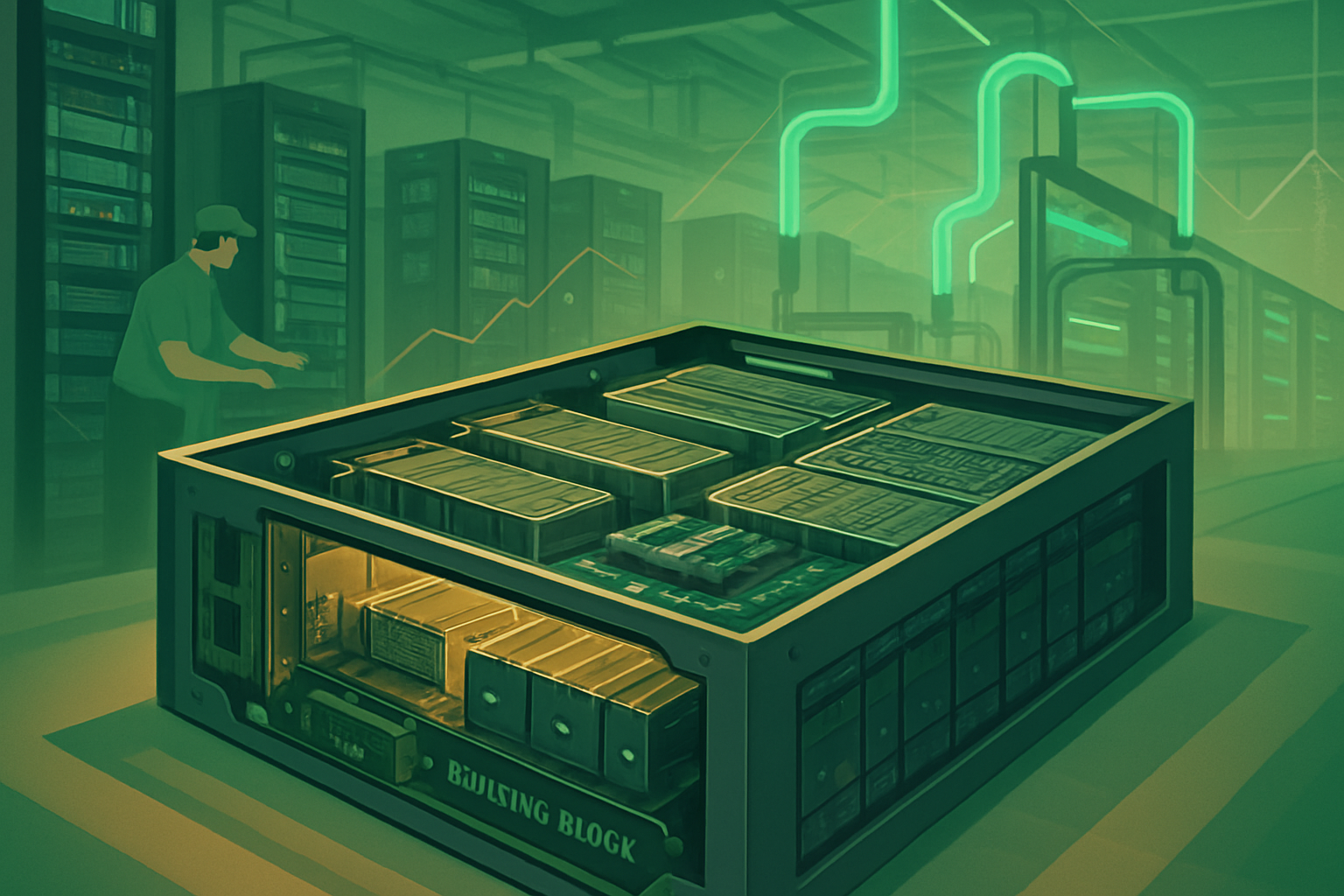
    Founded in 1993 by Charles Liang, his wife Sara Liu, and Wally Liaw, Super Micro began as a motherboard company in San Jose, California. From its inception, the company differentiated itself through a "Building Block Solutions" approach, allowing for highly customizable server configurations that could be brought to market faster than the rigid, pre-packaged offerings of traditional vendors.

    For much of its first two decades, SMCI was a steady, if unglamorous, player in the "green computing" space. Liang’s obsession with power efficiency and "free-air" cooling laid the groundwork for what would later become a critical advantage in the AI era: thermal management. The company went public in 2007, but its path has not been without prior friction; in 2018, it was temporarily delisted from the Nasdaq due to a failure to file financial statements on time, an echo of the governance challenges that would resurface years later.

    Business Model

    Super Micro’s business model is built on vertical integration and speed. Unlike many competitors who outsource manufacturing, SMCI maintains massive production hubs in San Jose, Taiwan, and the Netherlands. This allows the company to transition from a new silicon announcement (such as a new NVIDIA chip) to a fully integrated rack-scale solution in weeks rather than months.

    The company generates revenue through three primary segments:

    1. Server and Storage Systems: The core of the business, encompassing GPU-optimized servers, blade servers, and storage clusters.
    2. Subsystems and Accessories: Selling individual components like motherboards and chassis.
    3. Services: Maintenance and software management for data center deployments.

    Its customer base has shifted dramatically from mid-market enterprise clients to "hyperscalers" and large-scale AI model builders, which now account for the lion's share of its volume.

    Stock Performance Overview

    The performance of SMCI stock over the last five years is a study in market extremes.

    • 10-Year View: Long-term holders have seen astronomical returns, with the stock rising from a split-adjusted $20 range in 2016 to peaks above $1,200 in early 2024.
    • 5-Year View: Driven by the AI boom starting in late 2022, SMCI became one of the top performers in the S&P 500 (prior to its volatility), at one point up over 2,000% in a five-year window.
    • 1-Year View (2025-2026): The last year has been a period of violent "re-baselining." After crashing from its March 2024 highs due to governance fears and margin compression, the stock has spent much of early 2026 attempting to find a floor as the company works to regain institutional trust following its late 10-K filing in February 2025.

    Financial Performance

    The most recent earnings report for the period ending December 31, 2025, perfectly encapsulates the SMCI paradox. The company reported a record $12.7 billion in quarterly revenue, a 123% year-over-year increase. This was fueled by a massive influx of NVIDIA (NASDAQ: NVDA) Blackwell-based systems.

    However, the "bottom line" tells a more complicated story. Non-GAAP gross margins fell to a record low of 6.4%, down from nearly 18% in late 2023. This contraction is the result of three factors:

    • Customer Mix: Massive orders from hyperscalers come with significantly lower pricing power.
    • Supply Chain Costs: High "expedite fees" paid to secure rare components like liquid-cooling manifolds and high-end GPUs.
    • Aggressive Pricing: In a bid to maintain its 50% share of the AI server market, SMCI has engaged in a price war with Dell and HPE.

    Leadership and Management

    CEO Charles Liang remains the visionary and driving force behind SMCI. His technical expertise is undisputed, but his "founder-led" style has faced intense scrutiny. In late 2024, the resignation of auditor Ernst & Young (EY)—citing concerns over management’s representations and internal controls—triggered a leadership crisis.

    In response, SMCI appointed a new Chief Financial Officer and a Chief Compliance Officer in early 2025 to satisfy Nasdaq requirements and attempt to modernize its corporate governance. While Liang’s strategic direction continues to drive the top line, the board’s ability to provide independent oversight of "related-party transactions" (specifically with companies owned by Liang’s family members) remains a focal point for critics.

    Products, Services, and Innovations

    Super Micro’s technical "moat" currently rests on its Direct Liquid Cooling (DLC) technology. As AI chips like the NVIDIA H200 and Blackwell series push power consumption to 1,000 watts and beyond per chip, traditional air cooling is no longer viable.

    SMCI currently commands an estimated 70-80% of the DLC rack market. Their "plug-and-play" rack solutions arrive at data centers fully integrated with cooling manifolds, power supplies, and networking, allowing customers to "turn on" massive AI clusters in record time. Their R&D pipeline is currently focused on "Sovereign AI" clouds and modular data center designs that can be deployed in non-traditional environments.

    Competitive Landscape

    The "golden era" of SMCI’s unopposed growth has ended as legacy giants have woken up.

    • Dell Technologies (NYSE: DELL): Dell has leveraged its superior global supply chain and deep enterprise relationships to claw back market share, reaching approximately 19% of the AI server market.
    • Hewlett Packard Enterprise (NYSE: HPE): HPE has focused on high-end supercomputing and recently won massive contracts (including a $1 billion deal with X), positioning itself as the more "stable" alternative for government and enterprise clients.
    • ODM Direct (Foxconn, Quanta): Cloud service providers (CSPs) are increasingly working directly with original design manufacturers, bypassing the "brand" premium of server vendors.

    Industry and Market Trends

    The broader industry is shifting from "AI experimentation" to "AI production." This requires massive scale and reliability.

    • Liquid Cooling Transition: By 2027, it is estimated that 40% of all new data center builds will require liquid cooling, a tailwind for SMCI.
    • Sovereignty AI: Nations are increasingly building their own localized AI infrastructure to ensure data privacy, creating a new "nation-state" customer segment for high-speed server providers.
    • Energy Constraints: The scarcity of power is the primary bottleneck for data center expansion, favoring SMCI’s power-efficient designs.

    Risks and Challenges

    The risks facing SMCI are multi-dimensional:

    1. Legal and Regulatory: The DOJ and SEC investigations into accounting practices and export control compliance remain open. Even with the 10-K now filed, an adverse finding from the DOJ could lead to significant fines or operational restrictions.
    2. Margin Atrophy: If gross margins continue to linger in the mid-single digits, SMCI will struggle to fund the R&D necessary to stay ahead of Dell and HPE.
    3. Key-Man Risk: The company’s culture and strategy are deeply tied to Charles Liang. Any leadership transition could be disruptive.
    4. Component Dependency: SMCI is entirely reliant on the allocation of GPUs from NVIDIA. Any shift in NVIDIA’s distribution strategy could starve SMCI of its primary revenue driver.

    Opportunities and Catalysts

    Despite the drama, the growth levers remain potent:

    • NVIDIA Blackwell Ramp: The massive revenue spike in late 2025/early 2026 suggests the "Blackwell cycle" is just beginning.
    • $40 Billion Target: Management has signaled a path toward $40 billion in annual revenue, which would place it in a different echelon of global hardware companies.
    • Market Share Defense: If SMCI can successfully "starve out" competitors by sacrificing short-term margins to secure long-term contracts, it could emerge as the "Amazon of Data Center Hardware."

    Investor Sentiment and Analyst Coverage

    Sentiment remains polarized.

    • The Bulls: Point to the $12.7 billion revenue figure as proof that SMCI is "too big to fail" in the AI ecosystem. They view the governance issues as "growing pains" that are being addressed by the new CFO and BDO USA (the replacement auditor).
    • The Bears: Highlight the 6.4% gross margin as a sign of a commoditized business masquerading as a high-growth tech play. They argue that the "governance discount" will permanently haunt the stock’s P/E multiple.
    • Hedge Funds: Recent filings show a rotation, with some value-oriented funds buying the "crash" while several growth-oriented institutions have trimmed their positions due to the lack of visibility into the DOJ probe.

    Regulatory, Policy, and Geopolitical Factors

    SMCI operates in a geopolitical minefield.

    • Export Controls: The U.S. government’s restrictions on high-end AI chips to China and other "adversarial" nations require rigorous compliance. Allegations in 2024 suggested SMCI products were still reaching restricted markets, a claim the company has vigorously denied but which remains a focal point of federal inquiries.
    • CHIPS Act and Domestic Manufacturing: As a company with significant U.S. manufacturing (San Jose), SMCI could potentially benefit from future subsidies aimed at securing the domestic tech supply chain.

    Conclusion

    Super Micro Computer is a company of superlatives: the highest growth, the deepest controversy, and the most aggressive strategy in the server market. The $12.7 billion revenue milestone proves that the world’s appetite for AI infrastructure is not yet sated. However, the accompanying "margin collapse" serves as a stark reminder that scale does not always equal stability.

    For investors, SMCI represents a high-stakes bet on the "speed-to-market" advantage. If the company can navigate its legal hurdles and stabilize its margins as the Blackwell cycle matures, it may reclaim its status as a market darling. Until then, it remains an essential—yet volatile—pillar of the AI economy. Watch for the resolution of the DOJ probe and the Q3 FY2026 margin guidance as the next major inflection points.


    This content is intended for informational purposes only and is not financial advice.

  • The Liquid-Cooled Titan: A Deep Dive into Super Micro Computer’s (SMCI) 2026 Recovery and AI Dominance

    The Liquid-Cooled Titan: A Deep Dive into Super Micro Computer’s (SMCI) 2026 Recovery and AI Dominance

    As of January 28, 2026, the technology landscape remains dominated by the relentless expansion of Artificial Intelligence (AI) infrastructure. At the heart of this hardware-driven revolution stands Super Micro Computer, Inc. (NASDAQ: SMCI), a company that has transformed from a niche server manufacturer into a linchpin of the global data center economy. Following a turbulent 2024 and 2025—marked by high-profile auditing controversies and governance overhauls—SMCI has emerged in 2026 with a renewed focus on its core engineering prowess.

    With a staggering 50.7% earnings growth in recent cycles and an aggressive pivot toward Direct Liquid Cooling (DLC) technology, the company is attempting to prove that its "Building Block" architecture can outpace legacy giants. Today, SMCI is at a critical juncture: it is simultaneously a high-growth AI powerhouse and a subject of intense scrutiny regarding its internal controls. This deep dive explores whether the "Supermicro" story is a sustainable ascent or a cautionary tale of rapid scaling.

    Historical Background

    Founded in 1993 by Charles Liang, his wife Sara Liu, and Chiu-Chu Liu, Super Micro Computer began with a focus on motherboards and high-performance server components. Based in San Jose, California, the company’s early years were defined by a "Green Computing" philosophy—an emphasis on energy efficiency that would decades later become a competitive necessity in the power-hungry AI era.

    Throughout the 2000s and 2010s, SMCI differentiated itself through its modular design approach. While rivals like Dell Technologies (NYSE: DELL) and Hewlett Packard Enterprise (NYSE: HPE) focused on standardized, mass-market enterprise solutions, SMCI catered to the hyper-specific needs of research institutions and emerging cloud providers. The company’s trajectory shifted permanently in 2023 with the explosion of Generative AI. As the primary partner for NVIDIA (NASDAQ: NVDA) GPU deployments, SMCI’s ability to design, assemble, and ship high-density server racks in weeks rather than months propelled it into the S&P 500 by early 2024.

    Business Model

    SMCI’s business model is built on three pillars: Speed-to-Market, Customization, and Efficiency.

    1. Revenue Sources: The company derives the vast majority of its revenue from the sale of integrated server and storage systems. These are often sold as "rack-level solutions," where an entire data center cabinet—complete with networking, cooling, and compute—is delivered ready to plug in.
    2. Product Lines: Their "Total IT Solutions" include AI/GPU servers, high-performance computing (HPC) systems, and edge computing nodes.
    3. Segments: While enterprise sales remain important, the "AI-Infrastructure" segment now dominates, accounting for over 70% of total revenue as of early 2026.
    4. Customer Base: SMCI serves a diverse mix of Tier-2 cloud service providers (CSPs), specialized AI "neoclouds," and "Sovereign AI" initiatives where national governments build localized computing power.

    Stock Performance Overview

    The stock performance of SMCI is a study in extreme volatility.

    • 10-Year Performance: Long-term shareholders have seen spectacular gains, with the stock up over 1,000% since 2016, significantly outperforming the broader tech sector.
    • 5-Year Performance: The stock is up approximately 700% to 800% over the last five years, largely due to the "AI Gold Rush" of 2023.
    • 1-Year Performance: In contrast, the performance over the last 12 months (Jan 2025–Jan 2026) has been relatively flat, rising only ~5%. This stagnation reflects the "governance discount" applied by the market following the 2024 auditor resignation and subsequent Nasdaq delisting threats.

    Financial Performance

    The headline for SMCI’s financials is a 50.7% earnings growth figure that has captivated growth-oriented investors. In the fiscal year ended June 30, 2025, the company reported $22.4 billion in revenue. Looking ahead to the remainder of 2026, management has set an ambitious target of $36 billion to $40 billion.

    However, this growth has come at a cost to profitability. Gross margins have compressed from historic levels of 15–18% down to the 9.3% – 9.5% range in early 2026. This decline is attributed to intense price competition from Dell and the high capital expenditures required to build out global manufacturing facilities in Taiwan and Malaysia. The company maintains a healthy cash flow, though its debt levels have risen to fund the massive inventory of expensive NVIDIA Blackwell GPUs required to fulfill its $13 billion backlog.

    Leadership and Management

    Founder Charles Liang remains the central figure at SMCI, serving as both CEO and Chairman. His technical vision is credited with SMCI's early lead in liquid cooling, but his leadership has also been a source of investor concern.

    • Insider Ownership: Liang and his wife hold approximately 10% of the company (roughly 66.7 million shares). This high level of insider ownership ensures that management’s interests are aligned with shareholders, but it also concentrates power, which critics argue contributed to the internal control weaknesses identified in 2024.
    • Governance Reform: Following the resignation of Ernst & Young in late 2024, SMCI overhauled its board and appointed BDO USA as its new auditor. The company also appointed a new Chief Financial Officer and independent board members to satisfy Nasdaq's governance requirements.

    Products, Services, and Innovations

    Innovation at SMCI is currently synonymous with Direct Liquid Cooling (DLC). As AI chips like the NVIDIA Blackwell and Rubin series push power limits to 1,000W and beyond per chip, traditional air cooling is becoming obsolete.

    SMCI has scaled its production capacity to 6,000 racks per month, with 3,000 of those dedicated to DLC. Their proprietary "Building Block" architecture allows for rapid iteration—when a new GPU is released, SMCI can often have a compatible server design ready for production in less than six weeks. This "first-to-market" advantage remains their strongest moat.

    Competitive Landscape

    The competitive environment has intensified as legacy hardware titans have woken up to the AI opportunity.

    • Dell Technologies: Dell is SMCI’s most aggressive rival. With a superior enterprise sales force and a massive supply chain, Dell has recently won large-scale contracts with elite AI labs (such as Elon Musk's xAI).
    • HPE: Following its acquisition of Juniper Networks, HPE offers a superior networking-plus-compute stack, appealing to customers who want a single vendor for their entire network fabric.
    • Competitive Edge: SMCI’s edge remains its agility and specialization in liquid cooling. While Dell and HPE are broader IT companies, SMCI is a pure-play AI infrastructure firm.

    Industry and Market Trends

    The "AI Infrastructure" cycle is moving into its second phase: Inference. While the initial surge was driven by massive training clusters, the focus is now shifting toward the efficient deployment of models. This favors SMCI’s modular designs, which can be tailored for high-efficiency inference at the "edge" or in smaller regional data centers. Additionally, the global push for "Sovereign AI" has created a new market of government-funded data centers seeking energy-efficient solutions to comply with local climate regulations.

    Risks and Challenges

    Investing in SMCI is not for the faint of heart. The risks are multi-faceted:

    1. Regulatory Overhang: An ongoing Department of Justice (DOJ) investigation into the company’s accounting practices remains a dark cloud.
    2. Margin War: If Dell and HPE continue to discount aggressively to gain market share, SMCI’s margins may never return to the 15% range.
    3. Internal Controls: While the company regained Nasdaq compliance on January 27, 2026, the history of "material weaknesses" in financial reporting means investors must trust the new auditing processes implicitly.
    4. Supply Chain Dependency: SMCI is heavily dependent on NVIDIA's chip allocations. Any shift in NVIDIA’s partnership strategy could be catastrophic.

    Opportunities and Catalysts

    Despite the risks, the catalysts for 2026 are significant:

    • Blackwell Ultra Ramp-Up: The transition to the newest NVIDIA architectures provides a fresh opportunity for SMCI to capture high-margin early-adopter revenue.
    • Valuation: Trading at approximately 12x–13x forward earnings, SMCI is significantly cheaper than many of its AI-sector peers, potentially offering a "re-rating" opportunity if governance issues are fully cleared.
    • M&A Potential: With its specialized DLC technology, SMCI remains a potential acquisition target for a cloud giant looking to bring server manufacturing in-house.

    Investor Sentiment and Analyst Coverage

    Wall Street is deeply polarized on SMCI.

    • The Bulls: Firms like Needham and Argus view the stock as a "coiled spring," arguing that the governance issues are in the rearview mirror and the $40 billion revenue target is achievable.
    • The Bears: Goldman Sachs and JPMorgan have remained more cautious, maintaining "Neutral" or "Sell" ratings based on the belief that AI servers are becoming a commoditized, low-margin business.
    • Retail vs. Institutional: Retail sentiment remains high, driven by SMCI’s inclusion in major indices and its history of explosive moves. Institutional ownership has stabilized following the Nasdaq compliance news.

    Regulatory, Policy, and Geopolitical Factors

    SMCI operates at the center of the US-China "Tech Cold War."

    • Export Controls: US Department of Commerce restrictions on high-end GPU exports to certain countries directly impact SMCI’s addressable market.
    • Manufacturing Diversification: To mitigate geopolitical risk, SMCI has shifted significant production capacity to Malaysia and Taiwan, reducing its reliance on mainland China-based supply chains.
    • Compliance: The company must now adhere to the strictest level of SEC and Nasdaq oversight following its 2024-2025 restatement process.

    Conclusion

    Super Micro Computer, Inc. remains one of the most compelling and controversial stocks in the technology sector. On one hand, its 50.7% earnings growth and dominance in liquid cooling technology place it at the absolute vanguard of the AI era. Charles Liang’s significant insider ownership provides a level of founder-led vision that few competitors can match.

    On the other hand, the scars of 2024—the auditor resignation, the DOJ inquiry, and the margin compression—cannot be ignored. For investors, the question in 2026 is whether SMCI has truly professionalized its corporate structure to match its engineering brilliance. Those who believe in the "Liquid Cooled Titan" see a generational buying opportunity; those who fear the "governance discount" see a company still fighting to prove its long-term viability. As the AI arms race enters its next chapter, SMCI will undoubtedly be one of its most important, and most watched, players.


    This content is intended for informational purposes only and is not financial advice. As of January 28, 2026, investors should perform their own due diligence or consult with a financial advisor before making investment decisions.

  • The Liquid Gold Standard: Can Super Micro Computer (SMCI) Reclaim Its AI Throne?

    The Liquid Gold Standard: Can Super Micro Computer (SMCI) Reclaim Its AI Throne?

    Date: January 19, 2026

    Introduction

    As we enter the first quarter of 2026, the artificial intelligence landscape has shifted from speculative excitement to industrial scaling. At the heart of this transformation is Super Micro Computer, Inc. (NASDAQ: SMCI), a company that has experienced one of the most volatile trajectories in modern technology history. Once the undisputed "darling" of the 2023–2024 AI rally, SMCI spent much of 2025 navigating a labyrinth of governance crises, auditor transitions, and federal investigations.

    Today, SMCI is in focus not just for its survival, but for its dominance in a critical sub-sector of the AI hardware market: Direct Liquid Cooling (DLC). As next-generation GPUs from Nvidia (NASDAQ: NVDA) push power densities to their physical limits, SMCI’s "rack-scale" integration and liquid cooling expertise have positioned it as an essential utility for the AI era. However, with a stock price stabilized but still trading at a "governance discount," investors are left asking: is Super Micro a value play in a high-growth sector, or a company still shadowed by its past?

    Historical Background

    Founded in 1993 by Charles Liang, his wife Sara Liu, and Wally Liaw, Super Micro Computer began as a motherboard manufacturer in San Jose, California. From its inception, the company differentiated itself through a "Building Block" philosophy—designing modular components that could be quickly assembled into customized server configurations.

    For two decades, SMCI was a steady, if unglamorous, player in the data center market. The company underwent a major transformation in the mid-2010s, pivoting toward high-performance computing (HPC) and green computing. This focus on energy efficiency proved prophetic. When the generative AI boom erupted in late 2022, SMCI was uniquely prepared to package high-heat GPUs into dense, integrated racks.

    The company’s history has not been without turbulence. In 2018, SMCI was briefly delisted from the Nasdaq due to a failure to file financial statements on time, an event that would unfortunately foreshadow the accounting controversies and auditor resignations of late 2024. Despite these setbacks, the company’s ability to outpace traditional rivals in shipping the newest silicon has remained its historical North Star.

    Business Model

    SMCI operates as a "Total IT Solution" provider. Unlike traditional OEMs (Original Equipment Manufacturers) that sell individual servers, SMCI’s business model is increasingly focused on Rack-Scale Plug-and-Play Solutions.

    • Revenue Sources: The vast majority of revenue is derived from server and storage systems, particularly those optimized for AI training and inference. Software and services are growing but remains a smaller portion of the mix.
    • Building Block Solutions: This modular approach allows SMCI to mix and match motherboards, power supplies, and cooling systems to meet specific client needs without redesigning the entire server from scratch.
    • Customer Base: The company serves a diverse mix, including Hyperscalers (Meta, CoreWeave), Tier-2 Cloud Service Providers (CSPs), and a growing list of "Sovereign AI" projects—government-backed data centers in regions like the Middle East and Southeast Asia.
    • Vertical Integration: By maintaining manufacturing facilities in Silicon Valley, Taiwan, and Malaysia, SMCI controls the design-to-delivery pipeline, allowing for much faster "Time-to-Market" than competitors like Dell (NYSE: DELL).

    Stock Performance Overview

    The last two years have been a rollercoaster for SMCI shareholders.

    • 1-Year Performance: Over the past 12 months, the stock has stabilized, trading in a range of $28.00 to $36.00 (post-split). This follows a grueling recovery period in early 2025 after the company narrowly avoided a second delisting.
    • 5-Year Performance: Despite the volatility of 2024, long-term investors remain in the green. From 2021 to early 2026, SMCI has significantly outperformed the S&P 500, driven by the explosive 1,000% gain seen during the initial AI breakout.
    • The 2024 Pivot: The stock reached a split-adjusted peak in early 2024 before a "triple-threat" of events—a Hindenburg Research short report, the resignation of auditor Ernst & Young (EY), and a Department of Justice (DOJ) probe—erased over 50% of its market value. By January 2026, the stock has found a floor, though it remains far below its record highs.

    Financial Performance

    In its latest quarterly reporting, SMCI demonstrated a "growth at all costs" mentality.

    • Revenue: For FY2025, SMCI reported $22.4 billion. For FY2026, management has set an ambitious target of $36 billion.
    • Margins: This is the primary area of concern for analysts. Gross margins dipped to approximately 9.3% in late 2025, down from historical averages of 13-15%. This compression reflects aggressive pricing to win market share from Dell and the capital intensity of scaling liquid cooling production.
    • Balance Sheet: With the appointment of BDO USA as its new auditor in 2025, the company has cleared its backlog of financial filings. It maintains a healthy cash position, though its debt-to-equity ratio has increased as it finances massive inventory levels of Nvidia’s Blackwell and Vera Rubin chips.
    • Valuation: Trading at a forward P/E of 10x–13x, SMCI is significantly "cheaper" than its peers, reflecting the lingering risk premium associated with the ongoing DOJ investigation.

    Leadership and Management

    CEO Charles Liang remains the driving force behind SMCI. Known for his "engineering-first" approach and workaholic culture, Liang is credited with the company’s speed but has also faced criticism for its historic governance lapses.

    In response to the 2024 crisis, the board has undergone significant "professionalization." The company appointed a new Chief Financial Officer and added several independent directors with deep regulatory and compliance backgrounds. While Liang’s vision is undisputed, the market is still waiting for the leadership team to prove that the company’s internal controls have finally caught up with its multi-billion-dollar scale.

    Products, Services, and Innovations

    The crown jewel of SMCI’s current portfolio is its Direct Liquid Cooling (DLC) technology.

    • DLC-2: This proprietary system circulates coolant directly over the most heat-intensive components (GPUs and CPUs). With chips like Nvidia’s Blackwell Ultra drawing over 1,000W of power, air cooling is no longer efficient.
    • Innovation Pipeline: SMCI is already prototyping systems for the 2026 "Vera Rubin" architecture. Their R&D focus has shifted toward "Cooling Distribution Units" (CDUs) and specialized manifolds that can be retrofitted into existing data centers.
    • Competitive Edge: SMCI claims it can ship a fully integrated, liquid-cooled rack in weeks, while traditional competitors often take months. In the AI arms race, speed is the ultimate currency.

    Competitive Landscape

    SMCI operates in a "Big Three" environment alongside Dell Technologies and Hewlett Packard Enterprise (NYSE: HPE).

    • Dell: The primary threat. Dell has used its massive enterprise sales force and superior supply chain to claw back AI server market share, particularly among Fortune 500 companies.
    • HPE: Following its acquisition of Juniper Networks, HPE has focused on integrated networking and AI, carving out a niche in government and "Private AI" clouds.
    • The ODM Threat: Original Design Manufacturers (ODMs) like Foxconn and Quanta are also moving up the value chain, offering lower prices to hyperscalers, though they lack SMCI’s specialized "Building Block" flexibility.

    Industry and Market Trends

    The "Power Wall" is the defining trend of 2026. Data centers are hitting limits on electricity availability, making energy efficiency a top priority.

    • Shift to Liquid: Market analysts estimate that by the end of 2026, over 40% of all new high-end AI deployments will require liquid cooling.
    • Sovereign AI: Countries like Saudi Arabia, the UAE, and Singapore are investing billions in national AI clouds. These regions often have high ambient temperatures, making SMCI’s liquid-cooled solutions a "must-have" rather than a "nice-to-have."

    Risks and Challenges

    • Regulatory/Legal: The Department of Justice investigation remains the largest "dark cloud" over the stock. Any findings of systemic financial impropriety could lead to fines or further management changes.
    • Margin Erosion: If the price war with Dell and HPE continues, SMCI’s margins may not recover, potentially turning it into a low-margin commodity hardware play.
    • Supply Chain Concentration: SMCI is heavily dependent on Nvidia. Any shift in Nvidia’s allocation strategy or a delay in their chip roadmap directly impacts SMCI’s top line.

    Opportunities and Catalysts

    • Malaysia Expansion: The new manufacturing hub in Johor, Malaysia, is expected to reach full capacity by mid-2026, significantly lowering production costs and improving gross margins.
    • Inference Explosion: As AI shifts from training (massive clusters) to inference (distributed servers), SMCI’s edge computing products could see a second wave of demand.
    • Resolution of DOJ Probe: Any settlement or "all-clear" from the DOJ would likely act as a massive re-rating catalyst, potentially closing the valuation gap with Dell.

    Investor Sentiment and Analyst Coverage

    Wall Street is currently split into two camps.

    • The Bulls: Argue that at 12x earnings, SMCI is the cheapest way to play the AI infrastructure boom. They point to the 70% market share in liquid cooling as a massive moat.
    • The Bears: Remain wary of the "governance discount." They argue that the company's historical accounting issues and the current DOJ probe make it "un-investable" for conservative institutional funds.
    • Retail Sentiment: SMCI remains a favorite among retail traders due to its high beta and frequent mentions in "AI trade" circles on social platforms.

    Regulatory, Policy, and Geopolitical Factors

    SMCI sits at the intersection of US-China-Taiwan tensions. While it is a US-based company, much of its supply chain and executive leadership have deep ties to Taiwan.

    • Export Controls: Tightening US restrictions on AI chip exports to China have limited SMCI’s potential in the Chinese market, forcing it to pivot aggressively toward the "Sovereign AI" market in other neutral regions.
    • CHIPS Act: The company stands to benefit from ongoing US government incentives aimed at reshoring advanced electronics manufacturing to North America.

    Conclusion

    As of January 19, 2026, Super Micro Computer stands as a paradox. It is a technological leader in the essential field of liquid cooling, yet it remains a pariah to some in the financial community due to its governance history.

    For the aggressive investor, the $36 billion revenue target and dominant position in DLC provide a compelling growth narrative at a value price. For the risk-averse, the shadow of the DOJ probe and compressed margins suggest a "wait-and-see" approach. The coming months, particularly the ramp-up of the Malaysia facility and any updates on the federal investigation, will determine if SMCI can truly reclaim its throne or if it will remain a cautionary tale of the AI era.


    This content is intended for informational purposes only and is not financial advice.
  • The AI Industrial Giant: A Deep-Dive Research Feature on Super Micro Computer (SMCI)

    The AI Industrial Giant: A Deep-Dive Research Feature on Super Micro Computer (SMCI)

    The date is January 14, 2026. After a tumultuous two-year period defined by stratospheric growth, governance crises, and a fundamental shift in the economics of data centers, Super Micro Computer, Inc. (NASDAQ: SMCI) stands at a critical crossroads. Once the darling of the AI boom, then the target of intense regulatory scrutiny, the San Jose-based server specialist has transitioned into a new phase of its corporate life: the era of the "AI Industrial Giant."

    Introduction

    Super Micro Computer (NASDAQ: SMCI) remains one of the most polarizing and essential names in the global technology infrastructure. As of early 2026, the company serves as the primary physical architect for the generative AI revolution, providing the high-density server racks required to house NVIDIA (NASDAQ: NVDA) Blackwell and Vera Rubin GPUs.

    The story of SMCI over the last 18 months has been one of survival and scale. After narrowly avoiding a Nasdaq delisting in early 2025 and navigating a bruising audit transition, the company has stabilized its operations. However, the investment thesis has shifted significantly. No longer viewed as a high-margin "software-like" growth play, SMCI is now recognized as a high-volume, low-margin hardware utility—a "picks and shovels" provider that has sacrificed short-term profitability to capture a dominant share of the burgeoning liquid-cooling market.

    Historical Background

    Founded in 1993 by Charles Liang and his wife, Sara Liu, Super Micro began as a humble motherboard and chassis manufacturer in Silicon Valley. From its inception, the company differentiated itself through a "Building Block Solutions" philosophy—a modular approach to server design that allowed for rapid customization.

    While competitors like Dell Technologies (NYSE: DELL) and Hewlett Packard Enterprise (NYSE: HPE) focused on enterprise services and standardized hardware, Liang stayed focused on engineering-led "green computing." This focus on thermal efficiency proved prophetic. When the AI explosion began in late 2022, SMCI was the only vendor capable of integrating thousands of power-hungry GPUs into cohesive, energy-efficient racks at the speed required by hyperscalers like Meta and xAI.

    Business Model

    SMCI’s business model revolves around the design, manufacture, and sale of high-performance server and storage solutions based on open architecture. Its revenue is primarily derived from three segments:

    1. AI and High-Performance Computing (HPC): This segment now accounts for over 70% of total revenue, comprising full-rack solutions integrated with NVIDIA, AMD, and Intel AI accelerators.
    2. Enterprise and Cloud: Traditional data center servers and storage arrays.
    3. Edge and IoT: Emerging ruggedized servers for localized processing.

    The company utilizes a "Twin-Server" and multi-node architecture that allows for higher density than traditional rack designs. Most importantly, SMCI has vertically integrated its manufacturing, with massive facilities in San Jose, Taiwan, and Malaysia, allowing it to move from chip arrival to finished rack delivery in as little as a few weeks.

    Stock Performance Overview

    The stock performance of SMCI is a study in extreme volatility.

    • 10-Year View: Long-term shareholders remain the big winners. Even after the 2024 correction, the stock is up over 1,500% from its 2016 levels.
    • The 2024-2025 Roller Coaster: Following a 10-for-1 stock split in late 2024, the shares hit a nadir in the $15-$18 range (post-split) amid fears of accounting fraud and the resignation of its auditor, Ernst & Young.
    • Early 2026 Status: As of mid-January 2026, the stock has stabilized in the $32.00 to $36.00 range. The market has priced in the "governance discount," but the stock has found a floor thanks to record-breaking revenue and a massive $13 billion order backlog.

    Financial Performance

    In its most recent fiscal reporting for 2025, SMCI showcased a "growth at all costs" financial profile.

    • Revenue: Reached an all-time high of approximately $22.4 billion, a staggering leap from the $14.9 billion reported in FY2024.
    • Margins: This is the primary point of contention for analysts. Gross margins, which once sat near 18%, have compressed to 9.1% in the latest quarter. SMCI has intentionally lowered prices to ward off competition from Dell and HPE.
    • Debt and Liquidity: To fund the purchase of expensive GPUs, SMCI secured a $2.0 billion revolving credit facility in late 2025. While debt has increased, the company's cash flow from operations has finally turned positive as inventory turnover improved.

    Leadership and Management

    Founder and CEO Charles Liang remains the driving force behind the company. Despite calls for his resignation during the 2024 audit crisis, Liang’s deep engineering knowledge and relationship with NVIDIA’s Jensen Huang made him arguably "too essential to fire."

    To appease regulators and investors, the board underwent a significant overhaul in 2025. The appointment of Scott Angel, a former Deloitte veteran, as an independent director and the hiring of a new CFO (expected to be finalized by Q1 2026) have helped restore some institutional confidence. However, the leadership remains heavily centralized under Liang, which continues to be a point of concern for governance-focused investors.

    Products, Services, and Innovations

    SMCI’s "crown jewel" in 2026 is its Direct Liquid Cooling (DLC) technology. As GPU power consumption has climbed toward 1,000W-1,200W per chip with the Blackwell and Rubin architectures, traditional air cooling has reached its physical limits.

    SMCI has moved from being a server company to a "thermal management" company. Its DLC-2 racks can reduce data center power consumption for cooling by up to 40%. By January 2026, SMCI is producing roughly 5,000 racks per month, with nearly 45% of those being liquid-cooled—the highest ratio in the industry.

    Competitive Landscape

    The competition has intensified as the "AI Server Land Grab" matures.

    • Dell Technologies (NYSE: DELL): Dell has leveraged its superior enterprise sales force to claw back market share, particularly with Fortune 500 companies that require high-touch support.
    • Hewlett Packard Enterprise (NYSE: HPE): HPE has focused on the "Sovereign AI" market, winning large government contracts in Europe and the Middle East.
    • ODM Direct: Hyperscalers like Microsoft and Google are increasingly designing their own servers and using Asian ODMs (Original Design Manufacturers) like Quanta and Foxconn to build them, bypassing SMCI for their internal silicon needs.

    Industry and Market Trends

    The "Power Wall" is the defining trend of 2026. Data centers are no longer constrained by chip availability, but by the availability of electricity. SMCI's focus on energy efficiency aligns perfectly with this constraint. Additionally, the market is shifting from Training (building models) to Inference (running models). This favors SMCI’s modular architecture, which can be quickly reconfigured for lower-latency inference tasks.

    Risks and Challenges

    Despite its recovery, SMCI faces three significant risks:

    1. Regulatory Overhang: The Department of Justice (DOJ) probe initiated in late 2024 remains open. While the company’s special committee found no fraud, a potential fine or mandated structural change remains a "black swan" risk.
    2. NVIDIA Dependency: SMCI’s fortunes are inextricably linked to NVIDIA’s product cycle. Any delay in the Vera Rubin launch or a shift in NVIDIA's "preferred partner" status would be catastrophic.
    3. Commoditization: As Dell and HPE scale their AI offerings, SMCI may find it impossible to raise margins, permanently capping its valuation multiple.

    Opportunities and Catalysts

    • Vera Rubin Launch: The upcoming transition to the Rubin platform in late 2026 provides another "first-to-market" window for SMCI.
    • Sovereign AI Expansion: SMCI’s new Malaysia facility is strategically positioned to capture demand from Southeast Asian nations building domestic AI clusters.
    • Edge AI: The launch of ruggedized, liquid-cooled edge servers for hospitals and autonomous factories represents a new, higher-margin revenue stream.

    Investor Sentiment and Analyst Coverage

    Sentiment remains "cautiously optimistic" but disciplined. Wall Street analysts have largely moved SMCI from "Growth" to "Value/Cyclical" categories. Hedge fund ownership, which saw a mass exodus in late 2024, has partially returned as the 10-K filings were normalized. Retail sentiment remains high, driven by SMCI’s continued status as a high-beta play on the AI sector.

    Regulatory, Policy, and Geopolitical Factors

    Geopolitics are a double-edged sword for SMCI. U.S. export controls on high-end GPUs to China have limited a historically strong market for the company. Conversely, the "CHIPS Act" and various domestic manufacturing incentives in the U.S. and Taiwan have provided subsidies that help offset the costs of SMCI’s localized production model.

    Conclusion

    As of January 14, 2026, Super Micro Computer has successfully weathered the storm of 2024, proving that its engineering prowess and manufacturing speed are too valuable for the AI ecosystem to lose. It has transitioned from a speculative rocket ship into a foundational utility of the digital age.

    For investors, the 2026 version of SMCI requires a different mindset: the days of 1,000% annual gains are likely over, replaced by a story of volume, execution, and thermal efficiency leadership. The key metric to watch over the coming year will not be revenue growth—which remains robust—but the stabilization of gross margins. If SMCI can prove it can maintain its 10-12% market share without further eroding its profitability, it will likely see a re-rating of its current valuation.


    This content is intended for informational purposes only and is not financial advice.