
Tag: Tariffs

  • The Super-Prime Moat: A Deep Dive into American Express (AXP) Amid Global Trade Volatility

    The Super-Prime Moat: A Deep Dive into American Express (AXP) Amid Global Trade Volatility

    As of February 24, 2026, American Express (NYSE: AXP) stands as a unique bellwether for the global economy. Long regarded as the gold standard for premium credit and travel services, the company finds itself at a critical crossroads. While the broader financial sector grapples with the fallout of heightened global trade tensions and a new era of aggressive tariffs, American Express continues to leverage its "Super-Prime" customer base to navigate these headwinds. This article explores how a 176-year-old institution has transitioned from a freight company to a digital lifestyle brand, and why its current battle with geopolitical volatility is the ultimate test of its business model.

    Historical Background

    Founded in 1850 in Buffalo, New York, American Express began as a joint-stock association formed by the merger of express companies owned by Henry Wells, William G. Fargo, and John Butterfield. Originally a competitor to the U.S. Postal Service, the company specialized in the rapid transport of high-value goods and currency via stagecoach and rail.

    The company’s first major transformation occurred in 1891 with the invention of the Traveler’s Check, which revolutionized international travel by providing a secure alternative to carrying cash. In 1958, the company issued its first charge card, formalizing its shift into consumer finance. Over the decades, American Express survived the Great Depression, two World Wars, and the 2008 financial crisis—each time emerging more focused on the affluent "travel and entertainment" (T&E) niche. Today, it is no longer just a payments processor but a massive data and lifestyle ecosystem.

    Business Model

    Unlike competitors Visa (NYSE: V) and Mastercard (NYSE: MA), which operate open-loop networks and do not issue credit themselves, American Express operates a "closed-loop" network. This means Amex acts as the card issuer, the payment processor, and the merchant acquirer.

    This model provides three distinct revenue streams:

    1. Discount Revenue: The fees merchants pay to accept Amex cards. Because Amex cardholders spend significantly more on average than those of other networks, merchants are willing to pay a premium.
    2. Net Interest Income: Earnings from the revolving balances of card members who carry debt.
    3. Card Fees: Annual membership fees from premium products like the Platinum and Gold cards, which provide a stable, high-margin recurring revenue base.

    Stock Performance Overview

    American Express has been a standout performer in the financial services sector over the last decade.

    • 1-Year Performance: As of early 2026, the stock has gained approximately 18%, outperforming the S&P 500 as the market rewards its resilience against inflation.
    • 5-Year Performance: The stock has surged by 172%, nearly doubling the broader market’s return during the post-pandemic "revenge travel" boom.
    • 10-Year Performance: Long-term investors have seen total returns (including reinvested dividends) ranging from 350% to 630%, representing a staggering compound annual growth rate (CAGR) of over 20%.

    Financial Performance

    Financial results for the fiscal year 2025 underscore a period of disciplined growth. Total revenue reached $72.2 billion, a 10% increase year-over-year. Net income climbed to $10.8 billion, with earnings per share (EPS) of $15.38.

    The company’s balance sheet remains robust, supported by a significant dividend hike in early 2026 to $0.95 per share. Management’s 2026 guidance projects further revenue growth of 9% to 10%, banking on the continued expansion of its premium card member base. However, elevated customer engagement costs and a $6 billion annual marketing budget have pressured operating margins slightly.

    Leadership and Management

    Under Chairman and CEO Stephen Squeri, who took the helm in 2018, American Express has successfully pivoted toward a younger, tech-savvy demographic. Squeri’s leadership is defined by "The Virtuous Cycle": investing in premium value propositions to attract high-spending customers, which in turn attracts more merchants, generating more data and fees to reinvest back into the product.

    Squeri is supported by CFO Christophe Le Caillec, who has focused on maintaining credit quality and navigating the complex regulatory landscape of 2025/2026. The management team is highly regarded for its transparency and consistent ability to meet or exceed medium-term growth targets.

    Products, Services, and Innovations

    Innovation at Amex is currently centered on "Agentic Commerce." The company has partnered with NVIDIA to deploy over 70 Generative AI (GenAI) use cases. The most prominent is a next-generation "AI Concierge" that can handle complex multi-city travel bookings, restaurant reservations via Resy, and real-time fraud prevention.

    The core product suite—Platinum, Gold, and Blue Cash—continues to be "refreshed" with lifestyle-focused perks. In late 2025, the U.S. Platinum Card saw a major update that added wellness and digital entertainment credits, justifying its move to a premium $895 annual fee.

    Competitive Landscape

    Amex faces fierce competition from traditional banking giants and emerging fintechs.

    • JPMorgan Chase (NYSE: JPM): The Sapphire Reserve remains the primary challenger for the hearts and wallets of high-end travelers.
    • Capital One (NYSE: COF): Following its merger with Discover, Capital One has attempted to scale its "Venture X" brand to compete in the premium space.
    • Visa/Mastercard: While not direct competitors in the issuance space, their massive global acceptance remains a benchmark Amex strives to match.

    Amex’s competitive edge lies in its brand prestige and its proprietary data, which allows it to offer more targeted merchant offers than its open-loop rivals.

    Industry and Market Trends

    The defining trend of 2026 is "The Premiumization of Finance." Consumers are increasingly willing to pay high annual fees for "curated experiences" and travel protection. Simultaneously, the industry is moving toward "Open Banking," where consumer data portability is mandated by regulators, forcing Amex to defend its walled garden of customer data.

    Risks and Challenges: The Tariff Threat

    The most significant headwind for American Express in 2026 is the escalation of global tariffs. With average import tariffs in the U.S. reaching 13%, the impact is two-fold:

    1. Purchasing Power Erosion: While Amex’s core affluent customers are resilient, higher costs for imported luxury goods and electronics are beginning to dampen transaction volumes in the middle-market segment.
    2. B2B Slowdown: Amex has a large commercial payments business. Tariff-induced disruptions to global supply chains have led to a noticeable dip in cross-border B2B spending, particularly in the automotive and tech sectors.
    3. Regulatory Pressure: The Consumer Financial Protection Bureau (CFPB) continues to push for lower late fees and interest rate caps, which could impact the "Lend" side of Amex’s revenue if passed.

    Opportunities and Catalysts

    Despite the tariff risks, several catalysts remain:

    • The Gen Z Surge: Gen Z and Millennials now account for 75% of new premium card accounts. As these cohorts enter their peak earning years, their "spend-centric" lifestyle will drive significant volume growth.
    • International Expansion: Amex is aggressively expanding its merchant network in Southeast Asia and Europe, aiming for parity with Visa and Mastercard in key luxury hubs.
    • M&A Potential: With a strong cash position, Amex is rumored to be looking at fintech acquisitions in the B2B payment automation space to offset tariff-related volume dips.

    Investor Sentiment and Analyst Coverage

    Wall Street maintains a "Moderate Buy" rating on AXP. While analysts admire the company’s earnings consistency, the current P/E ratio of 22x is at the high end of its historical range. Institutional ownership remains high, with Berkshire Hathaway (NYSE: BRK.B) continuing to hold its multi-decade stake, signaling long-term confidence from Warren Buffett. Retail sentiment is largely positive, bolstered by the company’s reputation as a "recession-resistant" financial stock.

    Regulatory, Policy, and Geopolitical Factors

    Geopolitics is the primary driver of volatility. Beyond tariffs, the implementation of CFPB Section 1033 (Open Banking) is a double-edged sword. While it allows Amex to potentially pull data from other banks to better underwrite loans, it also makes it easier for customers to switch to competing premium products. Furthermore, the 2026 trade environment has forced Amex to hedge its currency exposure more aggressively as the U.S. Dollar remains volatile against the Euro and Yen.

    Conclusion

    American Express remains a formidable powerhouse in the financial sector, successfully bridging the gap between legacy prestige and modern fintech innovation. While global tariff threats pose a real risk to cross-border volumes and B2B spending, the company's shift toward Gen Z and its focus on "Super-Prime" resilience provide a significant buffer. Investors should watch for signs of sustained inflation in the travel sector and any regulatory shifts in the U.S. credit market. Ultimately, Amex is no longer just a card in a wallet; it is a luxury lifestyle platform that appears well-equipped to survive the geopolitical storms of 2026.


    This content is intended for informational purposes only and is not financial advice.

  • Apple Inc. (AAPL) Deep Dive: Navigating the 2026 Tariff Ruling and the AI Supercycle

    Apple Inc. (AAPL) Deep Dive: Navigating the 2026 Tariff Ruling and the AI Supercycle

    Today is February 23, 2026. This date marks a significant turning point for the world’s most valuable company, Apple Inc. (NASDAQ: AAPL), as it grapples with a radical shift in U.S. trade policy following a landmark Supreme Court ruling. While Apple has just come off a record-breaking fiscal 2025—buoyed by the "AI Supercycle" of the iPhone 17—the market is currently digesting the implications of a new 15% flat tariff on imported electronics components. This research feature dives deep into Apple’s current standing, its strategic pivot toward India, and the resilience of its ecosystem in the face of geopolitical volatility.

    Historical Background

    Founded in a California garage in 1976 by Steve Jobs, Steve Wozniak, and Ronald Wayne, Apple’s journey from a niche computer maker to a global cultural and financial hegemon is unparalleled. The company’s early years were marked by the success of the Apple II and the revolutionary Macintosh, followed by a near-collapse in the mid-1990s. The return of Steve Jobs in 1997 sparked the greatest corporate turnaround in history, characterized by the iMac, iPod, and eventually the 2007 debut of the iPhone. Under the leadership of Tim Cook since 2011, Apple has transformed from a hardware-centric company into a services powerhouse, achieving a market capitalization that has repeatedly breached the $3 trillion mark.

    Business Model

    Apple’s business model is built on a "walled garden" ecosystem designed to maximize user retention and lifetime value. Revenue is categorized into two primary pillars:

    • Hardware: Including iPhone, Mac, iPad, Wearables, and Home (Apple Watch, AirPods, Vision Pro). The iPhone remains the crown jewel, accounting for roughly 50% of total revenue.
    • Services: This high-margin segment includes the App Store, Apple Music, iCloud, Apple Pay, and Apple TV+. By February 2026, Services has surpassed $100 billion in annual revenue, providing a stable, recurring revenue stream that offsets the cyclical nature of hardware launches.

    Apple's competitive edge lies in its vertical integration—designing its own silicon (M-series and A-series chips) and operating systems (iOS, macOS), which allows for seamless performance and industry-leading privacy features.

    Stock Performance Overview

    As of today’s market open on February 23, 2026, Apple’s stock is trading in the $265 range, reflecting a period of sustained growth despite recent tariff-related volatility.

    • 1-Year Performance: AAPL has climbed approximately 22% over the last 12 months, largely driven by the adoption of "Apple Intelligence" in the iPhone 17.
    • 5-Year Performance: Since February 2021, the stock has more than doubled, showcasing the success of the transition to internal silicon and the expansion of the Services segment.
    • 10-Year Performance: Long-term investors have seen a split-adjusted return of over 950% since 2016, a testament to the compounding power of the Apple ecosystem.

    Financial Performance

    Apple concluded its 2025 fiscal year with record-shattering metrics. The company reported $416.2 billion in annual revenue and $112.0 billion in net income. In the most recent quarterly report (Q1 2026, ending December 2025), Apple posted a record $143.8 billion in revenue, with a gross margin of 48.2%. The company’s cash position remains formidable at roughly $145 billion, enabling continuous share buybacks and dividend increases, which have been a cornerstone of its shareholder-friendly capital allocation strategy.

    Leadership and Management

    CEO Tim Cook continues to lead the company with a focus on operational excellence and supply chain diversification. Despite recurring rumors of a succession plan, Cook remains firmly at the helm. The leadership team, including CFO Luca Maestri and COO Jeff Williams, is credited with navigating the "China Plus One" strategy, which has successfully moved significant production capacity to India and Vietnam. Governance remains a high point for the company, though it faces ongoing scrutiny regarding App Store policies and antitrust challenges.

    Products, Services, and Innovations

    The 2025-2026 period has been defined by Apple Intelligence (AI). With the release of iOS 26, Apple has achieved a 74% adoption rate among eligible devices.

    • iPhone 17 Series: Featuring 12GB of RAM as a standard for "Pro" models, these devices are designed for on-device localized AI processing, reducing reliance on cloud servers.
    • Vision Pro 2: The second generation of Apple’s spatial computer has seen improved sales in the enterprise sector, moving the device toward the mainstream.
    • R&D: Apple’s research and development spending hit a record $32 billion in 2025, focusing on generative AI, battery technology, and health-tech sensors.

    Competitive Landscape

    Apple currently holds the #1 spot in the global smartphone market with a 20% share. Its primary rivals include:

    • Samsung: Remains a fierce competitor in the high-end Android market, though it has struggled to match Apple’s AI integration.
    • Huawei: Regaining ground in China, creating a significant headwind for Apple’s growth in the Asian market.
    • Google (Alphabet Inc.): Competing directly in the AI space and through its Pixel hardware line.
      Despite these rivals, Apple’s ecosystem lock-in (iMessage, iCloud) creates high switching costs that protect its market share.

    Industry and Market Trends

    The "AI Supercycle" is the dominant trend of 2026. Consumers are no longer upgrading for better cameras alone; they are upgrading for "cognitive utility"—AI features that can manage schedules, draft communications, and provide visual intelligence in real-time. Additionally, the industry is seeing a massive shift in supply chains away from China, with India emerging as a global electronics manufacturing hub.

    Risks and Challenges

    The primary risk facing Apple today, February 23, 2026, is the Tariff Ruling Impact. Following a Supreme Court decision on February 20 that invalidated certain executive trade powers, the U.S. administration has implemented a new 15% flat "Section 122" tariff on all imported electronic components.

    • Margin Compression: Analysts estimate this could cost Apple $3.3 billion annually if not passed on to consumers.
    • China Dependency: While 25% of production has moved to India, the high-end component ecosystem still relies heavily on Chinese facilities.
    • Antitrust: Ongoing investigations in the EU and the US regarding the "walled garden" continue to threaten Services revenue.

    Opportunities and Catalysts

    • India Market Expansion: As Apple scales manufacturing in India (now 25% of global production), it is also capturing the growing Indian middle class as a consumer base.
    • Services Monetization: Potential for a "Siri Premium" or AI-as-a-Service subscription model could drive the next leg of Services growth.
    • M&A Potential: With $145 billion in cash, Apple is well-positioned to acquire smaller AI startups or media companies to bolster its ecosystem.

    Investor Sentiment and Analyst Coverage

    Wall Street remains divided on today's tariff developments.

    • Wedbush’s Dan Ives remains "Outperform," arguing that Apple’s brand loyalty allows it to pass tariff costs to consumers with minimal churn.
    • Morgan Stanley has moved to a more cautious "Neutral" stance, citing the potential for "tariff whiplash" to dampen the 2026 earnings trajectory.
    • Retail sentiment remains high, driven by the success of the iPhone 17, though institutional investors are closely watching the $145B cash pile's deployment.

    Regulatory, Policy, and Geopolitical Factors

    The geopolitical landscape is fraught. The move to shift 44% of US-bound iPhone imports from India is a direct response to the "de-risking" from China. However, the new 15% flat tariff announced today serves as a reminder that policy remains the greatest variable in Apple’s valuation. Investors must monitor the potential for retaliatory tariffs from the Chinese government, which could impact Apple’s operations in its largest growth market.

    Conclusion

    Apple Inc. enters the late first quarter of 2026 from a position of immense strength, balanced by unprecedented regulatory and trade challenges. The success of its AI integration has confirmed the longevity of the iPhone cycle, but the "Section 122" tariff ruling introduced today represents a fresh hurdle for its supply chain team. For investors, the narrative is no longer just about hardware sales, but about how effectively Apple can navigate a fragmented global trade environment while maintaining the high margins of its thriving Services ecosystem.


    This content is intended for informational purposes only and is not financial advice.

  • Vicor Corporation (NASDAQ: VICR): The American Powerhouse Rising on a New Era of Trade Protectionism

    Vicor Corporation (NASDAQ: VICR): The American Powerhouse Rising on a New Era of Trade Protectionism

    On this Monday, February 23, 2026, the semiconductor market has fixed its gaze on Vicor Corporation (NASDAQ: VICR). Following a landmark ruling by the U.S. International Trade Commission (ITC) and the Office of the U.S. Trade Representative (USTR) regarding tariffs on high-density power modules, Vicor finds itself at the epicenter of a geopolitical and technological shift. As the only major manufacturer of high-performance power modules located entirely on U.S. soil, the company has transitioned from a niche component maker to a critical strategic asset for the American AI and defense industrial base. Today's developments have sent the stock surging to new all-time highs, reflecting a market that finally recognizes Vicor’s "Made-in-USA" moat as its most potent competitive advantage.

    Historical Background

    Founded in 1981 by Dr. Patrizio Vinciarelli, Vicor was built on a single, radical premise: that power conversion could be handled by standardized, high-frequency "bricks" rather than custom-designed, bulky internal power supplies. For decades, Vicor dominated the industrial and defense sectors with its modular approach. However, the company’s true transformation began in the mid-2010s with the development of the Factorized Power Architecture (FPA). This shifted the focus from simple DC-DC conversion to the sophisticated task of delivering massive amounts of current to advanced processors. Despite years of skepticism from Wall Street regarding its ability to scale and its legal battles with competitors, Vicor’s 45-year history is a testament to the founder’s long-term vision of vertical integration and technological purity.

    Business Model

    Vicor’s business model is built on high-margin, proprietary hardware. Unlike "fabless" chipmakers that outsource manufacturing to Asia, Vicor is vertically integrated. It designs, manufactures, and sells modular power components and complete power systems.

    • Revenue Streams: Primarily product sales to the high-performance computing (AI/Data Center), industrial, automotive, and aerospace/defense markets.
    • The "ChiP" Strategy: Using its Converter housed in Package (ChiP) platform, Vicor produces modules that resemble semiconductors but handle high-voltage power conversion.
    • Customer Base: Its core customers include hyperscale data center operators, tier-1 AI chip designers, and major defense contractors. Recently, the company has expanded its revenue via licensing agreements, allowing partners to manufacture Vicor-designed modules to ensure "second-source" security for large-scale deployments.

    Stock Performance Overview

    The trajectory of VICR has been one of extreme volatility followed by a sustained breakout.

    • 1-Year Performance: Over the past twelve months, VICR has gained 185%, recovering from a mid-2024 slump as its "Fab 4" facility reached full utilization.
    • 5-Year Performance: Looking back to 2021, the stock has experienced a "U-shaped" recovery. After peaking during the initial AI hype and crashing in 2023 due to competitive pressures from Monolithic Power Systems (NASDAQ: MPWR), it has since more than tripled from its 2024 lows.
    • 10-Year Performance: Long-term shareholders have seen a roughly 1,200% return, significantly outperforming the broader PHLX Semiconductor Sector (SOX) index, albeit with significantly higher beta.

    Financial Performance

    Vicor’s fiscal 2025 results, reported last week, set the stage for today's market reaction.

    • Revenue Growth: 2025 revenue hit $452.7 million, a 26% year-over-year increase.
    • Margins: Gross margins expanded to 57.3%, driven by higher utilization of its automated Andover fab. Management has guided for 60%+ margins in 2026.
    • Profitability: Net income for 2025 reached $118.6 million, a massive leap from the single-digit millions seen during its 2023–2024 investment phase.
    • Balance Sheet: With over $200 million in cash and zero long-term debt, Vicor is in a position to self-fund its next expansion phase (Fab 5).

    Leadership and Management

    Dr. Patrizio Vinciarelli, CEO and Chairman, remains the singular force behind the company. As a physicist with over 100 patents, his leadership style is deeply technical and uncompromising. While some analysts have historically criticized the company’s "siloed" communication and slow commercialization cycles, the success of the Gen 5 VPD platform has largely silenced detractors. The leadership team was bolstered in 2025 with the hiring of high-profile operations executives from larger Tier-1 semiconductor firms, signaling a shift from a "lab-first" to a "scale-first" culture.

    Products, Services, and Innovations

    The crown jewel of Vicor’s current portfolio is its Vertical Power Delivery (VPD) system.

    • Gen 5 Chipsets: These allow power to be delivered from directly underneath the processor, reducing "last-inch" energy losses by up to 50%. This is essential for AI GPUs consuming 1,000W or more.
    • 48V Dominance: Vicor was the early advocate for 48V power distribution in data centers, a standard now adopted by Google, Nvidia, and others.
    • Innovation Pipeline: The company is currently sampling Gen 6 modules, which aim to further shrink the footprint of power delivery, freeing up critical "real estate" on the processor substrate for more HBM (High Bandwidth Memory).

    Competitive Landscape

    Vicor operates in a "David vs. Goliath" environment.

    • Rivals: Its primary competitors are Monolithic Power Systems (MPWR), Renesas, and Delta Electronics.
    • Competitive Edge: While MPS and Renesas offer lower-cost, silicon-integrated solutions, Vicor wins on power density and efficiency. Today’s tariff ruling specifically targets the "importation of integrated power modules," a move that directly hampers its rivals' ability to compete on price in the U.S. market.
    • The Legal Moat: Vicor has aggressively used the ITC to protect its intellectual property, successfully blocking several "copy-cat" designs from entering the U.S. in 2025.

    Industry and Market Trends

    The "Power Wall" has become the defining challenge of the AI era. As AI models grow, the energy required to train them is limited not by the chips themselves, but by the ability to get power into the chip and heat out of it.

    • Macro Drivers: Increased government spending on sovereign AI clouds and domestic manufacturing (CHIPS Act) has created a favorable tailwind for Vicor’s domestic-only manufacturing model.
    • Liquid Cooling: The shift toward liquid-cooled data centers plays into Vicor’s hands, as its high-density modules are designed to operate efficiently in thermally constrained environments.

    Risks and Challenges

    Despite the current euphoria, Vicor faces distinct risks:

    • Concentration Risk: A significant portion of revenue is tied to a handful of hyperscale customers and AI chip giants. If a major player like Nvidia shifts its architecture away from Vicor’s modules, the impact would be severe.
    • Execution Risk: Scaling the new Andover facility to meet $1 billion in annual demand requires flawless operational execution in a tight labor market.
    • Technological Obsolescence: While Vicor leads today, competitors are investing heavily in GaN (Gallium Nitride) and SiC (Silicon Carbide) technologies that could eventually close the density gap.

    Opportunities and Catalysts

    • The "Sovereign AI" Wave: As nations seek to build their own AI infrastructure, Vicor’s U.S.-based manufacturing makes it a preferred partner for Western-aligned governments.
    • Electric Vehicles (EVs): Vicor’s 400V-to-12V and 800V-to-48V bus converters for EVs are in the early stages of adoption. A major win with a U.S. or European automaker in late 2026 could provide a massive secondary growth engine.
    • M&A Potential: Given its unique IP and domestic manufacturing, Vicor is frequently cited as a potential acquisition target for larger diversified semiconductor players looking to bolster their AI power portfolios.

    Investor Sentiment and Analyst Coverage

    Sentiment has shifted from "cautious" to "hyper-bullish." As of Feb 23, 2026, the consensus among Wall Street analysts has moved to a Strong Buy. Institutional ownership has increased significantly, with major passive and active tech funds increasing their weightings in VICR as a "pure-play" AI infrastructure bet. Retail sentiment on social platforms is also at a fever pitch, driven by the company’s role in the ongoing trade disputes.

    Regulatory, Policy, and Geopolitical Factors

    This is the core of today's story. The February 23, 2026 Tariff Ruling involves a final determination that high-density power modules manufactured in "non-market economies" (specifically targeting China-based production from competitors) will face a mandatory 100% duty.

    • The Vicor Exception: Because Vicor manufactures in Massachusetts, its products are exempt. This effectively doubles the cost of its competitors' products overnight for U.S.-based data centers.
    • Policy Support: The ruling is viewed as a victory for the "Buy American" provisions of the updated 2025 Trade Act, positioning Vicor as a national champion in the power electronics space.

    Conclusion

    Vicor Corporation stands today as a prime example of how technological excellence and strategic manufacturing placement can converge to create a market leader. While the company has spent years in the shadows of larger semiconductor peers, the combination of the AI power crisis and the new 2026 tariff regime has validated its vertically integrated, U.S.-centric business model.

    Investors should monitor the company's ability to maintain its margin profile as it scales and watch for any potential retaliatory trade measures from overseas. However, as of February 23, 2026, Vicor is no longer just a component supplier—it is a vital pillar of the American high-tech infrastructure.


    This content is intended for informational purposes only and is not financial advice.
  • The Iron Fortress: Cleveland-Cliffs and the High-Stakes Future of American Steel

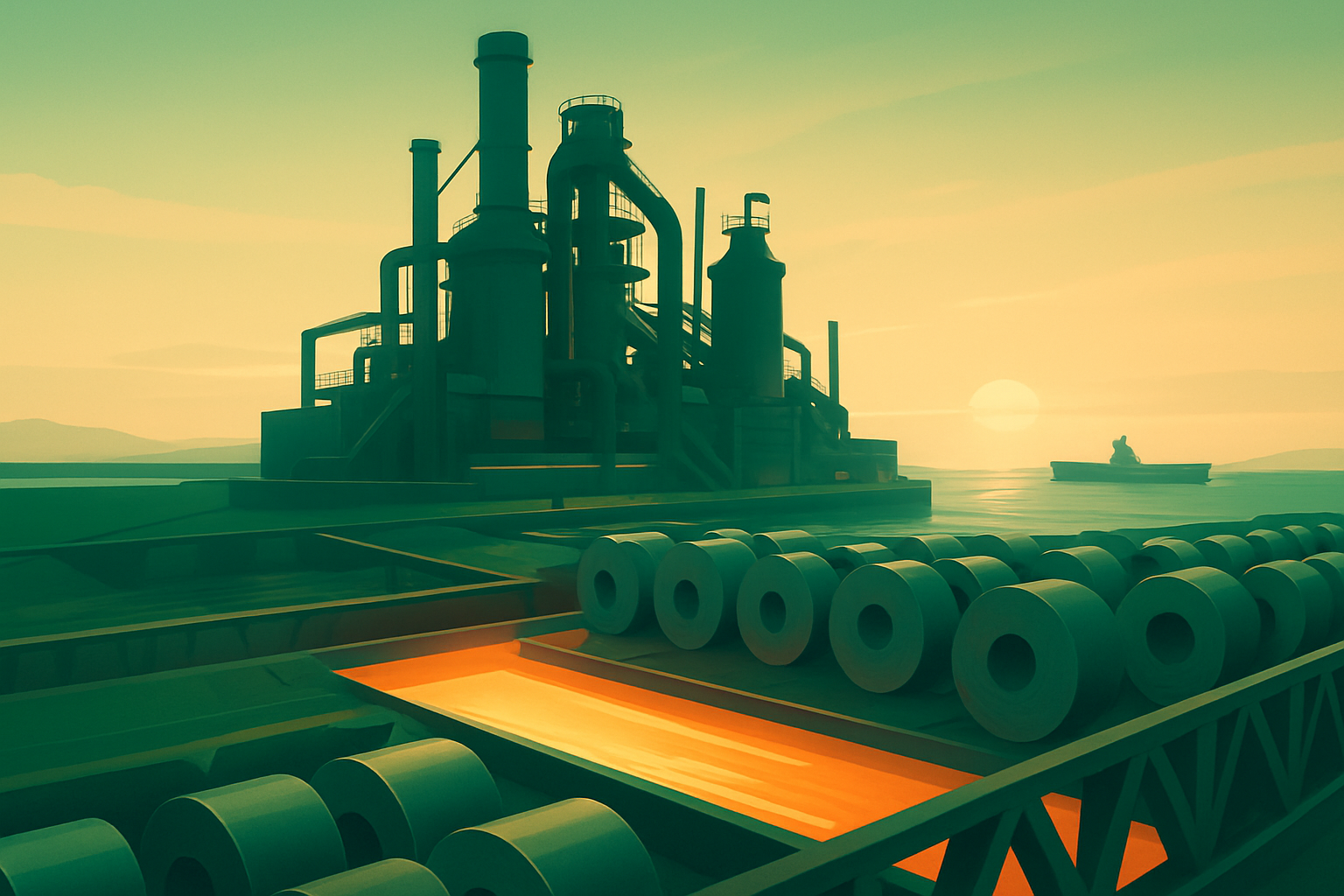
    The Iron Fortress: Cleveland-Cliffs and the High-Stakes Future of American Steel

    As of February 16, 2026, Cleveland-Cliffs (NYSE: CLF) stands as a polarizing sentinel of American industrial policy. Once a humble iron ore miner, the company has transformed into the largest flat-rolled steel producer in North America, a feat achieved through aggressive acquisitions and a staunch "America First" operational philosophy. Today, Cleveland-Cliffs is the focal point of a massive shift in global trade dynamics. Following a volatile 2025—a year defined by a "reset" in steel pricing and a dramatic 50% hike in Section 232 tariffs—investors are closely watching whether the company’s vertically integrated "Iron Fortress" can finally deliver the consistent profitability promised by CEO Lourenco Goncalves.

    Historical Background

    Founded in 1847, Cleveland-Cliffs’ history is inextricably linked to the development of the American Great Lakes region. For over 170 years, the company primarily operated as a merchant of iron ore pellets. However, the arrival of Lourenco Goncalves as CEO in 2014 sparked a radical transformation. Recognizing the vulnerability of being a mere raw material supplier, Goncalves pivoted toward steelmaking.

    The most significant milestones occurred between 2020 and 2024, when the company acquired AK Steel and the U.S. assets of ArcelorMittal, followed by the landmark $2.5 billion acquisition of Canada’s Stelco Holdings Inc. in late 2024. These moves effectively closed the loop, making Cleveland-Cliffs a fully vertically integrated powerhouse capable of controlling its supply chain from the mine to the finished automotive fender.

    Business Model

    Cleveland-Cliffs operates a unique business model compared to its "mini-mill" rivals like Nucor. It is an integrated producer that utilizes blast furnaces and basic oxygen furnaces (BOFs), fed by its own iron ore mines in Minnesota and Michigan.

    Revenue Segments:

    • Steelmaking (95%+ of revenue): Primarily flat-rolled steel, including hot-rolled, cold-rolled, and coated products.
    • Vertical Integration: The company produces its own Hot Briquetted Iron (HBI) and iron ore pellets, insulating it from the volatile scrap metal prices that affect its competitors.
    • Key Markets: The automotive industry remains CLF's largest customer, accounting for roughly one-third of its shipments. Other major segments include infrastructure, manufacturing, and distributors.

    Stock Performance Overview

    The past five years have been a rollercoaster for CLF shareholders. After surging to highs during the post-pandemic commodities boom of 2021-2022, the stock faced a grueling 2024 and 2025.

    • 1-Year Performance: Down roughly 12%, largely due to a $1.4 billion net loss reported for the 2025 fiscal year.
    • 5-Year Performance: Up approximately 45%, reflecting the successful integration of its massive acquisitions, though significantly off its 2022 peaks.
    • 10-Year Performance: An impressive 600%+ recovery from the brink of bankruptcy in 2015, highlighting the "Goncalves Era" turnaround.
      As of February 2026, the stock has begun to rebound, trading around $18.50 as the market prices in a $60/ton improvement in realized steel prices for the coming quarters.

    Financial Performance

    2025 was a challenging year for Cleveland-Cliffs. The company reported consolidated revenues of $18.6 billion, down from $19.2 billion in 2024. The GAAP net loss of $1.4 billion was driven by three main factors:

    1. Weak Automotive Demand: Stagnant production volumes from North American "Big Three" automakers.
    2. The "Poisoned" Slab Contract: A legacy contract for Brazilian slabs became a massive liability after tariffs on those slabs were hiked to 50% in mid-2025.
    3. One-time Integration Costs: Expenses related to the Stelco acquisition.

    However, the 2026 outlook is brighter. The company has guided for shipments of 16.5–17.0 million net tons and has successfully reduced unit costs by $40/ton over the last twelve months. The early 2026 strategic alliance with POSCO (KRX: 005490), involving a $700 million equity investment, has significantly bolstered the balance sheet.

    Leadership and Management

    Lourenco Goncalves remains the face of Cleveland-Cliffs. Known for his blunt, often combative earnings calls and fierce defense of American manufacturing, Goncalves has cultivated a cult-like following among retail investors and the United Steelworkers (USW) union. His strategy focuses on "environmental and social governance" (ESG) through the lens of domestic job preservation and reduced carbon intensity via HBI usage. The management team’s recent focus has shifted from M&A to debt reduction and capital returns, signaling a more mature phase of the corporate lifecycle.

    Products, Services, and Innovations

    Cleveland-Cliffs leads in high-end steel applications.

    • Advanced High-Strength Steel (AHSS): Essential for the electric vehicle (EV) transition to reduce weight while maintaining safety.
    • Grain-Oriented Electrical Steel (GOES): CLF is the sole domestic producer of this critical material used in power transformers and the aging U.S. electrical grid.
    • HBI Production: Its Toledo, Ohio plant is a state-of-the-art facility that produces low-carbon iron, allowing CLF to reduce its reliance on coke and lower its carbon footprint relative to traditional integrated peers.

    Competitive Landscape

    The U.S. steel market is currently a triarchy:

    1. Nucor (NYSE: NUE): The efficiency leader. Nucor’s electric arc furnace (EAF) model allows for lower fixed costs and higher flexibility.
    2. Cleveland-Cliffs: The quality and integration leader. CLF dominates the automotive and high-spec industrial sectors.
    3. United States Steel (NYSE: X) / Nippon Steel: Following the finalized $14.2 billion merger in June 2025, U.S. Steel now operates under the umbrella of Japan’s Nippon Steel, though with heavy U.S. government oversight (the "Golden Share" provision).

    While Nucor remains more profitable on a margin basis, CLF’s control over its raw materials provides a "floor" to its costs that competitors lack when scrap metal prices spike.

    Industry and Market Trends

    Two macro trends are currently defining the sector in 2026:

    • Decarbonization: Pressure to produce "Green Steel" has led to a race for hydrogen-ready furnaces. CLF’s HBI strategy gives it a head start.
    • Regionalization: The death of "Global Steel." Markets are increasingly siloed by protectionist barriers, benefiting domestic-only producers like CLF at the expense of global traders.

    Risks and Challenges

    • Retaliatory Tariffs: The 2025 tariff hikes led to 25% retaliatory duties from Canada, hurting the profitability of the recently acquired Stelco assets.
    • Labor Relations: While currently strong, the dependence on unionized labor makes CLF vulnerable to work stoppages that could paralyze its blast furnace operations.
    • Operational Sensitivity: Unlike EAFs, blast furnaces are difficult and expensive to "turn off," meaning CLF must maintain high utilization rates even when demand is soft.

    Opportunities and Catalysts

    • Infrastructure Spend: The continued rollout of the Infrastructure Investment and Jobs Act (IIJA) is finally hitting its peak construction phase in 2026, driving demand for heavy plate and structural steel.
    • The POSCO Deal: The $700 million infusion from POSCO provides liquidity to pay down high-interest debt and potentially restart stock buybacks in late 2026.
    • Grid Modernization: The desperate need for transformer steel plays directly into CLF’s monopoly on domestic GOES production.

    Investor Sentiment and Analyst Coverage

    Wall Street remains divided on CLF. Bulls point to the "tariff wall" as a permanent competitive advantage that will eventually force automotive OEMs to accept higher prices. Bears argue that the company is too capital-intensive and that the 2025 net loss proves the model is fragile during economic downturns. Institutional ownership remains high at 65%, with major positions held by Vanguard and BlackRock, though hedge fund activity has been volatile following the failed attempt to acquire U.S. Steel in 2024.

    Regulatory, Policy, and Geopolitical Factors

    This is the "X-factor" for Cleveland-Cliffs. In June 2025, the U.S. increased Section 232 tariffs from 25% to 50% on a wide range of steel imports.

    • The Reaction: This move effectively locked out low-cost imports from Brazil, South Korea, and Vietnam, allowing CLF to raise prices.
    • 2026 Shift: Just this month (February 2026), the administration signaled a technical easing of tariffs on "derivative products" (like auto parts and fasteners) to cool domestic inflation. While the 50% tariff on bulk steel remains, this easing could slightly reduce the "buy American" premium that CLF enjoys.
    • National Security: The Department of Commerce continues to view steel as a critical national security asset, shielding CLF from traditional antitrust pressures and foreign dumping.

    Conclusion

    Cleveland-Cliffs enters 2026 as a survivor of a brutal industrial "reset." Its destiny is no longer tied solely to the global price of steel, but to the political willpower of Washington to maintain a high-tariff environment. For investors, CLF represents a pure-play bet on American re-industrialization and trade protectionism.

    The primary metric to watch over the next 12 months is the "realized price per ton." If CLF can capture the $60/ton improvement it has forecasted, the company will quickly pivot from a $1.4 billion loss back to a multi-billion dollar EBITDA generator. However, in an era of 50% tariffs and retaliatory trade wars, the "Iron Fortress" is only as strong as the policies that defend it. Investors should remain cautious of the volatility inherent in such a politically sensitive asset but recognize the immense leverage CLF holds over the North American supply chain.


    This content is intended for informational purposes only and is not financial advice.

  • Nucor (NUE) Research Deep-Dive: Navigating Tariff Volatility and the Data Center Boom

    Nucor (NUE) Research Deep-Dive: Navigating Tariff Volatility and the Data Center Boom

    As of February 16, 2026, the American steel industry is grappling with a sudden shift in the geopolitical winds that have long served as its sails. Nucor Corporation (NYSE: NUE), the largest and most diversified steel producer in the United States, saw its shares tumble 4% in mid-February—a sharp reaction to reports that the administration is weighing a rollback of certain steel tariffs.

    This volatility comes at a pivotal moment for the Charlotte-based giant. While Nucor remains a titan of American industry, the "Fortress Nucor" narrative is being tested by a combination of earnings misses and a softening of the protectionist policies that defined much of 2025. This research feature delves into the mechanics of Nucor’s business, its strategic pivot toward high-tech infrastructure, and the regulatory minefield it must navigate to maintain its market-leading position.

    Historical Background

    Nucor’s journey is a quintessential American success story of disruption. Its roots trace back to the Reo Motor Car Company, which eventually became the Nuclear Corporation of America. However, the company’s modern identity was forged in the late 1960s under the legendary leadership of Ken Iverson.

    Iverson transformed a struggling conglomerate into a steel revolutionary by betting the company’s future on "mini-mills." Unlike the massive, integrated blast furnaces of rivals like U.S. Steel, Nucor utilized Electric Arc Furnaces (EAFs) to melt scrap metal into high-quality steel. This model was more efficient, less capital-intensive, and significantly more flexible. By the 1980s and 90s, Nucor had shattered the dominance of the traditional "Big Steel" players, growing through a culture of decentralized management and performance-based incentives that remains the bedrock of its corporate philosophy today.

    Business Model

    Nucor operates a highly vertically integrated model across three primary segments: Steel Mills, Steel Products, and Raw Materials.

    1. Steel Mills: This is the core engine, producing sheet, plate, structural, and bar steel. Nucor is the largest recycler in North America, using scrap as its primary feedstock.
    2. Steel Products: This segment adds significant value by manufacturing finished goods such as steel joists, decks, fasteners, and utility poles. It allows Nucor to capture higher margins downstream.
    3. Raw Materials: Through its subsidiary, The David J. Joseph Company (DJJ), Nucor manages its own scrap supply chain and produces Direct Reduced Iron (DRI), mitigating the volatility of global commodity prices.

    This diversified portfolio allows Nucor to weather cyclical downturns better than pure-play producers, as its downstream products often remain in demand even when raw steel prices fluctuate.

    Stock Performance Overview

    Over the long term, Nucor has been a standout performer, often referred to as a "Dividend King" for its decades of consistent dividend increases.

    • 10-Year Horizon: Investors have seen significant wealth creation, with the stock benefiting from the post-2016 focus on domestic manufacturing and the massive infrastructure spending of the early 2020s.
    • 5-Year Horizon: The stock surged during the post-pandemic recovery and the 2024-2025 "tariff boom," outperforming the broader S&P 500 Materials sector.
    • 1-Year Horizon: Performance has been more tempered. After peaking in mid-2025 following the implementation of 50% tariffs on most global steel, the stock entered a consolidation phase, culminating in the 4% slide seen today, February 16, 2026.

    Financial Performance

    Nucor’s FY 2025 results, released in January 2026, revealed a company in transition. Full-year revenue reached $31.88 billion, but net income dipped to $1.744 billion—a 13.5% decline from 2024.

    The Q4 2025 earnings report was a particular catalyst for recent skepticism, as the company missed analyst estimates with an EPS of $1.64 versus the $1.93 expected. Profit margins have felt the squeeze; net margins slipped from 6.6% in 2024 to 5.4% in 2025. Despite these headwinds, Nucor maintains a "fortress" balance sheet with $2.7 billion in cash and a disciplined approach to shareholder returns, having returned $1.2 billion to stockholders in 2025.

    Leadership and Management

    CEO Leon Topalian continues to lead Nucor with a focus on "value-added" growth and sustainability. His tenure has been marked by aggressive acquisitions in the data center and green energy sectors.

    A significant leadership transition occurred on January 1, 2026, when Stephen D. Laxton, formerly the CFO, was promoted to President and COO. Laxton is now tasked with overseeing the integration of Nucor’s massive recent capital investments, including the $3.1 billion Apple Grove mill in West Virginia. This management shift suggests a move from a phase of aggressive expansion to one of operational optimization and execution.

    Products, Services, and Innovations

    Innovation at Nucor is currently synonymous with "Green Steel." The company’s Econiq brand—the world’s first net-zero carbon steel at scale—has become a preferred choice for automotive manufacturers and tech companies looking to hit Scope 3 emission targets.

    Beyond the furnace, Nucor is innovating in the digital space. The 2024 acquisition of Southwest Data Products (SWDP) led to the creation of Nucor Data Systems, which provides specialized steel infrastructure for the booming data center market. From cooling systems to custom server racks, Nucor is moving closer to its end-users, transforming from a mere materials provider to a solutions partner for Big Tech.

    Competitive Landscape

    Nucor’s primary domestic rival is Steel Dynamics (NASDAQ: STLD). While Nucor is larger and more diversified, STLD currently boasts higher net margins (6.5% vs. Nucor’s 5.4%) and is often viewed by analysts as a leaner operator.

    On the other end of the spectrum is Cleveland-Cliffs (NYSE: CLF), which has struggled significantly in the current environment. Unlike Nucor’s EAF-based model, CLF’s reliance on blast furnaces has made it more susceptible to energy price spikes and environmental regulatory pressure. CLF reported a $1.3 billion net loss in 2025, further highlighting the competitive advantage of Nucor’s more flexible production method.

    Industry and Market Trends

    Two macro trends are currently defining the steel industry:

    1. The Data Center Explosion: The surge in AI and cloud computing has led to a record backlog for Nucor’s steel mill products. Data centers require massive amounts of structural steel and specialized enclosures, a niche Nucor has successfully cornered.
    2. Grid Modernization: The transition to renewable energy requires a total overhaul of the U.S. electrical grid. Nucor Towers & Structures is seeing unprecedented demand for utility poles and transmission towers, fueled by federal incentives in the "One Big Beautiful Bill" Act (OBBBA) of 2025.

    Risks and Challenges

    The most immediate risk is the "Tariff Rollback" narrative. Since mid-2025, a 50% tariff on global steel imports has protected domestic prices. However, reports on Feb 16, 2026, suggest the administration may exempt "derivative" steel products to fight consumer inflation. Any softening of these trade barriers could lead to an influx of cheaper foreign steel, further compressing Nucor’s margins.

    Additionally, Nucor faces the challenge of a "multi-year CapEx hangover." The company has spent billions on new facilities that must now be brought to full capacity in an environment where global demand for traditional construction steel is showing signs of cooling.

    Opportunities and Catalysts

    The upcoming completion of the Apple Grove sheet mill in West Virginia is a major near-term catalyst. Expected to be operational by late 2026, this facility will target the high-margin automotive and sustainable energy markets.

    Furthermore, Nucor’s $35 million investment in fusion power startup Helion Energy represents a visionary long-term play. If successful, it would provide the company with 500 MW of carbon-free, low-cost electricity by 2030, virtually insulating its mills from energy price volatility and cementing its lead in the "green steel" race.

    Investor Sentiment and Analyst Coverage

    Wall Street sentiment is currently "Cautiously Bullish." While many analysts have lowered their price targets following the Q4 earnings miss, the consensus remains that Nucor is the best-in-class operator.

    Hedge fund activity has shown some profit-taking in early 2026, but institutional ownership remains high. The primary debate among analysts is whether Nucor’s pivot to tech infrastructure (data centers) is enough to offset the cyclicality of its core commodity business. The recent 4% drop is viewed by some as a healthy "re-rating" of the stock's P/E multiple rather than a fundamental breakdown.

    Regulatory, Policy, and Geopolitical Factors

    Nucor is currently operating in a "Protectionist 2.0" environment. The "One Big Beautiful Bill" Act (OBBBA) of 2025 significantly tightened "Buy American" requirements, essentially mandating domestic steel for any project receiving federal tax credits.

    However, the geopolitical landscape is shifting. The administration's struggle with inflation has put trade hawks and consumer advocates at odds. The rumors of a tariff rollback on Feb 16 reflect this tension. For Nucor, the political environment is both its greatest shield and its most unpredictable risk.

    Conclusion

    Nucor Corporation enters the second quarter of 2026 at a crossroads. Its fundamental business remains incredibly robust, anchored by a pioneering spirit and a balance sheet that is the envy of the industry. The pivot toward data centers and green steel provides a structural growth story that most competitors cannot match.

    However, the 4% slide on February 16, 2026, serves as a stark reminder that Nucor is not immune to the whims of trade policy and the cooling of a massive infrastructure cycle. Investors should watch the administration’s official stance on tariffs in the coming weeks and keep a close eye on the ramp-up of the Apple Grove mill. While the current volatility may be unsettling, Nucor’s history suggests that it is during these periods of industry transition that the company often finds its next gear for growth.


    This content is intended for informational purposes only and is not financial advice.