
Tag: Tech Earnings

  • The Architect of the AI Factory: A Deep Dive into Dell Technologies (DELL) as AI Demand Surges

    The Architect of the AI Factory: A Deep Dive into Dell Technologies (DELL) as AI Demand Surges

    As of February 26, 2026, Dell Technologies (NYSE: DELL) stands at the epicenter of a historic shift in global computing. Once primarily known as a legacy provider of personal computers and enterprise storage, the Round Rock, Texas-based titan has successfully reinvented itself as the cornerstone of the "AI Factory." With the explosion of generative AI and large-scale model training, Dell has leveraged its massive supply chain and deep enterprise relationships to become a dominant player in the AI hardware space. Today, the company is in sharp focus as it prepares to report its Q4 Fiscal Year 2026 earnings, with investors eagerly watching to see if the surge in AI server demand can offset macroeconomic headwinds and margin pressures.

    Historical Background

    The story of Dell Technologies is one of the most remarkable transformations in American corporate history. Founded in 1984 by Michael Dell in his University of Texas dorm room with just $1,000, the company revolutionized the industry with its "direct-to-consumer" business model, bypassing retail middlemen to offer customized PCs at lower prices.

    After becoming a public powerhouse in the 1990s, the company faced a shifting landscape in the 2010s as mobile computing and cloud services challenged the traditional PC market. In 2013, Michael Dell and Silver Lake Partners took the company private in a $24 billion deal—the largest leveraged buyout in tech history at the time—to restructure away from the public eye. During this period, Dell executed the massive $67 billion acquisition of EMC Corporation in 2016, a move that integrated world-class storage and virtualization (via a majority stake in VMware) into its portfolio. Dell returned to the public markets in late 2018 (NYSE: DELL), emerging as a simplified, end-to-end infrastructure giant.

    Business Model

    Dell operates a diversified business model split primarily into two reporting segments:

    • Infrastructure Solutions Group (ISG): This high-growth segment includes servers, storage, and networking. It is the current engine of Dell’s AI ambitions, housing the PowerEdge server line and sophisticated storage solutions required for massive data sets.
    • Client Solutions Group (CSG): This segment covers the traditional PC business, including commercial and consumer laptops, desktops, and peripherals. While mature, it provides significant cash flow and a massive installed base for "AI PC" upgrades.

    The company earns revenue through direct hardware sales, recurring software licenses, and an expanding suite of professional services (APEX) that allows customers to consume Dell infrastructure through a cloud-like, consumption-based model.

    Stock Performance Overview

    Dell’s stock has undergone a significant re-rating by the market over the last decade, transitioning from a "value" play to a "growth" play driven by AI infrastructure.

    • 1-Year Performance: As of February 2026, the stock has seen a 6.8% return over the past twelve months. While modest compared to 2024’s massive gains, it reflects a period of consolidation as investors digested concerns over hardware margins.
    • 5-Year Performance: Dell has delivered a staggering 219.8% total return (approx. 26.5% CAGR), significantly outperforming the broader S&P 500 index.
    • 10-Year Performance: Long-term investors have seen a 920.7% total return (approx. 27.4% CAGR). An initial $1,000 investment at the time of its 2016 EMC integration would be worth over $10,000 today, underscoring the success of Michael Dell’s long-term vision.

    Financial Performance

    Heading into the Q4 FY2026 earnings announcement, Dell’s financials reflect a company scaling at breakneck speed.

    • Revenue Growth: Analysts project Q4 revenue between $31.0 billion and $32.0 billion, a roughly 32% increase year-over-year.
    • Earnings per Share (EPS): Non-GAAP EPS is expected at $3.53, up from $2.68 a year prior.
    • Margins: A key metric for investors has been gross margin, which sat near 20.4% in late 2025. While high-volume AI server sales drive revenue, the high cost of components—specifically HBM (High Bandwidth Memory) and GPUs from NVIDIA (NASDAQ: NVDA)—has put pressure on profitability.
    • Backlog: Dell exited the previous quarter with a massive $18.4 billion AI server backlog, a figure that continues to grow as sovereign nations and large enterprises scramble for computing power.

    Leadership and Management

    Dell’s leadership remains its greatest asset. Michael Dell, the Chairman and CEO, remains highly active, steering the company’s strategic focus toward the "AI Factory." He is supported by Jeff Clarke, Vice Chairman and COO, who is widely regarded as the architect of Dell’s world-class supply chain. Clarke’s ability to secure scarce components and deploy full-rack AI solutions within 24 to 36 hours has given Dell a significant operational lead over rivals. In late 2025, David Kennedy was officially named permanent CFO, bringing stability to the finance department after a period of transition. The management team is viewed as disciplined, shareholder-friendly, and highly effective at capital allocation.

    Products, Services, and Innovations

    Innovation at Dell is currently centered on the PowerEdge XE9680, its flagship AI-optimized server. This platform supports the latest chips from NVIDIA and Advanced Micro Devices (NASDAQ: AMD) and is designed for the most demanding generative AI workloads.
    Beyond servers, Dell is pioneering the AI PC—laptops equipped with Neural Processing Units (NPUs) that allow AI tasks to run locally rather than in the cloud. Furthermore, Dell's APEX platform has evolved into a comprehensive "multicloud" ecosystem, allowing enterprises to manage their data seamlessly across private hardware and public clouds, a critical capability as data privacy laws tighten globally.

    Competitive Landscape

    Dell competes in a crowded but consolidating field:

    • Hewlett Packard Enterprise (NYSE: HPE): Dell’s primary rival in the enterprise space. While HPE is strong in "Private AI" and networking (via its acquisition of Juniper Networks), Dell currently holds a higher market share in total AI server volume (approx. 20% vs HPE’s 15%).
    • Super Micro Computer (NASDAQ: SMCI): A high-growth "pure-play" competitor known for liquid cooling and speed. While Super Micro was an early mover in AI, Dell’s global service and support network has allowed it to win "sovereign AI" contracts that require long-term maintenance.
    • Lenovo (OTC: LNVGY): A formidable competitor in the PC and standard server market, though it has trailed Dell in high-end AI server deployments in the Western markets.

    Industry and Market Trends

    The "second wave" of AI adoption is the defining trend of 2026. While the first wave was dominated by "neoclouds" and hyperscalers, the second wave involves Sovereign AI (nations building their own localized AI infrastructure) and Enterprise AI (companies integrating AI into every department). Additionally, a massive PC refresh cycle is underway as hundreds of millions of enterprise laptops purchased during the 2020-2021 pandemic reach their end-of-life, just as AI-capable hardware becomes the new standard.

    Risks and Challenges

    Despite the growth, Dell faces several headwinds:

    • Margin Compression: The mix shift toward AI servers, which currently carry lower margins than traditional storage and software, remains a concern for Wall Street.
    • Component Costs: Rising prices for DRAM and HBM memory can erode profits quickly if Dell cannot pass costs on to customers.
    • Macroeconomic Sensitivity: While AI is a priority, high interest rates and a cooling global economy could lead some enterprises to delay broader IT spending outside of AI.

    Opportunities and Catalysts

    • Sovereign AI Deals: Governments are increasingly viewing AI infrastructure as a matter of national security, leading to multi-billion dollar "nation-scale" contracts.
    • Blackwell Integration: The rollout of NVIDIA’s Blackwell architecture throughout 2026 is expected to spark a new cycle of server upgrades.
    • Storage Recovery: As companies store the massive amounts of data generated by AI, Dell’s high-margin storage business is expected to see a significant "pull-through" effect.

    Investor Sentiment and Analyst Coverage

    Wall Street remains broadly bullish on Dell. The consensus rating is a Strong Buy, with a median price target of approximately $160. Bullish analysts point to the "five-quarter pipeline" of AI demand, which reportedly exceeds the current backlog by several multiples. Institutional ownership remains high, with major funds viewing Dell as a more reasonably valued alternative to "pure-play" AI stocks that trade at much higher multiples of earnings.

    Regulatory, Policy, and Geopolitical Factors

    Geopolitics play a massive role in Dell’s operations. In January 2026, the U.S. imposed a 25% tariff on advanced AI chips not destined for domestic supply chains, complicating Dell’s international logistics. To mitigate this, Dell has aggressively pursued a "China Plus One" strategy, shifting 50% of its production capacity to Vietnam, India, and Mexico by the end of 2026. Furthermore, tightening U.S. export controls on high-end GPUs require Dell to navigate a complex licensing landscape when selling to clients in certain regions.

    Conclusion

    Dell Technologies has successfully navigated the transition from a PC company to a vital architect of the AI era. With a record backlog, a visionary founder at the helm, and a supply chain that is the envy of the industry, the company is well-positioned for the "second wave" of enterprise AI adoption. However, investors must weigh this growth against the reality of margin compression and a complex geopolitical environment. As the Q4 FY2026 results unfold, the key question will not be whether demand exists, but how efficiently Dell can convert its massive $18.4 billion backlog into bottom-line profitability. For the long-term investor, Dell remains a core play on the physical infrastructure that makes the AI revolution possible.


    This content is intended for informational purposes only and is not financial advice.

  • The Roku Resurgence: Navigating Profitability and the Post-Walmart Era

    The Roku Resurgence: Navigating Profitability and the Post-Walmart Era

    As of February 17, 2026, Roku, Inc. (Nasdaq: ROKU) has reclaimed its position as a central protagonist in the global streaming narrative. Once dismissed by skeptics as a "COVID-era relic" destined to be crushed by tech giants, Roku has spent the last 24 months engineering a remarkable fundamental turnaround. The company is currently the subject of intense market scrutiny following its Q4 and Full-Year 2025 financial update released last week.

    While the broader markets have been navigating a period of macroeconomic recalibration, Roku’s stock recently experienced a dramatic double-digit surge, fueled by a "profit shock" that saw the company report its first full year of GAAP net income in nearly half a decade. This resurgence comes at a critical juncture: the streaming industry is shifting its focus from raw subscriber growth to sustainable monetization through advertising and sophisticated platform services. Roku’s ability to navigate the loss of its primary retail partner, Walmart, while simultaneously scaling its active user base to over 90 million households, makes it one of the most compelling—and volatile—stories in the technology and media sector today.

    Historical Background

    Founded in 2002 by Anthony Wood—the man credited with inventing the Digital Video Recorder (DVR) during his time at ReplayTV—Roku’s origins are inextricably linked to the birth of modern streaming. The company initially operated as an internal project within Netflix, known as "Project Griffin," intended to be a dedicated player for Netflix’s nascent streaming service. However, Reed Hastings spun the company off in 2008 to ensure Netflix could remain platform-neutral.

    Roku’s early years were defined by its hardware: simple, affordable streaming sticks and boxes that converted "dumb" TVs into "smart" ones. By 2014, the company pivoted toward an "OS-first" strategy, licensing its Roku Operating System (OS) to television manufacturers like TCL and Hisense. This move transformed Roku from a hardware vendor into a gatekeeper.

    The company went public in September 2017 at $14 per share, and its stock price famously skyrocketed during the 2020-2021 pandemic lockdowns, peaking near $480. However, the subsequent "streaming correction" of 2022 and 2023 saw the stock lose over 80% of its value as advertising markets cooled and competition intensified. The story of 2024 and 2025 has been one of disciplined cost-cutting and aggressive ad-tech innovation to reclaim that lost ground.

    Business Model

    Roku operates a classic "razor and blade" business model, segmented into two primary divisions: Devices and Platform.

    1. Devices (The Razor): Roku sells streaming players and, more recently, its own branded "Roku Pro Series" TVs. This segment typically operates at near-zero or negative gross margins. The strategic goal is not hardware profit, but "household acquisition"—getting the Roku OS into as many living rooms as possible.
    2. Platform (The Blade): This is where the real money is made. Once a user is in the Roku ecosystem, the company generates revenue through:
      • Advertising: Selling video ad spots on The Roku Channel (its free, ad-supported streaming service or FAST) and within other apps on the platform.
      • Content Distribution: Taking a cut (typically 20-30%) of subscription fees for services like Disney+ or Max when users sign up via the Roku interface.
      • Billing and Data: Providing payment processing and leveraging first-party viewer data to help advertisers target specific demographics.

    As of the latest reports, the Platform segment accounts for nearly 88% of total revenue and the vast majority of gross profit, illustrating Roku's evolution into a high-margin digital advertising firm.

    Stock Performance Overview

    The trajectory of ROKU stock has been a roller coaster for long-term investors.

    • 1-Year Performance: Over the past 12 months, ROKU has outperformed the Nasdaq 100, rising approximately 42%. This was driven by a series of earnings beats and the successful launch of its "Howdy" SVOD service in late 2025.
    • 5-Year Performance: On a 5-year basis, the stock remains significantly below its 2021 all-time highs. However, it has established a strong support floor near the $60-$70 range, which it successfully tested during the market volatility of early 2024.
    • Recent Moves: Following the February 12, 2026, earnings release, the stock surged 14% in a single session. This move was particularly notable because it occurred on high volume, suggesting institutional "re-risking" into the name after the company proved it could remain profitable despite losing the Walmart "Onn" house-brand contract.

    Financial Performance

    Roku’s Fiscal Year 2025 results, presented in early 2026, were a watershed moment.

    • Revenue: Total net revenue hit $4.74 billion, a 15% year-over-year increase.
    • Profitability: The company achieved a Net Income of $88.4 million for the full year 2025. This reversal from a $129.4 million loss in 2024 was the primary catalyst for the recent stock price jump.
    • Key Metrics:
      • Active Accounts: Surpassed 90.2 million, adding 10 million net new households in a single year.
      • ARPU (Average Revenue Per User): Stabilized at $41.20, showing resilience even as the ad market shifted toward programmatic buying.
      • Cash Flow: Free cash flow reached a record $510 million, providing a significant war chest for future M&A or R&D.
    • Valuation: Despite the recent rally, Roku trades at a Price-to-Sales (P/S) ratio of roughly 3.1x, which many analysts consider attractive compared to its historical average of 8x-10x during the growth years.

    Leadership and Management

    Anthony Wood remains the firm’s visionary leader, serving as Chairman and CEO. Wood is known for his "Switzerland" strategy—keeping the Roku platform open and neutral to all streaming apps, whether they are rivals like Amazon Prime Video or partners like Netflix.

    In 2025, Roku promoted Dan Jedda to the dual role of COO and CFO. This move was widely interpreted by Wall Street as a commitment to operational efficiency. Under Jedda’s watch, Roku has significantly reduced its headcount growth and tightened its marketing spend, focusing instead on high-ROI ad-tech investments. The management team has successfully rebuilt its reputation for "under-promising and over-delivering," a stark contrast to the guidance misses seen in 2022.

    Products, Services, and Innovations

    Innovation at Roku has moved beyond the streaming stick.

    • Roku Pro Series TVs: Launched in mid-2025, these flagship Mini-LED sets have allowed Roku to compete directly in the premium hardware market, featuring AI-driven "Smart Picture Max" technology.
    • "Howdy" SVOD Service: In a bold move, Roku launched its first-party, ad-free subscription service in 2025. Priced at $2.99/month, it offers a curated library of premium content, serving as a high-margin recurring revenue stream.
    • Roku Ads Manager: This is perhaps the most significant recent innovation. It is a self-serve platform that allows small and medium-sized businesses to buy TV ads as easily as they buy Facebook ads.
    • Ad-Tech Integration: In 2025, Roku officially opened its inventory to "The Trade Desk," a major shift from its previous "walled garden" approach. This allows larger brands to use their own data to target Roku viewers, greatly increasing the liquidity and pricing of Roku's ad spots.

    Competitive Landscape

    Roku operates in an "arena of giants." Its primary competitors include:

    • Big Tech (Amazon, Google, Apple): Amazon’s Fire TV and Google TV are Roku’s most direct OS rivals. While Apple TV remains a premium niche player, Amazon and Google leverage their massive cloud and retail ecosystems to bundle services.
    • TV OEMs (Samsung, LG, Vizio/Walmart): Samsung (Tizen) and LG (webOS) remain formidable because they control the hardware manufacturing. The most significant recent shift was Walmart’s $2.3 billion acquisition of Vizio, which effectively ended Roku’s dominance as the OS provider for Walmart’s "Onn" brand TVs.
    • Competitive Edge: Roku’s advantage is its singular focus. Unlike Amazon or Google, Roku does not have a competing retail or search business that might conflict with its media partners. This neutrality makes it the preferred partner for many third-party streaming apps.

    Industry and Market Trends

    The "FAST" (Free Ad-supported Streaming TV) trend has been a massive tailwind for Roku. As consumers grow weary of "subscription fatigue"—the rising costs of multiple monthly fees—they are flocking to free, ad-supported options. The Roku Channel is now a top-5 app on its own platform by reach.

    Another key trend is the "Shoppable Ad." Roku has pioneered partnerships where viewers can buy products directly from their TV screen using their Roku Pay account. This "lower-funnel" advertising is highly attractive to brands looking for measurable sales rather than just "brand awareness."

    Risks and Challenges

    Despite the recent financial triumphs, Roku faces several structural risks:

    1. Concentration of Hardware Sales: The loss of Walmart’s house-brand business (to Vizio) is a major blow. Roku must now rely more heavily on its own branded TVs and partnerships with Best Buy and Target to maintain its lead in "new account" growth.
    2. Ad Market Cyclicality: As a platform heavily dependent on advertising, Roku is highly sensitive to shifts in the macroeconomy. A recession could see marketing budgets slashed, directly impacting Roku’s bottom line.
    3. Content Costs: While Roku avoids the multi-billion dollar content spends of Netflix, maintaining "The Roku Channel" still requires significant licensing fees. Balancing content quality with profitability is a constant tightrope walk.

    Opportunities and Catalysts

    • International Expansion: Roku is still in the early stages in markets like Mexico, Brazil, and the UK. International ARPU currently lags far behind the U.S., representing a massive untapped monetization opportunity.
    • Programmatic Ad Growth: By opening its inventory to third-party demand-side platforms (DSPs) like The Trade Desk, Roku could see a significant uplift in ad fill rates and pricing in 2026.
    • M&A Potential: With over $2 billion in cash and a profitable trajectory, Roku is well-positioned to acquire smaller content libraries or specialized ad-tech firms to bolster its ecosystem.

    Investor Sentiment and Analyst Coverage

    The sentiment surrounding Roku has shifted from "Bearish" in 2023 to "Cautiously Optimistic" in 2026. Following the recent earnings beat, several major Wall Street firms upgraded the stock to "Buy," citing the company’s ability to generate GAAP profit.

    Institutional ownership remains high, with major players like ARK Invest (Cathie Wood) maintaining significant positions, viewing Roku as the "operating system of the living room." Retail sentiment, as measured by social media chatter, has turned bullish as the stock price began to break out of its multi-year consolidation pattern.

    Regulatory, Policy, and Geopolitical Factors

    Roku is subject to increasing scrutiny regarding data privacy. With the expansion of privacy laws in the U.S. (like the CCPA in California) and internationally, Roku’s ability to track viewer behavior for targeted advertising faces higher compliance hurdles.

    Additionally, the company’s supply chain for hardware remains exposed to geopolitical tensions in East Asia, where most of its TVs and streaming sticks are manufactured. Any significant trade disruption or increase in tariffs could squeeze the margins of its Devices segment further.

    Conclusion

    Roku’s journey from a niche hardware maker to a profitable, 90-million-household platform is one of the more resilient stories in modern tech. The "significant price movement" seen in February 2026 is a reflection of the market finally pricing in Roku's fundamental shift toward GAAP profitability and operational discipline.

    For investors, the key will be watching whether Roku can maintain this momentum without the "Walmart engine." If the company can successfully pivot to its own-brand TVs and leverage its new ad-tech partnerships to grow ARPU, the current valuation may still have significant room to run. However, in the high-stakes world of the streaming wars, Roku must continue to innovate at the speed of its "Big Tech" rivals to ensure it doesn't just remain a gateway, but becomes the destination itself.


    This content is intended for informational purposes only and is not financial advice.

  • The AI Infrastructure Powerhouse: A Deep Dive into Microsoft’s $81.3B Revenue Milestone

    The AI Infrastructure Powerhouse: A Deep Dive into Microsoft’s $81.3B Revenue Milestone

    As of February 16, 2026, Microsoft Corp. (NASDAQ: MSFT) stands at the undisputed epicenter of the global technology landscape. The company recently reported a staggering $81.3 billion in quarterly revenue, a milestone that underscores its successful pivot from a legacy software provider to an AI-first infrastructure titan. While the sheer scale of the "AI infrastructure supercycle" has rewarded investors, it has also invited intense scrutiny regarding capital intensity and regulatory overreach. This report delves into the mechanics of Microsoft’s growth, its aggressive monetization of artificial intelligence, and the risks inherent in its trillion-dollar ambitions.

    Historical Background

    Founded in 1975 by Bill Gates and Paul Allen, Microsoft’s early history was defined by the democratization of computing through the Windows operating system and the Office productivity suite. For decades, the company maintained a near-monopoly on the desktop, navigating through the "browser wars" of the 1990s and surviving significant antitrust challenges in the early 2000s.

    However, the late 2000s saw Microsoft struggle to adapt to the mobile revolution, losing ground to Apple and Google. The appointment of Satya Nadella as CEO in 2014 marked a radical transformation. Under his "Cloud First, Mobile First" strategy, Microsoft successfully pivoted to Azure, transitioned Office to a subscription-based SaaS model (Microsoft 365), and embraced open-source software. By 2023, the company entered its third major era: the AI-driven transformation, catalyzed by a multi-billion dollar partnership with OpenAI.

    Business Model

    Microsoft operates a diversified business model categorized into three primary segments:

    1. Intelligent Cloud: This is the company’s primary growth engine, centered on Azure. It provides public, private, and hybrid cloud services, developer tools, and enterprise services. As of 2026, this segment increasingly focuses on "AI as a Service" (AIaaS), hosting foundational models and providing the computing power for the generative AI era.
    2. Productivity and Business Processes: This segment includes the Microsoft 365 suite (Word, Excel, PowerPoint, Teams), LinkedIn, and Dynamics 365. Revenue is primarily derived from per-user subscriptions, now augmented by high-margin AI "Copilot" add-ons.
    3. More Personal Computing: This includes Windows OEM licensing, Surface devices, Xbox gaming (bolstered by the 2023 Activision Blizzard acquisition), and search/news advertising. While lower growth than Cloud, it remains a massive cash-flow generator.

    Stock Performance Overview

    Microsoft has been one of the most consistent wealth creators in market history.

    • 10-Year Performance: Since 2016, the stock has risen over 1,000%, driven by the massive expansion of Azure and the transition to recurring revenue.
    • 5-Year Performance: Over the last five years, MSFT has outperformed the S&P 500 significantly, benefiting from the post-pandemic digital acceleration and the AI hype cycle that began in late 2022.
    • 1-Year Performance: In the past 12 months, the stock has experienced volatility. Despite reaching all-time highs, the market has periodically punished the stock during earnings calls if Azure growth slowed by even a single percentage point, or if capital expenditures rose faster than immediate AI revenue.

    Financial Performance

    In its latest earnings report for Q2 Fiscal Year 2026 (ended December 31, 2025), Microsoft shattered expectations with $81.3 billion in revenue, a 17% year-over-year increase.

    • Profitability: Net income reached $38.5 billion (GAAP), though this was amplified by a $7.6 billion paper gain related to OpenAI’s transition to a for-profit structure. Non-GAAP net income remained robust at $30.9 billion.
    • Margins: Operating margins hovered near 44%, a testament to Microsoft’s pricing power even as it scales expensive AI infrastructure.
    • The CapEx Question: Investors are currently hyper-focused on Microsoft's Capital Expenditures, which hit a record $37.5 billion in a single quarter. This spending is almost entirely dedicated to building data centers and purchasing GPUs to meet the insatiable demand for AI training and inference.
    • Cash Flow: Free cash flow remains strong, allowing the company to continue its $60 billion share buyback program and consistent dividend increases.

    Leadership and Management

    Satya Nadella continues to serve as Chairman and CEO, widely regarded as one of the most effective leaders in corporate history for his role in reviving Microsoft’s culture and market cap.

    Recent leadership changes reflect the company's shifting priorities:

    • Amy Hood (CFO): Remains the disciplined architect of Microsoft’s financial strategy, balancing massive AI investments with bottom-line protection.
    • Amy Coleman (CPO): Recently appointed as Chief People Officer, tasked with managing the global workforce through the AI transition.
    • Hayete Gallot (EVP, Security): Joined from Google Cloud to lead Microsoft’s "Secure Future Initiative," an urgent internal pivot to address high-profile security breaches that plagued the company in 2024 and 2025.

    Products, Services, and Innovations

    Microsoft’s current innovation pipeline is dominated by Agentic AI—AI that doesn't just answer questions but takes actions on behalf of the user.

    • Microsoft 365 Copilot: With 15 million paid seats, Copilot is now a meaningful contributor to revenue. The 2026 version features "autonomous agents" that can manage emails, schedule meetings, and draft technical reports with minimal human intervention.
    • Custom Silicon: To reduce its reliance on NVIDIA (NASDAQ: NVDA), Microsoft has scaled its Maia 200 AI Accelerator and Cobalt 200 CPU. These chips are optimized for internal workloads, significantly lowering the cost of running GPT-5.2 and other large language models.
    • Azure AI Foundry: A unified platform for developers to build, test, and deploy AI models, which has seen an 80% increase in high-spending enterprise customers over the last year.

    Competitive Landscape

    Microsoft competes on multiple fronts against formidable rivals:

    • Cloud Infrastructure: Azure (24% market share) trails Amazon Web Services (NASDAQ: AMZN) which holds ~30%. However, Azure is currently growing at a faster rate (39% vs AWS's 24%), closing the gap through its tight integration with OpenAI.
    • AI Models: Google (NASDAQ: GOOGL) remains the primary threat. Google Cloud’s 48% growth in late 2025 signaled that its Gemini 3.0 models are gaining significant traction among enterprise developers.
    • Software and Apps: Salesforce (NYSE: CRM) and ServiceNow (NYSE: NOW) are competing with Microsoft’s agentic AI tools, arguing that specialized business data is more valuable than Microsoft’s general-purpose Copilot.

    Industry and Market Trends

    The "Year of the Agent" (2026) is the defining trend. Enterprises are moving past simple chatbots toward "AI Factories."

    • Planet-Scale Infrastructure: Microsoft’s new "Fairwater" class of data centers uses dedicated AI WANs and specialized fiber networks to treat multiple physical locations as a single, massive supercomputer.
    • Sovereign Cloud: There is a growing trend of "digital nationalism," where countries demand that AI data and models reside within their borders. Microsoft has responded by launching dedicated "Cloud Regions" in over 60 countries.

    Risks and Challenges

    • The Monetization Gap: There is a persistent fear that Microsoft is building too much capacity too quickly. If enterprise adoption of AI agents stalls, the $37.5B quarterly CapEx could lead to a massive write-down or margin compression.
    • Security Vulnerabilities: Microsoft has faced several high-profile hacks in recent years. If customers lose trust in the "Microsoft Security Stack," the entire ecosystem—including Azure—is at risk.
    • Antitrust Scrutiny: The FTC and EU are currently investigating whether Microsoft’s practice of bundling AI and security tools into Office 365 constitutes anti-competitive behavior.

    Opportunities and Catalysts

    • GPT-5 Integration: The upcoming release of GPT-5.2 by OpenAI is expected to provide a significant performance leap for Azure customers, potentially triggering a new wave of enterprise migrations.
    • Gaming Monetization: The integration of Activision Blizzard's library into Xbox Game Pass is beginning to show higher-than-expected margins, turning the gaming segment into a more reliable profit center.
    • Edge AI: As AI models become more efficient, Microsoft is well-positioned to lead in "Edge AI" through its Windows and Surface ecosystem, running models locally on PCs rather than in the cloud.

    Investor Sentiment and Analyst Coverage

    Wall Street remains overwhelmingly bullish, with over 90% of analysts maintaining a "Buy" or "Strong Buy" rating. The consensus price target suggests a 15% upside over the next 12 months. However, hedge fund sentiment has become more nuanced; some have trimmed positions, citing the high valuation and the risk of a "CapEx bubble." Retail sentiment remains high, particularly around the company's dividend growth and its perceived role as the safest bet in the AI revolution.

    Regulatory, Policy, and Geopolitical Factors

    Geopolitics are increasingly dictating Microsoft’s roadmap.

    • Export Controls: Tightening US restrictions on AI chip exports to China limit Microsoft's ability to offer its most advanced Azure AI services in certain regions.
    • EU Digital Sovereignty: European regulators are pushing for "unbundling" and interoperability, which may force Microsoft to change how it sells Teams and Copilot in the Eurozone.
    • AI Ethics and Policy: As the US government moves toward formal AI regulation, Microsoft’s close ties to the policy-making process (through its leadership in AI safety forums) provide it with a "moat" that smaller competitors may find difficult to navigate.

    Conclusion

    Microsoft enters the second half of the decade as a behemoth in transition. Its $81.3 billion revenue beat confirms that the demand for AI infrastructure is real and accelerating. By successfully verticalizing its stack—from custom chips and data centers to foundational models and end-user agents—Microsoft has built a formidable competitive advantage.

    However, the path forward is not without peril. The company must prove to skeptical investors that its record-breaking capital expenditures will yield sustainable, high-margin returns. Furthermore, it must navigate a minefield of regulatory challenges that threaten its traditional bundling strategy. For investors, Microsoft remains the "gold standard" of the AI era, but one that requires a long-term horizon and an appetite for the volatility inherent in a generational technology shift.


    This content is intended for informational purposes only and is not financial advice.
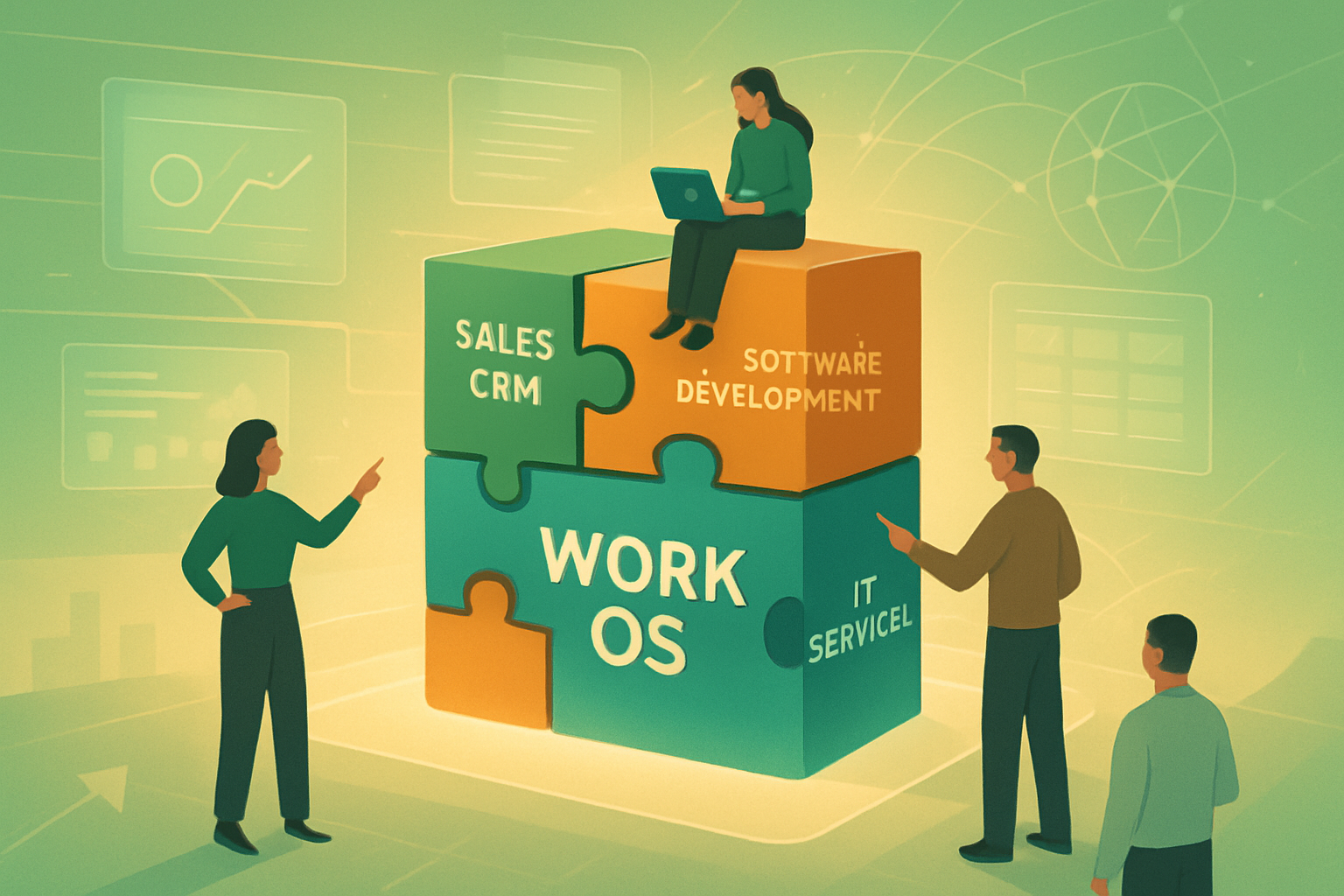
  • Monday.com (MNDY) Deep Dive: Navigating the 2026 Guidance Reset and the Rise of AI-Driven Work OS

    Monday.com (MNDY) Deep Dive: Navigating the 2026 Guidance Reset and the Rise of AI-Driven Work OS

    Today, February 9, 2026, marks a pivotal moment for Monday.com (NASDAQ: MNDY) as the company released its fiscal 2026 revenue guidance. Once the darling of the "Work OS" and software-as-a-service (SaaS) sector, the company is navigating a complex transition from high-velocity growth to mature, multi-product enterprise scaling. While Monday.com remains a powerhouse in organizational efficiency, its latest guidance has sparked intense debate on Wall Street regarding the longevity of its 20%+ growth trajectory in an increasingly AI-saturated market.

    Historical Background

    Founded in 2012 by Roy Mann and Eran Zinman in Tel Aviv, Israel, Monday.com—originally known as "daPulse"—was born from a desire to create a more visual and intuitive way for teams to collaborate. Unlike traditional project management tools that felt like rigid databases, Monday.com’s "Work OS" was built on a flexible, low-code architecture that allowed non-technical users to build their own custom workflow applications.

    The company rebranded to Monday.com in 2017 and saw meteoric growth during the global shift to remote work in 2020. Its successful IPO in June 2021 positioned it as a leader in the next generation of enterprise software. Over the last five years, the company has successfully evolved from a single-product project management tool into a comprehensive platform featuring dedicated suites for Sales CRM, Software Development, and IT Service Management.

    Business Model

    Monday.com operates on a cloud-based, subscription-only SaaS model. Its revenue is derived primarily from tiered pricing based on the number of users ("seats") and the level of functionality required. The company’s core value proposition is its "Work OS" philosophy, which allows customers to consolidate multiple point solutions—such as CRM, task management, and resource planning—into one unified ecosystem.

    The business is segmented into three primary product pillars:

    • Monday CRM: Targeting sales and marketing teams.
    • Monday Dev: A specialized toolkit for engineering and product teams.
    • Monday Service: A newer entry into the IT Service Management (ITSM) and employee helpdesk space.

    The company’s customer base is highly diversified, ranging from small-to-medium businesses (SMBs) to Fortune 500 enterprises. As of late 2025, the company reported that customers generating over $100,000 in Annual Recurring Revenue (ARR) now represent roughly 40% of its total revenue, highlighting a successful move "upmarket."

    Stock Performance Overview

    Over the past year, Monday.com’s stock has been a study in volatility. Throughout 2025, the stock reached heights near $340 as the company demonstrated strong margin expansion and cross-selling success. However, the 1-year performance has turned negative as of today, February 9, 2026, following a sharp ~14% single-day decline.

    Since its 2021 IPO, Monday.com has significantly outperformed many of its high-growth SaaS peers in terms of fundamental resilience, though its price remains far below its post-IPO speculative peaks. For long-term investors, the stock has provided a CAGR (Compound Annual Growth Rate) that reflects its underlying revenue growth, but the current "valuation reset" suggests the market is now pricing the company as a maturing enterprise rather than an explosive disruptor.

    Financial Performance

    The fiscal 2025 results, concluded in December, showed a company in peak operational health. Revenue for 2025 hit approximately $1.25 billion (a 29% year-over-year increase). More impressively, Monday.com maintained high-tier gross margins of 89% and achieved its first full year of GAAP operating profitability.

    However, the fiscal 2026 guidance issued today has clouded the short-term outlook.

    • Revenue Guidance: $1.452 billion – $1.462 billion, representing 18–19% growth. This fell short of the 21% growth ($1.48 billion) analysts had expected.
    • Margins: Non-GAAP operating margins are projected to settle between 11% and 12%, reflecting a planned increase in R&D spending for AI integration.
    • Valuation: Following today's sell-off, the stock trades at roughly 3.5x forward Price-to-Sales (P/S) and ~10x Enterprise Value to Free Cash Flow (EV/FCF), levels that many bulls consider historically cheap.

    Leadership and Management

    Co-founders Roy Mann and Eran Zinman remain at the helm as co-CEOs, a partnership that has become a hallmark of the company’s stability. Their strategy has shifted from aggressive customer acquisition to "platformization," encouraging existing users to adopt multiple Monday products.

    The leadership team, including CFO Eliran Glazer, has earned a reputation for "under-promising and over-delivering" in previous years. However, today's conservative 2026 guidance suggests management is bracing for a more difficult macroeconomic environment or a longer sales cycle for its newer enterprise products.

    Products, Services, and Innovations

    The most significant innovation entering 2026 is the "Monday Sidekick," an AI-driven assistant that can now automate multi-step workflows across different departments without human intervention.

    Further product developments include:

    • Monday Vibe: A low-code tool released in late 2025 that allows users to build functional applications using natural language prompts.
    • Monday Service: This tool is gaining traction as an alternative to ServiceNow (NYSE: NOW) for mid-market firms looking for a more modern, user-friendly interface for IT tickets.
    • AI Blocks: Predictive data models integrated into the Monday boards that help teams forecast project completion dates and budget overruns before they occur.

    Competitive Landscape

    Monday.com competes in one of the most crowded sectors of the software industry.

    • Vs. Asana (NYSE: ASAN): Monday is generally viewed as having a broader "OS" capability, whereas Asana is often favored for its "Task-centric" simplicity.
    • Vs. Smartsheet (NYSE: SMAR): Monday is aggressively moving into Smartsheet's territory of complex project portfolio management but with a more modern user experience.
    • Vs. Atlassian (NASDAQ: TEAM): With Monday Dev, the company is directly challenging Jira. While Jira remains the industry standard for deep engineering tasks, Monday Dev is winning over hybrid teams that require collaboration between developers and business units.

    Industry and Market Trends

    The project management and collaboration sector is currently undergoing "The Great Consolidation." Enterprise clients are no longer looking for dozens of "best-of-breed" tools; they want a single platform that can handle CRM, projects, and IT requests. This trend favors Monday.com’s multi-product strategy.

    Furthermore, the rise of "AI Employees"—autonomous agents that can perform routine administrative tasks—is the next frontier. Monday.com’s architecture is uniquely suited for this, as its "Lego-like" building blocks can easily be manipulated by AI agents to reorganize data and trigger actions.

    Risks and Challenges

    • Macroeconomic Sensitivity: As a productivity tool, Monday.com can be vulnerable to corporate budget cuts, particularly in the SMB segment where churn remains a concern.
    • Guidance Disappointment: Today’s fiscal 2026 guidance suggests that the "easy growth" has been captured. Capturing the next billion dollars in revenue will require displacing entrenched incumbents like Salesforce (NYSE: CRM) in the CRM space.
    • AI Disruption: While AI is an opportunity, it also lowers the barrier to entry for new competitors who might build "AI-first" productivity tools that bypass the need for traditional board structures.

    Opportunities and Catalysts

    • Monday Service Upsell: If Monday Service can capture even 5% of the ITSM market, it would represent a massive secondary revenue stream.
    • Monetization of AI: The company has begun testing a "Premium AI" tier. Successful adoption of this tier could drive significant Average Revenue Per User (ARPU) growth in late 2026.
    • M&A Potential: With a strong cash position and a depressed valuation after today's sell-off, Monday.com could become an attractive acquisition target for a legacy giant like Microsoft (NASDAQ: MSFT) or Oracle (NYSE: ORCL) looking to modernize their collaboration suite.

    Investor Sentiment and Analyst Coverage

    Current sentiment is cautious but divided. Following today's guidance, several firms, including DA Davidson and Cantor Fitzgerald, lowered their price targets, citing a "reset of growth expectations."

    However, institutional sentiment remains relatively high among value-oriented tech investors. Many view the current sell-off as a "clearing of the decks," where the stock's valuation finally aligns with its cash-flow generation rather than just its growth percentage. Retail chatter on platforms like X and Reddit remains focused on whether the "Monday Vibe" and AI integrations can reignite growth in the second half of 2026.

    Regulatory, Policy, and Geopolitical Factors

    Headquartered in Tel Aviv, Monday.com faces unique geopolitical risks. Ongoing regional instability in the Middle East has occasionally raised concerns regarding operational continuity. However, the company has mitigated this by decentralizing its workforce across major hubs in New York, London, and Sydney.

    On the regulatory front, Monday.com must navigate increasingly complex data privacy laws (GDPR in Europe, CCPA in California) as it expands its CRM and Service offerings, which handle sensitive customer and employee data.

    Conclusion

    As of February 9, 2026, Monday.com finds itself at a crossroads. The company is fundamentally stronger than it was three years ago—it is profitable, cash-flow positive, and has a diversified product suite. Yet, the market’s harsh reaction to its "conservative" 2026 guidance highlights the reality that in the SaaS world, "good" performance is often not enough if it fails to meet "exceptional" expectations.

    For investors, the key watch-item for the remainder of 2026 will be the adoption rate of the Monday Service and CRM products. If Monday.com can prove that it is not just a project tool, but a true alternative to the massive incumbents of the enterprise software world, today’s price drop may eventually be seen as a significant long-term entry point.


    This content is intended for informational purposes only and is not financial advice.

  • Snap’s 12% Post-Earnings Plunge: A Deep-Dive into the ‘Camera Company’s’ Identity Crisis in 2026

    Snap’s 12% Post-Earnings Plunge: A Deep-Dive into the ‘Camera Company’s’ Identity Crisis in 2026

    Today’s date is February 6, 2026. Yesterday, the markets delivered a stinging verdict on the future of Snap Inc. (NYSE: SNAP), as the company’s stock plummeted 12% in the wake of its Q4 2025 earnings report. While the headline figures initially suggested a corner turned—boasting a surprise quarterly profit—the underlying metrics revealed a more troubling narrative: a sharp decline in users within the company's most lucrative market, North America. As Snap attempts to reinvent itself as an Augmented Reality (AR) powerhouse through its newly spun-off "Specs Inc." subsidiary, investors are left questioning whether the pioneer of ephemeral messaging can survive the increasingly hostile regulatory and competitive landscape of 2026.

    Historical Background

    The story of Snap Inc. is one of the most volatile in the modern technology sector. Founded in 2011 as "Picaboo" by Stanford students Evan Spiegel, Bobby Murphy, and Reggie Brown, the app was built on the counter-intuitive premise of ephemerality. At a time when Facebook (now Meta) encouraged permanent digital footprints, Snapchat offered a way to communicate without the burden of a "permanent record."

    By the time the company went public on the New York Stock Exchange in March 2017 at $17 per share, it was valued at $24 billion. However, its history has been punctuated by existential crises. In 2018, a catastrophic app redesign led to a mass exodus of users and a famous celebrity snub from Kylie Jenner that wiped out $1.3 billion in market value in a single day. The company saw a massive resurgence during the pandemic, with shares peaking at an all-time high of $83.34 in September 2021. This peak was short-lived; Apple’s 2021 "App Tracking Transparency" (ATT) privacy changes gutted Snap’s advertising business, sending the stock into a multi-year tailspin from which it has yet to fully recover.

    Business Model

    Snap Inc. describes itself as a "camera company," though the vast majority of its revenue still stems from digital advertising. Its business model currently rests on three primary pillars:

    1. Digital Advertising: This includes Snap Ads, Story Ads, and AR Lenses. The company has moved aggressively toward "Direct Response" (DR) advertising to compete with Meta, though it remains vulnerable to shifts in brand spending.
    2. Snapchat+: Launched as a subscription service to diversify revenue, Snapchat+ has been a rare bright spot. As of early 2026, it boasts 24 million subscribers, providing a high-margin, predictable revenue stream that helps offset ad volatility.
    3. Specs Inc. (AR Ecosystem): In January 2026, Snap officially spun off its AR hardware division into a wholly-owned subsidiary, Specs Inc. This segment focuses on Spectacles and AR enterprise tools (AR Enterprise Services or ARES), aiming to monetize the "physical world" through smart glasses.

    Stock Performance Overview

    Snap’s stock performance has been a roller coaster that primarily moves downhill over long horizons.

    • 1-Year Performance: The stock has been largely range-bound between $5 and $12, failing to catch the broader AI-driven tech rally of 2025.
    • 5-Year Performance: Down over 90%. Since the 2021 highs, Snap has been one of the worst-performing large-cap tech stocks, losing nearly $100 billion in market capitalization.
    • Since IPO (2017): Investors who bought at the $17 IPO price have seen their capital erode by roughly 65-70% as of February 2026, with the stock currently hovering near the $5.50 mark.

    Financial Performance

    The Q4 2025 earnings report released this week was a tale of two companies. On the surface, Snap achieved a net income of $45 million, a significant leap from the $9 million profit seen a year prior. Revenue grew 10% year-over-quarter to $1.72 billion, narrowly beating analyst estimates.

    However, the 12% sell-off was triggered by two critical failures:

    1. The North American User Exodus: Daily Active Users (DAUs) in North America fell by 4 million in a single quarter. Given that a North American user is worth roughly 8 times more in ad revenue than a user in the "Rest of World" segment, this decline is a direct hit to the company’s valuation floor.
    2. Weak Q1 2026 Guidance: Snap projected Q1 revenue between $1.50 billion and $1.53 billion, trailing the $1.55 billion consensus. This suggests that the "profitable growth" narrative may be more about cost-cutting than actual expansion.

    Leadership and Management

    Snap remains under the ironclad control of its co-founders, Evan Spiegel (CEO) and Bobby Murphy (CTO). Through a dual-class share structure (the first of its kind in a major IPO), the pair holds over 90% of the voting power, despite owning a minority of the equity.

    Spiegel’s leadership is often praised for its creative vision but criticized for its perceived insularity. Derek Andersen (CFO) has been credited with steering the company toward its recent (if modest) profitability through aggressive headcount reductions and infrastructure optimization. However, the 2026 strategy relies heavily on Spiegel’s bet that AR glasses will eventually replace the smartphone—a gamble that has yet to pay off for shareholders.

    Products, Services, and Innovations

    Snap’s product pipeline is currently focused on the integration of Generative AI and AR.

    • Perplexity AI Integration: A new $400 million partnership with Perplexity AI has transformed the "My AI" chatbot into a conversational search engine, allowing Snap to compete for "intent-based" search ads.
    • Specs Inc. AR Glasses: The upcoming 2026 consumer launch of their new lightweight AR glasses is the company's "hail mary." Unlike previous iterations, these are rumored to feature full-field-of-view waveguides and a bespoke OS designed for hands-free social interaction.
    • Snapchat Lenses: AR remains Snap’s strongest competitive edge, with over 300 million users engaging with AR daily.

    Competitive Landscape

    The competition for "eyeballs" has never been more fierce.

    • Meta (Instagram/Reels): Meta’s superior AI-driven ad targeting continues to siphon off small-business advertisers that Snap desperately needs.
    • TikTok: Despite ongoing regulatory threats, TikTok remains the primary destination for the Gen Z demographic that once belonged exclusively to Snap.
    • Hardware Rivals: Apple’s Vision Pro and Meta’s Ray-Ban smart glasses pose a direct threat to Snap’s "Specs Inc." ambitions, as both competitors have deeper pockets and larger ecosystems.

    Industry and Market Trends

    The social media industry in 2026 is defined by a shift toward "privacy-first" architectures and AI-curated feeds. Snap has struggled with the former but excelled at the latter through its "Spotlight" feature. Additionally, the "creator economy" is maturing; platforms are no longer just places to post but are becoming full-stack commerce hubs. Snap’s "Map" remains a unique asset, though it has been slow to monetize its local discovery potential.

    Risks and Challenges

    Snap faces a "perfect storm" of risks:

    • Monetization Concentration: A heavy reliance on a shrinking North American user base makes the company's revenue highly fragile.
    • Platform Risk: As a "mobile-first" app, Snap remains at the mercy of Apple and Google’s operating system policies.
    • The "Uncool" Factor: Internal data suggests that while younger teens still use the app for messaging, the "Stories" feature—once Snap's crown jewel—is losing engagement to TikTok.

    Opportunities and Catalysts

    Despite the 12% drop, some analysts see a "deep value" play:

    • Snapchat+ Scale: If the subscription service reaches 40-50 million users, it could fundamentally re-rate the stock as a SaaS-hybrid.
    • TikTok Ban Potential: If U.S. or European regulators finally enforce a total ban on TikTok, Snap is the most logical beneficiary for those displaced video ad budgets.
    • M&A Target: At its current depressed valuation, Snap could become an attractive acquisition target for a legacy media company or a hardware giant (like Sony or Disney) looking for a foothold in AR.

    Investor Sentiment and Analyst Coverage

    Wall Street sentiment is currently "Neutral" bordering on "Bearish." Following the Feb 5th drop, firms like Piper Sandler lowered their price targets to $8.00, citing a lack of clear catalysts. Institutional investors, including major hedge funds, have largely reduced their positions over the last 12 months, viewing Snap as a "show-me" story that consistently under-delivers on growth.

    Regulatory, Policy, and Geopolitical Factors

    Regulatory headwinds are perhaps the greatest threat to Snap’s 2026 outlook.

    • Australian Age-Gate: The December 2025 ban on users under 16 in Australia has already forced Snap to purge hundreds of thousands of accounts. Similar legislation is being debated in the UK and several U.S. states.
    • Safety Compliance: UK regulator Ofcom has flagged Snap for insufficient child-safety protocols, leading to potential fines that could reach 10% of global turnover.
    • Privacy Laws: The California Age-Appropriate Design Code continues to force costly changes to Snap’s product architecture.

    Conclusion

    Snap Inc. finds itself at a historic crossroads. The 12% drop on February 5, 2026, was more than just a reaction to a guidance miss; it was a signal of investor exhaustion. While the company has successfully pivoted to profitability, it is doing so by shrinking its core—a strategy that rarely leads to long-term tech stardom.

    For investors, the question is simple: Is Snap a dying social media app, or is it an undervalued AR pioneer? If Evan Spiegel’s vision for Specs Inc. takes flight in late 2026, today’s $5 share price might look like a generational steal. But if North American users continue to flee and the AR glasses fail to gain mainstream traction, Snap risks becoming a cautionary tale of a "camera company" that lost its focus.


    This content is intended for informational purposes only and is not financial advice.

  • The \$180 Billion Gamble: Amazon’s AI Shock and the End of the “Efficiency Era”

    The \$180 Billion Gamble: Amazon’s AI Shock and the End of the “Efficiency Era”

    Date: February 6, 2026
    Ticker: Amazon.com, Inc. (NASDAQ: AMZN)

    Introduction

    On the morning of February 6, 2026, the market sent a clear and jarring message to Seattle: the "Efficiency Era" is officially over. Amazon.com, Inc. (NASDAQ: AMZN), a company that spent the better part of 2024 and 2025 aggressively trimming fat and regionalizing its logistics network, has pivoted back into a state of hyper-capital intensity. Following a Q4 2025 earnings report that missed on both top-line revenue and net margins, the stock plummeted nearly 9% in early trading.

    The primary culprit was not a lack of growth, but rather the sheer scale of the bill for the future. CEO Andy Jassy stunned analysts by announcing a 2026 capital expenditure (Capex) guidance of $175 billion to $185 billion—a figure that exceeds the annual GDP of many sovereign nations. The market’s reaction reflects a growing "show-me-the-ROI" sentiment among investors who are beginning to fear that the generative AI arms race may be a bottomless pit for cash flow.

    Historical Background

    Founded in 1994 by Jeff Bezos as an online bookstore, Amazon has undergone more fundamental transformations than perhaps any other company in history. From the "Get Big Fast" mantra of the late 90s to the invention of the modern cloud via Amazon Web Services (AWS) in 2006, the company’s history is defined by its "Day 1" philosophy—a commitment to long-term thinking at the expense of short-term profits.

    The transition from Bezos to Andy Jassy in 2021 marked a shift toward operational discipline. Jassy inherited a company that had overexpanded during the COVID-19 pandemic and spent the next three years correcting that course. By late 2024, Amazon had achieved record operating margins by optimizing its fulfillment network and cutting 27,000 corporate roles. However, as of today, the narrative has shifted again. Amazon is no longer just a retailer or a cloud provider; it is an infrastructure titan attempting to own the entire stack of the artificial intelligence economy.

    Business Model

    Amazon’s business model is a complex "flywheel" of four primary segments:

    1. Amazon Web Services (AWS): The company’s crown jewel and primary profit center. AWS provides on-demand cloud computing platforms and APIs. In 2025, it successfully moved from providing simple storage and compute to offering specialized AI hardware (Trainium/Inferentia) and software (Bedrock).
    2. Online Stores & Third-Party (3P) Services: The core e-commerce engine. While first-party sales remain huge, the higher-margin 3P services—where Amazon takes a cut of sales and provides fulfillment (FBA)—now account for over 60% of units sold.
    3. Advertising: A high-margin juggernaut that has become the company's third pillar. Amazon leverages its massive trove of consumer data to sell highly effective sponsored products and Prime Video ads.
    4. Subscription Services: Primarily Amazon Prime, which serves as the "glue" for the ecosystem, ensuring customer loyalty through fast shipping, streaming, and groceries.

    Stock Performance Overview

    Over the last decade, AMZN has been a cornerstone of the "Magnificent Seven," though its path has been volatile:

    • 10-Year Performance: Investors who held from 2016 have seen gains of approximately 750%, vastly outperforming the S&P 500.
    • 5-Year Performance: The stock struggled with a "lost period" between 2021 and 2022 but surged in 2023-2024 as the AI narrative took hold, rising roughly 110% in that window.
    • 1-Year Performance: Entering 2026, the stock was up 18% year-over-year, hitting an all-time high of $254 in November 2025. However, today’s 9% drop has wiped out nearly six months of gains, bringing the ticker back to the $170 range.

    Financial Performance

    The Q4 2025 earnings report revealed a company in the midst of a massive transition.

    • Revenue: $182.4 billion, a 9% increase year-over-year, but below the $185.5 billion consensus.
    • AWS Growth: AWS grew at 17%, a deceleration from the 19% seen in Q3, suggesting that competitors like Microsoft Azure are successfully chipping away at Amazon’s lead in the AI training space.
    • Operating Income: $12.1 billion, which missed estimates as the cost of building out the "Project Rainier" AI clusters began to hit the bottom line.
    • The Capex Bombshell: The guidance of $175B–$185B for 2026 is the largest single-year investment in corporate history. For context, this is nearly double Amazon’s total Capex from just three years ago.

    Leadership and Management

    Andy Jassy’s leadership is currently under the microscope. While he earned high marks for the "Efficiency Era" of 2023-2024, his current strategy is a high-stakes bet on vertical integration. Jassy’s "manager-to-contributor" ratio reduction and his flattening of the corporate hierarchy were designed to make Amazon "act like a startup" again. However, the decision to spend $180 billion in a single year suggests a "Bet the House" mentality that has unsettled the more conservative elements of the institutional investor base. CFO Brian Olsavsky has defended the spend, citing "unprecedented demand" for GenAI inference, but the lack of immediate revenue offsets in the Q4 report has created a credibility gap.

    Products, Services, and Innovations

    The focus of Amazon’s innovation is now centered on the "Three-Tier AI Stack":

    • Infrastructure: The launch of Trainium3 chips in late 2025 was intended to reduce reliance on Nvidia. Early benchmarks show a 40% cost-to-performance improvement for training large language models.
    • Bedrock: This platform allows customers to build AI apps using models from Anthropic, Meta, and even OpenAI (following the 2025 partnership).
    • Project Kuiper: Amazon’s satellite internet constellation. While often overshadowed by AI, Kuiper represents a multi-billion dollar bet on global connectivity that is finally nearing commercial launch in late 2026.
    • Rufus & Alexa+: The AI-powered shopping assistant and the "agentic" version of Alexa have seen high engagement, but monetization remains in the experimental phase.

    Competitive Landscape

    Amazon faces a "war on all fronts":

    • In Cloud: Microsoft (NASDAQ: MSFT) and Google (NASDAQ: GOOGL) have used their first-mover advantage in LLMs (ChatGPT and Gemini) to capture enterprise mindshare.
    • In Retail: The rise of Temu and TikTok Shop has forced Amazon to lower prices and increase marketing spend, squeezing retail margins.
    • In Logistics: Walmart (NYSE: WMT) has leveraged its physical store footprint to offer a competitive grocery and rapid-delivery service that rivals Prime in many suburban markets.

    Industry and Market Trends

    The broader industry is moving from "Training" to "Inference." In 2024 and 2025, companies spent billions training models. In 2026, the focus is on running those models efficiently at scale. Amazon’s massive Capex is a bet that inference—the actual use of AI by consumers and businesses—will require a level of data center capacity that only a few companies on earth can provide. Furthermore, the "regionalization" of supply chains continues to be a macro driver, as Amazon moves closer to a "same-hour" delivery model in major metro areas.

    Risks and Challenges

    • Capital Overhang: The $180 billion Capex plan threatens to turn Free Cash Flow (FCF) negative for the first time in years, potentially leading to credit rating pressure.
    • Regulatory Scrutiny: The FTC’s ongoing "Big Tech" antitrust suit remains a dark cloud. Any forced divestiture of AWS would fundamentally break the Amazon flywheel.
    • Execution Risk: Building data centers and launching satellites (Kuiper) are physically intensive and prone to delays. Any slippage in the Kuiper launch timeline or Trainium3 yields could be catastrophic.

    Opportunities and Catalysts

    • The OpenAI Pivot: The landmark 2025 agreement to host OpenAI workloads on AWS has the potential to bring a massive influx of high-margin traffic to the cloud segment.
    • Prime Video Monetization: Advertising on Prime Video is still in its early innings. If Amazon can successfully transition its 200 million+ Prime members into an ad-supported tier, the revenue potential is billions in high-margin growth.
    • Supply Chain as a Service: Amazon is increasingly opening its logistics network to non-Amazon sellers (Buy with Prime), turning a cost center into a massive revenue generator.

    Investor Sentiment and Analyst Coverage

    Wall Street is currently divided. Bullish analysts (e.g., Goldman Sachs, JP Morgan) maintain "Buy" ratings, arguing that the Capex is a "generational land grab" that will secure Amazon's dominance for 20 years. Conversely, bearish voices are growing, with some comparing the current AI spend to the overcapacity of the fiber-optic boom in 2000. Institutional ownership remains high (~60%), but today’s sell-off was fueled by heavy volume from hedge funds that are rotating into "value" sectors as the AI trade becomes increasingly expensive.

    Regulatory, Policy, and Geopolitical Factors

    The geopolitical landscape for 2026 is fraught with risk. The "Chip Wars" with China have made the procurement of specialized components more expensive. Domestically, the debate over AI safety and copyright could lead to new regulations that increase the compliance costs for AWS. Furthermore, the European Union's Digital Markets Act (DMA) continues to challenge Amazon's ability to self-preference its products, potentially capping the growth of its private-label brands.

    Conclusion

    Amazon’s Q4 earnings and the subsequent stock price decline on February 6, 2026, mark a pivotal moment. The company has moved beyond the "low-hanging fruit" of operational efficiency and is now asking investors to fund a massive, high-risk infrastructure build-out. For the long-term investor, the thesis remains that Amazon is the only company with the scale to win the AI infrastructure, logistics, and retail trifecta. However, for the next 12 to 18 months, the stock is likely to remain under pressure as the market waits for the first signs of a return on its $180 billion investment. Investors should watch AWS operating margins and the progress of Project Kuiper as the primary indicators of whether this gamble is paying off or if Amazon has finally found a project too big even for its massive balance sheet.


    This content is intended for informational purposes only and is not financial advice.

  • Meta’s $100 Billion Gamble: A 2026 Deep-Dive into the ‘Superintelligence’ Pivot

    Meta’s $100 Billion Gamble: A 2026 Deep-Dive into the ‘Superintelligence’ Pivot

    Today’s Date: January 26, 2026

    Introduction

    As the final week of January 2026 begins, all eyes in the financial world are fixed on Menlo Park. Meta Platforms, Inc. (NASDAQ: META), the social media titan turned artificial intelligence (AI) powerhouse, stands at a critical juncture. After a 2025 defined by massive capital expenditures and a pivot toward what CEO Mark Zuckerberg calls "Superintelligence Infrastructure," the company is set to report its Q4 2025 earnings this Wednesday, January 28. With its stock hovering around $660—recovering from a mid-2025 pullback—investors are demanding to know if the "Capital Inferno" of AI spending is finally yielding the promised returns. This article provides a comprehensive deep-dive into Meta’s strategic evolution, its financial health, and the high-stakes game it is playing in the global AI arms race.

    Historical Background

    Meta’s journey is one of the most storied in corporate history. Founded in a Harvard dorm room in 2004 as Facebook, the company rapidly evolved from a campus networking site into a global communications utility. Key milestones include the $1 billion acquisition of Instagram in 2012—widely considered one of the best M&A deals in history—and the 2014 purchase of WhatsApp for $19 billion.

    The most radical transformation occurred in October 2021, when the company rebranded from Facebook to Meta Platforms, signaling a multibillion-dollar bet on the "Metaverse." This pivot was followed by a brutal 2022, where privacy changes from Apple (NASDAQ: AAPL) and mounting Reality Labs losses saw the stock lose over 60% of its value. However, Zuckerberg’s 2023 "Year of Efficiency" saved the firm, as massive layoffs and a focus on Reels monetization drove a historic stock recovery. By 2024, Meta had pivoted again, this time centering its entire mission on open-source AI with the Llama series, leading into the "Nuclear AI Era" we see today in 2026.

    Business Model

    Meta’s business model is a two-pronged engine. The primary driver is the Family of Apps (FoA), which includes Facebook, Instagram, Messenger, WhatsApp, and the rapidly growing Threads. This segment generates the vast majority of revenue through highly targeted digital advertising. In 2025, Meta successfully diversified this revenue by scaling WhatsApp’s business messaging and introducing advertising to Threads, which is now on track to contribute $13 billion annually.

    The second prong is Reality Labs (RL), the research and development arm focused on augmented reality (AR), virtual reality (VR), and AI wearables. While Reality Labs remains unprofitable—averaging $4.4 billion in quarterly operating losses—it is the birthplace of Meta’s hardware strategy, including the blockbuster Ray-Ban Meta glasses and the upcoming high-end AR headsets.

    Stock Performance Overview

    Meta’s stock performance has been a rollercoaster of high-growth followed by extreme volatility.

    • 1-Year Performance: In 2025, META shares rose 12.74%, closing the year at $660.09. While positive, this underperformed the Nasdaq 100’s 21% gain, largely due to investor anxiety over AI spending levels.
    • 5-Year Performance: Since 2021, the stock has survived a near-total collapse to reach new all-time highs of nearly $800 in mid-2025.
    • 10-Year Performance: Long-term shareholders have seen nearly 500% returns, as Meta solidified its dominance in the global digital ad market and successfully transitioned from desktop to mobile, and now to AI.

    Financial Performance

    Meta’s 2024 results set a high bar, with full-year revenue of $164.50 billion and a diluted EPS of $23.86. However, 2025 has been a year of margin pressure.

    • Latest Estimates: For the upcoming Q4 2025 report, analysts expect revenue between $56 billion and $59 billion, a 21% YoY increase. EPS is projected at $8.15–$8.21.
    • CapEx Explosion: The most striking financial metric is Capital Expenditure. Meta ended 2025 spending an estimated $70–$72 billion, a 70% jump from the previous year. Guidance for 2026 suggests this figure could exceed $100 billion as the company builds "Meta Compute" centers.
    • Cash Flow: Despite the spending, Meta maintains a fortress balance sheet, though free cash flow has tightened compared to the 2023 highs.

    Leadership and Management

    Mark Zuckerberg remains the undisputed architect of Meta’s strategy, now more "hands-on" than ever in the technical development of AI. The leadership team saw significant shifts in early 2026:

    • Dina Powell McCormick: Recently appointed as President and Vice Chair, she is tasked with navigating the complex geopolitical and financing landscape of Meta’s multi-trillion-dollar infrastructure needs.
    • Susan Li: As CFO, Li has the difficult task of justifying the massive AI CapEx to a wary Wall Street.
    • Alexandr Wang: Hired via the $14 billion Scale AI partnership to lead "Superintelligence Labs," Wang represents the next generation of Meta’s AI leadership following the reported exit of Chief AI Scientist Yann LeCun.

    Products, Services, and Innovations

    Meta’s current innovation pipeline is dominated by the Llama 4 and Llama 5 models. Llama 4 "Behemoth" now powers the AI agents across Instagram and WhatsApp. In January 2026, Meta finalized the $3 billion acquisition of Manus AI, a move designed to transform Meta’s apps from simple communication tools into autonomous agents capable of researching, planning, and executing complex tasks for users. On the hardware side, the integration of AI into Ray-Ban Meta glasses has turned a "niche" product into a mainstream success, providing the company with a massive stream of real-world visual data to train its multimodal models.

    Competitive Landscape

    Meta faces a "three-front war" in 2026:

    1. TikTok: While Meta’s Reels has stabilized engagement, TikTok Shop has emerged as a major e-commerce threat, capturing nearly 18.2% of the US social commerce market in 2025.
    2. Google (NASDAQ: GOOGL): Google’s Gemini-powered search has started to shift the "Discovery" landscape, challenging Meta’s ability to keep users within its ecosystem.
    3. Amazon (NASDAQ: AMZN): Amazon’s advertising business has grown into a $60 billion powerhouse. By leveraging direct purchase data, Amazon is siphoning "performance marketing" budgets away from Meta’s interest-based model.

    Industry and Market Trends

    The broader sector is currently obsessed with the "ROI of AI." In 2025, the trend shifted from building large language models (LLMs) to deploying "Agentic AI"—systems that can do work rather than just write text. Additionally, the energy requirements of AI have become a macro driver; Meta’s 2026 partnership with nuclear energy provider Oklo Inc. highlights a new industry reality: AI dominance is now as much about "power and pipes" as it is about "code and chips."

    Risks and Challenges

    • The Capital Inferno: Investors fear that Meta is spending $100 billion a year on infrastructure for a return that may be years away, potentially leading to a "lost decade" for margins.
    • Reality Labs Fatigue: Despite the success of wearables, the multi-billion dollar losses in VR remain a drag on the bottom line.
    • The "One Big Beautiful Bill": Recent US tax legislation has imposed a massive one-time tax hit on large tech firms, impacting Meta’s 2025 net income.

    Opportunities and Catalysts

    • Threads Monetization: With ads now live on Threads, Meta has a fresh, multi-billion dollar revenue stream that requires little additional overhead.
    • WhatsApp Monetization: The transition from a free messaging app to a paid business utility is still in its early innings, with massive upside in markets like India and Brazil.
    • Agentic Services: If the Manus AI integration succeeds, Meta could charge for "AI Agent" subscriptions, creating a high-margin SaaS-like revenue stream.

    Investor Sentiment and Analyst Coverage

    Wall Street is currently "Cautiously Bullish." Most analysts maintain 'Buy' ratings, citing the resilience of the core advertising business. However, "Hedge Fund Chatter" in early 2026 has been more critical, with several prominent funds trimming positions due to the CapEx trajectory. The consensus is that the Q4 earnings call must provide a clear "bridge" between the $100 billion infrastructure spend and future revenue growth.

    Regulatory, Policy, and Geopolitical Factors

    Meta enters 2026 facing a "regulatory pincer movement." In the US, the FTC has appealed a ruling that cleared Meta of monopoly charges, once again threatening the spin-off of Instagram and WhatsApp. In the EU, the Digital Markets Act (DMA) enforcement has become more aggressive, forcing Meta to offer a "pay or okay" model for data privacy that could undermine its European ad margins. Furthermore, the company’s reliance on advanced semiconductors makes it highly sensitive to escalating trade tensions regarding AI chip exports.

    Conclusion

    As of January 26, 2026, Meta Platforms is no longer just a social media company; it is an infrastructure and intelligence utility. Mark Zuckerberg has bet the company’s future on the belief that whoever owns the most compute and the most sophisticated autonomous agents will own the future of the internet. While the "Family of Apps" remains a legendary cash cow, the $100 billion question is whether the "Superintelligence" pivot will lead to another 2012-style growth explosion or a 2022-style capital crisis. Investors should watch the Q4 report on Wednesday for three things: ad revenue growth on Threads, the specific ROI timeline for AI infrastructure, and any further updates on the FTC’s attempt to break up the company.


    This content is intended for informational purposes only and is not financial advice.