As of February 26, 2026, Dell Technologies (NYSE: DELL) has completed a historic transformation, shedding its legacy reputation as a commodity PC manufacturer to emerge as the primary architect of the global "AI Factory." Once known for direct-to-consumer laptop sales, the Round Rock, Texas-based giant now sits at the epicenter of the generative AI revolution. With its Q4 2026 earnings results signaling a paradigm shift in data center infrastructure, Dell is increasingly viewed by Wall Street not just as a hardware vendor, but as a critical gateway for enterprises and sovereign nations seeking to operationalize artificial intelligence.
Historical Background
Founded in 1984 by Michael Dell in his University of Texas dorm room, the company revolutionized the computing industry with its direct-sales model and build-to-order manufacturing. After decades of PC dominance and a high-profile period as a public company, Michael Dell took the firm private in a $24.4 billion leveraged buyout in 2013 to navigate a shrinking PC market away from quarterly scrutiny.
The most pivotal moment in its modern history came in 2016 with the $67 billion acquisition of EMC Corporation—the largest tech merger at the time—which gave Dell control over enterprise storage and a majority stake in VMware. Following its return to public markets in late 2018, Dell spent years deleveraging its balance sheet and spinning off VMware (2021) to focus on its core "multicloud" and "edge" strategy. By 2024, the explosion of Generative AI (GenAI) repurposed Dell’s massive enterprise footprint into a launchpad for high-performance AI servers.
Business Model
Dell operates through two primary reporting segments that serve a diverse global customer base, ranging from individual consumers to 99% of Fortune 500 companies.
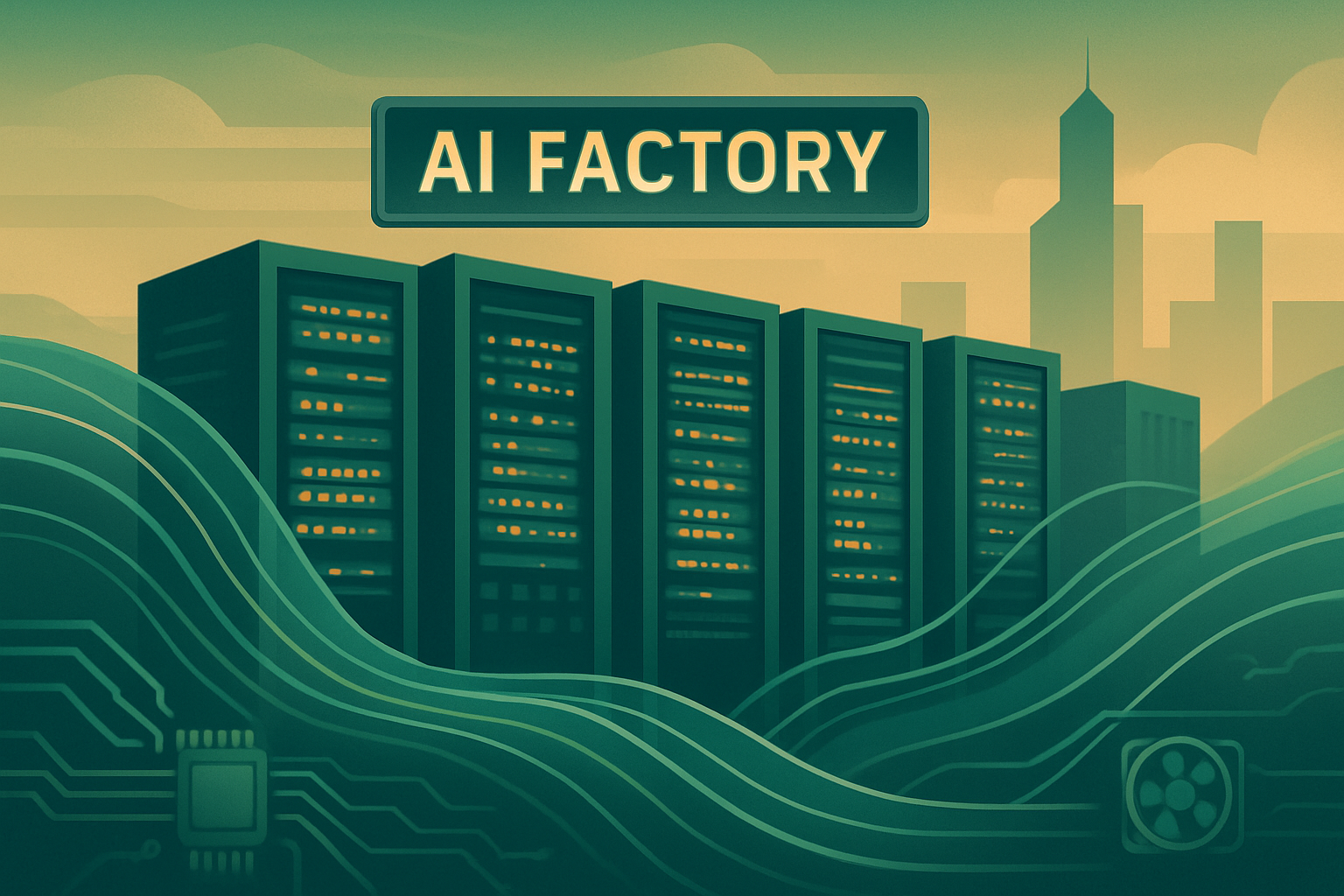
- Infrastructure Solutions Group (ISG): This is the company’s current growth engine. It includes high-performance servers, networking gear, and storage solutions (PowerStore, PowerScale). ISG is the home of the "Dell AI Factory," providing the dense compute needed for Large Language Model (LLM) training and inference.
- Client Solutions Group (CSG): This segment encompasses the traditional PC business, including the Latitude, Precision, and XPS brands. While slower-growing than ISG, CSG provides massive scale and high cash flow, now revitalized by the emergence of "AI PCs" equipped with dedicated Neural Processing Units (NPUs).
- Services and Software: Dell wraps its hardware in a recurring revenue layer through APEX (its consumption-based "as-a-service" model) and professional services that help clients design and deploy AI clusters.
Stock Performance Overview
Dell’s stock has undergone a dramatic re-rating over the last decade.
- 1-Year Performance: Over the past twelve months leading to February 2026, the stock has outperformed the S&P 500 significantly, driven by consistent beats in AI server revenue and an expanding backlog.
- 5-Year Performance: Since 2021, the stock has moved from a "value" play to a "growth" play. The transition was fueled by the VMware spin-off and the subsequent realization that Dell was the primary partner for NVIDIA (NASDAQ: NVDA) in the enterprise space.
- 10-Year Performance: Investors who backed Michael Dell’s vision during the private-to-public transition have seen multi-bagger returns, as the company evolved from a debt-laden conglomerate into a streamlined AI powerhouse.
Financial Performance
In its Q4 2026 earnings report, Dell posted total revenue of approximately $31.8 billion, a 32% increase year-over-year.
- ISG Strength: The Infrastructure segment was the standout, with revenue jumping 66% to $18.82 billion, driven by a 112% surge in server and networking sales.
- Profitability: Non-GAAP diluted EPS reached $3.53, up nearly 32% from the prior year.
- AI Backlog: Perhaps the most scrutinized metric, Dell’s AI server backlog reached an estimated $22 billion by the end of FY2026, reflecting intense demand for NVIDIA’s Blackwell architecture (B200 and GB200 systems).
- Valuation: Despite the price surge, Dell trades at a more modest forward P/E ratio than "pure-play" AI stocks like Super Micro Computer (NASDAQ: SMCI), which management argues reflects a "conglomerate discount" that is rapidly evaporating.
Leadership and Management
The company remains under the steady hand of its founder, Michael Dell, who serves as Chairman and CEO. His long-term vision—and his willingness to take the company private to reinvent it—is widely cited as the reason for Dell’s current relevance.
Supporting him is Vice Chairman and COO Jeff Clarke, a Dell veteran of over 30 years who oversees the engineering and supply chain operations. Clarke’s operational rigor is credited with Dell’s ability to secure GPU allocations during shortages and manage the complex logistics of liquid-cooled data centers. The management team is highly regarded for its disciplined capital allocation, focusing on debt reduction, share buybacks, and a growing dividend.
Products, Services, and Innovations
Dell’s current competitive edge lies in the PowerEdge XE9680, the industry’s flagship AI server. This system is designed to house eight high-end GPUs (NVIDIA or AMD) and is the cornerstone of the "Dell AI Factory."
Beyond raw compute, Dell is innovating in:
- Liquid Cooling: As AI chips become hotter, Dell’s proprietary "Direct Liquid Cooling" (DLC) solutions have become a necessity for modern data centers.
- AI PCs: Dell’s 2026 lineup features NPUs capable of 40+ TOPS (Trillions of Operations Per Second), allowing users to run AI models locally for better privacy and lower latency.
- PowerScale Storage: A market-leading file storage system optimized for the massive data ingestion requirements of AI training.
Competitive Landscape
The server market has become a high-stakes arena.
- Super Micro Computer (SMCI): While SMCI is known for rapid "first-to-market" deployments and deep customization, Dell is winning on "scale and reliability." Large enterprises often prefer Dell’s global support network and integrated financing (Dell Financial Services) over SMCI’s speed.
- HP Inc. (NYSE: HPQ) and HPE (NYSE: HPE): HP Inc. remains a formidable rival in the PC space, while HPE competes in the data center. However, Dell’s unified structure (PCs and Servers under one roof) allows it to offer more comprehensive "Edge-to-Core" solutions.
- Lenovo (HKSE: 992): Lenovo remains a dominant force in global PC volume, but Dell maintains higher margins by focusing on premium commercial workstations and enterprise-grade servers.
Industry and Market Trends
The "AI Hardware" sector in early 2026 is defined by three major trends:
- Sovereign AI: Nations (particularly in Europe and the Middle East) are investing billions in "local" compute power to ensure data residency and national security, a market Dell is aggressively pursuing.
- The Shift to Inference: While 2024-2025 focused on training models, 2026 is seeing a shift toward "inference"—running the models. This benefits Dell’s broader portfolio, including edge servers and AI PCs.
- Data Center Densification: Power and cooling constraints are the new bottlenecks. Dell’s focus on energy-efficient infrastructure is a critical differentiator as utilities struggle to keep up with AI energy demand.
Risks and Challenges
Despite the AI tailwinds, Dell faces significant headwinds:
- Margin Dilution: AI servers typically carry lower gross margins than traditional storage or software. As the product mix shifts toward AI compute, maintaining overall profitability remains a challenge.
- Component Volatility: By February 2026, memory costs (DRAM and NAND) have risen sharply, accounting for nearly 35% of a PC's bill of materials. This "memory inflation" threatens to squeeze margins in the CSG segment.
- GPU Dependency: Dell’s growth is inextricably linked to NVIDIA’s product roadmap and supply chain. Any delays in next-gen architectures (like the transition to NVIDIA Rubin) would immediately impact Dell’s backlog.
Opportunities and Catalysts
- Windows 11 Refresh: With the end-of-life for Windows 10 in late 2025, a massive corporate PC refresh cycle is underway in early 2026. Dell is positioned to capture this through AI-enabled laptops.
- Storage Recovery: AI models require vast amounts of high-speed storage. As the training phase matures, Dell expects a "lagged" surge in its high-margin storage business.
- Edge AI: As AI moves out of centralized data centers and into factories, hospitals, and retail stores, Dell’s ruggedized edge servers represent a multi-billion dollar frontier.
Investor Sentiment and Analyst Coverage
Wall Street sentiment toward Dell is overwhelmingly "Buy" or "Strong Buy" as of February 2026. Analysts from Goldman Sachs and Morgan Stanley have highlighted Dell’s "unmatched enterprise reach" as its primary moat. Hedge fund activity has shown a notable shift from short-term trading to long-term "institutional holding," as Dell is increasingly viewed as a safer, more diversified alternative to the high-volatility semiconductor stocks. Retail sentiment remains bullish, often citing Michael Dell’s significant "skin in the game" (he owns roughly half the company) as a reason for confidence.
Regulatory, Policy, and Geopolitical Factors
Geopolitics remains a "wildcard" for Dell.
- Export Controls: U.S. government restrictions on the export of high-end GPUs to China and other regions limit Dell’s total addressable market in those geographies.
- Onshoring: Dell has benefited from U.S. and European policies (like the CHIPS Act) that encourage the build-out of domestic AI infrastructure.
- Environmental Regulation: New "Green Data Center" mandates in the EU are forcing a rapid transition to liquid cooling, an area where Dell has invested heavily in R&D.
Conclusion
Dell Technologies has successfully navigated the most difficult transition in its 40-year history. By leveraging its supply chain dominance and deep enterprise relationships, it has transformed from a PC-centric business into a vital pillar of the global AI ecosystem.
As of February 26, 2026, the company faces a delicate balancing act: managing the lower-margin surge of AI server demand while waiting for the higher-margin AI PC and storage cycles to mature. For investors, the "Dell story" is no longer about the death of the PC, but about the birth of the AI Factory. While component costs and margin pressures remain near-term hurdles, Dell’s massive $20B+ backlog and visionary leadership suggest that the company is well-positioned to remain a dominant force in the next decade of computing.
This content is intended for informational purposes only and is not financial advice.