
Tag: Technology

  • The Gatekeeper of the AI Era: A Comprehensive Deep Dive into ASML Holding N.V. (2026 Research Feature)

    The Gatekeeper of the AI Era: A Comprehensive Deep Dive into ASML Holding N.V. (2026 Research Feature)

    Today is April 15, 2026.

    Introduction

    In the global theater of technology, few companies hold as much leverage as ASML Holding N.V. (Nasdaq: ASML / Euronext Amsterdam: ASML). While names like Nvidia and Apple dominate consumer headlines, ASML serves as the literal foundation upon which their digital kingdoms are built. As the world’s sole provider of Extreme Ultraviolet (EUV) lithography systems, ASML is the only entity capable of manufacturing the machines that print the most advanced semiconductors on Earth. Today, as the "AI gold rush" transitions from a speculative frenzy into a permanent structural shift in the global economy, ASML stands not just as a supplier, but as the ultimate gatekeeper of high-performance computing.

    Historical Background

    The story of ASML is one of high-stakes gambling and engineering persistence. Founded in 1984 as a joint venture between Dutch electronics giant Philips and chip-equipment maker ASM International, the company’s early years were spent in a leaky shed in Veldhoven, Netherlands, struggling to compete with established Japanese titans like Nikon and Canon.

    The pivotal transformation occurred in the late 1990s and early 2000s when ASML committed to developing EUV technology—a method of using light with a wavelength so short it is absorbed by air, requiring the entire process to take place in a vacuum. While competitors abandoned EUV as too costly and technically impossible, ASML doubled down, backed by strategic investments from its own customers, including Intel, Samsung, and TSMC. The 2013 acquisition of Cymer, a specialist in light sources, finalized the vertical integration necessary to bring EUV to market. By the 2020s, ASML’s bet had paid off, leaving it with a 100% monopoly on the world's most critical manufacturing equipment.

    Business Model

    ASML’s revenue engine is powered by a two-pronged strategy:

    1. System Sales: The core of the business involves selling massive lithography machines. These range from Deep Ultraviolet (DUV) systems, used for mature semiconductor nodes in automotive and IoT applications, to the flagship EUV and High-NA EUV systems required for the world’s fastest chips.
    2. Installed Base Management (IBM): Once a machine is sold, it becomes a multi-decade revenue stream. ASML provides maintenance, software upgrades, and field services to its global fleet. This segment is highly lucrative, boasting margins superior to system sales and providing a predictable, recurring cash flow that helps the company weather cyclical downturns in the chip market.

    In early 2026, the revenue split has increasingly tilted toward high-margin EUV services and the first commercial shipments of the "High-NA" (High Numerical Aperture) systems.

    Stock Performance Overview

    ASML has been a legendary performer for long-term investors, characterized by its ability to bounce back from macro-driven volatility.

    • 1-Year Performance: In the past 12 months leading up to April 2026, ASML shares have surged approximately 127%. This rally was fueled by a massive re-rating of the semiconductor sector as "Sovereign AI" projects in Europe and Japan moved into the construction phase.
    • 5-Year Performance: Despite the high-interest-rate environment of 2022-2023, the stock has posted a ~136% return, effectively more than doubling investor capital as the "AI era" matured.
    • 10-Year Performance: For the decade-long HODLers, ASML has delivered a staggering 1,450% return. This reflects the transition of EUV from a laboratory experiment to the standard for global chip production.

    Financial Performance

    According to today’s Q1 2026 report, ASML’s financial health is at an all-time peak. The company reported FY 2025 revenue of €32.7 billion, a 16% year-over-year increase.

    Key metrics for the start of 2026 include:

    • Q1 2026 Revenue: €8.8 billion, exceeding the high end of previous guidance.
    • Gross Margin: 53.0%, a significant expansion from the 51% seen in 2024, driven by the rollout of the high-margin Twinscan EXE:5200 series.
    • Valuation: ASML currently trades at a forward P/E ratio of roughly 34x. While expensive relative to the broader market, it remains in line with its historical premium, justified by its unique monopoly and 30%+ Return on Invested Capital (ROIC).

    Leadership and Management

    In April 2024, Christophe Fouquet took over as President and CEO from the long-serving Peter Wennink. Two years into his tenure, Fouquet has successfully pivoted the company from a period of "hyper-innovation" to "operational scale."

    His leadership style is viewed as pragmatic and focused on execution. Fouquet was instrumental in negotiating "Project Beethoven," a €2.5 billion infrastructure deal with the Dutch government that ensured ASML would keep its core operations in Veldhoven rather than expanding abroad. Alongside CFO Roger Dassen, the management team maintains a reputation for transparency and shareholder-friendly capital allocation, including a robust share buyback program and a growing dividend.

    Products, Services, and Innovations

    ASML’s "moat" is built on the complexity of its machines. A single EUV system contains over 100,000 parts, 3,000 kilometers of cabling, and mirrors so smooth that if they were the size of Germany, the highest bump would be less than a millimeter high.

    The current frontier is High-NA EUV (the EXE series). These systems, costing upwards of €350 million each, allow chipmakers to print even smaller transistors, reaching the 2nm and 1.4nm nodes. While Intel was the first to adopt these tools, TSMC and Samsung have now integrated High-NA into their 2026 production roadmaps to support the next generation of AI accelerators and mobile processors.

    Competitive Landscape

    ASML essentially has no direct competition in the leading-edge lithography space.

    • Nikon and Canon: These Japanese rivals still compete in the DUV (older technology) market, but they have failed to bring a viable EUV alternative to market.
    • Market Share: ASML holds roughly 90% of the total lithography market by value and 100% of the EUV market.
      The company’s true "competitor" is not another firm, but the limits of physics itself and the complexity of its own supply chain.

    Industry and Market Trends

    The semiconductor industry is currently driven by three massive tailwinds:

    1. Generative AI: The relentless demand for GPUs and custom AI silicon (ASICs) requires advanced nodes that only ASML can enable.
    2. Sovereign Silicon: Nations are subsidizing local chip factories (the US CHIPS Act, EU Chips Act) to reduce reliance on Taiwan. Each new fab built in Ohio, Arizona, or Germany requires a full suite of ASML machines.
    3. High Bandwidth Memory (HBM): The rise of HBM4 for AI data centers is driving a surge in orders for advanced DUV and EUV systems from memory makers like SK Hynix and Micron.

    Risks and Challenges

    No company is without peril. ASML faces two primary risks:

    • Supply Chain Fragility: With thousands of specialized suppliers (like Zeiss for optics), any disruption in a single component can delay a multibillion-euro shipment.
    • China Exposure: Export restrictions have significantly hampered ASML’s ability to sell to its formerly largest market. While Western demand has offset this so far, a total ban on servicing existing machines in China could lead to a sudden "revenue cliff" in the IBM segment.

    Opportunities and Catalysts

    The primary catalyst for the remainder of 2026 is the ramp-up of High-NA EUV. As chipmakers move from "pilot lines" to "high-volume manufacturing," ASML’s order backlog is expected to hit new records. Additionally, the emergence of "Angstrom-era" chips (sub-2nm) will necessitate even more frequent machine upgrades and software-driven throughput improvements.

    Investor Sentiment and Analyst Coverage

    Sentiment on Wall Street and in Amsterdam remains overwhelmingly bullish. Analysts currently hold a "Strong Buy" consensus, with a median price target of $1,620. Large institutional holders, including BlackRock and Vanguard, have maintained or increased their positions throughout early 2026, viewing ASML as a "core tech" holding similar to Microsoft or Nvidia.

    Retail sentiment is also high, often referring to ASML as the "picks and shovels" play of the AI revolution—the company that sells the tools to the miners.

    Regulatory, Policy, and Geopolitical Factors

    ASML sits at the epicenter of the "Chip War" between the U.S. and China. In early 2026, the proposed MATCH Act in the United States has put pressure on the Dutch government to further restrict ASML from providing spare parts and software updates to Chinese firms using older DUV systems.

    Navigating these geopolitical waters is the single most difficult task for ASML management. The company must balance its loyalty to its Dutch roots and global customers with the reality of U.S. export controls that govern any technology containing American components.

    Conclusion

    As of April 15, 2026, ASML Holding N.V. remains perhaps the most important company that the average person has never heard of. It is the literal bottleneck of human progress in the digital age. While geopolitical tensions and a high valuation represent real risks, the company’s absolute monopoly on the tools of the future makes it a structural necessity for any diversified technology portfolio. Investors should keep a close eye on the adoption rate of High-NA systems and the evolving trade policies between Washington, The Hague, and Beijing. In the world of semiconductors, all roads continue to lead to Veldhoven.


    This content is intended for informational purposes only and is not financial advice.

  • The Infrastructure Architect: An In-Depth Analysis of Broadcom Inc. (AVGO) in the AI Era

    The Infrastructure Architect: An In-Depth Analysis of Broadcom Inc. (AVGO) in the AI Era

    As of April 14, 2026, Broadcom Inc. (Nasdaq: AVGO) stands as a titan of the modern technological era, having successfully navigated a decade of transformation to become the world’s premier "infrastructure technology" powerhouse. While the semiconductor industry is often characterized by boom-and-bust cycles, Broadcom has defied gravity through a unique combination of ruthless operational efficiency, strategic multi-billion-dollar acquisitions, and a dominant position at the heart of the artificial intelligence (AI) revolution.

    Today, Broadcom is much more than a chipmaker. Following the landmark $69 billion acquisition of VMware, which concluded in late 2023, the company has evolved into a balanced behemoth: one half powering the high-speed networking and custom silicon required for generative AI, and the other providing the mission-critical software layer that runs the world’s largest enterprise data centers. With a market capitalization surpassing $1.5 trillion, Broadcom is now a permanent fixture in the top tier of the global equity markets, serving as a bellwether for both the AI infrastructure build-out and the health of enterprise software.

    Historical Background

    The story of Broadcom is a saga of corporate evolution and the vision of its CEO, Hock Tan. The company’s roots trace back to the original Hewlett-Packard (HP) semiconductor division, which was spun off as Agilent Technologies in 1999. In 2005, KKR and Silver Lake Partners acquired Agilent’s semiconductor group, forming Avago Technologies.

    Under Hock Tan’s leadership, Avago embarked on an unprecedented acquisition spree. The defining moment arrived in 2016 when Avago acquired Broadcom Corporation for $37 billion, adopting the name of the acquired company while retaining the Avago ticker symbol (AVGO). This was followed by a series of high-stakes pivots into software, including the acquisitions of CA Technologies ($18.9 billion) in 2018 and Symantec’s enterprise security business ($10.7 billion) in 2019.

    Broadcom’s history is marked by a "franchise" philosophy: identifying market-leading businesses with durable cash flows, acquiring them, and stripping away non-core research and development to focus on high-margin, mission-critical products. This strategy culminated in the 2023 VMware acquisition, a deal that faced intense global regulatory scrutiny but ultimately cemented Broadcom’s role as the indispensable backbone of the hybrid cloud era.

    Business Model

    Broadcom operates through two primary segments that effectively cross-pollinate each other: Semiconductor Solutions and Infrastructure Software.

    1. Semiconductor Solutions (approx. 58% of revenue): This segment focuses on the design and supply of complex digital and mixed-signal complementary metal-oxide-semiconductor (CMOS) based devices. Key revenue drivers include networking (switching and routing), wireless communication (supplying high-end RF components to Apple), and broadband. Most critically, this segment houses Broadcom’s Custom ASIC (Application-Specific Integrated Circuit) business, which designs proprietary AI accelerators (XPUs) for hyper-scalers like Google and Meta.
    2. Infrastructure Software (approx. 42% of revenue): Dominated by the VMware division, this segment provides software solutions that enable enterprises to manage and secure complex hybrid cloud environments. By shifting VMware from a perpetual license model to a recurring subscription-based "VMware Cloud Foundation" (VCF) stack, Broadcom has created a predictable, high-margin revenue engine that offsets the inherent cyclicality of the chip market.

    Broadcom’s customer base is concentrated among Tier-1 service providers, large enterprises, and global cloud giants. The company employs a "fabless" manufacturing model, outsourcing the actual production of chips to foundries like TSMC, which allows it to maintain lean capital expenditures and high free cash flow.

    Stock Performance Overview

    Broadcom has been one of the most prolific wealth-creators of the last decade. A major milestone occurred on July 15, 2024, when the company executed a 10-for-1 forward stock split to increase accessibility for retail investors as the price surged past $1,700.

    • 1-Year Performance: Over the past 12 months, AVGO shares have appreciated by roughly 35%, significantly outperforming the S&P 500. This was driven by a series of earnings beats and the accelerating ramp of custom AI silicon for major cloud providers.
    • 5-Year Performance: Looking back to April 2021, the stock has risen by over 450% (split-adjusted). This period covers the entirety of the post-pandemic digital transformation and the start of the generative AI era.
    • 10-Year Performance: Long-term shareholders have seen gains exceeding 1,800%. Broadcom has transitioned from a mid-cap chip player to a mega-cap technology staple, largely through its disciplined M&A strategy and consistent dividend growth.

    Financial Performance

    For the fiscal year 2025, Broadcom reported consolidated revenue of $64 billion, a 24% increase from the prior year. This growth was underpinned by $20 billion in AI-related revenue, a category that grew by triple digits as data centers transitioned to the "Gigacluster" era.

    Key financial metrics for the current period include:

    • Margins: Adjusted EBITDA margins remain industry-leading at approximately 68%, reflecting the high-margin nature of the software segment and the specialized value of Broadcom's networking chips.
    • Free Cash Flow (FCF): In 2025, the company generated $27 billion in free cash flow, representing nearly 42% of revenue.
    • Debt and Capital Allocation: Following the VMware deal, Broadcom aggressively paid down debt, reducing its leverage ratio significantly by early 2026. The company maintains a policy of returning 50% of its prior year’s FCF to shareholders through dividends.
    • Valuation: As of April 2026, AVGO trades at a forward P/E ratio of approximately 28x. While higher than its historical average of 15x, the premium reflects its shift toward high-margin software and its pivotal role in the AI supply chain.

    Leadership and Management

    The defining characteristic of Broadcom is the leadership of CEO Hock Tan. Tan is widely regarded as one of the most effective capital allocators in the technology sector. His approach—often referred to as "the Hock Tan playbook"—focuses on acquiring "franchise" assets, decentralizing business units, and demanding rigorous financial discipline.

    Supporting Tan is a veteran management team, including CFO Kirsten Spears and Charlie Kawwas, President of the Semiconductor Solutions Group. The leadership team’s strategy is heavily focused on "value-based engineering"—investing heavily where Broadcom has a clear technological moat and divesting or cutting costs in commoditized sectors.

    While Tan’s aggressive cost-cutting and pricing adjustments at acquired companies (like VMware) have sometimes drawn criticism from customers, the strategy has been undeniably successful for shareholders, creating a "software-like" predictability in a hardware-heavy industry.

    Products, Services, and Innovations

    Broadcom’s innovation pipeline is currently focused on two frontiers: AI Networking and Custom Silicon.

    • Tomahawk 6 & Jericho 3-AI: Broadcom is the undisputed leader in Ethernet switching silicon. Its Tomahawk and Jericho chipsets are the "connective tissue" for AI data centers. In early 2026, the rollout of the Tomahawk 6 (offering 102.4 Tbps capacity) has enabled the construction of AI clusters with hundreds of thousands of GPUs, providing the low-latency throughput required for training massive LLMs.
    • Custom ASICs (XPUs): Broadcom dominates the custom chip market. It famously co-develops the Tensor Processing Units (TPUs) with Google. By 2026, this has expanded to include major partnerships with Meta and several other hyper-scalers who wish to reduce their dependence on off-the-shelf GPUs from NVIDIA.
    • VMware Cloud Foundation (VCF): On the software side, Broadcom has streamlined VMware’s sprawling product list into a unified private cloud platform. VCF allows enterprises to run a cloud-like environment on their own hardware, offering an "exit ramp" from the high costs of public cloud providers—a trend that has accelerated in 2025 and 2026.

    Competitive Landscape

    Broadcom operates in a "co-opetition" environment with some of the largest names in tech.

    • NVIDIA (NVDA): While NVIDIA dominates the GPU (processing) market, Broadcom dominates the networking (connectivity) market. However, competition is heating up as NVIDIA pushes its proprietary InfiniBand networking, while Broadcom champions open-standard Ethernet.
    • Marvell Technology (MRVL): Marvell is Broadcom’s closest competitor in the custom ASIC and networking space. While Marvell has won key designs, Broadcom’s massive scale and longer history with Google give it a formidable edge.
    • Cisco Systems (CSCO): In the networking and software space, Broadcom’s integration of VMware and its high-performance chips puts pressure on Cisco’s traditional hardware and software offerings.
    • Microsoft and Amazon: These cloud giants are Broadcom customers for custom chips, but they also represent a long-term threat as they attempt to bring more chip design in-house.

    Industry and Market Trends

    The semiconductor industry is currently defined by the "Shift to Ethernet." Historically, AI training was done using InfiniBand networking. However, as AI clusters scale to millions of nodes, the industry is shifting toward Ethernet—an area where Broadcom holds over 80% market share in high-end switching.

    Another major trend is Cloud Repatriation. As public cloud costs soar and data sovereignty becomes a priority, many large enterprises are moving workloads back to private data centers. Broadcom’s VMware VCF is the primary beneficiary of this trend, providing the software tools to manage these private environments efficiently.

    Finally, the Custom Silicon Trend is accelerating. Rather than buying generic chips, the world’s largest tech companies want "bespoke" chips optimized for their specific AI models. Broadcom’s deep IP library and design expertise make it the "partner of choice" for this multi-billion-dollar shift.

    Risks and Challenges

    Despite its dominance, Broadcom faces several headwinds:

    1. China Geopolitical Risk: Approximately 18% of Broadcom’s revenue is tied to China. Recent 2026 directives from Beijing to phase out foreign virtualization software (targeting VMware) from state-owned enterprises represent a direct threat to software revenue in that region.
    2. Customer Concentration: A significant portion of semiconductor revenue comes from a handful of customers—Apple, Google, and Meta. Any decision by these firms to switch partners or move designs fully in-house could cause a material hit.
    3. VMware Churn: The transition to subscription pricing has been painful for some mid-market VMware customers. While Broadcom focuses on the top 2,000 global accounts, aggressive pricing has led some smaller customers to migrate to open-source alternatives like Nutanix or KVM.
    4. Cyclicality: While software provides a cushion, the semiconductor segment remains sensitive to the broader economic cycle and the potential for an "AI investment cooling" period.

    Opportunities and Catalysts

    • OpenAI Partnership: Rumors and early reports in early 2026 suggest Broadcom is in late-stage talks to develop a custom inference chip for OpenAI. A deal of this magnitude would be a massive catalyst for the stock.
    • The 1.6T Ethernet Cycle: As data centers upgrade from 800G to 1.6T networking, Broadcom is poised to capture the lion's share of this hardware refresh cycle, which is expected to peak in late 2026.
    • Accretive M&A: With a strengthened balance sheet, the market is speculating on Hock Tan’s next "big hunt." Rumors of an acquisition in the cybersecurity or industrial software space persist, which could provide the next leg of growth.
    • Dividend Growth: With FCF hitting record highs, a double-digit dividend increase in late 2026 is highly likely, potentially attracting a new wave of income-focused institutional investors.

    Investor Sentiment and Analyst Coverage

    Wall Street remains overwhelmingly bullish on Broadcom. As of April 2026, approximately 92% of analysts covering the stock have a "Buy" or "Strong Buy" rating. The consensus view is that Broadcom is the "safest" way to play the AI build-out, given its diversified software revenue and dominant networking moat.

    Institutional ownership remains high at nearly 80%, with major holdings by Vanguard, BlackRock, and State Street. Among hedge funds, AVGO is often used as a "core" tech holding, paired with NVIDIA to capture the full AI infrastructure stack. Retail sentiment has improved significantly since the 2024 stock split, with increased participation in dividend reinvestment plans (DRIPs).

    Regulatory, Policy, and Geopolitical Factors

    Broadcom operates in a highly regulated environment. The VMware deal took over 18 months to close due to scrutiny from the U.S. FTC, the EU, and China’s SAMR. Any future large-scale acquisition will likely face even steeper hurdles, as regulators become more wary of "software conglomerates."

    Geopolitically, Broadcom is a pawn in the ongoing U.S.-China chip war. Export controls on high-end AI networking chips to China have limited some upside, but Broadcom’s focus on high-end, Western-designed custom chips has largely insulated it from the more severe restrictions facing manufacturers of lower-end commodities.

    In the U.S., the CHIPS Act has provided some indirect benefits by incentivizing the construction of domestic fabrication plants by Broadcom's partners (like Intel and TSMC), potentially securing the company's long-term supply chain.

    Conclusion

    Broadcom Inc. (AVGO) has evolved from a traditional semiconductor firm into a sophisticated infrastructure giant. By 2026, the company has successfully demonstrated that its "dual-engine" model—AI-driven hardware and mission-critical enterprise software—can provide both explosive growth and resilient stability.

    For investors, the Broadcom thesis rests on its "toll booth" status: whether an enterprise is building a massive AI cluster or running a private cloud, they likely have to pay Broadcom for the underlying technology. While risks regarding China and high customer concentration remain, the company’s extraordinary cash flow generation and the leadership of Hock Tan provide a margin of safety that is rare in the high-growth tech sector.

    As we look toward the remainder of 2026, the key for Broadcom will be maintaining its lead in the 1.6T networking cycle and successfully navigating the geopolitical complexities of the Asian market. For those seeking a combination of capital appreciation and disciplined income growth, Broadcom remains a cornerstone of the modern technology portfolio.


    This content is intended for informational purposes only and is not financial advice.
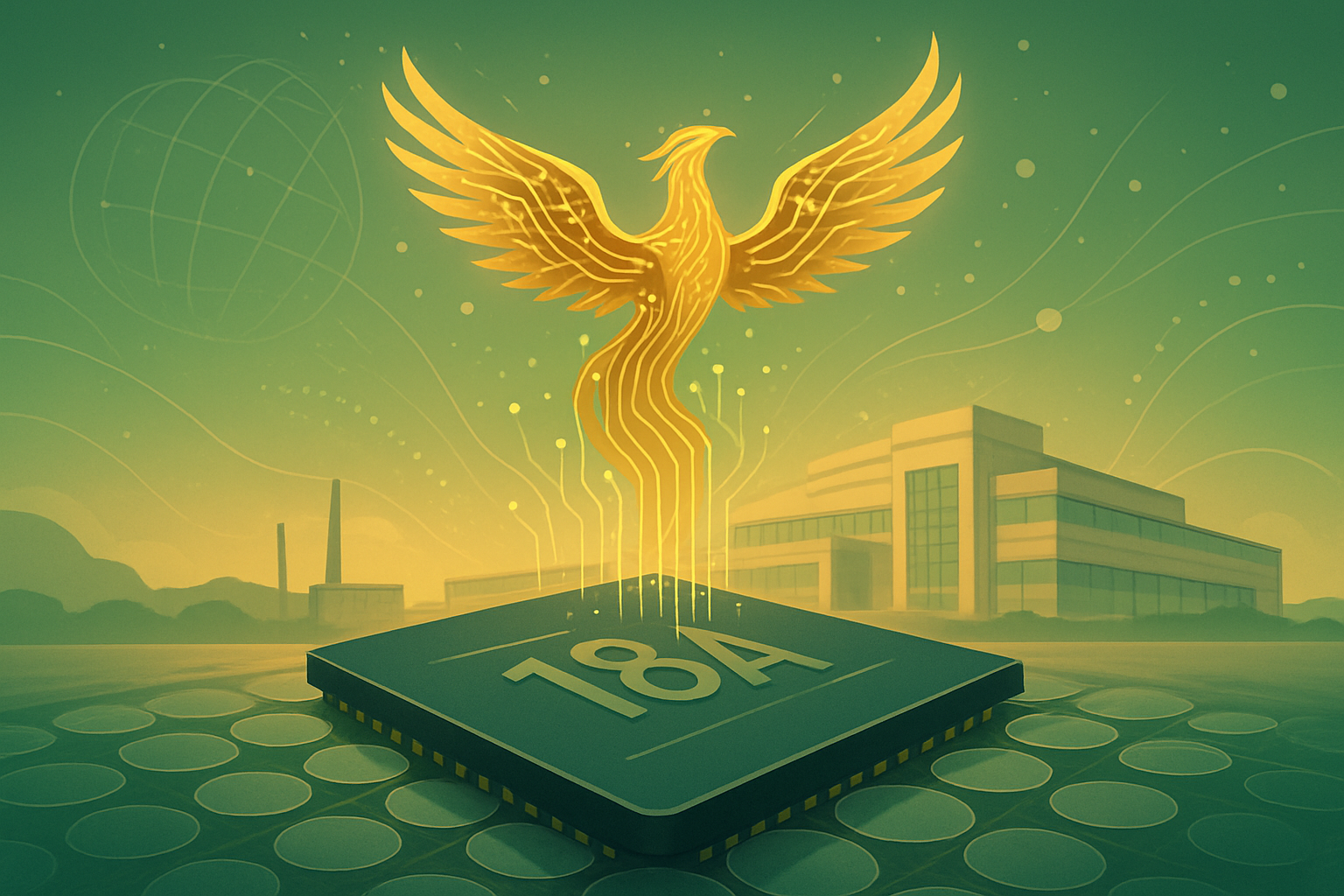
  • The Silicon Phoenix: Inside the Radical Rebirth of Intel

    The Silicon Phoenix: Inside the Radical Rebirth of Intel

    April 14, 2026

    Introduction

    Intel Corporation (NASDAQ: INTC) stands today at the most pivotal juncture in its 58-year history. After a grueling five-year turnaround effort that pushed the company to the brink of a structural breakup, the semiconductor giant has emerged as a transformed entity. Once the undisputed king of the PC era, then a laggard in the mobile and AI revolutions, Intel is now attempting to occupy a unique dual-role: a leading-edge chip designer and the Western world’s primary alternative to Taiwan’s foundry dominance. With the recent commencement of high-volume manufacturing on its 18A process node, Intel is no longer just a "legacy" blue chip; it is the center of a geopolitical and industrial storm that will define the next decade of computing.

    Historical Background

    Founded in 1968 by Robert Noyce and Gordon Moore, Intel was the architect of the microprocessor revolution. From the 4004 to the ubiquitous "Intel Inside" campaign of the 1990s, the company defined the "Tick-Tock" cadence of Moore’s Law. However, the 2010s were marked by stagnation. Manufacturing delays on the 10nm and 7nm nodes allowed rivals like Advanced Micro Devices (NASDAQ: AMD) to seize market share, while the rise of mobile computing saw Intel lose out to ARM-based architectures.

    The return of Pat Gelsinger as CEO in 2021 launched the "IDM 2.0" strategy, an ambitious plan to regain process leadership by delivering five nodes in four years (5N4Y). Following Gelsinger’s retirement in late 2024, the torch was passed to Lip-Bu Tan, who has spent the last year refining Intel's focus into a leaner, more disciplined manufacturing powerhouse.

    Business Model

    Intel’s business model has been fundamentally restructured into two primary, reporting-distinct divisions:

    • Intel Products: This includes the Client Computing Group (CCG), which dominates the "AI PC" market, and the Data Center and AI (DCAI) group. This segment focuses on designing world-class CPUs and the Gaudi line of AI accelerators.
    • Intel Foundry: This is the most radical shift in the company’s history. Intel now operates as a third-party foundry, manufacturing chips for external customers—including direct competitors. By separating the foundry’s financial reporting and operations, Intel aims to build the trust necessary to win business from the likes of Amazon and Microsoft.
    • Other Segments: This includes Altera (FPGA) and Mobileye (NASDAQ: MBLY), though Intel has progressively spun off or sold portions of these assets to fund its massive capital expenditure (CapEx) requirements.

    Stock Performance Overview

    The performance of INTC over the last decade is a tale of three distinct eras:

    • 10-Year View (2016-2026): Investors who held through the decade saw a "lost period" followed by a parabolic recovery. For much of 2018–2024, the stock languished as competitors soared.
    • 5-Year View (2021-2026): The stock entered a "Valley of Death" in early 2025, hitting a multi-decade low of $18.25 following a dividend suspension and record losses.
    • Recent Momentum: Over the trailing 12 months, INTC has undergone a historic rally. As of yesterday’s close (April 13, 2026), the stock hit an all-time high of $65.18, a gain of over 220% from its 2025 lows, driven by the successful launch of the 18A process node and massive new foundry contracts.

    Financial Performance

    Intel’s fiscal 2025 results, released earlier this year, show a company moving from "triage" to "growth."

    • Revenue: 2025 revenue came in at $52.9 billion, a stabilization after years of decline.
    • Profitability: Non-GAAP EPS for 2025 was $0.42. While modest, it represents a return to profitability after the deep losses of 2024.
    • Margins: Gross margins have begun to climb back toward the 45% mark, though they remain well below the 60% peaks of the 2010s due to the high costs of building new fabs.
    • Foundry Losses: The Foundry division reported an operating loss of $10.3 billion in 2025, a figure Intel describes as "peak investment drag" before expected profitability in 2027.

    Leadership and Management

    Under the leadership of CEO Lip-Bu Tan, Intel has moved away from the "growth at any cost" mentality toward extreme financial discipline. Tan, a former Cadence Design Systems CEO and a veteran of the semiconductor industry, was appointed in March 2025.

    His strategy has been characterized by:

    1. Strict Operational Separation: Creating a "Chinese Wall" between the design and foundry teams to protect customer IP.
    2. Cost Cutting: Tan oversaw a 15% reduction in workforce (approximately 15,000 roles) and the divestiture of non-core business units.
    3. Customer Focus: Pivoting the foundry business to prioritize high-margin AI "lighthouse" customers over volume-based legacy manufacturing.

    Products, Services, and Innovations

    The crown jewel of Intel’s current innovation pipeline is the Intel 18A (1.8nm) process node. As of early 2026, 18A is in high-volume manufacturing, featuring two breakthrough technologies:

    • RibbonFET: A gate-all-around (GAA) transistor architecture that improves performance and efficiency.
    • PowerVia: The industry’s first backside power delivery system, which solves the wiring bottlenecks found in traditional chip designs.

    On the product side, the Panther Lake processors (for PCs) and Clearwater Forest (for servers) are currently shipping. These are the first products to utilize the 18A node, positioning Intel to challenge the efficiency leads currently held by Apple and AMD.

    Competitive Landscape

    Intel faces a "two-front war" in the semiconductor market:

    • Design Rivals: AMD continues to be a formidable opponent in the server market, holding nearly 40% of the x86 revenue share. In AI, NVIDIA (NASDAQ: NVDA) remains the dominant force with an 86% share of the data center accelerator market. Intel's Gaudi 4, released earlier this year, has captured a modest 6% share, positioning itself as a "value-per-dollar" alternative to Nvidia’s H-series.
    • Foundry Rivals: Taiwan Semiconductor Manufacturing Co. (NYSE: TSM) remains the gold standard. However, Intel is increasingly viewed as the "Western Champion," winning business from US firms seeking to diversify their supply chains away from the Taiwan Strait.

    Industry and Market Trends

    The "AI PC" has become the primary driver of Intel’s client business. By April 2026, over 60% of new laptop shipments include dedicated Neural Processing Units (NPUs) for local AI tasks. Intel currently leads this segment with a 55% market share.

    Simultaneously, the industry is shifting toward "Chiplet" architectures, where different parts of a processor are manufactured on different nodes and stitched together. This play favors Intel’s advanced packaging capabilities (EMIB and Foveros), which have become a standalone revenue stream for the company.

    Risks and Challenges

    Despite the recent rally, Intel’s path is fraught with risk:

    • Foundry Execution: Any yield issues on the 18A node could result in catastrophic delays and the loss of multi-billion-dollar contracts.
    • Capital Intensity: Intel is spending roughly $25 billion a year on CapEx. This leaves little room for error and has required the company to take on significant debt and bring in private equity partners (like Apollo) to co-invest in fabs.
    • AMD Aggression: AMD’s Zen 6 architecture is expected later this year, threatening to erase Intel’s narrow performance lead in the desktop market.

    Opportunities and Catalysts

    • Foundry Backlog: Intel Foundry’s total lifetime deal value now exceeds $15 billion. Major wins with Amazon (AWS) and Microsoft for custom AI silicon are expected to begin contributing to revenue in the second half of 2026.
    • The "Terafab" Project: A reported partnership with Elon Musk’s xAI and Tesla to build specialized robotics and AI chips in a new Texas-based facility could provide a massive halo effect for Intel’s manufacturing prowess.
    • Sovereign AI: As nations seek "sovereign" chip capabilities, Intel is the only company capable of providing a full end-to-end Western supply chain.

    Investor Sentiment and Analyst Coverage

    Wall Street is currently "Cautiously Bullish" on INTC. After being a consensus "Sell" in 2024, the stock now boasts a majority of "Buy" ratings.

    • Hedge Fund Activity: Large institutional players have returned to the stock, viewing it as a "deep value" play that is finally transitioning into a "growth" story.
    • Retail Sentiment: Intel has regained its status as a retail favorite, with social media sentiment high following the successful 18A launch. However, some analysts warn that the 220% run-up in the last year may have priced in much of the "recovery" narrative.

    Regulatory, Policy, and Geopolitical Factors

    Intel is perhaps the most "geopolitically sensitive" stock in the world.

    • CHIPS Act: Intel has finalized its $8.9 billion direct funding award from the US government. In a novel move, the US government now holds a 9.9% non-voting equity stake in Intel’s foundry subsidiary, effectively making the company a "public-private partnership" for national security.
    • Export Controls: Tightening restrictions on AI chip exports to China continue to hamper Intel's sales of high-end Xeon and Gaudi processors in that region.
    • Ohio Delay: To conserve capital, Intel has delayed the full opening of its "Ohio One" mega-fab until 2030, a move that drew some political criticism but was lauded by the market as a sign of Tan's fiscal discipline.

    Conclusion

    The Intel of April 2026 is unrecognizable from the struggling giant of 2022. By successfully delivering on the "5 nodes in 4 years" promise, the company has closed the technical gap with TSMC and reclaimed its seat at the head of the table in the AI PC era.

    However, the "Intel Foundry" experiment remains a high-stakes gamble. The company is essentially betting its entire future on the idea that Western tech giants will pay a premium for a US-based supply chain. For investors, Intel represents a unique play: it is part-utility, part-national-infrastructure, and part-high-growth-AI-enabler. While the stock’s recent surge is impressive, the next 24 months will determine if Intel can turn its technical leadership into sustainable, high-margin profitability.


    This content is intended for informational purposes only and is not financial advice.

  • The Architect of Intelligence: A Deep Dive into NVIDIA (NVDA) in 2026

    The Architect of Intelligence: A Deep Dive into NVIDIA (NVDA) in 2026


    Note: This report is dated April 13, 2026. All financial figures and market assessments reflect data available as of this date.

    Introduction

    In the spring of 2026, the global technology landscape is defined by a singular pursuit: the realization of "Agentic AI." At the center of this revolution stands NVIDIA Corporation (NASDAQ: NVDA), a company that has evolved from a niche manufacturer of graphics cards into the indispensable backbone of the modern global economy. Once a player in the gaming industry, NVIDIA now controls the specialized "compute" that powers everything from sovereign national defense systems to the autonomous agents managing corporate logistics. With a market capitalization that has flirted with the $4.5 trillion mark, NVIDIA is no longer just a semiconductor company; it is the architect of the Intelligence Age.

    Historical Background

    NVIDIA’s journey began in 1993 at a Denny’s restaurant in San Jose, where founders Jensen Huang, Chris Malachowsky, and Curtis Priem envisioned a future where specialized hardware could accelerate complex 3D graphics. Their early breakthroughs, including the RIVA TNT and the first official GPU (the GeForce 256 in 1999), revolutionized PC gaming.

    However, the pivotal moment in NVIDIA’s history occurred in 2006 with the launch of CUDA (Compute Unified Device Architecture). By allowing researchers to use GPUs for general-purpose mathematical calculations, Huang effectively bet the company’s future on a market that didn't yet exist. This visionary gamble paid off a decade later when the deep learning revolution took hold. NVIDIA's chips were found to be orders of magnitude faster than traditional CPUs for training neural networks, leading to the explosive growth of the 2020s.

    Business Model

    NVIDIA’s business model has undergone a radical transformation. While it remains organized into four primary segments, the weighting has shifted dramatically:

    1. Data Center (88% of Revenue): This is the company’s engine room, providing H100, B200 (Blackwell), and now R100 (Rubin) GPUs to cloud service providers (CSPs) and enterprises.
    2. Gaming: Once the core business, gaming is now a stable, high-margin cash generator centered on the RTX 50-series GPUs.
    3. Professional Visualization: Serving the industrial metaverse and digital twins through the Omniverse platform.
    4. Automotive and Robotics: A high-growth segment focused on DRIVE Thor and the emerging humanoid robotics market (Project GR00T).

    NVIDIA’s true strength lies in its "full-stack" approach. It doesn't just sell chips; it sells the software (CUDA), the networking (InfiniBand/Spectrum-X), and the pre-configured systems (DGX) that make AI possible.

    Stock Performance Overview

    As of April 13, 2026, NVDA is trading near $188.63 (adjusted for the 2024 10-for-1 split). Its performance across different horizons is virtually unprecedented in the history of the S&P 500:

    • 1-Year Performance: Up approximately 75%. This gain was fueled by the successful mass-production ramp of the Blackwell architecture and the announcement of the Rubin platform.
    • 5-Year Performance: Up a staggering 1,143%. This period covers the transition from the mid-pandemic gaming boom to the post-ChatGPT AI super-cycle.
    • 10-Year Performance: Up roughly 35,000%. To put this in perspective, a $10,000 investment in NVDA in April 2016 would be worth roughly $3.5 million today.

    Financial Performance

    NVIDIA’s Fiscal Year 2025 (ending January 2025) was a watershed moment, with revenue hitting $130.5 billion, a 114% year-over-year increase. The momentum has continued into the first quarter of Fiscal 2026.

    • Q1 2026 Results: Revenue reached a record $44.1 billion, representing 69% year-over-year growth.
    • Profitability: The company maintains an enviable Non-GAAP gross margin of 75.5%.
    • Earnings Per Share (EPS): Adjusted EPS for Q1 2026 stood at $0.81. This figure was slightly suppressed by a $4.5 billion inventory write-down related to China-specific H20 chips, without which EPS would have been $0.96.
    • Cash Position: NVIDIA ended the quarter with over $40 billion in cash and equivalents, allowing for massive R&D reinvestment and aggressive share buybacks.

    Leadership and Management

    Co-founder and CEO Jensen Huang remains the most influential figure in the semiconductor industry. Known for his signature leather jacket and "flat" organizational structure, Huang has fostered a culture of "speed of light" execution. Under his leadership, NVIDIA has moved to a one-year product cadence, a grueling pace that forces competitors to react to new architectures before they have even matched the previous ones.

    The leadership team is bolstered by CFO Colette Kress, who has been praised by analysts for her transparency and disciplined capital allocation during periods of extreme volatility and growth.

    Products, Services, and Innovations

    Innovation is NVIDIA’s primary moat. In March 2026, at the GTC Conference, the company unveiled the Rubin R100 GPU.

    • Rubin Architecture: Fabricated on TSMC’s 3nm (N3P) process, Rubin introduces HBM4 memory, offering 22 TB/s of bandwidth. It is designed specifically for "Agentic AI"—models that don't just generate text but can reason and execute multi-step tasks autonomously.
    • Blackwell Ultra: The late-2025 refresh of the Blackwell line addressed power efficiency concerns, a critical bottleneck for data centers facing energy constraints.
    • Software (AI Enterprise): NVIDIA is increasingly monetizing its software layer, charging per-GPU licenses for the operating systems that run its AI clusters.

    Competitive Landscape

    While NVIDIA remains the dominant force with 80-86% of the AI accelerator market, the competitive landscape is intensifying:

    • Advanced Micro Devices (AMD): The Instinct MI355X has emerged as a viable alternative for hyperscalers seeking to diversify their supply chains. AMD’s data center revenue hit a record $16.6 billion in 2025.
    • Hyperscaler Custom Silicon: Google (TPU v6), Amazon (Trainium3), and Microsoft (Maia 200) are developing in-house chips. While these threaten NVIDIA’s dominance in specific internal workloads, they often lack the versatility and developer ecosystem that CUDA provides.
    • Intel: After years of struggle, Intel’s Gaudi 4 has found a niche in the mid-tier enterprise market, though it remains a distant third in high-end training.

    Industry and Market Trends

    The "AI Bubble" narrative that dominated 2024 has largely been replaced by the "AI Production" era.

    • Sovereign AI: Nations like Saudi Arabia, Japan, and France are investing tens of billions to build their own domestic AI infrastructure, viewing compute power as a matter of national security.
    • The Energy Wall: Power consumption has become the primary constraint on growth. This has shifted the market's focus from pure performance to "performance per watt," a trend NVIDIA has capitalized on with its integrated liquid-cooling solutions.

    Risks and Challenges

    Despite its dominance, NVIDIA faces significant headwinds:

    • Geopolitical Friction: Export controls on high-end chips to China have created significant revenue drag. The $4.5 billion inventory charge in early 2026 serves as a stark reminder of how policy can disrupt even the most successful business models.
    • Supply Chain Concentration: NVIDIA remains heavily dependent on TSMC for fabrication and SK Hynix/Samsung for HBM memory. Any disruption in the Taiwan Strait would be catastrophic.
    • Cyclicality: While the AI boom feels permanent, the semiconductor industry is historically cyclical. Any slowdown in AI capital expenditure (CapEx) from the "Big Four" cloud providers would lead to a rapid re-rating of the stock.

    Opportunities and Catalysts

    • Rubin Mass Production: The Rubin R100 entering mass production in Q2 2026 is expected to drive another leg of growth as enterprises upgrade from the H100 era.
    • Edge AI and Robotics: The integration of AI into physical robotics (humanoids) represents a multi-trillion-dollar long-term opportunity where NVIDIA’s Thor chips are already leading the way.
    • Monetizing the Software Stack: Transitioning from one-time hardware sales to recurring software revenue could further expand margins and provide more predictable cash flows.

    Investor Sentiment and Analyst Coverage

    Sentiment on Wall Street remains overwhelmingly bullish. Approximately 96% of analysts covering NVDA maintain a "Strong Buy" rating. Hedge fund positioning remains high, though some institutional investors have trimmed positions to manage concentration risk given NVIDIA’s massive weight in the S&P 500 and Nasdaq-100. Retail sentiment continues to be driven by "FOMO" (fear of missing out), though the 2024 stock split has made the shares more accessible to individual investors.

    Regulatory, Policy, and Geopolitical Factors

    NVIDIA is at the center of a global "Chip War." The U.S. Department of Commerce continues to use export licenses as a tool of foreign policy, recently tightening rules on advanced chip orders exceeding 1,000 units to any foreign buyer. Conversely, domestic policies like the U.S. CHIPS Act and similar European initiatives provide indirect tailwinds by strengthening the Western semiconductor supply chain, which ultimately benefits NVIDIA’s roadmap stability.

    Conclusion

    NVIDIA enters mid-2026 as the undisputed king of the compute era. It has successfully navigated the transition from "AI hype" to "AI utility," proving that its hardware is the necessary infrastructure for the next generation of global productivity. However, investors must weigh this dominance against a premium valuation and significant geopolitical risks.

    The key for NVIDIA in the coming 12 months will be the seamless execution of the Rubin rollout and its ability to maintain its massive software "moat" as competitors offer increasingly capable hardware alternatives. For now, NVIDIA remains the primary vehicle for those looking to invest in the future of intelligence.


    This content is intended for informational purposes only and is not financial advice.

  • Apple at 50: The AI-Driven Evolution of a $4 Trillion Titan

    Apple at 50: The AI-Driven Evolution of a $4 Trillion Titan

    Date: April 7, 2026

    Introduction

    As of April 2026, Apple Inc. (NASDAQ: AAPL) stands at a historic crossroads. Celebrating the 50th anniversary of its founding, the Cupertino giant remains the world’s preeminent consumer technology brand, with a market capitalization flirting with the $4 trillion milestone. For years, skeptics questioned whether Apple could transition from the hardware-centric "iPhone era" into the age of Generative Artificial Intelligence (AI). Today, the answer is coming into focus. With the wide-scale deployment of "Apple Intelligence" and a deepening pivot toward high-margin services, Apple is no longer just a device manufacturer—it is a secure, AI-integrated ecosystem fortress. However, this evolution is not without its friction, as the company faces unprecedented regulatory pressure and a shifting leadership guard.

    Historical Background

    Apple was founded on April 1, 1976, by Steve Jobs, Steve Wozniak, and Ronald Wayne. From its early days with the Apple I and II to the revolutionary Macintosh in 1984, the company established a reputation for marriage between "liberal arts and technology." Following a period of near-bankruptcy in the mid-1990s, the return of Steve Jobs in 1997 sparked the greatest corporate turnaround in history.

    The subsequent 25 years saw the launch of the iPod (2001), the iPhone (2007), and the iPad (2010), defining modern mobile computing. Under the stewardship of Tim Cook, who became CEO in 2011, Apple transformed into a supply-chain marvel and a services powerhouse, successfully launching the Apple Watch, AirPods, and a suite of subscription products like Apple Music and iCloud+. By 2026, the narrative has shifted once more, as Apple integrates personal, private AI across its entire hardware lineup.

    Business Model

    Apple’s business model is built on a "Walled Garden" strategy that creates high switching costs for users. It operates across several core segments:

    • iPhone: Still the primary revenue driver (approximately 50% of total sales), the iPhone acts as the "remote control" for the user’s life.
    • Services: Comprising the App Store, Apple Pay, iCloud+, and the newly launched Apple Intelligence+, this segment now accounts for over 26% of total revenue. It boasts margins significantly higher (70%+) than the hardware business (35-40%).
    • Wearables, Home, and Accessories: Includes the market-leading Apple Watch and AirPods, which serve as essential ecosystem hooks.
    • Mac and iPad: Mature product lines that have seen a resurgence since the transition to Apple-designed "M-series" silicon, providing superior performance and power efficiency.

    The "Apple Intelligence" layer introduced in late 2024 and 2025 has effectively refreshed the business model, turning software features into hardware upgrade drivers.

    Stock Performance Overview

    As of early April 2026, AAPL is trading in the $255–$265 range, reflecting a period of robust growth after the volatility of 2024.

    • 1-Year Performance: The stock has surged approximately +43.3% over the past twelve months. This rally was largely fueled by the "iPhone 17 super-cycle" and the market’s realization that Apple’s AI strategy would protect its margins.
    • 5-Year Performance: AAPL has delivered a +110.6% total return, showing remarkable resilience through the post-pandemic supply chain crises and the inflationary environment of 2022-2023.
    • 10-Year Performance: Long-term shareholders have seen a staggering ~4,983% total return (including reinvested dividends). This decade was defined by the aggressive $600B+ share buyback program and the quintupling of Services revenue.

    Financial Performance

    Apple’s fiscal year 2025 was a record-breaking period that defied many "law of large numbers" skeptics.

    • Annual Revenue: $416.2 billion, a 6% year-over-year increase.
    • Net Income: $112 billion, marking a significant margin expansion to 27%.
    • EPS: $7.49, up 22.6% from the previous year.
    • Cash Position: Apple maintains one of the strongest balance sheets in the world, with over $160 billion in cash and marketable securities, allowing it to continue its pace of returning capital to shareholders through dividends and buybacks.
    • Q1 2026 Highlights: The most recent holiday quarter saw record revenue of $143.8 billion, driven by double-digit growth in the iPhone 17 Pro and a new all-time high for Services.

    Leadership and Management

    Succession is currently the most discussed topic in Apple’s C-suite. CEO Tim Cook, now 65, has led the company to unprecedented financial heights. While he remains at the helm, internal signals suggest a transition is being meticulously prepared.

    • John Ternus: Currently the Senior Vice President of Hardware Engineering, Ternus has emerged as the frontrunner for the CEO role. Often described as a "bridge" between the design-led Jobs era and the operations-led Cook era, Ternus has recently taken on expanded responsibilities in product design and AI hardware integration.
    • Key Executives: CFO Luca Maestri and COO Sabih Khan continue to provide the operational stability that has become Apple’s hallmark, while Craig Federighi (Software Engineering) remains the public face of the company’s AI software initiatives.

    Products, Services, and Innovations

    The product portfolio in 2026 is defined by "Edge AI"—the ability to run powerful AI models locally on the device to ensure privacy.

    • iPhone 17 & "iPhone Air": The 2025 launch introduced a ultra-thin "Air" model that has captured the premium market, while the "Pro" models feature specialized NPU (Neural Processing Unit) cores designed specifically for Apple Intelligence.
    • Apple Intelligence+: A premium subscription tier that offers advanced tools like automated video editing and specialized coding assistants, monetizing the AI boom directly.
    • Vision Pro: Despite the technical marvel of the first-generation headset, sales have slumped significantly in 2025. Apple has reportedly pivoted away from the $3,499 price point, focusing R&D on a rumored "Vision Air" ($1,500–$2,000) slated for late 2026.
    • The Foldable Factor: Rumors of a "Foldable iPhone" are intensifying for a late 2026 launch, which analysts believe could trigger another massive upgrade cycle.

    Competitive Landscape

    Apple faces a multifaceted competitive environment:

    • Samsung (KRX: 005930): Remains the primary rival in the high-end smartphone market, often beating Apple to market with hardware innovations like foldables.
    • Huawei: The Chinese giant has seen a major resurgence in its home market, reclaiming significant share from Apple in the premium segment.
    • Meta Platforms (NASDAQ: META): The primary competitor in the "Spatial Computing" or XR space. Meta’s Quest series currently holds a massive lead in volume over the Vision Pro.
    • Google (NASDAQ: GOOGL): A complex relationship; Google remains the search partner for Safari and a provider of backend AI models (Gemini) for complex tasks, while competing fiercely with its Pixel hardware.

    Industry and Market Trends

    The "Premiumization" of the smartphone market has played into Apple’s hands. While global smartphone volumes have stagnated, the average selling price (ASP) continues to rise as consumers opt for higher-end models that can handle "Apple Intelligence." Additionally, the shift toward Edge AI (on-device processing) is the defining trend of 2026, as privacy concerns drive users away from cloud-only AI solutions. Apple’s vertical integration—designing its own chips, software, and hardware—gives it a structural advantage in this new era.

    Risks and Challenges

    • Legal & Antitrust: The U.S. Department of Justice’s antitrust lawsuit is the "elephant in the room," with a trial date set for 2027. The government alleges Apple maintains an illegal monopoly through its "walled garden" tactics.
    • Vision Pro Stagnation: The disappointing sales of the first-gen Vision Pro suggest that "Spatial Computing" may take much longer to become a mass-market reality than initially hoped.
    • China Exposure: Geopolitical tensions and a localized consumer preference for domestic brands like Huawei remain a persistent risk to Apple's third-largest market.

    Opportunities and Catalysts

    • AI Monetization: If Apple can successfully convert its 2-billion-device install base into "Apple Intelligence+" subscribers, the impact on the bottom line would be transformative.
    • India Expansion: Apple is rapidly shifting manufacturing and retail focus to India, which is expected to become a major growth engine as its middle class expands.
    • Health Tech: Rumors of non-invasive glucose monitoring in future Apple Watches represent a massive opportunity in the healthcare sector.

    Investor Sentiment and Analyst Coverage

    Wall Street remains generally bullish, with a "Moderate Buy" consensus.

    • Goldman Sachs maintains a $330 price target, viewing Apple as an "AI Security Fortress."
    • Morgan Stanley notes that while AI enthusiasm among consumers is mixed, the intent to upgrade hardware remains at record highs.
    • Berkshire Hathaway (NYSE: BRK.B): Warren Buffett’s firm significantly trimmed its AAPL stake in 2024-2025 but remains a top shareholder with a 1.6% stake, signaling that while the "growth" phase of the investment may be over, Apple remains a premier "value" and "quality" holding.

    Regulatory, Policy, and Geopolitical Factors

    In the European Union, the Digital Markets Act (DMA) has forced Apple to allow third-party app stores and alternative payment methods. While Apple has mitigated this with its "Core Technology Commission" fees, the regulatory pressure has led to a "fragmented" ecosystem where some AI features are delayed in Europe. Globally, the push for "Right to Repair" legislation continues to influence Apple’s hardware design, making devices more modular and easier to service than in previous decades.

    Conclusion

    At 50, Apple Inc. is a mature titan navigating a period of profound technological change. It has successfully avoided being "disrupted" by the first wave of generative AI by leveraging its massive install base and its reputation for privacy. While the Vision Pro has yet to find its footing and regulatory clouds are darkening in the U.S. and EU, the company’s financial engine remains unparalleled. For investors, Apple is no longer a high-growth "rocket ship" but a resilient, high-yield compounder that has effectively turned AI into a defensive moat. The next 18 months—marked by a potential leadership transition and the possible launch of a foldable iPhone—will determine if Apple can maintain its $4 trillion crown.


    This content is intended for informational purposes only and is not financial advice.

  • Arm Holdings Deep Dive: The Architect of the AI Revolution

    Arm Holdings Deep Dive: The Architect of the AI Revolution

    As of April 3, 2026, the global semiconductor landscape is no longer a battle of mere hardware, but a war over the architecture of intelligence. At the epicenter of this shift is Arm Holdings plc (Nasdaq: ARM), the British-born chip designer that has evolved from a smartphone-centric licensor into the primary architect of the Artificial Intelligence era.

    Introduction

    Arm Holdings plc is currently the most scrutinized company in the semiconductor sector. Once known simply as the company that designed the "brains" of nearly every smartphone on earth, Arm has spent the last 24 months radically reinventing itself. In early 2026, the company stands as a vital bridge between the massive compute needs of AI hyperscalers and the power-constrained realities of edge devices. With its recent move into direct silicon production and its dominant position in the "AI-first" data center, Arm has become a bellwether for the "Agentic AI" revolution.

    Historical Background

    Arm’s journey began in 1990 as a joint venture between Acorn Computers, Apple (Nasdaq: AAPL), and VLSI Technology. Originally tasked with creating a high-performance, low-power processor for the ill-fated Apple Newton, the company’s "Reduced Instruction Set Computing" (RISC) architecture eventually found its footing in the mobile revolution of the late 1990s and early 2000s.

    A pivotal moment occurred in 2016 when the Japanese conglomerate SoftBank (OTC: SFTBY) acquired Arm for $32 billion, taking it private and focusing on the Internet of Things (IoT). Following a failed $40 billion acquisition attempt by NVIDIA (Nasdaq: NVDA) in 2022 due to regulatory hurdles, Arm returned to the public markets via a blockbuster IPO in September 2023. This relaunch marked the beginning of "Arm 2.0," a phase focused on high-margin data center compute and AI subsystems.

    Business Model

    Arm’s business model is unique in the industry. Unlike Intel (Nasdaq: INTC), it does not traditionally manufacture chips. Instead, it creates Intellectual Property (IP) and licenses it to other companies for an upfront fee, followed by a royalty for every chip sold.

    As of 2026, the model has split into three core revenue streams:

    1. Licensing: Direct fees from partners like Qualcomm (Nasdaq: QCOM) and Apple to use Arm architectures.
    2. Royalties: Recurring revenue based on chip volume. The transition to the Armv9 architecture has been a financial catalyst, as v9 commands nearly double the royalty rate of its predecessor, v8.
    3. Compute Subsystems (CSS) & Direct Silicon: A recent evolution under CEO Rene Haas where Arm sells pre-integrated "blueprints" or, as of March 2026, its own physical AGI (Artificial General Intelligence) CPUs directly to hyperscalers, capturing product-level margins.

    Stock Performance Overview

    Since its 2023 IPO at $51 per share, ARM has been a high-beta growth engine.

    • 1-Year Performance: Over the past 12 months, the stock has gained 41%, significantly outperforming the PHLX Semiconductor Index (SOX).
    • 5-Year Context: While the stock has only been public for 2.5 years, its valuation has tripled since the IPO, driven by the AI boom that began in late 2023.
    • 2026 Outlook: After a period of consolidation in 2025, the stock reached a current price of approximately $149 in April 2026, following the successful unveiling of its in-house AGI chip last month.

    Financial Performance

    Arm’s fiscal year 2025 (ending March 31, 2025) was a record-breaker, with revenue hitting $4.01 billion, a 24% year-over-year increase. In the most recent quarter (Q3 FY26, ending December 2025), revenue reached $1.24 billion.

    • Margins: Arm maintains an elite gross margin profile of 97%, as its primary product is software-like IP.
    • Profitability: Non-GAAP operating margins sit at 41%.
    • Valuation: Despite strong growth, Arm remains expensive, trading at a triple-digit forward P/E ratio, reflecting the market's high expectations for its role in AI infrastructure.

    Leadership and Management

    CEO Rene Haas, who took the helm in 2022, is widely credited with the "Silicon Pivot." Haas moved Arm away from being a passive IP provider toward being an active co-designer for cloud titans. Under his leadership, the management team has aggressively expanded the R&D budget, focusing on "performance-per-watt," which has become the most critical metric in the power-hungry AI era. Haas's strategy of offering "Compute Subsystems" has reduced time-to-market for customers like Microsoft (Nasdaq: MSFT) and Google (Nasdaq: GOOGL), deepening their dependency on Arm.

    Products, Services, and Innovations

    The crown jewel of Arm’s current lineup is the Armv9 architecture, which includes specialized instructions for AI workloads (SVE2). However, the major news of early 2026 is the Arm AGI CPU. Launched in March 2026, this 136-core chip is Arm’s first foray into physical production silicon, built on TSMC’s 3nm process. It is designed specifically for "Agentic AI"—autonomous systems that require massive parallel processing at high energy efficiency. Furthermore, the Neoverse line continues to dominate the custom-silicon market for data centers, powering AWS’s Graviton and Microsoft’s Cobalt chips.

    Competitive Landscape

    Arm occupies a dominant, yet increasingly challenged, position.

    • vs. x86 (Intel/AMD): Arm has successfully eroded the x86 duopoly in data centers. Nearly 50% of top hyperscaler compute capacity now runs on Arm-based designs.
    • vs. RISC-V: The open-source RISC-V architecture is Arm’s most significant long-term threat. By April 2026, RISC-V has captured roughly 25% of the global market, particularly in low-power IoT and Chinese domestic hardware, as companies seek to avoid "Arm Taxes."
    • vs. NVIDIA: While partners, Arm and NVIDIA are increasingly "frenemies." While NVIDIA’s Grace CPUs use Arm IP, Arm’s move into direct silicon (AGI CPU) puts it in a more direct competitive path for AI inference workloads.

    Industry and Market Trends

    Three macro trends are favoring Arm in 2026:

    1. The Power Wall: AI data centers are hitting electricity limits. Arm’s power efficiency is no longer a "nice to have"—it is a necessity for scaling.
    2. Sovereign AI: Nations are building their own AI infrastructure to ensure data residency, often choosing Arm for its flexible licensing model.
    3. Edge AI: As AI models move from the cloud to local devices (laptops and phones), Arm’s dominance in mobile provides a natural moat.

    Risks and Challenges

    • China Exposure: Arm China remains a geopolitical wildcard. China accounts for approximately 22-25% of Arm’s revenue, but trade restrictions and the rise of domestic Chinese RISC-V alternatives create significant revenue visibility issues.
    • Valuation Premium: With a valuation near $150 billion, any missed earnings target or slowdown in AI spend could lead to a sharp correction.
    • Customer Disintermediation: Giants like Apple and Qualcomm are increasingly "customizing" Arm designs to the point where they may eventually seek to move toward proprietary or open-source alternatives.

    Opportunities and Catalysts

    • The "Direct Silicon" Upside: If Arm successfully transitions from a $15 royalty-per-chip company to a $1,000-per-chip silicon provider with its AGI CPU, its revenue ceiling could expand five-fold by 2030.
    • Automotive: The shift toward Software-Defined Vehicles (SDVs) is a massive growth lever, with Arm-based central compute units becoming the standard for autonomous driving.
    • Windows on Arm: In 2025 and 2026, the PC market finally reached a tipping point, with Arm-based laptops achieving performance parity with Apple’s M-series, opening a new multi-billion dollar royalty stream.

    Investor Sentiment and Analyst Coverage

    Wall Street maintains a "Moderate Buy" consensus on ARM.

    • Bulls (JP Morgan, UBS): Argue that Arm is the only way to play the "efficiency side" of the AI trade and highlight the massive royalty expansion from v9.
    • Bears (Goldman Sachs): Point to the "RISC-V threat" and argue the stock's P/E ratio leaves no room for execution errors.
    • Institutional Moves: SoftBank still holds a roughly 90% stake, creating a low "float" that contributes to the stock's volatility.

    Regulatory, Policy, and Geopolitical Factors

    Arm is at the center of the US-China "Chip War." Export controls on high-end AI chips have complicated Arm’s ability to license its most advanced Neoverse designs to Chinese firms. Furthermore, the UK government continues to view Arm as a "strategic national asset," which could complicate any future M&A activity or corporate restructuring.

    Conclusion

    Arm Holdings plc is no longer just a mobile chip designer; it is the fundamental framework of the AI economy. As of April 2026, the company’s pivot into direct silicon and its mastery of power-efficient compute have positioned it as an indispensable partner for the world’s largest tech companies. While the rise of RISC-V and geopolitical tensions in China present formidable long-term risks, Arm’s current momentum in the data center and the transition to the high-royalty Armv9 architecture provide a robust growth runway. For investors, ARM represents a high-premium, high-reward play on the essential "plumbing" of the intelligence age.


    This content is intended for informational purposes only and is not financial advice

  • The Silicon Phoenix: Advanced Micro Devices (AMD) and the Architecture of 2026

    The Silicon Phoenix: Advanced Micro Devices (AMD) and the Architecture of 2026


    Introduction

    As we enter the second quarter of 2026, Advanced Micro Devices (Nasdaq: AMD) stands as a testament to one of the most significant corporate turnarounds and strategic pivots in technology history. Once a perennial underdog in the shadow of industry giants, AMD has evolved into a $350-billion-plus market cap titan that is fundamentally shaping the "Intelligence Age." Today, on April 1, 2026, the company is no longer just a "value alternative" to its rivals; it is a primary architect of the global AI infrastructure. With its stock trading in the $200–$230 range after a historic 2025, AMD finds itself at a critical juncture—battling Nvidia (Nasdaq: NVDA) for supremacy in the AI accelerator market while simultaneously squeezing the remains of Intel’s (Nasdaq: INTC) data center dominance. This article explores the multifaceted narrative of AMD, from its engineering-first culture to its aggressive roadmap for a world powered by generative AI.

    Historical Background

    Founded in 1969 by Jerry Sanders and seven colleagues from Fairchild Semiconductor, AMD’s early decades were defined by a "second-source" relationship with Intel. For years, AMD struggled with a boom-and-bust cycle, hampered by manufacturing challenges and the overwhelming R&D budgets of its competitors. The early 2000s saw a flash of brilliance with the Opteron and Athlon 64 processors, which briefly put Intel on the defensive. However, by 2012, the company was near bankruptcy, its stock languishing in the single digits as it grappled with the failed "Bulldozer" architecture.

    The turning point came in 2014 with the appointment of Dr. Lisa Su as CEO. Under her leadership, AMD abandoned the pursuit of low-margin mobile chips and doubled down on high-performance computing. The 2017 launch of the "Zen" architecture was a watershed moment, re-establishing AMD as a performance leader in CPUs. The subsequent 2022 acquisition of Xilinx for nearly $50 billion—the largest in semiconductor history at the time—cemented AMD's shift toward a diversified, data-center-centric business model that paved the way for its current AI-first strategy.

    Business Model

    AMD operates an increasingly complex business model structured around four core segments, with the Data Center group now serving as the primary growth engine:

    1. Data Center: This segment provides EPYC server CPUs and Instinct GPU accelerators. It is the company's highest-margin division and the focal point of its competition with Nvidia.
    2. Client: Focused on the "AI PC" era, this segment produces Ryzen processors for laptops and desktops. In 2026, this business is driven by integrated neural processing units (NPUs) that enable local AI tasks.
    3. Gaming: AMD provides Radeon GPUs and semi-custom silicon for the Sony PlayStation and Microsoft Xbox ecosystems. While more cyclical, this segment provides steady cash flow.
    4. Embedded: Following the Xilinx integration, this segment provides adaptive SoCs and FPGAs for automotive, aerospace, and industrial sectors, offering high stability and long product lifecycles.

    AMD follows a "fabless" manufacturing model, designing its chips in-house while outsourcing production primarily to Taiwan Semiconductor Manufacturing Company (NYSE: TSM). This allows AMD to focus its capital on R&D rather than multi-billion-dollar factory construction.

    Stock Performance Overview

    Over the last decade, AMD has been one of the S&P 500’s top performers. In 2016, the stock traded as low as $2.00; by April 2026, it is trading over $200, representing a staggering 10,000% return for long-term holders.

    • 1-Year Performance: The stock saw a 25% increase over the past year, cooling off from its late-2025 peak of $267.08 as investors began to demand tangible earnings growth to match the "AI hype."
    • 5-Year Performance: A rise of approximately 160%, reflecting the successful ramp-up of the EPYC data center chips and the explosive entry into AI accelerators.
    • 10-Year Performance: One of the greatest "ten-bagger" stories in modern finance, driven by the structural decline of Intel’s manufacturing lead and AMD’s flawless execution on its multi-year roadmap.

    Financial Performance

    AMD’s fiscal year 2025 results, reported earlier this year, showcased a company in the midst of a profitable expansion. The company generated $34.6 billion in revenue, a 34% increase year-over-year.

    • Margins: Gross margins have expanded to 52%, with management targeting 57%+ as the high-margin Instinct MI400 series gains traction.
    • Profitability: Non-GAAP EPS for 2025 reached $4.17. For 2026, consensus estimates suggest an EPS climb toward $6.65, a testament to the operating leverage inherent in its chip designs.
    • Balance Sheet: With over $6 billion in cash and equivalents and manageable debt, AMD possesses the liquidity needed for its ambitious "annual cadence" of AI chip releases.
    • Valuation: Trading at roughly 32x forward 2026 earnings, AMD sits at a premium to the broader market but a discount to Nvidia, reflecting its "challenger" status in AI.

    Leadership and Management

    Dr. Lisa Su remains the central figure of the AMD narrative. Her tenure is characterized by "under-promising and over-delivering." By her side, Jean Hu (CFO) has maintained rigorous financial discipline, while Victor Peng (President, formerly CEO of Xilinx) oversees the integrated AI strategy.

    The management team is widely praised by Wall Street for its technical depth. Unlike competitors who have pivoted frequently, AMD’s leadership has stuck to a consistent roadmap of "chiplet" designs, which allows them to mix and match processing units efficiently—a strategy that has proven to be an engineering masterstroke in the era of massive, complex AI models.

    Products, Services, and Innovations

    AMD’s current product portfolio is headlined by the Instinct MI350 and the upcoming MI400 series.

    • The MI400 (CDNA 5): Scheduled for mid-2026, the MI400 is expected to utilize HBM4 memory, providing the bandwidth necessary to run the next generation of 10-trillion-parameter Large Language Models (LLMs).
    • EPYC "Venice": Based on the Zen 6 architecture, these server CPUs are expected to launch in late 2026, utilizing 2nm process technology to offer unprecedented energy efficiency—a critical factor for power-hungry data centers.
    • ROCm 7.2: AMD's open-source software stack has finally matured. For years, Nvidia's CUDA was an impenetrable moat. However, in 2026, ROCm’s compatibility with PyTorch and JAX has reached a level where major cloud providers can switch from Nvidia to AMD hardware with minimal friction.

    Competitive Landscape

    The semiconductor industry in 2026 is a tri-polar world:

    • vs. Nvidia: Nvidia remains the king of AI with an 80% market share, but AMD has successfully positioned itself as the "only viable alternative." AMD's strategy focuses on higher memory capacity, which is vital for "inference" (running AI models) as opposed to just "training" them.
    • vs. Intel: Intel’s "IDM 2.0" strategy is showing signs of life, but AMD continues to gain share in the server market (reaching ~33% in late 2025). Intel’s struggle to master its 18A node has allowed AMD to maintain a performance-per-watt lead via its partnership with TSMC.
    • vs. ARM: ARM-based custom chips from Amazon (Nasdaq: AMZN) and Google (Nasdaq: GOOGL) represent a growing threat in the cloud, forcing AMD to keep its x86 designs highly competitive.

    Industry and Market Trends

    The dominant trend in 2026 is the shift from "Centralized AI" to "Distributed AI." While the initial boom was about building massive clusters, the market is now moving toward Edge AI. AMD is uniquely positioned here because of its Xilinx assets, which allow it to put AI capabilities into cars, medical devices, and factory floors. Additionally, the "AI PC" cycle is driving a refresh in the consumer market, as users upgrade to hardware capable of running personal AI assistants locally rather than in the cloud.

    Risks and Challenges

    Despite its success, AMD faces significant headwinds:

    1. Geopolitical Risk: AMD is heavily dependent on TSMC’s Taiwanese facilities. Any escalation in cross-strait tensions could disrupt its entire supply chain.
    2. The "AI Bubble" Concern: There are lingering fears that capital expenditure from hyperscalers (Meta, Microsoft, Google) may slow down if the ROI on AI software doesn't materialize by 2027.
    3. Software Moat: While ROCm has improved, Nvidia’s ecosystem remains the "gold standard" for developers. Breaking this inertia is a multi-year, multi-billion-dollar challenge.
    4. Cyclicality: The gaming and client markets are prone to boom-bust cycles that can mask the growth of the data center business.

    Opportunities and Catalysts

    • The "Helios" Strategy: In early 2025, AMD acquired ZT Systems to build entire rack-scale server solutions. The launch of the "Helios" rack in late 2026 will allow AMD to sell entire "plug-and-play" AI data centers, significantly increasing its revenue per customer.
    • Sovereign AI: Governments in Europe and the Middle East are building their own AI clusters to ensure data sovereignty. AMD's open-source approach with ROCm is often more attractive to these entities than Nvidia's proprietary "black box."
    • Monetizing Xilinx Synergies: The full integration of Xilinx's AI engines into the Ryzen and EPYC lines is only just beginning to bear fruit in the automotive and industrial sectors.

    Investor Sentiment and Analyst Coverage

    Sentiment on AMD remains "Strong Buy" among the majority of Wall Street analysts, with price targets ranging from $250 to $310 for the next 12–18 months. Institutional ownership is high, with major positions held by Vanguard, BlackRock, and Fidelity.

    Retail sentiment is equally bullish, often viewing AMD as a "cheaper" way to play the AI theme compared to Nvidia. However, some hedge funds have moved to a neutral stance, waiting to see if the MI400 can truly take market share or if it will simply "eat the scraps" left by Nvidia's supply constraints.

    Regulatory, Policy, and Geopolitical Factors

    The U.S. CHIPS Act continues to influence AMD’s long-term strategy, encouraging the company to explore domestic manufacturing options as TSMC and Intel open U.S.-based fabs. However, export controls remain a thorn in the side of growth. Strict limits on the performance of chips sold to China have effectively capped a once-lucrative market, forcing AMD to develop "sanitized" versions of its chips (like the MI308) that comply with Department of Commerce regulations while still meeting Chinese demand.

    Conclusion

    AMD in 2026 is a company that has successfully crossed the chasm from a "fast-follower" to a "pioneer." Under Dr. Lisa Su, it has built a resilient, high-margin business that is at the heart of the most important technological shift of the century. While the shadow of Nvidia remains large and geopolitical risks loom over the entire semiconductor sector, AMD’s engineering prowess and strategic acquisitions have given it a seat at the high table.

    For investors, AMD represents a high-stakes, high-reward play on the continued expansion of AI. The remainder of 2026 will be defined by the launch of the MI400 and the company's ability to prove that its software ecosystem can finally stand toe-to-toe with CUDA. If AMD can capture even 15–20% of the AI accelerator market by 2027, the current valuation may look like a bargain in hindsight.


    This content is intended for informational purposes only and is not financial advice.

  • The 2026 Microsoft Deep-Dive: Silicon, Surface, and the Crossover Year of AI PCs

    The 2026 Microsoft Deep-Dive: Silicon, Surface, and the Crossover Year of AI PCs

    Date: March 24, 2026

    Introduction

    As we navigate the first quarter of 2026, Microsoft Corporation (NASDAQ: MSFT) stands at a pivotal crossroads in its fifty-year history. After a decade-long transformation under CEO Satya Nadella, the Redmond giant has successfully transitioned from a legacy software provider to the undisputed architect of the "AI Era." Today, Microsoft is no longer just a cloud company; it is an integrated AI powerhouse that has effectively merged silicon, software, and services. With the recent rollout of the second-generation Copilot+ PC ecosystem and the looming end-of-support for Windows 10, Microsoft is currently leading the largest hardware refresh cycle in corporate history. This article explores how Microsoft is leveraging its hardware-software synergy to defend its $2.9 trillion market capitalization in a landscape defined by "Agentic AI" and custom silicon.

    Historical Background

    Founded in 1975 by Bill Gates and Paul Allen, Microsoft’s early history was defined by the goal of "a computer on every desk and in every home." The company dominated the 1990s with the Windows operating system and Office suite, though it faced significant antitrust scrutiny and a "lost decade" during the 2000s under Steve Ballmer, where it largely missed the mobile and search revolutions.

    The 2014 appointment of Satya Nadella marked a "Cloud-First, Mobile-First" rebirth. Nadella’s leadership saw the growth of Azure into a cloud titan and the strategic acquisitions of LinkedIn, GitHub, and Activision Blizzard. The most critical pivot occurred in 2019 with a multi-billion dollar investment in OpenAI, which catapulted Microsoft to the forefront of Generative AI. By 2024, the "AI-First" strategy culminated in the launch of the Copilot+ PC category, a fundamental redesign of the personal computer around the Neural Processing Unit (NPU).

    Business Model

    Microsoft’s business model is a diversified engine categorized into three primary segments:

    1. Productivity and Business Processes: This includes the Office 365 ecosystem, LinkedIn, and Dynamics 365. Revenue is increasingly driven by "Copilot" upsells, where enterprises pay a monthly premium for integrated AI agents.
    2. Intelligent Cloud: Centered around Azure, this is the company’s highest-growth engine. In 2026, Azure has become more than a hosting platform; it is a specialized AI factory, utilizing custom Maia and Cobalt chips to provide cost-efficient inference for global enterprises.
    3. More Personal Computing: This includes Windows, Surface, Xbox, and Search. While traditionally more cyclical, this segment has seen a resurgence in 2025-2026 as the "AI PC" transition drives higher Average Selling Prices (ASPs) for Windows licenses and Surface hardware.

    Stock Performance Overview

    As of March 24, 2026, MSFT shares are trading near $395.00, reflecting a period of consolidation after a historic run.

    • 1-Year Performance: The stock has seen a moderate correction of roughly 15% from its October 2025 peak of $557, as investors move from "AI hype" to demanding tangible "AI ROI."
    • 5-Year Performance: MSFT has outperformed the S&P 500 significantly, yielding approximately 140% returns driven by the Azure expansion and early leadership in Generative AI.
    • 10-Year Performance: The stock remains a "generational winner," with gains exceeding 650%, cementing its place as a cornerstone of institutional portfolios.

    Financial Performance

    Microsoft’s financial health remains pristine, though market expectations have tightened. In the first half of fiscal year 2026 (ended December 31, 2025), the company reported revenue of $159 billion, an 18% year-over-year increase.

    • Azure Growth: Azure continues to grow at ~34%, with roughly 14% of that growth directly attributed to AI services.
    • Margins: Operating margins remain robust at ~44%, though they have faced slight pressure due to the massive $100 billion annual Capital Expenditure (CapEx) required for global AI infrastructure.
    • Valuation: Trading at a Forward P/E of ~24x, Microsoft is currently priced more attractively than its historical AI-premium levels, as the market digests the current investment phase.

    Leadership and Management

    The leadership team, led by Satya Nadella (Chairman and CEO), is widely regarded as one of the most effective in technology. A significant addition in 2024 was Mustafa Suleyman, co-founder of DeepMind, who now leads Microsoft AI.

    Suleyman has been instrumental in developing "MAI-1," Microsoft’s proprietary frontier model, reducing the company’s absolute dependence on OpenAI’s GPT models. Under Pavan Davuluri, the Windows and Surface division has shifted to a rapid-release hardware cycle, closely mimicking the vertical integration seen at Apple.

    Products, Services, and Innovations

    The "Spring 2026" refresh has centered on the Surface Pro 12 and Surface Laptop 8. These devices are the first to feature the second-generation Snapdragon X2 (Arm-based) processors, delivering over 50 TOPS (Trillions of Operations Per Second) on the NPU.

    Key Innovations in 2026:

    • Agentic AI: Copilot has evolved from a "chatbot" to an "agent" capable of executing multi-step workflows across Excel, Outlook, and third-party apps autonomously.
    • Maia 200 Silicon: Microsoft’s second-gen custom AI chip is now widely deployed in data centers, significantly lowering the cost of AI inference and improving Azure’s competitiveness against Amazon (NASDAQ: AMZN) Web Services (AWS).
    • Recall 2.0: After early privacy concerns, the redesigned Recall feature now uses local, encrypted NPU processing to provide a perfect "photographic memory" of everything a user has done on their PC, a major selling point for the Surface 2026 lineup.

    Competitive Landscape

    Microsoft faces intensified competition on three fronts:

    • Hardware: Apple Inc. (NASDAQ: AAPL) remains the primary rival in the premium AI-laptop space. However, Microsoft’s Copilot+ PC ecosystem has gained market share in 2026 by offering a broader price range ($799–$2,500) across various OEMs like Lenovo and Dell.
    • Cloud: AWS and Google Cloud (NASDAQ: GOOGL) are aggressively marketing their own custom silicon (Trainium/Inferentia and TPU) to lure cost-conscious AI developers.
    • AI Models: The rise of open-source models (e.g., Meta’s Llama 4) and specialized enterprise AI startups has pressured Microsoft to ensure Copilot remains the "stickiest" interface for business.

    Industry and Market Trends

    2026 is being called the "Crossover Year" for PCs. With Windows 10 reaching its end-of-support in late 2025, an estimated 250 million enterprise PCs are currently being replaced. Most organizations are opting for NPU-equipped "AI PCs" to future-proof their fleets.

    Furthermore, the transition to Arm-based Windows architecture has reached a tipping point. For the first time, Arm-based laptops (led by Surface and Qualcomm) represent nearly 30% of new Windows shipments, challenging the decades-long dominance of x86 (Intel/AMD) in the mobile PC space.

    Risks and Challenges

    • CapEx Oversupply: There is a growing concern that Microsoft is building data centers faster than AI revenue can scale, potentially leading to a "margin cliff" if enterprise adoption of paid Copilot seats slows.
    • Privacy & Trust: Despite "Recall 2.0" improvements, any high-profile data breach involving AI-recorded user history could devastate consumer trust in the Surface brand.
    • OpenAI Dependency: While MAI-1 is growing, Microsoft remains deeply intertwined with OpenAI. Any further leadership instability at OpenAI or a shift in their "non-profit" status could impact Microsoft’s roadmap.

    Opportunities and Catalysts

    • The Enterprise Refresh: The ongoing Windows 10-to-11/12 migration is a massive tailwind for the "More Personal Computing" segment through late 2026.
    • Sovereign AI: Governments are increasingly seeking "Sovereign Clouds" where data stays within national borders. Microsoft’s extensive global data center footprint makes it the preferred partner for these multi-billion dollar government contracts.
    • Gaming Monetization: The full integration of Activision Blizzard titles into Xbox Game Pass is expected to drive record subscription revenue in 2026.

    Investor Sentiment and Analyst Coverage

    Wall Street remains largely bullish, though cautious on the current valuation "digestion" phase. Most analysts maintain "Buy" ratings, citing the "unbeatable" moat of Office 365 and Azure. Institutional ownership remains high at over 70%, with major funds viewing MSFT as a "defensive growth" play. Retail chatter on platforms like X and Reddit has shifted from "AI hype" to monitoring the performance of the new Surface Snapdragon devices.

    Regulatory, Policy, and Geopolitical Factors

    Microsoft is currently facing its most intense regulatory environment since the United States v. Microsoft case of 1998.

    • FTC Scrutiny: The Federal Trade Commission is investigating the "de facto merger" with OpenAI and whether bundling Copilot into Windows constitutes anti-competitive behavior.
    • EU Digital Markets Act (DMA): In Europe, Microsoft has been forced to allow third-party AI agents (like Google Gemini or Claude) to be set as the default "AI button" on Windows PCs sold in the EU.
    • Geopolitics: Microsoft is actively shifting its hardware supply chain to Vietnam and India to reduce exposure to potential U.S.-China trade disruptions.

    Conclusion

    Microsoft in 2026 is a company that has successfully "crossed the chasm" into the AI era. By tightly integrating its own silicon (Maia) with its proprietary models (MAI-1) and its ubiquitous software (Windows/Office), it has created a vertical stack that is difficult for any competitor to match. While the current stock price correction reflects a healthy market skepticism regarding short-term AI ROI, the long-term fundamentals—driven by the massive enterprise hardware refresh and the "agentization" of software—remain incredibly strong. For investors, the key metric to watch over the next twelve months will be the "Copilot Conversion Rate"—the percentage of the 1.4 billion Windows users who transition into paying AI subscribers.


    This content is intended for informational purposes only and is not financial advice.

  • Architect of the AI Factory: A Deep Dive into Dell Technologies (DELL)

    Architect of the AI Factory: A Deep Dive into Dell Technologies (DELL)

    As of March 24, 2026, the global technology landscape has undergone a tectonic shift, moving from the experimental phase of generative AI to the massive industrialization of "AI Factories." At the center of this transformation stands Dell Technologies (NYSE: DELL), a company that has successfully reinvented itself from a legacy PC manufacturer into the primary architect of the world’s AI infrastructure.

    Once viewed as a mature, low-growth hardware giant, Dell has emerged as one of the most aggressive and high-performing stocks in the technology sector over the past 24 months. By leveraging its unparalleled supply chain, deep enterprise relationships, and a strategic partnership with NVIDIA, Dell has captured a dominant share of the high-end AI server market. With a record $43 billion AI server backlog and a successful pivot toward liquid-cooled data center solutions, Dell is no longer just selling boxes—it is designing the nervous systems of the modern enterprise.

    Historical Background

    The story of Dell Technologies is a masterclass in corporate evolution. Founded in 1984 by Michael Dell in a University of Texas dorm room, the company revolutionized the industry with its "direct-to-consumer" model, bypassing retail middlemen to offer customized PCs at lower costs. Dell became a public powerhouse in the 1990s, but the 2000s brought challenges as the PC market matured and mobile computing rose.

    In a move that shocked Wall Street, Michael Dell took the company private in 2013 in a $24.4 billion leveraged buyout. This allowed the firm to undergo a painful but necessary transformation away from the public eye. The most pivotal moment came in 2016 with the $67 billion acquisition of EMC Corporation, the largest tech merger in history at the time. This gave Dell the enterprise storage and virtualization (via VMware) capabilities needed to become an end-to-end IT provider.

    Dell returned to the public markets in late 2018. Since then, it has streamlined its operations, spinning off its stake in VMware in 2021 and refocusing on its core competencies. By 2024, the "New Dell" was born, shedding its image as a commodity hardware vendor to become the leading provider of the high-performance computing (HPC) systems required for artificial intelligence.

    Business Model

    Dell operates through two primary segments, both of which are currently being reshaped by AI:

    1. Infrastructure Solutions Group (ISG): This is Dell’s high-growth engine. It includes servers, storage, and networking. The sub-segment for AI-optimized servers (specifically the PowerEdge XE series) has become the star performer, catering to cloud service providers and large enterprises building private AI clouds.
    2. Client Solutions Group (CSG): This includes commercial and consumer PCs, notebooks, and peripherals. While traditionally cyclical, this segment is entering a structural growth phase driven by the "AI PC" refresh cycle, where local NPU-enabled hardware is replacing aging enterprise fleets.

    Dell’s competitive advantage lies in its "Full Stack" approach. Unlike component manufacturers, Dell provides a coordinated ecosystem including hardware, software orchestration (Dell AI Factory), consulting services, and financing (Dell Financial Services). This "one-stop-shop" model is particularly attractive to Tier-2 cloud providers and sovereign nations looking to build AI sovereignty without the overhead of managing disparate vendors.

    Stock Performance Overview

    Over the past two years, DELL has been a standout performer in the S&P 500, significantly outperforming the broader tech index.

    • 1-Year Performance: As of March 2026, the stock has risen approximately 64% over the last 12 months. This rally was fueled by consecutive quarterly "beat and raise" reports and the announcement of a massive AI server backlog.
    • 5-Year Performance: Long-term investors have seen the stock quadruple, a testament to the successful integration of EMC and the subsequent pivot to AI.
    • Recent Momentum: Shares are currently trading in the $155–$165 range. While the stock hit all-time highs earlier in the year, it has maintained a healthy valuation compared to high-flying peers, largely because Dell is viewed as a "rational" play on AI infrastructure with tangible cash flow.

    Financial Performance

    Dell’s fiscal year 2026 (which ended January 30, 2026) was the most successful in the company's history.

    • Revenue: Record-breaking $113.5 billion, representing a 19% year-over-year increase.
    • Earnings: Diluted EPS reached $8.68, up 36% from the previous year, while non-GAAP EPS hit $10.30.
    • Profitability: While AI servers initially pressured gross margins in 2024 due to high component costs, Dell’s margins have expanded to the 18.0%–20.5% range in early 2026 as software and services became a larger part of the mix.
    • Capital Allocation: In February 2026, the board authorized a 20% increase in the annual dividend and a $10 billion increase in share repurchases, signaling management’s confidence in long-term free cash flow.

    Leadership and Management

    Founder Michael Dell remains the visionary at the helm as CEO and Chairman, holding a significant ownership stake that aligns his interests with long-term shareholders. However, much of the operational credit for the AI pivot goes to Jeff Clarke, Vice Chairman and COO. Clarke has taken direct day-to-day leadership of the PC division to accelerate the AI PC rollout while simultaneously overseeing the "One Dell Way" initiative.

    The management team is currently in a transition phase financially, with David Kennedy serving as Interim CFO following the retirement of long-time CFO Yvonne McGill in late 2025. Despite this transition, the leadership's reputation for disciplined capital management remains a hallmark of the company’s governance.

    Products, Services, and Innovations

    Dell’s product roadmap in 2026 is dominated by the 17th Generation PowerEdge line.

    • AI Servers: The PowerEdge XE9780 and XE9785, built on the NVIDIA Blackwell (B300) architecture, are the current flagship models. These systems are available in both air-cooled and liquid-cooled configurations.
    • Exascale Solutions: The XE9712, a liquid-cooled rack-scale system, targets massive exascale AI workloads, utilizing the NVIDIA GB300 NVL72.
    • AI PCs: Dell has rebranded its PC portfolio into "Dell, Dell Pro, and Dell Pro Max." By March 2026, over 55% of commercial shipments are "Copilot+ PCs," featuring NPUs capable of 40–50 TOPS (Trillions of Operations Per Second).
    • Liquid Cooling: Through partnerships with Vertiv and JetCool, Dell has integrated "SmartPlate" microconvective cooling directly into its racks, allowing for data centers to handle up to 480kW per rack—a necessity for the heat-intensive Blackwell chips.

    Competitive Landscape

    Dell currently holds approximately 10% of the global server market share by revenue, positioning it as the #1 player in a fragmented industry.

    • Super Micro (NASDAQ: SMCI): Once a major threat, Super Micro has struggled in early 2026 following federal investigations into its supply chain. This has led to a significant "flight to quality," with enterprise customers migrating large orders to Dell for its superior compliance and governance.
    • HP Enterprise (NYSE: HPE): HPE has pivoted toward high-margin networking and "Sovereign AI" niches. While HPE remains a strong competitor, its AI server backlog ($5 billion) is dwarfed by Dell’s ($43 billion).
    • Lenovo: Lenovo continues to compete aggressively on price in Europe and Asia but faces mounting geopolitical hurdles in the U.S. federal market, an area where Dell maintains a stronghold.

    Industry and Market Trends

    The "AI Infrastructure Build-out" is the defining trend of 2026. Data centers are moving away from traditional CPU-based servers toward GPU-dense "AI Factories."

    • Windows 10 EOL: The end-of-life for Windows 10 in late 2025 triggered a massive corporate PC refresh cycle that is still providing tailwinds for Dell’s CSG segment in mid-2026.
    • Sovereign AI: Governments in the Middle East and Southeast Asia are increasingly investing in their own domestic AI capabilities, creating a new "nation-state" customer class for Dell’s integrated racks.

    Risks and Challenges

    • Margin Compression: While AI server demand is high, the competition for GPU components can lead to volatile pricing, occasionally squeezing margins.
    • Supply Chain Complexity: The shift to liquid cooling requires more complex facility-level plumbing. Any delay in the rollout of these cooling components (CDUs and secondary piping) could create bottlenecks in Dell’s ability to clear its backlog.
    • Geopolitical Sensitivity: Dell’s "China Exit" strategy aims to remove all Chinese-made chips from its enterprise products by the end of 2026. This transition is costly and risks supply disruptions if not managed perfectly.

    Opportunities and Catalysts

    • The "One Dell Way": Scheduled for a full internal launch on May 3, 2026, this initiative consolidates Dell’s fragmented legacy systems into a single enterprise platform. Analysts expect this to drive 100–150 basis points of margin improvement by late 2027.
    • Middle East Expansion: Following the easing of U.S. export restrictions in 2025, Saudi Arabia and the UAE have emerged as billion-dollar customers for Dell’s AI Factory solutions.
    • Edge AI: As AI models move from training in the cloud to inference at the edge, Dell’s massive footprint in edge gateways and industrial PCs presents a significant secondary growth lever.

    Investor Sentiment and Analyst Coverage

    Wall Street remains overwhelmingly bullish on DELL, with a consensus "Strong Buy" rating. Analysts from major firms like Morgan Stanley and Goldman Sachs have highlighted Dell’s "cheap" valuation (Forward P/E of ~12.3x) relative to other AI infrastructure plays. Institutional ownership remains high, and the stock has seen a notable rotation of capital from more speculative AI hardware names into Dell’s more stable, cash-generating business model.

    Regulatory, Policy, and Geopolitical Factors

    The regulatory landscape in 2026 is defined by a "transactional gatekeeper" model in the U.S.

    • Export Controls: The U.S. Department of Commerce has adopted a case-by-case review for AI exports, often accompanied by a 25% "AI fee" for certain regions. Dell’s ability to navigate these licenses faster than smaller competitors is a key advantage.
    • Environmental Policy: New data center efficiency standards in the EU and North America are mandating lower Power Usage Effectiveness (PUE) ratios, which is accelerating the adoption of Dell’s liquid-cooling technologies.

    Conclusion

    Dell Technologies has successfully navigated the most significant pivot in its 40-year history. By 2026, the company has transformed from a distributor of hardware into a high-value architect of the AI era. With a massive $43 billion backlog, a leadership position in the emerging AI PC market, and a disciplined approach to capital returns, Dell offers a rare combination of explosive growth potential and value-stock stability.

    Investors should closely watch the "One Dell Way" implementation in May 2026 and the continued ramp of Blackwell-based systems. While risks in the geopolitical arena and supply chain remain, Dell’s scale and strategic partnerships have created a formidable moat that makes it a cornerstone of the modern technological infrastructure.


    This content is intended for informational purposes only and is not financial advice.
  • Apple in 2026: The AI Supercycle and the Post-Cook Transition

    Apple in 2026: The AI Supercycle and the Post-Cook Transition

    As of March 20, 2026, Apple Inc. (NASDAQ: AAPL) remains the quintessential benchmark for the global technology sector. Long defined by its hardware prowess, the Cupertino giant has spent the last 24 months navigating one of the most significant strategic pivots in its 50-year history: the transition from a device-centric company to an "Intelligence-as-a-Service" powerhouse. With a market capitalization hovering near the $3.8 trillion mark, Apple is currently at a critical crossroads. Investors are weighing the success of its "Apple Intelligence" rollout against mounting regulatory pressures in the United States and Europe, and a shifting leadership bench that marks the beginning of the post-Cook era.

    Historical Background

    Founded in a suburban garage in 1976 by Steve Jobs, Steve Wozniak, and Ronald Wayne, Apple’s trajectory has been defined by radical reinvention. After the early success of the Apple II and the revolutionary Macintosh, the company faced a near-collapse in the mid-1990s before the triumphant return of Steve Jobs in 1997. The ensuing "Golden Age" saw the launch of the iMac, iPod, and the 2007 debut of the iPhone—the device that fundamentally changed global communication and commerce.

    Under the leadership of Tim Cook, who took the helm in 2011, Apple transformed from a product visionary into an operational juggernaut. The last decade has been characterized by the massive expansion of the Services segment and the successful vertical integration of silicon through the "M-series" and "A-series" chips, decoupling Apple's performance from traditional component cycles.

    Business Model

    Apple’s business model is a masterclass in ecosystem "stickiness." It relies on a hardware-software-services flywheel where high-end devices serve as entry points into a high-margin services environment.

    • iPhone: Remains the primary revenue driver, accounting for roughly 50% of total sales. The iPhone 17 series, launched in late 2025, has been the focal point of the recent "AI Supercycle."
    • Services: This segment—including the App Store, iCloud+, Apple Music, Apple Pay, and Apple TV+—has become the company’s most profitable engine. In late 2025, Services officially overtook the iPhone as the largest contributor to Apple's total gross profit.
    • Wearables, Home, and Accessories: Includes the Apple Watch, AirPods, and the Vision Pro. While the Apple Watch dominates the wrist, this segment has seen recent volatility as the VR/AR market matures.
    • Mac and iPad: Driven by proprietary Apple Silicon, these segments cater to professional and educational markets, maintaining steady, premium-tier market share.

    Stock Performance Overview

    Over the last decade, AAPL has been a cornerstone of the modern equity portfolio.

    • 10-Year Horizon: Since 2016, the stock has grown more than 1,000% (split-adjusted), driven by the transition to services and aggressive share buybacks.
    • 5-Year Horizon: The stock navigated the pandemic-era boom, a 2022 inflationary correction, and a massive 2023-2024 recovery.
    • 1-Year Horizon: Shares hit an all-time high of $288.62 in December 2025. As of March 20, 2026, the stock has consolidated around the $252 level, reflecting a 12% gain over the past 12 months as the market digests the spring 2026 Siri AI overhaul.

    Financial Performance

    Apple’s fiscal year 2025 results, concluded recently, showcased the company’s immense pricing power.

    • Revenue: Reached a record $416.16 billion, up 6.4% year-over-year.
    • Net Income: Hit $112.01 billion, a nearly 20% increase from the previous year, fueled by high-margin software sales.
    • Margins: Gross margins reached an all-time high of 46.9%.
    • Cash Position: Apple continues to generate staggering free cash flow, maintaining a "net cash neutral" goal while returning billions to shareholders via a dividend that has seen 13 consecutive years of increases and a massive $110 billion share repurchase program authorized in 2025.

    Leadership and Management

    Apple is currently undergoing its most significant executive transition in two decades. While Tim Cook remains CEO, the "Next Gen" leadership team is now firmly in place:

    • Kevan Parekh (CFO): Succeeded Luca Maestri on January 1, 2025, bringing a focus on capital allocation efficiency.
    • Sabih Khan (COO): Assumed the role in mid-2025, managing the complex diversification of supply chains into India and Vietnam.
    • Amar Subramanya (VP of AI): A key hire from the broader tech industry, he now leads the "Apple Intelligence" division following the retirement of John Giannandrea.
    • Jennifer Newstead (General Counsel): Joined in early 2026 to navigate the company's increasingly complex global legal battles.

    Products, Services, and Innovations

    The focus of 2026 is "Personal Intelligence."

    • Apple Intelligence: The highly anticipated "LLM Siri" overhaul, which allows for fully conversational and multi-step tasks across apps, is rolling out this month. This marks Apple's major move to monetize generative AI through device upgrades rather than subscription fees.
    • Vision Pro & "Vision Air": After sluggish sales of the $3,499 Vision Pro, Apple has shifted its roadmap. Reports indicate a "Vision Air" headset priced near $1,800 is in late-stage development for 2027.
    • Smart Glasses: Rumors of "Apple Glasses"—a lightweight, audio-and-camera-focused wearable similar to Meta (NASDAQ: META) Ray-Bans—have intensified, with production expected to start in late 2026.

    Competitive Landscape

    Apple faces a multi-front war:

    • The AI Race: Google (NASDAQ: GOOGL) and Microsoft (NASDAQ: MSFT) have a lead in cloud-based LLMs, but Apple’s advantage lies in its "Edge AI" (on-device processing) and its 2.2 billion active device install base.
    • China: Huawei has seen a massive resurgence in the high-end market, challenging the iPhone’s dominance in its most important international market.
    • Premium Smartphones: Samsung (OTC: SSNLF) continues to innovate in foldables, a category Apple has yet to enter, though rumors of a "Foldable iPhone" persist for 2027.

    Industry and Market Trends

    Three macro trends are currently shaping Apple's environment:

    1. Edge AI: The shift from processing AI in the cloud to processing on the device itself. Apple’s NPU (Neural Processing Unit) lead in its chips gives it a structural advantage here.
    2. Supply Chain Decoupling: The "China Plus One" strategy is in full effect, with India now accounting for nearly 18% of iPhone production as of early 2026.
    3. Sustainability: Apple’s "2030 Carbon Neutral" goal is a major driver of R&D, influencing everything from materials (no leather) to supply chain logistics.

    Risks and Challenges

    • Antitrust Litigation: The US Department of Justice’s landmark lawsuit alleging an illegal smartphone monopoly is scheduled for trial in early 2026. An adverse ruling could force Apple to open iMessage or the App Store further.
    • AI Execution: If the 2026 Siri overhaul fails to meet high consumer expectations, the expected "Supercycle" for the iPhone 18 could stall.
    • China Exposure: Despite diversification, Apple remains heavily reliant on Chinese manufacturing and consumer demand, both of which are subject to geopolitical tensions.

    Opportunities and Catalysts

    • Siri Monetization: If Apple Intelligence becomes indispensable, it could drive the fastest replacement cycle in iPhone history.
    • Health Tech: Deepening integration of non-invasive glucose monitoring and advanced sleep apnea detection in the Apple Watch (Series 12) represents a multi-billion dollar healthcare opportunity.
    • Advertising: Apple’s "Search Ads" business in the App Store continues to grow, providing a high-margin revenue stream that leverages its first-party data.

    Investor Sentiment and Analyst Coverage

    Wall Street remains "Modestly Bullish" on AAPL. The consensus price target currently sits near $294.

    • Bulls point to the Services growth and the "sticky" ecosystem that makes it difficult for users to leave.
    • Bears highlight the "AI lag" compared to Microsoft and the potential for a "lost decade" in the Vision Pro segment.
    • Institutional Holdings: Apple remains the top holding for many index and mutual funds, though some hedge funds have trimmed positions in early 2026 due to valuation concerns relative to growth.

    Regulatory, Policy, and Geopolitical Factors

    The regulatory environment is Apple’s greatest headwind.

    • EU Digital Markets Act (DMA): Apple has been forced to allow third-party app stores and alternative payment methods in Europe. While the financial impact has been manageable so far, the "contagion" of similar laws to Japan and the UK is a concern.
    • India: Local regulators are scrutinizing App Store fees, mirroring the EU’s concerns, creating friction in Apple’s fastest-growing market.

    Conclusion

    As of March 20, 2026, Apple Inc. is no longer just a smartphone company; it is a sprawling digital utility. While the "hardware-first" era is maturing, the "Intelligence" era offers a massive new frontier for growth. Investors must balance the company’s unparalleled financial strength and ecosystem moat against the looming specter of government-mandated "unbundling." For the long-term investor, Apple’s ability to turn "privacy" into a premium product feature remains its most durable competitive advantage. The coming 12 months, headlined by the real-world performance of its AI Siri overhaul and the outcome of its DOJ trial, will likely determine if Apple can maintain its title as the world's most valuable company.


    This content is intended for informational purposes only and is not financial advice.