Tag: WMT

  • Walmart in 2026: The Retail King’s High-Margin Evolution

    Walmart in 2026: The Retail King’s High-Margin Evolution

    Date: April 15, 2026

    Introduction

    As we enter the second quarter of 2026, Walmart Inc. (NYSE: WMT) stands not merely as the world’s largest brick-and-mortar retailer, but as a sophisticated tech-and-media powerhouse. While the "Everyday Low Price" mantra remains its cornerstone, the Walmart of 2026 is defined by a high-margin "flywheel" that integrates retail media, automated logistics, and a burgeoning digital membership ecosystem. With its recent integration of Vizio and a massive pivot toward automation, Walmart has successfully distanced itself from traditional retail rivals, positioning itself as a "growth-at-a-reasonable-price" (GARP) staple in an era of macroeconomic volatility.

    Historical Background

    The story of Walmart began in 1962, when Sam Walton opened the first "Wal-Mart Discount City" in Rogers, Arkansas. Walton’s vision was radical yet simple: offer the lowest prices possible by streamlining the supply chain and passing savings to the consumer. This model fueled an unprecedented expansion across rural America, eventually conquering the suburbs and urban centers.

    By the early 2000s, Walmart was the dominant force in global retail, but it faced a significant existential threat from the rise of e-commerce. The appointment of Doug McMillon as CEO in 2014 marked a turning point. McMillon steered the company through a massive digital transformation, acquiring Jet.com (2016), Flipkart (2018), and most recently Vizio (2024), effectively evolving the company from a "physical-first" retailer into an "omnichannel" ecosystem that competes head-to-head with digital natives.

    Business Model

    Walmart’s business model is now a multi-pronged ecosystem designed to capture consumer spend across every touchpoint:

    • Walmart U.S.: The flagship segment, contributing the majority of revenue. It has shifted from pure retail to a platform model where grocery dominance anchors high-frequency visits.
    • Walmart International: Focused on high-growth markets like India (via Flipkart and PhonePe) and Mexico (Walmex). This segment is a primary vehicle for long-term growth.
    • Sam’s Club: A membership-only warehouse club that has become a testing ground for innovations like Scan & Go technology.
    • High-Margin Services: This includes Walmart Connect (retail media), which leverages the company’s vast first-party data to sell advertising, and Walmart+, a membership program that drives recurring revenue and customer loyalty.

    Stock Performance Overview

    Over the last decade, Walmart has transitioned from a slow-moving defensive stock to a resilient performer that consistently outpaces the broader retail sector.

    • 1-Year Performance: WMT has seen approximately 12-15% growth over the past 12 months, driven by better-than-expected earnings and the successful integration of its Vizio-powered advertising platform.
    • 5-Year Performance: Since 2021, the stock has reflected the company’s successful navigation of the post-pandemic supply chain crisis. The shift toward automation has led to a significant re-rating of the stock by analysts.
    • 10-Year Performance: Long-term investors have seen steady compounded returns, bolstered by a consistent dividend policy. WMT has remained a "flight to safety" during market downturns while participating in the tech-led rallies of 2024 and 2025.

    Financial Performance

    For the fiscal year ending January 2026 (FY2026), Walmart reported a robust financial profile:

    • Total Revenue: Reached approximately $713.2 billion, a 5% increase year-over-year.
    • Operating Margins: A standout metric for 2026, margins expanded to 4.6% in the final quarter. This 100-basis-point improvement over the last three years is attributed to the "mixing up" of the business toward high-margin advertising and membership fees.
    • Adjusted EPS: Analysts estimate FY2026 EPS at $2.58–$2.63, reflecting strong operational efficiency.
    • Capital Expenditure: Walmart remains in a "peak investment" phase, spending roughly $22 billion annually, with over 70% of that capital directed toward technology and supply chain automation.

    Leadership and Management

    CEO Doug McMillon remains at the helm, widely credited with modernizing the company’s culture and technical infrastructure. The leadership team has been praised for its "disciplined innovation"—testing new technologies like drone delivery and AI-driven inventory management extensively before scaling. The board’s strategy has focused on "profitable growth," ensuring that every digital dollar spent eventually translates into margin expansion rather than just top-line growth.

    Products, Services, and Innovations

    Innovation at Walmart is no longer just about store layouts. In 2026, the company is a leader in several frontier categories:

    • Retail Media (Vizio & SmartCast): The late 2024 acquisition of Vizio gave Walmart its own hardware-software ecosystem. "Shoppable TV" is now a reality for millions of Walmart customers, allowing them to purchase items directly through their television screens.
    • Automation: Approximately 65% of Walmart stores are now serviced by automated distribution centers, reducing per-unit shipping costs by 30%.
    • Drone Delivery: In 2025, Walmart expanded its drone delivery network to cover 35 U.S. states, catering to the "need-it-now" consumer and reducing last-mile costs.
    • Health and Wellness: Walmart Health clinics have integrated into the Walmart+ ecosystem, providing a holistic health-retail experience that rivals dedicated pharmacy chains.

    Competitive Landscape

    Walmart’s primary rivals remain Amazon.com (NASDAQ: AMZN), Costco Wholesale Corp. (NASDAQ: COST), and Target Corp. (NYSE: TGT).

    • Walmart vs. Amazon: While Amazon leads in pure e-commerce volume, Walmart has the physical advantage. In 2026, Walmart’s "pick up at store" and "ship from store" capabilities have made its grocery business nearly unassailable.
    • Walmart vs. Costco: Walmart’s Sam’s Club segment has aggressively narrowed the gap with Costco by investing in superior digital tools and a broader international footprint.
    • Market Share: Walmart has maintained its status as the top grocery retailer in the U.S., capturing roughly 26% of the total market share, as consumers continue to prioritize value amidst fluctuating inflation.

    Industry and Market Trends

    The retail industry in 2026 is defined by "Nearshoring" and "Automation."

    • Supply Chain Resilience: Walmart is leading the "China Exit," reducing its reliance on Chinese manufacturing from 80% to 60% in favor of sourcing from India and Mexico.
    • AI Integration: Generative AI is now fully integrated into Walmart’s search functionality, allowing customers to search for "party supplies for a 10-year-old’s birthday" and receiving a curated, one-click cart of items.

    Risks and Challenges

    Despite its dominance, Walmart faces several headwinds:

    • Labor Costs: Minimum wage hikes in states like California and Arizona, coupled with labor reforms in Mexico, have pushed Walmart’s average hourly wage to over $18/hour, putting pressure on bottom-line growth.
    • Tariffs: The 2025–2026 period has been marked by tariff volatility. Renewed duties on imported electronics and textiles have forced Walmart to constantly recalibrate its pricing strategy.
    • International Regulatory Pressure: In India, regulatory shifts around "quick commerce" and data localization continue to create hurdles for Flipkart and PhonePe.

    Opportunities and Catalysts

    • Flipkart IPO: The anticipated 2026 IPO of Flipkart (estimated valuation $60B–$70B) represents a massive potential liquidity event and value unlock for WMT shareholders.
    • Ad Tech Scaling: As Walmart Connect matures, it is expected to contribute nearly one-third of the company’s total operating income by the end of 2027.
    • Fintech Expansion: Through its "One" fintech venture, Walmart is poised to offer more financial services to its underbanked customer base, creating a new high-margin revenue stream.

    Investor Sentiment and Analyst Coverage

    Wall Street maintains a "Strong Buy" consensus on WMT. Analysts highlight the company’s ability to grow earnings faster than sales—a hallmark of a high-quality compounding stock. Institutional ownership remains high, with major funds viewing Walmart as a defensive hedge that now offers a "tech-like" growth kicker. Recent share buyback authorizations of $30 billion have further bolstered investor confidence.

    Regulatory, Policy, and Geopolitical Factors

    Walmart is currently navigating a complex regulatory environment:

    • ESG Reporting: New California laws (SB 253/261) require Walmart to provide rigorous emissions disclosures by mid-2026.
    • Antitrust Scrutiny: While the Vizio acquisition was approved, regulators continue to monitor the impact of "Big Retail" on data privacy and competition in the advertising space.
    • Geopolitics: The shift to India as a primary sourcing hub has improved supply chain security but increased Walmart’s exposure to Indian political and regulatory shifts.

    Conclusion

    Walmart Inc. has successfully navigated a decade of disruption to emerge as a hybrid retail and technology giant. In April 2026, the company’s investment in automation and retail media is finally yielding the margin expansion that investors have long anticipated. While labor costs and geopolitical trade tensions remain persistent risks, Walmart’s scale, data advantage, and grocery dominance provide a unique "moat" that few companies can match. For investors, Walmart remains a cornerstone asset—offering stability in volatile times and the potential for significant upside as its high-margin digital ecosystem matures.


    This content is intended for informational purposes only and is not financial advice.
  • Walmart Inc. (WMT): The Omni-Channel Evolution of a Global Retail Titan

    Walmart Inc. (WMT): The Omni-Channel Evolution of a Global Retail Titan

    As of April 3, 2026, Walmart Inc. (WMT: NYSE) stands not merely as the world’s largest brick-and-mortar retailer, but as a sophisticated, tech-powered ecosystem that has fundamentally redefined the "big box" paradigm. Long regarded as a defensive value play for conservative portfolios, Walmart has spent the last decade aggressively pivoting toward an omnichannel model that blends its massive physical footprint with high-margin digital services. This transformation reached a symbolic peak in January 2026 when the company transitioned its primary listing from the New York Stock Exchange to the Nasdaq-100—a move reflecting its arrival as a technology leader alongside giants like Amazon and Alphabet.

    Historical Background

    Founded in 1962 by Sam Walton in Bentonville, Arkansas, Walmart’s early mission was simple: provide the lowest prices to rural communities that were often overlooked by major department stores. The company’s growth was fueled by a relentless focus on supply chain efficiency and a "Every Day Low Price" (EDLP) philosophy. By the 1990s, Walmart became the largest retailer in the world, expanding into urban markets and launching Sam’s Club to compete in the warehouse segment.

    The most critical transformation in recent history began around 2014 under the leadership of Doug McMillon. Recognizing the existential threat posed by e-commerce, Walmart acquired Jet.com in 2016 for $3.3 billion, an acquisition that served as a Trojan horse for digital talent. Over the next decade, the company integrated its stores and websites, invested billions in supply chain automation, and launched Walmart+, marking its evolution from a product-focused retailer to a service-oriented platform.

    Business Model

    Walmart’s business model has evolved into what analysts call an "alternative profit flywheel." While the core of the business remains retail—selling groceries, apparel, and electronics—the profit growth is increasingly driven by high-margin ancillary services.

    • Walmart U.S.: The largest segment, accounting for the majority of revenue. It encompasses Supercenters, Discount Stores, and Neighborhood Markets.
    • Walmart International: Operates in 19 countries, including significant investments in India (Flipkart and PhonePe) and Mexico (Walmex).
    • Sam’s Club: A membership-only warehouse club that provides a recurring revenue stream through fees and serves both residential and small business customers.
    • Walmart Connect: The company’s advertising arm, which leverages first-party shopper data to allow brands to target customers across digital and physical touchpoints. This segment now contributes a disproportionate share of operating income growth.

    Stock Performance Overview

    The last decade has been a period of significant "re-rating" for WMT shares. Over the 10-year period ending in early 2026, the stock delivered a total return of approximately 550%, vastly outperforming the S&P 500.

    • 1-Year Performance: In 2025, the stock benefited from a flight to quality as inflation-weary consumers shifted their spending toward Walmart’s value-oriented grocery segment. Shares rose roughly 22% over the trailing 12 months.
    • 5-Year Performance: Since 2021, the stock has nearly doubled, driven by the successful scaling of e-commerce and the 3-for-1 stock split in February 2024, which enhanced liquidity for retail investors.
    • 10-Year Performance: The stock hit an all-time high of $133.62 in February 2026, reflecting the market’s recognition of Walmart’s improved margin profile and its dominance in the digital grocery space.

    Financial Performance

    In the fiscal year 2026 (ended January 31, 2026), Walmart reported a blockbuster set of results.

    • Total Revenue: $713.2 billion, up 4.7% year-over-year.
    • Net Income: $21.89 billion.
    • Profitability Mix: Advertising and membership fees together accounted for roughly one-third of total operating income by the end of FY2026.
    • E-commerce: Global e-commerce sales grew by 27%, crossing the $100 billion threshold for the first time in a single fiscal year.
    • Capital Allocation: In February 2026, the board announced a new $30 billion share buyback authorization, demonstrating confidence in its cash flow generation.

    Leadership and Management

    A major transition occurred on February 1, 2026, when long-time CEO Doug McMillon retired after 12 years at the helm. McMillon is credited with navigating the "Amazon threat" and modernizing the company’s tech stack.

    He was succeeded by John Furner, a 32-year Walmart veteran who previously served as the CEO of Walmart U.S. Furner’s strategy is built on the concept of "people-led, tech-powered" retail. He is supported by Chief Growth Officer Seth Dallaire, who is tasked with expanding the advertising and data monetization segments. The leadership transition has been smooth, with Furner continuing the focus on supply chain automation and market share gains in the high-income demographic ($100,000+ household income).

    Products, Services, and Innovations

    Innovation at Walmart is now focused on "frictionless" shopping and AI integration.

    • Sparky & Marty: In late 2025, Walmart scaled "Sparky," an AI shopping assistant that manages complex customer queries and reorders. For advertisers, "Marty" is an AI tool launched in early 2026 that automates bid strategies for Walmart Connect.
    • Supply Chain Automation: Over 60% of U.S. stores are now serviced by automated Regional Distribution Centers (RDCs) powered by Symbotic. This has drastically reduced "out-of-stock" events and lowered fulfillment costs.
    • Healthcare Pivot: After shuttering its physical clinics in 2024, the company launched "Better Care Services" in early 2026—a digital health platform that integrates telehealth, pharmacy fulfillment, and AI-driven nutrition advice.

    Competitive Landscape

    Walmart remains the undisputed leader in physical retail, but its competitive set has expanded.

    • Amazon (AMZN: NASDAQ): While Amazon dominates pure e-commerce, Walmart’s "hub-and-spoke" model (using stores as fulfillment centers) gives it a cost advantage in fresh grocery delivery.
    • Costco (COST: NASDAQ): Competes heavily with Sam’s Club. While Costco has superior member loyalty, Sam’s Club has closed the gap via superior mobile tech like "Scan & Go."
    • Target (TGT: NYSE): Walmart has successfully lured Target’s traditional demographic by improving its apparel and home decor offerings while maintaining a lower price point on staples.

    Industry and Market Trends

    Retail is currently defined by three macro drivers: the "flight to value," the "digitalization of grocery," and "supply chain resilience." Walmart has capitalized on all three. Specifically, the shift toward private-label brands (like Great Value) has accelerated as consumers seek to combat persistent price pressures in the broader economy. Additionally, the integration of generative AI into search has moved the industry from "keyword search" to "intent-based discovery," a field where Walmart’s rich first-party data gives it an edge.

    Risks and Challenges

    Despite its dominance, Walmart faces several headwinds:

    • Labor Costs: Persistent wage pressure and a competitive labor market remain the largest operational expense.
    • Shrinkage: While AI-monitored self-checkouts have helped, retail theft and inventory "shrink" continue to weigh on margins.
    • International Volatility: Geopolitical tensions and regulatory hurdles in key growth markets like India and China create uncertainty for the Walmart International segment.
    • Data Privacy: As Walmart Connect grows, the company faces increased scrutiny over how it handles consumer data for targeted advertising.

    Opportunities and Catalysts

    • Walmart Connect Scaling: Advertising margins are significantly higher than retail margins. If Walmart can continue to capture ad spend from traditional TV and search, its consolidated margins will expand.
    • High-Income Capture: In FY2025, households earning over $100k drove 75% of Walmart’s market share gains. Sustaining this "wealthy shopper" momentum is a massive growth lever.
    • Automation ROI: As the full rollout of automated distribution centers completes by 2027, the resulting reduction in labor and logistics costs could drive a multi-year earnings expansion.

    Investor Sentiment and Analyst Coverage

    Wall Street remains overwhelmingly bullish on WMT. Following its move to the Nasdaq-100 in early 2026, the stock saw over $19 billion in passive capital inflows from index-tracking funds. Current analyst ratings show a "Strong Buy" consensus, with price targets ranging from $145 to $160. Hedge funds have also increased their positions, viewing Walmart as a rare "all-weather" stock that performs well in both inflationary and recessionary environments.

    Regulatory, Policy, and Geopolitical Factors

    Regulatory oversight is increasing, particularly from the FTC regarding the company’s retail media network and potential antitrust concerns in the digital grocery space. Furthermore, Walmart’s extensive global supply chain makes it sensitive to trade policy shifts between the U.S. and China. On the domestic front, the company continues to lobby for labor laws that provide flexibility for gig-economy drivers who power its "Spark" delivery network.

    Conclusion

    As of April 2026, Walmart Inc. has successfully completed its transformation from a legacy retailer into a modern, data-driven platform. By leveraging its stores as logistics hubs and its data as a media asset, the company has insulated itself against the purely digital threat of Amazon while capturing a larger share of the affluent consumer's wallet.

    Investors should monitor the new CEO John Furner’s ability to maintain McMillon’s tech momentum and the continued scaling of Walmart Connect. While the stock's valuation is higher than historical norms, its improved margin profile and dominant position in the "new retail" landscape suggest it remains a foundational holding for growth-and-income investors alike.


    This content is intended for informational purposes only and is not financial advice.
  • The $1 Trillion Transformation: Why Walmart Is Now a Tech-Powered Powerhouse

    The $1 Trillion Transformation: Why Walmart Is Now a Tech-Powered Powerhouse

    As of April 1, 2026, Walmart Inc. (Nasdaq: WMT) stands as a testament to the power of corporate reinvention. Once the quintessential symbol of brick-and-mortar retail and "Everyday Low Prices," the company has spent the early 2020s aggressively shedding its reputation as a legacy giant to emerge as a technology-first, omnichannel powerhouse. With a market capitalization that recently crossed the historic $1 trillion threshold, Walmart is no longer just a place to buy groceries; it is a sophisticated data-brokerage, advertising engine, and logistics titan.

    In focus today is Walmart’s recent leadership transition and its surging "flywheel" business model, which leverages its massive physical footprint to fuel high-margin digital services. As investors weigh the company's valuation against a landscape of persistent global inflation and fierce digital competition, Walmart’s ability to capture high-income shoppers while maintaining its dominance in the value sector has made it a bellwether for the modern global economy.

    Historical Background

    The story of Walmart began in 1962, when Sam Walton opened the first Walmart Discount City in Rogers, Arkansas. Walton’s vision was simple yet radical: offer lower prices than the competition by operating with lower margins and higher volume. This "Everyday Low Price" (EDLP) philosophy allowed the company to expand rapidly across rural America, where competition was sparse.

    By 1970, Walmart went public and began a multi-decade expansion that would eventually make it the world’s largest company by revenue. The 1980s saw the launch of Sam’s Club, targeting small businesses and bulk-buying families, while the 1990s introduced the "Supercenter" model, which integrated full-service grocery stores with general merchandise.

    The 21st century presented a different challenge: the rise of e-commerce. Initially lagging behind Amazon.com Inc. (Nasdaq: AMZN), Walmart began a transformation in the mid-2010s, marked by the $3.3 billion acquisition of Jet.com in 2016. This pivot accelerated during the pandemic years of 2020-2022, as Walmart successfully integrated its physical stores with digital fulfillment, turning 4,700 locations into mini-warehouses for local delivery.

    Business Model

    Walmart’s business model has evolved into a "flywheel" where its core retail operation supports high-margin diversified services. The business is organized into three primary segments:

    1. Walmart U.S.: The largest segment, consisting of retail stores, e-commerce, and the rapidly growing Walmart Connect advertising business. It remains the dominant force in U.S. grocery.
    2. Walmart International: Operates in 19 countries, including major holdings like Flipkart and PhonePe in India, and Walmex (BMV: WALMEX) in Mexico and Central America.
    3. Sam’s Club: A membership-only warehouse club that accounts for a significant portion of the company’s bulk and specialty revenue.

    Revenue is primarily generated through retail sales, but the "New Walmart" model prioritizes Walmart Connect, an advertising platform that allows brands to target consumers using Walmart’s proprietary purchase data, and Walmart+, a subscription service that creates recurring revenue and deepens customer loyalty.

    Stock Performance Overview

    Over the past decade, Walmart has transitioned from a steady "value" stock to a high-performing "growth and income" hybrid.

    • 10-Year Performance: Investors have seen a total return of approximately 550%, including dividends. The stock's re-rating began in earnest as the market recognized its successful e-commerce integration.
    • 5-Year Performance: Shares are up roughly 174% (split-adjusted). This period covers the company's aggressive investment in automation and the launch of Walmart+.
    • 1-Year Performance: In the last 12 months, WMT has surged 41.3%, hitting all-time highs of $133.62 in early 2026. This move was largely driven by record-breaking FY2026 earnings and the company’s symbolic move from the NYSE to the Nasdaq in late 2025.

    Financial Performance

    For the fiscal year ending January 31, 2026, Walmart reported total revenue of $713.2 billion, a 4.7% increase year-over-year. Net income rose to $21.89 billion, a testament to the company's focus on operational efficiency.

    The standout metric remains e-commerce growth, which surged 24% globally in the final quarter of FY2026. Crucially, Walmart’s operating margins are benefiting from the "advertising effect." Walmart Connect grew its revenue by 46% to $6.4 billion in FY2026. Because advertising carries significantly higher margins than retail, this growth is providing the "oxygen" for Walmart to lower prices elsewhere to maintain its competitive edge.

    The company maintains a strong balance sheet with manageable debt and high cash flow, allowing for continued investment in robotic distribution centers and drone delivery technology.

    Leadership and Management

    February 2026 marked the end of an era as Doug McMillon stepped down after 12 years as CEO. He was succeeded by John Furner, a 32-year Walmart veteran who previously served as CEO of Walmart U.S.

    Furner is known for his "people-led, tech-powered" philosophy. His leadership team includes David Guggina, the former e-commerce head who now leads Walmart U.S., and Seth Dallaire, the Chief Growth Officer responsible for scaling the high-margin advertising and membership units. This new leadership core is tasked with steering the company toward an "agentic commerce" future, where AI handles the friction of shopping for the consumer.

    Products, Services, and Innovations

    Walmart is currently in a "peak investment phase" for innovation. Key pillars include:

    • Agentic Commerce (Sparky): In late 2025, Walmart launched "Sparky," an AI shopping assistant that can build grocery baskets based on dietary needs or household consumption patterns.
    • Supply Chain Automation: Over 60% of Walmart stores are now serviced by automated regional distribution centers (RDCs) through its partnership with Symbotic Inc. (Nasdaq: SYM). This has drastically reduced "out-of-stock" instances and shipping costs.
    • Drone Delivery: In collaboration with Wing, Walmart expanded drone delivery to 150 more stores in early 2026, promising 30-minute delivery for small essentials to nearly 40 million Americans.
    • Bettergoods: A new premium private-label brand launched to capture higher-income shoppers looking for quality alternatives to national brands.

    Competitive Landscape

    Walmart’s primary rivals remain Amazon.com Inc. and Target Corporation (NYSE: TGT). However, the dynamics have shifted.

    • vs. Amazon: While Amazon still leads in total e-commerce share, Walmart is winning the "grocery war" and closing the gap in advertising growth. Walmart’s physical proximity to 90% of the U.S. population gives it a distinct advantage in last-mile logistics for perishables.
    • vs. Target: Walmart has successfully poached "cheap chic" shoppers from Target over the last two years. Gains in the $100,000+ household income demographic accounted for 75% of Walmart’s market share gains in 2025, largely at Target’s expense.
    • vs. Costco: Sam’s Club continues to compete aggressively with Costco Wholesale Corporation (Nasdaq: COST), focusing on younger, more digitally savvy members.

    Industry and Market Trends

    The retail sector in 2026 is defined by omnichannel maturity. Consumers no longer distinguish between "online" and "offline"; they expect a seamless experience.

    Another major trend is the shift toward retail media. As privacy laws make third-party data less accessible, Walmart’s first-party data (knowing exactly what people buy in-store and online) has become incredibly valuable to advertisers. Additionally, persistent labor shortages have accelerated the push toward total automation in the back-end of the supply chain.

    Risks and Challenges

    Despite its dominance, Walmart faces several headwinds:

    1. Macroeconomic Pressure: While Walmart often gains from "trading down" during recessions, prolonged high interest rates can eventually squeeze even the most resilient value shoppers.
    2. Labor Costs: As the largest private employer in the U.S., any significant push for higher federal minimum wages or unionization efforts represents a major margin risk.
    3. International Volatility: The company’s investments in India and Mexico are subject to local regulatory shifts and geopolitical instability.
    4. Chinese E-commerce: The rise of ultra-low-cost platforms like Temu and Shein continues to put pressure on Walmart’s non-grocery general merchandise margins.

    Opportunities and Catalysts

    The most significant near-term catalyst is the continued rollout of automated fulfillment. As more of the distribution network goes online, Walmart's ability to drive down per-order shipping costs could lead to significant earnings surprises in late 2026 and 2027.

    Expansion in Financial Services and Health & Wellness (via digital platforms) remains a growth lever. While Walmart shuttered its physical clinics in 2024, its digital health data and pharmacy business remain core assets that could be further monetized through its AI shopping agent.

    Investor Sentiment and Analyst Coverage

    Wall Street remains overwhelmingly bullish on WMT. Most analysts view the company as a "safe-haven growth" play. Institutional ownership is high, and the recent move to the Nasdaq has attracted more tech-focused and ESG-focused funds.

    Current analyst sentiment highlights:

    • Ratings: Approximately 85% of covering analysts maintain a "Buy" or "Strong Buy" rating.
    • Valuation: While the P/E ratio is higher than its historical average, analysts justify the premium due to the growth of the advertising business and the efficiency gains from automation.

    Regulatory, Policy, and Geopolitical Factors

    Walmart operates under intense regulatory scrutiny. In the U.S., the Federal Trade Commission (FTC) continues to monitor "Big Retail" for antitrust concerns, particularly regarding how retail media data is used.

    Geopolitically, Walmart’s supply chain remains sensitive to U.S.-China relations. Although the company has diversified its sourcing to India and Southeast Asia, a significant portion of its general merchandise still originates in China, making it vulnerable to tariffs or trade disruptions.

    Conclusion

    Walmart Inc. enters the second half of the decade not as a lumbering giant, but as an agile, tech-driven platform. The successful hand-off from Doug McMillon to John Furner suggests a continuity of the "flywheel" strategy that has rewarded shareholders over the last five years.

    For investors, Walmart offers a unique proposition: the defensive stability of a grocery giant paired with the margin-expansion potential of a high-growth tech firm. While the valuation is no longer "cheap" by traditional standards, the company’s dominance in advertising and automated logistics provides a clear path for continued earnings growth. In an era where data and delivery speed are the primary currencies of retail, Walmart is positioned better than perhaps any other company to define the future of global commerce.


    This content is intended for informational purposes only and is not financial advice.
  • The Tech-Powered Retail Giant: A Comprehensive Research Deep-Dive into Walmart (WMT) in 2026

    The Tech-Powered Retail Giant: A Comprehensive Research Deep-Dive into Walmart (WMT) in 2026

    Date: March 25, 2026

    Introduction

    In the spring of 2026, Walmart Inc. (Nasdaq: WMT) stands as a testament to the power of digital transformation. Long categorized as a legacy "big-box" retailer, the company has successfully pivoted into a high-tech, omnichannel ecosystem that rivals the world’s most advanced platform companies. With its recent transition from the New York Stock Exchange to the Nasdaq in late 2025, Walmart signaled to the global markets that it is no longer just a seller of goods, but a leader in AI-driven commerce, advertising, and automated logistics. As of today, Walmart remains the world’s largest employer and a bellwether for the global consumer economy, currently navigating a pivotal leadership transition and a massive surge in high-margin service revenue.

    Historical Background

    Founded in 1962 by Sam Walton in Rogers, Arkansas, Walmart was built on the revolutionary "Everyday Low Price" (EDLP) model. Walton’s strategy focused on rural markets where competition was thin, allowing the company to build a dominant regional footprint before expanding nationally.

    The company went public in 1970 and spent the next three decades perfecting the art of supply chain management and inventory logistics. By the 1990s, the introduction of the "Supercenter"—combining a full grocery store with general merchandise—solidified Walmart’s position as the dominant force in American retail. Over the last decade, under the leadership of Doug McMillon, the company underwent a "digital-first" transformation, acquiring Jet.com in 2016 and aggressively investing in Flipkart and PhonePe to capture the burgeoning Indian market.

    Business Model

    Walmart’s business model has evolved into a diversified engine with three primary revenue streams:

    1. Omnichannel Retail: Selling physical goods through Walmart U.S., Walmart International, and Sam’s Club. This remains the core volume driver, with grocery accounting for over 50% of U.S. sales.
    2. Membership and Services: Walmart+ and Sam’s Club memberships provide recurring, high-margin revenue and foster customer loyalty.
    3. The "New" Walmart: This includes Walmart Connect (advertising), data monetization, and fulfillment services. This segment is the company’s fastest-growing and most profitable, as it leverages Walmart’s 250 million weekly customer visits to sell targeted advertising to third-party brands.

    Stock Performance Overview

    The last two years have been transformative for Walmart shareholders. Following a historic 3-for-1 stock split in February 2024, the stock has defied the "boring retail" stereotype:

    • 1-Year Performance: Up approximately 42%, significantly outperforming the S&P 500 as the market rewarded Walmart’s margin expansion.
    • 5-Year Performance: The stock has more than doubled, driven by the successful integration of e-commerce and the scaling of its advertising business.
    • Post-Split Momentum: Since the split price of ~$60 in early 2024, the stock has surged to its current level of $122.05, representing a ~105% gain in roughly 25 months.

    Financial Performance

    Walmart’s Fiscal Year 2026 (ending January 31, 2026) was a record-breaker. The company reported total revenue of $713.2 billion, a 4.7% increase year-over-year. While top-line growth was steady, the bottom line was the real story:

    • Net Income: Reached $21.89 billion, up 12.6% from FY2025.
    • E-commerce: Global e-commerce sales crossed the $150 billion threshold, with U.S. online growth accelerating to 27%.
    • Margins: Operating margins expanded as high-margin advertising and membership fees now account for roughly one-third of total operating income.
    • Balance Sheet: Walmart maintains a fortress-like balance sheet, utilizing strong cash flows to fund $10 billion in annual automation CAPEX while continuing its 50-year streak of dividend increases.

    Leadership and Management

    On February 1, 2026, Walmart entered a new era with John Furner taking the helm as President and CEO, succeeding Doug McMillon. Furner, who previously led Walmart U.S., is credited with the successful "Store of the Future" rollout and the integration of e-commerce into the store workflow.

    The leadership bench is deeply technical. David Guggina, the new head of Walmart U.S., transitioned from a background in e-commerce and supply chain automation, signaling that the company’s future is built on robotics and "agentic commerce"—where AI assistants handle the replenishment of household goods autonomously.

    Products, Services, and Innovations

    Walmart is currently at the forefront of several technological frontiers:

    • Sparky AI: A proprietary conversational AI assistant integrated with Google Gemini, allowing customers to shop through natural dialogue.
    • Shoppable TV: Following the 2024 Vizio acquisition, Walmart has turned millions of smart TVs into direct-to-consumer storefronts via the Vizio SmartCast OS.
    • Automation: As of 2026, nearly 65% of Walmart stores are serviced by automated fulfillment centers, utilizing robotics to triple the speed of order processing.
    • Drone Delivery: Walmart now operates the largest retail drone delivery network in the U.S., capable of reaching over 10 million households with 30-minute delivery times.

    Competitive Landscape

    While Amazon.com, Inc. (Nasdaq: AMZN) remains the primary rival in the digital space, Walmart holds a significant advantage in "phygital" retail. Walmart's physical proximity to 90% of the U.S. population allows it to use stores as fulfillment hubs, a cost advantage Amazon struggles to replicate in the grocery sector.

    In the warehouse club space, Costco Wholesale Corp. (Nasdaq: COST) remains a formidable competitor, though Sam’s Club has gained ground by leveraging Walmart’s superior technology stack for "Scan & Go" checkout and digital-native member experiences.

    Industry and Market Trends

    Two macro trends are currently favoring Walmart:

    1. Value-Seeking High Earners: High interest rates and persistent inflation in services have driven households earning over $100,000 to shop at Walmart for groceries, expanding the company’s total addressable market (TAM).
    2. Retail Media Expansion: As third-party cookies disappear, Walmart’s first-party data (knowing exactly what people buy) has become "gold" for advertisers, fueling the rapid growth of Walmart Connect.

    Risks and Challenges

    Despite its dominance, Walmart faces headwinds:

    • Labor Relations: As the nation’s largest private employer, Walmart is highly sensitive to wage inflation and unionization efforts.
    • International Volatility: While Flipkart is thriving, other international markets remain lower-margin and subject to currency fluctuations.
    • Regulatory Scrutiny: The Federal Trade Commission (FTC) continues to monitor Walmart’s data privacy practices and its influence over the grocery supply chain.

    Opportunities and Catalysts

    • Agentic Commerce: If Walmart’s AI can successfully automate "the weekly grocery run" for millions, it will lock in a level of recurring revenue previously unseen in retail.
    • IPO Potential: Investors are closely watching for potential spin-offs of Flipkart or PhonePe in India, which could unlock billions in shareholder value.
    • Healthcare Expansion: While Walmart scaled back physical clinics in 2024, its pharmacy and digital health play remains a massive untapped opportunity.

    Investor Sentiment and Analyst Coverage

    Wall Street is overwhelmingly bullish. As of March 2026, roughly 85% of analysts covering WMT have a "Buy" or "Strong Buy" rating. Hedge funds have increased their positions throughout 2025, viewing Walmart as both a defensive play in volatile markets and a growth play on AI and advertising. The consensus price target currently sits near $140, implying further upside.

    Regulatory, Policy, and Geopolitical Factors

    Walmart is a key player in the "Inflation Reduction" conversation. Its ability to keep food prices low is a matter of national economic policy. Geopolitically, the company has worked aggressively to diversify its supply chain away from China, shifting significant sourcing to India and Southeast Asia to mitigate potential tariff risks or trade disruptions.

    Conclusion

    Walmart Inc. has successfully navigated the most difficult transition in retail history: moving from the physical past to the digital future without losing its core identity as the low-price leader. By leveraging its physical footprint as a technical asset and high-margin services as a profit engine, Walmart has evolved into a diversified tech-retail giant. For investors, Walmart offers a unique combination of defensive stability and tech-driven growth potential. As John Furner begins his tenure, the market will be watching to see if his "Agentic Era" can keep the momentum going in an increasingly automated world.


    This content is intended for informational purposes only and is not financial advice.
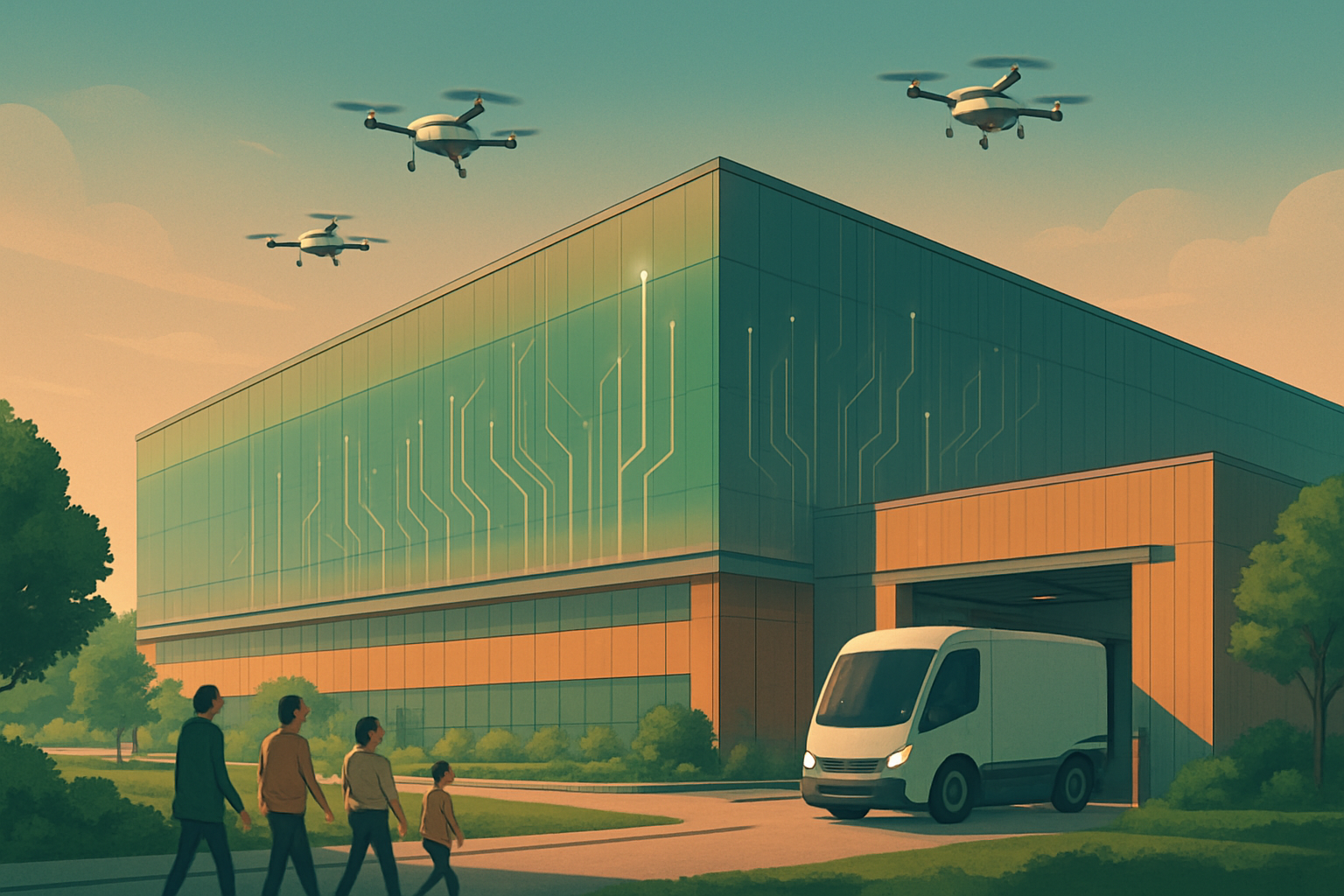
  • The $1 Trillion Ecosystem: A Deep-Dive Stock Research Report on Walmart Inc. (WMT)

    The $1 Trillion Ecosystem: A Deep-Dive Stock Research Report on Walmart Inc. (WMT)

    As of March 10, 2026, Walmart Inc. (NYSE: WMT) stands at a historic crossroads. The retail behemoth, once synonymous with rural American discount stores, recently crossed the $1 trillion market capitalization threshold, solidifying its transformation from a legacy brick-and-mortar operator into a "tech-powered omnichannel ecosystem." This milestone comes at a time of significant leadership transition and strategic evolution. While the global economy continues to grapple with the tailwinds of sticky inflation and shifting consumer behaviors, Walmart has emerged as a preferred destination not just for its traditional price-conscious base, but for high-income households seeking value and convenience. This research feature delves into the mechanics of Walmart’s current dominance and the challenges it faces in justifying a premium valuation in a rapidly automating retail landscape.

    Historical Background

    The Walmart narrative began on July 2, 1962, when Sam Walton opened the first Wal-Mart Discount City in Rogers, Arkansas. Walton’s foundational philosophy—Every Day Low Prices (EDLP)—was radical at the time, predicated on the idea that lower margins would drive higher volume. The company went public in 1970 (NYSE: WMT) and by the 1980s, had revolutionized logistics through the deployment of the largest private satellite communication system in the U.S.

    The 1988 opening of the first Supercenter in Washington, Missouri, marked a key transformation, combining general merchandise with a full-scale supermarket. This "one-stop shop" model became the company's engine of growth for decades. In 2016, realizing the existential threat posed by Amazon (NASDAQ: AMZN), Walmart acquired Jet.com for $3.3 billion, a move that brought in tech talent like Marc Lore and kickstarted a decade-long digital overhaul. Most recently, in February 2024, the company executed a 3-for-1 stock split to keep shares accessible for its 2.1 million associates, a move that signaled confidence in its long-term trajectory.

    Business Model

    Walmart’s business model has evolved into a multi-layered "flywheel." It operates through three primary segments:

    • Walmart U.S. (approx. 68% of Revenue): The core business, which has successfully captured over 25% of the U.S. grocery market. It leverages its 4,700+ stores as fulfillment centers for both in-person and digital orders.
    • Walmart International: Focused on high-growth digital markets, specifically Flipkart in India, Walmex in Mexico and Central America, and a robust e-commerce presence in China.
    • Sam’s Club: A membership-only warehouse segment that has seen a resurgence by targeting younger, tech-savvy demographics through its "Scan & Go" technology.

    Beyond retail, the company is scaling high-margin "service" revenue streams, including Walmart Connect (its advertising arm), fulfillment services for third-party marketplace sellers, and data ventures. These services are designed to decouple profit growth from the thin margins of traditional grocery retail.

    Stock Performance Overview

    As of March 2026, Walmart’s stock performance reflects a "flight to quality" and success in digital transformation:

    • 1-Year Performance: +32.1%, significantly outperforming the broader retail sector.
    • 5-Year Performance: +210.9% (Total Return), driven by the successful integration of e-commerce and store automation.
    • 10-Year Performance: +556.4% (Total Return).

    The 2024 3-for-1 stock split effectively lowered the entry price from approximately $175 to $58 per share. Since then, the stock has trended steadily upward, reaching all-time highs above $134 (post-split) in early 2026. The split not only increased retail investor participation by an estimated 20% but also served as a psychological booster for associate-owners.

    Financial Performance

    For the full fiscal year 2026 (ended January 31, 2026), Walmart reported robust results that exceeded consensus expectations:

    • Total Revenue: Approximately $713.2 billion, a 4.7% increase year-over-year.
    • Adjusted Earnings Per Share (EPS): $2.64.
    • E-commerce Growth: Global e-commerce sales grew by 24% in the final quarter, marking two full years of 20%+ growth.
    • Margins: Operating margins have shown resilience, as the high-margin advertising business (Walmart Connect) grew by 37%, helping to offset rising labor costs.

    The company maintains a strong balance sheet with a disciplined capital allocation strategy, prioritizing investments in automation while continuing to grow dividends. However, its forward Price-to-Earnings (P/E) ratio has expanded significantly, now sitting near 45x, which reflects high expectations for its tech-driven future.

    Leadership and Management

    A major era concluded on February 1, 2026, when Doug McMillon retired after 12 years as CEO. McMillon is credited with the "Amazon-proofing" of Walmart and its elevation into the tech era. The baton has passed to John Furner, the former head of Walmart U.S., who assumed the role of President and CEO of Walmart Inc.

    Furner is supported by a battle-tested leadership team, including David Guggina (CEO of Walmart U.S.) and Chris Nicholas (International). The new leadership's "People-Led, Tech-Powered" strategy emphasizes "Agentic Commerce"—the use of advanced AI to anticipate and fulfill customer needs autonomously. The Board of Directors continues to maintain a strong focus on governance, recently updating its sustainability and labor compliance frameworks to meet evolving ESG standards.

    Products, Services, and Innovations

    Walmart is currently transitioning from a retailer to a logistics and AI powerhouse:

    • Automation: By early 2026, roughly 65% of Walmart stores are serviced by automated distribution centers. This investment has drastically reduced the cost per unit and improved inventory accuracy.
    • AI Integration: The company has rolled out "Wally," an AI-driven merchant tool, and "Sparky," a customer-facing AI that handles complex, intent-based queries (e.g., "Plan a week of keto meals for a family of four for under $150").
    • Drone Delivery: Following regulatory approvals in 2025, Walmart now offers 30-minute drone delivery to over 15 million households in 10 states.
    • Health & Wellness: Walmart has expanded its footprint in clinical trials and primary care, leveraging its massive physical presence to offer healthcare services in underserved regions.

    Competitive Landscape

    Walmart remains in a fierce rivalry with Amazon (NASDAQ: AMZN), but its competitive moat has deepened. While Amazon leads in pure e-commerce volume, Walmart’s "physical moat"—with 90% of Americans living within 10 miles of a store—gives it an advantage in fresh grocery and last-mile efficiency.

    Against Target (NYSE: TGT), Walmart has widened its lead by capturing "trade-down" shoppers—families earning over $100,000 who have migrated to Walmart for its price advantage in essential goods. Meanwhile, Sam’s Club is closing the tech gap with Costco (NASDAQ: COST), utilizing digital-first features like "Scan & Go" that appeal to a younger demographic.

    Industry and Market Trends

    The retail sector in 2026 is defined by three macro drivers:

    1. Automation of Labor: With labor costs rising globally, retailers are racing to automate back-end logistics. Walmart’s early lead here provides a significant margin advantage.
    2. The "Convenience Economy": Customers are increasingly prioritizing time over price, driving the growth of delivery-as-a-service and subscription models like Walmart+.
    3. High-Income Migration: Persistent inflation in non-discretionary categories has structurally changed shopper demographics, as higher-income households make Walmart their primary grocery destination.

    Risks and Challenges

    Despite its dominance, Walmart faces several headwinds:

    • Valuation Premium: Trading at 45x forward earnings, the stock is "priced for perfection." Any slowdown in digital growth or margin contraction could lead to a sharp correction.
    • Regulatory Friction: The company recently settled a $100 million dispute regarding its Spark Driver delivery program, highlighting the ongoing legal risks associated with the "gig economy" workforce.
    • Macroeconomic Volatility: Sticky inflation in general merchandise continues to squeeze the "paycheck-to-paycheck" consumer, who still forms a large part of Walmart’s core base.
    • Leadership Transition Risk: While John Furner is a veteran, a change at the top always brings execution risks, especially during a period of massive technological shift.

    Opportunities and Catalysts

    Two major catalysts are on the horizon for 2026:

    1. Tariff Refunds: A landmark Supreme Court ruling in February 2026 regarding the International Emergency Economic Powers Act (IEEPA) could potentially lead to billions of dollars in duty refunds for Walmart, providing a massive one-time cash windfall.
    2. International IPOs: Continued speculation surrounds the potential public listing of Flipkart or PhonePe in India, which could unlock significant shareholder value for Walmart, the majority owner.
    3. Advertising Scale: Walmart Connect is on track to become a double-digit contributor to operating income by 2027, transforming the company’s profit profile.

    Investor Sentiment and Analyst Coverage

    Wall Street remains cautiously bullish on Walmart. Out of 43 major analysts, 31 maintain "Buy" or "Strong Buy" ratings. The consensus view is that Walmart is the ultimate "defensive growth" play. However, a growing minority of analysts have moved to "Hold," citing the historic valuation levels and the difficulty of maintaining 20%+ e-commerce growth rates as the business scales. Institutional ownership remains high, with major funds seeing Walmart as a staple in a volatile macroeconomic environment.

    Regulatory, Policy, and Geopolitical Factors

    Walmart's global operations are sensitive to trade policy. The 2026 Supreme Court ruling on tariffs has been a major tailwind, but ongoing geopolitical tensions between the U.S. and China remain a risk for the company’s sourcing and its retail operations in the Chinese market. Domestically, the company is under constant scrutiny regarding labor practices and antitrust concerns, particularly as its marketplace grows to rival that of Amazon. Compliance with "gig worker" regulations remains a primary focus for its Spark logistics network.

    Conclusion

    As of March 10, 2026, Walmart Inc. is no longer just a "big box" retailer; it is a technology and logistics powerhouse with a $1 trillion market cap. The company’s ability to successfully navigate the transition from Doug McMillon to John Furner, while simultaneously scaling high-margin advertising and AI-driven commerce, is a testament to its operational excellence. For investors, the central question is whether the current 45x P/E valuation is a fair price for a company that has successfully "cracked the code" of omnichannel retail, or if the stock is reaching a cyclical peak. In the near term, the potential for tariff refunds and international spinoffs provides compelling catalysts. However, long-term success will depend on Walmart’s ability to maintain its price leadership while successfully automating its way through a high-cost labor environment.


    This content is intended for informational purposes only and is not financial advice.
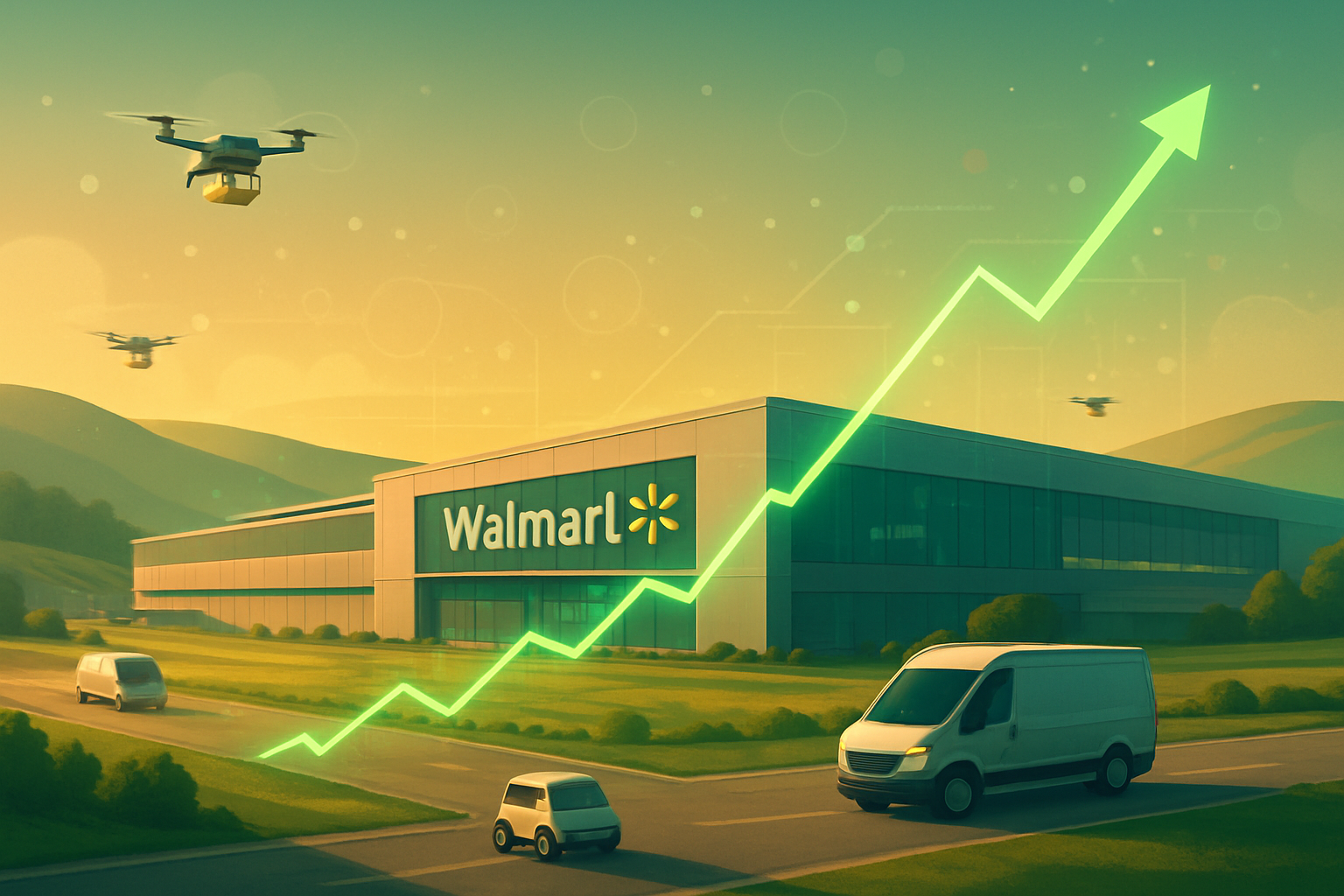
  • Walmart’s $1 Trillion Milestone: Analyzing the 2026 Tariff Windfall and the New Era of Agentic Commerce

    Walmart’s $1 Trillion Milestone: Analyzing the 2026 Tariff Windfall and the New Era of Agentic Commerce

    On February 23, 2026, Walmart Inc. (NYSE: WMT) solidified its position as a dominant titan of the modern economy, with its market capitalization officially crossing the historic $1 trillion threshold. This milestone comes during a transformative week for the retail giant, fueled by a landmark U.S. Supreme Court ruling regarding tariff refunds that has sent shockwaves through the consumer discretionary sector. As Walmart pivots from a traditional big-box retailer into a high-margin technology and data ecosystem, the convergence of favorable legal outcomes and aggressive automation has made it the central focus of global equity markets. Today’s surge in investor interest is not merely a reaction to retail sales but a validation of a decade-long metamorphosis.

    Historical Background

    Founded by Sam Walton in 1962 in Rogers, Arkansas, Walmart’s early narrative was defined by the "Everyday Low Price" (EDLP) philosophy and a revolutionary approach to supply chain logistics. For decades, the company’s growth was driven by aggressive physical expansion into rural and suburban America. However, the 21st century demanded a radical shift. The 2016 acquisition of Jet.com for $3.3 billion marked the beginning of the "McMillon Era," during which Walmart aggressively moved into e-commerce to challenge digital incumbents. Key milestones, such as the 2018 majority stake in India’s Flipkart and the 2024 acquisition of smart-TV maker VIZIO, transitioned the company from a store-based model to an omni-channel platform integrating retail, media, and logistics services.

    Business Model

    Walmart’s business model in 2026 is a sophisticated multi-revenue stream "flywheel." While the core remains high-volume retail across Walmart U.S., Walmart International, and Sam’s Club, the profit engines have shifted.

    • Retail & Grocery: Still the foundational volume driver, with Walmart controlling roughly 25% of the U.S. grocery market.
    • Walmart Connect: A high-margin retail media business that leverages first-party shopper data to sell targeted advertising.
    • Walmart Luminate: A data-as-a-service (DaaS) product where suppliers pay for granular consumer insights.
    • Walmart+: A membership-based recurring revenue stream providing delivery, fuel discounts, and streaming via Paramount+.
    • Fulfillment Services: Leveraging its physical footprint to provide "Last-Mile-as-a-Service" for third-party marketplace sellers.

    Stock Performance Overview

    The last decade has seen WMT evolve from a defensive value play into a high-performing compounder.

    • 10-Year Horizon: WMT has significantly outperformed the S&P 500, particularly during the inflationary period of 2022-2024 where its value proposition attracted "trade-down" shoppers from higher-income brackets.
    • The 2024 Catalyst: The 3-for-1 stock split in February 2024 served as a major liquidity event, broadening retail ownership and preceding a 72% rally that year.
    • Recent Performance: Over the past year leading into February 2026, the stock has climbed 45%, buoyed by record-breaking FY2026 earnings and the recent inclusion in the NASDAQ 100, which forced massive institutional buying.

    Financial Performance

    In its most recent fiscal year (ending January 31, 2026), Walmart reported a staggering $713.2 billion in total revenue, surpassing the $700 billion mark for the first time.

    • Margins: Operating margins expanded to 4.8%, up from historic lows of 4.1% in 2023, driven by the growth of advertising and data services.
    • E-commerce: Digital sales now account for 23% of total revenue, with a clear path toward profitability as fulfillment automation scales.
    • Cash Flow: Free cash flow remains robust at $18.5 billion, allowing for consistent dividend increases (now in its 53rd consecutive year) and aggressive share buybacks.
    • The Refund Windfall: Analyst projections suggest the recent tariff ruling could inject an additional $3.5 billion to $5 billion in one-time cash refunds over the next 18 months.

    Leadership and Management

    A new chapter began on February 1, 2026, with John Furner taking over as President and CEO following Doug McMillon’s retirement. Furner, who previously led Walmart U.S., is a seasoned veteran known for his "associate-first" culture and digital fluency. Under his leadership, the management team has doubled down on "Agentic Commerce"—the use of autonomous AI agents to manage household inventories. The board remains highly regarded for its disciplined capital allocation and its success in navigating the complex transition from physical to digital dominance.

    Products, Services, and Innovations

    Innovation at Walmart is currently focused on the "Automated Store" and "Generative AI."

    • Supply Chain: By early 2026, 60% of U.S. stores are serviced by automated distribution centers, reducing out-of-stocks and labor costs.
    • Sparky (AI Assistant): Walmart’s generative AI shopping assistant now handles complex queries like "Plan a gluten-free birthday party for 10 kids under $100," adding items directly to the cart.
    • Drone Delivery: Following regulatory easing in 2025, Walmart now offers 30-minute drone delivery to over 15 million households in 10 states.
    • Health & Wellness: The expansion of Walmart Health clinics into primary care and clinical trials has turned pharmacy visits into a comprehensive healthcare service.

    Competitive Landscape

    While Amazon (NASDAQ: AMZN) recently eclipsed Walmart in total annual revenue, the competitive landscape has bifurcated.

    • vs. Amazon: Walmart maintains a superior "physical moat" with 90% of the U.S. population living within 10 miles of a store, allowing for more efficient grocery fulfillment than Amazon’s Whole Foods or Fresh units.
    • vs. Discount Rivals: In the face of pressure from Temu and Shein in the apparel and "general merchandise" segments, Walmart has pivoted toward quality and reliability, successfully siphoning market share from domestic dollar stores.
    • vs. Costco: Sam’s Club has aggressively closed the gap with Costco (NASDAQ: COST) by implementing digital-only checkout experiences, appealing to a younger, tech-savvy demographic.

    Industry and Market Trends

    The retail sector in 2026 is defined by "The Great Bifurcation." High-income consumers are increasingly seeking convenience and time-savings, while middle-and-lower-income tiers remain hyper-focused on value due to the lingering effects of the 2022-2024 inflation cycle. Walmart is uniquely positioned to capture both, using its premium Walmart+ service for the former and its EDLP pricing for the latter. Furthermore, the industry is seeing a massive shift toward "Retail Media," where the physical store becomes an advertising canvas, a trend Walmart is currently leading.

    Risks and Challenges

    Despite the $1 trillion valuation, several headwinds remain:

    • Labor Costs: As the largest private employer in the U.S., Walmart remains sensitive to wage inflation and potential unionization efforts in key hubs.
    • International Volatility: Geopolitical tensions in Southeast Asia and the Middle East continue to disrupt global sourcing, requiring costly supply chain diversifications.
    • Execution Risk: The heavy reliance on AI and automation carries the risk of technical failures or consumer backlash regarding data privacy and "algorithmic pricing."

    Opportunities and Catalysts

    • The Tariff Refund: The Supreme Court’s February 20, 2026 ruling against the IEEPA "Emergency" tariffs is the most immediate catalyst. This could result in a massive cash infusion, potentially earmarked for a special dividend or further M&A.
    • OnePay Expansion: Walmart’s proprietary financial services app, OnePay, is positioned to become a major player in the "Buy Now, Pay Later" (BNPL) and digital banking space, competing directly with fintech incumbents.
    • B2B Services: Selling its proprietary logistics and data software to other small-to-mid-sized retailers represents an untapped multibillion-dollar high-margin opportunity.

    Investor Sentiment and Analyst Coverage

    Sentiment on the Street is overwhelmingly bullish. Following the tariff ruling, major investment banks have revised their price targets upward, with several calling WMT a "Top Pick for 2026." Institutional ownership remains high, with significant increases from ESG-focused funds who have praised Walmart’s 2025 carbon neutrality milestones. Retail sentiment is also strong, as the VIZIO integration has made Walmart a household "tech" brand rather than just a grocer.

    Regulatory, Policy, and Geopolitical Factors

    The regulatory environment is the primary driver of today's market activity.

    • The IEEPA Ruling: On February 20, 2026, the Supreme Court ruled 6-3 that broad global tariffs imposed under the International Emergency Economic Powers Act were unconstitutional. Walmart, as a top importer, is lead claimant for refunds on billions in duties paid during the 2025 "Trade Emergency" period.
    • Section 301 Status: While the court upheld the older China-specific Section 301 tariffs in late 2025, the IEEPA ruling provides a more significant direct cash benefit for 2026 balance sheets.
    • Antitrust: Walmart’s growing dominance in digital advertising is drawing scrutiny from the FTC, though analysts believe the presence of Amazon and Google provides a sufficient competitive defense.

    Conclusion

    Walmart’s journey to a $1 trillion market cap on February 23, 2026, is a testament to the power of digital transformation in a legacy industry. By successfully pivoting from a vendor of goods to a provider of services—advertising, data, health, and automated logistics—the company has decoupled its growth from the thin margins of traditional retail. While the immediate boost from the Supreme Court’s tariff refund ruling provides a lucrative catalyst, the long-term thesis for WMT rests on its ability to integrate its physical footprint with its digital "Flywheel." Investors should monitor the integration of the OnePay financial ecosystem and the ongoing scaling of automated fulfillment as the next markers of performance. Walmart is no longer just a store; it is a vital piece of 21st-century infrastructure.


    This content is intended for informational purposes only and is not financial advice.
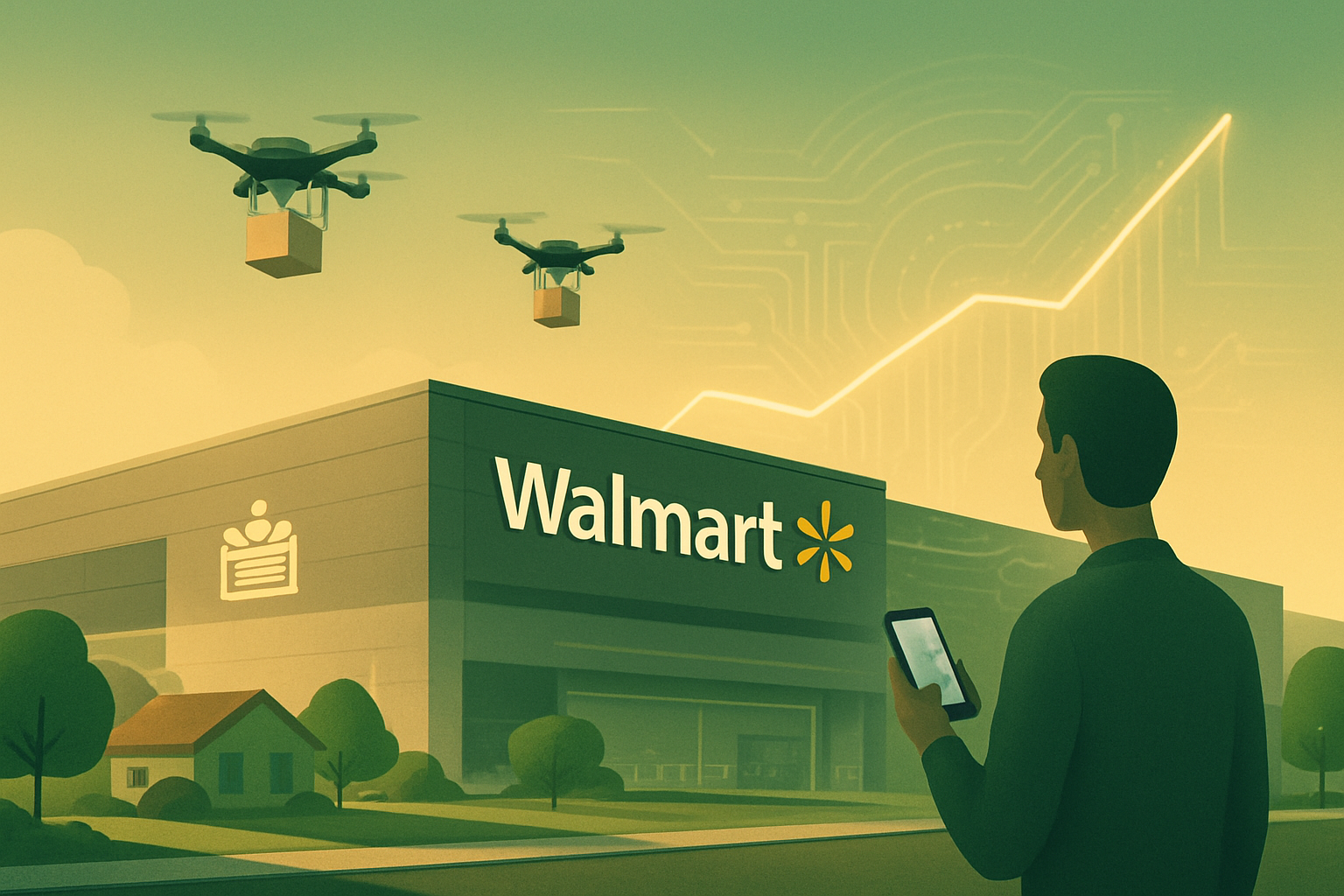
  • Walmart (WMT): The $1 Trillion Transformation into a Tech-Retail Powerhouse

    Walmart (WMT): The $1 Trillion Transformation into a Tech-Retail Powerhouse

    As of February 19, 2026, Walmart Inc. (NYSE: WMT) stands at a historic crossroads. After decades of being defined by its massive physical footprint and "Everyday Low Price" (EDLP) philosophy, the world’s largest retailer has officially evolved into a tech-driven omnichannel powerhouse. Having recently crossed the $1 trillion market capitalization threshold, Walmart is no longer just competing for grocery bags—it is fighting for digital dominance, advertising dollars, and high-margin service revenue. This report examines the fundamental shift in Walmart’s business model and its investment outlook for 2026 and beyond.

    Historical Background

    Founded by Sam Walton in 1962 in Rogers, Arkansas, Walmart’s early mission was simple: offer the lowest prices to rural communities that were underserved by larger department stores. The company went public in 1970 and spent the next three decades expanding aggressively, becoming the largest retailer in the world by the early 1990s.

    The most significant transformation, however, began in the mid-2010s under Doug McMillon. Recognizing the existential threat posed by Amazon.com (NASDAQ: AMZN), Walmart invested billions in e-commerce infrastructure, acquired Jet.com in 2016, and revamped its supply chain. By the 2020s, Walmart had integrated its 4,700+ U.S. stores into "local fulfillment centers," blurring the lines between physical and digital shopping.

    Business Model

    Walmart operates through three primary segments:

    1. Walmart U.S.: The largest segment, accounting for roughly 68% of revenue, focused on retail, grocery, and pharmacy.
    2. Walmart International: Operations in 19 countries, with a heavy focus on high-growth markets like India (via Flipkart and PhonePe) and Mexico (Walmex).
    3. Sam’s Club: A membership-only warehouse club that competes directly with Costco (NASDAQ: COST).

    The "Alternative Profit Flywheel":
    In 2026, Walmart’s business model has shifted toward high-margin services. While retail remains the core, the company now generates significant profit from:

    • Advertising (Walmart Connect): Using first-party shopper data to sell ads to suppliers.
    • Data Ventures: Selling insights to brands about consumer behavior.
    • Fulfillment Services (WFS): Charging third-party sellers to store and ship their goods.
    • Membership Fees: Recurring revenue from the Walmart+ program.

    Stock Performance Overview

    Walmart’s stock has seen a dramatic re-rating over the last decade:

    • 1-Year Performance: The stock has outperformed the S&P 500, buoyed by the $1T market cap milestone and the successful integration of Vizio’s advertising technology.
    • 5-Year Performance: WMT has seen a steady climb, accelerated by the 3-for-1 stock split in February 2024, which increased retail investor participation.
    • 10-Year Performance: Investors have enjoyed a total return exceeding 250%, as the market transitioned from valuing Walmart as a "slow-growth retailer" to a "compounding tech-retail leader."

    Financial Performance

    Walmart’s Fiscal Year 2026 results (ending Jan 31, 2026) demonstrated remarkable resilience:

    • Revenue: Reached a record $713.2 billion, up 4.7% year-over-year.
    • Adjusted EPS: Reported at $2.64, beating analyst expectations.
    • Operating Income: Grew at a faster rate than sales (5.4% growth), a key metric proving that automation and advertising are boosting the bottom line.
    • Cash Flow: Generated $41.6 billion in operating cash flow, allowing for a 53rd consecutive year of dividend increases (now $0.99 annually) and a new $30 billion share repurchase program.
    • Valuation: The stock currently trades at a forward P/E of approximately 44x, a premium that reflects its "defensive growth" status but raises questions about near-term upside.

    Leadership and Management

    The 2026 transition to John Furner as CEO represents a "continuity of vision." Furner, a 33-year Walmart veteran, was the architect of the "Store of the Future" initiative. He is supported by CFO John David Rainey, whose background at PayPal and United Airlines has been instrumental in shifting Walmart’s financial narrative toward tech and margins. The board remains heavily influenced by the Walton family, who control nearly 40% of the company, ensuring a long-term strategic horizon that prioritizes stability over quarterly volatility.

    Products, Services, and Innovations

    Innovation in 2026 is centered on "Agentic Commerce":

    • Generative AI: Walmart’s "Sparky" AI assistant now handles complex shopping missions (e.g., "Plan a keto-friendly birthday party for 10 people for under $200").
    • Drone Delivery: In partnership with Wing, Walmart now offers 30-minute drone delivery from 150+ stores in major metro areas.
    • Shoppable TV: Following the acquisition of Vizio, Walmart has integrated its checkout directly into the SmartCast OS, allowing viewers to buy products directly from commercials.
    • Automation: By late 2026, 75% of Walmart’s stores will be serviced by automated distribution centers, significantly reducing logistics costs.

    Competitive Landscape

    Walmart remains in a fierce battle with three primary rivals:

    • Amazon: While Amazon dominates pure e-commerce, Walmart’s 4,700 stores serve as local hubs that allow for cheaper and faster grocery delivery—a sector where Amazon still struggles for scale.
    • Costco: Costco leads in membership loyalty, but Walmart’s digital experience and Walmart+ program are narrowing the gap.
    • Target (NYSE: TGT): Target has struggled with discretionary spending lulls, whereas Walmart’s heavy grocery mix (nearly 60% of U.S. sales) provides a more defensive hedge against inflation.

    Industry and Market Trends

    The "Bifurcated Consumer" is the dominant trend of 2026. Low-income households are struggling with the cumulative effects of inflation, while high-income households are seeking value. Walmart has successfully captured both ends of the spectrum. Furthermore, the "Retail Media" trend is exploding, with Walmart Connect leading the way as brands shift spending away from traditional TV toward platforms where they can see an immediate "closed-loop" sale.

    Risks and Challenges

    • Discretionary Spending: While groceries sell well, sales of "wants" (electronics, home goods) remain muted, which carries higher profit margins.
    • Labor Friction: The aggressive push toward AI and warehouse automation has led to corporate layoffs and friction with labor advocates.
    • Tariff Exposure: Proposed and implemented tariffs on imports from China and Southeast Asia threaten Walmart’s "Everyday Low Price" model, potentially forcing price hikes.
    • Valuation Risk: At 44x earnings, the stock is "priced for perfection," leaving little room for error in execution.

    Opportunities and Catalysts

    • India Monetization: The expected mid-2026 IPO of PhonePe (India’s leading payments app) could unlock billions in value for Walmart shareholders.
    • Vizio Synergy: The full integration of Vizio’s ad platform is expected to accelerate Walmart Connect’s growth to 30%+ annually.
    • Market Share Gains: Continued "trade-down" from affluent shoppers provides a new, sticky customer base that Walmart can upsell into its membership and financial services.

    Investor Sentiment and Analyst Coverage

    Wall Street remains broadly optimistic, with a consensus "Moderate Buy" rating. Analysts from firms like Mizuho and RBC have raised price targets to the $135–$145 range. Hedge funds have treated Walmart as a "safe haven" during recent market volatility, viewing it as a defensive stock with the growth characteristics of a tech firm. However, some value-oriented analysts caution that the current valuation is historically stretched.

    Regulatory, Policy, and Geopolitical Factors

    Walmart is under increased scrutiny from the FTC regarding "Robinson-Patman Act" violations—allegations that large retailers use their scale to demand unfairly low prices from suppliers that smaller competitors cannot access. Internationally, Walmart must navigate India’s complex FDI (Foreign Direct Investment) rules, which frequently change the landscape for its Flipkart and PhonePe subsidiaries.

    Conclusion

    Walmart in 2026 is a far cry from the "discount store" of the 20th century. It has successfully leveraged its physical proximity to 90% of the U.S. population to build a digital ecosystem that rivals the world’s largest tech companies. For investors, Walmart offers a unique combination of defensive stability (grocery dominance) and aggressive growth (advertising and AI). While the current valuation requires a belief in continued flawless execution, Walmart’s pivot to a high-margin service model suggests that its journey to $1 trillion may only be the beginning of a new chapter in retail history.


    This content is intended for informational purposes only and is not financial advice. Today's Date: February 19, 2026.
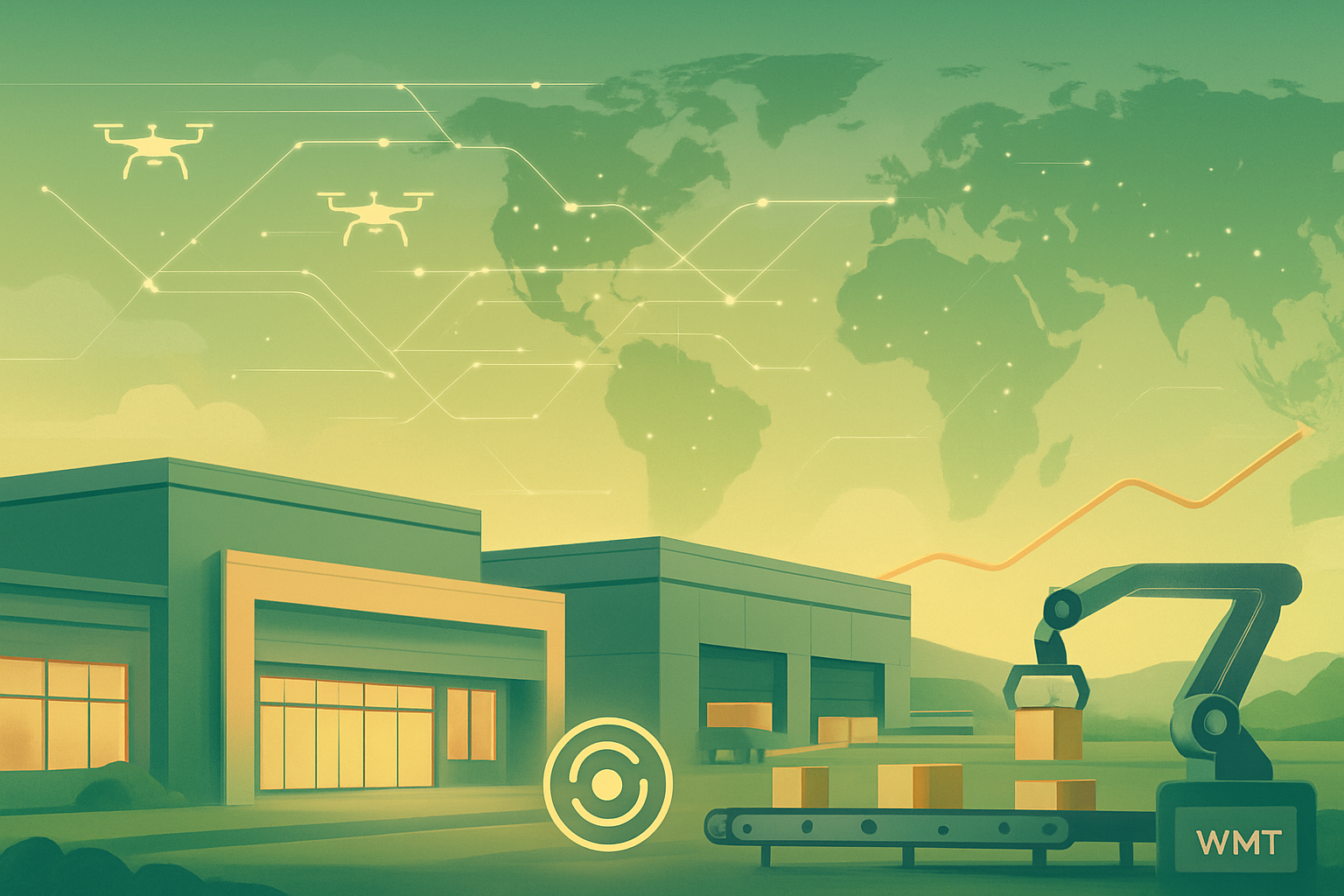
  • The Trillion-Dollar Retail Titan: A Deep Dive into Walmart’s Omnichannel Supremacy

    The Trillion-Dollar Retail Titan: A Deep Dive into Walmart’s Omnichannel Supremacy

    As of February 17, 2026, Walmart Inc. (NYSE: WMT) has officially entered a new era of corporate history. Long regarded as the quintessential "brick-and-mortar" giant, the Bentonville-based retailer recently crossed the historic $1 trillion market capitalization milestone on February 3, 2026. This achievement is not merely a reflection of its scale but a validation of a decade-long digital transformation. In a market where high-growth technology stocks often command the spotlight, Walmart has emerged as a "tech-hybrid" juggernaut, blending the defensive stability of consumer staples with the high-margin scalability of digital advertising and membership services. With a crucial Q4 earnings report looming this week, all eyes are on how the world’s largest retailer continues to redefine the boundaries of global commerce.

    Historical Background

    The Walmart story began in 1962 when Sam Walton opened the first "Wal-Mart" in Rogers, Arkansas, with a simple but disruptive philosophy: "Everyday Low Prices." Walton’s focus on rural markets, sophisticated logistics, and passing savings to the customer allowed the company to grow rapidly, going public in 1970. Over the following decades, Walmart expanded into suburban and urban areas, launched the Sam's Club warehouse model in 1983, and pioneered the "Supercenter" format in 1988.

    The 21st century brought new challenges, primarily from the rise of e-commerce. Under the leadership of Doug McMillon (CEO from 2014 to early 2026), the company underwent a radical shift, acquiring Jet.com in 2016 and investing tens of billions of dollars into its digital ecosystem. By 2026, Walmart has successfully transitioned from a store-first retailer to an omnichannel platform where physical locations serve as high-tech fulfillment hubs, marking its most significant transformation since its founding.

    Business Model

    Walmart operates a massive, diversified business model centered on three primary segments: Walmart U.S., Walmart International, and Sam’s Club. While retail sales of groceries, apparel, and electronics remain the bedrock of the company, the business model has evolved into a "flywheel" of high-margin services:

    • Retail & E-commerce: Selling a vast array of goods through 10,500+ stores and a global digital marketplace.
    • Walmart Connect: A rapidly growing retail media network (advertising) that leverages Walmart's massive first-party shopper data.
    • Walmart+: A membership subscription service offering delivery, fuel discounts, and streaming perks, providing recurring, high-margin revenue.
    • Financial & Health Services: Expanding into pharmacy, primary care clinics, and fintech solutions for both customers and associates.
    • Logistics-as-a-Service: Utilizing its "GoLocal" platform to provide last-mile delivery services for other businesses.

    Stock Performance Overview

    Over the past decade, Walmart has transitioned from a steady dividend payer to a growth-oriented market leader.

    • 1-Year Performance: In the last 12 months, WMT has gained approximately 35%, significantly outperforming the broader market as investors sought refuge in its recession-resistant earnings.
    • 5-Year Performance: Since 2021, the stock has more than doubled, fueled by the acceleration of e-commerce and the strategic 3-for-1 stock split executed in 2024, which enhanced liquidity for retail investors.
    • 10-Year Performance: On a total return basis, Walmart has outperformed the S&P 500 over the last decade, proving that legacy retailers can successfully pivot to digital-first models.

    The recent surge to the $1 trillion mark has been driven by a significant "re-rating" of the stock, as analysts move away from valuing it as a traditional grocer and toward a tech-service multiple.

    Financial Performance

    Walmart’s financial health in early 2026 is characterized by robust top-line growth and expanding margins. For the fiscal year ending January 2025, the company reported revenue of $681 billion. Current projections for the full fiscal year 2026 suggest a climb toward $715 billion.

    • Earnings per Share (EPS): Walmart has consistently beaten analyst estimates over the last four quarters, driven by lower logistics costs and a shift toward high-margin advertising revenue.
    • Margins: Operating margins, which historically hovered around 4-5%, have seen a notable uptick as the share of advertising and membership income grows.
    • Debt & Cash Flow: The company maintains an AA credit rating with strong free cash flow, allowing it to fund massive capital expenditures in automation while continuing its 50-year streak of dividend increases.

    Leadership and Management

    On February 1, 2026, John Furner officially took the helm as President and CEO of Walmart Inc., succeeding Doug McMillon. Furner, a Walmart veteran who previously led the U.S. division, is credited with the successful rollout of the company’s automation strategy.

    • John David Rainey (CFO): A former PayPal executive, Rainey continues to be the architect of Walmart’s shift toward a tech-driven financial model.
    • David Guggina (CEO, Walmart U.S.): Formerly the Chief eCommerce Officer, Guggina’s promotion signals the company’s "digital-first" priority.
      The leadership transition has been viewed as a seamless "passing of the torch," with McMillon remaining as an advisor through 2027 to ensure strategic continuity.

    Products, Services, and Innovations

    Innovation is the primary driver behind Walmart’s current valuation.

    • Supply Chain Automation: By early 2026, 65% of Walmart’s stores are serviced by automated facilities. This "Supply Chain of the Future" has reduced unit costs by over 20%.
    • AI-Powered Commerce: Walmart’s proprietary GenAI search allows customers to shop by "intent" (e.g., "plan a 5-year-old’s birthday party") rather than just keywords.
    • Drone Delivery: In partnership with Wing and Zipline, drone delivery is now available to over 75% of the population in major U.S. metropolitan areas.
    • Connected TV: The integration of VIZIO’s SmartCast system has turned Walmart into a major player in the streaming ad space, rivaling Amazon (NASDAQ: AMZN) and Roku (NASDAQ: ROKU).

    Competitive Landscape

    Walmart sits in a unique competitive position. In the grocery sector, it remains the undisputed leader, holding a market share nearly double that of its nearest rival, Kroger (NYSE: KR).

    • Vs. Amazon: Walmart has narrowed the gap in e-commerce by leveraging its physical stores as delivery hubs, often offering faster "last-mile" delivery than Amazon in rural and suburban areas.
    • Vs. Costco (NASDAQ: COST) & Target (NYSE: TGT): Walmart has successfully defended its market share against Target by maintaining price leadership during inflationary periods, and against Costco by enhancing its Sam’s Club value proposition.
      The company's scale and $1 trillion valuation now place it in direct competition with the "Magnificent Seven" for investor capital.

    Industry and Market Trends

    The retail industry in 2026 is defined by "Value and Convenience." Despite cooling inflation, consumer "trade-down" behavior persists, benefiting Walmart’s grocery and private-label (Great Value) business.

    • Defensive Rotation: Early 2026 has seen a massive rotation of capital out of pure-play tech and into "Defensive Growth" stocks. WMT has been the primary beneficiary of this trend.
    • Retail Media: The industry is seeing a shift where retailers are becoming media companies. Walmart’s advertising arm is now a key growth engine for the entire Consumer Staples sector (NYSE Arca: XLP).

    Risks and Challenges

    Despite its momentum, Walmart faces significant headwinds:

    • Labor Costs: As a massive employer, rising minimum wages and labor unionization efforts remain a persistent threat to margins.
    • International Volatility: Economic slowdowns in key markets like China and regulatory hurdles in India (Flipkart) could dampen global growth.
    • E-commerce Profitability: While e-commerce revenue is soaring, the cost of "last-mile" delivery and heavy investments in automation continue to weigh on the segment’s bottom line.
    • Cybersecurity: As a data-driven giant, the risk of large-scale data breaches is a top-tier concern for the board.

    Opportunities and Catalysts

    The upcoming Q4 earnings report (expected this week) is the most immediate catalyst. Investors are looking for:

    • Holiday Performance: Early data suggests a record-breaking holiday season for Walmart+, potentially leading to an earnings beat.
    • Advertising Growth: Any update on the scale of Walmart Connect post-VIZIO integration could spark a further rally.
    • International IPOs: Rumors of a potential IPO for Flipkart in 2026 could unlock significant value for shareholders.
    • Share Buybacks: With its massive cash reserves, the company is expected to announce an expanded share repurchase program in mid-2026.

    Investor Sentiment and Analyst Coverage

    Wall Street remains overwhelmingly bullish on Walmart. As of February 2026, over 85% of analysts covering the stock maintain a "Buy" or "Strong Buy" rating.

    • Institutional Holdings: Hedge funds and large asset managers like Vanguard and BlackRock have increased their positions, viewing WMT as a "must-own" stock for both stability and growth.
    • Retail Sentiment: On social media platforms and retail trading forums, Walmart is increasingly discussed alongside "Big Tech" rather than traditional retailers, reflecting a fundamental shift in how the public perceives the brand.

    Regulatory, Policy, and Geopolitical Factors

    Walmart operates in a complex regulatory environment.

    • Antitrust Scrutiny: As Walmart’s advertising and data segments grow, it faces increased scrutiny from the FTC regarding data privacy and competition.
    • Trade Policy: Given its global supply chain, any shifts in tariffs or trade relations with China directly impact its cost of goods sold.
    • Sustainability Mandates: New federal reporting requirements for Scope 3 emissions have forced Walmart to accelerate its transition to a zero-emissions delivery fleet, a move that is costly in the short term but may yield long-term tax incentives.

    Conclusion

    Walmart’s ascent to a $1 trillion market cap is a testament to the power of reinvention. By successfully marrying the world’s most efficient physical supply chain with a high-margin digital ecosystem, the company has insulated itself from the volatility that has plagued other retail sectors.

    For investors, Walmart represents a rare "all-weather" stock. It offers the defensive safety of a grocery giant during economic downturns and the high-growth potential of a tech platform during market upswings. As we look toward the Q4 earnings report, the key question is no longer whether Walmart can survive the digital age, but how much further it can pull ahead of its peers. In the current macro environment, Walmart isn't just a retail stock; it is a global infrastructure play for the 21st century.


    This content is intended for informational purposes only and is not financial advice.