
Author: mdierolf

  • The Backbone of the Intelligence Revolution: A Deep Dive into NextEra Energy (NEE)

    The Backbone of the Intelligence Revolution: A Deep Dive into NextEra Energy (NEE)

    As of April 3, 2026, NextEra Energy, Inc. (NYSE: NEE) stands at the epicenter of a global energy paradigm shift. Once viewed primarily as a stable, dividend-paying utility, the company has transformed into the primary infrastructure engine for what CEO John Ketchum calls the "Intelligence Revolution." In an era where silicon is no longer the primary bottleneck for Artificial Intelligence (AI) but rather the electrical grid itself, NextEra has positioned itself as the indispensable partner for big tech hyperscalers. With a market capitalization that consistently leads the utility sector, NextEra is currently in focus for its dual-track growth: maintaining a dominant regulated utility in Florida while managing the world’s largest renewable energy development pipeline.

    Historical Background

    NextEra’s journey began over a century ago in 1925 as Florida Power & Light (FPL). For decades, it operated as a traditional regional utility, powering the rapid post-war development of the Sunshine State. However, the true transformation began in the late 1990s and early 2000s. Under visionary leadership, the company recognized early that decarbonization would move from a niche environmental goal to a central economic driver.

    In 2010, the parent company rebranded from FPL Group to NextEra Energy to reflect its national footprint in wind and solar. This pivot allowed the company to pioneer utility-scale renewables long before they achieved cost-parity with fossil fuels. By the 2020s, NextEra had successfully navigated the transition from a Florida-centric utility to a global renewable energy titan, effectively decoupling its growth from the slower-moving regulatory cycles of traditional utilities.

    Business Model

    NextEra Energy operates a unique, bifurcated business model that provides both defensive stability and aggressive growth:

    1. Florida Power & Light (FPL): The "crown jewel" of regulated utilities. FPL serves more than 12 million people in Florida. Its revenue is regulated, providing a steady, predictable cash flow. FPL’s strategy focuses on keeping customer bills low—currently among the lowest in the U.S.—while investing heavily in infrastructure to support Florida’s growing population.
    2. NextEra Energy Resources (NEER): The competitive energy arm. NEER is the world’s largest generator of renewable energy from the wind and sun. It operates across 38 states and Canada, selling power under long-term power purchase agreements (PPAs) to other utilities, municipalities, and corporate giants like Google (NASDAQ: GOOGL) and Amazon (NASDAQ: AMZN).

    In 2026, this model has evolved into an "energy-as-a-service" platform, where NEER provides the generation and FPL provides the grid reliability expertise to support massive AI data center complexes.

    Stock Performance Overview

    Over the last decade (2016–2026), NextEra Energy has significantly outperformed the broader Utilities Select Sector SPDR Fund (XLU).

    • 10-Year Performance: NEE has delivered a total return exceeding 250%, bolstered by consistent dividend reinvestment and double-digit earnings growth.
    • 5-Year Performance: After a period of volatility in 2023-2024 due to rising interest rates, the stock surged in late 2025 and early 2026 as the market recognized its role in the AI data center build-out.
    • 1-Year Performance: As of April 2026, shares are trading near $94, reflecting a roughly 15% gain over the past 12 months, outstripping many of its regulated utility peers.

    Financial Performance

    NextEra’s 2025 fiscal year results, released in early 2026, demonstrated remarkable financial resilience.

    • Adjusted EPS: The company reported $3.71 per share, an 8.2% increase over 2024.
    • Revenue: Total operating revenues reached $27.41 billion.
    • Dividends: In February 2026, the board approved a 10% increase in the quarterly dividend to $0.6232 per share, continuing a 31-year streak of annual increases.
    • Capital Expenditures: The company is currently executing a massive $90–$100 billion capital investment plan through 2029, funded by its strong balance sheet and recent $2.3 billion equity unit raise in March 2026.

    Leadership and Management

    CEO John Ketchum, who took the helm in 2022, has refined the company’s strategy for the mid-2020s. Ketchum’s leadership is characterized by a "reliability first" approach, moving NextEra beyond intermittent renewables toward integrated energy solutions. His management team is highly regarded for its "capital recycling" strategy—selling mature assets to fund new, higher-return developments. Under Ketchum, the company has also improved its governance reputation by resolving historical political controversies in Florida and focusing on transparent ESG reporting that aligns with institutional investor demands.

    Products, Services, and Innovations

    Innovation at NextEra is currently focused on three pillars:

    1. Battery Storage: NEER’s backlog now includes nearly 10 GW of battery storage, essential for balancing solar and wind intermittency.
    2. Nuclear Renaissance: In early 2026, NextEra moved forward with the restart of the Duane Arnold Energy Center in Iowa, a nuclear plant that will provide 24/7 carbon-free power specifically for data center hubs.
    3. Green Hydrogen: The company is testing pilot projects that use excess solar energy to produce hydrogen, providing a potential zero-carbon fuel for heavy industry and long-haul transport.

    Competitive Landscape

    While NextEra is the leader, it faces stiff competition from other major utilities and independent power producers:

    • Duke Energy (NYSE: DUK): A formidable rival in the Southeast, also aggressively pursuing solar and nuclear expansions.
    • Southern Company (NYSE: SO): A leader in new nuclear (Vogtle) that competes for large industrial and data center loads.
    • Brookfield Renewable Partners (NYSE: BEP): A global competitor in the contract renewable space.

    NextEra’s competitive advantage lies in its scale. By purchasing turbines and solar panels in massive quantities, it maintains a cost-of-capital and procurement advantage that smaller players cannot match.

    Industry and Market Trends

    The "Super-Cycle" of power demand is the defining trend of 2026. After two decades of flat electricity demand in the U.S., the combination of AI data centers, domestic manufacturing (the "onshoring" boom), and electric vehicle (EV) adoption has led to a projected 5% annual increase in load growth. NextEra is riding this wave, with 20 active "data center hub" discussions currently in its pipeline.

    Risks and Challenges

    Despite its strengths, NextEra faces several headwinds:

    • Interest Rate Sensitivity: As a capital-intensive business, higher-for-longer interest rates increase the cost of financing new projects.
    • Supply Chain Constraints: Shortages of high-voltage transformers and specialized labor have slowed some interconnection timelines.
    • Transmission Bottlenecks: Building new generation is often easier than building the transmission lines needed to move that power to urban centers.
    • NextEra Energy Partners (NYSE: NEP): The company’s subsidiary has faced significant valuation pressure, trading near historical lows as it struggles with high-cost debt refinancing.

    Opportunities and Catalysts

    The primary catalyst for 2026-2027 is the conversion of NextEra’s 30 GW backlog into operational assets. Furthermore, the 2026-2029 Florida rate agreement allows FPL to maintain a healthy 10.95% return on equity (ROE), providing the cash flow needed to fund the "NEER" growth engine. The recent acquisition of Symmetry Energy Solutions also gives NextEra a nationwide natural gas platform to provide "firming" power for its renewable projects.

    Investor Sentiment and Analyst Coverage

    Wall Street remains largely bullish, with a "Moderate Buy" consensus. Analysts from major firms like Goldman Sachs and Morgan Stanley have highlighted NextEra as the "best-in-class" play for the AI power trade. Institutional ownership remains high, as the company’s 31-year dividend growth history makes it a staple for pension funds and conservative income investors.

    Regulatory, Policy, and Geopolitical Factors

    NextEra is a major beneficiary of the Inflation Reduction Act (IRA), which provides long-term tax credit certainty for wind, solar, and storage. In Florida, the regulatory environment remains one of the most constructive in the U.S., though the company must navigate increasing scrutiny over "large load tariffs" as data centers begin to consume a larger share of the state's power.

    Conclusion

    NextEra Energy, Inc. is no longer just a utility; it is a technology infrastructure titan. By 2026, it has successfully integrated the reliability of a regulated utility with the explosive growth potential of the renewable energy and AI sectors. While high interest rates and transmission hurdles remain significant risks, the company’s massive backlog and strategic pivot toward nuclear and "firm" power solutions suggest it is well-positioned to lead the U.S. energy transition for the next decade. Investors should watch the execution of the Duane Arnold nuclear restart and the growth of the data center pipeline as key indicators of future share price performance.


    This content is intended for informational purposes only and is not financial advice.

  • Oracle (ORCL): The AI Infrastructure Landlord of 2026

    Oracle (ORCL): The AI Infrastructure Landlord of 2026

    The transformation of Oracle Corporation (NYSE: ORCL) from a legacy database provider into a modern cloud powerhouse is one of the most significant narratives in the technology sector today. As of April 3, 2026, Oracle has positioned itself as the "AI Infrastructure Landlord," leveraging its high-performance networking and database heritage to capture the burgeoning demand for generative artificial intelligence. While the company recently weathered a significant market correction in early 2026, its record-breaking backlog and strategic pivot toward specialized cloud services have made it a focal point for institutional investors and analysts alike.

    Historical Background

    Founded in 1977 as Software Development Laboratories by Larry Ellison, Bob Miner, and Ed Oates, the company’s first major success came from a contract with the CIA to build a relational database management system (RDBMS) based on SQL. Renamed Oracle Systems Corporation in 1982, it went public in 1986, just one day before Microsoft.

    The company’s growth was defined by Larry Ellison’s aggressive competitive spirit and a series of massive acquisitions in the 2000s and 2010s. Notable takeovers included PeopleSoft (2005), Siebel Systems (2006), and Sun Microsystems (2010)—the latter bringing the Java programming language into the Oracle fold. In recent years, Oracle has transitioned away from on-premise licensing toward a cloud-first strategy, marked by the $9.3 billion acquisition of NetSuite in 2016 and the $28.3 billion purchase of Cerner in 2022. In 2024, the company signaled its future focus by moving its global headquarters to Nashville, Tennessee, placing it at the heart of the U.S. healthcare industry.

    Business Model

    Oracle’s business model is currently in a state of high-velocity transition. Historically dependent on high-margin, one-time software licenses and recurring support fees, the company now derives the majority of its growth from its Cloud Services segments.

    1. Oracle Cloud Infrastructure (OCI): This is Oracle’s fastest-growing segment, providing compute, storage, and networking services. OCI distinguishes itself through RDMA (Remote Direct Memory Access) networking, which allows for faster data transfer between servers—a critical requirement for training large language models (LLMs).
    2. Software-as-a-Service (SaaS): Oracle offers a suite of cloud applications, including Fusion ERP (Enterprise Resource Planning), NetSuite for mid-market customers, and the Oracle Health (formerly Cerner) platform.
    3. Cloud & License Support: This remains the company's financial anchor, representing over 75% of total revenue. It provides the steady cash flow needed to fund capital-intensive cloud expansions.
    4. Hardware & Services: While a smaller portion of the business, Oracle continues to sell engineered systems like Exadata, designed specifically to run Oracle databases at peak performance.

    Stock Performance Overview

    As of early April 2026, Oracle’s stock has provided a masterclass in long-term resilience, though short-term volatility remains present.

    • 10-Year Performance: The stock has gained approximately 314%, significantly outperforming the S&P 500 as the market eventually rewarded Oracle’s successful cloud pivot.
    • 5-Year Performance: Up roughly 111%, driven largely by the acceleration of OCI and the AI-fueled rally of 2024–2025.
    • 1-Year Performance: Performance has been relatively flat (~1.4%). After reaching all-time highs near $345 in late 2025, the stock entered a 25% year-to-date correction in early 2026. This pullback was triggered by investor concerns over the massive capital expenditures required to build AI data centers and the high debt levels resulting from the Cerner acquisition.

    Financial Performance

    In its latest Q3 2026 results (ending February 2026), Oracle reported quarterly revenue of $17.2 billion, a 22% increase year-over-year—the company's fastest organic growth rate in over 15 years. Cloud revenue alone reached $8.9 billion, up 44%, with OCI growing at a staggering 84%.

    However, the financial picture is a tale of two metrics. While revenue growth is accelerating, profitability and the balance sheet are under pressure. Non-GAAP EPS for FY 2025 was $6.03, but operating margins have contracted slightly into the mid-30s as the company spends aggressively on infrastructure. Oracle’s Remaining Performance Obligations (RPO), or backlog, hit a record $553 billion, up 325% year-over-year, indicating massive future demand. Conversely, total debt stands at approximately $124 billion, and free cash flow turned briefly negative in early 2026 as the company budgeted $50 billion for CapEx to meet its data center expansion goals.

    Leadership and Management

    Oracle’s leadership structure saw a major transition in September 2025. Safra Catz, who had served as CEO since 2014, transitioned to the role of Executive Vice Chair. The company is now led by Co-CEOs Clay Magouyrk, who previously led the development of OCI, and Mike Sicilia, who oversees the Applications and Healthcare divisions.

    Larry Ellison remains the dominant force as Chairman and Chief Technology Officer. Ellison, who still owns roughly 40% of the company’s outstanding shares, continues to drive the technical vision, particularly the development of "Sovereign AI" and Oracle’s unique networking architecture. The board remains closely aligned with Ellison’s vision of making Oracle the premier infrastructure provider for the AI era.

    Products, Services, and Innovations

    Oracle’s competitive edge in 2026 lies in its technical architecture. At the recent NVIDIA (NASDAQ: NVDA) GTC 2026 conference, Oracle announced the Zettascale10 cluster, utilizing next-generation "Rubin" GPUs. This cluster is designed to handle the massive workloads required for the next generation of multi-trillion parameter LLMs.

    Another significant innovation is "AI Database 26ai," an AI-native database that allows autonomous agents to run directly on production data without needing to move it to a separate compute environment. Oracle has also leaned heavily into "Sovereign Cloud" regions, which are physically and logically isolated data centers that ensure a nation's data stays within its borders, catering to strict data residency laws in the EU and the Middle East.

    Competitive Landscape

    In the cloud infrastructure (IaaS) market, Oracle remains a "challenger" with roughly 3-5% market share, trailing giants like Amazon (NASDAQ: AMZN) Web Services (AWS) at 30%, Microsoft (NASDAQ: MSFT) Azure at 20%, and Google (NASDAQ: GOOGL) Cloud at 13%.

    However, Oracle has carved out a lucrative niche by offering lower costs and higher networking speeds than its larger rivals. This has allowed it to win high-end AI training workloads from companies like OpenAI and Elon Musk's xAI. In the software space, Oracle continues its long-standing rivalry with SAP (NYSE: SAP) in the ERP market and Salesforce (NYSE: CRM) in customer relationship management, using its healthcare-specific focus (Oracle Health) as a key differentiator.

    Industry and Market Trends

    Two major trends are currently driving Oracle’s roadmap:

    1. The Shift to Specialized AI Infrastructure: Generic cloud services are no longer sufficient for the compute-intensive needs of GenAI. Oracle’s focus on bare-metal servers and RDMA networking positions it well for this trend.
    2. Sovereign AI: Governments are increasingly wary of storing sensitive national data in centralized, U.S.-based clouds. Oracle’s strategy of building small, dedicated cloud regions for specific countries is becoming a standard for global data sovereignty.

    Risks and Challenges

    Despite its growth, Oracle faces substantial risks:

    • Leverage and Interest Rates: With $124 billion in debt, Oracle is one of the most leveraged firms in the tech sector. High interest rates make servicing this debt and funding $50 billion in annual CapEx a precarious balancing act.
    • Integration of Cerner: The transition of the legacy Cerner platform to a modern cloud architecture has been fraught with technical delays, particularly regarding its contract with the U.S. Department of Veterans Affairs.
    • Workforce Disruption: In early 2026, Oracle announced plans to lay off between 20,000 and 30,000 employees (nearly 18% of its workforce) to pivot resources toward AI, which could lead to operational gaps or lower morale in legacy segments.

    Opportunities and Catalysts

    The primary catalyst for Oracle is its $553 billion backlog. If the company can successfully build out its data center capacity to fulfill these contracts, revenue growth could sustain double-digit levels through 2028. Additionally, the continued digitization of the healthcare sector through Oracle Health represents a massive, untapped vertical that could provide high-margin SaaS revenue for decades. Any potential spin-off of the hardware division or a successful debt refinancing could also act as near-term stock catalysts.

    Investor Sentiment and Analyst Coverage

    Wall Street maintains a "Strong Buy" consensus on Oracle, though price targets are widely dispersed, ranging from $210 to $400. Analysts at major firms like Goldman Sachs and Morgan Stanley have praised the "OCI 2.0" roadmap but remain cautious about the company’s capital intensity.

    Institutional ownership remains high at approximately 43%, with Vanguard and BlackRock holding significant stakes. Retail sentiment has cooled slightly following the early 2026 correction, but the stock remains a favorite among value-oriented tech investors who view Oracle as a "cheaper" way to play the AI theme compared to higher-multiple peers like NVIDIA or Microsoft.

    Regulatory, Policy, and Geopolitical Factors

    Oracle has managed to navigate the complex geopolitical landscape with notable success. In January 2026, the long-standing TikTok saga reached a resolution where Oracle took a 15% stake in a new U.S.-based joint venture, providing 100% of the cloud hosting for TikTok’s U.S. operations. This move effectively neutralized the threat of a U.S. ban and secured a massive, long-term cloud customer.

    Furthermore, Oracle’s distributed cloud model, which places data centers inside a client's own firewall or within national borders, helps it avoid the antitrust scrutiny faced by more centralized "Big Tech" players. This "compliance-by-design" approach is a significant advantage in the heavily regulated EU and Middle Eastern markets.

    Conclusion

    Oracle Corporation finds itself at a critical juncture in April 2026. It has successfully moved past its reputation as a "legacy" tech company, reinventing itself as a vital piece of the global AI infrastructure. The company’s $553 billion backlog and market-leading AI networking capabilities suggest a bright future, yet the path is narrow.

    Investors must weigh the explosive growth of OCI and the strategic importance of the TikTok partnership against the company’s massive debt load and the execution risks of the Cerner integration. For those willing to tolerate the current volatility and the heavy capital spending cycle, Oracle offers a unique, high-yield entry point into the structural shift toward generative AI and sovereign cloud computing.


    This content is intended for informational purposes only and is not financial advice.

  • The Nervous System of AI: A Deep Dive into Astera Labs (ALAB)

    The Nervous System of AI: A Deep Dive into Astera Labs (ALAB)

    As of April 3, 2026, the landscape of artificial intelligence infrastructure has shifted from a phase of speculative build-out to one of rigorous industrialization. At the heart of this transition lies Astera Labs (NASDAQ: ALAB), a high-performance connectivity pioneer that has rapidly become an essential architect for the modern AI data center. While chip giants like NVIDIA (NASDAQ: NVDA) provide the computational "brains," Astera Labs provides the high-speed "nervous system"—the critical interconnects that prevent data bottlenecks and allow thousands of GPUs to function as a single, massive supercomputer. Since its blockbuster IPO in 2024, Astera has evolved from a promising startup into a pivotal mid-cap leader, navigating the high-stakes volatility of the semiconductor sector with surgical precision.

    Historical Background

    Founded in 2017 in a Silicon Valley garage, Astera Labs was the brainchild of three former Texas Instruments executives: Jitendra Mohan, Sanjay Gajendra, and Casey Morrison. The founders shared a conviction that as Moore’s Law slowed, the primary challenge for the next decade of computing would not be processor speed, but the movement of data between components.

    The company spent its early years in stealth, developing its "Intelligent Connectivity Platform." By 2019, they launched the Aries Smart DSP Retimer, a product that arrived exactly as the industry transitioned to PCIe Gen 4 and 5 standards. This foresight positioned Astera as the primary beneficiary when generative AI demand exploded in 2023. On March 20, 2024, Astera Labs went public on the NASDAQ at $36.00 per share, raising over $700 million and instantly becoming a centerpiece of the "AI hardware" trade.

    Business Model

    Astera Labs operates a fabless semiconductor model, focusing on the design and software integration of connectivity solutions while outsourcing manufacturing to world-class foundries like TSMC. Its revenue is primarily derived from the sale of integrated circuits (ICs) and modules categorized into four primary "Stellar" product families:

    1. Aries: Smart DSP Retimers that maintain signal integrity across long traces on a motherboard.
    2. Taurus: Smart Cable Modules (SCMs) for Active Electrical Cables, facilitating 400G and 800G Ethernet links.
    3. Leo: Compute Express Link (CXL) memory controllers that enable memory expansion and pooling.
    4. Scorpio: High-performance Smart Fabric Switches, launched in late 2024 to compete in the PCIe and scale-up fabric markets.

    The company differentiates itself through its COSMOS (Connectivity System Management and Optimization Software) suite, which provides hyperscalers with deep telemetry and diagnostics. This software-hardware integration creates a "moat," as it allows data center operators to monitor the health of their massive clusters in real-time—a feature competitors have struggled to match in breadth.

    Stock Performance Overview

    Astera’s journey as a public company has been a masterclass in market psychology.

    • 1-Year Performance: Over the last 12 months, the stock has been highly volatile. After peaking at over $250.00 in late 2025, it currently trades at approximately $117.14 as of April 3, 2026. This represents a significant pullback from its highs but still reflects a nearly 225% gain from its initial IPO price.
    • Post-IPO Horizon: Since its March 2024 debut, ALAB has outperformed the broader S&P 500 but has recently lagged the PHLX Semiconductor Index (SOX) due to sector-wide multiple compression.
    • Notable Moves: The stock saw a massive 72% surge on its first day of trading. However, 2026 has seen a ~30% year-to-date decline, largely attributed to institutional profit-taking and a shift in investor preference toward large-cap value within the tech space.

    Financial Performance

    Astera’s financial results for the 2025 fiscal year, reported in February 2026, underscored its rapid scaling.

    • Revenue Growth: The company posted annual revenue of $852.5 million, a staggering 115% increase year-over-year.
    • Profitability: For the first time, the company achieved significant GAAP profitability, reporting $219.1 million in net income.
    • Margins: Non-GAAP gross margins held steady at a best-in-class 75.7%, reflecting the high value and low competition in its premium retimer and switch segments.
    • Cash Position: With $1.19 billion in cash and no significant debt, Astera possesses a "fortress balance sheet" that allows for aggressive R&D and potential M&A in the emerging optical connectivity space.

    Leadership and Management

    The leadership team is widely regarded as technically superior and strategically disciplined.

    • Jitendra Mohan (CEO): Known for his "rack-scale" vision, Mohan has steered the company toward solving system-level problems rather than just selling individual chips.
    • Sanjay Gajendra (President & COO): Gajendra’s focus on the hyperscale ecosystem—specifically the major deal with Amazon—has been key to Astera’s commercial success.
    • Desmond Lynch (CFO): Recently appointed in March 2026 from Rambus, Lynch is expected to provide the "steady hand" needed as Astera transitions from a high-growth mid-cap to a mature industry leader.

    Products, Services, and Innovations

    Innovation at Astera is currently centered on the transition to PCIe Gen 6 and 800G Ethernet.
    The recent launch of the Scorpio X-Series fabric switches marks the company’s most ambitious move to date. By moving into the switching market, Astera is directly challenging established incumbents. Furthermore, the company’s R&D is increasingly focused on Optical Interconnects, which are expected to replace copper in AI clusters as they scale beyond the confines of a single rack to multi-rack "AI factories."

    Competitive Landscape

    Astera Labs operates in a high-stakes arena dominated by two heavyweights:

    • Broadcom (NASDAQ: AVGO): The incumbent leader in data center switching. Broadcom has responded to Astera’s rise by accelerating its own PCIe switch roadmap.
    • Marvell Technology (NASDAQ: MRVL): A formidable competitor in the AEC (Active Electrical Cable) and CXL space. Marvell's recent "Structera" line is a direct competitor to Astera’s Leo controllers.

    Astera’s advantage lies in its specialization; unlike its diversified competitors, 100% of Astera’s focus is on high-speed data center connectivity, allowing for faster design cycles and closer integration with hyperscaler requirements.

    Industry and Market Trends

    Three macro trends define the current environment:

    1. UALink (Ultra Accelerator Link): Astera is a founding promoter of the UALink Consortium, an open standard designed to challenge NVIDIA’s proprietary NVLink. This initiative is heavily backed by AMD, Google, and Microsoft, providing Astera with a massive potential market outside the NVIDIA ecosystem.
    2. Memory Wall: As AI models grow, memory bandwidth is becoming the primary constraint. Astera’s Leo CXL controllers are at the forefront of "memory pooling," a trend expected to dominate data center architecture through 2027.
    3. Silicon-to-Systems: Data centers are no longer built chip-by-chip; they are designed as integrated racks. Astera’s ability to provide connectivity for the entire rack gives it a strategic "seat at the table" with cloud architects.

    Risks and Challenges

    Despite its success, Astera faces several headwinds:

    • Valuation Compression: Trading at a forward P/E of ~45x, the stock is susceptible to further corrections if revenue growth slows even slightly.
    • Insider Selling: Recent SEC filings show over $48 million in stock sales by executives in early 2026. While often routine, it has dampened retail investor sentiment.
    • Concentration Risk: A significant portion of revenue is tied to a handful of hyperscalers. If a major player like Amazon or Microsoft pauses their AI CapEx, Astera would be disproportionately affected.

    Opportunities and Catalysts

    • Scorpio Ramp-Up: The second half of 2026 will see the full volume production of the Scorpio switch line. If Astera can take even 5-10% of Broadcom’s market share, it would represent a massive revenue inflection point.
    • Optical Connectivity: Announcements regarding partnerships in silicon photonics could act as a significant catalyst for the stock in late 2026.
    • S&P 500 Inclusion: As Astera’s market cap stabilizes and profitability remains consistent, it becomes a prime candidate for inclusion in major indices, which would trigger forced buying from passive funds.

    Investor Sentiment and Analyst Coverage

    Wall Street remains generally bullish but cautious on price targets.

    • Citi maintains a "Buy" rating as of April 2, 2026, though it recently lowered its price target to $200, citing broader sector volatility.
    • Loop Capital holds a "Street High" target of $250, arguing that the market is underestimating the "dollar content per rack" that Astera will capture in the PCIe Gen 6 cycle.
    • Retail Sentiment: On platforms like Reddit and X, sentiment has soured slightly in early 2026 as "bag-holders" from the $200+ era express frustration, though long-term bulls point to the company’s impeccable fundamentals.

    Regulatory, Policy, and Geopolitical Factors

    The semiconductor industry is increasingly a pawn in global geopolitics.

    • The MATCH Act (2026): This new US legislation has tightened controls on AI hardware exports. While Astera sells primarily to US and European hyperscalers, the indirect impact on the global supply chain remains a risk.
    • Supply Chain Constraints: Geopolitical tensions in the Middle East have led to a spike in tungsten prices, a critical material for high-performance chips.
    • Taiwan Exposure: Like most peers, Astera is heavily dependent on TSMC. Any escalation in cross-strait tensions represents a "tail-risk" that could disrupt production indefinitely.

    Conclusion

    Astera Labs (NASDAQ: ALAB) stands as a quintessential "pick and shovel" play in the AI gold rush. By solving the most difficult physics problems in data transmission, the company has secured a vital position in the AI value chain. While the stock has retreated from its exuberant 2025 highs, the fundamental story—driven by triple-digit revenue growth and industry-leading margins—remains intact. For investors, the remainder of 2026 will be defined by Astera's ability to successfully challenge incumbents in the switching market and navigate the transition to optical connectivity. In the high-speed world of AI, Astera Labs is proving that while the chips may be the heart of the system, the cables and controllers are the veins that keep it alive.


    This content is intended for informational purposes only and is not financial advice.

  • The Reinvention of American Luxury: A Deep Dive into Tapestry, Inc. (TPR)

    The Reinvention of American Luxury: A Deep Dive into Tapestry, Inc. (TPR)

    As of early 2026, Tapestry, Inc. (NYSE: TPR) has emerged as one of the most remarkable turnaround stories in the global retail sector. Once perceived as a conglomerate struggling to find its footing after a series of acquisitions and a high-profile blocked merger with Capri Holdings, the New York-based fashion house has redefined the "accessible luxury" segment. By pivoting away from risky M&A and doubling down on its flagship Coach brand, Tapestry has achieved record-breaking margins and a surging stock price that has outperformed many of its ultra-luxury European rivals. Today, it stands as a model of operational efficiency, leveraging data-driven insights and a "customer-first" digital strategy to capture the lucrative Gen Z and Millennial demographics.

    Historical Background

    Tapestry’s journey began in 1941 in a Manhattan loft, where it was founded as a family-run workshop called Manhattan Leather Bags. The brand, which would eventually become Coach, revolutionized the industry in the 1960s by introducing high-quality leather handbags that were both functional and fashionable. After going public in 2000, Coach became a global powerhouse under the leadership of Lew Frankfort.

    Seeking to diversify and build a "House of Brands," the company acquired luxury footwear designer Stuart Weitzman in 2015 and the iconic lifestyle brand Kate Spade in 2017. Later that year, the parent company rebranded as Tapestry, Inc. to better reflect its multi-brand identity. However, the diversification path was not without hurdles. Integrating these brands proved difficult, and by the early 2020s, the company faced significant headwinds. A pivotal moment occurred in late 2024 when a federal judge blocked Tapestry’s $8.5 billion bid for Capri Holdings—a move that initially shocked the market but ultimately paved the way for the company’s current "Amplify" strategy.

    Business Model

    Tapestry operates as a designer, marketer, and distributor of fine accessories and lifestyle products. Its business model is heavily centered on Direct-to-Consumer (DTC) channels, which include its own retail and outlet stores as well as its e-commerce platforms.

    The company’s revenue is primarily driven by three key pillars:

    1. Coach: The crown jewel of the portfolio, accounting for approximately 82% of total revenue. Coach focuses on "expressive luxury," balancing heritage craftsmanship with modern, culturally relevant designs.
    2. Kate Spade: Focused on the "joyful" and whimsical aesthetic, this segment contributes about 17% of revenue and is currently undergoing a strategic reset to move away from heavy discounting.
    3. Data-Driven Analytics: A core part of the "Tapestry Cloud" model, the company uses proprietary data analytics to optimize inventory, personalize marketing, and drive full-price selling.

    In August 2025, the company further streamlined its model by divesting Stuart Weitzman to Caleres, allowing it to focus almost exclusively on high-margin leather goods and accessories.

    Stock Performance Overview

    Over the past year, TPR has been a standout performer in the S&P 500.

    • 1-Year Performance: The stock has surged approximately 117%, rising from the $60 range in early 2025 to a record high of $155.16 in February 2026.
    • 5-Year Performance: Investors who held TPR since 2021 have seen gains of nearly 300%. The stock’s recovery from its pandemic-era lows has been driven by massive expansion in operating margins.
    • 10-Year Performance: While the stock saw a "lost decade" between 2014 and 2024 due to integration struggles and the COVID-19 shock, the current bull run has propelled it to 300% gains over the 10-year horizon, vastly outperforming the broader luxury goods index.

    Financial Performance

    Tapestry’s fiscal 2026 results have exceeded even the most optimistic Wall Street projections.

    • Revenue: For the second quarter of 2026, Tapestry reported $2.50 billion in revenue, a 14% nominal increase year-over-year.
    • Margins: The company achieved a record gross margin of 75.5%, a testament to its pricing power and reduced reliance on promotions. Operating margins expanded to 28.8%.
    • Capital Returns: Following the collapse of the Capri merger, Tapestry redirected its massive cash reserves toward shareholders. The company launched a $1.5 billion capital return program for FY2026, including $1.2 billion in share buybacks.
    • Earnings per Share (EPS): Non-GAAP EPS for the most recent quarter hit $2.69, a 34% increase from the previous year, driven by both organic growth and the reduction in share count.

    Leadership and Management

    CEO Joanne Crevoiserat, who took the helm in 2020, has been the primary architect of Tapestry’s resurgence. Under her "Amplify" strategy, she transitioned the company from a complex acquisition-hungry conglomerate to a lean, data-centric powerhouse. Her management team is highly regarded for its "operational discipline," specifically their ability to manage inventory and maintain brand prestige. Crevoiserat’s decision to walk away from the Capri deal and pivot to massive buybacks has earned her significant credibility among institutional investors who prioritize capital efficiency over "empire-building."

    Products, Services, and Innovations

    The recent success of Tapestry is deeply tied to product innovation, particularly within the Coach brand. The Tabby bag series has become a cultural phenomenon, serving as a "hero product" that has attracted millions of new Gen Z customers.
    Tapestry is also a leader in the circular economy through its "Coach (Re)Loved" program, which allows customers to trade in, repair, or purchase refurbished vintage bags. This initiative not only appeals to environmentally conscious younger consumers but also provides a high-margin entry point into the brand ecosystem. Furthermore, the company’s investment in "Tapestry Cloud" has enabled it to use AI to predict demand shifts, minimizing the "overstock and discount" cycle that plagues many fashion brands.

    Competitive Landscape

    Tapestry occupies a unique position in the "accessible luxury" market. While European giants like LVMH (LVMHF) and Kering (KERP) dominate the ultra-premium $3,000+ handbag market, Tapestry dominates the $300-$700 price point.
    Following the blocked merger with Capri Holdings (CPRI), the competitive landscape has shifted. While Capri’s Michael Kors brand has struggled with brand dilution, Tapestry has successfully elevated Coach's brand equity. In 2025 and 2026, Tapestry has consistently gained market share from European rivals who have seen slowing demand in the West due to aggressive price hikes that alienated "aspirational" shoppers.

    Industry and Market Trends

    The luxury market in 2026 is characterized by "bifurcation." While the ultra-wealthy continue to spend on hard luxury, the broader "aspirational" consumer has become more discerning. Tapestry has benefited from this trend by offering a "luxury experience" at a more accessible price point.
    Another major trend is the recovery of the Chinese market. Despite broader economic concerns, Tapestry’s sales in Greater China grew 34% in early 2026, outperforming the luxury sector as a whole. Additionally, the shift toward omnichannel retail continues, with digital sales now accounting for 30% of Tapestry’s total revenue.

    Risks and Challenges

    Despite its stellar performance, Tapestry faces several risks:

    1. Brand Concentration: With Coach providing over 80% of profits, the company is highly vulnerable to any decline in Coach’s brand heat.
    2. Kate Spade Reset: The recovery of the Kate Spade brand has been slower than expected, with sales dipping 14% in 2025 as the brand tries to pivot away from discounts.
    3. Tariff Exposure: New trade policies and tariffs introduced in early 2026 are expected to cost the company roughly $160 million in the current fiscal year.
    4. Fashion Cycles: The fashion industry is notoriously fickle. Maintaining the current momentum of the Tabby bag and other core lines is a constant challenge.

    Opportunities and Catalysts

    • Aggressive Share Buybacks: The $1.2 billion buyback program remains a primary driver for EPS growth and stock price support.
    • China Expansion: Tapestry continues to open new stores in Tier-2 and Tier-3 Chinese cities, where "accessible luxury" demand is booming.
    • Category Expansion: The company is aggressively expanding into lifestyle categories like travel and men’s accessories, which offer significant white-space growth.
    • Digital Transformation: Continued refinement of the Tapestry Cloud platform offers further room for margin expansion through better inventory management.

    Investor Sentiment and Analyst Coverage

    Wall Street is overwhelmingly bullish on Tapestry as of April 2026. Of the 22 major analysts covering the stock, the majority maintain a "Buy" or "Strong Buy" rating. The consensus price target has recently been moved upward into the $165-$170 range. Institutional ownership remains high, with hedge funds increasingly viewing TPR as a "quality" play in the consumer discretionary space. Retail sentiment is also positive, fueled by the brand’s high visibility and cultural relevance on platforms like TikTok and Instagram.

    Regulatory, Policy, and Geopolitical Factors

    The regulatory environment has played a major role in Tapestry's recent history. The FTC’s successful challenge of the Capri merger has set a precedent that will likely limit future consolidation within the "accessible luxury" tier. Geopolitically, Tapestry has been proactive in diversifying its supply chain. While it still has significant exposure to China as a market, it has shifted the majority of its manufacturing to Vietnam, Cambodia, and India, reducing its vulnerability to U.S.-China trade tensions. However, the 2026 tariff environment remains a significant headwind that the company will need to navigate through price increases or further supply chain optimization.

    Conclusion

    Tapestry, Inc. (NYSE: TPR) enters the second quarter of 2026 in its strongest position in decades. By focusing on operational excellence, data-driven customer acquisition, and disciplined capital allocation, the company has transformed from a disjointed conglomerate into a focused and highly profitable house of brands. While the reliance on the Coach brand and the ongoing reset of Kate Spade present risks, the company’s record margins and aggressive return of capital to shareholders provide a strong margin of safety. For investors, the key to Tapestry's future will be its ability to maintain the cultural heat of its core products while navigating a complex global trade environment.


    This content is intended for informational purposes only and is not financial advice.

  • Lululemon at a Crossroads: Navigating a Leadership Vacuum and the Quest for Newness

    Lululemon at a Crossroads: Navigating a Leadership Vacuum and the Quest for Newness

    Lululemon Athletica Inc. (NASDAQ: LULU) remains a dominant force in the global "athleisure" market, recently surpassing $10 billion in annual revenue. However, as of late 2024 and heading into 2026, the company is navigating a transition period marked by intensifying competition, a cooling North American market, and a significant leadership change. This article explores the company's trajectory, fundamental health, and the hurdles it must clear to maintain its premium status in an increasingly crowded retail landscape.

    Historical Background

    Founded in 1998 by Chip Wilson in Vancouver, British Columbia, Lululemon began as a single yoga studio and design space. Wilson’s vision was rooted in the technical needs of yoga practitioners, specifically focusing on high-performance fabrics that offered both compression and breathability. The brand’s ascent was fueled by its "Science of Feel" philosophy and its grassroots marketing model, which empowered local yoga instructors as brand ambassadors rather than relying on traditional celebrity endorsements.

    After going public in 2007, the company navigated several high-profile controversies, including the 2013 "sheer leggings" recall and the eventual exit of Wilson following polarizing public comments. Under subsequent leadership, particularly Calvin McDonald (who took the helm in 2018), Lululemon transformed from a niche yoga outfitter into a global lifestyle juggernaut. McDonald spearheaded the expansion into menswear, footwear, and international markets, taking the company to unprecedented financial heights before the current strategic "reset."

    Business Model

    Lululemon operates a vertically integrated, direct-to-consumer (DTC) model. Unlike traditional wholesalers like Nike (NYSE: NKE), Lululemon maintains total control over its brand, pricing, and guest experience by selling almost exclusively through its own physical stores and e-commerce platform.

    • Product Pillars: Revenue is primarily derived from technical apparel for yoga, running, and training. Recently, the company has expanded into "lifestyle" categories like golf, tennis, and hike.
    • Omni-Channel Integration: E-commerce is a massive driver, accounting for roughly 45-50% of total revenue. This model offers higher margins than physical retail and provides deep data on consumer habits.
    • Community-Led Marketing: The brand relies on a grass-roots ambassador program, employing local fitness influencers and athletes to host in-store classes and events, fostering a sense of "belonging" that justifies premium pricing ($98–$128 for leggings).

    Stock Performance Overview

    The last two years have been a sobering period for LULU shareholders. After hitting all-time highs in late 2023, the stock suffered a punishing decline throughout 2024 and 2025.

    • 1-Year Performance: Down roughly 32%, largely due to stagnant growth in the Americas and leadership uncertainty.
    • 5-Year Performance: The stock is currently trading nearly 45% below its 2021 highs, effectively erasing a significant portion of its pandemic-era gains.
    • 10-Year Performance: Despite recent volatility, long-term investors are still up over 350%, underscoring the brand's fundamental strength before the current market saturation.

    Financial Performance

    In its most recent fiscal year 2025 reporting, Lululemon showed a notable divide between international strength and domestic stagnation.

    • Revenue Growth: Total revenue reached $11.1 billion, a 5% increase. However, comparable sales in the Americas dipped by 3.0%, the first sustained contraction in years.
    • Margins: Gross margins remain industry-leading at 59%, though operating margins have faced slight pressure from increased promotional activity and higher customer acquisition costs.
    • Balance Sheet: The company ended the period with a strong $2.1 billion in cash and zero long-term debt, allowing for aggressive stock buyback programs.
    • Valuation: LULU is currently trading at its lowest price-to-earnings (P/E) multiple in a decade, reflecting the market's skepticism regarding its mid-term growth targets.

    Leadership and Management

    Lululemon is currently in a state of transition. Following the official departure of CEO Calvin McDonald on January 31, 2026, the company is being led by interim co-CEOs Meghan Frank (CFO) and André Maestrini (CCO).

    The departure of McDonald, alongside the earlier exit of Chief Product Officer Sun Choe and President of the Americas Celeste Burgoyne, has created a "brain drain" at the top. To stabilize the ship, Marti Morfitt has assumed the role of Executive Chair, and former Levi’s CEO Chip Bergh has joined the board to oversee the search for a permanent successor capable of steering the "Power of Three ×2" strategy.

    Products, Services, and Innovations

    Innovation is Lululemon’s primary competitive moat. The company’s R&D focuses on proprietary fabrics like Nulu and Everlux. Recent innovations include:

    • ShowZero™ Technology: Launched in early 2026, this technology makes sweat virtually invisible on the outside of the fabric, targeting high-intensity athletes.
    • Footwear Expansion: Following the 2024 launch of men’s footwear (Cityverse and Beyondfeel), the company is working to refine its fit and performance to compete with specialists like On Holding (NYSE: ONON).
    • Sustainability: Partnerships with biotech firms like ZymoChem to scale bio-based nylon 6,6, aiming to move away from petroleum-based materials while maintaining performance.

    Competitive Landscape

    Lululemon faces a "squeezed" market where established giants and agile upstarts are both gaining share.

    • Alo Yoga and Vuori: These brands have successfully "stolen the sex appeal" and fashion-forward narrative among Gen Z and Millennial shoppers in the U.S.
    • Nike: Still the market leader in overall athleisure spending. While Nike has struggled with its own innovation cycles, it remains the primary threat in the high-performance and footwear segments.
    • Niche Players: Performance-oriented brands like Hoka and On are increasingly bundling apparel with their footwear, challenging Lululemon’s dominance in the "running" category.

    Industry and Market Trends

    The "Athleisure" sector in North America has reached a point of maturity. Consumers are increasingly "pantry-loading" fewer premium items and are more sensitive to price hikes. There is also a distinct shift toward "quiet luxury" and "performance-outdoor" aesthetics, moving away from the bright, logo-heavy yoga gear of the 2010s. Supply chain dynamics have normalized, but the push for sustainable materials has increased long-term R&D costs across the sector.

    Risks and Challenges

    • Operational Risks: The "Breezethrough" controversy in 2024, where a new legging line was pulled due to poor design feedback, highlighted potential cracks in the product development pipeline.
    • Leadership Vacuum: The search for a permanent CEO is critical; a failed hire could lead to further brand dilution.
    • Market Concentration: Heavy reliance on North American growth has hurt the stock as domestic demand cools.
    • China Exposure: While China is a growth engine, it carries significant geopolitical and regulatory risks.

    Opportunities and Catalysts

    • Mainland China: Revenue in China rose 41% recently, representing the company's most significant growth lever.
    • Menswear: Currently 24% of revenue, the men’s category remains underpenetrated compared to the women's segment.
    • New Leadership: The appointment of a visionary CEO from the luxury or digital-native space could serve as a major catalyst for investor sentiment.
    • Product "Newness": Successful execution of the ShowZero™ line and a refresh of the core Align leggings could win back North American consumers.

    Investor Sentiment and Analyst Coverage

    Wall Street sentiment has shifted to a "Hold" consensus in early 2026. Major firms like Citigroup and Goldman Sachs have slashed price targets from $400+ to the $180 range. Retail chatter on platforms like Reddit has turned cautious, with many users noting a lack of excitement in recent seasonal drops. However, institutional ownership remains high, with many value funds viewing the current dip as a generational entry point for a high-quality brand.

    Regulatory, Policy, and Geopolitical Factors

    Lululemon faces ongoing pressure regarding its supply chain transparency. As the EU and U.S. tighten regulations on PFAS (forever chemicals) in performance fabrics, Lululemon is investing heavily in compliant alternatives. Furthermore, as a major player in the China market, the company is sensitive to trade tariffs and shifting consumer sentiment in the APAC region influenced by local government policies.

    Conclusion

    Lululemon at 2026 is a company at a crossroads. It possesses industry-leading margins, a debt-free balance sheet, and explosive international growth. However, it must overcome a domestic stagnation and a leadership transition that has left the brand feeling unmoored. For investors, the question is whether Lululemon can rediscover the innovation spark that defined its first two decades. The brand’s strength is undeniable, but the path back to market outperformance requires a renewed focus on the technical "newness" that made it a household name.


    This content is intended for informational purposes only and is not financial advice.
  • Tesla (TSLA) 2026 Deep-Dive: From EV Pioneer to Physical AI Titan

    Tesla (TSLA) 2026 Deep-Dive: From EV Pioneer to Physical AI Titan

    As of April 3, 2026, Tesla, Inc. (NASDAQ: TSLA) finds itself at the most critical juncture in its 23-year history. Once the undisputed king of the electric vehicle (EV) revolution, the Austin-based titan has spent the last 24 months navigating a grueling "valuation reset." The narrative around Tesla has shifted from a story of exponential automotive growth to a high-stakes gamble on physical artificial intelligence, autonomous transport, and humanoid robotics.

    In the wake of a 2025 fiscal year that saw the company’s first-ever annual revenue contraction, investors are divided. Bulls point to the imminent launch of the "Cybercab" and the scaling of the "Optimus" robot as the dawn of a multi-trillion-dollar AI era. Bears, however, highlight the loss of global delivery leadership to BYD Company (OTC: BYDDF) and the persistent margin erosion caused by a hyper-competitive global landscape. This feature explores whether Tesla is a maturing automaker facing an identity crisis or a technology powerhouse on the verge of a second, even larger, renaissance.

    Historical Background

    Founded in 2003 by Martin Eberhard and Marc Tarpenning—and famously steered into the stratosphere by Elon Musk—Tesla's journey is a blueprint for industry disruption. The 2008 launch of the Roadster proved EVs could be desirable; the 2012 Model S proved they could be superior to internal combustion engines (ICE).

    The company’s most pivotal era occurred between 2017 and 2021. During this "production hell" period for the Model 3, Tesla teetered on the edge of bankruptcy before achieving unprecedented scale. By 2021, Tesla was the first automaker to cross a $1 trillion market capitalization, fueled by the global success of the Model 3 and Model Y. However, 2024 and 2025 marked a "mid-life transition." As the existing lineup aged, Tesla was forced to slash prices to maintain volume, leading to the strategic pivot we see today: the transition from a car company to a "Physical AI" enterprise.

    Business Model

    Tesla’s business model is a vertically integrated ecosystem that spans three primary pillars:

    1. Automotive: The core revenue driver, consisting of the Model 3, Y, S, X, and the Cybertruck. Tesla utilizes a direct-to-consumer sales model, bypassing traditional dealerships. Revenue is generated through vehicle sales, regulatory credits, and after-sales services.
    2. Energy Generation and Storage: This segment designs, manufactures, and installs solar energy systems and battery storage products (Powerwall and Megapack). In 2025, this became the company's highest-margin segment, providing a crucial hedge against automotive volatility.
    3. Services and AI Software: This includes Full Self-Driving (FSD) subscriptions, Supercharging revenue, and insurance. Since February 2026, Tesla has moved FSD to a subscription-only model ($99/month), aiming to build a high-margin recurring revenue stream.

    Stock Performance Overview

    Tesla’s stock performance has been a study in volatility.

    • 10-Year Horizon: Investors who held through the last decade have seen astronomical returns, outperforming the S&P 500 by over 1,200% despite recent drawdowns.
    • 5-Year Horizon: The performance is more nuanced, reflecting the massive run-up of 2020-2021 followed by the "lost years" of 2024-2025.
    • 1-Year Horizon: Over the past 12 months, the stock has traded in a wide, volatile range. It hit a multi-year low in late 2025 following weak Q3 earnings but has seen a 22% recovery in early 2026 as excitement builds for the "Cybercab" unveiling and the progress of the next-generation "Project Redwood" platform.

    Financial Performance

    The FY 2025 financial results reflected the pain of a transition year.

    • Revenue: $94.8 billion, a 3% decline year-over-year, marking the first such drop in Tesla's public history.
    • Profitability: Net income fell 46% to $3.79 billion. Automotive gross margins (excluding credits) stabilized at roughly 17%, a far cry from the 30% peaks of 2022.
    • Cash Position: Tesla maintains a "fortress balance sheet" with over $30 billion in cash and equivalents. This liquidity is being aggressively deployed into AI training (Dojo) and the scale-up of Optimus production lines.
    • Valuation: Despite the earnings dip, Tesla continues to trade at a significant premium compared to traditional OEMs, with a forward P/E ratio exceeding 60x, reflecting the market’s pricing of its future AI potential rather than current car sales.

    Leadership and Management

    Elon Musk remains the central figure and primary risk factor for Tesla. His leadership style, characterized by "hardcore" engineering focus and aggressive timelines, has been instrumental in Tesla's success. However, his divided attention—spanning X (formerly Twitter), SpaceX, xAI, and Neuralink—continues to draw criticism from institutional investors.

    The leadership team has seen significant evolution. Following the departure of several long-time executives in 2024, a new guard of AI-focused engineers has risen within the ranks. The board of directors remains under scrutiny regarding independent oversight, particularly concerning Musk’s 2024 compensation package disputes, though it remains staunchly supportive of his long-term "Robotics First" strategy.

    Products, Services, and Innovations

    Tesla’s product pipeline is currently focused on three disruptive frontiers:

    • The Cybercab: Scheduled for production start in April 2026 at Giga Texas, this dedicated robotaxi has no steering wheel or pedals, designed specifically for a Tesla-owned autonomous ride-hailing network.
    • Optimus Gen 3: Tesla has converted portions of its Fremont facility to produce the third generation of its humanoid robot. Musk has stated that Optimus will eventually be "more valuable than the car business combined."
    • The "Unboxed" Process: A revolutionary manufacturing technique for the upcoming $25,000 "Model 2" (Project Redwood). By building car modules in parallel and assembling them only at the final stage, Tesla aims to reduce production costs and factory footprint by 50%.

    Competitive Landscape

    Tesla no longer operates in a vacuum.

    • The China Threat: BYD has officially overtaken Tesla as the world's leading BEV producer by volume. Competitors like Xiaomi Corporation (HKG: 1810) have also entered the fray with high-performance EVs at aggressive price points.
    • European Resurgence: Volkswagen Group (XETRA: VOW3) has reclaimed the top EV spot in several European markets, leveraging its vast dealer networks and localized supply chains.
    • The "Unboxed" Edge: Tesla’s primary competitive advantage remains its software-defined architecture and manufacturing efficiency. While rivals struggle with software bugs and legacy costs, Tesla’s "blank sheet" approach to the next-gen platform remains a significant moat.

    Industry and Market Trends

    The EV industry is shifting from early adopters to the mass market. This "chasm" has proven difficult to cross, with consumer concerns about charging infrastructure and high interest rates slowing demand in 2024-2025.
    However, the Energy Storage segment is bucking this trend. Global demand for grid-scale batteries (like Tesla’s Megapack) is surging as nations transition to renewable energy. Tesla’s Energy deployments reached a record 46.7 GWh in 2025, growing 49% year-over-year, suggesting that the "energy transition" may be a more stable growth driver than passenger vehicles in the near term.

    Risks and Challenges

    • Execution Risk: The "Unboxed" manufacturing process and Optimus production are unproven at scale. Any delays in the 2026 rollout could lead to further valuation compression.
    • Regulatory Scrutiny: Tesla's FSD software remains under intense investigation by NHTSA in the U.S., while European regulators (UNECE) continue to limit the software’s capabilities.
    • Key Person Risk: The company’s valuation is inextricably linked to Elon Musk. Any change in his status or focus would likely result in a significant "Musk discount" being applied to the stock.

    Opportunities and Catalysts

    • FSD Licensing: Tesla is in active discussions with several major OEMs to license its FSD software. A signed deal would transform Tesla into a high-margin software provider overnight.
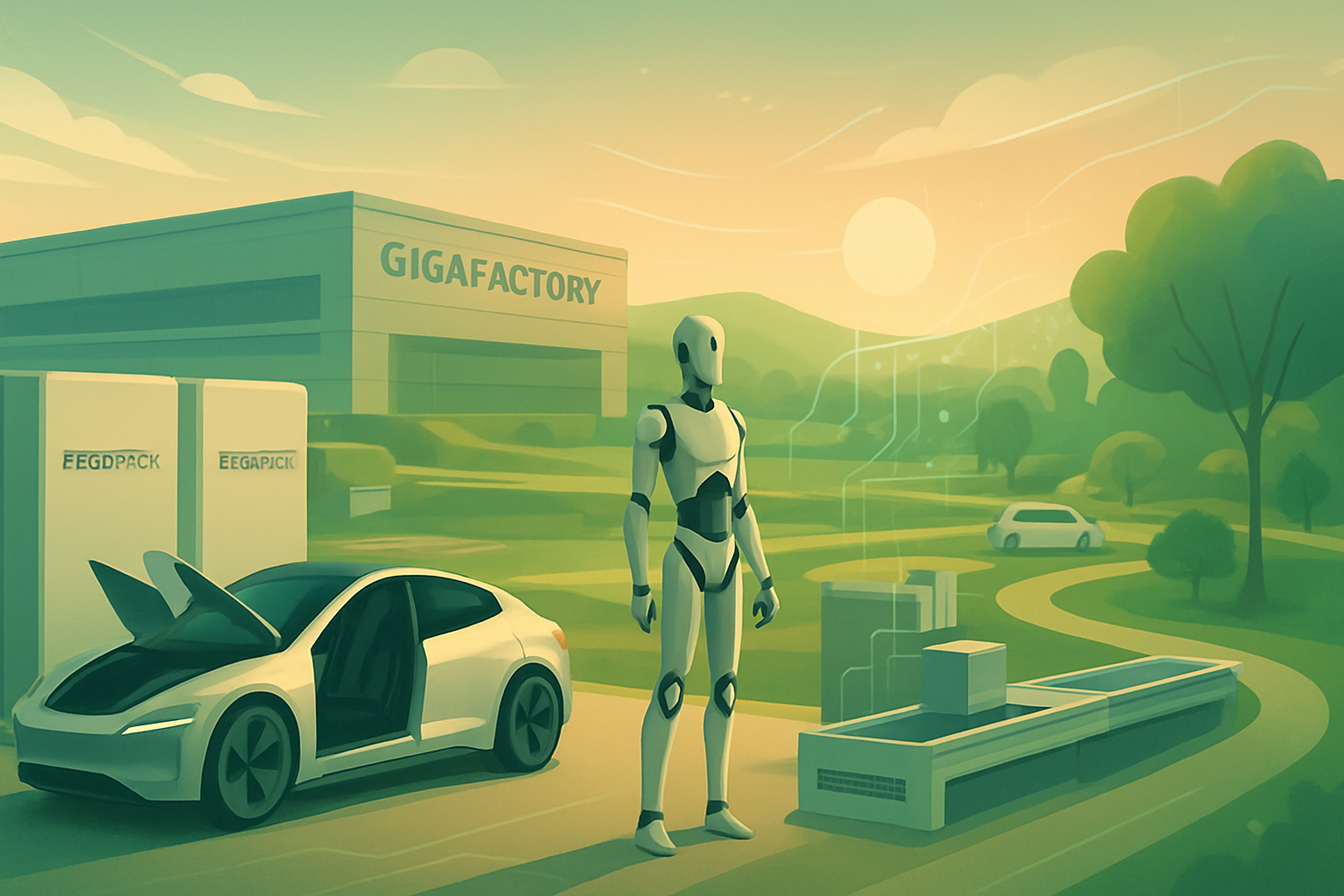
    • The Megablock Launch: The late-2025 launch of "Megablock"—a 20 MWh pre-integrated storage system—allows for faster deployment of GWh-scale projects, positioning Tesla to dominate the utility-scale battery market.
    • Robotaxi Revenue: If Tesla achieves Level 4/5 autonomy in 2026, the transition to a high-margin service revenue model (taking a cut of every autonomous mile) would fundamentally re-rate the stock.

    Investor Sentiment and Analyst Coverage

    Wall Street is currently a house divided.

    • The Bulls (e.g., Wedbush): Maintain that Tesla is an AI company disguised as an automaker. They focus on the FSD take-rate (1.1 million subscribers) and the potential for Optimus to disrupt the global labor market.
    • The Bears (e.g., JPMorgan): Argue that Tesla is a "cyclical car company" with a tech valuation. They point to the 2025 delivery decline and the rising capital expenditure ($10B+) as signs of a deteriorating risk-reward profile.
    • Retail Sentiment: Tesla remains the "ultimate retail stock," with a fiercely loyal shareholder base that often ignores traditional financial metrics in favor of the long-term vision.

    Regulatory, Policy, and Geopolitical Factors

    Geopolitics are a major headwind for TSLA.

    • China Data Laws: Tesla’s FSD rollout in China has been delayed by stringent data-security requirements. Tesla is currently building local data centers to satisfy Beijing's "data stay-at-home" mandate.
    • Tariffs: Increasing trade tensions between the West and China have complicated Tesla's supply chain, particularly regarding battery materials and the export of Giga Shanghai-made vehicles to Europe.
    • U.S. Policy: The outcome of recent regulatory shifts has placed more emphasis on domestic manufacturing, a trend Tesla is well-positioned for given its massive investment in Giga Texas and Nevada.

    Conclusion

    As of April 2026, Tesla is a company in the midst of a metamorphosis. The "easy growth" of the Model 3 and Model Y era has ended, replaced by the complex, capital-intensive pursuit of autonomous intelligence.

    For investors, the thesis is now binary: if you believe Tesla can solve generalized autonomy and mass-produce humanoid robots, the current valuation may be a generational entry point. However, if you view Tesla through the lens of a traditional automaker, the 2025 earnings slump and rising competition suggest a challenging road ahead. The next 12 months—specifically the success of the Cybercab and the "Unboxed" manufacturing ramp—will determine whether Tesla remains the vanguard of the future or a pioneer that paved the way for others to lead.


    This content is intended for informational purposes only and is not financial advice.

  • The Swoosh at a Crossroads: Can Nike’s “Win Now” Strategy Restore the Crown in 2026?

    The Swoosh at a Crossroads: Can Nike’s “Win Now” Strategy Restore the Crown in 2026?

    As of April 3, 2026, Nike, Inc. (NYSE:NKE) finds itself at one of the most critical junctures in its 62-year history. Once the undisputed champion of both the basketball court and the stock market, the Beaverton-based giant is currently navigating a high-stakes "Win Now" turnaround strategy. After a bruising 2024 and 2025 characterized by slowing innovation, a stuttering direct-to-consumer (DTC) pivot, and intense competition from agile newcomers, Nike is attempting to reclaim its soul as a performance-first athletic brand. With the 2026 FIFA World Cup on the horizon and a new leadership team at the helm, the investment community is divided: is the Swoosh a value trap or a generational buying opportunity?

    Historical Background

    The Nike story began not in a boardroom, but in the trunk of a green Plymouth Valiant. In 1964, Phil Knight and his legendary track coach at the University of Oregon, Bill Bowerman, founded Blue Ribbon Sports (BRS) with a $1,200 investment. Initially a distributor for Japan’s Onitsuka Tiger, the duo eventually broke away to launch their own brand.

    The 1971 rebrand to Nike, Inc. introduced the iconic Swoosh logo and the "Waffle Sole"—an innovation Bowerman famously conceived by pouring liquid urethane into his wife’s waffle iron. The 1980s saw Nike transform from a niche running brand into a cultural phenomenon, spurred by the signing of Michael Jordan in 1984 and the 1988 launch of the "Just Do It" campaign. Over the subsequent decades, Nike didn't just sell shoes; it sold aspiration, becoming the largest athletic footwear and apparel company in the world.

    Business Model

    Nike’s business model is built on three core pillars: Nike Brand, Jordan Brand, and Converse.

    1. Nike Brand: The primary driver, focused on performance categories like Running, Basketball, Football (Soccer), and Training.
    2. Jordan Brand: A multi-billion-dollar powerhouse that has transcended basketball to become a premier global lifestyle and "street-performance" brand.
    3. Converse: Centered on heritage and retro lifestyle through the Chuck Taylor and Jack Purcell lines.

    Geographically, North America remains the largest revenue contributor (approx. 43%), followed by EMEA and Greater China. Historically, Nike moved away from wholesale partners to focus on Nike Direct—its own digital and physical stores. However, by 2026, the company has recalibrated this model, aggressively rebuilding relationships with wholesale partners to ensure "omnichannel" availability.

    Stock Performance Overview

    The last five years have been a rollercoaster for NKE shareholders. After peaking near $175 in late 2021, the stock entered a protracted decline as post-pandemic demand cooled and internal strategic missteps became apparent.

    • 1-Year Performance: The stock has struggled, down nearly 15% as of early 2026, as the market digested a series of revenue downgrades and margin compression.
    • 5-Year Performance: NKE has significantly underperformed the S&P 500, shedding approximately 40% of its value from its 2021 highs, settling into a trading range between $50 and $65 in early 2026.
    • 10-Year Performance: Long-term holders have seen a CAGR (Compound Annual Growth Rate) of roughly 6%, a sharp deceleration from the double-digit returns of previous decades.

    Financial Performance

    The fiscal year 2025 was widely described as a "reset year." For the third quarter of 2026 (reported in March), Nike posted revenue of approximately $12.1 billion, a low-single-digit decline year-over-year.

    • Margins: Gross margins currently sit at 40.2%, pressured by heavy promotions to clear excess inventory and rising logistics costs.
    • Greater China: A major pain point, with sales in the region declining nearly 20% in the most recent quarter due to a combination of local competition from Anta and Li-Ning and a cooling macroeconomic environment.
    • Balance Sheet: One of Nike’s enduring strengths is its balance sheet. With a debt-to-equity ratio of approximately 0.55, the company has the liquidity to fund its restructuring without endangering its dividend, which currently yields a healthy 2.7%.

    Leadership and Management

    In late 2024, Nike made a decisive leadership change, appointing veteran Elliott Hill as President and CEO, replacing John Donahoe. Hill, a Nike "lifer" who started as an intern, was tasked with restoring the company’s internal morale and "sport-first" culture.

    The strategy under Hill, dubbed "Win Now," moves away from the digital-only focus of his predecessor. The current leadership team has restructured the company back into sport-specific categories (Running, Basketball, Football) rather than gender-based silos, aiming to sharpen product development and marketing focus.

    Products, Services, and Innovations

    Nike’s competitive edge has always been innovation, but critics argue the company leaned too hard on "lifestyle" colorways of aging models like the Dunk and Air Force 1. In 2026, the focus has shifted back to performance technology:

    • Project Amplify: A new cushioning platform designed to compete directly with the "super-shoe" trend.
    • Nike Air: A revitalized focus on Air technology, including the Air Max Dn, aimed at merging performance with everyday comfort.
    • Sustainability: Despite regulatory hurdles, Nike continues to push its "Move to Zero" initiative, though it has faced scrutiny regarding the scalability of its recycled materials.

    Competitive Landscape

    Nike no longer competes in a vacuum. The landscape in 2026 is hyper-fragmented:

    • Legacy Rivals: Adidas (DE:ADS) has regained "brand heat" through its Originals revival (Samba, Gazelle) and has successfully recaptured market share in Europe.
    • Agile Disruptors: On Holding (NYSE:ONON) and Hoka, owned by Deckers (NASDAQ:DECK), have eroded Nike’s dominance in the core running category. By early 2026, On has successfully scaled into the premium lifestyle space, while Hoka has become a staple in both the ultra-marathon and "dad-shoe" markets.
    • Athleisure: Lululemon (NASDAQ:LULU) continues to dominate the premium apparel segment, though its expansion into footwear has been met with mixed results.

    Industry and Market Trends

    The "Sport-Performance" pivot is the defining trend of 2026. Consumers are moving away from purely aesthetic footwear toward shoes that offer specialized utility. Additionally, the "omnichannel" reality has forced brands to realize that digital-only strategies often lead to higher customer acquisition costs and inventory bloat.

    The globalization of sport—specifically the growth of the NBA in India and the global popularity of European football—continues to provide a backdrop for Nike's international expansion strategy.

    Risks and Challenges

    Nike faces several formidable headwinds:

    1. China Sensitivity: The "staggering" decline in Chinese demand is more than cyclical; it represents a structural shift toward domestic brands.
    2. Brand Heat Loss: Rebuilding the "cool factor" takes time. The oversaturation of classic models in 2023-2024 led to consumer fatigue.
    3. DTC Transition Costs: The cost of managing its own retail fleet and logistics in a high-inflation environment has proved more expensive than the traditional wholesale model.

    Opportunities and Catalysts

    Despite the gloom, several catalysts could spark a rerating of the stock:

    • 2026 FIFA World Cup: Hosted in North America, this is expected to be the largest marketing event in Nike’s history. Analysts project over $1 billion in incremental revenue from kits and football-related apparel.
    • Innovation Cycle: If Project Amplify or the new running platforms gain traction with serious athletes, Nike could reclaim the "halo effect" that drives its mass-market sales.
    • India Expansion: Nike has identified India as its next $5 billion market, with massive investments in flagship stores in Mumbai and Delhi slated for late 2026.

    Investor Sentiment and Analyst Coverage

    Wall Street is currently in a "wait-and-see" mode. While the consensus remains a "Moderate Buy," several high-profile firms, including JPMorgan and Bank of America, downgraded the stock to Neutral in early 2026. Price targets have been rebased to the $63–$68 range, down from $100+ just two years ago. Retail sentiment on platforms like Reddit and X (formerly Twitter) remains bearish, often citing a lack of "exciting" new releases.

    Regulatory, Policy, and Geopolitical Factors

    Nike is under intense regulatory pressure in 2026:

    • Greenwashing Crackdown: The UK’s Advertising Standards Authority recently banned several Nike ads for unproven sustainability claims, a trend likely to spread to the EU and US.
    • EU Compliance: The Corporate Sustainability Due Diligence Directive (CSDDD) requires Nike to implement rigorous human rights audits across its deep supply chain by 2027, increasing operational costs.
    • Tariffs: Ongoing trade tensions between the US and China have accelerated Nike's "China Plus One" strategy, shifting more production to Vietnam and Indonesia to mitigate potential tariff shocks.

    Conclusion

    Nike at 62 is a company undergoing a mid-life crisis and a radical rebirth simultaneously. The "Win Now" strategy led by Elliott Hill is a necessary admission that the brand had drifted too far from its performance roots. While the financial metrics for 2026 look challenged, particularly in China, the company’s strong balance sheet and dominant market share provide a significant margin of safety.

    For investors, the 2026 FIFA World Cup and the success of the new running innovation cycle are the two most critical metrics to watch. If Nike can prove it still owns the "finish line," the Swoosh may once again find its path back to growth.


    This content is intended for informational purposes only and is not financial advice.

  • The Landlord of the Permian: A Deep-Dive into Texas Pacific Land Corporation (TPL)

    The Landlord of the Permian: A Deep-Dive into Texas Pacific Land Corporation (TPL)

    Date: April 2, 2026

    Introduction

    In the heart of the Delaware and Midland Basins, one company stands as the ultimate landlord of the most prolific oil-producing region in the United States. Texas Pacific Land Corporation (NYSE: TPL) is not a driller, nor is it a traditional energy company. It is a land and resource management titan that has spent over a century collecting "tolls" on nearly every barrel of oil, gallon of water, and foot of pipeline that crosses its nearly 880,000 acres of West Texas soil.

    As of April 2026, TPL is no longer just a bet on fossil fuels. In a dramatic strategic pivot over the last 18 months, the company has positioned itself at the intersection of the energy transition and the artificial intelligence revolution. With its recent investments in "Closed-Loop Energy-Data Hubs" and large-scale water desalination, TPL has transformed from a sleepy legacy trust into a high-tech infrastructure play, capturing the attention of Silicon Valley and Wall Street alike.

    Historical Background

    The origins of TPL are rooted in the "Gilded Age" of American railroads. The company was born out of the 1888 bankruptcy of the Texas and Pacific Railway. To satisfy bondholders, a massive land grant of approximately 3.5 million acres was placed into a liquidating trust. For over 130 years, the Texas Pacific Land Trust operated under this unique structure, slowly selling off land while retaining lucrative mineral rights.

    The most significant modern transformation occurred in January 2021, when the trust converted into a conventional C-Corporation. This shift followed years of pressure from activist investors seeking better governance and greater flexibility to deploy capital. Since that conversion, TPL has moved aggressively to modernize its operations, evolving from a passive collector of royalty checks into an active participant in water management and industrial infrastructure.

    Business Model

    TPL operates through two primary segments, creating a high-margin, asset-light business model that is the envy of the Permian Basin:

    1. Land and Resource Management: This segment manages approximately 882,000 surface acres and 207,000 net royalty acres. TPL does not spend capital to drill wells; instead, it receives a percentage of production from operators like ExxonMobil (NYSE: XOM) and Chevron (NYSE: CVX) who lease its land. Additionally, it charges "easements" for pipelines, power lines, and roads—essentially acting as a private toll booth for the entire basin.
    2. Water Services and Operations: Through its subsidiary, Texas Pacific Water Resources, the company provides full-cycle water management. This includes sourcing water for fracking, gathering and disposing of "produced water" (waste from drilling), and, more recently, advanced desalination for industrial use.

    Stock Performance Overview

    TPL has historically been a "cannibal" stock—one that aggressively buys back its own shares to increase the value for remaining holders. Over the last decade, it has significantly outperformed the S&P 500 and the broader energy sector.

    Following a 3-for-1 stock split in December 2025, the shares have seen renewed liquidity and retail interest. In the trailing 12 months, TPL has surged over 65%, driven largely by its entry into the AI data center space. Long-term investors have seen the stock rise from a split-adjusted $140 in 2021 to its current trading range of approximately $485 as of early April 2026. Its 10-year CAGR (Compound Annual Growth Rate) remains one of the highest in the mid-cap and large-cap energy space.

    Financial Performance

    TPL’s financial profile is characterized by "software-like" margins. In its Fiscal Year 2025 report, the company posted:

    • Total Revenue: $798.2 million (a 13.1% year-over-year increase).
    • Net Income Margin: Consistently exceeding 60%, a rarity in any industrial sector.
    • Free Cash Flow (FCF): $498.3 million, nearly 100% of which is typically returned to shareholders or reinvested in high-growth infrastructure.
    • Debt: The company maintains a pristine balance sheet with zero long-term debt, providing it with a significant "war chest" for the AI-related capital expenditures planned for 2026 and 2027.

    Leadership and Management

    The company is led by CEO Tyler Glover, who has overseen the transition from trust to corporation and the expansion into water services. Management’s strategy has recently focused on "capital discipline" and maximizing the value of the surface acreage through non-oil revenue streams.

    Governance, once a point of contention, has stabilized. After a multi-year legal battle with its largest shareholder, Horizon Kinetics, the Delaware Supreme Court ruled in early 2024 in favor of the company’s right to increase authorized shares. This ruling paved the way for the 2025 stock split and the current aggressive investment strategy in technology-adjacent assets.

    Products, Services, and Innovations

    The most notable innovation in TPL’s current portfolio is its freeze desalination project in Orla, Texas. By treating produced water from oilfields, TPL is creating a sustainable source of fresh water in the arid Permian Basin.

    Furthermore, the December 2025 investment of $50 million into Bolt Data & Energy (a venture co-founded by former Google CEO Eric Schmidt) represents a frontier shift. TPL is now leveraging its land to host "Closed-Loop Energy-Data Hubs." These facilities use on-site natural gas to power high-density GPU clusters for AI processing, bypassing the fragile Texas electric grid (ERCOT) and using TPL’s treated water for cooling.

    Competitive Landscape

    In the royalty space, TPL’s primary competitors include Viper Energy (NASDAQ: VNOM) and Kimbell Royalty Partners (NYSE: KRP). However, TPL’s advantage lies in its massive, contiguous surface ownership. While Viper and Kimbell focus primarily on the "subsurface" (royalties), TPL controls the "surface," which allows it to dictate terms for infrastructure and now, data centers. No other royalty company in the Permian has the scale to facilitate the "Energy-Data" hubs that TPL is currently pioneering.

    Industry and Market Trends

    Two major trends are currently favoring TPL:

    1. Permian Consolidation: Large-scale M&A, such as ExxonMobil’s acquisition of Pioneer Natural Resources, has led to more efficient, long-term development plans on TPL’s land. Larger operators tend to have more predictable drilling schedules, which stabilizes TPL’s royalty income.
    2. The AI Power Crunch: As AI data centers face power shortages in traditional hubs like Northern Virginia, the Permian Basin—with its abundant natural gas and vast land—is becoming an attractive alternative. TPL is the primary beneficiary of this geographic shift.

    Risks and Challenges

    Despite its strengths, TPL faces significant risks:

    • Commodity Price Sensitivity: While TPL has no CAPEX, a sustained drop in oil prices below $50/barrel would lead operators to stop drilling, drying up the royalty and water revenue streams.
    • Regulatory Scrutiny: The disposal of produced water has been linked to seismic activity (earthquakes) in West Texas. Increased regulation by the Texas Railroad Commission could limit TPL’s water disposal volumes.
    • Execution Risk: The pivot into AI data centers is a new venture for a company with "railroad" DNA. Success depends on the technical execution of partners like Bolt Data & Energy.

    Opportunities and Catalysts

    • Monetization of Pore Space: TPL is exploring Carbon Capture and Storage (CCS) by leasing its underground "pore space" to companies looking to sequester CO2.
    • Solar and Wind Leasing: With nearly 900,000 acres in a high-sunlight, high-wind corridor, TPL is increasingly leasing surface rights for renewable energy projects that provide steady, 20-year lease income.
    • Special Dividends: Given the high cash flow and zero debt, investors are anticipating a potential special dividend or an increase in the buyback program in the second half of 2026.

    Investor Sentiment and Analyst Coverage

    Wall Street sentiment has shifted from "Hold" to "Buy" over the last six months as the AI narrative took hold. Horizon Kinetics, led by Murray Stahl, remains the largest shareholder, continuing to accumulate shares in small daily increments. Institutional ownership sits at nearly 60%, with many funds viewing TPL as a unique "inflation hedge" that offers both commodity exposure and high-tech growth.

    Regulatory, Policy, and Geopolitical Factors

    Geopolitical tensions in 2025 and early 2026 have kept global oil prices elevated, benefiting the Permian Basin’s activity levels. On the domestic front, TPL benefits from the Texas "Energy Independence" initiatives, which offer tax incentives for on-site power generation—a key component of TPL’s data center strategy. However, federal environmental regulations regarding methane emissions remain a factor that could increase costs for the operators on TPL’s land.

    Conclusion

    Texas Pacific Land Corporation is a rare breed in the financial markets: a 19th-century land play that has successfully reinvented itself for the 21st-century digital economy. By controlling the surface, the minerals, and the water of the Permian Basin, TPL has created a "triple threat" business model that yields massive margins with minimal risk.

    As the company moves further into the AI infrastructure space through its data hub partnerships, it is no longer just a proxy for oil prices. It is now a critical infrastructure provider for the next generation of computing. For investors, the key will be watching the scale-up of the Orla desalination plant and the first milestones of the Bolt Data & Energy partnership. While the valuation is high, TPL’s "toll road" remains one of the most profitable stretches of land in the world.


    This content is intended for informational purposes only and is not financial advice.

  • Tesla’s Great AI Pivot: A Deep-Dive Stock Research Report (April 2026)

    Tesla’s Great AI Pivot: A Deep-Dive Stock Research Report (April 2026)

    As of April 2, 2026, Tesla, Inc. (NASDAQ: TSLA) stands at the most significant crossroads in its two-decade history. Once defined solely as the disruptor of the internal combustion engine, the company has spent the last 24 months undergoing a radical metamorphosis. The Tesla of 2026 is no longer just an automotive manufacturer; it is an AI and robotics conglomerate that happens to sell electric vehicles (EVs).

    With the recent retirement of the flagship Model S and Model X lines to make room for humanoid robot production, and the official start of "Cybercab" mass production this month, Tesla is betting its $700 billion+ market capitalization on the successful commercialization of "Physical AI." This deep dive examines whether Tesla’s pivot from a high-volume carmaker to a specialized AI enterprise justifies its premium valuation in a market where global EV leadership has shifted.

    Historical Background

    Founded in 2003 by Martin Eberhard and Marc Tarpenning, and led into the mainstream by Elon Musk, Tesla’s journey began with the "Secret Master Plan": build a sports car, use that money to build an affordable car, then use that money to build an even more affordable car. The company survived a near-bankruptcy in 2008 and "production hell" with the Model 3 in 2018, eventually reaching a trillion-dollar valuation in 2021.

    However, the 2023-2025 period forced a tactical retreat. Facing intense competition from Chinese manufacturers and a cooling global appetite for high-priced EVs, Tesla transitioned from its "3 million cars per year" ambition to a focused strategy on Autonomy and Robotics. The decommissioning of the Fremont Model S/X lines in January 2026 marked the symbolic end of Tesla’s first chapter as a traditional luxury automaker.

    Business Model

    Tesla’s revenue streams have diversified significantly over the last three years:

    • Automotive (Hardware and Software): While vehicle sales still account for the majority of revenue, the mix has shifted toward software-heavy margins. FSD (Full Self-Driving) subscriptions and the nascent "Tesla Network" ride-hailing fees are becoming core components of the automotive segment.
    • Energy Generation and Storage: This is the fastest-growing segment. Through the Megapack and the newly launched "Megablock" for utility-scale applications, Tesla provides the infrastructure for the global renewable transition.
    • Services and Other: This includes supercharging (now a global standard), insurance, and the newly launched industrial sales of the Optimus humanoid robot.
    • AI as a Service (Future): With the Dojo supercomputer and "Cortex" AI cluster, Tesla is positioning itself to eventually license its FSD stack to legacy OEMs, though no major licensing deals have been finalized as of early 2026.

    Stock Performance Overview

    Tesla’s stock remains one of the most volatile and debated assets in the S&P 500.

    • 10-Year Performance: Investors who held since 2016 have seen gains exceeding 1,200%, outperforming almost every major industrial and tech peer.
    • 5-Year Performance: The stock saw a massive peak in 2021, followed by a significant correction in 2022 and 2024 as margins compressed due to price wars.
    • 1-Year Performance: Over the past 12 months, the stock has rebounded by approximately 22% from its early 2025 lows. This recovery is driven not by vehicle delivery growth—which has flattened—but by the successful pilot of the unsupervised Robotaxi in Austin and the scaling of the Energy business.

    Financial Performance

    The fiscal year 2025 was a "reset" year for Tesla. Revenue dipped 3% to $94.8 billion as the company sacrificed volume to maintain price floors. However, Q4 2025 showed a recovery in consolidated gross margins to 20.1%, thanks to falling battery costs and high-margin energy deployments.

    The headline for 2026 is Tesla’s aggressive $20 billion+ Capital Expenditure plan. This is a record high, dedicated to building the "unboxed" manufacturing lines for the Cybercab and mass-producing Optimus Gen 3. While Tesla maintains a robust $44 billion cash cushion, some analysts warn that free cash flow could turn negative in 2026 for the first time since 2018, representing a "high-stakes bet" on the AI pivot.

    Leadership and Management

    Elon Musk remains the central figure, though his role has evolved. His 2025-2026 involvement in the U.S. Department of Government Efficiency (DOGE) has been a double-edged sword. Supporters argue it provides Tesla with a seat at the table for federal autonomous vehicle (AV) framework discussions; critics cite massive "key-man risk" and potential conflicts of interest that could trigger regulatory backlash.

    The board, led by Robyn Denholm, continues to face scrutiny regarding its independence, particularly following the 2024-2025 legal battles over Musk’s compensation package. However, the operational leadership under figures like Tom Zhu (Automotive) has provided a stabilizing force during the AI transition.

    Products, Services, and Innovations

    • The Cybercab: Scheduled for mass production starting this month (April 2026), the Cybercab is a steering-wheel-less, "unboxed" vehicle designed specifically for Tesla’s autonomous ride-hailing network.
    • Optimus Gen 3: Tesla’s humanoid robot has moved from a prototype to an industrial tool. As of early 2026, thousands of Optimus units are working within Tesla’s own Giga factories, with the first external shipments to third-party logistics firms commencing this quarter.
    • Energy (The Megablock): In 2025, Tesla deployed 46.7 GWh of storage. The new "Megablock"—a 20 MWh pre-integrated unit—is designed to compete directly with traditional natural gas peaker plants.
    • FSD v13: The latest iteration of Tesla's software has moved toward "end-to-end neural networks," significantly reducing disengagements and enabling the Austin unsupervised pilot.

    Competitive Landscape

    The landscape in 2026 is a "tale of two markets."

    Globally, BYD (OTC: BYDDF) officially surpassed Tesla in 2025 as the world’s largest BEV seller (2.26M units vs Tesla’s 1.64M). BYD's vertical integration and low-cost dominance in Europe and Southeast Asia have challenged Tesla’s "mass market" dreams.

    Conversely, in the United States, Tesla’s market share rebounded to 59% in late 2025. This occurred as legacy giants like Ford and General Motors scaled back their EV investments and pivoted back to hybrids, leaving Tesla as the only Western manufacturer capable of producing profitable, high-volume EVs and autonomous software.

    Industry and Market Trends

    The "EV Hype" of the early 2020s has been replaced by the "AI Infrastructure" era. Capital is no longer flowing toward companies that just build cars; it is flowing toward those that control the data and the compute. Tesla’s massive investment in H100/B200 GPU clusters and its proprietary Dojo chip places it in a unique category—it is an industrial user of AI that also builds the hardware.

    Furthermore, the global shift toward "Grid Firming" (stabilizing renewable energy grids) has created a multi-decade tailwind for Tesla’s Megapack business, which currently enjoys higher margins than the automotive division.

    Risks and Challenges

    • Regulatory Scrutiny: As of March 2026, the NHTSA has upgraded its FSD probe to an "Engineering Analysis," the final step before a potential mandatory recall. Any adverse ruling regarding FSD safety would devastate the "Robotaxi" thesis.
    • Free Cash Flow Pressure: The $20 billion CapEx cycle is immense. If the Cybercab ramp-up faces delays similar to the 2018 Model 3 "hell," Tesla could face a liquidity crunch.
    • Geopolitical Risk: With a significant portion of its supply chain and production (Giga Shanghai) tied to China, Tesla remains vulnerable to escalating trade tensions or shifts in Chinese domestic policy favoring BYD and Xiaomi.

    Opportunities and Catalysts

    • Federal AV Framework: If Musk’s influence leads to a unified federal standard for autonomous driving, Tesla could bypass the state-by-state regulatory patchwork that currently hampers competitors like Waymo.
    • FSD Licensing: A single licensing deal with a major legacy automaker (e.g., Ford or VW) would provide high-margin recurring revenue and validate Tesla’s software as the industry standard.
    • Optimus Scaling: If Tesla can achieve its target production rate of 1,000 Optimus units per week by the end of 2026, it could create an entirely new multi-billion dollar robotics segment.

    Investor Sentiment and Analyst Coverage

    Wall Street remains deeply divided. "AI Bulls" (such as Ark Invest and Wedbush) view Tesla as a venture capital play within a public wrapper, valuing the company on the multi-trillion dollar potential of Robotaxis. "Fundamental Bears" (such as JPMorgan and several value-oriented hedge funds) point to the stagnating vehicle deliveries and high valuation multiples (P/E over 60x) as a sign of an overextended stock.

    Retail sentiment remains fiercely loyal but increasingly focused on Musk’s political involvement and its impact on the brand’s consumer appeal in liberal demographics.

    Regulatory, Policy, and Geopolitical Factors

    The regulatory environment in 2026 is highly volatile. While the U.S. Inflation Reduction Act (IRA) continues to subsidize Tesla’s battery production, the European Union has implemented significant tariffs on Chinese-made EVs—a move that ironically helps Tesla’s Giga Berlin but hurts its Giga Shanghai exports.

    The DOJ’s ongoing criminal investigation into Tesla’s Autopilot claims remains the "Sword of Damocles" over the company. Any formal charges of wire or securities fraud would likely trigger a leadership crisis and a sharp revaluation of the stock.

    Conclusion

    Tesla, Inc. in April 2026 is no longer the "car company" it once was. It has evolved into a high-stakes bet on the future of autonomous mobility and humanoid robotics. The company has successfully navigated the "EV plateau" by pivoting its resources toward the Cybercab and the Energy business, which now provides a high-margin floor to its financials.

    Investors must weigh the visionary potential of Elon Musk’s AI-driven future against the very real risks of $20 billion in annual spending, stiff Chinese competition, and intensifying federal investigations. Whether Tesla is a "trillion-dollar AI titan" or an "overvalued automaker" depends entirely on the next 18 months of Cybercab and Optimus execution.


    This content is intended for informational purposes only and is not financial advice.

  • NVIDIA (NVDA) 2026 Deep Dive: The Sovereign AI Era and the Path to $4 Trillion

    NVIDIA (NVDA) 2026 Deep Dive: The Sovereign AI Era and the Path to $4 Trillion

    As of April 2, 2026, NVIDIA Corporation (NASDAQ: NVDA) stands not merely as a semiconductor manufacturer, but as the central nervous system of the global artificial intelligence (AI) economy. Once a niche player in the PC gaming market, the company has transformed into a $3.2 trillion behemoth, dictating the pace of the "Fourth Industrial Revolution." In the wake of the Generative AI explosion of 2023 and 2024, NVIDIA has successfully navigated the transition from hyper-growth to sustained dominance. Its latest architectural platforms, Blackwell and the upcoming Rubin, have become the most sought-after physical infrastructure in modern history, fueling everything from national security initiatives to autonomous robotics. This article explores how NVIDIA maintained its lead in a volatile geopolitical landscape and whether its aggressive one-year product cycle can keep its lofty valuation intact.

    Historical Background

    Founded in April 1993 by Jensen Huang, Chris Malachowsky, and Curtis Priem, NVIDIA’s journey began in a Denny’s booth with a vision to bring 3D graphics to the mass market. The company’s early years were defined by the RIVA TNT and GeForce series, which established the Graphics Processing Unit (GPU) as a distinct category of computing.

    A pivotal turning point occurred in 2006 with the release of CUDA (Compute Unified Device Architecture). By allowing researchers to use GPUs for general-purpose parallel computing, NVIDIA inadvertently laid the groundwork for the modern AI era. While Wall Street spent years questioning the high R&D costs associated with CUDA, the investment paid off in 2012 when the "AlexNet" neural network used NVIDIA GPUs to shatter image recognition records. This milestone redirected the company's focus toward deep learning and data centers, a shift that eventually led to the H100 and B200 chips that power today’s largest large language models (LLMs).

    Business Model

    NVIDIA’s business model has shifted from selling discrete components to providing full-stack "AI factories."

    • Data Center (90% of Revenue): This is the core engine, comprising AI training and inference hardware (GPUs), networking (Mellanox/InfiniBand), and software (NVIDIA AI Enterprise).
    • Gaming: While no longer the largest segment, the GeForce RTX series remains the gold standard for high-end PC gaming and creative work.
    • Professional Visualization: Catering to architects and designers through the RTX workstation GPUs and the Omniverse digital twin platform.
    • Automotive: Centered on the DRIVE platform, providing the compute for autonomous driving and in-car infotainment systems.
    • Software and Services: NVIDIA has increasingly monetized its software layer, offering subscription-based access to pre-trained models, microservices (NIMs), and the Omniverse ecosystem.

    Stock Performance Overview

    Over the past decade, NVDA has been one of the most prolific wealth creators in the public markets. Following a 10-for-1 stock split in June 2024, the stock has maintained a steady upward trajectory.

    • 1-Year Performance: The stock has seen a roughly 45% increase, driven by the successful mass-deployment of the Blackwell architecture.
    • 5-Year Performance: NVDA has returned over 1,000%, fueled by the post-pandemic cloud boom and the subsequent AI craze.
    • 10-Year Performance: Long-term holders have seen astronomical gains exceeding 30,000%, as the company pivoted from a $10 billion mid-cap to a multi-trillion-dollar titan.
    • Current Standing: As of April 2, 2026, the stock trades around $175.75, with a market capitalization fluctuating between $3.2 trillion and $3.4 trillion.

    Financial Performance

    NVIDIA’s fiscal year 2026, which ended in January, showcased the staggering scale of the AI infrastructure build-out.

    • Revenue: The company reported $215.9 billion in annual revenue, a 65% year-over-year increase.
    • Profitability: Net income reached approximately $120.1 billion, with gross margins stabilizing at a robust 75% due to the high-margin mix of software and rack-scale systems (GB200 NVL72).
    • Valuation: Despite the price increase, the stock’s Forward P/E sits at a relatively reasonable 28x, as earnings growth has largely kept pace with the share price.
    • Cash Flow: NVIDIA generated over $90 billion in free cash flow in FY2026, much of which was returned to shareholders via buybacks and a recently increased dividend.

    Leadership and Management

    Founder and CEO Jensen Huang remains the architect of NVIDIA’s strategy. Known for his signature leather jacket and "flat" organizational structure, Huang has fostered a culture of "intellectual honesty" and rapid experimentation. The leadership team, including CFO Colette Kress, has been lauded for its execution during supply chain crises and its ability to forecast demand cycles years in advance.

    Under Huang’s guidance, NVIDIA has adopted a "one-year release cadence"—moving faster than traditional semiconductor cycles (typically two years) to prevent competitors from gaining a foothold. His current focus is on "Sovereign AI," a strategy to convince nations that AI data and compute should be a national utility.

    Products, Services, and Innovations

    The current product lineup is led by the Blackwell architecture. In early 2026, the Blackwell Ultra (B300) began shipping in volume, offering 288GB of HBM3e memory designed for massive inference workloads.

    Looking ahead to H2 2026, the focus has shifted to the Vera Rubin architecture. Built on TSMC’s 3nm process, the Rubin R100 GPU is expected to deliver a 2.5x leap in compute performance over Blackwell. Beyond hardware, the NVIDIA NIM (NVIDIA Inference Microservices) has become a critical product, allowing enterprises to deploy AI models in production environments with minimal coding, further entrenching the CUDA ecosystem.

    Competitive Landscape

    NVIDIA currently commands roughly 80% of the AI accelerator market, though the landscape is becoming tri-polar:

    1. Merchant Competitors: Advanced Micro Devices (NASDAQ: AMD) has emerged as the primary "second source" with its Instinct MI400 series. While AMD has gained roughly 12% market share, it still struggles to match NVIDIA’s software integration.
    2. Custom Silicon (ASICs): Hyperscalers like Alphabet (NASDAQ: GOOGL), Amazon (NASDAQ: AMZN), and Microsoft (NASDAQ: MSFT) are developing internal chips (TPU, Trainium, Maia). While these chips handle internal workloads, these companies remain NVIDIA's largest customers for their cloud-rental services.
    3. Intel: Intel (NASDAQ: INTC) remains a challenger with its Gaudi line, focusing on price-to-performance for mid-range enterprise AI, though it has yet to threaten NVIDIA's high-end dominance.

    Industry and Market Trends

    The "Inference Era" has officially arrived. While 2023-2024 was about training models, 2025-2026 is about running them at scale. This shift favors NVIDIA’s networking technology (Spectrum-X) as much as its GPUs.

    Two other major trends are defining the current market:

    • Agentic AI: The rise of autonomous AI agents that can reason and perform complex tasks, requiring constant "always-on" compute.
    • Physical AI: The integration of AI into robotics and autonomous machines, a field where NVIDIA’s DRIVE Thor and Isaac platforms provide a significant competitive edge.

    Risks and Challenges

    Despite its dominance, NVIDIA faces significant headwinds:

    • CapEx Fatigue: There is ongoing concern that the massive capital expenditure (CapEx) from Big Tech may eventually cool down if AI ROI (Return on Investment) does not manifest quickly for software companies.
    • Supply Chain Concentration: NVIDIA is heavily reliant on TSMC (NYSE: TSM) for manufacturing and SK Hynix/Samsung for High Bandwidth Memory (HBM). Any disruption in the Taiwan Strait remains a "black swan" risk.
    • Cyclicality: Historically, the semiconductor industry is deeply cyclical. While AI feels different, a "glut" of secondary-market GPUs could eventually depress margins.

    Opportunities and Catalysts

    • Sovereign AI: Nations like Japan, France, and the UAE are investing billions in domestic AI infrastructure, creating a massive revenue stream independent of U.S. hyperscalers.
    • The Rubin Launch: The transition to 3nm and HBM4 with the Rubin architecture in late 2026 is expected to trigger another major upgrade cycle.
    • Software Monetization: As more enterprises move AI models into production, NVIDIA's recurring software revenue (NVIDIA AI Enterprise) is projected to become a larger slice of the total profit pie.

    Investor Sentiment and Analyst Coverage

    Wall Street remains overwhelmingly bullish. Over 90% of analysts maintain a "Strong Buy" rating. Hedge fund positioning shows that NVIDIA is a "core" holding, often used as a proxy for the entire AI sector. Retail sentiment on platforms like X and Reddit remains high, though there is increasing debate regarding the "CapEx cliff" and whether the company can maintain 70%+ gross margins indefinitely.

    Regulatory, Policy, and Geopolitical Factors

    Geopolitics is NVIDIA’s most complex challenge. As of April 2026, the U.S. government has tightened export controls on China even further. A new "Revenue Share" model was recently introduced for certain H200 exports to "approved" Chinese entities, where the U.S. government collects a security fee. Consequently, NVIDIA’s market share in China has dropped from 95% to roughly 55%, with domestic Chinese players like Huawei gaining ground. Domestically, NVIDIA faces ongoing scrutiny from the DOJ and FTC regarding potential antitrust issues related to its bundling of hardware and software.

    Conclusion

    NVIDIA enters the mid-2026 period as the undisputed king of compute. By successfully transitioning from a chip vendor to a full-stack platform provider, it has built a moat that competitors are finding difficult to bridge. While geopolitical tensions and the eventual normalization of AI spending represent real risks, the company’s aggressive R&D and the shift toward Agentic and Sovereign AI suggest that its growth story is far from over. Investors should keep a close eye on the Rubin production ramp and any shifts in Big Tech’s quarterly CapEx guidance as indicators of the stock’s next major move.


    This content is intended for informational purposes only and is not financial advice.