Tag: Electric Vehicles

  • The $25,000 Pivot: Can Tesla Dominate the Mass Market and Physical AI?

    The $25,000 Pivot: Can Tesla Dominate the Mass Market and Physical AI?

    As of today, April 9, 2026, Tesla, Inc. (NASDAQ: TSLA) stands at perhaps the most critical crossroads in its 23-year history. The company that pioneered the premium electric vehicle (EV) revolution is now pivoting its entire operational weight toward two monumental goals: the mass-market democratization of electric transport and the realization of a fully autonomous "Cybercab" network. For investors, the story has shifted from "How many cars can they sell?" to "Can they master the unit economics of a $25,000 vehicle while leading the race in Physical AI?"

    Introduction

    Tesla is currently navigating a "middle period" of growth—a transitional phase where the massive success of the Model 3 and Model Y has matured, but the next high-volume catalysts are still in the early stages of scaling. With a market capitalization of $1.30 trillion, Tesla remains the world’s most valuable automaker, yet its valuation increasingly rests on its software, robotics, and energy segments rather than just sheet metal. The spotlight is firmly on "Project Redwood," the internal codename for the company’s upcoming $25,000 EV, which promises to use a revolutionary "unboxed" manufacturing process to disrupt the global automotive cost structure once again.

    Historical Background

    Founded in 2003, Tesla’s "Secret Master Plan" was always intended to culminate in a mass-market car. The journey began with the high-end Roadster (2008), followed by the luxury Model S (2012) and Model X (2015), which proved that EVs could be superior to internal combustion engine (ICE) vehicles. The 2017 launch of the Model 3 was the company’s first "production hell" trial, eventually leading to the Model Y becoming the best-selling vehicle globally in 2023.

    By 2024 and 2025, however, the narrative changed. As competitors caught up and interest rates pressured consumer spending, Tesla began a series of aggressive price cuts. This era marked the transition from a niche luxury player to a volume-driven manufacturer, setting the stage for the current push into the sub-$30,000 market.

    Business Model

    Tesla’s business model is a vertically integrated ecosystem consisting of four primary pillars:

    • Automotive: Revenue is generated from vehicle sales, leasing, and regulatory credits. The company is shifting from a high-margin premium model to a high-volume, software-enabled model.
    • Energy Generation and Storage: This segment—consisting of Megapack (utility-scale) and Powerwall (residential)—is currently Tesla's fastest-growing unit, providing high-margin recurring revenue.
    • Services and Other: This includes the Supercharger network, insurance, and vehicle maintenance. With the opening of the Supercharger network to other brands (NACS), this has become a significant moat.
    • Software and AI: This includes Full Self-Driving (FSD) subscriptions and, looking forward, the licensing of its AI 5 hardware and the Optimus humanoid robot.

    Stock Performance Overview

    Tesla’s stock performance as of April 9, 2026, reflects a decade of unprecedented gains followed by recent volatility:

    • 10-Year Performance: An extraordinary return of approximately 9,870%, driven by the successful scaling of the Model 3 and Model Y.
    • 5-Year Performance: A more modest +50.2% return. After hitting all-time highs in 2021, the stock spent much of 2022–2024 in a consolidation phase due to margin compression and high interest rates.
    • 1-Year Performance: +54.3%. The stock has rebounded significantly from its mid-2024 lows as the market began pricing in the success of the Energy segment and the impending "Project Redwood" launch.
    • Year-to-Date (2026): Down 23.9%, following a Q1 delivery miss that reminded investors of the ongoing challenges in the global EV market.

    Financial Performance

    In the fiscal year 2025, Tesla reported total revenue of $94.8 billion, a slight 3% decline year-over-year. This marked the company's first year of "negative growth" in its automotive segment, a result of deep price cuts intended to maintain market share against Chinese rivals.

    • Margins: Total GAAP gross margin stood at 20.1% for FY 2025, bolstered by the Energy segment's record performance, despite automotive gross margins (excluding credits) dipping to 17.9%.
    • Net Income: GAAP net income was $3.79 billion, down 46% from 2024. This reflects heavy investment in R&D ($6.41 billion) and the build-out of AI training clusters.
    • Cash Flow: Tesla remains cash-rich with over $28 billion in cash and investments, allowing it to self-fund its massive capital expenditures in Mexico and Texas.

    Leadership and Management

    Elon Musk remains the visionary but controversial CEO. His leadership in early 2026 is under intense scrutiny as he balances roles at SpaceX, X, and xAI. The Tesla Board recently added John R. (Jack) Hartung, former Chipotle CFO, to strengthen cost discipline as the company prepares for the low-margin battle of mass-market EVs.

    However, "brain drain" remains a risk. Recent departures of key autonomy and engineering leaders have raised questions about succession planning. While Musk’s 2024 pay package was re-approved, the debate over his "divided attention" continues to be a central theme for institutional investors.

    Products, Services, and Innovations

    The future of Tesla hinges on three technological breakthroughs:

    1. Project Redwood ($25,000 EV): Scheduled for production in H2 2026, this vehicle utilizes the "Unboxed Process." This involves assembling vehicle modules in parallel rather than on a traditional line, aiming to halve production costs.
    2. Cybercab: Launched into production in April 2026 at Giga Texas, the Cybercab is a dedicated autonomous vehicle with no steering wheel or pedals.
    3. Optimus: The Gen-2 humanoid robot is currently being "employed" within Tesla’s own factories for simple logistics tasks, with external sales targeted for 2027.

    Competitive Landscape

    The competitive environment has never been fiercer.

    • BYD (OTC: BYDDY): In 2025, BYD officially overtook Tesla as the world’s largest BEV seller. Their vertical integration—making their own batteries and chips—allows them to compete on price in ways Western OEMs cannot.
    • Xiaomi: The Chinese electronics giant has disrupted the market with its YU7 SUV, launched in early 2026. Its seamless integration with smartphone ecosystems has proven highly attractive to younger buyers.
    • Traditional OEMs: Companies like Ford (NYSE: F) and General Motors (NYSE: GM) have pulled back on EV targets, unintentionally giving Tesla and Chinese makers more breathing room, though they remain threats in the hybrid space.

    Industry and Market Trends

    The "EV slowdown" of 2024 has evolved into a "hybrid resurgence" in early 2026. However, Tesla is countering this by positioning itself as an AI and Energy company. The energy storage market is experiencing a massive tailwind from the global grid modernization and the power demands of AI data centers, which Tesla's Megapack is uniquely positioned to serve.

    Risks and Challenges

    • Execution Risk: The "Unboxed" manufacturing process is unproven at scale. Any delays in the $25,000 model could lead to further market share loss.
    • Margin Compression: Competing at lower price points naturally pressures margins. Tesla must achieve extreme manufacturing efficiency to remain profitable.
    • Regulatory Scrutiny: Tesla's FSD and Autopilot systems remain under investigation by the NHTSA, and any major accident involving the new Cybercab could result in severe setbacks.

    Opportunities and Catalysts

    • Robotaxi Revenue: If Tesla successfully launches its unsupervised ride-hailing app in late 2026, it could shift the business from a hardware-sale model to a high-margin software-service model (SaaS).
    • Energy Storage Dominance: The Energy segment is currently growing at 2x the rate of the Automotive segment and could contribute up to 30% of total profit by 2027.
    • FSD Licensing: Several legacy automakers are reportedly in talks to license Tesla’s FSD software, which would provide pure-profit licensing revenue.

    Investor Sentiment and Analyst Coverage

    Wall Street is deeply divided. Bulls, like Dan Ives of Wedbush, maintain a $600 price target, viewing Tesla as a "Physical AI" play. Bears, such as Gordon Johnson of GLJ Research, see a $25 valuation, arguing that Tesla is an overvalued car company facing declining demand. The current consensus price target sits around $410. Institutional ownership remains high, but retail sentiment has been tested by the recent Q1 delivery miss.

    Regulatory, Policy, and Geopolitical Factors

    Geopolitics remain a wildcard. Tesla’s heavy reliance on Giga Shanghai makes it vulnerable to U.S.-China trade tensions. Furthermore, the Biden administration's Inflation Reduction Act (IRA) credits continue to subsidize Tesla’s U.S. sales, but a potential change in political leadership in late 2024/2025 has introduced uncertainty regarding the longevity of these incentives. In Europe, new tariffs on Chinese-made EVs (including Teslas made in Shanghai) are forcing the company to lean more heavily on Giga Berlin.

    Conclusion

    Tesla in April 2026 is a company in the middle of an ambitious transformation. The shift toward a lower-cost, mass-market model is not just a product launch; it is a fundamental redesign of how vehicles are built. For investors, the next 18 months are critical. If Tesla can successfully scale "Project Redwood" and demonstrate a functional Robotaxi network, its current $1.3 trillion valuation may look conservative. If execution falters, the company faces the reality of being a high-volume, lower-margin manufacturer in an increasingly crowded global market. Investors should watch the H2 2026 production ramp and FSD v14.3 intervention rates as the ultimate indicators of Tesla's long-term trajectory.


    This content is intended for informational purposes only and is not financial advice.
  • Tesla (TSLA) 2026 Deep-Dive: From EV Pioneer to Physical AI Titan

    Tesla (TSLA) 2026 Deep-Dive: From EV Pioneer to Physical AI Titan

    As of April 3, 2026, Tesla, Inc. (NASDAQ: TSLA) finds itself at the most critical juncture in its 23-year history. Once the undisputed king of the electric vehicle (EV) revolution, the Austin-based titan has spent the last 24 months navigating a grueling "valuation reset." The narrative around Tesla has shifted from a story of exponential automotive growth to a high-stakes gamble on physical artificial intelligence, autonomous transport, and humanoid robotics.

    In the wake of a 2025 fiscal year that saw the company’s first-ever annual revenue contraction, investors are divided. Bulls point to the imminent launch of the "Cybercab" and the scaling of the "Optimus" robot as the dawn of a multi-trillion-dollar AI era. Bears, however, highlight the loss of global delivery leadership to BYD Company (OTC: BYDDF) and the persistent margin erosion caused by a hyper-competitive global landscape. This feature explores whether Tesla is a maturing automaker facing an identity crisis or a technology powerhouse on the verge of a second, even larger, renaissance.

    Historical Background

    Founded in 2003 by Martin Eberhard and Marc Tarpenning—and famously steered into the stratosphere by Elon Musk—Tesla's journey is a blueprint for industry disruption. The 2008 launch of the Roadster proved EVs could be desirable; the 2012 Model S proved they could be superior to internal combustion engines (ICE).

    The company’s most pivotal era occurred between 2017 and 2021. During this "production hell" period for the Model 3, Tesla teetered on the edge of bankruptcy before achieving unprecedented scale. By 2021, Tesla was the first automaker to cross a $1 trillion market capitalization, fueled by the global success of the Model 3 and Model Y. However, 2024 and 2025 marked a "mid-life transition." As the existing lineup aged, Tesla was forced to slash prices to maintain volume, leading to the strategic pivot we see today: the transition from a car company to a "Physical AI" enterprise.

    Business Model

    Tesla’s business model is a vertically integrated ecosystem that spans three primary pillars:

    1. Automotive: The core revenue driver, consisting of the Model 3, Y, S, X, and the Cybertruck. Tesla utilizes a direct-to-consumer sales model, bypassing traditional dealerships. Revenue is generated through vehicle sales, regulatory credits, and after-sales services.
    2. Energy Generation and Storage: This segment designs, manufactures, and installs solar energy systems and battery storage products (Powerwall and Megapack). In 2025, this became the company's highest-margin segment, providing a crucial hedge against automotive volatility.
    3. Services and AI Software: This includes Full Self-Driving (FSD) subscriptions, Supercharging revenue, and insurance. Since February 2026, Tesla has moved FSD to a subscription-only model ($99/month), aiming to build a high-margin recurring revenue stream.

    Stock Performance Overview

    Tesla’s stock performance has been a study in volatility.

    • 10-Year Horizon: Investors who held through the last decade have seen astronomical returns, outperforming the S&P 500 by over 1,200% despite recent drawdowns.
    • 5-Year Horizon: The performance is more nuanced, reflecting the massive run-up of 2020-2021 followed by the "lost years" of 2024-2025.
    • 1-Year Horizon: Over the past 12 months, the stock has traded in a wide, volatile range. It hit a multi-year low in late 2025 following weak Q3 earnings but has seen a 22% recovery in early 2026 as excitement builds for the "Cybercab" unveiling and the progress of the next-generation "Project Redwood" platform.

    Financial Performance

    The FY 2025 financial results reflected the pain of a transition year.

    • Revenue: $94.8 billion, a 3% decline year-over-year, marking the first such drop in Tesla's public history.
    • Profitability: Net income fell 46% to $3.79 billion. Automotive gross margins (excluding credits) stabilized at roughly 17%, a far cry from the 30% peaks of 2022.
    • Cash Position: Tesla maintains a "fortress balance sheet" with over $30 billion in cash and equivalents. This liquidity is being aggressively deployed into AI training (Dojo) and the scale-up of Optimus production lines.
    • Valuation: Despite the earnings dip, Tesla continues to trade at a significant premium compared to traditional OEMs, with a forward P/E ratio exceeding 60x, reflecting the market’s pricing of its future AI potential rather than current car sales.

    Leadership and Management

    Elon Musk remains the central figure and primary risk factor for Tesla. His leadership style, characterized by "hardcore" engineering focus and aggressive timelines, has been instrumental in Tesla's success. However, his divided attention—spanning X (formerly Twitter), SpaceX, xAI, and Neuralink—continues to draw criticism from institutional investors.

    The leadership team has seen significant evolution. Following the departure of several long-time executives in 2024, a new guard of AI-focused engineers has risen within the ranks. The board of directors remains under scrutiny regarding independent oversight, particularly concerning Musk’s 2024 compensation package disputes, though it remains staunchly supportive of his long-term "Robotics First" strategy.

    Products, Services, and Innovations

    Tesla’s product pipeline is currently focused on three disruptive frontiers:

    • The Cybercab: Scheduled for production start in April 2026 at Giga Texas, this dedicated robotaxi has no steering wheel or pedals, designed specifically for a Tesla-owned autonomous ride-hailing network.
    • Optimus Gen 3: Tesla has converted portions of its Fremont facility to produce the third generation of its humanoid robot. Musk has stated that Optimus will eventually be "more valuable than the car business combined."
    • The "Unboxed" Process: A revolutionary manufacturing technique for the upcoming $25,000 "Model 2" (Project Redwood). By building car modules in parallel and assembling them only at the final stage, Tesla aims to reduce production costs and factory footprint by 50%.

    Competitive Landscape

    Tesla no longer operates in a vacuum.

    • The China Threat: BYD has officially overtaken Tesla as the world's leading BEV producer by volume. Competitors like Xiaomi Corporation (HKG: 1810) have also entered the fray with high-performance EVs at aggressive price points.
    • European Resurgence: Volkswagen Group (XETRA: VOW3) has reclaimed the top EV spot in several European markets, leveraging its vast dealer networks and localized supply chains.
    • The "Unboxed" Edge: Tesla’s primary competitive advantage remains its software-defined architecture and manufacturing efficiency. While rivals struggle with software bugs and legacy costs, Tesla’s "blank sheet" approach to the next-gen platform remains a significant moat.

    Industry and Market Trends

    The EV industry is shifting from early adopters to the mass market. This "chasm" has proven difficult to cross, with consumer concerns about charging infrastructure and high interest rates slowing demand in 2024-2025.
    However, the Energy Storage segment is bucking this trend. Global demand for grid-scale batteries (like Tesla’s Megapack) is surging as nations transition to renewable energy. Tesla’s Energy deployments reached a record 46.7 GWh in 2025, growing 49% year-over-year, suggesting that the "energy transition" may be a more stable growth driver than passenger vehicles in the near term.

    Risks and Challenges

    • Execution Risk: The "Unboxed" manufacturing process and Optimus production are unproven at scale. Any delays in the 2026 rollout could lead to further valuation compression.
    • Regulatory Scrutiny: Tesla's FSD software remains under intense investigation by NHTSA in the U.S., while European regulators (UNECE) continue to limit the software’s capabilities.
    • Key Person Risk: The company’s valuation is inextricably linked to Elon Musk. Any change in his status or focus would likely result in a significant "Musk discount" being applied to the stock.

    Opportunities and Catalysts

    • FSD Licensing: Tesla is in active discussions with several major OEMs to license its FSD software. A signed deal would transform Tesla into a high-margin software provider overnight.
    • The Megablock Launch: The late-2025 launch of "Megablock"—a 20 MWh pre-integrated storage system—allows for faster deployment of GWh-scale projects, positioning Tesla to dominate the utility-scale battery market.
    • Robotaxi Revenue: If Tesla achieves Level 4/5 autonomy in 2026, the transition to a high-margin service revenue model (taking a cut of every autonomous mile) would fundamentally re-rate the stock.

    Investor Sentiment and Analyst Coverage

    Wall Street is currently a house divided.

    • The Bulls (e.g., Wedbush): Maintain that Tesla is an AI company disguised as an automaker. They focus on the FSD take-rate (1.1 million subscribers) and the potential for Optimus to disrupt the global labor market.
    • The Bears (e.g., JPMorgan): Argue that Tesla is a "cyclical car company" with a tech valuation. They point to the 2025 delivery decline and the rising capital expenditure ($10B+) as signs of a deteriorating risk-reward profile.
    • Retail Sentiment: Tesla remains the "ultimate retail stock," with a fiercely loyal shareholder base that often ignores traditional financial metrics in favor of the long-term vision.

    Regulatory, Policy, and Geopolitical Factors

    Geopolitics are a major headwind for TSLA.

    • China Data Laws: Tesla’s FSD rollout in China has been delayed by stringent data-security requirements. Tesla is currently building local data centers to satisfy Beijing's "data stay-at-home" mandate.
    • Tariffs: Increasing trade tensions between the West and China have complicated Tesla's supply chain, particularly regarding battery materials and the export of Giga Shanghai-made vehicles to Europe.
    • U.S. Policy: The outcome of recent regulatory shifts has placed more emphasis on domestic manufacturing, a trend Tesla is well-positioned for given its massive investment in Giga Texas and Nevada.

    Conclusion

    As of April 2026, Tesla is a company in the midst of a metamorphosis. The "easy growth" of the Model 3 and Model Y era has ended, replaced by the complex, capital-intensive pursuit of autonomous intelligence.

    For investors, the thesis is now binary: if you believe Tesla can solve generalized autonomy and mass-produce humanoid robots, the current valuation may be a generational entry point. However, if you view Tesla through the lens of a traditional automaker, the 2025 earnings slump and rising competition suggest a challenging road ahead. The next 12 months—specifically the success of the Cybercab and the "Unboxed" manufacturing ramp—will determine whether Tesla remains the vanguard of the future or a pioneer that paved the way for others to lead.


    This content is intended for informational purposes only and is not financial advice.

  • SQM: Record Sales and a Resurgent Outlook in the New Era of State-Partnered Lithium

    SQM: Record Sales and a Resurgent Outlook in the New Era of State-Partnered Lithium

    As of March 30, 2026, the global energy transition has reached a critical inflection point, and few companies stand more centrally in this shift than Sociedad Química y Minera de Chile S.A. (NYSE: SQM). Once a state-controlled nitrate miner, SQM has transformed into a lithium powerhouse, recently capturing the market's attention with record-breaking sales volumes and a significant vote of confidence from Wall Street.

    Following a turbulent 2024 and a recovering 2025, Bank of America (BofA) Global Research recently upgraded its outlook for SQM, raising its price target to $53.00. This move reflects a broader industry sentiment that the lithium market, after years of extreme volatility, has entered a period of stabilized growth. With SQM reporting record sales of over 66,200 metric tons in the final quarter of 2025, investors are closely watching how the company’s landmark partnership with the Chilean state will redefine its profitability and global dominance through 2060.

    Historical Background

    SQM’s origins trace back to 1968, when it was founded as a joint venture between the Chilean state (CORFO) and the Anglo Lautaro Nitrate Corporation. Its initial mandate was to revitalize Chile’s historic natural nitrate industry, which had struggled against synthetic alternatives since the early 20th century. During the 1980s, the company underwent a controversial privatization process, eventually coming under the influence of Julio Ponce Lerou, the former son-in-law of Augusto Pinochet.

    The company’s true transformation began in 1996 when it pivoted toward the hypersaline brines of the Salar de Atacama. Recognizing that these brines contained the world's highest concentrations of lithium and potassium, SQM moved beyond iodine and fertilizers to become a pioneer in battery-grade lithium carbonate. This foresight positioned the company to catch the first wave of the consumer electronics boom and, more recently, the massive acceleration of the electric vehicle (EV) revolution.

    Business Model

    SQM operates as a vertically integrated mineral producer with five primary business segments:

    1. Lithium and Derivatives: The primary engine of growth, accounting for the majority of revenue and EBITDA. SQM produces lithium carbonate and lithium hydroxide from its operations in Chile and its joint venture in Australia.
    2. Iodine and Derivatives: SQM is the world’s largest producer of iodine, used in X-ray contrast media, pharmaceuticals, and industrial applications. This segment provides a high-margin, stable "hedge" against lithium price volatility.
    3. Specialty Plant Nutrition (SPN): Producing potassium nitrate and other high-tech fertilizers that allow for precise agricultural nutrient delivery.
    4. Potassium: Mined as a byproduct of lithium extraction, used primarily in the agricultural sector.
    5. Industrial Chemicals: Supplying solar salts for concentrated solar power (CSP) plants and other industrial uses.

    This diversified model allows SQM to maintain cash flow even during lithium "winters," a structural advantage over pure-play lithium juniors.

    Stock Performance Overview

    SQM’s stock performance has been a roller coaster, mirroring the cyclical nature of the battery metals market.

    • 1-Year Performance (2025-2026): After bottoming out in mid-2025 amid a global lithium glut, the stock has rallied approximately 45% over the past 12 months, fueled by the resolution of its legal disputes with the Chilean state and the BofA upgrade.
    • 5-Year Performance: Over the five-year horizon, the stock reflects the "Great Lithium Boom" of 2021-2022 followed by the 2023-2024 crash. Investors who held through this period have seen high volatility but a net positive return as production capacity nearly tripled.
    • 10-Year Performance: Long-term shareholders have been rewarded by SQM’s transition to a green-energy play, though the stock has historically traded at a "Chilean discount" due to recurring political and regulatory risks.

    Financial Performance

    The 2025 fiscal year marked a significant financial turnaround for SQM. After a net loss in 2024 caused by crashing lithium prices and one-time tax adjustments, the company reported a 2025 Net Income of US$588.1 million.

    Key 2025 Metrics:

    • Revenue: US$4.58 Billion.
    • Adjusted EBITDA: US$1.58 Billion.
    • EBITDA Margin: 34.5%.

    Looking ahead to 2026, BofA analysts have aggressively hiked their EBITDA estimates by 41% to US$3.6 billion. This optimism is grounded in SQM’s industry-leading cost curve; producing lithium from brine in the Atacama remains significantly cheaper than hard-rock mining (spodumene) in Australia or lepidolite mining in China.

    Leadership and Management

    CEO Ricardo Ramos has led the company through its most delicate period in decades. Ramos’s strategy has focused on "institutional de-risking"—specifically, negotiating the transition from a private concession to a state-partnered joint venture.

    Under the leadership of Chairwoman Gina Ocqueteau Tacchini, the board has professionalized its governance to distance itself from the historical influence of Julio Ponce Lerou. While the Pampa Group remains a major shareholder, the new joint venture with Codelco (NYSE: TCK) explicitly bars the Ponce Lerou family from management roles, a move that has satisfied many ESG (Environmental, Social, and Governance) institutional mandates.

    Products, Services, and Innovations

    Innovation at SQM is currently focused on the 'Salar Futuro' project. This initiative aims to produce "green lithium" with a minimal environmental footprint.

    • Direct Lithium Extraction (DLE): SQM is integrating DLE-enhanced technologies to increase yields from 50% to over 80% without increasing the total volume of brine extracted.
    • Water Neutrality: The company has committed to zero continental water use by 2031, utilizing advanced desalination plants to support its refining processes.
    • High-Purity Hydroxide: As battery chemistries shift toward high-nickel cathodes (NCM 811), SQM has expanded its hydroxide refining capacity at the Salar del Carmen to meet the rigorous standards of premium EV manufacturers.

    Competitive Landscape

    The lithium market is no longer a duopoly. SQM now competes in a "Big Four" environment:

    1. Albemarle (NYSE: ALB): SQM’s primary rival in the Salar de Atacama. While Albemarle is more geographically diversified, SQM currently holds a slight edge in total annual production volume.
    2. Ganfeng Lithium (OTC: GNENF): A massive Chinese competitor with a dominant position in the processing and midstream segments.
    3. Rio Tinto (NYSE: RIO): Following its acquisition of Arcadium Lithium in 2025, Rio Tinto has become a formidable force, particularly in the Argentine brine sector.

    SQM’s primary competitive advantage remains its cost position. The Atacama’s high evaporation rates and high lithium concentration allow SQM to maintain positive margins even when prices drop below $15,000/ton—a level where many competitors face negative cash flow.

    Industry and Market Trends

    Three macro trends are currently driving SQM's valuation in 2026:

    • BESS Demand: While EV growth has stabilized at a high level, the Battery Energy Storage Systems (BESS) market has exploded, now accounting for 22% of total lithium demand. This provides a structural "floor" for lithium prices.
    • LFP vs. NCM: the rise of Lithium Iron Phosphate (LFP) batteries—which use lithium carbonate—plays directly into SQM’s core strength as a carbonate producer.
    • Market Rebalancing: After the oversupply of 2024, many high-cost mines in China and Africa have shuttered, leaving the market in a slight deficit as we enter the 2026-2027 cycle.

    Risks and Challenges

    Investing in SQM is not without significant risk:

    • State Control: Under the new Nova Andino Litio joint venture, the Chilean state-owned company Codelco holds 50% plus one share. This ensures long-term stability but may limit SQM’s operational flexibility.
    • Tianqi Conflict: Tianqi Lithium (OTC: TQLCF), which owns roughly 22% of SQM, remains a vocal opponent of the Codelco deal, leading to ongoing board friction and potential legal distractions.
    • Geopolitics: As a Chilean producer with significant sales to China and expansion in Australia (Mt. Holland), SQM must navigate the "Battery Iron Curtain"—the growing trade friction between the U.S. (via the Inflation Reduction Act) and Chinese supply chains.

    Opportunities and Catalysts

    • 2060 Concession Extension: The most significant catalyst has already occurred—the extension of the Salar de Atacama mining rights through 2060. This removes the "terminal value" risk that previously capped the stock's P/E ratio.
    • Mt. Holland (Australia): SQM’s 50/50 joint venture with Wesfarmers (ASX: WES) is reaching nameplate capacity in 2026, providing the company with "IRA-compliant" lithium for the U.S. market.
    • Iodine Pricing: With iodine prices remaining at historic highs (>US$70/kg), SQM’s secondary business is generating record cash flow that can be reinvested into lithium expansions.

    Investor Sentiment and Analyst Coverage

    Sentiment toward SQM has shifted from "fear of nationalization" to "execution optimism."

    • BofA Outlook: BofA’s $53 price target is predicated on a 25% lithium demand growth forecast for 2026. Analysts argue that SQM’s record sales volumes (233,000 tons LCE in 2025) prove it can dominate through sheer scale.
    • Institutional Positioning: Major hedge funds and institutional investors have begun returning to SQM, viewing it as the "safest" way to play the lithium price recovery due to its low-cost profile and 35+ year lease security.

    Regulatory, Policy, and Geopolitical Factors

    The inauguration of President José Antonio Kast in March 2026 has introduced a more pro-market tone to Chilean politics. While the Codelco-SQM deal was brokered under the previous administration, the current government is expected to uphold the contract while potentially speeding up environmental permits for the 'Salar Futuro' project.

    Globally, the U.S. Inflation Reduction Act (IRA) continues to influence SQM’s strategy. By diversifying into Australia and ensuring "Free Trade Agreement" status for its Chilean exports, SQM is positioning itself as a vital supplier to both Western and Eastern battery manufacturers.

    Conclusion

    Sociedad Química y Minera (SQM) has successfully navigated a "perfect storm" of political uncertainty and market volatility. The transition to the Nova Andino Litio joint venture with Codelco marks the end of an era of private-only operations, but it also secures the company’s future as the world’s premier lithium producer for the next three decades.

    With record sales volumes and a significant upward revision in earnings expectations from major institutions like Bank of America, SQM appears well-positioned to capitalize on the 2026 lithium market recovery. However, investors must weigh the company’s superior margins against the complexities of state partnership and the ongoing friction with minority shareholders. For those seeking exposure to the bedrock of the global energy transition, SQM remains a high-conviction, albeit high-volatility, essential holding.


    This content is intended for informational purposes only and is not financial advice.,tags:[

  • The Great Inflection: A Deep Dive into NIO Inc.’s 2026 Pivot to Profitability and Volume Growth

    The Great Inflection: A Deep Dive into NIO Inc.’s 2026 Pivot to Profitability and Volume Growth

    As of March 24, 2026, the global electric vehicle (EV) landscape has undergone a tectonic shift, and perhaps no company exemplifies this transformation more than NIO Inc. (NYSE: NIO). Once characterized by high cash burn and skepticism from Wall Street, NIO has emerged in early 2026 as a maturing multi-brand automotive powerhouse.

    The company is currently in the spotlight following a series of record-breaking monthly deliveries and a historic financial pivot: the achievement of its first-ever quarterly net profit in late 2025. With its flagship luxury brand now complemented by the mass-market "Onvo" and the urban-centric "Firefly," NIO is no longer just a premium niche player. It is a diversified volume contender challenging the dominance of established giants like Tesla and BYD, while fending off aggressive new entrants from the consumer electronics world.

    Historical Background

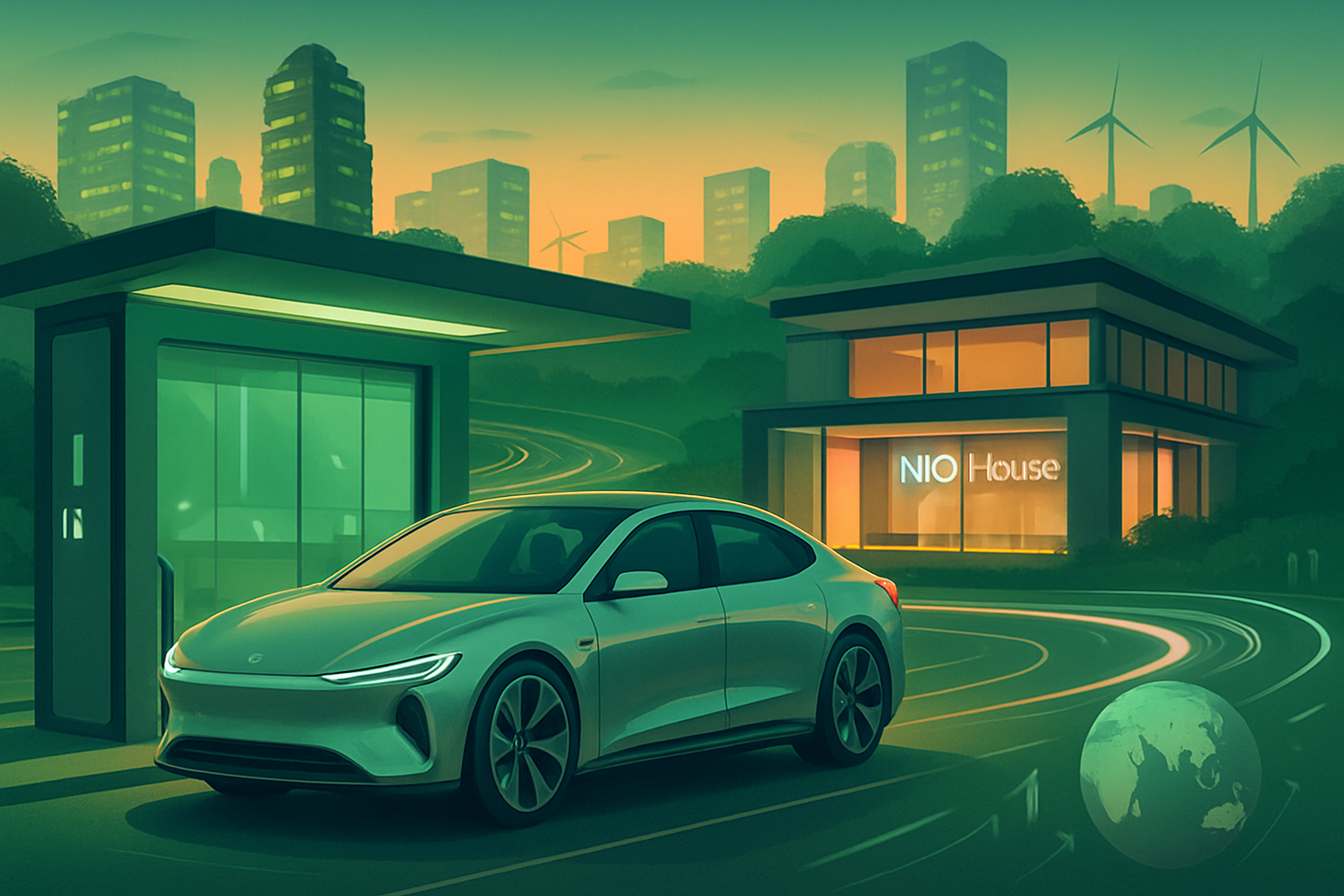
    Founded in 2014 by serial entrepreneur William Li—often dubbed "the Elon Musk of China"—NIO began with a vision of "Blue Sky Coming." The company’s early years were marked by a focus on "User Experience," launching the EP9 supercar to set Nürburgring records and establishing "Nio Houses"—lavish clubhouses for owners.

    However, the journey was nearly cut short. In early 2020, facing a liquidity crisis, NIO was rescued by a $1 billion investment from state-owned entities in Hefei, a move now known as the "Hefei Miracle." This lifeline allowed NIO to scale its ES8 and ES6 SUVs and pioneer the Battery-as-a-Service (BaaS) model. Between 2021 and 2024, NIO navigated the "valley of death" of high R&D spending, eventually securing a transformative $2.2 billion investment from CYVN Holdings, an investment vehicle primarily owned by the Abu Dhabi government. This capital injection in late 2023 and 2024 provided the runway for the multi-brand strategy that is defining its 2026 success.

    Business Model

    NIO operates on a unique "User Enterprise" model that extends far beyond vehicle sales. Its revenue streams are diversified across:

    • Vehicle Sales: Premium luxury EVs (NIO brand), mass-market family vehicles (Onvo), and compact urban EVs (Firefly).
    • Battery-as-a-Service (BaaS): A subscription model where customers buy the car without the battery, lowering the upfront cost and paying a monthly fee for battery swaps.
    • Power Solutions: Revenue from its massive battery swap network and public charging services.
    • NIO Life: A lifestyle brand selling everything from apparel to home goods, fostering deep brand loyalty.

    By 2026, the company has successfully transitioned to a "horizontal" business model, opening its proprietary battery swap architecture to external partners (The Swap Alliance), effectively turning its infrastructure into a utility.

    Stock Performance Overview

    The stock performance of NIO (NYSE: NIO) over the last decade has been a study in volatility.

    • 10-Year Perspective: Since its 2018 IPO, the stock has swung from under $2 during the 2020 crisis to an all-time high of $66 in 2021, before retreating as the "EV bubble" burst.
    • 5-Year Perspective: The period from 2021 to 2026 saw a long, painful consolidation. The stock bottomed near $3.00 in mid-2024 amid intense price wars.
    • 1-Year Perspective: Over the past 12 months, the stock has recovered significantly. Following the late-2025 announcement of profitability and record deliveries, NIO has climbed from the $4 range to its current level of approximately $5.92 as of late March 2026. This 45%+ gain in a year reflects a shift in investor sentiment from "survival mode" to "growth mode."

    Financial Performance

    NIO’s financial profile in early 2026 is the healthiest it has ever been. In its most recent full-year 2025 report, the company recorded total revenue of RMB 87.49 billion ($12.51 billion), a 33% year-over-year increase.

    • Profitability: For the first time, NIO reported a net profit of RMB 282.7 million in Q4 2025.
    • Margins: Vehicle margins surged to 18.1% in Q4 2025, up from 13.1% a year prior. This improvement is attributed to the scaling of the NT3.0 platform and lower battery costs.
    • Cash Reserves: NIO ended 2025 with RMB 45.9 billion ($6.6 billion) in cash and equivalents, providing ample liquidity for the continued rollout of its Generation 5.0 Swap Stations.

    Leadership and Management

    William Li continues to lead as Chairman and CEO, maintaining a reputation for long-term vision and resilience. Lihong Qin, the President and co-founder, remains the operational architect of the "NIO House" strategy.
    The board’s composition has become more international following the CYVN investment, with stronger representation from Middle Eastern institutional interests. This shift has professionalized NIO’s governance, moving away from the "startup" chaos of the early 2020s toward a more disciplined, global corporate structure.

    Products, Services, and Innovations

    NIO’s competitive edge lies in its technological vertical integration:

    • NT 3.0 Platform: The third-generation platform powers all 2026 models, featuring a centralized computing architecture and 900V high-voltage systems.
    • Battery Swap 5.0: Launched in early 2026, these stations can perform a swap in under 108 seconds and are compatible with various car brands within the NIO alliance.
    • Semi-Solid State Battery: NIO’s 150kWh pack is now in mass production, offering a range of over 1,000km (620 miles), a feat few competitors have matched.
    • NAD (NIO Autonomous Driving): The NOP+ (Navigate on Pilot) system now operates in virtually all urban scenarios in China, powered by four NVIDIA Orin chips providing 1,016 TOPS of computing power.

    Competitive Landscape

    The Chinese EV market in 2026 is a "battle of the giants."

    • The Big Three: BYD (OTC: BYDDF) dominates the low-to-mid market, while Tesla (NASDAQ: TSLA) maintains a strong but aging presence. NIO has carved out the "premium BEV" (Battery Electric Vehicle) niche.
    • Tech Entrants: Xiaomi (HKG: 1810) and Huawei’s HIMA alliance are NIO’s most direct "tech" rivals. Xiaomi’s 2026 delivery targets of 550,000 units put immense pressure on NIO’s mass-market Onvo brand.
    • Traditional OEMs: Geely and GAC have narrowed the tech gap, though they lack NIO's dedicated battery-swap moat.

    Industry and Market Trends

    By 2026, the "Price War" that plagued 2023-2024 has transitioned into a "Value War." Consolidation is the dominant trend, with smaller players being absorbed by giants.
    A significant macro driver is the shift toward "smart power." As the Chinese grid faces pressure, NIO’s battery swap stations are increasingly being used for "Vehicle-to-Grid" (V2G) services, providing frequency regulation and earning the company energy-trading revenue.

    Risks and Challenges

    Despite recent triumphs, NIO faces formidable hurdles:

    1. Geopolitical Friction: European anti-subsidy duties (currently at 20.7% for NIO) and the total lockout from the U.S. market limit its global total addressable market.
    2. Execution Risk: Managing three distinct brands (NIO, Onvo, Firefly) simultaneously is an immense operational challenge that could dilute management focus or strain the supply chain.
    3. Infrastructure Costs: The battery swap network requires constant capital expenditure. If the "Swap Alliance" fails to gain widespread adoption from other OEMs, NIO could find itself with a "stranded asset."

    Opportunities and Catalysts

    • Middle East Expansion: Through NIO MENA, headquartered in Abu Dhabi, NIO is launching regional-specific models in 2026. The Middle East represents a high-margin, high-growth opportunity with fewer trade barriers than the West.
    • Firefly Launch: The debut of the sub-RMB 200,000 Firefly brand in international markets could unlock the European "mass-market" segment that is currently underserved by premium brands.
    • M&A Potential: With its large cash pile and standardized tech, NIO is a likely candidate to acquire smaller, struggling EV brands to expand its manufacturing footprint.

    Investor Sentiment and Analyst Coverage

    Wall Street has shifted from "Sell" to "Cautiously Bullish" in 2026. Firms like HSBC and Nomura have recently upgraded the stock to "Buy," citing the 2025 profitability milestone as a "proof of concept." Institutional ownership has stabilized, with major positions held by CYVN Holdings, Tencent, and Baillie Gifford. Retail sentiment remains high, driven by the "Nio-phile" community, though the discourse has matured from speculative hype to a focus on monthly delivery consistency.

    Regulatory, Policy, and Geopolitical Factors

    Regulatory tailwinds in China remain strong, with New Energy Vehicle (NEV) purchase tax exemptions extended through the end of 2025 and new "trade-in" subsidies launched in 2026. However, NIO must navigate a complex regulatory web in the EU, where data privacy laws and "Carbon Footprint" requirements for batteries are becoming more stringent. The company's decision to build a "closed-loop" battery recycling system in 2025 was a proactive move to stay compliant with these emerging ESG mandates.

    Conclusion

    As we look at NIO on March 24, 2026, the company stands as a testament to the power of strategic persistence. By doubling down on battery swapping and user experience, it has built a moat that even the largest tech giants find difficult to replicate.

    The move into profitability in late 2025 marked the end of NIO's "startup phase" and the beginning of its era as a global automotive industrial group. While geopolitical risks and intense domestic competition remain, NIO’s record deliveries and multi-brand strategy suggest that the "Blue Sky" William Li envisioned over a decade ago may finally be clearing. For investors, the focus for the remainder of 2026 will be on the ramp-up of the Firefly brand and the scaling of the "Swap Alliance" partners—factors that will determine if NIO can move from a $6 stock back toward its former double-digit glory.


    This content is intended for informational purposes only and is not financial advice.

  • Tesla’s European Crossroads: Navigating the 2026 Sales Slump and the AI Pivot

    Tesla’s European Crossroads: Navigating the 2026 Sales Slump and the AI Pivot

    As of March 24, 2026, Tesla, Inc. (NASDAQ: TSLA) finds itself at a pivotal crossroads, navigating a landscape that looks vastly different from the unbridled growth years of the early 2020s. Once the undisputed monarch of the electric vehicle (EV) revolution, the Austin-based titan is currently grappling with a significant "European Slump"—a contraction in its most mature market that has sent shockwaves through the investment community.

    While the company remains a central pillar of the global automotive and technology sectors, the narrative has shifted from "How many cars can Tesla build?" to "Can Tesla maintain its dominance in a saturated, hyper-competitive market?" With a valuation that remains pegged to its potential as an AI and robotics powerhouse rather than a traditional automaker, the pressure on CEO Elon Musk to deliver on the "Robotaxi" and "Optimus" promises has never been higher. This feature dives deep into the forces shaping Tesla’s current reality, from the factory floors of Giga Berlin to the high-stakes trading desks of Wall Street.

    Historical Background

    Tesla was founded in 2003 by Martin Eberhard and Marc Tarpenning, with Elon Musk joining shortly after as the lead investor. The company’s "Master Plan," famously penned by Musk in 2006, outlined a simple but audacious strategy: build a high-priced, low-volume sports car (the Roadster), use that money to build a mid-priced car (Model S and X), and finally use that revenue to create a high-volume, affordable car (Model 3 and Y).

    For nearly two decades, Tesla defied the odds, surviving a "production hell" in 2017 and scaling to become the most valuable automaker in the world. Key milestones include the opening of Giga Shanghai in 2019, which transformed Tesla’s margins, and the 2022 opening of Giga Berlin and Giga Texas. However, the transition from a niche disruptor to a mass-market incumbent has brought a new set of challenges, particularly as the "S3XY" lineup (Models S, 3, X, and Y) begins to show its age against a flood of global competitors.

    Business Model

    Tesla operates a vertically integrated business model that spans several high-tech segments. While automotive sales remain the primary revenue driver, the company has diversified significantly:

    • Automotive: Design, manufacturing, and sale of EVs. This includes the Model 3, the Model Y (the world’s best-selling car in 2023), and the controversial Cybertruck. In early 2026, Tesla officially phased out the Model S and Model X to focus on higher-volume platforms and AI-driven robotics.
    • Energy Generation and Storage: This segment, featuring Powerwall, Megapack, and solar roof products, has become a "sleeper" hit, showing consistent double-digit growth as utilities transition to renewable grids.
    • Services and Other: Revenue from Supercharging networks (now open to other brands), insurance, and software updates, including the Full Self-Driving (FSD) subscription.
    • AI and Robotics: The frontier of Tesla’s valuation, focusing on the Dojo supercomputer, the "Cybercab" (Robotaxi), and the Optimus humanoid robot, which Tesla aims to deploy in its own factories by late 2026.

    Stock Performance Overview

    Tesla’s stock performance has been a roller coaster for long-term investors.

    • 10-Year Horizon: Investors who held since 2016 have seen astronomical gains, outperforming the S&P 500 by over 1,000% as Tesla scaled from a niche player to a global leader.
    • 5-Year Horizon: The performance is more nuanced, characterized by the massive 2020-2021 surge followed by extreme volatility.
    • 1-Year Horizon (2025–2026): The past 12 months have been difficult. After a rebound in late 2024, the stock faced downward pressure throughout 2025 as European sales figures disappointed. As of March 24, 2026, TSLA is trading in a range that reflects a tug-of-war between "AI bulls" and "Auto bears."

    Financial Performance

    The 2025 fiscal year was one of the most challenging in Tesla’s recent history. Total European registrations fell from approximately 326,000 units in 2024 to roughly 235,000 in 2025—a nearly 30% decline. This contraction has had a tangible impact on financial metrics:

    • Revenue Growth: While Energy and Services have grown, automotive revenue stagnated in 2025 due to price cuts aimed at defending market share.
    • Margins: Operating margins, once the envy of the industry at 17-18%, have compressed to the 10-12% range as the company battles a global price war.
    • Valuation: Despite the sales slump, Tesla carries a trailing P/E ratio of approximately 300. This premium suggests that the market is valuing Tesla as a software/AI company rather than a car manufacturer, pricing in massive future earnings from autonomous fleets.

    Leadership and Management

    Elon Musk remains the polarizing figurehead of the company. His leadership style, characterized by "hardcore" work culture and a penchant for setting aggressive (and often missed) timelines, continues to both inspire and alienate.

    In 2025 and early 2026, management has faced scrutiny regarding Musk’s "split focus" between Tesla, SpaceX, and X (formerly Twitter). The "Musk Effect" has become a documented risk factor in Europe, where some consumers in Germany and the UK have cited his political stances as a reason for switching to brands like BMW or BYD. The board of directors, largely seen as Musk-aligned, continues to prioritize the long-term AI vision over short-term automotive volume stability.

    Products, Services, and Innovations

    Tesla’s current product strategy is defined by the "Juniper" refresh of the Model Y, which entered production at Giga Berlin in January 2025. This update brought improved aerodynamics, a modernized interior, and longer range (up to 447 miles WLTP), providing a necessary "shot in the arm" for European sales.

    Beyond cars, the Cybercab (a dedicated Robotaxi without a steering wheel) is the center of Tesla’s innovation pipeline. Regulatory hurdles remain, but Tesla has begun pilot programs in select U.S. cities. Additionally, the Optimus robot has moved into "Gen 3" testing, with Musk claiming it will be the most significant product in Tesla’s history, though commercial availability remains a multi-year horizon away.

    Competitive Landscape

    The "European Slump" is largely a story of competition. Tesla's share of the European BEV market fell from 16.8% in early 2024 to under 9% by late 2025.

    • BYD (SZSE: 002594): The Chinese giant has become Tesla’s most formidable rival. In July 2025, BYD registered more vehicles in Europe than Tesla for the first month ever, leveraging its lower-priced Seagull and Atto 3 models.
    • Legacy Automakers: BMW, Volkswagen, and Stellantis have narrowed the "software gap," offering compelling EV alternatives that appeal to traditional European tastes for luxury and build quality.
    • Niche Players: Brands like Polestar and Rivian (NASDAQ: RIVN) continue to chip away at the premium segments Tesla once dominated.

    Industry and Market Trends

    The global EV market is entering a "chasm" phase. Early adopters have been served, and the mass market is proving more price-sensitive and wary of charging infrastructure. In Europe, the resurgence of hybrid vehicles has slowed pure BEV adoption.

    Furthermore, the "software-defined vehicle" (SDV) trend is now mainstream. Tesla no longer has a monopoly on over-the-air (OTA) updates, as legacy manufacturers have revamped their electronic architectures to match Tesla’s agility.

    Risks and Challenges

    Tesla faces a trifecta of risks in 2026:

    1. Brand Erosion: The "Musk Effect" is particularly acute in Western Europe, where corporate social responsibility (CSR) heavily influences consumer choice.
    2. Product Aging: Despite the Juniper refresh, the fundamental design of Tesla’s fleet has remained largely unchanged for years, leading to "Tesla fatigue" in mature markets like Norway and California.
    3. Execution Risk: The valuation relies on FSD and Robotaxis. Any major safety failure or regulatory ban on autonomous driving would likely result in a massive de-rating of the stock.

    Opportunities and Catalysts

    Despite the headwinds, several catalysts could spark a TSLA resurgence:

    • FSD Licensing: If Tesla can successfully license its FSD software to other automakers (as Musk has hinted), it would create a high-margin recurring revenue stream akin to Microsoft’s Windows.
    • Energy Storage Alpha: The Megapack business is currently supply-constrained. As capacity ramps up at the Lathrop and Shanghai Megafactories, this segment could eventually rival the automotive business in profit.
    • The "Model 2": Rumors of a sub-$25,000 vehicle (often called the Model 2) persist. A successful launch of this platform would be the key to reclaiming lost market share from Chinese rivals.

    Investor Sentiment and Analyst Coverage

    Wall Street is currently a house divided.

    • The Bulls (e.g., Wedbush’s Dan Ives): Maintain price targets as high as $600, arguing that the 2025 slump is a "short-term pain for long-term AI gain."
    • The Bears (e.g., GLJ Research): Point to the 30% drop in European sales as proof that Tesla is a "broken growth story," with some targets as low as $25, treating the AI claims as vaporware.
    • The Consensus: Most analysts have settled in the $380-$410 range, maintaining a "Wait and See" approach regarding Robotaxi commercialization.

    Regulatory, Policy, and Geopolitical Factors

    Geopolitics are a double-edged sword for Tesla. In Europe, the EU’s anti-subsidy probe into Chinese EVs resulted in a 7.8% tariff on Tesla’s China-made exports (Giga Shanghai). While this is lower than the 35%+ tariffs faced by some Chinese brands, it still adds cost pressure.

    Moreover, Tesla’s reliance on China for both production and sales remains a strategic vulnerability. Any escalation in trade tensions between the West and China could disrupt Tesla’s "Giga Shanghai" hub, which remains its most efficient factory.

    Conclusion

    Tesla enters the second quarter of 2026 as a company in transition. The "European Slump" is a sobering reminder that first-mover advantage is not a permanent moat. To justify its current valuation, Tesla must prove that it is more than just a car company; it must successfully pivot to a future defined by autonomous transportation and humanoid robotics.

    For investors, the key metrics to watch over the next 12 months are Model Y Juniper delivery volumes in Europe, regulatory progress for the Cybercab pilot programs, and the growth rate of the Energy storage segment. While the risks of brand fatigue and fierce competition are real, Tesla’s history of defying skeptics suggests that betting against Musk’s "Master Plan" remains a high-stakes gamble.


    This content is intended for informational purposes only and is not financial advice.

  • The Great Reset: Honda’s (HMC) Strategic Pivot and the ¥2.5 Trillion Reality Check

    The Great Reset: Honda’s (HMC) Strategic Pivot and the ¥2.5 Trillion Reality Check

    As of today, March 19, 2026, Honda Motor Co., Ltd. (NYSE: HMC) finds itself at the center of a profound strategic realignment. Once a pioneer of fuel-efficient internal combustion engines and a vocal proponent of an all-electric future, the Japanese industrial giant has spent the first quarter of 2026 executing what analysts are calling the "Great Reset." After a decade of chasing the "EV dream," Honda has pivoted back toward its roots in high-efficiency hybrids and motorcycle dominance, a move signaled by a massive ¥2.5 trillion ($15.7 billion) impairment charge announced just last week.

    For investors, Honda represents a complex case study in corporate pragmatism versus visionary risk. While its automotive division grapples with the high costs of transitioning technologies, its motorcycle and power products divisions remain global cash cows. This article explores whether Honda’s strategic retreat is a sign of weakness or a calculated maneuver to survive a volatile decade for the global mobility industry.

    Historical Background

    The story of Honda is one of engineering obsession and technical defiance. Founded in 1948 by Soichiro Honda—a man who preferred grease-stained overalls to executive suits—the company began by motorized bicycles in a war-torn Japan. By the 1960s, Honda had become the world’s largest motorcycle manufacturer, a title it still holds today.

    The company’s leap into the automotive world was equally audacious. In the 1970s, while Detroit struggled with the U.S. Clean Air Act, Honda developed the CVCC (Compound Vortex Controlled Combustion) engine. This innovation allowed the Honda Civic to meet strict emission standards without a catalytic converter, cementing the brand’s reputation for efficiency and reliability. Over the decades, Honda expanded into luxury with the Acura brand, power equipment, and even aviation with the HondaJet, always maintaining a culture of "The Power of Dreams" and independent engineering.

    Business Model

    Honda operates a diversified industrial ecosystem. Its revenue is derived from four primary segments:

    1. Motorcycles: The undisputed crown jewel. Honda holds nearly 40% of the global motorcycle market share. This segment is characterized by high margins (18%+ EBITDA) and massive volume, particularly in Southeast Asia and India.
    2. Automobiles: The largest revenue contributor, though currently facing margin pressure. Honda focuses on the "mass-premium" segment with global pillars like the Civic, Accord, and CR-V.
    3. Power Products: This includes everything from generators and outboard marine engines to the newly launched ProZision commercial electric lawn mowers.
    4. Financial Services: Honda provides financing to dealers and customers, acting as a critical support pillar for vehicle sales.
    5. HondaJet: A niche but prestigious segment representing the company’s technological pinnacle in light business aviation.

    Stock Performance Overview

    The performance of HMC stock reflects a company in a state of prolonged transition. As of March 19, 2026, the stock is trading at approximately $25.51.

    • 1-Year Performance: Down 16.06%. The stock has been punished by the market following the March 2026 announcement of massive write-downs and the cancellation of North American EV programs.
    • 5-Year Performance: Down 11.87%. Honda has largely traded sideways to down, failing to capture the "EV premium" that benefited companies like Tesla or the "Value Rally" that boosted Toyota.
    • 10-Year Performance: Down 1.93%. For long-term ADR holders, Honda has significantly underperformed the S&P 500, essentially acting as a dividend-paying value play rather than a growth vehicle.

    Financial Performance

    Honda’s financial narrative in 2026 is dominated by the "Big Write-Down." For FY 2025/2026, the company reported consolidated sales of ¥21.7 trillion ($136 billion), a record high driven by motorcycle sales and favorable currency tailwinds. However, the bottom line tells a different story.

    Honda issued a shock profit warning in early March 2026, projecting a net loss of between ¥270 billion and ¥570 billion ($1.7B – $3.6B). This is primarily due to ¥2.5 trillion in expenses related to the cancellation of the "0 Series" EV development in North America and a retreat from non-competitive joint ventures in China.

    Despite these losses, the company maintains a resilient free cash flow of ¥760 billion (pre-write-down), and its motorcycle division continues to deliver record operating profits. The debt-to-equity ratio remains high at 103.6%, reflecting the heavy capital requirements of the last three years of R&D.

    Leadership and Management

    CEO Toshihiro Mibe, who took the helm in 2021, is currently the most scrutinized man in the Japanese auto industry. Mibe initially gained fame for committing Honda to be 100% electric by 2040. However, his "Great Reset" of March 2026 shows a leader willing to admit miscalculations.

    The management team is now pivoting toward "Pragmatic Realism." The new strategy focuses on India and Southeast Asia as the primary growth engines, while downsizing the ambitious EV targets for North America in favor of a hybrid-first lineup. This governance shift has been met with a mix of relief from value investors and disappointment from ESG-focused funds.

    Products, Services, and Innovations

    While Honda has scaled back its North American EV ambitions, it remains an innovation powerhouse.

    • Hybrid Power: Honda’s dual-motor hybrid system is now standard across most of its North American lineup. Management aims for 2.2 million hybrid sales annually by 2030.
    • AFEELA (Sony Honda Mobility): The high-tech sedan remains in pre-production. While it showcases Honda's manufacturing and Sony’s software/entertainment prowess, it is increasingly viewed as a "halo" project rather than a volume driver.
    • Solid-State Batteries: Honda continues to invest heavily in its pilot line for all-solid-state batteries, viewing this as the "true" technological bridge that will make EVs viable in the late 2020s.
    • Two-Wheeler Electrification: Honda is currently building the world’s largest electric two-wheeler plant in India, aiming to dominate the transition of the "bottom of the pyramid" to clean energy.

    Competitive Landscape

    Honda is currently fighting a multi-front war:

    • The Hybrid Rivalry: Toyota remains the gold standard. While Honda’s hybrids are technically advanced, Toyota’s massive scale allows for better pricing power.
    • The China Threat: BYD and other Chinese manufacturers have eroded Honda’s market share in China, once a major profit center. This loss of competitiveness in China was a primary driver for the 2026 write-downs.
    • The Software Gap: Tesla and Chinese rivals are currently leading in software-defined vehicles (SDVs). Honda’s partnership with Sony is a direct attempt to close this gap.

    Industry and Market Trends

    The global automotive market in 2026 is characterized by "EV Fatigue" in the West and "Hyper-Competition" in the East. High interest rates and the expiration of early-adopter subsidies have cooled demand for pure battery-electric vehicles (BEVs) in the U.S. and Europe. Conversely, hybrid demand has skyrocketed as consumers seek reliability and fuel economy without "range anxiety." Honda’s shift back to hybrids aligns with this macro trend, though it risks falling behind if the BEV market suddenly accelerates again.

    Risks and Challenges

    • Technological Lag: By canceling the 0 Series, Honda risks being viewed as a "laggard" in the race for next-generation platforms.
    • Currency Volatility: As a major exporter, Honda is highly sensitive to the value of the Yen. Any significant strengthening of the Yen could further erode its thin automotive margins.
    • Geopolitical Squeeze: Honda’s heavy reliance on the U.S. market leaves it vulnerable to shifts in trade policy, particularly regarding the Inflation Reduction Act (IRA) and potential new tariffs on hybrid components.

    Opportunities and Catalysts

    • The India Gambit: India is poised to be Honda’s next great frontier. With a growing middle class and a clear path toward two-wheeler electrification, Honda’s established presence there is a massive competitive advantage.
    • Balance Sheet Cleansing: The 2026 write-downs, while painful, allow Honda to enter 2027 with a cleaner balance sheet and lower fixed costs.
    • Hydrogen Potential: Honda remains a leader in fuel cell technology, recently launching its CR-V e:FCEV. If the heavy-duty and commercial sectors shift toward hydrogen, Honda is perfectly positioned.

    Investor Sentiment and Analyst Coverage

    Investor sentiment is currently "cautiously skeptical." Following the mid-March strategic pivot, several major firms, including Morgan Stanley and CLSA, downgraded HMC to "Equalweight" or "Hold."

    The consensus among analysts is that while Honda is making the "right" long-term decision by cutting its losses in the EV space, the short-term pain of the ¥2.5 trillion write-down makes the stock a "wait-and-see" play. Retail chatter on platforms like X and Reddit shows a growing appreciation for Honda's reliability but a frustration with its stagnant stock price.

    Regulatory, Policy, and Geopolitical Factors

    Honda’s pivot was largely forced by the "unpredictable" regulatory environment in the United States. Changes to IRA eligibility and the cooling of ZEV (Zero Emission Vehicle) mandates in certain states made the massive investment in North American EV plants look increasingly risky.

    Furthermore, the escalating trade tensions between the West and China have forced Honda to "de-risk" its supply chain, a costly process that involves moving battery production away from Chinese-linked suppliers and toward domestic Japanese or U.S.-based partners.

    Conclusion

    Honda Motor Co., Ltd. (NYSE: HMC) enters the mid-point of 2026 as a company that has chosen reality over rhetoric. By taking a massive financial hit now to cancel underperforming EV projects, CEO Toshihiro Mibe is betting that the future belongs to those who dominate the hybrid and motorcycle markets today.

    For the value investor, Honda is an intriguing prospect: a global leader in engine technology and motorcycles, trading at a depressed valuation with a "cleansed" balance sheet. For the growth investor, however, the lack of a clear, high-volume EV path remains a major deterrent. Investors should watch for the performance of the motorcycle division in India and the initial reception of the AFEELA sedan in late 2026 as the next key indicators of Honda’s trajectory.


    This content is intended for informational purposes only and is not financial advice.

  • Rivian’s 2026 Breakthrough: Analyzing the 26.6% Surge and the Path to Mass-Market Dominance

    Rivian’s 2026 Breakthrough: Analyzing the 26.6% Surge and the Path to Mass-Market Dominance

    On February 16, 2026, the electric vehicle (EV) sector witnessed a seismic shift in investor sentiment as Rivian Automotive (NASDAQ: RIVN) surged by 26.6% in a single trading session. This dramatic rally, which pushed the stock to $17.73, followed a blockbuster 2026 outlook and a series of strategic partnership headlines that have effectively silenced long-standing concerns regarding the company’s liquidity and path to profitability. For an industry that has spent the last two years grappling with high interest rates and cooling consumer demand, Rivian’s recent performance serves as a potential bellwether for the "Second Wave" of EV adoption.

    The surge was precipitated by the company’s Q4 2025 earnings report, which confirmed that Rivian has not only achieved sustained positive gross margins but is also on the cusp of launching its mass-market R2 platform. With the backing of a multi-billion dollar joint venture with Volkswagen Group (OTC: VWAGY) and a renewed focus on software-defined vehicle (SDV) architecture, Rivian is no longer viewed merely as a luxury boutique automaker but as a legitimate platform provider for the global automotive industry.

    Historical Background

    Founded in 2009 by Dr. RJ Scaringe, Rivian spent its first decade in "stealth mode," focusing on the development of a versatile "skateboard" platform that could underpin a variety of electric vehicles. Initially targeting a mid-engine hybrid sports car, Scaringe pivoted the company’s focus to the underserved luxury truck and SUV market—a move that eventually attracted massive pre-IPO investments from Amazon (NASDAQ: AMZN) and Ford (NYSE: F).

    Rivian’s public debut in November 2021 was one of the largest IPOs in U.S. history, with a valuation briefly exceeding $100 billion despite having delivered only a handful of vehicles. However, the subsequent years were characterized by "growing pains," including supply chain bottlenecks, inflationary pressures, and a difficult manufacturing ramp-up at its Normal, Illinois, facility. The 2024 partnership with Volkswagen proved to be the pivotal turning point, providing the capital and scale necessary to survive the "EV winter" of 2024-2025 and transition toward high-volume production.

    Business Model

    Rivian operates a vertically integrated business model, controlling everything from vehicle design and software development to direct-to-consumer sales and service. Its revenue streams are increasingly diversified across three primary pillars:

    1. Consumer Vehicles: The R1T (pickup) and R1S (SUV) serve the premium market, while the upcoming R2 and R3 models target high-volume segments.
    2. Commercial Vans: The Electric Delivery Van (EDV) program, anchored by an initial 100,000-unit order from Amazon, has now expanded to other third-party logistics providers.
    3. Software and Services: Rivian generates high-margin recurring revenue through its "Rivian Cloud" ecosystem, over-the-air (OTA) software updates, insurance products, and the Rivian Adventure Network (charging).
    4. Technology Licensing: Following the 2024 Volkswagen JV, Rivian now earns licensing fees and milestone payments for its zonal electrical architecture and software stack.

    Stock Performance Overview

    Rivian’s stock history has been a rollercoaster of extreme volatility.

    • Post-IPO to 2024: After hitting highs near $170 in late 2021, the stock plummeted over 90% as the market soured on unprofitable "pre-revenue" tech companies. By early 2024, shares were trading in the low double digits.
    • The 1-Year Horizon (2025-2026): Over the past 12 months, RIVN has outperformed the broader EV index by nearly 40%. The recovery began in late 2024 with the VW announcement and accelerated as the company demonstrated a clear reduction in "cost-per-vehicle."
    • The 5-Year Horizon: Since its Nov 2021 IPO, the stock remains significantly below its debut price, reflecting the massive derating of the EV sector. However, the current 2026 rally marks the first time since the IPO that the company’s valuation is backed by positive gross profits rather than pure speculation.

    Financial Performance

    The 26.6% surge in early 2026 was underpinned by fundamental financial improvements. Rivian’s Q4 2025 results revealed:

    • Gross Margin: Consolidated gross profit became positive in late 2024 and has expanded to the mid-single digits by Q4 2025, driven by a 65% reduction in parts count for the "Gen 2" R1 vehicles.
    • Revenue Growth: 2025 revenue grew by 22% year-over-year, despite a deliberate production slowdown to retool the Normal plant.
    • Liquidity: Between the $5.8 billion VW investment, a $6.6 billion DOE loan, and an ending cash balance of approximately $8.2 billion, Rivian has secured a capital runway that extends into late 2027.
    • Valuation: Currently trading at roughly 4.1x Price-to-Sales, Rivian is valued as a hybrid between a traditional automaker and a high-growth tech platform.

    Leadership and Management

    Founder and CEO RJ Scaringe remains the central figure in Rivian’s leadership, praised for his technical depth and long-term vision. However, the "institutionalization" of Rivian's management has been equally important.

    • Claire McDonough (CFO): Often cited as the architect of the VW deal, she has successfully managed the company’s capital-light strategy.
    • Javier Varela (COO): Since joining from Volvo, Varela has brought disciplined automotive manufacturing expertise, helping to stabilize production and reduce waste.
      The board of directors includes heavyweights from the tech and retail sectors, reflecting the company’s dual identity.

    Products, Services, and Innovations

    Rivian’s product strategy is shifting from "niche luxury" to "mass-market utility."

    • R1 Platform: The flagship R1T and R1S remain the gold standard for electric adventure vehicles, featuring industry-leading quad-motor setups and off-road capability.
    • R2 Platform: The R2, scheduled for mid-2026 deliveries, is the "Tesla Model Y fighter" priced at $45,000. It features a simplified manufacturing process and 4695-format battery cells.
    • Zonal Architecture: Rivian’s proprietary software-heavy architecture allows for fewer ECUs and significantly less wiring, a competitive edge that attracted Volkswagen's interest.
    • R3 and R3X: These compact crossovers represent the company’s long-term play for the European and urban markets.

    Competitive Landscape

    Rivian occupies a unique space between Tesla (NASDAQ: TSLA) and legacy OEMs like Ford and General Motors (NYSE: GM).

    • vs. Tesla: While Tesla dominates in volume and charging infrastructure, Rivian has captured the "lifestyle/outdoor" brand identity that Tesla lacks.
    • vs. Legacy OEMs: Rivian's advantage lies in its lack of "technical debt." Unlike Ford, which must manage a complex transition from internal combustion engines, Rivian is "electric-native." However, legacy players have deeper pockets and existing dealer networks.
    • Emerging Threats: Competition from Chinese OEMs like BYD and Xiaomi remains a looming threat in global markets, though trade barriers currently protect Rivian’s primary U.S. market.

    Industry and Market Trends

    The EV industry in 2026 is defined by a "flight to quality." After a period of cooling demand in 2024, the market has bifurcated. Companies with proprietary tech and strong balance sheets are gaining share, while those reliant on third-party software are struggling.

    • Lower Battery Costs: Continued declines in lithium-ion battery prices have aided Rivian’s margin expansion.
    • Charging Standardization: The industry-wide shift to the NACS (North American Charging Standard) has integrated Rivian vehicles into the Tesla Supercharger network, alleviating "range anxiety" for new buyers.

    Risks and Challenges

    Despite the recent surge, Rivian is not without risks:

    • Execution Risk: The R2 ramp-up at the Normal plant is a "make or break" moment. Any delays could burn through cash rapidly.
    • Georgia Factory Capex: Resuming construction on the multi-billion dollar Georgia facility in 2026 will put renewed pressure on the balance sheet.
    • Macro Factors: High interest rates still make vehicle financing expensive for the average consumer, potentially dampening R2 pre-orders.
    • Political Risk: Changes in federal EV tax credits or emissions regulations could impact the company’s bottom line.

    Opportunities and Catalysts

    • Software Licensing: The VW JV could be a template for further partnerships with other global OEMs, providing high-margin licensing fees.
    • Fleet Diversification: Now that the Amazon exclusivity period has ended, Rivian has a massive opportunity to sell EDVs to giants like DHL, FedEx, or UPS.
    • International Expansion: The R3 platform is specifically designed with global dimensions, opening doors to the European and Asian markets in late 2027.

    Investor Sentiment and Analyst Coverage

    Wall Street has turned decidedly bullish on Rivian in early 2026. Following the 26.6% surge, several analysts upgraded the stock to "Strong Buy."

    • Institutional Support: Major institutions like Vanguard and BlackRock have maintained significant positions, and there has been a notable uptick in "tech-growth" hedge funds entering the stock.
    • Retail Sentiment: Rivian maintains a cult-like following among retail investors, who often compare the company’s current trajectory to Tesla’s 2017-2018 era.

    Regulatory, Policy, and Geopolitical Factors

    Rivian is a primary beneficiary of the Inflation Reduction Act (IRA), though its reliance on federal subsidies is a double-edged sword.

    • Domestic Content: Rivian has aggressively localized its battery supply chain to ensure its vehicles qualify for the full $7,500 consumer tax credit.
    • Trade Policy: Potential tariffs on Chinese EV components could increase production costs but also protect Rivian from low-cost international competition.

    Conclusion

    The 26.6% surge on February 16, 2026, marks the end of Rivian’s "existential crisis" phase and the beginning of its "scaling" phase. By achieving gross profitability and securing a global technology partner in Volkswagen, Rivian has proven that it has the staying power to compete in the brutal automotive industry.

    However, the road ahead remains steep. The successful launch of the R2 platform is the final piece of the puzzle; if Rivian can deliver a high-quality, $45,000 vehicle at scale, it will solidify its position as the clear #2 in the North American EV market. Investors should remain focused on production ramp milestones and margin stability as the company marches toward its first full year of GAAP net profitability.


    This content is intended for informational purposes only and is not financial advice.
  • The Great Pivot: Analyzing Tesla’s Transformation from Automaker to AI Powerhouse (2026 Research Report)

    The Great Pivot: Analyzing Tesla’s Transformation from Automaker to AI Powerhouse (2026 Research Report)

    As of January 23, 2026, Tesla, Inc. (NASDAQ: TSLA) stands at a crossroads that few could have predicted just eighteen months ago. Once viewed strictly as a high-growth electric vehicle (EV) manufacturer, the company has spent the last year aggressively rebranding itself as an artificial intelligence and robotics conglomerate. This transformation was ignited by the pivotal Q3 2024 earnings report, which saw a surprising expansion in automotive margins and a record-breaking performance in the energy sector.

    Today, Tesla is no longer just fighting for market share in the sedan and SUV segments; it is vying for dominance in autonomous transport, humanoid robotics, and distributed energy storage. With a market capitalization hovering around $1.4 trillion, the "Elon Musk premium" remains as contentious as ever, as the company balances maturing automotive hardware with the speculative upside of its "unsupervised" Full Self-Driving (FSD) and Optimus initiatives.

    Historical Background

    Founded in 2003 by Martin Eberhard and Marc Tarpenning, with Elon Musk joining shortly thereafter as the lead investor, Tesla's journey has been defined by "production hell" and radical pivots. The 2008 release of the Roadster proved that EVs could be aspirational. However, it was the Model S (2012) and the mass-market Model 3 (2017) that truly disrupted the global automotive industry.

    The company's history is characterized by a "master plan" approach: start with low-volume, high-price vehicles to fund high-volume, lower-priced offerings. Over the last decade, Tesla scaled from a niche California automaker to a global titan with "Gigafactories" in Nevada, New York, Shanghai, Berlin, and Texas. The late 2010s saw the company teetering on the edge of bankruptcy during the Model 3 ramp, only to emerge as the world's most valuable automaker by 2020. The 2021-2023 period saw rapid expansion, but by 2024, the narrative shifted from growth at all costs to efficiency, cost reduction, and the pursuit of general AI.

    Business Model

    Tesla’s business model is vertically integrated to a degree rarely seen in modern manufacturing. It generates revenue through three primary segments:

    1. Automotive: The core revenue driver, encompassing the sale and lease of the Model 3, Y, S, X, and Cybertruck. This includes regulatory credits sold to other manufacturers—a high-margin "pure profit" stream that has historically propped up earnings.
    2. Energy Generation and Storage: This segment has become the company’s most consistent growth engine. It involves the production and installation of the Powerwall (residential), Megapack (utility-scale), and solar products.
    3. Services and Other: This includes FSD software subscriptions, Supercharger network access, insurance, and vehicle service. This segment is critical for Tesla’s long-term goal of shifting toward a high-margin software-as-a-service (SaaS) model.

    By owning its sales channels (direct-to-consumer) and much of its supply chain, Tesla captures margins that traditional OEMs often lose to dealerships and third-party suppliers.

    Stock Performance Overview

    Tesla's stock remains one of the most volatile large-cap equities in the world.

    • 1-Year Performance: Over the past twelve months (Jan 2025 – Jan 2026), TSLA has seen a gain of approximately 7%, though this masks a roller-coaster ride that saw the stock dip to $320 in early 2025 before peaking at $485 in late December 2025.
    • 5-Year Performance: Investors who held since early 2021 have seen a roughly 100% gain, though the path was marred by the 2022 tech wreck and 2024's "valuation reset."
    • 10-Year Performance: TSLA has been a legendary performer, returning over 1,500% to long-term shareholders who navigated the various production crises and controversies.

    The current trading range of $430–$450 reflects a market that has priced in the success of the automotive business but remains skeptical of the multi-trillion-dollar valuations Musk attributes to Robotaxis and Optimus.

    Financial Performance

    The Q3 2024 earnings report served as a financial "restoration" for Tesla. Following a period of declining margins due to aggressive price cuts, Tesla reported an automotive gross margin (ex-credits) of 17.1%. This was achieved through a relentless focus on lowering the "cost per vehicle," which hit a record low of approximately $35,100.

    In the most recent 2025 fiscal year, Tesla showed:

    • Revenue Growth: While automotive revenue slowed to single digits in mid-2025, the Energy segment grew by over 50% year-over-year, achieving gross margins of 30.5%.
    • Debt and Cash Flow: Tesla maintains a fortress-like balance sheet with over $30 billion in cash and negligible debt. Free cash flow remains positive, though heavily reinvested into AI compute (Dojo and Nvidia H100/H200 clusters).
    • Valuation: Trading at a forward P/E ratio of approximately 75x, Tesla remains significantly more expensive than rivals like Toyota (NYSE: TM) or BYD (OTC: BYDDF), reflecting its status as an "AI play" rather than a traditional car company.

    Leadership and Management

    Elon Musk remains the singular face of Tesla. While his focus is split between SpaceX, X (formerly Twitter), and xAI, his influence on Tesla’s engineering culture is undeniable. However, the management team has seen significant turnover. The 2024 departure of Drew Baglino (SVP Powertrain) was viewed as a blow to the "engineering soul" of the company.

    By early 2026, the leadership has transitioned. The new guard consists largely of AI and software engineers rather than automotive manufacturing veterans. This reflects Musk’s directive that Tesla is "not an auto company" but a "robotics and AI company." Governance remains a concern for institutional investors, particularly regarding Musk’s controversial compensation packages and his board's perceived lack of independence.

    Products, Services, and Innovations

    Tesla’s current lineup is spearheaded by the Model Y, which remains the world’s best-selling vehicle. The Cybertruck has moved past its initial production hurdles, achieving a run rate of 125,000 units by mid-2025, though its high price point ($50k-$100k) has limited it to a premium-niche role.

    The true innovation pipeline is focused on:

    • Robotaxi (Cybercab): Launched as a pilot in Austin in June 2025, this dedicated autonomous vehicle has no steering wheel.
    • Full Self-Driving (FSD): Now in version 13.x, FSD has moved to "end-to-end neural networks," significantly improving its ability to handle complex urban environments.
    • Optimus: Approximately 1,000 Optimus bots are currently deployed in Tesla's own factories, performing simple battery sorting and logistics tasks. This is the "alpha test" for what Musk claims will be a multi-billion unit market.

    Competitive Landscape

    The competitive landscape in 2026 is bifurcated. In China, BYD (OTC: BYDDF) has surpassed Tesla in total EV volume, offering a wider range of affordable models. In the West, traditional OEMs like Ford (NYSE: F) and General Motors (NYSE: GM) have significantly scaled back their EV ambitions, focusing instead on hybrids, which has ironically allowed Tesla to regain market share in the pure-EV space.

    Tesla’s primary competitive edge is its Supercharger network—now the industry standard (NACS) in North America—and its massive data moat for training AI models. Rivals struggle to match Tesla’s software integration and its ultra-low manufacturing costs.

    Industry and Market Trends

    The "EV Winter" of 2024 gave way to a "Hybrid Spring" in 2025, but Tesla resisted the hybrid trend, betting entirely on the transition to autonomy. Macro drivers include the continued fall in battery metal prices (Lithium, Nickel), which has benefited Tesla’s margins. However, the cyclical nature of high-interest rates in the U.S. continues to put pressure on monthly car payments, forcing Tesla to offer aggressive financing incentives (as low as 0.99% APR) throughout 2025 to sustain volume.

    Risks and Challenges

    Tesla faces several existential and operational risks:

    1. Execution Risk: The valuation is tied to FSD and Optimus. If full autonomy is not achieved within the next 24 months, a massive valuation reset is likely.
    2. Regulatory Scrutiny: The NHTSA continues to investigate FSD-related accidents. In January 2026, a high-profile case regarding "unsupervised" mode has created a legal bottleneck for the Robotaxi rollout.
    3. Key Person Risk: Musk’s involvement in politics and other ventures creates a distraction risk and potential brand erosion among certain demographics.
    4. Chinese Geopolitics: Tesla’s dependence on Giga Shanghai makes it vulnerable to escalating trade tensions between Washington and Beijing.

    Opportunities and Catalysts

    • The $25,000 EV: Rumors of a "Model 2" or "Model Q" have evolved into the "Model 3/Y Standard" variants, but a dedicated sub-$30k platform remains the holy grail for global volume.
    • Licensing FSD: Tesla is in late-stage talks with a major legacy automaker (rumored to be a Japanese or German OEM) to license its FSD software, which would create a high-margin recurring revenue stream.
    • Energy Arbitrage: As more Megapacks are deployed, Tesla is beginning to act as a distributed utility, selling software to manage grid stability.

    Investor Sentiment and Analyst Coverage

    Wall Street remains deeply divided.

    • Bulls: Analysts like Dan Ives (Wedbush) maintain price targets in the $600 range, arguing that Tesla is an "AI and Robotics play" that should not be valued on P/E multiples but on "sum-of-the-parts" for its software and energy businesses.
    • Bears: Traditional analysts, such as those at JP Morgan, maintain targets as low as $150, citing the slow-down in vehicle delivery growth (which saw its first-ever annual decline in 2025) and the "unrealistic" timeline for Optimus commercialization.

    Retail sentiment remains high, with a loyal "X-based" investor community that views every dip as a buying opportunity.

    Regulatory, Policy, and Geopolitical Factors

    The regulatory landscape in early 2026 is dominated by the Inflation Reduction Act (IRA). Tesla remains the primary beneficiary of battery production credits in the U.S. However, new "Foreign Entity of Concern" (FEOC) rules have complicated its supply chain for Chinese-sourced materials.

    In Europe, the imposition of tariffs on Chinese-made EVs (including those from Giga Shanghai) has forced Tesla to shift more production to Giga Berlin. Geopolitically, Tesla is walking a tightrope between its massive manufacturing footprint in China and its reliance on U.S. government subsidies and defense-adjacent AI development.

    Conclusion

    Tesla enters 2026 as a company in the middle of a high-stakes metamorphosis. The Q3 2024 margin expansion proved that the automotive core is still healthy and capable of generating the cash flow needed to fund Elon Musk’s grander visions. However, the "Great Pivot" to AI and robotics has fundamentally changed the investment thesis.

    Investors must now decide if they are buying a car company that is slightly overvalued or a robotics company that is vastly undervalued. The success of the Austin Robotaxi pilot and the ability to bring a truly affordable EV to market will be the defining themes of the coming year. While the risks are substantial, Tesla’s ability to defy the skeptics—and its own past—remains its most enduring characteristic.


    This content is intended for informational purposes only and is not financial advice.
  • Tesla (TSLA) 2026 Deep-Dive: From Automaker to AI Powerhouse

    Tesla (TSLA) 2026 Deep-Dive: From Automaker to AI Powerhouse

    As of January 22, 2026, Tesla, Inc. (NASDAQ: TSLA) remains the most scrutinized and debated entity in the global financial markets. After a tumultuous 2025 that saw the company officially yield its crown as the world’s largest battery electric vehicle (BEV) manufacturer to China’s BYD, Tesla has pivoted its narrative from automotive dominance to artificial intelligence and robotics leadership. With its market capitalization hovering at $1.43 trillion, the company stands at a critical juncture: transitioning from a high-growth car manufacturer into a diversified technology conglomerate centered on autonomous transport, energy storage, and humanoid robotics.

    Historical Background

    Founded in 2003 by Martin Eberhard and Marc Tarpenning, and later steered to global prominence by Elon Musk, Tesla’s journey is one of the most improbable success stories in industrial history. From the niche, high-end Roadster in 2008 to the mass-market Model 3 and Model Y, Tesla effectively forced the global automotive industry into the electric age. Key milestones include the opening of the Nevada Gigafactory, the achievement of sustained profitability in 2020, and the company's inclusion in the S&P 500. Over the last decade, Tesla transitioned from a "struggling startup" to a global benchmark, though it now faces the challenge of maintaining that status amidst maturing markets and fierce global competition.

    Business Model

    Tesla’s business model is vertically integrated, encompassing three primary segments:

    1. Automotive: Sales of the Model S, 3, X, Y, and Cybertruck, alongside the forthcoming affordable "Model 2" and "Cybercab."
    2. Energy Generation and Storage: The production and installation of solar energy systems and large-scale battery storage (Powerwall and Megapack), which has become the company's fastest-growing segment by percentage.
    3. Services and AI: This includes Full Self-Driving (FSD) software subscriptions, Supercharging network access, and the nascent licensing of AI technologies and the Optimus humanoid robot.
      Unlike traditional OEMs (Original Equipment Manufacturers), Tesla maintains a direct-to-consumer sales model, bypassing dealerships to capture higher margins and control the brand experience.

    Stock Performance Overview

    Tesla’s stock performance has been a roller coaster for long-term investors.

    • 1-Year Performance: Over the past twelve months, TSLA has seen a significant recovery, rising from the sub-$200 levels of early 2024 to its current range of $430–$440.
    • 5-Year Performance: On a five-year horizon, the stock remains a top performer in the tech sector, though it has faced massive drawdowns of 50% or more during periods of high interest rates and slowing EV demand.
    • 10-Year Performance: For the decade-long holder, Tesla has been a "generational" investment, returning thousands of percent as it scaled from a niche player to a trillion-dollar giant.
      Recent volatility in early 2026 is attributed to a Q4 2025 delivery miss and investor uncertainty regarding the timeline for the "Cybercab" rollout.

    Financial Performance

    Tesla’s financial profile in early 2026 reveals a "margin-for-growth" trade-off. In Q3 2025, the company reported record revenue of $28.1 billion, but operating margins have compressed to approximately 5.8%. This compression is the result of aggressive price cuts implemented throughout 2024 and 2025 to ward off competition. While the Energy segment is high-margin and growing at nearly 50% annually, the capital expenditure required for AI compute and the "Optimus" program has weighed on earnings per share (EPS). The company maintains a fortress balance sheet with significant cash reserves, though it no longer benefits from the massive regulatory credit revenue that once padded its bottom line.

    Leadership and Management

    The leadership of Tesla remains synonymous with CEO Elon Musk. While Musk’s dual roles at SpaceX and X (formerly Twitter) continue to draw criticism regarding "CEO dilution," his strategic pivot toward AI and Robotics is the primary driver of Tesla’s current valuation. The management team has seen some stabilization after high-profile departures in 2024, with a renewed focus on engineering excellence and manufacturing scale. The Board of Directors, however, remains under pressure from institutional investors to provide more transparent succession planning and governance oversight.

    Products, Services, and Innovations

    Tesla’s product pipeline is currently focused on three pillars:

    • The Cybercab (Robotaxi): A dedicated autonomous vehicle without a steering wheel or pedals, slated for production in April 2026.
    • Model 2 (Project Redwood): A $25,000 mass-market vehicle currently in pilot production, intended to recapture market share from low-cost Chinese rivals.
    • Optimus Gen 3: Tesla’s humanoid robot, which has reached "human-equivalent" dexterity and is being deployed within Tesla’s own factories to perform repetitive tasks.
      Innovation remains Tesla’s competitive edge, particularly in its Dojo supercomputer and FSD v14 software, which proponents claim is the closest any company has come to achieving Level 4/5 autonomy.

    Competitive Landscape

    For the first time in its history, Tesla is no longer the undisputed leader in volume. BYD (HKG: 1211) surpassed Tesla in BEV sales in 2025, leveraging its vertical battery integration and lower cost structure. Meanwhile, legacy automakers like Ford (NYSE: F) and General Motors (NYSE: GM) have shifted their focus toward hybrids, inadvertently leaving Tesla as the primary target for any consumer seeking a pure-BEV in the North American market. In the premium space, Rivian (NASDAQ: RIVN) and Lucid (NASDAQ: LCID) continue to compete for high-end market share, though they struggle with the scale and profitability that Tesla has already mastered.

    Industry and Market Trends

    The global EV market in 2026 is characterized by "pragmatic electrification." Consumers have become more price-sensitive, leading to a surge in demand for affordable EVs and hybrids. Macro trends, including fluctuating lithium prices and a shifting interest rate environment, have impacted consumer financing. Furthermore, the industry is witnessing a "software-defined vehicle" revolution, where the value of a car is increasingly tied to its autonomous capabilities and in-car entertainment rather than its mechanical specifications—a trend Tesla pioneered.

    Risks and Challenges

    Tesla faces several existential and operational risks:

    • Execution Risk: The April 2026 Robotaxi launch is a "binary event"; a delay could lead to a significant valuation reset.
    • Margin Pressure: Continuous price wars with BYD and other Chinese manufacturers may keep margins suppressed for years.
    • Key-Man Risk: The company’s valuation is heavily tied to Elon Musk; any change in his status or focus remains a primary concern for shareholders.
    • Regulatory Scrutiny: Increased oversight from the NHTSA and international regulators regarding FSD safety remains a constant threat to its software revenue.

    Opportunities and Catalysts

    The primary catalysts for TSLA in 2026 include:

    • Robotaxi Revenue: The potential for a high-margin, recurring revenue stream from a Tesla-owned autonomous fleet.
    • Energy Scaling: The expansion of Megapack production to meet the global demand for grid-scale storage.
    • FSD Licensing: The possibility of other automakers licensing Tesla’s FSD software, which would provide pure software margins.
    • Optimus Commercialization: If Optimus can be successfully sold to third-party manufacturers, it opens a multi-trillion dollar TAM (Total Addressable Market) in industrial automation.

    Investor Sentiment and Analyst Coverage

    Wall Street remains deeply divided. Bulls, such as those at Cantor Fitzgerald and RBC, maintain price targets above $500, viewing Tesla as the "undisputed leader in the AI-robotics age." Conversely, bears at firms like JPMorgan maintain "Sell" ratings, arguing that the automotive business is a "broken growth story" and the AI valuation is speculative. Retail sentiment remains high, with a loyal base of individual investors who view any dip as a buying opportunity based on the long-term potential of the "Musk ecosystem."

    Regulatory, Policy, and Geopolitical Factors

    Geopolitics play a massive role in Tesla's 2026 outlook. High tariffs on Chinese EVs in the U.S. and Europe act as a protective moat for Tesla's domestic sales. However, Tesla’s heavy reliance on its Shanghai Gigafactory makes it vulnerable to shifts in U.S.-China relations. Additionally, changes in federal EV subsidies and carbon credit policies in a shifting political landscape continue to impact the company’s quarterly profitability.

    Conclusion

    Tesla in January 2026 is a company in the midst of a grand metamorphosis. It has moved past its "low-hanging fruit" phase of early EV adoption and is now tackling the significantly harder challenges of mass-market affordability and full autonomy. While the 2025 decline in vehicle deliveries was a wake-up call, the company’s pivots into Energy and AI suggest that its story is far from over. Investors should watch the April 2026 Cybercab launch and the Model 2 production ramp as the definitive indicators of whether Tesla will remain a trillion-dollar leader or become a victim of its own ambitious roadmap.


    This content is intended for informational purposes only and is not financial advice.

  • The Tesla Metamorphosis: Navigating Volatility, AI, and the Semi Production Ramp in 2026

    The Tesla Metamorphosis: Navigating Volatility, AI, and the Semi Production Ramp in 2026

    Today’s Date: January 16, 2026

    Introduction

    Tesla, Inc. (NASDAQ: TSLA) enters 2026 at a critical crossroads. Long the poster child for the electric vehicle (EV) revolution, the company is now aggressively rebranding itself as an artificial intelligence and robotics powerhouse. This transition comes at a time of significant stock volatility and a fundamental shift in its core automotive business. While 2025 was marked by slowing delivery growth and increased competition from Chinese rivals like BYD, Tesla’s narrative is increasingly dominated by the "trinity" of its future: the fully autonomous Cybercab, the Optimus humanoid robot, and the long-awaited volume production of the Tesla Semi. As of mid-January 2026, Tesla remains one of the most polarizing and heavily traded stocks in the world, valued not just on the cars it sells today, but on the autonomous future it promises for tomorrow.

    Historical Background

    Founded in 2003 by Martin Eberhard and Marc Tarpenning—and famously led to global prominence by Elon Musk—Tesla's journey is a saga of near-bankruptcies and industry-disrupting triumphs. The 2008 Roadster proved EVs could be desirable; the Model S in 2012 proved they could be luxury leaders; and the Model 3 in 2017 brought EVs to the mass market. The company’s "Production Hell" period between 2017 and 2019 eventually gave way to a massive scaling phase, leading to the establishment of Gigafactories in Shanghai, Berlin, and Texas. By 2021, Tesla joined the exclusive trillion-dollar market cap club, forever altering the trajectory of the global automotive industry and forcing every major legacy manufacturer to pivot toward electrification.

    Business Model

    Tesla’s business model is a vertically integrated ecosystem that spans three primary segments:

    1. Automotive: The core revenue driver, encompassing the sale and leasing of the Model 3, Y, S, X, Cybertruck, and the newly ramping Semi. This also includes the growing "Automotive Services" segment, which features the Supercharger network—now the de facto charging standard in North America.
    2. Energy Generation and Storage: A high-growth segment focusing on Powerwall (residential), Megapack (utility-scale), and solar deployments. In 2025, this segment saw record margins as grid-scale storage demand surged globally.
    3. AI and Software (The "High-Margin" Future): This includes Full Self-Driving (FSD) subscriptions, which recently pivoted to a $99/month recurring model, and the projected licensing of FSD software to other automakers. This segment also houses the development of Optimus and Tesla’s Dojo supercomputer.

    Stock Performance Overview

    Tesla’s stock performance continues to be a "tale of two timelines." Over a 10-year horizon, TSLA has been a generational wealth creator, up over 1,500%. Over the last 5 years, it has outperformed the S&P 500 significantly, though with massive drawdowns. However, the last 12 months (2025–early 2026) have been a rollercoaster. After hitting a local bottom in early 2025, the stock rallied toward the $450 level as excitement for the Cybercab launch grew. Yet, volatility remains high; in just the first two weeks of 2026, the stock has swung between $430 and $447, sensitive to macro news regarding interest rates and Nvidia’s competitive AI announcements.

    Financial Performance

    In its most recent reporting cycles of late 2025, Tesla revealed a more mature, albeit pressured, financial profile. Total deliveries for 2025 reached approximately 1.64 million units—an 8.5% decline from 2024—marking a rare period of cooling demand. Consequently, automotive gross margins have stabilized around 16%–17%, down from the 25%+ peaks of 2021. Despite this, the company’s "fortress balance sheet" remains intact, with cash reserves exceeding $35 billion. Investors are currently focused on the Q4 2025 earnings call (slated for late January 2026), looking for signs that the higher-margin Energy and Software segments are beginning to offset the narrower margins on vehicle hardware.

    Leadership and Management

    Elon Musk remains the central figure of Tesla’s leadership, serving as CEO and "Technoking." However, his attention is famously divided between X (formerly Twitter), SpaceX, xAI, and Neuralink. This "key person risk" remains a primary concern for institutional investors. Supporting Musk is a lean executive team, including Tom Zhu (Automotive) and Vaibhav Taneja (CFO), who have been credited with maintaining operational discipline during the 2025 downturn. The board of directors continues to face scrutiny regarding governance, particularly following the high-profile legal battles over Musk’s compensation package, which remains a focal point for activist shareholders.

    Products, Services, and Innovations

    Innovation at Tesla is currently focused on three pillars:

    • The Semi Truck: Production at the Nevada Gigafactory expansion is finally hitting its stride in early 2026. The production-intent Semi is achieving efficiency rates of 1.72 kWh per mile, a figure that currently leads the industry for heavy-duty electric transport.
    • Optimus (Humanoid Robot): Now in its third generation, Optimus is being deployed within Tesla’s own factories for simple logistics tasks, serving as a live testbed for what Musk believes will eventually be Tesla’s most valuable product.
    • Cybercab: Revealed in late 2025 and slated for an April 2026 operational pilot, the Cybercab is Tesla’s purpose-built robotaxi, devoid of steering wheels or pedals, representing the ultimate goal of the company’s AI efforts.

    Competitive Landscape

    Tesla no longer operates in a vacuum. In the EV space, BYD Company Limited (OTC: BYDDY) surpassed Tesla in total volume in 2025, leveraging a massive cost advantage in battery production. In the luxury and truck segments, Rivian Automotive (NASDAQ: RIVN) and Hyundai Motor Company (OTC: HYMTF) have carved out significant niches. More critically, the competitive threat has shifted to AI. Nvidia Corporation (NASDAQ: NVDA) recently unveiled a "turn-key" autonomous driving platform at CES 2026, threatening to commoditize the very software advantage Tesla has spent a decade building.

    Industry and Market Trends

    The "EV Winter" of 2024–2025 has transitioned into a "Pragmatic Era." Global demand for pure EVs has plateaued in some markets as consumers wait for cheaper models and better infrastructure. Conversely, the AI boom has created a secondary market for Tesla’s expertise. We are seeing a massive trend toward "Software-Defined Vehicles" (SDV), where the car's value is determined by its digital capabilities rather than its horsepower. Additionally, the industrial sector is rapidly shifting toward autonomous logistics, creating a tailwind for the Tesla Semi.

    Risks and Challenges

    • Regulatory Scrutiny: Tesla’s FSD remains under intense investigation by the NHTSA and international regulators following several high-profile incidents in late 2025.
    • Product Delays: Tesla has a history of missing timelines; any delay in the April 2026 Cybercab launch or the rumored $25,000 "Model 2" could lead to a sharp valuation correction.
    • Margin Erosion: Ongoing price wars in China continue to eat into the profitability of Giga Shanghai, Tesla’s most productive plant.
    • FSD Commoditization: If Nvidia or Waymo successfully license their tech broadly, Tesla’s "moat" could evaporate.

    Opportunities and Catalysts

    • Semi Volume Ramp: The transition of the Semi from "pilot" to "volume" in Nevada could unlock a massive new revenue stream in the $700 billion trucking industry.
    • FSD Licensing: Rumors persist that a major legacy automaker (potentially Ford or VW) may finally sign a deal to license Tesla’s FSD software in 2026.
    • The "Model 2": A sub-$25,000 vehicle expected to be teased in Q2 2026 could reignite the mass-market growth story.
    • Optimus Commercialization: Any update on the external sale of Optimus units would likely trigger a massive shift in how the stock is valued by Wall Street.

    Investor Sentiment and Analyst Coverage

    Investor sentiment on Tesla is highly fragmented. "AI Bulls" like Dan Ives of Wedbush see a path to a $3 trillion market cap, viewing Tesla as the only AI company that also owns a massive physical manufacturing footprint. Conversely, "Valuation Bears" at firms like JPMorgan point to a P/E ratio that remains disconnected from current automotive earnings. Retail sentiment remains fiercely loyal, often viewing Tesla as a tech conglomerate rather than a car company. Institutional ownership has stabilized, but many funds have reduced their weightings due to the volatility seen in late 2025.

    Regulatory, Policy, and Geopolitical Factors

    Geopolitics play a massive role in Tesla’s 2026 outlook. The expiration of the $7,500 federal EV tax credit in the U.S. at the end of 2025 has created a temporary "delivery hangover" in early 2026. Furthermore, escalating trade tensions between the EU and China have forced Tesla to re-strategize its exports from Giga Shanghai to Europe. Domestically, the regulatory path for Level 4 autonomy (no driver required) remains a patchwork of state-by-state approvals, which could slow the nationwide rollout of the Cybercab.

    Conclusion

    As of January 16, 2026, Tesla is a company in the midst of its most daring transformation yet. The traditional business of selling cars has slowed, but the seeds of its AI and autonomous future are beginning to sprout. The success of the Tesla Semi production ramp in Nevada and the upcoming Cybercab launch will likely determine if 2026 is the year Tesla reclaims its undisputed crown or if it becomes a victim of its own lofty ambitions. For investors, Tesla remains a high-beta bet on the future of robotics and autonomy—one that requires a high tolerance for volatility and a long-term belief in Elon Musk’s overarching vision.


    This content is intended for informational purposes only and is not financial advice.