Tag: Electric Vehicles

  • Tesla (TSLA) Research Feature: The 2026 Pivot to AI and Robotics

    Tesla (TSLA) Research Feature: The 2026 Pivot to AI and Robotics

    As of January 14, 2026, Tesla, Inc. (NASDAQ: TSLA) finds itself at a historic crossroads. For over a decade, the narrative surrounding the Austin-based giant was defined by its mission to accelerate the world’s transition to sustainable energy through mass-market electric vehicles (EVs). Today, that mission has evolved into something far more complex and high-stakes: a pivot toward becoming an artificial intelligence and robotics powerhouse.

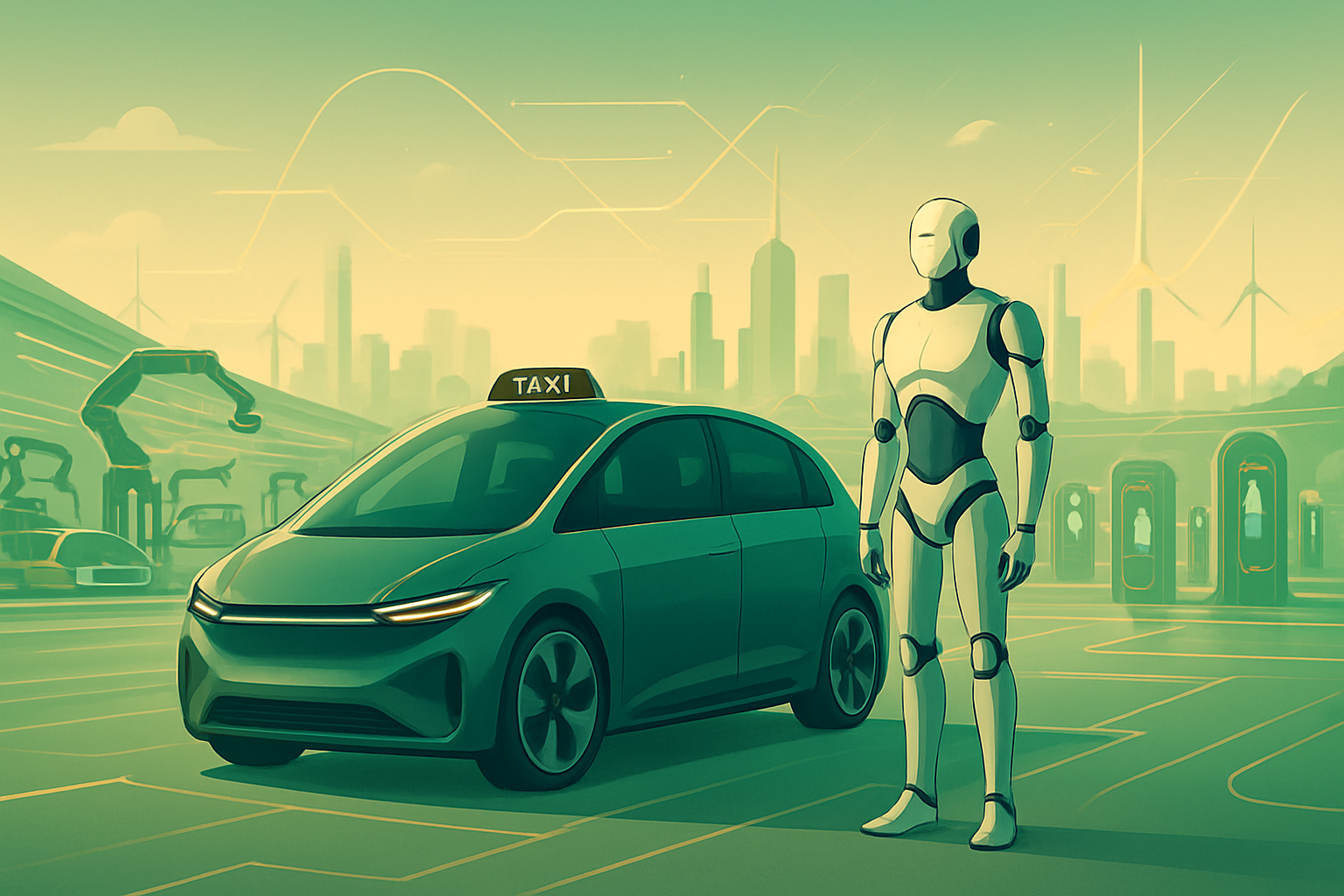
    Following a volatile 2025—a year marked by the first significant multi-year decline in vehicle deliveries and the loss of its title as the world’s top EV seller to China’s BYD—Tesla is aggressively rebranding. The focus has shifted from high-volume manufacturing to the "AI Chapter," led by the impending launch of the Cybercab robotaxi and the deployment of the Optimus humanoid robot. With the stock trading in the $430–$447 range and carrying a valuation that defies traditional automotive metrics, Tesla remains the most debated company on Wall Street.

    Historical Background

    Founded in 2003 by Martin Eberhard and Marc Tarpenning, with Elon Musk joining as the lead investor shortly after, Tesla’s journey began with the Roadster in 2008. The company’s "Master Plan" was famously simple: build a low-volume, expensive car; use that money to build a mid-volume car at a lower price; and use that money to build an affordable high-volume car.

    The successful launches of the Model S (2012), Model X (2015), and the transformational Model 3 (2017) and Model Y (2020) turned Tesla from a niche startup into a global titan. Along the way, Tesla navigated "production hell," built a global network of Gigafactories from Shanghai to Berlin, and disrupted the century-old internal combustion engine industry. By the early 2020s, Tesla had achieved sustained profitability, was added to the S&P 500, and peaked at a market capitalization of over $1 trillion.

    Business Model

    Tesla’s business model is vertically integrated and increasingly diversified across four primary segments:

    1. Automotive: Designing and manufacturing EVs (Model 3, Y, S, X, Cybertruck). Revenue is driven by unit sales and leasing.
    2. Software & Services: This includes Full Self-Driving (FSD) subscriptions, insurance, and the Supercharger network. Notably, as of January 2026, Tesla has moved FSD to a $99/month subscription-only model to build recurring revenue.
    3. Energy Generation & Storage: Selling Megapacks for utilities and Powerwalls for homes. This segment saw a 50% year-over-year growth in 2025, deploying 47 GWh of storage.
    4. AI & Robotics: A nascent but high-potential segment involving the sale of humanoid robots (Optimus) and autonomous taxi services (Cybercab).

    Stock Performance Overview

    Tesla’s stock performance continues to be a roller coaster that rewards long-term believers and punishes short-term bears.

    • 1-Year Performance: In 2025, TSLA delivered a shareholder return of roughly 11%–13%, outperforming several legacy rivals but trailing the broader AI-driven tech sector.
    • 5-Year Performance: Over the last five years, the stock has seen massive gains, fueled by the scaling of the Model Y and the entry into the S&P 500, though it has faced several "drawdowns" of 40% or more during periods of high interest rates.
    • 10-Year Performance: TSLA remains one of the best-performing assets of the decade, with an appreciation exceeding 1,500%, reflecting its transition from a speculative venture to a dominant global industrial force.

    As of today, January 14, 2026, the stock is showing resilience despite a 4% dip earlier this month, as investors price in the April production start of the Cybercab.

    Financial Performance

    The 2025 fiscal year was financially "sobering" for Tesla's automotive wing. The company delivered 1.64 million vehicles, an 8.5% decline from 1.79 million in 2024.

    • Margins: Automotive gross margins have stayed under pressure, hovering around 16–17% due to aggressive price cuts to fight off Chinese competition.
    • Earnings: Consensus estimates for the upcoming Q4 2025 earnings report (Jan 28, 2026) suggest an EPS of $0.32–$0.45, a notable drop from the $0.73 seen in late 2024.
    • Valuation: Tesla trades at a trailing P/E of approximately 297x. This premium is nearly unique among trillion-dollar companies, justified by bulls as a valuation of Tesla’s Dojo supercomputer and its 7-billion-mile FSD database rather than its car sales.

    Leadership and Management

    The leadership team in early 2026 is streamlined for the AI transition.

    • Elon Musk (CEO): Musk remains the central figure, though his time is increasingly split between Tesla, X (formerly Twitter), and government advisory roles.
    • Tom Zhu (SVP, Automotive): Recently granted a massive 5-year contract extension in January 2026, Zhu is the operational engine behind the company’s global production.
    • Vaibhav Taneja (CFO): Taneja oversees a balance sheet that remains cash-rich, allowing Tesla to invest billions in AI hardware despite slowing car sales.
    • Board Dynamics: The addition of John "Jack" Hartung (former CFO of Chipotle) in mid-2025 has brought much-needed retail and operational governance to the Audit Committee.

    Products, Services, and Innovations

    Tesla’s current R&D is focused on three pillars:

    1. The Cybercab: A purpose-built robotaxi without a steering wheel or pedals, set for mass production in April 2026.
    2. Optimus Gen 3: Tesla's humanoid robot has moved past the prototype stage. Several thousand units are already working in Tesla’s own factories, with a production goal of 50,000 units by year-end 2026.
    3. FSD v14: The latest software iteration is being touted as "quasi-Level 4," with Tesla seeking regulatory approval to launch it in Europe and China by March 2026.

    Competitive Landscape

    The competitive landscape has shifted dramatically.

    • BYD (SZ: 002594): The Chinese giant officially surpassed Tesla in total EV sales in 2025, leveraging a lower cost structure and rapid battery innovation.
    • Waymo (Alphabet): In the autonomy race, Waymo remains the primary rival, having logged millions of driverless miles. Tesla’s advantage remains its "vision-only" scale, while Waymo relies on expensive Lidar-mapped cities.
    • Legacy OEMs: Companies like Ford (NYSE: F) and GM (NYSE: GM) have scaled back their EV ambitions, inadvertently giving Tesla more breathing room in the U.S. luxury EV market.

    Industry and Market Trends

    The "Autonomy Boom" of 2026 is the defining trend. Governments are moving from skepticism to a race for adoption. The transition to "software-defined vehicles" means that hardware margins are shrinking, while software margins (FSD subscriptions) are becoming the primary goal for the entire industry. Additionally, the stabilizing of lithium prices in 2025 has helped keep battery costs down, though supply chain localization remains a hurdle.

    Risks and Challenges

    Tesla faces several existential risks:

    • Execution Risk: If the Cybercab production ramp (scheduled for April) hits delays, the high P/E ratio could see a massive "de-rating."
    • The "Elon Risk": Musk’s controversial public persona and multiple ventures continue to create "headline risk" for the stock.
    • Chinese Geopolitics: With a large portion of production and demand based in China, any escalation in trade tensions could devastate Tesla’s margins.

    Opportunities and Catalysts

    • Next-Gen Platform: The unveiling of a $25,000 consumer vehicle (Model 2) in Q2 2026 could reignite volume growth.
    • FSD Licensing: If Tesla successfully licenses FSD to other automakers, it could become the "Android of Autonomy."
    • Tesla Energy: The Megapack business is currently growing faster than the automotive business and provides a high-margin floor for the company’s earnings.

    Investor Sentiment and Analyst Coverage

    Wall Street is polarized.

    • Bulls: Firms like Wedbush maintain a $600 price target, viewing Tesla as the "ultimate AI play." They argue the current car sales decline is a temporary "trough" before the robotaxi explosion.
    • Bears: Critics like GLJ Research maintain "Sell" ratings, arguing that Tesla is a "broken growth story" whose AI claims are overhyped and years away from meaningful revenue.
    • Retail Sentiment: Tesla remains the most popular stock among retail investors, though some "Musk fatigue" has been noted in recent sentiment surveys.

    Regulatory, Policy, and Geopolitical Factors

    The regulatory environment is turning favorable.

    • U.S. Federal Policy: The proposed "SELF DRIVE Act of 2026" seeks to allow up to 90,000 autonomous vehicles per manufacturer to operate without traditional controls, a massive win for the Cybercab.
    • China’s 15th Five-Year Plan: Prioritizing "Smart Mobility," this plan has opened the door for Tesla to receive FSD approval in China by late Q1 2026, provided they meet strict data-security standards.

    Conclusion

    Tesla enters 2026 as a company in the midst of a metamorphosis. The data from 2025 confirms that the era of hyper-growth in car sales has ended, but the "AI Chapter" has only just begun. For investors, the question is no longer "How many cars can Tesla sell?" but rather "Can Tesla solve autonomy and scale humanoid labor?"

    The coming six months will be the most critical in the company’s history. With the Cybercab launch in April and the Model 2 reveal in June, 2026 will determine whether Tesla justifies its massive valuation premium or finally succumbs to the gravitational pull of being "just a car company."


    This content is intended for informational purposes only and is not financial advice.
  • Rivian at the Crossroads: A 2026 Deep-Dive into RIVN’s Mass-Market Transition

    Rivian at the Crossroads: A 2026 Deep-Dive into RIVN’s Mass-Market Transition

    As of January 14, 2026, Rivian Automotive, Inc. (NASDAQ: RIVN) stands at the most critical juncture in its young history. Once the darling of the 2021 IPO boom, the Irvine-based electric vehicle (EV) manufacturer has spent the last year transforming from a boutique producer of high-end adventure trucks into a leaner, software-driven enterprise eyeing the mass market. With its upcoming "R2" mid-size SUV slated for launch in the first half of 2026, Rivian is attempting to bridge the gap between "niche enthusiast brand" and "global automotive powerhouse." However, this transition is occurring against a backdrop of significant macroeconomic shifts and a radically altered regulatory environment in the United States.

    Historical Background

    Founded in 2009 by Dr. RJ Scaringe, Rivian spent over a decade in "stealth mode," focusing on the engineering of its flexible "skateboard" platform. The company’s trajectory shifted permanently in 2019 when it secured a massive $700 million investment round led by Amazon, followed by a landmark order for 100,000 electric delivery vans (EDVs).

    Rivian’s initial public offering in November 2021 was a historic event, briefly making it one of the world’s most valuable automakers by market cap before it had even achieved significant production. Since then, the company has navigated a grueling "production hell" period, a global supply chain crisis, and the complex task of scaling manufacturing at its plant in Normal, Illinois. By 2024 and 2025, Rivian pivoted toward cost-efficiency, redesigning its R1 flagship vehicles to reduce complexity and paving the way for the more affordable R2 platform.

    Business Model

    Rivian operates an integrated business model encompassing vehicle design, manufacturing, direct-to-consumer sales, and comprehensive after-sales services. Its revenue streams are currently categorized into three primary segments:

    1. Consumer Vehicles: The R1T (pickup) and R1S (SUV) serve the luxury "adventure" market. The forthcoming R2 and R3 platforms are designed to capture the $35,000–$50,000 price segment.
    2. Commercial Vehicles: The Electric Delivery Van (EDV) and the "Rivian Commercial Van" (RCV) platform, which is now available to non-Amazon customers.
    3. Software and Services: This is the fastest-growing segment, including Rivian’s proprietary autonomy software, infotainment subscriptions, and telematics for fleet management. In late 2025, this segment surged to represent nearly 27% of total revenue.

    Stock Performance Overview

    Rivian’s stock performance has been a rollercoaster for long-term holders. After peaking near $179 shortly after its 2021 IPO, the stock spent much of 2023 and 2024 in a downward drift as losses mounted.

    In late 2025, the stock experienced a significant rally, climbing over 40% on the back of a successful "Autonomy Day" and optimism surrounding the Volkswagen joint venture. However, as of mid-January 2026, RIVN is trading between $18.00 and $19.50. While this is an improvement from its 2024 lows, the stock remains down nearly 90% from its all-time high. The recent dip in early January 2026 is largely attributed to a major safety recall and the removal of federal EV tax credits.

    Financial Performance

    Rivian’s financial health is a tale of two narratives: improving unit economics vs. massive capital requirements.

    • Q3 2025 Highlights: Rivian achieved a major milestone by reporting its first consolidated gross profit of $24 million, driven by a 78% year-over-year increase in revenue to $1.56 billion.
    • 2025 Full Year: The company produced 42,284 vehicles and delivered 42,247. While deliveries fell year-over-year compared to 2024, the average selling price (ASP) rose due to a higher mix of premium trims and software additions.
    • 2026 Outlook: Analysts project 2026 revenue of approximately $6.9 billion to $7.0 billion. However, free cash flow burn remains a concern; estimates suggest a burn exceeding $4 billion in 2026 as the company ramps up for the R2 launch and begins construction on its Georgia plant.

    Leadership and Management

    Founder and CEO RJ Scaringe remains the central figure and strategic visionary. In early 2026, his leadership has focused on "vertical integration" and software. Following the departure of the Chief Commercial Officer in 2024, Scaringe continues to serve as the Interim Chief Marketing Officer, underscoring his hands-on approach to the brand's identity.

    Key recent appointments include Greg Revelle as Chief Customer Officer, tasked with leading the go-to-market strategy for the R2. The board also saw the departure of Rose Marcario in January 2026, reflecting a tightening of the leadership circle as the company prepares for its largest-ever manufacturing ramp.

    Products, Services, and Innovations

    Rivian’s competitive edge lies in its "software-defined vehicle" (SDV) architecture.

    • The R1 Refresh: The second-generation R1 vehicles (released in mid-2025) featured a completely redesigned electrical architecture that removed miles of wiring and reduced the number of ECUs.
    • R2 Platform: The R2 is the "make-or-break" product. Currently in the "production-intent" prototype phase, it promises a 300+ mile range at a $45,000 price point.
    • RAP1 Processor: Unveiled in December 2025, Rivian’s in-house AI processor powers its "Autonomy Platform," which the company aims to monetize through monthly subscriptions.
    • VW Joint Venture: The "RV Tech" JV with Volkswagen Group (OTC: VWAGY) allows Rivian to license its zonal architecture and software to one of the world’s largest automakers, providing a steady stream of licensing revenue.

    Competitive Landscape

    Rivian faces a "pincer movement" from two sides:

    1. The EV Leader: Tesla (NASDAQ: TSLA) continues to dominate the price war with its Model Y, which directly competes with the upcoming Rivian R2.
    2. Legacy Powerhouses: Ford (NYSE: F) and General Motors (NYSE: GM) have slowed their EV transitions but remain formidable with their electric truck offerings and established dealer networks.
    3. Luxury Rivals: Lucid Group (NASDAQ: LCID) competes in the high-end luxury space, though Rivian has successfully carved out a unique "outdoor adventure" niche that separates it from Lucid’s "executive luxury" branding.

    Industry and Market Trends

    The EV industry in 2026 is navigating a "chasm" between early adopters and the mass market. High interest rates in 2024-2025 dampened consumer demand for expensive vehicles, leading many manufacturers to pivot toward hybrids. Rivian’s refusal to build hybrids makes it a "pure play" EV bet, which carries higher risk in the current environment. Additionally, the shift toward "Software Defined Vehicles" is now the primary battleground, where Rivian holds a perceived lead over traditional legacy manufacturers.

    Risks and Challenges

    • Regulatory Headwinds: The most significant recent blow came from the elimination of the $7,500 federal EV consumer tax credit in late 2025. This effectively increases the price for consumers, making Rivian’s push into the $45,000 segment more difficult.
    • Safety Recalls: A January 8, 2026 recall of nearly 20,000 vehicles due to a steering-related defect has dented consumer confidence and added unexpected costs.
    • Capital Intensity: The construction of the Georgia plant is a multi-billion dollar bet. If the R2 launch faces delays, Rivian could face a liquidity crunch by 2027.

    Opportunities and Catalysts

    • The R2 Launch (H1 2026): This is the primary catalyst for 2026. A successful, high-quality launch could re-rate the stock as a volume manufacturer.
    • Monetization of Autonomy: If Rivian can achieve high attachment rates for its $100+/month autonomous driving features, its margin profile will shift closer to a software company than a traditional hardware company.
    • International Expansion: The VW partnership provides a potential bridge for Rivian to enter the European market using VW's logistical support.

    Investor Sentiment and Analyst Coverage

    Wall Street remains divided. The consensus rating as of mid-January 2026 is a "Hold," with a median 12-month price target of $16.15.

    • Bulls point to the first-ever gross profit in Q3 2025 as proof that the business model is scalable.
    • Bears focus on the "funding gap" and the loss of government subsidies, which they argue will prevent Rivian from reaching net profitability before its cash reserves dwindle.

    Regulatory, Policy, and Geopolitical Factors

    The U.S. political landscape has turned more challenging for EVs. Beyond the loss of consumer tax credits, the current administration has shifted focus away from strict emissions mandates. On the positive side, Rivian has been able to leverage Section 232 tariff offsets for some auto parts, helping to keep production costs down. However, the loss of over $100 million in expected revenue from the sale of regulatory credits—due to changes in federal enforcement—remains a notable drag on the balance sheet.

    Conclusion

    Rivian enters 2026 as a company that has proven it can build world-class vehicles, but has yet to prove it can build a world-class, self-sustaining business. The progress made in software revenue and the landmark Volkswagen partnership provide a safety net that did not exist two years ago. However, the removal of the $7,500 tax credit and the looming capital expenditures for the Georgia plant mean there is no room for error.

    Investors should watch the R2 launch in early 2026 as the definitive indicator of Rivian's future. If the company can maintain its brand prestige while scaling to high-volume production, it may finally fulfill the promise that drove its IPO. For now, it remains a high-beta, high-conviction play in a cooling EV market.


    This content is intended for informational purposes only and is not financial advice.