
Tag: Investing

  • The Apple Intelligence Super-Cycle: Siri’s $4 Trillion Evolution and the Future of AAPL

    The Apple Intelligence Super-Cycle: Siri’s $4 Trillion Evolution and the Future of AAPL

    As of February 26, 2026, Apple Inc. (NASDAQ: AAPL) finds itself at a historic crossroads. After decades of defining the smartphone era, the Cupertino giant is now aggressively pivoting to define the age of personal artificial intelligence. With a market capitalization that recently surged past the $4 trillion mark, Apple remains the world’s most scrutinized public company. The narrative surrounding the stock has shifted from concerns over stagnating hardware sales to intense anticipation of an "AI super-cycle," driven by the most significant overhaul of its software ecosystem since the introduction of the App Store. At the center of this transformation is "Apple Intelligence" and the long-awaited evolution of Siri into a truly proactive digital companion.

    Historical Background

    Founded in a Los Altos garage in 1976 by Steve Jobs, Steve Wozniak, and Ronald Wayne, Apple has undergone three distinct "acts." Act I was the personal computer revolution, led by the Macintosh in 1984. Act II began with Jobs’s return in 1997, giving birth to the iMac, iPod, and eventually the iPhone in 2007—a device that fundamentally rewired global society. Act III, the "Cook Era," began in 2011. Under CEO Tim Cook, Apple transitioned from a hardware-centric company into a services and ecosystem powerhouse, leveraging its massive installed base to generate high-margin recurring revenue. Today, we are witnessing the dawn of Act IV: the integration of generative AI into the very fabric of the Apple ecosystem, aiming to make the iPhone not just a tool, but an extension of the user’s cognitive identity.

    Business Model

    Apple’s business model is a masterclass in vertical integration and ecosystem "lock-in." It is divided into two primary engines:

    • Products: The iPhone remains the crown jewel, accounting for roughly 50-60% of total revenue. Other hardware pillars include the Mac, iPad, and a burgeoning "Wearables, Home, and Accessories" segment (Apple Watch, AirPods, and Vision Pro).
    • Services: This high-margin segment—comprising the App Store, Apple Music, iCloud, Apple Pay, and Apple TV+—has become the company’s primary growth driver. By early 2026, Services revenue has surpassed $100 billion annually, boasting gross margins near 75%.
      The synergy between these segments creates a "walled garden" where hardware sales drive service subscriptions, and service ecosystem stickiness ensures future hardware upgrades.

    Stock Performance Overview

    Apple’s stock has rewarded long-term shareholders with staggering returns, though the journey has seen periods of "flatness" during transition years.

    • 1-Year Performance: AAPL has gained approximately 11.5% over the past year. After a volatile mid-2025 where investors questioned the speed of AI deployment, the stock surged in late 2025 following record-breaking iPhone 17 sales.
    • 5-Year Performance: Investors have seen a 132.7% return since early 2021, reflecting the company’s resilience during the post-pandemic supply chain crisis and its successful expansion of the Services business.
    • 10-Year Performance: Over the last decade, AAPL has delivered an incredible 1,151.5% return, outperforming the S&P 500 by a wide margin and solidifying its place as a cornerstone of institutional and retail portfolios.

    Financial Performance

    In the fiscal year 2025, Apple reported a record $416.2 billion in total revenue, driven by a rebound in the Chinese market and sustained demand for high-end iPhone models.

    • Q1 2026 Results: For the quarter ending December 27, 2025, Apple posted revenue of $143.8 billion (a 16% year-over-year increase).
    • Profitability: Net income for Q1 2026 was $42.1 billion, with a diluted EPS of $2.84.
    • Margins: Gross margins hit a record 48.2%, benefited by the shift toward premium "Pro" models and the continued growth of higher-margin Services.
    • Cash Position: Apple continues to hold a massive cash pile of nearly $165 billion, which it uses aggressively for share buybacks and dividends, returning over $25 billion to shareholders in the last quarter alone.

    Leadership and Management

    Tim Cook, now 65, continues to lead with his signature focus on operational excellence and privacy. However, 2026 has seen a spotlight on succession. John Ternus, Senior VP of Hardware Engineering, has increasingly become the face of product launches, fueling rumors that he is the designated heir-apparent. The leadership team remains remarkably stable, though the recent retirement of AI head John Giannandrea in early 2026 has led to a reorganization under Amar Subramanya. Cook’s strategy is currently focused on "Local-First AI," prioritizing on-device processing to maintain Apple’s core brand promise of user privacy.

    Products, Services, and Innovations

    The defining innovation of 2026 is Siri 2.0. Moving away from the rigid, command-based assistant of the past, Siri 2.0 is powered by a proprietary Large Language Model (LLM). It now features "personal context awareness," meaning it can cross-reference data from emails, calendars, and messages to perform complex tasks (e.g., "Siri, find that PDF my accountant sent last week and summarize the tax liabilities").
    Beyond AI, the Vision Pro 2 has launched with a lighter form factor and a lower price point, aiming for mass-market adoption of spatial computing. Apple’s R&D spend remains at historic highs, focusing on custom silicon (M5 and A19 chips) and advanced health sensors for future wearables.

    Competitive Landscape

    Apple faces a two-front war. In hardware, Samsung (OTCPK: SSNLF) continues to innovate with foldable displays, while Huawei has regained significant ground in the high-end Chinese market. In AI, Apple is playing "catch-up" with Microsoft (NASDAQ: MSFT) and Google (NASDAQ: GOOGL). While Apple lacks the massive cloud-compute infrastructure of its rivals, it leverages a unique advantage: the world’s most powerful fleet of edge devices. By running AI models directly on the iPhone's Neural Engine, Apple offers a speed and privacy advantage that cloud-dependent rivals struggle to match.

    Industry and Market Trends

    The primary trend in 2026 is the "Edge AI" revolution. As LLMs become more efficient, the industry is shifting from centralized cloud processing to on-device execution. This favors Apple’s vertically integrated stack. Additionally, the "Services-as-a-Platform" trend continues, where AI features are bundled into premium subscription tiers, providing a new recurring revenue stream for Apple Intelligence features.

    Risks and Challenges

    Despite its dominance, Apple faces significant headwinds:

    • Regulatory Stranglehold: The U.S. Department of Justice (DOJ) is actively pursuing an antitrust case targeting the "Walled Garden," which could force changes to the App Store and iMessage.
    • Geopolitical Fragility: With significant manufacturing and revenue tied to China, any escalation in Taiwan Strait tensions remains a "black swan" risk for the company.
    • AI Execution: If Siri 2.0 fails to meet the high expectations set by competitors like OpenAI’s "o2" models, Apple risks losing its premium "innovation" status.

    Opportunities and Catalysts

    • The AI Super-Cycle: Analysts believe hundreds of millions of older iPhones are now "technologically obsolete" for AI features, creating a massive upgrade cycle in 2026 and 2027.
    • Health Tech: Apple’s expansion into non-invasive glucose monitoring and advanced cardiac diagnostics could turn the Apple Watch into an essential medical device.
    • Manufacturing Diversification: The shift of production to India and Vietnam is reaching a critical mass, potentially insulating the company from future trade wars.

    Investor Sentiment and Analyst Coverage

    Wall Street is currently "Risk-On" for Apple.

    • Wedbush Securities: Dan Ives has a "top pick" rating and a $350 price target, calling the AI rollout a "historical pivot."
    • Goldman Sachs: Maintains a "Buy" with a $330 target, focusing on the underappreciated growth in the Services ecosystem.
    • Morgan Stanley: While bullish ($315 target), they caution that high memory costs in AI-capable chips could slightly compress hardware margins in late 2026.
      Institutional ownership remains high, with major funds viewing AAPL as a "defensive growth" play.

    Regulatory, Policy, and Geopolitical Factors

    In the European Union, the Digital Markets Act (DMA) continues to challenge Apple’s control. Apple has entered a standoff with the EU over "interoperability" requirements for its AI features, leading to temporary delays in regional rollouts. In the U.S., the policy environment is increasingly focused on data privacy and the competitive impact of "Big Tech." Geopolitically, Apple’s recent move to assemble Mac minis in Houston, Texas, reflects a broader "de-risking" strategy away from total Asian dependency.

    Conclusion

    Apple Inc. enters the mid-2020s as a behemoth in transition. While its financial engine is more powerful than ever, its future depends on the successful execution of its AI strategy. Siri 2.0 represents more than just a software update; it is the cornerstone of a new user interface paradigm. For investors, the bull case rests on the "super-cycle" of AI hardware upgrades and the expansion of the high-margin Services business. However, regulatory pressures and the inherent volatility of the AI arms race require a balanced perspective. Apple has navigated tech transitions before—from desktop to mobile—and its current trajectory suggests it is well-positioned to lead the move from mobile to personal intelligence.


    This content is intended for informational purposes only and is not financial advice.

  • The Portable Power Revolution: A Deep Dive into Nano Nuclear Energy (NNE) and the UAE Strategic Expansion

    The Portable Power Revolution: A Deep Dive into Nano Nuclear Energy (NNE) and the UAE Strategic Expansion

    As of February 24, 2026, the global energy landscape is undergoing a profound transformation, driven by the dual imperatives of decarbonization and the insatiable power demands of artificial intelligence (AI) data centers. At the center of this "Nuclear Renaissance" is Nano Nuclear Energy Inc. (NASDAQ: NNE), a company that has rapidly evolved from a 2022 startup to a leading contender in the micro-modular reactor (MMR) space.

    Nano Nuclear has captured the market's attention by championing a "portable" nuclear future. Unlike traditional large-scale reactors that take a decade to build, NNE’s technology focuses on small, factory-built reactors that can be shipped in standard containers. The company’s recent strategic pivot toward the Middle East—highlighted by a landmark partnership in the United Arab Emirates (UAE)—has solidified its status as a global player in the next generation of clean energy infrastructure.

    Historical Background

    Nano Nuclear Energy was founded in February 2022 by Jay Jiang Yu, a financier with a track record in corporate restructuring, and James Walker, a veteran nuclear physicist with experience in the United Kingdom’s naval nuclear program. Their vision was to create a vertically integrated nuclear company that controlled everything from reactor design to fuel fabrication and transportation.

    The company went public on the NASDAQ in May 2024 at an IPO price of $4.00 per share. While initially viewed as a high-risk speculative play, NNE’s fortunes changed in early 2025 when it aggressively acquired the intellectual property and assets of the bankrupt Ultra Safe Nuclear Corporation (USNC) for approximately $8 million. This acquisition transformed NNE’s portfolio, adding the KRONOS and LOKI reactor designs and significantly accelerating its path toward commercialization.

    Business Model

    Nano Nuclear operates under a "four-pillar" vertically integrated business model designed to generate multiple revenue streams throughout the nuclear lifecycle:

    1. Reactor Design and Sales: Developing the ZEUS, KRONOS, and LOKI microreactors for terrestrial and space applications.
    2. HALEU Energy Fuel (HEF): A subsidiary focused on establishing a domestic supply chain for High-Assay Low-Enriched Uranium (HALEU), the essential fuel for advanced reactors.
    3. Advanced Fuel Transportation (AFT): A logistics arm that holds exclusive licenses for specialized "baskets" designed to transport HALEU safely across borders.
    4. Nano Nuclear Space (NNS): A division exploring the use of microreactors for lunar bases and satellite propulsion, leveraging the LOKI reactor design.

    By controlling the fuel and the transport, NNE aims to de-risk the deployment of its reactors and provide a "one-stop-shop" service for industrial and government clients.

    Stock Performance Overview

    Since its debut on May 8, 2024, NNE has been one of the most volatile and high-performing stocks in the energy sector.

    • 1-Year Performance (Feb 2025 – Feb 2026): After the USNC acquisition in early 2025, the stock went on a historic run, peaking at $56.63 in October 2025 as investor mania for "AI-nuclear" plays reached its zenith.
    • Performance Since IPO: From its $4.00 IPO, the stock has risen over 500%. As of today, February 24, 2026, the stock trades in the $24.00 – $26.00 range, reflecting a healthy consolidation after the 2025 surge.
    • 5-Year and 10-Year Horizons: As a young company, NNE lacks long-term historical data. However, its market capitalization has grown from less than $100 million at IPO to approximately $1.3 billion today.

    Financial Performance

    Financials for Nano Nuclear reflect its status as a pre-revenue, high-growth technology firm.

    • Cash Position: Following a massive $400 million private placement in late 2025, NNE reported a cash balance of $577.5 million as of December 31, 2025.
    • Earnings: The company continues to report net losses as it pours capital into research, development, and prototype construction. Current quarterly operational burn is estimated at $4 million, though this is expected to rise as the University of Illinois (UIUC) prototype project scales up.
    • Valuation: With a market cap of $1.3 billion and zero revenue from reactor sales, NNE is valued based on the projected NPV of its future fuel contracts and the successful licensing of its KRONOS reactor.

    Leadership and Management

    The leadership team is a blend of Wall Street savvy and deep-bench nuclear engineering:

    • Jay Yu (Founder & Executive Chairman): Known for his ability to raise capital and build international brand awareness.
    • James Walker (CEO): Provides the technical credibility necessary to navigate the complex nuclear regulatory landscape.
    • Dr. Florent Heidet (CTO): A former Argonne National Laboratory lead who oversees the engineering of the ZEUS and KRONOS projects.
    • Sarah Lennon (International Policy Advisor): A former Department of Energy official hired in 2025 to manage the company's expanding global footprint, particularly in the Middle East.

    Products, Services, and Innovations

    NNE’s product pipeline is divided by application:

    • ZEUS: A 1.5–2.0 MW "solid core battery" reactor designed for remote mining sites and disaster relief. It uses passive cooling, meaning it requires no pumps or fluids to prevent overheating.
    • KRONOS MMR: A 45 MW high-temperature gas-cooled reactor (HTGR) acquired from USNC. This is NNE's flagship for industrial deployment and data center power.
    • LOKI: A microreactor tailored for space applications, intended to provide power for lunar surface missions.
    • HALEU Transportation: AFT’s proprietary transportation technology is a critical innovation, as the global shortage of HALEU remains a primary bottleneck for the entire advanced nuclear industry.

    Competitive Landscape

    Nano Nuclear operates in an increasingly crowded field of "New Nuclear" players:

    • Oklo Inc. (NYSE: OKLO): Backed by Sam Altman, Oklo is further ahead in signing Power Purchase Agreements (PPAs) but lacks NNE’s focus on the integrated fuel transport business.
    • BWX Technologies (NYSE: BWXT): The industry incumbent. BWXT has the manufacturing capacity and government contracts (Project Pele) that NNE lacks, but it is a slower-moving, larger-cap company.
    • X-energy: A major competitor in the gas-cooled reactor space. X-energy has substantial backing from the U.S. Department of Energy (DOE).

    NNE’s competitive edge lies in its portability and vertical integration, aiming to be more agile and more comprehensive than its rivals.

    Industry and Market Trends

    Three primary trends are driving NNE's growth:

    1. The AI Surge: Hyperscalers (Microsoft, Google, Amazon) are seeking 24/7 carbon-free power for AI data centers, moving away from intermittent wind and solar toward nuclear.
    2. Energy Security: Geopolitical tensions have forced nations to seek decentralized energy sources that are not dependent on vulnerable national grids.
    3. Decarbonization Mandates: Global "Net Zero" targets by 2050 are making advanced nuclear a non-negotiable part of the energy mix.

    Risks and Challenges

    Despite its success, NNE faces significant hurdles:

    • Regulatory Risk: The U.S. Nuclear Regulatory Commission (NRC) has a rigorous and often slow approval process. Any delay in the KRONOS licensing could burn through NNE’s cash reserves.
    • Fuel Supply Chain: While NNE is building a HALEU pipeline, the world still largely relies on Russia for HALEU. Establishing a domestic or allied supply is a massive geopolitical and logistical challenge.
    • Execution Risk: Building a nuclear reactor is vastly different from designing one. Moving from prototype to commercial mass production is a hurdle that few startups have ever cleared.

    Opportunities and Catalysts

    The most significant near-term catalyst is the UAE Partnership. In early 2026, NNE signed a Memorandum of Understanding (MOU) with EHC Investment L.L.C. of Abu Dhabi to explore a joint venture for deploying microreactors in the Gulf. This partnership, bolstered by NNE’s relationship with the Emirates Nuclear Energy Corporation (ENEC), positions the company to power desalination plants and heavy industry in a region with high capital and high energy needs.

    Additionally, the UIUC Prototype in Illinois is expected to see site characterization completed by mid-2026, providing a tangible milestone for investors.

    Investor Sentiment and Analyst Coverage

    Investor sentiment toward NNE is polarized. Retail investors have flocked to the stock as a "pure play" on the nuclear-AI connection. On Wall Street, coverage has expanded significantly in 2025, with several mid-tier investment banks initiating "Buy" ratings based on the USNC asset acquisition. However, institutional investors remain cautious, watching for the first "pour of concrete" at the UIUC site as a sign of true operational maturity.

    Regulatory, Policy, and Geopolitical Factors

    The U.S. government has been increasingly supportive of advanced nuclear through the ADVANCE Act, which streamlines NRC reviews. Furthermore, the U.S. has a strategic interest in NNE’s international expansion (like the UAE deal) to counter Chinese and Russian influence in the global nuclear export market. Geopolitically, NNE acts as a vehicle for "Nuclear Diplomacy," exporting American technology to key allies in the Middle East and Southeast Asia.

    Conclusion

    Nano Nuclear Energy (NASDAQ: NNE) is a high-conviction bet on the future of decentralized power. By February 2026, the company has successfully transitioned from a design-focused startup to an internationally recognized player with a robust $577 million cash cushion and a strategic foothold in the UAE.

    For investors, the path forward is clear but fraught with technical and regulatory obstacles. The company’s ability to navigate the NRC licensing process for the KRONOS reactor and successfully establish its HALEU fuel transport business will determine if it becomes a pillar of the 21st-century energy grid or remains a speculative pioneer.


    This content is intended for informational purposes only and is not financial advice.

  • High Volatility and Earnings Crossroads: A Deep Dive into Hims & Hers Health (HIMS) in 2026

    High Volatility and Earnings Crossroads: A Deep Dive into Hims & Hers Health (HIMS) in 2026

    As of February 23, 2026, Hims & Hers Health, Inc. (NYSE: HIMS) finds itself at a critical crossroads that has sent shockwaves through the telehealth and pharmaceutical sectors. Once the darling of the "personalized medicine" movement, the company is currently grappling with extreme stock volatility following a series of aggressive regulatory maneuvers and high-stakes litigation from legacy pharmaceutical giants.

    Investors are laser-focused on today’s earnings expectations, which are being weighed against a backdrop of legal challenges regarding the company's compounded GLP-1 weight-loss offerings. HIMS has evolved far beyond its origins as a provider of lifestyle generic drugs, yet its recent reliance on the weight-management "gold rush" has turned it into a high-beta battleground for bulls and bears alike.

    Historical Background

    Founded in 2017 by Andrew Dudum, Hims began as a direct-to-consumer (DTC) platform aimed at destigmatizing "embarrassing" health conditions for men, specifically erectile dysfunction and hair loss. By 2018, it launched "Hers," expanding into birth control and skin care. The company went public via a SPAC merger in early 2021, a move that provided the capital necessary to transition from a marketing-heavy startup into a vertically integrated healthcare provider.

    The true transformation began in 2023 and 2024, as the company pivoted toward a "Medical Excellence" (Med-Ex) strategy. This involved shifting away from simple generic distribution toward proprietary, personalized formulations. By 2025, HIMS had solidified its place as a powerhouse in the weight-management space, leveraging FDA "shortage lists" to offer compounded versions of popular GLP-1 medications, a move that supercharged its subscriber growth but planted the seeds for its current regulatory hurdles.

    Business Model

    The HIMS business model is built on a high-margin, recurring subscription framework. It operates as a multisided platform connecting patients, licensed medical providers, and its own internal pharmacy fulfillment centers.

    Key revenue segments include:

    • Direct-to-Consumer Subscriptions: The core of the business, where patients pay monthly or quarterly for ongoing treatments in weight loss, hair care, sexual health, and mental health.
    • Personalized Formulations (MedMatch): Using its "MedMatch" AI, HIMS tailors dosages and combines multiple active ingredients into single daily treatments (e.g., combining hair growth medication with cardiovascular health supplements), which helps drive higher retention.
    • In-House Compounding: Through the acquisition of FDA-registered 503B outsourcing facilities (like MedisourceRx), HIMS controls the production of its medications, allowing for higher gross margins than traditional pharmacies.

    Stock Performance Overview

    HIMS has been one of the most volatile stocks in the mid-cap healthcare space over the last two years:

    • 1-Year Performance: Down roughly 40% from its 2025 highs, primarily due to recent legal setbacks in early 2026.
    • 5-Year Performance: Despite the recent crash, the stock remains significantly above its 2022 lows, reflecting the massive scaling of its revenue base from $200 million to nearly $3 billion.
    • Market Context: In early 2026, the stock experienced a "flash crash" following news that the FDA had officially removed semaglutide from the national shortage list, effectively ending the legal protection for HIMS's most profitable weight-loss segment.

    Financial Performance

    Prior to the recent turbulence, HIMS demonstrated an impressive financial trajectory. In late 2024, the company achieved its first full year of GAAP profitability, a milestone that many telehealth peers have yet to reach.

    • Revenue Growth: Analysts expect 2026 revenue to land near $2.8 billion, representing a 20%+ year-over-year increase, though these figures are being revised downward.
    • Margins: Gross margins have historically stayed above 75%, driven by the efficiency of its digital platform and internal compounding.
    • Valuation: Trading at a Forward P/E of approximately 22x (adjusted for recent price drops), the stock appears "cheap" to some, while others argue the "E" in that ratio is at high risk due to the loss of GLP-1 compounding revenue.

    Leadership and Management

    CEO Andrew Dudum remains the visionary leader of the company, though his aggressive strategy has recently come under fire from institutional critics. Dudum’s focus on "Medical Excellence" led to the hiring of specialized Chief Medical Officers for specific verticals (obesity, hormone health), moving the company away from a "lifestyle" brand toward a legitimate healthcare system.

    The board has recently been bolstered with veterans from both the tech and pharmaceutical industries to navigate the complex regulatory landscape of 2026. However, governance reputation took a hit in 2025 following reports of sanitation issues at their acquired compounding facilities, a crisis the management team is still working to resolve.

    Products, Services, and Innovations

    HIMS continues to innovate through its MedMatch AI platform, which analyzes millions of patient data points to predict which treatment combinations will yield the fewest side effects.

    • Weight Management: The flagship product for 2025 was compounded semaglutide. In early 2026, HIMS attempted to pivot to oral GLP-1 "copycats," which led to the current FDA friction.
    • Cardiovascular Health: HIMS recently launched heart health bundles, combining statins with other treatments to address the metabolic health of its aging subscriber base.
    • International Expansion: The 2025 acquisition of the Australian health platform Eucalyptus has given HIMS a significant foothold in the APAC region.

    Competitive Landscape

    The competitive field is divided into three tiers:

    1. DTC Telehealth: Companies like Ro (Roman) and Noom compete directly for the same digital-native patient.
    2. Big Pharma: Eli Lilly (NYSE: LLY) and Novo Nordisk (NYSE: NVO) have launched their own direct delivery services (LillyDirect), aimed at cutting out HIMS by offering branded medications directly to patients.
    3. Big Tech: Amazon Clinic (NASDAQ: AMZN) remains a persistent threat, leveraging its logistical dominance to provide low-cost telehealth consultations.

    Industry and Market Trends

    The "Personalized Medicine" trend is the primary driver for the sector. Patients are increasingly moving away from "one-size-fits-all" generics in favor of custom-dosed medications. Furthermore, the rise of the "GLP-1 economy" has fundamentally changed consumer expectations for weight loss, turning it into a chronic condition management category rather than a short-term fix.

    Risks and Challenges

    The risks facing HIMS in February 2026 are substantial:

    • Regulatory Crackdown: The FDA’s removal of GLP-1s from the shortage list has stripped HIMS of its ability to legally sell compounded semaglutide in its current form.
    • Litigation: Novo Nordisk’s February 2026 lawsuit alleging patent infringement and "deceptive marketing" poses a multi-hundred-million-dollar threat to the balance sheet.
    • Operational Safety: Previous FDA warning letters regarding sanitation at MedisourceRx have raised concerns about the company's ability to maintain "Big Pharma" quality standards in its 503B facilities.

    Opportunities and Catalysts

    Despite the gloom, several catalysts could spark a recovery:

    • MedMatch Expansion: If HIMS can successfully transition its 2.5 million subscribers into non-compounded personalized plans (using FDA-approved generics in proprietary combinations), it can bypass the GLP-1 litigation.
    • M&A Potential: With a depressed valuation and a massive subscriber base, HIMS could become an acquisition target for a traditional retail pharmacy like CVS Health (NYSE: CVS) or a tech giant looking to bolster its healthcare footprint.
    • Hormone Health: The company’s move into menopause and testosterone replacement therapy (TRT) represents an underserved multi-billion dollar market.

    Investor Sentiment and Analyst Coverage

    Wall Street sentiment is currently "Deeply Polarized."

    • Bulls: Argue that the company’s platform and 2-million-plus subscribers are undervalued and that the GLP-1 fallout is a temporary "cleansing" of the business model.
    • Bears: Claim that HIMS's growth was a "mirage" built on a temporary regulatory loophole that has now closed.
    • Institutional Activity: Several large hedge funds reduced their positions in late 2025, though retail "diamond hand" sentiment remains high on social platforms.

    Regulatory, Policy, and Geopolitical Factors

    The regulatory environment has shifted from permissive to restrictive. The 2026 FDA stance on "copycat" medications is part of a broader policy shift to protect pharmaceutical innovation (and patent life) in the wake of the GLP-1 craze. Geopolitically, the expansion into Australia and potential moves into the UK provide some diversification against US-centric regulatory risk.

    Conclusion

    Hims & Hers Health (HIMS) remains one of the most intriguing stories in the public markets. On February 23, 2026, the company stands as a testament to both the power of digital health disruption and the formidable defenses of the traditional pharmaceutical establishment.

    For investors, the near-term path is fraught with volatility. The core question is whether HIMS can successfully pivot its weight-loss engine into a sustainable, legally compliant framework while maintaining its high growth rates. If the company can prove its "Med-Ex" strategy works without the crutch of shortage-list compounding, it may yet reclaim its status as a healthcare pioneer. If not, it risks becoming a cautionary tale of regulatory overreach.


    This content is intended for informational purposes only and is not financial advice.
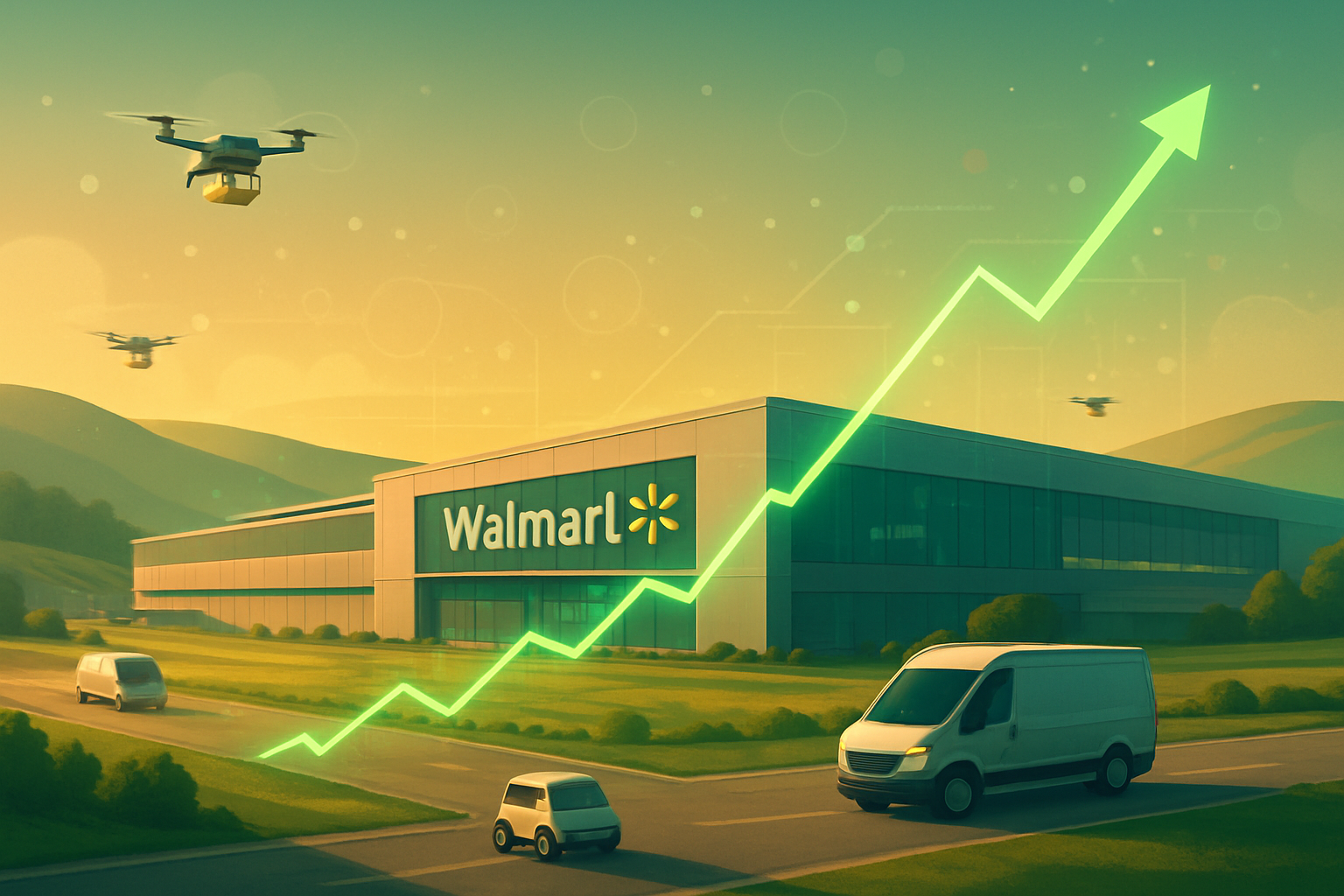
  • Walmart’s $1 Trillion Milestone: Analyzing the 2026 Tariff Windfall and the New Era of Agentic Commerce

    Walmart’s $1 Trillion Milestone: Analyzing the 2026 Tariff Windfall and the New Era of Agentic Commerce

    On February 23, 2026, Walmart Inc. (NYSE: WMT) solidified its position as a dominant titan of the modern economy, with its market capitalization officially crossing the historic $1 trillion threshold. This milestone comes during a transformative week for the retail giant, fueled by a landmark U.S. Supreme Court ruling regarding tariff refunds that has sent shockwaves through the consumer discretionary sector. As Walmart pivots from a traditional big-box retailer into a high-margin technology and data ecosystem, the convergence of favorable legal outcomes and aggressive automation has made it the central focus of global equity markets. Today’s surge in investor interest is not merely a reaction to retail sales but a validation of a decade-long metamorphosis.

    Historical Background

    Founded by Sam Walton in 1962 in Rogers, Arkansas, Walmart’s early narrative was defined by the "Everyday Low Price" (EDLP) philosophy and a revolutionary approach to supply chain logistics. For decades, the company’s growth was driven by aggressive physical expansion into rural and suburban America. However, the 21st century demanded a radical shift. The 2016 acquisition of Jet.com for $3.3 billion marked the beginning of the "McMillon Era," during which Walmart aggressively moved into e-commerce to challenge digital incumbents. Key milestones, such as the 2018 majority stake in India’s Flipkart and the 2024 acquisition of smart-TV maker VIZIO, transitioned the company from a store-based model to an omni-channel platform integrating retail, media, and logistics services.

    Business Model

    Walmart’s business model in 2026 is a sophisticated multi-revenue stream "flywheel." While the core remains high-volume retail across Walmart U.S., Walmart International, and Sam’s Club, the profit engines have shifted.

    • Retail & Grocery: Still the foundational volume driver, with Walmart controlling roughly 25% of the U.S. grocery market.
    • Walmart Connect: A high-margin retail media business that leverages first-party shopper data to sell targeted advertising.
    • Walmart Luminate: A data-as-a-service (DaaS) product where suppliers pay for granular consumer insights.
    • Walmart+: A membership-based recurring revenue stream providing delivery, fuel discounts, and streaming via Paramount+.
    • Fulfillment Services: Leveraging its physical footprint to provide "Last-Mile-as-a-Service" for third-party marketplace sellers.

    Stock Performance Overview

    The last decade has seen WMT evolve from a defensive value play into a high-performing compounder.

    • 10-Year Horizon: WMT has significantly outperformed the S&P 500, particularly during the inflationary period of 2022-2024 where its value proposition attracted "trade-down" shoppers from higher-income brackets.
    • The 2024 Catalyst: The 3-for-1 stock split in February 2024 served as a major liquidity event, broadening retail ownership and preceding a 72% rally that year.
    • Recent Performance: Over the past year leading into February 2026, the stock has climbed 45%, buoyed by record-breaking FY2026 earnings and the recent inclusion in the NASDAQ 100, which forced massive institutional buying.

    Financial Performance

    In its most recent fiscal year (ending January 31, 2026), Walmart reported a staggering $713.2 billion in total revenue, surpassing the $700 billion mark for the first time.

    • Margins: Operating margins expanded to 4.8%, up from historic lows of 4.1% in 2023, driven by the growth of advertising and data services.
    • E-commerce: Digital sales now account for 23% of total revenue, with a clear path toward profitability as fulfillment automation scales.
    • Cash Flow: Free cash flow remains robust at $18.5 billion, allowing for consistent dividend increases (now in its 53rd consecutive year) and aggressive share buybacks.
    • The Refund Windfall: Analyst projections suggest the recent tariff ruling could inject an additional $3.5 billion to $5 billion in one-time cash refunds over the next 18 months.

    Leadership and Management

    A new chapter began on February 1, 2026, with John Furner taking over as President and CEO following Doug McMillon’s retirement. Furner, who previously led Walmart U.S., is a seasoned veteran known for his "associate-first" culture and digital fluency. Under his leadership, the management team has doubled down on "Agentic Commerce"—the use of autonomous AI agents to manage household inventories. The board remains highly regarded for its disciplined capital allocation and its success in navigating the complex transition from physical to digital dominance.

    Products, Services, and Innovations

    Innovation at Walmart is currently focused on the "Automated Store" and "Generative AI."

    • Supply Chain: By early 2026, 60% of U.S. stores are serviced by automated distribution centers, reducing out-of-stocks and labor costs.
    • Sparky (AI Assistant): Walmart’s generative AI shopping assistant now handles complex queries like "Plan a gluten-free birthday party for 10 kids under $100," adding items directly to the cart.
    • Drone Delivery: Following regulatory easing in 2025, Walmart now offers 30-minute drone delivery to over 15 million households in 10 states.
    • Health & Wellness: The expansion of Walmart Health clinics into primary care and clinical trials has turned pharmacy visits into a comprehensive healthcare service.

    Competitive Landscape

    While Amazon (NASDAQ: AMZN) recently eclipsed Walmart in total annual revenue, the competitive landscape has bifurcated.

    • vs. Amazon: Walmart maintains a superior "physical moat" with 90% of the U.S. population living within 10 miles of a store, allowing for more efficient grocery fulfillment than Amazon’s Whole Foods or Fresh units.
    • vs. Discount Rivals: In the face of pressure from Temu and Shein in the apparel and "general merchandise" segments, Walmart has pivoted toward quality and reliability, successfully siphoning market share from domestic dollar stores.
    • vs. Costco: Sam’s Club has aggressively closed the gap with Costco (NASDAQ: COST) by implementing digital-only checkout experiences, appealing to a younger, tech-savvy demographic.

    Industry and Market Trends

    The retail sector in 2026 is defined by "The Great Bifurcation." High-income consumers are increasingly seeking convenience and time-savings, while middle-and-lower-income tiers remain hyper-focused on value due to the lingering effects of the 2022-2024 inflation cycle. Walmart is uniquely positioned to capture both, using its premium Walmart+ service for the former and its EDLP pricing for the latter. Furthermore, the industry is seeing a massive shift toward "Retail Media," where the physical store becomes an advertising canvas, a trend Walmart is currently leading.

    Risks and Challenges

    Despite the $1 trillion valuation, several headwinds remain:

    • Labor Costs: As the largest private employer in the U.S., Walmart remains sensitive to wage inflation and potential unionization efforts in key hubs.
    • International Volatility: Geopolitical tensions in Southeast Asia and the Middle East continue to disrupt global sourcing, requiring costly supply chain diversifications.
    • Execution Risk: The heavy reliance on AI and automation carries the risk of technical failures or consumer backlash regarding data privacy and "algorithmic pricing."

    Opportunities and Catalysts

    • The Tariff Refund: The Supreme Court’s February 20, 2026 ruling against the IEEPA "Emergency" tariffs is the most immediate catalyst. This could result in a massive cash infusion, potentially earmarked for a special dividend or further M&A.
    • OnePay Expansion: Walmart’s proprietary financial services app, OnePay, is positioned to become a major player in the "Buy Now, Pay Later" (BNPL) and digital banking space, competing directly with fintech incumbents.
    • B2B Services: Selling its proprietary logistics and data software to other small-to-mid-sized retailers represents an untapped multibillion-dollar high-margin opportunity.

    Investor Sentiment and Analyst Coverage

    Sentiment on the Street is overwhelmingly bullish. Following the tariff ruling, major investment banks have revised their price targets upward, with several calling WMT a "Top Pick for 2026." Institutional ownership remains high, with significant increases from ESG-focused funds who have praised Walmart’s 2025 carbon neutrality milestones. Retail sentiment is also strong, as the VIZIO integration has made Walmart a household "tech" brand rather than just a grocer.

    Regulatory, Policy, and Geopolitical Factors

    The regulatory environment is the primary driver of today's market activity.

    • The IEEPA Ruling: On February 20, 2026, the Supreme Court ruled 6-3 that broad global tariffs imposed under the International Emergency Economic Powers Act were unconstitutional. Walmart, as a top importer, is lead claimant for refunds on billions in duties paid during the 2025 "Trade Emergency" period.
    • Section 301 Status: While the court upheld the older China-specific Section 301 tariffs in late 2025, the IEEPA ruling provides a more significant direct cash benefit for 2026 balance sheets.
    • Antitrust: Walmart’s growing dominance in digital advertising is drawing scrutiny from the FTC, though analysts believe the presence of Amazon and Google provides a sufficient competitive defense.

    Conclusion

    Walmart’s journey to a $1 trillion market cap on February 23, 2026, is a testament to the power of digital transformation in a legacy industry. By successfully pivoting from a vendor of goods to a provider of services—advertising, data, health, and automated logistics—the company has decoupled its growth from the thin margins of traditional retail. While the immediate boost from the Supreme Court’s tariff refund ruling provides a lucrative catalyst, the long-term thesis for WMT rests on its ability to integrate its physical footprint with its digital "Flywheel." Investors should monitor the integration of the OnePay financial ecosystem and the ongoing scaling of automated fulfillment as the next markers of performance. Walmart is no longer just a store; it is a vital piece of 21st-century infrastructure.


    This content is intended for informational purposes only and is not financial advice.

  • Coherent Corp. (COHR) 2026 Deep-Dive: The 1.6T Networking Supercycle and the Anderson Turnaround

    Coherent Corp. (COHR) 2026 Deep-Dive: The 1.6T Networking Supercycle and the Anderson Turnaround

    As of February 23, 2026, the global technology sector has shifted its gaze from the "GPU gold rush" to the "connectivity bottleneck." In this new era of artificial intelligence infrastructure, few companies occupy a more critical position than Coherent Corp. (NYSE: COHR). Once a fragmented conglomerate of industrial lasers and specialized materials, Coherent has undergone a radical transformation over the last 20 months under new leadership, emerging as the premier provider of the optical transceivers and photonic components that allow AI data centers to breathe.

    With the 1.6T (Terabit per second) networking cycle now in full swing, Coherent is no longer just a component supplier; it is viewed by Wall Street as a foundational engine of the AI revolution. Today, we examine how the company navigated the volatility of early February and why its strategic pivot toward high-speed networking has made it one of the most watched stocks of the 2026 fiscal year.

    Historical Background

    The Coherent of 2026 is a product of ambitious consolidation. Its roots lie in II-VI Incorporated, a company founded in 1971 that specialized in engineered materials and optoelectronic components. Over decades, II-VI grew through aggressive acquisitions, culminating in the 2022 transformative merger with Coherent, Inc., a pioneer in the laser industry. The combined entity took the Coherent name, signaling a shift toward a more unified brand identity.

    However, the initial years following the merger were marked by high debt and a complex portfolio that spanned across disparate industries like dental equipment, aerospace, and semiconductor manufacturing. The true "modern" era of Coherent began in June 2024 with the appointment of Jim Anderson as CEO. Anderson, arriving from Lattice Semiconductor, initiated a "speed-to-market" strategy that streamlined the company’s focus toward the burgeoning AI data center market, marking the most significant strategic shift in the company's 50-year history.

    Business Model

    Coherent operates a vertically integrated model that is unique in the photonics industry. While many competitors outsource their laser chips or specialize only in transceiver assembly, Coherent controls the entire value chain—from the growth of advanced materials like Indium Phosphide (InP) and Silicon Carbide (SiC) to the design of sophisticated optical modules.

    The company's revenue is primarily derived from three segments:

    • Networking: The high-growth engine, providing optical transceivers (800G and 1.6T) that connect GPUs in massive clusters.
    • Lasers: Serving industrial manufacturing, microelectronics (OLED displays), and medical markets.
    • Materials: Producing engineered substrates and components for power electronics and sensing.

    This vertical integration allows Coherent to capture higher "dollar content" per data center rack, as they produce both the internal laser chips and the external pluggable modules.

    Stock Performance Overview

    As of February 23, 2026, COHR has been one of the standout performers of the mid-2020s.

    • 1-Year Performance: The stock is up approximately 85%, driven by the massive ramp of 1.6T transceivers and successful divestitures of non-core assets.
    • 5-Year Performance: After a period of stagnation and debt-related pressure following the 2022 merger, the stock has broken out to new all-time highs, significantly outperforming the PHLX Semiconductor Index (SOX).
    • 10-Year Performance: Long-term shareholders who held through the II-VI transition have seen a compounded annual growth rate (CAGR) exceeding 20%, though the journey was marked by significant cyclical volatility.

    Notable moves in early February 2026 included a sharp 18% "flash dip" caused by concerns over AI algorithm efficiency (the "DeepSeek shock"), which has since been largely retraced as analysts reaffirmed the structural demand for bandwidth.

    Financial Performance

    Financial results for the second quarter of fiscal year 2026 (ended December 2025) showcased the success of the Anderson turnaround.

    • Revenue: Reached a record $1.69 billion for the quarter, an 18% increase year-over-year.
    • Margins: Non-GAAP gross margins have stabilized at 41%, up from 36% just two years ago, reflecting a shift toward higher-value AI products.
    • Profitability: Non-GAAP EPS for the most recent quarter was $1.29, beating the consensus estimate of $1.15.
    • Debt Management: A key focus for management, the company reduced its debt by over $400 million in the 2025 calendar year, primarily through the divestiture of its Aerospace and Defense division and strong free cash flow.

    Leadership and Management

    Jim Anderson’s leadership has been a primary catalyst for investor confidence. Since taking the helm in June 2024, Anderson has replaced several key executives with a lean management team focused on "operational excellence." His strategy involves rigorous portfolio pruning—exiting businesses where Coherent cannot be #1 or #2—and accelerating R&D cycles.

    The board of directors has also evolved, adding expertise in cloud computing and semiconductor operations. This shift in governance has moved Coherent away from its reputation as a "family-run" industrial firm toward a modern, high-tech powerhouse with clear shareholder alignment.

    Products, Services, and Innovations

    Innovation in 2026 is centered on the 1.6T optical transceiver. As AI models require ever-larger clusters of GPUs, the physical copper wiring used in the past has become a bottleneck. Coherent’s 1.6T solutions utilize advanced Silicon Photonics and Electro-absorption Modulated Lasers (EML) to move data at the speed of light with minimal power consumption.

    A massive competitive edge emerged in late 2025 with the ramp of Coherent's 6-inch Indium Phosphide (InP) wafer line in Sherman, Texas. By transitioning from 4-inch to 6-inch wafers, Coherent has significantly lowered the per-unit cost of the laser chips that go into every transceiver, creating a manufacturing moat that competitors like Lumentum are still racing to match.

    Competitive Landscape

    The primary rival remains Lumentum Holdings Inc. (NYSE: LITE). In the 2026 market, the competition is a "clash of philosophies."

    • Lumentum remains a favored "pure-play" component provider with a dominant market share in EML laser chips.
    • Coherent wins on vertical integration and scale. By selling the entire transceiver module to hyperscalers like Google, Meta, and Microsoft, Coherent captures more revenue per connection.

    Secondary competition comes from Innolight in China, though geopolitical trade barriers and the shift toward "Made in America" supply chains for critical AI infrastructure have favored Coherent’s domestic manufacturing footprint.

    Industry and Market Trends

    The "AI Networking Supercycle" is the dominant trend of 2026. Industry analysts estimate that for every $1 spent on AI compute (GPUs), approximately $0.15 to $0.20 is now spent on networking and connectivity—a ratio that has doubled since 2023.

    Additionally, the rise of "Liquid Cooling" in data centers has changed the physical requirements for optical transceivers, requiring them to operate in harsher thermal environments. Coherent’s expertise in advanced materials has allowed it to lead in "hardened" optical modules designed for the next generation of liquid-cooled AI pods.

    Risks and Challenges

    Despite the bullish narrative, Coherent faces several hurdles:

    1. China Exposure: While reducing its reliance, Coherent still maintains significant manufacturing and sales exposure in China, making it vulnerable to ongoing trade tensions and export controls.
    2. Cyclicality: The industrial laser and OLED display markets remain highly cyclical and sensitive to global GDP growth, which can drag on the high-growth Networking segment.
    3. The "Efficiency" Risk: As demonstrated in early February 2026, breakthroughs in AI software that require less hardware could lead to sudden shifts in investor sentiment, even if the long-term infrastructure trend remains intact.

    Opportunities and Catalysts

    Looking forward into the remainder of 2026, several catalysts remain:

    • OFC 2026 Conference: The upcoming Optical Fiber Communication conference in March is expected to be a showcase for Coherent’s 3.2T transceiver roadmap.
    • Silicon Carbide (SiC) Expansion: As the electric vehicle (EV) market enters a second wave of adoption, Coherent’s SiC substrate business is poised for a recovery, providing a diversified growth engine.
    • M&A Potential: With a cleaner balance sheet, rumors have begun to circulate about Coherent potentially acquiring specialized software-defined networking firms to further integrate their hardware stack.

    Investor Sentiment and Analyst Coverage

    Wall Street sentiment is overwhelmingly positive, with the median price target sitting at $250.00 as of late February. Major institutional investors, including Vanguard and BlackRock, have increased their positions over the last two quarters.

    Analyst notes frequently highlight the "Anderson Premium," suggesting that the CEO’s track record of execution at Lattice is being applied successfully here. Retail sentiment remains high, often fueled by Coherent’s proximity to the "NVIDIA ecosystem."

    Regulatory, Policy, and Geopolitical Factors

    Coherent is a major beneficiary of the U.S. CHIPS and Science Act. Its investment in the Sherman, Texas facility received federal support, aligning the company with the national priority of "reshoring" critical high-tech manufacturing. However, this also puts Coherent in the crosshairs of potential retaliatory measures from Beijing, particularly regarding its supply of engineered materials used in the Chinese telecom sector.

    Conclusion

    Coherent Corp. has successfully transitioned from a complex materials company to a focused leader in the AI networking space. By early 2026, the company has proven that it can execute on a massive scale, leveraging its vertical integration and the "Anderson Era" operational improvements to outpace the broader market.

    While the "DeepSeek shock" of early February served as a reminder of the volatility inherent in the AI sector, the fundamental demand for faster connectivity remains the most compelling tailwind in the technology industry. For investors, the key will be monitoring the 1.6T ramp and the company's ability to maintain its margin expansion as competition from Lumentum and Asian manufacturers intensifies. As it stands on February 23, 2026, Coherent is no longer just a participant in the AI story—it is the very fiber that holds it together.


    This content is intended for informational purposes only and is not financial advice.

  • The Glass Backbone of the AI Era: A Deep-Dive Research Feature on Corning Inc. (NYSE: GLW)

    The Glass Backbone of the AI Era: A Deep-Dive Research Feature on Corning Inc. (NYSE: GLW)

    As of February 23, 2026, Corning Inc. (NYSE: GLW) has completed a remarkable transformation. Long perceived by Wall Street as a steady, if somewhat cyclical, materials science company tethered to the television and smartphone markets, Corning has successfully repositioned itself as the primary "toll-booth" for the generative AI revolution. The company is currently in sharp focus following the January 2026 announcement of a $6 billion multi-year agreement with Meta Platforms and the early achievement of its 20% operating margin target. With global demand for optical glass reaching unprecedented levels to support AI data center clusters and the peak construction phase of the U.S. federal BEAD (Broadband Equity, Access, and Deployment) program, Corning finds itself at the center of the modern industrial zeitgeist.

    Historical Background

    Founded in 1851 as the Corning Glass Works, the company has a 175-year legacy of defining the material world. From blowing the glass for Thomas Edison’s first light bulbs to the 1915 invention of Pyrex® and the 1970 breakthrough in low-loss optical fiber, Corning has consistently utilized its expertise in glass science and optical physics to solve complex engineering problems.

    The company’s ability to survive and thrive through technological shifts—such as the transition from cathode-ray tubes (CRTs) to liquid crystal displays (LCDs) in the early 2000s—is a testament to its long-term R&D commitment. This historical DNA of "innovating through the trough" allowed Corning to invest heavily in idle capacity during the 2023-2024 slowdown, a strategic move that has paved the way for the current "Springboard" era of 2026.

    Business Model

    Corning operates through five primary reporting segments, each leveraging the company's core capabilities in glass science, ceramic science, and optical physics:

    1. Optical Communications: The largest and fastest-growing segment, providing fiber, cable, and connectivity solutions for hyperscale data centers and telecommunications providers.
    2. Display Technologies: A high-margin "cash cow" producing glass substrates for LCD and OLED screens (TVs, tablets, and laptops).
    3. Specialty Materials: Home to Gorilla Glass® for mobile devices and, increasingly, advanced glass substrates for semiconductor packaging.
    4. Environmental Technologies: Manufacturing ceramic substrates and filters for automotive emissions control.
    5. Life Sciences: Producing labware and specialized glass packaging (Valor® Glass) for the pharmaceutical industry.

    Stock Performance Overview

    Over the past decade, GLW has transitioned from a defensive yield play to a growth-oriented technology stock:

    • 1-Year Performance (2025-2026): The stock has outperformed the S&P 500 by over 35%, driven by the massive Meta contract and the successful execution of the Springboard plan.
    • 5-Year Performance: After stagnating between 2021 and 2023 due to post-pandemic inventory corrections, the stock broke out in mid-2024. Investors who entered during the "AI infrastructure" pivot have seen total returns exceeding 120%.
    • 10-Year Performance: GLW has delivered consistent value, though its volatility has increased as it became more integrated into the high-beta semiconductor and data center ecosystems.

    Financial Performance

    Corning’s 2025 full-year results underscore its renewed financial vigor:

    • Core Sales: $16.41 billion in 2025, a 13% increase year-over-year.
    • Core EPS: $2.52, growing more than twice as fast as sales (+29% YoY).
    • Operating Margins: Reached 20.2% in Q4 2025, meeting management's long-term goal a year early.
    • 2026 Outlook: Management recently raised its 2026 sales target to $18.4 billion, citing the convergence of AI demand and BEAD-funded rural broadband builds.
    • Free Cash Flow: Adjusted FCF nearly doubled in 2025 to $1.72 billion.

    Leadership and Management

    CEO Wendell Weeks, who has led the company since 2005, significantly consolidated his influence in late 2025 by reassuming the role of President. Weeks is widely respected for his "steady hand" and long-term vision. In mid-2025, the board appointed Avery (Hal) Nelson III as Chief Operating Officer, signaling a clear succession path. The leadership team’s reputation for disciplined capital allocation has been validated by the 2025-2026 growth surge.

    Products, Services, and Innovations

    Innovation is the engine of Corning’s competitive moat:

    • RocketRibbon® & Contour™ Fiber: High-density cables that allow 16x more connectivity in AI data centers.
    • Semiconductor Glass Substrates: A breakthrough area where Corning is partnering with Intel and TSMC to replace organic resins with glass in chip packaging.
    • Hemlock Semiconductor: A majority stake providing hyper-pure polysilicon for solar and semiconductor industries.

    Competitive Landscape

    • Optical Rivals: Coherent Corp. (NYSE: COHR) and Lumentum (NASDAQ: LITE) compete in transceivers, but Corning leads in physical fiber-optic cabling.
    • Specialty Glass Rivals: SCHOTT AG remains a formidable European competitor in pharma packaging and AR/VR optics.
    • Infrastructure Rivals: CommScope (NASDAQ: COMM) remains a competitor in enterprise connectivity but has struggled with high debt.

    Industry and Market Trends

    1. AI Interconnect Intensity: Connecting GPUs requires significantly more fiber-optic cable than standard servers.
    2. Screen Upsizing: Consumers are shifting toward 65-inch+ TVs, which use more glass per unit.
    3. U.S. Federal Spending: The BEAD program is currently in its peak construction phase in 2026.

    Risks and Challenges

    • PFAS Regulations: New "forever chemical" reporting requirements could increase manufacturing costs.
    • Geopolitical Friction: Reliance on Asian supply chains for the Display business remains a vulnerability.
    • Operational Drag: Scaling the new Michigan-based solar platform has caused temporary margin pressure.

    Opportunities and Catalysts

    The primary catalyst for 2026 is the $6 billion Meta deal. Additionally, the transition to glass substrates in semiconductors represents a multi-billion dollar opportunity that could re-rate the stock as a semiconductor equipment provider.

    Investor Sentiment and Analyst Coverage

    Sentiment is currently "Overweight" to "Strong Buy." Analysts highlight Corning as the "best-priced AI play," trading at a more reasonable valuation than GPU manufacturers. Hedge fund interest surged in Q4 2025 as the "incremental margin" story became clear.

    Regulatory, Policy, and Geopolitical Factors

    Corning is a major beneficiary of the CHIPS and Science Act and the Infrastructure Investment and Jobs Act. The company acts as a partner to the U.S. government in rebuilding domestic high-tech manufacturing, though it must navigate strict export controls for advanced optics.

    Conclusion

    Corning Inc. enters 2026 in its strongest position in decades. By positioning itself as the backbone of AI infrastructure, it has proven the value of its long-term R&D. While regulatory and geopolitical risks persist, the tailwinds from AI and federal spending are formidable. For investors, Corning represents a blend of industrial legacy and cutting-edge technology growth.


    This content is intended for informational purposes only and is not financial advice.

  • Carvana’s Redemption: From the Brink of Bankruptcy to a High-Octane Digital Dominator

    Carvana’s Redemption: From the Brink of Bankruptcy to a High-Octane Digital Dominator

    As of February 20, 2026, the financial community continues to study the resurgence of Carvana Co. (NYSE: CVNA) as one of the most remarkable corporate turnarounds in modern retail history. Just over three years ago, the "Amazon of Cars" was teetering on the edge of bankruptcy, its stock price languishing below $5. Today, Carvana has not only survived but has emerged as a structurally leaner, highly profitable, and high-growth powerhouse that is on the verge of overtaking CarMax as the largest used car retailer in the United States. With its unique vertical integration, AI-driven operations, and the successful assimilation of the ADESA physical auction network, Carvana remains a central focus for growth investors and industry analysts alike.

    Historical Background

    Carvana’s journey began in 2012, founded by Ernie Garcia III, Ryan Keeton, and Ben Huston. The company was initially incubated as a subsidiary of DriveTime Automotive Group, a major used-car retailer owned by Garcia III’s father, Ernie Garcia II. This relationship provided Carvana with $100 million in seed funding and critical access to DriveTime’s existing inventory and logistics infrastructure.

    After spinning off from DriveTime in 2014, Carvana went public in April 2017 at an IPO price of $15 per share. The company’s vision was radical: a fully online car-buying experience, complete with high-tech "vending machines" that served as automated pickup points. During the COVID-19 pandemic, this digital-first model catapulted the company into hyper-growth, with its stock price peaking at over $370 in 2021. However, the subsequent rise in interest rates and cooling used car prices in 2022 led to a nearly 99% crash in its valuation, forcing a massive restructuring that paved the way for its current 2026 standing.

    Business Model

    Carvana operates an end-to-end e-commerce platform for buying and selling used vehicles. Its business model is built on three primary pillars:

    1. Retail Sales: Selling used cars directly to consumers via its website and app, with a 7-day money-back guarantee.
    2. Wholesale (ADESA): Since acquiring ADESA’s U.S. physical auction business in 2022, Carvana has integrated 27 "mega-centers" into its network, allowing it to capture margins by selling non-retail inventory to other dealers.
    3. Financial Services: A significant portion of Carvana’s profit comes from originating and selling auto loans, often through its relationship with Bridgecrest.

    By controlling the entire lifecycle—from vehicle acquisition and reconditioning to financing and delivery—Carvana captures "Gross Profit per Unit" (GPU) that significantly exceeds traditional dealership averages.

    Stock Performance Overview

    Carvana’s stock performance has been a textbook example of high-beta volatility:

    • 1-Year Performance: Over the last twelve months (Feb 2025 – Feb 2026), the stock has risen roughly 17%, trading at $332.79 today. This reflects a transition from "recovery mode" to "growth mode."
    • 5-Year Performance: Comparing today’s price to the February 2021 peak of $308.74, the stock has delivered a modest ~7.8% total return, illustrating the extreme "V-shaped" recovery from the 2022 lows of $4.
    • 10-Year Performance: Since its 2017 IPO at $15, the stock has appreciated by approximately 2,100%, significantly outperforming the S&P 500 over the same period.
      The stock reached a 52-week high of $486.89 in January 2026 before cooling slightly following its most recent quarterly report.

    Financial Performance

    In early 2026, Carvana reported fiscal year 2025 results that exceeded even the most bullish expectations:

    • Revenue: $20.32 billion for 2025, a 49% year-over-year increase.
    • Retail Units: The company sold 596,641 retail units in 2025, up 43% YoY.
    • Adjusted EBITDA: $2.24 billion, representing a record 11.0% margin.
    • Net Income: $1.895 billion, though this was aided by a $685 million non-cash tax benefit.
    • Balance Sheet: Perhaps most importantly, Carvana’s Net Debt-to-EBITDA has plummeted to 1.3x, down from over 17x in 2023. This deleveraging was achieved through aggressive debt buybacks and a record-breaking GPU.

    Leadership and Management

    The company is led by Ernie Garcia III, who has successfully transitioned from a CEO "under fire" during the 2022 liquidity crisis to the "visionary architect" of the company’s redemption. Despite his success, Garcia III maintains a dual-class share structure that grants the Garcia family majority voting control—a governance setup that remains a point of debate for some institutional investors.

    The leadership team has been praised for its execution of the "Step 2" and "Step 3" phases of the company's long-term plan: shifting from growth-at-all-costs to sustainable unit economics, and then back to profitable growth.

    Products, Services, and Innovations

    Carvana’s competitive edge lies in its "AI Brain," specifically two proprietary technologies:

    1. CARLI (AI-Driven Inspections): This computer vision platform automates vehicle reconditioning at the company’s Inspection and Reconditioning Centers (IRCs). By 2026, CARLI has reduced per-unit reconditioning costs by 45%.
    2. Sebastian: An AI-powered customer service agent that now handles 60% of vehicle acquisitions and 30% of retail purchases without human intervention.

    Additionally, the company has expanded its "Vending Machine" count to over 40 locations across the U.S., with newer 8-story towers serving as high-capacity fulfillment hubs and iconic marketing landmarks.

    Competitive Landscape

    Carvana has effectively "won" the online-only used car race. Its early competitors, Vroom and Shift, have either pivoted away from retail or ceased operations entirely.

    • CarMax (NYSE: KMX): While CarMax remains the largest retailer by total annual volume, its growth has stagnated. Analysts project that Carvana will surpass CarMax in quarterly retail unit sales by the end of 2026.
    • Traditional Dealers: Giants like AutoNation (NYSE: AN) and Lithia Motors (NYSE: LAD) continue to dominate in parts and service, but they have largely ceded the fully-digital shopper to Carvana’s platform.

    Industry and Market Trends

    The used car industry in 2026 is defined by a shift toward digital transparency and supply chain stabilization. After years of inventory shortages (2021-2023), used car supply has normalized, though pricing remains 20% higher than pre-pandemic levels. Carvana’s ability to source inventory directly from consumers (who often receive "Instant Offers" via the app) has allowed it to bypass expensive wholesale auctions for its most profitable retail units.

    Risks and Challenges

    Despite its recovery, Carvana is not without significant risks:

    1. Cash Interest Transition: The "Payment-In-Kind" (PIK) interest period from its 2023 debt restructuring is expiring. Carvana must now transition to paying cash interest on its billions in debt, which will be a crucial test for its free cash flow.
    2. Short-Seller Allegations: In January 2026, reports from firms like Gotham City Research alleged undisclosed related-party transactions between Carvana and DriveTime. While the company denies these, they have triggered new class-action investigations.
    3. Cyclical Sensitivity: A potential economic recession or a spike in interest rates remains a constant threat to auto sales volume.

    Opportunities and Catalysts

    The primary catalyst for Carvana is its "3 Million Unit North Star." Management believes their current infrastructure (including the 56 ADESA sites) can eventually support 3 million annual unit sales. If Carvana can achieve even half of this goal with its current 11% EBITDA margins, its valuation could see significant further expansion.

    Furthermore, the expansion of its ADESA Clear digital auction platform provides a high-margin revenue stream by allowing other dealers to trade inventory on Carvana’s technology stack.

    Investor Sentiment and Analyst Coverage

    Wall Street sentiment has shifted from "Skeptical" to "Moderate Buy." As of February 2026:

    • Consensus Rating: Moderate Buy / Outperform.
    • Institutional Ownership: Ownership remains high at over 100% of float, led by major holders like T. Rowe Price, Vanguard, and BlackRock.
    • Analyst Views: Optimistic analysts have set price targets as high as $700, while more conservative firms remain at $425, citing the company’s premium valuation relative to the broader retail sector.

    Regulatory, Policy, and Geopolitical Factors

    Carvana has largely navigated the regulatory hurdles that plagued it in 2022. It has modernized its title processing systems and worked with states like Illinois and North Carolina to pass "Home Delivery" laws that legalise digital car sales.
    Additionally, the FTC’s CARS Rule, which went into effect in recent years, has actually benefited Carvana; the rule’s requirement for transparent, upfront pricing plays into Carvana’s existing digital-first, "no-haggle" model, putting traditional dealers with opaque pricing at a disadvantage.

    Conclusion

    Carvana Co. stands today as a testament to the power of operational discipline and technological differentiation. By surviving a near-death experience in 2022 and leveraging the physical assets of ADESA with the digital "brain" of its AI systems, it has transformed into a highly efficient retail machine. While its debt burden and recent short-seller allegations warrant caution, the company’s trajectory toward market leadership in the $1 trillion U.S. used car industry is undeniable. Investors should watch the transition to cash interest payments in mid-2026 as the final confirmation of the company's long-term financial health.


    This content is intended for informational purposes only and is not financial advice.

  • Architects of the AI Supercycle: A Deep Dive into Nokia’s Global Infrastructure Pivot

    Architects of the AI Supercycle: A Deep Dive into Nokia’s Global Infrastructure Pivot

    In the volatile world of telecommunications, few names carry the weight of Nokia (NYSE: NOK). Once the undisputed king of mobile handsets, the Finnish giant has spent the last decade undergoing a grueling but necessary metamorphosis. As of early 2026, Nokia is no longer defined by the hardware in consumers' pockets, but by the invisible, intelligent infrastructure that powers the global economy. With a fresh leadership team under CEO Justin Hotard and a strategic pivot toward the "AI Supercycle," Nokia has emerged as a critical linchpin in the transition from 5G to AI-native 6G networks. This research feature explores Nokia's journey from a 19th-century paper mill to a 21st-century architect of intelligent connectivity.

    Historical Background

    Founded in 1865 by Fredrik Idestam as a ground wood pulp mill on the banks of the Nokianvirta River, Nokia’s history is a masterclass in corporate reinvention. Before it became a tech titan, the company was a diverse industrial conglomerate producing rubber boots, car tires, and cables. The 1967 merger of Nokia Ab, Finnish Rubber Works, and Finnish Cable Works created the modern Nokia Corporation, which eventually narrowed its focus to telecommunications in the 1990s.

    Nokia’s rise was meteoric; by 1998, it was the world’s best-selling mobile phone brand. However, the 2007 launch of the iPhone and the subsequent rise of Android marked the beginning of a painful decline in the consumer market. In a landmark 2014 deal, Nokia sold its handset business to Microsoft (NASDAQ: MSFT), pivoting entirely to network infrastructure. The 2016 acquisition of Alcatel-Lucent and its legendary Bell Labs research arm solidified Nokia's position as a global B2B powerhouse, setting the stage for its current role in the 5G and 6G eras.

    Business Model

    As of January 1, 2026, Nokia has restructured its operations to better capture the convergence of telecommunications and artificial intelligence. The company now operates through three primary segments:

    1. Network Infrastructure: This is Nokia's high-growth engine, encompassing optical, IP, and fixed networks. Following the 2025 acquisition of Infinera, this segment is heavily focused on AI data center interconnects and hyperscale cloud providers.
    2. Mobile Infrastructure: Combining the former Mobile Networks and Nokia Technologies (patent licensing), this unit serves as the "Value Core." It focuses on AI-native 6G radio access networks (RAN) and monetizing one of the industry’s most robust IP portfolios.
    3. Portfolio Businesses: A transitional unit containing non-core assets like Microwave Radio and Enterprise Campus Edge, currently being evaluated for potential divestment or strategic partnerships to streamline the balance sheet.

    Stock Performance Overview

    Nokia’s stock (NYSE: NOK) has mirrored its corporate transformation, characterized by long periods of consolidation followed by recent aggressive growth.

    • 1-Year Performance: The stock has surged approximately 50.1% over the past 12 months, driven by the announcement of a $1 billion partnership with NVIDIA (NASDAQ: NVDA) and better-than-expected integration of Infinera.
    • 5-Year Performance: Up 82.4%, a reflection of the successful turnaround strategy initiated by former CEO Pekka Lundmark and accelerated by the current administration.
    • 10-Year Performance: After trading in a narrow range between $3.50 and $6.00 for much of the decade (2016–2024), the stock broke out in 2025, recently reaching a 10-year high of $8.19 before stabilizing near $7.60 in early 2026.

    Financial Performance

    Nokia’s 2025 fiscal year was a period of resilient profitability despite macroeconomic headwinds.

    • Revenue & Profit: FY 2025 revenue reached approximately €26 billion. While comparable operating margins hovered around 9%—pressured by integration costs and currency volatility—comparable operating profit remained steady at roughly €2.1 billion.
    • Valuation & Debt: Nokia maintains a robust investment-grade balance sheet with a net cash position of approximately €5 billion. Its forward P/E ratio sits at 12.5x, which many analysts view as a discount compared to its high-growth peers in the optical networking space.
    • 2026 Guidance: The company has targeted a 2026 operating profit of €2.0B to €2.5B, signaling confidence in the recovery of North American telecom spending.

    Leadership and Management

    On April 1, 2025, Justin Hotard, formerly an Executive Vice President at Intel (NASDAQ: INTC), took the helm as CEO. Hotard’s appointment signaled a shift from "telecom traditionalism" to "silicon-first infrastructure." His strategy, "Connecting Intelligence," emphasizes AI-native software and silicon photonics. Under Hotard, the leadership team has been bolstered by talent from the semiconductor and hyperscale cloud sectors, reflecting a move toward a more agile, tech-centric governance model that has won early praise from institutional investors.

    Products, Services, and Innovations

    Innovation remains the lifeblood of Nokia, anchored by the Nobel Prize-winning Nokia Bell Labs.

    • AI-RAN & NVIDIA Collaboration: Nokia’s partnership with NVIDIA aims to revolutionize the Radio Access Network by using GPU-accelerated compute platforms. This allows operators to run AI workloads directly on the network edge.
    • 6G Leadership: Nokia is currently leading the global 6G "sensing" testbeds. Unlike 5G, which focused on speed, Nokia’s 6G vision treats the network as a radar, capable of "seeing" objects and movement without cameras, opening massive new markets in autonomous logistics and healthcare.
    • Optical Networking: With the Infinera acquisition, Nokia now offers industry-leading 800G and 1.2T optical engines, essential for the massive data transfers required by large language model (LLM) training.

    Competitive Landscape

    Nokia operates in a triopoly with Ericsson (NASDAQ: ERIC) and Huawei, alongside emerging competition from Samsung (OTC: SSNLF).

    • Vs. Ericsson: While Ericsson remains a formidable rival in the RAN market, Nokia has recently gained an edge in the Network Infrastructure and Private Wireless sectors.
    • Vs. Huawei: Geopolitical restrictions continue to exclude Huawei from key Western markets, providing a "trusted vendor" tailwind for Nokia, particularly in Europe and North America.
    • Market Share: Nokia currently holds a leading 25-30% market share in the global RAN market (excluding China) and dominates the private wireless space with over 1,000 enterprise contracts.

    Industry and Market Trends

    The telecommunications sector is currently navigating the "Telecom Winter"—a cyclical slowdown in traditional 5G spending. However, this is being offset by the "AI Spring." Hyperscalers (Google, Amazon, Microsoft) are increasingly becoming Nokia’s customers as they build out the fiber and optical backbones required for AI data centers. Furthermore, the trend toward Open RAN (O-RAN) is forcing legacy vendors to become more software-centric, a transition Nokia has embraced more aggressively than its European peers.

    Risks and Challenges

    • Macroeconomic & Currency Risk: As a global entity reporting in Euros but earning significantly in Dollars and Rupees, Nokia is highly sensitive to currency fluctuations.
    • Integration Risk: The integration of Infinera is a massive undertaking; any delays in achieving projected synergies could weigh on 2026 margins.
    • Geopolitical Tariffs: The return of aggressive trade policies in the US has created a projected €50M–€80M headwind for 2026, though Nokia’s "Build America" compliant manufacturing mitigates some of this impact.

    Opportunities and Catalysts

    • The 6G Cycle: While commercial 6G is years away, the "pre-6G" upgrade cycle (Release 18/19) provides a near-term catalyst for high-margin software sales.
    • Monetization of Patents: Nokia Technologies continues to sign lucrative licensing deals with automotive and consumer electronics companies, providing a high-margin, recurring revenue stream that is decoupled from hardware cycles.
    • M&A Potential: With a strong cash position, Nokia is rumored to be looking at further acquisitions in the AI-native software and cybersecurity space to bolster its enterprise offerings.

    Investor Sentiment and Analyst Coverage

    Wall Street sentiment toward Nokia has shifted from "Hold" to "Moderate Buy" over the last 18 months. Analysts at Goldman Sachs and J.P. Morgan have highlighted Nokia’s valuation gap relative to its technological leadership. Retail sentiment has also stabilized; the "meme stock" volatility of 2021 has been replaced by a more sober appreciation of Nokia’s role as an "AI utility." Institutional ownership remains high, with major positions held by Finnish pension funds and global asset managers like BlackRock.

    Regulatory, Policy, and Geopolitical Factors

    Nokia sits at the heart of the "Technological Sovereignty" debate. Governments in the US and EU view Nokia as a strategic asset—a "trusted alternative" to Chinese vendors. This has resulted in favorable policy support, including subsidies for "Rip and Replace" programs in the US and collaborative R&D funding for 6G in Europe. However, compliance with evolving AI regulations and data privacy laws remains a complex operational burden for the company’s software division.

    Conclusion

    As we look through the lens of 2026, Nokia has successfully navigated the most difficult decade in its history. By shedding its consumer legacy and leaning into the AI-driven future of infrastructure, the company has repositioned itself as an essential provider of the world’s digital nervous system. While challenges remain—specifically regarding global trade tensions and the cyclical nature of telco spending—Nokia’s pivot to high-margin network infrastructure and AI-integrated mobile solutions offers a compelling narrative for long-term investors. For those watching the ticker NOK, the story is no longer about a fallen giant, but about a reinvented architect of the future.


    This content is intended for informational purposes only and is not financial advice.

  • AdvanSix (ASIX): A Deep Dive into an Integrated Chemical Powerhouse at a Cyclical Crossroads

    AdvanSix (ASIX): A Deep Dive into an Integrated Chemical Powerhouse at a Cyclical Crossroads

    As of February 20, 2026, the global chemical industry remains caught in a complex web of cyclical downturns and structural transformations. At the center of this narrative is AdvanSix Inc. (NYSE: ASIX), a leading integrated manufacturer of essential chemistry products. Once a steady performer in the post-pandemic recovery, AdvanSix has spent much of the last 24 months navigating a "lower-for-longer" environment in the nylon market. However, with the release of its full-year 2025 financial results today, the company is signaling a strategic pivot toward cost leadership, higher-value agricultural products, and the aggressive monetization of federal tax credits. This article examines whether AdvanSix is a value trap caught in a global oversupply or a resilient industrial player positioned for a massive re-rating as the cycle turns.

    Historical Background

    AdvanSix was born out of a strategic realignment at Honeywell International Inc. (NASDAQ: HON). On October 1, 2016, Honeywell completed the tax-free spinoff of its Resins and Chemicals business, creating AdvanSix as an independent, publicly traded entity. The move was intended to allow the business to focus exclusively on the nylon and chemical intermediates markets, free from the capital allocation priorities of a massive industrial conglomerate.

    Since the spinoff, AdvanSix has evolved from a subsidiary into a sophisticated, vertically integrated operator. Headquartered in Parsippany, New Jersey, the company has spent the last decade modernizing its core facilities, particularly its massive caprolactam plant in Hopewell, Virginia—one of the largest single-site production facilities of its kind in the world. While the journey has been marked by the inherent volatility of commodity chemicals, the company has maintained a consistent focus on operational excellence and safety.

    Business Model

    The AdvanSix business model is built on a foundation of vertical integration. The company operates a chain of three primary manufacturing facilities in the United States: Hopewell, Virginia; Chesterfield, Virginia; and Frankford, Pennsylvania. This integrated chain allows AdvanSix to convert basic feedstocks like cumene and natural gas into a diverse portfolio of high-value products.

    The revenue model is segmented into four primary areas:

    1. Nylon 6 (Aegis®): High-performance resins used in automotive parts, electronic components, and food packaging.
    2. Caprolactam: The essential monomer used to produce Nylon 6. While much is used internally, AdvanSix also sells caprolactam to external customers.
    3. Ammonium Sulfate (Sulf-N®): A chemical co-product turned into high-efficiency fertilizer for the agricultural sector.
    4. Chemical Intermediates: A major producer of phenol and acetone, used in everything from household cleaners to high-tech adhesives.

    By controlling the entire process from intermediates to finished polymers and fertilizers, AdvanSix captures margins at multiple points in the value chain and optimizes logistics in ways its non-integrated competitors cannot.

    Stock Performance Overview

    The stock performance of ASIX over the last several years reflects the brutal reality of the chemical cycle.

    • 1-Year Performance: As of February 20, 2026, the stock is trading near $18.65, representing a decline of approximately 39% over the past 12 months. This decline followed a broader cooling of the global manufacturing sector and overcapacity in Asian nylon markets.
    • 5-Year Performance: Looking back to February 2021, the stock has essentially come full circle. After a meteoric rise to over $50 in 2022—driven by post-COVID demand and high fertilizer prices—the stock has corrected significantly, now sitting roughly 37% lower than its 2021 levels.
    • Long-Term View: Since its 2016 IPO, ASIX has provided a volatile ride for shareholders. While it has successfully returned capital through dividends and buybacks, its price action remains heavily tethered to the "spread" between raw material costs (like benzene and natural gas) and finished product prices.

    Financial Performance

    In its fiscal year 2025 earnings report released today, February 20, 2026, AdvanSix demonstrated remarkable resilience despite "trough" conditions.

    • Sales: The company reported annual sales of $1.52 billion, nearly identical to 2024 levels, indicating a stabilization in volumes.
    • Profitability: Net income for 2025 reached $49.3 million, with a diluted EPS of $1.80. On an adjusted basis, EPS was $2.28, showcasing the company’s ability to remain profitable even when margins are compressed.
    • Cash Flow: Free cash flow improved to $6.4 million, a modest but critical figure that reflects a disciplined reduction in capital expenditures (CapEx) during the second half of the year.
    • Valuation: Trading at a forward P/E of approximately 9.4x, the stock is currently priced significantly below its historical averages, suggesting that the market has already "priced in" a pessimistic outlook for the nylon sector.

    Leadership and Management

    The company is led by Erin Kane, who has served as President and CEO since the spinoff in 2016. A chemical engineer by training with a background in Six Sigma, Kane has been the architect of the company’s "operational excellence" strategy. Her leadership has been characterized by a focus on "safety-first" operations and a pragmatic approach to capital allocation.

    In early 2026, the management team, including Interim CFO Christopher Gramm, has shifted focus toward a "defensive growth" posture. This includes a newly announced $30 million non-manpower fixed cost savings program and a strategic reduction in CapEx (targeted at $75–$95 million for 2026) to protect the balance sheet while awaiting a market recovery.

    Products, Services, and Innovations

    Innovation at AdvanSix is increasingly focused on two areas: sustainability and high-margin differentiation.

    • Aegis® Nylon 6: Recent innovations include low-melt-viscosity grades designed specifically for the Electric Vehicle (EV) market. These resins help reduce vehicle weight by 40-60% compared to metal components while offering superior heat resistance.
    • Sulf-N® Granular Fertilizer: The company’s SUSTAIN program is aimed at increasing the production of granular ammonium sulfate. Granular fertilizer is preferred by large-scale agricultural operations for its ease of application and higher nutrient density, allowing AdvanSix to command a premium over standard "synthetic" fertilizers.
    • Digital Transformation: The company has integrated advanced data analytics across its manufacturing sites to optimize energy consumption and yield, providing a technological edge in a commoditized industry.

    Competitive Landscape

    AdvanSix competes in a global arena against massive diversified chemical giants.

    • Nylon Rivals: Key competitors include BASF SE (OTCMKTS: BASFY), Ascend Performance Materials, and DOMO Chemicals. AdvanSix’s primary advantage is its domestic U.S. manufacturing base, which insulates it from some of the energy volatility seen in Europe.
    • Fertilizer Rivals: In the plant nutrients space, the company competes with Nutrien Ltd. (NYSE: NTR) and CF Industries (NYSE: CF). While smaller than these giants, AdvanSix’s ammonium sulfate is a preferred source of sulfur, giving it a niche advantage.
    • Intermediates: In acetone and phenol, it faces competition from LyondellBasell Industries N.V. (NYSE: LYB) and Eastman Chemical Company (NYSE: EMN). AdvanSix benefits from recent U.S. anti-dumping duties on acetone, which have limited low-cost imports from overseas.

    Industry and Market Trends

    As of February 2026, three major trends are defining the chemical sector:

    1. Nylon Overcapacity: Massive capacity additions in China have led to a global surplus of Nylon 6, keeping margins at historic lows. AdvanSix is banking on industry restructuring (plant closures in Europe and Asia) to eventually tighten the market.
    2. The EV Transition: The shift to electric vehicles is a net positive for Nylon 6 demand. EVs require significantly more specialized plastic components for battery housings and thermal management systems than internal combustion engine (ICE) vehicles.
    3. Agricultural Resilience: Despite industrial weakness, global food security concerns keep demand for high-efficiency fertilizers like Sulf-N® relatively stable, providing a "floor" for the company’s earnings.

    Risks and Challenges

    Investors must weigh several significant risks:

    • Cyclicality: AdvanSix is highly sensitive to the global economic cycle. A deeper recession in 2026 could further delay the recovery in nylon margins.
    • Environmental Regulation: The company’s Hopewell facility has faced scrutiny regarding air pollution permits. While the EPA has denied parts of environmental petitions, ongoing pressure from groups like the Southern Environmental Law Center (SELC) could lead to increased compliance costs.
    • Feedstock Volatility: As a consumer of cumene and natural gas, sudden spikes in energy prices can squeeze margins before they can be passed on to customers.

    Opportunities and Catalysts

    Several "coiled spring" catalysts could drive the stock higher in late 2026:

    • SUSTAIN Program Completion: The expansion of granular fertilizer capacity is tracking 15% below its capital budget and is expected to reach full capacity by the end of 2026, significantly boosting margins in the Plant Nutrients segment.
    • 45Q Tax Credits: Under the "One Big Beautiful Bill Act" (OBBBA) of 2025, carbon capture tax credits have reached parity with other clean energy incentives. AdvanSix is positioned to monetize these credits, which could keep its cash tax rate below 10% through 2027.
    • Stock Buybacks: With the stock trading near multi-year lows and a healthy balance sheet, management may resume aggressive share repurchases once the nylon cycle shows signs of bottoming.

    Investor Sentiment and Analyst Coverage

    Sentiment in the investment community is currently polarized. Institutional ownership remains high at nearly 90%, but major players like BlackRock and Victory Capital have trimmed positions in recent months. Short interest has surged by 20%, suggesting a significant number of traders are betting on continued weakness in the chemical sector.

    However, Wall Street analysts remain intrigued by the valuation. Firms like Piper Sandler maintain "Overweight" ratings, citing the company's attractive P/E ratio and the "massive earnings power" that would be unlocked by even a modest recovery in nylon spreads. The consensus view is that ASIX is a "deep value" play for patient investors.

    Regulatory, Policy, and Geopolitical Factors

    The regulatory landscape has become a critical tailwind for AdvanSix. The passage of the OBBBA in July 2025 provided "credit value parity" for carbon sequestration. AdvanSix, which naturally produces concentrated CO2 as a byproduct of its ammonia process, is a primary beneficiary of these 45Q credits.

    Geopolitically, the company is a beneficiary of "onshoring" trends. As global supply chains remain fragile, AdvanSix's 100% domestic U.S. production is a major selling point for North American automotive and consumer goods manufacturers looking for reliable, tariff-free supply.

    Conclusion

    AdvanSix Inc. finds itself at a crossroads on February 20, 2026. On one hand, the company is battling a grueling downturn in the global nylon cycle and regulatory pressure at its flagship facility. On the other hand, it has built a fortress-like vertical integration, successfully pivoted toward higher-margin agricultural products via the SUSTAIN program, and secured a massive financial buffer through federal tax incentives.

    For investors, ASIX represents a classic "trough" investment opportunity. While the stock's performance over the last year has been disappointing, the fundamental earnings power of the business remains intact. Those willing to look past the current cycle and toward the 2027 recovery may find that today’s valuation offers a rare entry point into a vital piece of the American industrial backbone.


    This content is intended for informational purposes only and is not financial advice.

  • The Digital Transformation of a Legacy Giant: A Deep Dive into Western Union (NYSE: WU)

    The Digital Transformation of a Legacy Giant: A Deep Dive into Western Union (NYSE: WU)

    As of February 20, 2026, The Western Union Company (NYSE: WU) stands as a case study in corporate reinvention. Once the synonymous name for the 19th-century telegraph, the Denver-based firm has spent the last decade fighting a high-stakes battle against digital-native fintech disruptors. Today, Western Union is no longer just a "legacy" incumbent; it is a multi-rail money movement platform that has successfully integrated its massive physical agent network with a modern digital banking ecosystem. With the recent conclusion of its "Evolve 2025" strategy and the launch of its "Beyond" 2028 roadmap, the company is proving that an old dog can indeed learn new, digital-first tricks.

    Historical Background

    Founded in 1851 as the New York and Mississippi Valley Printing Telegraph Company, Western Union fundamentally changed how the world communicated. By 1871, it introduced its first money transfer service, a move that would eventually become its core identity. Throughout the 20th century, the company survived the obsolescence of the telegraph by pivoting entirely to financial services.

    In 2006, Western Union was spun off from First Data Corporation as an independent public entity. Since then, it has navigated the transition from a world of "brick-and-mortar" cash transactions to a landscape dominated by mobile apps and blockchain technology. The 2020s marked a definitive shift, as leadership realized that maintaining a network of 600,000 retail locations was no longer enough to satisfy a mobile-first global workforce.

    Business Model

    Western Union’s business model is centered on the movement of value across borders. Historically, this was defined as Consumer-to-Consumer (C2C) remittances, where a sender pays cash at a retail agent to be picked up by a receiver in another country.

    In 2026, the model is significantly more diversified:

    • Consumer Money Transfer: The core segment, now bifurcated into "Retail" and "Digital." Digital transactions now represent over 55% of the total volume.
    • Consumer Services: A high-growth segment including bill payments, prepaid cards, and the WU+ digital wallet.
    • Intermex Integration: Following the 2025 acquisition of International Money Express (Intermex), Western Union has solidified its dominance in the critical U.S.-to-Latin America retail corridor, capturing a younger, cash-reliant demographic.
    • Revenue Mix: The company generates revenue through transaction fees and foreign exchange (FX) spreads. Under the "Beyond" strategy, it is increasingly moving toward subscription-style fees for its digital banking users.

    Stock Performance Overview

    Over the last decade, Western Union’s stock performance has been a tale of two eras.

    • 10-Year View: The stock faced significant headwinds between 2016 and 2023, as investors feared the "death of retail" and the rise of zero-fee competitors. Shares largely traded in a range-bound or downward trajectory during this period.
    • 5-Year View: Performance was characterized by high volatility during the pandemic, followed by a bottoming-out in 2022.
    • 1-Year View: Since the beginning of 2025, the stock has seen a meaningful recovery. The successful execution of the "Evolve 2025" targets and the acquisition of Intermex have restored investor confidence. As of early 2026, the stock has outperformed the broader financial services sector by roughly 12% over the trailing 12 months, supported by a robust dividend yield that remains a cornerstone for value investors.

    Financial Performance

    For the fiscal year 2025, Western Union reported steady financial stabilization.

    • Revenue: Total revenue stood at $4.10 billion, reflecting a slight decrease in legacy retail volume offset by double-digit growth in digital services.
    • Profitability: Adjusted operating margins improved to 20.1%, a result of the company’s "Operational Excellence" program which trimmed $150 million in annual costs.
    • Earnings: Adjusted EPS for 2025 reached $1.75, meeting the high end of management’s guidance.
    • Capital Allocation: The company remains a "cash cow," returning over $500 million to shareholders in 2025 through a combination of a $0.94 annual dividend and aggressive share buybacks.

    Leadership and Management

    CEO Devin McGranahan, who took the helm in late 2021, is credited with the company’s modern "tech-forward" identity. With a background at Fiserv and McKinsey, McGranahan has prioritized engineering talent over traditional middle management. CFO Matthew Cagwin has been praised for disciplined balance sheet management, particularly during the 2025 Intermex acquisition. The current board is focused on governance that balances the high-yield nature of the stock with the R&D requirements of a fintech company.

    Products, Services, and Innovations

    The crown jewel of Western Union’s current innovation pipeline is WU+, an integrated digital wallet and banking app. Available in major markets including Europe and Australia, WU+ allows users to hold multiple currencies, earn interest, and send money instantly.

    In a bold move in early 2026, the company launched its U.S. Dollar Payment Token (USDPT) on the Solana blockchain. Developed in partnership with Anchorage Digital Bank, this stablecoin allows users in high-inflation markets to store value in USD-pegged digital assets, bridging the gap between traditional finance and decentralized finance (DeFi). This innovation significantly lowers the "cost to serve" in complex currency corridors.

    Competitive Landscape

    Western Union operates in a "barbell" competitive environment.

    • Fintech Challengers: Companies like Remitly Global, Inc. (NASDAQ: RELY) and Wise (LON: WISE) compete on price and user experience for digital-native customers.
    • Diversified Giants: PayPal Holdings, Inc. (NASDAQ: PYPL) and Block, Inc. (NYSE: SQ) compete for digital wallet dominance.
    • Competitive Edge: Western Union’s moat remains its omnichannel capability. While Remitly is digital-only, Western Union allows a user to send money via an app and have the recipient pick up physical cash in a remote village—a logistical feat that digital-only rivals cannot yet match.

    Industry and Market Trends

    The global remittance market continues to grow, driven by labor migration and the "gig economy." However, the industry is seeing a trend toward fee compression. As transparent pricing becomes the norm, Western Union has shifted its focus to "Consumer Lifetime Value"—attempting to sell multiple products (insurance, bill pay, savings) to the same remittance customer. Additionally, the integration of stablecoins into cross-border payments is moving from a niche experiment to a mainstream institutional tool.

    Risks and Challenges

    • Margin Compression: As competitors lower fees, Western Union must continuously find operational efficiencies to maintain its 20% margins.
    • Cybersecurity: As a high-profile financial target, the risk of data breaches remains a constant threat to reputation and regulatory standing.
    • Execution Risk: The integration of Intermex and the rollout of the USDPT stablecoin are complex maneuvers that could face technical or cultural hurdles.
    • Macro Volatility: Significant shifts in exchange rates can deter senders, particularly in the "cash-to-cash" segment.

    Opportunities and Catalysts

    The primary catalyst for 2026 is the Intermex integration, expected to close in Q2. This acquisition gives Western Union a dominant share of the lucrative U.S.-to-Mexico corridor. Furthermore, the "Beyond" 2028 strategy aims for $5 billion in annual revenue by the end of the decade. Any faster-than-expected adoption of the WU+ app in emerging markets could serve as a major tailwind for the stock price.

    Investor Sentiment and Analyst Coverage

    Wall Street sentiment has shifted from "Skeptical" to "Cautiously Optimistic." While some analysts still view Western Union as a value trap, a growing number of institutional investors have been drawn to its high dividend yield (currently around 7%) and its successful digital pivot. Hedge fund activity in late 2025 showed increased positions in WU, suggesting a belief that the "worst is over" for the legacy business.

    Regulatory, Policy, and Geopolitical Factors

    Western Union’s global footprint makes it sensitive to geopolitical shifts. In 2025, the passage of the GENIUS Act in the United States provided a clear federal framework for stablecoins, which was the green light Western Union needed for its USDPT launch. In Europe, the new Anti-Money Laundering Authority (AMLA) has increased compliance costs, but Western Union’s existing multi-billion dollar compliance infrastructure actually acts as a barrier to entry for smaller, less-capitalized competitors.

    Conclusion

    Western Union (NYSE: WU) enters 2026 as a leaner, more technologically capable version of its former self. By successfully defending its retail base through the Intermex acquisition and attacking the digital future with WU+ and stablecoin initiatives, the company has silenced many of its harshest critics. For investors, Western Union offers a unique hybrid: the high-yield stability of a utility combined with the optionality of a growing fintech platform. While risks of margin compression and digital competition persist, the "Beyond" strategy provides a clear roadmap for a company that has spent 175 years proving it knows how to survive.


    This content is intended for informational purposes only and is not financial advice.