
Tag: Stock Market

  • ImmunityBio (IBRX): From R&D Speculation to Record Commercial Revenue

    ImmunityBio (IBRX): From R&D Speculation to Record Commercial Revenue

    Today's Date: April 9, 2026

    Introduction

    In the high-stakes arena of biotechnology, few companies have undergone a transformation as dramatic as ImmunityBio, Inc. (NASDAQ: IBRX). Long viewed by Wall Street as a speculative "story stock" with a complex corporate structure, the company has pivoted sharply into a commercial powerhouse. As of early 2026, ImmunityBio is no longer just a promise of the "Cancer Moonshot" vision; it is a revenue-generating entity that recently reported a record-breaking first quarter for net product revenue.

    The focus of the investment community has shifted from clinical trial data to commercial execution. With its lead immunotherapy, ANKTIVA (nogapendekin alfa inbakicept-pmln), now approved in over 30 countries—including the United States, Saudi Arabia, and the European Union—ImmunityBio is attempting to redefine the standard of care for non-muscle invasive bladder cancer (NMIBC) and beyond. This article explores the company’s evolution, the nuances of its business model, and the catalysts driving its current valuation surge.

    Historical Background

    ImmunityBio’s lineage is inseparable from its founder, Dr. Patrick Soon-Shiong, the billionaire surgeon and entrepreneur responsible for inventing the blockbuster drug Abraxane. The company’s modern form was solidified in early 2021 through a merger between ImmunityBio and NantKwest, another Soon-Shiong entity. The merger combined ImmunityBio’s robust pipeline of immunotherapy agents with NantKwest’s innovative natural killer (NK) cell platform.

    The journey was not without its hurdles. In 2023, the company faced a major setback when the U.S. FDA issued a Complete Response Letter (CRL) regarding its Biologics License Application (BLA) for ANKTIVA, citing issues at third-party manufacturing facilities. The stock plummeted to near-delisting levels. However, a successful re-filing and the subsequent FDA approval in April 2024 marked a turning point, initiating a two-year commercial ramp-up that has culminated in the record financials seen today.

    Business Model

    ImmunityBio operates as a vertically integrated biotechnology firm focused on developing therapies that activate the immune system’s "triad": NK cells, T cells, and memory cells.

    Revenue Sources:

    1. Product Sales: The primary driver is ANKTIVA, used primarily in combination with Bacillus Calmette-Guérin (BCG) for patients with BCG-unresponsive NMIBC.
    2. Strategic Partnerships: The company leverages international distribution agreements, such as its 2025 partnership with Accord Healthcare to penetrate the European and MENA markets.
    3. Supply Chain Integration: Uniquely, ImmunityBio has sought to control the supply of BCG itself through a partnership with the Serum Institute of India, providing a "total solution" to urologists who have historically faced chronic drug shortages.

    The customer base consists of hospital systems, oncology clinics, and government health agencies. By providing both the immunotherapy agent and the scarce BCG component, ImmunityBio has created a high-switching-cost environment for its users.

    Stock Performance Overview

    The performance of IBRX has been a roller coaster for long-term holders.

    • 1-Year Performance: Over the past 12 months, the stock has rallied significantly, up over 250% year-to-date in 2026. This surge follows the successful "J-code" implementation and the expansion of insurance coverage.
    • 5-Year Performance: The five-year chart reflects the 2021 post-merger peak ($42.25), followed by a multi-year decline into 2023, and the recent recovery.
    • 10-Year Performance: Including its predecessor entities, the stock represents the volatile nature of the "Nant" ecosystem, characterized by massive capital raises and heavy insider support from Dr. Soon-Shiong.

    The recent breakout in 2026 suggests the market is finally beginning to value the company on a price-to-sales (P/S) basis rather than purely on clinical speculation.

    Financial Performance

    ImmunityBio’s Q1 2026 results have set a new benchmark for the company.

    • Record Revenue: Preliminary Q1 net product revenue reached $44.2 million, a 168% increase year-over-year. This was driven by a 750% increase in unit sales volume over the 2025 fiscal year.
    • Margins and Loss: While revenue is scaling, the company remains in a growth-investment phase. Net loss for the most recent quarter (Q4 2025) was $61.9 million, narrowing from prior years.
    • Balance Sheet: A critical development in March 2026 was the $75 million non-dilutive financing from Oberland Capital and a $25 million debt conversion by Nant Capital. These moves have reduced "going concern" risks and brought total cash and equivalents to approximately $380.9 million.

    Leadership and Management

    Executive Chairman & Global Chief Scientific Officer: Dr. Patrick Soon-Shiong remains the driving force and largest shareholder. His deep pockets and scientific vision are the company's greatest assets, though his dominance has occasionally led to concerns regarding corporate governance and transparency.

    President & CEO: Richard Adcock has brought much-needed operational discipline to the company. Since his appointment, the focus has shifted from "moonshot" R&D to precise commercial execution, manufacturing quality, and securing non-dilutive capital. This leadership duo balances Soon-Shiong’s high-level scientific ambition with Adcock’s pragmatic business focus.

    Products, Services, and Innovations

    The crown jewel of the portfolio is ANKTIVA, an IL-15 superagonist.

    • Mechanism: Unlike standard checkpoint inhibitors that only "release the brakes" on the immune system, ANKTIVA "steps on the gas" by stimulating NK cells and CD8+ T cells without inducing the exhaustion seen with other therapies.
    • Pipeline Expansion: The company is currently testing ANKTIVA for Non-Small Cell Lung Cancer (NSCLC). In January 2026, Saudi Arabia became the first nation to approve this indication.
    • Infectious Disease: A Phase 2 program for HIV—utilizing a "kick and kill" strategy—is currently one of the most watched clinical programs in the infectious disease sector.

    Competitive Landscape

    ImmunityBio does not operate in a vacuum. The NMIBC market is increasingly crowded:

    • Merck & Co. (NYSE: MRK): Keytruda was the first systemic therapy approved for this indication, though its response rates (CR around 41%) are lower than ANKTIVA's recorded 62%–71%.
    • Ferring Pharmaceuticals: Their gene therapy, Adstiladrin, offers a convenient once-every-three-months dosing schedule, making it a favorite for patients with travel constraints.
    • Johnson & Johnson (NYSE: JNJ): The biggest new threat is Inlexzo (TAR-200), approved in September 2025. With a high CR rate, it is competing directly for market share, though ImmunityBio argues that ANKTIVA's long-term durability (53+ months) remains superior.

    Industry and Market Trends

    The oncology sector is shifting toward "chemo-free" and "combination immunotherapy" regimens. ImmunityBio is at the forefront of this trend. Furthermore, the global shortage of BCG has become a structural tailwind for IBRX. By securing a reliable supply through the Serum Institute of India, ImmunityBio has turned a supply chain crisis into a competitive moat.

    The macro environment for biotech in 2026 has also improved, with stabilizing interest rates allowing growth-stage companies to refinance debt more favorably, as seen with the recent Oberland Capital deal.

    Risks and Challenges

    • Financial Burn: Despite record revenue, the company is still burning cash. Until it reaches a cash-flow-neutral state (targeted for late 2027), dilution or further debt remains a possibility.
    • Competitive Pressure: The launch of J&J’s TAR-200 has introduced a formidable rival with massive commercial resources.
    • Concentration Risk: Revenue is almost entirely dependent on ANKTIVA in a single indication. Any regulatory setback or safety signal could be catastrophic.
    • Governance: The heavy reliance on Dr. Soon-Shiong’s personal capital and the complex web of related-party transactions (Nant Capital, NantWorks) remain a point of contention for some institutional investors.

    Opportunities and Catalysts

    • Lung Cancer Approval: Potential FDA accelerated approval for 2nd-line NSCLC could triple the company’s addressable market.
    • EU Rollout: Following the European Commission's marketing authorization in February 2026, the company is preparing for a staggered launch across 27 member states throughout the remainder of the year.
    • M&A Potential: As revenue scales and the platform is validated, ImmunityBio becomes an attractive target for Big Pharma looking to bolster their oncology pipelines.

    Investor Sentiment and Analyst Coverage

    Investor sentiment has transitioned from skeptical to "cautiously bullish." Wall Street analysts have largely revised their price targets upward following the Q1 2026 revenue beat. Hedge fund activity has increased, with several notable biotech-focused funds taking positions in late 2025. Retail sentiment remains high, driven by the "cult of personality" surrounding Dr. Soon-Shiong and the compelling "cancer cure" narrative.

    Regulatory, Policy, and Geopolitical Factors

    The company has successfully navigated the "Biosecure Act" era by diversifying its manufacturing and clinical trial sites. The decision to establish an Irish subsidiary and a Dublin headquarters for its European operations has shielded the company from potential U.S.-China trade tensions. Furthermore, the accelerated approval in Saudi Arabia highlights the company’s "Global South" strategy, aiming to tap into high-growth emerging markets before traditional Western competitors.

    Conclusion

    ImmunityBio (IBRX) stands at a pivotal juncture in April 2026. The transition from a research-heavy biotech to a commercial entity is nearly complete. With record Q1 revenues and a strengthening balance sheet, the "going concern" narrative that haunted the stock in 2023 has been largely put to rest.

    However, the path forward requires flawless execution. The company must defend its NMIBC market share against J&J's Inlexzo while simultaneously proving that ANKTIVA can replicate its success in more lucrative indications like lung cancer. For investors, IBRX remains a high-beta opportunity: the potential for outsized rewards is clear, but it requires a high tolerance for the volatility inherent in a Dr. Soon-Shiong venture.


    This content is intended for informational purposes only and is not financial advice.

  • The Architect of Intelligence: A 2026 Deep Dive into Alphabet Inc. (GOOGL)

    The Architect of Intelligence: A 2026 Deep Dive into Alphabet Inc. (GOOGL)

    Date: April 7, 2026

    Introduction

    As the second quarter of 2026 begins, Alphabet Inc. (NASDAQ: GOOGL) finds itself at the epicenter of a technological paradigm shift that is as perilous as it is promising. Long defined by the simple white box of its search engine, the mountain View titan has spent the last two years aggressively re-engineering its entire corporate identity around "Personal Intelligence" and generative AI. While the company remains a financial juggernaut, boasting record-breaking revenues in 2025, it is currently navigating a "wall of worry" involving unprecedented capital expenditure and a multi-front antitrust assault from the U.S. Department of Justice. For investors, Alphabet represents the ultimate high-stakes bet: a company with the world’s most valuable data ecosystem facing a regulatory mandate that could fundamentally dismantle its empire.

    Historical Background

    Founded in a garage in 1998 by Larry Page and Sergey Brin, Google began as an academic project at Stanford University aimed at organizing the world’s information. The company’s trajectory changed forever in 2004 with its IPO, but the true transformation occurred in 2015 with the creation of Alphabet Inc. This restructuring separated the core Google business—Search, YouTube, and Android—from "Other Bets" like Waymo (autonomous driving) and Verily (life sciences). Over the last decade, under the leadership of CEO Sundar Pichai, Alphabet transitioned from a "mobile-first" to an "AI-first" company. Key milestones include the $1.65 billion acquisition of YouTube in 2006, the purchase of DeepMind in 2014, and the 2024 launch of the Gemini ecosystem, which marked the company's full-scale response to the generative AI revolution ignited by OpenAI.

    Business Model

    Alphabet’s business model is a masterclass in platform dominance and vertical integration. The core revenue engine remains Google Services, comprising Google Search, YouTube ads, the Google Play Store, and the Chrome browser. This segment accounts for the vast majority of Alphabet’s cash flow, fueled by a sophisticated auction-based advertising system.

    In recent years, the model has diversified into three critical secondary pillars:

    1. Google Cloud: Providing infrastructure (GCP) and workspace tools, now a high-margin profit center catering to enterprises training massive AI models.
    2. Subscriptions: A rapidly growing segment including YouTube Premium, YouTube Music, and Google One storage, which collectively surpassed 125 million paid subscribers by early 2026.
    3. Google Silicon: Alphabet has vertically integrated its hardware, designing custom Tensor Processing Units (TPUs) to run its AI workloads, reducing reliance on third-party chipmakers like Nvidia (NASDAQ: NVDA).

    Stock Performance Overview

    Alphabet’s stock has mirrored the volatility and euphoria of the AI era.

    • 1-Year Performance: Over the past 12 months, GOOGL shares have risen 22%, outperforming the broader S&P 500 but trailing some of its hardware-focused peers.
    • 5-Year Performance: Long-term holders have seen gains of approximately 165%, driven by the massive scale-up of Cloud and the resilient growth of YouTube.
    • Recent Moves: After hitting an all-time closing high of $343.45 in February 2026, the stock has entered a period of consolidation, currently trading in the $290–$300 range. This 15% pullback reflects investor anxiety over the company’s massive AI infrastructure spending and the looming DOJ antitrust rulings.

    Financial Performance

    Alphabet’s 2025 fiscal year was nothing short of historic. The company reported total revenue of $402.8 billion, an 18% increase year-over-year, with net income surging to $132.2 billion.

    • Margins: Operating margins remained robust at 32%, supported by a company-wide "efficiency" drive that saw headcount reductions and streamlined operations.
    • Cash Position: The company maintains one of the strongest balance sheets in the world, with over $110 billion in cash and marketable securities.
    • Q1 2026 Estimates: Analysts are forecasting Q1 revenue between $106.6 billion and $110 billion, with an EPS estimate of $2.67–$2.82. However, the "whisper number" on the street is focused less on revenue and more on CapEx, which is expected to hit a record $180 billion for the full year 2026.

    Leadership and Management

    CEO Sundar Pichai continues to lead the company with a focus on steady, iterative progress, though he has faced criticism for a perceived "late start" in the generative AI race. Alongside him, Ruth Porat, in her dual role as President and Chief Investment Officer, has been the architect of Alphabet’s disciplined capital allocation. The leadership team’s current strategy is twofold: defending the lucrative Search monopoly through AI integration and scaling Google Cloud into a $100 billion annual business. While the board remains stable, the recent departure of key accounting executives has sparked minor speculation about internal shifts as the company prepares for potential structural changes mandated by regulators.

    Products, Services, and Innovations

    The crown jewel of Alphabet’s current R&D is Gemini 3.1, its most advanced multimodal AI. Unlike earlier versions, Gemini 3.1 features "Personal Intelligence," an agent-based system that can navigate a user’s entire digital life—scheduling meetings, booking travel, and drafting complex documents by pulling data across Gmail, Drive, and Maps.

    • AI Overviews: Google Search has been transformed; over 60% of queries now result in an AI-generated synthesis rather than a list of links.
    • Hardware: The rollout of 7th-generation Ironwood TPUs has allowed Alphabet to lower the "cost-per-query" for AI Search, a critical factor in maintaining margins as compute costs rise.
    • YouTube Shorts: Now reaching 200 billion daily views, Shorts has successfully bridged the gap between social entertainment and traditional video.

    Competitive Landscape

    Alphabet faces a "multi-front war" in 2026:

    • Search: Microsoft Corp (NASDAQ: MSFT) and OpenAI continue to challenge Google’s search dominance with Bing and SearchGPT, though Google’s 90%+ market share remains remarkably resilient.
    • Cloud: Amazon.com Inc (NASDAQ: AMZN) Web Services (AWS) remains the market leader, but Google Cloud has gained significant ground in the last two years, particularly among AI startups.
    • Social/Video: Meta Platforms Inc (NASDAQ: META) and TikTok remain the primary rivals for digital ad dollars, forcing YouTube to innovate constantly in short-form content.

    Industry and Market Trends

    The primary trend dominating the sector is the AI Infrastructure Cycle. We are currently in the "build-out" phase, where tech giants are spending billions on data centers before the full revenue potential of AI agents is realized. Additionally, the "Zero-Click" search trend—where users get answers directly from AI without visiting websites—is forcing a total rethink of the digital advertising ecosystem, as publishers demand new forms of compensation for their data.

    Risks and Challenges

    The most significant risk to Alphabet is regulatory dismemberment. Following the 2024 ruling that Google is an illegal monopolist in search, the DOJ is currently seeking a "breakup" remedy. This could include the forced divestiture of the Chrome browser or the Android operating system.

    • Operational Risk: The transition from "links" to "answers" in search could cannibalize Google's own ad revenue if not managed perfectly.
    • Margin Pressure: The $180 billion CapEx guidance for 2026 suggests that the cost of staying competitive in AI is accelerating, which may suppress earnings growth in the near term.

    Opportunities and Catalysts

    • Cloud Profitability: Google Cloud’s operating margins hit 30% in late 2025, suggesting it could soon become as profitable as the core Search business.
    • Waymo Scale-up: Alphabet’s autonomous driving unit, Waymo, has expanded to ten major U.S. cities and is nearing its first profitable year, representing a massive "hidden" asset.
    • AI Monetization: The introduction of "AI-native" ad formats—where ads are embedded directly into conversational AI responses—could unlock a new multi-billion dollar revenue stream.

    Investor Sentiment and Analyst Coverage

    Wall Street remains largely bullish, despite the regulatory clouds. Of the 68 analysts covering the stock, 52 maintain a "Strong Buy" rating. The consensus 12-month price target is $367.18, representing a potential 25% upside from current levels. Institutional investors, including major hedge funds, have largely held their positions, viewing Alphabet as the "safest" way to play the long-term AI infrastructure trade due to its massive cash flow and internal chip supply.

    Regulatory, Policy, and Geopolitical Factors

    Beyond the U.S. DOJ cases, Alphabet faces intense scrutiny in the European Union under the Digital Markets Act (DMA). Geopolitically, the company is navigating a complex landscape in Asia, as it seeks to move more of its hardware production out of China and into India and Vietnam. Furthermore, global debates over "AI Sovereignty" are forcing Alphabet to build localized data centers in regions like the Middle East and Southeast Asia to comply with data residency laws.

    Conclusion

    Alphabet Inc. enters the middle of 2026 as a titan in transition. It has successfully defended its search hegemony by evolving into an AI-native powerhouse, and its Cloud and YouTube segments have reached unprecedented scale. However, the twin pressures of a $180 billion capital investment cycle and a government intent on breaking up its ecosystem have created a period of high uncertainty. For the disciplined investor, Alphabet offers a unique combination of defensive cash flow and aggressive growth optionality. The coming twelve months—marked by DOJ remedy rulings and the full deployment of the Gemini agent ecosystem—will likely determine whether Alphabet remains a unified conglomerate or is forced to evolve into something entirely new.


    This content is intended for informational purposes only and is not financial advice.

  • The Reinvention of American Luxury: A Deep Dive into Tapestry, Inc. (TPR)

    The Reinvention of American Luxury: A Deep Dive into Tapestry, Inc. (TPR)

    As of early 2026, Tapestry, Inc. (NYSE: TPR) has emerged as one of the most remarkable turnaround stories in the global retail sector. Once perceived as a conglomerate struggling to find its footing after a series of acquisitions and a high-profile blocked merger with Capri Holdings, the New York-based fashion house has redefined the "accessible luxury" segment. By pivoting away from risky M&A and doubling down on its flagship Coach brand, Tapestry has achieved record-breaking margins and a surging stock price that has outperformed many of its ultra-luxury European rivals. Today, it stands as a model of operational efficiency, leveraging data-driven insights and a "customer-first" digital strategy to capture the lucrative Gen Z and Millennial demographics.

    Historical Background

    Tapestry’s journey began in 1941 in a Manhattan loft, where it was founded as a family-run workshop called Manhattan Leather Bags. The brand, which would eventually become Coach, revolutionized the industry in the 1960s by introducing high-quality leather handbags that were both functional and fashionable. After going public in 2000, Coach became a global powerhouse under the leadership of Lew Frankfort.

    Seeking to diversify and build a "House of Brands," the company acquired luxury footwear designer Stuart Weitzman in 2015 and the iconic lifestyle brand Kate Spade in 2017. Later that year, the parent company rebranded as Tapestry, Inc. to better reflect its multi-brand identity. However, the diversification path was not without hurdles. Integrating these brands proved difficult, and by the early 2020s, the company faced significant headwinds. A pivotal moment occurred in late 2024 when a federal judge blocked Tapestry’s $8.5 billion bid for Capri Holdings—a move that initially shocked the market but ultimately paved the way for the company’s current "Amplify" strategy.

    Business Model

    Tapestry operates as a designer, marketer, and distributor of fine accessories and lifestyle products. Its business model is heavily centered on Direct-to-Consumer (DTC) channels, which include its own retail and outlet stores as well as its e-commerce platforms.

    The company’s revenue is primarily driven by three key pillars:

    1. Coach: The crown jewel of the portfolio, accounting for approximately 82% of total revenue. Coach focuses on "expressive luxury," balancing heritage craftsmanship with modern, culturally relevant designs.
    2. Kate Spade: Focused on the "joyful" and whimsical aesthetic, this segment contributes about 17% of revenue and is currently undergoing a strategic reset to move away from heavy discounting.
    3. Data-Driven Analytics: A core part of the "Tapestry Cloud" model, the company uses proprietary data analytics to optimize inventory, personalize marketing, and drive full-price selling.

    In August 2025, the company further streamlined its model by divesting Stuart Weitzman to Caleres, allowing it to focus almost exclusively on high-margin leather goods and accessories.

    Stock Performance Overview

    Over the past year, TPR has been a standout performer in the S&P 500.

    • 1-Year Performance: The stock has surged approximately 117%, rising from the $60 range in early 2025 to a record high of $155.16 in February 2026.
    • 5-Year Performance: Investors who held TPR since 2021 have seen gains of nearly 300%. The stock’s recovery from its pandemic-era lows has been driven by massive expansion in operating margins.
    • 10-Year Performance: While the stock saw a "lost decade" between 2014 and 2024 due to integration struggles and the COVID-19 shock, the current bull run has propelled it to 300% gains over the 10-year horizon, vastly outperforming the broader luxury goods index.

    Financial Performance

    Tapestry’s fiscal 2026 results have exceeded even the most optimistic Wall Street projections.

    • Revenue: For the second quarter of 2026, Tapestry reported $2.50 billion in revenue, a 14% nominal increase year-over-year.
    • Margins: The company achieved a record gross margin of 75.5%, a testament to its pricing power and reduced reliance on promotions. Operating margins expanded to 28.8%.
    • Capital Returns: Following the collapse of the Capri merger, Tapestry redirected its massive cash reserves toward shareholders. The company launched a $1.5 billion capital return program for FY2026, including $1.2 billion in share buybacks.
    • Earnings per Share (EPS): Non-GAAP EPS for the most recent quarter hit $2.69, a 34% increase from the previous year, driven by both organic growth and the reduction in share count.

    Leadership and Management

    CEO Joanne Crevoiserat, who took the helm in 2020, has been the primary architect of Tapestry’s resurgence. Under her "Amplify" strategy, she transitioned the company from a complex acquisition-hungry conglomerate to a lean, data-centric powerhouse. Her management team is highly regarded for its "operational discipline," specifically their ability to manage inventory and maintain brand prestige. Crevoiserat’s decision to walk away from the Capri deal and pivot to massive buybacks has earned her significant credibility among institutional investors who prioritize capital efficiency over "empire-building."

    Products, Services, and Innovations

    The recent success of Tapestry is deeply tied to product innovation, particularly within the Coach brand. The Tabby bag series has become a cultural phenomenon, serving as a "hero product" that has attracted millions of new Gen Z customers.
    Tapestry is also a leader in the circular economy through its "Coach (Re)Loved" program, which allows customers to trade in, repair, or purchase refurbished vintage bags. This initiative not only appeals to environmentally conscious younger consumers but also provides a high-margin entry point into the brand ecosystem. Furthermore, the company’s investment in "Tapestry Cloud" has enabled it to use AI to predict demand shifts, minimizing the "overstock and discount" cycle that plagues many fashion brands.

    Competitive Landscape

    Tapestry occupies a unique position in the "accessible luxury" market. While European giants like LVMH (LVMHF) and Kering (KERP) dominate the ultra-premium $3,000+ handbag market, Tapestry dominates the $300-$700 price point.
    Following the blocked merger with Capri Holdings (CPRI), the competitive landscape has shifted. While Capri’s Michael Kors brand has struggled with brand dilution, Tapestry has successfully elevated Coach's brand equity. In 2025 and 2026, Tapestry has consistently gained market share from European rivals who have seen slowing demand in the West due to aggressive price hikes that alienated "aspirational" shoppers.

    Industry and Market Trends

    The luxury market in 2026 is characterized by "bifurcation." While the ultra-wealthy continue to spend on hard luxury, the broader "aspirational" consumer has become more discerning. Tapestry has benefited from this trend by offering a "luxury experience" at a more accessible price point.
    Another major trend is the recovery of the Chinese market. Despite broader economic concerns, Tapestry’s sales in Greater China grew 34% in early 2026, outperforming the luxury sector as a whole. Additionally, the shift toward omnichannel retail continues, with digital sales now accounting for 30% of Tapestry’s total revenue.

    Risks and Challenges

    Despite its stellar performance, Tapestry faces several risks:

    1. Brand Concentration: With Coach providing over 80% of profits, the company is highly vulnerable to any decline in Coach’s brand heat.
    2. Kate Spade Reset: The recovery of the Kate Spade brand has been slower than expected, with sales dipping 14% in 2025 as the brand tries to pivot away from discounts.
    3. Tariff Exposure: New trade policies and tariffs introduced in early 2026 are expected to cost the company roughly $160 million in the current fiscal year.
    4. Fashion Cycles: The fashion industry is notoriously fickle. Maintaining the current momentum of the Tabby bag and other core lines is a constant challenge.

    Opportunities and Catalysts

    • Aggressive Share Buybacks: The $1.2 billion buyback program remains a primary driver for EPS growth and stock price support.
    • China Expansion: Tapestry continues to open new stores in Tier-2 and Tier-3 Chinese cities, where "accessible luxury" demand is booming.
    • Category Expansion: The company is aggressively expanding into lifestyle categories like travel and men’s accessories, which offer significant white-space growth.
    • Digital Transformation: Continued refinement of the Tapestry Cloud platform offers further room for margin expansion through better inventory management.

    Investor Sentiment and Analyst Coverage

    Wall Street is overwhelmingly bullish on Tapestry as of April 2026. Of the 22 major analysts covering the stock, the majority maintain a "Buy" or "Strong Buy" rating. The consensus price target has recently been moved upward into the $165-$170 range. Institutional ownership remains high, with hedge funds increasingly viewing TPR as a "quality" play in the consumer discretionary space. Retail sentiment is also positive, fueled by the brand’s high visibility and cultural relevance on platforms like TikTok and Instagram.

    Regulatory, Policy, and Geopolitical Factors

    The regulatory environment has played a major role in Tapestry's recent history. The FTC’s successful challenge of the Capri merger has set a precedent that will likely limit future consolidation within the "accessible luxury" tier. Geopolitically, Tapestry has been proactive in diversifying its supply chain. While it still has significant exposure to China as a market, it has shifted the majority of its manufacturing to Vietnam, Cambodia, and India, reducing its vulnerability to U.S.-China trade tensions. However, the 2026 tariff environment remains a significant headwind that the company will need to navigate through price increases or further supply chain optimization.

    Conclusion

    Tapestry, Inc. (NYSE: TPR) enters the second quarter of 2026 in its strongest position in decades. By focusing on operational excellence, data-driven customer acquisition, and disciplined capital allocation, the company has transformed from a disjointed conglomerate into a focused and highly profitable house of brands. While the reliance on the Coach brand and the ongoing reset of Kate Spade present risks, the company’s record margins and aggressive return of capital to shareholders provide a strong margin of safety. For investors, the key to Tapestry's future will be its ability to maintain the cultural heat of its core products while navigating a complex global trade environment.


    This content is intended for informational purposes only and is not financial advice.

  • NVIDIA (NVDA) 2026 Deep Dive: The Sovereign AI Era and the Path to $4 Trillion

    NVIDIA (NVDA) 2026 Deep Dive: The Sovereign AI Era and the Path to $4 Trillion

    As of April 2, 2026, NVIDIA Corporation (NASDAQ: NVDA) stands not merely as a semiconductor manufacturer, but as the central nervous system of the global artificial intelligence (AI) economy. Once a niche player in the PC gaming market, the company has transformed into a $3.2 trillion behemoth, dictating the pace of the "Fourth Industrial Revolution." In the wake of the Generative AI explosion of 2023 and 2024, NVIDIA has successfully navigated the transition from hyper-growth to sustained dominance. Its latest architectural platforms, Blackwell and the upcoming Rubin, have become the most sought-after physical infrastructure in modern history, fueling everything from national security initiatives to autonomous robotics. This article explores how NVIDIA maintained its lead in a volatile geopolitical landscape and whether its aggressive one-year product cycle can keep its lofty valuation intact.

    Historical Background

    Founded in April 1993 by Jensen Huang, Chris Malachowsky, and Curtis Priem, NVIDIA’s journey began in a Denny’s booth with a vision to bring 3D graphics to the mass market. The company’s early years were defined by the RIVA TNT and GeForce series, which established the Graphics Processing Unit (GPU) as a distinct category of computing.

    A pivotal turning point occurred in 2006 with the release of CUDA (Compute Unified Device Architecture). By allowing researchers to use GPUs for general-purpose parallel computing, NVIDIA inadvertently laid the groundwork for the modern AI era. While Wall Street spent years questioning the high R&D costs associated with CUDA, the investment paid off in 2012 when the "AlexNet" neural network used NVIDIA GPUs to shatter image recognition records. This milestone redirected the company's focus toward deep learning and data centers, a shift that eventually led to the H100 and B200 chips that power today’s largest large language models (LLMs).

    Business Model

    NVIDIA’s business model has shifted from selling discrete components to providing full-stack "AI factories."

    • Data Center (90% of Revenue): This is the core engine, comprising AI training and inference hardware (GPUs), networking (Mellanox/InfiniBand), and software (NVIDIA AI Enterprise).
    • Gaming: While no longer the largest segment, the GeForce RTX series remains the gold standard for high-end PC gaming and creative work.
    • Professional Visualization: Catering to architects and designers through the RTX workstation GPUs and the Omniverse digital twin platform.
    • Automotive: Centered on the DRIVE platform, providing the compute for autonomous driving and in-car infotainment systems.
    • Software and Services: NVIDIA has increasingly monetized its software layer, offering subscription-based access to pre-trained models, microservices (NIMs), and the Omniverse ecosystem.

    Stock Performance Overview

    Over the past decade, NVDA has been one of the most prolific wealth creators in the public markets. Following a 10-for-1 stock split in June 2024, the stock has maintained a steady upward trajectory.

    • 1-Year Performance: The stock has seen a roughly 45% increase, driven by the successful mass-deployment of the Blackwell architecture.
    • 5-Year Performance: NVDA has returned over 1,000%, fueled by the post-pandemic cloud boom and the subsequent AI craze.
    • 10-Year Performance: Long-term holders have seen astronomical gains exceeding 30,000%, as the company pivoted from a $10 billion mid-cap to a multi-trillion-dollar titan.
    • Current Standing: As of April 2, 2026, the stock trades around $175.75, with a market capitalization fluctuating between $3.2 trillion and $3.4 trillion.

    Financial Performance

    NVIDIA’s fiscal year 2026, which ended in January, showcased the staggering scale of the AI infrastructure build-out.

    • Revenue: The company reported $215.9 billion in annual revenue, a 65% year-over-year increase.
    • Profitability: Net income reached approximately $120.1 billion, with gross margins stabilizing at a robust 75% due to the high-margin mix of software and rack-scale systems (GB200 NVL72).
    • Valuation: Despite the price increase, the stock’s Forward P/E sits at a relatively reasonable 28x, as earnings growth has largely kept pace with the share price.
    • Cash Flow: NVIDIA generated over $90 billion in free cash flow in FY2026, much of which was returned to shareholders via buybacks and a recently increased dividend.

    Leadership and Management

    Founder and CEO Jensen Huang remains the architect of NVIDIA’s strategy. Known for his signature leather jacket and "flat" organizational structure, Huang has fostered a culture of "intellectual honesty" and rapid experimentation. The leadership team, including CFO Colette Kress, has been lauded for its execution during supply chain crises and its ability to forecast demand cycles years in advance.

    Under Huang’s guidance, NVIDIA has adopted a "one-year release cadence"—moving faster than traditional semiconductor cycles (typically two years) to prevent competitors from gaining a foothold. His current focus is on "Sovereign AI," a strategy to convince nations that AI data and compute should be a national utility.

    Products, Services, and Innovations

    The current product lineup is led by the Blackwell architecture. In early 2026, the Blackwell Ultra (B300) began shipping in volume, offering 288GB of HBM3e memory designed for massive inference workloads.

    Looking ahead to H2 2026, the focus has shifted to the Vera Rubin architecture. Built on TSMC’s 3nm process, the Rubin R100 GPU is expected to deliver a 2.5x leap in compute performance over Blackwell. Beyond hardware, the NVIDIA NIM (NVIDIA Inference Microservices) has become a critical product, allowing enterprises to deploy AI models in production environments with minimal coding, further entrenching the CUDA ecosystem.

    Competitive Landscape

    NVIDIA currently commands roughly 80% of the AI accelerator market, though the landscape is becoming tri-polar:

    1. Merchant Competitors: Advanced Micro Devices (NASDAQ: AMD) has emerged as the primary "second source" with its Instinct MI400 series. While AMD has gained roughly 12% market share, it still struggles to match NVIDIA’s software integration.
    2. Custom Silicon (ASICs): Hyperscalers like Alphabet (NASDAQ: GOOGL), Amazon (NASDAQ: AMZN), and Microsoft (NASDAQ: MSFT) are developing internal chips (TPU, Trainium, Maia). While these chips handle internal workloads, these companies remain NVIDIA's largest customers for their cloud-rental services.
    3. Intel: Intel (NASDAQ: INTC) remains a challenger with its Gaudi line, focusing on price-to-performance for mid-range enterprise AI, though it has yet to threaten NVIDIA's high-end dominance.

    Industry and Market Trends

    The "Inference Era" has officially arrived. While 2023-2024 was about training models, 2025-2026 is about running them at scale. This shift favors NVIDIA’s networking technology (Spectrum-X) as much as its GPUs.

    Two other major trends are defining the current market:

    • Agentic AI: The rise of autonomous AI agents that can reason and perform complex tasks, requiring constant "always-on" compute.
    • Physical AI: The integration of AI into robotics and autonomous machines, a field where NVIDIA’s DRIVE Thor and Isaac platforms provide a significant competitive edge.

    Risks and Challenges

    Despite its dominance, NVIDIA faces significant headwinds:

    • CapEx Fatigue: There is ongoing concern that the massive capital expenditure (CapEx) from Big Tech may eventually cool down if AI ROI (Return on Investment) does not manifest quickly for software companies.
    • Supply Chain Concentration: NVIDIA is heavily reliant on TSMC (NYSE: TSM) for manufacturing and SK Hynix/Samsung for High Bandwidth Memory (HBM). Any disruption in the Taiwan Strait remains a "black swan" risk.
    • Cyclicality: Historically, the semiconductor industry is deeply cyclical. While AI feels different, a "glut" of secondary-market GPUs could eventually depress margins.

    Opportunities and Catalysts

    • Sovereign AI: Nations like Japan, France, and the UAE are investing billions in domestic AI infrastructure, creating a massive revenue stream independent of U.S. hyperscalers.
    • The Rubin Launch: The transition to 3nm and HBM4 with the Rubin architecture in late 2026 is expected to trigger another major upgrade cycle.
    • Software Monetization: As more enterprises move AI models into production, NVIDIA's recurring software revenue (NVIDIA AI Enterprise) is projected to become a larger slice of the total profit pie.

    Investor Sentiment and Analyst Coverage

    Wall Street remains overwhelmingly bullish. Over 90% of analysts maintain a "Strong Buy" rating. Hedge fund positioning shows that NVIDIA is a "core" holding, often used as a proxy for the entire AI sector. Retail sentiment on platforms like X and Reddit remains high, though there is increasing debate regarding the "CapEx cliff" and whether the company can maintain 70%+ gross margins indefinitely.

    Regulatory, Policy, and Geopolitical Factors

    Geopolitics is NVIDIA’s most complex challenge. As of April 2026, the U.S. government has tightened export controls on China even further. A new "Revenue Share" model was recently introduced for certain H200 exports to "approved" Chinese entities, where the U.S. government collects a security fee. Consequently, NVIDIA’s market share in China has dropped from 95% to roughly 55%, with domestic Chinese players like Huawei gaining ground. Domestically, NVIDIA faces ongoing scrutiny from the DOJ and FTC regarding potential antitrust issues related to its bundling of hardware and software.

    Conclusion

    NVIDIA enters the mid-2026 period as the undisputed king of compute. By successfully transitioning from a chip vendor to a full-stack platform provider, it has built a moat that competitors are finding difficult to bridge. While geopolitical tensions and the eventual normalization of AI spending represent real risks, the company’s aggressive R&D and the shift toward Agentic and Sovereign AI suggest that its growth story is far from over. Investors should keep a close eye on the Rubin production ramp and any shifts in Big Tech’s quarterly CapEx guidance as indicators of the stock’s next major move.


    This content is intended for informational purposes only and is not financial advice.
  • The 100-Year Pivot: Why Caterpillar (CAT) Is the Surprising Powerhouse of the AI and Energy Era

    The 100-Year Pivot: Why Caterpillar (CAT) Is the Surprising Powerhouse of the AI and Energy Era

    As of April 2, 2026, Caterpillar Inc. (NYSE: CAT) stands at a historic crossroads. Fresh off its centennial anniversary in 2025, the world’s leading manufacturer of construction and mining equipment has transformed itself from a traditional "heavy iron" manufacturer into a high-tech powerhouse. While the iconic "Caterpillar Yellow" machines remain ubiquitous on job sites globally, the company's recent focus on autonomy, AI-driven power solutions for data centers, and the energy transition has redefined its market position.

    Today, Caterpillar is no longer just a bellwether for global industrial activity; it is a critical player in the technological infrastructure of the 21st century. With a record backlog of $51 billion and a stock price that has seen triple-digit gains over the last year, CAT is currently one of the most closely watched stocks on the New York Stock Exchange.

    Historical Background

    Caterpillar’s journey began in 1925 with the merger of the Holt Manufacturing Company and the C. L. Best Tractor Co. Benjamin Holt had pioneered the continuous-track tractor—the "Caterpillar"—which replaced wheels to prevent heavy machinery from sinking into soft soil.

    Over the past century, the company has weathered the Great Depression, played a vital role in World War II (providing engines and tractors for the Allied effort), and became synonymous with the post-war global infrastructure boom. In the 21st century, Caterpillar transitioned through several strategic eras, most recently shifting its headquarters from Peoria, Illinois, to Deerfield, and finally to Irving, Texas. This move signaled a leaner, more globalized approach. Under the "Operating & Execution (O&E) Model" introduced in the late 2010s, the company focused on higher-margin services and technology-integrated products, setting the stage for its current record-breaking performance.

    Business Model

    Caterpillar operates through three primary segments, supported by a massive global dealer network that remains its most significant competitive moat.

    1. Construction Industries: Providing machinery for infrastructure, forestry, and building construction. This remains the "stability anchor" of the company.
    2. Resource Industries: Focused on the mining and quarrying sectors. This segment is currently riding the wave of the "mining super-cycle" as global demand for copper, lithium, and nickel surges.
    3. Energy & Transportation (E&T): The fastest-growing arm of the company. It provides reciprocating engines, turbines, and generators for the oil and gas, marine, and power generation industries. In 2026, the demand for backup power in AI data centers has turned E&T into Caterpillar's most lucrative segment.

    A key pillar of the business model is the target to reach $28 billion in service-related revenue by late 2026. By leveraging telematics and predictive maintenance, Caterpillar captures high-margin recurring revenue long after the initial equipment sale.

    Stock Performance Overview

    Caterpillar’s stock performance has been nothing short of exceptional, reflecting its evolution from a cyclical play to a secular growth story.

    • 1-Year Performance: The stock has surged approximately 121% since April 2025, driven largely by the massive uptick in Energy & Transportation orders and the resilience of the U.S. infrastructure market.
    • 5-Year Performance: With a return of roughly 214% (a CAGR of ~25%), CAT has significantly outperformed the broader industrial sector.
    • 10-Year Performance: Long-term investors have seen returns of over 851%, vastly outpacing the S&P 500.

    As of early April 2026, CAT trades near all-time highs of approximately $730 per share, with a market capitalization exceeding $340 billion.

    Financial Performance

    In its latest full-year report for 2025, Caterpillar posted record-breaking sales and revenues of $67.6 billion, a 4% increase over 2024. However, the financial picture is a nuanced one:

    • Earnings: FY 2025 adjusted EPS came in at $19.06, down slightly from the $21.90 reported in 2024.
    • Margins: Operating profit margins were 17.2% in 2025, a contraction from the 20.7% seen in 2024. This compression was primarily attributed to a $1.7 billion headwind from trade tariffs and rising manufacturing costs.
    • Backlog: The company enters Q2 2026 with a $51 billion backlog, providing high revenue visibility for the next 18 to 24 months.
    • Cash Flow: Caterpillar remains a cash machine, returning billions to shareholders through dividends and aggressive share buybacks, even while increasing R&D spend.

    Leadership and Management

    Caterpillar recently completed a significant leadership transition. On April 1, 2026, Joseph (Joe) E. Creed officially added the role of Chairman of the Board to his CEO responsibilities. Creed, who succeeded Jim Umpleby as CEO in May 2025, is a 29-year company veteran who previously led the Energy & Transportation division.

    Creed’s leadership style is defined by a "technology-first" philosophy. He has been the primary architect of the company’s push into AI-integrated power solutions and autonomous mining. Governance under Creed remains conservative regarding the balance sheet but aggressive regarding market share and technological dominance.

    Products, Services, and Innovations

    Caterpillar’s R&D focus is currently centered on three "megatrends": autonomy, electrification, and alternative fuels.

    • Autonomy: Caterpillar’s "MineStar" command system is the industry leader. As of 2026, over 800 autonomous haul trucks are in operation globally, having moved over 11 billion tonnes of material without a single lost-time injury. The company is now expanding this Level 4 autonomy into mid-sized construction equipment.
    • The C13D Engine: This fuel-flexible platform, production-ready in 2026, allows customers to run on 100% renewable diesel (HVO), biodiesel, or hydrogen-hybrid configurations.
    • Hydrogen Fuel Cells: In partnership with Microsoft and Ballard Power Systems, Caterpillar has successfully demonstrated hydrogen fuel cell backup power for data centers, a critical innovation as AI campuses look for carbon-free reliable energy.

    Competitive Landscape

    Caterpillar maintains a dominant ~17% share of the global heavy machinery market.

    • Komatsu (KMTUY): CAT’s primary rival. While Komatsu is highly respected for its precision engineering in high-capacity mining, Caterpillar’s superior dealer network and integrated software ecosystem often give it the edge in total cost of ownership.
    • Sany and XCMG: These Chinese competitors have made inroads in emerging markets by competing on price. However, Caterpillar has successfully defended its premium position by focusing on resale value and "uptime" guarantees that lower-cost rivals struggle to match.
    • Deere & Co (NYSE: DE): While a formidable competitor in North American construction, Deere is more heavily exposed to the volatile agricultural cycle, whereas Caterpillar’s diversified exposure to mining and energy has shielded it from the recent downturn in the farming sector.

    Industry and Market Trends

    The machinery sector in 2026 is being shaped by two divergent forces:

    1. The Mining Super-Cycle: The transition to electric vehicles and renewable energy requires massive amounts of copper, lithium, and rare earth minerals. This has decoupled the mining equipment market from traditional economic cycles, as miners must invest in new capacity regardless of short-term GDP fluctuations.
    2. The AI Infrastructure Build-out: Data centers require immense amounts of primary and backup power. Caterpillar has secured multi-gigawatt generator contracts for AI "hyper-scale" campuses, making it an accidental but major beneficiary of the generative AI boom.

    Risks and Challenges

    Despite the record backlog, Caterpillar faces significant headwinds:

    • Geopolitical and Trade Risks: The company is highly sensitive to trade policy. In 2026, Caterpillar expects to absorb roughly $2.6 billion in tariff-related costs. This has forced aggressive pricing actions that could eventually dampen demand.
    • Interest Rates: While rates have stabilized from their 2023–2024 peaks, they remain "higher for longer." This has slowed the residential construction market, though large-scale infrastructure projects have largely compensated for the dip.
    • Supply Chain Complexity: The shift toward electric and hydrogen engines requires a completely different supply chain for minerals and components, introducing new vulnerabilities.

    Opportunities and Catalysts

    • The IIJA Tailwinds: The U.S. Infrastructure Investment and Jobs Act is hitting its peak spending phase in 2026, providing a steady stream of demand for construction equipment through 2028.
    • Electrification of the "Mid-Range": As municipalities mandate zero-emission construction sites, Caterpillar’s new battery-electric mini-excavators and loaders are seeing rapid adoption in Europe and North America.
    • M&A Potential: With a strong cash position, analysts expect Caterpillar to pursue acquisitions in the software and AI space to further boost its services revenue.

    Investor Sentiment and Analyst Coverage

    Wall Street remains generally optimistic but cautious about Caterpillar's high valuation. The consensus rating is "Moderate Buy" or "Outperform."

    • Target Prices: Median analyst targets sit around $765, with some bulls looking toward $878 based on E&T growth.
    • Sentiment: Institutional investors are increasingly viewing CAT as a "technology and energy play" rather than a "cyclical industrial." However, some retail chatter suggests concerns that the stock may be overextended after its 121% run over the past year.

    Regulatory, Policy, and Geopolitical Factors

    Regulatory pressure is intensifying. While the EPA Tier 4 Final remains the current standard, 2026 marks the beginning of formal industry preparation for "Tier 5" standards, expected by 2029. These standards will mandate a 90% reduction in Nitrogen Oxides (NOx).

    Furthermore, the "Buy American" provisions in the U.S. and similar "sovereignty" policies in the EU and India are forcing Caterpillar to localize more of its manufacturing, which provides security against trade wars but adds complexity to its global cost structure.

    Conclusion

    Caterpillar Inc. enters its second century as a fundamentally different company than the one that dominated the 20th century. By positioning itself at the center of the mining super-cycle, the AI infrastructure boom, and the push for autonomous job sites, Caterpillar has successfully shed its reputation as a purely cyclical stock.

    For investors, the key to the next 12 months will be Caterpillar’s ability to manage margin compression from tariffs while continuing to scale its high-margin services. While the valuation is currently at the higher end of its historical range, the $51 billion backlog and the non-discretionary nature of data center and mining demand provide a significant safety net. Caterpillar remains the definitive "heavyweight" champion of the industrial sector, now with a high-tech engine driving its future.


    This content is intended for informational purposes only and is not financial advice.

    4/2/2026

  • Boeing’s Long Ascent: Navigating the Recovery of an American Industrial Icon

    Boeing’s Long Ascent: Navigating the Recovery of an American Industrial Icon

    Boeing (NYSE: BA) is currently standing at the most significant pivot point in its century-long history. For much of the early 2020s, the aerospace giant was synonymous with crisis—marred by safety failures, production halts, and a debt-laden balance sheet. However, as of April 2026, the narrative has shifted from "survival" to "stability." Under the leadership of CEO Kelly Ortberg, the company has undertaken a massive cultural and operational overhaul, including the reintegration of its primary aerostructures supplier and a decentralization of its executive power. With the 737 MAX production finally hitting sustainable rates and the first production-standard 777-9 taking flight, Boeing is attempting to reclaim its status as the gold standard of American manufacturing.

    Historical Background

    Founded by William Boeing in 1916 in Seattle, the company spent its first several decades as a pioneer of the Jet Age, producing iconic aircraft like the 707 and the "Queen of the Skies," the 747. However, historians often point to the 1997 merger with McDonnell Douglas as the catalyst for a fundamental shift in Boeing’s culture—moving from an engineering-first ethos to one focused on shareholder returns and cost-cutting.

    This shift culminated in the 737 MAX crisis (2018–2019) and subsequent 787 Dreamliner production issues, which collectively cost the company over $20 billion and eroded public trust. Between 2020 and 2024, Boeing struggled with the triple blow of the MAX grounding, the COVID-19 pandemic’s impact on air travel, and a series of high-profile quality control lapses in its factories.

    Business Model

    Boeing operates through three primary segments, now supported by a newly reintegrated supply chain:

    1. Boeing Commercial Airplanes (BCA): The heart of the company, responsible for the 737 MAX, 787, and 777X families.
    2. Boeing Defense, Space & Security (BDS): Producers of fighter jets (F-15EX, F/A-18), the KC-46 tanker, and space assets like the Space Launch System (SLS).
    3. Boeing Global Services (BGS): A high-margin segment providing maintenance, parts, and training to both commercial and defense customers worldwide.

    The model underwent a major transformation in December 2025 with the completion of the Spirit AeroSystems acquisition. This move reversed two decades of outsourcing, bringing the manufacturing of fuselages back in-house to ensure tighter quality control.

    Stock Performance Overview

    Boeing’s stock performance has been a roller coaster for long-term holders:

    • 1-Year Performance: As of April 2026, BA has seen a significant recovery, up roughly 35% over the past 12 months as delivery volumes stabilized and the company avoided further major FAA penalties.
    • 5-Year Performance: The stock remains down nearly 15% from its early 2021 levels, reflecting the "lost years" of production pauses and the massive dilution of capital required to stay afloat.
    • 10-Year Performance: Boeing has significantly underperformed the S&P 500 over the decade, struggling to return to its all-time highs of nearly $440 seen in early 2019.

    Financial Performance

    Boeing’s Q1 2026 earnings report, released just weeks ago, was described by analysts as a "blowout." Revenue reached $23.95 billion, a 57% increase year-over-year, driven by the clearing of the 737 MAX and 787 delivery backlog.

    More importantly, Boeing is on track for positive Free Cash Flow (FCF) of $1–$3 billion in 2026, its first sustainably positive annual cash flow since the crisis began. However, the balance sheet remains a concern; total debt stands at approximately $54.1 billion. While the company is generating cash again, it faces an $8 billion debt maturity wall later this year, which it intends to pay down using its $12 billion cash-on-hand reserve.

    Leadership and Management

    Kelly Ortberg, who took over as CEO in late 2024, has fundamentally altered Boeing’s governance. True to his word, Ortberg remains based in Seattle rather than the corporate headquarters in Virginia, placing him within walking distance of the 737 and 777 assembly lines.

    In February 2026, Ortberg further decentralized the company by moving the Defense, Space & Security (BDS) headquarters back to St. Louis, Missouri. This move is seen as a rejection of the "corporate-heavy" management style of the previous decade, focusing instead on operational excellence and factory-floor proximity.

    Products, Services, and Innovations

    The current product portfolio is focused on three major pillars:

    • The 737 MAX: Now the workhorse of the narrow-body fleet, production has stabilized at 42 aircraft per month.
    • The 777X: The future of Boeing’s wide-body dominance. The first production 777-9 flew in early 2026. While certification delays have pushed the first delivery to early 2027, airline demand remains robust.
    • Defense Innovation: In a major surprise in 2025, Boeing won the contract for the 6th-generation NGAD fighter (F-47), beating out rivals for the program meant to replace the F-22.
    • Space: The SLS (Space Launch System) remains the backbone of NASA’s Artemis program, successfully powering the crewed Artemis II moon mission on April 1, 2026.

    Competitive Landscape

    Boeing continues to engage in a duopoly battle with Airbus (OTC: EADSY).

    • Narrow-body: Airbus remains the undisputed volume leader. The A320neo family outperformed the 737 in total lifetime deliveries in late 2025.
    • Wide-body: This remains Boeing’s stronghold. The 787 Dreamliner continues to outsell the A350, and the pending entry of the 777X is expected to give Boeing a near-monopoly on the high-capacity, long-haul market.
    • Emerging Threats: China’s COMAC C919 is beginning to see domestic adoption, but it has yet to threaten Boeing’s global market share in 2026 due to lack of Western certification.

    Industry and Market Trends

    The aviation industry in 2026 is defined by a massive "replacement cycle." Airlines are retiring older, less efficient jets in favor of new models to meet sustainability targets and fuel-cost pressures. Supply chain constraints, while easing since the 2022–2024 period, continue to limit the speed at which Boeing can ramp up production. Furthermore, there is an industry-wide push toward Sustainable Aviation Fuels (SAF), an area where Boeing has invested heavily in R&D.

    Risks and Challenges

    Despite the recovery, several "red flags" remain:

    1. Regulatory Oversight: The FAA remains permanently embedded in Boeing’s factories. Any single quality lapse could lead to another production cap or grounding.
    2. Debt Leverage: With $54 billion in debt, Boeing has limited "dry powder" for a new clean-sheet airplane design, which analysts argue is needed by 2030 to compete with Airbus.
    3. Space Reputation: Issues with the Starliner program have forced Boeing to pivot to uncrewed cargo missions for the near term, ceding the crewed commercial market to SpaceX.

    Opportunities and Catalysts

    • Spirit AeroSystems Synergy: Re-integrating Spirit is expected to save Boeing billions in long-term rework costs.
    • 777X Certification: Every milestone toward the 2027 entry-to-service date acts as a positive catalyst for the stock.
    • China Market: As US-China trade tensions have entered a period of relative "pragmatic stability" in early 2026, Boeing has resumed large-scale deliveries to Chinese carriers.

    Investor Sentiment and Analyst Coverage

    Wall Street sentiment has turned "Cautiously Bullish." Throughout 2025, most major banks upgraded BA from "Underperform" to "Buy" or "Hold." Institutional investors, including Vanguard and BlackRock, have slightly increased their positions, signaling confidence in Ortberg’s "back-to-basics" engineering approach. However, retail sentiment remains wary, often reacting sharply to any news of minor technical glitches.

    Regulatory, Policy, and Geopolitical Factors

    Boeing remains a "national champion" and a vital part of the US industrial base. The US Department of Defense (DoD) has signaled continued support, as evidenced by the massive NGAD contract win. However, Boeing must navigate the stringent new safety protocols established by the 2024 FAA "Safety Management System" (SMS) mandate, which requires unprecedented transparency in manufacturing processes.

    Conclusion

    Boeing in April 2026 is a company that has survived its darkest hour and is now meticulously rebuilding its reputation. The successful flight of the production 777-9 and the stabilization of the 737 MAX line suggest that the operational "bleeding" has stopped. For investors, the primary watch-items for the remainder of 2026 will be the pace of debt reduction and the smooth integration of Spirit AeroSystems. While the path to its 2019 stock highs remains long, Boeing’s return to fundamental engineering excellence has restored its place as a cornerstone of the global aerospace industry.


    This content is intended for informational purposes only and is not financial advice.
  • The Trillion-Dollar Treatment: A Deep Dive into Eli Lilly and Company (LLY)

    The Trillion-Dollar Treatment: A Deep Dive into Eli Lilly and Company (LLY)

    As of April 2, 2026, Eli Lilly and Company (NYSE:LLY) stands as the preeminent titan of the global healthcare sector. Historically recognized as a steady, century-old pharmaceutical giant, the company has undergone a radical transformation over the last half-decade, evolving into a high-growth innovation engine. With a market capitalization that recently breached the historic $1 trillion milestone, Lilly has transcended the typical "Big Pharma" label to become a cornerstone of the modern "metabolic revolution."

    Today, Lilly is the primary beneficiary of a paradigm shift in chronic disease management. Driven by its pioneering work in incretin therapies for diabetes and obesity, as well as breakthroughs in Alzheimer’s disease, the company finds itself at the intersection of massive unmet medical needs and unprecedented commercial success. This deep dive explores how Lilly successfully navigated a treacherous "patent cliff" era to become the most valuable healthcare entity in the world.

    Historical Background

    Founded in 1876 by Colonel Eli Lilly, a pharmaceutical chemist and veteran of the American Civil War, the company began with a commitment to high-quality manufacturing and research in Indianapolis. Lilly’s early fame was cemented in the 1920s when it became the first company to mass-produce insulin, a breakthrough that transformed Type 1 diabetes from a death sentence into a manageable condition.

    Throughout the 20th century, Lilly expanded into antibiotics (penicillin, cephalosporins), oncology, and neuroscience. The 1980s saw the launch of Prozac, which revolutionized the treatment of depression and became one of the first true "blockbuster" drugs. However, the early 2010s were marked by significant challenges, as the company faced the loss of patent protection for several key products, leading to a period of stagnant growth and skepticism from Wall Street. The modern era of Lilly, defined by its leadership in metabolic health, began in the late 2010s with a pivot toward aggressive R&D and a massive bet on a new class of drugs known as GLP-1 and GIP receptor agonists.

    Business Model

    Lilly operates as a global, research-based biopharmaceutical corporation. Its business model is centered on the discovery, development, manufacturing, and sale of human pharmaceuticals. The company’s revenue streams are currently categorized into four primary therapeutic pillars:

    1. Metabolic Health (Diabetes & Obesity): This is the flagship segment, dominated by tirzepatide (Mounjaro and Zepbound). It accounts for the majority of recent growth.
    2. Oncology: Focused on precision medicines for solid tumors and blood cancers, led by products like Verzenio and Jaypirca.
    3. Immunology: Targeting autoimmune disorders such as plaque psoriasis and ulcerative colitis through drugs like Taltz, Omvoh, and Ebglyss.
    4. Neuroscience: A resurgent sector focused on neurodegeneration, specifically Alzheimer’s disease with the 2024 launch of Kisunla (donanemab).

    Lilly utilizes a vertically integrated model, increasingly bringing manufacturing in-house to control supply chains—a strategic move that has proven critical during the recent global shortage of weight-loss medications.

    Stock Performance Overview

    Over the past five years, LLY has delivered returns that rival the "Magnificent Seven" tech giants, consistently outperforming the broader S&P 500 and the NYSE Arca Pharmaceutical Index.

    • 1-Year Performance: Over the last 12 months (leading into April 2026), the stock has seen a consolidation phase following its run to $1,000. It remains up approximately 15% year-over-year as it digests its massive 2024–2025 gains.
    • 5-Year Performance: Since early 2021, the stock has surged from roughly $185 to over $1,000, representing a return of more than 440%. This growth was fueled by the clinical success and subsequent commercial "moonshot" of tirzepatide.
    • 10-Year Performance: For long-term holders, the transformation has been staggering. LLY has outperformed nearly all peers in the Dow Jones Industrial Average, evolving from a $75 stock in 2016 to a four-digit powerhouse today.

    Financial Performance

    Lilly’s financial profile as of early 2026 reflects a company in its peak earnings-acceleration phase.

    • Revenue Growth: In FY2025, Lilly reported total revenue of $65.2 billion, a staggering 45% increase from the previous year. For FY2026, the company has guided for revenue between $80 billion and $83 billion.
    • Margins: Operating margins have expanded significantly to nearly 40% as the company achieves economies of scale in its metabolic franchise.
    • Net Income: Q4 2025 net income reached $6.6 billion, demonstrating the high-margin nature of its new-to-market specialty drugs.
    • Valuation: LLY trades at a trailing P/E ratio of approximately 45x and a forward P/E of 28x. While expensive relative to legacy peers like Pfizer (NYSE:PFE) or Bristol-Myers Squibb (NYSE:BMY), Lilly’s PEG (Price/Earnings-to-Growth) ratio remains under 1.0, suggesting the valuation is supported by its unprecedented EPS growth.

    Leadership and Management

    David Ricks, who has served as CEO since 2017, is widely regarded as one of the most effective leaders in the pharmaceutical industry. Under his tenure, Lilly’s market value has increased more than tenfold.

    Ricks’ strategy has been defined by three pillars:

    1. Manufacturing Sovereignty: Investing over $50 billion in domestic and international production capacity to ensure Lilly is not reliant on third-party manufacturers.
    2. R&D Speed: Reducing the time from drug discovery to commercialization by over three years, allowing Lilly to beat competitors to market.
    3. Portfolio Concentration: Divesting non-core assets to focus entirely on high-impact, high-growth therapeutic areas.

    The management team is noted for its disciplined capital allocation, prioritizing internal R&D and manufacturing over the massive, dilutive M&A deals common in the pharmaceutical sector.

    Products, Services, and Innovations

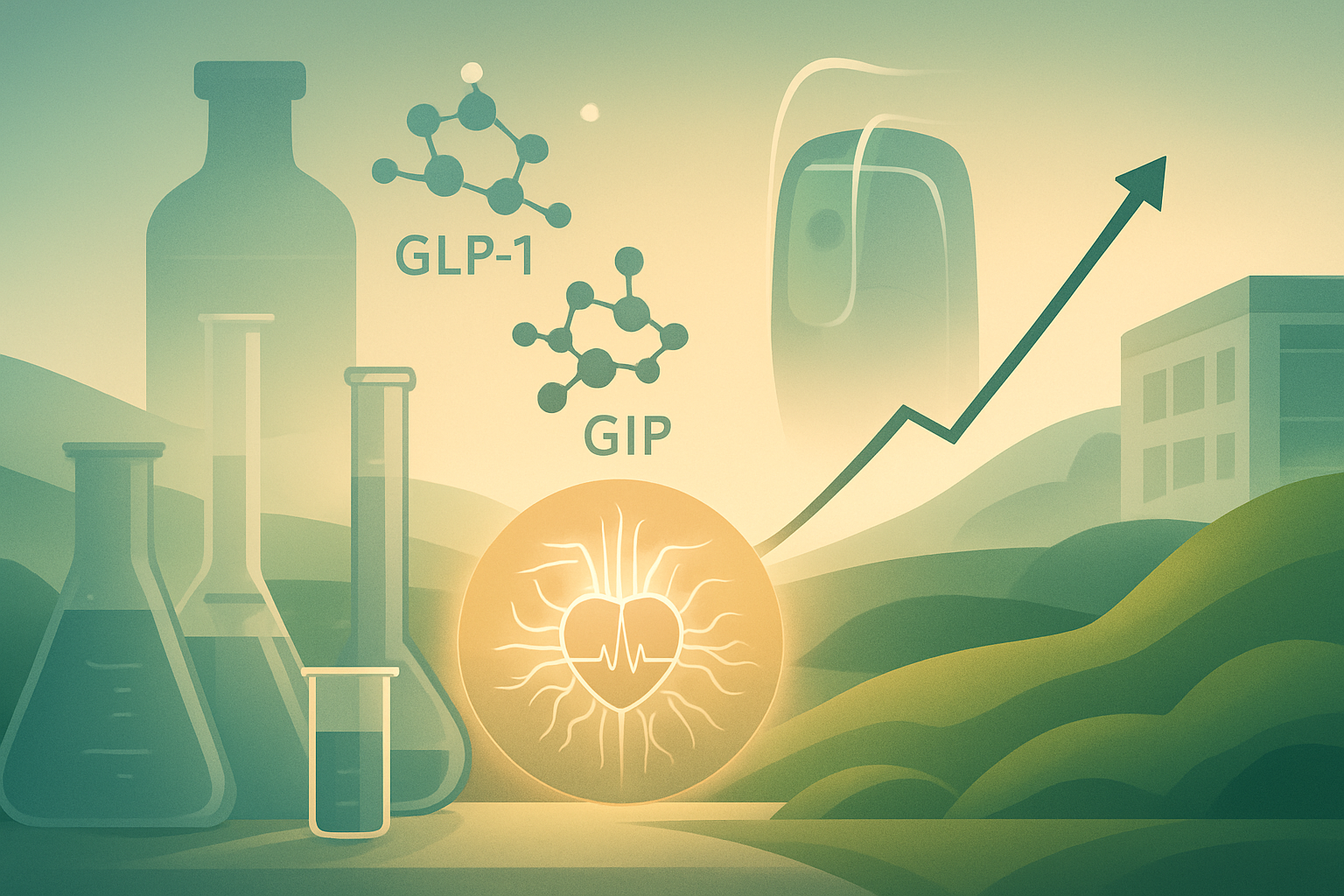
    The crown jewel of Lilly’s portfolio is the tirzepatide molecule, marketed as Mounjaro for Type 2 diabetes and Zepbound for chronic weight management. These drugs, which act on both GLP-1 and GIP receptors, have shown weight loss efficacy exceeding 20% in clinical trials, setting a gold standard in the industry.

    Beyond tirzepatide, Lilly has recently launched:

    • Foundayo (orforglipron): An oral, non-peptide GLP-1 agonist approved in early 2026, offering a "pill-version" of weight loss therapy that eliminates the need for injections.
    • Kisunla (donanemab): A therapy for early-stage Alzheimer’s disease that uniquely allows patients to stop treatment once amyloid plaques are cleared.
    • Ebglyss: A high-growth treatment for atopic dermatitis (eczema).

    Lilly is also pioneering the use of Artificial Intelligence (AI) in drug discovery. In late 2025, it entered a multi-billion dollar partnership with NVIDIA (NASDAQ:NVDA) to utilize generative AI to simulate molecular interactions, potentially cutting the R&D cycle for new oncology candidates by half.

    Competitive Landscape

    The pharmaceutical market in 2026 is dominated by the "metabolic duopoly" of Eli Lilly and Novo Nordisk (NYSE:NVO).

    • Market Share: As of early 2026, Lilly has captured approximately 60% of the U.S. incretin market, largely due to its superior manufacturing capacity and the slightly higher weight-loss efficacy of tirzepatide compared to Novo’s semaglutide (Wegovy).
    • Pipeline Rivalry: Novo Nordisk remains a formidable threat with its next-generation candidate, CagriSema. However, Lilly has responded with Retatrutide, a "triple agonist" currently in Phase III that targets three different hormones and shows weight loss potential approaching 30%.
    • Generic Threats: While older insulin products face generic competition, the metabolic and immunology portfolios are protected by robust patent thickets that extend well into the 2030s.

    Industry and Market Trends

    The healthcare sector is currently being reshaped by three macro trends that favor Lilly:

    1. Obesity as a Gateway Disease: There is a growing clinical consensus that treating obesity is the most effective way to prevent cardiovascular disease, sleep apnea, and chronic kidney disease. This has vastly expanded the addressable market for Lilly's metabolic drugs.
    2. Decentralized Manufacturing: Supply chain fragility during the mid-2020s has led to "on-shoring." Lilly’s multi-billion dollar investments in Indiana, North Carolina, and Ireland have positioned it as a leader in supply chain resilience.
    3. Direct-to-Consumer Healthcare: Lilly’s "LillyDirect" portal, which allows patients to access prescriptions and home delivery directly from the manufacturer, is disrupting traditional pharmacy benefit manager (PBM) dominance.

    Risks and Challenges

    Despite its dominance, Lilly faces several critical risks:

    • Regulatory Pricing Pressure: The U.S. government, through the Inflation Reduction Act (IRA), has begun negotiating prices for top-selling drugs. Jardiance and Tradjenta were among the first impacted, and Trulicity is slated for price adjustments in 2028.
    • Supply Chain Execution: If any of Lilly’s massive new manufacturing "mega-sites" face regulatory delays or technical failures, the company could lose market share to competitors like Amgen (NASDAQ:AMGN) or Roche (OTC:RHHBY), who are developing their own metabolic candidates.
    • Valuation Compression: Trading at nearly 30x forward earnings, the stock has "priced in" a significant amount of future success. Any miss in quarterly earnings or a clinical trial setback for a next-gen drug like Retatrutide could lead to a sharp correction.

    Opportunities and Catalysts

    • Retatrutide Data: Upcoming Phase III data for the triple agonist could solidify Lilly's dominance for the next decade.
    • MASH Expansion: Clinical trials for MASH (liver disease) using tirzepatide are nearing completion; an approval would open a multibillion-dollar market with no current dominant therapy.
    • Sleep Apnea & CKD Labels: Expanding the label for Zepbound to include specific treatments for sleep apnea and chronic kidney disease would force insurance companies to broaden coverage.
    • Dividends and Buybacks: With massive cash flows, Lilly is expected to significantly increase its dividend in late 2026, attracting more income-oriented institutional investors.

    Investor Sentiment and Analyst Coverage

    Wall Street sentiment remains overwhelmingly bullish, though more selective than in 2024. Most major investment banks maintain "Buy" or "Overweight" ratings, with price targets ranging from $1,100 to $1,300.

    Hedge fund positioning has remained high, with many managers viewing Lilly as a "defensive growth" play—a company that provides tech-like growth with the relative safety of a healthcare balance sheet. Retail sentiment is also strong, driven by the personal experiences of millions of consumers who have successfully used Lilly’s weight-loss products.

    Regulatory, Policy, and Geopolitical Factors

    The regulatory landscape is in a state of flux. In early 2026, Lilly entered a "Most-Favored-Nation" (MFN) agreement with the U.S. administration, voluntarily lowering the list prices of some vials to avoid more aggressive federal price-capping.

    Geopolitically, Lilly’s heavy reliance on high-tech manufacturing makes it sensitive to trade relations involving specialized laboratory equipment and chemical reagents. However, its shift toward domestic manufacturing in the U.S. and EU has mitigated much of the "China-plus-one" risk that plagues other pharmaceutical firms.

    Conclusion

    Eli Lilly and Company has successfully transitioned from a traditional pharmaceutical manufacturer to a global leader in metabolic and neurological health. As of April 2026, the company’s "moat" is built on two primary strengths: a best-in-class R&D pipeline and a massive, proprietary manufacturing footprint.

    While the high valuation and the ongoing impact of the Inflation Reduction Act represent genuine risks, Lilly’s ability to define a new standard of care for obesity and Alzheimer’s provides a multi-year growth runway. For investors, Lilly is no longer just a "dividend stock"; it is a premier growth asset that is fundamentally changing the economics of global healthcare. Investors should closely watch the launch of the oral GLP-1 (Foundayo) and the Phase III results of Retatrutide as the key indicators for the company's next phase of market dominance.


    This content is intended for informational purposes only and is not financial advice.

  • Apple at 50: The AI Pivot and the Regulatory Reckoning (AAPL)

    Apple at 50: The AI Pivot and the Regulatory Reckoning (AAPL)

    April 1, 2026

    Introduction

    As Apple Inc. (NASDAQ: AAPL) celebrates its 50th anniversary today, the company stands at a historic crossroads. Founded in a California garage on April 1, 1976, Apple has transformed from a niche computer maker into a $3.5 trillion global titan that dictates the rhythms of modern digital life. However, the Apple of 2026 is no longer just a hardware company; it is an AI-integrated services powerhouse navigating the most complex regulatory environment in its history. With the recent launch of "Siri 2.0" and the ongoing rollout of Apple Intelligence, the company is betting its next half-century on a "Privacy-First AI" ecosystem. Investors are currently weighing Apple’s record-breaking fiscal 2025 performance against the looming shadow of a massive U.S. Department of Justice (DOJ) antitrust trial and the slow-burn adoption of the Vision Pro spatial computer.

    Historical Background

    Apple’s journey is arguably the most storied in corporate history. Founded by Steve Jobs, Steve Wozniak, and Ronald Wayne, the company nearly collapsed in the mid-1990s before Jobs returned in 1997 to orchestrate one of the greatest turnarounds in business history. The introduction of the iMac, iPod, and—most crucially—the iPhone in 2007 redefined entire industries. Since Tim Cook took the helm in 2011, the narrative has shifted from "revolutionary hardware" to "operational excellence and ecosystem monetization." Cook has successfully transitioned the company into a services juggernaut, expanding into wearables like the Apple Watch and AirPods, and most recently, venturing into spatial computing. This 50-year evolution has been characterized by a relentless focus on vertical integration, where Apple controls the silicon, the hardware, and the software.

    Business Model

    Apple’s business model revolves around its "walled garden"—a seamless ecosystem of hardware, software, and services that creates high switching costs for users.

    • Hardware: The iPhone remains the sun around which all other products orbit, accounting for roughly 50-55% of revenue. The iPad, Mac, and Wearables (Watch, AirPods) provide secondary hardware pillars.
    • Services: This high-margin segment (App Store, iCloud, Apple Music, Apple Pay, and Apple TV+) has become the company's primary growth engine, now contributing over 26% of total revenue.
    • Silicon: By designing its own A-series and M-series chips, Apple achieves industry-leading performance and margin efficiency, reducing reliance on third-party vendors like Intel (NASDAQ: INTC) or Qualcomm (NASDAQ: QCOM).
    • Customer Base: Apple targets a premium demographic with high lifetime value, leveraging a global installed base that now exceeds 2.2 billion active devices.

    Stock Performance Overview

    Over the last decade, AAPL has been a cornerstone of the "Magnificent Seven," delivering returns that have significantly outpaced the S&P 500.

    • 10-Year Performance: Investors who held Apple since 2016 have seen returns exceeding 800%, driven by the massive expansion of the Services segment and aggressive share buybacks.
    • 5-Year Performance: Despite the volatility of the 2022 inflation-driven downturn, the stock has rallied strongly, particularly during the 2023-2024 AI surge.
    • 1-Year Performance: In the past 12 months, Apple shares have risen approximately 9%, hitting an all-time high of $288.62 in January 2026 before cooling to the current $250 range. The recent pullback reflects market caution regarding the DOJ lawsuit and slower-than-expected Vision Pro sales.

    Financial Performance

    Apple’s fiscal year 2025 results solidified its status as a cash-flow machine.

    • Revenue: Record annual revenue of $416.2 billion, up 6% year-over-year.
    • Net Income: $112 billion, reflecting a net margin of approximately 27%.
    • Q1 2026 Highlights: The company reported $143.8 billion in holiday quarter revenue, a 16% jump driven by the iPhone 17 "super-cycle."
    • Balance Sheet: With $145 billion in cash and marketable securities, Apple continues its "net cash neutral" goal through heavy capital return programs, including $25 billion in buybacks in the most recent quarter.
    • Valuation: Trading at a forward P/E of approximately 31x, Apple carries a premium compared to its historical average, reflecting investor confidence in its AI pivot.

    Leadership and Management

    Tim Cook, now 65, has led Apple for 15 years with a focus on supply chain efficiency and social responsibility. However, 2026 has brought the focus on succession to a fever pitch.

    • John Ternus: The Senior VP of Hardware Engineering has emerged as the frontrunner to succeed Cook. Ternus is widely respected for his technical acumen and was the public face of the M-series chip transition.
    • Strategy: The current leadership team is focused on a "Privacy-First" AI strategy, positioning Apple as the safe alternative to data-hungry rivals like Google (NASDAQ: GOOGL) and Meta (NASDAQ: META).
    • Governance: Apple maintains a highly regarded board, though it faces increasing pressure from institutional investors regarding transparency in AI ethics and supply chain labor in Southeast Asia.

    Products, Services, and Innovations

    The 2026 product lineup is defined by the integration of Generative AI into every layer of the OS.

    • iPhone 17 & 18: These devices feature dedicated NPU (Neural Processing Unit) cores designed specifically for on-device LLMs.
    • Apple Intelligence (Siri 2.0): Launched in early 2026, the new Siri uses "Private Cloud Compute" to handle complex tasks while keeping data encrypted. It can now navigate apps autonomously, performing tasks like "find the flight info in my email and book an Uber to arrive two hours before."
    • Vision Pro: Now in its second generation (M5-powered), the device has improved ergonomics but remains an enterprise-first tool for now, with lifetime sales at 475,000 units.
    • Apple Health: The company is reportedly testing non-invasive glucose monitoring for the Apple Watch, a "holy grail" feature that could disrupt the medical device market.

    Competitive Landscape

    Apple faces fierce competition on multiple fronts:

    • Premium Smartphones: Samsung (KSE: 005930) remains the primary global rival, particularly with its foldable lineup, a category Apple has yet to enter.
    • AI Race: Microsoft (NASDAQ: MSFT) and Google have a head start in cloud-based GenAI. Apple’s challenge is proving that on-device AI is superior for consumer privacy.
    • China Recovery: Huawei has seen a massive resurgence in mainland China, recapturing market share in the high-end segment and forcing Apple to lean into localized AI features for the Chinese market.

    Industry and Market Trends

    The tech sector in 2026 is dominated by two themes: the "Edge AI" revolution and supply chain de-risking.

    • Edge AI: The shift from cloud-based AI to running models directly on consumer devices favors Apple’s integrated silicon-and-software approach.
    • Diversification: Apple has accelerated its "China Plus One" strategy, with over 20% of iPhone production now taking place in India, mitigating geopolitical risks.
    • Services Saturation: With smartphone penetration at record highs, the industry trend is toward increasing "Average Revenue Per User" (ARPU) through bundled services like Apple One.

    Risks and Challenges

    • Antitrust Litigation: The DOJ lawsuit is the single greatest threat. A potential forced opening of iMessage or the NFC chip could erode the "walled garden" that drives Apple’s premium pricing.
    • Innovation Fatigue: Critics argue that the Vision Pro’s slow adoption suggests Apple may have lost its "Midas touch" for creating new mass-market categories.
    • Geopolitical Exposure: Despite diversification, Apple remains heavily dependent on Chinese manufacturing and consumer demand, making it a target for potential trade retaliations.

    Opportunities and Catalysts

    • India: Apple’s market share in India is still in the single digits, representing a massive long-term growth runway as the middle class expands.
    • AI Monetization: Analysts expect Apple to eventually launch a "Siri Premium" or "Apple Intelligence+" subscription, creating a new recurring revenue stream.
    • Healthcare: Leveraging the Apple Watch as a clinical-grade health monitor could unlock multi-billion dollar opportunities in insurance and remote patient monitoring.

    Investor Sentiment and Analyst Coverage

    Wall Street remains generally bullish but more cautious than in 2024.

    • Ratings: Approximately 70% of analysts covering AAPL maintain a "Buy" or "Outperform" rating, citing its unmatched balance sheet and ecosystem loyalty.
    • Institutional Moves: Major players like BlackRock (NYSE: BLK) and Vanguard remain the largest holders, though some hedge funds have trimmed positions due to the DOJ trial overhang.
    • Retail Sentiment: On platforms like Reddit and X, sentiment is mixed; "Apple Intelligence" has renewed excitement, but the $3,500 Vision Pro price remains a point of contention.

    Regulatory, Policy, and Geopolitical Factors

    The regulatory landscape is Apple’s biggest headache in 2026.

    • EU Digital Markets Act (DMA): Apple has been forced to allow third-party app stores and "sideloading" in Europe, a precedent that the U.S. and other regions are watching closely.
    • US DOJ Trial: Discovery is ongoing. The government’s attempt to paint Apple as a "monopolist by design" could lead to structural changes in the App Store if successful.
    • Taxation: Global minimum tax agreements continue to pressure Apple’s ability to use international tax havens, potentially impacting net margins.

    Conclusion

    At 50 years old, Apple is a company in transition. It has successfully moved from the era of "disruptive hardware" to "dominant ecosystem," and is now attempting its most ambitious pivot yet: "Privacy-First AI." While the financials remain peerless—evidenced by the record-breaking 2025 performance—the company faces a "perfect storm" of legal and competitive hurdles. For investors, Apple remains the ultimate "safe haven" tech stock, but the next decade will likely be defined by how it navigates the courtroom rather than the showroom. Watch closely for the outcome of the DOJ discovery phase and the adoption rates of the M5-powered Vision Pro, as these will be the true bellwethers of Apple’s second half-century.


    This content is intended for informational purposes only and is not financial advice.
  • Tesla (TSLA) in 2026: The Great Pivot from EVs to AI and Robotics

    Tesla (TSLA) in 2026: The Great Pivot from EVs to AI and Robotics

    As of April 1, 2026, Tesla, Inc. (NASDAQ: TSLA) finds itself at a historic crossroads. Long celebrated—and scrutinized—as the vanguard of the electric vehicle (EV) revolution, the company has spent the last 24 months aggressively rebranding itself as an "AI and Robotics" powerhouse. The transition hasn't been without turbulence. After a challenging 2025 that saw its first major annual delivery decline, Tesla is now banking on a trio of catalysts: the mass-market "Model 2," the commercialization of its Optimus humanoid robot, and the regulatory rollout of unsupervised Full Self-Driving (FSD).

    For investors, Tesla remains one of the most polarizing tickers on the market. It is a company that defies traditional automotive valuation, trading more like a high-growth software firm despite the capital-intensive realities of global manufacturing. In this deep-dive, we examine whether Tesla’s pivot to AI can restore the hyper-growth trajectory that defined its previous decade.

    Historical Background

    Founded in 2003 by Martin Eberhard and Marc Tarpenning—and fundamentally shaped by early investor and longtime CEO Elon Musk—Tesla's journey began with a singular "Master Plan": build a high-end sports car to prove EVs were viable, then use those profits to build increasingly affordable models.

    The 2008 Roadster proved the concept, but it was the 2012 launch of the Model S that disrupted the luxury sedan market. The "production hell" of the Model 3 ramp-up in 2017-2018 nearly bankrupted the company but ultimately scaled Tesla into the mainstream. By 2020, Tesla had achieved sustained profitability, leading to its inclusion in the S&P 500 and a trillion-dollar valuation peak in late 2021. The subsequent years, 2023 through 2025, were defined by price wars in China, the launch of the polarizing Cybertruck, and a strategic shift away from high-margin luxury toward volume and autonomous services.

    Business Model

    Tesla’s business model is vertically integrated to a degree rarely seen in modern industry. It currently operates through three primary segments:

    1. Automotive: The core driver, encompassing the sale and leasing of the Model 3, Y, S, X, and Cybertruck. Revenue is supplemented by regulatory credits sold to other OEMs.
    2. Energy Generation and Storage: This includes the Megapack (utility-scale storage), Powerwall (residential), and Solar Roof. As of 2026, this has become the fastest-growing segment by margin percentage.
    3. Services and Other: This covers Supercharging (now a global standard via NACS), in-app software purchases (FSD subscriptions), insurance, and vehicle service.

    Crucially, Tesla’s model is shifting toward a "razor and blade" strategy: selling hardware (cars) at lower margins to build an installed base for high-margin recurring revenue via FSD software and the burgeoning Robotaxi network.

    Stock Performance Overview

    Over the last decade, TSLA has been a generational wealth creator, though its path has been a rollercoaster:

    • 10-Year Performance: Despite recent volatility, long-term holders have seen gains exceeding 1,200%, vastly outperforming the S&P 500.
    • 5-Year Performance: The stock saw a parabolic rise in 2020-2021, followed by a significant correction in 2022 and 2024. As of early 2026, it is recovering from a "valuation reset" that occurred when automotive margins compressed in 2024.
    • 1-Year Performance: The stock has seen a 15% recovery over the last 12 months, driven by the successful pilot of "Unsupervised FSD" in select markets and the initial production of the $25,000 next-gen platform.

    Financial Performance

    Tesla’s recent financials reflect a company in transition. After a 2024 that saw operating margins dip to 7.2%, the 2025 fiscal year was a period of consolidation.

    • Revenue: 2025 revenue reached approximately $105 billion, a modest increase despite lower vehicle delivery volume, thanks to a 50% surge in Energy segment revenue.
    • Margins: Automotive gross margins (excluding credits) have stabilized around 17% in Q1 2026, up from the 16% lows of 2024, as the Cybertruck ramp-up reached scale.
    • Cash Position: Tesla maintains a fortress balance sheet with over $30 billion in cash and investments, allowing it to self-fund the massive "Project Redwood" (Model 2) expansion and the Houston Megafactory.
    • Valuation: Trading at a forward P/E of approximately 55x, Tesla remains expensive compared to Toyota (10x) but cheaper than its historic highs of 100x+.

    Leadership and Management

    Elon Musk remains the polarizing center of Tesla's leadership. While his focus is often split between X (formerly Twitter), SpaceX, and xAI, his "technoking" status at Tesla is currently focused on the AI-first transition.

    The leadership bench has seen notable shifts. Tom Zhu, Senior VP of Automotive, continues to oversee global production efficiency, while the board of directors remains under pressure to improve governance following the 2024 disputes over Musk’s compensation package. Despite the noise, Tesla’s engineering talent remains a top-tier magnet for AI and robotics specialists, keeping the innovation pipeline robust.

    Products, Services, and Innovations

    Tesla’s product lineup is currently undergoing its most significant refresh in a decade:

    • Model 2 (Project Redwood): Entering mass production in mid-2026, this $25,000 vehicle uses the "Unboxed" manufacturing process to reduce costs by 50%.
    • Cybertruck: Now at a 250,000-unit annual run rate, it has become a common sight on American roads and a significant revenue contributor.
    • Optimus (Gen 3): Tesla has deployed thousands of its humanoid robots internally. In early 2026, the company began taking "early-adopter" orders for external industrial customers.
    • FSD v14: The latest software update has moved to a completely neural-network-based stack for all driving environments, bringing the "interventions per mile" metric to an all-time low.

    Competitive Landscape

    The competition has never been more fierce. As of 2026:

    • BYD (SZSE: 002594): The Chinese giant surpassed Tesla in total BEV volume in 2025. BYD’s vertical integration in batteries gives it a cost advantage Tesla is only now matching with the Model 2.
    • Xiaomi (HKG: 1810): The smartphone maker’s entry into the EV space with the SU7 and MX11 has disrupted Tesla’s market share in China, offering superior "smart cockpit" features.
    • Legacy OEMs: Ford and GM have scaled back their aggressive EV targets to focus on hybrids, leaving Tesla to compete more directly with Hyundai and Kia in the mid-range EV segment.

    Industry and Market Trends

    The "EV adoption S-curve" hit a plateau in 2024-2025, but 2026 shows signs of a second wind. Global trends include:

    • NACS Dominance: Tesla’s North American Charging Standard is now the universal norm, turning the Supercharger network into a profitable "toll booth" for all EV drivers.
    • AI Inference at the Edge: The industry is moving toward "Software-Defined Vehicles." Tesla’s lead in hardware (AI5 chips) gives it an edge in processing power.
    • LFP Batteries: Lithium Iron Phosphate (LFP) has become the standard for mass-market cars due to lower costs and longer lifespans, a shift Tesla pioneered and now dominates.

    Risks and Challenges

    Tesla faces several "existential" risks:

    1. Regulatory Scrutiny: FSD remains under intense investigation by the NHTSA. Any high-profile failure of "Unsupervised" mode could lead to recalls or bans.
    2. Key Person Risk: The company’s valuation is inextricably linked to Elon Musk. Any further dilution of his focus or potential departure would likely trigger a massive valuation reset.
    3. Geopolitical Tensions: With a significant portion of production and demand in China, any escalation in US-China trade wars could disrupt Tesla’s "Giga Shanghai" operations.

    Opportunities and Catalysts

    • Robotaxi Launch: A dedicated Robotaxi unveiling (expected late 2026) could prove the viability of a high-margin ride-hailing service.
    • FSD Licensing: Tesla is reportedly in late-stage talks with two major legacy automakers to license its FSD software, which would provide pure-margin licensing revenue.
    • Energy Storage: The Megapack business is on track to represent 20% of Tesla’s total profit by 2027, providing a stable counter-cyclical hedge to auto sales.

    Investor Sentiment and Analyst Coverage

    Wall Street is divided. As of April 2026, the consensus is a "Hold."

    • Bulls (Wedbush, Ark Invest): Argue that Tesla is the world’s largest robotics company and that the current $1.2 trillion market cap is just the beginning of the "Autonomous Age."
    • Bears (GLJ Research): Contend that Tesla is a slowing car company trading at a tech multiple it can no longer justify as BYD eats its lunch.
    • Retail Sentiment: Remains high, with "Tesla stans" providing a floor for the stock price that traditional fundamentals often cannot explain.

    Regulatory, Policy, and Geopolitical Factors

    The regulatory environment is shifting. While the Inflation Reduction Act (IRA) tax credits in the US provided a tailwind through 2024, the potential for a political shift in the 2024/2025 election cycle has led to uncertainty regarding future subsidies. Additionally, the EU’s anti-subsidy probe into Chinese-made EVs has complicated Tesla’s export strategy from Giga Shanghai to Europe, forcing more reliance on Giga Berlin.

    Conclusion

    Tesla enters the second quarter of 2026 in a state of "controlled transformation." The days of easy 50% year-over-year growth in car sales are gone, replaced by a more complex, high-stakes bet on artificial intelligence and energy storage.

    For the long-term investor, the bull case rests on the successful ramp of the Model 2 and the wide-scale deployment of FSD. If Tesla can prove it is a robotics company first and an automaker second, its current valuation may look like a bargain in retrospect. However, if FSD remains "perpetually almost ready" and Chinese rivals continue to squeeze margins, the road ahead will be rocky. Tesla remains a high-beta play for those who believe in the future of autonomy, but it is no longer the only game in town.


    This content is intended for informational purposes only and is not financial advice.

  • The $3.7 Trillion Orchard: A Deep Dive into Apple’s AI-Driven Future (AAPL)

    The $3.7 Trillion Orchard: A Deep Dive into Apple’s AI-Driven Future (AAPL)

    As of March 31, 2026, Apple Inc. (NASDAQ: AAPL) stands at a historic crossroads. Valued at approximately $3.7 trillion, the Cupertino-based titan is currently celebrating its 50th anniversary—an era defined by a dramatic pivot from being a premier hardware manufacturer to a global leader in personalized, privacy-centric Artificial Intelligence. While the company has seen its crown as the world's most valuable entity challenged by AI infrastructure giants like Nvidia, Apple’s dominance in the consumer ecosystem remains unrivaled.

    The story of Apple in 2026 is one of a "walled garden" expanding its borders into the cloud and generative AI, while simultaneously defending those borders against unprecedented regulatory scrutiny from both the U.S. Department of Justice and the European Commission. With the recent Worldwide Developers Conference (WWDC) cycles focusing almost exclusively on "Apple Intelligence," the company has successfully convinced investors that the iPhone is not just a phone, but the primary gateway to the AI age.

    Historical Background

    Founded on April 1, 1976, by Steve Jobs, Steve Wozniak, and Ronald Wayne, Apple’s journey is arguably the most storied in corporate history. From the early success of the Apple II to the near-bankruptcy of the mid-1990s, the company’s trajectory changed forever with the return of Steve Jobs and the subsequent launch of the iMac, iPod, and, most pivotally, the iPhone in 2007.

    Under the leadership of Tim Cook, who took the helm in 2011, Apple transitioned from an innovation-led "hit factory" to an operational juggernaut. Cook oversaw the expansion of the "Services" business and the vertical integration of Apple Silicon (the M-series and A-series chips), which decoupled the company’s performance from traditional chip manufacturers. By 2026, the company has navigated three distinct eras: the Personal Computer era, the Mobile era, and now, the Intelligence era.

    Business Model

    Apple’s business model is built on a high-margin "Hardware-as-a-Gateway" strategy. The company designs and sells premium hardware—iPhone, Mac, iPad, and Wearables—which act as the entry point for a lucrative ecosystem of services.

    • Hardware (74% of Revenue): The iPhone remains the centerpiece, contributing over half of total net sales. However, the mix has shifted toward "Pro" and "Ultra" models, driving higher Average Selling Prices (ASPs).
    • Services (26% of Revenue): This segment includes the App Store, iCloud, Apple Music, Apple TV+, and Apple Pay. By fiscal year 2025, Services reached a record 75.4% gross margin, effectively becoming Apple’s primary profit engine.
    • The Ecosystem Lock-in: The "stickiness" of iMessage, iCloud, and now Apple Intelligence creates high switching costs, ensuring a predictable upgrade cycle from its 2.2 billion active device install base.

    Stock Performance Overview

    Over the past decade, Apple has been one of the greatest wealth-creation engines in history.

    • 10-Year Performance: From approximately $25 (split-adjusted) in March 2016 to $247.31 today, the stock has delivered nearly a 10x return, significantly outperforming the S&P 500.
    • 5-Year Performance: Since March 2021, the stock has risen roughly 105%, fueled by the post-pandemic digital acceleration and the initial 5G upgrade cycle.
    • 1-Year Performance: In the last 12 months, AAPL has seen a 28% gain, largely driven by the successful launch of the iPhone 17 and the integration of the A19 chip, which brought more advanced on-device AI capabilities to the masses.

    Financial Performance

    In its fiscal year 2025 report, Apple posted revenue of $416.2 billion, a 6.4% year-over-year increase. Despite global economic volatility, the company’s net income reached a staggering $112 billion, with a diluted EPS of $7.46.

    Key financial metrics for the TTM (Trailing Twelve Months) include:

    • Gross Margin: 46.9%, a testament to the growth of Services and high-end hardware.
    • Cash Reserves: Apple continues to maintain one of the world's largest cash piles, despite spending over $90 billion annually on share repurchases and dividends.
    • Debt: The company maintains a "net cash neutral" goal, carrying manageable debt while leveraging its high credit rating to fund buybacks.

    Leadership and Management

    Tim Cook remains at the helm as CEO, though at age 65, succession planning is the most discussed topic among institutional investors. Cook’s tenure has been characterized by supply chain mastery and fiscal discipline.

    The inner circle has seen some transition:

    • John Ternus: Now the Senior VP of Hardware Engineering, Ternus is widely regarded as the "heir apparent." His visibility during the iPhone 17 and Vision Pro 2 launches has solidified his status.
    • Jeff Williams: The COO and "operations wizard" continues to oversee Apple Watch and health initiatives, though he is also approaching traditional retirement age.
    • Recent Shifts: 2025 saw the departure of several long-time veterans, including AI head John Giannandrea and General Counsel Kate Adams, sparking a "changing of the guard" narrative within the executive suite.

    Products, Services, and Innovations

    The focus in 2026 is squarely on Apple Intelligence. Unlike competitors who rely on massive cloud data centers, Apple’s strategy emphasizes "On-Device AI."

    • iPhone 17 & 17 Pro: These devices feature the A19 chip, which allows for complex multi-modal AI processing without data leaving the phone.
    • Vision Pro 2: Released in early 2026, the second generation of Apple’s spatial computer is lighter, cheaper, and more integrated with Mac workflows, though it remains a niche product compared to the iPhone.
    • Siri 2.0: The latest software update at WWDC 2025 transformed Siri into a true "agent" capable of executing tasks across third-party apps, such as "Draft a summary of my last meeting and send it to the group chat in Slack."

    Competitive Landscape

    Apple is currently locked in a three-way battle for market cap supremacy with Nvidia (NASDAQ: NVDA) and Microsoft (NASDAQ: MSFT).

    • AI Infrastructure: Nvidia holds the lead in valuation due to the hardware-level AI boom, but Apple controls the "edge"—the devices people actually use to interact with AI.
    • Smartphone Rivals: In China, Huawei and Xiaomi continue to challenge Apple with high-end foldable devices. However, Apple regained market share in late 2025 as its AI features were localized for the Chinese market.
    • Services Competition: Apple TV+ competes with Netflix, while Apple Music battles Spotify. Apple’s advantage remains its ability to bundle these services (Apple One).

    Industry and Market Trends

    The two dominant trends in 2026 are Generative AI on the Edge and Supply Chain Diversification.

    • Edge AI: As consumers become more privacy-conscious, the demand for local AI processing—rather than cloud-based processing—is skyrocketing. Apple is the clear leader in this architecture.
    • The India Shift: Apple has successfully moved 25% of its iPhone production to India as of 2025. This "China+1" strategy is vital for mitigating geopolitical risks and tapping into the growing Indian middle class.

    Risks and Challenges

    Apple’s path is not without significant hurdles:

    • Regulatory Siege: The U.S. DOJ’s antitrust lawsuit, which alleges Apple uses its ecosystem to lock out competitors, is moving toward a potential trial in 2027.
    • EU Compliance: The Digital Markets Act (DMA) has forced Apple to allow third-party app stores in Europe, threatening the highly profitable "Apple Tax."
    • Innovation Saturation: There is a constant risk that the iPhone has reached "peak innovation," where incremental hardware updates no longer drive massive upgrade cycles.

    Opportunities and Catalysts

    • Health Tech: Apple is rumored to be nearing a breakthrough in non-invasive blood glucose monitoring for the Apple Watch, a "holy grail" for medical technology.
    • AI Monetization: Analysts expect Apple to introduce a premium "Apple Intelligence+" subscription tier by 2027, potentially adding billions to high-margin recurring revenue.
    • Emerging Markets: India’s rapid adoption of premium smartphones offers a growth runway that could mirror China’s expansion from a decade ago.

    Investor Sentiment and Analyst Coverage

    Wall Street remains largely bullish on AAPL, viewing it as a "flight to quality" asset.

    • Ratings: Approximately 70% of analysts carry a "Buy" or "Strong Buy" rating.
    • Price Targets: Median price targets for 2026 hover around the $265-$275 range, implying roughly 10% upside from current levels.
    • Institutional Ownership: Major firms like Berkshire Hathaway and Vanguard maintain massive positions, though Warren Buffett’s firm trimmed its stake slightly in 2024-2025 to rebalance into energy and infrastructure.

    Regulatory, Policy, and Geopolitical Factors

    The geopolitical landscape is Apple’s biggest wildcard.

    • U.S.-China Relations: Continued tariffs and export controls on advanced chips affect Apple’s supply chain costs and its ability to sell advanced AI features in the Chinese market.
    • Privacy Regulation: While Apple benefits from a "privacy-first" brand, new laws regarding data sovereignty and AI training could limit the scope of Apple Intelligence in certain jurisdictions.

    Conclusion

    As Apple prepares to enter its second half-century, its $3.7 trillion valuation reflects a company that has successfully reinvented itself for the AI era. By leveraging its vast install base and high-performance silicon, Apple has turned the "threat" of generative AI into a primary growth catalyst.

    Investors should monitor the progression of the DOJ lawsuit and the adoption rates of the Vision Pro 2 as indicators of long-term health. However, with a record-breaking Services margin and a hardware cycle that remains resilient, Apple enters its 50th year as the quintessential "compounder"—a stock that blends safety, growth, and unparalleled brand loyalty.


    This content is intended for informational purposes only and is not financial advice.