
Tag: Stock Market

  • Western Digital (WDC): Navigating the Storage Supercycle and the 2026 Sector Sell-Off

    Western Digital (WDC): Navigating the Storage Supercycle and the 2026 Sector Sell-Off

    Today’s Date: March 31, 2026

    Introduction

    Western Digital Corporation (NASDAQ: WDC) currently stands at a historic crossroads. After decades of operating as a dual-threat giant in both the Hard Disk Drive (HDD) and Flash memory markets, the company successfully completed its high-profile structural separation on February 24, 2025. Now operating as a pure-play HDD powerhouse, Western Digital is navigating the turbulent waters of a 2026 "Storage Supercycle" driven by generative AI infrastructure. However, the final week of March 2026 has been defined by a sharp, industry-wide storage sector sell-off, triggered by breakthrough software compression technologies and institutional profit-taking. This article explores the "new" Western Digital, its strategic lean into high-capacity cloud storage, and whether the recent market dip represents a systemic threat or a generational buying opportunity.

    Historical Background

    Founded in 1970 as General Digital, the company originally focused on specialized semiconductors and calculator chips. By the 1980s, it pivoted toward hard disk drive controllers and eventually the drives themselves, becoming a cornerstone of the PC revolution. The most significant transformation in its history occurred in 2016 with the $19 billion acquisition of SanDisk. This move was intended to bridge the gap between traditional magnetic storage and the rising tide of NAND flash.

    However, the "marriage" of HDD and Flash proved difficult for investors to value, as the two businesses operated on vastly different capital cycles and margin profiles. After years of pressure from activist investors, Western Digital announced a formal split in late 2023, which culminated in the 2025 spin-off of its Flash business into a standalone entity, SanDisk Corporation (NASDAQ: SNDK). Today, the legacy WDC ticker represents the core HDD business, focused almost exclusively on the exascale data center market.

    Business Model

    Post-separation, Western Digital has transitioned from a consumer-facing brand to an enterprise-centric infrastructure provider. Its revenue model is now streamlined into two primary categories:

    1. Cloud Storage (Nearline): This represents over 80% of total revenue. WDC designs and manufactures high-capacity 24TB to 32TB+ drives used by hyper-scalers like Amazon, Google, and Microsoft to power cloud platforms and AI training clusters.
    2. Client/Consumer HDD: A legacy but still profitable segment providing mechanical storage for high-end PCs, gaming consoles, and surveillance systems.

    The company operates on a "Margin over Market Share" strategy, focusing on high-density technology (SMR and ePMR) that commands premium pricing, rather than competing in the low-margin commodity drive space.

    Stock Performance Overview

    The last decade has been a roller coaster for WDC shareholders.

    • 10-Year Horizon: Investors who held through the SanDisk acquisition and the subsequent cyclical downturns saw modest gains until 2024, when the AI-driven storage demand began to accelerate.
    • 5-Year Horizon: Performance was largely flat until the 2023 announcement of the split, which served as a massive catalyst.
    • 1-Year Horizon (2025-2026): Following the successful spin-off in early 2025, WDC stock surged over 140% as it became a "cleaner" play for data center growth.
    • Recent Performance: In late March 2026, the stock suffered a 15% correction. This "Storage Sell-off" was catalyzed by fears that new software efficiency tools (like Google’s TurboQuant) could reduce the physical hardware requirements for AI data centers.

    Financial Performance

    Western Digital’s Q2 FY2026 earnings (ended January 2, 2026) showcased the power of the pure-play model.

    • Revenue: $3.02 billion (up 25% year-over-year).
    • Gross Margins: A record 46.1%, primarily due to the phase-out of lower-margin flash inventory and the dominance of high-capacity 30TB drives.
    • Cash Flow: Operating cash flow reached a multi-year high, allowing the company to aggressively pay down debt associated with the 2025 separation.
    • Inventory: Management noted that 100% of its 2026 HDD production capacity is already under Long-Term Agreements (LTAs), providing rare revenue visibility in a historically cyclical industry.

    Leadership and Management

    Under the leadership of CEO Irving Tan, who took the helm following the 2025 split, Western Digital has adopted a disciplined operational cadence. Tan, formerly an executive at Cisco, has focused on streamlining the supply chain and deepening relationships with Tier-1 cloud providers. The board of directors has been refreshed to include more experts in data center architecture and software-defined storage, reflecting the company's shift away from consumer retail and toward enterprise infrastructure.

    Products, Services, and Innovations

    Innovation at WDC is now focused on "Areal Density." As of March 2026, the company’s product roadmap is centered on two key technologies:

    • UltraSMR (Shingled Magnetic Recording): This allows WDC to pack more data onto existing platters, reaching 32TB capacities without the immediate need for a full transition to Heat-Assisted Magnetic Recording (HAMR).
    • ePMR (Energy-Assisted PMR): A proprietary technology that improves the stability of bits, allowing for higher density and lower power consumption—a critical factor for green data centers.
    • OptiNAND: Integrating small amounts of flash into the HDD controller to enhance metadata performance, effectively creating a hybrid drive that maximizes the strengths of both technologies.

    Competitive Landscape

    The HDD market is a tight oligopoly. WDC’s primary rival is Seagate Technology (NASDAQ: STX), which has pursued a more aggressive "HAMR-first" strategy. While Seagate led the race to 30TB via its Mozaic 3+ platform, Western Digital has maintained a competitive edge in power efficiency and yield stability with its ePMR-based 28TB and 32TB drives. The third player, Toshiba, remains a distant challenger, focusing on price-sensitive enterprise segments. In the broader storage landscape, WDC also competes indirectly with NAND giants like Micron (NASDAQ: MU) and Samsung, though HDDs remain roughly 7x cheaper per terabyte than SSDs for mass storage in 2026.

    Industry and Market Trends

    The "Storage Supercycle" of 2026 is driven by the realization that "Data is the New Oil" for AI. Every Large Language Model (LLM) requires massive datasets for training and even more for inference logging.

    • AI Inference Demand: The shift from AI training to AI inference has created a "warm data" tier, where HDDs are preferred for their cost-effectiveness over long periods.
    • Supply Scarcity: Years of underinvestment in HDD manufacturing have led to a structural supply deficit. As of early 2026, lead times for high-capacity drives exceed 50 weeks.

    Risks and Challenges

    The primary risk facing Western Digital in 2026 is Software Displacement. The late-March sell-off was triggered by the release of "TurboQuant," a compression algorithm that claims to reduce storage footprints by 6x without accuracy loss. If software efficiency outpaces data growth, the demand for physical platters could cool rapidly.

    • Operational Risks: WDC’s reliance on helium (used in the drive chambers to reduce friction) makes it vulnerable to geopolitical instability in the Middle East and Russia, where much of the world's helium is sourced.
    • Cyclicality: Despite current LTAs, the storage industry has historically been prone to "boom and bust" cycles of over-inventory.

    Opportunities and Catalysts

    • 40TB Milestone: WDC is expected to announce its first 40TB drive prototype in late 2026, which would represent a major leap in areal density.
    • Edge AI: As AI moves to edge devices and local servers, the demand for high-capacity local storage (surveillance, autonomous vehicle logging) is expected to expand beyond the cloud.
    • M&A Potential: Now that the company is a lean HDD pure-play, it could be an attractive acquisition target for a larger diversified technology conglomerate looking to secure its own supply chain for data center components.

    Investor Sentiment and Analyst Coverage

    Wall Street remains divided following the March sell-off. Bulls argue that the "TurboQuant" fears are overblown, noting that even with better compression, the sheer volume of global data (projected to hit 20,000 exabytes by 2029) will require more physical drives. Analysts at major firms currently maintain a "Strong Buy" or "Outperform" rating on WDC, with many seeing the 15% dip as a "gift" to entry-level investors. Institutional ownership remains high, with heavyweights like Vanguard and BlackRock increasing their positions throughout the 2025 separation process.

    Regulatory, Policy, and Geopolitical Factors

    Geopolitics continue to cast a shadow over the semiconductor and storage sectors.

    • US-China Relations: While HDDs are not as sensitive as advanced AI chips (like NVIDIA’s H100s), they are still subject to export controls. WDC has moved a significant portion of its assembly from China to Thailand and Malaysia to mitigate these risks.
    • Environmental Policy: New EU and California "Right to Repair" and "Data Center Efficiency" mandates are forcing WDC to innovate in drive longevity and recyclability, which could increase R&D costs but solidify its standing with ESG-focused institutional investors.

    Conclusion

    Western Digital Corporation (NASDAQ: WDC) in 2026 is a vastly different beast than the sprawling conglomerate of the 2010s. By spinning off its Flash business, it has emerged as a focused, high-margin leader in the HDD space. While the recent "TurboQuant" sell-off has shaken retail confidence, the fundamental mismatch between global data creation and storage manufacturing capacity remains in WDC's favor. For investors, the key to the next 12 months will be monitoring the rollout of 32TB+ capacities and the company’s ability to maintain its "sold out" status through the end of the year. In a world increasingly built on data, Western Digital remains the primary architect of the world's digital library.


    This content is intended for informational purposes only and is not financial advice.

  • The Great Pivot: Nike (NKE) Reclaims North American Dominance in Q3 2026 Earnings Beat

    The Great Pivot: Nike (NKE) Reclaims North American Dominance in Q3 2026 Earnings Beat

    As of today, March 31, 2026, Nike Inc. (NYSE: NKE) finds itself at a pivotal crossroads that few would have predicted two years ago. After a bruising 2024 that saw the "Swoosh" lose its stride to nimble competitors like On and Hoka, the Beaverton-based giant has spent the last 18 months in an aggressive "back-to-basics" restructuring. Today’s Q3 2026 earnings report, released just hours ago, marks a definitive milestone: North American sales have officially returned to growth for the first time in eight quarters. This turnaround, spearheaded by veteran CEO Elliott Hill, suggests that the world’s largest sportswear company has finally exorcised the ghosts of its over-reliance on digital direct-to-consumer (DTC) sales and stale product iterations.

    Historical Background

    Founded in 1964 as Blue Ribbon Sports by Phil Knight and Bill Bowerman, the company originally distributed Japanese-made Onitsuka Tiger shoes. It wasn't until 1971 that the Nike "Swoosh" was born, alongside the revolutionary waffle-sole running shoe. Over the next five decades, Nike transformed from a niche track-and-field brand into a global cultural phenomenon, fueled by the signing of Michael Jordan in 1984 and the "Just Do It" campaign in 1988.

    The company’s modern history has been defined by two distinct phases. The first was the "Donahoe Era" (2020–2024), characterized by a ruthless pivot toward Nike Direct and a reduction in wholesale partnerships. While this boosted margins initially, it opened the door for rivals to seize shelf space in physical retail. The second phase, which we are currently living through, began in late 2024 when Elliott Hill returned from retirement to restore Nike’s "sports-first" identity and repair fractured wholesale relationships.

    Business Model

    Nike’s business model remains centered on the design, development, and worldwide marketing of footwear, apparel, equipment, and accessories. Revenue is broadly categorized into four segments: Footwear (the largest driver), Apparel, Equipment, and the Global Brand.

    A critical component of the model is the Jordan Brand, which operates with high degrees of autonomy and continues to be a multi-billion dollar juggernaut. Under the current leadership, the distribution model has shifted back to a "Balanced Marketplace" strategy. This involves a hybrid approach where Nike Direct (online and flagship stores) handles high-heat releases and member-exclusive services, while wholesale partners like the newly consolidated Dick’s-Foot Locker entity handle volume and "bread-and-butter" performance gear.

    Stock Performance Overview

    Looking back from March 2026, the stock’s trajectory has been a tale of two halves.

    • 1-Year Performance: NKE has outperformed the S&P 500, rising 22% as investors gained confidence in the North American recovery and the success of the Air Max Dn line.
    • 5-Year Performance: The stock remains roughly flat compared to March 2021 levels. It suffered a nearly 50% peak-to-trough decline between 2021 and 2024 as growth stalled and margins compressed.
    • 10-Year Performance: For long-term holders, Nike remains a cornerstone asset, delivering a total return of approximately 140% over the last decade, driven by its dominant global market share and dividend consistency.

    Financial Performance

    In today's Q3 2026 earnings release, Nike reported revenue of $12.4 billion, a 4% increase year-over-year, beating analyst estimates of $12.1 billion. The standout figure was the 6% growth in North American sales, signaling that the regional "turnaround plan" is working.

    • Gross Margin: Stood at 43.1%, slightly impacted by higher freight costs and lingering 2025 tariff pressures, but offset by a reduction in promotional activity.
    • Earnings Per Share (EPS): Came in at $0.98, surpassing the consensus of $0.89.
    • Cash Position: Nike remains cash-rich, with over $9 billion in liquidity, allowing for the continuation of its robust share buyback program and a dividend yield that has crept up to 1.8%.

    Leadership and Management

    CEO Elliott Hill’s "lifer" status has been his greatest asset. Unlike his predecessor, Hill has a deep institutional knowledge of the "Swoosh" culture. Since taking the helm in October 2024, he has decentralized decision-making, giving more power back to category leads in Running, Basketball, and Training.

    The appointment of Amy Montagne as President of the Nike Brand has also been viewed favorably by the street, as she has focused on streamlining the product pipeline. The management team has successfully navigated the massive 2025 organizational overhaul that realigned 8,000 employees around sport-specific silos rather than general consumer categories.

    Products, Services, and Innovations

    Innovation is the engine of Nike’s current recovery. The Air Max Dn, which launched in 2024, has become the company's most successful new franchise in five years. However, the real excitement in early 2026 surrounds the "Mind" line, Nike's first venture into neuroscience-based footwear. These "mules" and trainers use varying foam densities to stimulate sensory receptors, marketed for athlete recovery and mental focus.

    Additionally, Project Amplify, a collaboration with robotics firm Dephy, has introduced "power-assisted" footwear that aids in energy return for long-distance walkers—a direct shot at the aging demographic that had been gravitating toward competitors like New Balance.

    Competitive Landscape

    Nike’s competitive environment has never been more crowded. In the performance running space, On (NYSE: ONON) and Hoka (owned by Deckers Brands, NYSE: DECK) continue to hold significant market share. Meanwhile, Adidas (OTC: ADDYY) has seen a resurgence in Europe and Asia through its lifestyle "Terrace" shoe trend (Samba, Gazelle).

    However, Nike’s recent re-entry into "pole position" at major retailers has blunted the growth of these challengers. By reclaiming the front-of-store displays at the consolidated Dick’s-Foot Locker locations, Nike has reasserted its dominance in the "mall-scape" that it briefly abandoned in 2022-2023.

    Industry and Market Trends

    The "athleisure" trend has matured into a broader "wellness" trend. Consumers in 2026 are increasingly looking for "hybrid" footwear that works for both the gym and the office. Nike has responded by diversifying its "lifestyle" offerings to include more sophisticated, muted colorways.

    Macro-economically, the industry is grappling with "digital fatigue." After the pandemic-era surge in e-commerce, consumers have returned to physical stores for the "touch and feel" experience, particularly for high-performance footwear where fit is critical. This trend has played perfectly into Nike’s hands during its wholesale pivot.

    Risks and Challenges

    Despite the positive earnings, significant risks remain:

    • Tariff Headwinds: New trade policies enacted in late 2025 have imposed a roughly $1.5 billion annual hit on Nike’s supply chain, pressuring gross margins.
    • China Macro Weakness: While North America has turned around, the Greater China region remains sluggish due to ongoing consumer caution and a shift toward local Chinese brands like Anta and Li-Ning.
    • Inventory Management: While much improved from the 2023 glut, the rapid release of new tech-heavy lines like "Project Amplify" carries the risk of oversupply if consumer adoption lags.

    Opportunities and Catalysts

    The biggest catalyst on the horizon is the FIFA World Cup 2026, hosted across the U.S., Mexico, and Canada. Nike is the primary sponsor for the host nations and six of the top ten teams globally. Analysts estimate the "World Cup Effect" could drive an additional $1.3 billion in revenue in the second half of 2026.

    Furthermore, Nike’s expansion into India and Southeast Asia represents a massive untapped middle-class market. Management has signaled that these regions will be the primary focus of their 2027-2030 growth strategy.

    Investor Sentiment and Analyst Coverage

    Wall Street is broadly "Buy" rated on NKE once again. RBC Capital recently upgraded the stock, citing the "unprecedented marketing spend" leading up to the World Cup. Institutional ownership remains high, with Vanguard and BlackRock maintaining their core positions. Retail sentiment, which turned sour in 2024, has improved significantly as "sneakerheads" have responded positively to the move away from mass-produced Dunks and toward more technical, innovative silhouettes.

    Regulatory, Policy, and Geopolitical Factors

    Geopolitics remains a wildcard. Nike's reliance on manufacturing hubs in Vietnam and Indonesia makes it sensitive to regional stability and U.S. trade policy. The company has also faced renewed scrutiny regarding its environmental footprint, leading to the "Move to Zero" initiative, which aims for a 100% renewable energy-powered supply chain by 2030. Compliance with the latest EU sustainability reporting standards (CSRD) has also increased operational costs.

    Conclusion

    Nike’s Q3 2026 earnings report is more than just a set of numbers; it is a validation of the "Elliott Hill Pivot." By returning to its roots as a performance-driven, wholesale-friendly powerhouse, Nike has successfully stemmed the bleeding in its home market of North America.

    Investors should watch the upcoming World Cup marketing blitz and the adoption rate of the "Mind" footwear line as indicators of whether this momentum is sustainable. While geopolitical tensions and margin pressures from tariffs are real threats, the "Swoosh" appears to have reclaimed its crown as the undisputed leader of global sport. For the first time in years, Nike is no longer playing defense; it is once again on the attack.


    This content is intended for informational purposes only and is not financial advice.

  • The $4 Trillion Titan: Inside NVIDIA’s Vera Rubin Era and the $2B Marvell Strategic Pivot

    The $4 Trillion Titan: Inside NVIDIA’s Vera Rubin Era and the $2B Marvell Strategic Pivot

    March 31, 2026

    Introduction

    As of March 31, 2026, NVIDIA (NASDAQ: NVDA) stands not just as a semiconductor company, but as the central nervous system of the global economy. With a market capitalization hovering between $4 trillion and $4.4 trillion, the Santa Clara giant has defied every traditional law of corporate gravity. Today’s focus isn't just on the company's past successes, but on three seismic developments that have redefined its trajectory: the official production launch of the Vera Rubin architecture, a landmark $2 billion strategic investment in Marvell Technology (NASDAQ: MRVL), and the unprecedented "Titan Cluster" compute deals with Meta Platforms (NASDAQ: META). In a world increasingly defined by "Agentic AI," NVIDIA has transitioned from being a component supplier to becoming the architect of the planet’s digital infrastructure.

    Historical Background

    Founded in 1993 by Jensen Huang, Chris Malachowsky, and Curtis Priem, NVIDIA’s early life was dedicated to the niche world of PC gaming graphics. The 1999 launch of the GeForce 256—marketed as the world’s first GPU—set the stage for a company that prioritized parallel processing over the sequential processing dominated by Intel (NASDAQ: INTC).

    The true transformation began in 2006 with the introduction of CUDA (Compute Unified Device Architecture). By opening its GPUs to general-purpose computing, NVIDIA spent over a decade seeding the research community with the tools that would eventually bloom into the Generative AI revolution. Following the 2020 acquisition of Mellanox, the company pivoted toward a "data center first" strategy, recognizing that the future of computing would occur at the scale of entire buildings, not individual boxes.

    Business Model

    NVIDIA’s business model has evolved into what analysts call a "Full-Stack Data Center Platform." No longer content to sell individual chips, the company now generates the majority of its revenue from integrated systems, software, and networking services.

    • Compute & Networking: This segment, dominated by the Hopper, Blackwell, and now Rubin architectures, accounts for nearly 85% of total revenue.
    • Software and AI Foundations: Through the NVIDIA AI Enterprise suite, the company charges recurring per-GPU-hour or annual subscription fees, creating a high-margin software tail.
    • Networking (InfiniBand & Spectrum-X): Through the integration of Mellanox and now its partnership with Marvell, NVIDIA controls the plumbing of AI, ensuring its chips are never bottlenecked by data movement.
    • Professional Visualization and Automotive: While smaller, these segments focus on digital twins (Omniverse) and autonomous vehicle platforms (DRIVE), leveraging the same underlying architecture.

    Stock Performance Overview

    Over the last decade, NVDA has been the best-performing stock in the S&P 500, characterized by "staircase" growth followed by vertical breakouts.

    • 10-Year Performance: Investors who held NVDA from March 2016 have seen returns exceeding 35,000%, as the stock split multiple times (most recently a 10-for-1 in 2024 and a 2-for-1 in 2025).
    • 5-Year Performance: The stock has risen over 1,200% since 2021, fueled by the massive CapEx spending of the "Magnificent Seven."
    • 1-Year Performance: Over the past twelve months, the stock is up 88%, driven by the flawless transition from the Blackwell (B200) cycle to the initial Rubin (R100) rumors.

    Financial Performance

    For the fiscal year ended January 2026, NVIDIA reported financial results that would have been unimaginable a few years ago:

    • Revenue: $215.9 billion, a 65% year-over-year increase.
    • Net Income: $120.07 billion, representing a staggering 55% net margin.
    • Gross Margins: 75.2%, a testament to the company’s pricing power and the scarcity of its high-end HBM4-equipped Rubin chips.
    • Cash Flow: Free cash flow exceeded $80 billion, allowing the company to engage in aggressive strategic investments and a massive buyback program.
    • Valuation: Despite the price, the stock trades at a forward P/E of approximately 38x, as earnings growth continues to outpace multiple expansion.

    Leadership and Management

    Jensen Huang, the longest-serving CEO in the tech sector, remains the visionary heart of the company. His management philosophy—centered on "flat organizations" and "speed as a moat"—has allowed NVIDIA to maintain a startup-like agility despite its multi-trillion dollar size.

    Under Huang's leadership, the company has adopted a "one-year release cadence," a grueling engineering cycle that forces rivals to chase a moving target. The executive team, including CFO Colette Kress, is praised for its "disciplined aggression," balancing massive R&D spend with sector-leading capital returns.

    Products, Services, and Innovations

    The crown jewel of NVIDIA’s current portfolio is the Vera Rubin architecture. Named after the pioneering astronomer who provided evidence for dark matter, the Rubin platform represents the largest generational leap in the company's history.

    • The Rubin GPU (R100): Built on TSMC’s (NYSE: TSM) 3nm N3P process, it features 336 billion transistors and is the first to utilize HBM4 memory, providing 22 TB/s of bandwidth.
    • The Vera CPU: A custom Arm-based processor designed specifically to handle the massive orchestration required for "Agentic AI"—AI systems that don't just answer questions but execute complex workflows autonomously.
    • Custom Silicon: Through its newly formed "Cloud-to-Edge" division, NVIDIA is now helping customers design semi-custom chips that sit atop NVIDIA’s proprietary NVLink fabric.

    Competitive Landscape

    While NVIDIA controls over 90% of the AI accelerator market, the competition is intensifying:

    • AMD (NASDAQ: AMD): The Instinct MI400 series has gained traction among tier-2 cloud providers, offering a strong price-to-performance alternative.
    • Custom Silicon (ASICs): Google (NASDAQ: GOOGL) and Amazon (NASDAQ: AMZN) continue to develop their own TPU and Trainium chips to reduce dependence on NVIDIA.
    • Intel (NASDAQ: INTC): After a multi-year turnaround effort, Intel’s Gaudi 4 has found a niche in mid-range inference, though it struggles to compete at the high-end training level.

    NVIDIA’s primary defense is its "ecosystem lock-in." Developers who have spent a decade optimizing for CUDA find it prohibitively expensive to switch to rival architectures.

    Industry and Market Trends

    The "Sovereign AI" trend has become a massive tailwind. Nations including Saudi Arabia, the UAE, Japan, and France are building their own national AI clouds to ensure data sovereignty. Furthermore, the industry is shifting from "training" (building models) to "inference" (running models). This shift benefits NVIDIA’s high-bandwidth designs, as inference at scale requires massive data throughput.

    Another major trend is the 1-Gigawatt (GW) AI Factory. We are seeing the first data centers that consume as much power as a small city, requiring NVIDIA to innovate in liquid cooling and power delivery systems.

    Risks and Challenges

    Despite its dominance, NVIDIA is not without risks:

    • Regulatory Scrutiny: Both the U.S. and EU are conducting ongoing antitrust inquiries into NVIDIA’s bundling of networking hardware with GPUs.
    • Export Controls: The U.S. Department of Commerce continues to tighten restrictions on chip exports to China. A recent investigation into a "smuggling ring" diverting Blackwell chips to restricted entities has introduced fresh geopolitical volatility.
    • CapEx Fatigue: There is a persistent fear that hyperscalers like Microsoft and Meta might eventually slow their spending if AI ROI doesn't manifest quickly enough for shareholders.

    Opportunities and Catalysts

    Two massive catalysts have emerged in early 2026:

    1. The $2B Marvell Stake: Today’s announcement of a $2 billion strategic investment in Marvell Technology (NASDAQ: MRVL) is a masterstroke. By co-developing "NVLink Fusion," NVIDIA ensures that Marvell’s industry-leading optical connectivity is natively integrated into the Rubin architecture. This deal also marks NVIDIA's entry into the 6G AI-RAN market, where AI and telecommunications collide.
    2. The Meta "Titan Cluster" Deal: Meta has committed to a multi-year purchase agreement for millions of Rubin GPUs to power its "Prometheus" and "Hyperion" clusters. With Meta’s 2026 CapEx forecasted at $125 billion, NVIDIA remains the primary beneficiary of Mark Zuckerberg’s quest for Artificial General Intelligence (AGI).

    Investor Sentiment and Analyst Coverage

    Wall Street sentiment remains overwhelmingly bullish. Analysts at Goldman Sachs and Morgan Stanley recently raised their price targets to the $270–$280 range, citing the Rubin architecture as a "generational cycle." Institutional ownership remains at record highs, though some hedge funds have begun "trimming at the top" to manage sector concentration risk. Retail sentiment, tracked through social platforms, remains exuberant, with Jensen Huang often viewed as the "Godfather of AI."

    Regulatory, Policy, and Geopolitical Factors

    The geopolitical landscape remains the "wild card." A new U.S. policy requiring "revenue-sharing" for high-end AI exports has created a new financial friction point. Moreover, the "AI Safety" movement has led to proposed legislation in California and the EU that could mandate "kill switches" or strict licensing for models trained on chips above a certain FLOP threshold, potentially cooling demand for NVIDIA’s most powerful hardware.

    Conclusion

    NVIDIA in 2026 is no longer just a "chip company"; it is the essential utility for the age of intelligence. The combination of the Vera Rubin architecture, the strategic cementing of the supply chain through the Marvell investment, and the massive scale of the Meta partnership creates a formidable moat.

    While regulatory risks and the inevitable cyclicality of the semiconductor industry remain, NVIDIA’s move toward a full-stack "AI OS" makes it incredibly difficult to displace. For investors, the key will be watching the transition of AI from "chatbots" to "agents." If Agentic AI becomes the primary way humans interact with technology, NVIDIA’s infrastructure will be the foundation upon which that future is built.


    This content is intended for informational purposes only and is not financial advice.

  • The $1 Trillion Goliath: Why Eli Lilly’s $6.3B Centessa Bet Defines the Future of Neuroscience

    The $1 Trillion Goliath: Why Eli Lilly’s $6.3B Centessa Bet Defines the Future of Neuroscience

    Date: March 31, 2026

    Introduction

    In the spring of 2026, the global pharmaceutical landscape is increasingly defined by the gravitational pull of a single entity: Eli Lilly and Company (NYSE: LLY). Once a steady mid-tier giant known for insulin and antidepressants, Lilly has transformed into the world’s first trillion-dollar healthcare titan. Today’s announcement—a definitive $6.3 billion acquisition of Centessa Pharmaceuticals (NASDAQ: CNTA)—signals that the Indianapolis-based firm is not content with its dominance in the obesity and diabetes markets. By bringing Centessa’s best-in-class orexin agonists into its fold, Lilly is doubling down on a second front: a high-stakes, high-reward push into neuroscience that aims to do for sleep and neurodegenerative disorders what its incretin therapies did for metabolic health.

    Historical Background

    Founded in 1876 by Colonel Eli Lilly, the company has spent 150 years at the intersection of chemistry and humanitarian impact. Its early history was marked by the industrialization of medicine, notably being the first to mass-produce insulin in the 1920s through a partnership with researchers at the University of Toronto. Throughout the mid-20th century, Lilly solidified its position as a staple of the American medicine cabinet, manufacturing 60% of the Salk polio vaccine and later launching Prozac in 1987, which redefined the treatment of clinical depression.

    The modern era of Lilly began in the mid-2010s under the stewardship of David Ricks. Faced with a "patent cliff" for aging blockbusters, the company pivots sharply toward high-innovation biopharma. This shift culminated in the development of tirzepatide—marketed as Mounjaro and Zepbound—which has since become the fastest-growing drug franchise in history, propelling Lilly into the upper echelon of the S&P 500.

    Business Model

    Lilly operates as a research-intensive pharmaceutical company with a diversified portfolio centered on four core therapeutic pillars:

    1. Cardiometabolic Health: The current engine of the company, anchored by Mounjaro (T2D) and Zepbound (obesity). This segment accounts for nearly 60% of current revenue.
    2. Neuroscience: A legacy strength revitalized by Kisunla (donanemab) for Alzheimer’s and today’s acquisition of Centessa.
    3. Oncology: Driven by Verzenio and the recent integration of Loxo Oncology assets.
    4. Immunology: Anchored by Taltz and Olumiant, focusing on chronic inflammatory conditions.

    The company’s revenue is primarily derived from direct sales to wholesalers and health systems, increasingly supplemented by direct-to-consumer platforms (LillyDirect) to bypass traditional supply chain bottlenecks and improve patient access.

    Stock Performance Overview

    Lilly’s stock performance over the last decade has been nothing short of parabolic.

    • 10-Year View: Investors who held LLY since 2016 have seen returns exceeding 1,200%, outperforming the S&P 500 Health Care index by a staggering margin.
    • 5-Year View: The ascent accelerated in 2021 with the initial clinical results for tirzepatide. The stock rose from roughly $180 in early 2021 to surpass $1,100 by early 2026.
    • 1-Year View: Over the past twelve months, the stock has gained 42%, recently breaking the $1 trillion market cap barrier in late 2025—the first "Pure-Play" pharmaceutical company to do so.

    Financial Performance

    Lilly’s financial health in 2026 reflects its status as a "Growth-at-a-Reasonable-Price" (GARP) favorite. For the fiscal year 2025, the company reported revenue of $65.2 billion, a 45% increase year-over-year.

    • Margins: Gross margins have expanded to 82%, while operating margins hover near 40%, despite massive R&D reinvestment.
    • 2026 Guidance: The company recently raised its revenue forecast to $80–$83 billion, citing the "unprecedented and unabated" demand for incretin-based weight loss therapies.
    • Cash Position: With over $15 billion in free cash flow generated in 2025, Lilly has the firepower for deals like the $6.3 billion Centessa acquisition without significantly impacting its debt-to-equity ratio, which remains conservative for the industry.

    Leadership and Management

    CEO David A. Ricks is widely viewed by Wall Street as the premier executive in the life sciences sector. Since taking the helm in 2017, Ricks has steered Lilly away from low-margin primary care and into high-science specialty drugs.
    Under his leadership, the management team, including Chief Scientific Officer Daniel Skovronsky, has prioritized a "fast-to-fail" R&D philosophy that ensures only the most competitive molecules reach Phase 3. The addition of Carole Ho (formerly of Denali) to lead the Neuroscience division in late 2025 highlights the company's intent to dominate the neurology space as aggressively as they have metabolic health.

    Products, Services, and Innovations

    Lilly’s current product lineup is led by the "Incretin Twins": Mounjaro and Zepbound. However, the future focus is on "Triple-G" agonists like retatrutide, which in Phase 3 trials has shown weight loss exceeding 25%—figures previously seen only in bariatric surgery.

    The innovation story of 2026, however, is ORX750 (Cleminorexton), acquired via Centessa. This Orexin Receptor 2 agonist is a potential breakthrough for narcolepsy and excessive daytime sleepiness. Unlike current stimulants that mask sleepiness, ORX750 targets the underlying orexin deficiency, potentially providing a "natural" wakefulness. This fits perfectly alongside Kisunla, Lilly’s amyloid-clearing antibody for Alzheimer’s, creating a comprehensive brain-health portfolio.

    Competitive Landscape

    Lilly exists in a fierce duopoly with Novo Nordisk (NYSE: NVO) in the obesity space. While Novo’s Wegovy had the first-mover advantage, Lilly’s Zepbound has consistently won on efficacy and market share in the U.S.
    In neuroscience, Lilly faces off against Biogen (NASDAQ: BIIB) and Roche (OTC: RHHBY). While Biogen’s Leqembi was the first to market for Alzheimer's, Lilly’s Kisunla has gained traction due to its monthly dosing schedule and the ability to stop treatment once amyloid plaques are cleared—a significant cost-saving advantage for payers.

    Industry and Market Trends

    The "GLP-1 Revolution" is the dominant trend. Beyond weight loss, these drugs are being studied for sleep apnea, heart failure, and even addiction. Lilly is at the forefront of this "Pipeline-in-a-Product" strategy.
    Additionally, the pharmaceutical industry is moving toward "Precision Neurology." The Centessa acquisition reflects a shift from treating broad symptoms (like depression or insomnia) to targeting specific neuropeptide receptors (like Orexin), reducing side effects and improving efficacy.

    Risks and Challenges

    Despite its dominance, Lilly is not without risk:

    • Manufacturing Bottlenecks: Demand continues to outpace supply. Lilly has committed over $55 billion to manufacturing plants since 2020, but execution risks in these massive global facilities remain.
    • Patent Cliffs: While the incretin patent life is long, any safety signal appearing in long-term data could be catastrophic for the valuation.
    • Pricing Legislation: The U.S. Inflation Reduction Act (IRA) allows Medicare to negotiate prices. While Lilly has proactively capped costs for certain patients, sustained political pressure on drug pricing could compress margins by the late 2020s.

    Opportunities and Catalysts

    • Oral Incretins: The expected mid-2026 launch of orforglipron, a daily pill for obesity, would remove the "needle barrier" for millions of patients and drastically reduce cold-chain logistics costs.
    • Orexin Success: If ORX750 proves successful in Phase 3 for broader indications like lethargy associated with depression, it could become a multi-billion dollar franchise.
    • M&A Potential: With a "war chest" of cash, Lilly is expected to continue picking up mid-cap biotech firms to bolster its oncology and gene-therapy pipelines.

    Investor Sentiment and Analyst Coverage

    Wall Street sentiment is overwhelmingly positive, with 28 of 30 covering analysts maintaining "Buy" or "Strong Buy" ratings. The consensus price target has shifted toward the $1,250 range. Institutional ownership remains high, with heavyweights like BlackRock and Vanguard maintaining overweight positions. Retail sentiment, often a proxy for consumer satisfaction with their GLP-1 treatments, remains exceptionally bullish, viewing Lilly as the "Apple of Healthcare."

    Regulatory, Policy, and Geopolitical Factors

    Regulatory hurdles remain a moving target. The FDA is increasingly focused on the "safety-of-supply," encouraging Lilly to onshore more manufacturing to the United States. Geopolitically, Lilly’s expansion into the Chinese market faces headwinds due to data privacy laws and domestic price caps, though the massive prevalence of diabetes in Asia remains a primary growth target.

    Conclusion

    Eli Lilly and Company has successfully navigated the transition from a legacy pharma firm to a high-growth biotechnology powerhouse. The $6.3 billion acquisition of Centessa Pharmaceuticals is a tactical masterstroke, diversifying its "moat" beyond the GLP-1 market into the lucrative and underserved neuroscience sector.

    For investors, Lilly represents a unique vehicle: a trillion-dollar company that is still growing revenues at over 40%. While the valuation is historically high, the fundamental "moat" built around its manufacturing capacity and its deep pipeline of "Triple-G" and Orexin agonists suggests that the Lilly era of medicine is just beginning. Investors should watch for the mid-2026 data readouts for orforglipron and the initial integration of the Centessa assets as the next major catalysts for the stock.


    This content is intended for informational purposes only and is not financial advice.

  • The Sovereign of Silicon: A Deep Dive into Nvidia’s $4 Trillion AI Empire (2026)

    The Sovereign of Silicon: A Deep Dive into Nvidia’s $4 Trillion AI Empire (2026)

    Date: March 30, 2026

    Introduction

    As of early 2026, NVIDIA Corp. (NASDAQ: NVDA) has transcended its origins as a high-end graphics card manufacturer to become the undisputed architect of the global "Intelligence Economy." With a market capitalization fluctuating between $4.1 trillion and $4.4 trillion, Nvidia now rivals the GDP of major sovereign nations. This research feature explores how a single fabless semiconductor company achieved a valuation that dwarfs traditional manufacturing giants, driven by a relentless innovation cycle and a software-defined ecosystem that rivals the dominance of the internet's early protocols.

    Historical Background

    Founded in 1993 by Jensen Huang, Chris Malachowsky, and Curtis Priem, Nvidia initially focused on the niche market of 3D graphics for gaming. The company’s trajectory changed forever in 2006 with the launch of CUDA (Compute Unified Device Architecture). By allowing researchers to use GPUs for general-purpose mathematical calculations, Nvidia planted the seeds for the modern AI revolution. While the industry initially viewed CUDA as a distraction from gaming, it became the foundation for the Deep Learning breakthrough of 2012 (AlexNet) and the subsequent Generative AI explosion of 2023. Today, Jensen Huang remains at the helm, often cited as one of the most successful tech founders in history.

    Business Model

    Nvidia operates a "fabless" business model, meaning it designs the silicon but outsources the actual fabrication to giants like Taiwan Semiconductor Manufacturing Company (NYSE: TSM). This allows Nvidia to maintain an asset-light structure with elite margins.

    • Data Center (85%+ of Revenue): The core engine, providing H100, B200 (Blackwell), and the upcoming R200 (Rubin) GPUs to cloud providers and enterprises.
    • Gaming: Legacy high-performance GPUs (GeForce RTX) for PC gaming.
    • Professional Visualization: Omniverse and design tools for digital twins.
    • Automotive and Robotics: Providing the "brains" for autonomous vehicles and humanoid robots.
      Nvidia’s "secret sauce" is its software stack. For every dollar spent on hardware, the company seeks to capture recurring value through its AI Enterprise software, NIMs (Nvidia Inference Microservices), and specialized libraries for industries ranging from healthcare to weather forecasting.

    Stock Performance Overview

    Nvidia’s stock performance has been nothing short of historic.

    • 1-Year: Since March 2025, the stock has risen approximately 52%, fueled by the successful ramp-up of the Blackwell architecture and the announcement of the Rubin platform.
    • 5-Year: NVDA has seen a staggering 1,200%+ increase, vastly outperforming the S&P 500 and the Nasdaq 100.
    • 10-Year: Investors who held NVDA through the last decade have witnessed a total return exceeding 25,000%.
      The 10-for-1 stock split in mid-2024 significantly boosted liquidity and retail participation, cementing its status as a cornerstone of the modern "Mag Magnificent Seven."

    Financial Performance

    In the fiscal year ended January 2026, Nvidia reported a record $215.9 billion in revenue, a 65% year-over-year increase.

    • Profitability: Net income reached $120.07 billion. Gross margins sit at a staggering 75.2%, a figure virtually unheard of in hardware manufacturing.
    • Cash Flow: Free cash flow (FCF) exceeds $80 billion annually, allowing for aggressive R&D and strategic buybacks.
    • Valuation: Despite its massive market cap, Nvidia’s forward P/E ratio remains surprisingly grounded near 35x-40x, as earnings growth continues to match or exceed price appreciation.

    Leadership and Management

    CEO Jensen Huang is the defining figure of the semiconductor age. His management style is characterized by a "flat" organizational structure (reportedly having 50 direct reports) and a culture of "speed as a strategy." The board of directors includes heavyweights from tech and finance, focused on navigating the transition from a chip company to a system and software provider. Governance is generally rated highly, though the company’s heavy reliance on Huang’s vision presents a notable "key man" risk.

    Products, Services, and Innovations

    Nvidia is currently transitioning to its Rubin (R200) architecture, unveiled at CES 2026.

    • Rubin Architecture: Utilizing TSMC’s 3nm process and HBM4 (High Bandwidth Memory), Rubin chips offer 3x the efficiency for massive Mixture-of-Experts (MoE) AI models compared to Blackwell.
    • Vera CPU: Nvidia’s custom 88-core CPU designed to pair with Rubin GPUs, further reducing reliance on Intel or AMD processors.
    • Physical AI: The "Cosmos" simulation engine and Project GR00T are making Nvidia the primary platform for training the next generation of humanoid robots.
    • Networking: Through the acquisition of Mellanox, Nvidia’s Spectrum-X ethernet and InfiniBand solutions represent roughly 15% of data center revenue, solving the "bottleneck" problem in AI clusters.

    Competitive Landscape

    Nvidia maintains a market share of approximately 85-90% in AI accelerators, but competition is intensifying:

    • Advanced Micro Devices (NASDAQ: AMD): The Instinct MI350/450 series is gaining ground as a cost-effective alternative for inference.
    • Custom Silicon: Hyperscalers like Alphabet (NASDAQ: GOOGL), Amazon (NASDAQ: AMZN), and Microsoft (NASDAQ: MSFT) are developing internal chips (TPUs, Trainium, Maia) to reduce CAPEX.
    • Intel Corp. (NASDAQ: INTC): While struggling in manufacturing, Intel’s Gaudi 3 continues to find niche enterprise customers, though it lacks the software ecosystem of CUDA.

    Industry and Market Trends

    Three major trends are defining 2026:

    1. Sovereign AI: Nation-states (Japan, UK, UAE) are building national AI clouds to protect data sovereignty, creating a massive new customer class for Nvidia.
    2. Agentic AI: The shift from "chatbots" to "agents" that can execute tasks requires significantly more compute power, sustaining demand for the B200 and R200 series.
    3. Liquid Cooling: As chips now pull over 1,000W-2,000W each, the data center industry is undergoing a massive shift to liquid-cooled racks (like the GB200 NVL72).

    Risks and Challenges

    • Concentration Risk: A handful of Big Tech companies (the "hyperscalers") account for a large portion of Nvidia's revenue. Any slowdown in their AI spending could be catastrophic.
    • Supply Chain: Nvidia is entirely dependent on TSMC for fabrication and SK Hynix/Micron for HBM. Any disruption in the Taiwan Strait remains a "black swan" risk.
    • Valuation Bubble: Critics argue that the "AI ROI" (Return on Investment) has yet to materialize for many enterprises, potentially leading to a "digestion period" where orders slow down.

    Opportunities and Catalysts

    • Edge AI: Bringing Blackwell-level performance to edge devices and robotics.
    • Healthcare: BioNeMo, Nvidia’s generative AI for drug discovery, is currently in clinical trials with several pharmaceutical giants.
    • Software Recurring Revenue: The transition to a software-as-a-service (SaaS) model through Nvidia AI Enterprise could significantly expand valuation multiples.

    Investor Sentiment and Analyst Coverage

    Wall Street remains overwhelmingly bullish. Of the 60+ analysts covering the stock, over 90% maintain "Buy" or "Strong Buy" ratings. The consensus price target for late 2026 sits near $195. Hedge funds have slightly trimmed positions to manage concentration, but institutional ownership remains at record levels. Retail sentiment is characterized by "HODL" (Hold On for Dear Life) conviction, viewing Nvidia as the "Cisco of the 21st century" but with much higher margins.

    Regulatory, Policy, and Geopolitical Factors

    The regulatory landscape is a minefield. The Chip Security Act of 2026 has tightened controls on "smuggling" chips into restricted regions. While a late 2025 policy shift allowed Nvidia to resume selling slightly throttled chips (H200 series) to China under a "Sovereignty Surcharge" and strict volume caps, the relationship remains tense. Furthermore, antitrust regulators in the EU and US are closely monitoring Nvidia’s dominance in the AI software stack to ensure fair competition.

    Conclusion

    Nvidia stands at the pinnacle of the technology world in March 2026. By evolving from a "chip maker" into a "platform provider," the company has decoupled its valuation from the capital-intensive cycles of traditional manufacturing. While risks regarding China and customer concentration are real, Nvidia’s "one-year innovation cadence" and the deepening moat of the CUDA ecosystem make it the primary beneficiary of the transition to an AI-first civilization. For investors, the question is no longer about the price of the chip, but the value of the intelligence it generates.


    This content is intended for informational purposes only and is not financial advice.
  • The $200 Billion Gamble: Inside Amazon’s (AMZN) 2026 AI Supercycle

    The $200 Billion Gamble: Inside Amazon’s (AMZN) 2026 AI Supercycle

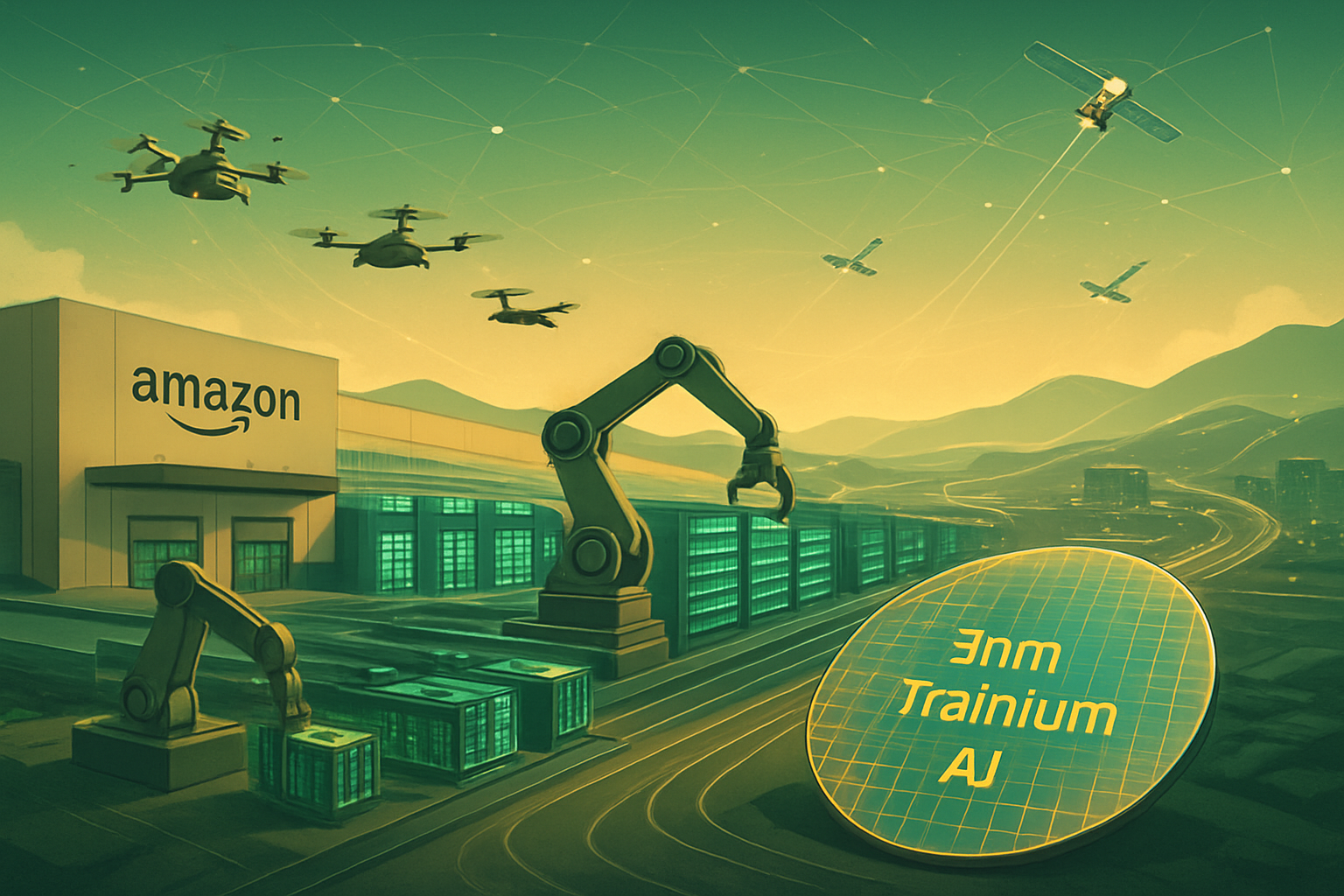
    As of March 30, 2026, Amazon.com, Inc. (NASDAQ: AMZN) finds itself at a defining crossroads that echoes its most ambitious—and controversial—periods of the past. After a year of record-breaking profitability in 2025, the company has pivoted into what analysts are calling the "Great AI Build-out." With a staggering $200 billion capital expenditure guidance for the 2026 fiscal year, Amazon is betting its future on a vertically integrated AI stack, ranging from proprietary 3nm silicon to global satellite internet via its "Amazon Leo" project. While the market’s immediate reaction has been one of "capex sticker shock," the underlying narrative remains the same: Amazon is sacrificing short-term liquidity to secure a dominant position in the next two decades of compute infrastructure.

    Historical Background

    Founded in 1994 by Jeff Bezos as an online bookstore in a Seattle garage, Amazon’s history is a relentless sequence of transformations. What began as a retail disruptor evolved into a logistical juggernaut, a cloud pioneer with the 2006 launch of Amazon Web Services (AWS), and a digital media powerhouse.

    The company’s most significant shifts have always been marked by periods of massive internal investment that the market initially doubted. From the multi-billion dollar build-out of its fulfillment network in the early 2010s to the $13.7 billion acquisition of Whole Foods in 2017, Amazon has consistently doubled down on capital-intensive "flywheels." Today, under the leadership of Andy Jassy, the company has completed its latest pivot: transitioning from a provider of third-party cloud tools to a manufacturer of the very silicon and intelligence that powers the global economy.

    Business Model

    Amazon’s business model in 2026 is a complex ecosystem of four primary engines:

    1. Cloud Infrastructure (AWS): The highest-margin segment, now providing not just storage and compute, but a full Generative AI lifecycle including foundational models (Bedrock) and custom chips.
    2. Global Retail (1P & 3P): A massive marketplace driven by Prime memberships. In 2025, the retail wing reached peak efficiency through regionalization and warehouse robotics.
    3. Digital Advertising: A high-growth ($60B+ revenue) segment that leverages Amazon’s vast consumer data to place ads on its marketplace and Prime Video.
    4. Emerging Infrastructure: This includes the newly rebranded Amazon Leo (satellite internet) and Amazon’s health and pharmacy services.

    Stock Performance Overview

    As of March 30, 2026, AMZN shares are trading in the $199–$207 range. The stock’s trajectory reflects a tug-of-war between long-term growth and immediate free cash flow (FCF) concerns.

    • 1-Year Performance: -1.0%. The stock has pulled back roughly 20% from its 2025 highs following the announcement of the $200 billion capex plan.
    • 5-Year Performance: +29.6%. A steady climb that weathered the post-pandemic correction and was buoyed by the 2024 AI rally.
    • 10-Year Performance: +624.5%. Amazon remains one of the decade's premier wealth creators, significantly outperforming the S&P 500.

    Financial Performance

    Amazon’s 2025 fiscal year was a masterclass in operational efficiency. The company reported:

    • Revenue: $716.9 billion, a 12% year-over-year increase.
    • Net Income: A record $77.7 billion.
    • Operating Margins: North American retail margins surged to 8%, driven by the deployment of the "Proteus" autonomous robots. AWS maintained robust 35% margins.
    • The Capex Surge: The pivot to a $200 billion 2026 capex budget has temporarily depressed FCF expectations, a move that management defends as necessary for "Silicon Sovereignty."

    Leadership and Management

    CEO Andy Jassy has fully stepped out of Jeff Bezos's shadow, establishing a reputation as a "disciplined builder." Under his tenure, the company has become more focused on margins and internal efficiencies than the experimental "wild west" era of the late 2010s.

    • Matt Garman (CEO of AWS): Taking over in 2024, Garman has steered AWS toward custom silicon (Trainium/Inferentia) to reduce reliance on external vendors.
    • Doug Herrington (CEO of Worldwide Amazon Stores): Credited with the "Regionalization" of the US logistics network, which halved shipping times while reducing costs.

    Products, Services, and Innovations

    Innovation in 2026 is centered on "Vertical AI Integration."

    • Trainium3 Silicon: Built on a 3nm process, Amazon’s newest AI chip is claiming a 40% cost advantage over third-party GPUs for large-scale model training.
    • Amazon Bedrock: This platform has become the "OS of AI," allowing enterprises to swap between models (Anthropic, Meta, Amazon’s own Titan) with ease.
    • Amazon Leo (formerly Kuiper): With over 200 satellites in orbit, the service began offering "Leo Ultra" (1 Gbps) internet to remote enterprise and AWS customers in March 2026.

    Competitive Landscape

    Amazon faces a multi-front war:

    • Cloud: Microsoft (25% market share) and Google Cloud (13%) are closing the gap on AWS (31%). Microsoft’s partnership with OpenAI remains a formidable threat in the enterprise application layer.
    • Retail: Walmart (WMT) has successfully mirrored Amazon’s logistics efficiency, while budget players like Temu and Shein continue to pressure the low-end consumer segment.
    • AI Hardware: While Amazon is moving toward its own chips, it must still maintain a delicate partnership with NVIDIA (NVDA) to satisfy demand for H100 and Blackwell GPUs.

    Industry and Market Trends

    The "Generative AI Phase 2" is the dominant trend of 2026. The market has moved past the hype of "chatbots" and into "inference at scale." Enterprises are now looking for the cheapest, most efficient way to run AI models daily, rather than just training them. This favors Amazon’s Inferentia chips and AWS’s sprawling data center footprint. Additionally, "Sovereign AI"—where nations require data and compute to remain within borders—has opened new revenue streams for AWS's government-cloud divisions.

    Risks and Challenges

    • Capex Overbuild: There is a non-trivial risk that the $200 billion investment in 2026 creates "ghost data centers" if AI demand cools.
    • Regulatory Scrutiny: The FTC's landmark antitrust case, led by Chair Lina Khan, continues to loom over the company, focusing on "Project Nessie" and the alleged "Buy Box" self-preferencing.
    • Labor Relations: As Amazon automates more of its fulfillment with robotics, tensions with labor unions and regulatory bodies regarding workplace safety and displacement remain high.

    Opportunities and Catalysts

    • Prime Video Advertising: The full integration of AI-driven, non-intrusive ads into Prime Video is expected to add $10 billion to the bottom line by 2027.
    • Healthcare: Amazon Pharmacy’s integration with One Medical is finally showing signs of scale, offering a "Prime-like" experience for healthcare.
    • Custom Silicon Revenue: Amazon’s chip business is now a $10B+ annual run-rate business, offering higher margins than traditional third-party software resale.

    Investor Sentiment and Analyst Coverage

    Wall Street remains divided. "Bulls" see the 2026 capex as a visionary land grab similar to the 2006 AWS launch. "Bears" argue that Amazon is becoming a "utility company" with diminishing returns on capital. Current consensus is a "Moderate Buy," with a 12-month price target averaging $245, suggesting significant upside once the capex cycle matures. Institutional ownership remains high at over 60%, led by Vanguard and BlackRock.

    Regulatory, Policy, and Geopolitical Factors

    Geopolitically, Amazon is navigating the "Chip Wars." Its move into 3nm chip design makes it reliant on TSMC (TSM) in Taiwan, exposing it to regional tensions. Domestically, the EU’s Digital Markets Act (DMA) has forced Amazon to change how it uses seller data, creating a potential headwind for its private-label brands.

    Conclusion

    Amazon in 2026 is a company that has chosen to embrace the volatility of innovation. By committing $200 billion to AI and satellite infrastructure, it is attempting to build the "backbone" of the next digital era. While the stock may face short-term pressure as free cash flow is diverted to data centers and custom silicon, the underlying strength of its 31% cloud market share and its newly efficient retail engine provide a safety net. For the long-term investor, the key question is not whether Amazon is spending too much, but whether any other company can afford to keep up.


    This content is intended for informational purposes only and is not financial advice.

  • The Maranello Moat: Ferrari’s Luxury Resilience and the JPMorgan Bull Case for 2026

    The Maranello Moat: Ferrari’s Luxury Resilience and the JPMorgan Bull Case for 2026

    Date: March 30, 2026
    By: Financial Research Division

    Introduction

    As the global automotive landscape grapples with the volatile transition to electrification and shifting macroeconomic headwinds, one name remains essentially decoupled from the gravity of the broader market: Ferrari (NYSE: RACE). In early 2026, the Italian "Prancing Horse" continues to redefine the boundaries between high-performance automotive engineering and ultra-luxury goods. With a stock price that has consistently outperformed both the S&P 500 and the luxury sector at large, Ferrari is currently in the spotlight following a series of bullish upgrades from major institutions, most notably JPMorgan. As the company prepares for the late-2026 launch of its first fully electric vehicle, its "value over volume" strategy has created a backlog of demand that stretches into 2028, insulating the brand from the cyclical downturns that often plague its peers.

    Historical Background

    Founded in 1947 by Enzo Ferrari, the company’s origins are rooted deeply in the Scuderia Ferrari racing stable. Unlike many competitors who built cars to fund their lifestyles, Enzo famously built road cars only to fund his passion for racing. For decades, Ferrari operated under the umbrella of Fiat, which provided the financial stability needed to dominate Formula 1 and the supercar market. However, the most significant transformation in the company's modern history occurred in 2015, when it was spun off into an independent public company listed on the New York Stock Exchange. Under the late Sergio Marchionne, the IPO unlocked the brand's potential as a luxury play rather than a mere industrial manufacturer. Since then, Ferrari has meticulously maintained its exclusivity while expanding its margins through bespoke personalization and the introduction of new segments like the Purosangue.

    Business Model

    Ferrari’s business model is a masterclass in scarcity marketing. The company purposely produces fewer cars than the market demands, ensuring that a Ferrari remains one of the world’s most coveted assets. Revenue streams are diversified across four key pillars:

    1. Vehicle Sales: High-margin models ranging from the V12-powered 12Cilindri to the hybrid SF90 Stradale.
    2. Personalization: Programs like Atelier and Tailor Made allow customers to customize every detail of their car, often adding hundreds of thousands of dollars to the base price. In 2025, these services contributed record-breaking margins to the bottom line.
    3. Brand & Lifestyle: Licensing, merchandising, and theme parks (Ferrari World) that monetize the brand's global prestige.
    4. Racing: The Formula 1 team serves as the ultimate R&D lab and marketing engine, maintaining the brand’s "high-performance" DNA.

    The company's core philosophy is "Value over Volume," capping production (particularly of its SUV-styled Purosangue) to maintain residual value and brand equity.

    Stock Performance Overview

    Over the last decade, Ferrari (RACE) has evolved into one of the most reliable performers in the luxury space.

    • 1-Year Performance: The stock has seen a 15% gain as of March 2026, buoyed by record 2025 earnings and the successful ramp-up of the Purosangue.
    • 5-Year Performance: Investors have seen returns exceeding 160%, significantly outperforming the broader automotive sector.
    • 10-Year Performance: Since its IPO, Ferrari has proven to be a "generational" stock, with its valuation multiple (P/E ratio) consistently trading closer to luxury giants like Hermès (EPA: RMS) or LVMH (EPA: MC) than to traditional automakers like Ford or Volkswagen.

    Notable moves in 2024 and 2025 were driven by the "de-risking" of the EV transition, as investors realized Ferrari could command premium pricing for electric models just as it did for internal combustion engines (ICE).

    Financial Performance

    Ferrari’s fiscal 2025 results, released earlier this year, underscored its financial dominance.

    • Revenue: Reached €7.146 billion, a 7% year-over-year increase.
    • EBITDA: Reported at €2.772 billion with an industry-leading margin of 38.8%.
    • Net Profit: Stood at €1.600 billion, with diluted EPS rising to €8.96.
    • Free Cash Flow: Industrial free cash flow surged by 50% to €1.538 billion.
      The company’s balance sheet remains exceptionally strong, characterized by low leverage and a massive €3.5 billion share buyback program scheduled through 2030, signaling management's confidence in long-term cash generation.

    Leadership and Management

    Under CEO Benedetto Vigna—a physicist by training with a deep background in the semiconductor and tech industries—Ferrari has accelerated its digital and technological transformation. Vigna has been instrumental in leading the "e-building" project, a new state-of-the-art facility in Maranello that allows for the flexible production of ICE, hybrid, and electric vehicles on the same line. Chairman John Elkann, representing the Agnelli family’s controlling interest through Exor N.V., provides a steady hand in governance, ensuring that Ferrari’s long-term heritage is not sacrificed for short-term quarterly gains. The management's reputation for disciplined capital allocation is among the best in the global luxury sector.

    Products, Services, and Innovations

    Innovation at Ferrari is currently centered on the "Elettrica" (the working title for its first EV), slated for a late 2026 debut.

    • The First EV: Early technical disclosures suggest a four-motor setup producing over 1,000 bhp. Crucially, Ferrari has patented a "Torque Shift Engagement" system to amplify the acoustic vibrations of the electric motors, addressing the "soul" of the car in the absence of a V12 roar.
    • Purosangue: The brand’s first four-door vehicle remains the primary growth driver, with a waitlist extending into 2028.
    • Hybridization: Nearly 60% of current sales are now electrified (hybrids like the 296 GTB and SF90), proving that the customer base is ready for the transition.

    Competitive Landscape

    Ferrari occupies a unique niche that JPMorgan analysts describe as "tactile exclusivity." While competitors like Lamborghini (owned by Volkswagen Group) and Aston Martin (LON: AML) produce high-performance vehicles, they often lack the same level of pricing power and secondary market stability.

    • Lamborghini: Strong competition in the "super SUV" space, but Ferrari’s production caps on the Purosangue keep its exclusivity higher.
    • Porsche (ETR: P911): Operates at a higher volume and lower price point, making it a "premium" brand rather than an "ultra-luxury" brand.
    • McLaren: Continues to struggle with financial stability and reliability perceptions, leaving Ferrari as the clear leader in the supercar hierarchy.

    Industry and Market Trends

    The luxury market in 2026 is seeing a shift toward "Green Status" and "Physicality." Ultra-high-net-worth individuals (UHNWIs) are increasingly demanding sustainable performance without losing the tactile feel of a high-end machine. A notable trend in 2026 is the return of physical controls—buttons and switches engineered like luxury watches—as a rejection of the "all-screen" minimalist interiors popularized by Tesla and other mass-market EVs. Ferrari’s focus on cabin craftsmanship aligns perfectly with this trend.

    Risks and Challenges

    Despite its strengths, Ferrari is not without risks:

    • EV Execution: The late-2026 launch of the first EV is a "make or break" moment. Any failure to capture the "emotional" experience of a Ferrari in an electric format could damage brand equity.
    • Margin Compression: High R&D costs for electrification and the setup of the "e-building" could temporarily pressure margins.
    • Global Economy: While UHNWIs are resilient, prolonged geopolitical instability in key markets like Greater China could affect the demand for "personalizations," which are high-margin drivers.

    Opportunities and Catalysts

    The primary catalyst for the stock is the impending EV launch. If Ferrari can prove that its electric vehicles are just as desirable as its ICE models, the stock could see another significant rerating. Furthermore, the growth of the "Atelier" personalization program presents a massive opportunity to increase Average Selling Prices (ASP) without increasing production volume. JPMorgan has noted that the potential for Ferrari to increase its dividend or accelerate buybacks remains high given its robust free cash flow.

    Investor Sentiment and Analyst Coverage

    Sentiment among institutional investors remains overwhelmingly positive. JPMorgan’s March 2026 report maintained an Overweight rating with a price target of $447, citing Ferrari's "Veblen good" status—where demand increases as price increases. Analyst Jose Asumendi highlights that Ferrari is one of the few companies that can guide for nearly 40% EBITDA margins regardless of the global interest rate environment. Wall Street consensus remains a "Moderate Buy," with some analysts even more aggressive, targeting $475 based on the expected success of the 2026 EV.

    Regulatory, Policy, and Geopolitical Factors

    Ferrari faces the challenge of navigating the EU’s strict emissions mandates. However, the "E-fuels exception" negotiated by Germany and Italy provides a lifeline for Ferrari’s high-revving internal combustion engines. This allows the company to continue producing its iconic V12 engines for its most exclusive "Icona" series while transitioning the high-volume fleet to hybrid and electric. Compliance with global ESG standards is also being addressed through the carbon-neutral goals of the Maranello factory.

    Conclusion

    Ferrari enters the second half of the 2020s in a position of unprecedented strength. By blending its rich racing heritage with a forward-looking technological roadmap, the company has successfully transitioned from a car manufacturer to a global luxury icon. While the late-2026 EV launch presents an execution risk, the brand's resilience in the face of economic uncertainty and its massive order backlog provide a safety net that few companies can match. For investors, Ferrari represents a unique opportunity to own a piece of a "scarcity-driven" ecosystem that continues to defy traditional market logic. As JPMorgan suggests, the "Prancing Horse" still has plenty of room to run.


    This content is intended for informational purposes only and is not financial advice.

  • The Utility Renaissance: How Entergy (ETR) is Powering the AI Future via the Meta Grid Deal

    The Utility Renaissance: How Entergy (ETR) is Powering the AI Future via the Meta Grid Deal

    As of March 30, 2026, the utility sector has shed its reputation as a sleepy "bond proxy" and emerged as a primary engine for the AI-driven industrial renaissance. At the center of this transformation is Entergy Corporation (NYSE: ETR), a New Orleans-based energy giant that has spent the last two years pivoting from a traditional Gulf South utility to a critical infrastructure partner for Silicon Valley.

    Entergy is currently in the spotlight following the finalized implementation of a massive grid agreement with Meta (Nasdaq: META), designed to power a next-generation hyperscale data center complex in Louisiana. This deal, coupled with a broader defensive rotation among investors seeking stable growth in a volatile macro environment, has propelled Entergy into a new tier of "growth utilities." By leveraging its unique geographic footprint and a nuclear-heavy generation mix, Entergy is successfully navigating the dual challenges of climate resilience and unprecedented load growth.

    Historical Background

    Entergy’s roots trace back to the early 20th century and the vision of Harvey Couch, who founded Arkansas Power & Light in 1913. Over the next several decades, a series of mergers and acquisitions led to the formation of Middle South Utilities, a holding company that integrated power systems across Arkansas, Louisiana, and Mississippi.

    In 1989, the company rebranded as Entergy, signaling a move toward modern management and expanded operations. The 1990s and early 2000s were defined by the acquisition of Gulf States Utilities and a strategic focus on nuclear power, which became the cornerstone of the company’s carbon-free generation. However, the 21st century brought significant trials, most notably Hurricane Katrina in 2005 and Hurricane Ida in 2021. These events forced a fundamental shift in the company’s strategy, moving away from simple service restoration toward "Future Ready" grid hardening and industrial electrification—a transformation that set the stage for its current success.

    Business Model

    Entergy operates as an integrated energy company primarily engaged in electric power production and retail distribution. Its business model is centered on its status as a regulated utility, where earnings are largely determined by state and federal regulators based on the capital invested in its infrastructure (rate base).

    The company serves approximately 3 million customers across four key states:

    • Louisiana: Its largest market, characterized by a heavy concentration of industrial customers.
    • Arkansas: A growing hub for manufacturing and technology.
    • Mississippi: Focused on reliability and supporting rural electrification.
    • Texas (East): A critical region for the expansion of the petrochemical and LNG industries.

    Entergy’s revenue mix is unique among peers due to its high percentage of industrial sales (roughly 35-40% of total load). This "industrial-first" model has historically provided a stable revenue floor, which is now being augmented by the rapid "electrification" of the Gulf South's massive petrochemical and tech sectors.

    Stock Performance Overview

    Over the past year, Entergy has significantly outperformed the broader S&P 500 Utilities Index. As of late March 2026, ETR shares have seen a 1-year total return of approximately 18%, driven by the announcement of the Meta partnership and better-than-expected rate case outcomes in Louisiana and Texas.

    • 1-Year Performance: ETR has transitioned from a laggard to a leader as the market recognized its data center potential.
    • 5-Year Performance: The stock has delivered steady annualized returns of roughly 9%, recovering fully from the post-pandemic volatility and the costs associated with the 2021 storm season.
    • 10-Year Performance: Historically, Entergy has been a reliable dividend payer. Long-term shareholders have benefited from a consistent payout ratio and a stock price that has roughly doubled over the decade, reflecting the company’s successful exit from merchant nuclear operations and its focus on regulated growth.

    Financial Performance

    Entergy enters 2026 on strong financial footing. For the full year 2025, the company reported Adjusted Earnings Per Share (EPS) of $3.91, representing a healthy 7% year-over-year growth.

    Key financial highlights include:

    • Revenue Growth: Total revenue for 2025 hit $12.1 billion, spurred by a surge in industrial sales and new rate base additions.
    • Capital Expenditures: The company recently expanded its five-year capital plan to $22 billion (2025-2029), with the majority earmarked for transmission, distribution, and clean energy resources.
    • Debt and Liquidity: Despite the capital-intensive nature of grid hardening, Entergy maintains a solid investment-grade credit rating (BBB+/Baa2), supported by robust cash flow from operations and innovative financing mechanisms like securitization for storm costs.
    • Dividend: The Board recently approved a 6% increase in the quarterly dividend, continuing a multi-year trend of rewarding shareholders as the earnings base expands.

    Leadership and Management

    The strategic pivot of Entergy is largely credited to Andrew "Drew" Marsh, who assumed the role of Chair and CEO in November 2022. Marsh, who previously served as Entergy’s CFO for nearly a decade, brought a disciplined financial approach to the company’s regulatory and operational challenges.

    Under Marsh’s leadership, the management team has focused on "industrial electrification"—persuading large customers to switch from on-site fossil fuel power to Entergy’s grid-connected, increasingly clean electricity. His administration is also noted for its transparent communication with state regulators, which has helped de-risk the company's massive capital spending plans.

    Products, Services, and Innovations

    Entergy is no longer just "the power company." It is positioning itself as a provider of specialized energy solutions:

    • The Nuclear Anchor: Entergy operates one of the cleanest fleets in the country, providing carbon-free baseload power that is essential for 24/7 data center operations.
    • Future Ready Grid: The company is deploying smart grid technology, including advanced metering and self-healing circuits, to reduce outage times and improve reliability.
    • Renewable Expansion: Entergy is on track to add 5,000 MW of solar and wind by 2028, largely funded through partnerships with corporate off-takers who require green energy credits to meet ESG goals.
    • Hydrogen and CCUS: In Louisiana, Entergy is exploring partnerships for hydrogen co-firing in natural gas plants and carbon capture and storage (CCUS) projects, positioning itself at the center of the "Energy Transition" corridor.

    Competitive Landscape

    While utilities operate as regional monopolies, Entergy competes for "load" (large-scale industrial projects) against other Southeastern giants like NextEra Energy (NYSE: NEE), Southern Company (NYSE: SO), and Duke Energy (NYSE: DUK).

    Entergy's competitive edge lies in its affordability. The company consistently offers some of the lowest industrial electricity rates in the United States. This cost advantage, combined with the proximity to the Gulf of Mexico’s shipping lanes and pipelines, makes Entergy’s service territory highly attractive to energy-intensive industries and hyperscale data centers that prioritize low operational expenses.

    Industry and Market Trends

    The utility sector is currently experiencing a "Renaissance." After decades of flat demand growth, electricity consumption is surging due to:

    1. AI and Data Centers: High-performance computing requires massive amounts of power.
    2. Manufacturing Reshoring: New factories are being built in the U.S. south to secure supply chains.
    3. Electric Vehicles (EVs): While slowing in some regions, the electrification of commercial fleets remains a long-term driver.

    Consequently, investors have "rotated" into utilities, viewing them as a safer way to play the AI theme than high-multiple tech stocks. This "defensive growth" trend has benefited Entergy significantly.

    Risks and Challenges

    Investing in Entergy is not without risks:

    • Extreme Weather: The Gulf South remains ground zero for hurricanes. While the "Future Ready" plan aims to mitigate damage, a major storm can still lead to multi-billion-dollar restoration costs and regulatory lag in recovering those funds.
    • Regulatory Scrutiny: As Entergy invests billions into the grid, customer rates must eventually rise. Balancing necessary investment with affordability is a constant political tightrope, especially in low-income regions of the South.
    • Execution Risk: The Meta agreement involves complex infrastructure builds. Any delays in permitting or construction of the 500 kV transmission lines could impact the projected earnings timeline.

    Opportunities and Catalysts

    The most significant near-term catalyst is the Meta Agreement (March 2026). This deal includes:

    • Seven new power plants: Totaling 5,200 MW of capacity.
    • Grid Infrastructure: 240 miles of high-voltage transmission lines.
    • Meta Funding: Under Louisiana's "Lightning Amendment," Meta is covering the lion's share of the infrastructure costs, which will ultimately lower fixed costs for residential ratepayers while boosting Entergy's rate base.

    Additional catalysts include potential news regarding a second hyperscale data center in Arkansas and the potential for new nuclear uprates at its existing facilities.

    Investor Sentiment and Analyst Coverage

    Wall Street sentiment on Entergy is decidedly bullish. As of March 2026, the consensus rating is a "Strong Buy."

    • Price Targets: Major firms like Morgan Stanley and Evercore ISI have set price targets in the $110-$115 range, citing the de-risking of the Meta deal.
    • Institutional Moves: There has been a notable increase in institutional ownership from "growth at a reasonable price" (GARP) funds, which are attracted to Entergy’s 8% projected EPS CAGR.
    • Retail Chatter: Retail investors are increasingly viewing Entergy as a "backdoor AI play," focusing on its role in providing the "picks and shovels" (power and wires) for the tech boom.

    Regulatory, Policy, and Geopolitical Factors

    The regulatory environment in the Gulf South has become increasingly supportive of industrial expansion.

    • The "Lightning Amendment": This Louisiana policy allows large customers (like Meta) to fast-track grid connections by paying for their own infrastructure, benefiting the entire system.
    • Federal Incentives: Entergy is a major beneficiary of the Inflation Reduction Act (IRA), which provides production tax credits (PTCs) for its nuclear fleet and investment tax credits (ITCs) for its new solar builds.
    • Geopolitics: As a hub for LNG exports, Entergy’s service territory is geopolitically vital for European and Asian energy security, ensuring continued federal and state support for regional energy infrastructure.

    Conclusion

    Entergy Corporation has successfully transformed from a storm-battered regional utility into a sophisticated infrastructure partner for the 21st-century economy. The agreement with Meta marks a watershed moment, proving that the Gulf South can provide the scale, reliability, and clean energy required by the world’s largest tech companies.

    For investors, Entergy offers a compelling blend of defensive stability and high-growth potential. While the risks of extreme weather and regulatory friction remain, the company’s "Future Ready" strategy and industrial-heavy business model provide a significant cushion. As the "utility rotation" continues, Entergy stands out as a premier vehicle for capturing the massive tailwinds of the AI era without the volatility of the tech sector itself.


    This content is intended for informational purposes only and is not financial advice.

  • Apple (AAPL) Deep-Dive: Goldman’s Conviction, the AI Supercycle, and the Quantum Frontier

    Apple (AAPL) Deep-Dive: Goldman’s Conviction, the AI Supercycle, and the Quantum Frontier

    As of March 26, 2026, Apple Inc. (NASDAQ: AAPL) stands at a historic valuation, flirting with a $4 trillion market capitalization. While the company has long been defined by the hardware perfection of the iPhone, the narrative in 2026 has shifted toward its transformation into an "AI and Security Fortress." With Goldman Sachs recently reiterating a high-conviction "Buy" rating and a price target of $330, investors are increasingly focused on two pillars of future growth: the integration of "Apple Intelligence" and the company’s pioneering work in Post-Quantum Cryptography (PQC). This article examines whether Apple’s hybrid AI strategy and its defensive lead in quantum-safe security will drive the next decade of alpha.

    Historical Background

    Founded in 1976 by Steve Jobs, Steve Wozniak, and Ronald Wayne, Apple began as a pioneer of the personal computing revolution. Its early milestones—the Apple II, the Macintosh, and the subsequent "wilderness years" without Jobs—set the stage for one of the greatest corporate turnarounds in history upon his return in 1997. The 2001 launch of the iPod and the 2007 debut of the iPhone redefined consumer electronics, moving Apple from a niche computer maker to a dominant global lifestyle brand.

    Under the leadership of Tim Cook, who took the helm in 2011, Apple transitioned from a hardware-centric company to an ecosystem powerhouse. The decade between 2016 and 2026 saw the explosion of the Services segment and the successful transition to in-house silicon (M-series and A-series chips), which provided the computational foundation for the AI and quantum-security leaps the company is making today.

    Business Model

    Apple operates a vertically integrated business model often referred to as a "Walled Garden." This ecosystem creates high switching costs for users, ensuring recurring revenue through hardware cycles and digital services.

    • Hardware: The iPhone remains the primary revenue driver, supplemented by the iPad, Mac, and "Wearables, Home, and Accessories" (Apple Watch, AirPods, and the Vision Pro line).
    • Services: This high-margin segment includes the App Store, Apple Cloud, Apple Music, Apple Pay, and Apple TV+. In early 2026, Services margins reached a staggering 75.4%.
    • Hybrid AI Model: By 2026, Apple’s business model has incorporated "AI as a Utility." Rather than charging a flat subscription for basic AI, Apple leverages AI to drive premium hardware upgrades while reportedly collecting "traffic acquisition" and "intelligence partnership" fees from partners like Google and OpenAI.

    Stock Performance Overview

    Apple’s stock has been a cornerstone of institutional and retail portfolios for over a decade.

    • 1-Year Performance: As of late March 2026, AAPL has seen a +14.50% total return, navigating a volatile tech landscape where investors rotated between pure-play AI software and legacy hardware.
    • 5-Year Performance: The stock has delivered a +115.13% return, significantly outperforming the broader market.
    • 10-Year Performance: Long-term shareholders have seen a massive ~1,031% return, effectively a 10-bagger since 2016, driven by aggressive share buybacks and dividend growth.
      Despite a ~7% YTD dip in early 2026 due to broader macroeconomic cooling, the stock remains resilient compared to its "Magnificent Seven" peers.

    Financial Performance

    Apple’s financial engine continues to operate at record efficiency.

    • FY 2025 Results: Revenue hit a record $416.2 billion, with a net income of $112.0 billion.
    • Q1 2026 (Holiday Quarter): Apple reported revenue of $143.8 billion (up 16% YoY). Gross margins expanded to 47.2%, reflecting the shift toward higher-margin Services and cost efficiencies in Apple Silicon.
    • Cash Position: Apple ended 2025 with a net cash position of approximately $60 billion, continuing its policy of returning nearly all free cash flow to shareholders via buybacks and dividends.

    Leadership and Management

    CEO Tim Cook continues to lead with a focus on operational excellence and supply chain resilience. While Cook has signaled that the board is actively engaged in succession planning, he remains firmly in control as of March 2026.

    • Succession Watch: John Ternus, SVP of Hardware Engineering, has emerged as the clear frontrunner to eventually succeed Cook. His increased visibility at the March 2026 "MacBook Neo" launch event signaled his rising influence within the executive team.
    • Strategic Governance: The management team is currently focused on navigating the dual challenges of global antitrust litigation and the rapid integration of generative AI across the product stack.

    Products, Services, and Innovations

    Apple’s 2026 product roadmap is dominated by Apple Intelligence and Secure Communication.

    • Siri 2.0 (Code-named "Campo"): Expected to be fully unveiled at WWDC 2026, this iteration of Siri utilizes a "hybrid intelligence" framework, leveraging on-device processing for privacy and Google’s Gemini models for complex reasoning.
    • PQ3 Security: Apple has set a new industry standard with PQ3, a post-quantum cryptographic protocol for iMessage. As quantum computers pose a theoretical threat to current encryption, Apple’s "Level 3" security makes its ecosystem the most robust against future "Harvest Now, Decrypt Later" attacks.
    • Apple Silicon: The M5 and A19 Pro chips (3nm and 2nm processes) are optimized specifically for LLM (Large Language Model) inference, giving Apple a competitive edge in "On-Device AI."

    Competitive Landscape

    Apple faces a multi-front battle:

    • AI Rivals: Microsoft (NASDAQ: MSFT) and Google (NASDAQ: GOOGL) have a lead in cloud-based AI, but Apple’s control over 2 billion active devices gives it a unique distribution advantage for "Agentic AI."
    • Hardware Rivals: Samsung continues to challenge in the foldable space, though Apple’s rumored "iPhone Fold" (potentially late 2026/2027) remains a highly anticipated wildcard.
    • Ecosystem Rivals: Meta (NASDAQ: META) competes aggressively in the spatial computing (AR/VR) arena, though Apple’s Vision Pro 2 is positioned at the high-end enterprise and prosumer market.

    Industry and Market Trends

    The "AI Supercycle" is the defining trend of 2026. Consumers are beginning to upgrade hardware not just for better cameras, but for the local processing power required to run autonomous AI agents. Additionally, the industry is shifting toward "Confidential Computing," where data privacy is no longer a feature but a regulatory requirement—a trend Apple anticipated years ago.

    Risks and Challenges

    • Regulatory Headwinds: The DOJ’s antitrust lawsuit remains the largest overhang. A trial focused on the smartphone monopoly is slated for late 2026, which could potentially force changes to the "Walled Garden" business model.
    • EU Compliance: The Digital Markets Act (DMA) has forced Apple to allow third-party app stores in Europe, threatening the lucrative "Apple Tax" (30% commission).
    • Geopolitical Risk: Dependence on Chinese manufacturing and the TSMC (Taiwan) supply chain remains a systemic risk, despite efforts to diversify into India and Vietnam.

    Opportunities and Catalysts

    • Goldman Sachs "Buy" Conviction: Goldman analyst Michael Ng maintains a $330 price target, arguing that the market underestimates the tailwinds from the AI-driven iPhone 17/18 refresh cycle.
    • The "Siri 2.0" Launch: The June 2026 WWDC event is a massive catalyst; if Apple successfully demonstrates a truly autonomous AI agent, it could trigger a significant valuation rerating.
    • Quantum Security Advantage: As enterprise customers become more wary of quantum threats, Apple’s PQ3 protocol could drive higher adoption of iPads and Macs in the corporate and government sectors.

    Investor Sentiment and Analyst Coverage

    Sentiment remains cautiously optimistic. While some hedge funds trimmed positions in early 2026 due to valuation concerns, institutional ownership remains high. Wall Street consensus is largely a "Moderate Buy," with Goldman Sachs being one of the more aggressive bulls. Retail sentiment is buoyed by the "buy the dip" mentality that has historically rewarded AAPL shareholders.

    Regulatory, Policy, and Geopolitical Factors

    Apple is currently navigating a "coordinated global enforcement wave." Beyond the US and EU, regulators in Japan and the UK are considering similar "Open Ecosystem" mandates. On the policy front, Apple is benefiting from US incentives for domestic chip packaging, though it remains exposed to any escalation in US-China trade tensions.

    Conclusion

    Apple Inc. in March 2026 is a company in transition, evolving from a hardware vendor into a specialized AI and security provider. The Goldman Sachs $330 price target reflects a belief that Apple’s 2-billion-device install base is the ultimate "moat" for distributing generative AI. While regulatory risks in the US and EU present real challenges to the App Store’s margins, the company’s lead in Post-Quantum Cryptography and its record-breaking cash flow provide a significant safety net. For investors, the upcoming WWDC 2026 will be the "litmus test" for whether Apple can turn its "AI and Quantum" potential into a tangible earnings driver for the next decade.


    This content is intended for informational purposes only and is not financial advice.

  • Microsoft (MSFT) 2026 Analysis: From Copilots to Autonomous Agents

    Microsoft (MSFT) 2026 Analysis: From Copilots to Autonomous Agents

    As of March 25, 2026, Microsoft Corporation (NASDAQ: MSFT) stands at a pivotal crossroads in its fifty-year history. After a decade of unprecedented growth fueled by the "cloud-first" revolution, the tech giant is now navigating the complex transition from a provider of productivity software to the dominant orchestrator of the "Agentic AI" era. While its market capitalization remains among the highest in the world, Microsoft finds itself in a season of recalibration. Investors are weighing the immense capital expenditures required for AI infrastructure against a "valuation reset" that has seen the stock pull back from its 2025 highs. This report explores how Microsoft is balancing its legacy dominance with the high-stakes pursuit of autonomous intelligence.

    Historical Background

    Founded in 1975 by Bill Gates and Paul Allen, Microsoft’s journey is one of the most storied in corporate history. From its early dominance in the PC operating system market with Windows and the productivity suite Office, the company became synonymous with the personal computing revolution. However, the "lost decade" under Steve Ballmer saw the company miss critical shifts in mobile and search. The appointment of Satya Nadella as CEO in 2014 marked a radical transformation. Nadella shifted the culture from "know-it-all" to "learn-it-all" and pivoted the business toward the cloud (Azure). By the early 2020s, a visionary $13 billion partnership with OpenAI positioned Microsoft as the early leader in Generative AI, setting the stage for the current era of "Copilots" and autonomous agents.

    Business Model

    Microsoft operates a diversified, high-margin business model centered around three primary segments:

    • Productivity and Business Processes: This includes the Office 365 suite (now fully integrated with Copilot), LinkedIn, and Dynamics 365. Revenue is primarily subscription-based (SaaS), providing highly predictable cash flows.
    • Intelligent Cloud: Consisting of Azure and server products, this is the company's growth engine. In 2026, Azure has transitioned into an "AI-First" cloud, offering massive compute for LLMs and specialized "Sovereign Cloud" solutions for governments.
    • More Personal Computing: This segment covers Windows, devices (Surface), and the expanded Xbox gaming division. Following the integration of Activision Blizzard, gaming has become a significant vertical, driven by the Game Pass subscription model rather than one-off hardware sales.

    Stock Performance Overview

    Microsoft has been a cornerstone of the "Magnificent Seven," providing stellar returns over the long term, though recent volatility has tested investor patience.

    • 10-Year Performance: A staggering +591.42% return, reflecting the successful transition to the cloud.
    • 5-Year Performance: +64.98%, a CAGR of approximately 10.5%, outperforming the broader S&P 500.
    • 1-Year Performance: -4.42%. After hitting a 52-week high of $555.45 in July 2025, the stock has corrected to its current price of $372.74 (as of March 25, 2026). This decline reflects a broader market shift as investors demand "proof of ROI" for AI investments and digest higher interest rates.

    Financial Performance

    Financial results for Fiscal Year 2025 and the first half of 2026 remain robust.

    • Revenue: FY2025 revenue reached $281.7 billion, a 15% year-over-year increase.
    • Net Income: Surpassed $100 billion for the first time in FY2025 ($101.8 billion).
    • Azure Growth: Azure revenue grew by 39% in Q2 2026, with approximately 14 percentage points of that growth directly attributed to AI workloads.
    • Valuation: The stock currently trades at a more reasonable P/E ratio compared to the 40x+ seen during the 2025 AI peak, as earnings catch up to the initial hype.

    Leadership and Management

    Under CEO Satya Nadella, Microsoft’s leadership team is regarded as one of the most stable and visionary in tech. CFO Amy Hood has been praised for her disciplined capital allocation, particularly in managing the massive $50B+ annual CAPEX for AI data centers. Kevin Scott (CTO) continues to lead the technical partnership with OpenAI. However, 2026 has seen increased scrutiny on governance, particularly regarding the company's "de facto" control over OpenAI and the transparency of its AI safety protocols.

    Products, Services, and Innovations

    Innovation in 2026 is defined by "Agentic AI" and Small Language Models (SLMs).

    • GPT-5 Integration: Copilot now runs on GPT-5.2, featuring a "Think Deeper" mode for complex reasoning and "Work IQ" for personalized workflow memory.
    • Phi Series (SLMs): Microsoft’s Phi-4 model has become a market leader for on-device AI. It is 10x smaller than traditional LLMs but outperforms them in specialized tasks like math and coding, enabling high-speed AI on Windows "Copilot+" PCs.
    • Gaming: The Activision Blizzard integration is complete, with Call of Duty driving record Game Pass subscriptions (surpassing 40 million users).

    Competitive Landscape

    The competitive environment has shifted from a race for "the best model" to a race for "the best agent."

    • Cloud: Azure (22-25% market share) is gaining ground on AWS (28-31%), while Oracle (OCI) has emerged as a high-growth challenger in the hybrid-cloud space.
    • AI Agents: Salesforce’s "Agentforce" is a major rival in the enterprise CRM space, while Anthropic’s "Claude Code" is challenging GitHub Copilot for developer mindshare.
    • On-Device AI: Apple Intelligence is Microsoft's primary competitor for individual professional users, leveraging its tight integration of hardware and privacy-first AI.

    Industry and Market Trends

    Two dominant trends are shaping 2026:

    1. The Shift to SLMs: Enterprises are moving away from massive, expensive LLMs in favor of Smaller Language Models (like Microsoft's Phi) that are cheaper to run and can reside locally on devices.
    2. Sovereign Clouds: Due to geopolitical tensions, governments in Europe and Asia are demanding "Sovereign Clouds" where data never leaves their borders. Microsoft has responded with "Azure Local," allowing fully air-gapped AI operations.

    Risks and Challenges

    • AI ROI Concerns: There is growing investor skepticism regarding how quickly AI investments will translate into bottom-line profits.
    • Execution Risk: Integrating AI across every product line has led to "feature bloat," forcing Microsoft to roll back some AI features in Windows 11 due to performance issues.
    • OpenAI Dependency: Any disruption in the relationship with OpenAI—or regulatory action against it—remains a single point of failure risk.

    Opportunities and Catalysts

    • Cybersecurity: Microsoft's security business is now a $30B+ annual revenue driver. The integration of "Security Copilot" offers a major growth lever as cyberattacks become more sophisticated.
    • Autonomous Agents: The transition from "assistants" to "agents" that can book travel, process invoices, and write code autonomously represents a massive untapped licensing opportunity.
    • Healthcare AI: Through Nuance and Azure Health Bot, Microsoft is capturing a significant share of the AI-driven clinical documentation market.

    Investor Sentiment and Analyst Coverage

    Wall Street remains broadly "Bullish" but cautious on the entry price. Out of 55 analysts covering the stock, 48 maintain a "Buy" or "Strong Buy" rating. Hedge fund sentiment has cooled slightly from the "overweight" positions of 2024, as many managers have rotated into "second-derivative" AI plays like power utilities and specialized hardware. Retail sentiment is mixed, with some frustration over the recent 20% pullback from all-time highs.

    Regulatory, Policy, and Geopolitical Factors

    Microsoft faces a "regulatory pincer" in 2026:

    • US FTC: Investigating the Microsoft-OpenAI partnership as a potential anti-competitive "de facto merger."
    • EU DMA: The European Commission has forced Microsoft to unbundle Teams from Office and allow third-party AI (like Google Gemini) to be the default on Windows PCs in Europe.
    • Geopolitics: Tension between the US and the EU over "Big Tech" regulation has placed Microsoft in the middle of potential trade retaliations.

    Conclusion

    Microsoft in 2026 is a company of immense strength facing the "innovator's dilemma" in real-time. It has successfully integrated Activision Blizzard and scaled Azure to new heights, yet it must now prove that its massive AI bets can sustain long-term margin expansion. For investors, the current pullback may represent a "reset" to more attractive valuation levels, but the path forward requires navigating intense regulatory scrutiny and a more fragmented competitive landscape. Microsoft remains the "safe harbor" of the tech world, but the "Agentic AI" era will require more than just scale—it will require agility.


    This content is intended for informational purposes only and is not financial advice.